Sample Category Title
RBA, UK Data, Boris, Oil, Gold, Bitcoin
Stock markets are back in the red on Tuesday, giving back the bulk of Monday's gains in a sign of ongoing uncertainty as to the direction of equity markets and the economy.
There is clearly appetite at these levels but that's not being backed up by momentum of any kind. Hardly surprising given the sheer uncertainty around inflation, interest rates and the economy. Central banks are racing to catch up but that may come at a great cost.
The RBA overnight became the latest to join the super-sized club, following in the footsteps of the Fed, BoC and RBNZ, among others. The decision to hike by 50 basis points came as quite a shock to the markets, with 25 priced in ahead of the meeting. It was the biggest hike in more than two decades and another sign of policymakers belatedly recognising the urgency of the inflation problem. And there's plenty more to come.
The ECB is very late to the party but will likely announce an end to net asset purchases on Thursday and a desire to raise rates from next month, bringing the deposit rate out of negative territory in the third quarter. This doesn't exactly fall into the bracket of recognising the urgency but then it is the ECB, so by its standards perhaps it does.
The BoE was early to the party compared to many of its peers and it's also been the first to concede defeat on a recession, something others may follow on in the months ahead. If today's UK BRC retail sales data is a sign of things to come then the BoE is right to be so pessimistic. The cost-of-living crisis has well and truly arrived and the data suggests households are already cutting back. The final PMI data, while much better than the flash reading, was also a big drop from April and reflects the more pessimistic outlook.
One thing the UK won't have to deal with (yet) is political uncertainty after Boris survived the no-confidence vote. He didn't exactly do it in emphatic fashion though, leaving many to believe he has merely postponed his departure rather than prevent it altogether.
Oil struggling to hold above $120
Oil is continuing to struggle around $120 on Tuesday, with Brent and WTI very slightly lower. We've seen $120 broken on a few occasions over the last week but each time it's been quickly repelled in a sign of momentum starting to run a little thin. The fundamentals remain bullish for oil prices as China continues to reopen and the OPEC+ "production hike" does little to alleviate the tightness in the market. Still, it's been a very strong run over the last month, with the price up more than 20% from the May lows. We could potentially see some profit-taking in the short-term but it's hard to imagine it being too severe, barring significant growth downgrades or a surge in Covid cases in China.
Gold consolidation continues
As has so often been the case in recent weeks, gold is continuing to fluctuate around $1,850 today and showing little sign of a burst in either direction. It struggled once more around $1,870 on Friday, reinforcing it as a key area of resistance to the upside, while $1,830 continues to be the first line of support below. We may have to wait for the inflation data at the end of the week for an interesting move in either direction.
Another failed break higher
Bitcoin is also trading around the same level it has for most of the last month but at least the price action this week has been a little more interesting. A 6% rally on Monday has been followed by a 6% decline today, taking bitcoin back below $30,000 and confusing crypto traders in the process. It's really struggling to hang onto rallies much to the frustration and perhaps even concern of the crypto crowd. This remains a key level and a break to the downside could cause far more stress than it did almost a month ago.
Australian Dollar Swings after RBA Shocker
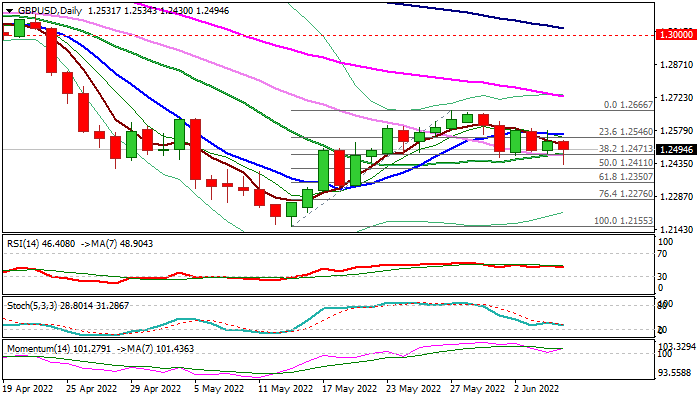
The Australian dollar showed some bounce on Tuesday, courtesy of the RBA rate decision. AUD/USD produced a flash spike of 60 points after the move and touched a daily high of 0.7248, but was unable to consolidate. In the European session, the Aussie is trading at 0.7180, unchanged on the day.
RBA surprises with 50bp hike
The RBA had a huge surprise up its sleeve, as it delivered a 50bp rate hike, bringing the cash rate to 0.85%. The meeting was live, with the markets had expected a modest 25bp rise, although there were some forecasts of a 40bp increase as well. The super-size 50bp move indicates that the RBA is determined to curb inflation with an aggressive rate-tightening cycle. At the same time, the RBA runs the risk of appearing to be in panic mode with such a large hike and runs the risk of losing credibility if inflation doesn’t start to ease soon.
The RBA’s rate statement was not particularly hawkish, considering the massive rate hike. That could explain why the Australian dollar was not able to capitalize on the rate hike, as the spike quickly fizzled. The statement noted that inflation had accelerated more than anticipated and was expected to increase further before declining next year. The Bank expressed confidence that today’s rate hike would contribute to inflation falling “over time”. The statement also noted that the economy was resilient and the labour market remains strong.
The US dollar received a boost from US Treasury yields, as the 5, 10 and 30-year yields are all above the 3 per cent level. The upward move in US yields could be related to this week’s USD 96 billion in government bond sales in the 3, 10 and 30-year tenors. Will yields remain above 3% during the week? If so, the dollar could show some strong movement after the CPI release on Friday.
AUD/USD Technical
- AUD/USD tested resistance at 0.7211 earlier in the day. The next resistance line is 0.7280
- 0.7158 is under pressure in support. Below, there is support at 0.7069
GBP/USD: Keeps Traction But Downside Remains at Risk as Negative Tone Prevails in Fundamentals
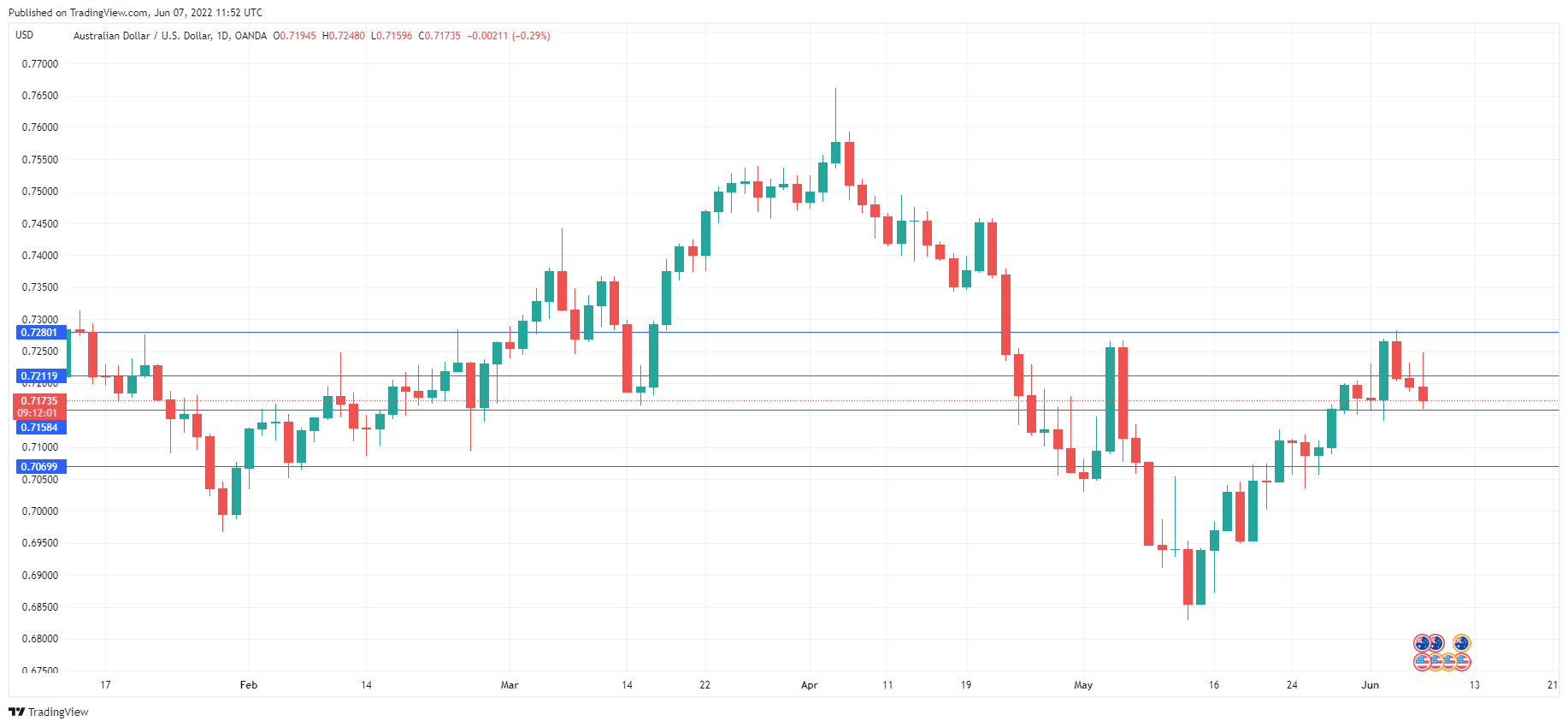
Cable bounces from a daily low at 1.2430 (the lowest since May 19, after being hit by the story about confidence vote on PM Boris Johnson.
Although Johnson survived the vote, he suffered significant political damage as 41% of Conservative MP’s voted against him, with focus on two elections on June 23, which would further undermine Johnson’s position if Conservatives lose these seats.
On the other side, better than expected UK May Services and Composite PMI’s slightly improved the sentiment and gave a temporary boost to the sterling, despite British businesses continued to slow, as a result of increased pressure from surging inflation.
Also, expectations on more aggressive BOE that would push interest rate to 2.25% towards the end of the year, could keep the pound afloat.
Technical studies are still conflicting as bullish momentum continues to rise and MA’s are mixed, while RSI is just below neutral zone.
Today’s renewed probe through key 1.2470 support (Fibo 38.2% of 1.2155/1.2866 upleg / converged 20/30DMA’s / lows of past four days) was so far rejected, suggesting that initial signal of bear-trap is forming, however lift and close above 10DMA (1.2563) which capped the action in past five days, is needed to confirm positive signal and shift near-term focus higher.
Conversely, sustained break of 1.2470 pivotal support zone would generate fresh bearish signal and risk deeper drop, with loss of 1.2411 (50% retracement of 1.2155/1.2666 upleg) to signal an end of corrective phase from 1.2155 (May 13 low).
Res: 1.2534; 1.2563; 1.2589; 1.2616.
Sup: 1.2470; 1.2430; 1.2411; 1.2350.
The Market Did Not Price in RBA’s Hawkish Surprise, But it Should
The Reserve Bank of Australia delivered a hawkish surprise momentarily undervalued by the markets. The RBA raised the rate to 0.85%, immediately 50 points after a 0.25% hike last month and expectations for a repeat this time.
A big hike to curb inflation was backed by fast price growth by strong demand for Australian export. And it was just a repeat of such hikes in other advanced economies, including New Zealand.
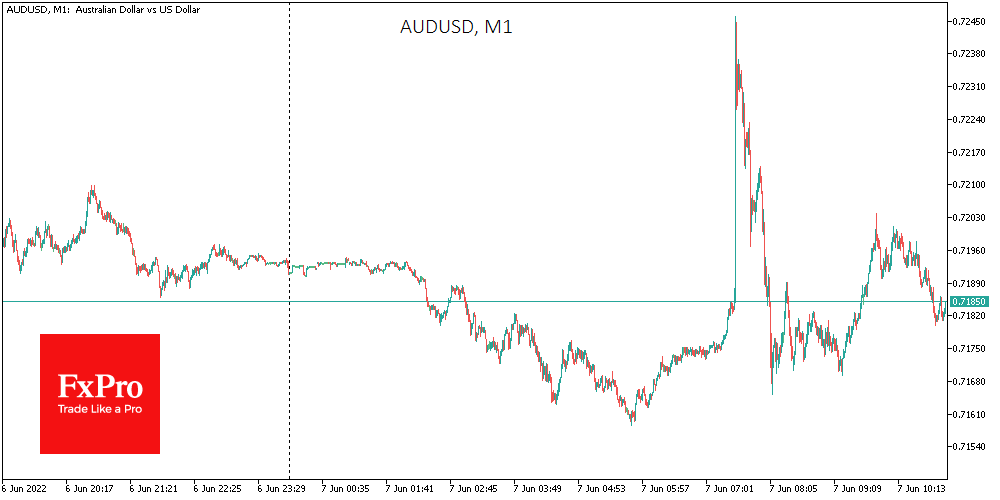
The stronger-than-expected rate hike caused a legitimate initial surge of 0.8% in the first minute. But surprisingly, this move proved unsustainable, and the AUDUSD soon dipped below levels before the decision’s release.
From the chart, it is easy to see the sustained pressure on the Aussie for the third day after touching the 200-day average. This line was also a significant obstacle in early May, immediately after the reaction to the first policy tightening.
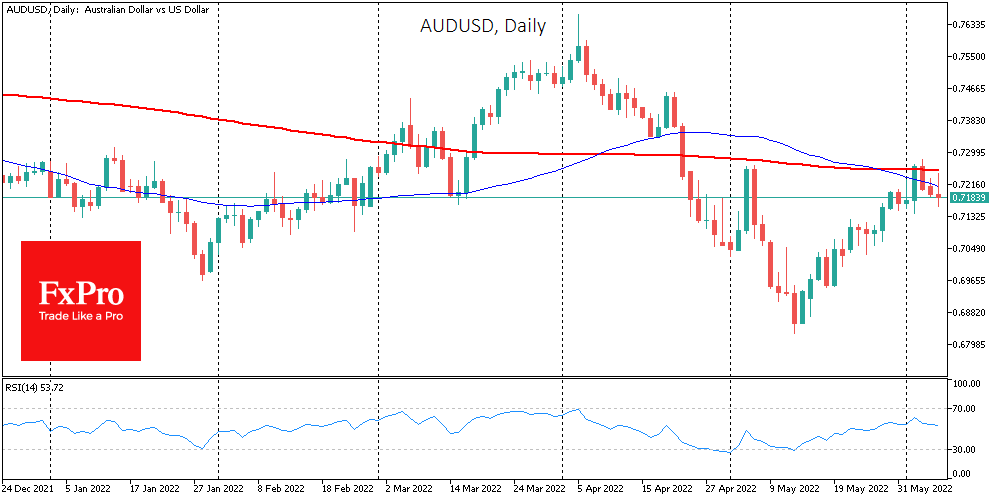
Nevertheless, looking at the prospects for Australia from a fundamental analysis perspective makes it doubtful that a bearish success in the Aussie would be anything more than a local victory. The tone of the RBA comments suggests that we could see a repeat of today’s move in another month. Since the RBA meets 11 times a year, rather than 7–8 or 4 as in many developed countries, the pace of policy tightening is greater than that of the competition.
It is worth noting that the Australian monetary authority has more room to raise rates. Record commodity prices support economic activity (GDP added 0.8% QoQ and 3.3% YoY in Q1) and spur currency inflows into the country, increasing the room for manoeuvre for the central bank.
Today we see a repeat of the pattern as the currency market reacted to the sharp rate hike in New Zealand. However, by zeroing in on its initial momentum, the NZDUSD strengthened by more than 2% in the subsequent five trading sessions, and the chances are high that the AUDUSD will repeat this pattern.
Furthermore, it is also worth bearing in mind that we are in a world where not every central bank can raise its rate by 50 points several times in a row without risking a recession. So, the Aussie might perform “above the market” in the medium term, naturally gaining on most competitors aside from the NZD and USD.
Loonie Needs Some Boost from Employment Report for a Rise
The Canadian employment report is due on Friday at 15:30 GMT, and it is anticipated that the labor market continued to expand in May. At its June 1 meeting, the Bank of Canada (BoC) became more hawkish, signalling that it may have to be cautious to combat inflation, in part due to the robust labor market.
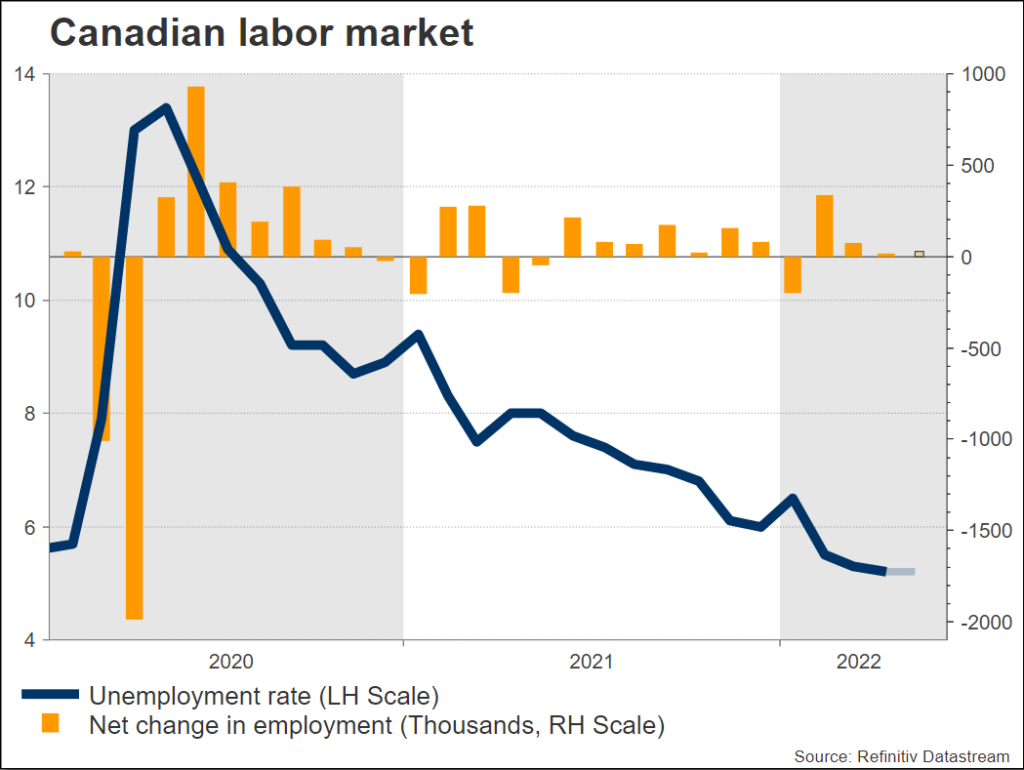
Unemployment rate is anticipated to be steady
In accordance with market predictions, the jobless rate in Canada decreased to 5.2% and is predicted to remain the same in May. It was the lowest rate ever recorded, extending the labor market's remarkable rebound from the Covid-19 pandemic. The employment change is expected to add 30.0K workers from 15.3K before, confirming the labour market's expansion. A positive report would help the Canadian dollar to rise in the face of falling oil prices. Though thus far, OPEC's agreement to pump additional petroleum to compensate for diminished Russian supply has only resulted in a moderate decline in oil futures prices.
BoC raises rates by 50 bps
The Bank of Canada lifted the target for its overnight rate by 50 basis points to 1.5% during the June meeting, in line with market forecasts, and suggested that it will increase rates further at its next decision in order to combat increasing inflation. It was the third consecutive rate increase of equal magnitude to that of the Bank's previous meeting, increasing borrowing prices to their highest level since the beginning of the pandemic. Additionally, the central bank said that it will continue quantitative tightening measures, thereby extending the process of balance sheet reduction. The Bank indicated that it sees more chances that the elevated inflation would stay entrenched, given the economy's excessive demand, in addition to upside risks stemming from the unpredictability of the Ukraine conflict. Inflation in Canada surged to 6.8% annually in April, significantly over the BoC’s estimate 2%, and is anticipated to rise further in the near future before declining.
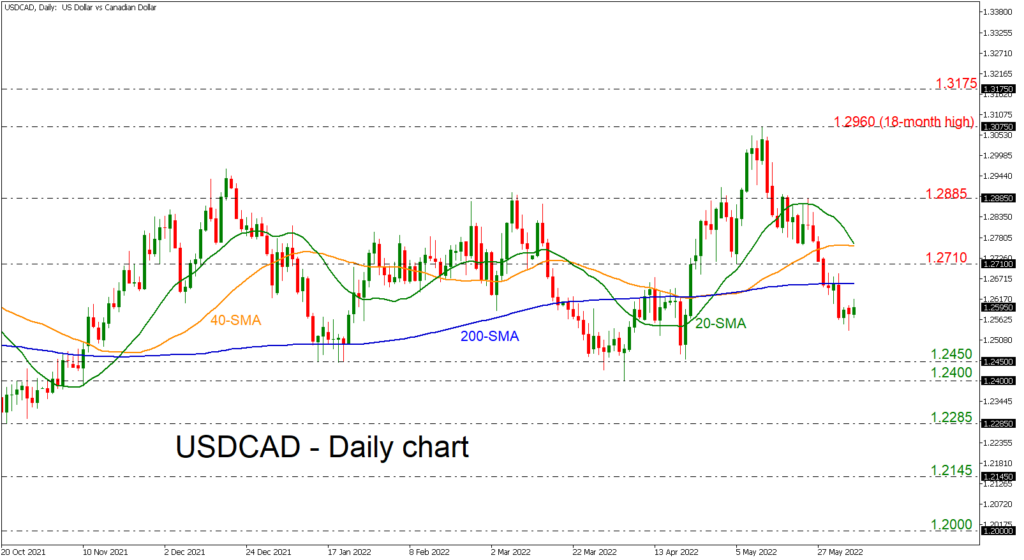
Dollar/loonie appears neutral to bearish
If the employment report shows higher jobs growth and a lower unemployment rate, it might push dollar/loonie towards the 1.2450 support level ahead of the 1.2400 psychological number. Underneath these obstacles, the price could move towards the 1.2285 support, taken from the trough of October 2021.
A worse-than-expected jobs report could encourage the bulls to break to the upside of the 200-day simple moving average (SMA), which currently stands near 1.2657, meeting the 1.2710 resistance. If buying interest persists, then the market could meet the 20- and 40-day SMA at 1.2760, which are currently ready for a bearish crossover.
Elliott Wave Analysis: Gold and USD Index
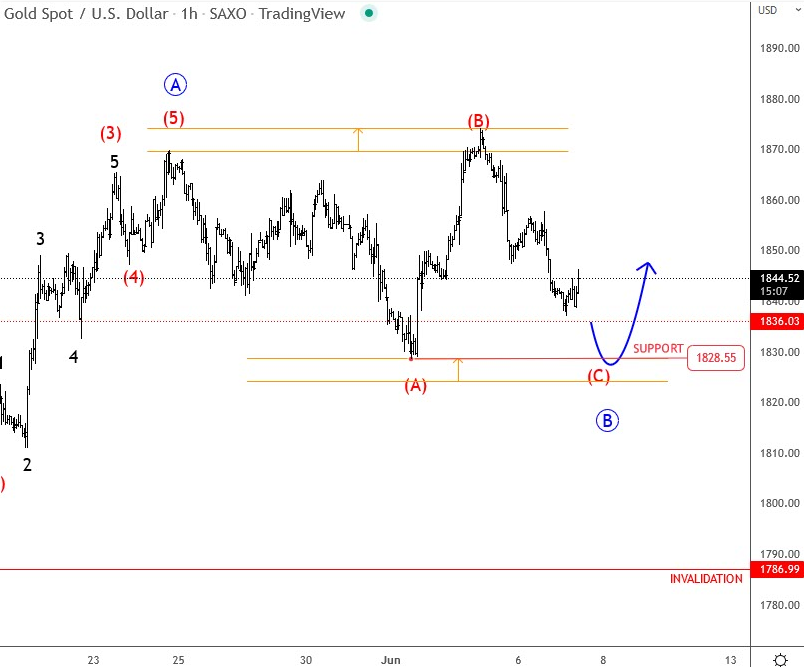
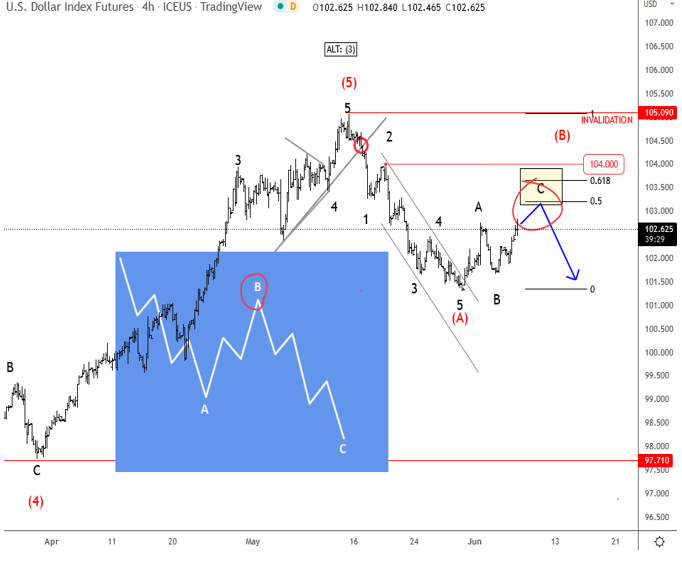
Metals are coming down as US yields rally and causing some support for the USD. We see gold coming back below 1844 after it stopped at the upper side of a range last week so it appears that this is a sideways consolidation, possibly a flat in wave B. In flats, you will see that the pair can find some support near wave A level, which in our case comes in around 1828. Ideally, we will see a new bounce from that area this week when DXY may turn down again.
On DXY we see five waves down and three waves up, so resistance may not be far away.
USD/JPY: Bulls Remain Unobstructed and Eye 2002 Peak
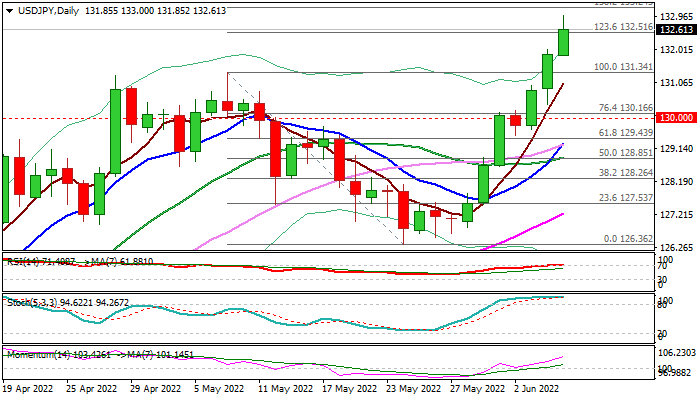
The USDJPY continues to trend higher and posted new 2022 high at 133.00 in early Tuesday, following break and close above previous yearly peak on Monday.
Weak Japan’s household spending data signaled that rising costs hit consumers more than expected, contributing to fresh yen’s weakness, along with comments from top officials which add to expectations that the Bank of Japan is unlikely to change its ultra-loose monetary policy in the short term.
The action on daily chart shows that larger uptrend resumes after correction, as technical studies remain in full bullish setup.
Bulls now eye 2002 peak at 135.16, with obstacles en-route standing at 133.24 and 134.41 (Fibo 138.2% and 161.8% projection of the upleg from 126.36 (May 24 low).
Former top at 131.34 now reverted to solid support which should keep the downside protected.
Res: 133.24; 133.83; 134.41; 135.16.
Sup: 131.85; 131.34; 130.43; 130.00.
US Stocks Recover as Focus Shifts to Inflation Data
The Australian dollar rose in early trading after the Reserve Bank of Australia (RBA) delivered its second back-to-back rate hike this year. The bank decided to increase interest rates by 25 basis points and signaled that it will deliver more hikes later this year in a bid to fight inflation. It signaled that inflation would keep rising because of the ongoing crisis in Ukraine and rising oil prices. Recent data showed that the country’s inflation jumped to more than 5% in the first quarter of the year. However, the unemployment rate dropped to the lowest level in years. The RBA joins other central banks like the Fed and BOE in implementing more rate hikes.
American stocks jumped on Monday as investors continued to assess the rising inflation and the potential for high interest rates by the Federal Reserve. The Dow Jones rose by more than 200 points while the Nasdaq 100 jumped by over 1%. Amazon was the top moving stock after the company implemented a 20-to1 stock split. Another top mover was DiDi, the Chinese ride-hailing company, whose shares jumped by over 50% as regulators ease curbs on its business. Meanwhile, Twitter shares declined after worries about Elon Musk’s decision to acquire the company emerged. Through his lawyer, Musk said that Twitter had withheld important information.
The British pound rose slightly after Boris Johnson survived a no-confidence vote in Parliament. Proponents of the vote failed to garner enough supporters to impeach the prime-minister. He was being impeached for holding parties in 2020, when most of the country was in a lockdown. Analysts believe that the pound rose since the impeachment vote removed uncertainty in the UK. Later today, the pound will react to the latest UK PMI data. Analysts expect that the services PMI dropped to 51.8 in May while the composite PMI fell slightly in May.
EURUSD
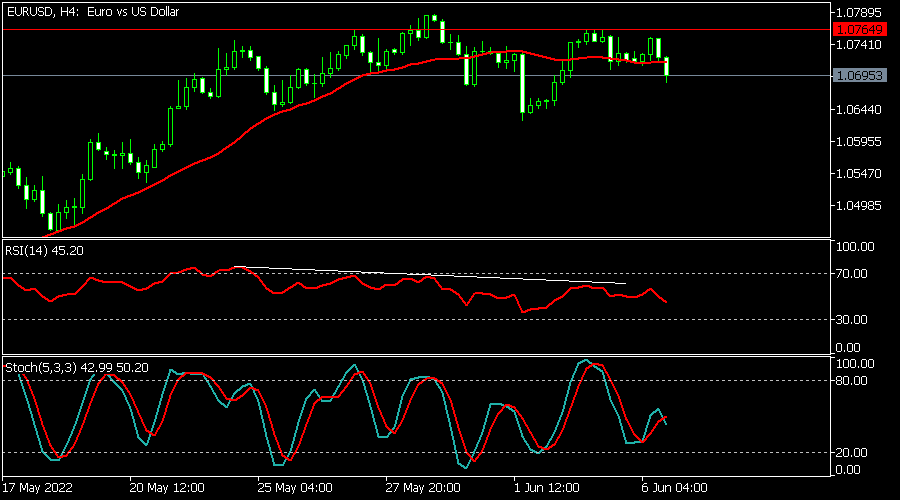
The EURUSD pair has struggled in the past days. The pair dropped to 1.0693, which is below the important resistance level at 1.0764, the lowest level last week. It has moved slightly below the 25-day moving average. It formed a head and shoulders pattern while the Relative Strength Index (RSI) has been falling. The Stochastic Oscillator has moved to the neutral point. Therefore, there is a likelihood that the pair will keep falling ahead of the ECB decision.
XAUUSD
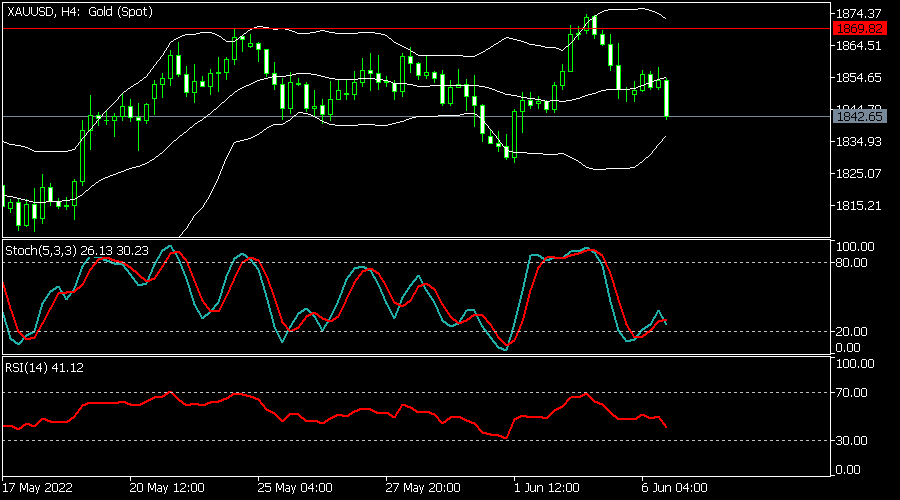
The XAUUSD pair declined to a low of 1,842, which was the lowest level since June 3. It has fallen from last week’s high of 1,872, which was the highest level last week. The RSI has moved below the neutral point at 50. It also moved slightly below the neutral point of the Bollinger Bands while the Stochastic Oscillator is slightly above the oversold level. The pair will likely keep falling to the next key support at 1,830.
NZDUSD
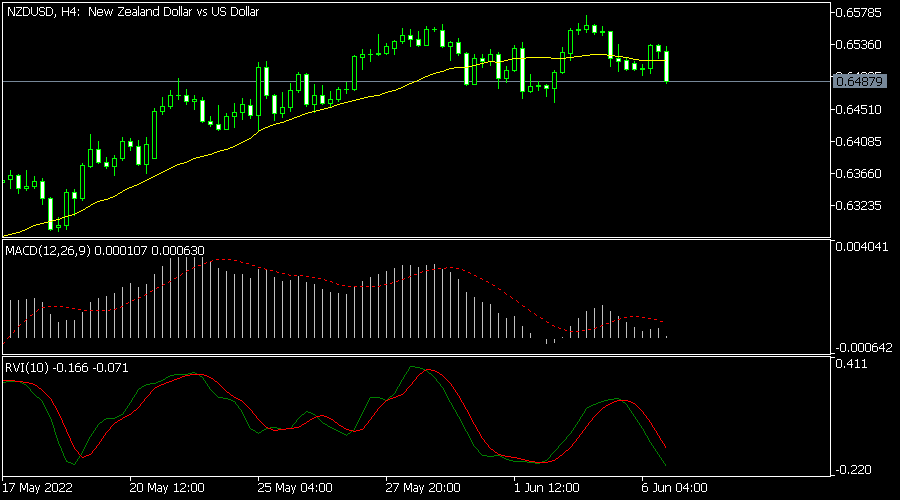
The NZDUSD pair declined slightly as the dollar strength continued. It is trading at 0.6487, which is lower than last week’s high of 0.6582. It has moved slightly between the 50% and 38.2% Fibonacci retracement level. At the same time, the MACD and the Relative Vigor Index have moved lower. The pair will likely continue falling as bears target the key support at 0.6400.
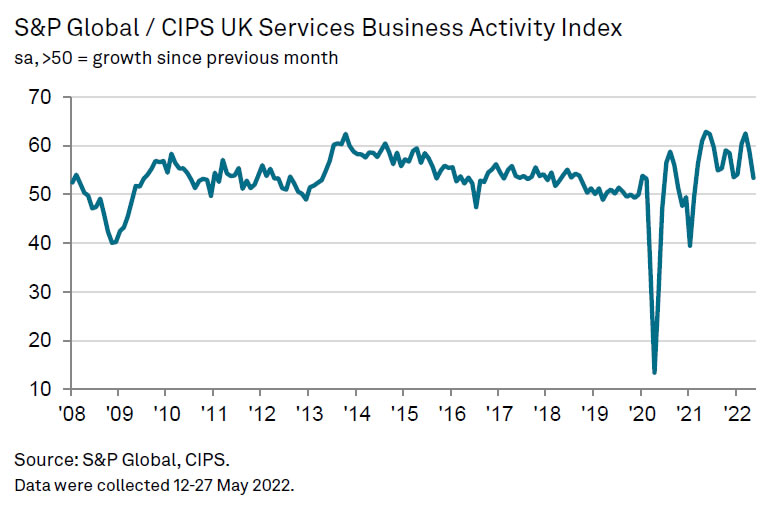
UK PMI services finalized at 53.4, worrying combination of slower growth and higher prices
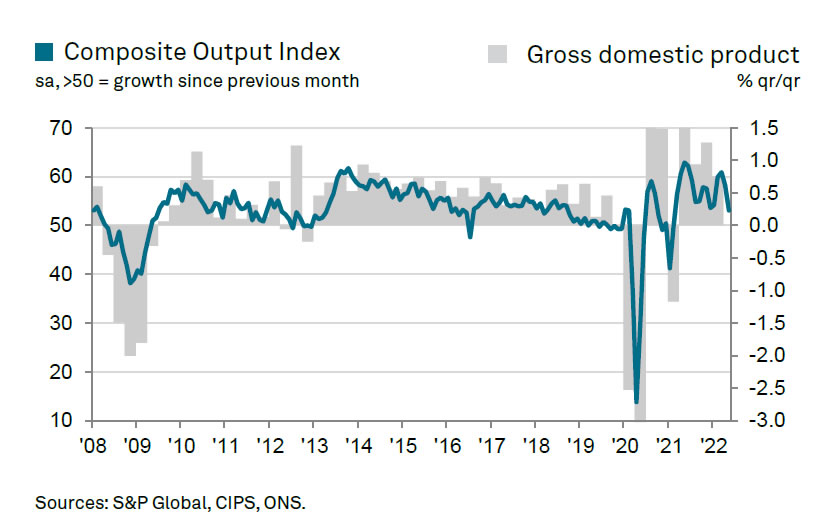
UK PMI Services was finalized at 53.4 in May, down from April's 58.9. That's the weakest level since February 2021. PMI Composite was finalized at 53.1, down from April's 58.2. S&P Global added that business activity expansions eased for the second month running. Input cost and prices charged inflation hit fresh record highs. Growth projections were lowest since October 2020.
Tim Moore, Economics Director at S&P Global Market Intelligence: "May data illustrate a worrying combination of slower growth and higher prices across the UK service sector. The latest round of input cost inflation was the steepest since this index began in July 1996, while the monthly loss of momentum for business activity expansion was a survey-record outside of lockdown periods."
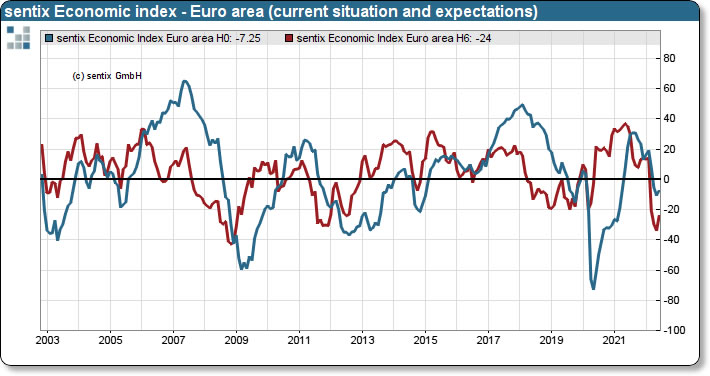
Eurozone Sentix investor confidence rose to -15.8, real economy is not suffering as quickly and as severely than expected
Eurozone Sentix Investor Confidence rose from -22.6 to -15.8 in June, above expectation of -20.0. Current Situation Index rose from -10.5 to -7.3. Expectations Index rose from -34.0 to -24.0.
Sentix said, "the real economy is not suffering as quickly and as severely from phenomena such as rising inflation and supply chain problems as one might have suspected.
"While consumers are already suffering much more from rising prices, many companies are still benefiting from inflation-related pull-forward effects. So far, many companies have also been able to pass on their sharply rising costs to their customers.
"But this is likely to be a finite phase. At a certain point, end consumers will have to cut back. Then, at the latest, the ability of companies to pass on their costs without restriction will also come to an end. In addition, there is a foresee-able change in monetary policy, which could also become more restrictive in the Eurozone from July.
"On the other hand, it should be positive that according to the sentix topic barometer the inflation peak should have been passed for the time being."