

Sample Category Title
ECB Panetta: Holding inflation at 2% with high imported inflation could induce domestic deflation
ECB Executive Board member Fabio Panetta said in a speech that the high inflation in Eurozone is "mostly due to global factors – including the increase in the prices of oil, gas and other commodities – over which monetary policy has little leverage." And it "does not fundamentally result from an economy that is running above potential".
Therefore, "asking monetary policy alone to bring down short-term inflation while inflation expectations remain well anchored would be extremely costly". Monetary tightening would not affected imported energy and food prices, but "massively suppress domestic demand to bring down inflation".
"And with the current levels of imported inflation, in order to hold headline inflation to 2%, we would need domestic inflation to be deeply negative. In other words, we would induce domestic deflation," he added.
Panetta suggested that "fiscal policy can help mitigate the challenge of higher inflation by containing the effects of higher energy prices". On the other hand, "Monetary policy will play its role, adjusting policy in line with the medium-term inflation outlook. "
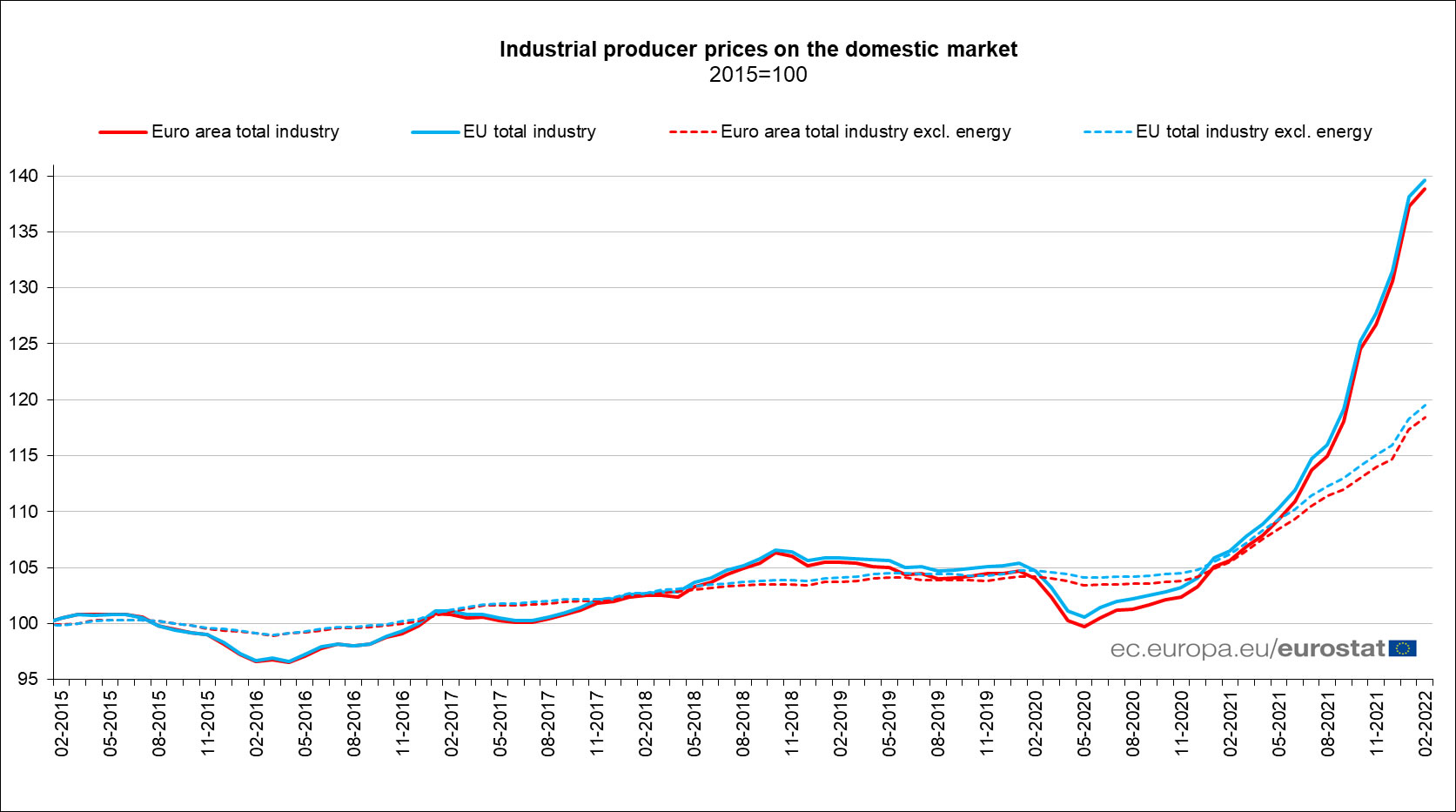
Eurozone PPI rose 1.1% mom, 31.4% yoy in Feb
Eurozone PPI rose 1.1% mom, 3.1.4% yoy in February, below expectation of 1.3% mom, 31.6% yoy. For the month, industrial producer prices increased by 1.6% for intermediate goods, by 1.3% in the energy sector, by 0.8% for non-durable consumer goods, by 0.6% for durable consumer goods and by 0.3% for capital goods. Prices in total industry excluding energy increased by 0.9%.
EU PPI rose 1.1% mom, 31.1% yoy. The highest monthly increases in industrial producer prices were recorded in Slovakia (+13.6%), Slovenia (+5.7%) and Greece (+4.8%). Decreases were observed in Ireland (-8.1%), Finland (-0.5%), Latvia (-0.3%), and Bulgaria (-0.1%).
UK PMI construction unchanged at 59.1, but optimism tumbled
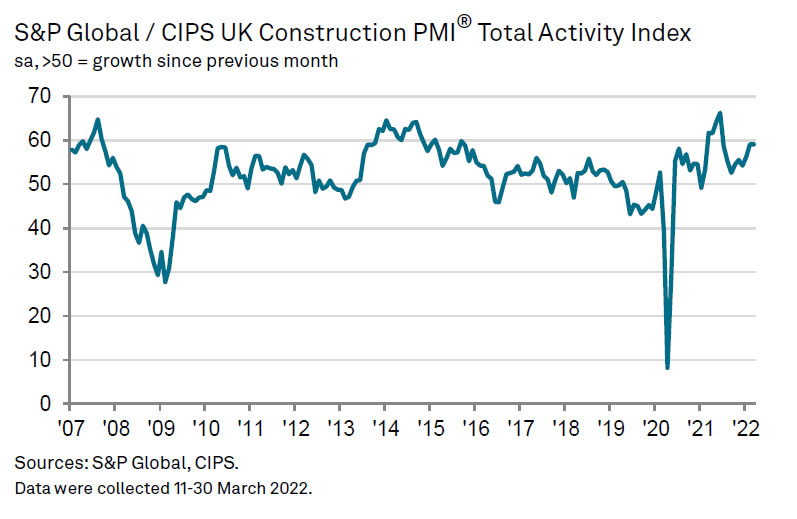
UK PMI Construction was unchanged at 59.1 in March, better than expectation of 57.3. The latest reading signalled the join-fastest rate of output growth since June 2021. However, business optimism dropped to 17-month low.
Tim Moore, Economics Director at S&P Global: "Escalating fuel, energy and commodity prices led to the fastest rise in costs for six months. Intense inflationary pressures appear to have unnerved some construction companies. Business optimism slipped to its lowest since October 2020 on concerns that clients will cut back spending in response to rising prices and heightened economic uncertainty."
USD/JPY Pair Moved into a Bullish Zone above $123.20
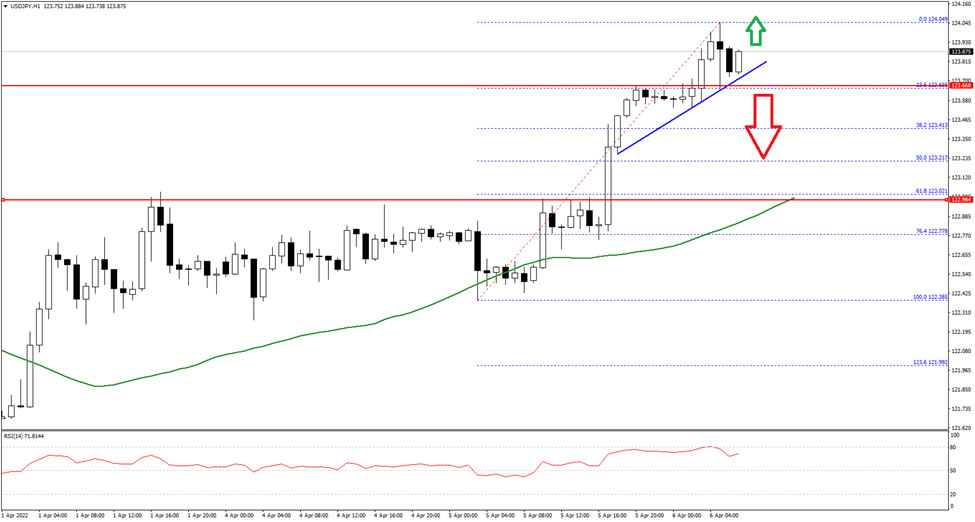
The US Dollar started a steady upward move above the 123.00 resistance against the Japanese Yen. The USD/JPY pair traded above the 123.20 level to move into a bullish zone.
The pair even traded above 123.80 and settled above the 50 hourly simple moving average. A high is formed near 124.04 and the pair is now consolidating gains. An immediate support is near 123.80 and a connecting bullish trend line on the hourly chart.
The next major support sits near the 123.20 level, below which there is a risk of more downsides. In the stated case, the pair could decline towards the 123.00 level.
On the upside, an immediate resistance is near the 124.00 level. A clear break above the 124.00 resistance could push the price towards 124.40 on FXOpen. The next major resistance is near the 124.80 level or 125.00.
ECB de Guindos: Green energy is a key priority for environment and security
ECB Vice President Luis de Guindos said in a speech, "for the euro area, the financial stability impact of the war has so far been relatively contained." And, "markets have generally been functioning well", with "no dash for cash".
"While both banks and non-banks have been affected – especially the few that have large direct exposures to Russia and Ukraine – the economic fallout has not had a sizeable impact on the EU banking or financial systems as a whole," he added.
But he also noted, "the invasion of Ukraine also demonstrated how vulnerable Europe is due to its high dependency on fossil fuel imports from Russia. Speeding up the green transition is a key priority from this perspective too – not only to address the urgent environmental and climate challenges we face, but also to help increase our energy security and protect the EU economy from energy price spikes."
Gold Extends Sideways Move But Downside Risks Remain
Gold has been trending downwards since early March when the price peaked at the 19-month high of 2,070. Although the price managed to halt its decline and currently experiences a consolidation phase, the technical picture seems to be deteriorating for the precious metal.
The momentum indicators suggest that bearish forces continue to hold the upper hand. Specifically, the MACD histogram is currently beneath both zero and its red signal line, while the RSI is hovering in the negative zone.
Should selling interest intensify further, the price could encounter immediate support at the recent low of 1,915. Falling beneath this floor, the bears could target the 1,910 barrier before the spotlight turns to the March low of 1,890. Further downside moves may then cease at the 1,878 hurdle.
Alternatively, if buyers re-emerge and regain control, initial resistance could be met at the recent high of 1,945. Conquering this barricade, the price might ascend towards the March peak of 1,965. Higher, 2,010 could prove to be a tough obstacle for the bulls before 2,052 appears on the radar.
Overall, gold has been rangebound in the last three weeks, but broader near-term risks remain tilted to the downside. Therefore, a dive beneath the 1,890 floor is needed to boost sellers' hopes for a sustained downtrend.

Daily Technical Analysis
EUR/USD
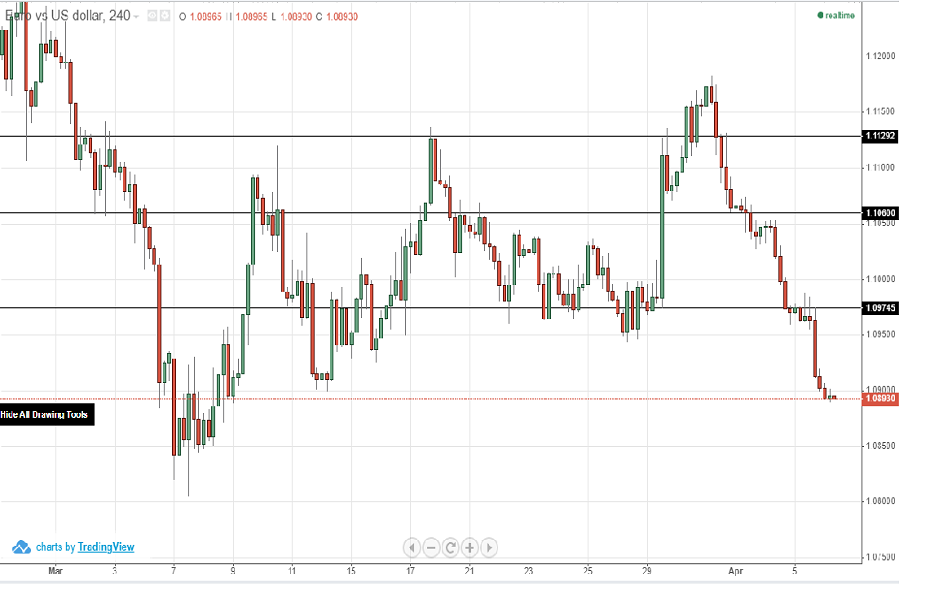
At the beginning of the European session, the bulls' attempts to break the levels around 1.0981 were rejected and the single European currency continued its downward trend. The full control of the bears over the market continued and, during the breach of the temporary supports on 1.0960, the sell-off deepened with full force to 1.0900. The strength of the dollar is huge and the pressure against the euro may continue to the levels from March around 1.0805. However, forming a bottom and a scenario in which the pair returns above the key level of 1.0900 should not be ruled out.
USD/JPY
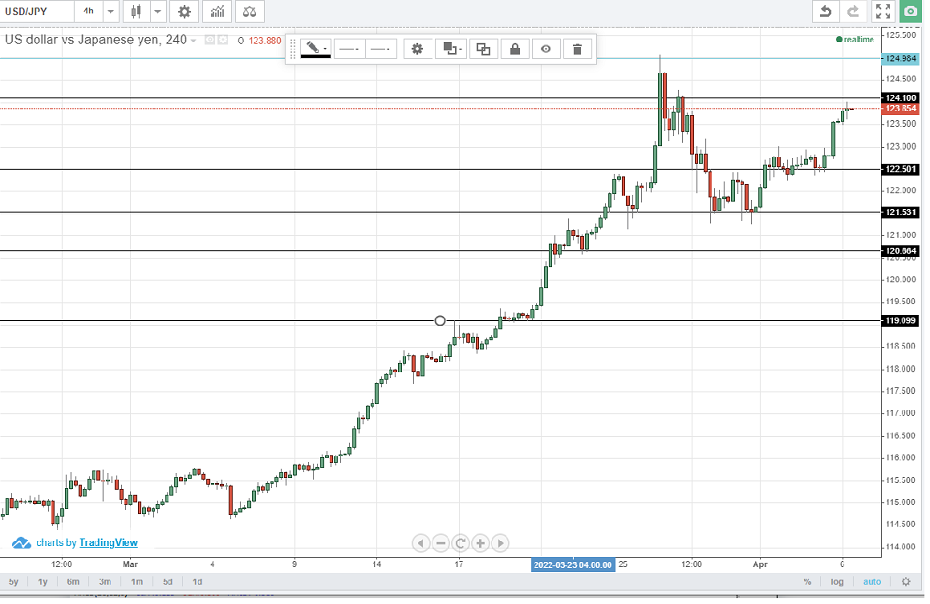
The uptrend of the dollar against the yen was restored after the corrections last week, despite threats of intervention by the Bank of Japan. The ninja's weakness continued and the session ended at 123.65, just 100 pips before the 124.65 peak reached last week. There is a high probability of reaching the six-year high of 125.10, but if the bank's protections are urgently activated, we can see a reversal of the trend and a decline in the dollar with a second price test around 121.70.
GBP/USD
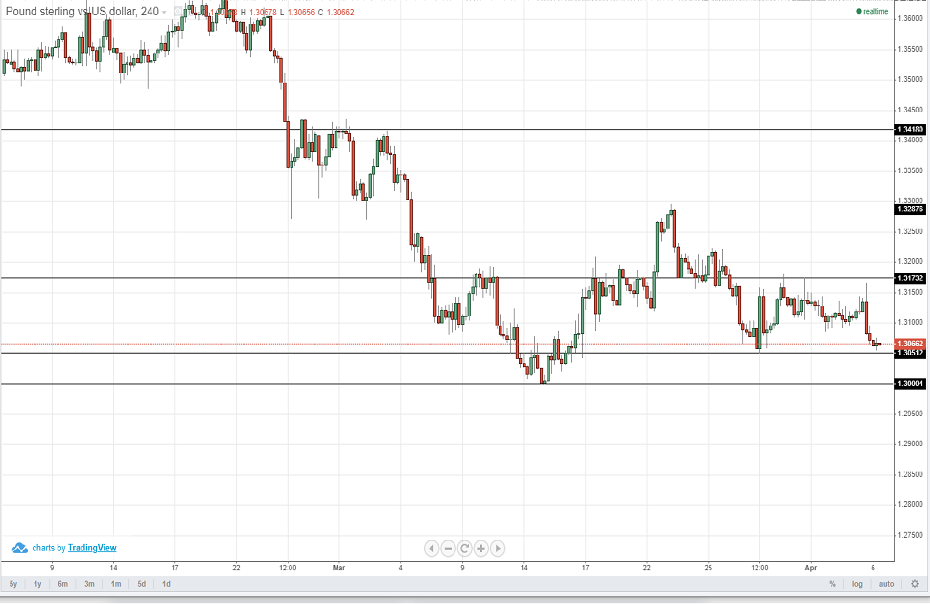
The pound suffered a turbulent trading day, reaching a peak of 1.3167 during the European session, but after the opening of the U.S. stock market, the bears gained convincing control and the trend reversed. We saw a break of all supports which led to closing around the levels at 1.3071. If the strength of the dollar continues, we can see a retest of the bottom 1.3101 from mid-March, but attempts to build support around 1.3068 should not go unnoticed as it lures the bulls.
EUGERMANY40
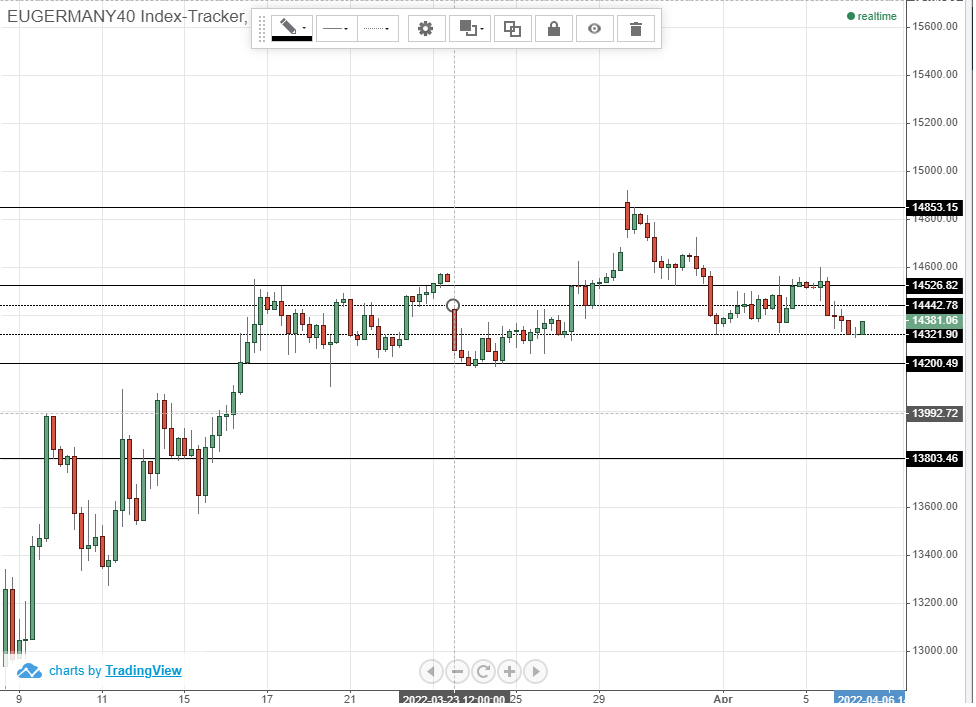
The German index suffered a highly volatile session, reaching 14,605 in the first hour of the European session, but immediately after that, the level didn't hold ground and we saw deepening of the declines started earlier this month, leading to prices of 14,339 at the close of the European stock market. This key level may boost the bulls, as on March 31 and see a rebound, but everything depends on the comments about the invasion of Ukraine, which strongly influence future plans for the development of the German economy and its energy independence.
US30
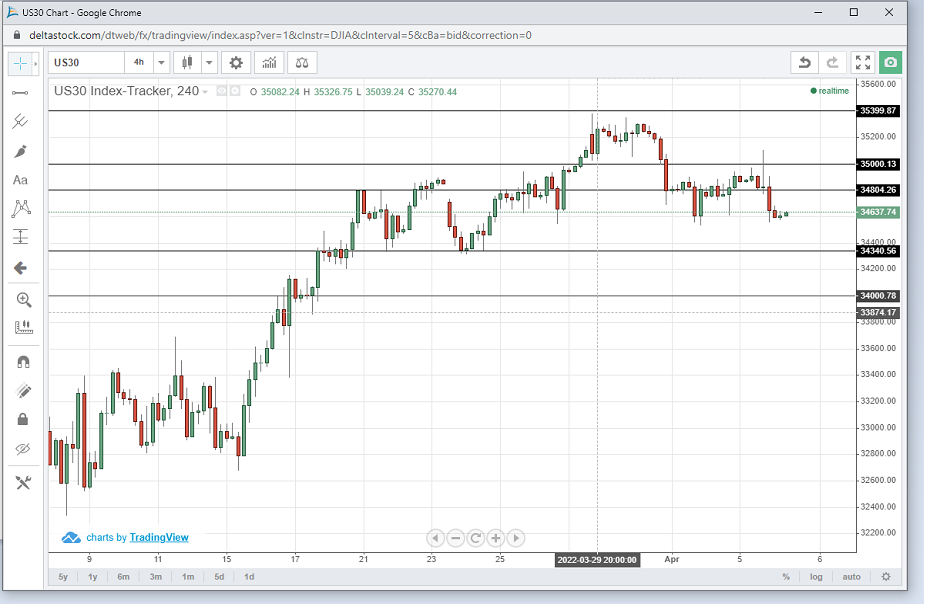
The blue chip index's session moved at the same pace as the other indices. With the opening of the US session we saw upward movements reaching 35,100, but soon after we saw a continuation of the previous trend and US30 reached its bottom of 34,600 where it found support. Traders assess inflation and expectations of a rise in the Fed's key interest rate, as well as the yield on US bonds as volatility is expected to remain high, especially after the Fed meeting minutes (18:00 GMT).
Nasdaq 100 Retreats as Fed Hints at More Tightening
American stocks wavered on Tuesday as the Federal Reserve prepared to accelerate its tightening process. In a statement, Lael Brainard said that the bank will be aggressive in its bid to combat inflation. In addition to a 0.50% rate hike, she said that the Fed will begin a rapid reduction of its $9 trillion balance sheet as soon as in May. Further, she said that the bank was prepared to take stronger actions when it comes to tightening policy. She joins several other Fed officials who have warned about the need for more aggressive rate hikes. Still, with the yield curve inverting, the biggest challenge for the Fed is that higher rates could lead to a recession.
The euro declined sharply as geopolitical events between the Eurozone and Russia accelerated. In a statement on Tuesday, Brussels said that it was ready to launch new sanctions on Russia. The new restrictions would see the bloc ban coal imports and closure of its ports to Russian vessels. The bloc will also ban transactions with four of its biggest lenders. Other restrictions will be on Russian transport operators from the EU. Still, there are concerns that these restrictions will also affect the EU as its energy costs jump. As such, analysts expect that the EU will see a recession in the coming months.
The US dollar rose slightly in the overnight session after strong US services PMI data. According to the Institute of Supply Management, the pace of growth in the services sector increased in March as the impact of Covid faded. The PMI rose to 58.3 from the previous 56.5. Still, most service providers are also being impacted negatively by the ongoing supply chain challenges and costs. New orders, backlogs, and hiring rose in March Later today, the US will publish the latest oil inventories numbers while the Fed will release its minutes.
EURUSD
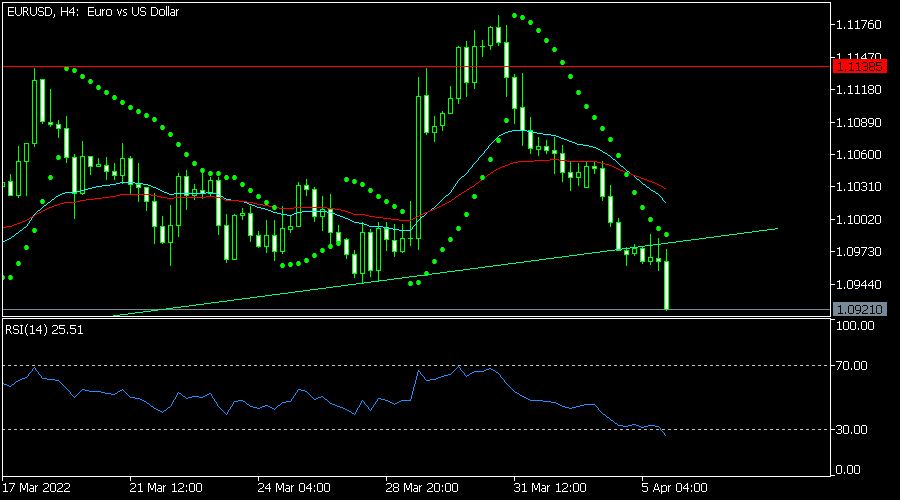
The EURUSD pair made a bearish breakout ahead of the new EU sanctions on Russia. The pair fell to a low of 1.0920, which was the lowest level since March 11. It declined below the support shown in green. At the same time, the pair dropped below the 23.6% Fibonacci retracement level and the 25-day moving average. Therefore, it will likely keep falling now that bears have prevailed.
XAUUSD
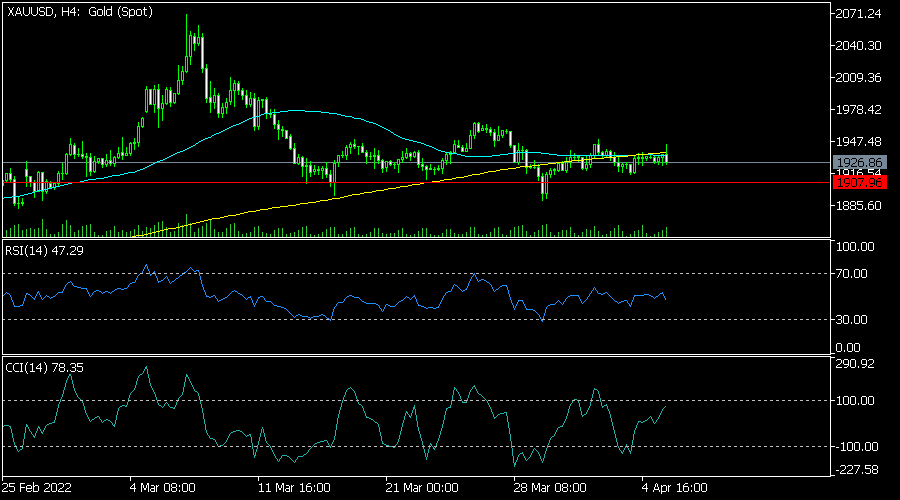
The XAUUSD pair remained in a tight range in the overnight session. It is trading at 1,926, where it has been in the past few days. This price is substantially lower than the YTD high of 2,070. It is also consolidating along the 25-day moving average while the Relative Strength Index (RSI) has moved to the neutral level of 50. The pair will likely remain in a consolidation phase ahead of the upcoming Fed minutes.
EURCHF
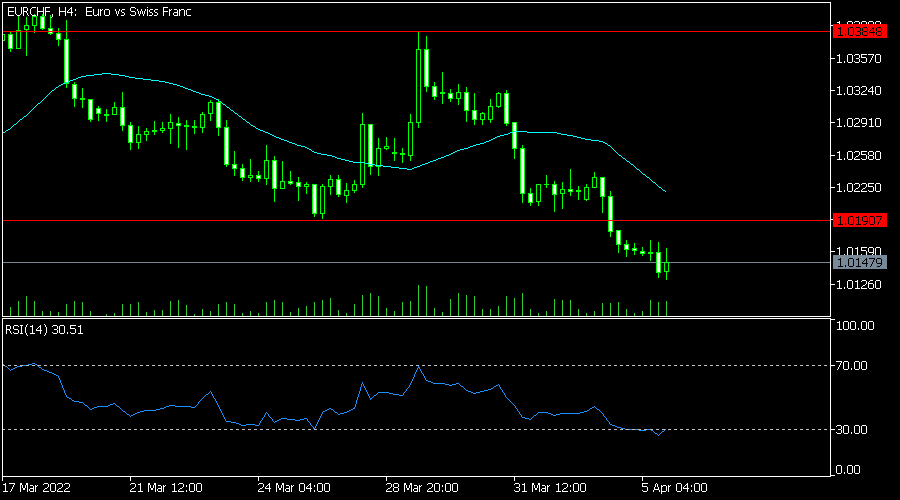
The EURCHF pair declined as Eurozone conditions worsened. The pair moved to a low of 1.0147, which is significantly lower than the March high of 1.0384. It has moved below the important support level at 1.0190. Further, the pair has declined below the 25-day and 50-day moving averages. Therefore, it will likely keep falling as bears target the support at parity.
US 10-yr Yield Set a New Recovery High North of 2.6%
Markets
We’ve stressed on multiple occasions that any correction higher in the core bond sell-off remain fairly limited both in terms of magnitude and in terms of length. Yesterday’s trading session confirmed this once more and highlights the strength on the underlying market dynamic this year. Don’t get blindsided, it’s all about inflation and changing reaction functions of central banks. Core bonds returned to full sell-off mode following a brief move higher around quarter-end with new sanctions against Russia following war crimes adding some doubt. Yesterday’s decline started during European trading hours, but accelerated during US dealings. US Treasuries underperformed German Bunds in the process.
A strong US services ISM (58.3 from 56.5) kickstarted the process. Details showed a strong rebound in employment (54 from 48.5) and big boost in new regular and export orders (both >60). Business activity stabilized at a good 55.5 with inventories crashing from 55.3 to 40.2. Price pressure remains elevated.
Shortly after the release, Washington-based heavy-weight Fed governor Brainard sharpened the knives ahead of tonight’s FOMC Minutes which will reveal details on the pace of the Fed’s balance sheet roll-off. Brainard said that a rapid reduction will start in May. General expectations are a monthly wind-down of $100bn or more. This includes both US Treasuries and mortgage-backed securities. Brainard added that she’s prepared to take stronger action in the tightening cycle if needed, in a nod to 50bps rate hikes from May onwards, as “it is of paramount importance to bring inflation down”. She focused on rising inequality in her argumentation with inflation especially burdening low- and middle-income families whose pay rises can’t match inflation numbers and eating into disposable income.
Kansas City Fed George and SF Fed Daly sounded the alarm bells on inflation as well: “people hate high inflation”, “inflation is as harmful as not having a job”. They both backed the need to step things up in the tightening cycle. Turning to the market reaction then.
US yields added 9.3 bps to 15.7 bps with the belly of the curve underperforming the wings. The US 10-yr yield set a new recovery high north of 2.6%, taking out 76% retracement (2.56%) on the 2018-2020 yield decline. Full retracement brings us to the 2018 top of 3.26%. European bonds followed US Treasuries south with German yields rising by 6.1 bps (2-yr) to 10.8 bps (10-yr).
EUR/USD suffered from yield dynamics, giving away 1.0961/45 intermediate support to close near 1.09. A test of the previous cycle low at 1.0806 becomes inevitable. The trade-weighted benchmark yesterday broke that reference (previous top at 99.42) and is looking to move beyond the psychological 100-mark for the first time since May 2020. USD/JPY is attacking 124 this morning. The strong sell-off on bond markets spilled to stress on equity markets with main US indices losing 0.8% (Dow) to 2.25% (Nasdaq).
News Headlines
The European Commission triggered its rule of law mechanism for the first time against Hungary yesterday. EC president Von der Leyen said they will send the letter of formal notification before the European Parliament. The decision may ultimately lead to the withholding of some of the €24bn Hungary is to receive up to 2027. Von der Leyen also ruled out a quick disbursement of the €7.2bn funds Budapest applied for under NextGenEU. The EC’s move comes just a few days after PM Orban’s landslide victory to secure a fourth term. It is the culmination of a decade-long spat over the erosion of democratic standards and corruption. The bloc demanded reforms but said it was “not able to find a common ground”. The Hungarian forint lost over 2% against the euro to EUR/HUF 376.62. China’s private Caixin services PMI in March tumbled to the lowest level since February 2020. At 42.0, down from 50.2, the figure printed much lower than consensus (49.7) too. Last month’s steep drop followed China’s worst Covid outbreak since the start of the pandemic. It triggered new harsh lockdowns. New business inflows registering the weakest level since March 2020. The indicator for planned future activity hit a 19-month low. Earlier this week, the manufacturing gauge also fell into contraction territory, from 50.4 to 48.1, bringing the combined composite PMI at 43.9.
FOMC Minutes Tonight and Several ECB SpeakersToday
Market movers today
FOMC minutes from the March meeting will be released in the evening, and focus will be on any hints about the upcoming QT, more so than rate hikes. Fed's Brainard said yesterday that she expects balance sheet reduction 'at a rapid pace' starting in May.
The National Bank of Poland (NBP) will have a monetary policy meeting, where consensus is looking for a 50bp hike, while markets are pricing in 75bp. There will also be several ECB speakers on the wires throughout the day, including de Guindos, Schnabel and Lane.
Negotiations also continue on the new EU sanctions on Russia, EU yesterday proposed a ban on Russian coal imports and European Commission president Ursula von der Leyen hinted the group is working on an oil import ban as well.
The 60 second overview
Ukraine-Russia: Yesterday we got one of the first indicators of the impact on the Russian economy as the service PMI for March falls to 38.1 from 52.1 in February. The decline in business activity and new orders (both domestic and foreign) explains the setback as firms also cut back on staffing amid weak demand. At the same time, inflation pressures quicken due to higher supplier prices and adverse exchange developments. The composite indicator is now at 37.7 compared with 50 in February and is a signal of a recession of about 3-4%. Looking ahead, further decline in the indices can be anticipated as western supplies are further curtailed over time plus new sanctions being considered, suggesting that the worst has not been seen yet.
Yesterday EU announced that they are set to stop buying Russian coal in the next leg of sanctions, and only ending oil and gas at a later stage (no date horizon set).
Euro area: The euro area final PMI figures released yesterday held up better than anticipated at 54.9 (composite, vs. 54.5 expected) as services PMIs have been supported by the reopening of the economies. However confidence indicators which are a good predictor of PMIs ahead provide a dour expectation. Also in Europe, one of the bigger German wage negotiations this year in the chemical industry has been postponed until October, with the partners agreeing on a one-off payment of EUR 1400 for now. In light of the very high uncertainty, we might see similar trends in other negotiations, but it is a first sign that for unions, job security might matter more than real income growth right now.
EU: EU triggered the 'rule-of-law' clause on Hungary yesterday. This would open up for Hungary not receiving EU funds, including the NGEU funds, where they are otherwise set to receive around EUR40bn.
Equities: Equities were mostly reverting lower on Tuesday. The yield curve steepened, taking growth to an underperformance of value (after beating the tape the last few days). Value outperformed growth by more than 100bp and defensives beat cyclicals. Dow -0.8%, S&P500 -1.3%, Nasdaq -2.3% and Russell 2000 -2.4%.
FI: After the EGB rally on Monday, we saw a significant sell-off yesterday, with massive spread widening. 10y Bunds sold off 11bp while the BTPs-Bund spread still widened 8bp. This came on the back of multiple reasons. PEPP ending not to support the significant supply yesterday from Germany, EU and Austria, better than expected PMIs, and potential of new sanctions ultimately leading to speculation of higher consumer prices. That also means that the continued bid for linkers has continued in general very volatile inflation markets. All of this supports the reason for accelerated tightening from ECB. Currently there are 63bp priced in by year end (€STR). France led the underperformance in the semi-core space as market focus has turned to the first round elections this Friday.
FX: Summary. The time could be now for new lows in EUR/USD. SEK rallied to yesterday.
Credit: Credit markets were in risk-off mode on Tuesday, following some of Europe's major equity indicies. Itraxx main widened 2.6bp to close at 73.1bp, while Xover was 13bp wider, closing the day at 345.2bp. Despite the soft-ish sentiment, primary markets were alive and kicking, with the European Union offering a jumbo sized EUR6bn 20YR green bond. The more than 13x oversubscription indicated healthy investor appetite for the deal, which ended up having a re-offer spread of only +9bp (to mid swaps).