Sample Category Title
Q3 Outlook: Gold – Positioned to Thrive in Low Interest Rate Environment
The investment case for Gold is set to remain robust as speculation mounts that major central banks will ease monetary policy in an effort to counter a global economic downturn.
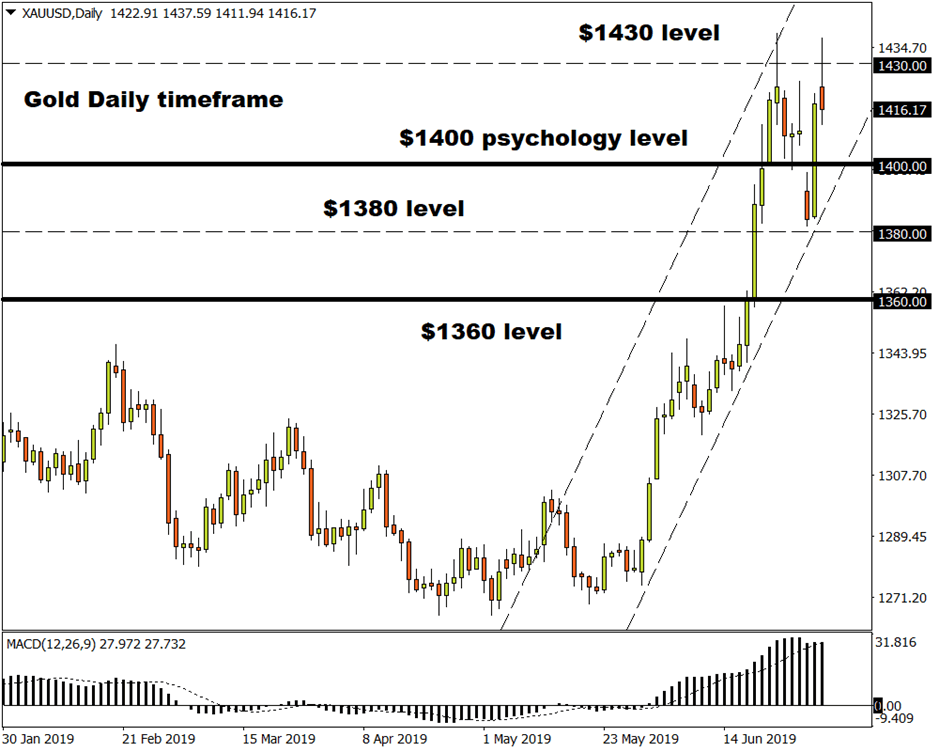
The yellow metal shone with extreme intensity during the second quarter of 2019, rallying roughly 9% to levels not seen above $1435 in over six years, thanks to an environment that included ongoing global growth concerns, geopolitics, trade tensions and Dollar weakness.
Weak macro data, which reflects downward revisions in global growth over the past 12 months, is prompting a handful of central banks including the European Central Bank (ECB), Federal Reserve (Fed) and Reserve Bank of Australia (RBA) to signal a willingness to ease monetary policy and increase economic stimulus to support growth.
In a low interest rate environment filled with chronic uncertainty, Gold can climb another 5% over the course of Q3 - claiming the title as one of the high flyers among safe haven assets, in competition with the Yen.
Will Gold’s fortunes hang on the Fed’s actions?
What investors need to watch as the second half of the trading year gets underway are the actions of the Federal Reserve. Will the US central bank confirm market expectations and cut interest rates as early as July? If it fails to do so, Gold risks rapidly surrendering its second quarter surge.
Essentially, if the Fed sits on its hands in July, profits will be taken from the table on the $120+ rally that transpired in Gold throughout June.
Unfavourable global conditions to keep Gold in fashion
Rising concerns surrounding the health of the global economy is another one of the engines that will help drive Gold prices.
Although a sense of optimism has returned after the meeting between Trump-Xi Jinping at the G20 ended in a trade truce on tariffs, it does not change the reality that global growth is decelerating.
The World Bank recently downgraded its 2019 world growth forecast to 2.6% from 2.9% and if the recent disappointing PMI releases across the manufacturing sectors in Europe, China and the United States are anything to go by, global growth is moving towards the lower bound of 2% as the decade draws to a close.
Warning signals over potential cracks in the largest economy in the world, indications of tepid growth in the EU, disappointing data from China’s manufacturing sector and lacklustre growth in the United Kingdom amid Brexit-induced uncertainties are likely to sweeten appetite for safe haven assets.
It’s all about central bank stimulus and lower yields
In the longer term, Gold should also find support from lower treasury yields, especially if the 10 year treasury dips below 2% again as persistent growth fears and trade developments result in lower interest rates across the globe.
While the outlook for the precious metal points to the upside, potential roadblocks on the horizon include easing trade tensions and signs of global growth stabilizing. Both outcomes would pose a challenge to buyers.
Gold bulls to dream big and reach for the stars
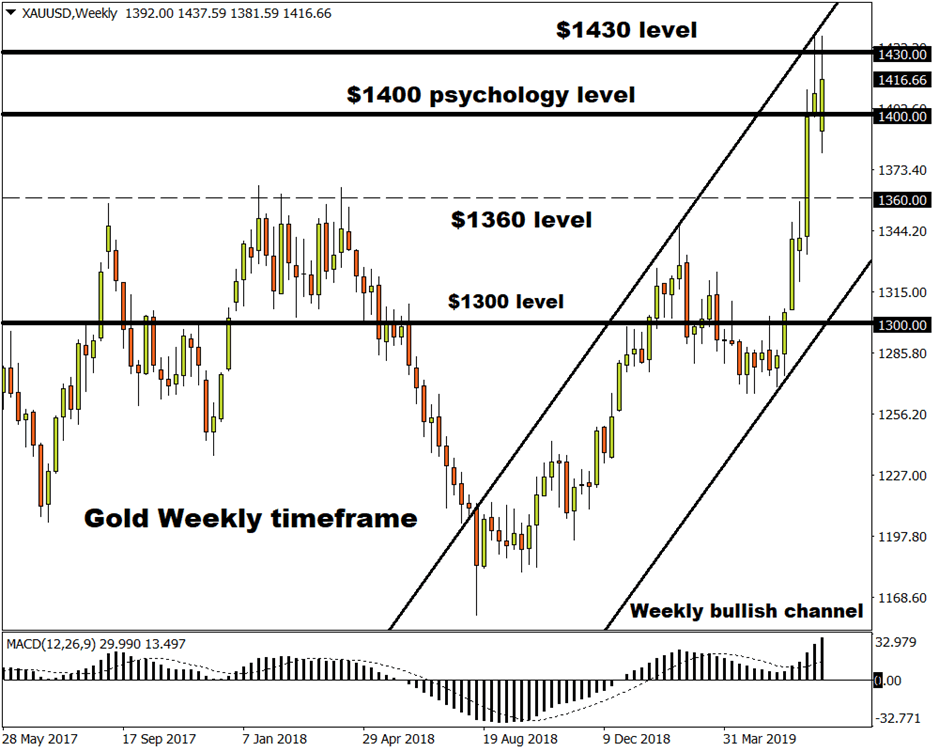
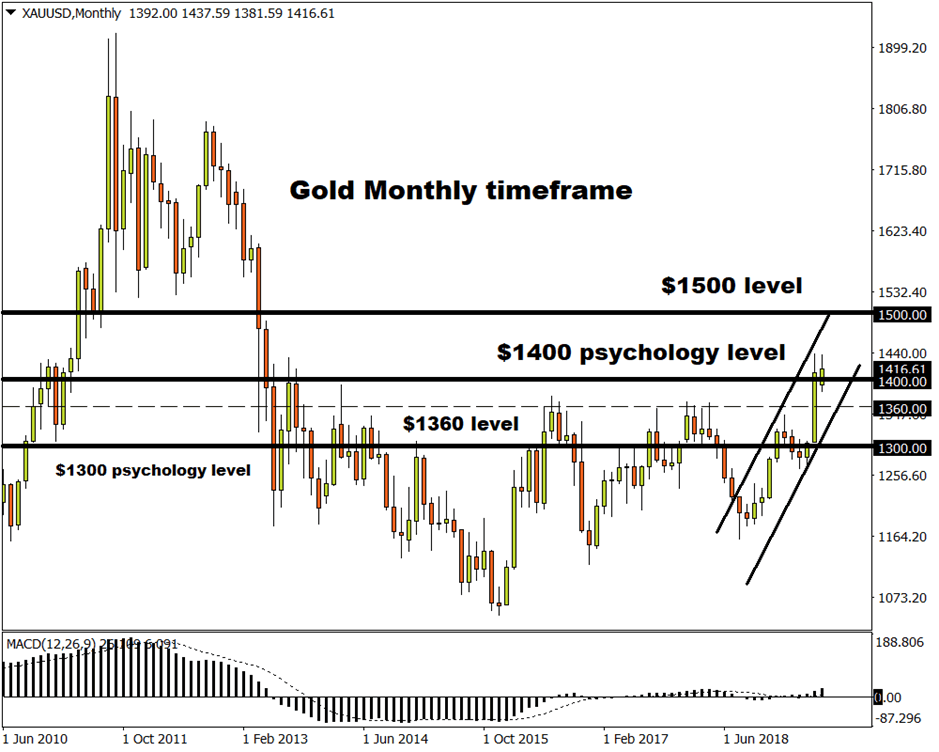
Taking a look at the technical picture, Gold remains firmly bullish on the monthly charts as there have been consistent higher highs and higher lows.
Prices have scope to push higher on the monthly charts should $1360 prove to be reliable support. For as long as bulls are able to defend $1360, there should be enough confidence to challenge $1430 and $1500 – a level not seen since April 2013. Alternatively, a decline back below $1360 will most likely swing open the doors towards $1324 and $1300, respectively. This bullish setup becomes invalidated if prices find comfort below $1300.
Q3 Outlook: Oil – Will a Sturdier Floor Make for a Higher Bounce?
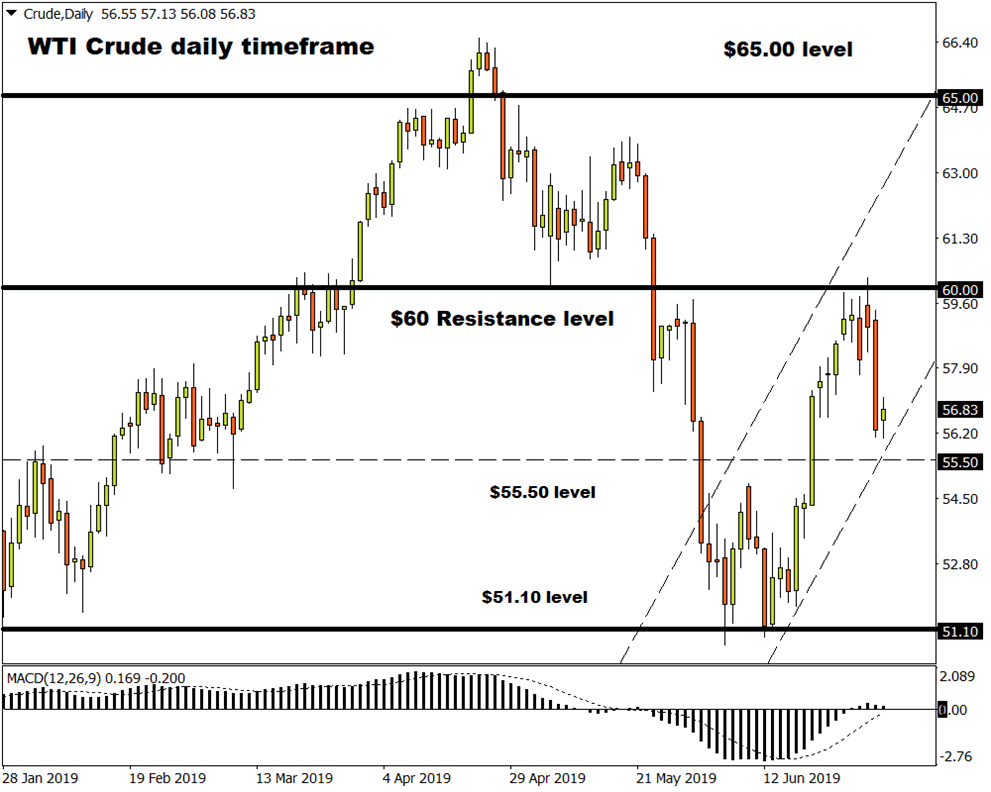
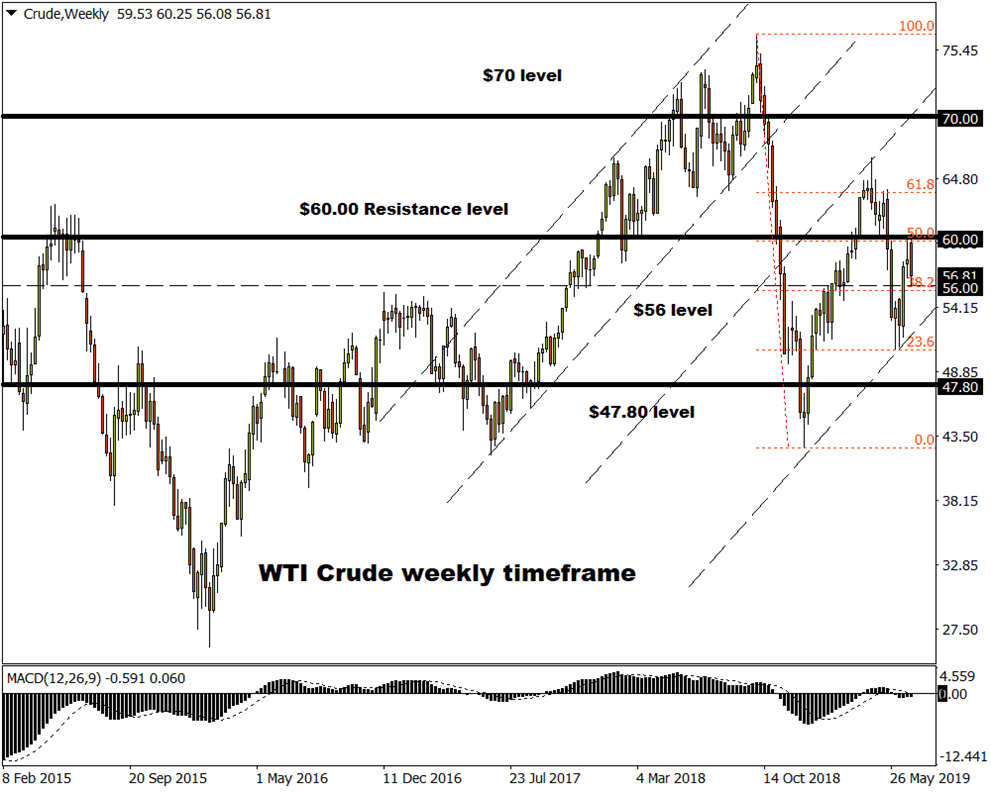
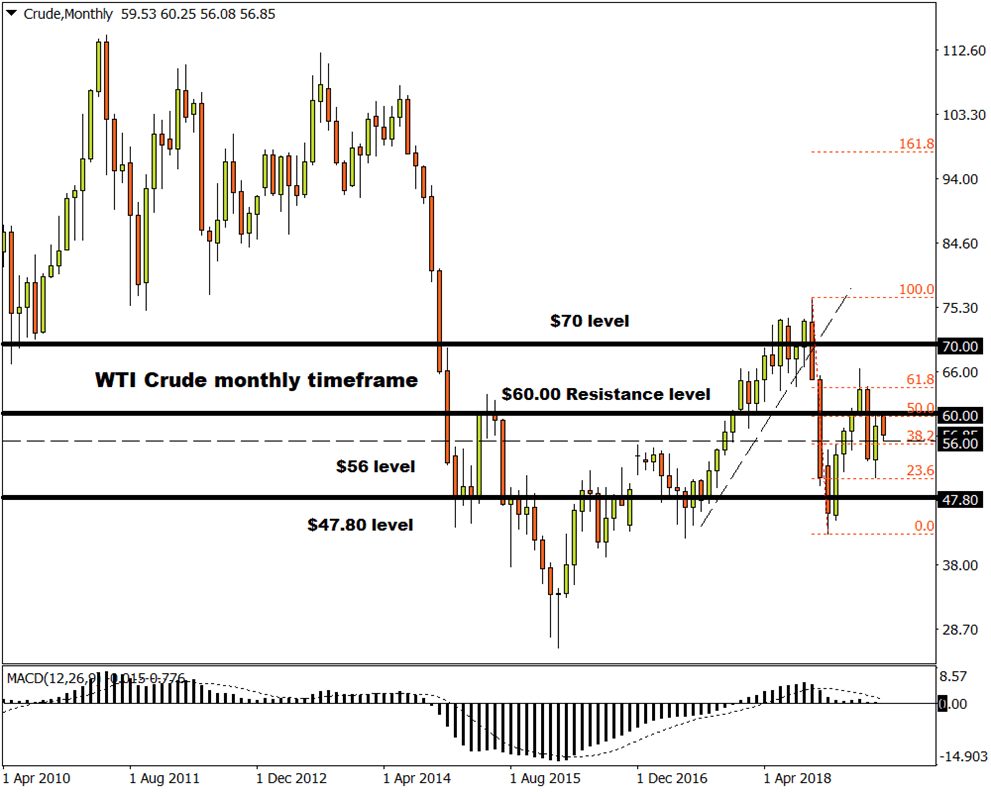
In the third quarter, WTI crude is set to form a solid base to launch another attempt at the $65/bbl mark, providing the global demand outlook doesn’t deteriorate any further.
The downside for Oil appears to have been mitigated around the mid-$50/bbl range by the recent announcement of revived US-China trade talks, staving off the risk of an immediate deterioration in ties between the world’s two largest economies. Although the existing tariffs remain in place, the prospects of further levies being imposed has dwindled, at least for the time being. That ensures that the growth of global demand, while slowing, isn’t completely snuffed out.
Supply-side risks to remain manageable in Q3
On the supply side, the OPEC+ decision to maintain supply cuts at current levels until March 2020 should also set a stronger platform for Oil’s Q3 performance. Concerns about excess supplies flooding the market have been assuaged by a reported 163 percent compliance rate by OPEC+ members in May. With a goal in place to remove some 1.2 million barrels from global supplies in 2019, the tightened-for-longer Oil taps should ensure supply-side risks are managed.
Unexpected flare-up in geopolitical tensions could trigger fear-induced Oil spike
Simmering geopolitical tensions have also contributed to Oil’s rise as the current quarter begins. US sanctions on major producers have affected not just the physical delivery of crude, but also market sentiment. Oil market participants remain focused on US President Donald Trump’s Twitter activities, given his fervor for shaking up the global order while pre-empting his foreign policy moves with unexpected tweets. With market sentiment still fragile, any whiff of an escalation in geopolitical tensions could trigger a fear-induced spike in Oil prices.
Oil markets to remain cautiously optimistic in Q3
Still, investors might be remiss in believing that things are only looking up in the second half of the year. Developments surrounding US-China trade talks remain fluid, and recent history has shown that events can turn on a dime. Should negotiations between the world’s two largest economies hit yet another wall, the floor could give way beneath Oil. Also keep in mind that the existing tariffs already imposed by the US and China remain in place and have already dragged global growth lower. Additionally, should President Trump open up another front in US-led trade tensions, that will further darken the demand outlook for Oil.
US shale output could throw spanner into the works
Then there’s the surge in US shale output, which has been an unrelenting tide that threatens to drown attempts by OPEC+ to rebalance the markets. US supply has been on a record-chasing spree, having notched a new high for monthly output in April when it exceeded 12 million bpd, according to the US Energy Information Administration. Although the number of active rigs has dwindled as producers stateside appear to be shifting priorities towards profitability rather than output growth, their actions may not be enough to stop total US output from hitting 14 million bpd in 2020.
WTI crude expected to nudge higher in Q3
Such supply and demand risks could dampen the enthusiasm within the Oil markets for higher highs. Instead of leaping into the air, traders may just take measured moves in nudging prices higher. The key consideration for Oil in Q3 is how much resistance prices will face on the way up.
At the time of writing, WTI crude is trading below its 50- and 200-day moving averages. A break above those levels could be met with stiffer resistance at $61.92/bbl, while Oil’s immediate support line can be drawn at $52.28/bbl.
Q3 Outlook: AUDUSD – Aussie Caught in RBA vs. Fed Rate-Cuts Race
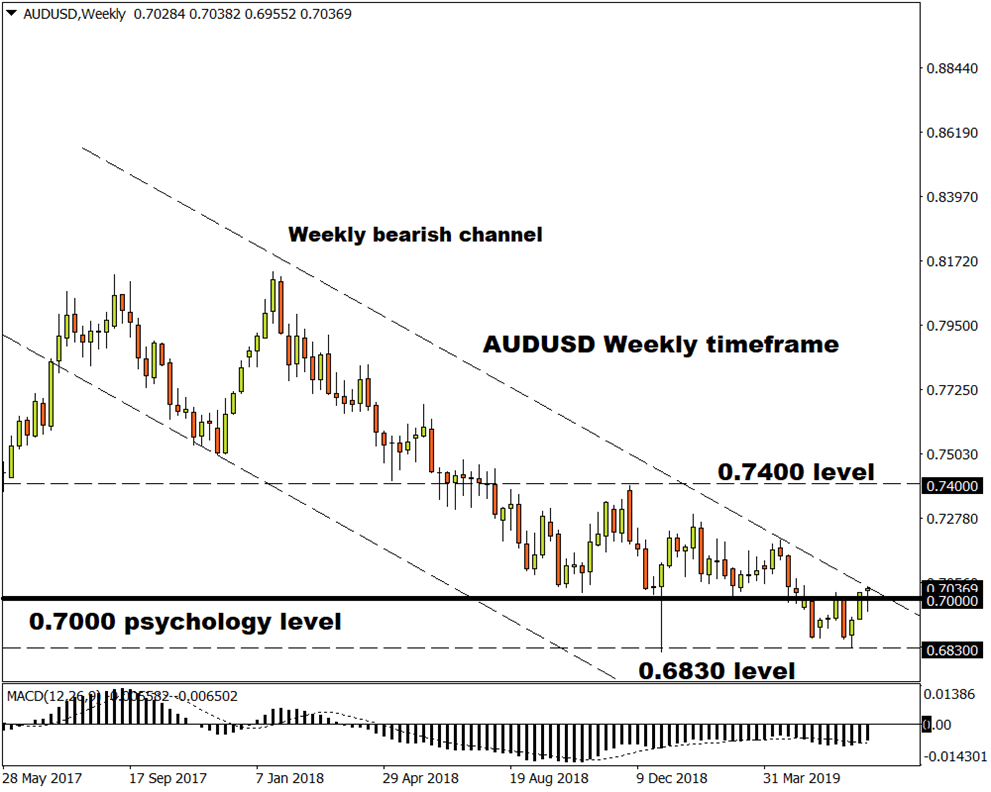
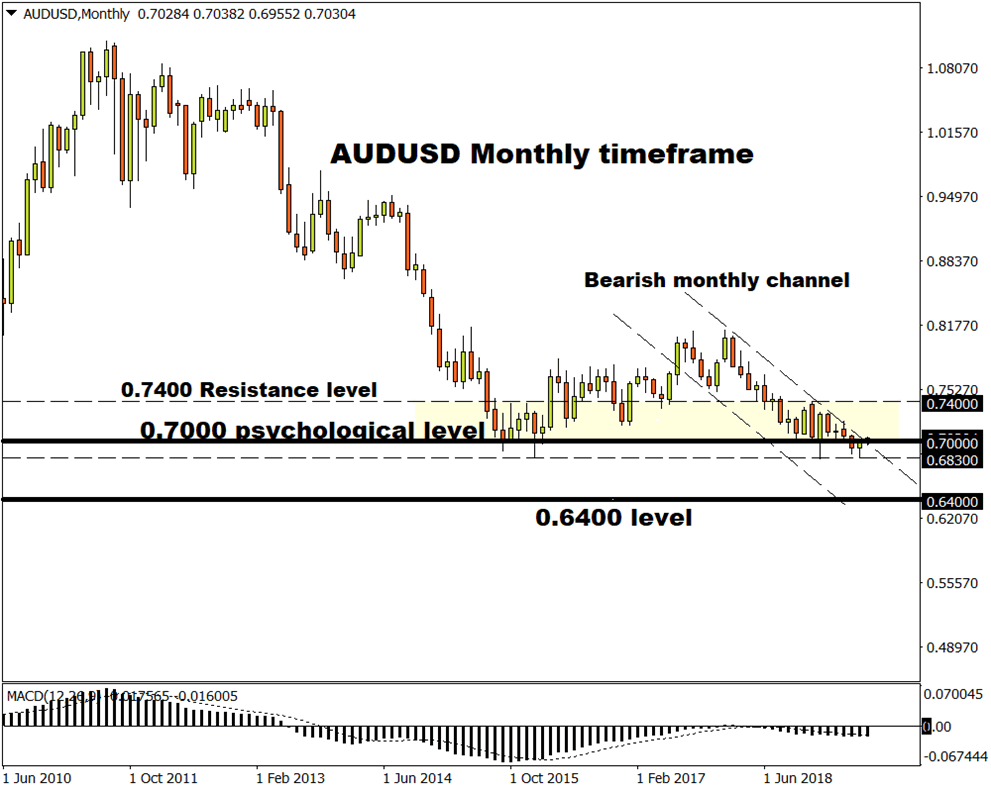
The Australian Dollar’s bearish trend that began in early 2018 is set to extend into the current quarter.
The Reserve Bank of Australia has come a long way from earlier in the year when it painted a picture of steady growth for the domestic economy. The central bank then proceeded to lower its cash rate target by 25 basis points in June, before cutting rates by a similar margin again at the start of July. As worries increase about weaker economic conditions, Australia’s benchmark interest rate has reached a new record low of one percent. Those cuts were heavily anticipated by investors, sending the Aussie down over one percent against the greenback in Q2, erasing gains from the first quarter to register an overall decline of 0.4 percent for the first half of 2019.
Fed rate cut could offer limited relief for AUD
Later this month, it could be the Federal Reserve’s turn. Investors will turn their attention to the scheduled FOMC meeting at the end of July to see if Fed chair Jerome Powell and his colleagues join the easing party. At the time of writing, Fed Funds futures point to a 100 percent chance of a US rate cut this month. Although a Fed rate cut has been largely priced in, the actual event could still offer some limited relief for the Australian Dollar and nudge it towards the 0.7 mark against its US counterpart.
US-China tensions to continue holding sway over AUD performance
Another theme that’ll continue to drive the Australian Dollar’s performance is US-China trade tensions, given that Australia’s dependence on the Chinese economy is the highest compared to other developed nations. According to the Australian Department of Foreign Affairs and Trade, China accounted for 34 percent of Australia’s total goods exports in 2018.
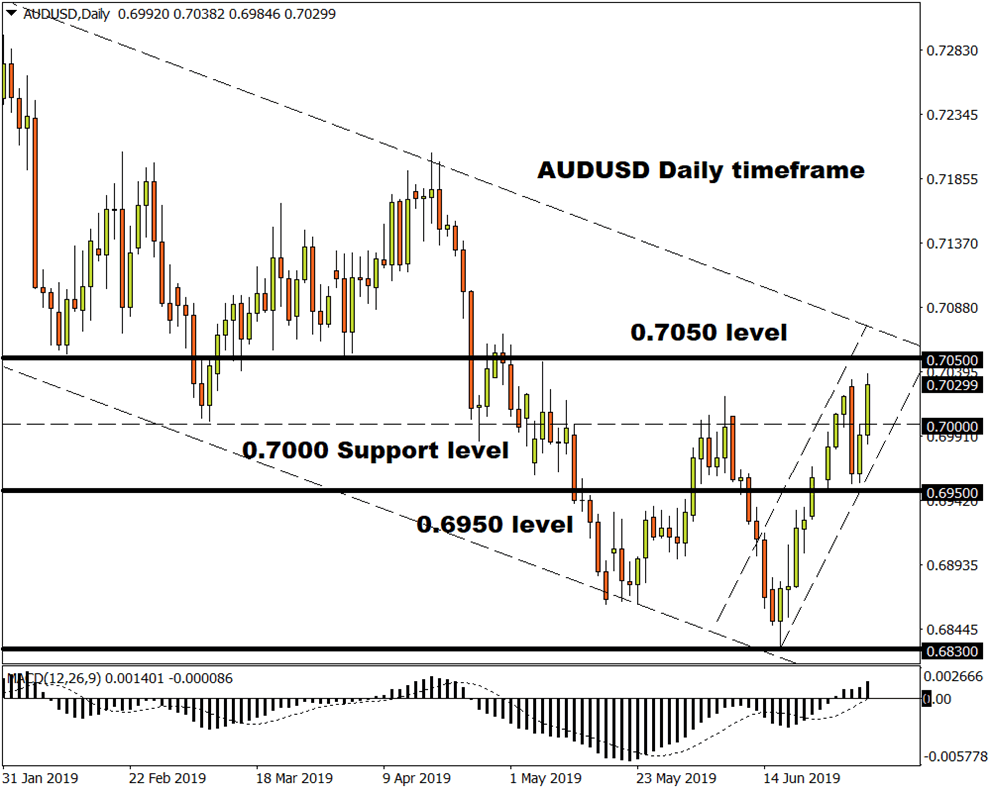
Yet the recently announced truce between US President Donald Trump and Chinese President Xi Jinping wasn’t enough for the AUDUSD to break above its 100-day moving-average of 0.7035. Revived US-China trade talks merely delay the risk of more tariffs being imposed, without completely nullifying the threat. Keep in mind the tariffs that have already been implemented on US-China trade remain in place. The heightened tensions are clearly dampening global growth. For proof, look no further than Asia’s exports slump, Europe’s sluggish manufacturing sector and declining PMI figures around the world. Given Australia’s outward-facing economy, AUD’s appeal has been muted.
Australia’s uninspiring economic outlook to weigh on AUD
Australia is certainly not immue to the downside external risks, with exports and investments having been curtailed by concerns over global trade tensions. First quarter GDP of 1.8 percent was its lowest since 2009, while inflation has stubbornly failed to live up to the RBA’s target range of 2-3 percent. Falling house prices have dampened consumer sentiment, and Australia’s unemployment rate remains above five percent.
The gloomy economic indicators only serve to dampen sentiment surrounding AUD, until at least the fiscal stimulus cavalry comes to the aid of the domestic economy, while the lowered cash rate finds its way into consumers’ pockets. The prospects of more government spending, coupled with potential gains in commodity prices, could offer underlying support for the Australian Dollar in the third quarter. However, whether AUD can take advantage of such tailwinds is contingent on the global demand outlook not deteriorating any further due to a rapid escalation in US-China trade tensions.
AUDUSD bearish trend to remain intact in Q3
From a technical perspective, the currency pair’s moving averages have acted as stubborn resistance levels, leaving AUDUSD with a path-of-least-resistance to the downside. Hence, the Australian Dollar is expected to remain below the 0.7 psychological level for most of Q3.
Q3 Outlook: EURUSD – Set for a Rough Road Trip South as ECB Shifts into Lower Gear
Investors shouldn’t kid themselves that the Euro’s 1.38% appreciation against the Dollar in the second quarter reflects improved investor sentiment towards the Eurozone economy. The substantial increase in expectations that the Federal Reserve will step in with another round of monetary easing has softened the greenback against its major counterparts, lifting the Euro in the process.
The Eurozone economy remains vulnerable to a number of headwinds, meaning the path of least resistance for the Euro points south as we head into the second half of 2019. Unfavourable macroeconomic conditions including PMI weakness across the manufacturing sector and dipping German consumer confidence in June raise the stakes that the European Central Bank (ECB) will need to consider pulling the trigger on another round of monetary easing.
EURUSD parity has been a hot topic of debate over the past five years. It might seem like a long shot with the Euro trading close to 1.14 at the time of writing, but the economic outlook for the Eurozone remains highly fragile and 1:1 in the Euro is still a checkpoint that should at least be spoken about.
ECB reloads easing ammunition with talk of another rate cut, but will it pull the trigger?
Risks in the form of prolonged trade tensions between the United States and China, uncertainty over Brexit ahead of the October 31 deadline, the ongoing disputes between Rome and Brussels over Italy’s fiscal deficit and even the probability that the Trump administration will target Europe next with tariffs are all factors that should cloud the Euro’s outlook in the third quarter.
With economic data from Germany repeatedly disappointing, consumer confidence in a downward spiral and recession fears adding to the horrible mix of factors painting a gloomy picture for the Eurozone, it is a matter of when rather than if the ECB will come to the rescue.
Unfavourable global and domestic conditions will most likely prompt the ECB to pull the trigger on an interest rate reduction this year, but this will be contingent on the Federal Reserve making a move first.
Europe remains trapped in Trump’s trade war crossfire
Another cloud hovering over the European Union heading into Q3 is the threat of President Trump imposing tariffs on European car exports.
Although the deadline for the auto tariffs is in November, this could be pushed forward if a downbeat ECB outlook exasperates Trump. He has already complained on social media that a softer Euro makes it "easier" for Europe to "compete against the USA."
Given the Eurozone manufacturing sector contracted again in June according to the latest PMI figures, auto tariffs will have terrible consequences for the Euro economy.
Taking everything into account, the threat of a US-EU trade dispute coupled with Italian political risks creates a perfect storm for the Euro.
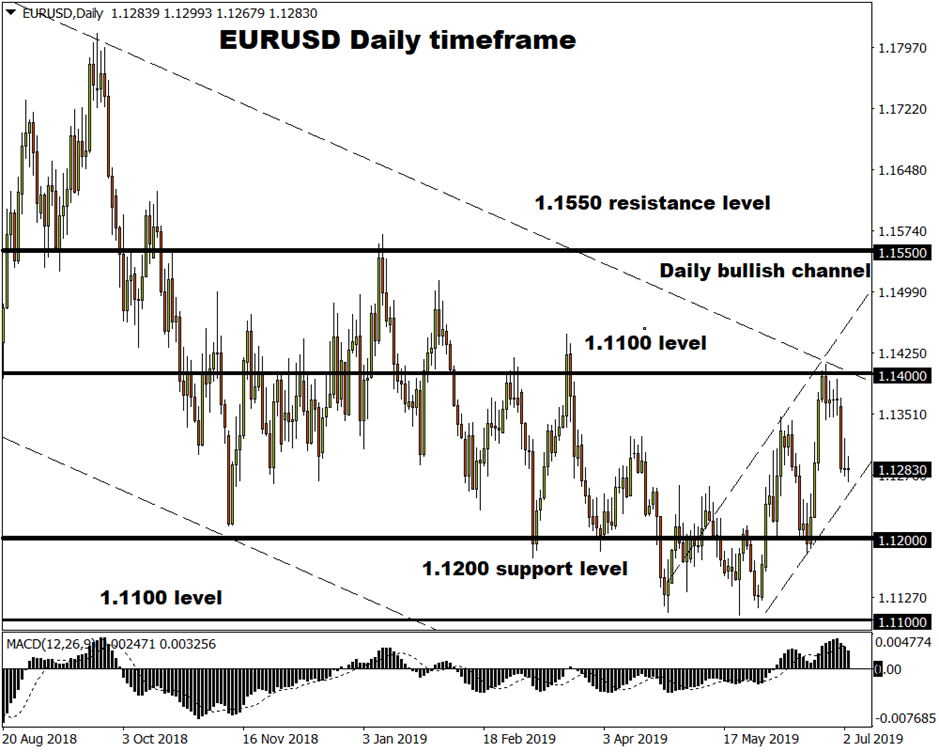
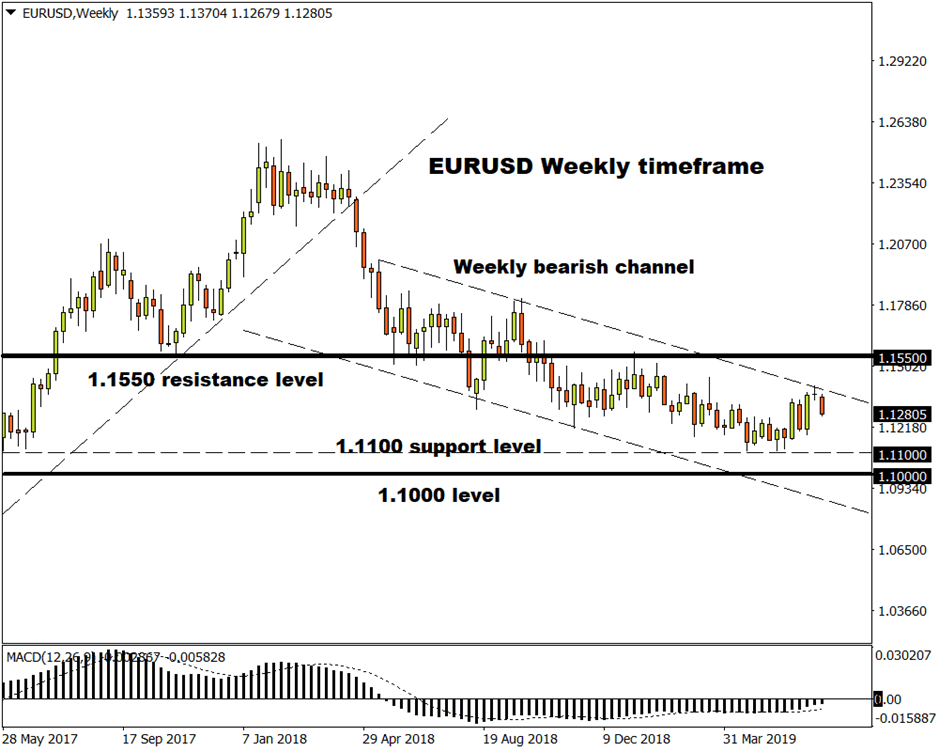
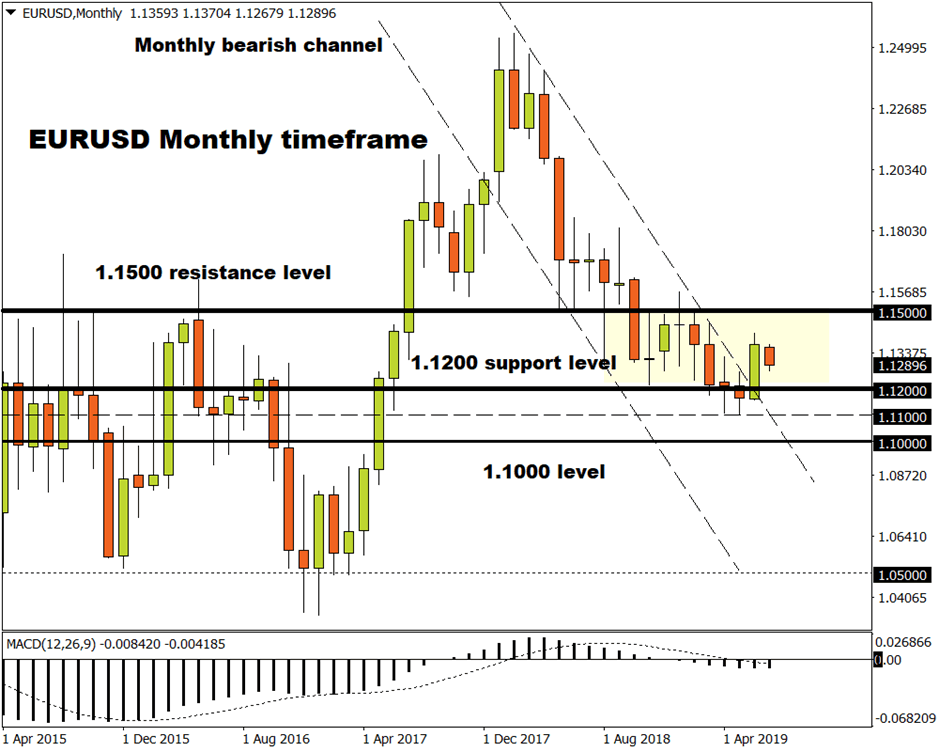
EURUSD on highway towards 1.11 and lower as technical line
Focusing on the technical picture, the EURUSD remains in a steady downtrend on the monthly charts with 1.15 acting as reliable resistance.
A decisive weekly close below 1.12 could signal a decline towards 1.11 and 1.10 – a level not seen since May 2017.
If the EURUSD manages to close above 1.14 on a monthly basis, this could open the doors back towards the 1.15 resistance. The bearish setup on the monthly charts is invalidated once a monthly close above 1.15 is secured.
Q3 Outlook: USDJPY – The Path to 100 is Clearer Than a Move Above 112
The ingredients are in place for the USDJPY to cement its position as one of the liveliest FX pairs on the radars of investors heading into the second half of 2019.
There are multiple questions to consider when determining the fortunes of the Japanese currency and its US counterpart. Will the Federal Reserve cut US interest rates by up to 50 basis points in July? Is the Trump Administration steadily influencing the monetary policy stance of the Fed? Will President Trump fire/replace Fed Chair Jerome Powell? Will US-China relations follow a similar path of deterioration as H1 2019? Will the universal slowdown in economic data lead to another global downturn? Could the brewing war of words between the United States and Iran escalate into a conflict? And, what if Boris Johnson, upon winning the contest to become the next UK Prime Minister, sticks to his guns and leads the United Kingdom into a no-deal Brexit on October 31? Will such an outcome precipitate another plunge in Sterling and lead to a spectacular period of weakness for global markets?
Extended period of market uncertainty needed for USDJPY 100
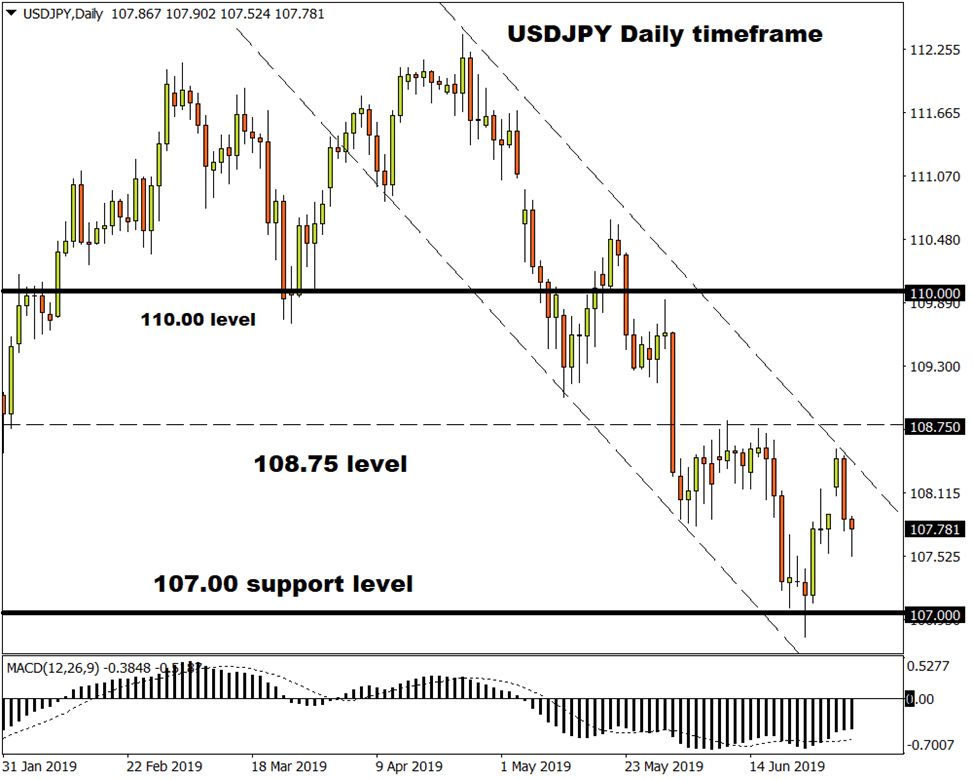
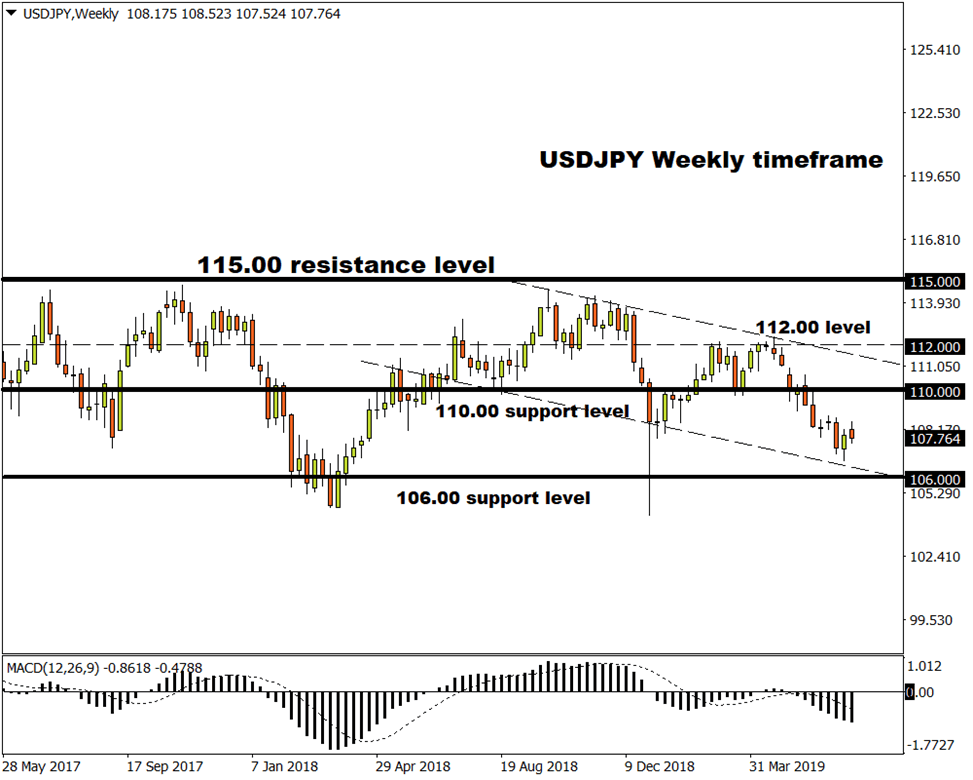
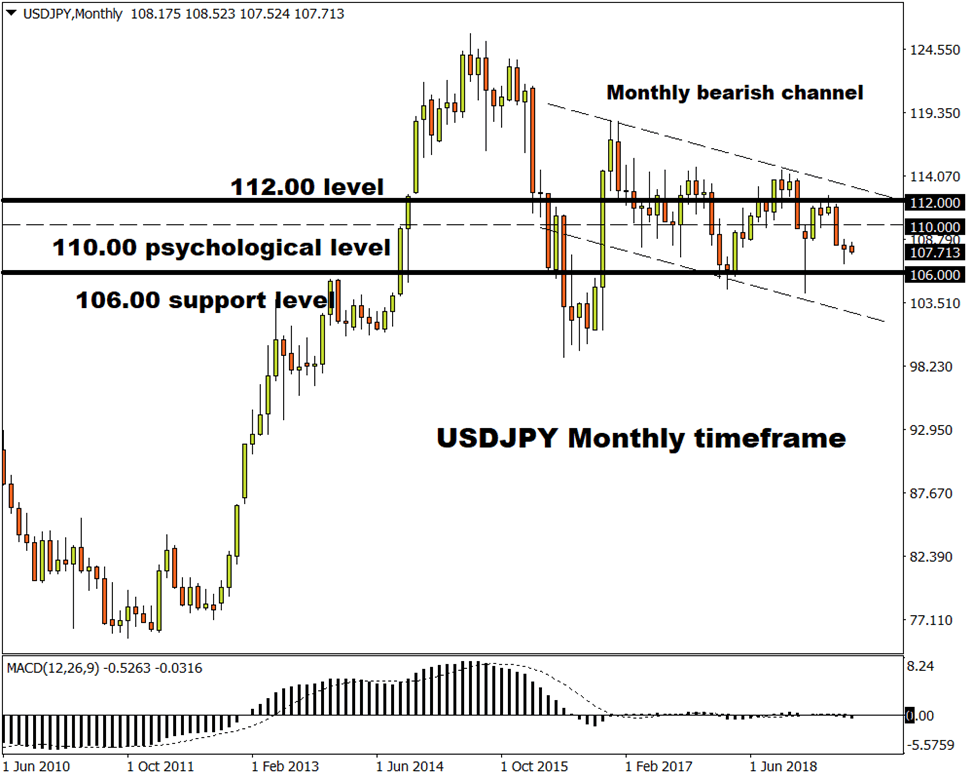
Any one or a combination of the above would lead to a prolonged round of market panic and will send the USDJPY lower as safe haven demand for the Japanese Yen escalates. An extended period of market uncertainty would be needed for USDJPY to fall below 100 for the first time since Q2 2016. The January “flash crash” low of 104 is the current line in the sand in coming months, but 104 will not act as solid support for the pair, should the Yen further its 2.7% Q2 advance against the greenback.
Another turn for the worse in US-China trade sinks USDJPY
The United States and China trade saga has extended into the second half of 2019 and investors have rushed into stock markets once again on optimism that central banks will come to the rescue with yet another round of monetary easing.
Be careful of this narrative. A resolution to the US-China trade standoff would dampen expectations that the Fed will cut US interest rates and push investors to take profit from the stock rally that has carried US valuations back towards record highs. The Dow Jones and the S&P 500 jumped above 14% and 17.35% respectively in H1.
Another wrong turn in US-China relations will prompt the Federal Reserve to cut US interest rates again, as it becomes clearer that US-led protectionist policies are denting the world’s biggest economy. Economic weakness in the United States and the Fed bowing to investor expectations of lower US interest rates will squeeze the Dollar more than the 1.6% drop it suffered in the month of June.
USDJPY buyers need Fed to disappoint investors by holding back from lower US rates
What potential USDJPY buyers need to see is positive geopolitical news, the key one being the US-China trade war. If the two nations do finally agree to new trade terms, or at least a prolonged truce on new tariffs, a worldwide relief rally would shove both the Yen and Gold from their pedestals as beneficiaries of safe haven buying.
A global stock market surge on positive US-China newsflow can take the USDJPY back towards 110, but the Federal Reserve would need to delay its recent tone that it is approaching one, or several, possible US interest rate cuts in the next six months for the USDJPY to extend above 110 and back to its current 2019 high at 112.
Q3 Outlook: GBPUSD – Boris Johnson To Give Sterling Bears More Ammunition to Sell the Pound
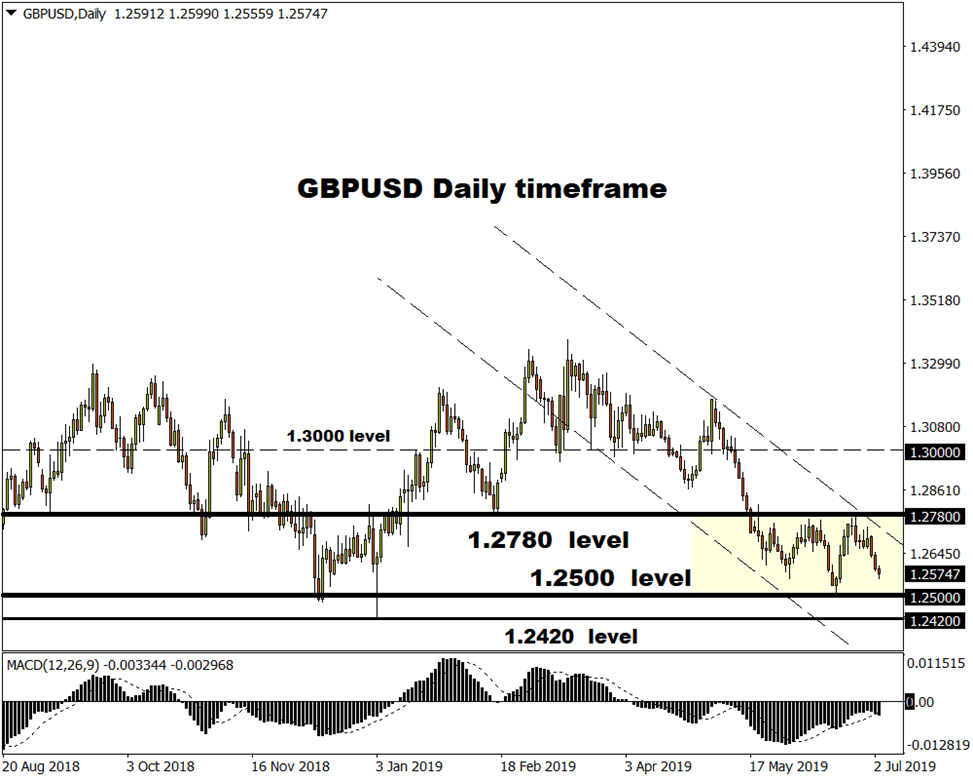
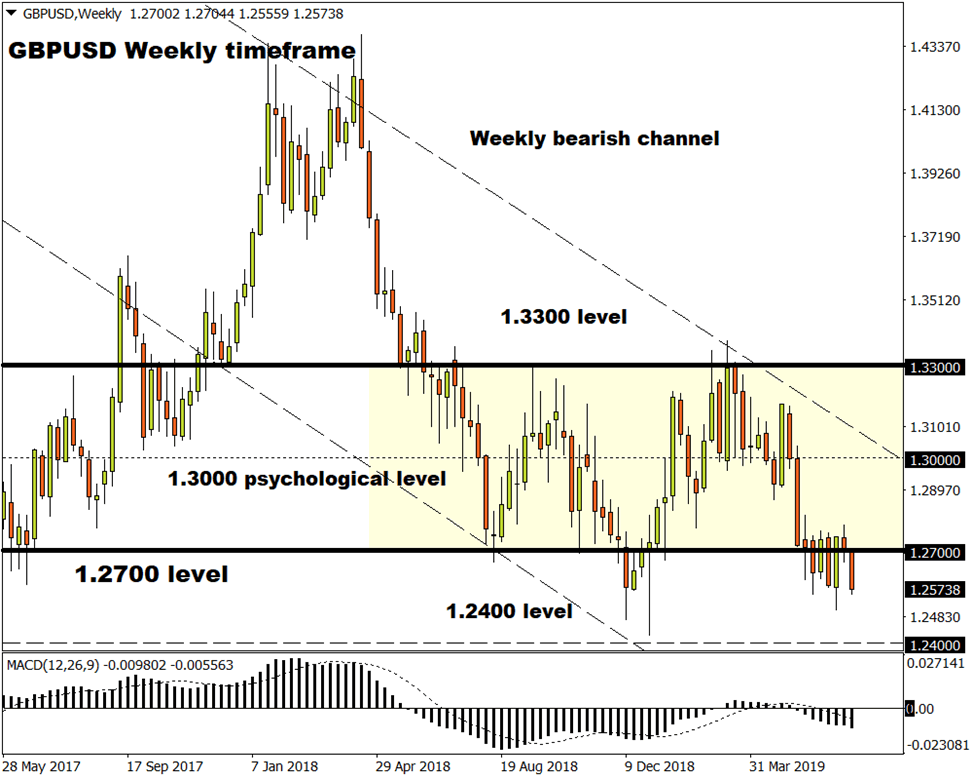
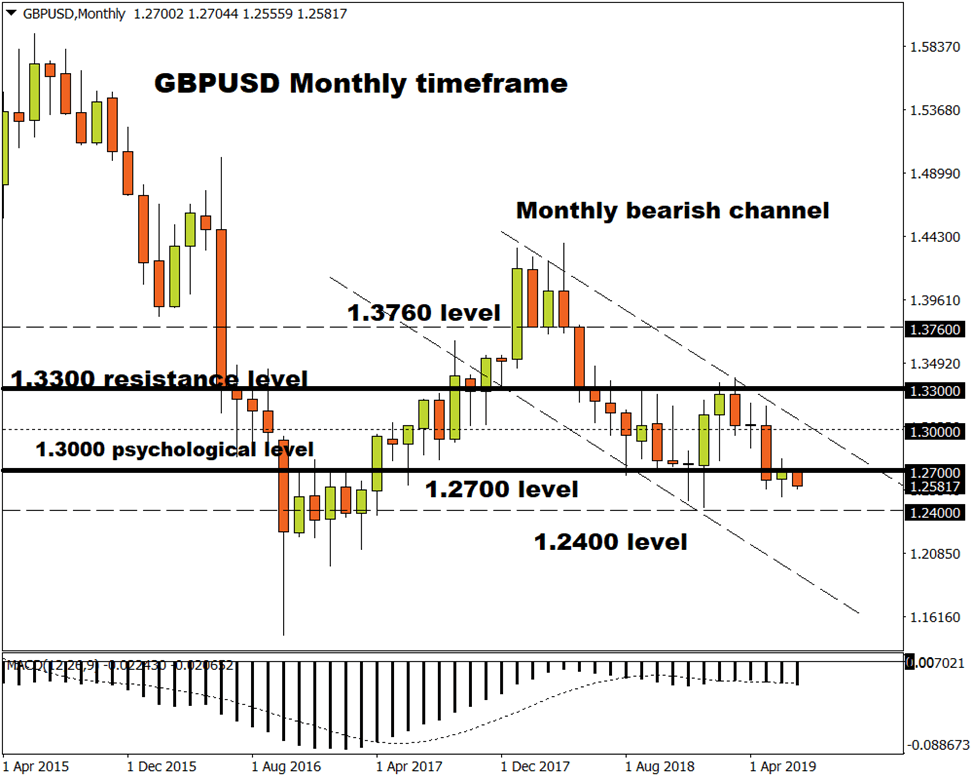
If hardline Brexiteer Boris Johnson becomes the next UK Prime Minister and “come what may” leads the United Kingdom out of the European Union on October 31 in a no-deal Brexit, the Pound would likely fall to levels not seen since early 2017 against the US Dollar.
If Brexit pessimism reaches the levels witnessed in the months following the 2016 referendum, the key levels to watch are: the April 2017 low marginally below $1.24, the March 2017 low of $1.23 and even the January 2017 low just under $1.20
Jeremy Hunt seen as “market-friendly” alternative, but won’t change picture for Pound
Standing between Boris Johnson and Number 10 Downing Street is Jeremy Hunt, who is viewed as slightly less committed to a no-deal outcome and is therefore deemed to be more Sterling friendly. Nevertheless, any Pound upside looks capped around $1.28, even if there is another extension beyond the October deadline because it would represent yet another example of kicking the can down the road.
Investors not yet positioned for Johnson to collaborate with EU
It’s important to bear in mind how much negative news has already been priced into the Pound, even if bookmakers’ favorite Boris Johnson gets the keys to Number 10.
This means that investors are yet to position for any possibilities over Johnson willing to work together with the EU, reflecting the mood of the UK Parliament, to agree a smoother Brexit outcome. Offering an olive branch to the EU to encourage stronger collaboration would help bilateral relations with Europe remain beyond Brexit. Unlikely as this may seem, it’s something for investors to consider given the Pound’s weak Q2 performance against the US Dollar when it moved from above $1.31 to $1.25 just over a month later as the prospect of a no-deal Brexit increased.
UK economic data releases to take backseat, but watch the slowing global growth story
Economic data from the United Kingdom will also continue to take a backseat until the prolonged Brexit uncertainty clears up. Unlike many other major economies, GBPUSD - a proxy for the UK economy - has proven less sensitive to global geopolitical issues, such as the US-China trade dispute.
This will remain the case until there is more clarity around Brexit. Don’t ignore the fact that the United Kingdom is also showing signs of Brexit-induced economic weakness. Expectations that the Bank of England will step in with monetary stimulus, likely in the form of lower borrowing costs prevents GBPUSD extending beyond $1.30 anytime soon. Like the rest of us, the Bank of England is playing the Brexit waiting game. The BoE is however more upbeat than central bank peers, where during its June policy meeting it reiterated the consensus view that further rate rises in the UK would likely be required. This view can however change, and can do so suddenly, in the event of a no-deal Brexit.
For the Pound to rise above $1.30 in the current environment, optimism has to gain serious momentum that the United Kingdom is either heading for a much softer Brexit than is currently envisaged, a potential second referendum or, as some optimists still hold hope for, no Brexit at all.
EUR/USD Mid-Day Outlook
Daily Pivots: (S1) 1.1261; (P) 1.1286; (R1) 1.1303; More...
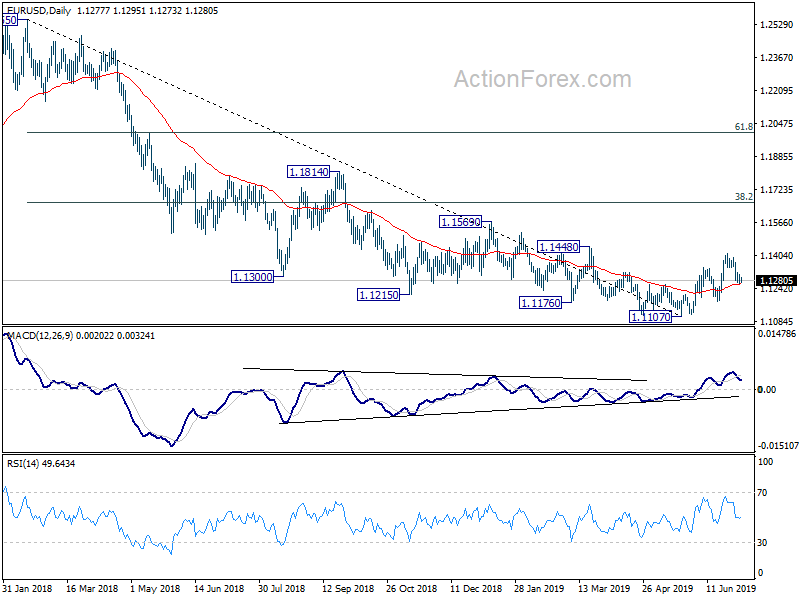
With 1.1344 minor support intact, further fall is in favor to 1.1181 support. Break will confirm completion of rebound from 1.1107 at 1.1412. Retest of 1.1107 low should be seen next. Though, above 1.1344 minor resistance will turn bias back to the upside to resume the rebound from 1.1107 through 1.1412 instead.
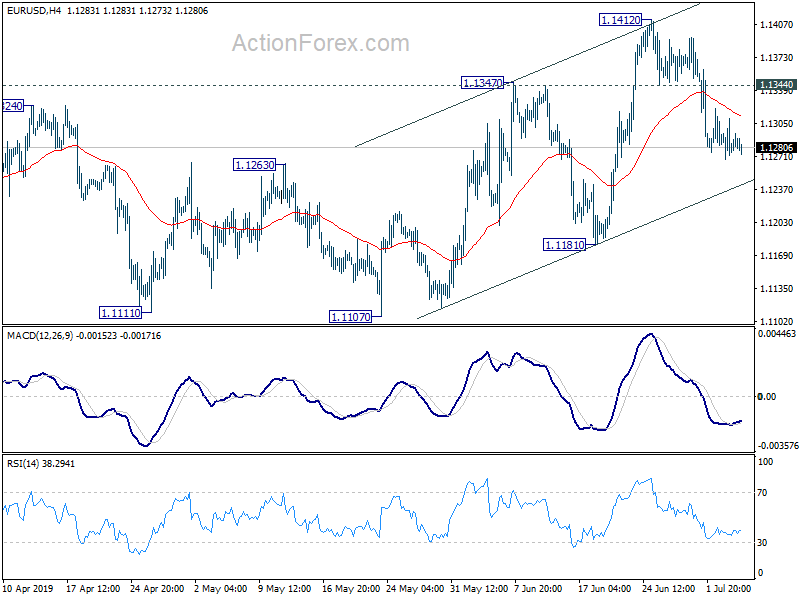
In the bigger picture, considering bullish convergence condition in daily and weekly MACD, a medium term bottom should be in place at 1.1107 after hitting 61.8% retracement of 1.0339 (2016 low) to 1.2555 (2018 high) at 1.1186. Further rise should be seen to 38.2% retracement of 1.2555 to 1.1107 at 1.1660. Reactions from there could indicate whether rebound from 1.1107 is a corrective rise or reversing medium term trend. In any case, risk will stay mildly on the upside as long as 1.1107 low remains intact.
GBP/USD Mid-Day Outlook
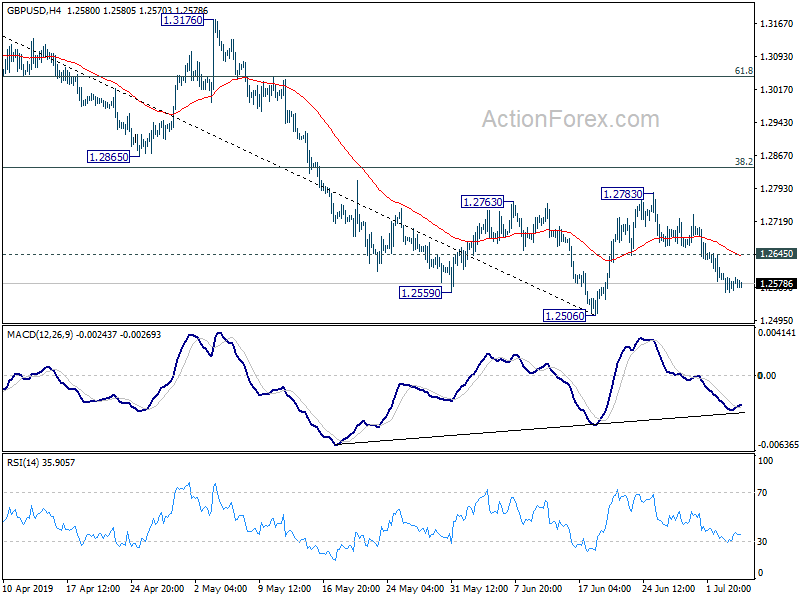
Daily Pivots: (S1) 1.2556; (P) 1.2579; (R1) 1.2600; More....
With 1.2645 minor resistance intact, fall from 1.2783 should extend to retest 1.2506 support. Firm break of 1.2506 will resume larger fall from 1.3381 to 1.2391 low. On the upside, above 1.2645 minor resistance will extend the consolidation from 1.2506 with another rise. But upside should be limited by 38.2% retracement of 1.3381 to 1.2506 at 1.2840 to bring fall resumption eventually.
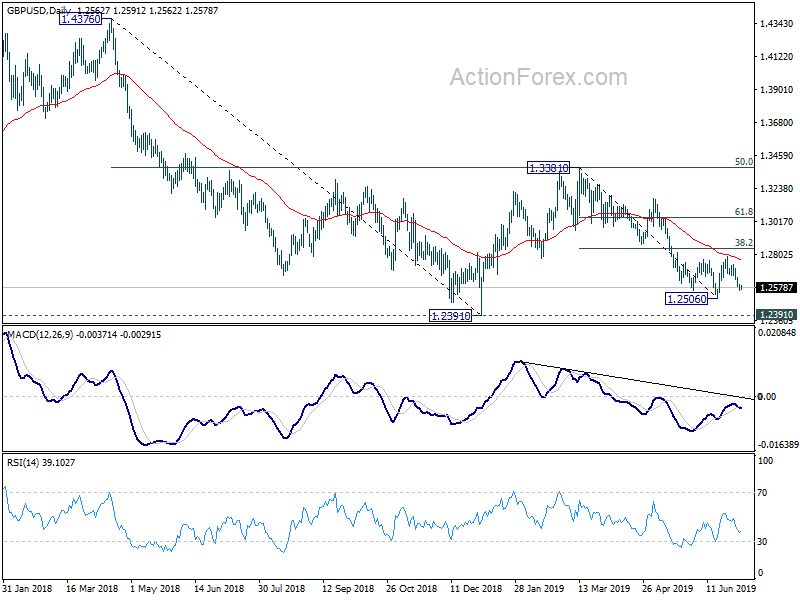
In the bigger picture, down trend from 1.4376 (2018 high) is still in progress. Break of 1.2391 would target a test on 1.1946 long term bottom (2016 low). For now, we don't expect a firm break there yet. Hence, focus will be on bottoming signal as it approaches 1.1946. In any case, medium term outlook will stay bearish as long as 1.3381 resistance holds, in case of strong rebound.
USD/CHF Mid-Day Outlook
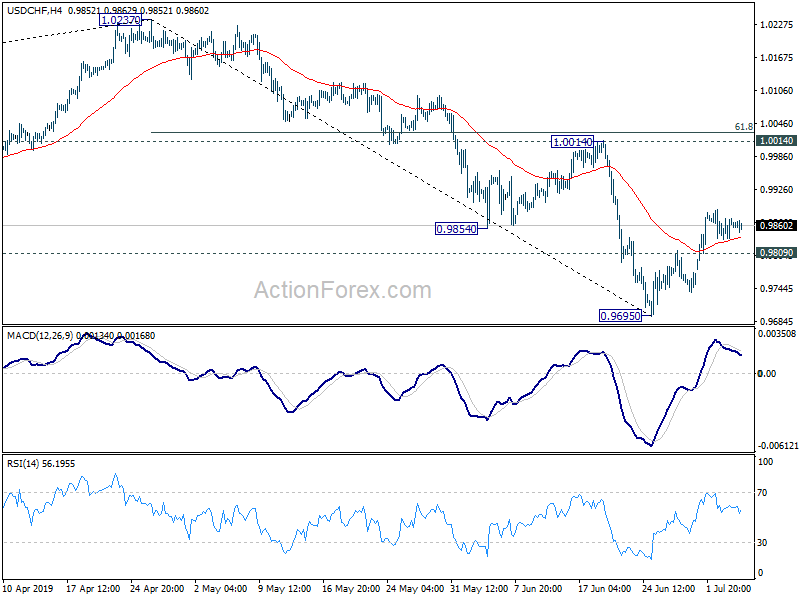
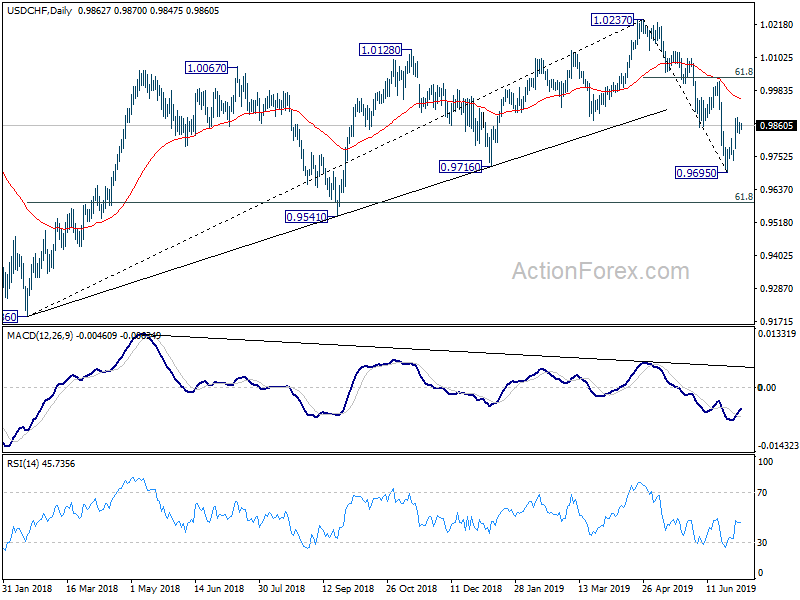
Daily Pivots: (S1) 0.9842; (P) 0.9857; (R1) 0.9880; More...
With 0.9809 minor support intact, further rise is still in favor in USD/CHF. Rebound from 0.9695 could extend to 1.0014 resistance. Upside could be limited by 61.8% retracement of 1.0237 to 0.9695 at 1.0030. On the downside, below 0.9809 minor support will turn bias back to the downside for retesting 0.9695 low instead.
In the bigger picture, current development suggests that up trend from 0.9186 (2018 low) has completed at 1.0237 already. Deeper decline would be seen to 61.8% retracement of 0.9186 to 1.0237 at 0.9587 and below. For now, USD/CHF is seen as in long term range pattern between 0.9186 and 1.0342. Hence, we'd pay attention to bottoming signal below 0.9587. However, sustained break of 1.0014 will revive medium term bullishness and turn focus back to 1.0237 high.
USD/JPY Mid-Day Outlook
Daily Pivots: (S1) 107.56; (P) 107.80; (R1) 108.08; More...
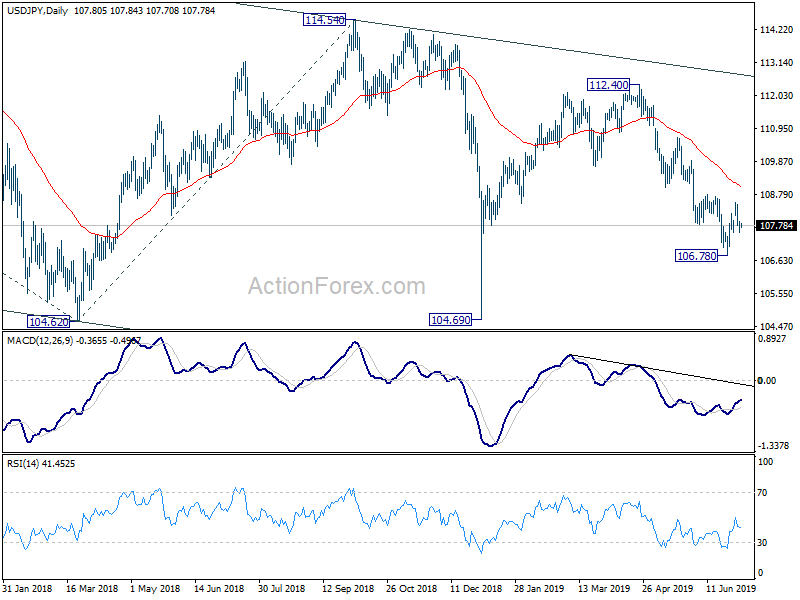
No change in USD/JPY's outlook. Intraday bias remains neutral with focus on 107.56 minor support. Firm break of 107.56 minor support will bring retest of 106.78 low. Break there will extend recent fall from 112.40 to 104.69 low. Nevertheless, sustained break of 108.80 will confirm short term bottoming at 106.78. In this case, stronger rise should be seen back to 110.67 resistance.
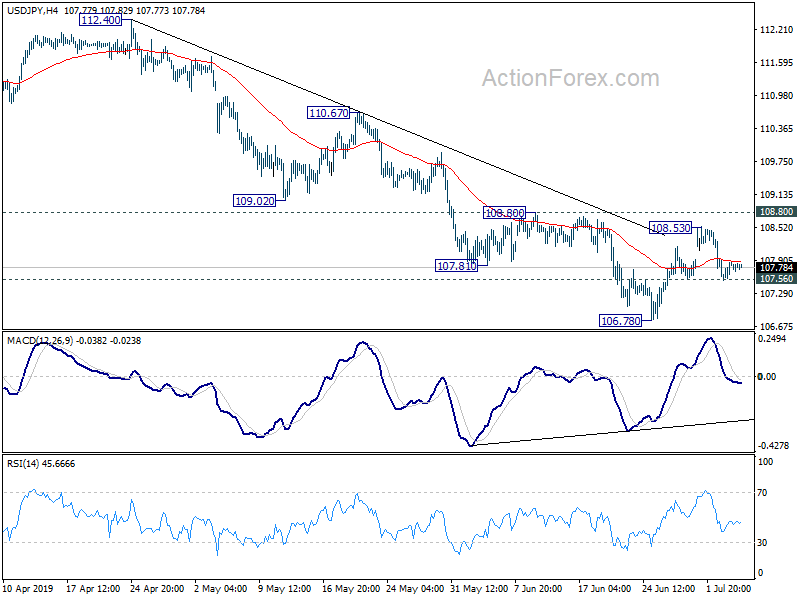
In the bigger picture, decline from 118.65 (Dec 2016) is still in progress, with the pair staying inside long term falling channel. Break of 104.62 will target 100% projection of 118.65 to 104.62 from 114.54 at 100.51. For now, we'd expect strong support above 98.97 (2016 low) to contain downside to bring rebound. In any case, break of 112.40 is needed to the first serious sign of medium term bullishness. Otherwise, further decline will remain in favor in case of rebound.