

Sample Category Title
EUR/CHF Weekly Outlook
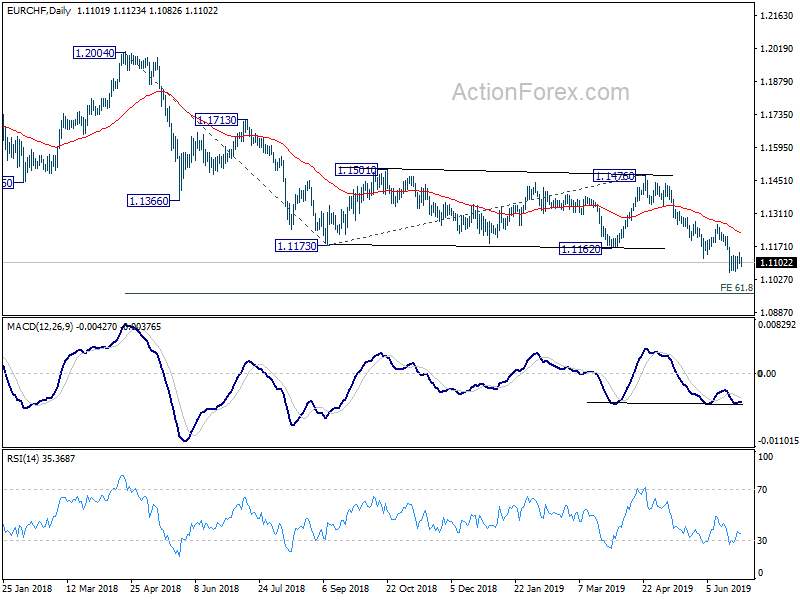
EUR/CHF stayed in consolidation above 1.1056 last week and outlook is unchanged. Initial bias stays neutral this week for some more consolidations first. In case of another recovery, upside should be limited below 1.1264 resistance to bring fall resumption. On the downside, break of 1.1056 will extend the larger down trend for 61.8% projection of 1.2004 to 1.1173 from 1.1476 at 1.0962 next.
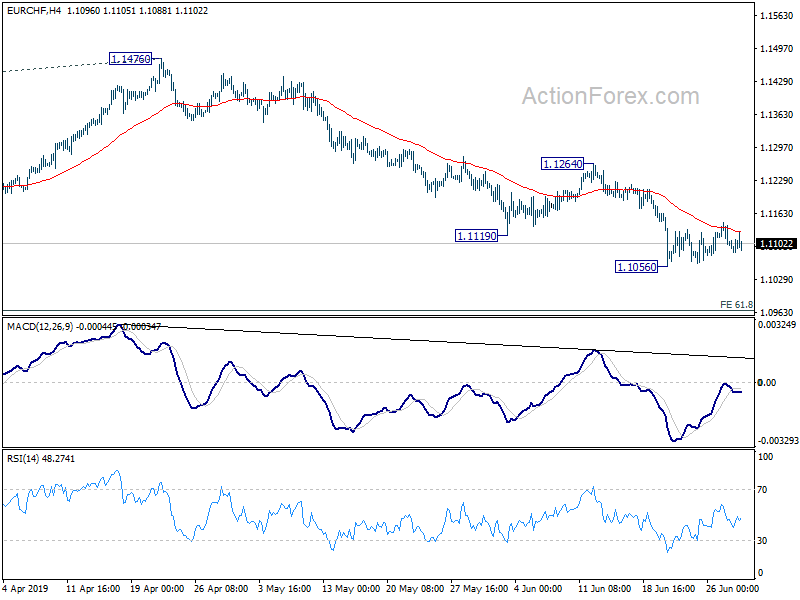
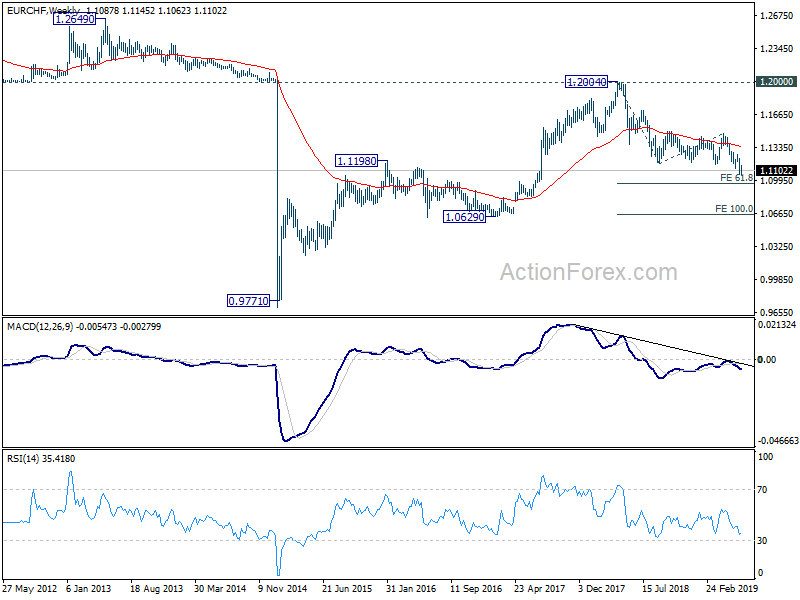
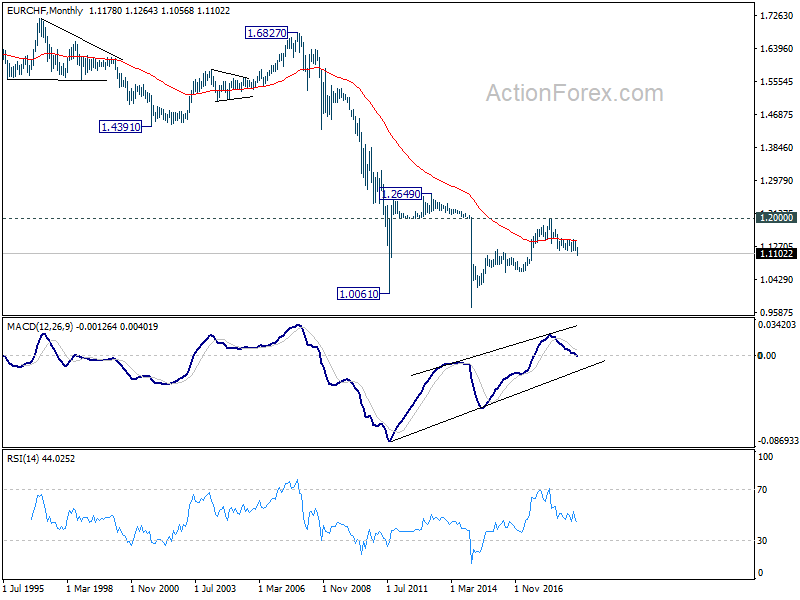
In the bigger picture, current development firstly suggests that down trend from 1.2004 is still in progress. More importantly, it's likely a long term down trend itself, rather than a correction. Outlook will remain bearish as long as 1.1476 resistance holds. EUR/CHF could target 1.0629 support and below.
Focus Turn to US Data after Trump & Xi Delivered at G20
Expectations setting were rather well set for the highly anticipated Trump-Xi meeting at G20. Both sides agreed to stop raising tariffs further. But it's unsure whether they've closed the huge gap that led to collapse in trade negotiations. If the causes remain, the results would be the same no matter how long the talks will continue. But anyway the results should keep investors happy for now and we'd likely see a lift in sentiments as the week starts.
In the currency markets, commodity currencies already jumped the gun last week, lead by New Zealand, then Australian and Canadian Dollar. However, Aussie will be facing risks of RBA rate cut as well as Chinese data this week. Economic data from Canada affirmed BoC's neutral stance. But WTI crude oil appears to have topped at 59.84 after failing 60 handle. Pull back in oil price could be a drag on the Loonie this week.
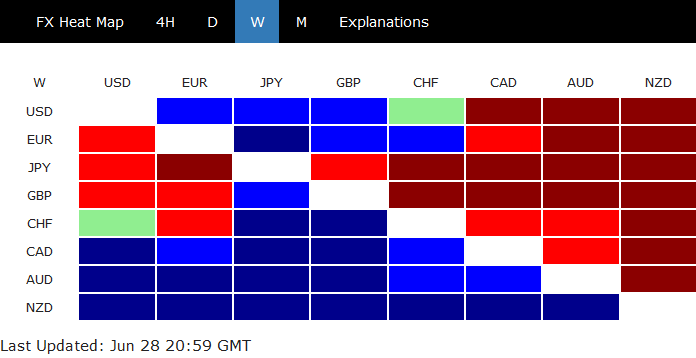
On the other hand, Yen was the weakest one last week, followed by Sterling and then Swiss Franc. Dollar was mixed as it pared some losses after Fed officials talked down the chance of aggressive 50bps cut. While markets are pricing in 100% chance of a Fed cut in July, we'd maintain that the meeting is still live. At least, the upcoming data of ISM indices and non-farm payroll would need to show some more deterioration in the economy to seal the dovish case. Otherwise, we might see Dollar forming a bas for sustainable rebound.
Trump-Xi meeting: No new tariffs, China to buy US farm products, US to sell tech to Huawei
US and China agreed to stop further escalation of trade war for the time being, after 80 meeting between Trump and Xi Jinping, as sideline of G20 summit in Japan. Trade negotiations will resume while China agreed to purchase additional US agricultural products. Meanwhile, the ban of supply to Chinese telecom giant would be lifted partially as part of the agreement.
Trump described the meeting as "excellent, as good as it was going to be" and declared that "we're back on track". He added, "we will continue to negotiate, and I promise that at least for the time being we won't be adding additional [tariffs]". Also, "China will consult with us and will be buying a tremendous amount of food and agricultural products, and they're going to start doing that almost immediately," Trump said.
Regarding the issue of Huawei, Trump said "we'll have to save that until the very end" of the trade talks. However, "one of the things I will allow, however, is… we will keep selling that product." And, "US companies can sell their equipment to Huawei," Trump said, but "we're talking about equipment where there's no great national security problem with it."
But so far, nothing substantial was mentioned regarding the core issues of intellectual property theft, forced technology transfer and market distortion by large subsidies to state-owned enterprises. It's unsure if Trump was already happy with more Chinese purchases. Or he's completely forgotten what are the most important issues.
On the Chinese side, state-run Xinhua described the meeting result as both presidents agreeing "to restart trade consultations between their countries on the basis of equality and mutual respect."
In response to the news, IMF Managing Director Christine Lagarde warned: "While the resumption of trade talks between the United States and China is welcome, tariffs already implemented are holding back the global economy, and unresolved issues carry a great deal of uncertainty about the future".
G20 pledged to realize free, fair, non-discriminatory, transparent, predictable and stable trade and investment environment
G20 leaders ended the summit in Japan pledging to realize a free and fair trade and investment environment. But they stopped short of denouncing protectionism. Though, the group still agreed on continuing with WTO reform while acknowledging the complementary roles of bilateral and free trade agreements.
In the joint communique, the group said "we strive to realize a free, fair, non-discriminatory, transparent, predictable and stable trade and investment environment, and to keep our markets open". And they "reaffirm our support for the necessary reform of the World Trade Organization (WTO) to improve its functions". Actions are needed on the "functioning of the dispute settlement system". Also, "we recognize the complementary roles of bilateral and regional free trade agreements that are WTO-consistent. We will work to ensure a level playing field to foster an enabling business environment."
Markets ignored Fed comments, still pricing 100% chance of July cut
Now that G20 risk is past, focus will turn immediately to US economic data this week, including ISM indices and non-farm payrolls. Currently, fed fund futures are still pricing in 100% of a Fed rate cut in July, 71.9% chance of 25bps cut, 28.1% chance of 50bps. The pricings were not much changed from prior week's. We'd maintain that such expectations are "over".
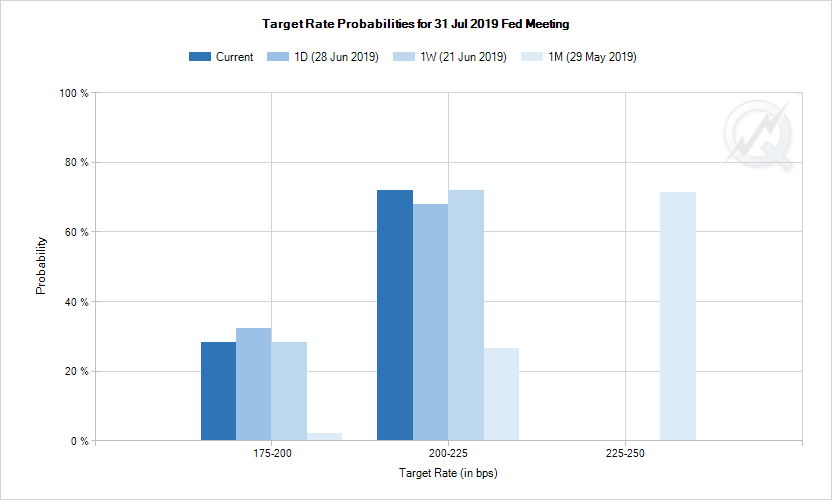
Even the most dovish Fed official, St. Louis Fed President James Bullard, called for a 25bps cut in July only. He said last week, "just sitting here today I think 50 basis points would be overdone". And, "I don't think the situation really calls for that but I would be willing to go to 25. Fed chair Jerome Powell also emphasized "we are also mindful that monetary policy should not overreact to any individual data point or short-term swing in sentiment. Doing so would risk adding even more uncertainty to the outlook."
Fed's July meeting remains open, at least before NFP release.
Dollar index at a juncture, next move to be decided soon
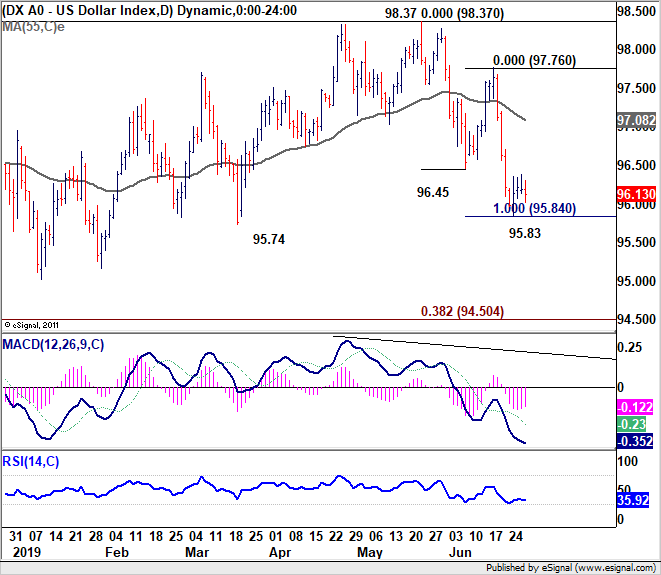
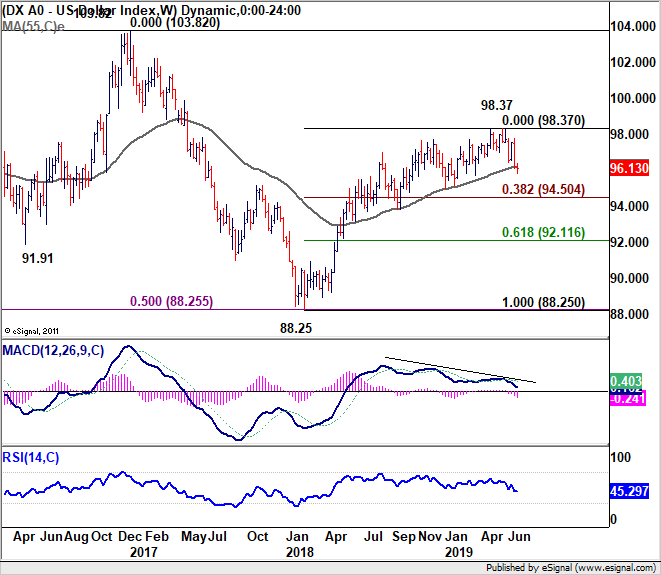
Dollar index turned sideway after edging lower to 95.83. It's, for now, trying to draw support from 100% projection of 98.37 to 96.45 from 97.76 at 95.84, 55 week EMA and 55 month EMA. If DXY is to bottom in near term, this is the moment. Break of 96.45 support turned resistance will be the first sign of completion of fall from 98.37. Firm break of 55 day EMA (now at 97.08), will confirm. However, break of 95.83 will extend the decline from 98.37, probably to 38.2% retracement of 88.25 to 98.37 at 94.50 before bottoming. We'll know which direction it takes this week.
USD/JPY Weekly Outlook
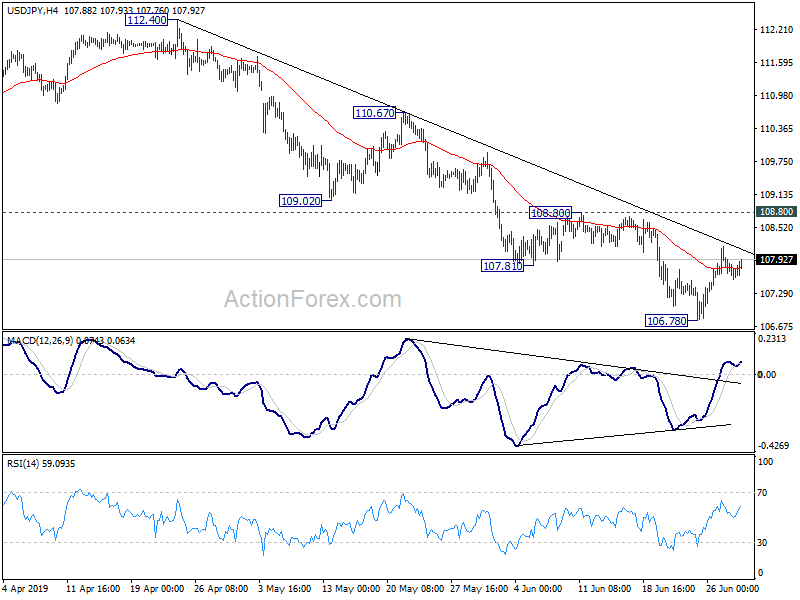
USD/JPY edged lower to 106.78 last week but recovered since then. Initial bias remains neutral this week first. As long as 108.80 resistance holds, further decline is in favor. Break of 106.78 will resume the fall from 112.40 to retest 104.69 low. On the upside, however, considering bullish convergence condition in 4 hour MACD, break of 108.80 will confirm short term bottoming. Intraday bias will be turned back to the upside for 110.67 resistance next.
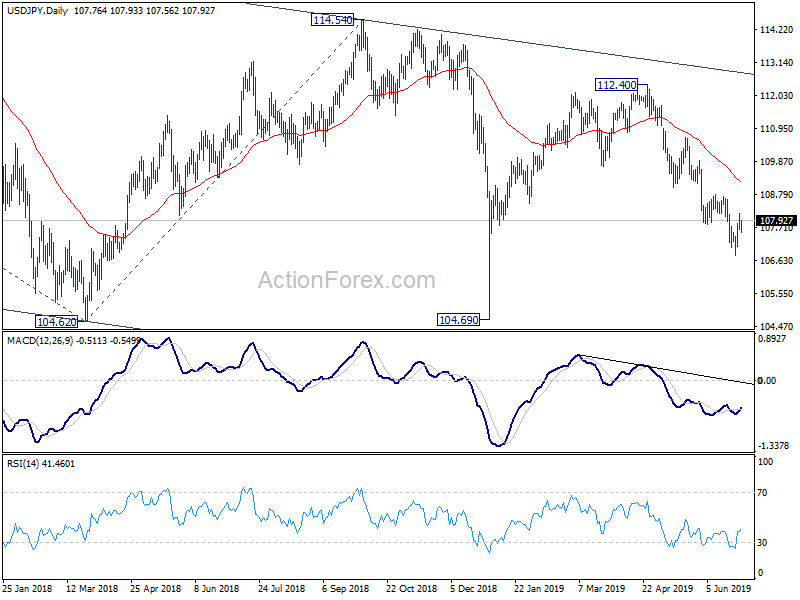
In the bigger picture, decline from 118.65 (Dec 2016) is still in progress, with the pair staying inside long term falling channel. Break of 104.62 will target 100% projection of 118.65 to 104.62 from 114.54 at 100.51. For now, we'd expect strong support above 98.97 (2016 low) to contain downside to bring rebound. In any case, break of 112.40 is needed to the first serious sign of medium term bullishness. Otherwise, further decline will remain in favor in case of rebound.
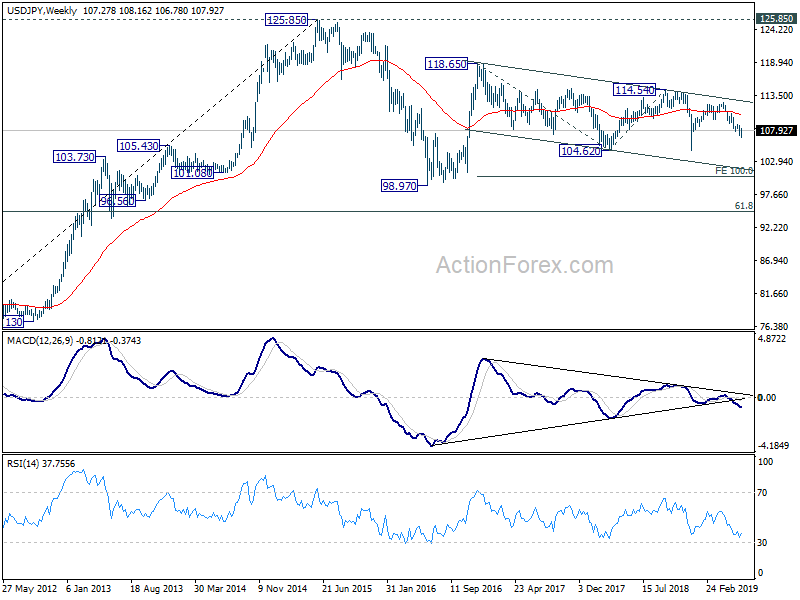
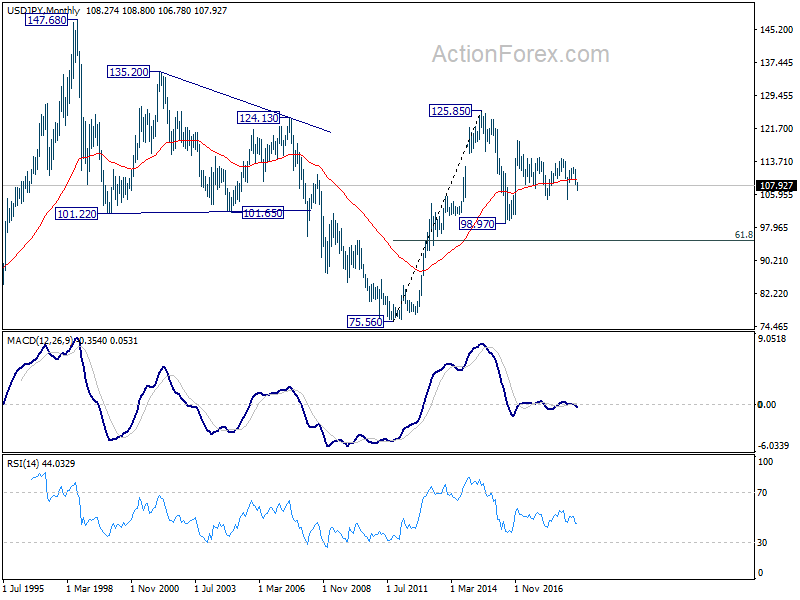
In the long term picture, the rise from 75.56 (2011 low) long term bottom to 125.85 (2015 high) is viewed as an impulsive move, no change in this view. Price actions from 125.85 are seen as a corrective move which could still extend. In case of deeper fall, downside should be contained by 61.8% retracement of 75.56 to 125.85 at 94.77. Up trend from 75.56 is expected to resume at a later stage for above 135.20/147.68 resistance zone.
CFTC Commitments of Traders -NET LENGTH for USD Fell on Heightened Hopes of Fed Funds Rate Cut
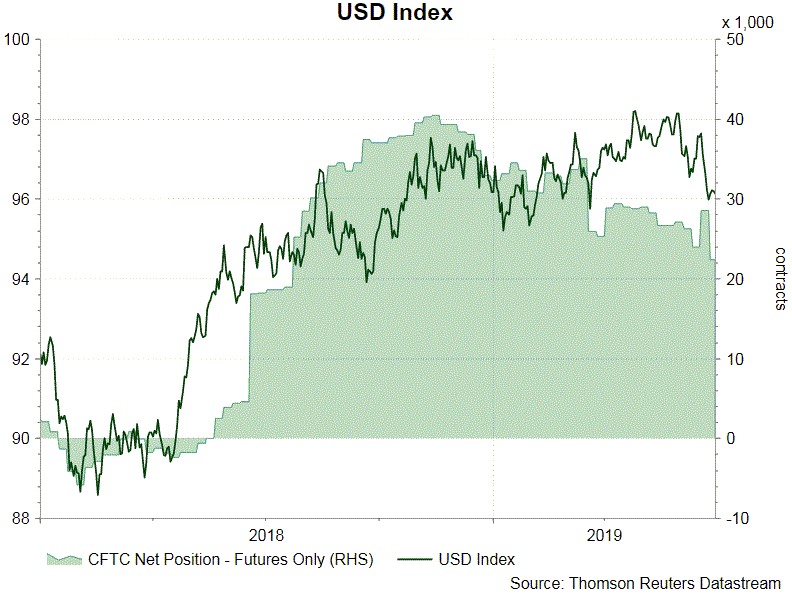
The CFTC Commitments of Traders report in the week ended June 25 shows that NET LENGTH in USD Index declined -6 183 contracts to 22 366. Speculative long positions fell -5 992 contracts while short positions added +191 contracts during the week. DXY index plunged to the lowest level since March while expectations of a Fed funds rate cut in July soared about 70%. All other major currencies stayed in NET SHORT positions.
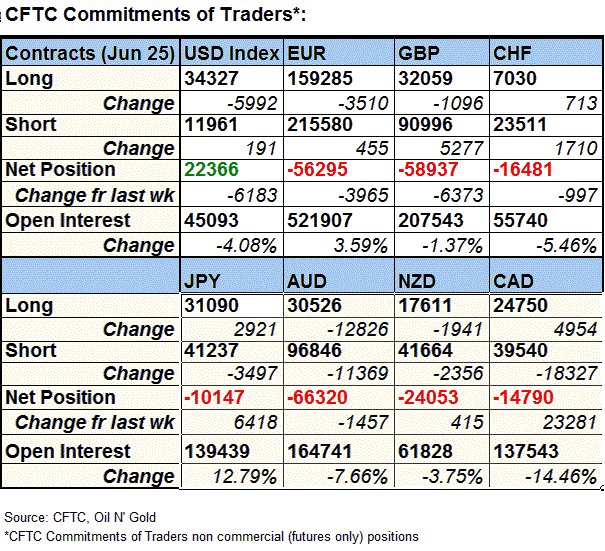
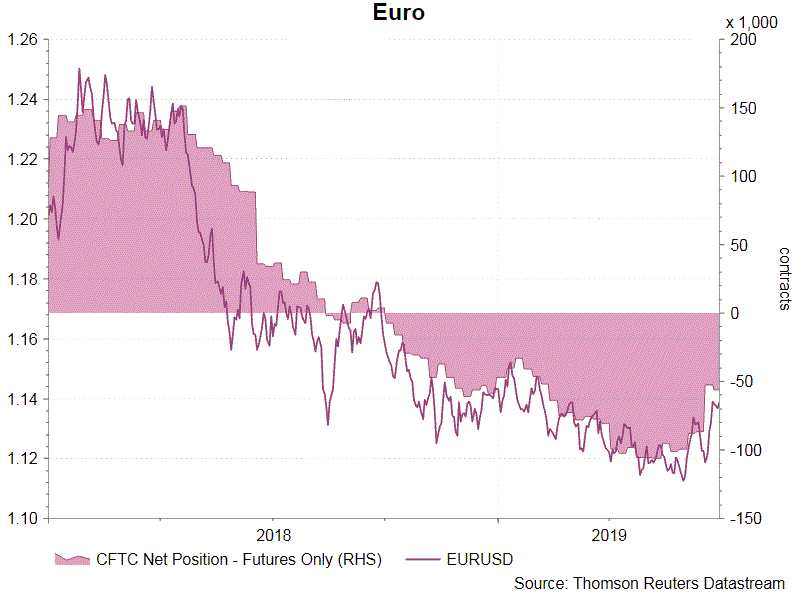
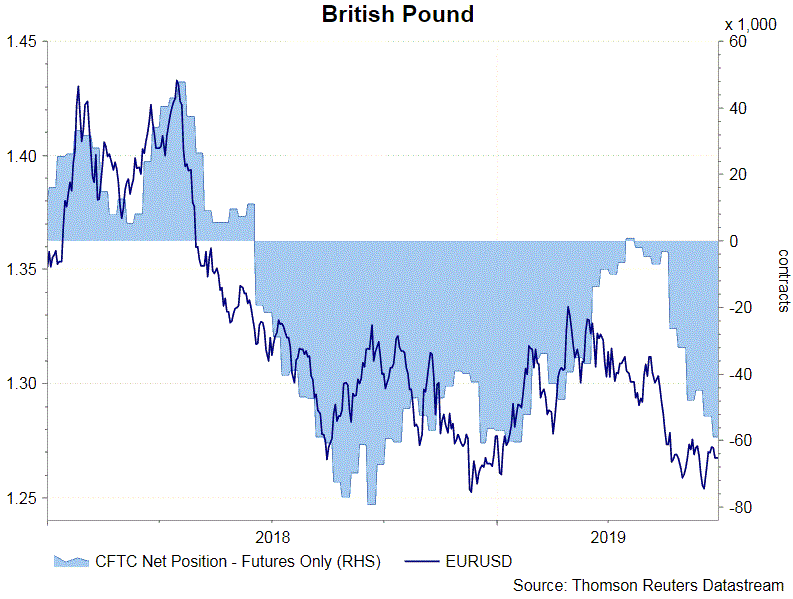
 Concerning European currencies, NET SHORT for EUR futures added +3 965 contracts to 56 295. NET SHORT for GBP futures rose +6 373 contracts to 58 937. Speculative long positions fell -1 096 contracts while speculative shorts rose +5 277 contracts for the week. GBP is expected to remain volatile in the near- to medium- term. Jeremy Hunt and Boris Johnson have become the final two MPs vying to be Tory party leader, and the Prime Minister of the UK. Opinion polls show that Johnson is leading. Although we do not expect a no-deal Brexit to materialize, Johnson's victory would inevitably raise the possibility of a hard Brexit.
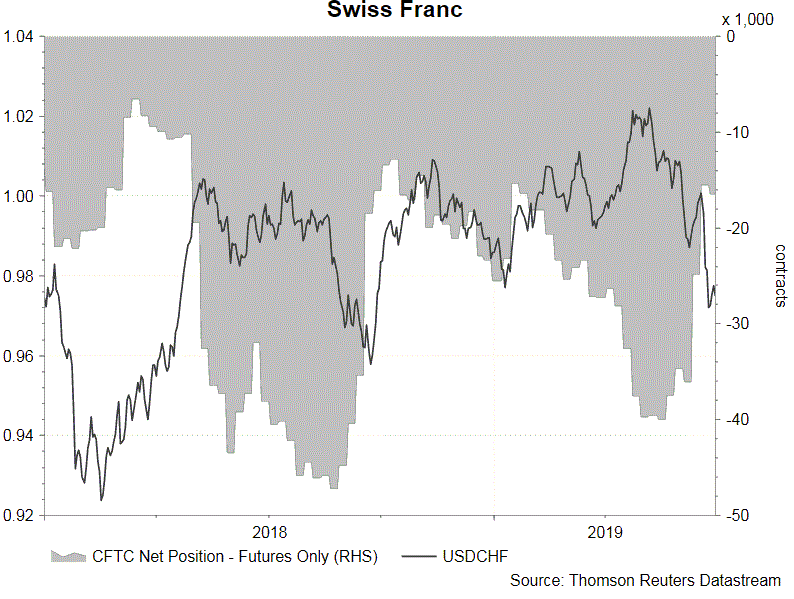
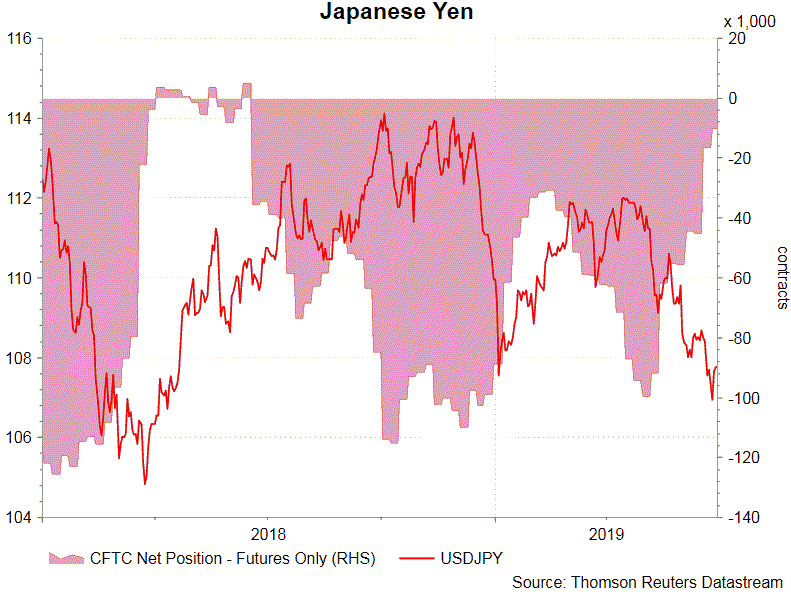
On safe-haven currencies, Net SHORT for CHF futures added +997 contracts to 16 481. NET SHORT for JPY futures plunged -6 418 contracts to 10 147 during the week. Speculative long positions gained +2 921 contracts while shorts also dropped -3 497 contracts.
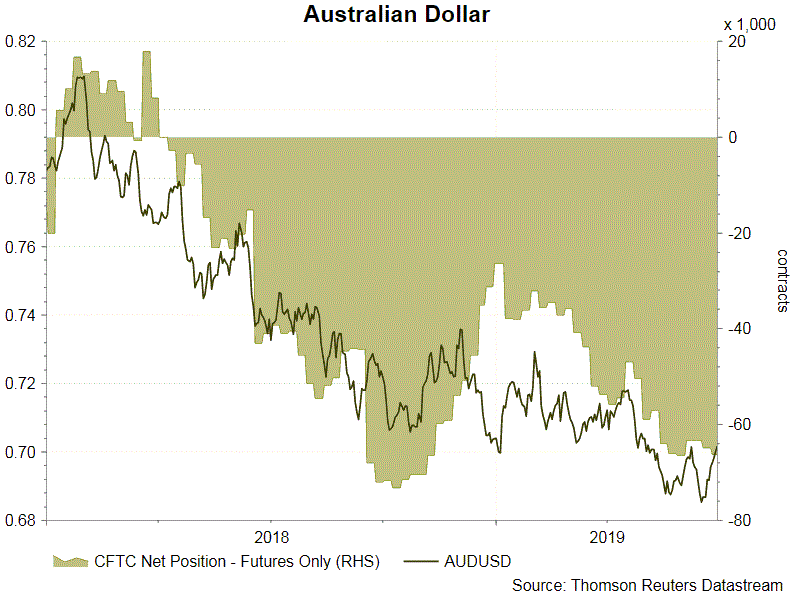
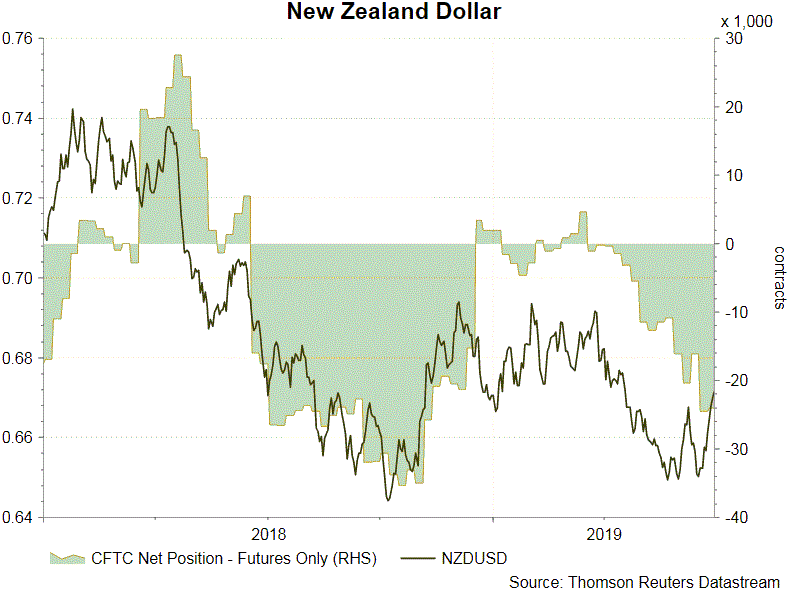
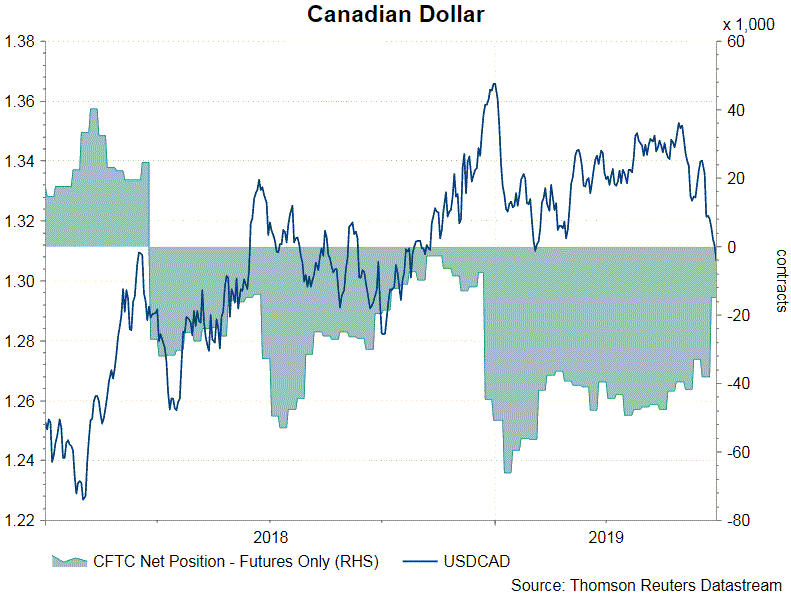
On commodity currencies, NET SHORT for AUD futures added +1 457 contracts to 66 320. Speculative long positions decreased -12 826 contracts while shorts also declined -11 369 contracts. Aussie should remain under pressure as the the expects RBA to continue cutting interest rates later this year. Separately, NET SHORT for NZD slipped -415 contracts to 24 053 contracts last week. NET SHORT for CAD futures slumped -23 281 contracts to 14 790.
CFTC Commitments of Traders – Bets for Higher Precious Metal Prices Soared as Gold and Silver Rallied to Multi-Year...
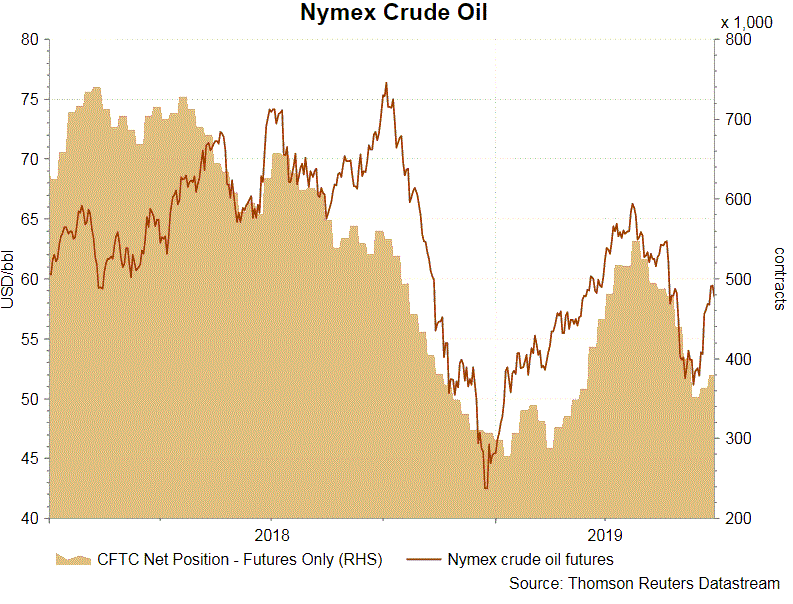
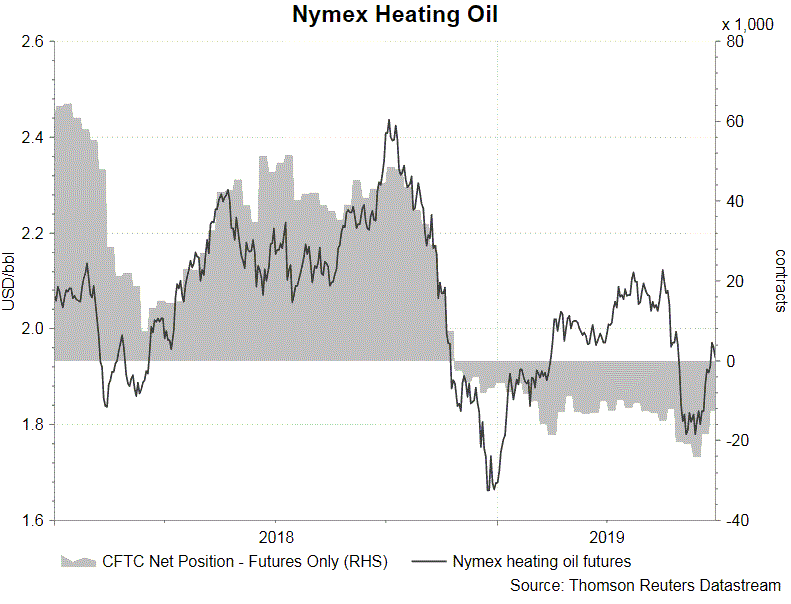
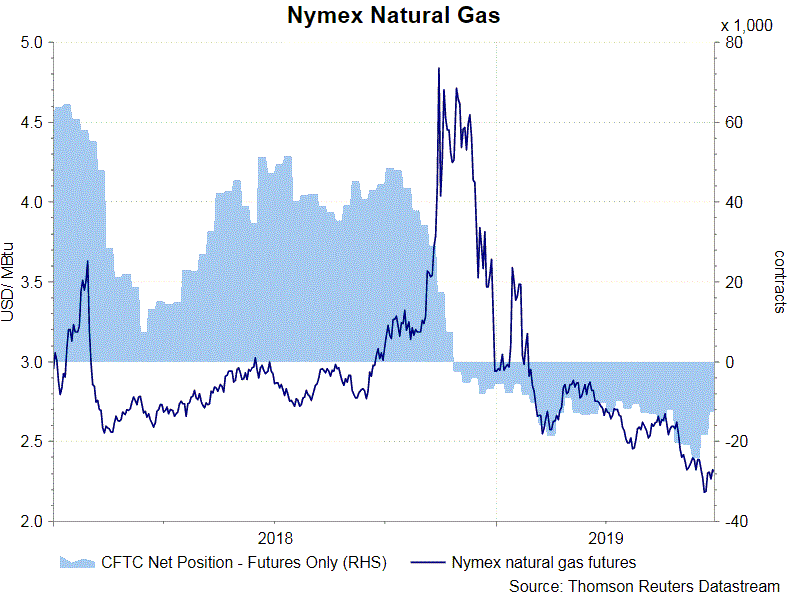
According to the CFTC Commitments of Traders report for the week ended June 25, NET LENGTH for crude oil futures rose +15 716 contracts to 378 803 for the week. Speculative long positions fell -5 808 contracts but shorts declined -21 524 contracts. We expect NET LENGTH to rise further in the coming week. For refined oil products, NET LENGTH for gasoline jumped +9 148 contracts to 82 272, while NET SHORT for heating oil dropped -5 967 contracts to 12 335 for the week. NET SHORT for natural gas futures soared +25 863 contracts to 163 162 contracts for the week.
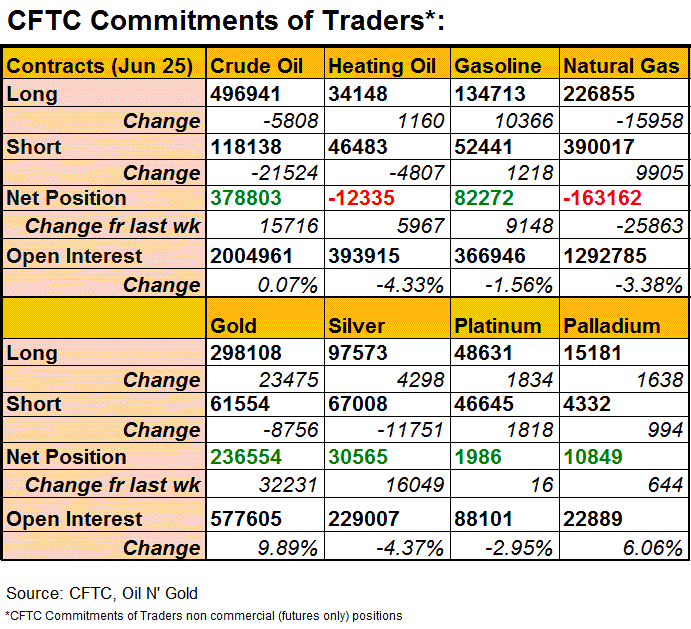
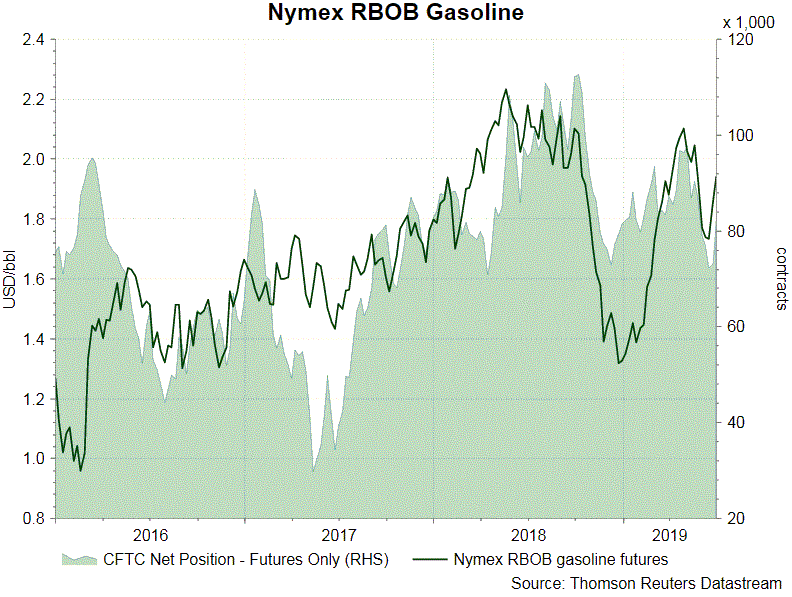
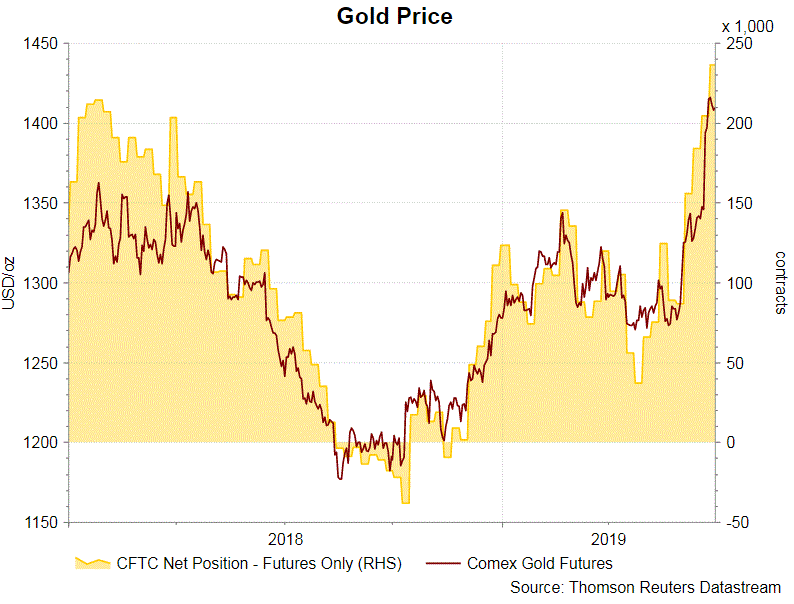
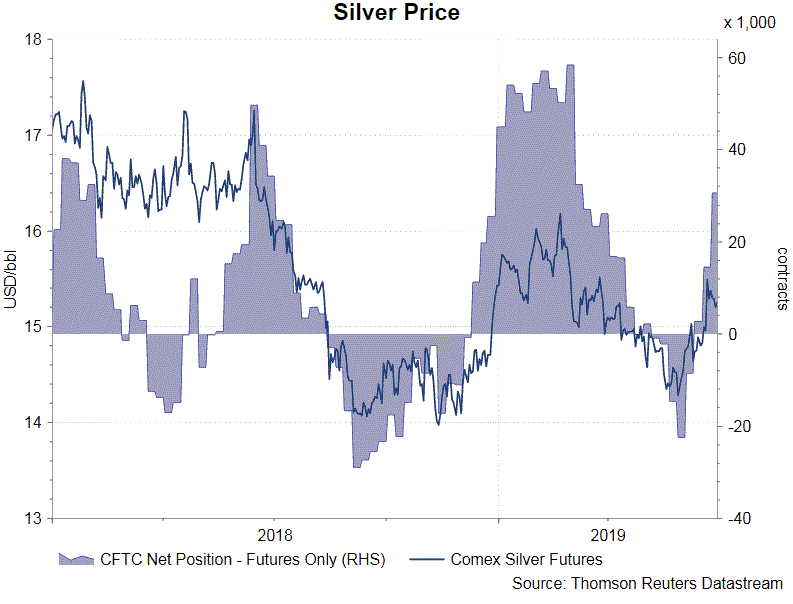
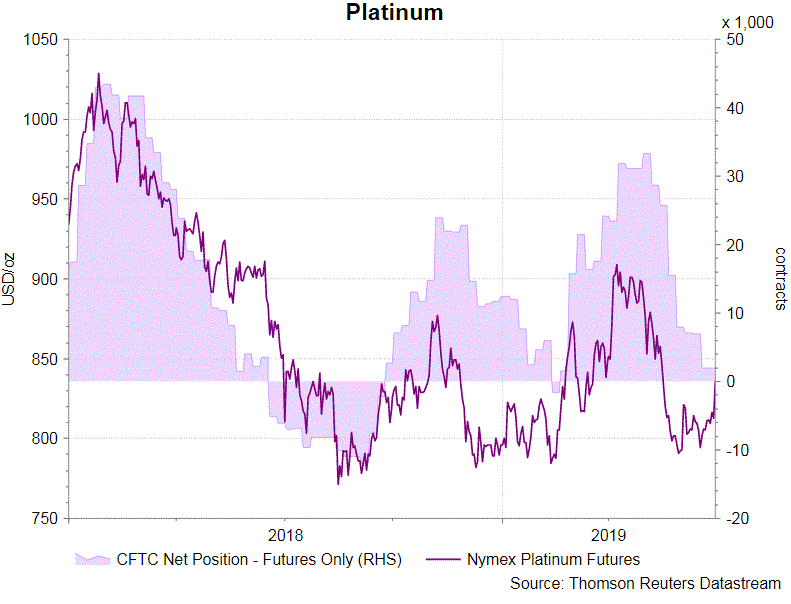
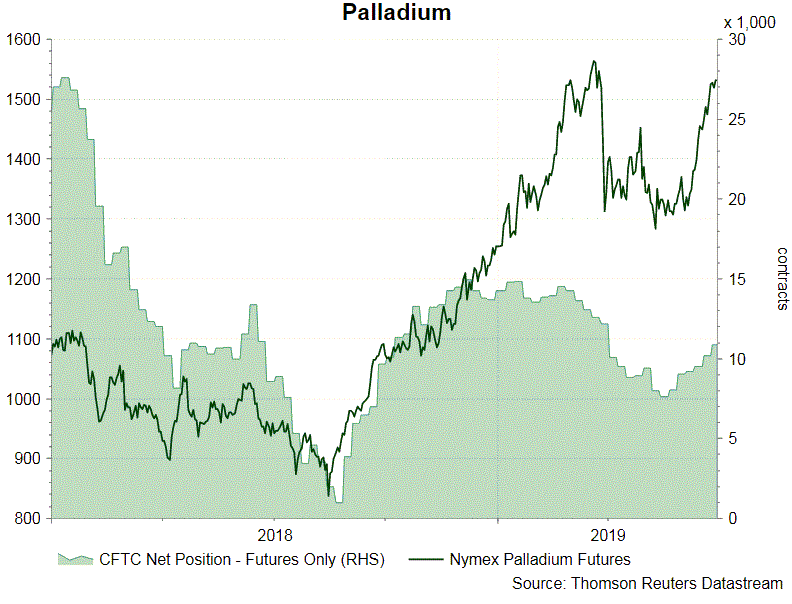
 NET LENGTH of gold and silver futures jumped again last week. NET LENGTH for gold futures surged +32 231 contracts to 236 554. Speculative long positions surged +23 475 contracts, while shorts declined -8 756. Gold price jumped to a fresh 6-month high on on speculations that global central banks might be resuming the monetary easing cycle. For silver futures, speculative long positions gained +4 298 contracts while shorts plunged -11 751. NET LENGTH for silver futures soared +16 049 contracts to 30 565. Silver price jumped to the highest level since early April during the week. For PGMs, NET LENGTH of Nymex platinum futures added +16 contracts to 1 986 while that for palladium increased +644 contracts to 10 849.
G20 pledged to realize free, fair, non-discriminatory, transparent, predictable and stable trade and investment environment
G20 leaders ended the summit in Japan pledging to realize a free and fair trade and investment environment. But they stopped short of denouncing protectionism. Though, the group still agreed on continuing with WTO reform while acknowledging the complementary roles of bilateral and free trade agreements.
In the joint communique, the group said "we strive to realize a free, fair, non-discriminatory, transparent, predictable and stable trade and investment environment, and to keep our markets open".
And they "reaffirm our support for the necessary reform of the World Trade Organization (WTO) to improve its functions". Actions are needed on the "functioning of the dispute settlement system".
Also, "we recognize the complementary roles of bilateral and regional free trade agreements that are WTO-consistent. We will work to ensure a level playing field to foster an enabling business environment."
Trump-Xi meeting: No new tariffs, China to buy US farm products, US to sell tech to Huawei
US and China agreed to stop further escalation of trade war for the time being, after 80 meeting between Trump and Xi Jinping, as sideline of G20 summit in Japan. Trade negotiations will resume while China agreed to purchase additional US agricultural products. Meanwhile, the ban of supply to Chinese telecom giant would be lifted partially as part of the agreement.
Trump described the meeting as "excellent, as good as it was going to be" and declared that "we're back on track". He added, "we will continue to negotiate, and I promise that at least for the time being we won't be adding additional [tariffs]". Also, "China will consult with us and will be buying a tremendous amount of food and agricultural products, and they're going to start doing that almost immediately," Trump said.
Regarding the issue of Huawei, Trump said "we'll have to save that until the very end" of the trade talks. However, "one of the things I will allow, however, is... we will keep selling that product." And, "US companies can sell their equipment to Huawei," Trump said, but "we're talking about equipment where there's no great national security problem with it."
But so far, nothing substantial was mentioned regarding the core issues of intellectual property theft, forced technology transfer and market distortion by large subsidies to state-owned enterprises. It's unsure if Trump was already happy with more Chinese purchases. Or he's completely forgotten what are the most important issues.
On the Chinese side, state-run Xinhua described the meeting result as both presidents agreeing "to restart trade consultations between their countries on the basis of equality and mutual respect."
In response to the news, IMF Managing Director Christine Lagarde warned: "While the resumption of trade talks between the United States and China is welcome, tariffs already implemented are holding back the global economy, and unresolved issues carry a great deal of uncertainty about the future".
Summary 7/1 – 7/5
Monday, Jul 1, 2019
[php_everywhere instance="1"]
Tuesday, Jul 2, 2019
[php_everywhere instance="2"]
Wednesday, Jul 3, 2019
[php_everywhere instance="3"]
Thursday, Jul 4, 2019
[php_everywhere instance="4"]
Friday, Jul 5, 2019
[php_everywhere instance="5"]
Weekly Economic and Financial Commentary: Incoming Data Unlikely to Dissuade Fed Cuts
U.S. Review
Incoming Data Unlikely to Dissuade Fed Cuts
- All eyes are on President Trump and Chinese President Xi as they meet at the G-20 meeting to see if they can hammer out a trade truce. Please see our Topic of the Week section on Page 7 for our take on the potential outcome.
- Trade concern has clouded business certainty on investment spending and perhaps hiring plans. Consumer confidence has also been hit, though spending has fared slightly better.
- Inflation seems to be coming in modestly firmer in the second quarter, though not enough to dissuade the Fed from cutting rates, in our view.
Incoming Data Unlikely to Dissuade Fed Cuts
All eyes are on President Trump and Chinese President Xi as they meet at the G-20 summit to see if they can hammer out a trade truce. In short, we do not expect a deal nor further levies to come out of the meeting, but instead for it to result in further negotiation. You can find more on this in our Topic of the Week section, but here we emphasize that despite the cease-fire since late March, the mere threat of additional tariffs has weighed on business confidence and investment spending and is likely to do so until a resolution is met.
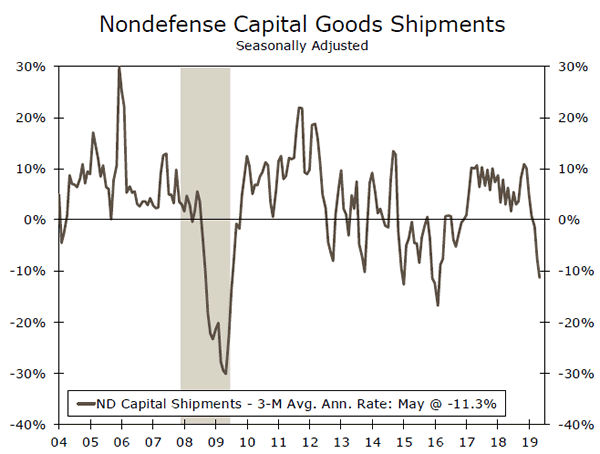
The U.S. Commerce Department reported this week that durable goods orders declined 1.3% in May, surpassing consensus expectations for a scant 0.3% decline. The good news: taking the May decline at face value likely overstates the weakness of factory activity in May. Boeing's ongoing struggles with its 737 MAX fleet of aircraft were largely to blame for the decline in orders, given the volatile nondefense aircraft component declined nearly 30% over the month. That followed almost a 40% decline the previous month and obscures a modestly firmer trend in underlying core orders. The bad news: recall it is nondefense capital goods shipments that feed into the BEA's estimates of equipment spending in the GDP report, which, on a three-month average annualized basis, were down 11.3% in May. That is not a good sign for Q2 equipment spending, but—again—this is entirely due to the halt in Boeing shipments. Ex-aircraft, nondefense capital goods shipments are up at a 1.7% pace, and suggest a moderately firmer trend in investment spending. The U.S. Federal Aviation Agency found a new safety issue in the 737 MAX computer system this week, which is expected to delay the aircraft's return to service (and deliveries) up to three more months. Further, more recent readings on new orders from purchasing managers' indices suggest factory activity remains under pressure. The tabling of Mexican tariffs points to some room for improvement, but without a resolution to trade disputes with China, we expect factory activity to continue to languish amid the resulting uncertainty and floundering global growth.
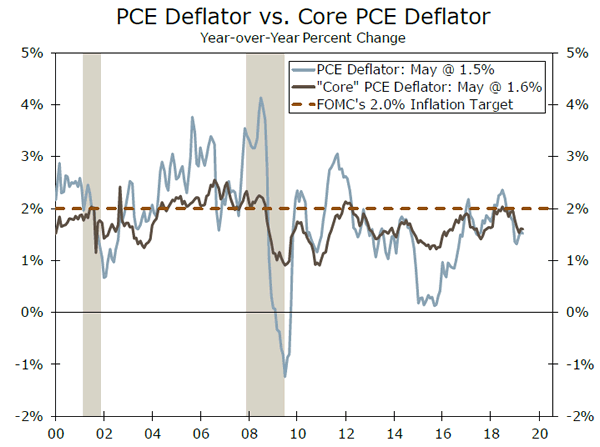
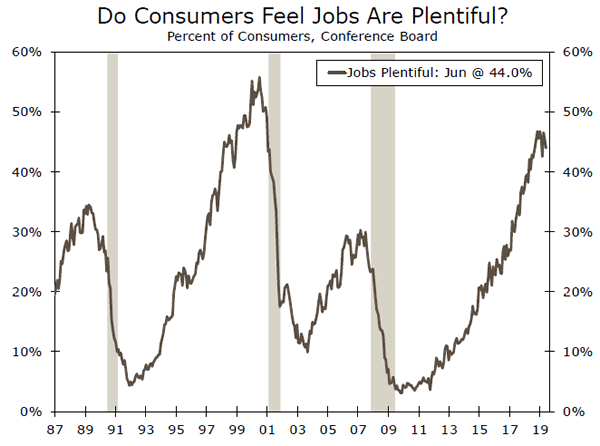
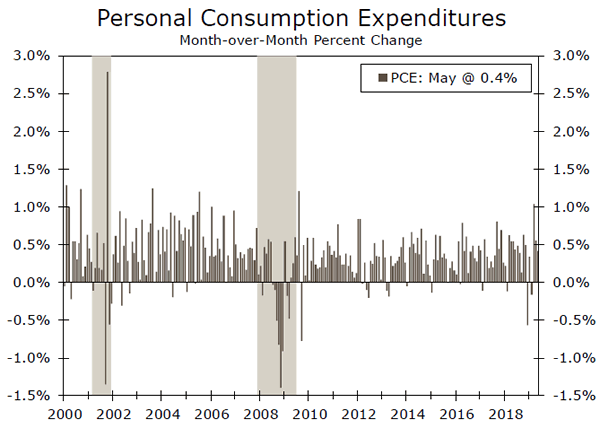
Uncertainty regarding trade has also likely weighed on consumer confidence in recent months. But the slower job growth in May was also likely a factor in the weakness. While the labor market is still hot by most measures, it is not as strong as it was according to measures of consumer confidence. The jobs plentiful index has rolled over in recent months, and is worryingly reminiscent of what we have seen late in prior cycles. The job opening rate and small business hiring plans have also come down slightly, though they too remain high. It is possible that businesses are holding off on hiring until trade tensions dissipate. But if these patterns hold, job growth could slow in coming months, something the Fed is likely monitoring. Despite uncertainty, spending data have fared slightly better. Personal consumption rose 0.4% in May, following an upwardly revised 0.6% in April and suggest personal consumption expenditures are on track to come in north of 3.0% in the second quarter. Inflation fared better as well, with the PCE deflator rising 1.6% on a year-ago basis in May. Even despite the modestly firmer footing in Q2 inflation, data this week are unlikely to dissuade the Fed from cutting rates later this year.
U.S. Outlook
ISM Manufacturing • Monday
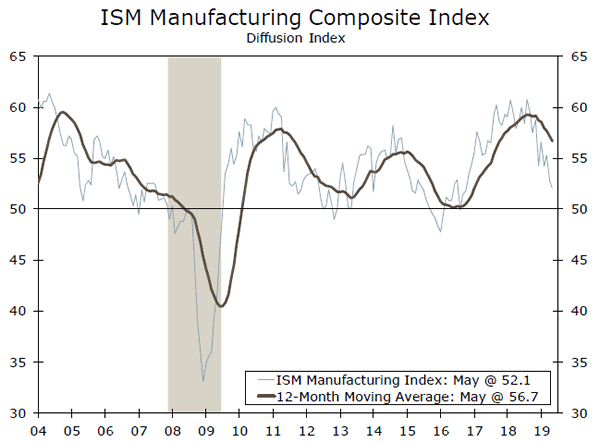
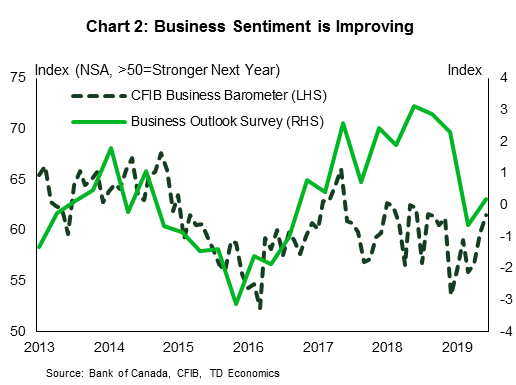
In May, manufacturing activity continued to weaken as the ISM index dipped to 52.1, marking the slowest pace of growth in the factory sector since October 2016. Last week the preliminary Markit PMI unexpectedly tumbled even further to 50.1, the lowest reading since September 2009. With still no resolution of a trade deal, slower economic growth out of China and weaker global demand, further weakening in the ISM index is likely. Other purchasing managers' indices have also indicated slippage for June. All regional Fed PMI survey's declined for the month, suggesting we should expect downside momentum in manufacturing activity.
A sub-50 reading could potentially add to the market's call that the Fed will cut its target range for the fed funds rate 50 bps at its next meeting on July 31. We look for the ISM to remain in expansion territory, consistent with a smaller reduction in rates.
Previous: 52.1 Wells Fargo: 51.3 Consensus: 51.2
ISM Non-Manufacturing • Wednesday
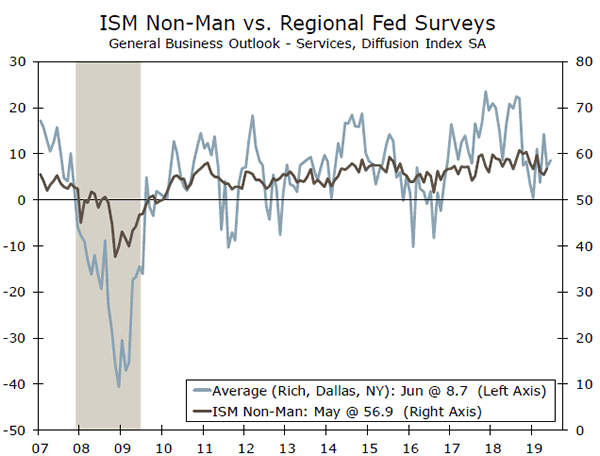
The ISM non-manufacturing index rose more than expected in May to 56.9. While the index is still below its six-month average, the growth in the service sector continues to outpace the manufacturing sector.
The preliminary read of the Markit service sector PMI fell in June to 50.7, the worst reading since February 2016. Meanwhile, the regional Fed service-sector surveys also showed activity slowing in June. We therefore expect the June ISM non-manufacturing index to ease to 55.7.
A sharp miss to the downside would generate more cause for concern about a slowdown in the economy. Although it does not get as much attention as the manufacturing index, the ISM non-manufacturing index encompasses a majority of the economy and can offer greater insight into the stability of current economic conditions.
Previous: 56.9 Wells Fargo: 55.7 Consensus: 56.0
Employment • Friday
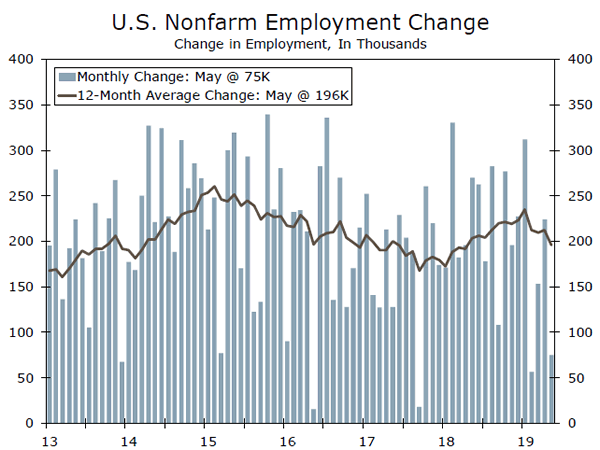
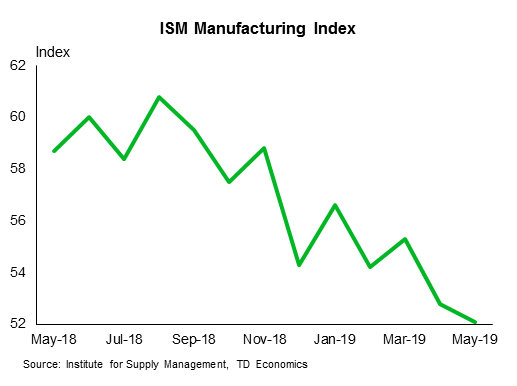
Hiring cooled in May, with firms adding only 75K jobs, while job gains for the prior two months saw the largest downward net revision since 2010. The three-month moving average employment gain is now at only 151K. Initial jobless claims were little changed in June, leading us to look for a rebound in hiring.
Nonfarm payrolls tend to be a volatile series, but another sub-100 print may reinforce the market's expectation that the Fed will cut interest rates 50 bps in July. However, an upside surprise in job growth would dampen the markets' aggressive rate cut expectations. We expect payroll growth to rise in May adding 175K jobs, while the unemployment rate should remain at 3.6%. The slower rate of improvement would be consistent with only a 25 bps cut at the Fed's July meeting, in our view.
Previous: 75K Wells Fargo: 175K Consensus: 160K
Global Review
Central Banks on Hold For Now, But For How Long?
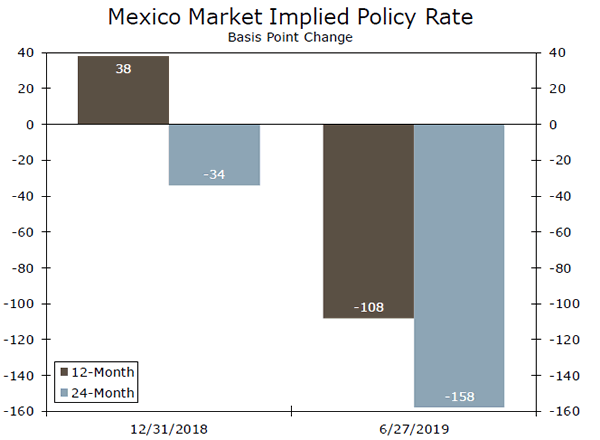
- The Reserve Bank of New Zealand (RBNZ) opted to hold policy rates steady; however, it signaled lower rates may be needed over time. The Central Bank of Mexico also kept rates on hold. Although it may start to tilt towards a more dovish forward guidance, we continue to believe it will cut rates this year.
- European economic and sentiment data continue to underwhelm, with CPI inflation still subdued in June, while measures of confidence were softer than expected. This week's data continue to underpin our view that the ECB will look to ease monetary policy this year and provide new stimulus to spark the broader European economy.
RBNZ Steady, but Signal More Cuts Could Be Coming
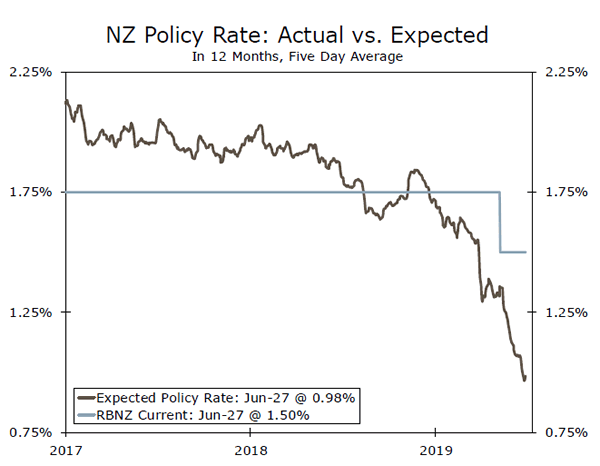
As widely expected, the Reserve Bank of New Zealand (RBNZ) held its Official Cash Rate at 1.50% this week. However, policymakers at the RBNZ stated that the outlook for global growth has weakened, while the domestic economy is also decelerating. In this context, the RBNZ also mentioned that a lower policy rate may be needed over time as inflation continues to remain subdued and to meet its employment objectives. New Zealand's economy has been slowing down for some time now as demand from China softens amid a structural slowdown and persistent trade tensions with the United States, as well as issues within the domestic economy. In response to low inflation, a softening labor market and external conditions, the RBNZ cut policy rates in early May, and given commentary from central bank policymakers, we expect the RBNZ to pursue further monetary easing measures later this year. Market participants seem to be in agreement with this outlook as well, as markets are currently pricing in two more rate cuts from the RBNZ over the next twelve months.
Central Bank of Mexico Finally Turning Dovish?
On Thursday, the Central Bank of Mexico opted to keep policy rates steady at 8.25%, with policymakers voting to hold rates with a vote of 4-1. This vote represents the first "divided decision" since November 2018 and, in our view, is a signal that the Central Bank of Mexico may be starting to turn more dovish than previous assessments of monetary policy. We also view some of the language in the accompanying statement as relatively dovish and could be further evidence of the evolving stance on monetary policy in Mexico. This language includes mention of a softening economy, while the central bank also noted that additional downgrades to the country's sovereign credit rating are possible and could weigh on Mexican asset prices going forward. We view this as a significant shift, as the Central Bank of Mexico has maintained a relatively hawkish bias this year despite a softening economy. Mexico's economy has decelerated sharply since 2018 and leading indicators of economic activity, as well as sentiment data, have been underwhelming for most of this year as well. While we expected the Central Bank of Mexico to pursue a rate cut at some point this year, the tone from Thursday's meeting could indicate an interest rate cut could be coming sooner than we expected.
Europe Stuck in The Doldrums
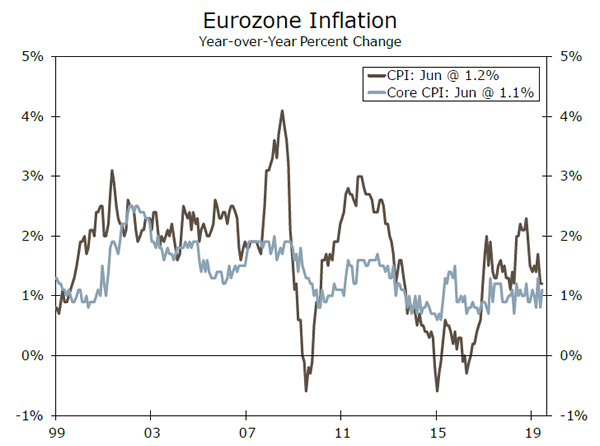
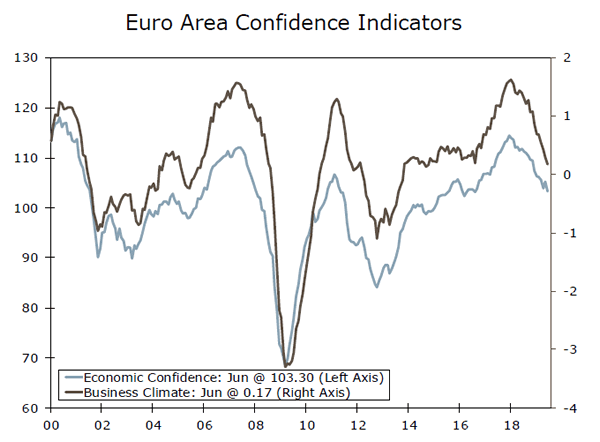
European economic and sentiment data continue to remain rather subdued, with June CPI inflation still underwhelming. The most recent inflation data indicate headline inflation held steady at 1.2% year-over-year, while core CPI increased moderately to 1.1%. Despite the increase in core inflation, CPI remains well below the ECB's target of close to, but below 2%, and recent comments from Mario Draghi suggest that the transmission of easy monetary policy to boost inflation has been slower to materialize than expected. Also concerning are the European Commission's confidence measures throughout the Eurozone. Those confidence measures have been trending lower since early 2018, with the most recent data the softest since mid-2016. The combination of weak sentiment, along with deteriorating growth and inflation dynamics, reintroduces the possibility of new stimulus measures from the ECB. Given recent comments from Draghi and recent economic developments, we believe the ECB will cut its deposit rate and main refinancing rate in September.
Global Outlook
Mexico Manufacturing PMI • Monday
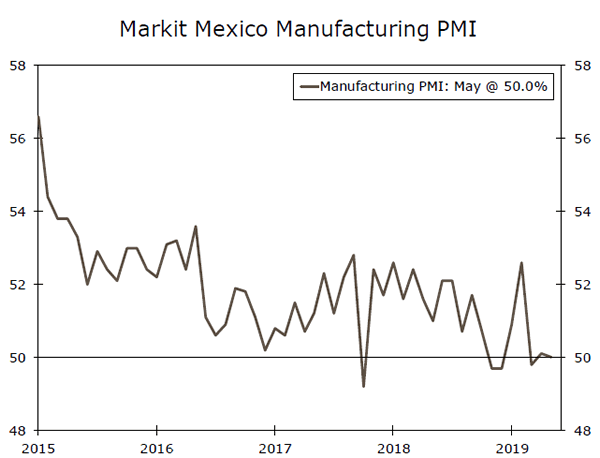
Over the past year or so, Mexico's economy has slowed significantly, with Q1 GDP softening and missing consensus forecasts yet again. This sluggish momentum has carried into the second quarter as well, with broad measures of economic activity slowing and sentiment data remaining subdued. The manufacturing PMI in particular has fallen notably over the course of the year, with the May PMI dropping to 50, down from a peak of 52.6 in February. While the manufacturing PMI has not yet fallen into contraction territory, we would not be surprised if it did so in June, as the threat from President Trump to impose tariffs on all of Mexico's exports to the United States likely weighed on manufacturing sentiment and activity this month. Despite Trump's decision to not impose tariffs on Mexican exports, we continue to believe the Mexican economy will decelerate from here, while the Central Bank of Mexico will likely need to pursue rate cuts this year in order to stabilize the economy.
Previous: 50.0
Reserve Bank of Australia • Tuesday
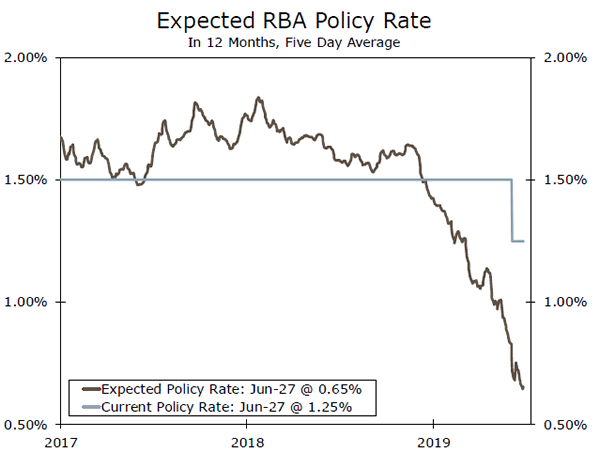
Australia's economy continues to markedly underperform as a sharp slowdown in the domestic housing sector, along with uncertainty related to the health of China's economy and persistent U.S.-China trade tensions, weighs on economic activity and sentiment. In response, the Reserve Bank of Australia (RBA) cut its cash rate in early June for the first time in over two years, while signaling further rate cuts may be appropriate going forward. However, over the past few days, RBA Governor Philip Lowe indicated that while market participants are anticipating easier monetary policy from central banks, it's possible that further monetary easing may not be as effective as markets expect. Despite Lowe's comments, markets are currently pricing in 60 bps of policy rate cuts over the next 12 months, with over a 70% chance of an interest rate cut at next week's meeting. We believe the RBA will cut the cash rate next week, and consensus forecasts share a similar view as well.
Previous: 1.25% Consensus: 1.00%
Turkey CPI Inflation • Wednesday
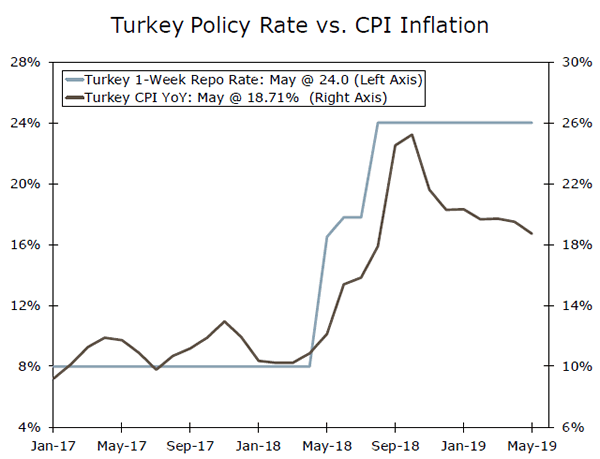
Following the sharp depreciation of the Turkish lira and delayed policy tightening from the central bank in 2018, inflation has been elevated for an extended period of time in Turkey. However, for the past few months, inflation has been on a downward trajectory, falling quicker than consensus forecasts, with May CPI easing to 18.7% year-over-year. A quicker-than-expected slowdown in inflation could be significant, as it may provide an incentive for Turkey's central bank to start cutting policy rates. Monetary easing from the central bank at this time could likely be viewed by markets as premature and would likely result in another sharp sell-off of the currency. Despite the economy exiting technical recession, it is still fragile, and a significant depreciation of the lira would likely throw Turkey's economy back into recession. If CPI falls below consensus forecasts again in June, the probability of rate cuts could increase, and our focus would shift to the next monetary policy decision in late July.
Previous: 18.71% (Year-over-Year) Consensus: 16.10%
Point of View
Interest Rate Watch
Policy Ease is a Global Phenomenon
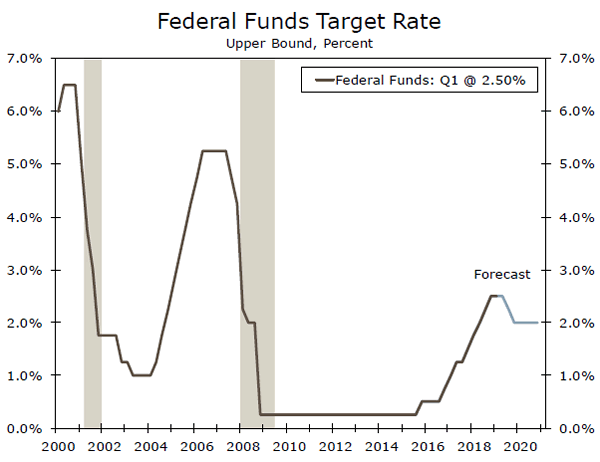
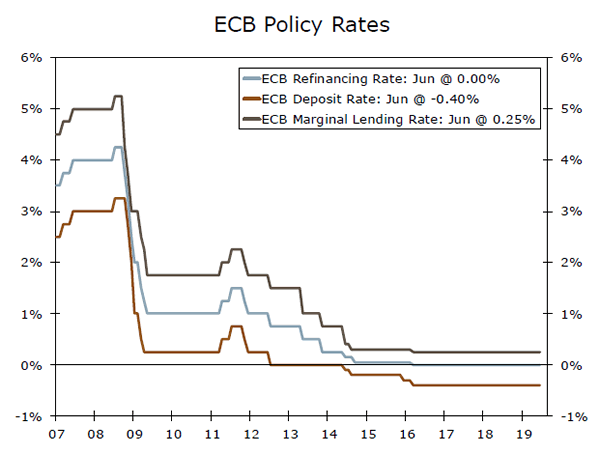
We have been writing recently about our expectations of monetary easing by some major central banks in coming months. Specifically, we look for the Fed to reduce its target range for the federal funds rate 25 bps at its July 31 FOMC meeting and another 25 bps in fourth quarter, probably on October 30 (top chart). We also expect that on September 12 the European Central Bank will cut its deposit rate to -0.50% from -0.40% and its two-week refinancing rate to -0.10% from 0.00% (middle chart).
But the Fed and the ECB are not the only central banks who are easing policy. By our count, seven central banks (Argentina, Australia, Chile, Iceland, India, Mozambique and Russia) have cut policy rates in this month alone, while only one (Norway) has raised rates. Reasons for rate cuts by specific central banks vary, but the general backdrop of slowing global growth and benign inflation is conducive for more monetary policy accommodation.
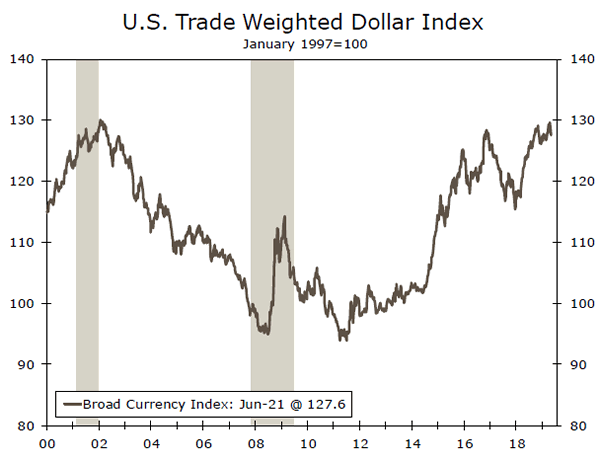
Although we look for 50 bps of policy ease by the Fed—the market is currently priced for 75 bps of FOMC rates cuts by early next year—implemented rate cuts by many foreign central banks to date and expectations of more to come have helped to keep the U.S. dollar well supported. As shown in the bottom chart, the tradeweighted value of the dollar remains near a 17-year high. The greenback has been especially robust vis-à-vis the currencies of many developing economies.
Looking forward, we expect that the U.S. dollar will depreciate modestly in coming quarters versus the currencies of many advanced economies as the growth differential between the U.S. economy and these economies narrow. (See our Monthly Economic Outlook for details.) However, we look for the greenback to remain generally better supported against the currencies of many developing economies. Emerging currencies tend to do better in an environment of strong global growth. Slower global growth in coming quarters should diminish the relative appeal of some of these currencies, even if easier Fed policy provides a modicum of support to those emerging currencies.
Credit Market Insights
Consumer Credit in Its Present State
Outstanding consumer credit rose $17.5 billion in April, its fastest pace in six months. Revolving credit, mostly linked to credit card debt, rose $7.0 billion in April after a decline of $2.0 billion in March and pushed revolving credit to about $45 billion above its 2008 peak. These numbers are not a cause for concern as long as we do not see a continuous rise in credit card delinquencies.
Currently, low 90-day credit card delinquencies and a reassuring debt-toincome ratio do not corroborate an ailing consumer. The personal saving rate is elevated, while tight labor market has allowed for modest wage gains.
Consumer expectations tend to lead consumers' use of revolving credit. According to the University of Michigan, these expectations declined to 89.3 in June but still remain near their cycle high. A continuous decline in expectations could have implications for a slowdown for revolving credit or more discretionary spending, but despite current uncertainty, we expect consumers to continue borrowing given their strong foundation.
Nonrevolving credit, which includes items such as mortgages and student loans, grew $10.5 billion in April—its slowest pace in 11 months. This measure of credit is often thought to be a better indicator of financial stress, and a persistent downward trend could imply the economy is slowing. Right now this measure is quite healthy, but it is something to watch in coming months.
Topic of the Week
Let's Make a Deal?
What's Happening: Today marks the start of the two-day annual Group of 20 summit in Osaka, Japan, where leaders of 19 countries and the European Union come together in what is known as the "premier forum for international economic cooperation." The countries included in the meeting represent 80% of global GDP and the summit's focus is likely to be concentrated on international trade and climate change, among other pressing global issues.
U.S. President Trump is scheduled to meet with several leaders during the summit, but perhaps the most important is the meeting with Chinese President Xi Jinping tomorrow. Trade talks are set to be the key topic of discussion.
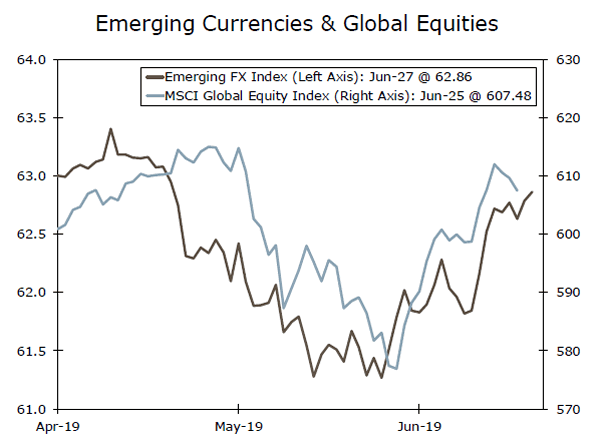
Why it Matters: The outcome of the meeting is keenly anticipated by markets, which have been riddled with uncertainty about the trade war in recent months. In early May the United States increased tariffs on $200 billion of imported Chinese goods to 25% from 10%—an event that contributed to weakness in global equities and emerging currency markets. Increasing hopes of a productive outcome from the Trump-Xi meeting have been contributing to a recovery in markets. Indeed, the United States and China both have a lot to lose if the trade war escalates any further. With additional tariffs, American and Chinese consumers are likely to face higher prices and global business supply chains may be disrupted. Business and consumer confidence is also likely to be rattled until a truce is met on trade, and investment spending and personal consumption could recede as a result. In China, economic growth is slowing and consumer demand is weakening in the wake of an uncertain future.
Our Takeaway: We expect the United States and China will avoid a further escalation of tensions and commit to ongoing dialogue. To reach an agreement, China requires the United States to remove extraneous tariffs, eliminate the ban on American technology sales to Huawei Technologies and set a trade balance that will satisfy actual demand in both countries. Considering these conditions, we doubt there will be significant progress on Saturday and that a near-term deal will remain elusive.
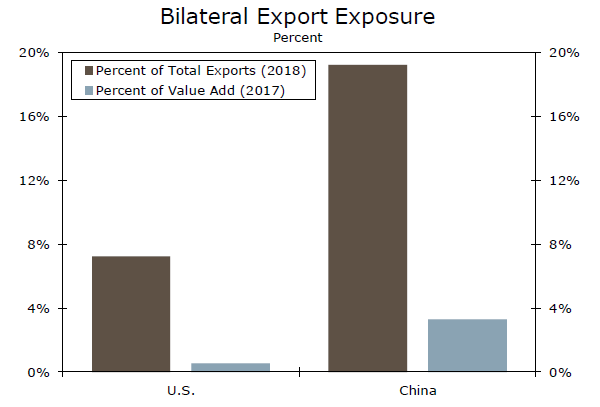
The Weekly Bottom Line: Healthy GDP and Sentiment, Early Canada Day Gifts!
U.S. Highlights
- A light week on economic data was filled with Fed speeches and a trickle of news flow on the upcoming meeting between Presidents Trump and Xi. We do not expect to see a major breakthrough this weekend, but rather an agreement to continue talking (forestalling at least for now the threat of additional tariffs).
- Chair Powell reiterated comments in his press conference last week that crosscurrents to the economic outlook had arisen relatively swiftly over the past month, leading the Fed to shift toward an increased willingness to cut rates.
- Economic data was mixed, with home sales and confidence falling, but consumer spending rising. With revisions, second quarter personal consumption is likely to top 3% annualized, enough to push economic growth to the 2% mark.
Canadian Highlights
- Economic growth was healthy in April, although the breadth of the expansion was somewhat lacking. Only 11 of 20 major industry groups reported increasing output.
- Business Outlook Survey results point to improved business sentiment in 19Q2.
- Oil prices were up slightly due to increased tensions in the Middle East and a larger-than-expected drawdown of U.S. inventories.
U.S. - Presidents Xi and Trump Meet As Crosscurrents Blow
It was a relatively light week on economic data but heavy on Fed communication and key political events. All eyes will be on the G20 meeting this weekend, where Presidents Trump and Xi will meet on Saturday in Osaka to discuss U.S.-China trade relations.
Following the FOMC meeting last week, Fed speakers were out in full force explaining and defending the committee's shift from patience to willingness to do more. Most notably, Chairman Powell reiterated that significant crosscurrents had hit the U.S. outlook in the period between the FOMC's May and June decision. Among these, deteriorating business sentiment and slowing global growth rang the loudest.
Powell did not mention it explicitly, but the breakdown in trade negotiations between China and the U.S. was a key driver of the change in tack. That puts the focus squarely on the leaders of the two countries as they meet in Japan this weekend. Prior to the meeting, optimism that the two sides were getting close to a deal were stoked by Treasury Secretary, Steve Mnuchin, who said they were 90% of the way there. But, just as soon as he said this, doubt was cast by President Trump's own interview that dangled the possibility of additional tariffs. At the same time, reports that China would come to the meeting with preconditions of its own, including the removal of all existing tariffs and restrictions imposed on Huawei, reined in optimism that a significant breakthrough is imminent. All in all, we expect little to come out of the meeting except an agreement to keep on talking.
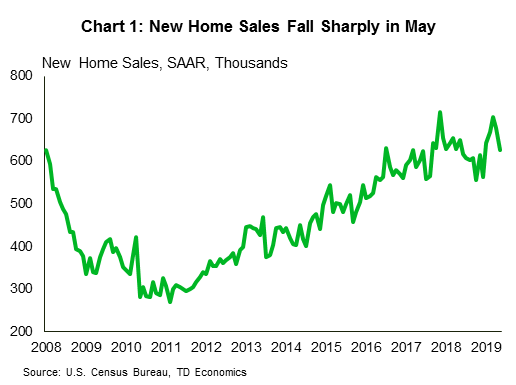
On the economic data front, the message was mixed. New home sales fell sharply in May, adding to the spate of challenging data for the housing sector (Chart 1). While lower mortgage rates should give some support to housing demand, this may be offset in part by increased economic uncertainty, leading would-be homebuyers to hold off on making big purchases. Indeed, measures of consumer confidence fell in May, with a drop in expectations for the future leading the pullback.
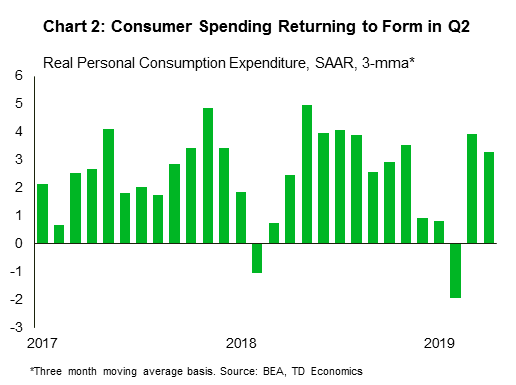
On the bright side, consumer spending is still holding up. Real personal consumption rose by 0.2% in May, and was revised up to 0.2% growth in April from a previously flat reading. With two of three months of the second quarter now recorded, spending growth looks to advance by well over 3% (annualized - Chart 2). Even with some weakness in investment and trade, second quarter economic growth appears likely to come in near the 2% mark.
Evidence that economic growth is holding up suggests that even as the Fed considers insurance cuts, it need not have to bring out the bazooka. While a 25-basis point cut in July seems increasingly likely, the Fed should be able to afford to save at least some of its bullets and refrain from a larger 50-basis point cut, as futures markets have begun to price. Still, we would hold off betting the farm on it until after next week's June payroll report.
Canada - Healthy GDP and Sentiment, Early Canada Day Gifts!
With Canada's birthday just around the corner, we were treated to early birthday presents in the form of healthy April GDP and decent results from the Bank of Canada's Business Outlook Survey (BOS).
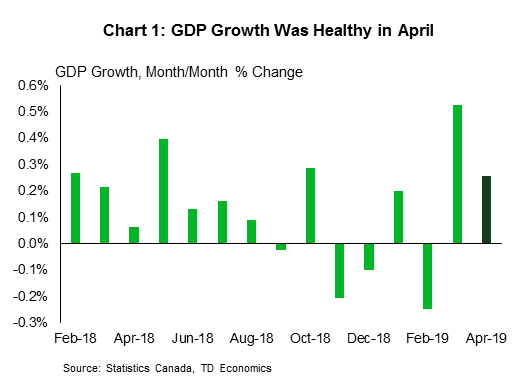
Unwrapping April GDP, we saw 0.3% growth month-on-month following a big upturn in March (0.5%; Chart 1). The goods and services sectors posted gains of 0.4% and 0.2% respectively, moderating from the March pace. April's expansion was somewhat lacking as only 11 of 20 major industry groups reported increasing output. The oil and gas sector had an exceptional showing, posting 4.5% growth, owing to reduced production restrictions. Growth in wholesale trade was also strong. All in all, this was a healthy report putting the Canadian economy on a path to record around 2.5% growth in Q2, nearly double the Bank of Canada's forecasts in its April Monetary Policy Report. This will likely give the Bank of Canada more confidence to remain on the sidelines and not follow the Fed in cutting rates as 'insurance' later this year.
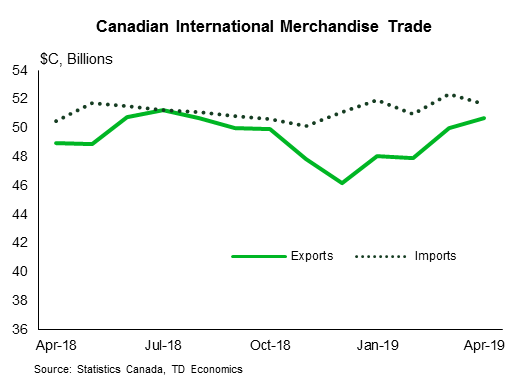
Business sentiment also seems to be improving in Canada as suggested by the second birthday present, 19Q2 BOS results. The composite BOS indicator rebounded to 0.2 from a downward revised -0.6 in Q1 (Chart 2). Indicators of future sales picked up from a low last quarter, while investment spending plans remained at healthy levels. Firms reported easing credit conditions, in line with the Senior Loan Officer Survey (SLOS), also released today. On the downside, however, the BOS did note that global trade uncertainty and weakness in the oil sector continued to hold back future sales. The overall BOS results were in line with this week's June CFIB Business Barometer. The CFIB index rose for a third straight month with 11 out of 13 sectors recording gains. Taken together with the BOS results, improving business sentiment is a nice present for the Bank of Canada, joining the GDP data in providing them with comfort in the current level of monetary policy.
It wasn't all good news. This week also saw more concerning developments in the Canada-China relationship. China barred all meat imports from Canada due to the discovery of fake veterinary health certificates for a batch of pork products. This will constrain the recent surge Canada has been seeing in its meat exports to China. If the situation is not resolved quickly, this may prompt the Canadian government to provide support to the meat industry.
Finally, markets moved a little lower this week, in part due to less optimism on the magnitude of expected Federal Reserve interest rate cuts. Moving in the opposite direction were oil prices (WTI), up 3% over the week, as increasing tensions in the Middle East and a larger-than-expected draw of inventories in the U.S. put upward pressure on prices. Expectations for an extension of production cuts at the OPEC+ meeting on Monday may also be providing some support for oil prices.
U.S.: Upcoming Key Economic Releases
U.S. ISM Manufacturing Sales - June
Release Date: July 1, 2019
Previous: 52.1
TD Forecast: 51.0
Consensus: 51.2
We look for a new monthly decline in the manufacturing ISM index to 51.0, as we expect ongoing trade headwinds to have affected business sentiment in the June survey. Indeed, the average of the ISM-adjusted regional surveys signaled a 2pt decline from the May levels to 51.9, with retreats in five out of the six published surveys we track. We note, however, that most of these surveys were negatively biased by the US-Mexico trade spat given some responses had to be returned early in the month. That said, a recent spate of uninspiring growth in core durable goods orders and a weak Markit PMI survey also boost the odds for a downside surprise in June, in our view.
U.S. Employment - June
Release Date: July 5, 2019
Previous: 75k, unemployment rate: 3.6%
TD Forecast: 150k, unemployment rate: 3.6%
Consensus: 163k, unemployment rate: 3.6%
We look for payrolls to bounce to 150k in June, following the soft and below-expectations 75k print in the previous month. In particular, we expect job creation in the manufacturing sector to remain subdued, staying in the single-digit range for a third consecutive month. This should keep employment in the goods sector soft despite our anticipation for some minor improvement in construction sector jobs. Likewise, we forecast employment in the services sector to register a modest rebound following the weak 82k print in May. All in, the household survey should show the unemployment rate remained steady at 3.6%, while wages are expected to rise 0.3% m/m on the back of a favourable reference week. The latter should bring the annual print up a tenth to 3.2% in June.
Canada: Upcoming Key Economic Releases
Canadian International Trade - May
Release Date: July 3, 2019
Previous: -$1.0bn
TD Forecast: -$1.3bn
Consensus: N/A
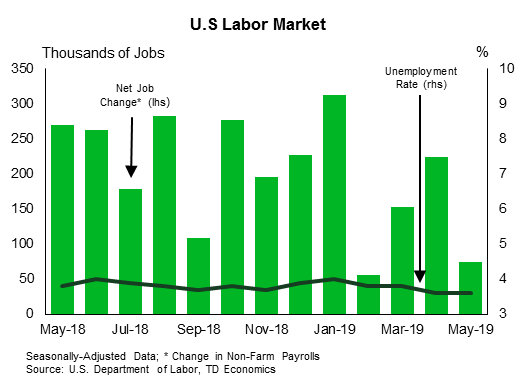
TD looks for the goods trade deficit to widen to $1.30bn in May from $0.97bn. Stronger imports will serve as the main driver behind the wider deficit, although we also expect a modest increase in exports. The latter reflects a rebound in auto exports after temporary production shutdowns weighed heavily last month, which will be countered by a pullback in nominal crude exports. WTI prices (in CAD) fell by 4.1% in May although stronger rail shipments could provide an offsetting increase in volumes; even after the recent recovery, total crude exports by rail remain 35% below levels from December 2018.
Canadian Employment - June
Release Date: July 5, 2019
Previous: 27.7k, unemployment rate: 5.4%
TD Forecast: 5k, unemployment rate: 5.4%
Consensus: N/A
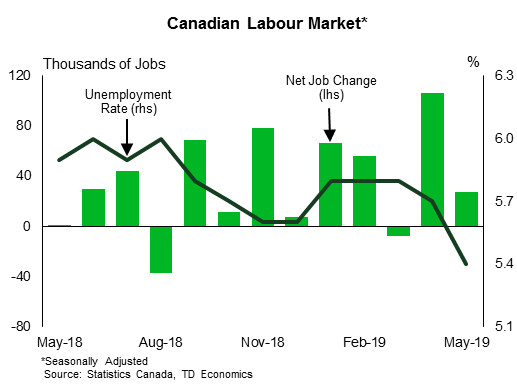
TD looks for the labour market to shift into a lower gear with job growth of 5k in June, which if realized will register as the second weakest month since August 2018. However, details should prove more uplifting than the headline print. Modest employment growth should be sufficient to keep the unemployment rate unchanged at a multi-decade low of 5.4%, and wage growth is poised to climb higher to 2.8% y/y owing to a muted increase last June. In fact, base-effects will become a significant tailwind to wage growth over the coming months; wages for permanent workers declining by 0.03% m/m on average from June-October 2018, which compares with an average increase of 0.45% m/m over the last six months. Elsewhere, we also look for a modest rebound in private employment after the loss of 20k private sector jobs last month.
Forward Guidance: Trade Concerns Remain, But Economic Backdrop Still Healthy
Attention remains focused on Saturday’s highly anticipated meeting of Presidents Trump and Xi as the two try to iron out their differences on the side-lines of this week’s G-20 meetings. The outcome of that meeting is still very much in doubt – and any re-escalation of tensions between the two world powers could have a significant impact on the global economic outlook for the second half of this year. But next week’s data should also highlight that, notwithstanding all of those trade concerns, the US and Canadian economies are coming from a point of strength.
We look for US employment growth to bounce back to a 180k rate in June after a 75k increase in May. That (smaller-than-expected) earlier reading caused some hand-wringing, but looked decidedly better under the hood. The unemployment rate held at multi-decade lows in May and wage growth is still tracking slightly above a 3% pace. The US trade deficit widened in May, likely in part tied to a pull-forward of imports from China ahead of another round of tariffs, and industrial output is still far from spectacular. But growth in consumer spending (roughly two-thirds of the US economy) is tracking firmly above a 3% rate in Q2. The risk of an escalation in trade tensions is still a legitimate concern for Federal Reserve policymakers. And low inflation is giving the central bank lots of flexibility to respond, potentially pre-emptively, with more stimulative monetary policy. But solid current economic data recently still makes market pricing for almost-certain rate cuts as soon as July look odd.
May international trade data will also keep attention on Canada’s, albeit secondary, role in escalating global trade tensions. The new restrictions on China’s imports of Canadian meat announced this week are a reminder that Canada is not entirely immune from disruptions although the larger risk remains any potential slowing in US industrial output that spills-over to the Canadian manufacturing sector. But, like the US, broader domestic economic data has been looking decidedly better. A 0.3% increase in April GDP added further confirmation that economic activity bounced back after transitory disruptions to oil production and bad weather weighed on growth over the winter. And the Bank of Canada’s key Business Outlook Survey showed a tick higher in business confidence in Q2.
The Bank of Canada will also be watching next Friday’s labour market data, but it is difficult to imagine a downside surprise in the often-volatile numbers that would really cancel out a long string of positive reports. 453k workers were added over the last year -- two-thirds of them full-time. The unemployment rate hit a new multi-decade low at 5.4%. Even wage growth has been ticking a touch higher in recent months. We don’t think that type of performance will last, and look for a tick up in the unemployment rate in June and a smaller employment gain. But even if the job rally stalls, the labour market remains in good health and, with GDP growth recovering, markets are not priced for the BoC to follow the Fed down a rate-cutting path.