

Sample Category Title
EUR/CAD 4H Chart: Could Edge Higher
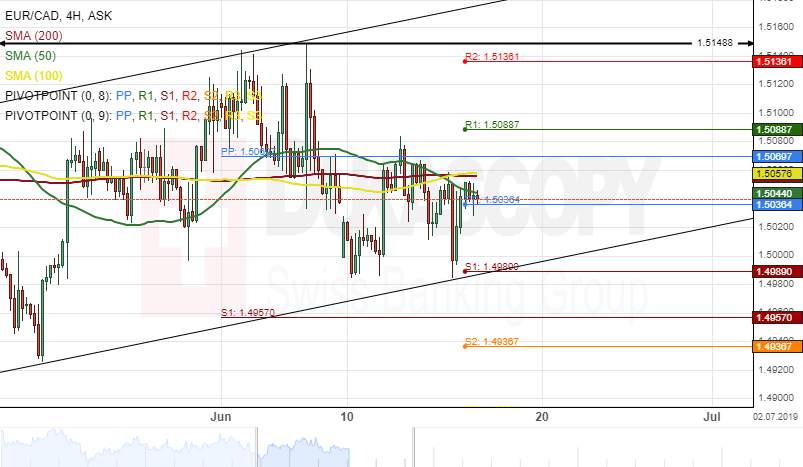
After hitting a resistance level formed by the weekly R2 at 1.5136 on June 5, the single European currency has depreciated about 1.04% in value against the Canadian Dollar.
As for the near future, it is likely that the EUR/CAD currency pair will edge higher during the following trading sessions. Bullish traders could aim for a re-test for the weekly R2 at 1.5136.
However, a resistance cluster formed by the combination of the 50-, 100– and 200-hour SMAs at 1.5057 could restrict the bulls from pushing the currency exchange rate towards the given target within this week's trading sessions.
EUR/AUD 4H Chart: Likely To Slide Down
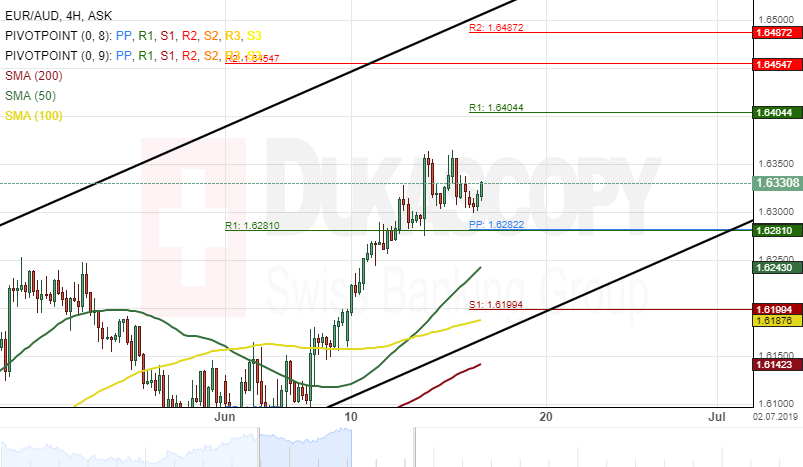
The common European currency has appreciated about 1.81% in value against the Australian Dollar since the beginning of June. This bullish run has helped the currency pair reached a six-month high at 1.6362.
Everything being equal, it is likely that the EUR/AUD exchange rate could edge lower within this week's trading sessions. The possible target for bearish traders will be near the weekly S1 at 1.6199.
However, technical indicators flash buy signals on both the smaller and the larger time frames charts. Therefore, the currency exchange rate might continue its upside momentum during the following trading sessions.
EUR/USD Could Reverse North
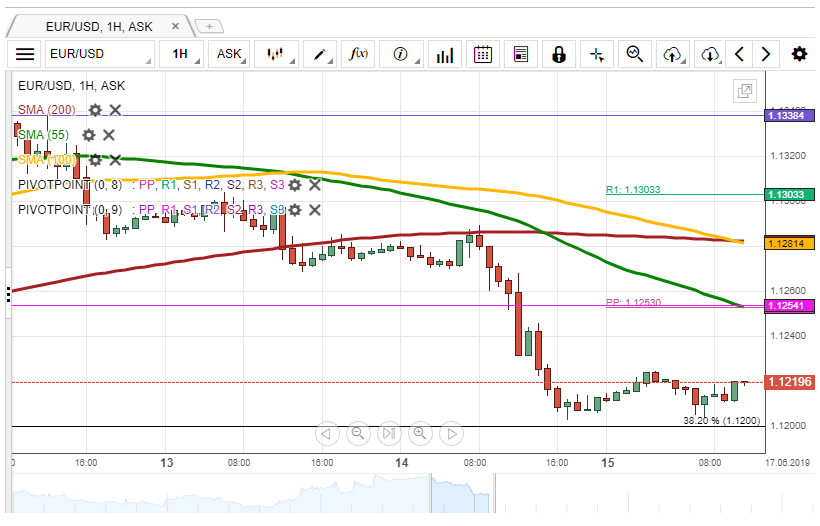
During Friday, the EUR/USD currency pair dropped to the support level—the Fibonacci 38.20% retracement at 1.1200. During today's morning, the pair was testing the support level.
If the given support holds, it is expected, that a reversal north could occur in the nearest future. It is unlikely, that the Euro could exceed the 1.1255 mark due to the resistance level formed by the weekly PP, the monthly R1 and the 55-hour SMA.
On the other hand, the exchange rate could continue to trade sideways, trying to breach the given support. If the support level does not hold, it is unlikely, that the rate could drop lower than 1.1181 due to the support of the monthly PP.
GBP/USD Likely To Decline
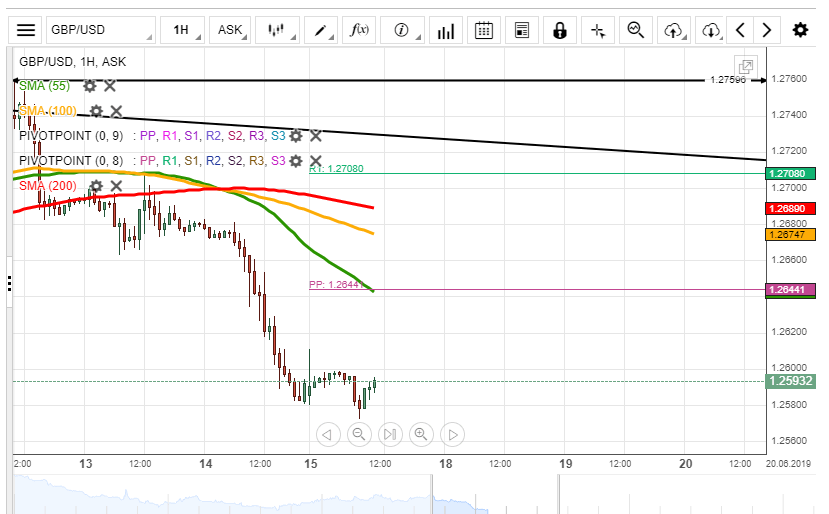
At the end of the previous trading week, the GBP/USD exchange rate decreased to the psychological level at 1.2580.
On the one hand, the rate could continue to sharp losses, as it should reach the lower boundary of the short-term descending channel located circa 1.2530 within the following trading sessions.
On the other hand, some upside potential could prevail in the market in the short term, and the currency pair could reverse north from the given level. Note, that the rate is pressured by the 55-hour SMA and weekly PP at 1.2644.
USD/JPY Might Extend Gains
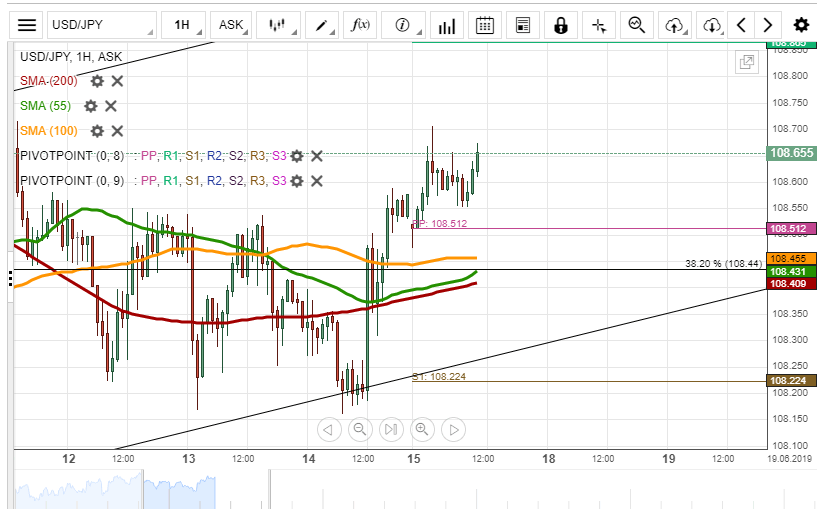
On Friday, the USD/JPY currency pair jumped to the 108.55 level. During Monday's morning, the pair was testing the psychological level at 108.65.
From a theoretical perspective, bulls could prevail in the market in the short run, as the exchange rate has to target the upper boundary of the short-term ascending channel. In this case, the rate could reach the 108.75 mark.
From a technical point of view, it is unlikely, that the pair could go downwards because of the support cluster formed by a combination of the 55-, 100– and 200-hour SMAs, as well the weekly PP and the Fibonacci 38.20% retracement in the 108.41/108.51 range.
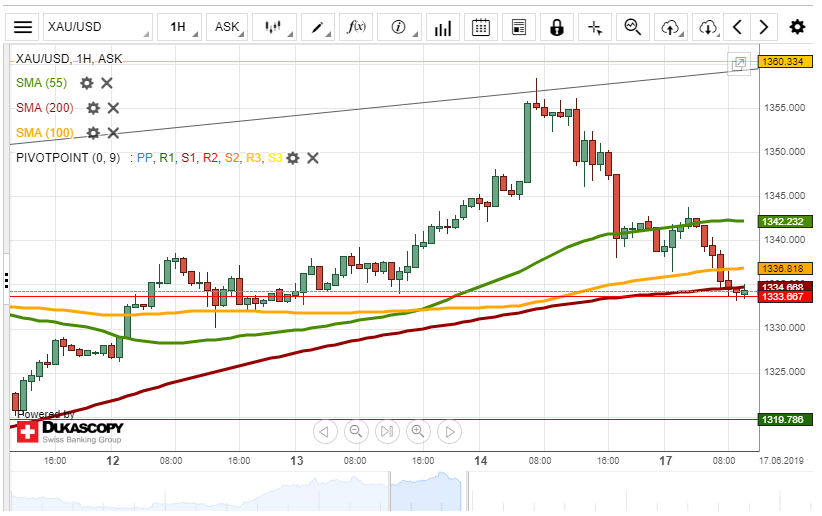
XAU/USD Tests 100– And 200-Hour SMAs
During the previous trading session, the XAU/USD exchange rate plummeted to the 1,340.00 level. During today's morning, the rate dropped to the support level formed by the 100– and 200-hour SMAs, as well the monthly R2 at 1,333.67
If the given support holds, it is expected, that a reversal north could occur in the nearest future. However, note, that the rate is pressured by the 55-hour SMA, currently located at 1,342.24.
If the given support does not hold, it is likely, that the price for gold could continue to decline. A possible downside target is the psychological level at the 1,325.00 mark.
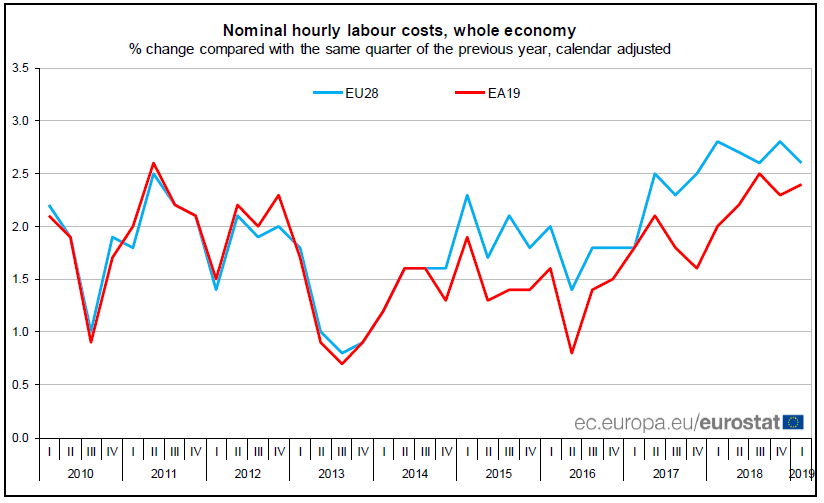
Eurozone labor costs rose 2.4%, wages grew record 2.5%
Eurozone hourly labor costs rose 2.4% yoy in Q1, accelerated from 2.3% yoy in Q4, but missed expectation of 2.6% yoy. On of the main components, wages & salaries per hour rose 2.5% yoy, accelerated from 2.3%. That's also the highest rise since record started in 2010. Another one, no-wage component rose 2.2% yoy, slowed from 2.4% yoy.
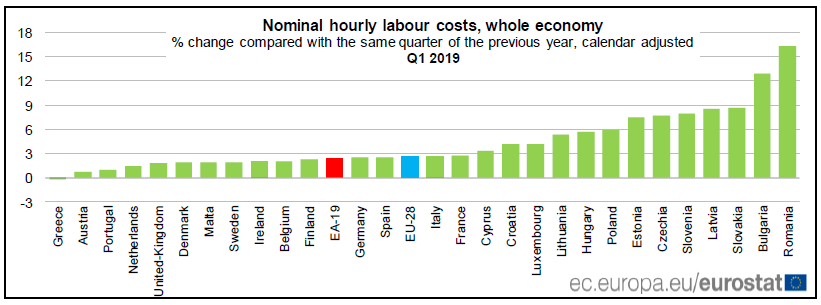
Breaking down by economic activity, hourly labour costs rose by 2.5% in industry, by 2.3% in construction, by 2.4% in services and by 2.5% in the (mainly) non-business economy.
EU28 hourly costs rose 2.6% yoy, slowed down from 2.8% yoy. Among the member states, the highest annual increases in hourly labour costs for the whole economy were registered in Romania (16.3%) and Bulgaria (12.9%), while the only decrease was recorded in Greece (-0.2%).
Recognition Of Swiss Stock Exchange By EU On Good Track
Almost six months have passed since the European Commission finally decided in favor of a last-minute six-month extension period of Switzerland’s stock exchange under MiFID II rules. While the equivalence period ends in 30 June 2019, a final decision should be made earlier this month, as the EU Commission will review progresses of relations with Switzerland on Tuesday. Although another extension of Swiss stock exchange recognition is very likely, concerns over wage welfare should maintain the discussion opened beyond the second half of the year.
The December 2018 drafted framework agreement supposed to rule new EU – Swiss ties came under Swiss politics scrutiny with a rather constructive appraisal albeit three areas require clarification: state aid, immigration and wage protection. While the first two conditions can be satisfied amicably, Swiss wage protection stays a sticking point, as cheaper cross border competition benefitting from free circulation would become a major impediment for Swiss operating companies, thus requiring more patience from both negotiating sides. Furthermore, the start of Swiss Parliamentary elections in 20 October 2019 could well slowdown the process, as approval of the Parliament is required before signing the treaty, while a referendum following a potential ratification is very likely. Considering the recent developments, we expect the EU to extend the equivalence of Swiss stock exchange, while an appliance of EU sanctions would trigger Swiss government ordinance consisting of a trading ban of EU-based banks and brokers of Swiss shares. Even if a liquidity crunch would be surmountable (30% of trading in Swiss shares carried out on EU platforms), the launch of IPOs in Switzerland would become more challenging.
EUR/CHF trades at 1.12078, approaching 1.12160 short-term.
GBP/USD – Hard Brexit The New Reality?
UK leadership race heats up
The number of MPs vying for Conservative leaders – and therefore UK Prime Minister – has already shrunk considerably ahead of last night’s debate, although there is one more than it appeared after Boris Johnson decided, as frontrunner, it wasn’t in his best interest to show up and be targeted by so many colleagues at the same time.
That pleasure will be saved for the second debate on Tuesday, after the second ballot has whittled down the numbers a little further when Johnson will no doubt feel a little safer from being ganged up on.
As ever, currency traders will be fixated on this weeks events as we learn what kind of Brexit the country could be headed for. It seems all but certain that Boris will be in the final two but who will be joining him? All candidates want to deliver Brexit but there’s a very different approach between Dominic Raab and Jeremy Hunt, for example, the former of which looks determined to deliver no-deal on 31 October.
GBPUSD sank on Friday, as the dollar ended the week on a strong note but the pound overall continues to look vulnerable this week to the potential for a Johnson/Raab final two. We’re currently trading around 1.26 but momentum looks to the downside.
GBPUSD Daily Chart
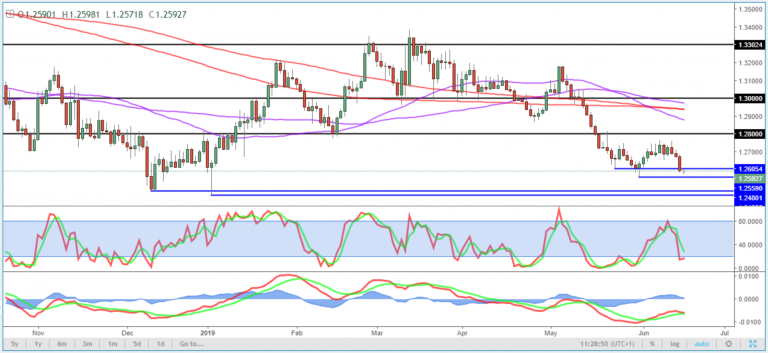
The end of 2018/start of 2019 lows look very much in sight, with a break below here looking very bearish for the pair. The next notable area below is around 1.24 but if no-deal is looking increasingly possible, how long can that be expected to hold?
The leadership race is not the only point of focus in the UK this week – although as far as the markets are concerned it’s by far the most important and will likely have the greatest impact. The Bank of England meets and announces its latest decision on Thursday.
You can be forgiven for not getting too excited about this in the current climate and with there being considerable uncertainty over Brexit. Even markets don’t much any time soon – 75% chance of no change between now and August next year – so we probably shouldn’t expect too much from Thursday. Retail sales and inflation data will also keep things interesting this week.
Bundesbank: Dichotomy in German economy will continue, GDP may shrink slightly in Q2
Bundesbank said in the monthly report that "the German economy should shrink slightly in the spring", referring to Q2. That's because "special effects that contributed to a noticeable rise in gross domestic product in the first quarter are either expiring or being reversed."
The report added that Germany is facing headwinds from trade tensions, Brexit and slowdown in the global economy. These factors are weighing down on the export-led manufacturing sector. Nevertheless, "the buoyant forces underpinning the strong domestic-oriented sectors of the economy remain fundamentally intact".
Overall, "the dichotomy in the economy will continue."