Sample Category Title
(SNB) Swiss National Bank leaves expansionary monetary policy unchanged and introduces SNB policy rate
The Swiss National Bank is maintaining its expansionary monetary policy, thereby stabilising price developments and supporting economic activity. Interest on sight deposits at the SNB is unchanged at –0.75%. The SNB will remain active in the foreign exchange market as necessary, while taking the overall currency situation into consideration.
The Swiss National Bank is today introducing the SNB policy rate.1 From now on, it will use this rate in taking and communicating its monetary policy decisions. The SNB policy rate replaces the target range for the three-month Libor used previously, and currently stands at −0.75%. The SNB's monetary policy thus remains as expansionary as before. Interest on sight deposits held by banks at the SNB currently corresponds to the SNB policy rate and remains at −0.75%. The SNB will seek to keep the secured short-term Swiss franc money market rates close to the SNB policy rate. SARON is the most representative short-term money market rate today, and is also establishing itself as the reference rate for financial products.
The reason for introducing the SNB policy rate is that the future of the Libor is not guaranteed. The UK's Financial Conduct Authority will only ensure that the Libor is maintained through to the end of 2021. The SNB's conditional inflation forecast is based on the assumption that a given interest rate remains unchanged over the entire forecast horizon of three years. The three-month Libor has been used for this purpose to date. Given that the current forecast for the first time extends beyond the end of 2021, the introduction of the SNB policy rate ensures that it will be based on the same interest rate over the entire horizon.
The SNB's expansionary monetary policy remains necessary against the backdrop of the current price and economic developments. On a trade-weighted basis, the Swiss franc is somewhat stronger than in March and is still highly valued. The situation on the foreign exchange market continues to be fragile. The negative interest rate and the SNB's willingness to intervene in the foreign exchange market as necessary remain essential in order to keep the attractiveness of Swiss franc investments low and thus ease pressure on the currency.
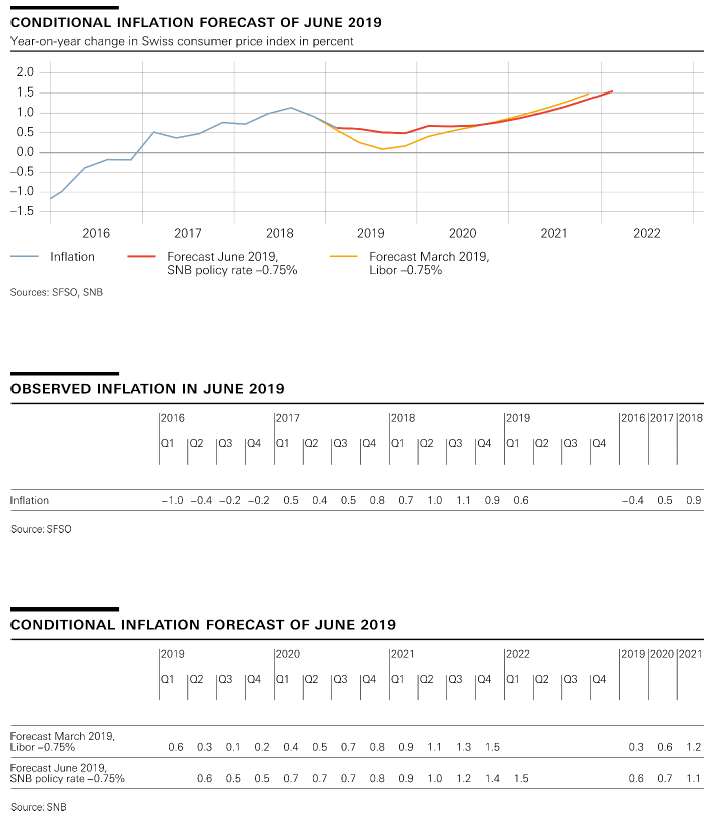
The new conditional inflation forecast for the coming quarters is slightly higher than in March. This is primarily attributable to a rise in the prices of imported goods. The longer-term inflation forecast is virtually unchanged. For 2019 it stands at 0.6%, up from the figure of 0.3% last quarter. For 2020, the SNB anticipates an inflation rate of 0.7%, compared to 0.6% last quarter. The forecast for 2021 is 1.1%, 0.1 of a percentage point lower than last quarter. The conditional inflation forecast is based on the assumption that the SNB policy rate remains at –0.75% over the entire forecast horizon.
The signs from the global economy remain mixed. GDP growth picked up in the first quarter, with all large economies recording above-average expansion. However, manufacturing output again tended to weaken in a number of countries. In its baseline scenario for the global economy, the SNB expects growth in the coming quarters to remain in line with potential. In the advanced economies, expansionary monetary policy is lending support, as is fiscal policy in some countries. Inflationary pressure is likely to remain moderate. The risks to this baseline scenario are still to the downside. However, they are more pronounced than at our previous monetary policy assessment. Chief among them are political uncertainty and trade tensions, which could lead to renewed turbulence on the financial markets and a further dampening of economic sentiment.
The Swiss economy also gathered momentum at the beginning of the year. According to the initial estimate, GDP grew by 2.3% in the first quarter. Labour market developments were also positive. Production capacity in Switzerland was well utilised overall. The economic indicators point towards momentum remaining favourable. Against this backdrop, the SNB continues to expect the economy to grow by around 1.5% in 2019. As is the case with the global economy, the risks for this scenario remain to the downside. In particular, an unexpectedly sharp slowdown internationally would quickly spread to Switzerland.
Imbalances persist on the mortgage and real estate markets. Both mortgage lending and prices for single-family homes and privately owned apartments continued to rise slightly in recent quarters, while prices in the residential investment property segment declined somewhat. Nevertheless, due to the strong price increases in recent years and growing vacancy rates there is the risk of a correction in this segment in particular. The SNB will continue to monitor developments on the mortgage and real estate markets closely, and will regularly reassess the need for an adjustment of the countercyclical capital buffer.
GBP/JPY Daily Outlook
Daily Pivots: (S1) 137.41; (P) 137.83; (R1) 138.11; More...
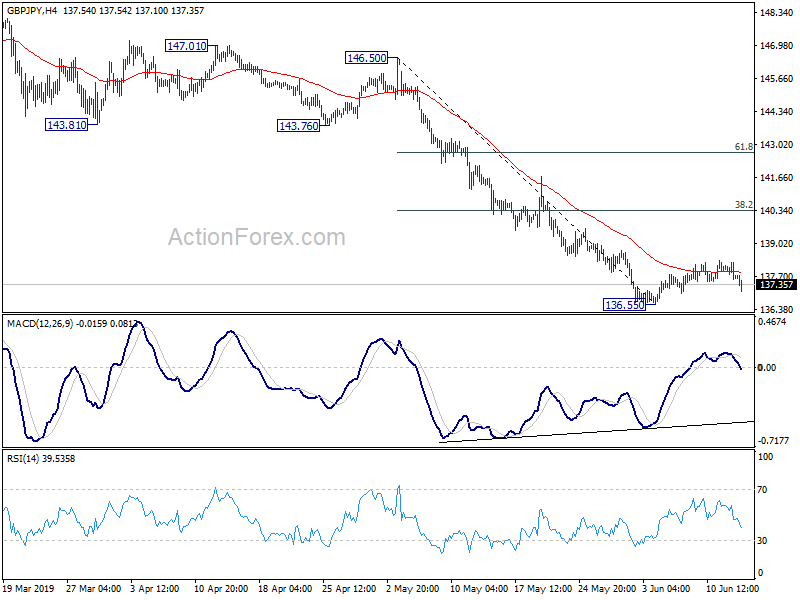
GBP/JPY is still staying in consolidation from 136.55 and intraday bias remains neutral. In case of another rise, upside should be limited by 38.2% retracement of 146.50 to 136.55 at 140.35 to bring fall resumption. On the downside, break of 136.55 will turn bias to the downside and extend the fall from 148.87 to 131.51 low.
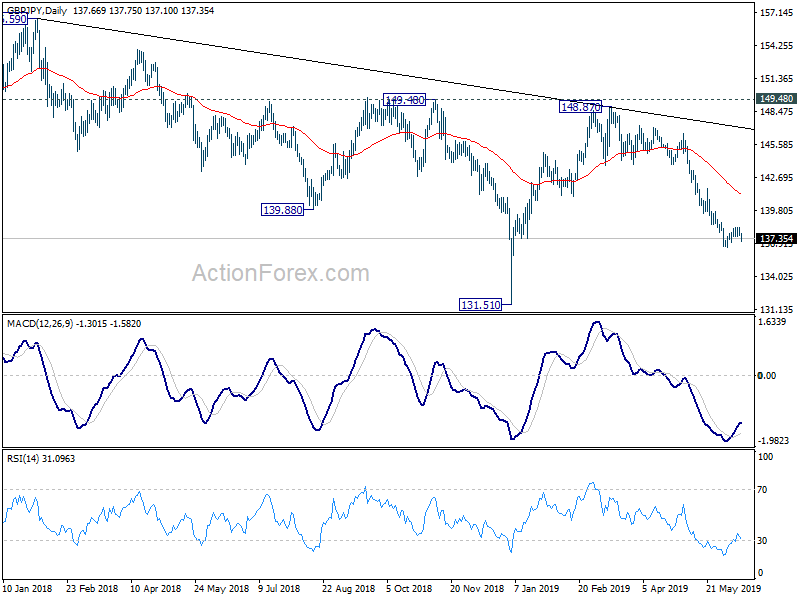
In the bigger picture, current development suggests that GBP/JPY's medium term fall from 156.59 (2018 high) is still in progress. Break of 131.51 will target 122.36 (2016 low). Structure of such decline is corrective looking so far, arguing that it's just the second leg of consolidation from 122.36. Thus, we'd expect strong support from 122.36 to contain downside to bring reversal.
EUR/JPY Daily Outlook
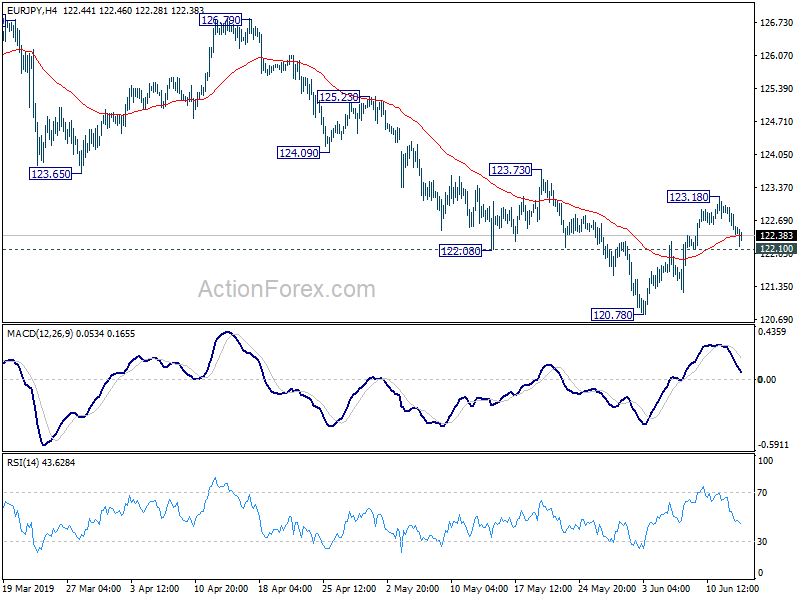
Daily Pivots: (S1) 122.24; (P) 122.66; (R1) 122.90; More....
No change in EUR/JPY's outlook as recovery from 120.78 is seen as a corrective move. Upside should be limited by 123.73 resistance to completion the correction and bring fall resumption. On the downside, below 122.10 minor support will turn bias to the downside for retesting 120.78 first. Break of 120.78 will resume the fall from 127.50 and target 118.62 low next. However, sustained break of 123.73 will indicate short term reversal and turn outlook bullish for 127.50 resistance again.
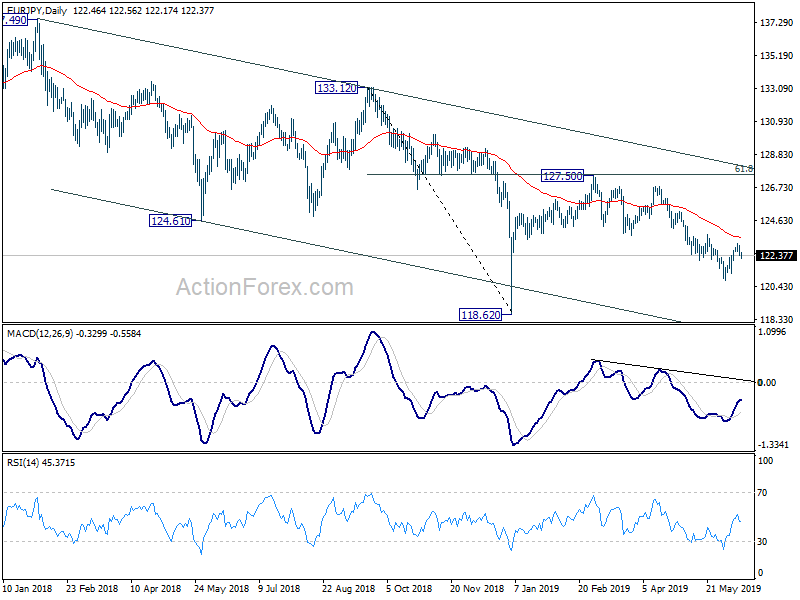
In the bigger picture, down trend from 137.49 is still in progress with the cross staying inside long term falling channel. Break of 118.62 will extend the fall to 109.48 (2016 low). On the upside, break of 127.50 resistance is needed to be the first sign of medium term reversal. Otherwise, outlook will remain bearish in case of strong rebound.
Forex Technical Analysis: EUR/USD, USD/JPY, GBP/USD
EUR/USD
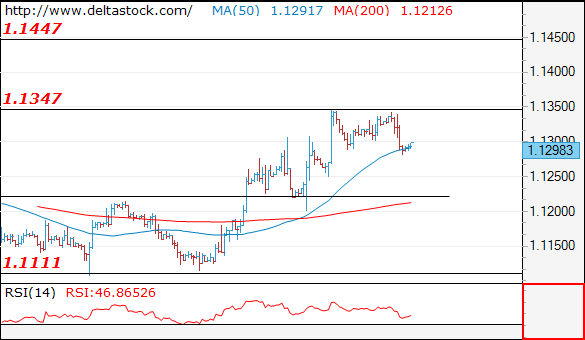
Current level - 1.1298
Intraday, there is a chance for a slide towards 1.1250-20 support area and on the upside only a break through 1.1347 will unleash a rise towards 1.1450.
| Resistance | Support | ||
| intraday | intraweek | intraday | intraweek |
| 1.1350 | 1.1450 | 1.1250 | 1.1015 |
| 1.1450 | 1.1450 | 1.1220 | 1.0860 |
USD/JPY
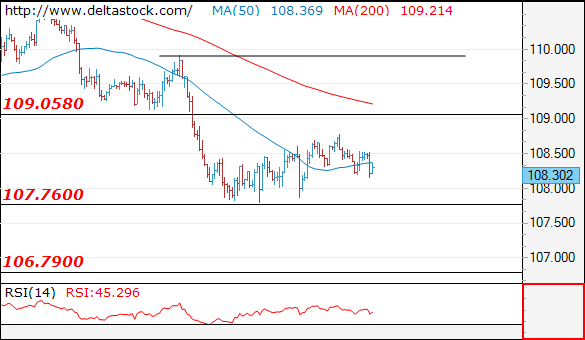
Current level - 108.30
The lack of trend dynamics here leads to a neutral outlook. Trading remains caught in the 107.70-109.05 range.
| Resistance | Support | ||
| intraday | intraweek | intraday | intraweek |
| 109.05 | 109.90 | 108.25 | 107.70 |
| 109.05 | 112.40 | 107.70 | 106.70 |
GBP/USD
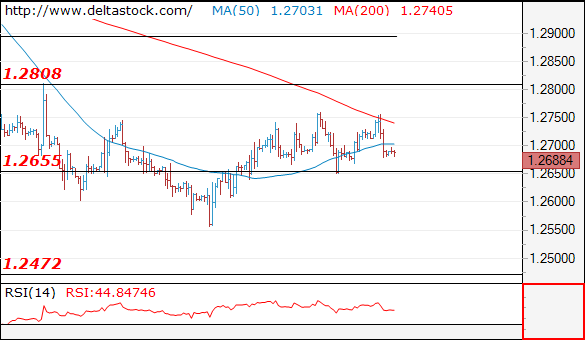
Current level - 1.2688
The failure at 1.2760 signals more corrective work and the intraday bias is bearish, for 1.2650 and probably even 1.2610. On the senior frames the outlook is bullish against 1.2550, for 1.2890.
| Resistance | Support | ||
| intraday | intraweek | intraday | intraweek |
| 1.2760 | 1.2960 | 1.2650 | 1.2570 |
| 1.2810 | 1.3170 | 1.2550 | 1.2470 |
EUR/GBP Daily Outlook
Daily Pivots: (S1) 0.8871; (P) 0.8894; (R1) 0.8918; More...
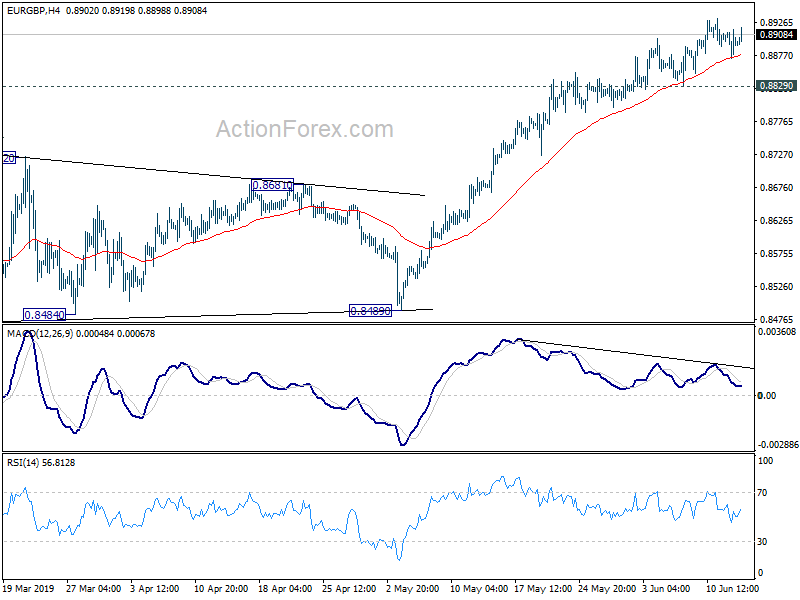
EUR/GBP is losing upside momentum as seen 4 hour MACD. But with 0.8829 support intact, further rise should be seen towards 0.9101 key resistance next. We'd be cautious on strong resistance from there to limit upside to bring retreat. On the downside, though, break of 0.8829 support will indicate short term topping and bring lengthier consolidation before staging another rise.
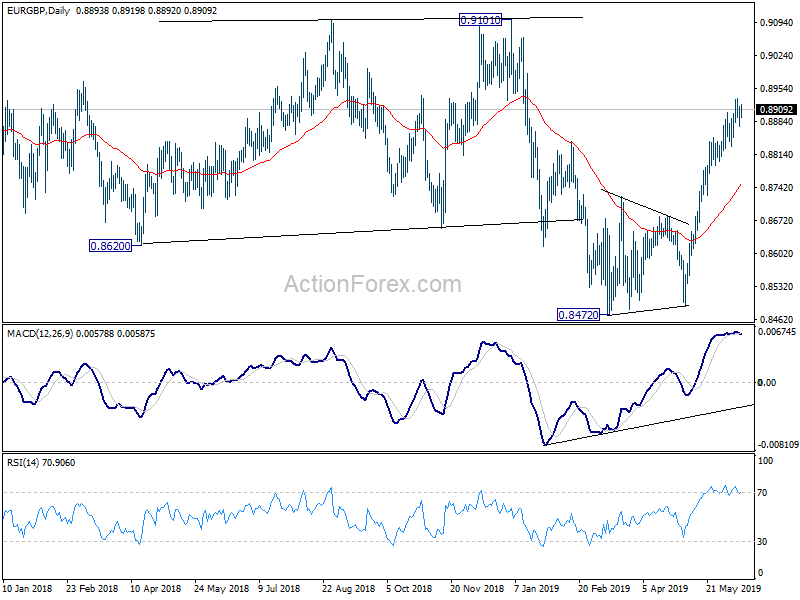
In the bigger picture, medium term decline from 0.9305 (2017 high) is seen as a corrective move. No change in this view. Current development argues that it might have completed with three waves down to 0.8472, just ahead of 38.2% retracement of 0.6935 (2015 low) to 0.9306 at 0.8400, after hitting 55 month EMA (now at 0.8526). Decisive break of 0.9101 resistance will confirm this bullish case. Nevertheless, as EUR/GBP is still staying inside long term falling channel, correction from 0.9305 could still extend to 0.8400 fibonacci level before completion, if upside is rejected by 0.9101.
Gold Gains On Tame US Inflation
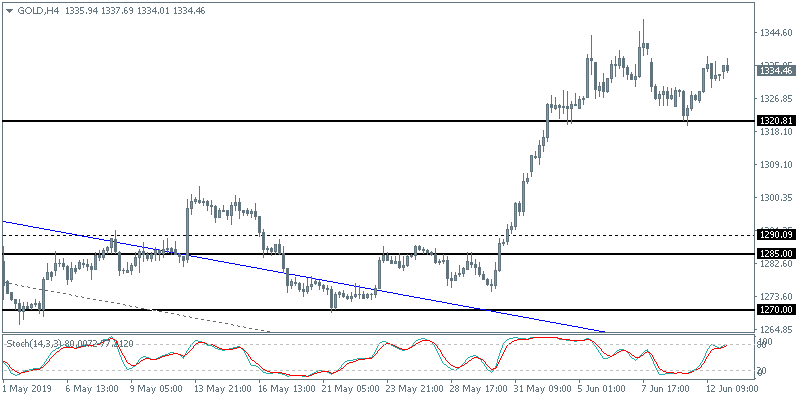
Gold prices rebounded on Wednesday, posting strong gains. The gains came as the US consumer price index data saw headline inflation rising modestly. On a month over month basis, headline inflation grew 0.1% in May while core CPI was also up 0.1%. Annualized inflation slowed to a pace of 1.8%, down from 2.0% in April. Energy prices dragged inflation lower.
Can XAUUSD Maintain the Current Gains?
The rebound in gold prices comes following the correction to the support at 1320. The rebound led by a reversal candlestick pattern has pushed prices close to last Friday’s highs. Still, gold remains a few points below the highs of 1341.80. A breakout above this level is required in order for the precious metal to post further gains to the upside. To the downside, the support at 1320 remains key.
Crude Oil Resumes Declines, Falling for 3rd Consecutive Day
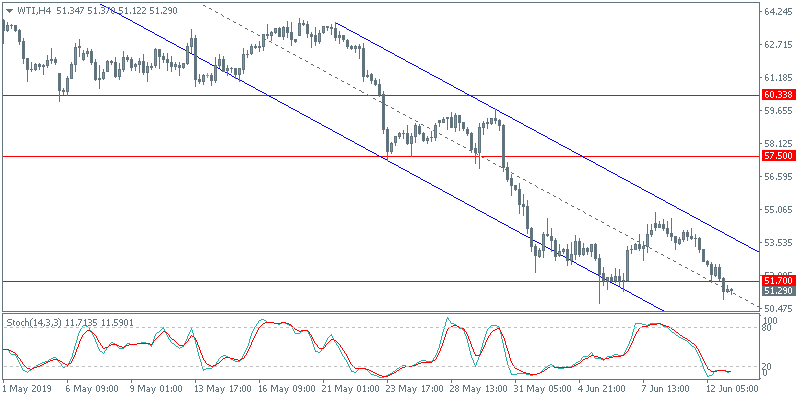
WTI Crude oil prices continued their declines as price plunged over 2% on the day on Wednesday. The declines in oil prices came amid weakening demand. Weekly inventory data from the EIA saw US stockpiles rising by 2.2 million barrels. Adding to the build-up in the inventories, other reports indicate that freight volumes were significantly lower compared to the year before.
WTI on Track to Test $50.00 Psychological Support
The declines in crude oil prices saw price crashing below the temporary support formed at 51.70. The strong bearish close below this level indicates that oil prices could soon be testing the $50.00 level of psychological support. We expect the declines to stall here temporarily. OPEC members and Russia will be meeting in a few weeks which could bring some additional volatility to the oil markets.
Euro Slips On Broad USD Strength
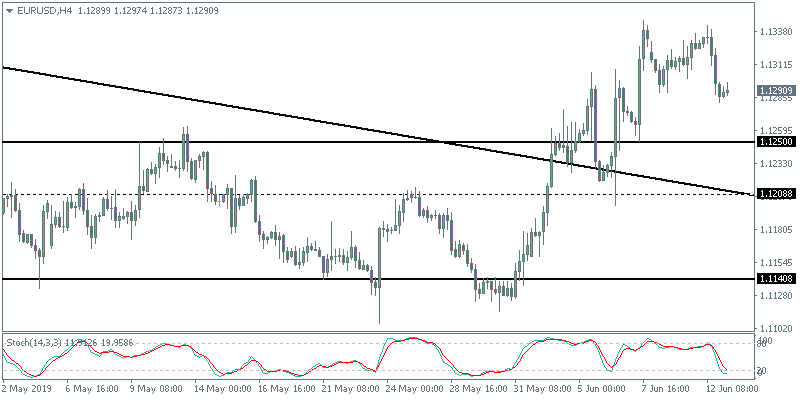
The common currency gave up the gains from earlier this week as the EURUSD lost the $1.130 handle. Economic data on the day was sparse. The ECB President, Mario Draghi along with the IMF Chief, Christine Lagarde spoke at an ECB-hosted event. Both argued the risks of the trade dispute between the US and China. They noted that this could create headwinds for the global economy.
EURUSD Likely to Test Lower Support
Following the recent rally, the euro currency is taking a breather. The correction lower could see price eventually testing the $1.1250 support. Establishing firm support here could signal a possible move to the upside. However, the Stochastics oscillator is bullish, which could signal a reversal. A close above the recent highs of 1.1338 is needed to confirm further upside in the single currency.
EUR/AUD Daily Outlook
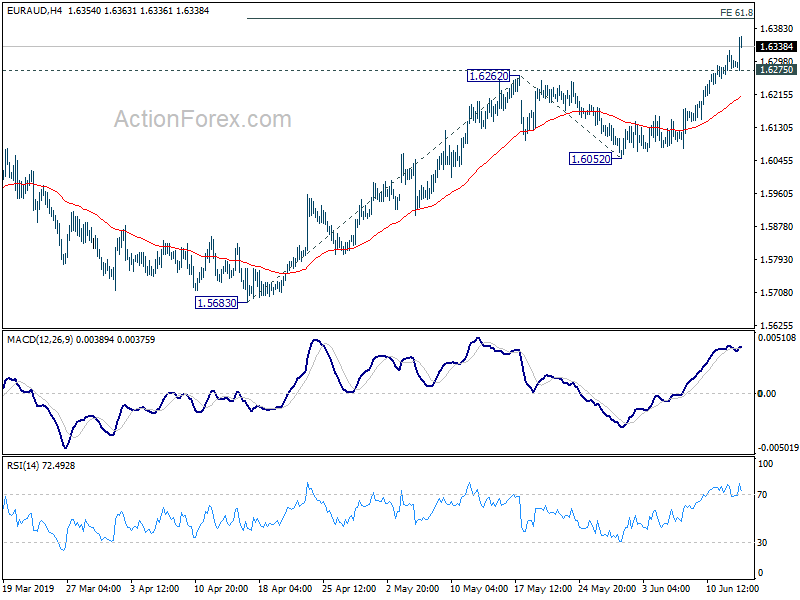
Daily Pivots: (S1) 1.6257; (P) 1.6293; (R1) 1.6326; More...
EUR/AUD's rally continues today and reaches as high as 1.6363 so far. Intraday bias remains on the upside and and current rise from 1.5683 should target 61.8% projection of 1.5683 to 1.6262 from 1.6052 at 1.6410 first. Break will target 100% projection at 1.6631 next. On the downside, below 1.6275 minor support will turn intraday bias neutral first. But retreat should be contained well above 1.6052 support to bring rise resumption.
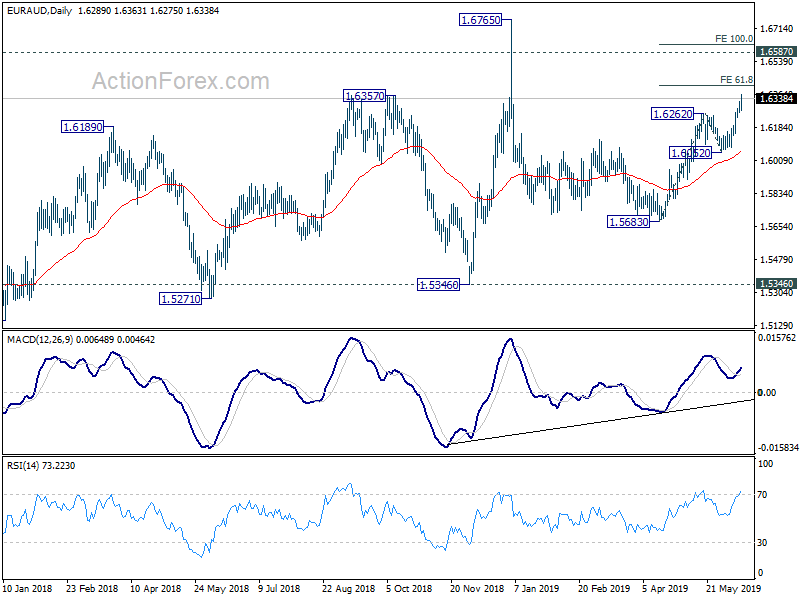
In the bigger picture, as long as 1.5346 support holds, outlook will still remain bullish. Up trend from 1.1602 (2012 low) is expected to resume sooner or later. Break of 1.6765 will target 61.8% retracement of 2.1127 (2008 high) to 1.1602 at 1.7488 next. However, firm break of 1.5346 key support will indicate trend reversal, with bearish divergence condition in weekly MACD, and turn outlook bearish.
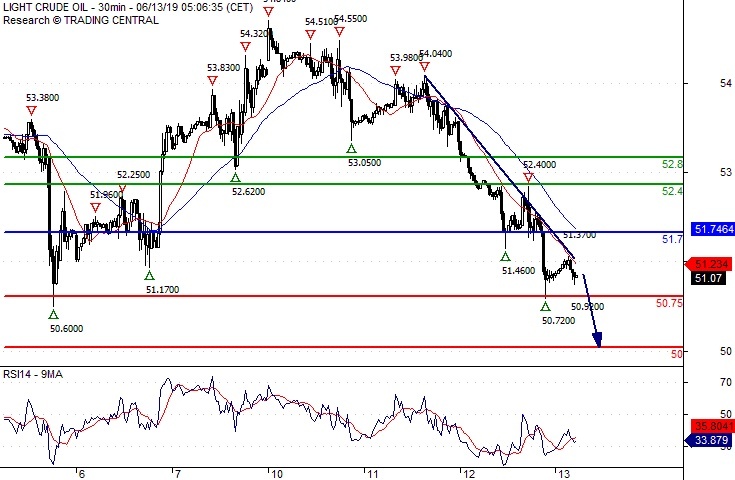
Crude Oil Capped By A Negative Trend Line
Pivot (invalidation): 51.70
Our preference Short positions below 51.70 with targets at 50.75 & 50.00 in extension.
Alternative scenario Above 51.70 look for further upside with 52.40 & 52.80 as targets.
Comment The RSI is bearish and calls for further downside.