Sample Category Title
Into US session: AUD stays weakest on RBA cut bets, CAD rebounds with oil
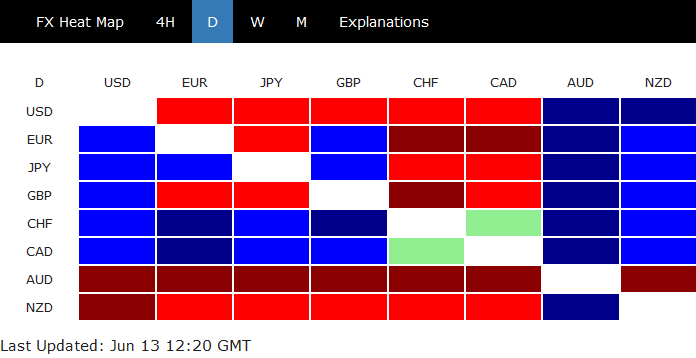
Entering into US session, Australian Dollar remains the weakest one for today weak details in May job data suggests that considerable slack remains in the Australian labor market and affirms the case for more RBA rate cut later this year. For now, New Zealand Dollar is the second weakest.
On the other hand, Canadian Dollar and Swiss Franc are the strongest ones so far. WTI crude oil rebounds strongly ahead of 50.64 support. There are reports that two oil tankers had been attacked in the Gulf of Oman, with fresh tensions in that region potentially posing a threat to global supplies. SNB kept policy rate unchanged at -0.75% and reiterated the readiness for currency intervention. Franc and Yen are lifted by mild risk aversion.
In Europe, currently:
- FTSE is up 0.09%.
- DAX is up 0.39%.
- CAC is down -0.02%.
- German 10-year yield is down -0.005 at -0.241.
Earlier in Asia:
- Nikkei dropped -0.46%.
- Hong Kong HSI dropped -0.05%.
- China Shanghai SSE rose 0.05%.
- Singapore Strait Times rose 0.40%.
- Japan 10-year JGB yield rose 0.0004 to -0.111.
Italy Tria insists no additional measures needed on budget
Ahead of a meeting of euro zone finance ministers Italian Economy Minister Giovanni Tria insisted that no additional measures are needed over its budget. But Italy can still seek a deal with EU to avoid the excessive deficit procedures. He said "we will explain we will reach our targets over deficit... we don't need additional measures, (but if needed) we will adopt them". And what will happen at the Eurozone finance minister meeting by July 9 is that " we will seek a deal."
Eurogroup President Mario Centeno warned that reducing Italy's debt "is of utmost importance for growth, for the stability of the euro zone." And, what he expected to hear from Tria was "that the targets that were committed by the Italian government at the end of last year are achieved".
European Commission Vice President Valdis Dombrovskis reiterated that "substantial corrections" is needed in Italy's budget to meet fiscal targets for 2019 agreed with the European Commission last December.
European Update – Equities Back In The Green
Equities quickly bounce back
It didn't take long for investors to buy the dip, with equity markets back in the green on Thursday following a two day pause which appeared to be nothing more than soft profit taking.
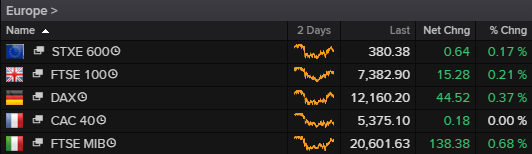
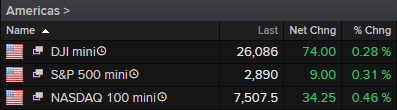
The rebound even follows a brief dip in US futures overnight, which came very suddenly and appeared to be triggered by very little, but those losses were gradually recouped over the following hours. The US inflation data on Wednesday didn't do the markets any harm, with the slight dip only adding to the case for rate cuts this year, although it wasn't quite significant enough to dramatically alter people's views.
The odds have slightly moved in favour of a third rate hike by the end of the year – although no hike this month – but this has been something of a coin toss for a while with the pendulum swinging back and forth between two and three. Ultimately, the meeting – assuming it takes place – between Trump and Xi later this month will highly influence how aggressive the Fed will be, which is probably largely why the central bank is expected to hold this month.
EUR/USD – Euro Dips Below 1.13
EUR/USD is flat in the Thursday session. Currently, the pair is trading at 1.1286, down 0.01% on the day. On the release front, German Final CPI came in at 0.2%, matching the forecast. Eurozone industrial production declined 0.5%, weaker than the estimate of -0.4%. In the U.S., unemployment claims is expected to dip to 215 thousand. On Friday, the U.S. releases retail sales reports and UoM consumer sentiment.
German and eurozone numbers disappointed on Thursday, but the euro shrugged off the weak numbers. German Final CPI came in at 0.2%, unrevised from the initial reading. Still, this gain was much smaller than the April gain of 1.0%. Eurozone industrial production continues to struggle, posting a third consecutive decline. The ongoing contraction reflects significant weakness in the manufacturing sector, which has been hit hard by global trade tensions, which have lessened demand for German and eurozone exports.
In the U.S., the focus was on consumer inflation indicators for May. CPI slowed to 0.1%, down from 0.3% in the previous release. This matched the estimate. The core reading posted a gain of 0.1% for a fourth straight month, shy of the forecast of 0.2%. With the May inflation numbers remaining low, there could be more pressure on the Fed to lower interest rates in order to boost economic activity and inflation. The likelihood of further rates this year is increasing – the CME Group has set the odds of a July cut at 66% and another cut in September at 50%. Lower interest rates makes the U.S. dollar less attractive to investors, so investors will be keeping an eye at alternative assets.
GBPUSD Lower On UK Politics
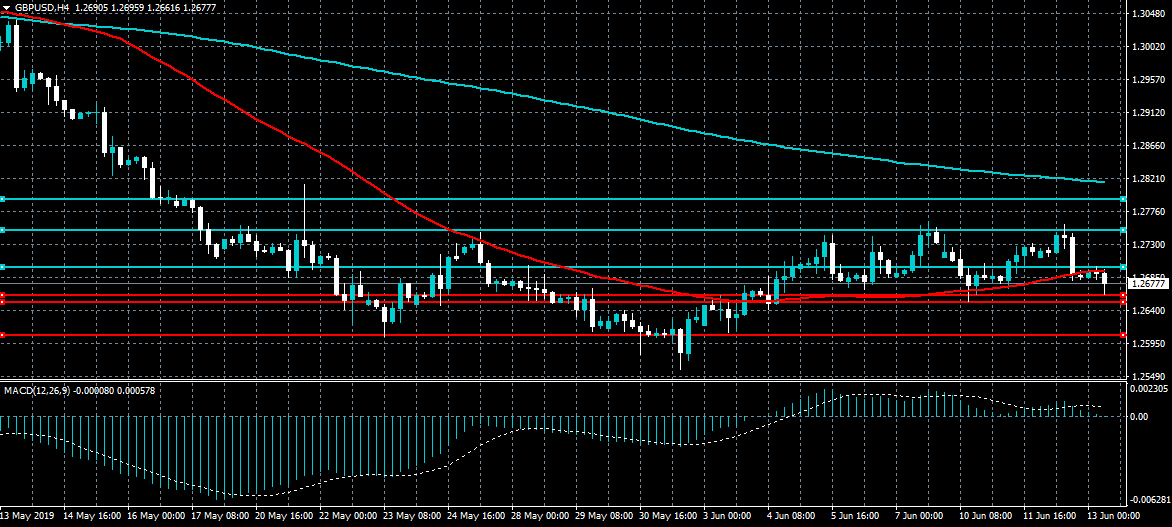
The British pound has remained under constant downside pressure against the US dollar during the European trading session due to fears about UK politics and a hard-Brexit. The GBPUSD pair remains technically weak below the 1.2710 level, with the 1.2655 level the next bearish trigger point. Overall, the bullish pattern on the four-hour time frame remains valid while price trades above the 1.2610 level.
The GBPUSD pair is only bullish while trading above the 1.2710 level, key resistance is located at the 1.2755 and 1.2800 levels.
The GBPUSD pair is only bearish while trading below the 1.2710 level, key intraday support remains at the 1.2655 and 1.2610 levels.
USDJPY Technically Weak
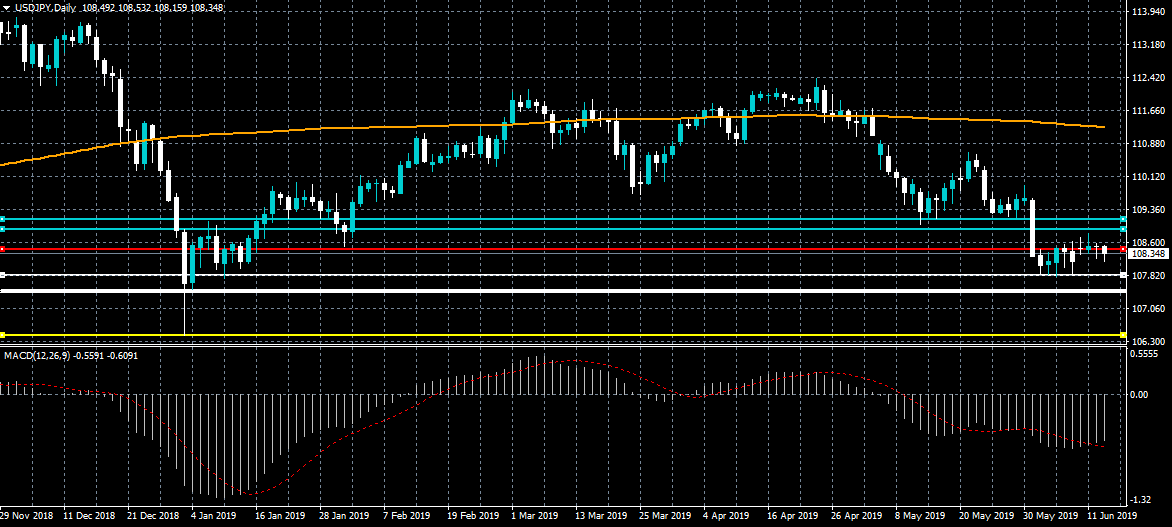
The US dollar remains technically weak against the Japanese yen currency on Thursday, with the pair once again staging a bearish reversal. Sellers now need to force price under the 108.00 support level to increase technical selling. Traders should expect bearish intraday pressure to persist while price trades below the 108.44 level.
The USDJPY pair is bearish while trading below the 108.44 level, key support remains at the 108.00 and 107.70 levels.
If the USDJPY pair trades above the 108.44 level, key technical resistance is found at the 108.64 and 108.80 levels.
EUR/USD Tests Short-Term Channel
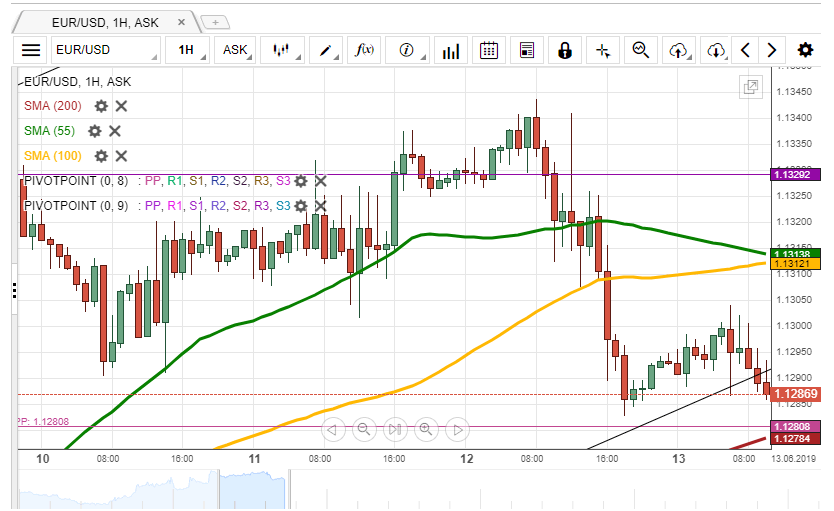
On Wednesday, the EUR/USD currency pair declined to the lower boundary of the short-term ascending channel located circa 1.1280. During today's morning, the pair was testing the given line.
From a theoretical perspective, it is expected, that the exchange rate could reverse north in the nearest future. Note, that the rate has to surpass the resistance level formed by the 55– and 100-hour SMAs, currently located circa 1.1312.
On the other hand, the pair could trade sideways between the given resistance, as well the support level formed by the 200-hour SMA and the weekly PP at the 1.1281 mark.
GBP/USD Might Sharp Losses
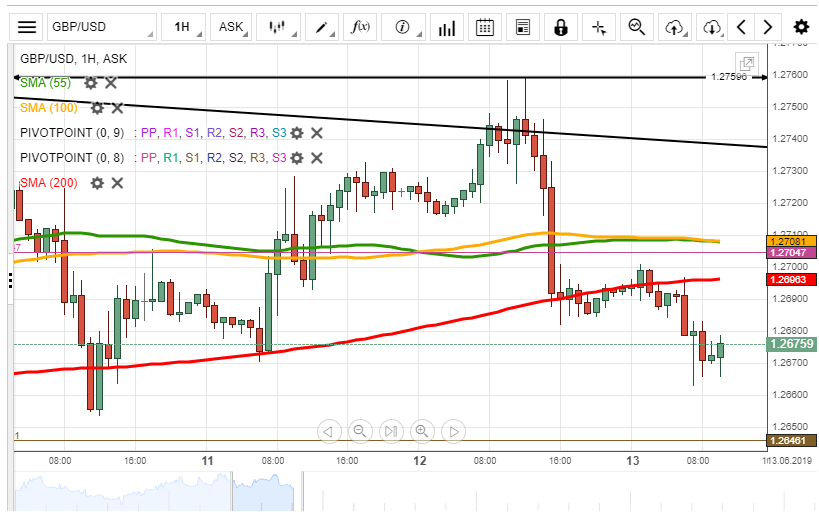
Yesterday, the GBP/USD exchange rate reversed south from the upper boundary of the short-term descending channel circa 1.2740 and dropped to the 200-hour SMA.
On the one hand, the currency pair could maintain its decline, as the British Pound is pressured by the political situation in the UK. A potential downside target is the weekly S1 located at the 1.2646 mark.
On the other hand, a reversal north from the psychological level at 1.2670 could occur within the following trading hours. However, it is unlikely, that the pair could exceed the 1.2696/1.2708 range due to the resistance cluster formed by the 55-, 100– and 200-hour SMAs, as well the weekly PP.
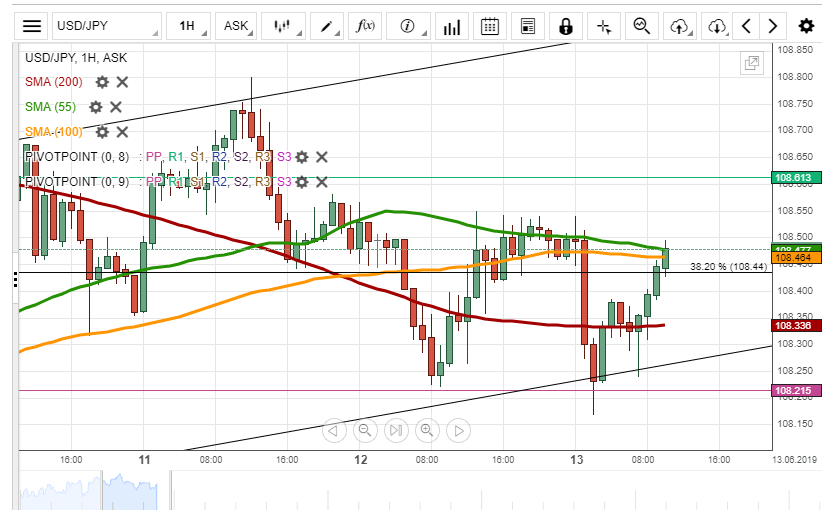
USD/JPY Pressured By 55– And 100-Hour SMAs
Yesterday, the USD/JPY currency pair tried to surpass the resistance level formed by the 55– and 100-hour SMAs, as well the Fibonacci 38.20% retracement at 108.44.
Note, that the pair is supported by the 200-hour SMA, currently located at 108.33, thus, some upside potential could prevail in the market. A possible upside target is the weekly R1 at 108.61.
If the given resistance holds, it is expected, that the exchange rate could re-test the lower boundary of the short-term ascending channel. It is unlikely, that a breakout south could occur, as the rate is supported by the weekly PP at 108.22.
XAU/USD Likely To Go Upwards
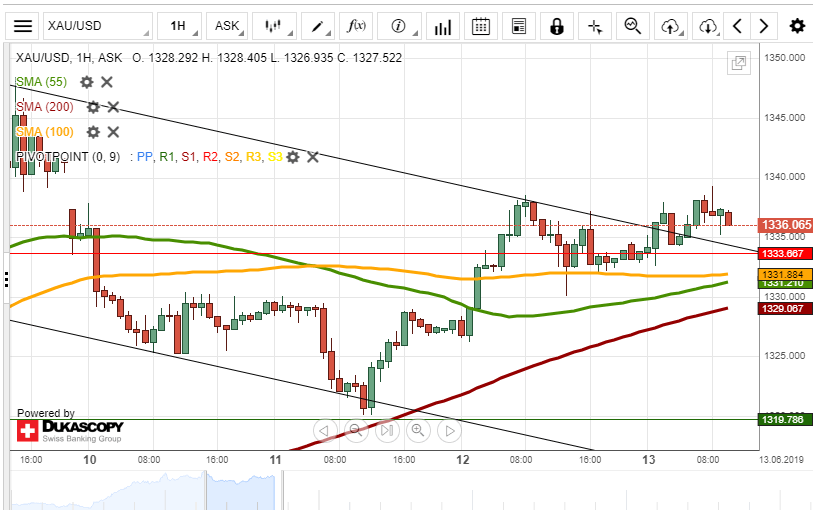
On Wednesday, the XAU/USD exchange rate traded sideways, trying to surpass the support level—the monthly R2 at 1,3333.67.
Given, that gold is also supported by the 55-, 100– and 200-hour moving averages, it is likely, that bulls could prevail in the market in the short term. A possible upside target is the 1,340.00/1,245.00 range.
On the other hand, gold could continue to trade sideways near the given support level against the US Dollar. Also, it is unlikely, that the price for gold could tumble lower than 1,328.00 due to the support of given SMAs.