Sample Category Title
Elliott Wave Analysis: S&P500 Is Already Bullying the Bears; More Upside Expected!
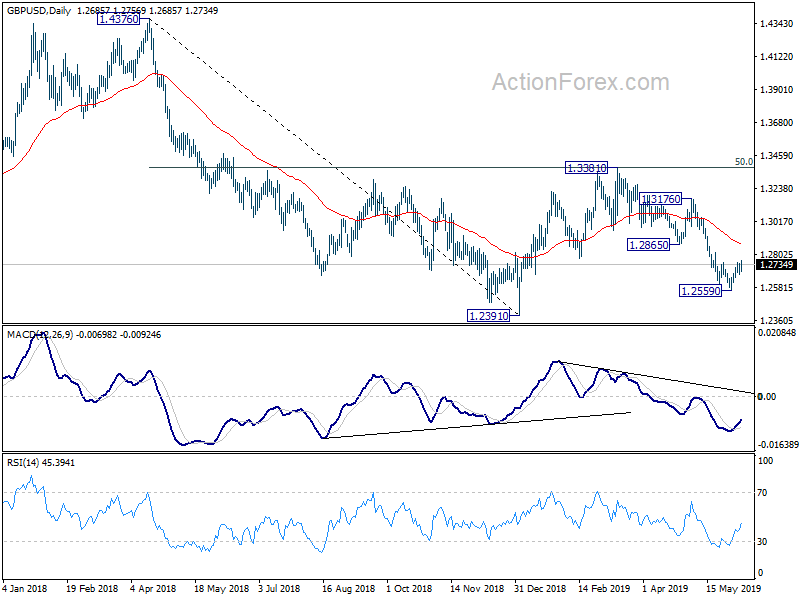
S&P500 made a clear five-wave recovery from end of December of 2018, and towards end of March of 2019. We can see that afterwards a three-wave pullback had unfolded, which we labelled it as an A-B-C correction. This correction is usually within a trend, and it only slows the price down temporarily. At the moment, however we see price rising exponentially, and breaking above the upper corrective channel line, which is fist evidence that an A-B-C correction is completed, and that a bigger trend may continues its rise. If that is the case, then top near 2950 may get breached soon.
S&P500, Daily
Downbeat US Jobs Data Send Euro Through Key Barriers
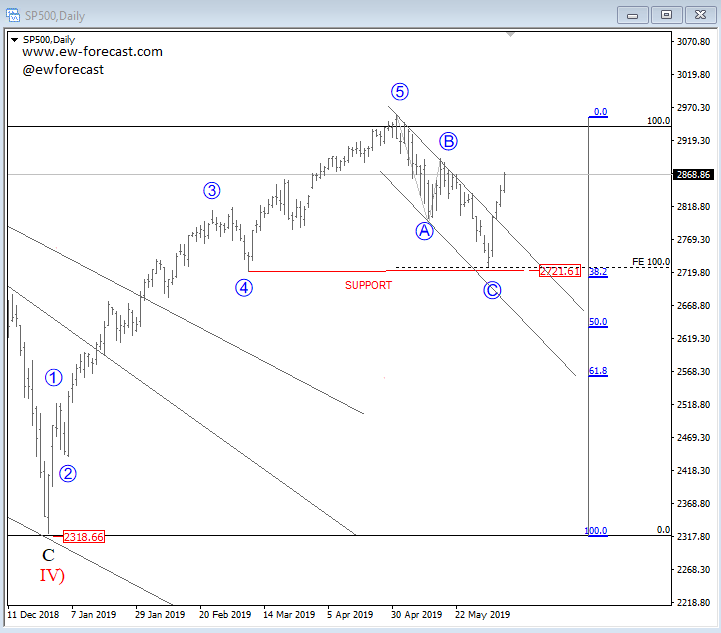
The Euro jumped to 2 1/2 month high at 1.1326 on Friday after disappointing US jobs data that further depressed the dollar. US NFP showed only 75K new jobs in May (the lowest since Feb) expectations for 185K and downward-revised April's figure at 224K. The data came in line with signals from Wednesday's ADP private sector jobs data (May 24K vs 180K f/c) which is often seen as indication for more significant NFP data. Average hourly earnings also disappointed in May (m/m 0.2% vs 0.3% f/c; y/y 3.1% vs 3.2% f/c), while unemployment rate remained unchanged at 3.6% in May. Downbeat data further weakened greenback's sentiment, adding to rising expectations of Fed, following series of dovish comments from Fed officials earlier this week that could happen as early as next FOMC policy meeting on 19 June. Fresh advance surged through key obstacles at 1.1279/84 (daily cloud top/Fibo 38.2% of 1.1569/1.1107) and dented another pivotal barrier at 1.1318 (Fibo 61.8% of 1.1448/1.1107 downleg. Bulls need today close above here for confirmation that would open way towards falling 200SMA (1.1369). Strong bullish momentum supports the advance which is on track for eventual clear break above 1.1279/84 barriers after two consecutive failures. Broken daily cloud (1.1279) and 100SMA (1.1273) now reverted to supports and are expected to keep the downside protected and maintain bullish bias.
Res: 1.1326; 1.1338; 1.1369; 1.1393
Sup: 1.1279; 1.1273; 1.1251; 1.1215
Sunset Market Commentary
Markets
The spotlight turned from yesterday’s dovish ECB meeting to the May US payrolls report. Net job creation disappointed, in line with Wednesday’s private sector ADP report. The total miss was 175k (!!), taking into account revisions to the previous two month’s data, with average hourly earnings also missing the bar. The data added to recent repositioning bets in favour of a Fed rate cut cycle, starting in Q3 2019. US yields plunged towards this week’s low, retesting important support levels like 2.06% for the US 10-yr yield. We don’t anticipate breaks lower and even consider some profit taking on core bond long positions going into the weekend. The US yield curve bull steepens in the process with yields down 7 bps (2-yr) to 3.9 bps (30-yr). German yields lose between 0.9 bps (5-yr) and 2.7 bps (30-yr) today. German industrial production figures for April were awful (-1.9% M/M) and indicate a dismal start to the second quarter. The Bundesbank downgraded this year’s growth forecast to 0.6%. 10-yr yield spreads vs Germany narrowed up to 2 bps with peripheral bonds outperforming (Italy: -16 bps, Greece: -8 bps, Spain/Portugal -6 bps). The peripheral outperformance is thanks to yesterday’s hints from ECB Draghi that the ECB will revamp asset purchases if adverse contingencies arise.
The euro traded resilient yesterday even as the ECB signaled that rates will stay low for longer. ECB president Draghi even kept the door open for further easing if needed. However, it didn’t hurt EUR/USD. The pair maintained recent gains holding in the 1.1250/1.13 area as the as the dollar remained weak on Fed rate cut expectations. EUR/USD held that trading range this morning as investors were looking forward to the US payrolls release. In line with the ADP report earlier this week, job growth missed the consensus by quite a big margin. US yields end the dollar nosedived again. EUR/USD cleared recent highs just north of 1.13 and tested the 1.1324 resistance (April top). Next resistance comes in at the 1.1448 area (correction top/50% retracement). The German 10-y yield also set a new all-time low, but that didn’t stop the EUR/USD topside momentum. USD/JPY also tumbled form the mid 108 area to currently trade below the 108 barrier. USD momentum is becoming ever more fragile.
As was the case during most of this week, sterling trading was mostly technical in nature and tracked the broader moves in the euro and the dollar. UK PM May today formally steps down as leader of the conservative party, but for now there is no clarity on who will succeed her and on what Brexit tactics this new PM will follow. EUR/GBP initially dropped to the mid 0.88 area, but the pair rallied in lockstep with EUR/USD after the US payrolls. The EUR/GBP 0.89 level is again within reach. Cable gained some further ground on post-Fed USD weakness, but gains remains modest (currently 1.2740 area).
News Headlines
The Canadian job report crushed expectations in May. Net employment amounted up to 27 700 (all of which full time) while a much more modest 5 000 was expected after an already historic increase (106 500) in April. Wages grew at a pace of 2.6% (unchanged vs. April). Markets anticipated a slight pullback to 2.4%. The loonie rallied to below USD/CAD 1.33.
US payrolls were a disappointment in May. After a strong (but downwardly revised) April figure, 75 000 new jobs were created in May (vs. 175 000 expected). The unemployment rate and participation rate stabilized at 3.6% and 62.8% while wage growth was unchanged at 0.2% MoM. An uptick to 0.3% MoM was expected.
Dismal US Jobs Report Deals Dollar Knockout Blow
King Dollar was dealt a knockout blow Friday afternoon after US Non-Farm payrolls printed well below market expectations.
The US economy added only 75k jobs against the 185k expected in May while wage growth disappointed by rising 0.2% versus the 0.3% month-on-month expectations. Although the unemployment rate held at a 49-year low of 3.6%, the overall flavour of the report was quite sour and this continues to be reflected in the Dollar’s valuation. Market speculation over the Federal Reserve cutting interest rates is set to intensify following today’s underwhelming jobs report. With labour markets showing some cracks, and concerns rising over persistent trade tensions negatively impacting the US economy, Dollar bears may take full control of the driver’s seat sooner than expected.
Looking at the technical picture, the Dollar Index (DXY) remains under pressure on the daily charts. A weekly close below 96.50 is seen opening a path towards 96.00 in the short to medium term.
Risks Around Trade Outlook Remain, but Canadian Labour Markets Still Look Solid
- Employment increased another 28k in May, building on the outsized 107k increase in April
- The unemployment rate fell to 5.4% -- the lowest for comparable data back to 1976
- Wage growth remains soft given the low unemployment rate, but ticked up to 2.8% in May from 2.5% in April.
The gain in employment was the 8th in 9 months for what is normally a very volatile measure – with gains over the period totaling 417k. As always, the labour force survey numbers should be taken with a big grain of salt given wide confidence bands around spot estimates. The unemployment rate also fell to new multi-decade lows, though. The participation rate also dipped, but there is little evidence that worker discouragement is to blame. Broader measures of unemployment from Statistics Canada that include, for example, people who have given up their job search out of discouragement have declined more quickly over the past year than the ‘official’ unemployment count. Wage growth remains surprisingly soft given what otherwise still look like ‘tight’ labour markets, but average hourly earnings growth did tick up to 2.8% from a year-ago in May from 2.5% in April.
The labour market data still looks relatively solid in Canada and growth looks on track to rebound to a 2% rate as expected in Q2 after slowing over the prior two quarters. Risks to the economic outlook from escalating US-led global trade tensions still leave the Bank of Canada with plenty of concerns meaning they will leave interest rates where they are for now.
America’s Job Engine Sputters in May
- The American jobs engine slowed more sharply than expected in May, churning out a modest 75k new jobs. The prior months' gains were also revised down by 75k jobs. On the plus side, the unemployment rate remained near a 50-year low of 3.6%.
- The hiring slowdown was widespread. Private services sector hiring decelerated to 82k (from 170k in April), and the goods-producing sector gained a measly 8k new jobs (+35k in April). A loss of 15k jobs in the government sector dampened the headline tally.
- The BLS noted that hiring continues to trend up in professional and business services (+33k) and health care (+16k). Construction hiring was modest, +4k on the month, after a 30k spurt in April. Employment showed little changed in other major industries.
- The labor force participation rate remained steady at 62.8%, and other measures of labor market slack improved. The U6 unemployment rate, which includes people working part-time for economic reasons fell to 7.1%, from 7.3% in April. That is the lowest rate seen since 2000.
- Growth in average hourly earnings was up a modest 0.2% in May, matching the monthly gain in April. That left wage gains a tick softer at 3.1% on a year-on-year basis.
Key Implications
- Well, we have long expected hiring to slow in 2019, and now it has. Monthly hiring tallies have averaged 151k jobs over the past three months, down from a 223k pace in 2018 as a whole. There are simply fewer people available to fill job openings, pushing job growth to slow in line with trend growth in the labor force of around 120k per month. However, it is tough to argue against the reality that this slowing was more abrupt than expected. It may signal that the weakness we've seen in business confidence measures and in investment spending may now be showing up in hiring.
- This will be the tension that the Fed will need to navigate at its upcoming meeting June 19th. Do they put more weight on broad measures of labor market slack that point to a tight labor market, and view slower hiring as a natural part of a mature economic cycle? Or, do they see the hiring slowdown as the manifestation of weaker business confidence, where worries about the risks of slower global growth and tariff threats are increasing.
- For now, we think they will tend toward the former, and wait for further confirmation that the slowdown in hiring reflects something more insidious. Much depends on what happens on the tariff front, and whether a better outcome with Mexico and China can remove the main cloud hanging over the outlook.
USD/CAD Mid-Day Outlook
Daily Pivots: (S1) 1.3337; (P) 1.3385; (R1) 1.3410; More...
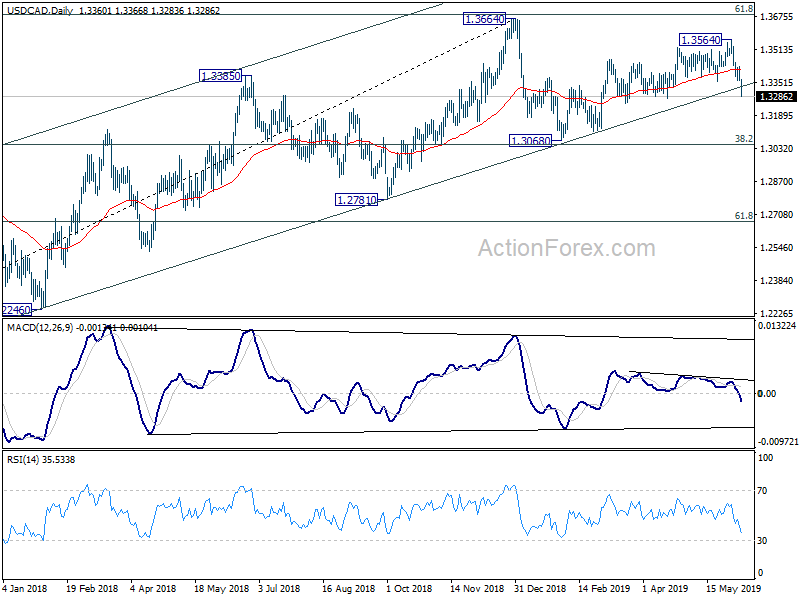
USD/CAD's decline from 1.3564 resumes and accelerates to as low as 1.3286 so far. Intraday bias is back on the downside for 1.3274 support. Choppy corrective rise from 1.3068 should be completed at 1.3564 already. Break of 1.3274 will target 1.3068 key support level next. On the upside, break of 1.3363 support turned resistance is needed to indicate short term bottoming. Otherwise, outlook will remain bearish in case of recovery.
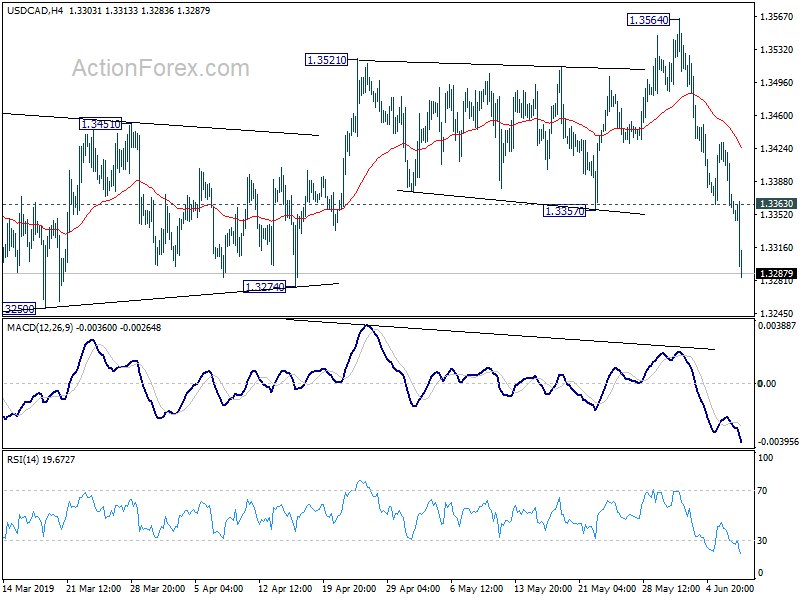
In the bigger picture, the strong break of medium term channel support now argues that up trend from 1.2061 (2017 low) has completed at 1.3664, just ahead of 61.8% retracement of 1.4689 (2016 high) to 1.2061 at 1.3685. Decisive break of 1.3068 cluster support (38.2% retracement of 1.2061 to 1.3664 at 1.3052) will confirm and pave the way to 61.8% retracement at 1.2673 next. For now, risk will remain on the downside as long as 1.3564 resistance holds, even in case of strong rebound.
USD/JPY Mid-Day Outlook
Daily Pivots: (S1) 108.09; (P) 108.33; (R1) 108.62; More...
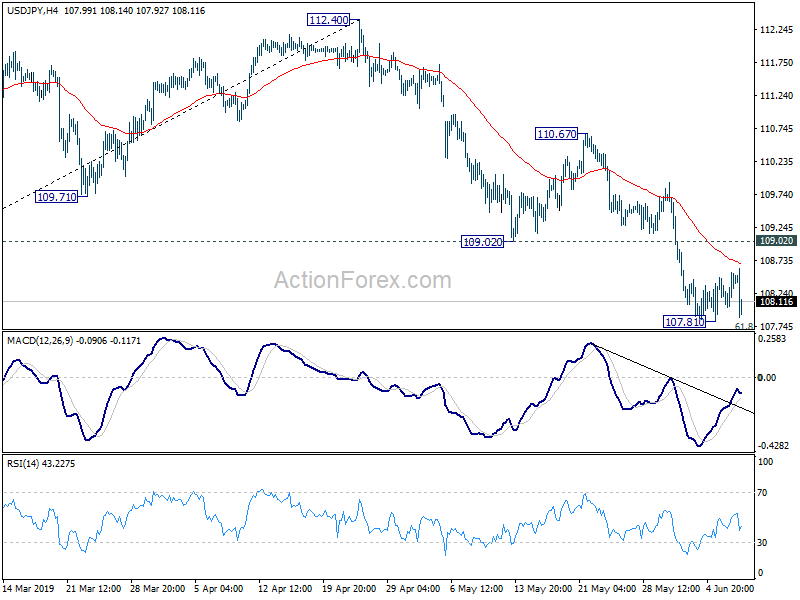
USD/JPY drops notably in early US session but stays above 107.81 temporary low. Intraday bias remains neutral and more consolidations could be seen. Outlook is unchanged that with 109.02 support turned resistance intact, current fall from 112.40 is expected to extend further. Sustained break of 61.8% retracement of 104.69 to 112.40 at 107.63 will pave the way back to 104.62/9 key support zone. Though, break of 109.02 support turned resistance will indicate short term bottoming and bring lengthier consolidations first.
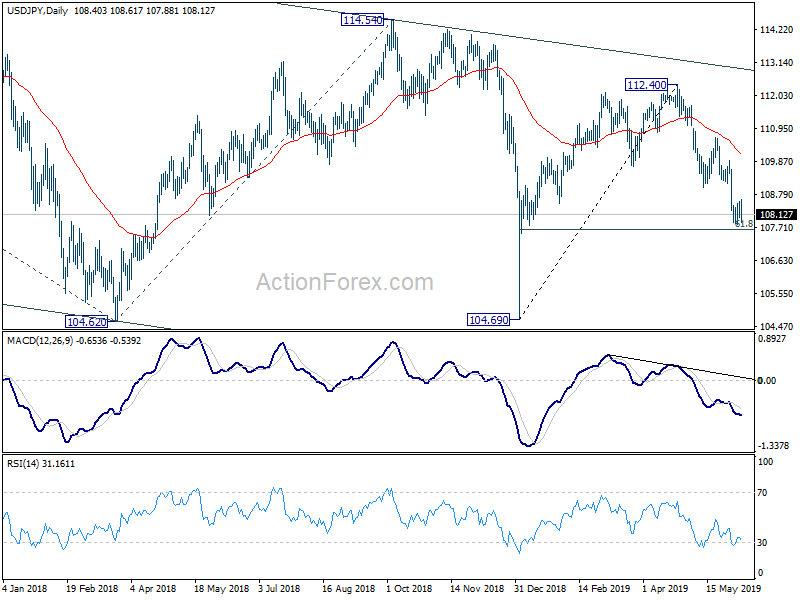
In the bigger picture, decline from 118.65 (Dec 2016) is still in progress, with the pair staying indicate long term falling channel. Break of 104.62 will target 100% projection of 118.65 to 104.62 from 114.54 at 100.51. For now, we'd expect strong support above 98.97 (2016 low) to contain downside to bring rebound.
USD/CHF Mid-Day Outlook
Daily Pivots: (S1) 0.9875; (P) 0.9918; (R1) 0.9957; More...
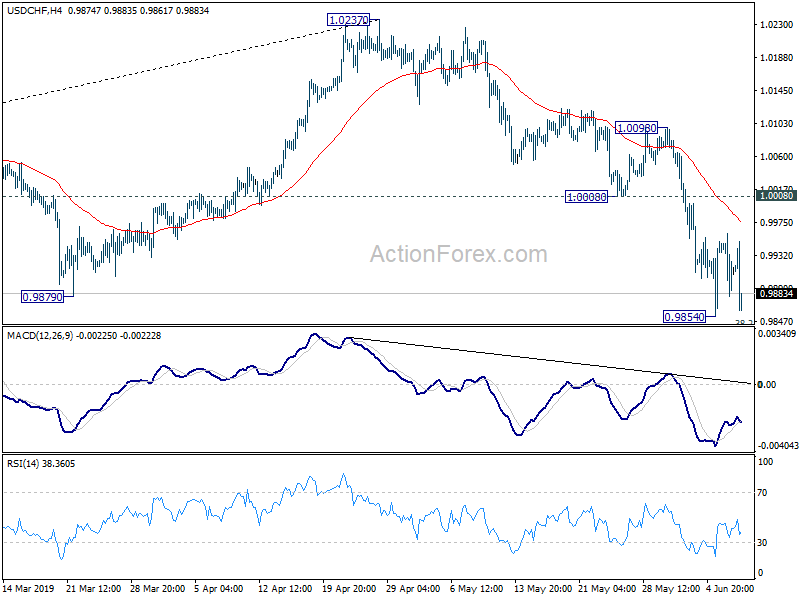
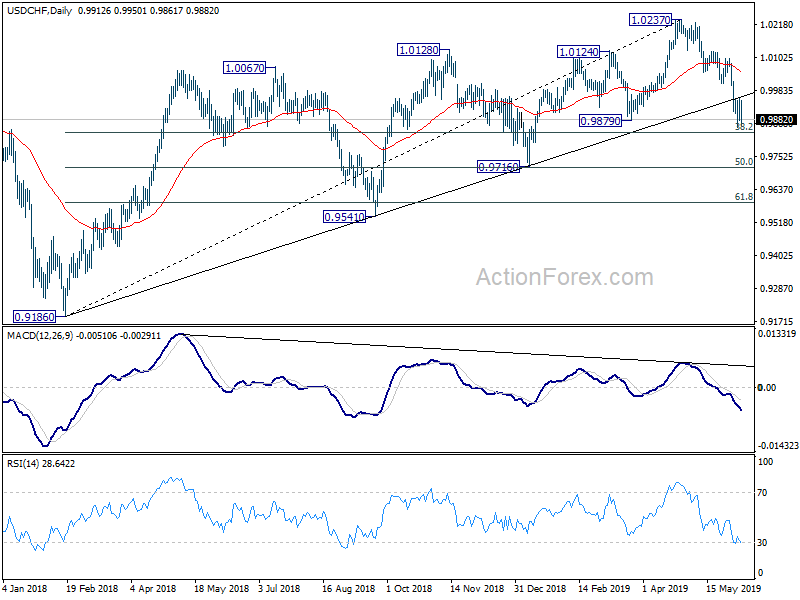
USD/CHF drops sharply in early US session but stays above 0.9854 temporary low. Intraday bias remains neutral for the moment. In case of another recovery, upside should be limited by 1.0008 support turned resistance to bring fall resumption. On the downside, break of 0.9854 will extend the decline from 1.0237 to 0.9716 cluster support (50% retracement of 0.9186 to 1.0237 at 0.9712).
In the bigger picture, USD/CHF's break of long term trend line support is the first indication of medium term reversal. Focus is now back on 0.9879 support. Sustained break should confirm that medium term up trend from 0.9186 has completed at 1.0237 already. Further fall should be seen to 0.9716 cluster support (50% retracement of 0.9186 to 1.0237 at 0.9712) next. Break will target 61.8% retracement at 0.9587.
GBP/USD Mid-Day Outlook
Daily Pivots: (S1) 1.2659; (P) 1.2701; (R1) 1.2734; More....
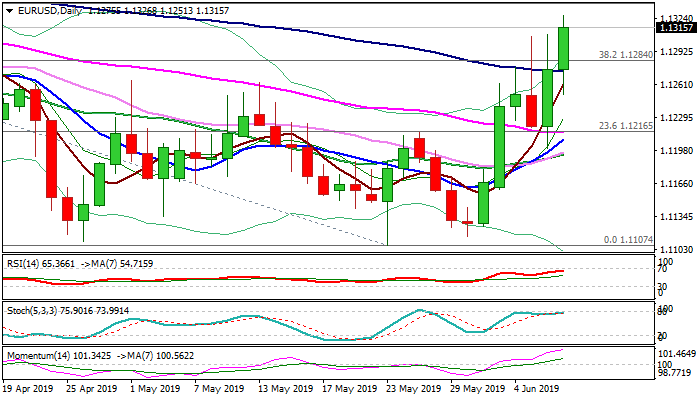
GBP/USD edges higher after drawing support from 4 hour 55 EMA. But over all outlook is unchanged. Recovery from 1.2559 is seen as a correction. Upside should be limited by 1.2865 support turned resistance to bring fall resumption. On the downside, break of 1.2559 will extend the decline from 1.3381 for 1.2391 low first. However, sustained break of 1.2865 will indicate completion of fall from 1.3381. In that case, corrective pattern from 1.2391 would be in another rising leg through 1.3381 resistance.
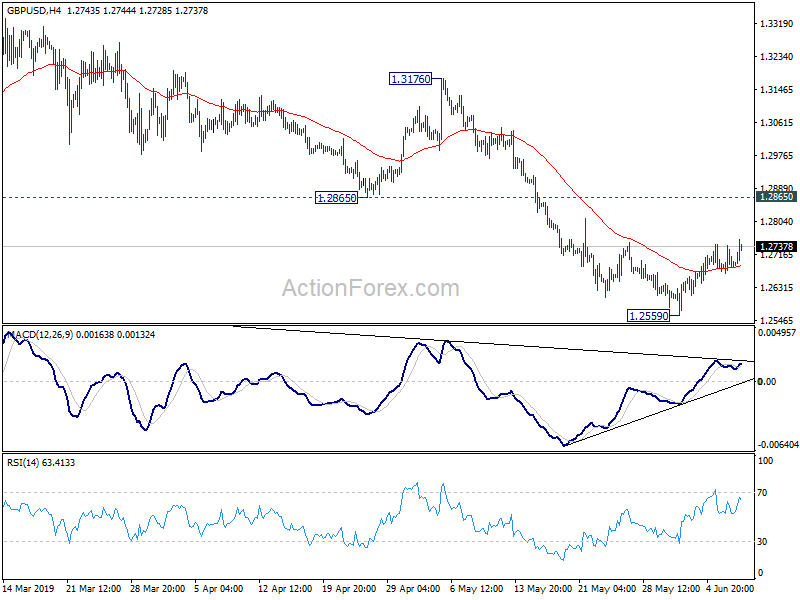
In the bigger picture, medium term decline from 1.4376 (2018 high) is possibly ready to resume. Decisive break of 1.2391 would target a test on 1.1946 long term bottom (2016 low). For now, we don't expect a firm break there yet. Hence focus will be on bottoming signal as it approaches 1.1946. In any case, medium term outlook will stay bearish as long as 1.3381 resistance holds, in case of strong rebound.