

Sample Category Title
Forex Technical Analysis: EUR/USD, USD/JPY, GBP/USD
EUR/USD
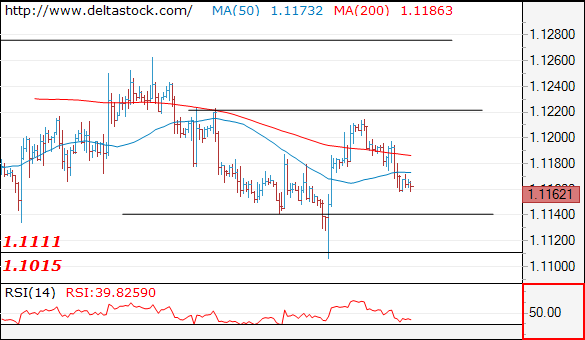
Current level - 1.1162
The support at 1.1140 is expected to provoke a reversal for another rise towards 1.1260.
| Resistance | Support | ||
| intraday | intraweek | intraday | intraweek |
| 1.1220 | 1.1330 | 1.1140 | 1.1010 |
| 1.1275 | 1.1450 | 1.1110 | 1.0860 |
USD/JPY
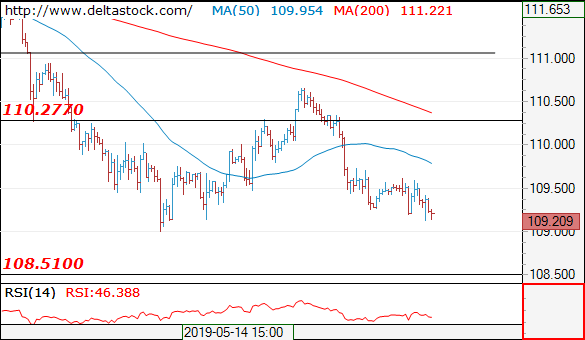
Current level - 109.20
The pair is currently heading for a tight test of 109.00 low and a reaction here will allow another rise within the corrective phase, towards 110.00 area.
| Resistance | Support | ||
| intraday | intraweek | intraday | intraweek |
| 110.00 | 113.20 | 109.00 | 108.50 |
| 110.30 | 114.50 | 108.50 | 107.40 |
GBP/USD
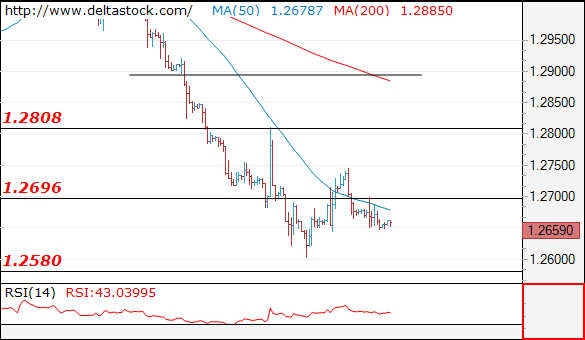
Current level - 1.2659
My outlook here is counter-trend, for a reversal and rise towards 1.2810 resistance zone.
| Resistance | Support | ||
| intraday | intraweek | intraday | intraweek |
| 1.2810 | 1.2960 | 1.2640 | 1.2580 |
| 1.2890 | 1.3170 | 1.2580 | 1.2470 |
USD/JPY Outlook: Prevailing Tone Is Negative But Clearer Signals Needed
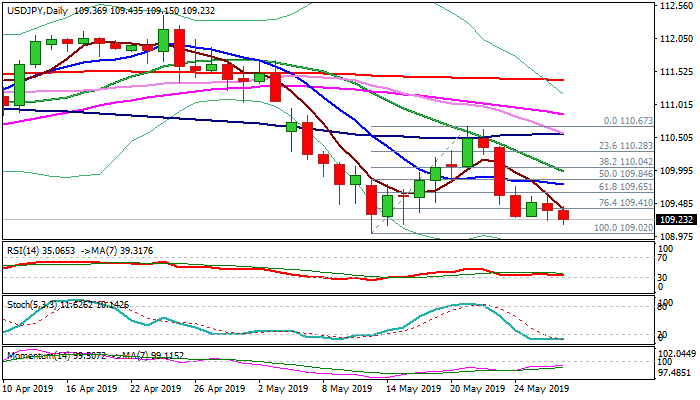
The pair stands at the back foot on Wednesday and probes again below 109.27 support (lows of Fri/Mon), after Tuesday’s tick below was short-lived.
Downside pressure is maintained by full bearish setup of daily MA’s and thick weekly cloud, but rising momentum and deeply oversold stochastic conflict and suggest that bears may face strong headwinds from key support 109.02 (13 May low) which was approached on today’s dip to 109.15.
Despite holding in red for the second day, as fresh risk aversion boosts safe haven yen, the pair looks for clearer direction signal.
Violation of 109.02 pivot would generate bearish signal for continuation of larger downtrend towards target at 108.50 (Fibo 50% of 104.59/112.40 / 31 Jan low).
Conversely, lift above initial barrier at 109.40 (5SMA) would expose 109.60 (tops of Fri/Mon) and upper pivot at 109.77 (10SMA).
Res: 109.40, 109.60, 109.77, 109.98
Sup: 109.15, 109.02, 108.72, 108.50
GBP Remains Weak On Brexit Pressure
The GBP remained pressured against a number of its counterparts, as Brexit developments seem not to be agreeing with the market. The outcome of the EU elections added pressure on the Tory party which landed fifth and the Labour party which landed third, while Nigel Farage’s Brexit Party came out as the clear winner, with the Liberals as second best. The results provided a boost for Brexit hardliners in the race to succeed Theresa May within the Tory party and as PM of the UK. It was evident that despite UK Foreign minister Hunt stating that a hard Brexit would equal a “political suicide”, hard Brexiteers, including frontrunner Boris Johnson, signaled that they are ready for it as a possible option, should Brussels not reopen the negotiations. We expect the pound to remain under pressure, in the near term yet the downside for the sterling may be slowly draining out. GBP/JPY dropped a bit further yesterday, testing the 138.18 (S1) support line, yet was not able to break it. The pair’s direction has been under guidance of a downward trendline incepted since the 7th of May, hence we maintain a bearish bias for the pair’s further direction. It should be noted that the 138.18 (S1) seems to be providing some support to the pair, yet for us to switch our bearish outlook for a sideways movement we would require the pair to clearly break the prementioned downward trendline. Should the bears maintain control over the pair’s direction, we could see it breaking the 138.18 (S1) support line and aim for the 137.23 (S2) support level. Should the bulls take over, we could see the pair, breaking the downward trendline and aiming for the 139.45 (R1) resistance line.
BoC interest rate decision
Today at 14:00 (GMT) Bank of Canada is expected to release its interest rate decision and is widely expected to remain on hold at +1.75%. Currently CAD OIS imply a probability of 100% for the bank to do so and we are inclined to concur with that scenario for fundamental reasons as well. Market focus could be on the accompanying statement and given that the bank relented its hawkish bias in its last meeting we could see the bank maintaining a neutral tone, maybe with some dovish elements. Uncertainty in the global macroeconomic and trade conditions as well as some soft financial data back home seem to strengthen arguments for such a stance. Should the bank have a clear dovish stance in its accompanying statement, we would not be surprised to see the Loonie weakening. USD/CAD rose yesterday, yet remained within its recent sideways movement between the 1.3510 (R1) resistance line and the 1.3425 (S1) support level. Should the BoC interest rate decision contain substantial dovish elements in its content, we could see the pair rising. Should the pair’s long positions be favored by the market, we could see it breaking the 1.3510 (R1) resistance line and aim for higher grounds. Should the pair come under the selling interest of the market, we could see it aiming the 1.3425 (S1) support level.
Other economic highlights, today and early tomorrow
Today during the European session, we get Frances preliminary CPI (EU Normalised) rate for May as well as its GDP growth rate for Q1 and Germany’s unemployment data for May. In the American session we get the BoC interest rate decision, while tomorrow during the Asian session we get Australia’s Building permits for April. As for speakers BuBa president Weidman and ECB Mersch are speaking. Also note that ECB’s Financial stability review and New Zealand’s annual budget are to be released.
GBP/JPY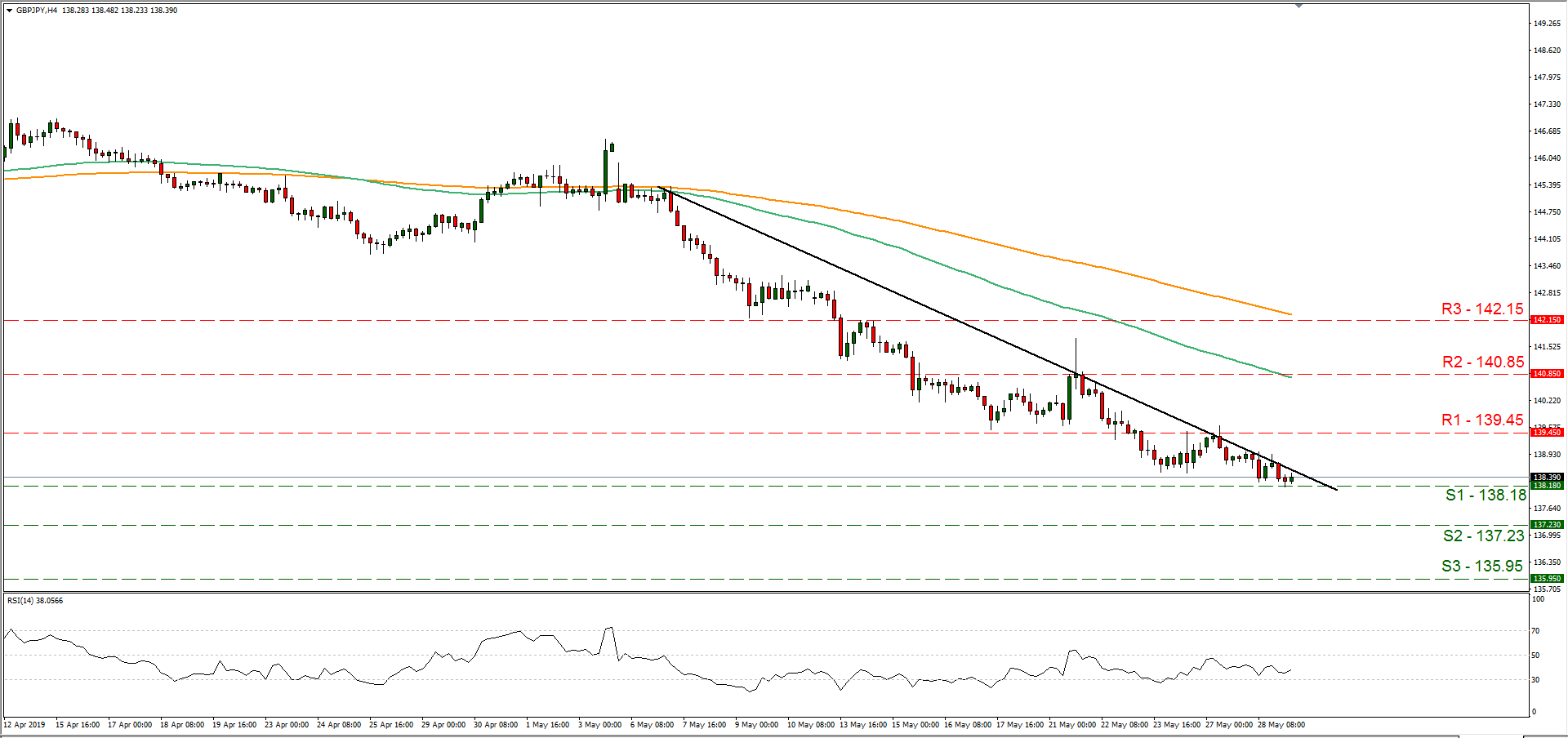
Support: 138.18 (S1), 137.23 (S2), 135.95 (S3)
Resistance: 139.45 (R1), 140.85 (R2), 142.15 (R3)
USD/CAD H4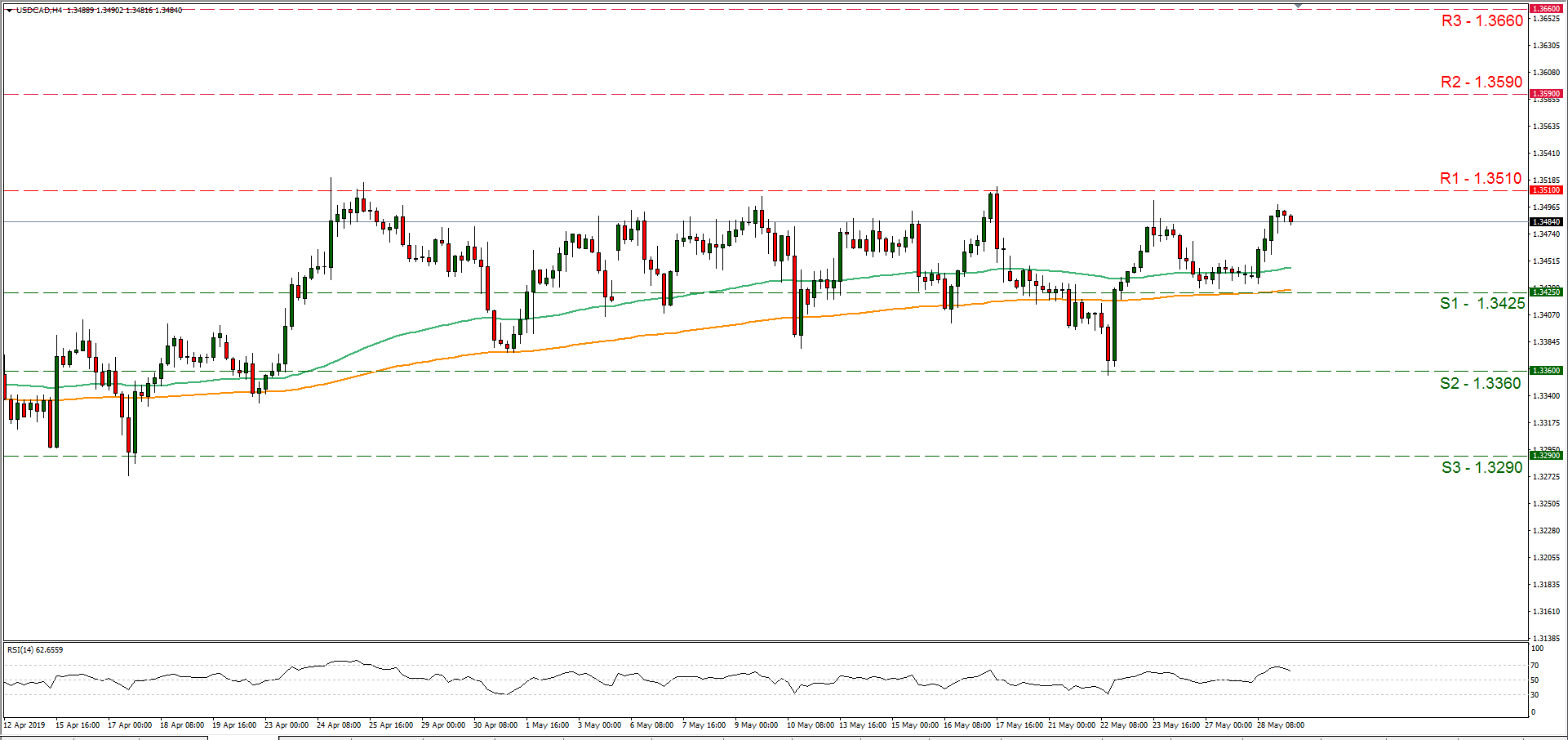
Support: 1.3425 (S1), 1.3360 (S2), 1.3290 (S3)
Resistance: 1.3510 (R1), 1.3590 (R2), 1.3660 (R3)
Demand For Risky Assets Has Declined. The Bank Of Canada Meeting Is In The Spotlight
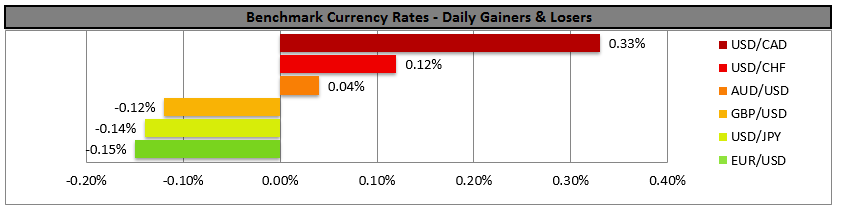
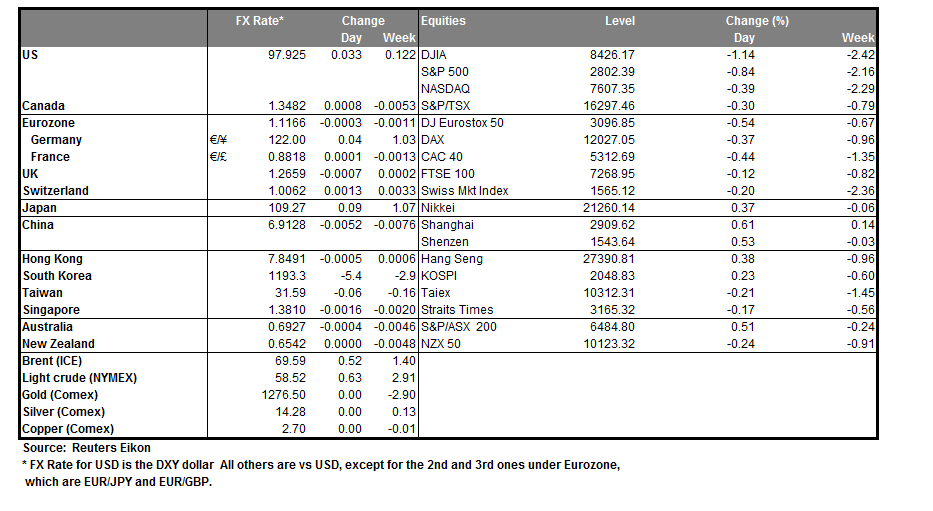
Yesterday, the US dollar strengthened against a basket of major currencies. The dollar index (#DX) closed in the positive zone (+0.37%). Demand for risky assets has declined as investors remain cautious due to trade conflict and uncertain growth prospects for the global economy. The financial market participants are still focused on the trade conflict between the United States and China. On Monday, US President Donald Trump said that Washington was not ready to make a deal with Beijing. At the same time, Trump demanded from the Prime Minister of Japan, Shinzo Abe, to stabilize the trade imbalance between their countries.
Optimistic economic data also supported the US currency. CB consumer confidence index was published yesterday, which counted to 134.1 in May and turned out to be higher than the forecasted value of 130.1. Today, investors will be focused on the Bank of Canada interest rate decision. It is expected that the regulator will keep the key marks of monetary policy at the same level. We recommend paying attention to the comments by the Central Bank representatives.
British Prime Minister Theresa May will resign on June 7. The election of a new leader of the Conservative Party will begin next week. Experts believe that Boris Johnson, the leader of the campaign for the Brexit in a referendum in 2016, has the highest chances to become Prime Minister.
The "black gold" prices have been declining. At the moment, futures for the WTI crude oil are testing $58.50 per barrel.
Market Indicators
- Yesterday, the main US stock indices closed in the negative zone: #SPY (-0.93%), #DIA (-1.03%), #QQQ (-0.38%).
- The 10-year US government bonds yield continues to decline. At the moment, the indicator is at the level of 2.23-2.24%.
The news feed on 2019.05.29:
- Report on the labor market in Germany at 10:55 (GMT+3:00);
- Bank of Canada interest rate decision at 17:00 (GMT+3:00).
EURJPY Plunges To Fresh 4-Month Lows
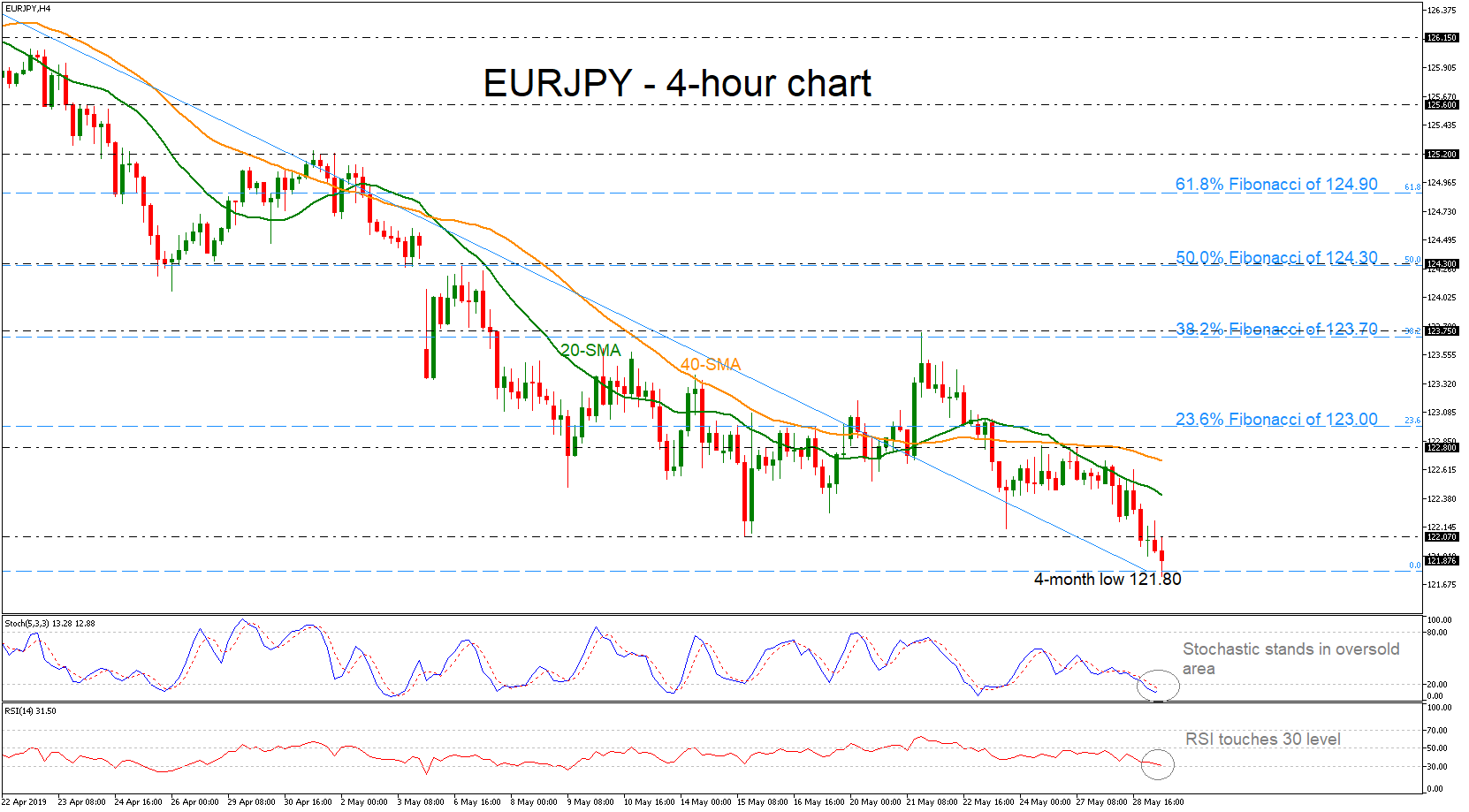
EURJPY plummeted to a new four-month low of 121.80 earlier today, continuing the selling interest from the 123.75 resistance zone. The pair also dropped beneath the 20- and 40-simple moving averages (SMAs), which recently posted a bearish cross, while the stochastic oscillator slipped into the oversold area. Moreover, the RSI is ready to cross below the 30 level in the 4-hour chart.
Another move to the downside below the intraday low could drive the pair towards the 120.60 support level, identified by the low on April 2017. Steeper declines could open the way until the 118.57 bottom, registered on January 3.
In case of upside pressures, the market could meet resistance at the 122.07 level before heading towards the 20-period moving average currently at 122.40. A successful run above this line could see a test of the 40-SMA around 122.70 and the 122.80 resistance zone.
In the short-term, EURJPY has been in a downward movement over the last month and sellers are looking to extend the bearish structure.
Stocks Slip As Trade Worries Intensify, BoC Decides
- Equities drop, safe havens soar as trade outlook darkens
- Bank of Canada meets today – may be a touch more optimistic
- Aussie resilient despite trade woes & RBA rate cut bets
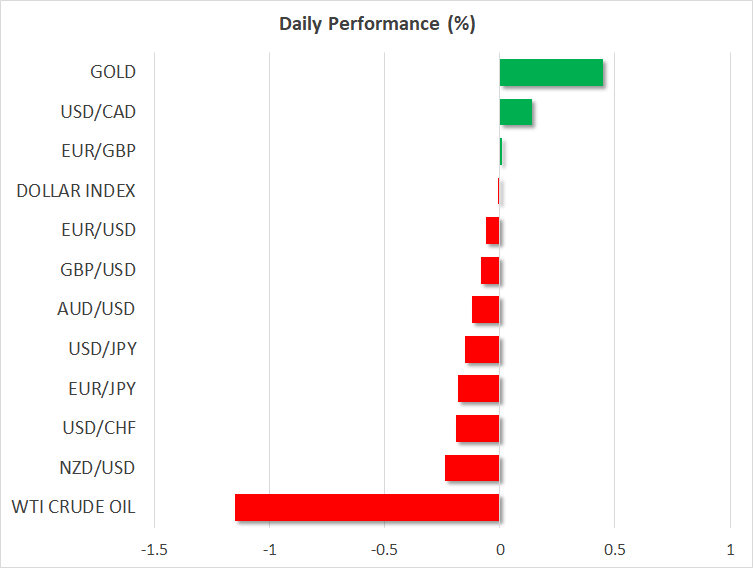
Trade woes return to haunt stocks; yen & dollar cruise higher
Risk appetite turned sour again on Tuesday, as British and American traders returned to their desks after a long weekend and were met by more worrisome trade news. Recent reports citing Chinese officials suggest the real reason the negotiations broke down was that the US ‘kept adding new demands', which China saw as increasingly unreasonable. More importantly, Beijing was infuriated by Washington's attempt to shift the blame to China for the talks breaking down. Separate reports that China could ban rare earth exports to hit back at the US didn't help either.
These headlines likely poured cold water on hopes for a swift resolution to this conflict, as it seems unlikely the negotiations will even restart anytime soon with differences running so deep. Wall Street closed in the red and futures point to a negative open today for the major indices as well. In the FX spectrum, the dollar and yen soared as investors increased their exposure to safer assets, with the greenback gaining even despite long-term US interest rates falling.
In the big picture, risk aversion may remain a dominant theme, as it's quite hard to see talks resuming without both sides feeling pressure from either their economies or financial markets to do so. In other words, more pain may be in store for stocks before a deal becomes realistic again. The ‘wild card' in this narrative is the Fed, which markets think will come to the rescue, judging by the 1½ rate cuts that are now priced in by December. Perhaps that's why more severe losses in stocks have been avoided so far.
Will the BoC strike a slightly more confident tone?
The main event today will likely be the Bank of Canada (BoC) rate decision at 14:00 GMT. No change in policy is expected, so all the action will come from the signals in the accompanying statement. Stronger-than-expected economic data lately coupled with some hawkish remarks by Governor Poloz that interest rates could ‘still go up a bit', argue for a slightly more confident tone overall, which may lift the loonie.
That said though, simmering trade tensions, softer oil prices, a still-vulnerable domestic housing market, and falling inflation expectations could keep a lid on the optimism – implying that any positive reaction may be relatively small.
Aussie holds up despite trade worries, looks to capex data
Strikingly, the Australian dollar was one of the best performers yesterday, staying resilient in the face of mounting trade concerns, with a little help from firmer iron ore prices. This resilience is all the more impressive considering that markets widely expect the RBA to cut rates at its meeting next week. The next focal point for the currency will be the capital expenditure figures for Q1 that are due out early on Thursday.
Taking a step back, the aussie may have bottomed for now. While more downside is still possible, especially if trade tensions escalate further, it's worth considering that from a monetary policy perspective, a lot of doom and gloom is already reflected in the price. Two and a half cuts are now fully factored in by December, implying that anything short of clear signals for aggressive easing from the RBA could even trigger a rebound.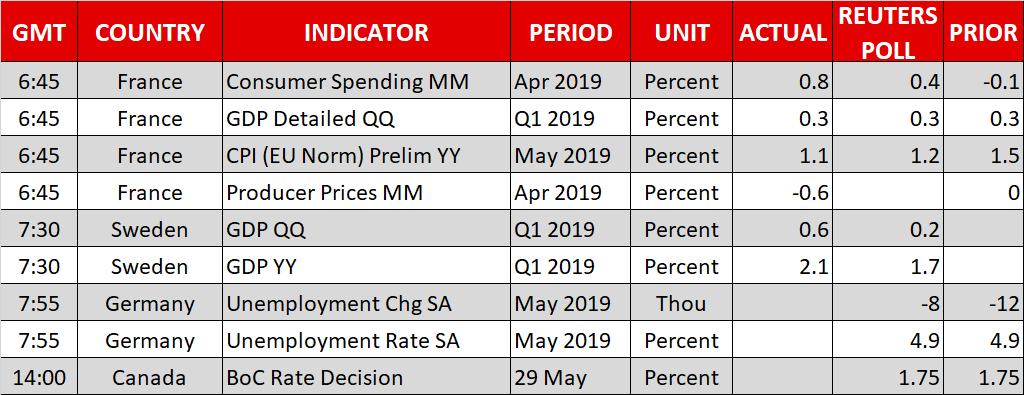
GBP/USD Trend Line Break Provides Additional Momentum
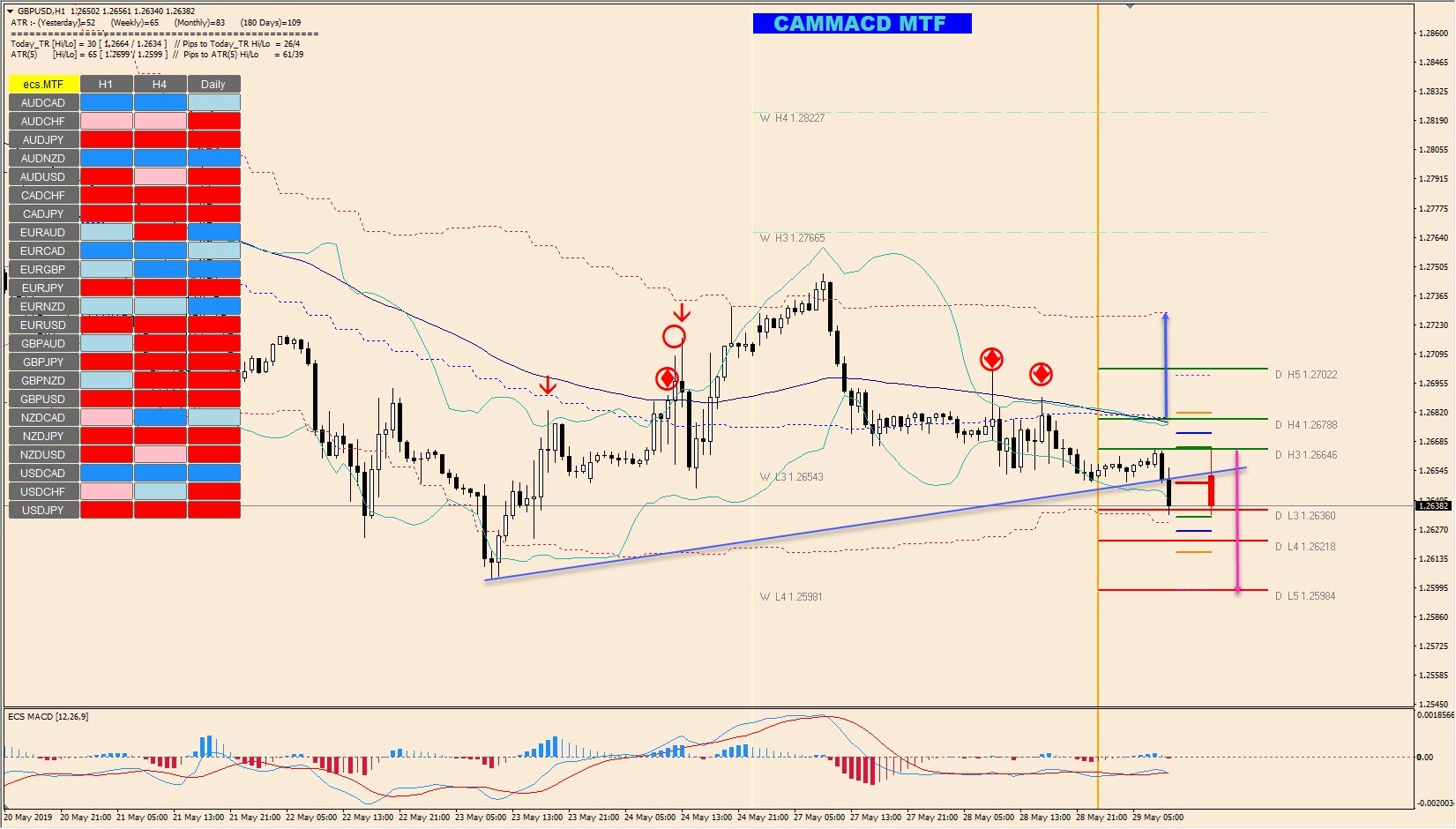
The GBP/USD has formed a form of inverted head and shoulders pattern on the H1 chart. Unless 1.2680 breaks, we will see a retest of lower camarilla pivots.
The price has made a break of 1.2650 level to the downside. Watch for 1.2620 and 1.2600 if bearish momentum persists. However, if the price drops to 1.2600 a reversal bullish pattern should provide a counter trend trade opportunity due to a big support confluence in the area. Only if the pair breaks 1.2680 we will see a reversal towards 1.2720. Below 1.2680 bears are dominating. All bearish signals are very visible on the screen as they are non-repainting and fully automated.
Risk Sentiment Clipped By Trade Concerns, Pound Lost In Brexit Drama
It is shaping up to be yet another rough, rocky and unpredictable trading week for financial markets as investors tussle with a number of different themes. Ongoing US-China trade developments, Brexit uncertainty and the return of drama over the Italian state budget are just some of the themes concerning investors.
Asian shares are painted in red today, tracking losses from Wall Street overnight as concerns heat up over sizzling US-China trade tensions threatening global economic growth. With President Donald Trump clearly stating that the United States was “not ready” for a trade deal with China, investors are coming to the reality that trade uncertainty looks like it is here to stay in the short to medium term at least.
Until markets see encouraging signs of both sides securing a trade deal, this negative sentiment and general risk aversion will most likely continue punishing global equity markets. The negative sentiment isn’t restricted to pessimism in equity markets, with a number of other risk assets also tracking losses. This includes emerging market stocks, emerging market currencies and Oil.
The next season of the Brexit saga has just begun for Pound
In the United Kingdom, the Brexit saga premiered its season's finale last Friday as Theresa May announced the date of her resignation as Prime Minister after years of deadlock in Brexit discussions. Her departure does add another element of uncertainty over Brexit at a time whenthe clock is slowly ticking and investors should strap up as the drama for the season finale of Theresa May’s tenure as PM has just begun.
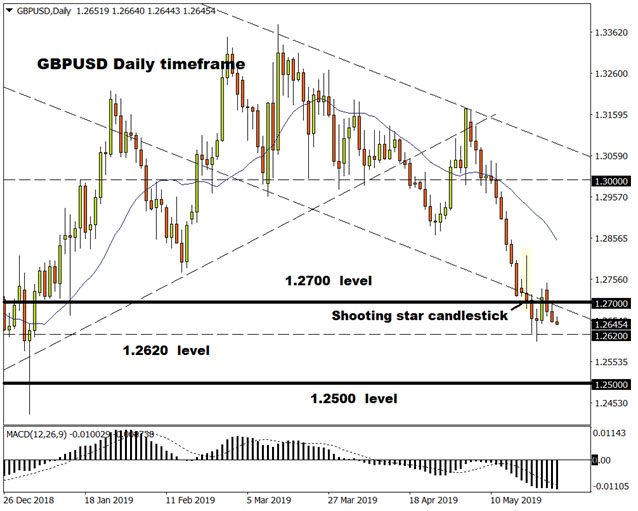
Speculation over who will replace May remains rife with Boris Johnson listed as a favourite among Conservative members. Should Boris succeed as Prime Minister, this raises the prospects of a no-deal Brexit given how he has insisted that the UK will leave the EU on 31 October, “deal or no deal”. As fears over a no-deal Brexit increase by the day amid domestic political drama and no signs of a deal being in place, the British Pound remains exposed to downside risks. Taking a look at the technical picture, the GBPUSD remains bearish on the daily charts with prices edging towards 1.2620. A solid daily close below this point should signal a decline towards 1.2500 in the short to medium term.
Dollar gains once again on renewed trade concerns
Elsewhere, fears over escalating trade tensions and global growth are keeping the Dollar steady against a basket of major currencies this week. Market uncertainty and an overall risk off atmosphere does highlight that projections for the Greenback point north.
The Dollar should remain in buying demand for as long as market sentiment remains exposed to external risks, especially when it comes to trade tensions and geopolitical risk factors.
Oil lower once again on lack of risk appetite
Concerns over persistent trade tensions are unsurprisingly impacting global growth sentiment in a negative light, and this is in turn hurting Oil prices. The price of Oil has fallen once again in the early hours of Wednesday trade.
Fears revolving around weaker oil demand will intensify in light of prolonged trade fears and this adds further momentum to downside tilts for the Oil price.
In regards to the technical picture, WTI Crude and Brent look set to resume its trend lower ahead of the OPEC meeting in June. WTI Crude has the potential to test $55.00 if bears are able to conquer the $57.50 support level.
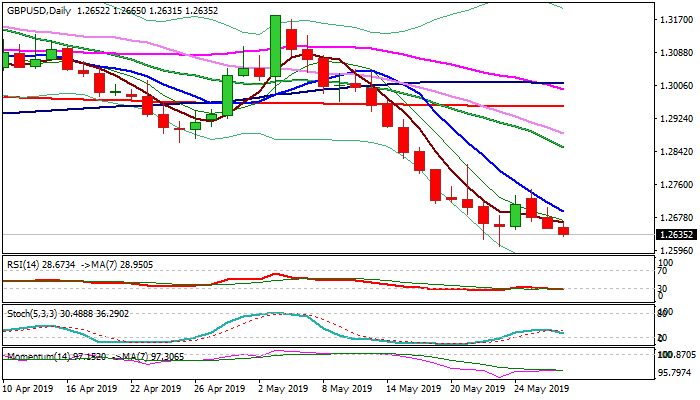
GBP/USD Outlook: Bears Remain Fully In Play And Focus Key Support At 1.2605
Cable extends weakness in early Wednesday's trading to the lowest in almost one week and focuses key support at 1.2605 (23 May low) the lowest in nearly five months. Near-term structure turned negative after brief recovery was capped by falling 10SMA and Tuesday's extension and close below 5SMA confirmed lower top at 1.2747 (recovery top, posted on Mon). Daily techs remain in full bearish configuration and support scenario, but fears of no-deal Brexit generate the strongest pressure on pound. Prevailing idea among the candidates to succeed Theresa May on Prime Minister position is that the UK should leave the union on 31 Oct, even without deal. Dissonant tones come from Labor Party leader Corbyn who supports the idea of second referendum on Brexit and even national election that would reunite the country, deeply divided over Brexit. Immediate risk will remain at the downside while the price holds below falling 5 and 10SMA's (1.2666 & 1.2694 respectively)., with sustained break above the latter to ease bearish pressure, but lift above 1.2747 recovery top needed to confirm and signal further upside. Bearish scenario sees increase of pressure on violation of 1.2605 pivot that would expose target at 1.2508 (Fibo 76.4% of 1.1930/1.4376).
Res: 1.2666, 1.2694, 1.2707, 1.2747
Sup: 1.2605, 1.2588, 1.2508, 1.2476
ECB: Growth outlook central to all main risks to financial stability
ECB warned in the Financial Stability Review that "uncertainty about global economic growth prospects has contributed to bouts of high volatility in financial markets". And, "weaker than expected growth and a possible escalation of trade tensions could trigger further falls in asset prices".
The report noted that materialization of downside risks to economic growth could spark greater financial market volatility. Persistent downside risks to growth reinforce the need to strengthen balance sheets of highly indebted firms and governments . Bank profitability prospects are subdued given slow progress in addressing structural issues
ECB Vice President Luis de Guindos said in the statement, "if downside risks to the growth outlook were to materialize, risks to financial stability may arise. And "the growth outlook is central to all the main risks to financial stability."