Sample Category Title
Gold Supported By US-China Trade Uncertainty
Gold prices maintained the gains as the risk off sentiment saw investors rushing to safe haven assets. US officials are raising tariffs on $200 billion worth of existing goods imports from China this Friday. The increase will be from the current 10% to 25%. Meanwhile, China’s vice premier Liu He will be in Washington from Thursday to continue the trade talks.
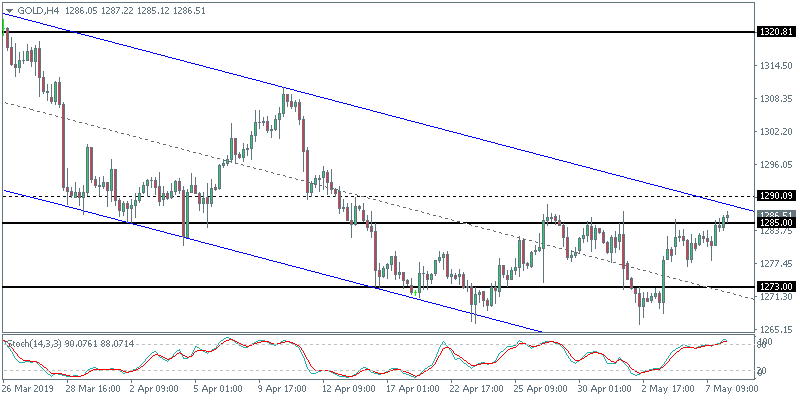
XAUUSD Looks Bullish
Gold has managed to break past the 1285 handle on the 4-hour chart. The bullish close above Monday’s doji candlestick pattern potentially indicates further upside in price. A breakout above 1285 will push gold prices to test the 1290 handle in the near term. If the bullish momentum continues, we expect an eventual rise to the 1302 region.
Oil Prices Dented By Fears Of A Slowdown
Crude oil was trading lower on Tuesday. Oil prices were trading subdued as escalating trade wars increase the prospects of a global slowdown. This comes despite the US lifting the waivers on Iran oil export sanctions. Oil could be trading lower as we expect many of the refineries that were offline to jump back into production.
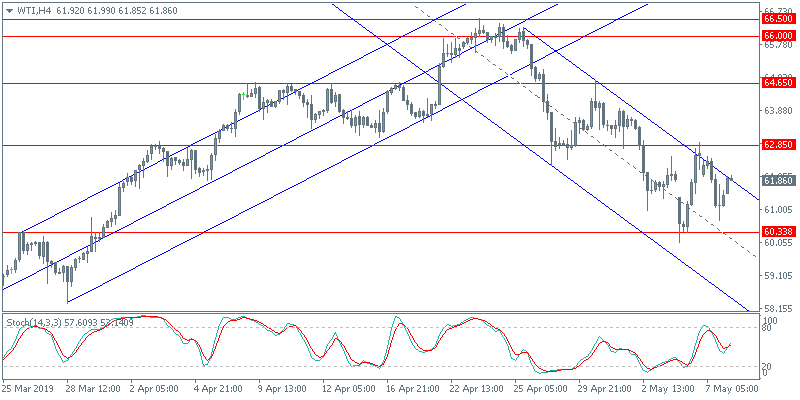
Can Oil Rebound Higher?
WTI Crude oil reversed the recent declines posting three consecutive sessions of gains on the 4-hour chart. However, price action remains caught below the resistance area of 62.85. A close above this resistance is needed for oil prices to retest the previous highs. The resistance area of 64.55 remains a key level for oil prices to establish resistance more firmly.
Euro Mixed Ahead Of Germany’s Industrial Production
The euro was trading modestly lower on Tuesday, losing 0.06% on the day. The currency was subdued with a lack of economic data and the mixed sentiment in the USD. Germany will be releasing its industrial production figures later today followed by the ECB's monetary policy meeting accounts.
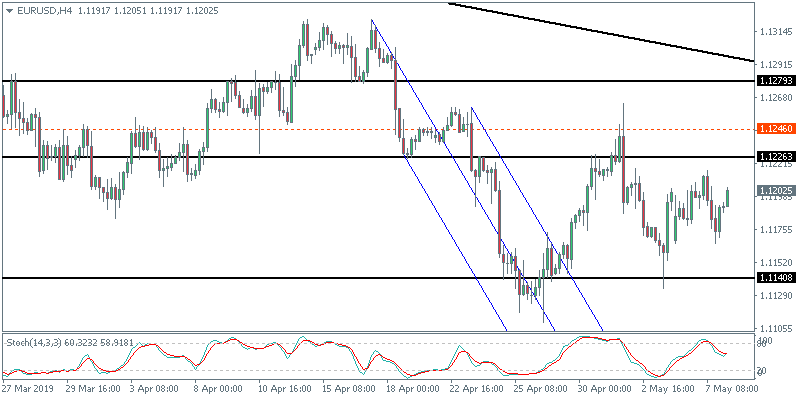
EURUSD Trades Flat
The EURUSD is maintaining its sideways range within 1.1226 – 1.1140 levels. This sideways range could remain in place until there is a breakout from this level. The bias remains mixed at the moment. To the downside, a close below 1.1140 could potentially trigger further declines in the near term towards the 1.1100 region. To the upside, gains could stall near 1.1280 resistance.
Forex Technical Analysis: EUR/USD, USD/JPY, GBP/USD
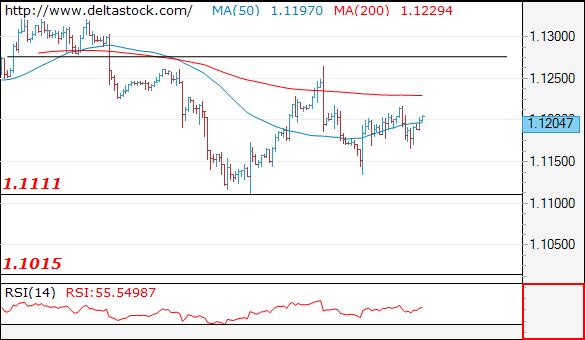
EUR/USD
Current level - 1.1204
Every rise towards 1.1270 resistance should be considered an eventual start of the next leg downwards, to 1.1020 area.
| Resistance | Support | ||
| intraday | intraweek | intraday | intraweek |
| 1.1220 | 1.1330 | 1.1170 | 1.1010 |
| 1.1275 | 1.1450 | 1.1110 | 1.0860 |
USD/JPY
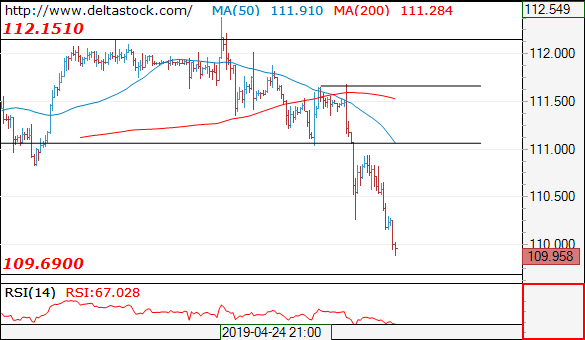
Current level - 109.95
The pair is ready for a test of 109.70 static support and a reaction here will challenge 111.00 area again.
| Resistance | Support | ||
| intraday | intraweek | intraday | intraweek |
| 111.00 | 113.20 | 109.70 | 108.90 |
| 111.65 | 114.50 | 109.70 | 107.40 |
GBP/USD
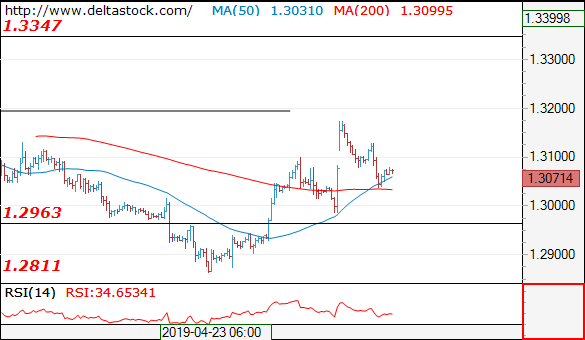
Current level - 1.3071
The bias is bearish below 1.3080, with a crucial high at 1.3130. Only a violation of the latter will signal a reversal and renewal of the rise towards 1.3340.
| Resistance | Support | ||
| intraday | intraweek | intraday | intraweek |
| 1.3080 | 1.3340 | 1.3030 | 1.2810 |
| 1.3130 | 1.3450 | 1.2960 | 1.2610 |
RBNZ Cuts Cash Rate And The Kiwi Weakens
The Kiwi weakened against the USD, during the Asian session, as RBNZ decided to cut rates by 25 basis points reaching +1.50%. In its accompanying statement the bank cited uncertainty about the global economic outlook, low business sentiment and that inflationary pressure is projected to rise only slowly. In his press conference later on, RBNZ governor Adrian Orr stated that the US-China trade war is one of the bank’s major concerns and that he was surprised by the downturn of the business sentiment. He also mentioned that the forward outlook looks to be more balanced now than before the cut. The NZD seems to be recovering most of the losses suffered and we expect it to continue to rise somewhat, but if there are further negative news about the US-Sino relationships we could see it weakening. NZD/USD dropped as the NZD weakened from the RBNZ interest rate decision, yet quickly recovered most of its losses and landed above the 0.6565 (S1) support line. We could see the pair recovering more losses, yet we retain a bearish outlook for the pair as the downward trendline incepted since the 27th of March remain intact. Should the pair remain under the selling interest of the market, we could see it breaking the 0.6565 (S1) support line and aim for the 0.6515 (S2) support barrier. Should the pair’s long positions be favored by the market, we could see it breaking the 0.6610 (R1) resistance line and aim for the 0.6650 (R2) resistance hurdle.
JPY continues to strengthen as trade concerns rise
The JPY continued to strengthen yesterday, as trade worries were enhanced by the escalation in the US-Sino relationships. US officials mention that US President Trump’s threats for additional tariffs were prompted by China backtracking from agreed issues. The Chinese official news agency called the US approach as regrettable and stated that despite China being reluctant to fight a trade war, it is not afraid and will do so if necessary. It should be noted that Chinese Vice Premier Liu He is expected in Washington for talks in the next couple of days. Should the escalation in the US-Sino relationship continue to rise, we could see the JPY strengthening even further. USD/JPY dropped even lower yesterday, breaking the 110.30 (R1) support line, now turned to resistance. We maintain a bearish outlook for the pair, as the downward trendline incepted since last Friday, remains intact. Please note though that the pair’s RSI indicator in the 4 hour chart is just below the reading of 30, implying a rather overcrowded short position. Should the bears maintain control over the pair’s direction, we could see it breaking the key support level of 109.75 (S1), thus opening the way for the 109.15 (S2) support line.
Other economic highlights, today and early tomorrow
In the European morning, we get Germany’s industrial output growth rate for March and in the American session, Canada’s House starts (Annualized) figure for April along with the EIA crude oil inventories figure from the US. In tomorrow’s Asian session we get China’s PPI and CPI rates for April. As for speakers, BoE’s Ramsden, ECB President Mario Draghi and Fed’s Brainard are speaking today.
NZD/USD H4
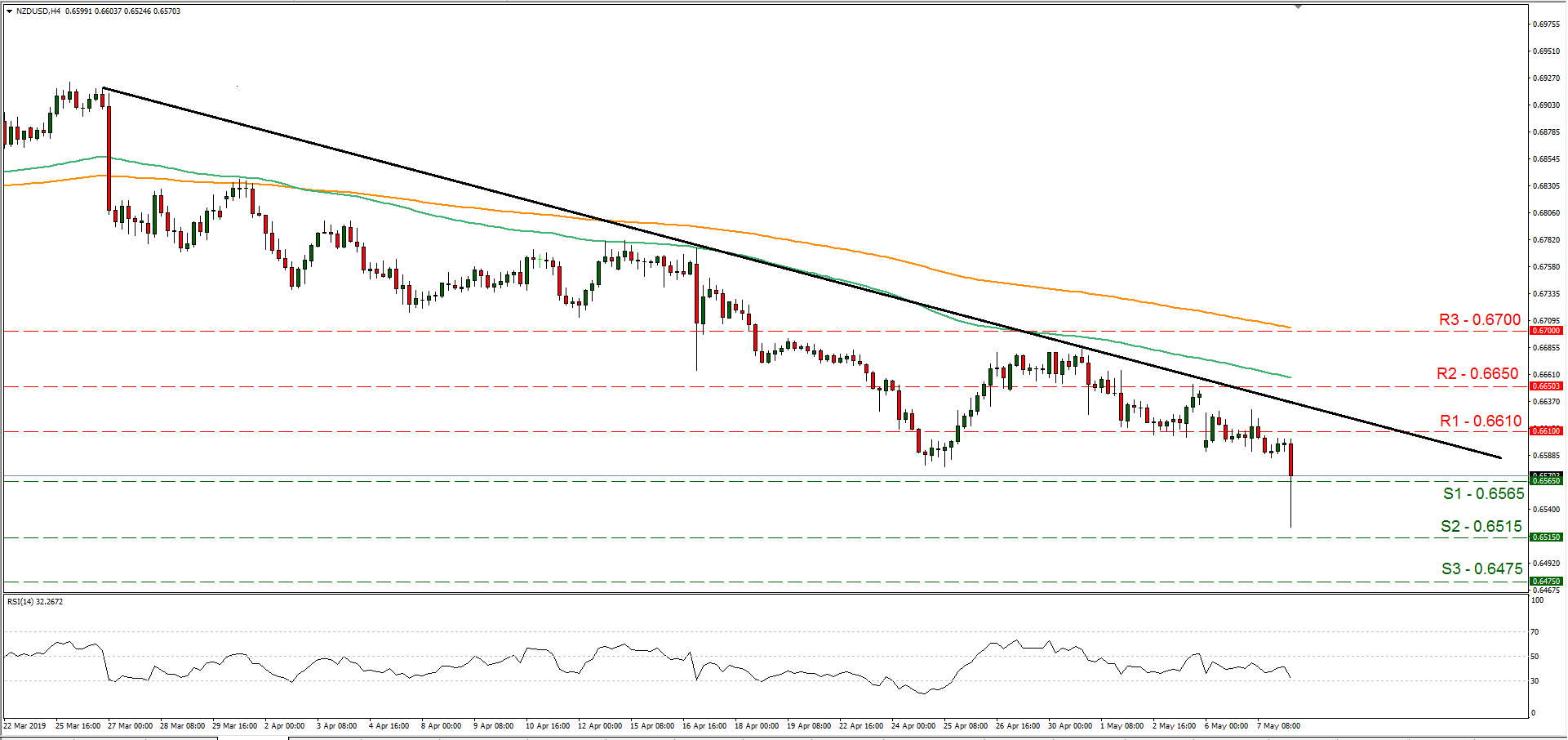
Support: 0.6565 (S1), 0.6515 (S2), 0.6475 (S3)
Resistance: 0.6610 (R1), 0.6650 (R2), 0.6700 (R3)
USD/JPY H4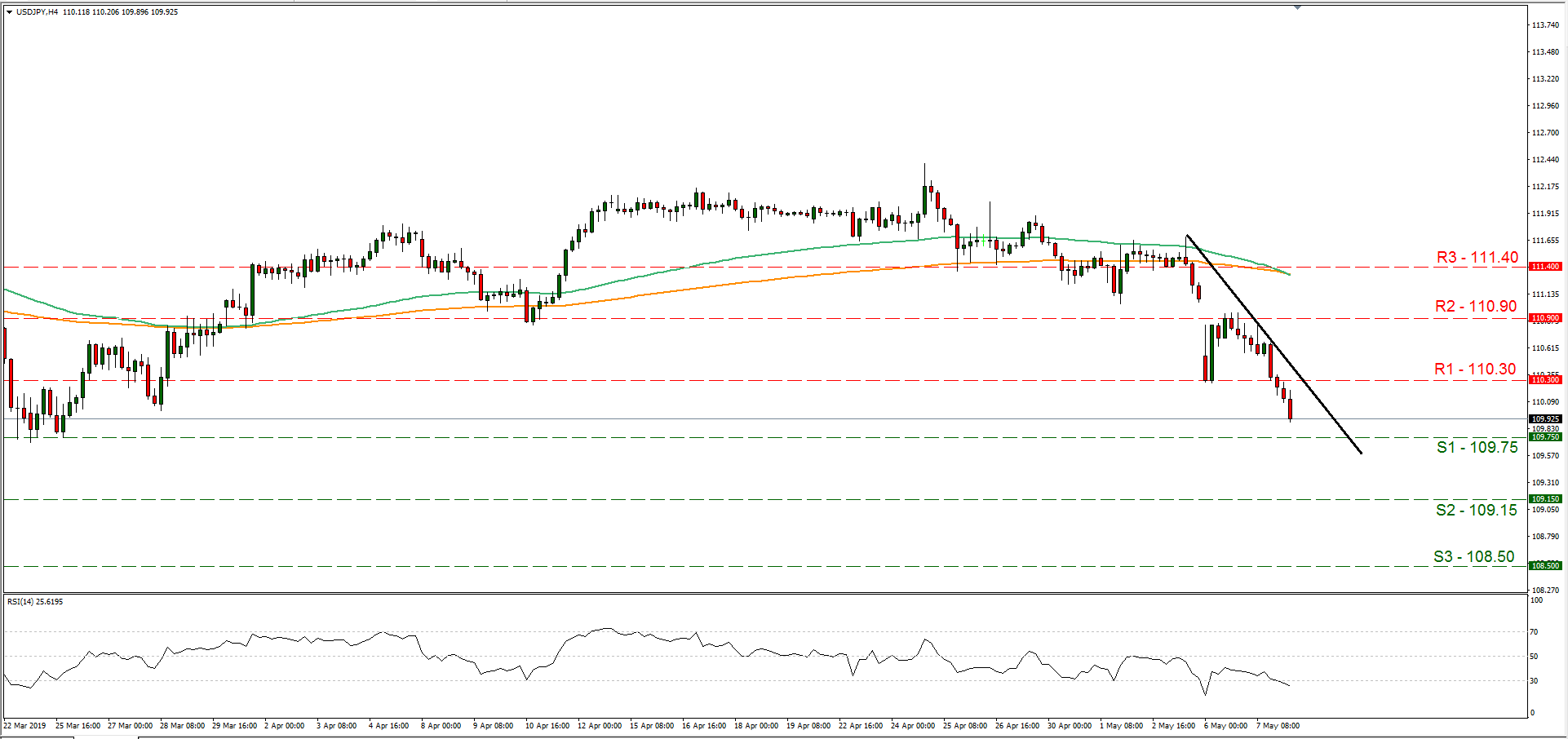
Support: 109.75 (S1), 109.15 (S2), 108.50 (S3)
Resistance: 110.30 (R1), 110.90 (R2), 111.40 (R3)
Risk Aversion Accelerates, RBNZ Cuts
- Stocks plunge, haven assets shine as markets focus on trade risks
- RBNZ eases its policy, but kiwi bounces back
- Pound tumbles amid lack of progress in cross-party Brexit talks
Risk aversion accelerates as trade worries prevail
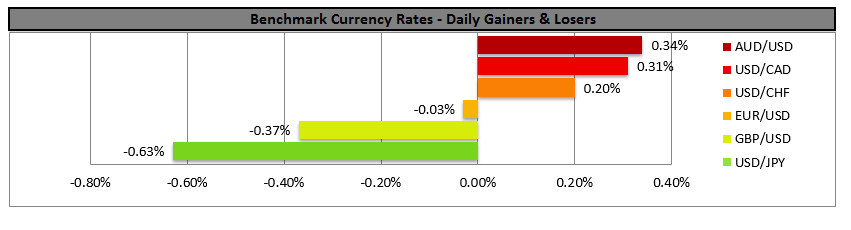
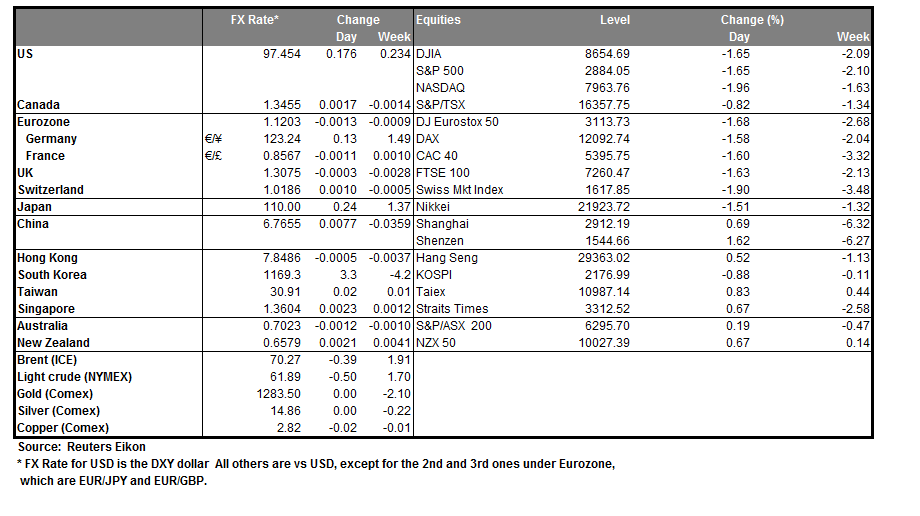
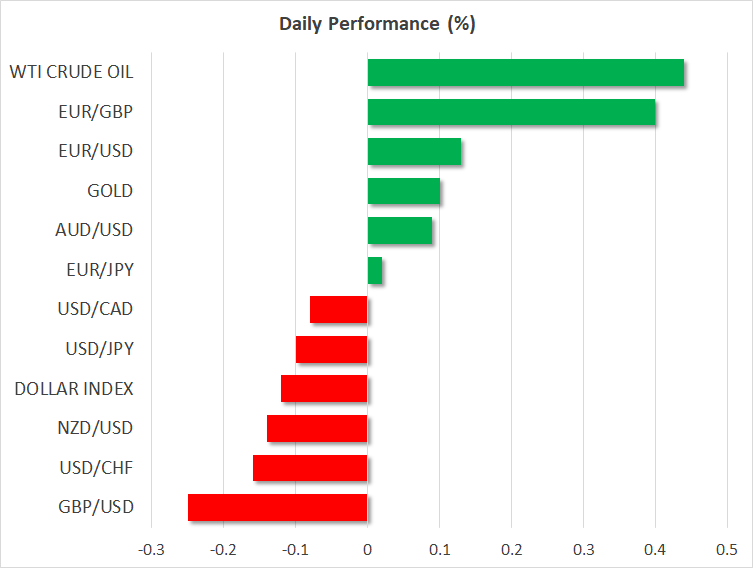
Trade concerns dominated price action on Tuesday, with global stock markets accelerating their losses while haven assets like the Japanese yen extended their gains, as traders continued to reduce their risk exposure ahead of crucial events later this week. Strikingly, there was no fresh catalyst behind the latest wave of risk aversion, which instead seems to have been a delayed reaction to Trump’s tariff threats, that markets had taken rather lightly so far.
Investors will now brace themselves for what promises to be a rocky conclusion to the week, as another round of US-China trade talks will kick off in Washington tomorrow. The Trump administration seems adamant to impose fresh levies unless Beijing makes immediate concessions, and given that China typically doesn’t yield under such pressure, an escalation in tensions appears increasingly likely. Hence, risk sentiment could remain sour in the near term, keeping equities under pressure and safe havens in demand.
RBNZ cuts rates, but kiwi recovers quickly
The Reserve Bank of New Zealand (RBNZ) cut its benchmark interest rate overnight, in a move aimed at shoring up inflation and boosting growth as the economy grapples with subdued investment and global trade risks. The central bank also signaled roughly even odds for another cut in the coming year, via lowering its interest rate forecasts further.
The kiwi fell sharply on the decision, as markets were pricing in only a ~40% chance for a cut ahead of the event, but staged a remarkable comeback in the following hours to recoup nearly all its losses against the dollar. Investors seem to be taking the view that this was more of a ‘one and done’ rate cut, and not the beginning of a prolonged easing cycle – something evident by market pricing for further cuts this year now being quite subdued. As for the kiwi, near-term risks still seem tilted to the downside, mainly due to trade uncertainty.
Pound tumbles as Brexit progress remains elusive
The British pound is on the retreat on Wednesday, with the latest reports suggesting that cross-party talks between the Tories and Labour are far from bearing fruit. Sentiment towards the UK currency seems to be shifting again, not only due to the lack of progress in these talks, but also due to repeated calls from key Tory lawmakers for PM May to resign. Meanwhile, the new Brexit Party led by Nigel Farage is leading the polls for the EU Parliament elections, suggesting that Eurosceptic voices may remain prevalent.
In the near term, a lot will depend on whether the Tory-Labour talks finally produce anything of substance. If they do, the pound could soar, not least because that would catch markets by surprise. However, since that is looking increasingly unlikely, uncertainty may continue to reign over British assets, implying that more pain may be in store in the immediate term.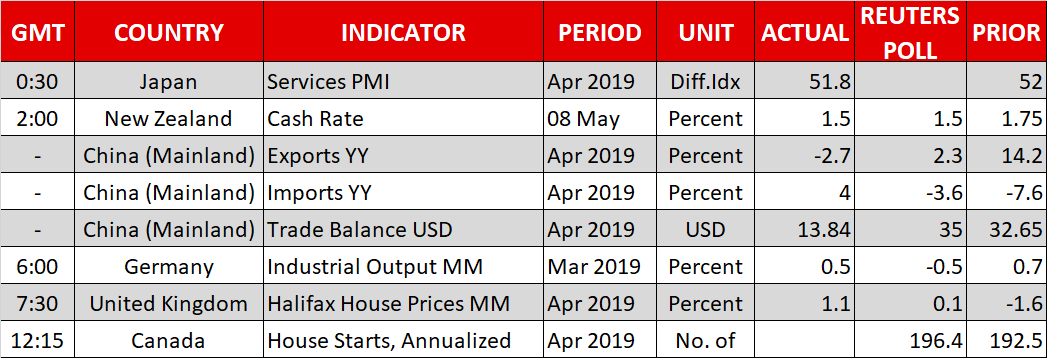
Investors Need To Watch Turkish Lira Very Closely, EM Currency Outlook Hangs In Balance On Yuan’s Next Move
Recent history is repeating itself for the Turkish Lira, and the reaction in the currency following the decision from the election board to re-run the Istanbul mayoral election means that we can’t rule out the possibility that the momentum that led to the August 2018 historic crash will happen once again.
International investors are alarmed by this incredible move and are selling the Lira like hotcakes as a result.Re-running the Istanbul race simply raises the stakes of an extended period of further political and economic turmoil in an emerging market that has caught the eye of investors for all the wrong reasons over the previous 18 months or so, and the only response to the equation that points to additional problems for Turkey is to sell the Lira. International investors have clearly lost a great deal of confidence in investing in Turkey as a result of endless concerns that are not only limited to an ongoing recession as a result of currency chaos, but alsorepeated fears over central bank independence and relentless political risk. I can only see further sustained selling momentum for the Turkish Lira on the road ahead.
What has transpired in the headlines around Turkey in recent days has yet to deliver the contagion impact that stole the attention of global markets in August 2018, but another brutal short squeeze in the Turkish Lira would stand as a deep threat to that occurring.
EM currency outlooks hang in balance of US-China trade talks – Traders stock up on Yen
The third trading day of the week is continuing the theme of anxiety across global markets as a result of investor nerves over what twist the US-China trade headlines will take next. Investors are clearly buying the Japanese Yen on fears that President Trump will carry through with his weekend Twitter threat to impose further tariffs on Chinese goods at the end of the current week, and the Yen is once again acting as the destination of safety for investors.
Some hope does however remain that a resolution will be found with yet another round of US-China trade negotiations underway, but those hopes are becoming faint. Another round of tariffs from President Trump has not been priced in, and confirmation of the weekend threat will carry heavy implications for risk appetite, and particularly emerging market currencies.
Market panic would represent bad news for the likes of the Chinese Yuan, Malaysian Ringgit and Indonesian Rupiah to name just a few of the currencies exposed, while stock markets including those in areas like Singapore, Japan and South Korea will not be exempt from the expected period of risk-off that would be upon us,if additional tariffs on Chinese goods are imposed.
One might even want to add that the future outlook of emerging market currencies for not only the remainder of Q2, but likely also the second half of the year does rest on the outcome of the trade talks between the United States and China over the coming days. An additional round of tariffs from the United States on China does mean the USDCNY can return to levels of at least 6.80 and above, but one should not discount that broad weakness in the Yuan will also drag its emerging market counterparts by the same direction.
In other words, the road that the Yuan takes next will take emerging market sentiment along with it.
An escalation in the long-standing trade tensions will also mean that the recent highs seen in stock markets will become attractive selling targets for investors. Safe haven flows would lead to an extended run of gains for the Japanese Yen, while the path to a potential 100 in the Dollar Index would be opened up if further tariffs are imposedby the end of this week.
KIWI Tumbles As RBNZ Cuts Rates
The kiwi declined sharply today after the RBNZ delivered its interest rates decision. As expected, the bank lowered rates by 25 basis points to 1.50%. The current rates are at an all-time low. In an accompanying statement, the bank attributed this to the slowing of the global and domestic economy and the need to support the economy. The statement explained:
The Committee reached a consensus that, relative to the February Statement, a lower path for the OCR over the projection period was appropriate. The lower path reflected the economic projections and the balance of risks discussed and is consistent with both inflation and employment remaining near the Committee's objectives. After discussing the relative benefits of holding the OCR and committing to a downward bias, versus cutting the OCR now so as to establish a more balanced outlook for interest rates, the Committee reached a consensus to cut the OCR to 1.50 percent.
The Australian dollar was relatively unchanged after China released its trade numbers. In April, the country’s exports slumped by an annualized rate of 2.7%. This was the sharpest decline since February when exports declined by 20%. In March, exports likely rose as businesses expected tariffs from the US. The imports had a YoY growth of 4%, which was higher than the expected slump of -3.6%. In total, the country’s trade surplus for the month was $13.84 billion, which was below the consensus estimate of $35 billion.
The price of crude oil was also relatively unmoved after data from the US showed a reduction of inventories. According to the American Petroleum Institute (API), over the past week, inventories rose by 2.8 million barrels. The increase was less than in the previous week when inventories rose by more than 6.8 million barrels. Today, investors will receive official inventory data from the EIA. The data is expected to show that inventories rose by just 1.2 million barrels. This is after rising by 9.93 million barrels in the previous week.
EUR/USD
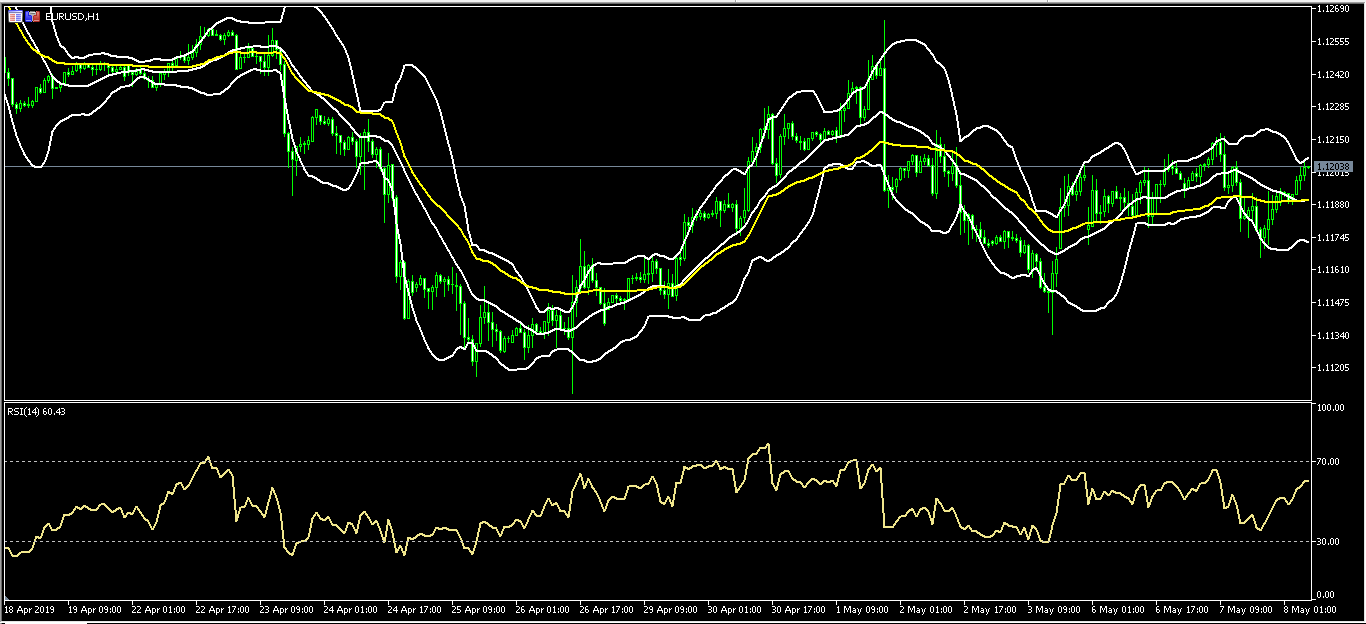
The EUR/USD pair moved up slightly to an intraday high of 1.1205. On the hourly chart, this price is along the upper line of the Bollinger Bands, while the RSI has risen close to the overbought level. It is also above the 21-day Variable Index Dynamic Average (VIDA). Today, the pair will likely see major movements as the ECB publishes minutes from the last meeting and Germany releases industrial production data.
NZD/USD
The NZD/USD pair declined sharply after the RBNZ decision. The pair reached a low of 0.6524, which was the lowest level since October last year. On the four-hour chart, the pair’s price was below the 25-day and 50-day moving averages, while the RSI has remained relatively stable. The signal line and histogram of the MACD has remained below the neutral level. Therefore, as the RBNZ gets more dovish, there is a likelihood that the pair will continue moving lower.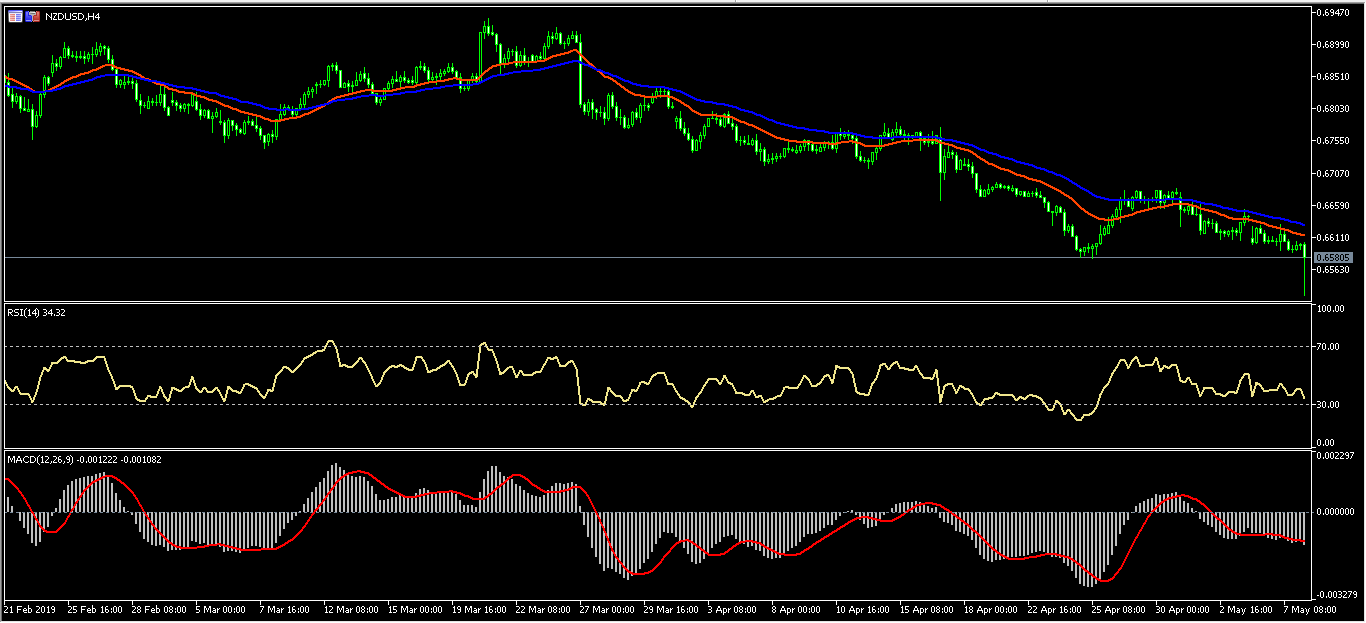
XBR/USD
On Monday, the price of crude oil declined sharply after Trump threatened tariffs on Chinese goods. The price then recovered and moved higher than Monday’s open. Yesterday, the price declined and almost reached Monday’s low of $68.50. Today, the price rose slightly to a high of $69.80. On the four-hour chart below, the price remained slightly lower than the 25-day and 50-day moving averages while volumes have declined. The accumulation/distribution indicator has continued to move up. The pair could resume the upward trend because the fundamentals have not changed a lot. If it does, it will likely test the previous highs of 74.60.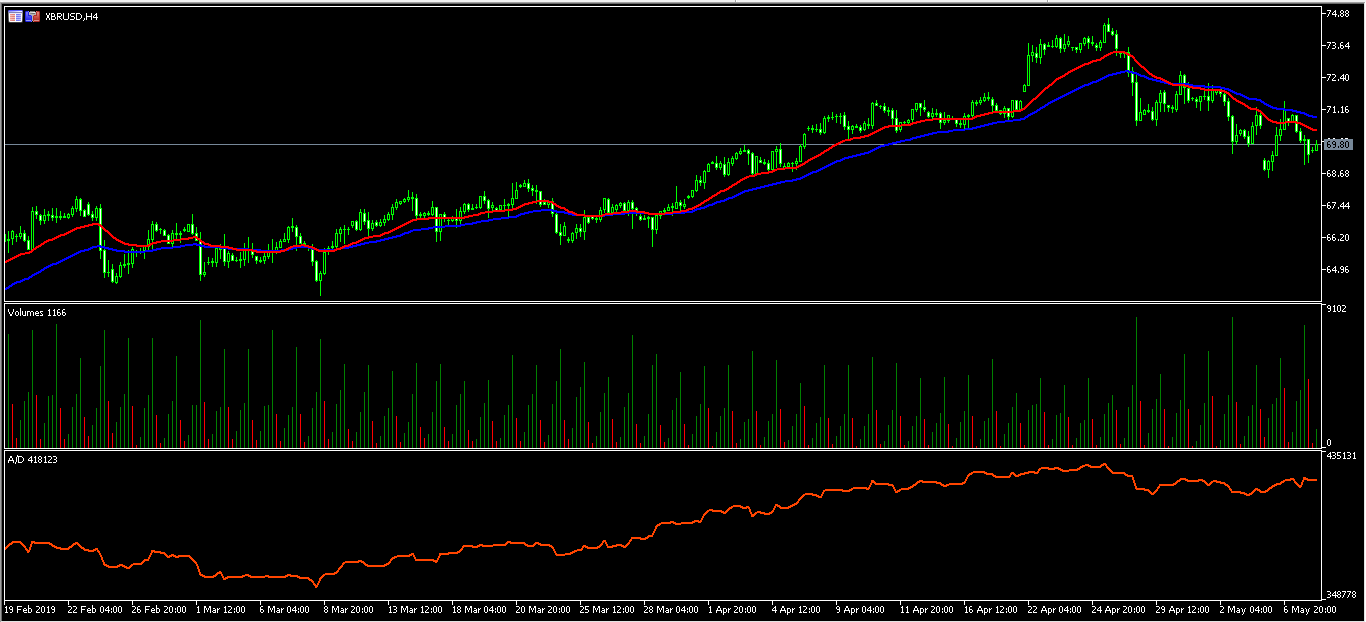
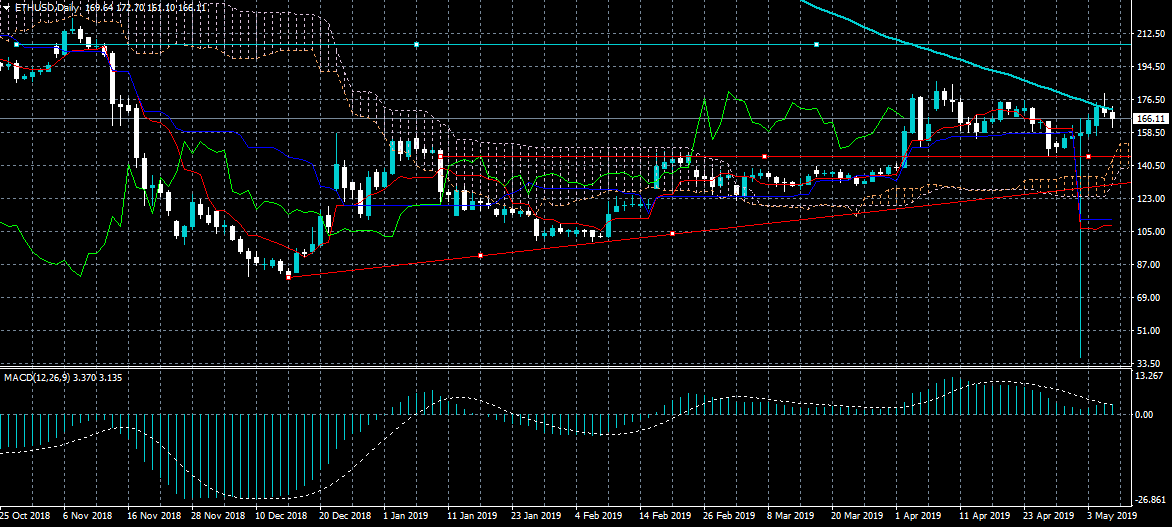
ETHUSD New High Needed
Ethereum is attempting to push higher in early Wednesday trade as the second largest cryptocurrency by market capitalization holds above major weekly support. Buyers need to break above the current 2019 trading high in order to encourage fresh technical buying in the ETHUSD pair. The Ichimoku indicator is currently showing that the $160.00 and $148.00 levels are the key support levels to watch.
The ETHUSD pair is only bearish while trading below the $160.00 level, key support is found at the $148.00 and $125.00 levels.
If the ETHUSD pair trades above the $160.00 level, key resistance is found at the $185.00 and $210.00 levels.
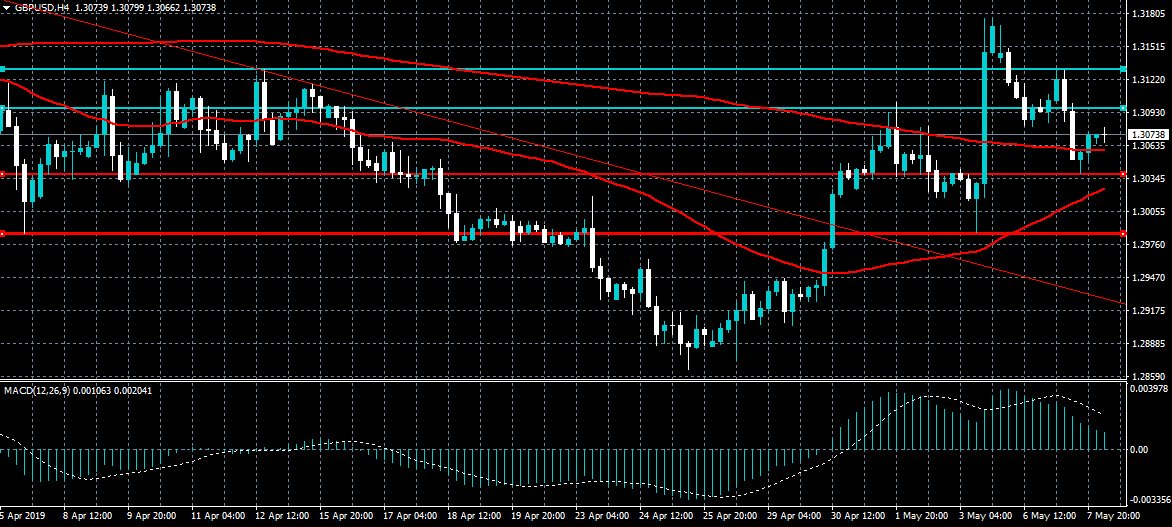
GBPUSD Heavily Bearish Below 1.3064
The British pound is coming under renewed downside pressure against the US dollar on Wednesday due to political uncertainty in the United Kingdom. The GBPUSD pair is heavily bearish while trading below the 1.3064 and may weaken towards the 1.2990 level. If buyers hold price above the 1.3064 level the GBPUSD pair may drift back towards the 1.3100 resistance level.
The GBPUSD pair is heavily bearish while trading below the 1.3064 level, key support is found at the 1.3039 and 1.2990 levels.
If the GBPUSD pair trades above the 1.3064 level, key intraday resistance is found at the 1.3100 and 1.3135 levels.