Sample Category Title
Sterling Little Moved As Parliament Takes Control Of Brexit
The kiwi was little moved in today’s trading after New Zealand released its trade numbers and ahead of the interest rates decision by the central bank. The trade numbers showed that exports increased to N$4.82 billion, which was higher than the expected N$4.70 billion and the previous month’s N$4.33. Imports on the other hand declined to N$4.80 billion, which was lower than the consensus estimate of N$4.90 billion. As a result, the trade balance for February was N$12 million, higher than the expected deficit of N$200 million. These numbers are encouraging as the RBNZ meets to decide on the next interest rates decision.
Sterling remained relatively stable during overnight trading after the UK Parliament voted to take control of Brexit from Theresa May. In the vote yesterday, the government lost by 329 to 302, which is an indication of how difficult it is for a vote to pass before the deadline. In addition, three cabinet ministers voted against the government and resigned. The new vote gives hope to some pro-EU members, who remain confident that the government will negotiate a deal that leaves the UK closely aligned with the EU.
With regards to so-called ‘safe haven’ assets like gold and bonds, traders continued to worry about global growth. On Friday, the US treasuries yield inverted, which is often viewed as an indicator that a recession is on the way. Gold has rallied, pushing the yields to the lowest level in more than a year. The curve that inverted was for the three-month and ten-year treasuries.
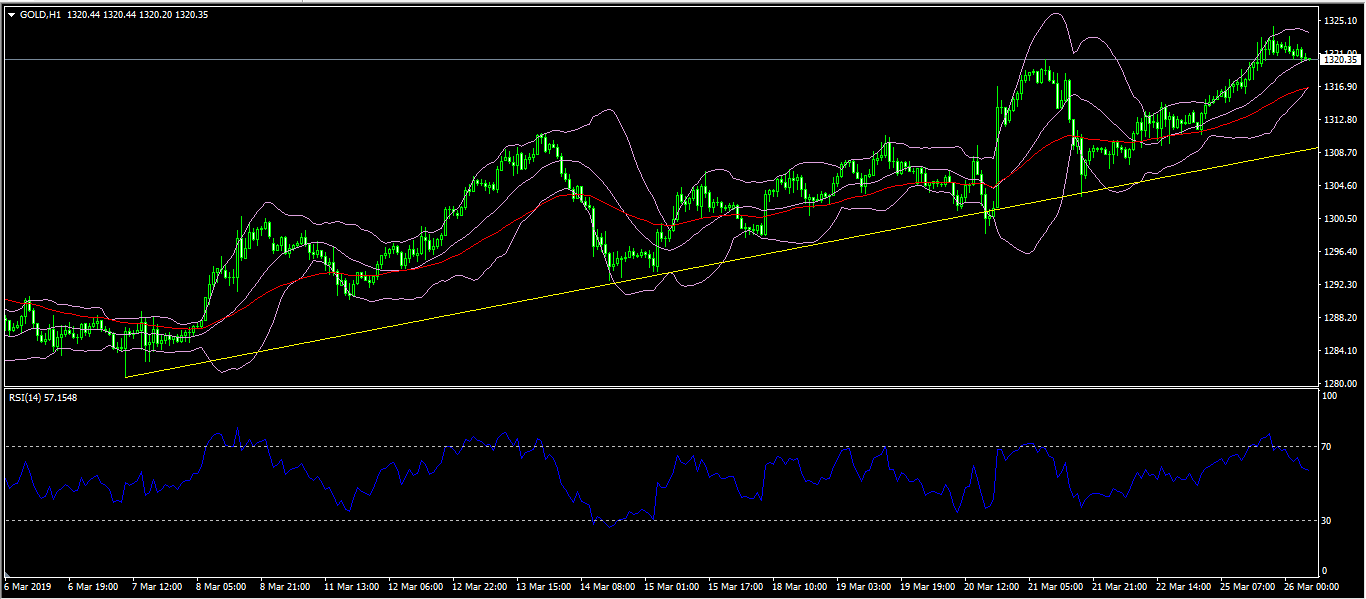
XAU/USD
Gold was little moved in overnight trading after rallying for the past few days. The price is now at $1320, which is slightly lower than the high of $1324. On the hourly chart, the pair has been on an upward trend for the past two weeks, rising from a low of 1280. This price is along the middle line of the Bollinger Bands and above the 50-day moving averages. The RSI has dropped slightly from above 70 to the current 58. The pair will likely resume the upward trend as global growth risks continue.
EUR/USD
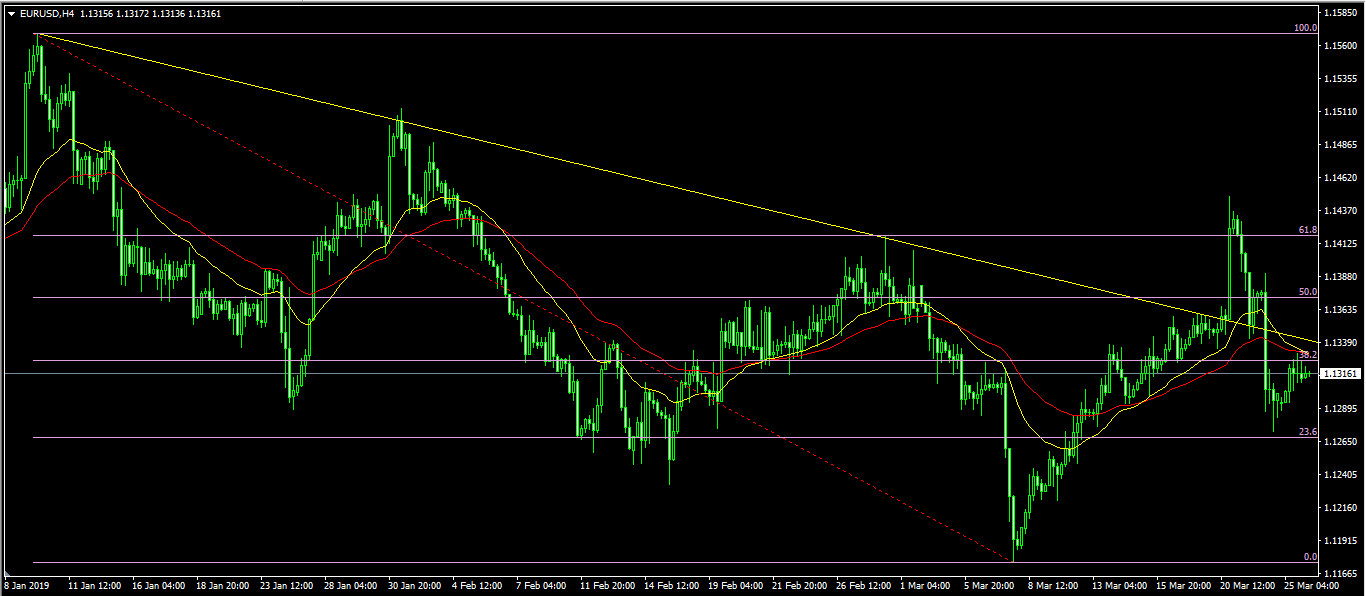
The EUR/USD pair stabilized after the sharp decline yesterday, when the pair fell from 1.1.1447 to a low of 1.1270. The pair is now trading at 1.1316, which is slightly above the diagonal trendline shown below. The pair is slightly below the 50-day and 25-day moving averages and along the 38.2% Fibonacci Retracement level. At this point, the pair will likely move in either direction as traders receive key data from Europe and the United States.
GBP/USD
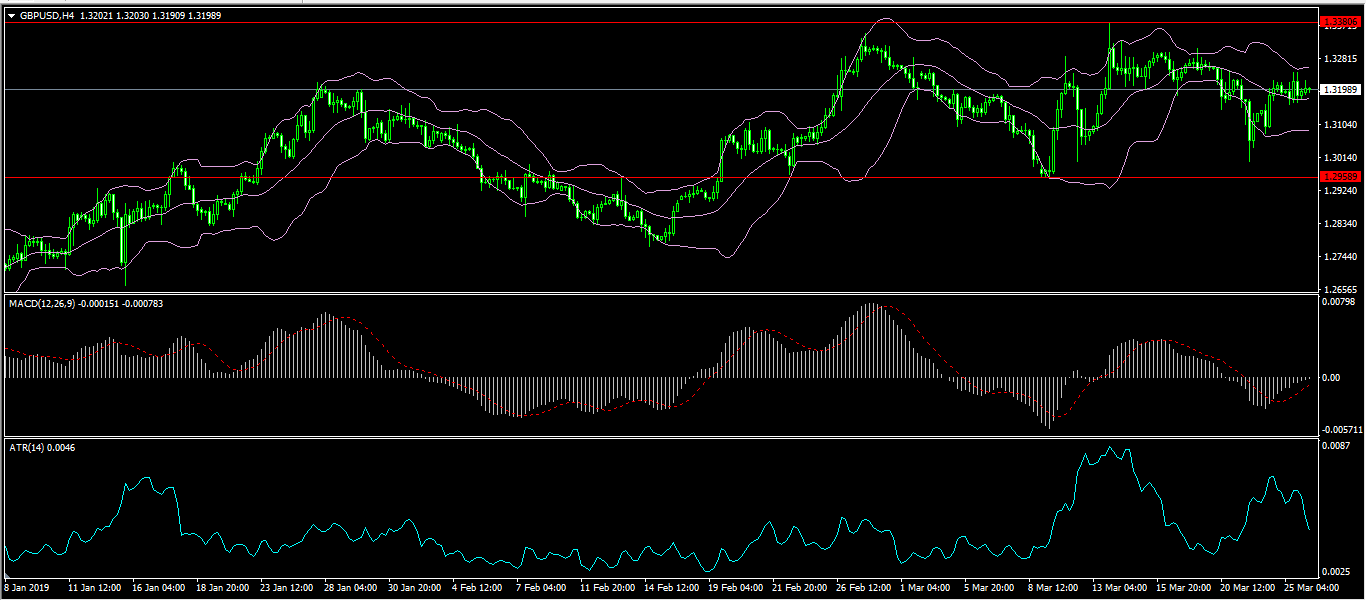
The GBP/USD pair was little moved as Brexit uncertainties continued. The pair is now trading at 1.3200, which is in the middle line of the Bollinger Bands. The MACD on the other hand has moved to cross the zero line, while the Average True Range (ATR) indicator is moving lower. The pair will likely continue being volatile until a way forward on Brexit is found.
Gold Soars To A 4-Week High
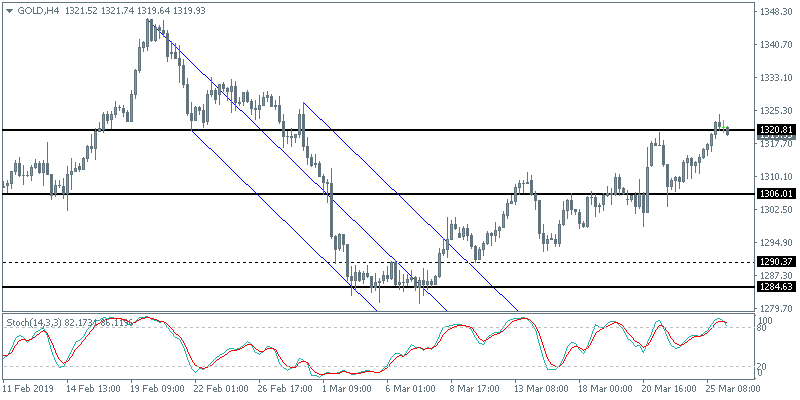
The risk aversion from last week sent gold prices higher on Monday. The precious metal gained 0.63% on the day pushing to highs of $1324.44. The gains came amid the investor concerns of an economic slowdown and the ongoing Brexit narratives. The British parliament will vote on various measures of the Brexit deal on Wednesday.
Will Gold Maintain the Bullish Momentum?
Price action suggests that gold prices could post a correction near the current highs. The rally to 1320.81 level marks a retest of the previously held support level. Thus, establishing resistance here could see some downside in the near term. Watch for the initial support at 1306.00 in the short term.
Gfk: German consumers certainly not assuming recession this year
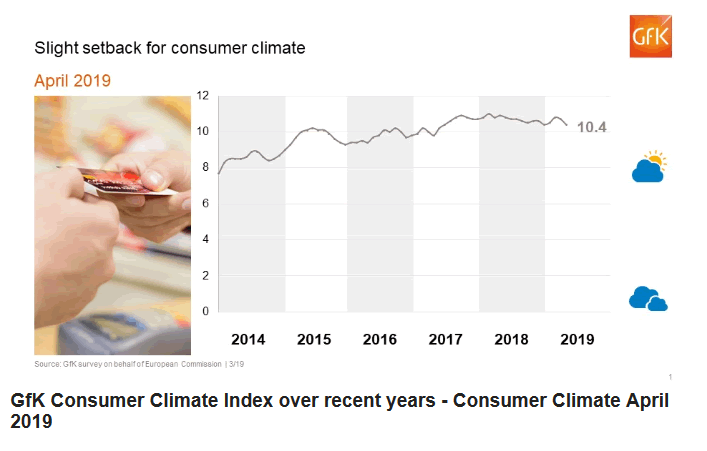
German Gfk consumer sentiment for April, dropped slightly to 10.4, down from 10.7 and missed expectation of 10.8. Gfk noted that consumer mood looks "somewhat more balanced" than in previous months. And more importantly, decline in economic expectation halted, "at least temporarily. The index rose 7 pts to 11.2 even though it's way off last year's 45.9.
Consumers are "certainly not assuming that Germany will fall into recession this year", just a "noticeable cooling off of economic activity". Gfk k added that this is due to the so called "Five Sages" have lowered lowered their original growth forecast for this year from 1.7 to just 0.8 percent.
Also, the downturn is more due to foreign than domestic economic factors, including the "lack of decisiveness" regarding Brexit data and nature, as well as US-EU trade conflicts.
Yen Stabilizes As Risk Aversion Eases
The Japanese yen traded flat on Monday after the markets were trading a bit more stable. The USD post modest gains on the day, following a decline to a six-week low previously. This came as risk aversion was seen easing with the U.S. equities posting a slower decline.
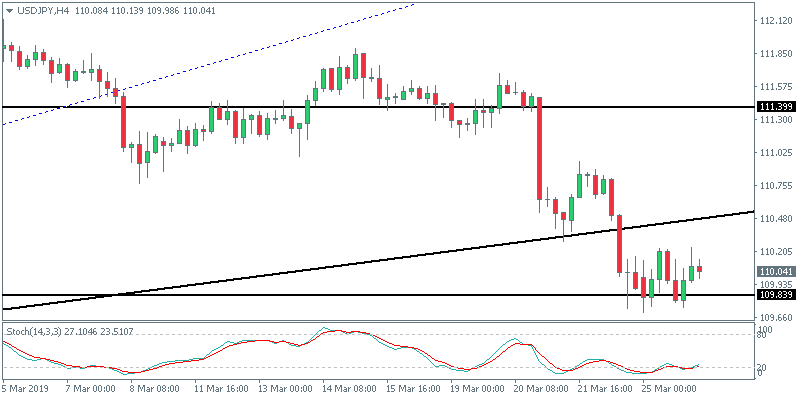
Will USD/JPY Hold the Support at 110.84?
Price action closed with a doji on Monday following last Friday's strong bearish close. This potentially indicates a rebound in the price action to the upside. However, we need to see a bullish follow-through today. A close above the trend line could be positive for the currency pair as the USDJPY will attempt to retest the breached support at 111.40 where resistance could now be established.
Euro Posts Modest Gains On Ifo Data
The common currency attempted to recover from the losses from last week as it gained 0.17% on the day. The German Ifo business climate data showed an increase for the first time in six months. The Ifo index rose to 99.6 in March, up from 98.7 in February and beat estimates of an unchanged print.
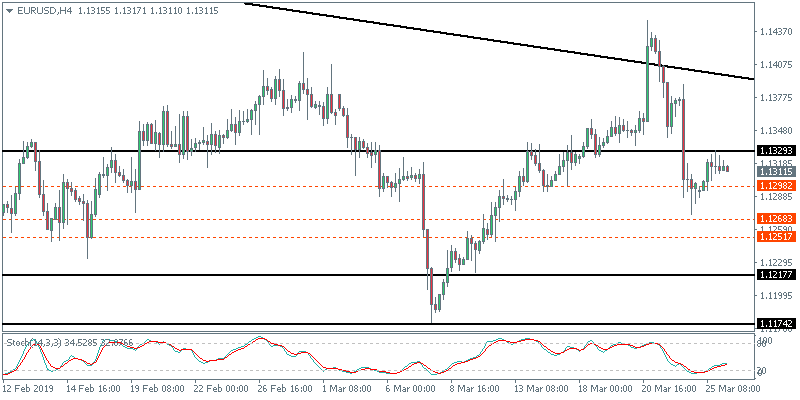
Can the EUR/USD Break the Resistance at 1.1330?
The currency pair inched higher on an intraday basis and briefly tested the resistance level at 1.1330 before pulling back. Price action has formed a possible consolidation pattern near the lows from last Friday. If the resistance level cannot be breached, we anticipate price to retest Friday's lows of 1.1272 level and could potentially validate the bearish flag pattern. This could push the currency pair lower toward 1.1217.
Crude Oil Aim @ 60.05
Pivot (invalidation): 58.75
Our preference Long positions above 58.75 with targets at 59.60 & 60.05 in extension.
Alternative scenario Below 58.75 look for further downside with 58.20 & 57.75 as targets.
Comment The RSI is mixed to bullish.

Silver Spot Bullish Bias Above 15.4600
Pivot (invalidation): 15.4600
Our preference Long positions above 15.4600 with targets at 15.6300 & 15.7000 in extension.
Alternative scenario Below 15.4600 look for further downside with 15.4100 & 15.3400 as targets.
Comment The RSI lacks downward momentum.

Gold Spot Supported By A Rising Trend Line
Pivot (invalidation): 1316.00
Our preference Long positions above 1316.00 with targets at 1327.50 & 1333.00 in extension.
Alternative scenario Below 1316.00 look for further downside with 1310.00 & 1307.00 as targets.
Comment The RSI is bullish and calls for further upside.

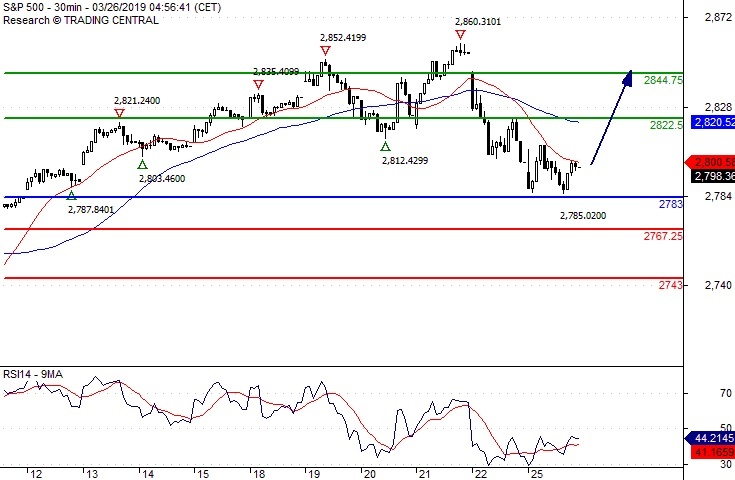
S&P 500 Bullish Bias Above 2783.00
Pivot (invalidation): 2783.00
Our preference Long positions above 2783.00 with targets at 2822.50 & 2844.75 in extension.
Alternative scenario Below 2783.00 look for further downside with 2767.25 & 2743.00 as targets.
Comment The RSI is mixed to bullish.
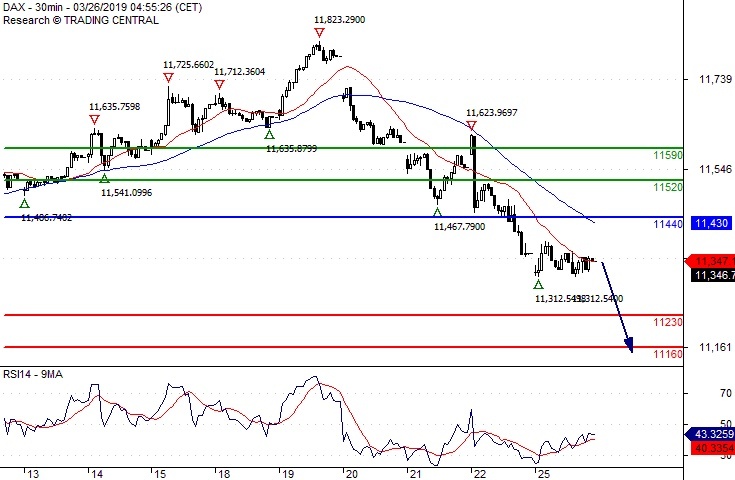
DAX The Downside Prevails
Pivot (invalidation): 11440.00
Our preference Short positions below 11440.00 with targets at 11230.00 & 11160.00 in extension.
Alternative scenario Above 11440.00 look for further upside with 11520.00 & 11590.00 as targets.
Comment The RSI is below its neutrality area at 50%