

Sample Category Title
GBP/USD Outlook: Extended Directionless Mode Is Looking For Fresh Signals From Brexit
Indecision that was signaled by Doji candle on Monday persists, as cable holds within narrow range in early Tuesday’s trading
Cable is awaiting fresh signals from Brexit, after UK parliament passed an amendment on Monday in attempt to re-take control of Brexit process, frustrated by PM May’s government over Brexit.
UK lawmakers are going to vote on a range of Brexit options on Wednesday that would give clearer picture about a deal with closer ties to the EU and would direct the government.
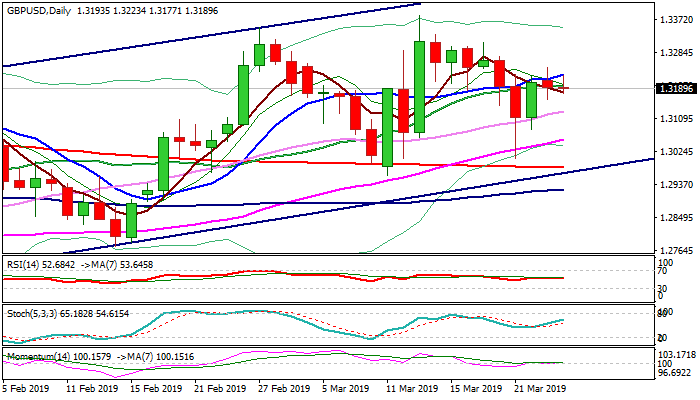
Technical picture remains neutral on flat momentum and RSI, while daily MA’s are in mixed setup.
Near-term action is for now caped by 10 SMA / Fibo 61.8% barriers at 1.3225/37 and weighed by falling and thickening weekly cloud (cloud base lays at 1.3249).
On the other side, rising 30 SMA marks solid support at 1.3130 and keeps the downside protected for now.
Break of either side would generate initial direction signal, with break higher to expose strong barriers at 1.3300 zone and risk stretch towards key 1.3381 barrier (2019 high) on stronger acceleration.
Alternatively, violation of 30SMA would expose 55SMA (1.3054) and risk retest of key supports at 1.2981/77 (200SMA / bull-channel support line).
Res: 1.3225, 1.3237, 1.3249, 1.3272
Sup: 1.3159, 1.3130, 1.3080, 1.3054
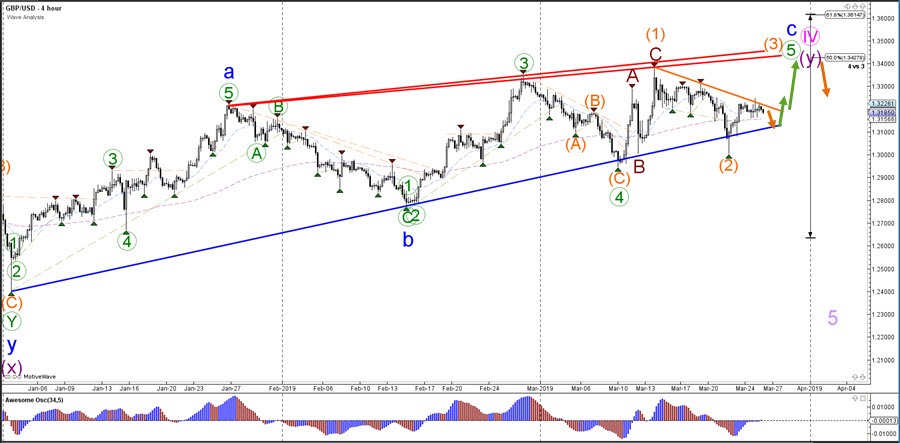
GBP/USD Bullish ABC Zigzag Aims At 1.34 Target
The GBP/USD is expected to bounce at support (blue) or break above resistance (orange) in a final wave 5 (green), which seems to be an ending diagonal. A bullish break aims for the target zone at around 1.34-1.35 whereas a break below the support line and bottom of wave 2 (orange) invalidates the current wave pattern.
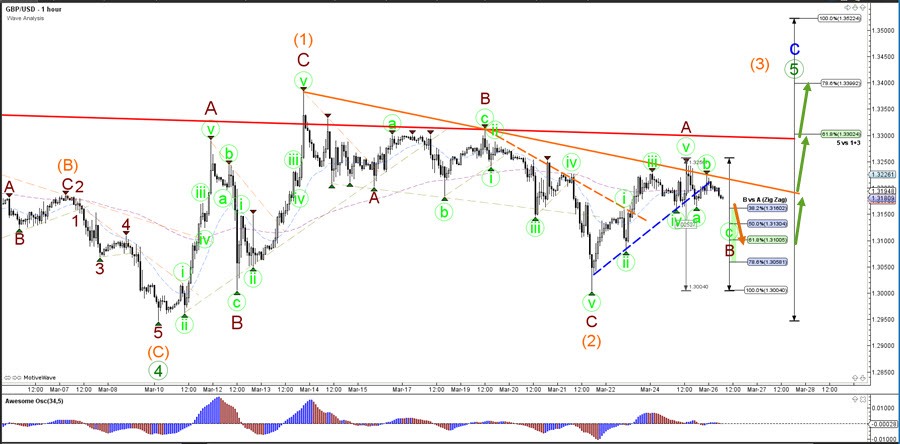
The GBP/USD seems to have completed 5 waves (green) to the upside within a potential wave A (dark red). Now price is expected to build a bearish ABC (green) retracement within wave B (dark red), which could test the Fibonacci levels of wave B vs A.
No GBP Wobble As May Suffers Further Embarrassment
Sterling traders collectively shrug shoulders at Brexit vote
There always seems to be another twist when it comes to the Brexit process and the latest came last night, when Parliament voted to take control of proceedings on Wednesday and force a series of indicative votes on how to move forward. Clearly Theresa May has suffered a number of setbacks in recent months and this is yet another embarrassing defeat but there’s no guarantee it’s going to dramatically change the process and there is nothing to compel her to act on the result.
From a markets perspective, sterling traders collectively shrugged their shoulders at the result. This isn’t really a game changer at the moment. May doesn’t need to act on anything, there’s nothing to say it will back something that the EU would agree to, we know that Parliament favours a soft Brexit and that it opposes no deal. Perhaps Wednesday will throw up a few surprises but, like many other votes that we’ve seen, it could also easily achieve very little and still leave all options on the table.
Environment looking bullish for gold
Gold has continued to nudge its way higher in recent days but once again it’s paring gains early in the session today. A softer dollar on the back of last week’s very dovish assessment from the Fed is clearly enabling the gains in gold but the greenback has consolidated in recent days and so the yellow metal is struggling to gather any real upward momentum.
It continues to find resistance around $1,320, a level which if broken could bring $1,340-1,350 into focus. Gold’s appeal as a safe haven that performs well during periods of central bank easing – or in this case, no longer tightening – may also continue to be a supportive factor given recent events. The inversion of the yield curve has clearly spooked investors and if stock markets come under ongoing pressure, gold could see its popularity increase.
Oil prices stall on global growth fears
Oil is trading higher early in the session on Wednesday but once again, what we’re seeing is Brent and WTI paring losses sustained at the back end of last week. The rally – which has been losing momentum for some time – stalled as the Fed lowered its assessment on interest rates and German manufacturing further added to the gloomy outlook for the global economy.
Naturally, a weaker global economy and heightened risk of recession weighs on demand for oil and prices, further offsetting the benefits of the OPEC+ output cut. The longer the US yield curve remains inverted, the more pessimistic investors may become on the outlook which could continue to drag on risk assets.
The Analytical Overview Of The Main Currency Pairs
The EUR/USD currency pair
Technical indicators of the currency pair:
Prev Open: 1.12966
Open: 1.13158
% chg. over the last day: +0.17
Day's range: 1.13052 – 1.13220
52 wk range: 1.1214 – 1.2557
EUR/USD stabilized after a long fall last week. EUR is supported by the strong economic reports from Germany. The financial market participants are worried about the possible recession in the world economy. Right now the quotes are consolidating. The key levels are 1.13000 and 1.13250. You should open positions from these levels and watch the US economic releases.
The Economic News Feed for 26.03.2019:
Real Estate Market Report (US) – 14:30 (GMT+2:00);
Consumer Trust Index (US) – 16:00 (GMT+2:00);
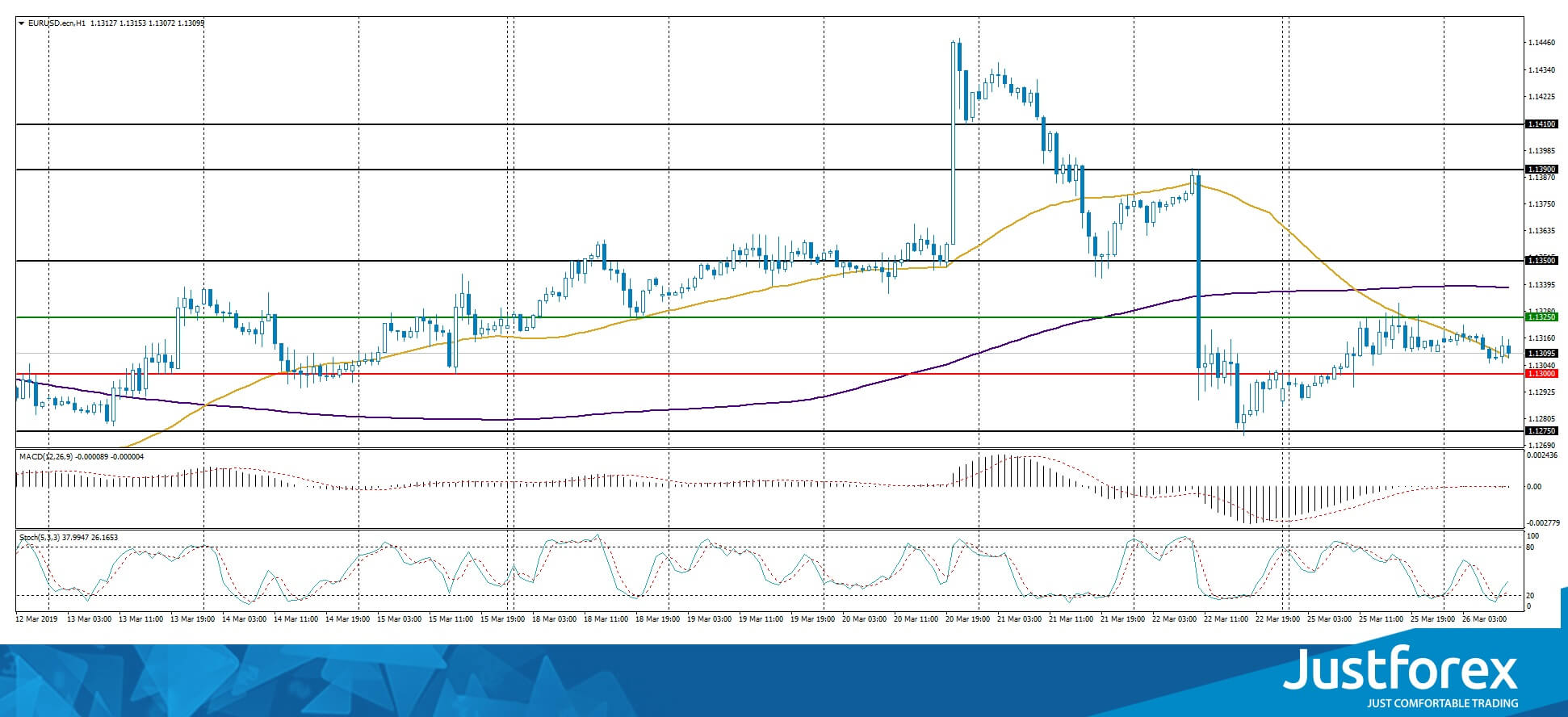
The indicators do not provide precise data, the price has crossed 50 MA.
The MACD histogram is close to 0.
The Stochastic Oscillator started to leave the oversold zone, the %K line is above the %D line which points towards a recover of EUR/USD.
Trading recommendations
Support levels: 1.13000, 1.12750
Resistance levels: 1.13250, 1.13500, 1.13900
If the price fixes below 1.13000, expect the quotes to fall toward 1.12750-1.12500.
Alternatively, the quotes can recover toward 1.13500-1.13700.
The GBP/USD currency pair
Technical indicators of the currency pair:
Prev Open: 1.32141
Open: 1.31946
% chg. over the last day: -0.05
Day's range: 1.31774 – 1.32226
52 wk range: 1.2438 – 1.4378
GBP keeps consolidating. The GBP/USD quotes are testing the key levels at 1.31600 and 1.32250. On Monday Theresa May said that she doesn't have enough support for a second vote. Keep an eye on this issue and open positions from the key levels.
The Economic News Feed for 26.03.2019 is calm.
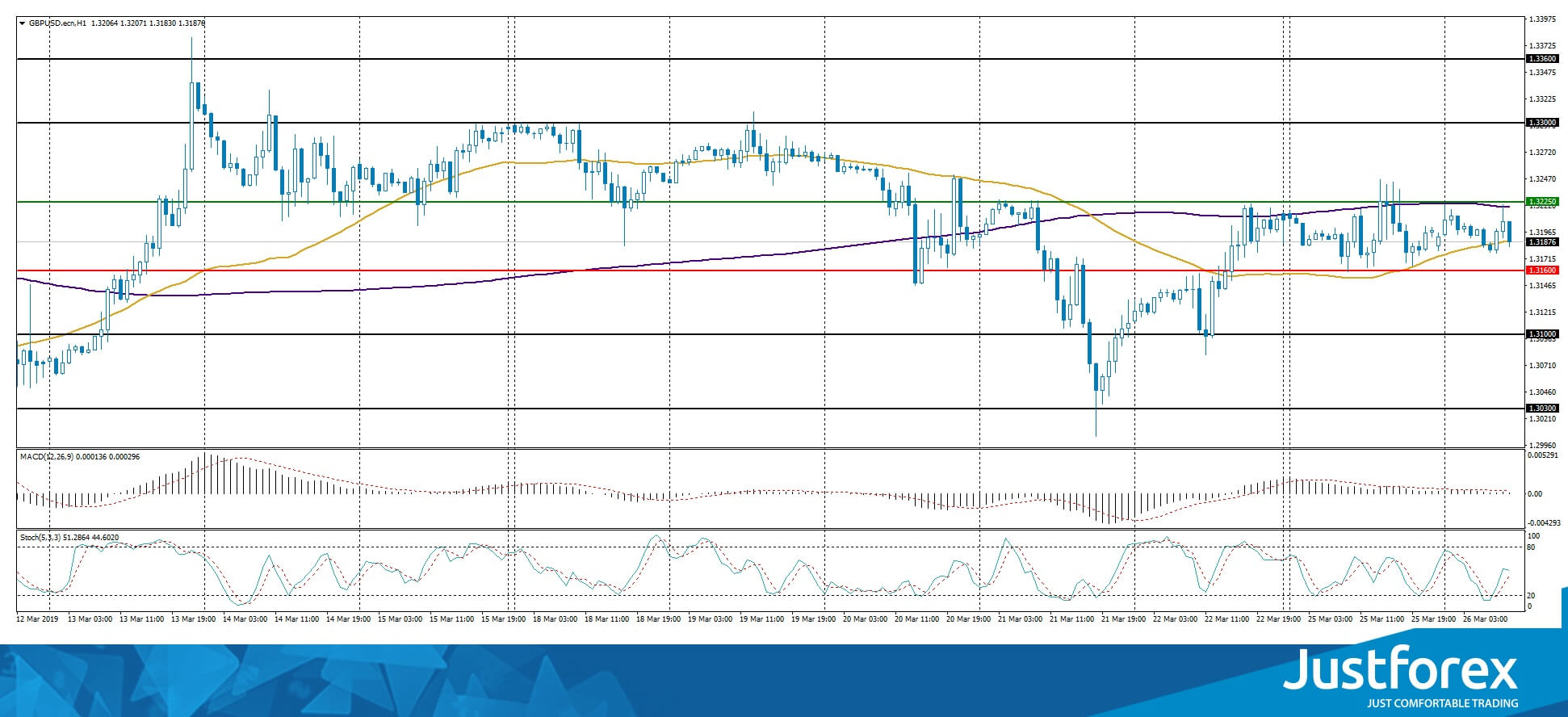
Indicators do not provide precise signals, the price crossed 50 MA and 200 MA.
The MACD histogram is close to 0.
The Stochastic Oscillator is in the neutral zone, the %K is above the %D line which points to the bullish mood.
Trading recommendations
Support levels: 1.31600, 1.31000, 1.30300
Resistance levels: 1.32250, 1.33000, 1.33600
If the price fixes above 1.32250, expect the movement toward 1.32750-1.33000.
Alternatively, the quotes can fall toward 1.31000.
This article reflects a personal opinion and should not be interpreted as an investment advice, and/or offer, and/or a persistent request for carrying out financial transactions, and/or a guarantee, and/or a forecast of future events.
The USD/CAD currency pair
Technical indicators of the currency pair:
Prev Open: 1.34257
Open: 1.34064
% chg. over the last day: -0.23
Day's range: 1.33863 – 1.34073
52 wk range: 1.2248 – 1.3664
USD/CAD retreated from the local maximums. The technical picture is ambiguous. CAD is consolidating in the 1.33850-1.34100 range. The financial market participants are waiting for additional drivers. Today you should keep an eye on the US economic releases and open positions from the key levels.
The Economic News Feed for 26.03.2019 is calm.
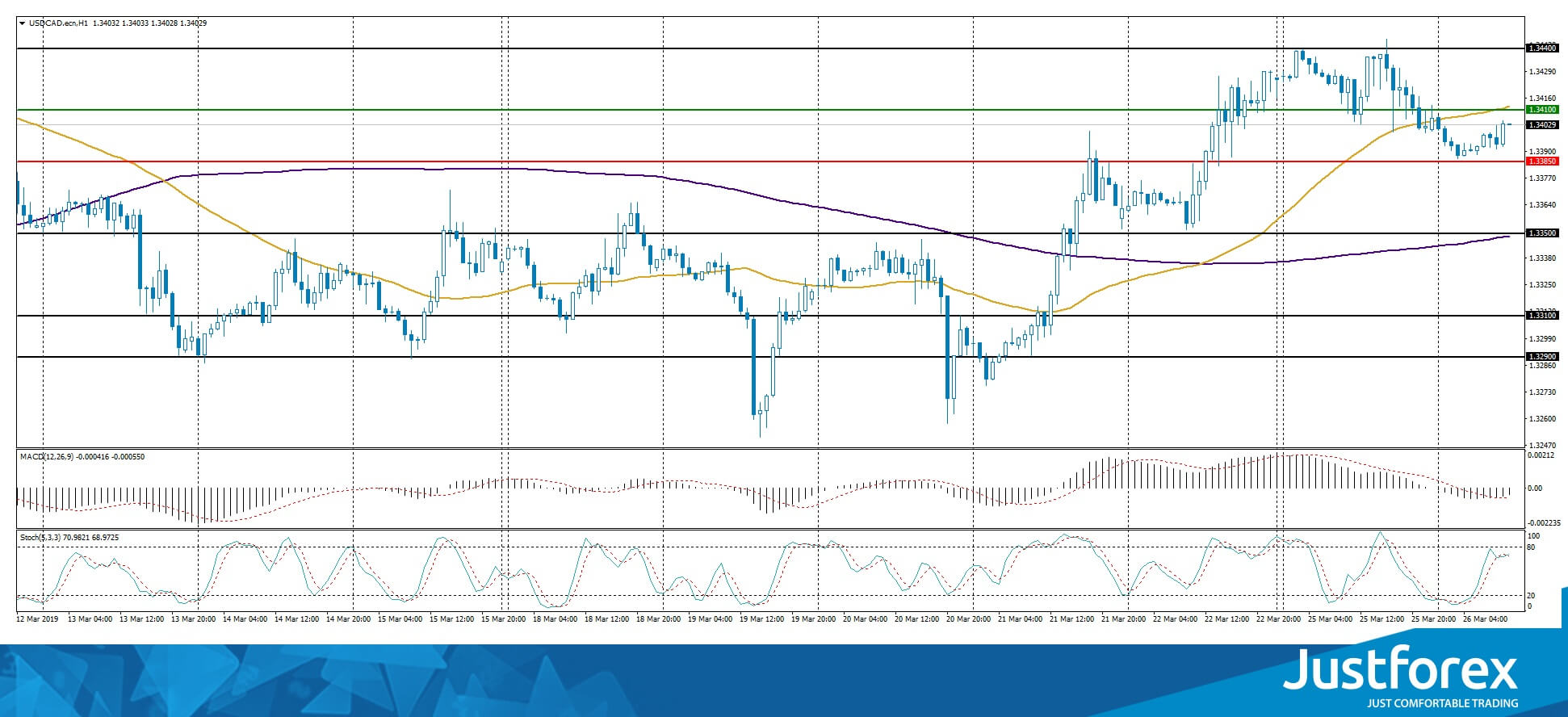
The indicators do not provide precise signals, the price fixed between 50 MA and 200 MA.
The MACD histogram is in the negative zone but above the signal line which gives a weak signal to sell USD/CAD.
The Stochastic Oscillator is in the neutral zone, the %K line is crossing the %D line. There are no signals at the moment.
Trading recommendations
Support levels: 1.33850, 1.33500, 1.33100
Resistance levels: 1.34100, 1.34400, 1.35000
If the price fixes above 1.34100, expect the quotes to grow toward 1.34400-1.34700.
Alternatively, the quotes can fall toward 1.33600-1.33400.
The USD/JPY currency pair
Technical indicators of the currency pair:
Prev Open: 109.996
Open: 109.977
% chg. over the last day: -0.03
Day's range: 109.977 – 110.243
52 wk range: 104.56 – 114.56
USD/JPY stabilized after an agressive sell-off last week. The key support and resistance levels are 109.800 and 110.300. The demand for safe assets is high. The investors are worried about growing recession risks. Keep an eye on the economic reports and the US Treasury bonds` yield dynamic. Open positions from the key levels.
The Economic News Feed for 26.03.2019 is calm.
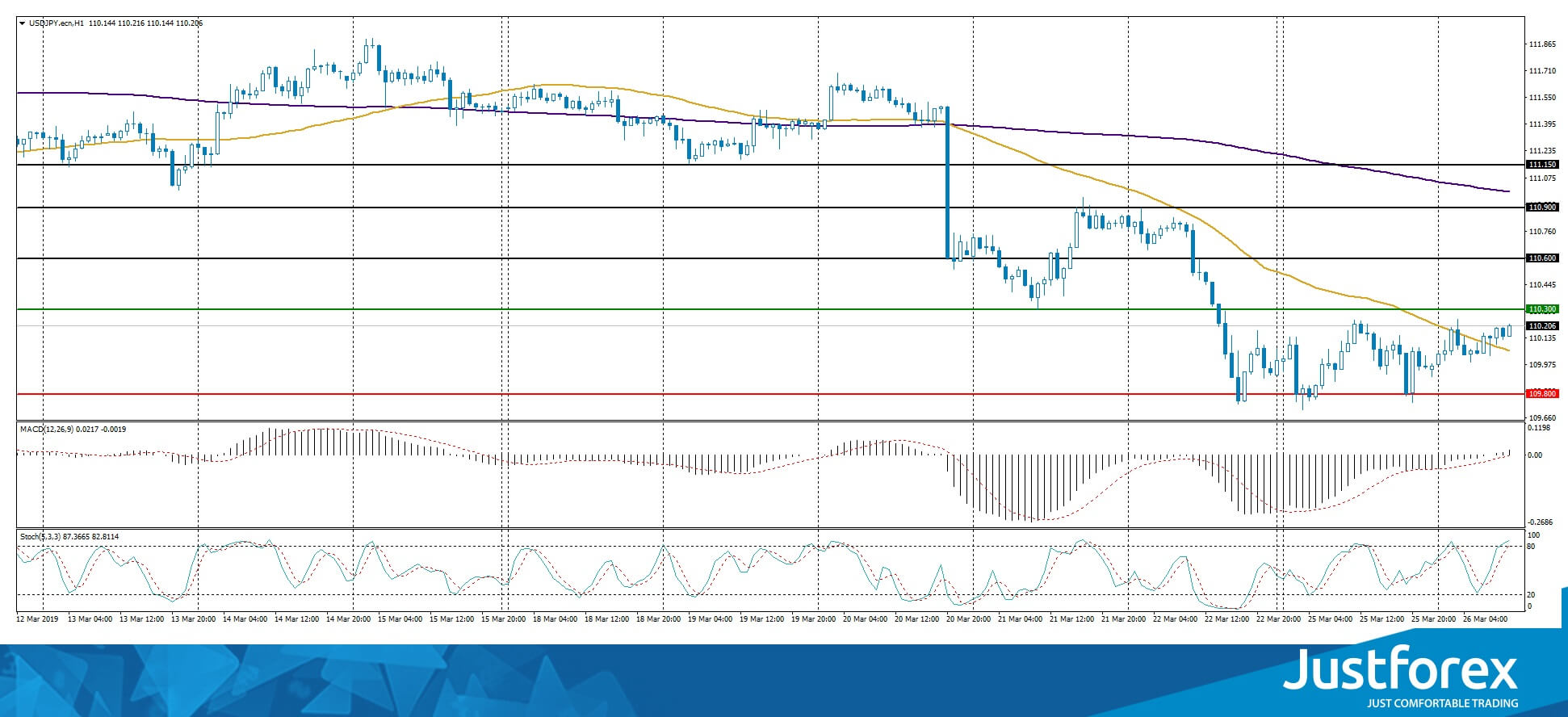
Indicators do not provide precise signals, the price has crossed 50 MA.
The MACD histogram is in the positive zone which points to the power of the buyers.
The Stochastic Oscillator is near the overbought zone, the %K line is above the %D line which gives a weak signal to buy USD/JPY.
Trading recommendations
Support levels: 109.800, 109.500
Resistance levels: 110.300, 110.600, 110.900
If the price fixes above 109.800, expect the quotes to fall toward 109.500-109.300.
Alternatively, the quotes can recover toward 110.600-110.900.
Brexit Is In The Focus Of Attention
The uncertainty regarding Brexit is in the foreground again. The European Commission has completed all preparations in case of non-deal Brexit. This week the UK Parliament should vote for the Brexit agreement. If parliamentarians vote for the deal, the UK will leave the union on May 22. If they do not support the agreement, Theresa May will have to choose one of several options before April 12: ask the EU to extend the Brexit deadline, exit from the EU without a deal, or terminate Article 50 of the Lisbon Treaty, which initiated Brexit.
However, yesterday British parliamentarians voted to give them the right to control the country's exit from the EU. The British Parliament wants to be able to vote for different Brexit options. Most officials consider Theresa May to be not competent enough and unable to control the exit process.
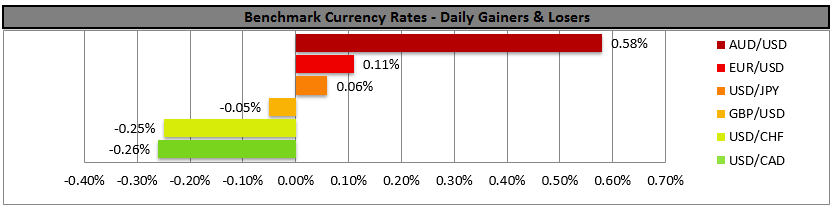
The US currency weakened against a basket of major currencies. Investors are concerned about the inversion of the US government bonds yield curve. The dollar index (#DX) closed the trading session in the negative zone (-0.14%). The euro strengthened slightly after the release of optimistic data from Germany. The German IFO business climate index rose to 99.6, while experts expected 98.7. Previous data has also been revised upwards from 98.5 to 98.7.
The "black gold" prices show positive dynamics. At the moment, futures for the WTI crude oil are testing the mark of $59.45 per barrel. At 22:30 (GMT+2:00), a report on the API weekly crude oil stock will be published.
Market Indicators
- Yesterday, there was a variety of trends in the US stock market: #SPY (-0.21%), #DIA (+0.04%), #QQQ (-0.19%).
- The 10-year US government bonds yield has slightly moved away from local lows. At the moment, the indicator is at the level of 2.42-2.43%.
The news feed on 26.03.2019:
- Statistics on the real estate market in the US at 14:30 (GMT+2:00);
- CB consumer confidence index in the US at 16:00 (GMT+2:00).
RBNZ Interest Rate Decision In Focus
The RBNZ is to announce its interest rate decision tomorrow during the Asian session (01:00, GMT) and is widely expected to remain on hold. Currently NZD OIS imply a probability of 98.95% for the bank to maintain an interest level of +1.75%. With unemployment rate on the rise, the inflation rate below the bank's median target of +2.00% yoy and the GDP growth rate slowing down there seems to be little room for any hawkish maneuvers. Also the wide uncertainty of China's slowdown and its trade relationships is another factor of worries for the bank. Should the bank prefer a more cautious stance, we could see extensive dovish elements surfacing, weakening the Kiwi, which currently is our base scenario. Should on the other hand the bank prefer to keep its options open, we could see the accompanying statement having a more neutral tone. Please be advised that volatility of Kiwi pairs could extend during Governor Orr's press conference later on (02:00, GMT). NZD/USD rose yesterday breaking above the 0.6900 (S1) resistance line, now turned to support. Should market start positioning itself for a dovish RBNZ interest rate decision, we could see the pair trade in a rather bearish market. Should the pair come under the selling interest of the market, we could see it breaking the 0.6900 (S1) support line and aim if not break the 0.6860 (S2) support barrier. Should on the other hand the pair's long positions be favored by the market, we could see it breaking the 0.6940 (R1) and aim for higher grounds.
Pound remains steady, as UK Parliament takes control of Brexit.
The UK Parliament took control over Brexit, as in a vote yesterday night decided to schedule a series of votes on alternative Brexit outcomes. The alternative strategies could include among others a second referendum, keeping the UK in the EU's customs union a hard Brexit or canceling Brexit altogether. Three ministers of the government resigned in order to back the plan, indicative of the PM losing control over the MPs of even her own side. The first step is expected to be a process of indicative votes, probably on Wednesday, which could also result in a dead end, mind you. On the other hand it should be noted that the process could prove to be a double edged sword, as the possibility of a soft Brexit could throw some hard Brexiteers into Theresa May's arms, albeit the DUP still does not seem convinced. As all possibilities are still open, uncertainty seems to persist and thus we expect the pound to remain in check until the fog clears somewhat. Cable maintained a range bound movement yesterday, continuously testing the 1.3175 (S1) support line. We could see the pair remaining under pressure and largely maintain a sideways movement today. Cable could prove sensitive to any Brexit headlines tilting the Brexit scale towards the one or other possible outcome, yet at the same time could also prove sensitive (albeit to a lesser degree) to the US financial releases today. Should the bears take control of the pair's direction, we could see cable breaking the 1.3175 (S1) support line and aim for the 1.3070 (S2) support barrier. Should on the other hand the bulls dictate the pair's direction, we could see cable breaking the 1.3265 (R1) resistance line and aim for higher grounds.
Other economic highlights, today and early tomorrow
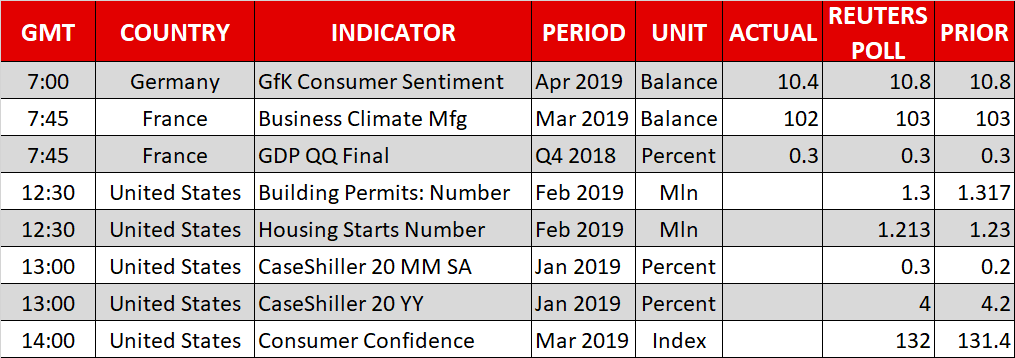
In today's European session, we get Germany's GfK Consumer Climate for April while in the American session we get the CB Consumer Sentiment indicator for March and later on the API weekly crude oil inventories figure. As for speakers, please note that Philadelphia Fed President Harker, Chicago Fed President Evans and San Francisco Fed President Daly speak.
NZD/USD
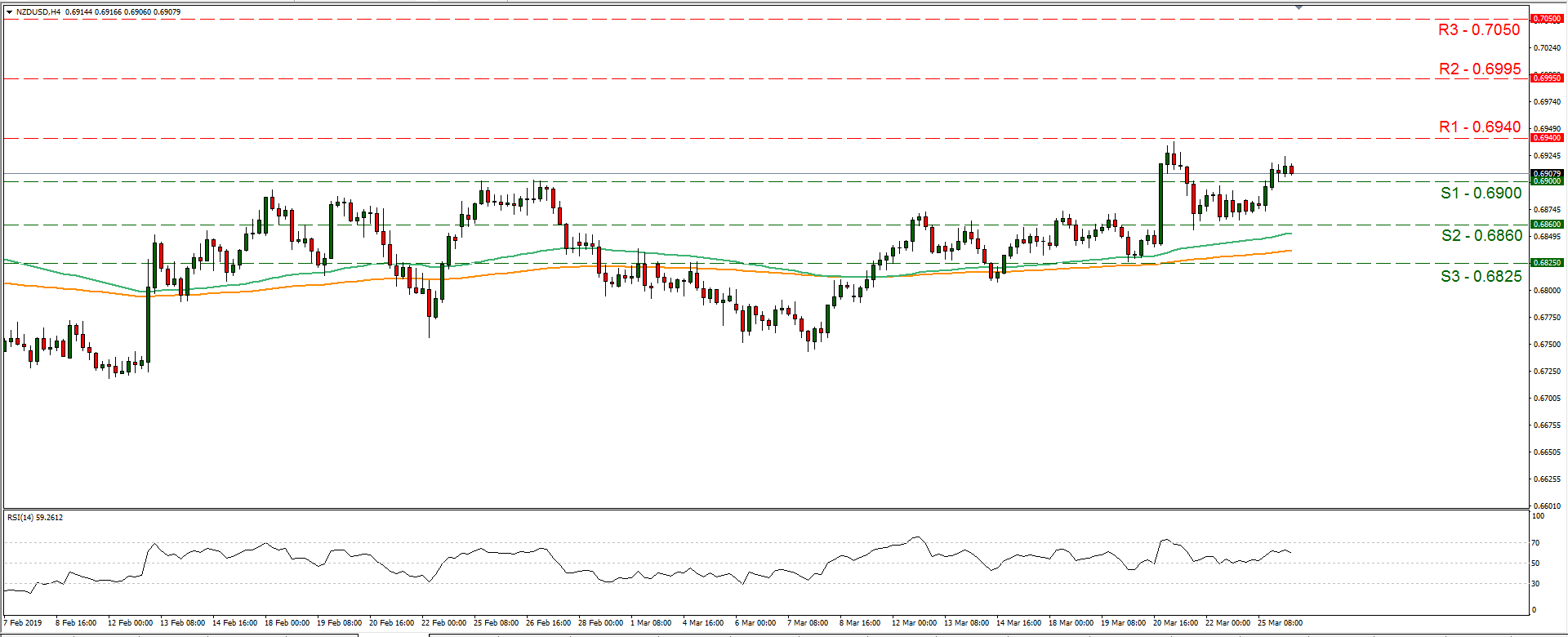
Support: 0.6900 (S1), 0.6860 (S2), 0.6825 (S3)
Resistance: 0.6940 (R1), 0.6995 (R2), 0.7050 (R3)
GBP/USD H4
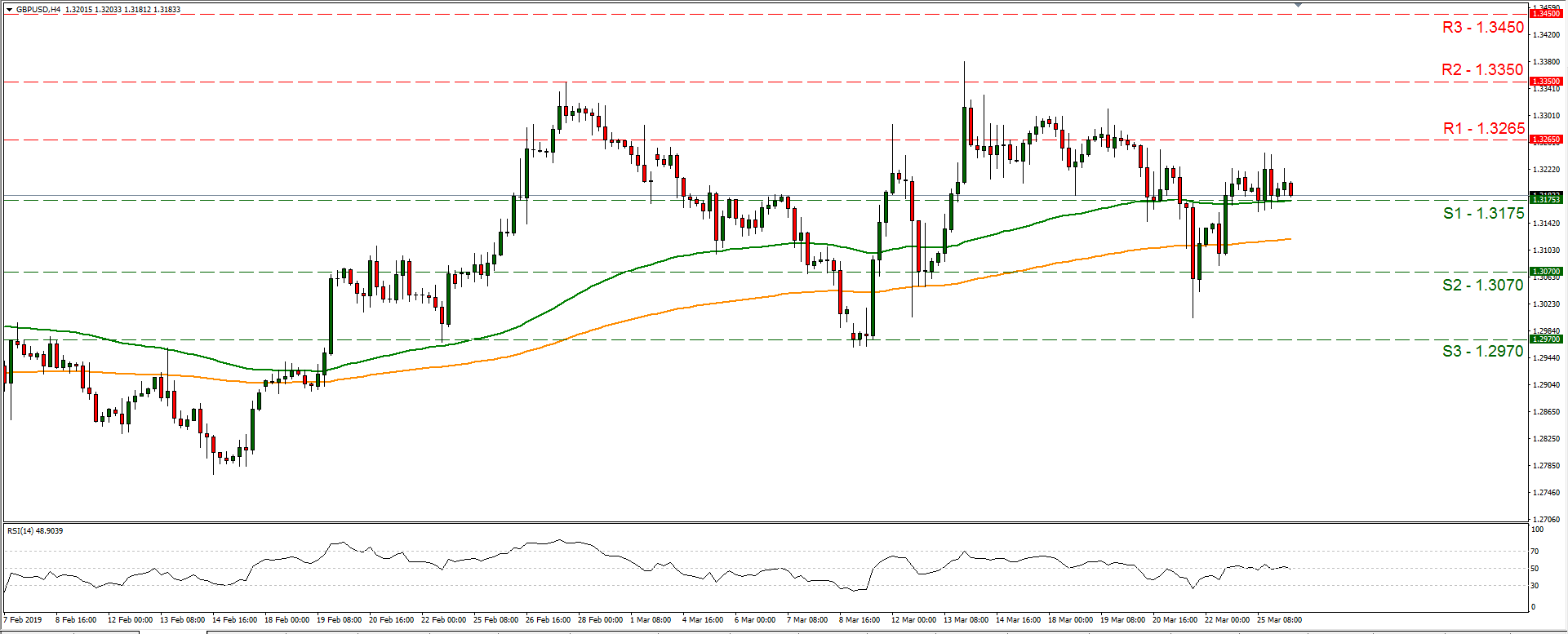
Support: 1.3175 (S1), 1.3070 (S2), 1.2970 (S3)
Resistance: 1.3265 (R1), 1.3350 (R2), 1.3450 (R3)
Sterling Steady As May Loses Control Of Brexit Process, Dollar Weighed By Falling US Yields
- Pound holds steady as British MPs prepare to vote on alternative Brexit plans
- Dollar struggles following yield curve inversion
- Equities breathe sigh of relief as US yields edge up
Pound hovers around $1.32 as Brexit drama continues
UK Prime Minister Theresa May suffered another humiliating defeat in Parliament on Monday after lawmakers voted in favour of holding a series of indicative votes to decide the next steps in the Brexit process, seizing power away from the government. While the vote makes a no-deal Brexit less likely and the prime minister herself yesterday gave the strongest indication yet that a disorderly exit isn't on the cards unless MPs were to choose it, the ongoing uncertainty kept sterling range-bound, with cable fluctuating around the $1.32 handle.
Parliament will on Wednesday hold a vote on seven different options, including a second referendum and staying in a customs union, as well as on revoking Article 50, which would mean cancelling Brexit. The options with the most votes will be voted on again next week until MPs preferred path becomes clearer.
May's twice-rejected deal is also included among the alternatives for lawmakers to pick from so a third meaningful vote remains a possibility if none of the other options gather as much support. The Prime Minister cancelled a third vote on her deal this week after failing to win the backing of the Northern Irish DUP party.
US yields turn higher, but dollar flat
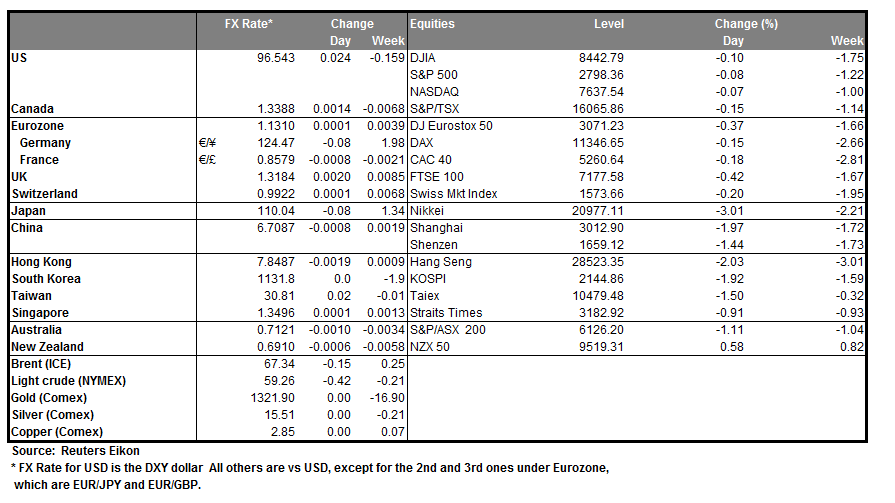
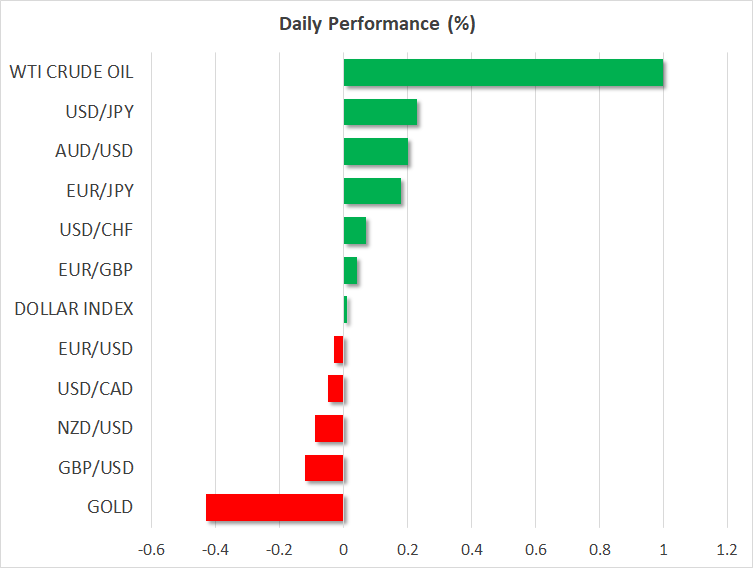
The US dollar was struggling for direction on Tuesday despite an easing of the slump in Treasury yields. The yield curve between 10-year and 3-month Treasury notes inverted on Friday and the negative spread deepened further on Monday, triggering fears of a US recession. The spread between 10-year and 3-month Treasuries is watched closely by the San Francisco Fed for signs of a forthcoming recession and markets also appear to be increasingly paying attention to it with investors now fully pricing in a 25-basis point rate cut by the Fed by December.
The shift in expectations comes after the Fed last week ruled out further rate hikes in 2019, reinforcing its dovish stance. The dollar fell to a 6-week low of 109.70 yen yesterday before recovering to around 110.15 yen today. But the dollar index was flat around 96.60.
The Japanese currency was facing some downside pressure of its own today after the Bank of Japan's Summary of Opinions of the March policy meeting revealed Board members discussed the prospect of further policy easing given the growing negative risks to the world economy.
The euro meanwhile found some support from yesterday's better-than-expected German Ifo business climate index for March and was last trading just above the $1.13 level. However, following last week's dismal March PMI numbers, traders will need a lot more convincing that the Eurozone economy is improving before pushing the euro significantly higher.
Stocks lifted from recovering US yields
The rebound in US Treasury yields boosted global equities with most Asian indices closing in the green and US e-mini futures were also pointing to a positive start to Tuesday's trading session. However, European stocks were mixed with a more cautious mood with recession fears still worrying many investors.
Attention later today will fall on the US consumer confidence index by the Conference Board for an indication of consumers' spending appetite in March. US housing starts and building permits for February will also be monitored as the US economy remains under the spotlight for any signs of a deep downturn.
A speech by Chicago Fed President Charles Evans at 10:30 GMT will be watched too, while later in the day, the Reserve Bank of New Zealand will announce its latest policy decision at 20:00 GMT. The kiwi was lifted last week from solid GDP numbers out of New Zealand and was last hovering not too far from its highs around $0.69. The RBNZ is expected to keep rates at 1.75% and maintain an easing bias, but a further dovish tilt is seen unlikely following the GDP data.
GBPUSD Could Trade Neutral In Short Term
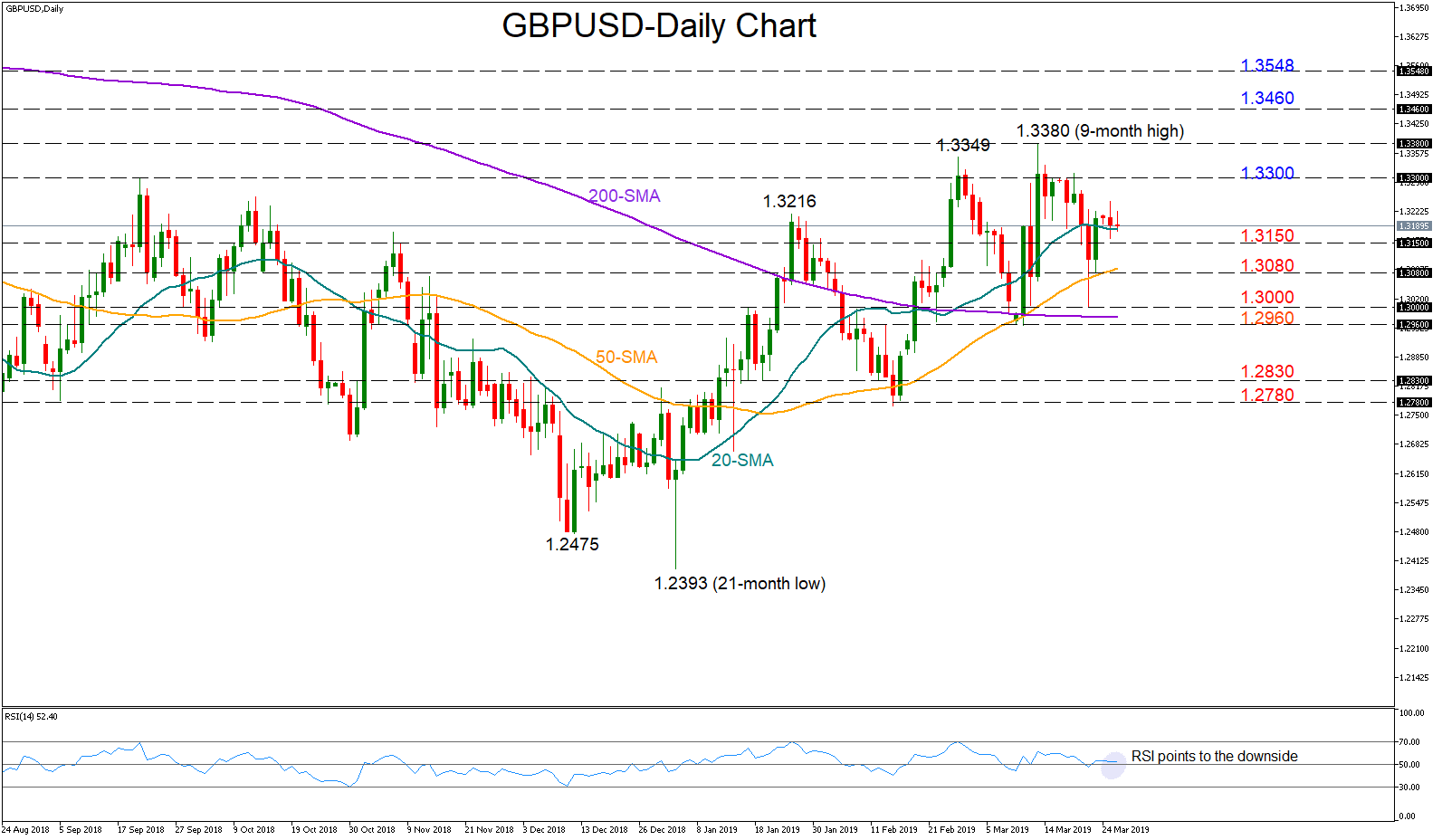
Following Thursday’s dive towards 1.30, GBPUSD returned to the 1.32 area to maintain the upward pattern it started in December. Meanwhile, the RSI seems to be losing ground in bullish territory, capturing a neutral picture for the short term.
The 1.33 round level would be the main target if positive momentum accelerates, while higher the bulls would attempt to beat previous peaks at 1.3349 and 1.3380. If efforts prove successful, buying orders could increase towards the 1.3460-1.3548 former resistance area, turning the medium-term outlook even more bullish.
On the flip side, the pair could find immediate support between 1.3150 and 1.3080 as it did last week. Below the latter, the bearish action could be trapped within the 1.30-1.2960 zone where the 200-day moving average (MA) has been flattening more than a month now. Should the price fall comfortably deeper, putting the December upleg into doubts, losses could continue until the 1.2830 and 1.2780 restrictive levels.
In brief, GBPUSD could experience a neutral situation in the short-term, while regarding the medium-term performance, the increasing distance between the 50- and the 200-day MAs suggests the continuation of the December upward pattern.
Forex Technical Analysis: EUR/USD, USD/JPY, GBP/USD
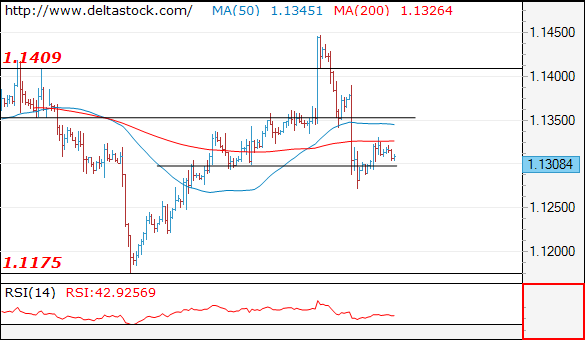
EUR/USD
Current level - 1.1308
Intraday allow a brief test of 1.1350 resistance and the latter should provide a selling pressure for a downswing towards 1.1250.
| Resistance | Support | ||
| intraday | intraweek | intraday | intraweek |
| 1.1350 | 1.1570 | 1.1250 | 1.1175 |
| 1.1410 | 1.1830 | 1.1175 | 1.0860 |
USD/JPY
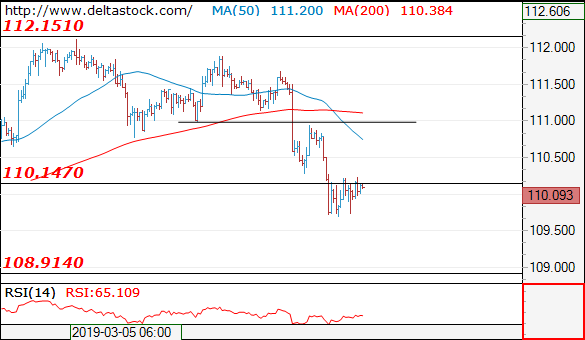
Current level - 110.09
The downtrend is intact, heading towards 108.90 zone. Minor intraday resistance lies at 110.30 and crucial on the upside is 111.00.
| Resistance | Support | ||
| intraday | intraweek | intraday | intraweek |
| 110.30 | 113.00 | 109.70 | 108.90 |
| 111.00 | 114.50 | 108.90 | 107.40 |
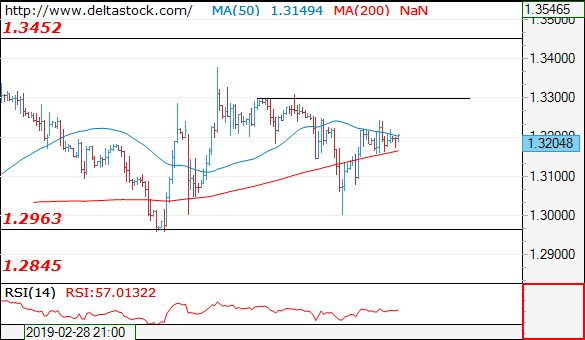
GBP/USD
Current level - 1.3204
The bias is positive, for a break through 1.3300 area, towards 1.3450 target zone. Initial intraday support lies at 1.3150.
| Resistance | Support | ||
| intraday | intraweek | intraday | intraweek |
| 1.3300 | 1.3450 | 1.3150 | 1.2800 |
| 1.3300 | 1.3450 | 1.2960 | 1.2610 |
Abenomics architect said BoJ ought to buy government bonds more aggressively
Kozo Yamamoto, a senior ruling LDP lawmaker and a key architect of Abenomics, complained that BoJ made a mistake in 2016 to change its policy to target interest rate under than yield curve control, instead of the pace of monetary base expansion. He said BoJ "ought to buy government bonds more aggressively". But it's difficult under the current YCC.
Also, Yamamoto said he opposes the plan sales tax hike in October and discussed with Prime Minister Shinzo Abe. But he cannot convince Abe to put off the twice-delayed sales tax hike. He said, "the prime minister told me while I may be theoretically right, it was politically difficult".