

Sample Category Title
Ifo lowers 2019 Germany growth forecast from 1.1% to 0.6%, but upgrades 2020 forecasts
German ifo Institute lowers 2019 growth forecast for Germany from 1.1% to 0.6%. Though, 2020 growth forecast is revised up from 1.6% to 1.8%.
Timo Wollmershaeuser, Head of ifo Business Cycle Analysis and Forecasts said: "The current production difficulties in German manufacturing are likely to be overcome only gradually. The industry will largely fail to act as an economic engine in 2019. Global demand for German products is weak, as the international economy continues to lose momentum.
But he emphasized that "domestic driving forces are still intact". Number of people employed should continue to rise even though pace is slowing. Unemployment rate is expected to fall from 5.2% to 4.7-4.9%. Also, Wollmershaeuser added: "This year, strong wage increases, a low inflation rate, reductions in taxes and social security contributions as well as an expansion of public transfers should result in a large increase in real incomes of households. This will bolster private consumption and the construction industry."
British Parliament To Vote On Brexit Delay
Notes/Observations
- UK to vote for a postponement to the current March 29 deadline on Brexit. PM May still fighting for her Brexit deal, with a 3rd attempt to get it through Parliament likely next week
Asia:
- Australia Mar Consumer Inflation Expectation Survey: 4.1% v 3.7% prior
- China Feb YTD Industrial Production hits a 17-year low (YoY: 5.3% v 5.6%e for its slowest pace since early 2002)
- China Feb YTD Retail Sales YoY: 8.2% v 8.2%e
- China Feb YTD Fixed Urban Assets: 6.1% v 6.1%e
- China Feb YTD Surveyed Jobless Rate: 5.3% v 4.9% prior
- Speculation that BOJ could 'slightly' downgrade its overall economic assessment at its upcoming policy meeting
Europe:
- UK Parliament voted 321-278 to reject a no-deal Brexit under all circumstances
- PM May reiterated that, despite this vote, the legal default position remained that the UK would leave the EU without a deal unless something else was agreed. Parliament must understand that without finding a consensus on a deal in the coming days there would need to be longer extension of Article 50 (longer than the 'short technical' extension she had proposed). Govt would propose a short extension if a deal was passed by March 20th (Note: date is the eve of the EU Leader Summit)
- Brexiteer ERG caucus members suggested that they might support the PM's Brexit deal in the 3rd 'meaningful vote' on the condition that she resigned
- PM's office stated that PM May was NOT considering resigning. Ministers who voted against the govt in today's final motion would be expected to resign (implying those that abstained need not resign from the Cabinet)
- EU Commission statement noted that it took note of the votes in the House of commons. Added that there were only 2 ways to leave the EU: with or without a deal, and the EU was prepared for both. To take no deal off the table is not enough; UK has to agree to a deal
- Italy Cabinet to approve new decree to renew bad loan guarantee scheme between weekend and Tuesday (Mar 16th thru 19th). The new scheme would have duration of 2 years; Cost of scheme higher than prior scheme given higher spread, market volatility; scheme won't regard unlikely to pay loans
- ECB's Coeure (France): TLTRO's were instruments that were equal and accessible everywhere. Italy faced challenges related to longer term growth and had nothing to do with the EU. Italy was facing challenge of a technical recession and the country was not a threat to Europe
Americas:
- President Trump: We're in no rush to complete China trade deal; talks were going along 'very nicely' but a deal must cover IP. It did not matter whether a deal was made before or at a summit; China President Xi has seen that I could walk away from a deal
Energy:
- US said to seek to reduce Iran oil sales by about 20% to less than 1M bpd from May. US was expected to renew the sanctions waivers to Iranian oil buyers, but might deny waivers to countries that were not using them
Macro
- (UK) United: A Brexit delay is now likely to be decided at March 21 EU summit if Parliament votes for a n extension to Article 50 today. The EU's chief negotiator Barnier has not shown much enthusiasm for a short delay. Chancellor Merkel reportedly suggested previously that a delay until May 23 would be "very easy", a delay until the end of June "easy" and faced with the risk that the UK exits out of the EU as it runs out of time, EU leaders will likely take the final decision on a delay themselves, rather than leaving it to negotiators, or deputies to make a decision ahead of the summit.
- (DE) Germany: Feb HICP inflation was unchanged at 1.7% y/y,. Food price inflation saw a marked jump but overall petrol prices barely nudged the needle at 0.1% y/y, after 0.3% y/y in January, but diesel prices actually picked up. Prices for household energy also increased 4.3% y/y, up from 3.3% y/y in January The headline rate remains close to the ECB's definition of price stability, but above the Eurozone average, and the ECB's extension of the negative interest rate environment and the new round of TLTRO funding will likely ensure that expectations for inflation in Germany will remain above the average. Rent prices in particular are likely to continue to move higher, as real estate prices continue to surge under the current monetary policy regime.
Equities
- Indices [Stoxx600 +0.72% at 378.00, FTSE +0.36% at 7,184.71, DAX +0.43% at 11,622.16, CAC-40 +0.70% at 5,343.77, IBEX-35 +0.90% at 9,274.99, FTSE MIB +0.93% at 20,941.50, SMI +2.01% 9,447.50, S&P 500 Futures +0.13%]
Market Focal Points/Key Themes:
- European Indices trade higher across the board continuing the positive momentum after a mostly higher session in Asia and higher US Index futures. The FTSE under performs the general market on continued strength in cable following parliament rejecting a no-deal Brexit in any scenario. On the corporate front German Airliner Lufthansa trades sharply lower after earnings and a cautious outlook; German listed K+S and Wacker Neuson trades sharply higher on a rise in profits, with GEA Group, Lagardere, Leonardo, Vifor Pharma and Dufry among other notable names rising on earnings. Just Group declines sharply after reporting an unexpected loss in earnings, with Bourbon, Comet Group, Sixt Leasing and Casino among some of the other notable decliners on earnings. Elsewhere Targovax rises after being granted an FTO license to Zelluna Immunotherapy; Debenhams gains as Sports Direct proposes a £150M loan to the company while Charter Court Financial Services gains following the confirmation of a merger with OnSavings Bank. Looking ahead notable earners include Dollar General, Genesco and Embraer among others.
Equities
- Consumer discretionary: Lufthansa [LHA.DE] -4.5% (earnings), Casino Guichard-Perrachon [CO.FR] -2% (earnings), Rallye [RAL.FR] +4% (earnings), Debenhams [DEB.UK] +4.5% (statement to Sports Direct proposal), Capita [CPI.UK] +1% (earnings)
- Consumer staples: British American Tobacco [BATS.UK] -0.5% (investor day)
- Energy: RWE [RWE.DE] -1.5% (earnings)
- Financials: TCS Group Holding [TCS.UK] -4.5% (placing), Charter Court Financial Services [CCFS.UK] +1% (to be acquired by OneSavings Bank), Sixt Leasing [LNSX.DE] -10% (guidance), Just Group [JUST.UK] -15% (earnings; placing), Savills [SVS.UK] -9.5% (earnings)
- Industrials: Leonardo-Finmeccanica [LDO.IT] +9% (earnings), Komax [KOMN.CH] -19.5% (earnings; profit warning), Deutz [DEZ.DE] +1% (earnings)
- Materials: K+S [SDF.DE] +8.5% (earnings)
Speakers
- UK Chancellor of the Exchequer Hammond (Fin Min): EU could insist on a long Brexit delay. UK Parliament needed a way to give view on Brexit options. There was not a majority in Parliament to call for a 2nd referendum
- Northern Irish DUP Leader Foster stated that was working with Govt on trying to find a way to leave the EU with a deal. She believed that taking a 'no-deal' option off the table did weaken the UK's negotiating hand
- Swiss SECO March Economic Forecasts cut 2019 GDP growth from 1.5% to 1.1% while maintaining 2020 growth at 1.7%. Swiss Govt cut both 2019 and 2020 CPI to 0.4% and 0.6% respectively
- German Economic Ministry Monthly Report: Domestic economy was having a subdue start to 2019 due to exports risks. GDP likely increased moderately in Q1 as leading indicators remained muted. Problem in auto sector related to emissions should be largely overcome at this time
- German IFO Institute cut its 2019 GDP growth forecast from 1.1% to 0.6% and set 2020 outlook at 1.8%
- Poland Central Bank Gov Glapinski reiterated view that interest rates were seen steady until 2022. Fiscal package to support GDP growth in coming years
- Poland Central Bank Hardt: 2020 CPI seen above target and could be even higher
- Poland Fin Min Czerwinska: 2019 GDP growth seen slowing moderately to around 4.0%
- Fitch affirmed Indonesia sovereign rating at BBB, outlook stable
Currencies/Fixed Income
- The GBP saw a 2nd day of volatility as the UK parliament continued its voting on Brexit options. GBP/USD hit a 9-month high above 1.3380 after the House of Commons rejected a no-deal Brexit under all circumstances . In today's session, some of the optimism wore off as the Parliament still faced another vote later today on any extension of Article 50. PM May warned of long delay if no deal could be reached by March 20th (the eve of the next EU Leader Summit). The key issue at this time was what kind of plan would Parliament vote for, and how much longer do Britain's politicians needed to make up their minds? PM May was still fighting for her Brexit deal, with a 3rd attempt to get it through Parliament likely next week. GBP/USD at 1.3280 area ahead of the US morning.
- The JPY was softer ahead of Friday's BOJ rate decision. Analysts noted that BOJ could take a more dovish tone with growing expectations that the next policy move could be towards another easing. Attention had turned to the BOJ's economic view with reports indicating the central bank might cut its overall assessment due to the recent slowdown being exhibited in China economic data. It would be the 1st such cut in three years. USD/JPY higher by 0.4% at 111.70 just ahead of the US morning.
Economic Data
- (IN) India Feb Wholesale Prices (WPI) Y/Y: 2.9% v 2.8%e
- (DE) Germany Feb Final CPI M/M: 0.4% v 0.5%e; Y/Y: 1.5% v 1.6%e
- (DE) Germany Feb Final CPI EU Harmonized M/M: 0.5% v 0.5%e; Y/Y: 1.7% v 1.7%e
- (FI) Finland Feb CPI M/M: +0.5% v -0.4% prior; Y/Y: 1.3% v 1.1% prior
- (TR) Turkey Jan Industrial Production M/M: 1.0% v 0.3%e; Y/Y: -7.3% v -8.0%e
- (CH) Swiss Feb Producer & Import Prices M/M: +0.2% v -0.1%e; Y/Y: -0.7% v -1.0%e
- (FR) France Feb Final CPI M/M: 0.0% v 0.0%e; Y/Y: 1.3% v 1.3%e; CPI Ex-Tobacco Index: 102.73 v 102.68e
- (FR) France Feb Final CPI EU Harmonized M/M: 0.1% v 0.1%e; Y/Y: 1.6% v 1.5%e
- (CZ) Czech Jan Retail Sales Y/Y: 1.5% v 0.9%e; Retail Sales (ex Auto) Y/Y: 4.7% v 4.1%e
- (ES) Spain Jan House transactions Y/Y: -0.2% v +3.8% prior
- (HK) Hong Kong Q4 PPI Y/Y: 0.3% v 0.1% prior
- (HK) Hong Kong Q4 Industrial Production Y/Y: 1.3% v 1.2% prior
- (SE) Sweden Feb Unemployment Rate: 6.6% v 6.5%e; Unemployment Rate (Seasonally Adj): 6.2% v 6.2%e; Trend Unemployment Rate: % v 6.2% prior
- (ZA) South Africa Jan Total Mining Production M/M: +0.2% v -0.6%e; Y/Y: -3.3% v -3.8%e; Gold Production Y/Y: -22.5% v -31.0% prior; Platinum Production Y/Y: 28.1% v 6.1% prior
Fixed Income Issuance
- None seen
Looking Ahead
- 06:00 (EU) Daily Euribor Fixing
- 06:30 (HU) Hungary Debt Agency (AKK) to sell bonds (3 tranches)
- 06:30 (UK) DMO to sell €1.75B in 1.75% Jan 2049 Gilts
- 06:30 (IE) Ireland Debt Agency (NTMA) to sell €500M in 12-month Bills
- 07:00 (IE) Ireland Q4 GDP Q/Q: No est v 0.9% prior; Y/Y: No est v 4.9% prior
- 07:00 (IE) Ireland Q4 Current Account Balance: No est v €9.1B prior
- 07:00 (IE) Ireland Feb CPI M/M: No est v -0.7% prior; Y/Y: No est v 0.7% prior
- 07:00 (IE) Ireland Feb CPI EU Harmonized M/M: No est v -0.7% prior; Y/Y: No est v 0.8% prior
- 07:00 (ZA) South Africa Jan Manufacturing Production M/M: -0.5%e v +0.7% prior; Y/Y: 1.2%e v 0.1% prior
- 07:30 (TR) Turkey Central Bank TCMB Mar Survey of Expectations: 12-month inflation expectation: No est v 15.5% prior
- 07:30 OPEC Monthly Report
- 07:45 (US) Daily Libor Fixing
- 08:00 (UR) Ukraine Central Bank (NBU) Interest Rate Decision: Expected to leave Key Rate unchanged at 18.00%
- 08:00 (BR) Brazil Jan Retail Sales M/M: +0.1%e v -2.2% prior; Y/Y: 0.9%e v 0.6% prior
- 08:00 (BR) Brazil Jan Broad Retail Sales M/M: +0.2%e v -1.7% prior; Y/Y: 2.3%e v 1.8% prior
- 08:00 (BR) Brazil Jan IBGE Services Sector Volume Y/Y: No est v -0.2% prior
- 08:30 (US) Initial Jobless Claims: 225Ke v 223K prior; Continuing Claims: 1.76Me v 1.755M prior
- – 08:30 (US) Feb Import Price Index M/M: +0.3%e v -0.5% prior; Y/Y: -1.5%e v -1.7% prior; Import Price Index ex Petroleum M/M: -0.1%e v -0.7% prior
- – 08:30 (US) Feb Export Price Index M/M: +0.1%e v -0.6% prior; Y/Y: No est v -0.2% prior
- 08:30 (CA) Canada Jan New Housing Price Index M/M: 0.0%e v 0.0% prior; Y/Y: 0.0%e v 0.0% prior
- 08:30 (US) Weekly USDA Net Export Sales
- 09:00 (RU) Russia Gold and Forex Reserve w/e Mar 8th: No est v $482.8B prior
- 09:00 (RU) Russia Jan Trade Balance: $18.9Be v 18.9B prior; Exports: $35.8Be v $41.4B prior; Imports: $16.3Be v $22.5B prior
- 09:00 (UK) Baltic Dry Bulk Index
- 10:00 (US) Jan New Home Sales: 622Ke v 621K prior
- 10:30 (US) Weekly EIA Natural Gas Storage Inventories
- 11:00 (CO) Colombia Jan Industrial Production Y/Y: +2.8%e v -0.8% prior
- 11:00 (CO) Colombia Jan Retail Sales Y/Y: 4.4%e v 7.0% prior
- 11:30 (US) Treasury to sell 4-Week and 8-Week Bills
- 12:00 (SE) Sweden Central Bank (Riksbank) Dep Gov Olhsson
- 15:00 (AR) Argentina Feb National CPI M/M: 3.6%e v 2.9% prior; Y/Y: No est v 49.3% prior
- 15:00 (UK) Parliament holds vote on Article 50 extension
- 19:05 (CA) Bank of Canada (BOC) Wilkins
Pound Waiting For Brexit Date Shift
The refusal to leave the EU without a deal reinforced the GBP purchases against USD and EUR, but still, there are too much "but" and "if" ahead
EUR/GBP out of the trading range
Yesterday the British pound showed intraday growth of more than 2.4%. The GBPUSD pair updated highs from June 2018 reached 1.3380. Against the euro, the pound grew to maximums since June 2017 after the British Parliament rejected the possibility of exit without a deal. Thus, the most negative exit scenario was cut off.
As for technical analysis, the British currency is feeling more and more confident outside of the established trading ranges. For example, the EURGBP mainly trades below 0.8600, sending a pair to the range with support at 0.8350.
Brexit story is not over yet
But, as was often the case with Brexit, there are still too much "but" and "if" ahead. Tonight, the Parliament will have to accept or reject the idea of a Brexit shift date. Observers suggest that a majority in parliament will support this decision. But this change must also be approved by the EU. In addition, the question arises, does extending the Brexit agony for another two months after nearly three years of negotiations really can change the situation? It is hardly worth waiting for fundamental changes; rather, it remains to hope for concessions from either side.
Second referendum?
The pound is growing, because in addition to cutting off the worst-case exit scenario, the chances of a second referendum increase over time, despite the fact that British lawmakers have repeatedly opposed this idea. In the end, it is the new referendum that will help overcome the deadlock in which the country's legislators find themselves.
EUR/USD Outlook: Bulls Run Out Of Steam After Cracking Key Fibo Barrier
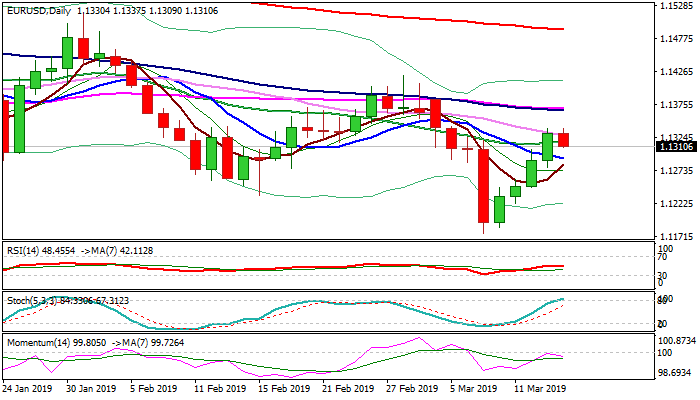
The Euro eases from new recovery high at 1.1338, posted on Wednesday after strong four-day rally from 1.1176 (2019 low).
Bulls show initial signs of stall as momentum reverses down after failing at the midline and stochastic entered overbought territory.
Wednesday's action was capped by falling 30SMA and showed no benefit from bullish signal on marginal close above double-Fibonacci resistance at 1.1326 (38.2% of 1.1569/1.1176 / 61.8% of 1.1419/1.1176.
Profit-taking after strong advance in past four sessions could increase pressure for test of first significant support at 1.1292 (10SMA), where dips should be ideally contained to keep fresh bulls in play.
Pivotal support lays at 1.1276 (Fibo 38.2% of 1.1176/1.1338 recovery leg) and break here would sideline bulls, as larger picture remains negative.
Today's repeated close above 1.1226 would confirm bullish bias for extension towards converged 55/100SMA's (1.1365/69).
Res: 1.1326, 1.1338, 1.1369, 1.1382
Sup: 1.1311, 1.1292, 1.1276, 1.1257
German Economy Ministry expects moderate growth in Q1, weak manufacturing and prospering services
German Economy Ministry said in its March economic report that the economy has a subdued start to 2019. And the country "has become more troubled due to higher risks and uncertainties in the external environment." This applies in particular to manufacturing with significant fall in production in January. The "weak phase" is likely to continue due to "sluggish foreign demand".
Though, the ministry expects growth to continue in other sectors, in particular most service sectors. This was underlined by "recent significant increase in employment" those sectors. With the conflicting tension between weak manufacturing and prospering services, GDP will likely increase "at best moderate" in Q1.
The government lowered 2019 growth forecast to 1.0% back in January and will update the projections again in April.
Sterling Off Highs, Waiting For Extension Vote
Thursday March 14: Five things the markets are talking about
Market focus remains on the U.K and they are not done voting yet.
Yesterday, U.K MP’s voted to reject a no-deal Brexit, it’s not a legally-binding decision and it does not rule out the U.K leaving the E.U, but it means MP’s now get to vote on delaying Brexit.
And guess what? That vote takes place later today (03:00 pm EDT), and if it is passed and the E.U agrees to it, the UK will not leave the E.U as planned on March 29. PM May is expected to ask for an extension lasting about two months.
Elsewhere, equities were mixed in Asia and little changed in Europe after Chinese retail sales data was in line with expectations and industrial production data slightly below. Sovereign yields are steady while the ‘big’ dollar trades mixed and crude prices are higher, supported by a decline in U.S crude and fuel stockpiles, adding to evidence of a tightening market.
On tap: Later this evening, BoJ Governor Kuroda will give a press conference after the board conclude their discussions on monetary policy.
1. Stocks mixed showing
In Japan, the Nikkei ended little changed overnight after China reported a mixed bag of data that renewed investor worries about the global economy. The Nikkei share average ended -0.02% lower, while the broader Topix dropped -0.2%.
Down-under, Aussie shares snapped four days of losses as miners gain, while financials capped gains on regulatory uncertainty. The S&P/ASX 200 index ended up +0.3%. The benchmark was down -0.2% yesterday. In S. Korea, the Kospi stock index rallied +0.34% overnight as foreigners turned net buyers.
In China, stocks fell overnight, extending this week’s losses, after data showed that growth in industrial output plunged to a 17-year low in the first two-months of 2019, reinforcing investor concerns over a slowing economy. At the close, the Shanghai Composite index was down -1.2%, while China’s blue-chip CSI300 index was down -0.69%.
In Hong Kong, stocks edged a tad higher after China reported stronger-than-expected investment in its slowing economy, but gains were capped on a disappointing industrial output number. The Hang Seng index ended +0.2% higher, while the Hang Seng China Enterprises index rose +0.4%.
In Europe, regional bourses are trading higher across the board, with the exception of the FTSE 100, which is underperforming on continued strength in the pound.
U.S stocks are set to open in the ‘black’ (+0.13%).
Indices: Stoxx600 +0.72% at 378.00, FTSE +0.36% at 7,184.71, DAX +0.43% at 11,622.16, CAC-40 +0.70% at 5,343.77, IBEX-35 +0.90% at 9,274.99, FTSE MIB +0.93% at 20,941.50, SMI +2.01% 9,447.50, S&P 500 Futures +0.13%
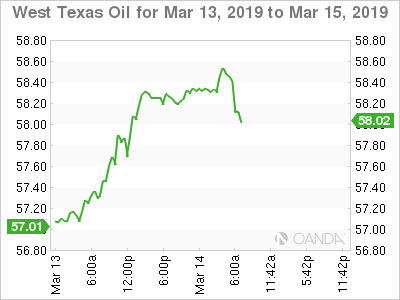
2. Oil hits four-month highs on tighter supply numbers, gold prices fall
Crude oil futures have reached a four-month high earlier this morning, as a production curb agreement by OPEC, coupled with U.S sanctions on Iran and Venezuela tightened global supplies.
The ‘black stuff’ also found support from yesterday’s unexpected dip in U.S crude oil inventories.
In the euro session, Brent crude oil futures hit an intraday high of +$68.14 per barrel before easing to +$67.05, up +50c or +0.74% from yesterday’s close. U.S West Texas Intermediate (WTI) crude futures are at +$58.62 per barrel, up +36c, or +0.62%.
Oil prices have been receiving broad support this year from supply cuts by OPEC aimed at tightening markets. Earlier this week, Saudi Arabia announced further plans to cut its crude oil exports in April to below +7M bpd, while keeping its output “well below” +10M bpd. That compares to production of around +10.14M bpd last month.
Also supporting prices is the political and economic crisis in OPEC-member Venezuela, while stateside, the U.S Energy Information Administration (EIA) indicated yesterday that commercial crude oil inventories fell last week as refineries hiked output.
Note: U.S crude oil production also dipped, falling by -100K bpd to +12M bpd.
Ahead of the U.S open, gold prices have eased a tad as the ‘big’ dollar regained some ground and uncertainty over Brexit eased, but the ‘yellow’ metal trades atop of its two-week high hit yesterday as tepid U.S inflation data strengthened market expectations that the Fed remains on hold. Spot gold is down -0.5% at +$1,302.90 per ounce. U.S gold futures have also dipped -0.5%, to +$1,302.40 an ounce.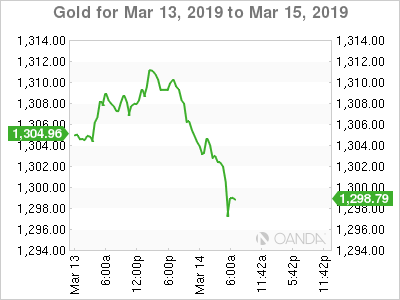
3. Euro-sovereign yields push higher
Investors seem keen on selling safe-haven eurozone government bonds this morning, pushing sovereign yields higher, as the U.K’s parliament’s rejection of a “no-deal Brexit” is boosting risk sentiment. However, the markets uncertainty over the next steps is limiting the sell-off.
The German 10-year Bund yields has backed up +2 bps to +0.086%, but still not far from its two-year lows of +0.048% hit earlier this month. Other high-grade eurozone bond yields are also +1-2 bps higher.
In the U.K, Gilt yields are sharply higher, with 10-year yields up nearly +5 bps on the markets expectations that a favourable outcome on Brexit would allow the BoE to hike rates later in 2019.
Elsewhere, the yield on 10-year Treasuries are little changed at +2.62%.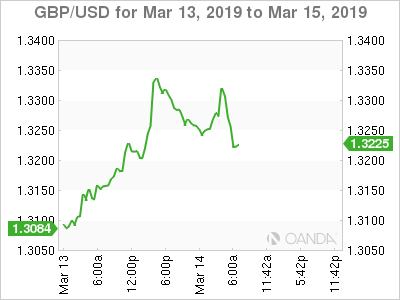
4. Sterling off highs, waiting for extension vote
The pound (£1.3233) has pulled away from its multi-month highs against the USD and EUR reached yesterday after the U.K parliament voted against leaving the E.U without a deal. Market focus now turns to another parliamentary vote this afternoon (03:00 pm EDT) on a short extension to Article 50. Delaying Brexit further is more or less fully priced in. GBP is down -0.3% at £1.3246, off a nine-month peak of 1.3382 reached late Wednesday.
The JPY is a tad softer ahead of this evening’s Bank of Japan (BoJ) rate decision. Current market thinking believes the BoJ could take a more “dovish” stance with growing expectations that the next policy move could be towards another easing. It would be the first in three-years. Policy makers are expected to cut their overall assessment due to the recent slowdown in Chinese economic data. USD/JPY is higher by +0.3% at ¥111.60.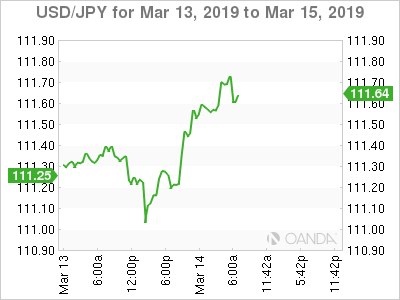
5. German inflation holds steady
Data this morning from the Federal Statistical Office showed German inflation remained stable last month, endorsing a preliminary estimate.
The annual inflation rate (measured by harmonized E.U standards) measured +1.7%, the same rate as in January and in December 2018.
Digging deeper, energy prices in Germany rose +2.9% y/y, while prices for food and services both increased by +1.4%.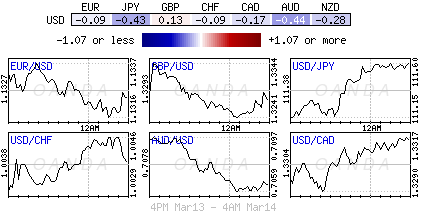
Forex Technical Analysis: EUR/USD, USD/JPY, GBP/USD
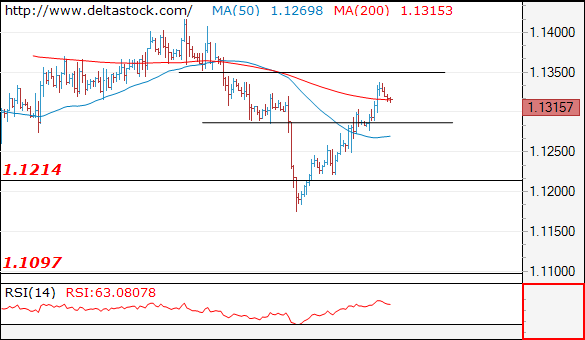
EUR/USD
Current level - 1.1256
The pair is heading for a test of 1.1350 resistance and the latter should cap the upside, for a downswing towards 1.1280 crucial low, en route to 1.1175.
| Resistance | Support | ||
| intraday | intraweek | intraday | intraweek |
| 1.1350 | 1.1350 | 1.1280 | 1.1090 |
| 1.1420 | 1.1420 | 1.1175 | 1.0860 |
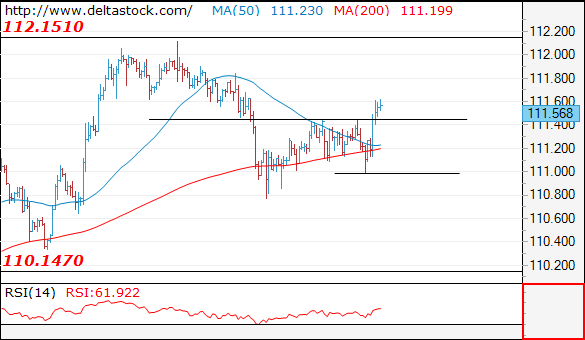
USD/JPY
Current level - 111.56
The violation of 111.45 hurdle signals a risk of a rise to 112.15 peak. My outlook is counter-trend, for a reversal and slide below 111.00 trigger.
| Resistance | Support | ||
| intraday | intraweek | intraday | intraweek |
| 111.80 | 113.00 | 111.45 | 110.20 |
| 112.15 | 114.50 | 111.00 | 108.50 |
GBP/USD
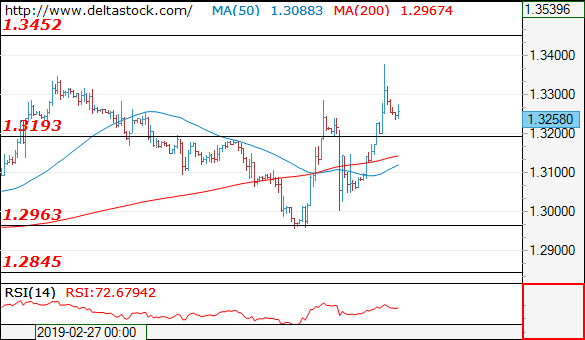
Current level - 1.3258
The UK parliament ruled out the "no-deal" Brexit and the pair spiked to a new high at 1.3380. The overall bias is positive above 1.3190, targeting 1.3450 area.
| Resistance | Support | ||
| intraday | intraweek | intraday | intraweek |
| 1.3380 | 1.3450 | 1.3190 | 1.2800 |
| 1.3450 | 1.3450 | 1.2960 | 1.2610 |
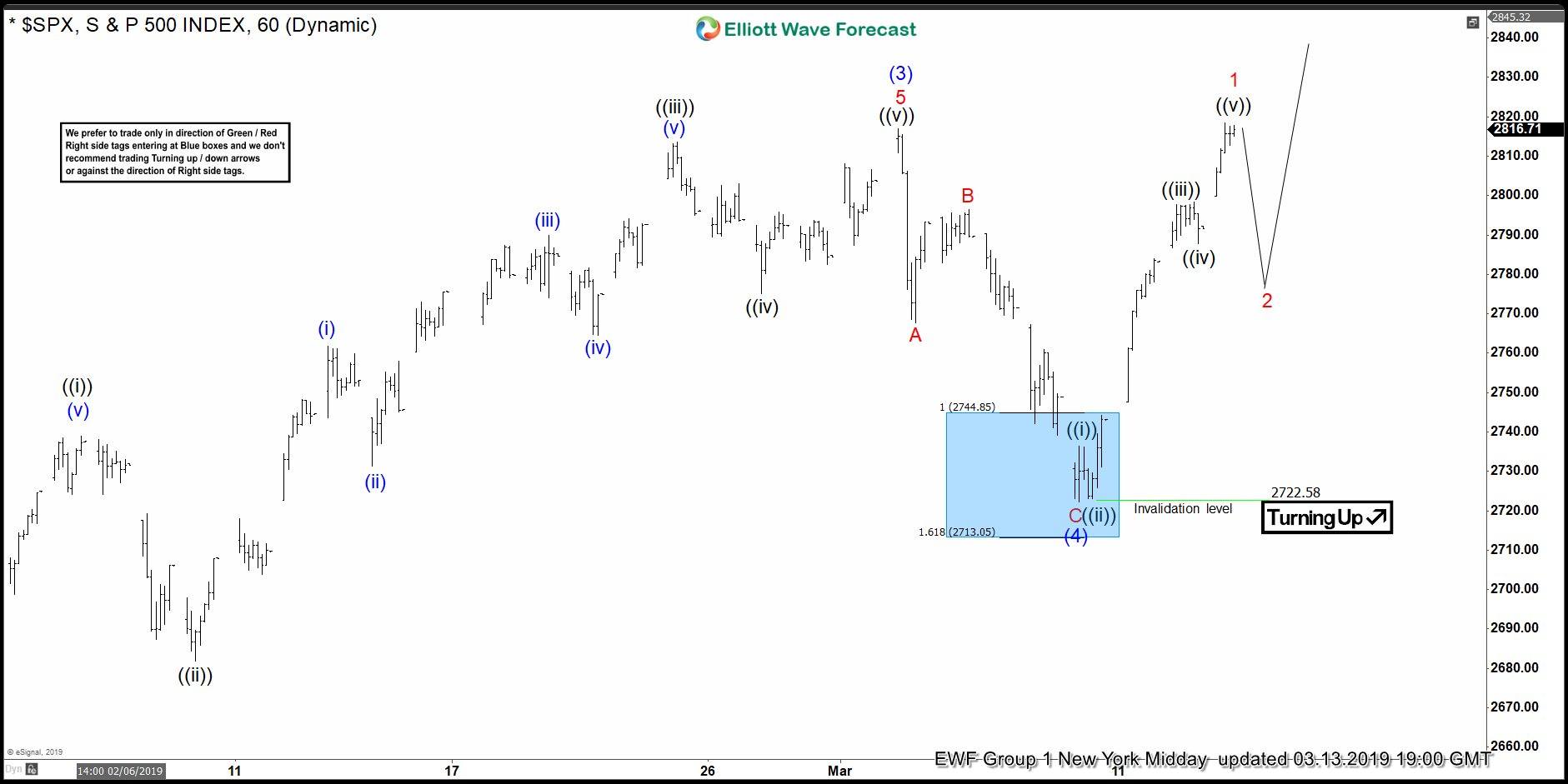
SPX Elliott Wave: Calling The Rally From Blue Box
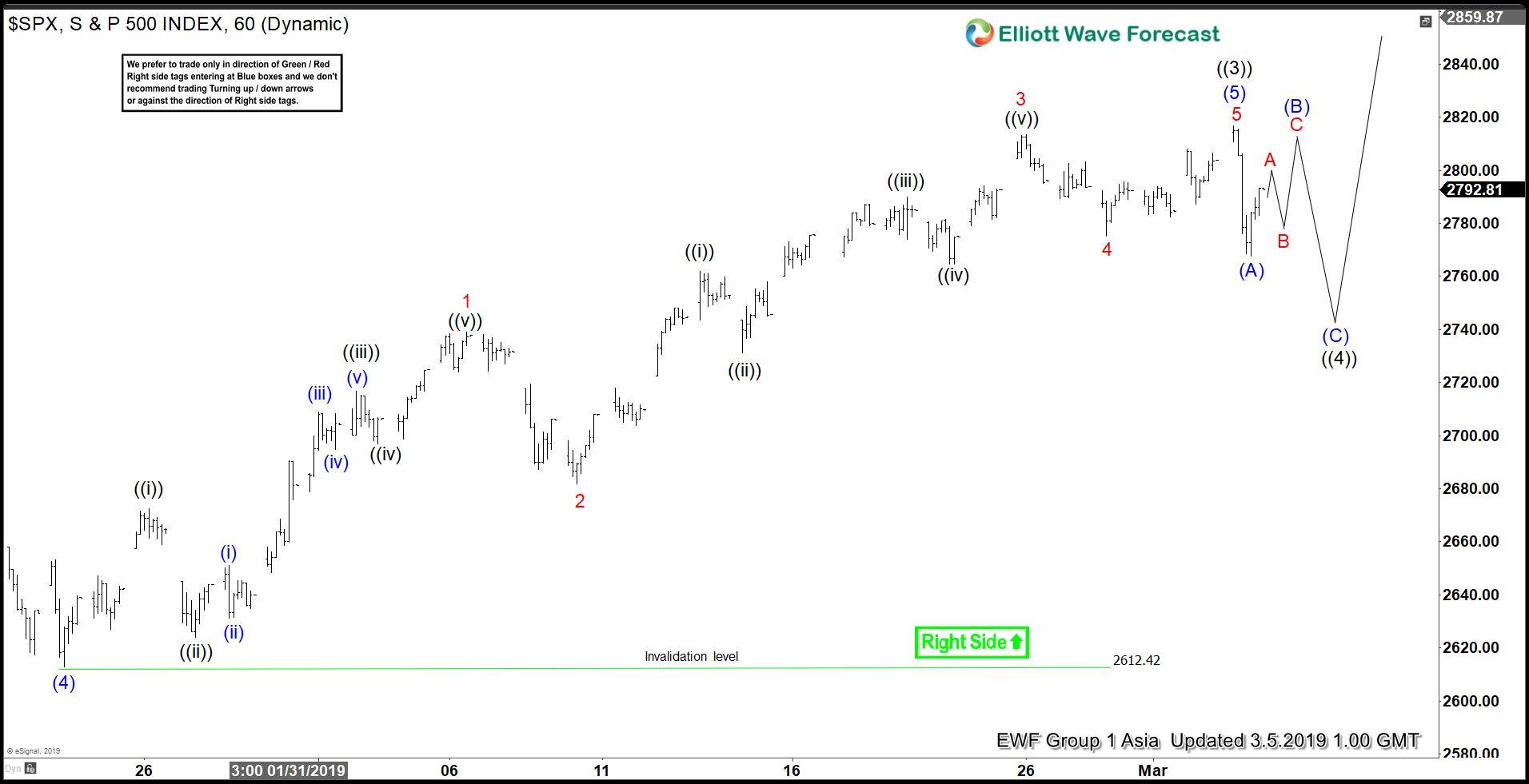
SPX pulled back in 3 waves last week and put in a strong rally which has already resulted in new highs. In this blog, we are going to take a look at structure of this 3 wave pull back and the subsequent reaction from the blue box. We share one chart from members area every day in the form of Chart of the day, we picked SPX as Chart of the day on 3.5.2019 which showed Index made a sharp decline on 3.4.2019 which we labelled as wave (A) and stared bouncing.
SPX 1 Hour chart from 3.5.2019 Chart Of The Day
As the chart below shows, we expected a bounce in wave (B) to fail below 2816.88 wave ((3)) high followed by another decline in the form of wave (C) to complete wave ((4)) pull back and then rally to resume.
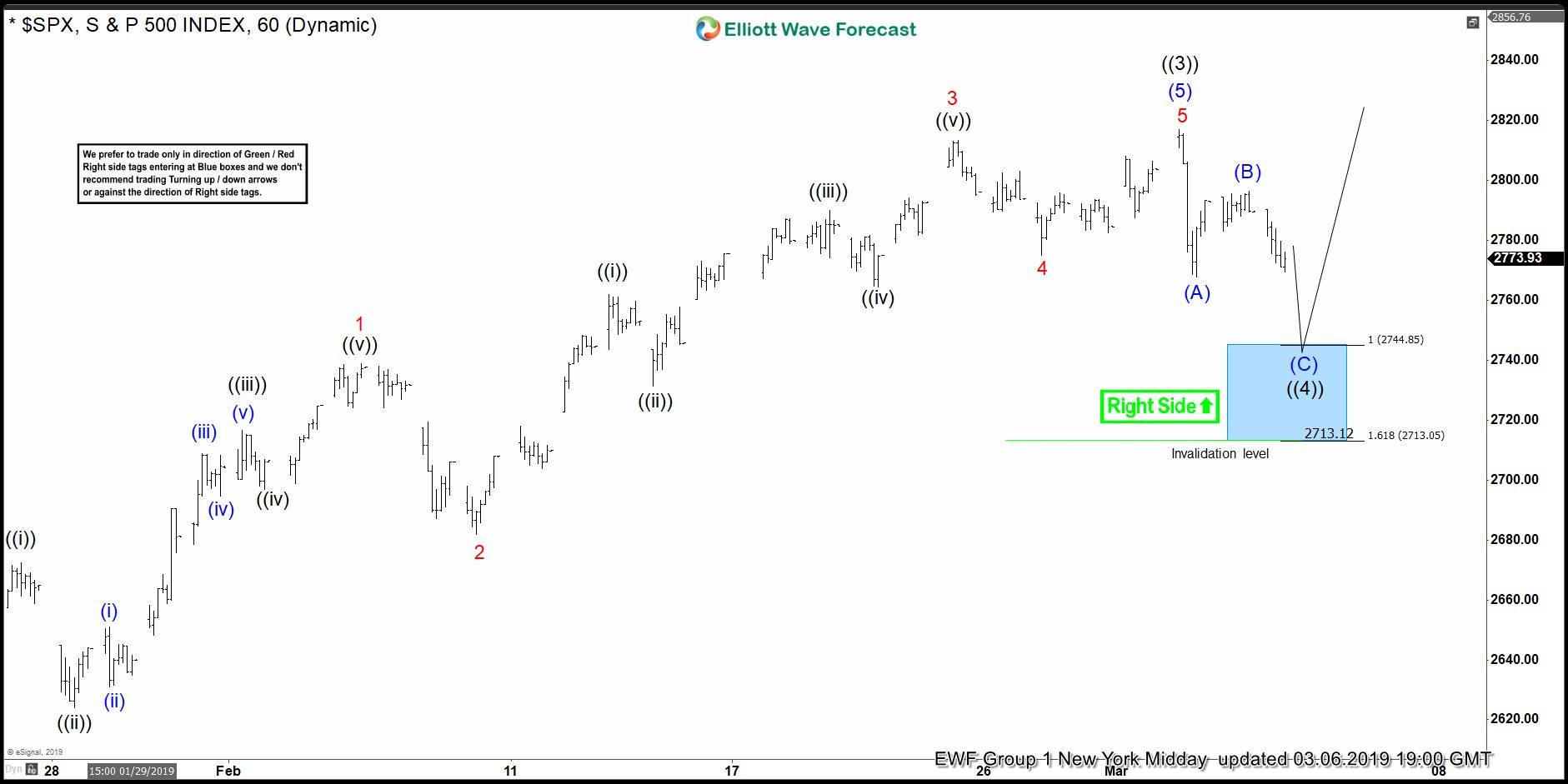
SPX 1 Hour Elliott Wave Chart 3.6.2019
Chart below shows Index completed wave (B) bounce as expected and started turning lower. As wave (B) is now well defined so we presented a blue box on the chart to highlight the area for Elliott wave zig-zag structure to end and wave ((4)) to complete between 2744.85 – 2713.05. Blue boxes on our charts are high frequency areas and are expected to produce 3 waves reaction at least, we call them no enemy areas as both buyers and sellers agree in blue box in the direction of the next move for 3 waves at least.
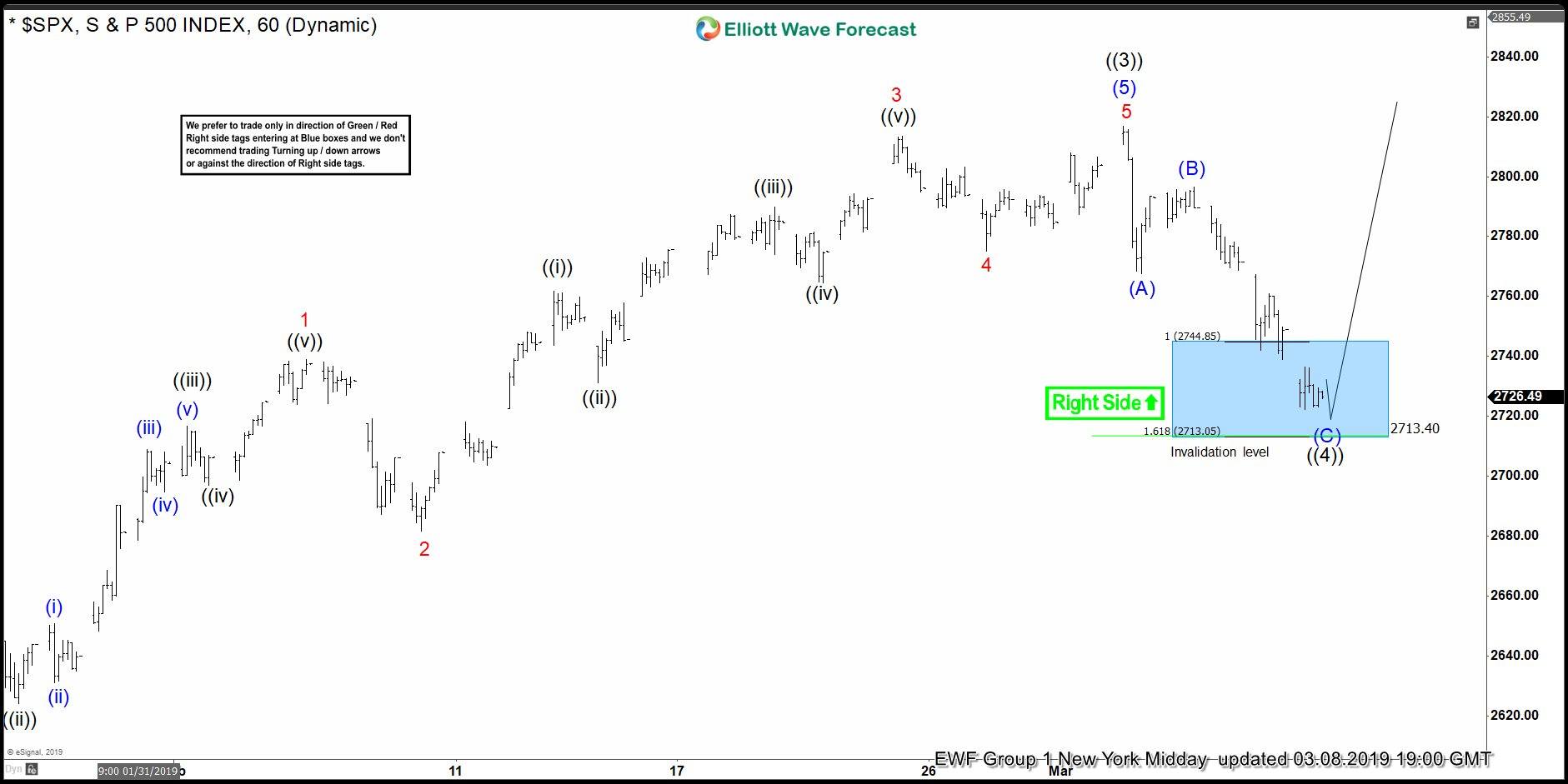
SPX 1 Hour Elliott Wave Chart 3.8.2019
Chart below shows Index traded lower as expected and reached blue box area between 2744.85 – 2713.05 on 3.8.2019, we were expecting wave (C) to end and Index to turn up and either resume the rally for a new high above wave ((3)) or bounce in 3 waves at least as per Elliott wave hedging concept to allow buyers to create a risk free position on the trade.
SPX 1 Hour Elliott Wave Chart 3.13.2019
Index rallied from the blue box and has already broken above 3.4.2019 peak. Here is the latest 1 Hour chart from 3.13.2019 Mid-day New York update which shows the reaction higher from the blue box.
China: Q1 Was Weak But Leading Indicators Still Point To A Bottom
- Chinese data overnight confirm that activity in Q1 was weak.
- However, the more forward looking indicators still support the case for a growth bottom in Q1.
What's new: Overnight we received Chinese data for industrial production, retail sales and fixed asset investments. Industrial production fell to 5.3% y/y for January/February from 5.6% y/y in December. This is the lowest level since the financial crisis. However, details in the report showed decent growth in both electricity and cement, which have tended to be better gauges of the Chinese business cycle in recent years. Retail sales growth was stable at 8.2% but in real terms ground a bit higher as inflation has come down in the past few months. Fixed asset investments for January/February increased slightly from 5.9% y/y to 6.1% y/y. The biggest surprise came from the surveyed unemployment rate, which rose from 4.9% in January to 5.3% in February. This is the highest rate since the first release in 2016.
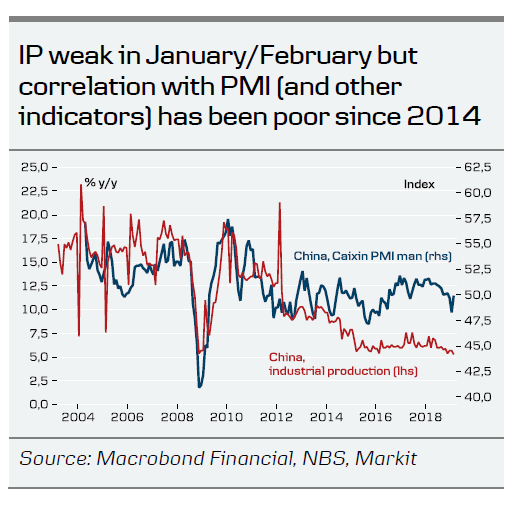
Comment: Overall, this was a very mixed bag of data, which shows that some sectors are weak while others recovering. We generally do not put too much weight on the overall industrial production data, as the series started to correlate poorly with other business cycle indicators from around 2014 (see top chart).
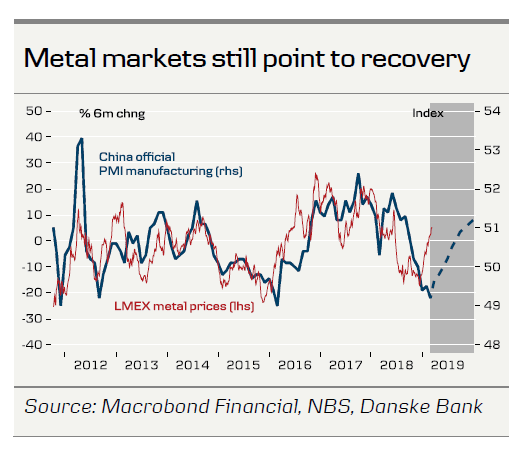
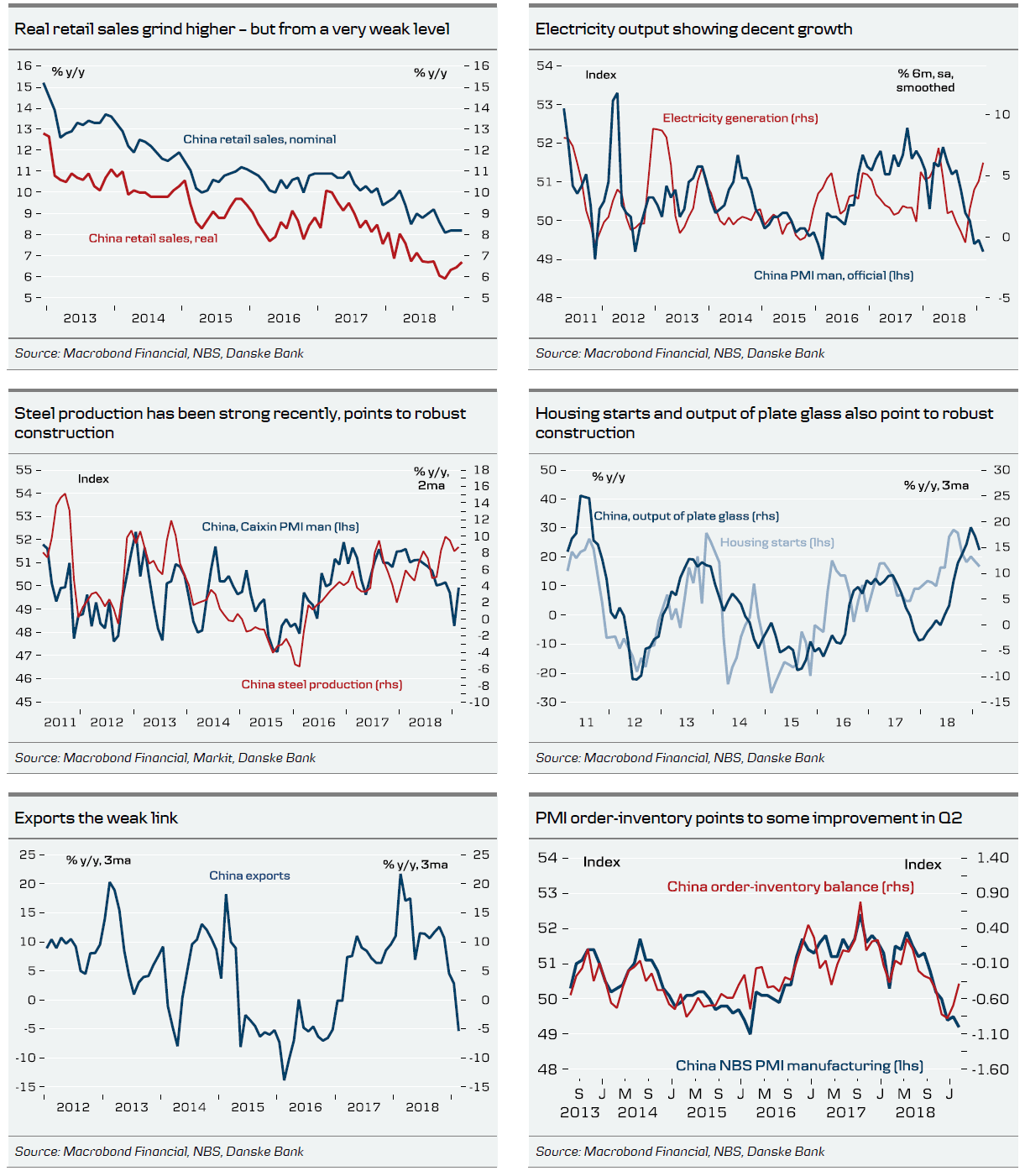
Some of our favourite indicators for China are PMI manufacturing, metal price inflation and some of the subcomponents in the industrial production report like electricity and cement, which have a higher correlation with PMI and other business cycle signals. Judging from these, the Chinese economy started 2019 on a very weak note but is showing signs that the worst may soon be behind us. The jump in the unemployment rate may be distorted by Chinese New Year but it probably also reflects that employment is under pressure from the slowdown. We look for further monetary easing soon, through a further reduction in the Reserve Requirement Ratio, as signalled by Premier Li Keqiang at the National People's Congress.
Indicators related to construction (housing starts and production of steel, cement and plate glass) are generally strong, while exports and retail sales have been soft – not least car sales and mobile phone sales. However, we look for exports to improve following a trade deal. In addition, we expect consumption growth to come off the lows due to household tax cuts and incentive measures aimed at car sales and home appliances. Mobile phone sales should also get a lift later this year from new 5G mobile phone models coming onto the market. To sum up, the data confirms that Q1 was weak but we see signs that this may be the bottom. We still look for a moderate recovery from Q2, driven by stimulus measures, a trade deal with the US and an end to reductions in inventories
Pound Volatility Not Over As MPs Vote Against No-Deal Brexit
It has been yet another dramatic 24 hours of swings both higher and lower for the British Pound as volatility continues in the lead-up to the fast-approaching March 29 deadline for the United Kingdom to leave the European Union.
The GBPUSD jumped over 2% late on Wednesday trade to touch its highest level since June 2018 in the aftermath of MPs voting to take the enigma of a no-deal Brexit away from the table. This is viewed as a positive move for investors because it severely dilutes the risk of a disorderly exit from the European Union, but I still do not expect investors to be able to take a longer-term view on the British Pound strategy as it stands.
Rejecting the idea of leaving the European Union without a deal at this point doesn’t change that much in the wider picture, considering that the fact remains unchanged that the UK is still scheduled to leave the European Union in 15 days from now.
Investors will now eagerly await another political event risk for the Pound scheduled for later today, when MPs will participate in another vote on whether to request an extension from the EU to delay the March 29 deadline. Although it is widely expected that MPs will vote in favour of requesting an extension to leave the EU, this doesn’t necessarily mean that the European Union will play ball and provide the United Kingdom with the requested breathing space. Essentially, and until it is confirmed that MPs will vote in favour of an extension, which the European Union would then need to grant, nobody is any the wiser of what exactly is going to happen with Brexit.
What investors do know is that MPs do not want a no-deal Brexit, which of course eliminates a lot of wider risks to the UK economy and the associated concerns of disruptive investor confidence but we don’t know much else. Will the Brexit deadline be extended? Will the EU oblige to provide an extension? For how long will this extension be? Is the probability increasing that Brexit will not happen at all? Or will the eventual route be that Parliament announces a second referendum?
Nobody knows what could happen or what is even possible with these questions. This is of course a major problem for strategic investors who want to plan for the future and they will understandably continue to change the Pound views on a headline-to-headline basis. There is also a legacy aspect to consider, where one wonders whether the reputational aspect of the United Kingdom as a “safe” place to do business could change following all of the recent political chaos that has taken place.
Overall, it has to be admitted that what happens next in the Pound is a very difficult call to make. However, if I had to choose a position I would side with the view that investors will “sell” the news in anticipation of the vote later today, which is expected to result in an official plea to request an extension to leave the European Union. I personally wouldn’t jump into the optimism of pricing in a stronger British Pound until there is real conviction that the European Union will accept the likely upcoming request to delay the March 29 deadline.
None of this is clear to be honest, but that’s Brexit in a nutshell -unclear with little direction.
EURUSD unexpectedly recovers post-ECB losses
In what has been another busy week for financial markets, one move that has managed to stay under the radar is that the Euro has recovered all of its losses since a very downbeat European Central Bank (ECB) President Mario Draghi took to the stage just one week ago. The Euro sank to its weakest level against the US Dollar since June 2017 after the ECB joined the party of different world institutions, by reinforcing the view that external headwinds are presenting many challenges to the global economy in 2019. The recovery in the Euro has been supported by softness in the Greenback, although I do myself maintain a negative view on the EURUSD.
The ECB has a very low amount of ammunition at its disposal to improve EU economic momentum. The economy is clearly on a downturn as is evident across a raft of different data releases, and the Eurozone economy is very exposed to global headwinds. Much of the fate of the Euro is out of its own hands; when you factor in that there is also an element of political risk that remains within Europe itself, with the recent unrest in France being just one example, I do myself maintain a negative view on the EU currency.
Rand fails to find buyers in spite of Dollar Weakness
One currency that has unexpectedly not been able to benefit from the current softness in the Dollar is the South African Rand. The Rand is weaker against the Dollar, and the only reason that has been given for this is the ongoing Brexit developments in the world headlines limiting global risk appetite. However, I am not buying this explanation and would have expected the Rand to strengthen against the Dollar in recent days, similarly to the trend that has been seen in both the Euro and British Pound. While it is correct that Brexit itself is a potentially serious external headwind staring down the global economy, most of the political noise being heard from the United Kingdom has been limited in financial movements to UK asset classes.
China data announcements to threaten more global growth concerns
While it is expected for all major global headlines to continue to focus onthe latest Brexit updates, I would keep an eye out for a potential risk-off atmosphere to impact financial markets today. Data announced early morning from the world’s second largest economy, China,perpetuatedthe narrative that GDP momentum is trending lower and this could fuel another round of concerns over a slowdown in the global economy. This means we can expect the momentum of emerging market currencies in south-east Asia to trend weaker, as they are collectively closely correlated to a reliance on Chinese demand for their goods, which should signify some softness in the likes of the Singapore Dollar, Malaysian Ringgit, Indonesian Rupiah and even the Chinese Yuan after the economic releases from mainland China.
Expect for Trump to speak out again on Oil
To conclude in what by all accounts is likely to be another lively day for investors, I would also keep a close eye on what happens next with Oil, after the commodity stretched to a 2019 high on signs of tightening supply. Stronger Oil prices is obviously good news for exporters, but it is not good news for President Trump, who has made it clear on many occasions that he wants Oil prices to remain low. Therefore, it will not be a surprise if Trump repeats this narrative of demanding low Oil prices on his social media feeds imminently.