

Sample Category Title
Gold Follows SMAs
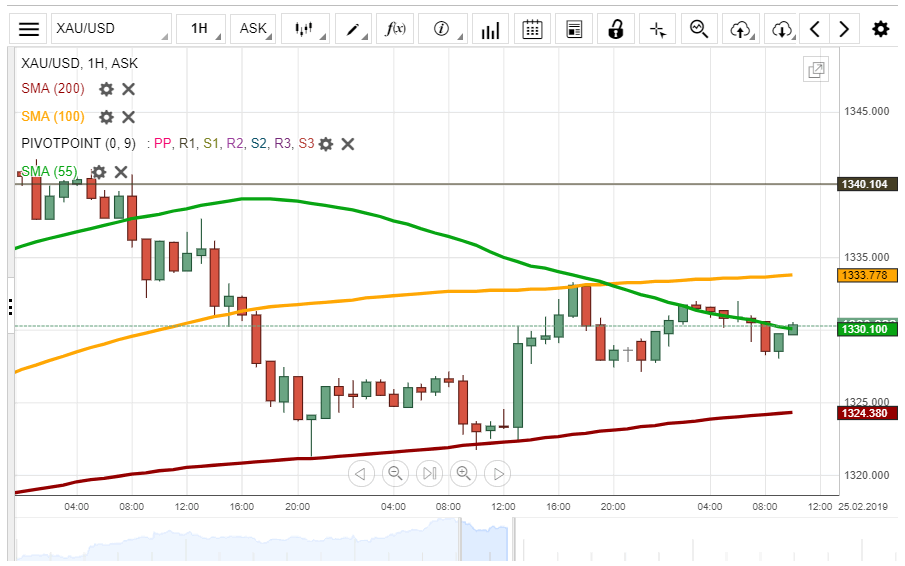
The gold price is listening to the simple moving averages of the hourly chart.
Namely, the 200-hour SMA is providing support and keeping the rate from falling lower. In the meantime the 55 and 100-hour SMAs are providing resistance.
In general, the commodity price should get squeezed in between the simple moving averages. The 200-hour SMA will push higher until it will meet with the 55-hour SMA. At that moment or even before that a break out should occur. A break out could go both ways - up or down.
EUR/JPY Buy Signals
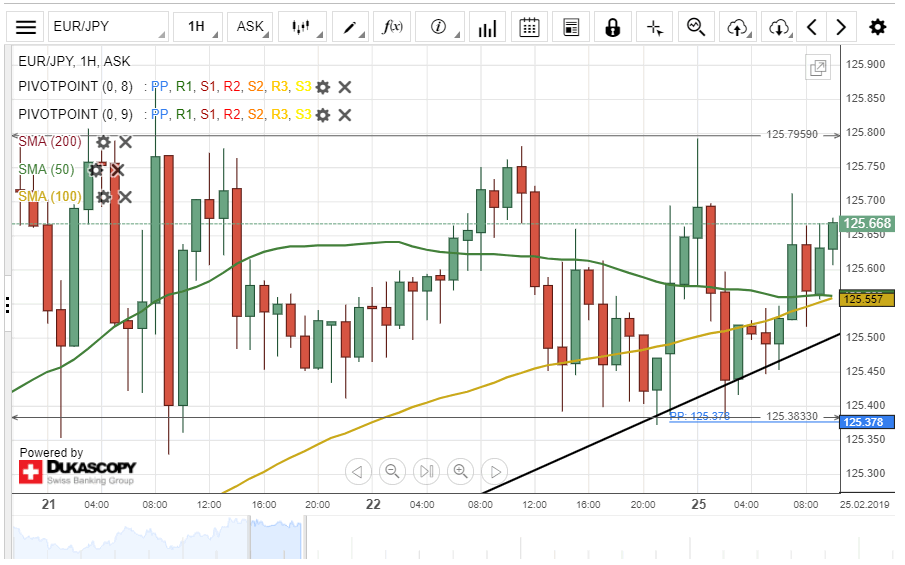
The common European currency has been trading in a horizontal channel against the Japanese Yen since February 20. The currency pair tested the bottom border of the channel during the morning hours of today's trading session.
Technical Indicators demonstrate flash buy signals on both the smaller and the larger time frames. Therefore, the EUR/JPY pair could edge higher within this session.
However, given that the currency exchange rate is near the lower boundary of an ascending channel pattern at 125.54, a breakout is likely to occur during the following trading session.
USD/CAD Zig-Zag Rejection Confirms Bearish Trend
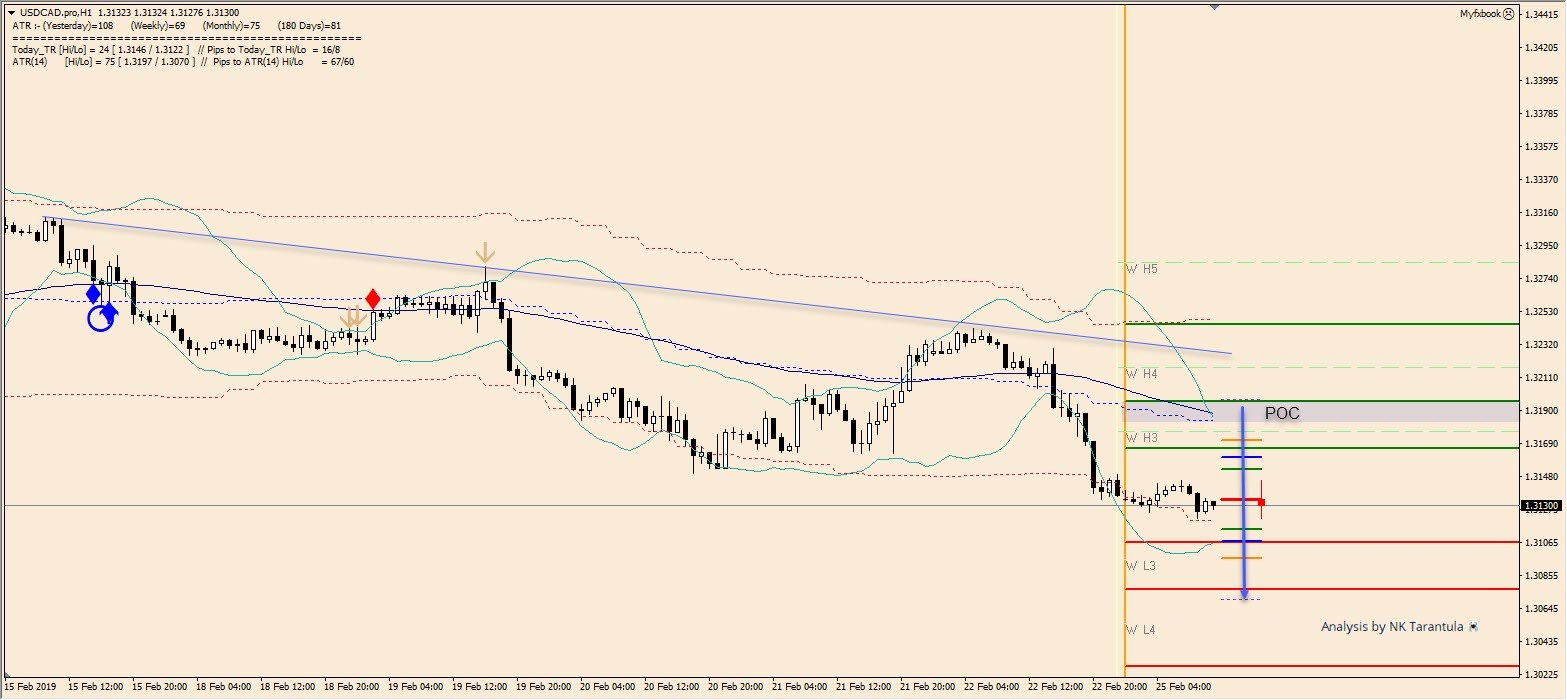
The USD/CAD has formed a bearish zi-zag with clear rejections as shown in the chart. If the price makes a pullback towards the POC zone, we might see another short selling pressure.
The POC zone 1.3190-1.3200 should provide a rejection if the price makes a retracement in the zone. At this point, the price is in the middle of nowhere, and the best is to wait patiently. The trend is bearish with multiple price points which create the Point Of Confluence. Targets are 1.3100 and 1.3070.
Only a break above the descending trendline could make bears lose the steam and put the pair into neutral territory.
EUR/USD Outlook: Renewed Bulls Attack Again Pivotal Falling 20/30SMA To Signal An End Of Congestion On Firm Break
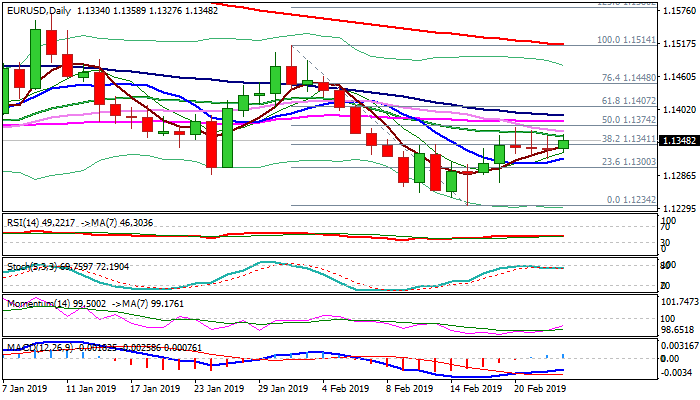
Bulls regained traction on Monday and gear up for renewed attempts higher and eventual break above the range that extends into fourth straight day.
Triple long-legged Doji (Wed/Thu/Fri) signaled strong indecision and directionless mode, as bulls were repeatedly capped by falling 20SMA (currently at 1.1355) and additional pressure provided by descending and converging 30SMA (1.1363).
Mixed daily techs still lack clearer direction signal, which could be generated on sustained break above 20/30SMA.
This would open way for test of pivotal barrier at 1.1374 (50% of 1.1514/1.1234 / daily Kijun-sen) and signal bullish continuation on break.
Rising 10SMA (1.1316) continues to underpin and needs to hold dips to maintain bullish near-term bias.
Res: 1.1363, 1.1374, 1.1382, 1.1392
Sup: 1.1341, 1.1327, 1.1316, 1.1275
Forex Technical Analysis: EUR/USD, USD/JPY, GBP/USD
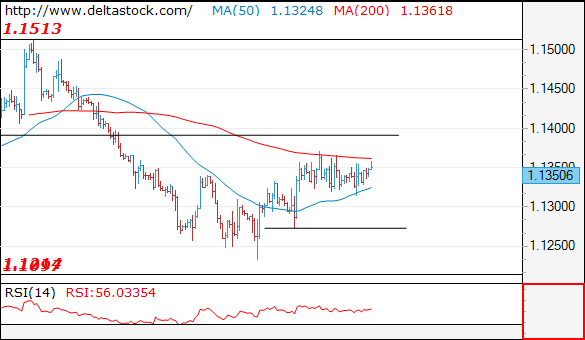
EUR/USD
Current level - 1.1350
There is still a chance for a brief upswing to 1.1400 area, before drowning towards 1.1214 low.
| Resistance | Support | ||
| intraday | intraweek | intraday | intraweek |
| 1.1400 | 1.1630 | 1.1320 | 1.1214 |
| 1.1400 | 1.1820 | 1.1275 | 1.1100 |
USD/JPY
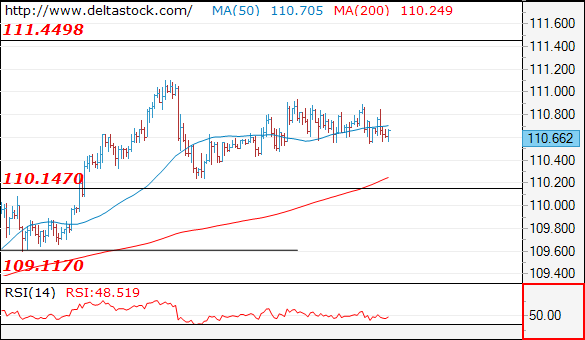
Current level - 110.66
The intraday bias is totally neutral, as there is a lack of trend dynamics and only a test of the range boundaries at 110.20 and 111.15 can initiate an increase in volatility.
| Resistance | Support | ||
| intraday | intraweek | intraday | intraweek |
| 110.80 | 111.45 | 110.20 | 106.70 |
| 111.45 | 114.50 | 109.10 | 104.60 |
GBP/USD
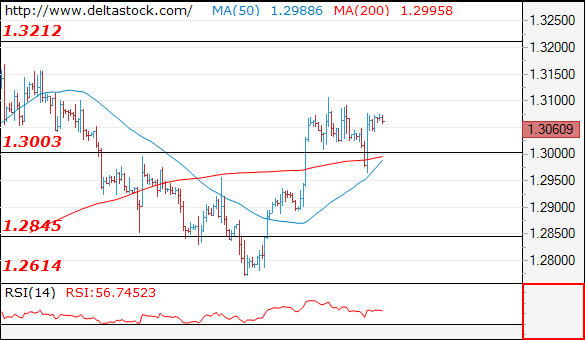
Current level - 1.3060
Despite the brief dip below 1.3000, the overall bias remains positive, for a rise towards 1.3210 area.
| Resistance | Support | ||
| intraday | intraweek | intraday | intraweek |
| 1.3100 | 1.3210 | 1.3000 | 1.2800 |
| 1.3210 | 1.3290 | 1.2845 | 1.2610 |
GBP/USD Outlook: Directionless Mode Extends But Bias Remains Bullish Above 200SMA
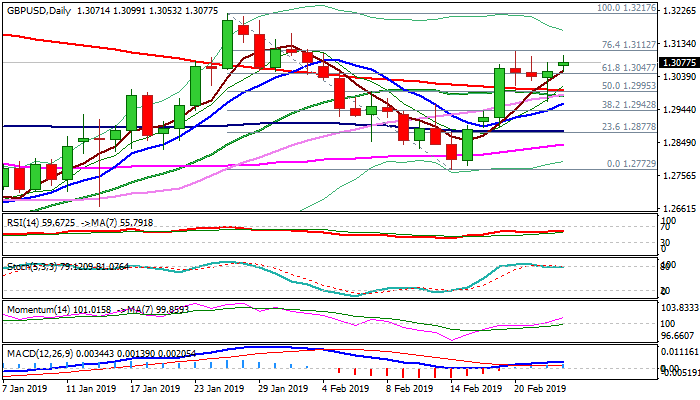
Cable holds in directionless mode for the fourth straight day, consolidating under 1.31 zone, where strong recovery rally stalled.
Near-term bias remains with bulls as broken 200SMA contained dips and continues to underpin, but triple-Doji frustrates bulls.
Rising bullish momentum and daily MA's in positive configuration, so far offered little help, however, outlook remains positive with additional support from strong bullish weekly close and bullish techs.
Break above pivotal barriers at 1.3109/12 (20 Feb high / Fibo 76.4% of 1.3217/1.2772) is needed to signal an end of consolidative phase and continuation of rally from 1.2772 (14 Feb low) towards key barrier at 1.3217 (2019 high posted on 25 Jan).
Broken Fibo barrier at 1.3047 (61.8% of 1.3217/1.2772) narks initial support, guarding more significant 200SMA (1.2998), violation of which would weaken near-term structure.
Brexit story remains pound's key driver and traders turn focus towards this week's debate and Brexit vote on 12 March, which could be crucial to the Brexit outcome.
Res: 1.3112, 1.3160, 1.3217, 1.3257
Sup: 1.3047, 1.3026, 1.2998, 1.2962
USD Weakens As Trump Delays Tariffs
The USD weakened against a number of its counterparts yesterday, while the Aussie strengthened as US President Trump delayed additional tariffs. US President Trump stated that he will delay increasing tariffs on Chinese imports on March 1st, after mentioning “substantial progress” in the US-Sino negotiations. According to media, the US President also stated that he would plan a summit meeting with Chinese President Xi, to conclude the agreement assuming that the trade talks make further progress. Analysts point out that the delay may not come as a total surprise for the markets and that focus could turn to global economic fundamentals once again. Should there be further positive headlines reeling in about the US-Sino relationships, we could see the USD weakening and the Aussie along with the Kiwi strengthening. AUD/USD continued its rise testing the 0.7150 (R1) resistance level on Friday and during today’s Asian session. We could see the pair rising even further today and renew its bullish run, especially should there be further positive headlines about the US Sino negotiations. Should the pair find fresh buying orders along its path, we could see it breaking the 0.7150 (R1) resistance line and aim for the 0.7230 (R2) resistance level. Should on the other hand the pair come under the selling interest of the market, it could aim for the 0.7065 (S1) support line.
Pound awaits Brexit for further direction
The pound remained relatively stable after a push on Friday, as a fog of uncertainty clouds the Brexit outlook. Media report that UK’s PM delayed a vote in the UK parliament about Brexit until the 12th of March, just 17 days before Brexit, increasing the stakes. Also according to media, Theresa May could be considering delaying Brexit by two months, while the EU seems to warn that the alternative may be a substantial delay of Brexit. Analysts point out that without a clearer outlook for Brexit, it may prove difficult for the pound to push substantially higher than its current levels. Cable got a push on Friday however proved unable to break the 1.3070 (R1) resistance level during the Asian session today. Any further positive headlines about Brexit could provide some support for the pound and push the pair higher, otherwise we could see the pound remaining under pressure. If the bulls take over again, we could see the pair breaking the 1.3070 (R1) resistance line and aim for the 1.3175 (R2) resistance hurdle. Should on the other hand the pair’s direction be dictated by the bears, we could see it aiming for the 1.2960 (S1) support line.
Today’s other economic highlights
It’s a rather slow Monday, as no major financial releases are expected today.
As for the rest of the week
On Tuesday, from Germany we get the Gfk Consumer Sentiment for March, from the US the CB Consumer Confidence for February and Fed’s chairman Jerome Powell testifies before the Senate. On Wednesday, we get from the US the Core Durable Goods orders for January, Canada’s CPI rates for January and the US factory orders growth rates for December. On Thursday, we get Japan’s preliminary Industrial production for January and retail sales for January, China’s NBS manufacturing PMI for February, Germany’s preliminary HICP for February and the US GDP growth rate for Q4. On Friday, we get China’s Caixin Mfg PMI for February, Germany’s unemployment data for February, UK’s Mfg PMI for February, Eurozone’s preliminary CPI for February, Canada’s GDP for Q4 and from the US the ISM Mfg PMI for February.
GBP/USD
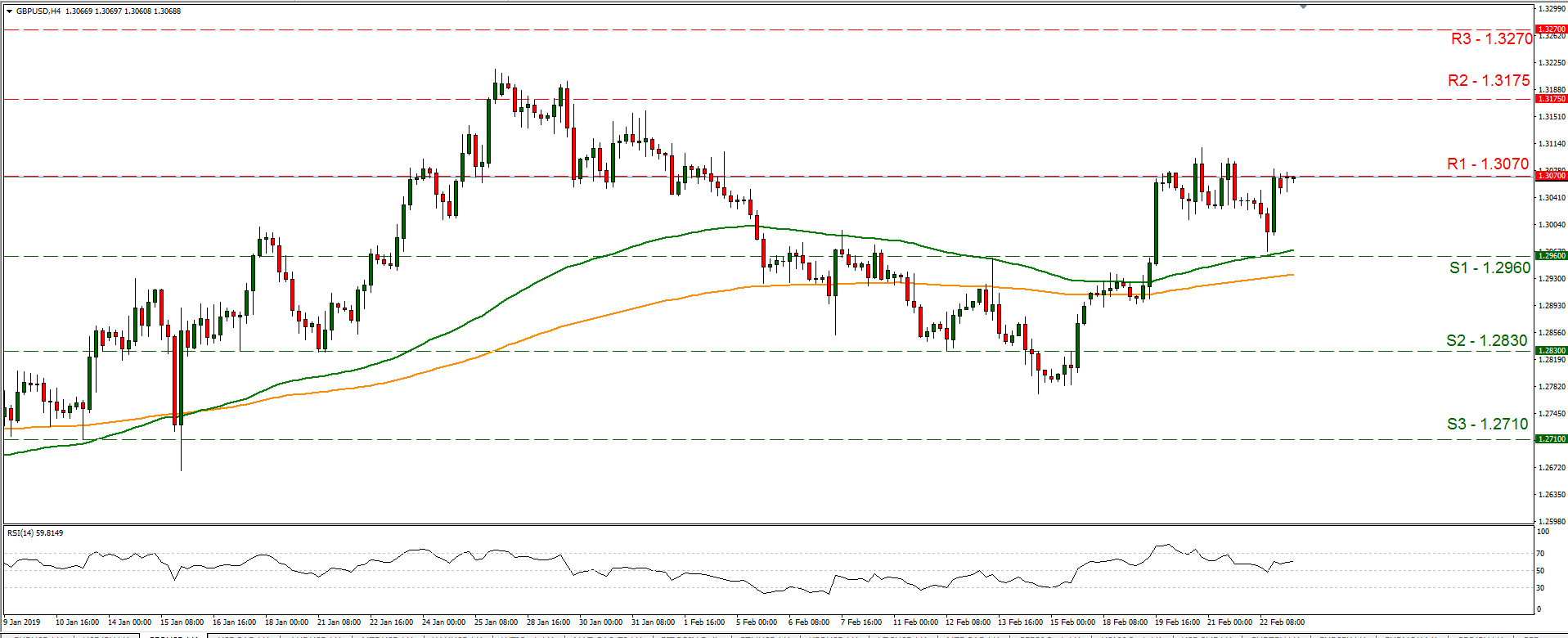
Support: 1.2960 (S1), 1.2830 (S2), 1.2710 (S3)
Resistance: 1.3070 (R1), 1.3175 (R2), 1.3270 (R3)
AUD/USD H4
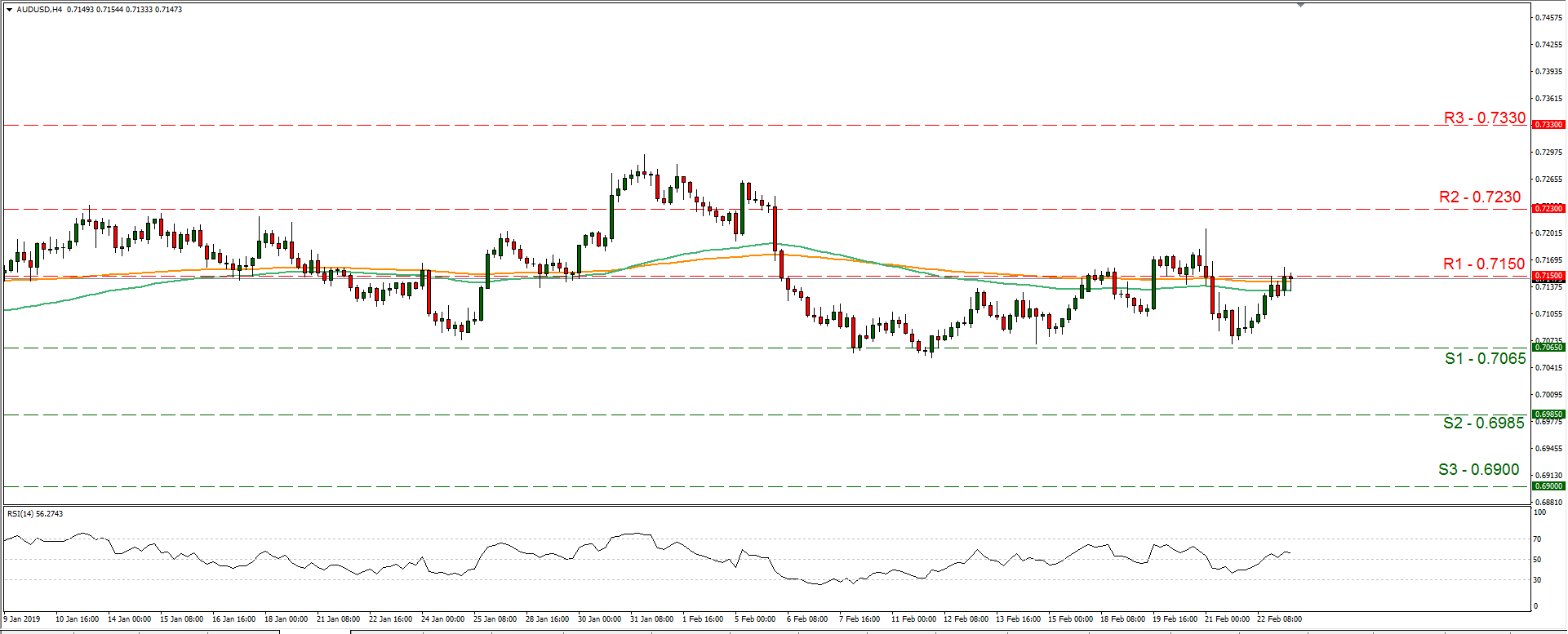
Support: 0.7065 (S1), 0.6985 (S2), 0.6900 (S3)
Resistance: 0.7150 (R1), 0.7230 (R2), 0.7330 (R3)
Aussie And Chinese Stocks Lifted As Trump Delays Tariff Deadline, Dollar Steady
- Trump extends March 1 deadline, citing “substantial progress” in trade talks with China
- Aussie and Chinese shares surge on the news but overall market reaction muted
- Pound inches higher on increased talk of Brexit delay
US and China edge closer to a trade deal
Financial markets got off to a positive start on Monday as traders were greeted with President Trump’s tweets that there was “substantial progress” in trade negotiations between the United States and China last week. Trump also confirmed that the March 1 deadline when tariffs on $200 billion worth of Chinese imports would rise from 10% to 25% would be extended. The President did not set a new deadline but did hint at “very big news over the next week or two” and said he could soon hold another summit with China’s President Xi to seal a deal.
Risk sentiment had been riding high since early February that a trade deal is becoming within reach, helping global equities extend their yearly gains. News that the US and China have been able to bridge many of their differences over the thornier issues such as intellectual property protection and forced technology transfer strengthened expectations that an agreement between the two economic powers could be stuck soon.
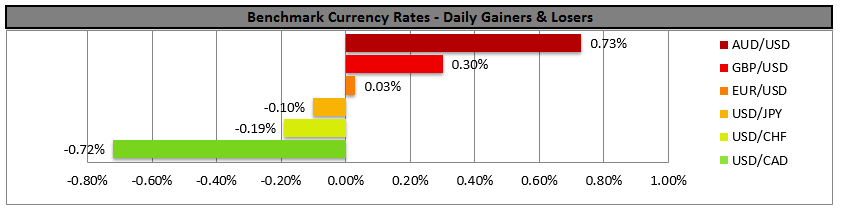
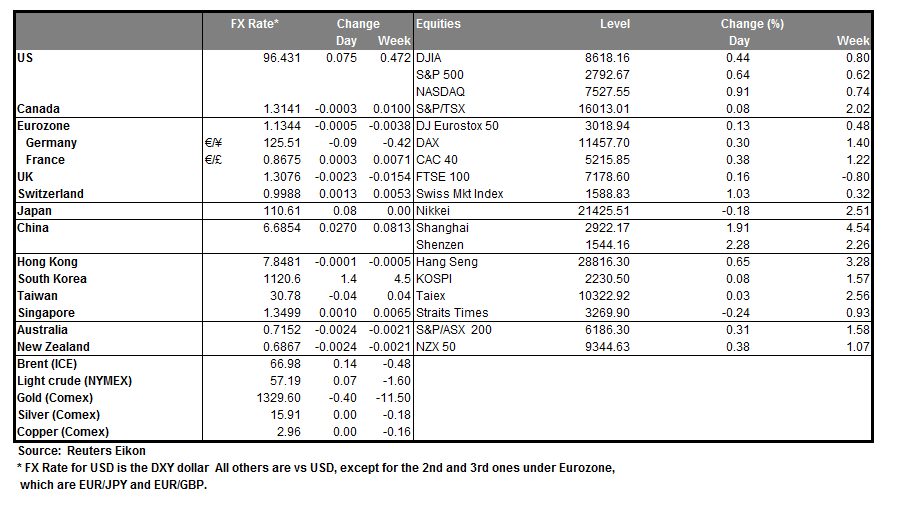
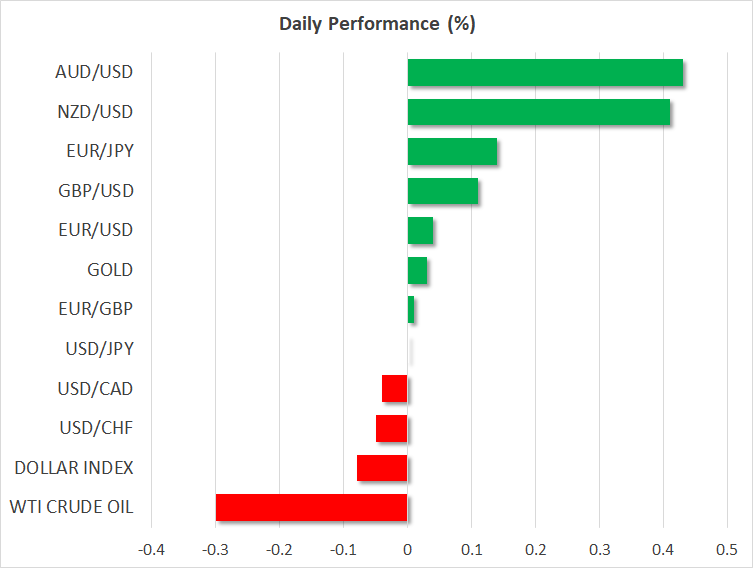
The Australian dollar – considered a liquid proxy for China-related trades – was the best performer in currency markets, rising by about 0.35% to trade around $0.7153 at the European open. The Chinese yuan also got a lift from the trade developments to climb to a 7-month high of 6.6730 to the US dollar in onshore trade. Chinese stocks were the biggest gainers though, with the CSI-300 index surging by nearly 6% to close at 3729.48.
Other Asian bourses saw more limited gains, however, as most traders had already priced in the likelihood of an extension of the deadline. Major European indices, meanwhile, were looking at increases of between 0.2-0.4% at the start of trading according to equity futures.
Dollar unimpressed by trade headlines, eyes Powell testimony
The greenback was marginally weaker on Monday, along with the yen, as trade optimism boosted demand for riskier assets away from safe havens. The dollar index was slightly lower at 96.42, and against the yen, the US currency was last trading at 110.63.
A bigger focus for the dollar this week will likely be Fed Chairman Jerome Powell’s semi-annual testimony before Congress on Tuesday and Wednesday, as well as fourth quarter GDP growth numbers due on Thursday. Investors will be hoping Powell will reiterate the Fed’s patient stance, while any signs of unexpected sluggishness in US growth in the GDP report could renew concerns about the global economic outlook.
Kiwi boosted from data, pound up on Brexit delay talk
In other currencies, the New Zealand dollar followed the aussie higher, buoyed by goods news of its own. Retail sales in New Zealand jumped by 1.7% quarter-on-quarter in the final three months of 2018, easing fears of a significant slowdown and boosting the kiwi to around $0.6875.
The euro was slightly firmer on Monday, holding around $1.1350 as European markets opened. But the pound advanced more substantially, climbing to $1.3085 as speculation grew that the UK’s departure date from the European Union, scheduled for March 29, could be delayed.
British prime minister, Theresa May, on Sunday ruled out another meaningful vote on the Brexit deal this week but said a vote on a revised agreement will be held by March 12. However, Parliament will still get to vote on an amendable motion on February 27 and MPs will once again be trying to take control of the Brexit process. May’s yet another postponement of a meaningful vote could push more MPs to vote in favour of an extension to Article 50. The prime minister herself is reported to be considering a delay of up to two months.
However, some reports suggest the EU is looking at plans of extending Brexit until 2021 to allow more time for negotiations and avoid further deadline delays.
Commodities subdued; quiet rest of day
Commodities were mixed on Monday, with oil moving lower and gold crawling higher. Record US oil production offset the growing optimism of a US-China trade deal, pulling WTI prices 0.4% lower to just above the $57 a barrel level. Brent was down a similar amount, while gold managed to marginally mover higher to $1328 an ounce on the back of a somewhat softer dollar.
Looking at the rest of the day, there are no major released but speeches by Bank of England Governor, Mark Carney at 10:00 GMT and Fed Vice Chairman Richard Clarida at 16:00 GMT might attract some attention.

Stocks Gain As Trump Extends 1 March Deadline On Trade
The President cited the ongoing progress during the talks and hinted that the final announcement of the deal will be held at Mar-a-Lago. The statement came a few days after Chinese officials, led by Liu He met with the American counterparts in Washington. In a tweet, Trump said there had been:
Substantial progress in our trade talks with China on important structural issues including intellectual property protection, technology transfer, agriculture, services, currency, and many other issues. I will be delaying the US increase in tariffs now scheduled for March 1.
It was a difficult weekend for Venezuela as the political situation grew more complicated. At the border, opposition members clashed with Maduro’s supporters who were opposed to aid in the country. In the clash, two people died and more than three hundred others were injured. In a statement in Colombia, the leader of the opposition, Juan Guaido asked the international community to use military power to force Maduro out of office. More than 50 countries recognize Guaido as the country’s President. This issue matters because Venezuela has the biggest oil reserves in the world.
The New Zealand dollar declined during the Asian session despite better-than-expected retail sales numbers. Data showed that the retail sales rose by 1.7% in the fourth quarter, which was better than the consensus estimate of 0.5%. Core retail sales rose by 2.0% in the quarter, which was higher than the consensus estimate of 0.8%. The quarterly retail sales for the fourth quarter versus sales the same time last year rose by 3.5%.
EUR/USD
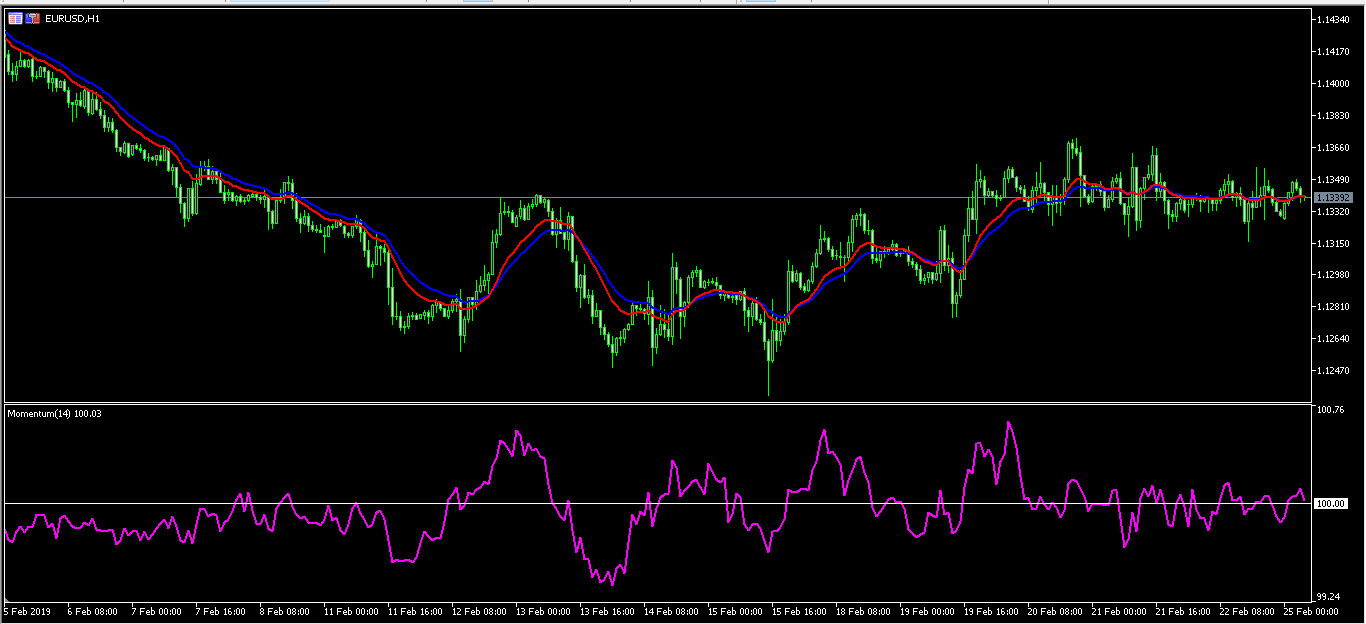
The EUR/USD pair was little moved in overnight trading. With no major economic data expected today, the pair will likely remain within this range. This is also evidenced by the technical indicators, with the moving averages being along the price. The momentum indicator too has remained neutral at the 100 level. At this point, the pair will likely remain within this level although a major movement in either direction could happen.
NZD/USD
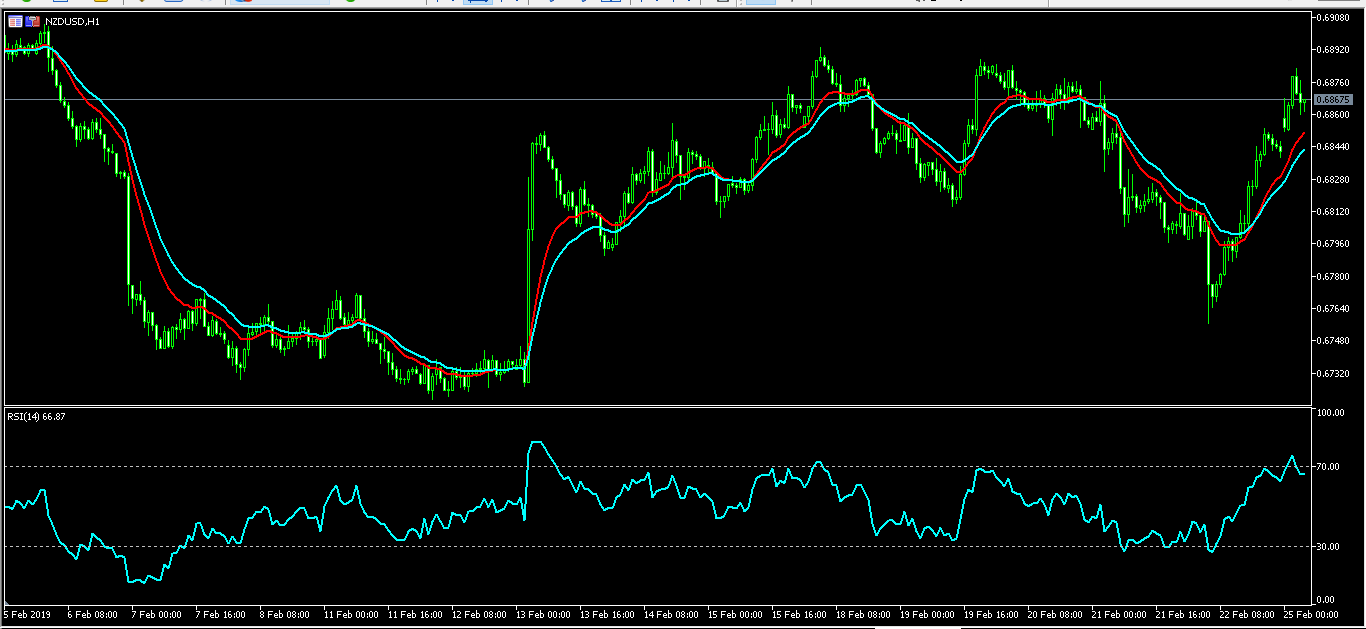
The NZD/USD pair jumped after the release of the retail sales data. The pair then pared those gains and moved from a high of 0.6883 to the current low of 0.6862. It is still slightly above the Friday’s close of 0.6838. On the hourly chart, the pair’s price is above the 14-day and 21-day moving averages. It is also high than last week’s low of 0.6756. There is a likelihood that the pair will resume the upward trend.
XTI/USD
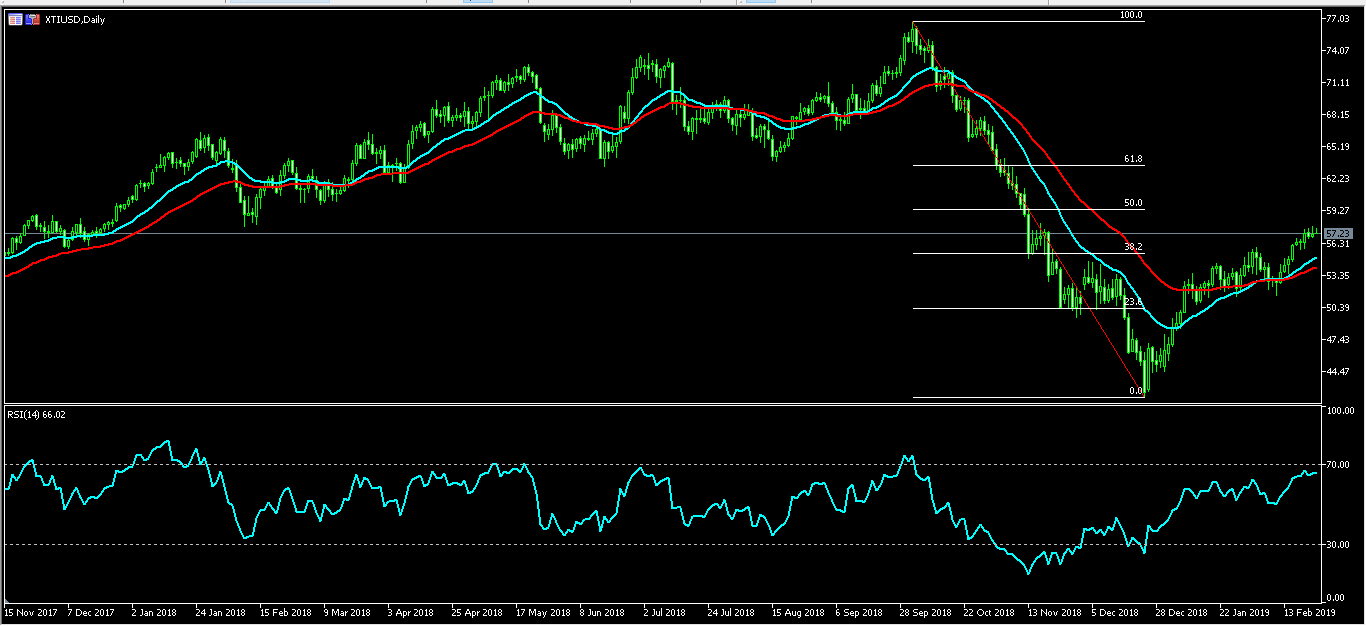
The price of WTI crude oil eased a bit in overnight trading. The XTI/USD pair is now trading at 57.23, which is between the 38.2% and 50% Fibonacci Retracement levels. The current price is also above the 21-day and 42-day moving averages while the RSI is currently at the 65 level. The pair will likely resume the upward movement as it tries to reach the 50% Fibonacci level at 60.
US-China Trade Talks: Deadline Postponed
Rally in China
China's blue-chip index jumped more than 6% on Monday morning on news that Trump would postpone of the tariff’s introduction. The U.S. President at the weekend noted "significant progress" in trade negotiations, announcing an intention not to raise tariffs after March 1, deescalating market tensions about the deadline.
Chinese markets jumped up on the news, rising to the highest levels since June last year. The yuan strengthened against the dollar to its highest level since July 2018. Thus, the Chinese markets returned to the levels where they were before the news of the intention to introduce 25% tariffs.
Not so good for US stocks and Dollar
US indices futures show a more restrained dynamics, adding 0.1% after rising by 0.8% on Friday. The S&P 500 and Dow Jones returned to the highs of December last year.
These stock markets sentiments can cause moderate pressure on the dollar, reducing the demand for it as a defensive asset in the short term. The last few weeks, after positive feedback on the negotiations, the dollar has been falling from local highs. This trend development can reduce the currency by another 0.7% -0.8%, returning the dollar index to the 200-day moving average and to the support line passing through local lows since September last year. This dynamic opens up possibilities for the EURUSD return to the area above 1.1450 and the next testing of the 1.15 mark.
Real progress?
Nevertheless, it is necessary to be wary of this positive news about the negotiations.
In our opinion, although President Trump is publicly pleased with the trade negotiations progress, he understands that by the end of this week, the parties are unlikely to be able to overcome their differences. The postponement of the deadline may be a sign of understanding that the final chord in the negotiations can't happen in the near future. At the moment, the markets have excluded from their expectations the most negative scenario, when Trump decided not to complicate the situation.
This decision was timely, as the latest data from the United States showed a significant growth rate cooling, which caused a negative market reaction. The risks around trade wars are now softened, leaving the markets one on one with domestic economic data, among which one should pay attention to estimates of GDP and consumer spending this week.