Sample Category Title
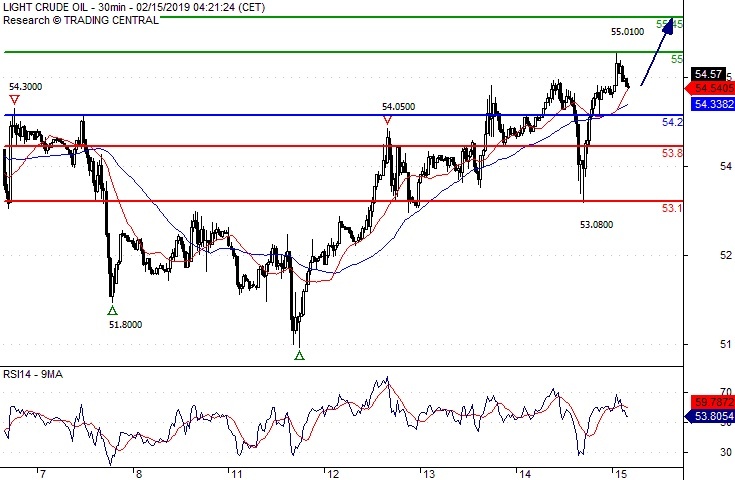
Crude Oil Further Advance
Pivot (invalidation): 54.20
Our preference Long positions above 54.20 with targets at 55.00 & 55.45 in extension.
Alternative scenario Below 54.20 look for further downside with 53.80 & 53.10 as targets.
Comment The RSI is mixed to bullish.
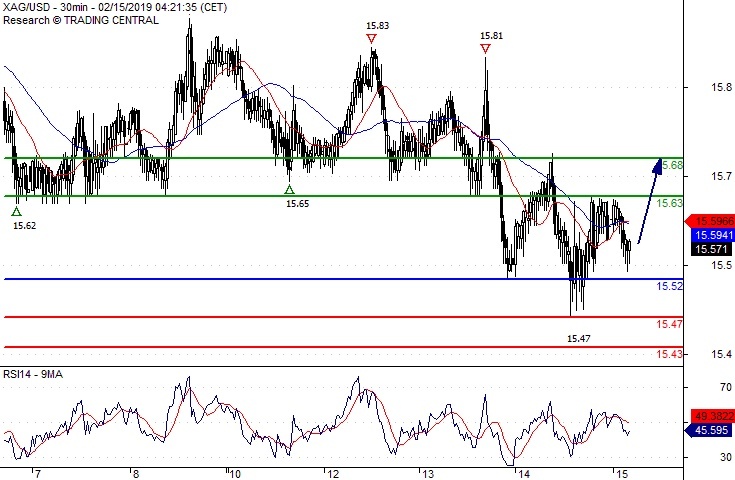
Silver Spot Bullish Bias Above 15.5200
Pivot (invalidation): 15.5200
Our preference Long positions above 15.5200 with targets at 15.6300 & 15.6800 in extension.
Alternative scenario Below 15.5200 look for further downside with 15.4700 & 15.4300 as targets.
Comment The RSI is mixed with a bullish bias.
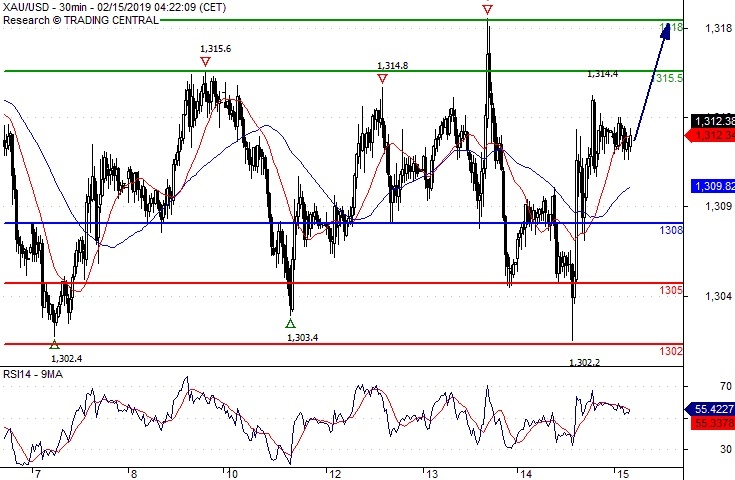
Gold Spot Further Upside
Pivot (invalidation): 1308.00
Our preference Long positions above 1308.00 with targets at 1315.50 & 1318.00 in extension.
Alternative scenario Below 1308.00 look for further downside with 1305.00 & 1302.00 as targets.
Comment The RSI advocates for further advance.
XAUUSD Intraday Analysis
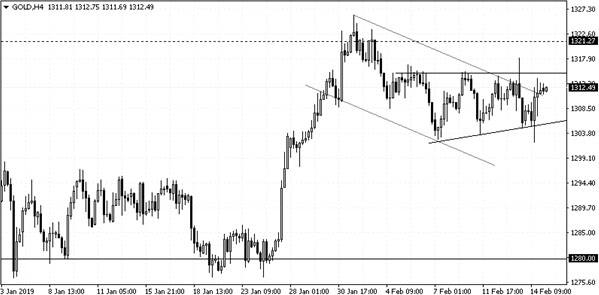
XAUUSD (1312.49): Gold maintained its sideways range near the top end of the rally. Price action remained choppy while the ascending triangle pattern remains intact near the top. The upside breakout could potentially trigger further gains as gold will then need to test the resistance at 1321.25. With the daily chart’s bullish flag still intact, there is a scope that the upside momentum could push prices higher. To the downside, gold prices will need to a breakdown below the minor rising trend line to invalidate the upside bias
USDJPY Intraday Analysis
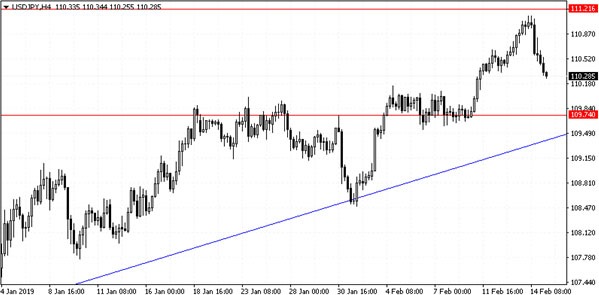
USDJPY (110.28): The USDJPY currency pair reversed the gains just a few pips short of the resistance level at 111.21. The declines have been swift with prices recovering more than 50% of the gains made within the range. We expect the USDJPY to remain flat within 111.21 and 109.74 levels in the near term. If the current declines continue, then the USDJPY currency pair could retest the lower support at 109.74 level to the downside.
EURUSD Intraday Analysis
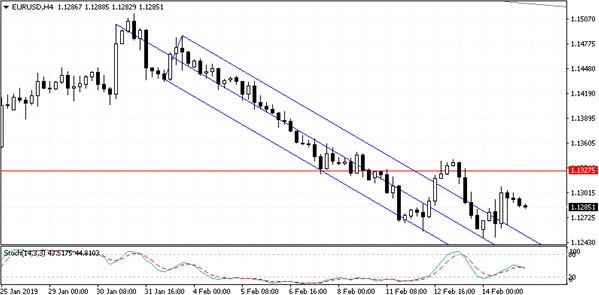
EURUSD (1.1285): The EURUSD currency pair posted a modest recover off the lows and supported by the bullish divergence. However, price action continued to ease following the retest of the breakout level. The Stochastics oscillator is singling a bullish divergence near the lows. The resistance at 1.1327 remains a key level for the EURUSD. Price action needs to breakout past this level to confirm the upside bias. Failure to break the resistance could, however, keep the euro currency range bound.
UK Leadsom: No-deal Brexit is on the table, it’s the legal default position
UK government's leader in the House of Commons Andrea Leadsom said the government does not want no-deal Brexit. But it's there because that is the "legal default position". And "essentially that is what will happen if we don't vote for a deal." She also noted that "What the government is seeking to do is to sort out the arrangements on the backstop so that parliament can vote for the deal. That is the government's sole focus."
Meanwhile, Leadsom also urged EU to compromise on the Irish border backstop. She said "If the EU were to bring on the one thing that they have said they are determined to avoid, that is the risk of the UK leaving the EU without a deal at the end of March and thereby having to have some kind of hard border between Northern Ireland and Ireland. So it simply would not make sense to precipitate such a conundrum when the option of a negotiated arrangement, where the UK could put in place alternative arrangements for the backstop, would be far preferable from everybody's point of view including from the perspective of the issue of the border between Northern Ireland and Ireland."
U.S. Retail Sales Slumps In December 2018
U.S. Retail Sales Slumps In December 2018
Trade balance figures from China showed a somewhat better picture compared to the expectations. Data for January showed that exports in dollar-denominated terms rose 9.1% during the month while imports fell 1.5%. This left the trade surplus at $39.1 billion for the month.
The data was better than the expectations which showed that both imports and exports would fall.
The European trading session showed that Germany's GDP for the fourth quarter remained flat against expectations of a 0.1% increase. Meanwhile, the Eurozone's GDP kept unchanged at 0.2% for the same period.
The U.S. trading session saw the delayed retail sales report coming out. Data for December showed that retail sales fell 1.2% on the month in December while core retail sales fell 1.8%. The data stoked concerns of the downside risks, and the USD paired gains as a result.
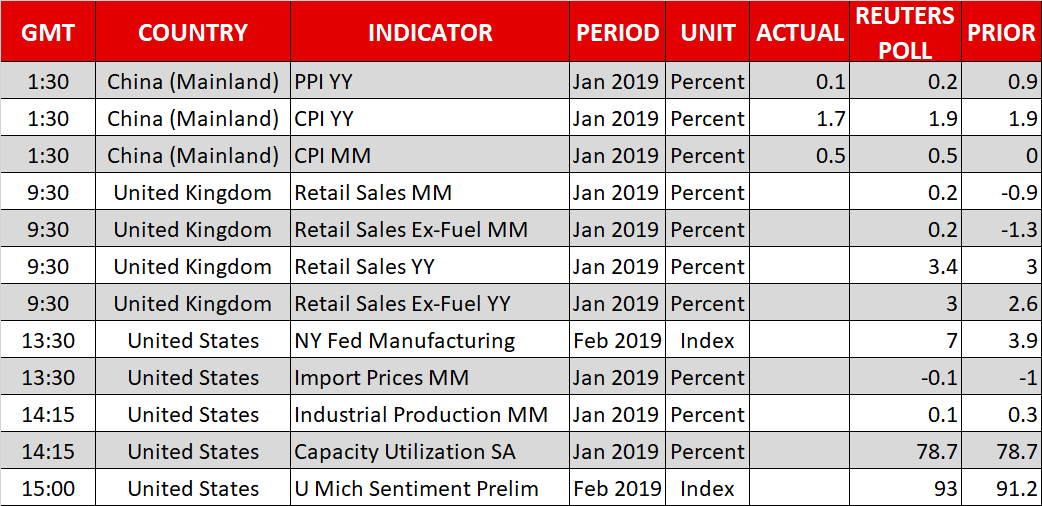
Earlier today, China's inflation report released earlier today during the Asian trading session showed that headline inflation grew at a slower pace of just 1.7% on the year in January. Producer prices index advanced just 0.1% on the year, marking a steady decline over the past few months.
More figures to close off the trading week
The European trading session will start with the release of Italy's trade balance figures and will be followed up later in the day with the release of the Eurozone's trade balance figures.
The UK's retail sales report is due, and the data is expected to show a 0.2% increase in retail sales. This following a 0.9% decline in the month before.
The NY trading session will see the Empire State Manufacturing Index report coming out. Forecast point to an increase in activity with the index expected to rise 7.6 from 3.9 previously. Import prices data from the United States should fall by 0.2% marking the third month of decline following a 1.0% decline in the month before.
The industrial production figures should show a modest pick up with activity rising 0.1%, slightly slower than the 0.3% increase from the month before.
The data concludes with the release of the UoM's consumer sentiment and inflation expectations data.
US Mnuchin had productive meetings with China
There is so far no known progress as US-China trade talks conclude in Beijing. US Treasury Secretary Steven Mnuchin just tweeted "Productive meetings with China's Vice Premier Liu He and @USTradeRep Amb. Lighthizer", without any elaboration.
https://twitter.com/stevenmnuchin1/status/1096302248324448256
On the Chinese side, Foreign Ministry spokesman Geng Shuang said in a regular press briefing that "just wait for a while and the answer will be revealed soon".
Mnuchin and Lighthizer will meet Chinese President Xi Jinping later this afternoon.
Dollar, Stocks Retreat As Data And Trade Talks Disappoint
- Dollar and equities pull back after US retail sales plummet and trade talks seem likely to disappoint
- Pound underperforms as PM May loses another Brexit vote
- Euro/dollar stabilizes somewhat, supported by rate differentials
- UK retail sales and early US data for February coming up today
Dollar drops alongside stocks as retail sales plunge, trade optimism fades
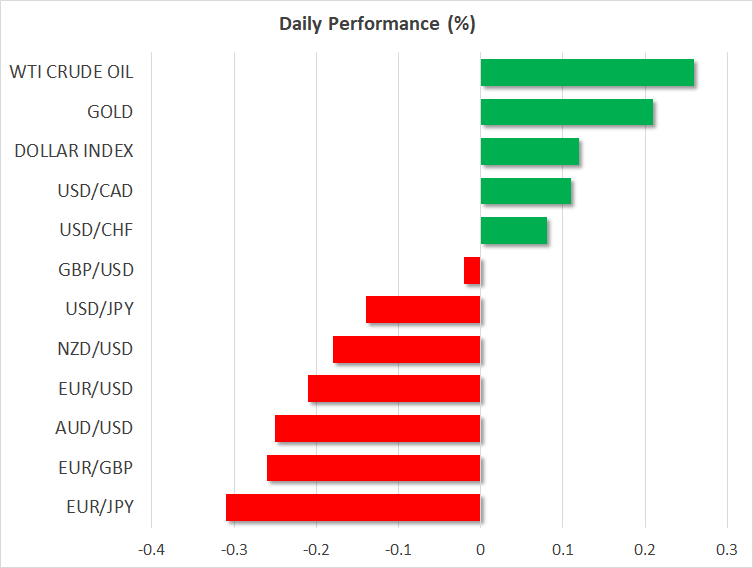
The dollar retreated in tandem with US equity markets yesterday, both giving back some of their recent gains, following disappointing US data and signs that the trade talks won’t produce much of substance after all. Specifically, US retail sales for December were abysmal, with the retail control group – which is used in GDP calculations – falling by a shocking 1.7% on a monthly basis, instead of rising by 0.4% as per consensus. This implies that growth was likely much weaker than projected in Q4, playing into the narrative that downside risks are accumulating and vindicating the Fed’s go-slow approach.
On the trade front, several reports suggest that little progress has been made during the talks in Beijing. China has reportedly only offered solutions to reduce the bilateral trade deficit, concessions which are likely miles apart from the deep structural reforms – like curbing industrial subsidies and protecting IP rights – that the US is pushing for. Thus, the risk of tariffs being raised after the March 1 deadline seems to have risen, and any hints towards that in the coming days may spell some more trouble for US markets.
Neither the dollar nor US stocks lost a lot of ground though, in a classic case of “bad news is good news”, as the soft retail sales caused market pricing to tilt back in favor of Fed rate cuts this year, providing a cushion for risky assets like equities. Meanwhile, the souring sentiment on trade likely fueled some haven demand for the greenback, limiting greater losses.
Cable drops despite soft dollar as Brexit defeat weakens May’s hand
The British pound was the worst performer on Thursday, after the UK Parliament voted down the government’s approach to the Brexit talks, marking another defeat for PM May. Although the vote was not legally binding, and hence was merely suggestive, it was still seen as weakening May’s negotiating hand even further as she can no longer claim she has Parliament’s full backing when trying to squeeze out more concessions from Brussels.
Euro/dollar stabilizes, with yield differentials providing support
The world’s most traded currency pair rebounded yesterday, after finding fresh buy orders near the 1.1250 area. It’s interesting to note that there has been some divergence lately between spot FX price action and the relative EU-US interest rate differentials. While euro/dollar has fallen markedly in February, the yield spread between short-dated German bunds and US Treasuries has remained stable, and even rose a little.
This suggests that relative interest rates are providing some support for the pair, and that sellers may therefore have a difficult time piercing below the November lows near 1.1215. That said, so long as Eurozone’s data pulse remains this weak, any meaningful rebound seems unlikely either.
Coming up: UK retail sales and tier-two US data
The economic calendar is relatively light on Friday, with the only tier-one release being the UK retail sales for January. Forecasts point to a rebound in monthly terms, and although that may help the pound recover a little on the news, all eyes remain on Brexit developments – or the lack thereof.
China’s inflation data for January have already been released, and producer prices slowed by even more than expected, pushing the aussie and kiwi a little lower during the early Asian session.
In the US, the Empire State manufacturing and the preliminary U of M consumer sentiment indices, both for February, may attract some attention.
Atlanta Fed President Raphael Bostic will speak at 14:55 GMT.