Sample Category Title
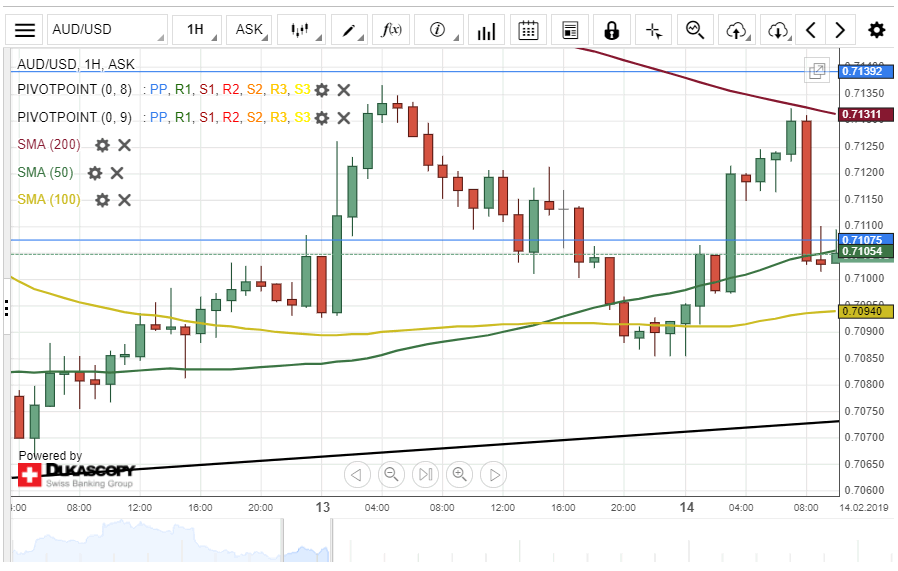
AUD/USD Testing 200-Hour SMA
During Wednesday's trading session, the Australian Dollar depreciated about 50 base points against the US Dollar. The decline was stopped by a support level formed by the combination of the 50– and 100-hour SMAs at 0.7093.
Thursday's session began with a bullish sentiment. Currently, the exchange rate is testing the 200-hour simple moving average at 0.7133.
If the currency pair passes the 200-hour SMA, the next target for bulls will be at the upper boundary of a descending channel pattern at 0.7169.
However, if the SMA as mentioned above hold, a decline towards a swing low of 0.7060 could be expected.
USD/CAD Potential Breakout
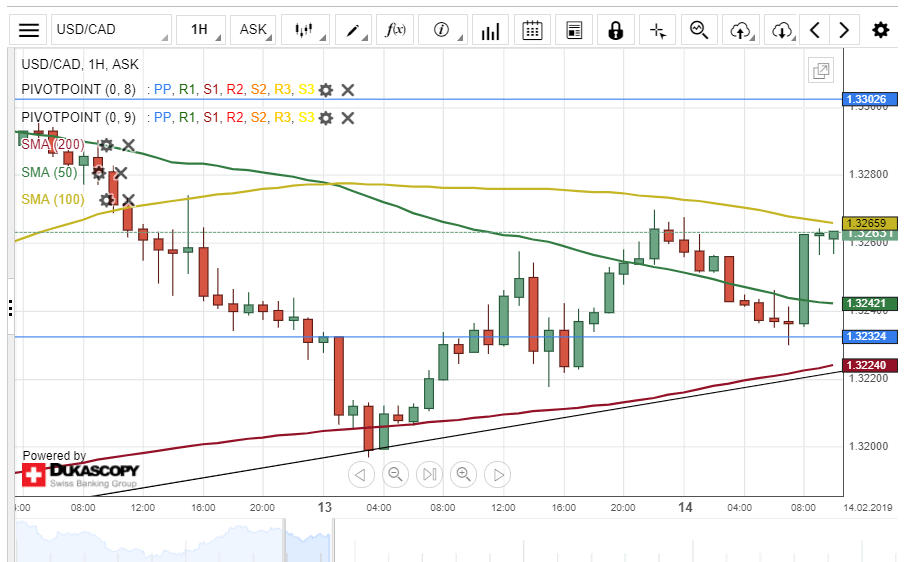
The US Dollar appreciated about 71 base points against the Canadian Dollar on Wednesday. The currency pair bounced off from the lower boundary of a junior ascending channel at 1.3200 during yesterday's trading session.
The exchange rate is currently stranded between SMAs. The 100-hour simple moving average is providing resistance for the pair, while the 50-hour SMA and the weekly pivot point is providing support.
As for the near future, it is likely that the currency exchange rate could breach the junior ascending channel.
Meanwhile, technical indicators demonstrate the pair could trade sideways within this session.
NZD/USD Trading Opportunities At 0.6768
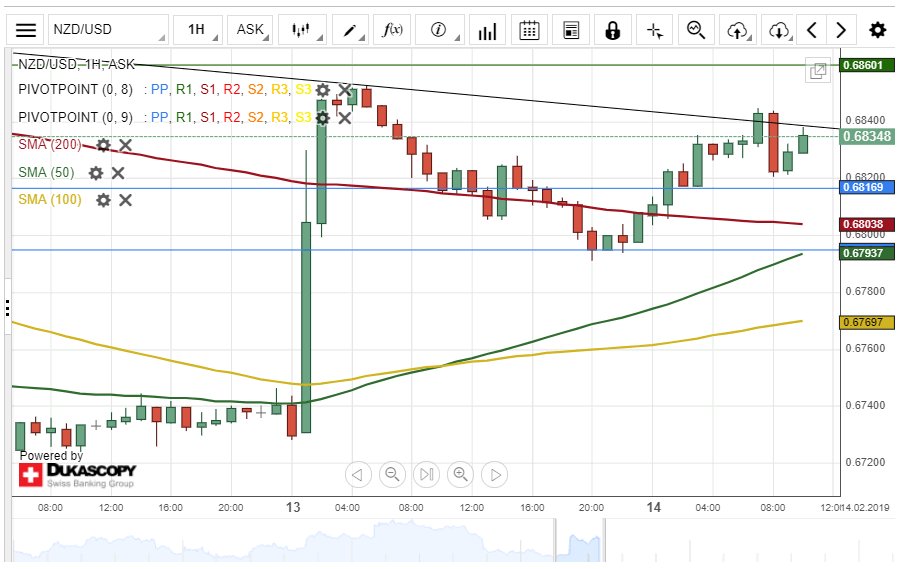
The New Zealand Dollar depreciated about 58 base points against the US Dollar on Wednesday. The decline was stopped by a support level formed by the weekly pivot point at 0.6795. Today's session began with an upward movement.
The currency pair tested the upper boundary of a junior descending channel pattern at 0.6840 during the middle of the day.
It is likely that the NZD/USD currency exchange rate decline towards a hidden base of 0.6768.
Traders are advised to look for opportunities to trade if the hidden base of 0.6768 holds.
USD/JPY Outlook: Corrective Dips May Precede Final Attack At 200SMA
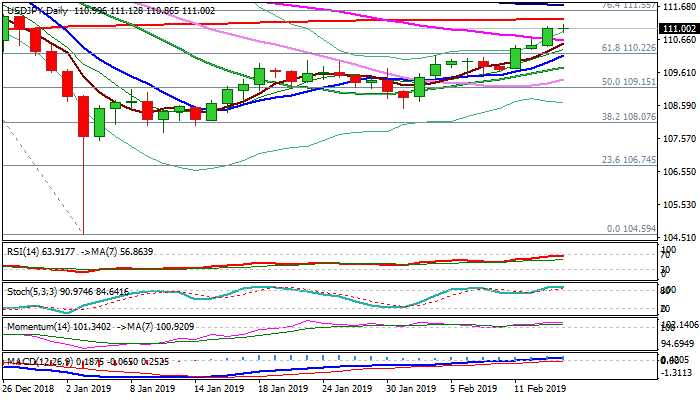
The pair consolidates around 111 handle following strong advance in past three days and remains bid for attack at 200SMA (111.28), violation of which would expose nearby barriers at 111.40 zone (late Dec high), 111.55 (Fibo 76.4% of 113.70/104.59) and 111.40 (100SMA). Optimistic tone over US/China trade talks (President Trump signaled possible 60-day extension from 1 Mar deadline) underpins the action Bullish techs also support, but strongly overbought stochastic (not firmer reversal signal yet) warns that bulls may face strong headwinds here. Dip- buying would be favored while corrective dips hold above 110.20 zone (broken Fibo 61.8%, reinforced by rising 10SMA).
Res: 111.12, 111.28, 111.40, 111.55
Sup: 110.86, 110.61, 110.20, 109.78
Forex Technical Analysis: EUR/USD, USD/JPY, GBP/USD
EUR/USD
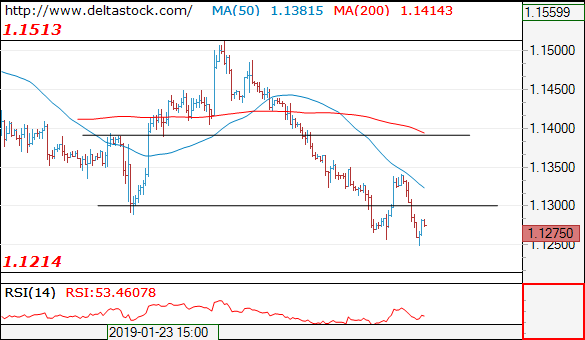
Current level - 1.1275
The failure at 1.1350 and the return below 1.1300 static support shows a negative outlook, for a test of 1.1214. A break through November's low will signal a completion of the prolonged consolidation and will challenge 1.1020 area.
| Resistance | Support | ||
| intraday | intraweek | intraday | intraweek |
| 1.1300 | 1.1630 | 1.1250 | 1.1214 |
| 1.1400 | 1.1820 | 1.1214 | 1.1100 |
USD/JPY
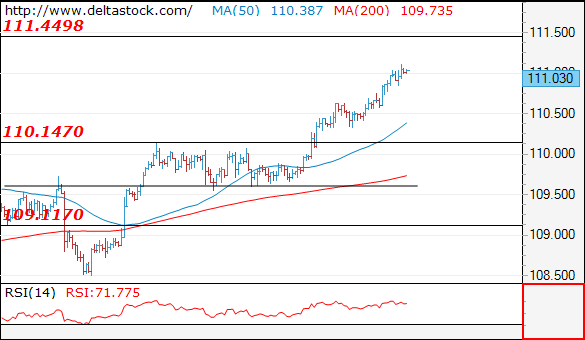
Current level - 111.03
Still positive, for a tight test of 111.45 and an eventual break will allow a climb towards 112.10. Initial support lies at 110.70 and crucial on the downside is 110.20.
| Resistance | Support | ||
| intraday | intraweek | intraday | intraweek |
| 111.45 | 111.45 | 110.70 | 106.70 |
| 112.10 | 114.50 | 110.20 | 104.60 |
GBP/USD
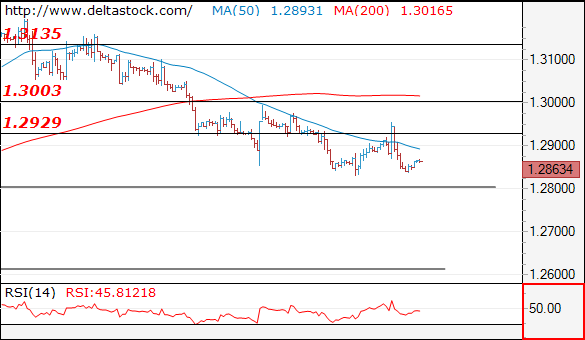
Current level - 1.2863
The sharp pullback after 1.2950 spike shows a bearish bias, for a break through 1.2800, towards 1.2700 zone.
| Resistance | Support | ||
| intraday | intraweek | intraday | intraweek |
| 1.2930 | 1.3290 | 1.2800 | 1.2800 |
| 1.3000 | 1.3480 | 1.2700 | 1.2610 |
Gold Trades Cautiously Above 1300, Bullish In Medium Term
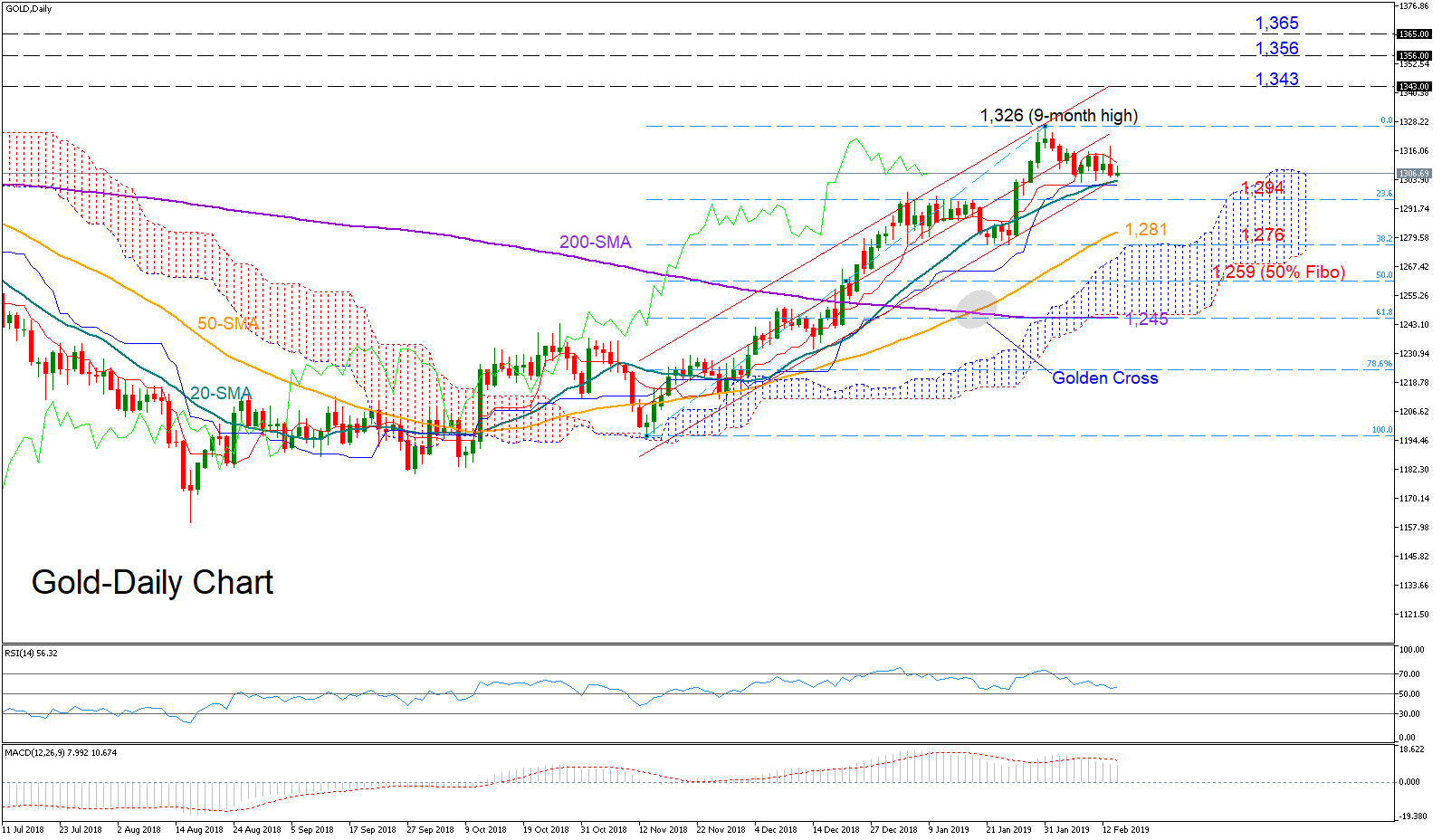
According to the RSI, gold touched overbought levels at a nine-month high of 1,326 at the end of January when the indicator topped above 70. Consequently, the price turned slightly southwards since then, with the 1,300 key level deterring steeper declines and therefore the violation of the three-month old ascending channel. The RSI, though, continues the downward move towards its 50 neutral mark and the MACD keeps losing strength below its red signal line, both painting a neutral-to-bearish profile for the short term. In Ichimoku indicators, the red Tenkan-sen line is changing direction to the downside as well, increasing doubts about the sustainability of the channel.
Should the price drop significantly below the channel, breaking the 23.6% Fibonacci of 1,294 of the upleg from 1,196 to 1,326 as well, support could be met around the 38.2% Fibonacci of 1,276. Falling lower and further below the 50-day MA, the 50% Fibonacci of 1,259 could halt bearish action before a more important barrier appears near the 200-day MA (1,245).
Alternatively, a resumption of the bullish momentum could send the price up to the 1,326 top, while even higher, investors would be anxiously waiting for a close above 1,343 to increase buying orders. If the latter achieved, resistance could be next found within the 1,356-1,365 region.
In the medium-term picture, gold is strongly bullish given the higher highs and higher lows registered in the past three months. The 50-day MA is positively sloped and comfortably above the 200-day MA, a sign that the positive medium-term outlook may stay in place for longer.
UK Parliament To Have Another Vote On Brexit
The UK parliament is to have another vote today (17:00, GMT) about Brexit, yet much of the steam was taken away as Theresa May addressed Parliament on Tuesday and announced another vote on the 27th of the month. The parliament is expected to reiterate its support for the approach to leave the EU as expressed on the 29th of January. The motion could run into some trouble with hard Brexiteers, as it excludes the possibility of a no deal Brexit, yet it is expected to pass. On the amendments part, no amendment is expected today to delay Brexit, yet Jeremy Corbyn may table an amendment to define in writing the date proposed be Theresa May for another meaningful vote. Other amendments could also be tabled, including some about what kind of Brexit the Parliament prefers, cancel Brexit, publishing the economic briefing in case of a hard Brexit and a second referendum, yet with little chance of passing. Other amendments could also be tabled, including some about what kind of Brexit the Parliament prefers, cancel Brexit, publishing the economic briefing in case of a hard Brexit and a second referendum, yet with little chance of passing. Cable dropped yesterday testing the 1.2830 (S1) support level. As the pair broke the downward trendline incepted since the end of January, we switch our bearish outlook in favor of a sideways movement. The pair could present some bearish tendencies today, as the US financial data could favor the USD part of the pair and volatility could rise during the vote of the UK parliament. Should the bears dictate the pair’s direction, we could see cable breaking the 1.2830 (S1) and aim for the 1.2710 (S2) support level. Should the bulls have the upper hand on the pair’s direction, we could see it breaking the 1.2960 (R1) resistance line and aim for higher grounds.
USD strengthens and Euro weakens on financial data.
The USD strengthened yesterday as inflation for January, decelerated yet remained above estimations. Analysts point out that the data didn’t rule out the possibility of the Fed hiking once near the end of the year, hence provided support for the USD. On the other side of the Atlantic, the EUR weakened as industrial output growth rate for December was lower than expected worrying investors. Worries were increased as Spain’s parliament rejected the draft 2019 budget and political uncertainty for one of the bloc’s largest participants settles in, without ruling out the possibility of new elections. We see the case for financial data to influence today’s direction for both currencies and we could see volatility rise. EUR/USD dropped yesterday breaking the 1.1300 (R1) support line (now turned to resistance) and bounced on the 1.1260 (S1) support line. We could see the pair trading in a bearish market today should the financial releases weaken the EUR and strengthen the USD side of the pair. Should the pair come under selling interest of the market, we could see the pair breaking the 1.1260 (S1) support line and aim for the 1.1215 (S2) support level. Should on the other hand the pair find fresh buying orders along its path, we could see it breaking the 1.1300 (R1) resistance line and aim for the 1.1345 (R2) resistance level.
Today’s other economic highlights
In today’s European session, we get from Germany and the Eurozone the preliminary GDP growth rate for Q4. In the American session, we get from the US the PPI growth rate for January and the retail sales growth rate for December, while from Canada we get the manufacturing sales growth rate for December. As for speakers, BoE’s Vlieghe and Philadelphia Fed President Harker speak.
GBP/USD H4
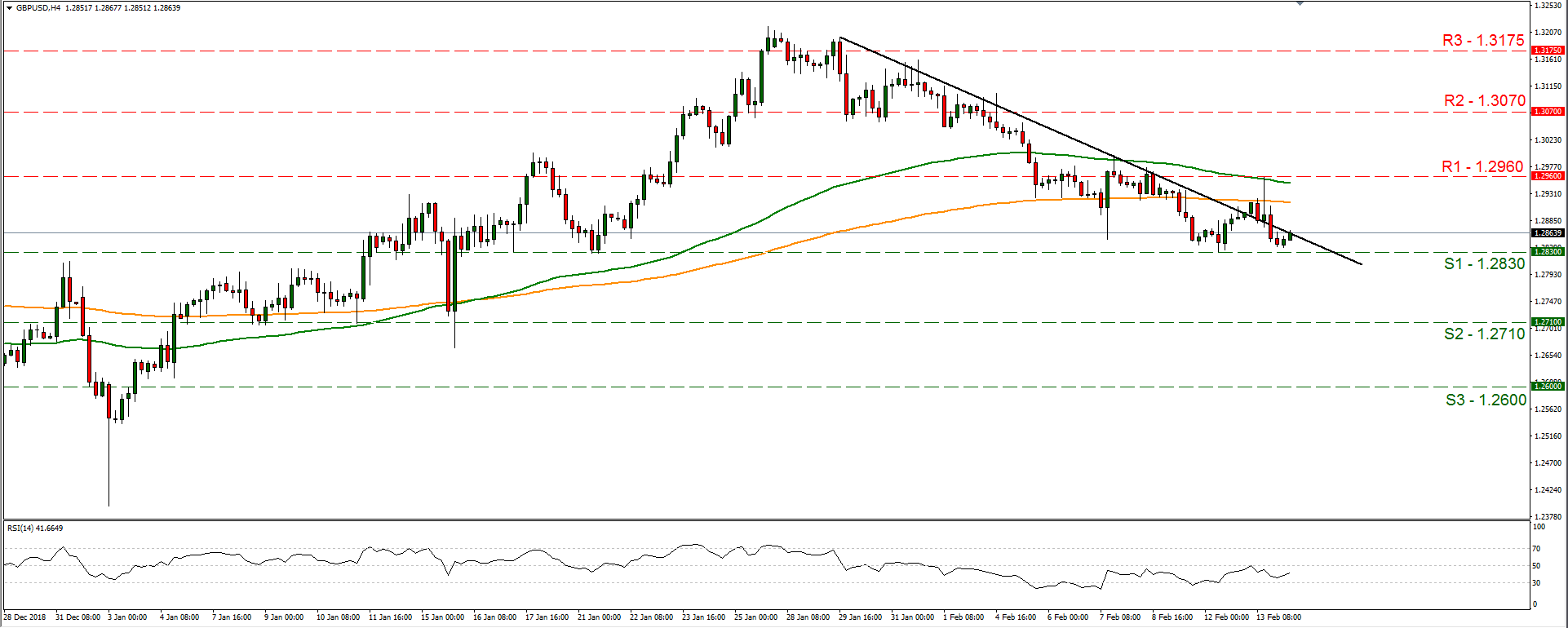
Support: 1.2830 (S1), 1.2710 (S2), 1.2600 (S3)
Resistance: 1.2960 (R1), 1.3070 (R2), 1.3175 (R3)
EUR/USD H4
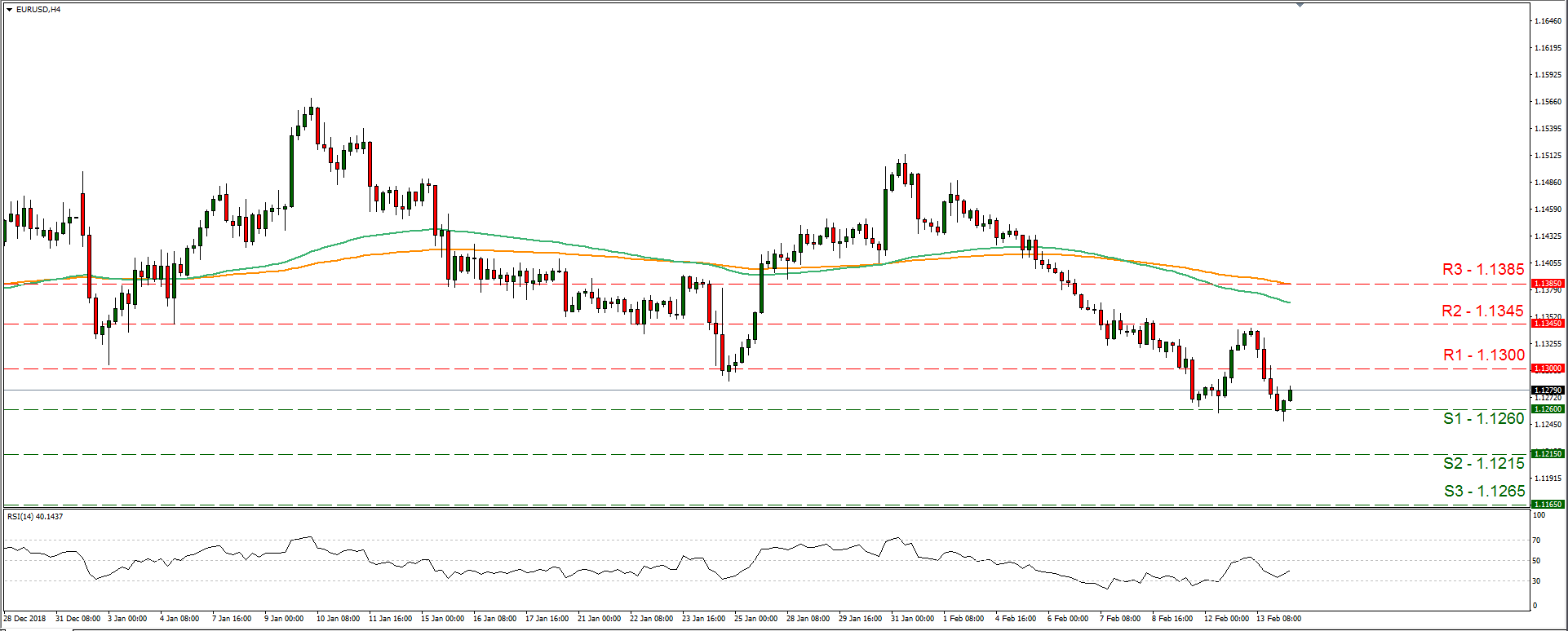
Support: 1.1260 (S1), 1.1215 (S2), 1.1265 (S3)
Resistance: 1.1300 (R1), 1.1345 (R2), 1.1385 (R3)
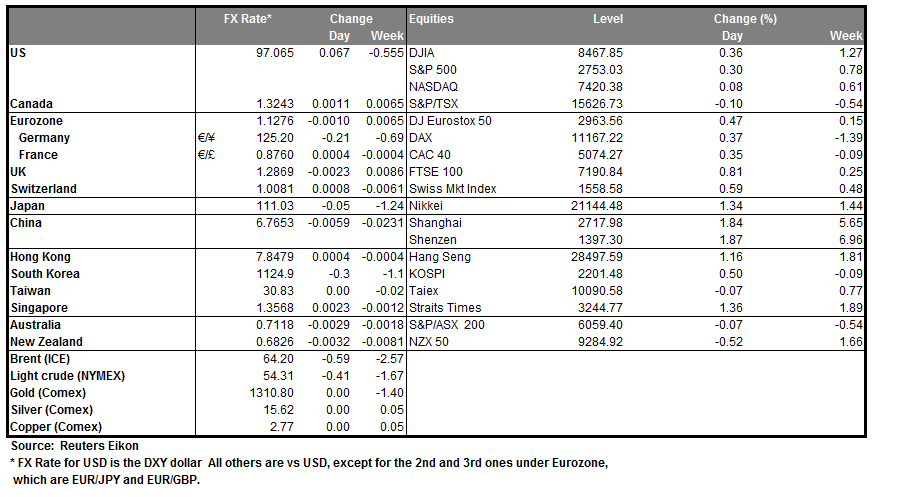
Markets Climb On Trade Euphoria, Dollar Rally Revitalized
- Stock markets grind higher as trade hopes grow, but caution warranted
- Dollar bulls back in the driver’s seat as core inflation beats forecasts
- Aussie and kiwi outperforming on Chinese data; focus on trade talks
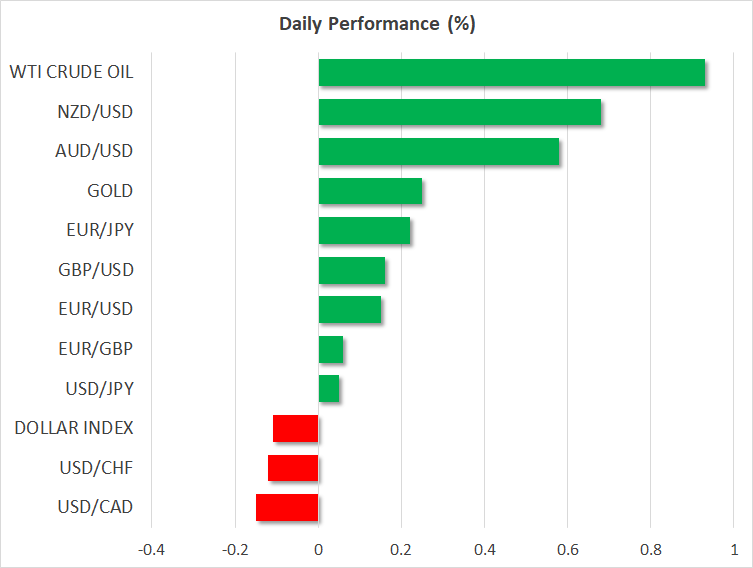
Trade euphoria keeps markets afloat as talks commence, but mind the risks
US stock markets continued their march higher yesterday, and futures suggest they are set to open in the green today as well, buoyed by optimism around trade after the US President indicated the talks in Beijing are going “very well”. High-level negotiations kicked off earlier today and will conclude tomorrow.
Indeed, expectations for a deal are elevated following encouraging comments and gestures by both the American and Chinese leaders, something reflected in recent price action. Even though this is justified, it also implies the risks surrounding stocks over the next few sessions may be asymmetric and skewed lower, as anything short of explicit signals of real progress may bring this whole narrative in doubt. Put differently, much hope is likely priced in already, which leaves plenty of room for a correction if things don’t play out precisely as traders anticipate this week.
While the most likely scenario remains that a deal will ultimately be struck, lots of twists and turns probably lie between that and now. Another factor to consider, which has likely been keeping a lid on even greater equity market gains, are recent calls by prominent US Senators such as Sanders and Rubio to limit corporate stock buybacks. The fact that lawmakers across the aisle seem to support a similar line of approach on this issue suggests this is a risk worth watching closely.
US core inflation beats consensus, revitalizes dollar rally
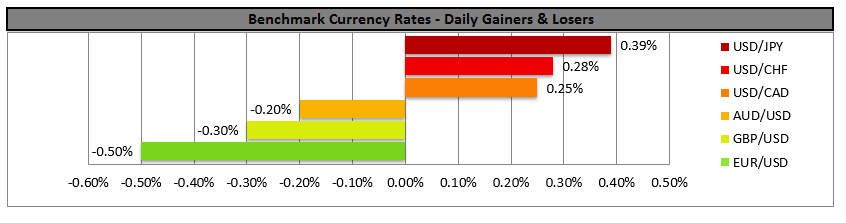
The world’s reserve currency outperformed most of its G10 peers on Wednesday, outside of the kiwi, drawing support from stronger-than-anticipated US inflation data. The core CPI, which excludes volatile food and energy prices, clocked in at 2.2% annually, beating the consensus for a pullback to 2.1%. Since the Fed recently placed a lot of emphasis on wanting to see inflation pick up steam before contemplating further tightening, the news led investors to price in a minor probability for a hike this year, pushing US yields and the dollar higher.
The greenback is giving back some of these gains early on Thursday, though much of its intraday direction will likely depend on the US retail sales for December due later today, which were delayed due to the government shutdown. Overall, with European growth concerns and Brexit risks continuing to cast a shadow over the euro and pound, there currently seems to be no viable alternative to the dollar, which still offers the highest yields in the G10 universe.
Day ahead: Eurozone GDP and China’s inflation data, UK Parliament votes
In terms of data, China’s trade figures for January have already been released and beat forecasts notably, propelling both the aussie and the kiwi higher. Now, attention turns to China’s inflation data for the same month, which will be released overnight. Of course, what signals come out of the trade talks will also be crucial, as both Australia and New Zealand are heavily trade-exposed economies.
In Europe, Germany’s GDP figures for Q4 fell slightly short of expectations, though Europe’s growth engine still managed to dodge a technical recession. The reaction in the euro was limited. The second estimate of GDP for the entire euro area will also be released.
On the Brexit front, Parliament will debate a motion that would allow the government to continue negotiating and seek changes to the Irish backstop. Lawmakers will have the opportunity to vote on some amendments at 17:00 GMT, but these will reportedly be non-binding and thus, will serve merely as suggestions. Hence, any major market reaction seems somewhat unlikely, unless one of these amendments manages to gather exceptional support.
In earnings, Coca Cola and Nvidia will be among the biggest names reporting their quarterly results today.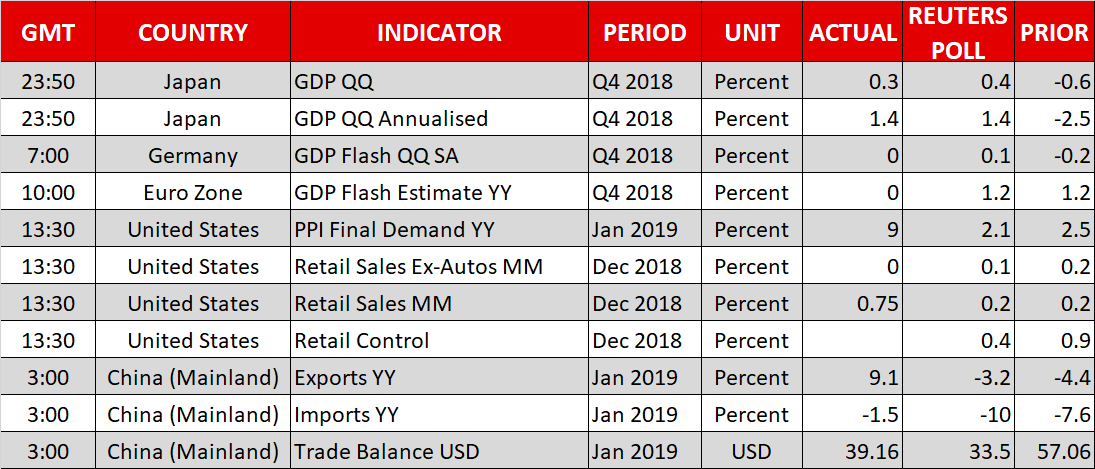
Investors On The Sidelines Awaiting Trade Negotiations Outcome
Investors in Asia are sitting on the sidelines as they cautiously await the outcome of high-level trade talks between the U.S. and China. With the earnings season almost coming to an end, asset prices will begin to fluctuate on daily news headlines. So far, it seems we have more positive than negative news which may continue to support equities.
President Donald Trump is willing to extend the trade deal deadline if the two parties seem to be coming closer to a resolution. A good outcome from the expected meeting on Friday between China's President Xi Jinping and his counterparts U.S. Treasury Secretary Steven Mnuchin and trade representative Robert Lighthizer may further prolong the rally in global equities.
Mr. Trump also intends to sign a U.S.-Mexico border security deal despite the fact he's not happy with it. Any news on avoiding another shutdown is welcomed by the markets.
On the data front, U.S. consumer prices remained steady for a third straight month in January. Stable prices have led y-o-y CPI to grow at its slowest pace in one and a half years suggesting that the Fed may keep interest rates on hold for some time if the economic outlook deteriorates further. However, the Dollar reacted positively to the data, given that when excluding the volatile components such as food and energy, the core-CPI stood at 2.2%. Such information may be conflicting in a sense that headline inflation doesn't require further tightening in monetary policy, while core inflation indicates that we cannot rule out further hikes later this year.
Commodity currencies were the main beneficiaries of stronger than expected Chinese data earlier today. Chinese exports rebounded sharply in January rising 9.1% y-o-y beating consensus of a 3.2% decline by a wide margin. Imports, while dropping by 1.5%, also showed much better than the expected 10% decline. The Australian Dollar and New Zealand Dollar were up 0.5% at the time of writing.
The Euro continued to struggle despite the improved appetite to risk. The single currency tested 1.1249 earlier today on the back of a series of disappointing data releases and political uncertainty. The latest political drama comes from Spain, which is heading into a snap election following a budget defeat. If a right-wing coalition takes over, expect to see more troubles ahead in the Eurozone. Other factors that contributed to Euro weakness include the continued plummeting of German Bond Yields. All maturities below 10-years are currently in negative territory, while 10-year yields are just 12 basis points above the zero line, compared to 2.7% in the U.S. All eyes are going to be on German GDP today to see if the country manages to escape a technical recession. Meanwhile, the Eurozone economy is expected to have grown 0.2% in Q4.
Elliott Wave Analysis: USD/CHF Looking For A Bearish Turn
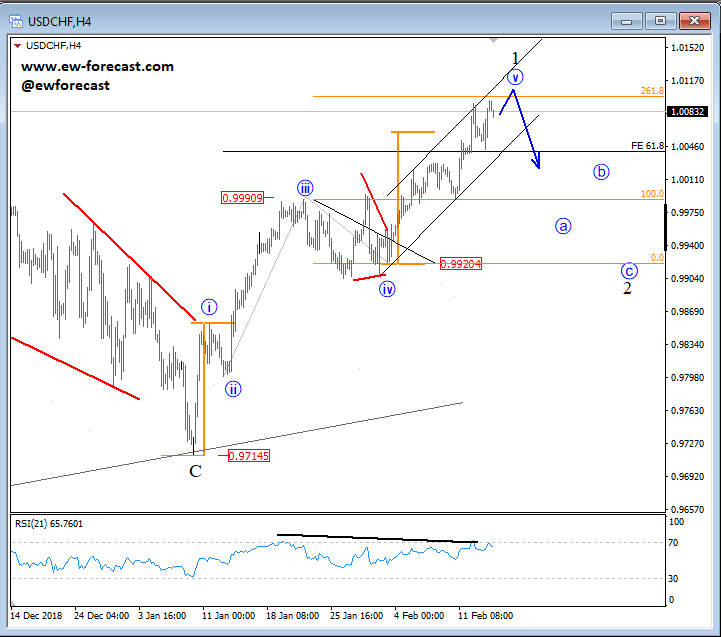
USDCHF is recovering in a five-wave manner, ideally unfolding sub-wave v as part of higher degree wave 1, which can look for resistance and a reversal near the Fibonacci ratio of 261.8. Also we can see the relative strength index below suggesting that a top can be seen soon, and that a minimum reversal below the lower channel line may follow. That said, a drop below the channel line would suggest a temporary top in place, and a three-wave pullback as wave 2 to be in progress, with possible support around the 0.992 level.
USDCHF, 4h