Sample Category Title
The Dollar Index Has Updated Local Highs. Trade Conflict Between The US And China Is In The Focus Of...
Yesterday, the US dollar strengthened again relative to a basket of major currencies. The dollar index (#DX) updated monthly highs and closed in the positive zone (+0.14%). Investors' attention is focused on trade relations between the US and China. The conflict may escalate again. The US President, Donald Trump, said that he did not plan to meet with China's President, Xi Jinping, before March 1, the date before which countries were supposed to conclude an agreement. Moreover, Trump intends to sign an executive order to ban Chinese telecom equipment from the US wireless networks.
The European Commission has worsened the Eurozone's GDP growth forecast for 2019 from 1.9% to 1.3%. According to the European Commission, the forecast is reduced due to the uncertainty regarding the Brexit, as well as a slowdown in the growth of the Chinese economy. Yesterday, the Bank of England said that the UK economy in 2019 could show the slowest growth rate in 10 years. It is also associated with the complex Brexit process and the slowdown of the global economy. The regulator lowered the forecast for the country's economic growth in 2019 from 1.7% to 1.2%. The Central Bank left the interest rate unchanged at 0.75%. At the same time, the Bank of England does not rule out a gradual increase in interest rates in case of a successful Brexit.
The Australian dollar is still under pressure. The Reserve Bank of Australia lowered its GDP growth forecast from 3.25% to 2.5%.
The "black gold" prices have been declining. At the moment, futures for the WTI crude oil are testing the mark of $52.45 per barrel.
Market Indicators
- Yesterday, the bearish sentiment prevailed in the US stock market: #SPY (-0.95%), #DIA (-0.78%), #QQQ (-1.34%).
- The 10-year US government bonds yield fell. Currently, the indicator is at the level of 2.65-2.66%.
Economic Data on 08.02.2019:
- Report on the labor market in Canada at 15:30 (GMT+2:00).
Buy Stocks! India Cuts Rates
When central banks loosen money, it’s time to get bullish and fill your boots with shares. Loose money has been the primary inflator of asset prices in the last 10 years or longer. Should 2019 see slower economic growth – but easy money – equity prices will rise.
Meanwhile, central banks continue to flag growth risks The Bank of England said current financial forecasts were overly optimistic, adding that Brexit-related uncertainty is burdening the economy. BoE has downgraded its 2019 GDP forecast to 1.2% against 1.7% expected in November. This follows the European Commission’s view of "substantial" risks that lowered its growth forecast to 1.3% in 2019 from 1.9% previously. This clearly indicates that no rate hike will be coming in 2019. US stocks sold-off on news of economic weakness in Europe plus word that US-China trade resolution would be delayed. Expectations for a US recession have now risen to 20%.
India cuts rates
Three months ahead of general elections, the new Reserve Bank of India (RBI) Governor Das surprised the marketplace with a rate cut of 0.25%, putting the Current Rate at 6.25%. No change had been expected. Headline inflation shows slowdown since June 2018, positioned below RBI’s target band of 2–6 % and provides signs of weakness. Official figures are questionable, however: real inflation is at 5.70%, the upper part of the target range.
The cut comes perfectly for India’s ruling party Bharatiya Janata, which is willing to boost the economy by providing more aggressive lending to support rural areas and expand tax cuts for middle-class families at the expense of larger borrowing and a wider fiscal deficit with expected lower borrowing costs. Investors have reacted positively, with sovereign bonds rallying. The long-term trend might go in the opposite direction, if the revenue deficit overreaches budget targets, especially for longer-end treasuries. INR is holding, about to finish the week in positive territory against the greenback (week-to-date: -0.31%; year-to-date: 1.81%). Currently trading at 71.06, we expect USD/INR to head along 71.80 short-term.
Awaiting Brexit Developments As PM May Meets With Irish PM On Backstop
Notes/Observations
- Quiet day on the data front, but markets will keep an eye on the Brexit headlines (PM May having dinner with Ireland PM Varadkar in a bid to break the deadlock over the Irish border backstop)
- Trade war fears simmer after President Trump noted he would not meet with China President before the Mar 1st deadline and the end of the 90-day truce on higher tariffs.
Asia:
- RBA Statement on Monetary Policy (SOMP) reiterated its neutral stance that now saw the probability of rate rise or cut more evenly balanced than previously. Reiterated that the Board did not see strong case to move rates in the near term. The report cut both the GDP and CPI outlook through 2020 period. Cut GDP growth forecast for year through June from 3.25% to 2.5%; Cut June 2019 GDP growth forecast from 3.25% to 2.5% and cut June 2020 GDP growth forecast from 3.25% to 2.75%; Cut headline CPI forecast for year through June to 1.25%; Cut June 2019 Core (trimmed mean) inflation forecast from 2.0% to 1.75% and cut June 2020 Core inflation forecast from 2.25% to 2.0%
- Japan Dec Household Spending Y/Y: 0.1% v 0.8%e
- Japan Dec Preliminary Current Account Balance: ¥452.8B v ¥458.5Be; Trade Balance: ¥216.2B v +¥133.8Be
Europe:
- UK Govt said to be preparing to formally back a new package of workers' rights in a deal with Labour MPs next week. PM May to guarantee that the UK matched EU on workers' rights after Brexit following deal with Labour. PM May said to have approached various Labour members of parliament to table an amendment to the PM's withdrawal motion on Thursday, Feb 14th
- ECB's Coeure (France) reiterated Council view that there was not enough evidence to conclude that Europe was facing a lasting and serious slowdown
Americas:
- President Trump was said to be 'highly unlikely' to meet China President Xi before March 1st trade deadline. Tariff could stay at current 10% level on March 1st, assuming real progress was being made in trade talks
- White House economic advisor Kudlow stated that there was still a pretty sizable distance to go in China trade talks; Trump and China's Xi to meet at some point
- Fed Bullard (dove, FOMC voter) reiterated Fed did not have to raise rates; we were at a 'good' level. Saw 2019 growth 'considerably' slower than 2018. FOMC had moved in a more dovish direction
Macro
- (FR) France: December industrial production increased 0.8% m/m in December but November was revised down to -1.5% m/m from -1.3% m/m. Manufacturing partially recovered back 1.0% m/m from -1.5 m/m in the previous month. The yellow vest protests left their mark and data are in line with the slowdown in overall GDP growth reported with the preliminary number.
- (DE) Germany: December saw a trade surplus of €19.4B as exports recovered 1.5% m/m. This left the accumulated surplus for the last quarter of 2018 at €56.2B, it does suggest a positive contribution from net exports to overall GDP growth in Q4. For the full year though, both current account and trade surpluses narrowed compared to 2017.
SPEAKERS/FIXED INCOME/FX/COMMODITIES/ERRATUM
Equities
- Indices [Stoxx600 -0.03% at 359.96, FTSE +0.17% at 7,107.25, DAX -0.04% at 11,017.50, CAC-40 +0.03% at 4,987.12, IBEX-35 -0.36% at 8,906.40, FTSE MIB +0.22% at 19,521.50, SMI +0.04% at 9,026.50, S&P 500 Futures -0.29%]
- Market Focal Points/Key Themes: European Indices trade mixed this morning following a sharp sell off yesterday as Brexit developments and US-China trade talks stay in focus. Corporate earnings continue to be in the forefront with shares of auto part supplier Leoni falling over 20% after its profit warning and suspension of dividend, this follows on from generally weak Auto related earnings this week, with Daimler and Fiat Chrysler's falling on earnings as well as JLR parent Tata Motors which falls the most in 26 years this morning after earnings and outlook cut partly due to Brexit and China worries. Other notable decliners include Ratos, Outotec, Rockwool, Skanska and Daetwyler; while to the upside shares of Ceconomy rises on upbeat earnings with Cargotec, and Vitrolife among other risers. In other news Air France trades lower following its Jan metrics, with Medivir also declining following the stepping down of its CFO. Looking ahead notable earners include Hasbro, Goodyear, Exelon and Phillips 66 among others.
Equities
- Consumer discretionary: Hermes [RMS.FR] +1% (earnings), L'Oreal [OR.FR] +0.5% (earnings), Ceconomy [CEC.DE] +16% (earnings), Rockwool International [ROCKA.DK] -12% (earnings)
- Financials: Ratos [RATOB.SE] -10% (earnings)
- Materials: Umicore [UMI.DE] -5% (earnings)
- Industrials: Skanska [SKAB.SE] -7% (earnings), Air France-KLM [AF.FR] -2.5% (load factor), Outotec Oyj [OTE1V.FI] -17% (earnings), Leoni [LEO.DE] -24.5% (prelim earnings; dividend suspension; analyst actions)
- Utilities: SSE [SSE.UK] 0.5% (trading update)
Speakers
- German Fin Mn Scholz stated that hoped to have a Brexit agreement by the planned exit date. EU was prepared for a hard Brexit
- Italy Stats Agency (Istat) Monthly Economic Note: Leading indicator shows pronounced decline; highlights economic difficulties
- Indonesia Central Bank Gov Warjiyo: Monetary policies remained hawkish; reiterated stance that current level of Benchmark Rate already near its peak. Although inflation was low he stressed that efforts to narrow current account deficit would continue
Currencies/Fixed Income
- EUR/USD still managing to had above the 1.13 level as the economic data and commentary for Europe appeared gloomy. EU Commission recently released gloomy 2019 winter forecasts continued to weigh on market sentiment. Market now believe the ECB would also present lower growth forecasts when the staff projections are updated next month and prompted renewed speculation of new easing/postponing of tightening from the ECB.
- GBP/USD was slightly weaker by 0.2% at 1.2930 area in the aftermath of yesterday's BOE rate decision. The central bank voted unanimously to keep the Bank Rate at 0.75% but lowered both its GDP and CPI inflation projections. The pair is well off Thursday's low as participants noted the BOE made no major policy shift and continued to see the next move in rates as higher.
Economic Data
- (NL) Netherlands Dec Manufacturing Production M/M: -3.9% v +0.5% prior; Y/Y: -4.2% v +2.1% prior; Industrial Sales Y/Y: -2.6% v +3.9% prior
- (CH) Swiss Jan Unemployment Rate: 2.8% v 2.7%e; Unemployment Rate (Seasonally Adj): 2.4% v 2.4%e
- (DE) Germany Dec Current Account Balance Dec €21.0B v €23.3Be; Trade Balance: €13.9B v €16.5Be; Exports M/M: 1.5% v 0.4%e; Imports M/M: 1.2% v 0.5%e
- (NO) Norway Q4 GDP Q/Q: 0.5% v 0.6%e; GDP Mainland Q/Q: 0.9% v 0.8%e
- (NO) Norway Dec GDP M/M: 0.0% v -0.3% prior; GDP Mainland M/M: 0.0% v 0.0% prior
- (FI) Finland Dec Industrial Production M/M: 1.3% v 0.7% prior; Y/Y: 3.3% v 2.6% prior
- (DK) Denmark Dec Current Account Balance (DKK): 17.4B v 13.3B prior; Trade Balance: 6.5B v 7.0B prior
- (FR) France Dec Industrial Production M/M: 0.8% v 0.6%e; Y/Y: -1.4% v -1.4%e
- (FR) France Dec Manufacturing Production M/M: 1.0% v 1.1%e; Y/Y: -1.0% v -1.2%e
- (FR) France Q4 Preliminary Private Sector Payrolls Q/Q: 0.1% v 0.1%e; Wages Q/Q: 0.2% v 0.3%e
- (CZ) Czech Jan Unemployment Rate: 3.3% v 3.2%e
- (RU) Russia Narrow Money Supply w/e Feb 1st (RUB): 10.13T v 10.24T prior
- (HU) Hungary Dec Preliminary Trade Balance: €0.4B v €0.4Be
- (SE) Sweden Dec Household Consumption M/M: -0.8% v 0.0% prior; Y/Y: -1.0% v +0.4% prior
- (IT) Italy Dec Industrial Production M/M: -0.8% v +0.4%e; Y/Y: -2.5% v -3.3%e; Industrial Production WDA Y/Y: -5.5% v -2.7%e
- (GR) Greece Dec Industrial Production Y/Y: 1.1% v 4.2% prior
- (HU) Hungary Jan YTD Budget Balance (HUF): +244.5B v -1.445T prior (largest Jan surplus in 20-years)
Fixed Income Issuance
- (IN) India sold total INR120B vs. INR120B indicated in 2024, 2029, 2033 and 2046 bonds
- (ZA) South Africa sold total ZAR vs. ZAR650M indicated in I/L 2025, 2033 and 2046 bonds
Looking Ahead
- (UR) Ukraine Jan CPI M/M: 0.9%e v 0.8% prior; Y/Y: 9.7%e v 9.8% prior
- (MX) Mexico Jan Nominal Wages: No est v 4.7% prior
- (IT) Italy Debt Agency (Tesoro) announcement on upcoming BTP issuance for Wed, Feb 13th
- 05:30 (RU) Russia Central Bank (CBR) Interest Rate Decision: Expected to leave the Key 1-week Auction Rate unchanged at 7.75%
- 06:00 (PT) Portugal Employment Report
- 06:00 (PT) Portugal Dec Trade Balance: No est v -€2.1B prior
- 06:00 (BR) Brazil Jan IBGE Inflation IPCA M/M: 0.4%e v 0.2% prior; Y/Y: 3.8%e v 3.8% prior
- 06:00 (CL) Chile Jan CPI M/M: +0.2%e v -0.1% prior; Y/Y: 2.3%e v 2.6% prior
- 06:00 (CL) Chile Jan CPI (ex-food/energy) M/M: 0.4%e v 0.3% prior; Y/Y: No est v 2.3% prior
- 06:00 (UK) DMO to sell combined £B in 1-month, 3-month and 6-month Bills (£0.5B, £1.5B and £1.5B respectively)
- 06:30 (IN) India Weekly Forex Reserves w/e Feb 1st: No est v $398.2B prior
- 06:30 (IS) Iceland to sell Bonds
- 06:45 (US) Daily Libor Fixing
- 08:00 (UK) Baltic Dry Bulk Index
- 08:00 (IN) India announces upcoming Bill auction (held on Wed)
- 08:15 (CA) Canada Jan Annualized Housing Starts: 205.0Ke v 213.4K prior
- 08:30 (CA) Canada Jan Net Change in Employment: +5.0Ke v +7.8K prior (revised from +9.3K); Unemployment Rate: 5.7%e v 5.6% prior
- 08:30 (CA) Canada Jan Hourly Wage Rate Y/Y: 1.6%e v 1.5% prior
- 09:00 (MX) Mexico Nov Gross Fixed Investment: -1.8%e v +3.4% prior
- 09:00 (MX) Mexico Jan Vehicle Production: No est v 237.7K prior; Vehicle Exports: No est v 275.1K prior
- 11:00 (EU) Potential sovereign rating action after European market close
- 12:00 (US) USDA World Agricultural Supply and Demand Estimates (WASDE)
- 13:00 (US) Weekly Baker Hughes Rig Count data
- 13:15 (US) Fed's Daly at Economic Forecast Conference
Are Political Risks In Europe And The United Kingdom Driving The USD Higher?
The negative mood sweeping across financial markets late in the trading week continues to highlight how investor sentiment remains extremely sensitive to any changes in the narrative with US-China trade developments.
Global equities got up on the wrong side of the bed today after Donald Trump said he would not meet with Chinese President Xi Jinping before the March 1 trade deadline. This unfavorable development has certainly raised concerns over trade talks dragging on beyond the 90-day tariff truce. With geopolitical risks and fears around faltering world growth already leaving global sentiment on edge, there is a high risk that there could be another sell-off in the markets if the United States once again increases tariffs on Chinese goods early next month.
It is expected that investors will be watching US-China trade headlines very close to their radars for the remainder of February. With all the ingredients for another round of a stock market selloffs in place, equity bears are seen jumping back into the scene if US-China trade talks do take a turn for the worst.
The other trend that is keeping traders on their toes is the gradual recovery of the US Dollar that has taken place over recent trading sessions. It is difficult to pinpoint what exactly is driving the USD recovery, but I wouldn't bet against investors bracing themselves for another potential escalation in trade tensions following the comments in recent days. Another possibility is that investors have realized that even if the Federal Reserve does push the snooze button on higher interest rate policy in the United States, monetary and economic divergence is still in favour of the U.S than a number of its developed peers.
Let's put it this way: a diplomatic spat between France and Italy is making its way across the major news headlines at the same time as when investors are still no way nearer to understanding what is going to happen with Brexit in the run up to the March 29 Article 50 deadline, so it is quite possible that investors will prefer to have the USD in their portfolio until the necessary guidance is provided for what could happen with either the Euro or the British Pound over the coming weeks.
AUD/USD Outlook: Bears Crack Key Support And Risk Further Weakness
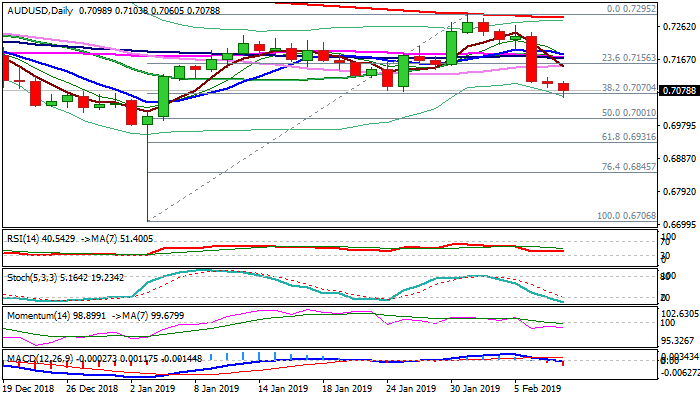
The Aussie dollar remains in red and extends weakness in early Friday to crack pivotal supports at 0.7075/70 (25 Jan trough / Fibo 38.2% retracement of 0.6706/0.7295).
Long bearish daily candle on Wednesday continues to weigh and keep the downside under increased risk. The Aussie came under increased pressure after RBA shifted its long-standing tightening bias and cut its growth forecast, making weekly loss of 2.2% so far, with persisting uncertainty over US/China trade talks that prompted traders into safer assets, adding to negative tone.
Rising bearish momentum and daily MA's in bearish setup maintain negative tone, but oversold stochastic warns that bears may hesitate to break key support zone at 0.7075/70.
Thursday's high (0.7117) marks initial resistance, with stronger upticks expected to hold below converged 5/30SMA's (0.7148) to keep bears intact.
Eventual break below 0.7070 pivot would spark fresh bearish acceleration and expose psychological 0.7000 support (also 50% retracement of 0.6706/0.7295 rally).
Res: 0.7117, 0.7148, 0.7171, 0.7182
Sup: 0.7070, 0.7060, 0.7000, 0.6931
EUR/JPY Decline Continues
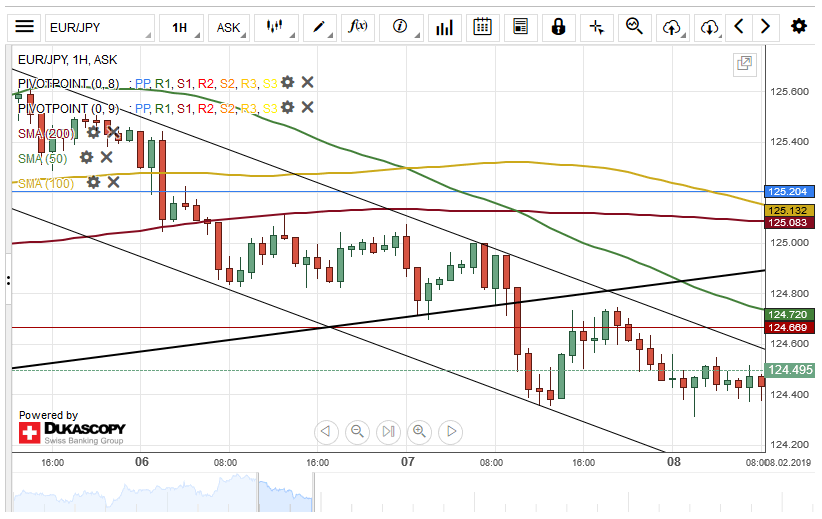
The common European currency remained trading in a newly formed junior descending channel against the Japanese Yen on Thursday. The currency pair tested the bottom border of the channel pattern at 124.37 during yesterday's trading session.
Technical indicators suggest that the decline of the currency exchange rate will continue during the following trading session. The downside target for the pair will be near a swing low of 123.83.
However, given that the EUR/JPY exchange rate is located near the upper boundary of the descending channel pattern, a breakout is likely to occur today.
AUD/USD Decline Still Apparent
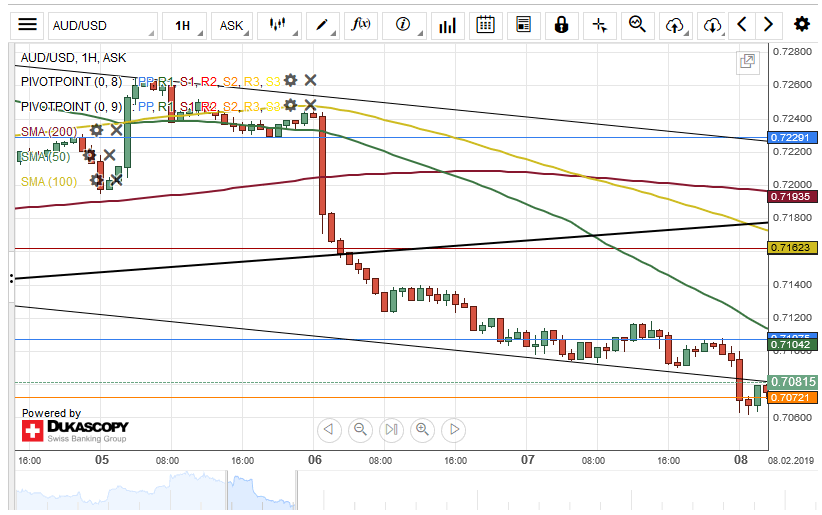
The Australian Dollar depreciated about 55 base points against the US Dollar on Thursday. The currency pair breached the lower boundary of a descending channel pattern at 0.7072 during yesterday's trading session.
Most likely, the exchange rate could aim for a resistance cluster formed by the monthly pivot point and the 50-hour simple moving average at the 0.7106 area within this session.
If the currency exchange rate passes the resistance cluster as mentioned above, the next target for bullish trader will be at 0.7162.
Meanwhile, technical indicators demonstrate that a decline in price is still apparent.
USD/CAD Breakout Occurs
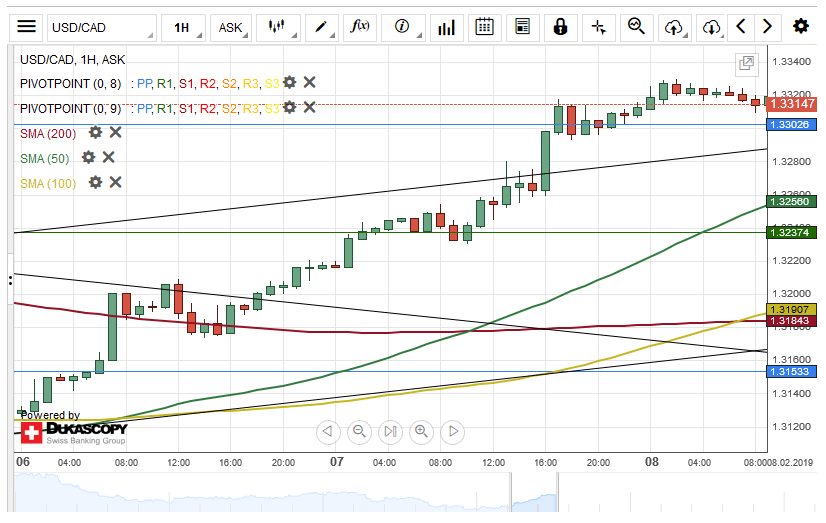
The US Dollar edged higher over 90 base points against the Canadian Dollar on Thursday. A breakout occurred through the upper boundary of a junior ascending channel during Thursday's trading session.
Given that a breakout had occurred, it is likely that bulls will continue their presence in the market during the following trading session. The possible upside target will be near the weekly R2 at 1.3370.
Although, it is likely that the currency exchange rate makes a brief retracement down towards a support level at 1.3247.
NZD/USD Traded With Low Volatility
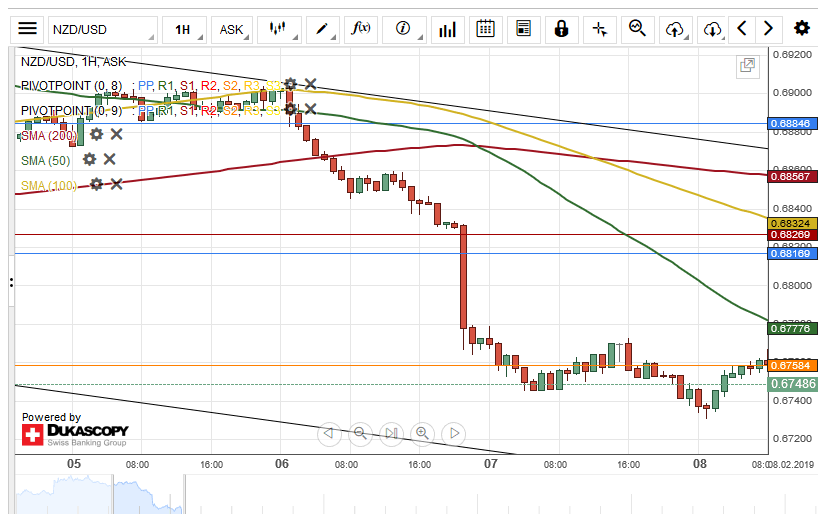
The New Zealand Dollar traded with low volatility against the US Dollar on Thursday. The currency pair was moving along the weekly S2 at 0.6758 during Thursday's trading session.
As for the near future, it is likely that the exchange rate edges higher toward a resistance cluster formed by the combination of the weekly and the monthly pivot points near the 0.6826 area.
However, the 50-hour simple moving average at 0.6781 could hinder bulls from pushing the NZD/USD currency exchange rate higher during the following trading session.
Forex Technical Analysis: EUR/USD, USD/JPY, GBP/USD
EUR/USD
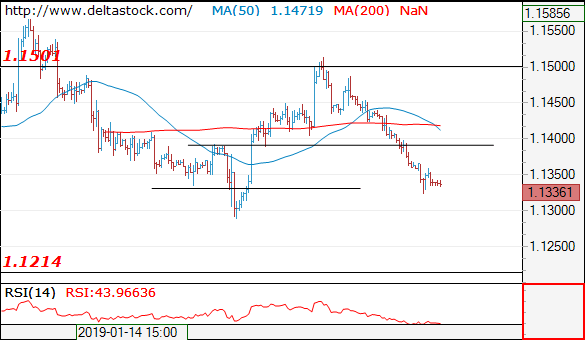
Current level - 1.1336
The outlook remains counter-trend against 1.1290 low, for a bounce back towards 1.1440.
| Resistance | Support | ||
| intraday | intraweek | intraday | intraweek |
| 1.1390 | 1.1630 | 1.1330 | 1.1214 |
| 1.1440 | 1.1820 | 1.1290 | 1.1100 |
USD/JPY
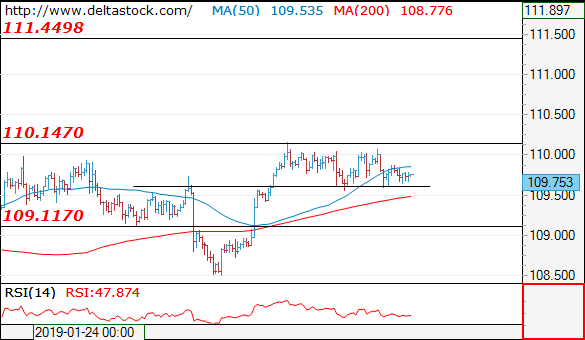
Current level - 109.75
Still within the consolidation boundaries at 109.60 and 110.20 and I favor a break on the upside, for 111.45. Next major support lies at 109.10.
| Resistance | Support | ||
| intraday | intraweek | intraday | intraweek |
| 110.20 | 111.45 | 109.60 | 106.70 |
| 111.45 | 112.20 | 109.10 | 104.60 |
GBP/USD
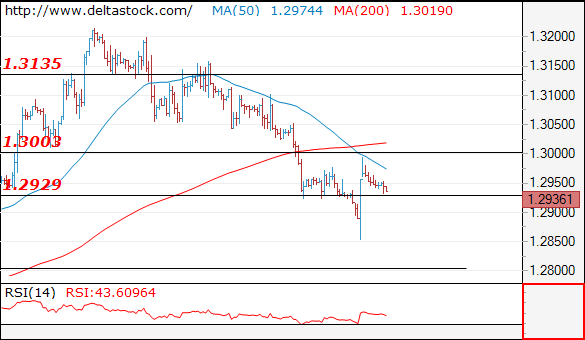
Current level - 1.2936
The bounce after 1.2850 low signals a reversal of the slide since 1.3210 high and the bias is already positive, for a break through 1.3000, towards 1.3130 area.
| Resistance | Support | ||
| intraday | intraweek | intraday | intraweek |
| 1.3000 | 1.3290 | 1.2930 | 1.2800 |
| 1.3135 | 1.3480 | 1.2800 | 1.2610 |