Sample Category Title
WH Hassett said there will be a US-China trade deal by March 1
White House economic adviser Kevin Hassett said he's confidence that US and China will reach a trade deal by March 1 deadline. He said in a CNN interview that "Yes, I am confident that it can happen, that the talks are moving forward".
And, "There's a lot of progress to be made but it's a very strong situation right now. And I think the Chinese recognize that they've got a big potential gain for coming up with a deal because as you mentioned their growth has really fallen off the cliff."
Also, Hassett talked down the risk of government shut down on credit rating. He said "I don't think a downgrade is in play ... I don't think that there's any risk at all, given how strong the economy is, that we will be downgraded."
ECB Meeting and Eurozone PMIs Eyed as Euro/Dollar Flirts with Trendline
The ECB will announce its first policy decision for the year on Thursday, at 1245 GMT. A press conference by President Draghi will follow. Markets will focus primarily on whether the language around growth will be downgraded (euro-negative) in light of weakening data, as well as on Draghi’s tone. The bloc’s latest PMIs, due a few hours before the decision, could also be crucial for the euro.
At its previous meeting, the European Central Bank (ECB) started to acknowledge that the slowdown in the Eurozone’s economy may prove to be more prolonged and severe than previously assumed. President Draghi tried his best not to sound too concerned, using phrases like “continued confidence with increasing caution”. Similarly, he noted that although the risks to the growth outlook can still be assessed as “broadly balanced”, they are increasingly “moving to the downside”. The message was that the ECB is aware downside risks are building but wasn’t prepared to officially sound the alarm, as it remained hopeful that growth could rebound soon.
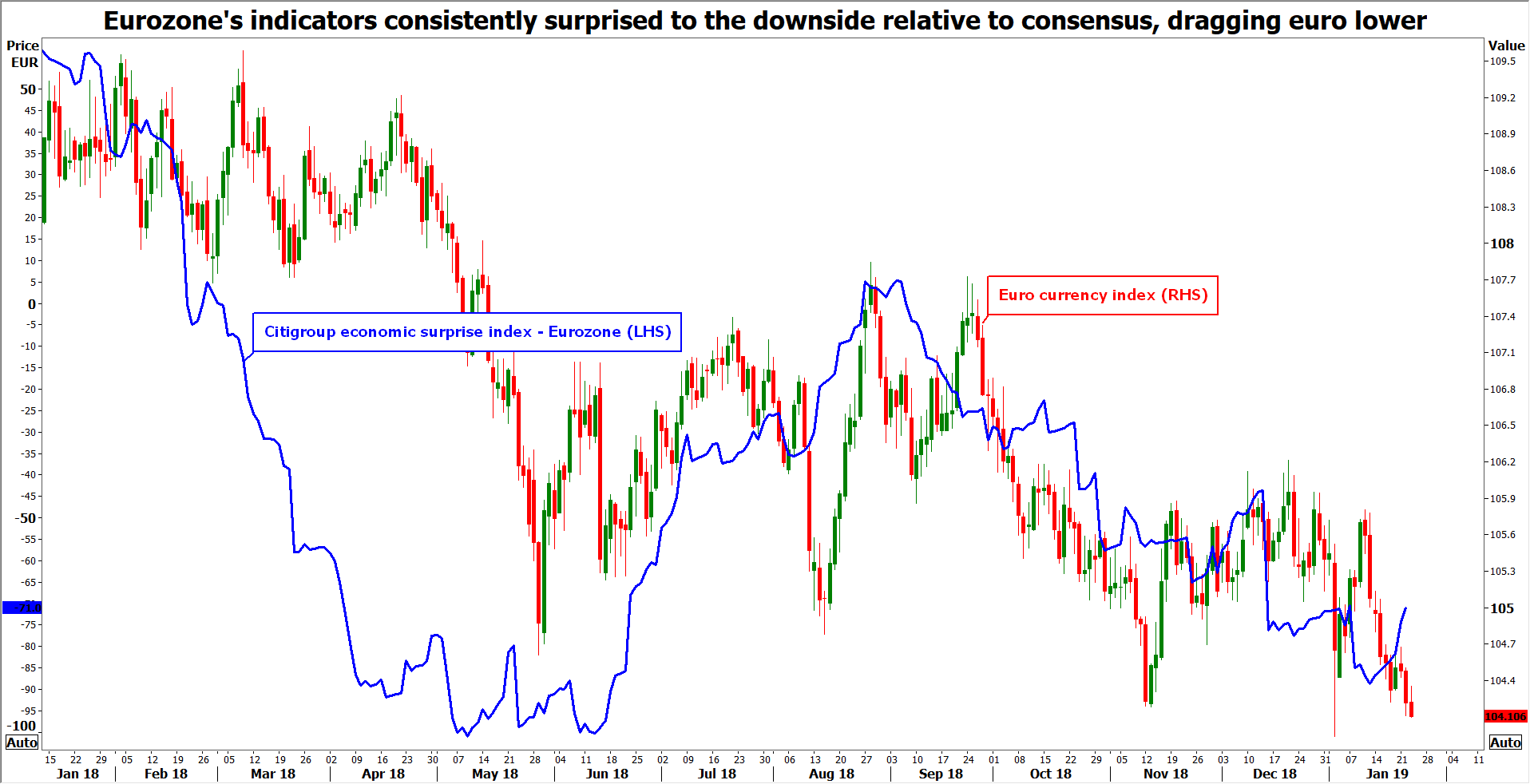
Alas, economic data have deteriorated further since then, amplifying fears of a prolonged slowdown. Both survey-based measures like the PMIs and “hard data” such as industrial production tumbled, while inflation also cooled. The only bright spot is the labor market, where wages are on a clear uptrend and the unemployment rate has continued to drop, though it’s questionable whether these alone can keep the ECB hopeful. Data aside, there’s an array of external risks emanating from Brexit, China, trade, and market volatility.
Hence, it appears sensible for the ECB to downgrade its assessment of growth risks to “tilted to the downside” at this gathering. Draghi could follow that up by indicating the ECB is examining whether to launch a new round of long-term loans for banks, the so-called TLTROs, to continue supporting the economy. That said, the forward guidance on rate increases will most likely remain unchanged, keeping a rate hike this year on the table, as the situation is not dire enough yet to derail the Bank’s policy normalization plans.
As for the euro, while it may come under some initial pressure if the Bank indeed downgrades its language on growth, any downside is unlikely to be massive. Such a move would simply be an acknowledgement of reality, and thus, hardly surprising. Perhaps the more important determinant will be Draghi’s overall tone, and whether or not investors get the sense the ECB is even more worried than is letting on.
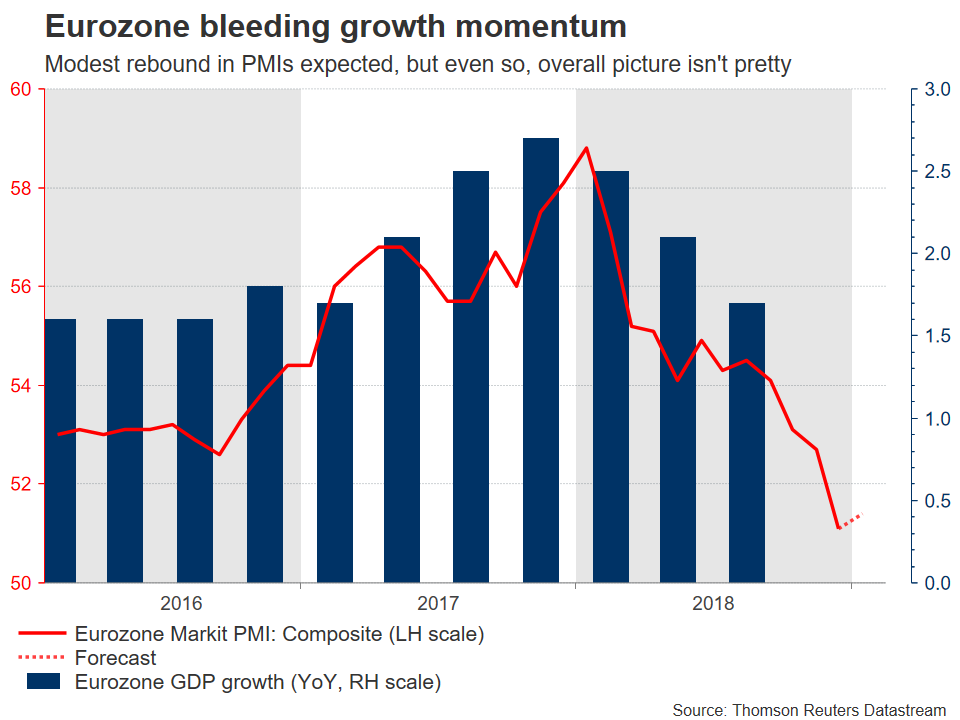
Ahead of the decision, at 0900 GMT, Eurozone’s preliminary manufacturing and services PMIs for January will also be released. Most of the worries that this slowdown will continue are based on the weakness in these forward-looking surveys, so their quality could set the tone for the euro heading into the ECB decision. To be clear, any major surprise in the PMIs could be even more significant for the euro than anything the ECB says. French and German PMIs will be released ahead of the Eurozone-wide prints, at 0800 GMT and 0830 GMT respectively; any market reaction could begin with them.
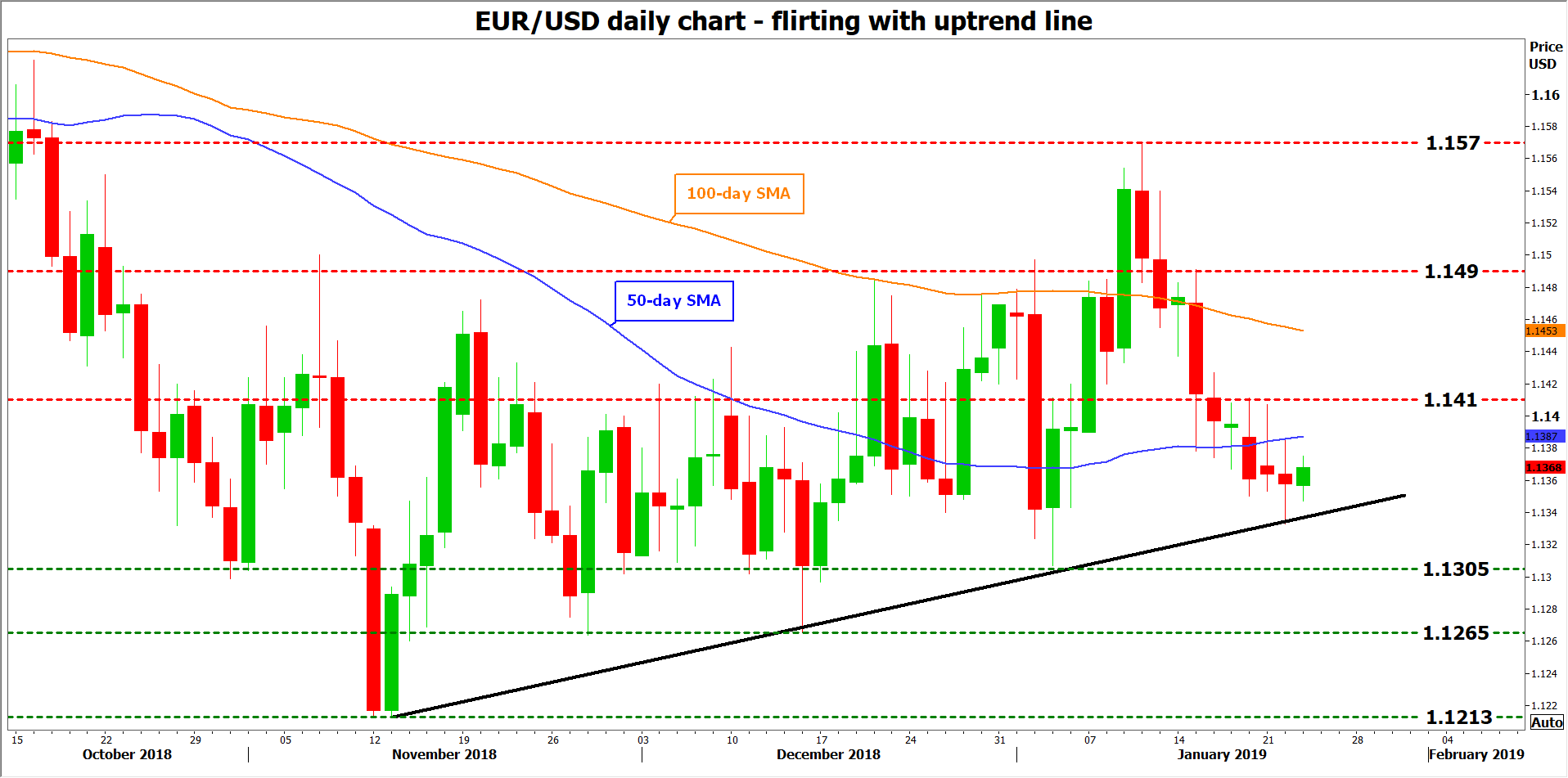
Technically, euro/dollar is at a crucial crossroads. The pair has been printing higher lows above an uptrend line drawn from the November lows, and it now seems ready to test that area. A decisive break below the uptrend line and the 1.1305 zone – for example on the back of disappointing PMIs or a dovish ECB – would mark a lower low on the daily chart, turning the short-term outlook to neutral, from cautiously positive now. In such a case, the bears could initially target the 1.1265 hurdle, the December low.
On the flipside, a rebound – on strong PMIs, an unchanged balance of ECB risks, or an optimistic tone from Draghi – would keep the structure of higher lows intact, painting an overall positive picture. In this case, resistance to advances may be found near the 50-day simple moving average (SMA) at 1.1387, with an upside break opening the way for a test of 1.1410, the January 18 high. Even higher, the 100-day SMA at 1.1453 would attract attention.
Australian Jobs Growth to Halve in December
Australia’s employment report for the month of December is coming out on Thursday at 0230 GMT but the results are not expected to affect the RBA’s steady policy stance. Nevertheless, aussie traders will still look at the numbers to confirm that the labor market remains a source of stability at a time when global risks are rising in the horizon.
After two consecutive monthly gains, the Australian economy is said to have added fewer job positions in December, with forecasters predicting a softer rise of 16.5k compared to November’s 37k expansion. On the other hand, the unemployment rate is seen unchanged at 5.1%, among the lowest in more than six years, while the participation rate is said to hold flat at 65.7%, marginally below the record high of 65.8% first reached on November 2018, with both indicators reflecting the tight situation in the labor market.
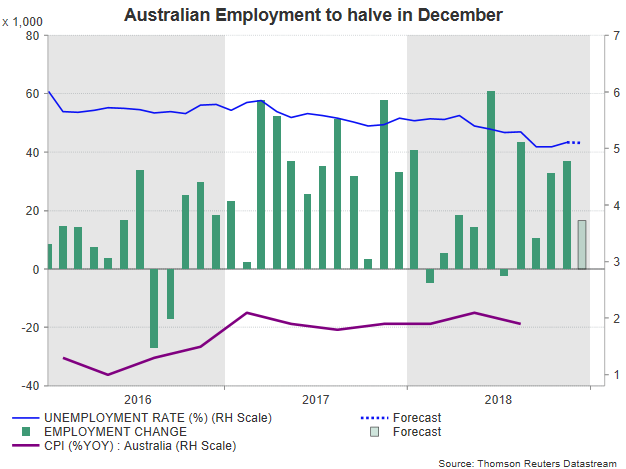
Disappointingly though, wage growth, on which the Reserve Bank of Australia relies to boost inflation, seems insufficient to boost consumption at a time when fears are growing over the consequences of a slowing housing market. In November the Black Friday and Cyber Monday events brought Christmas spending forward, which could depress subsequent retail sales as household spending in December is not expected to be any better, with the National Australia Bank pointing to a lacklustre month instead.
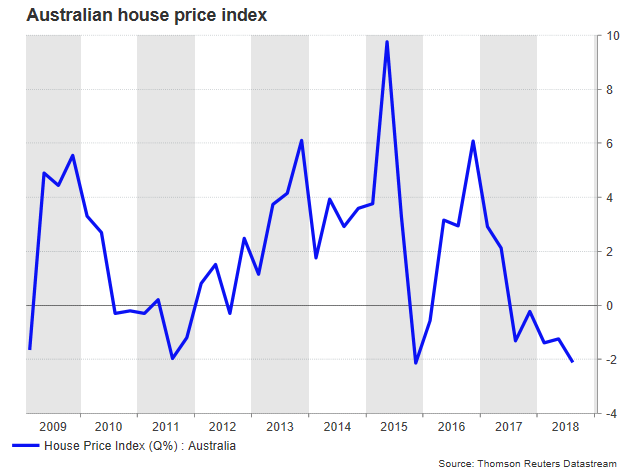
Falling house prices particularly in Sydney and Melbourne add more caution to the air as the latest data revealed that houses haven’t fell by as much in a single quarter since the financial crisis, whilst a research report from Fitch Ratings forecast a further 5.0% decline this year. Should the real estate sector see more downside, squeezing homeowners’ wealth, consumption may take a while to revive. It is also worth noting that bank lending to property investors and customers with interest-only loans has dried up in the recent years due to clamps imposed to limit the excessive debt build-up in the $1.6 trillion home loan market.
On the monetary front, the RBA is positive that the job market could tighten further, eventually pushing inflation gradually towards the midpoint of the 2-3% target. But given the softer GDP growth figures in the third quarter, the developments in the housing market and the economic pressure its top export partner China faces thanks to US trade protectionism, policymakers have no reason to hike interest rates, probably not before late 2020 as the central bank messaged. Instead an increasing number of analysts believes that the central bank could cut rates again at some point in 2019. Yet until warnings flash red, the RBA will likely see the next move in rates as being higher.
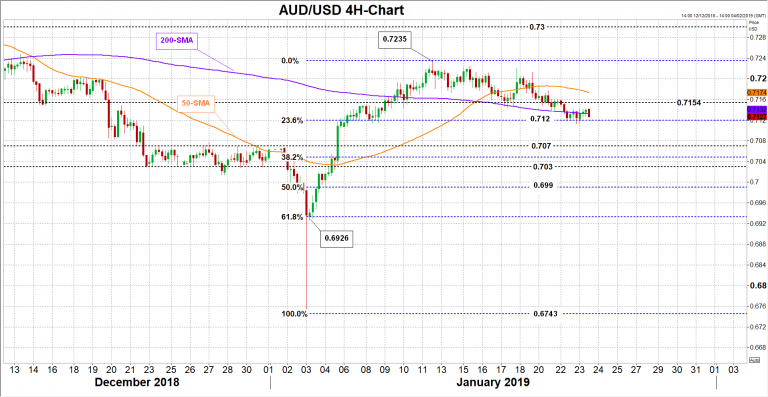
Turning to FX markets since downside risks are larger at the moment, an upbeat employment report on Wednesday could provide temporary support to the aussie. On the upside, aussie/dollar could pause first around 0.7154 before testing the highs between 0.7200 and 0.7235. Breaking even higher, the way could open towards the 0.7300 round level.
Alternatively, a miss in the data may retest the 23.6% Fibonacci of 0.7120 of the upleg from 0.6743 to 0.7235. A cross below that barrier could find a stronger support within the 0.7070-0.7030 area, while even lower, attention will turn to the 50% and 61.8% Fibonacci levels at 0.6990 and 0.6933 respectively.
BTCUSD Lacks Direction as it Stands Within Near term SMAs
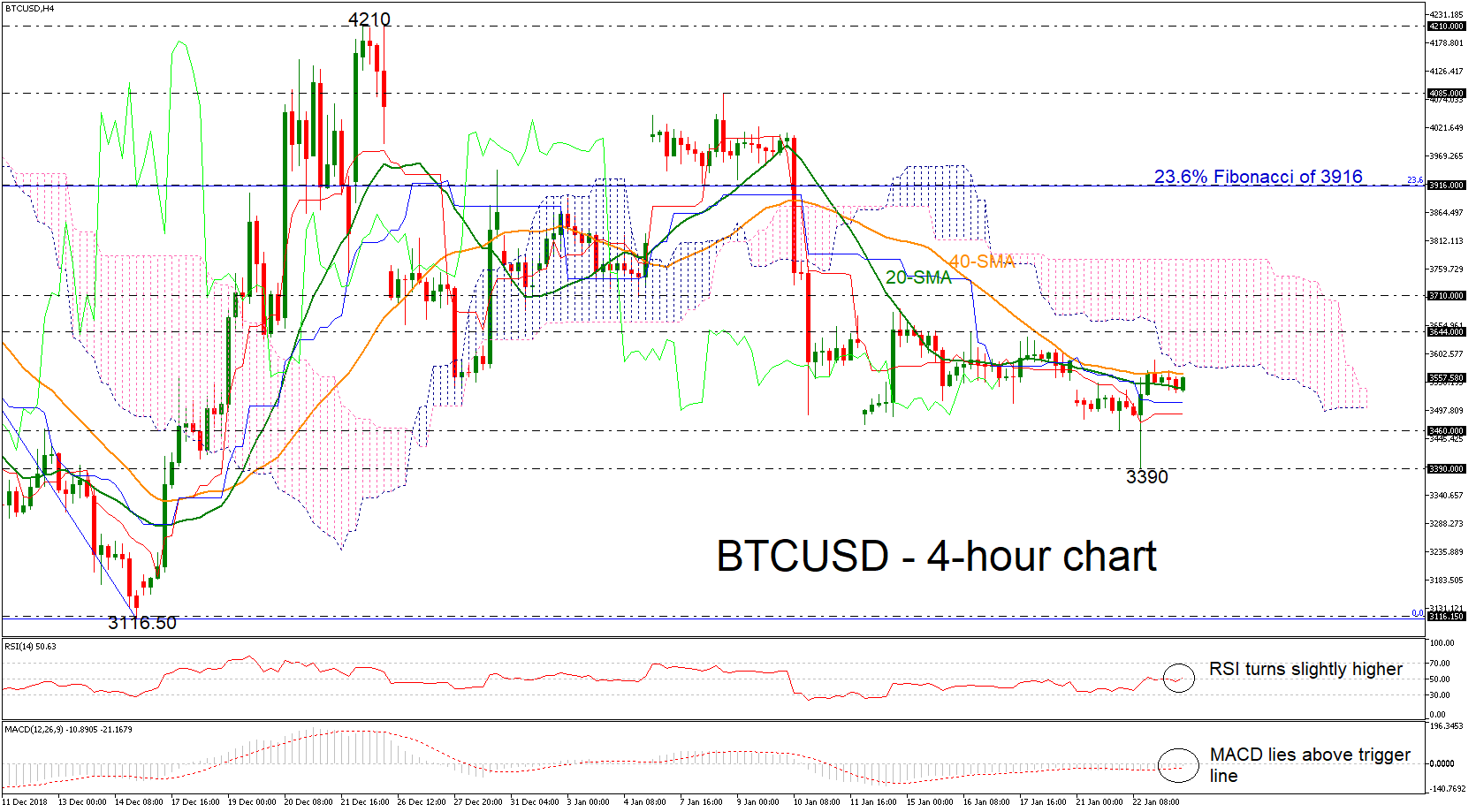
BTCUSD continues to trade within the 20- and 40-simple moving averages (SMAs) in the 4-hour chart, indicating flat movement. The sideways action is also supported by the horizontal Tenkan-sen line. However, momentum signals seem to be slightly bullish as the blue Kijun sen line remains below price action and the light green Chikou span is ready for a bullish crossover with price. The RSI is trying to jump above 50 level, while the MACD oscillator holds above trigger line.
Should the price extend higher above the 40-SMA, it could find resistance inside the Ichimoku cloud at 3644 and then at 3710. Also, an advance above the cloud would increase speculation that a bullish move is in progress towards the 23.6% Fibonacci retracement level of the downleg from 6508 to 3116.50, around 3916.
Should the price stretch south, immediate support is coming from the 3460 barrier, taken from the bottom on Tuesday. A step lower could bring the bearish sentiment back into play, retesting 3390, while if there are steeper declines, 3116.50 could come in focus for investors.
To sum up, the very short-term bias remains neutral especially as BTCUSD lies within SMAs.
Stocks Supported by Strong Earnings from Procter & Gamble, Comcast, and United Technologies
Strong US earnings are making investors focus on the strong US economy and are tentatively driving equites higher across the board. Overnight the global equity rebound stalled as markets were focused on the uncertainty with US-China trade talks. Yesterday’s Financial Times report that the Trump administration scrapped this week’s preparatory trade talks with two Chinese vice-ministers sent a brief shockwave of panic into stocks and pushed safe-haven assets higher. White House Adviser Larry Kudlow quickly refuted the report and we saw that help recover some of the losses, but the damage was done as skepticism will likely grow as we near the next key meeting which will take place at the end of the month with Vice Premier Liu He. We have seen a hunky-dory period of calm with trade talks, but that could end as the US will likely a hardline on forced technology transfers and structural reforms. US stocks will continue to take their queue from a busy earning season reporting day.
This morning we saw strong top and bottom line beats from three big earning reports.
Procter & Gamble earnings beat was also accompanied with a slight raise to their organic revenue guidance, possibly a good sign for the US consumer.
The US cable giant also delivered strong results and loss less TV customers than expected, not necessarily a sign US consumers are cutting expenses, but perhaps Netflix and Amazon Prime are taking away market share. Comcast did deliver 351,000 new customers, a slight miss of the 358,000 analysts eyed, but roughly flat year over year.
United Technologies saw robust corporate earnings and was very optimistic with their aerospace projects. The initial guidance was in-line with analysts expectations.
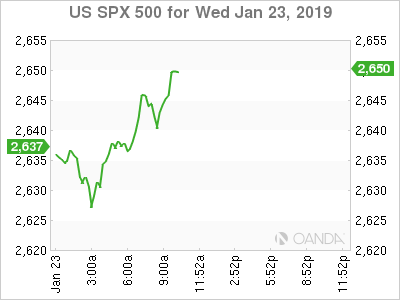
The Dow Jones Industrial Average and S&P 500 future are poised to open over half a percentage point higher. The risk on mode is also driving the Japanese yen lower against all of its major trading partners. Gold is also down 0.4% and approaching the lows for the week.
Autos and Lower Gasoline Prices Weigh on Canadian Retail Sales in November
Canadian retail sales dropped 0.9% (m/m) in November, following the prior month's revised 0.2% increase (previously reported as 0.3%). This comes against consensus expectations for a 0.6% decline. After accounting for price changes, volumes were still down a disappointing -0.4%.
Performance across the subsectors was generally weak, with sales down in six out of the eleven categories. The headline decline was driven primarily by lower gasoline prices and sub-par auto sales, which resulted in a 5% drop in sales at gasoline stations (-1.5% in real terms) and a 1.8% drop in sales at motor vehicle and parts dealers (also -1.8% in real terms), respectively. Excluding those two volatile categories, nominal retail sales were up a modest 0.2%.
Consistent with housing market softness, sales dropped again in furniture and home furnishing stores (-0.4%, +0.1% in real terms) and in building materials and gardening equipment stores (-0.3%, -0.1% in real terms).
E-commerce sales, reported on a year-on-year basis, were up 20.1%, continuing its outperformance.
Regionally, the decline was relatively widespread, with sales down in eight out of the ten provinces. Ontario (-1.6%) and Quebec (-1.5%) led the declines, whereas Alberta (+1.9%) saw the first monthly increase following three months of declines. Performance across the Atlantic provinces was weak, with sales down in all four provinces.
Key Implications
This release came in a bit worse than expected. The disappointing volumes print and the downward revision to the previous month's data add salt to the wound. Combining this data and yesterday's manufacturing and wholesale trade data leaves our fourth quarter GDP tracking a tick lower at 1.5%, roughly in line with Bank of Canada expectations.
Going forward, healthy labour markets should continue to provide some support to consumer spending. Nevertheless, this will likely be countered by rising borrowing and debt-servicing costs. November's retail sales data reinforces the moderating growth narrative, and reinforces the need for a shift away in real GDP growth from consumer spending to investment and exports to keep growth around its long-term trend.
Sunset Market Commentary
Markets
Global core bonds lost ground today as risk sentiment recovered. US equities lost up to 2% yesterday on fading trade optimism, but the sentiment turned overnight. US top economic advisor denied trade talks with China were cancelled and said next week’s top level trade talks will be “determinative”. Meanwhile, China’s central bank confirmed new monetary stimulus. Q4 Corporate earnings printed generally above expectations. EU equities first opened lower but recovered since to trade in green territory at the time of writing. With literally no economic data to guide investors, the uptick in sentiment weighed on core bonds with US Treasuries underperforming German Bunds. The German yield curve moves cautiously higher with changes in the range of +0.3 bps (10-yr) to +0.6 bps (2-yr). Tomorrow’s vote in the US Senate on legislation to reopen the government probably won’t pass, but at least both parties are discussing possible way outs. The US yield curve steepens with changes between +0.8 bps (2-yr) to +2.8 bps (30-yr). Peripheral spreads over the German 10-yr yield are stable. Investors are awaiting the ECB meeting and the EMU PMI’s for January, both scheduled for tomorrow.
There was little high profile news to guide trading in the major USD cross rates. USD/JPY touched an intraday peak near 109.80 as the BOJ downgraded its inflation forecast. USD/JPY lost (temporarily) part of Asian gains as European equities opened in risk-off modus. The pair drifted back to the mid 1.13 area. Risk-sentiment improved again later in the session. This change in the mood on global markets was no big game-changer for FX trading, but it blocked a further EUR/USD decline. The pair rebounded in lockstep with equities. Unlike stocks, however, EUR/USD couldn’t maintain gains as the widening US/German spreads also triggered dollar buying by the first US traders. The couple is hovering near intraday lows but holds the line for now, trading at the 1.1360 area. Higher US yields resulted in a knee-jerk USD/JPY uptick, which set a new intraday top in the high 109 area.
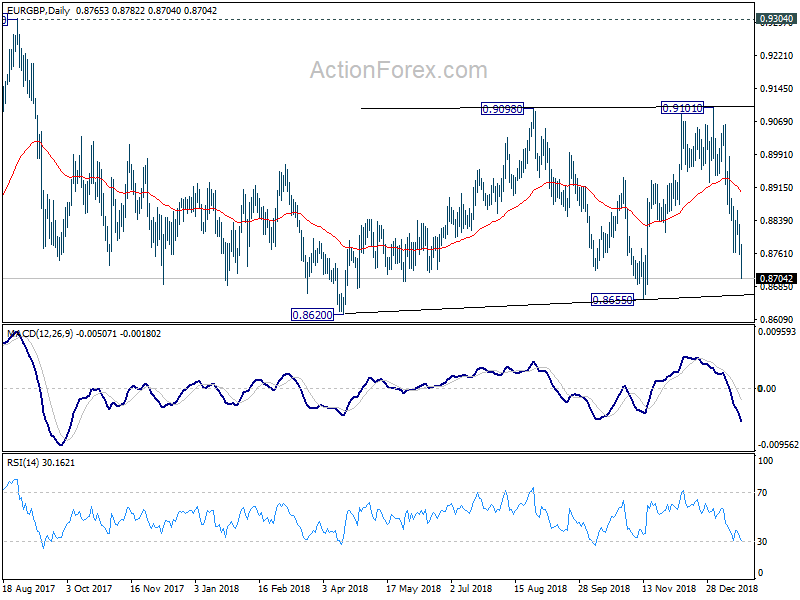
Sterling trading was still driven by growing investor hope that a no-deal Brexit can be avoided. In the same narrative, Brexit is expected to be delayed beyond the March 29 deadline. A brexit delay won’t solve the fundamental issues causing the political division in the UK. So it is far from sure that the uncertainty will disappear immediately in that scenario. However, political heat might cool down for a while. This is currently enough for FX markets to take a more positive approach on sterling. EUR/GBP extends its decline and is trading in the 0.871 area. High profile support in this cross rate is seen in the 0.8656/0.8621 area. Cable also jumped north of the 1.30 mark. CBI order data softened in January (from 5 to ‑1), but had no noticeable impact on sterling trading.
News Headlines
Italy’s finance minister Tria assured Rome won’t overshoot its 2019 budget deficit target and sees no need for any corrective measures. It is expected the 2.04% target will be exceeded as the country’s central bank said that GDP probably contracted at the end of last year, thereby lowering growth for the whole of 2018 to a mere 0.6% vs. 1.0% projected by the government.
Pressure on the Romanian leu eased somewhat today. The currency crashed on escalating concerns rooted in the Romanian government’s decision to impose a bank levy to boost budget income. The levy is based on total assets and is tied to the money-market rate. Markets fear the move could result in reduced lending and thwarts the tightening cycle of the country’s central bank.
Canadian Retail Sales Fell in November, Continuing a Soft H2/18
Highlights:
- Retail sales fell 0.9% in November with declines in 6 of 11 subsectors.
- Motor vehicle sales were down nearly 2% (a decline flagged by earlier unit sales reports) and sales at gasoline stations fell 5% on lower prices.
- Sales volumes were down 0.4% and little changed from a year earlier.
- E-commerce sales were up 20% from a year ago and accounted for more than 4% of retail trade in November.
- Following yesterday’s soft manufacturing and wholesale data, we maintain our monitoring for a 0.1% decline in November GDP.
Our Take:
Canadian retail sales were slightly weaker than expected in November, falling nearly 1% from the previous month. As anticipated, lower nominal sales at auto dealers and gasoline stations were restraining factors (the latter price-related). Outside those two sectors, retail spending edged up 0.2%—just a touch slower than we thought. But overall sales volumes were down in the month and effectively flat relative to a year earlier. The second half of 2018 (at least through November) was a tough stretch for retailers, with consumers cutting back on purchases of durable goods in particular. Sales of furniture and building materials fell amid slumping home sales, while auto sales were likely weighed down by rising interest rates. It’s hard to see spending on those items rebounding in 2019 as we expect further interest rate hikes (though at a slightly slower pace than in 2018) and another year of subdued home sales. Households in general will face pressure from rising debt service costs, including continued pass-through of earlier rate increases. Consumer spending added 2 ppts to GDP growth in 2017 but just 1.3 ppts last year. We think the contribution will be less than 1 ppt this year.
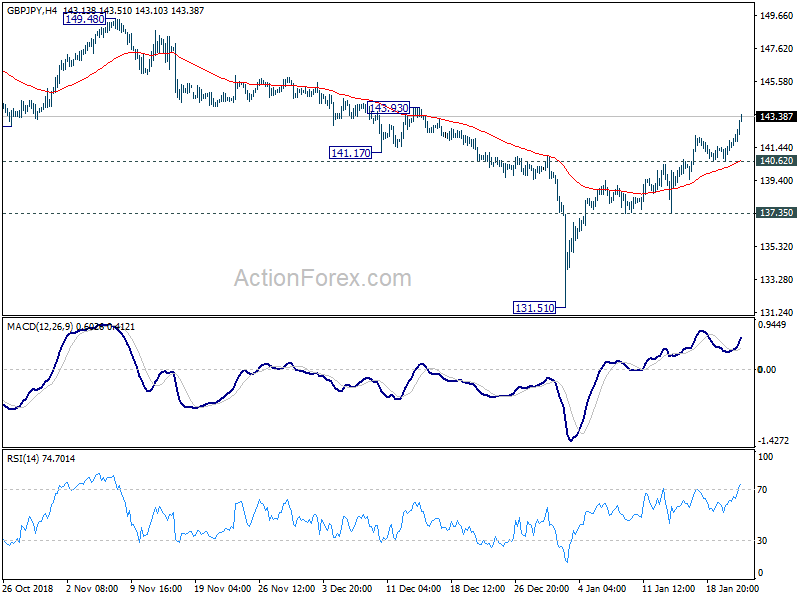
GBP/JPY Mid-Day Outlook
Daily Pivots: (S1) 140.93; (P) 141.41; (R1) 142.20; More...
GBP/JPY's rise accelerates to as high as 143.51 so far. Intraday bias stays on the upside. Break of 143.93 resistance will pave the way back to 149.48 key resistance next. On the downside, below 140.62 minor support will turn intraday bias neutral again. But further rally is expected as long as 137.35 minor support holds.
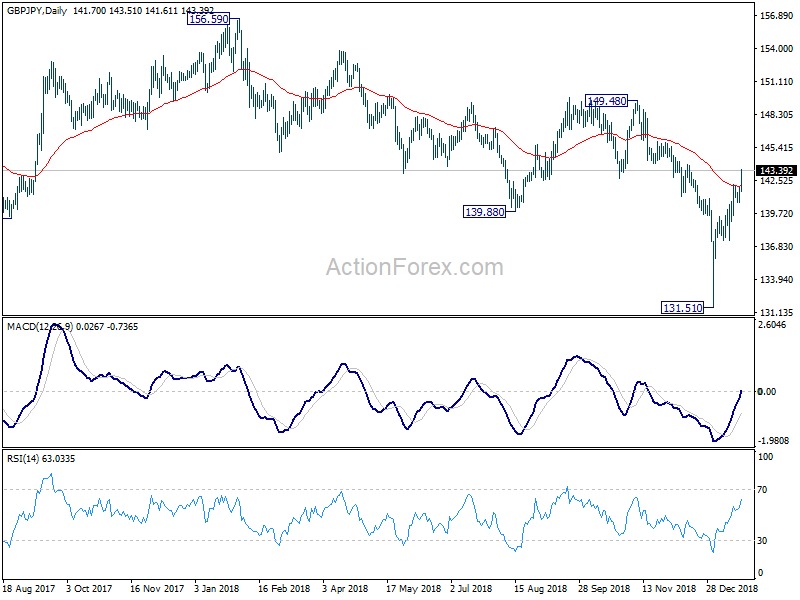
In the bigger picture, corrective medium term rise from 122.36 (2016 low) has completed at 156.69 (2018 high) already. That came after failing to break through 55 month EMA. No change in this view. Strong rebound from 131.51 argues that fall from 156.59 is just the second leg of the corrective pattern from 122.36. Break of 149.38 resistance will confirm the third leg has started to 159.69, and possibly above. Nevertheless, break of 131.51 will pave the way to retest 122.26 low.
EUR/GBP Mid-Day Outlook
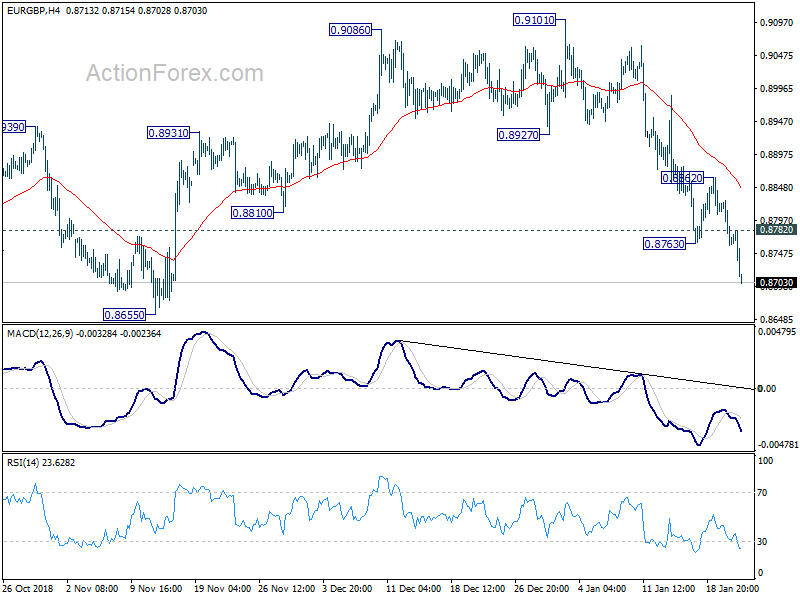
Daily Pivots: (S1) 0.8742; (P) 0.8786; (R1) 0.8812; More...
EUR/GBP's decline continues today and reaches as low as 0.8705 so far. Intraday bias stays on the downside for 0.8620/55 support zone. We'd expect strong support from there to bring near term reversal. On the upside, above 0.8782 minor resistance will turn intraday bias neutral first. But break of 0.8862 resistance is needed to confirm short term bottoming. Otherwise, further fall is still expected in case of recovery.
In the bigger picture, EUR/GBP is seen as staying in long term range pattern started at 0.9304 (2016 high). The medium term range is set between 0.8620 and 0.9101. Downside break out of 0.8620 will pave the way back to 0.8302/12 support zone. Break of 0.9101 will bring retest of 0.9304/5 resistance.