

Sample Category Title
EUR/GBP Weekly Outlook
EUR/GBP dropped further to as low as 0.8763 last week after taking out 0.8927 support. A temporary low is formed and initial bias is turned neutral this week. Further decline is expected as long as 0.8927 support turned resistance holds. Below 0.8763 will target 0.8620/55 support zone. We'd expect strong support from there to bring near term reversal.
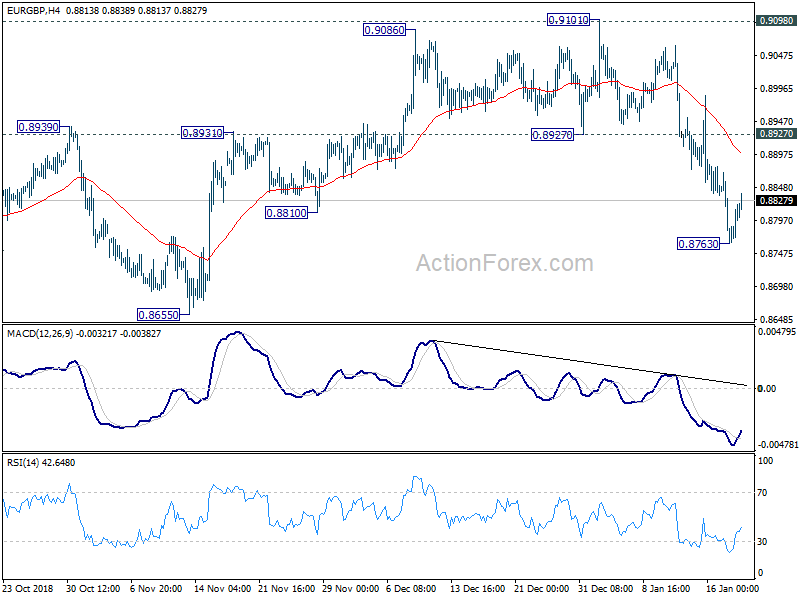
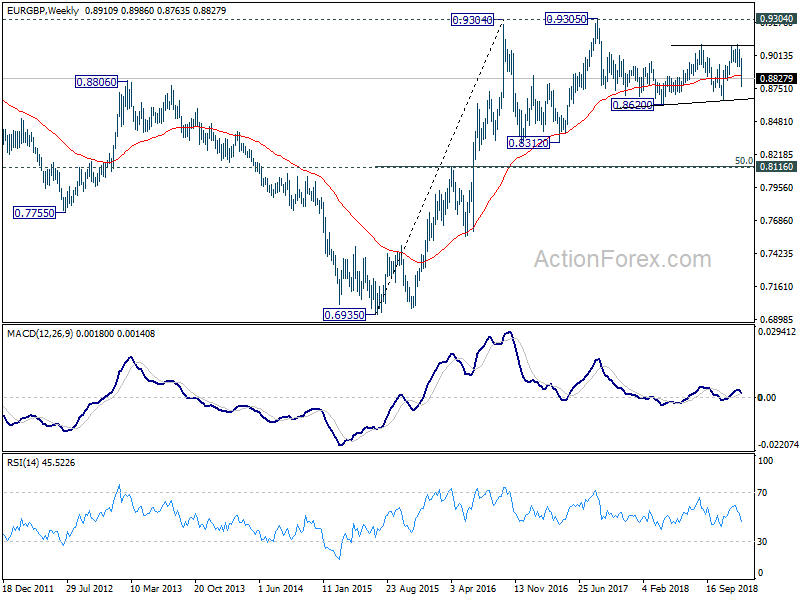
In the bigger picture, EUR/GBP is seen as staying in long term range pattern started at 0.9304 (2016 high). The medium term range is set between 0.8620 and 0.9101. Downside break out of 0.8620 will pave the way back to 0.8302/12 support zone. Break of 0.9101 will bring retest of 0.9304/5 resistance.
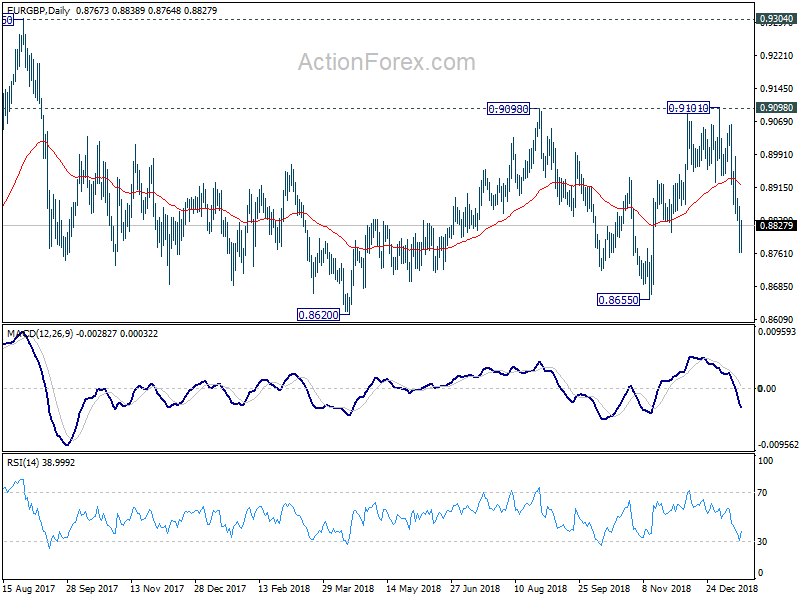
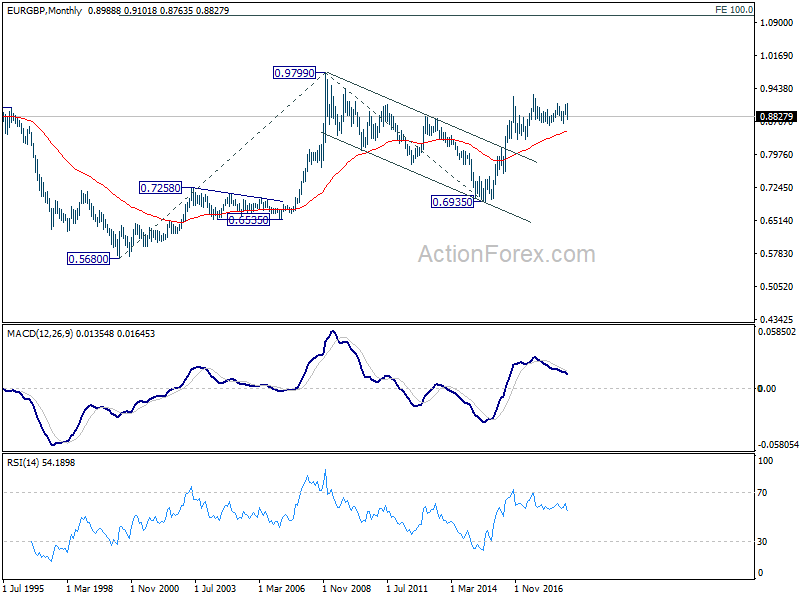
In the long term picture, we're holding on to the view that rise from 0.6935 (2015 low) is resuming the up trend from 0.5680 (2000 low). Hence, after the consolidation from 0.9304 completes, we'd expect another medium term up trend through 0.9799 to 100% projection of 0.5680 to 0.9799 from 0.6935 at 1.1054.
EUR/AUD Weekly Outlook
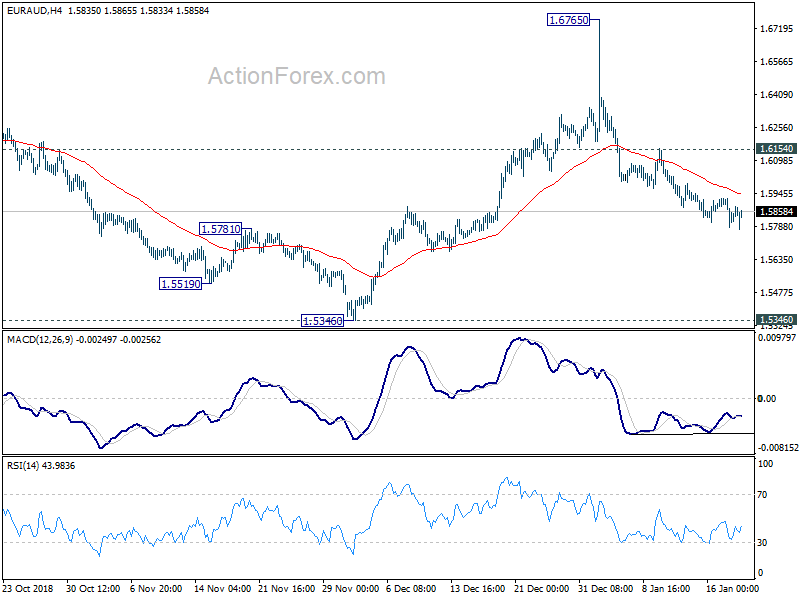
EUR/AUD's fall from 1.6765 extended last week despite diminishing downside momentum, and reached as low as 1.5774. As long as 1.6154 minor resistance holds, further decline is still expected for 1.5346 key support. However, break of 1.6154 will turn intraday bias back to the upside for retesting 1.6765 instead.
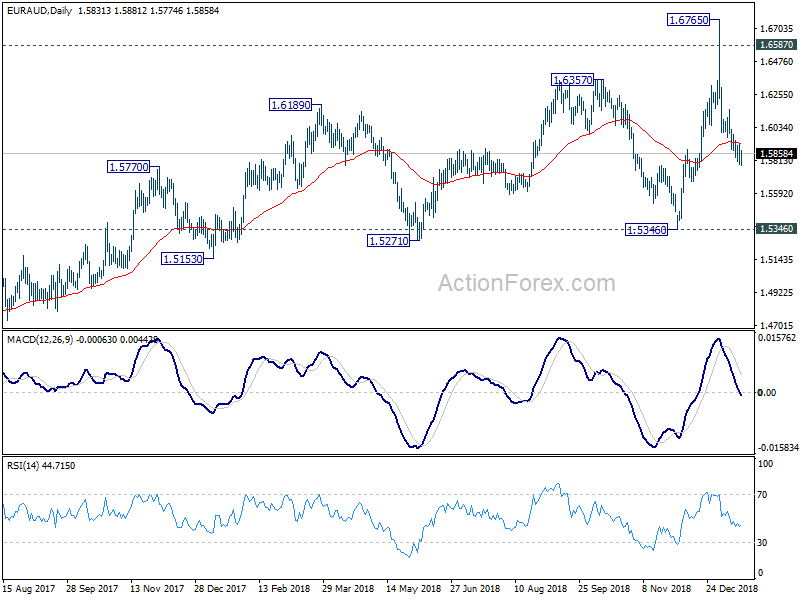
In the bigger picture, the failure to sustain above 1.6587 key resistance (2015 high) argues that up trend from 1.1602 (2012 low) is not ready to resume yet. But still, as long as 1.5346 support holds, outlook will remain bullish. Break of 1.6765 will target 61.8% retracement of 2.1127 (2008 high) to 1.1602 at 1.7488 next. However, firm break of 1.5346 key support will indicate trend reversal, with bearish divergence condition in weekly MACD, and turn outlook bearish.
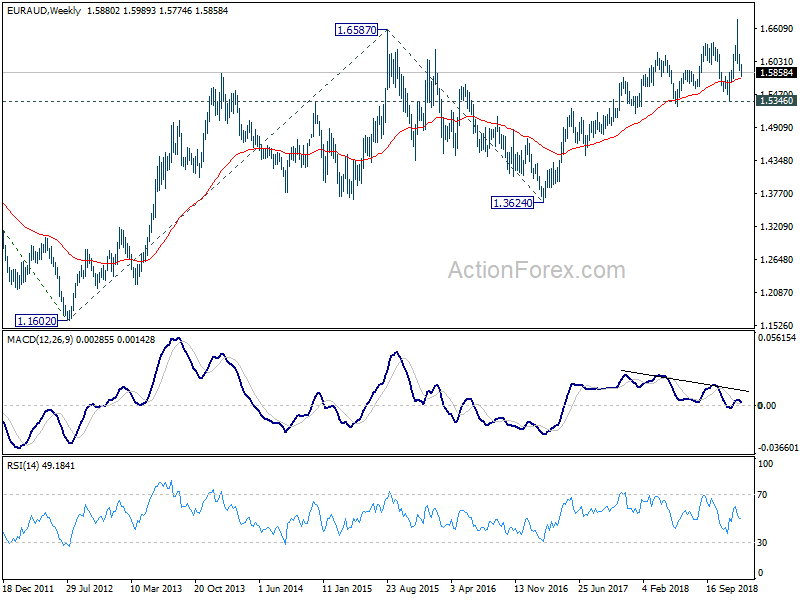
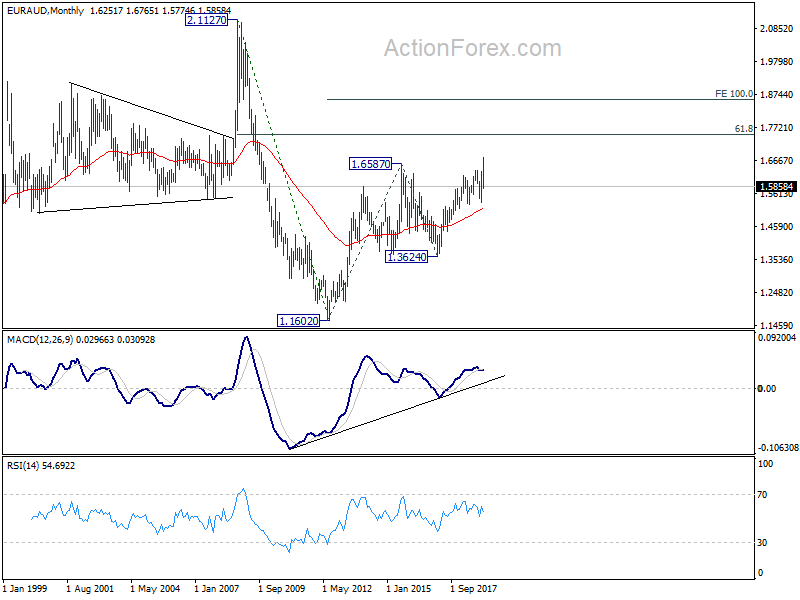
In the longer term picture, the rise from 1.1602 long term bottom (2012 low) is still in progress. Break of 61.8% retracement of 2.1127 to 1.1602 at 1.7488 will pave the way to 100% projection of 1.1602 to 1.6587 from 1.3624 at 1.8069. And this will remain the favored case as long as 1.5346 remains intact.
EUR/CHF Weekly Outlook
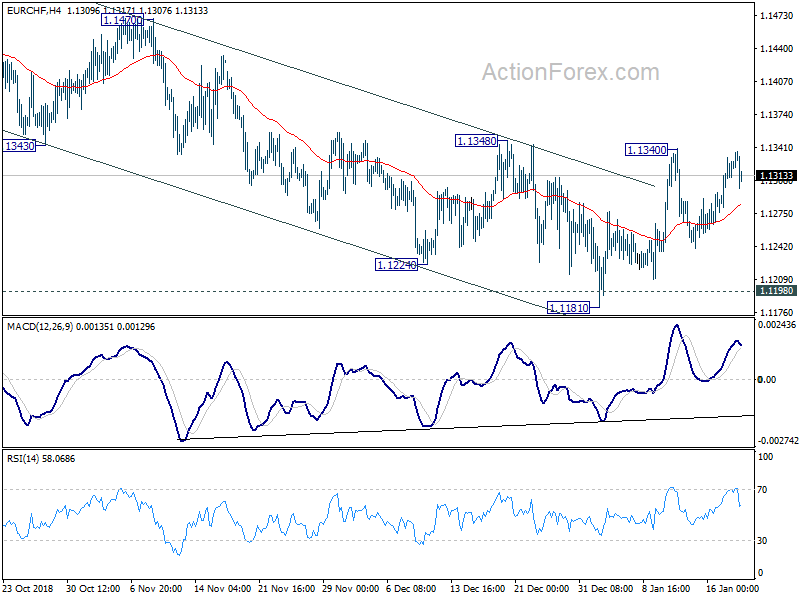
EUR/CHF rebounded to 1.1337 last week but failed to break through 1.340/8 resistance so far. Initial bias remains neutral this week first. Overall, we're slightly favoring the case the choppy decline from 1.1501 has completed at 1.1181 already. On the upside, break of 1.1348 will confirm this bullish case and turn bias to the upside for retesting 1.1501 next. On the downside, in case of another fall, we'd expect strong support from 1.1154/98 support zone to contain downside to bring rebound.
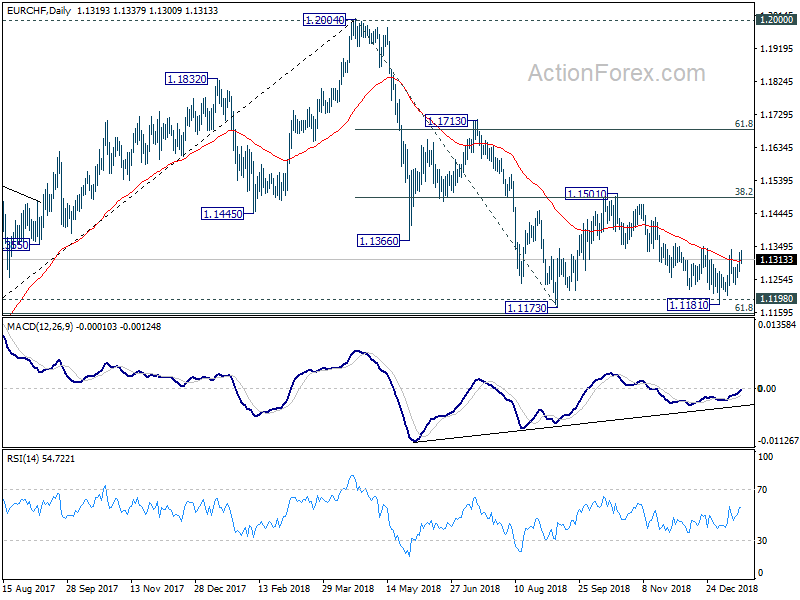
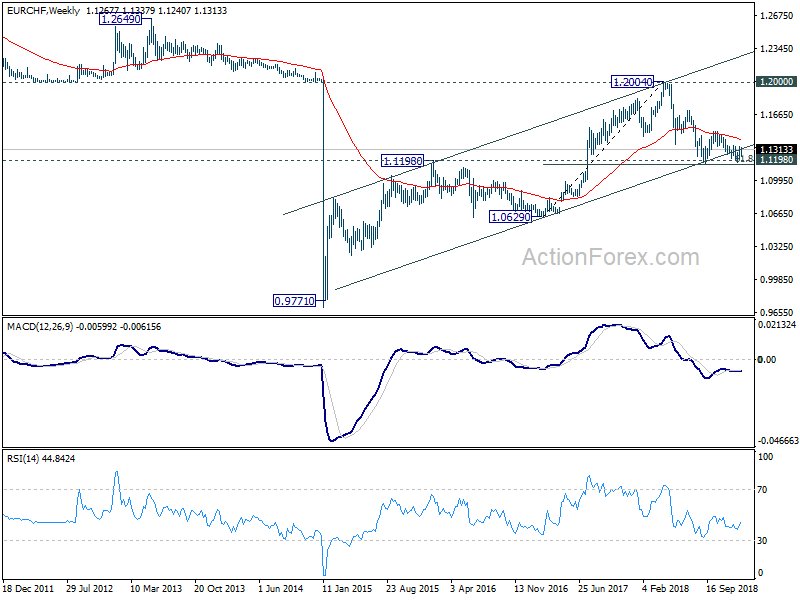
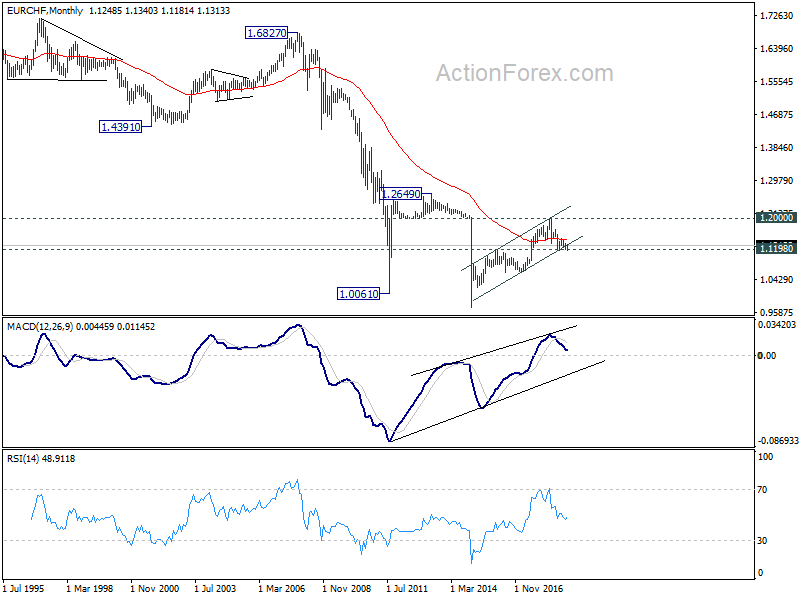
In the bigger picture, price actions from 1.2004 medium term top is seen as a correction only. Downside should be contained by support zone of 1.1198 (2016 high) and 61.8% retracement of 1.0629 to 1.2004 at 1.1154 to complete it and bring rebound. A break of 1.2 key resistance is still expected in the medium term long term. However, sustained break of the mentioned support zone will mark reversal of the long term trend. In that case, 1.0629 key support will be back into focus.
Trade Optimism Lifted Stocks, Yields and Dollar
Brexit and US-China trade negotiation were the two major themes last week. After a week of drama, it's still unclear exactly what kind of Brexit deal would get through the Parliament. There's some anticipation for UK Prime Minister Theresa May on her plan B on Monday. Yet she could fail to deliver again. Nevertheless, Sterling ended as the strongest one last week on perceived diminishing chance on no-deal Brexit.
On the other hand, Dollar gained as there are signs of progress in the trade talks. Or at least, words from the US side were positive. The developments also lifted stocks and treasury yields. The US government shutdown is extending its record run with no end in sight. But it's largely ignored by traders. New Zealand Dollar ended as the weakest one, followed by Swiss Franc and then Yen.
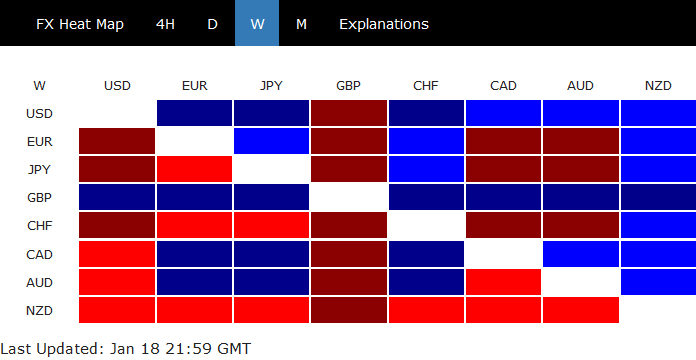
Sentiments improved on progress of US-China trade negotiations
Global market sentiments were broadly lifted by optimism that US and China will eventually make a trade deal to avert full blown trade war. China Vice Premier Liu He has confirmed his visit to Washington for next round of negotiation on January 30-31. Ahead of that, comments from the US side were generally positive. White House economic adviser Larry Kudlow noted on Friday that "We're making progress in negotiating on the grandest scale between the two countries ever, we're covering everything". He added "It's going to take time. We are moving."
It's reported that the US is demanding regular reviews of reforms in China as the latter has history of unfulfilled promises. At the same time, tariffs threat won't go away even if it's a deal, to ensure thorough implementation of the agreed reforms. In particular, US is known to have heavy concerns over intellectual property protection, technology transfers, industrial subsidies and other trade barriers, rather than just trade deficit.
On the other hand, it's also reported that China is offering a six-year path to eliminate trade surplus with the US, by 2024. It stood at USD 323B last year. That is seen as doable on the Chinese side as they could just shift imports from other countries to the US. But that will likely be seen as inadequate by Trump and UTRS Robert Lighthizer. Their concerns are more on opening up market access in China, rather than just selling to China.
DOW extended rebound, more upside in near term
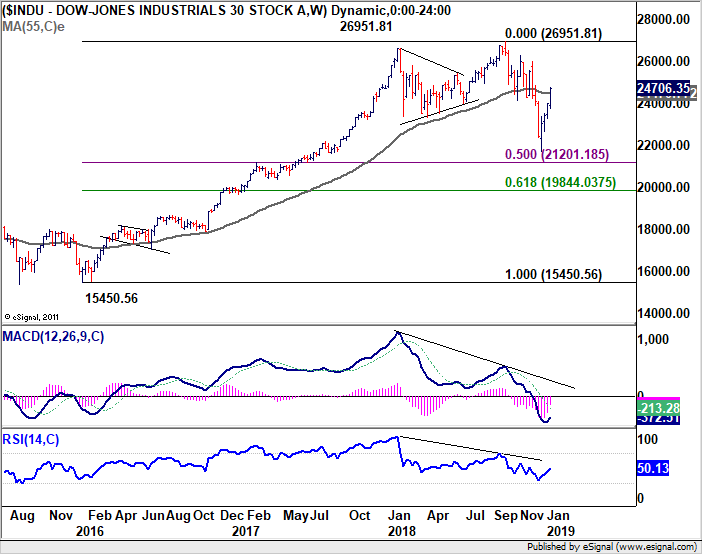
Nevertheless, investors were happy with the "progress" so far as DOW ended up strongly again to close at 24706.35. 55 day EMA was decisively taken out. For now, as long as 24014.78 support holds, the rebound from 21712.53 should head towards 61.8% retracement of 26951.81 to 21712.53 at 24932.09. Or it could rise further to 78.6% retracement at 25820.34 before topping.
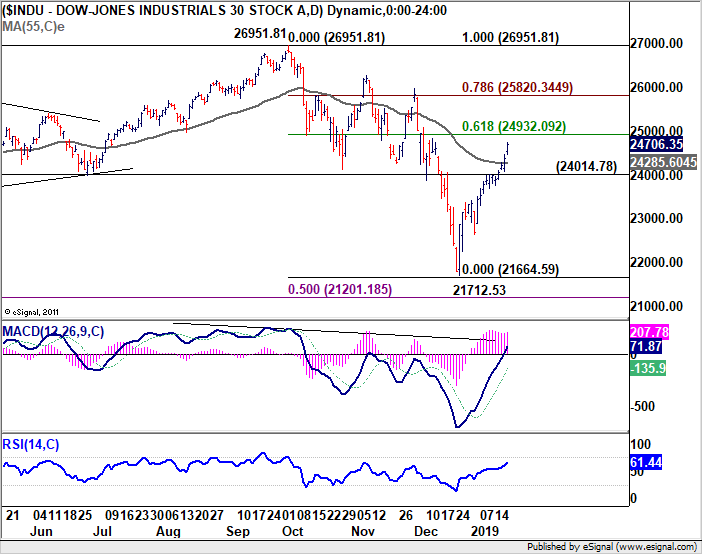
More importantly, DOW is now back above 55 flat 55 week EMA. The development suggests that price actions from 26951.81 are just correcting the up trend from 15450.45, rather than the 10 year up trend from 6469.95. If that's the case, the range of the consolidation is pretty much set.
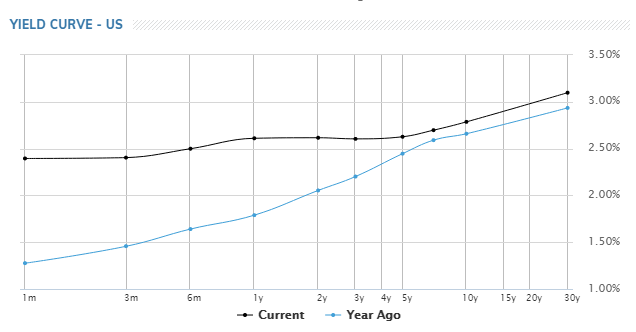
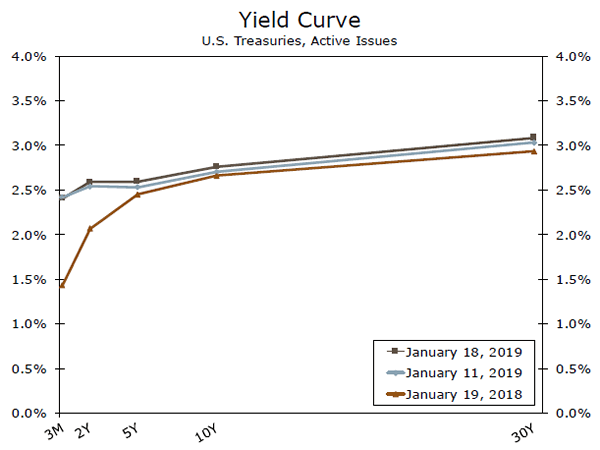
Inverted US yield curve turned flat
Optimism is also clearly reflected in the US yield curve. From 1-year (2.610) to 2-year (2.616) to 3-year (2.604) and 5-year (2.627), the curve is essentially flat, rather than inverted.
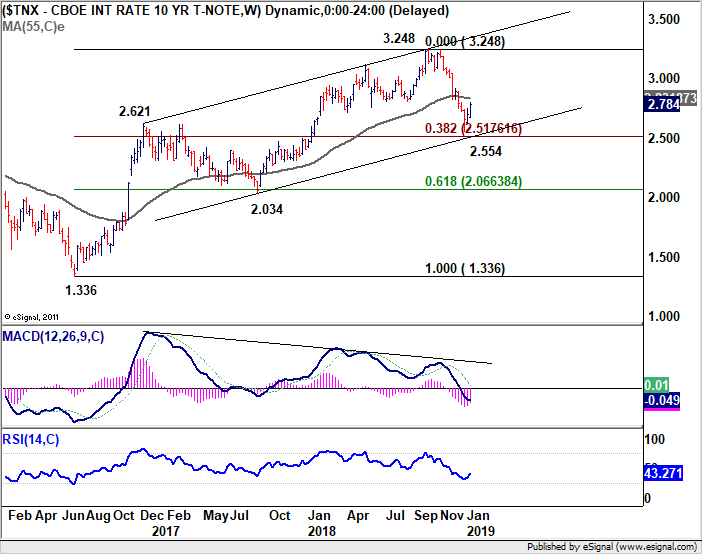
10-year yield also extended the rebound from 2.554 to close at 2.784 last week. Technically, strong support was seen from long term channel as well as 38.2% retracement of 1.336 to 3.248 at 2.517. Sustained break of 55 week EMA (now at 2.831) should confirm completion of the pull back from 3.248. And that should also confirm that the up trend from 1.336 is saved.
Dollar index's correction might be completed
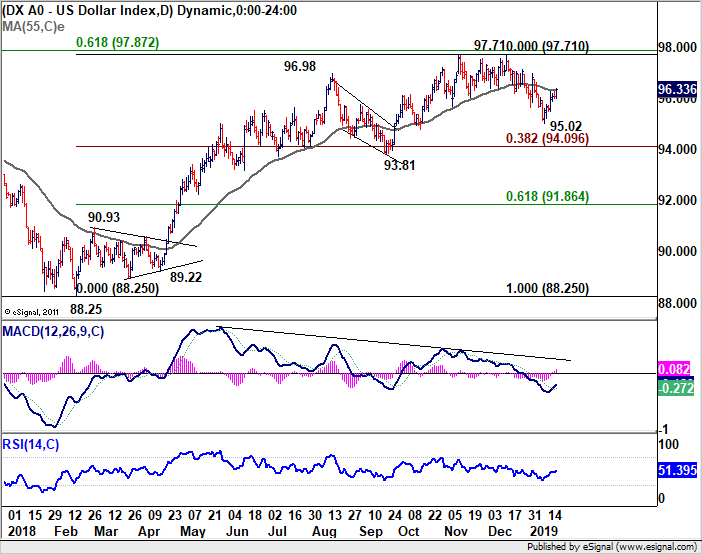
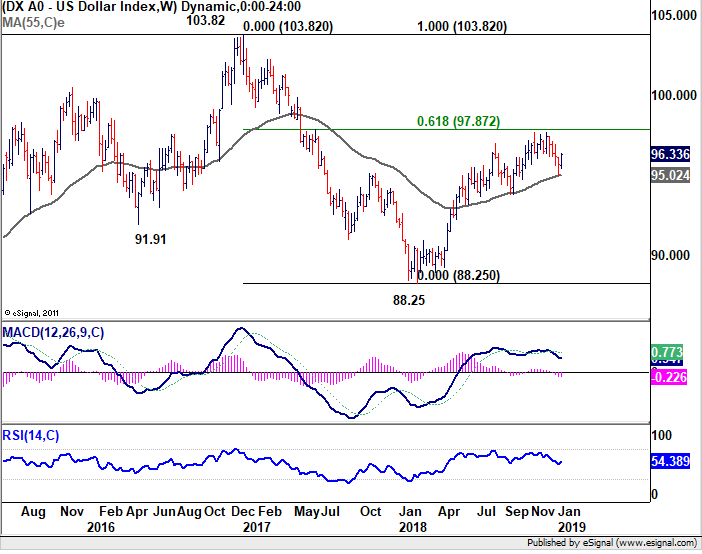
Dollar index's recovery from 95.02 extended higher last week to close at 96.33. The developments are turning positive for the index considering that it drew support from 55 week EMA. EUR/USD's corrective rise looks completed earlier than expected at 1.1569. Similarly, USD/CHF's corrective pull back is likely completed at 0.9176 too. USD/JPY has taken out a key resistance level at 109.46. The above development, further rebound is both stocks and yield will revive the chances of Fed's rate hikes in the second half of the year. And that should be Dollar positive too. Hence, we'll pay attention to reaction from 55 day EMA this week. Firm break will bring retest of 97.71 high. But rejection by the EMA will extend the correction from 97.71 with another decline.
Sterling ended strong after Brexit drama
After a week of Brexit drama, Sterling ended as the strongest one last week despite paring some gains on Friday. In short, UK Prime Minister Theresa May's Brexit deal suffered historic defeat in the Commons on Tuesday. But she then narrowly survived the confidence vote on Wednesday. Now May is continuing with her liaison with UK MPs and EU to line up an amended deal. May is expected to table her plan B on Monday. The Commons has scheduled to vote on the amended motion on January 29.
Domestically, there is no serious discussion between May and opposition Labour leader Jeremy Corbyn. Corbyn insisted that May have to take no-deal off the table, but May refused to do so because "it is not within the Government's power to rule out no deal." On the other hand, former Conservative Prime Minister John Major criticized that "Her deal is dead and I don't think honestly that tinkering with it is going to make very much difference if any difference at all".
With the EU, it's reported that May is repeating the same demand regarding the Irish backstop. Those include either a legally binding time-limit, right for UK to unilaterally withdraw, or a commitment to to a trade deal finalization before 2021. May has been in talks with h Dutch Prime Minister Mark Rutte, German Chancellor Angela Merkel, French President Emmanuel Macron and Irish leader Leo Varadkar.
At this point, we're not seeing any progress for May's deal, in whatever amendment, to get enough vote from the parliament yet. But let's see what she'll say on Monday.
ECB and BoJ to meet this week
Two central banks will meet this week, ECB and BoJ. At the meeting in December, ECB has already turned cautious by noting that risks are broadly balanced by moving to the downside. Since then, economic data remained weak. In particular, headline CPI slowed back to 1.6% yoy while core CPI was unchanged at 1.0%, showing no upward pressure. But for now, the deterioration in outlook is unlikely strong enough to prompt ECB to change its forward guidance yet. That is, ECB will likely maintain the wordings of keeping interest rates unchanged at present level at least through summer of 2019. Policymakers would probably wait for new economy projections in March first, before making any changes.
On the other hand, BoJ will release new economic projections this week and we may see downward revision in inflation estimates. In December, Japan all item CPI slowed to 0.3% yoy, down from 0.8% yoy and matched expectation. Core CPI, all item ex-fresh food, slowed to 0.7% yoy, down from 0.9% yoy and missed expectation of 0.8% yoy. Core-core CPI, al item ex-fresh food, energy, stayed unchanged at 0.3% yoy. The data showed that even discounting the fall in energy prices, consumer inflation stayed week. And apparently, the recovery is not passed on to consumers. And business remained reluctant to raise prices. The data added to the case for BoJ to cut inflation forecasts. Back in October, BoJ projects core CPI to hit 1.4% in fiscal 2019 and then 1.5% in fiscal 2020. Such projections would be trimmed to reflect the decline in oil as well as global slowdown.
Position trading strategy
As market sentiments improve, with further rebound in stocks, back-to-normal yield curve, and progress in US-China trade negotiations, we'd expect traders to start pricing in Fed's rate hike again. They were rather pessimistic just two to three weeks ago, when the chance of a cut by December was higher than that of a hike. Hence, we'll look for opportunity to buy Dollar ahead.
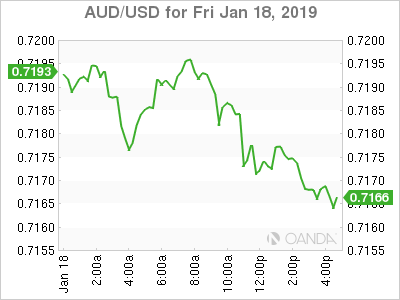
Last week, we noted that buying Sterling was tempting on receding chance of no-deal Brexit. This week, selling Sterling also looks tempting as the rally lost momentum. But still, we'd avoid it as Brexit outcome remains unpredictable. USD/JPY's rebound from 104.69 is extending and looks strong. But the structure still suggests it's corrective. Thus, we'll not long USD/JPY. We'll also avoid selling AUD/USD since downside will be limited should stock rebound continue.
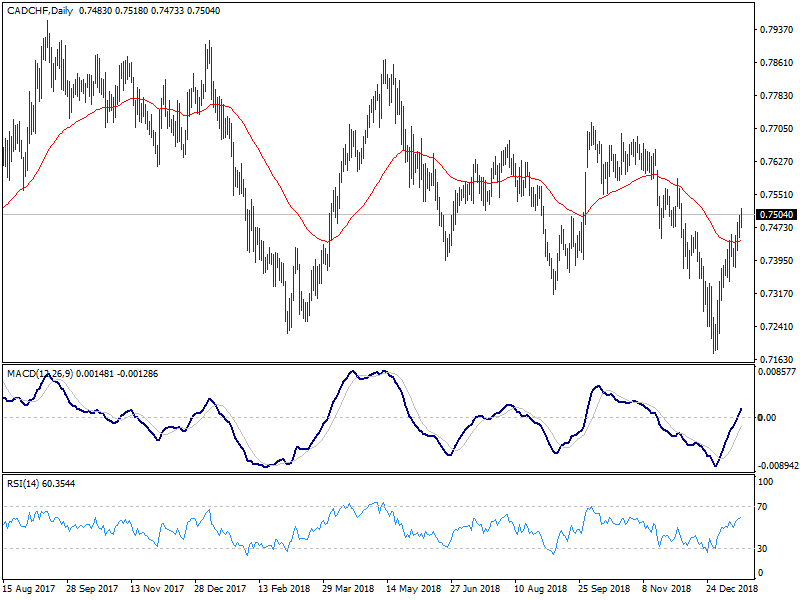
Comparing Euro and Swiss Franc, the Franc is the preferred one to sell as EUR/CHF drew support from 1.12 handle and it's trying to extend the rebound. Actually, CAD/CHF long is a candidate too considering the strength in Loonie thanks to oil price rally. USD/CAD also stays near term bearish. But comparing USD/CHF and CAD/CHF, USD/CHF is in a clearer medium term rise. Hence, USD/CHF is preferred.
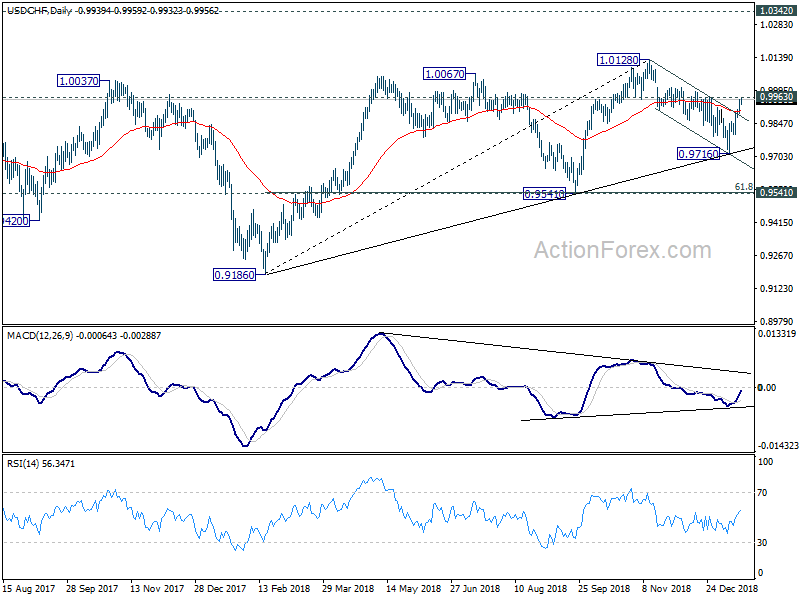
Taking a look at USD/CHF, firstly, structure of the fall from 1.0128 suggests that it's corrective. Strong rebound from medium term trend line also suggests that medium term rise from 0.9186 is still in progress. Last week's break of near term channel resistance suggests that the correction is completed at 0.9716 already. And, larger rise might be ready to resume.
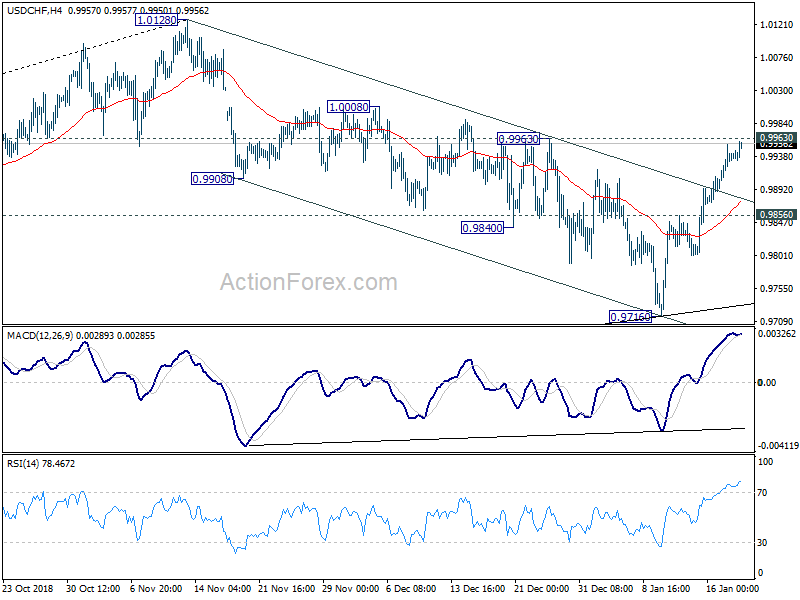
Though, as USD/CHF is facing 0.9963 resistance and EUR/CHF retreated ahead of 1.1340/8, we'll choose to buy USD/CHF on dip. That is, we'll buy USD/CHF at 0.9920 (mid-way between 0.9963 and 4 hour 55 EMA at 0.9876). Stop will be placed at 0.9825, below 0.9856 minor support. Target is placed at 1.0300, as we expect the upside to extend to take on 1.0342 resistance (2017 high). Risk/reward ratio is at 1:4 which is acceptable.
GBP/USD Weekly Outlook
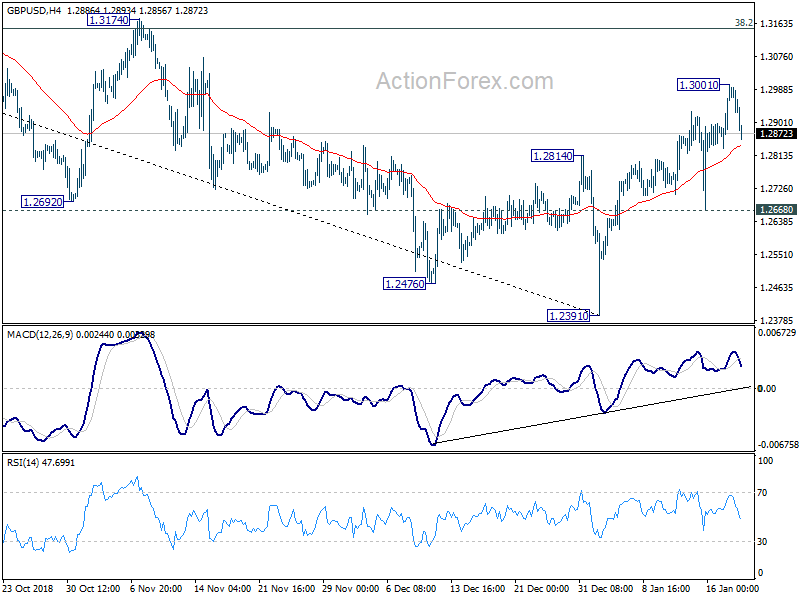
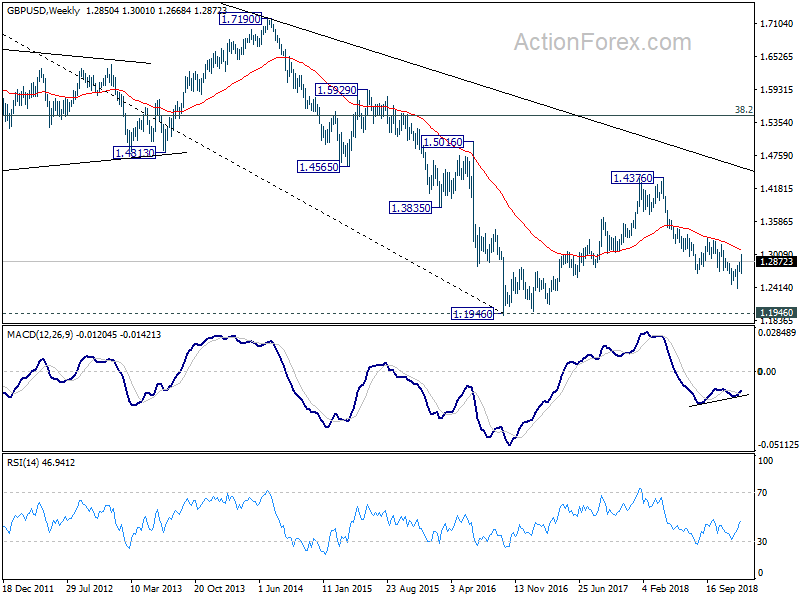
GBP/USD's corrective rise from 1.2391 extended to 1.3001 last week but formed a temporary top there and retreated. Initial bias is neutral this week for some consolidations first. Further rally is expected as long as 1.2668 minor support holds. On the upside, above 1.3001 will target 1.3174 resistance, which is close to 38.2% retracement of 1.4376 to 1.2391 at 1.3149. We'd expect strong resistance from there to limit upside, at least on first attempt. On the downside, break of 1.2668 support will argue that such rebound is completed and turn bias back to the downside for retesting 1.2391 low.
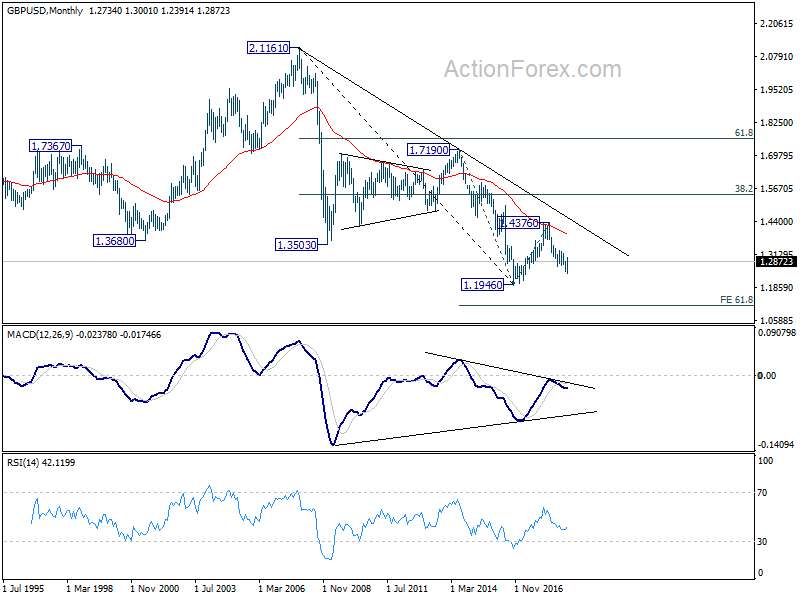
In the bigger picture, whole medium term rebound from 1.1946 (2016 low) should have completed at 1.4376 already, after rejection from 55 month EMA. The structure and momentum of the fall from 1.4376 argues that it's resuming long term down trend from 2.1161 (2007 high). And this will remain the preferred case as long as 1.3174 structural resistance holds. GBP/USD should target a test on 1.1946 first. Decisive break there will confirm our bearish view. However, sustained break of 1.3174 will invalidate this case and turn outlook bullish.
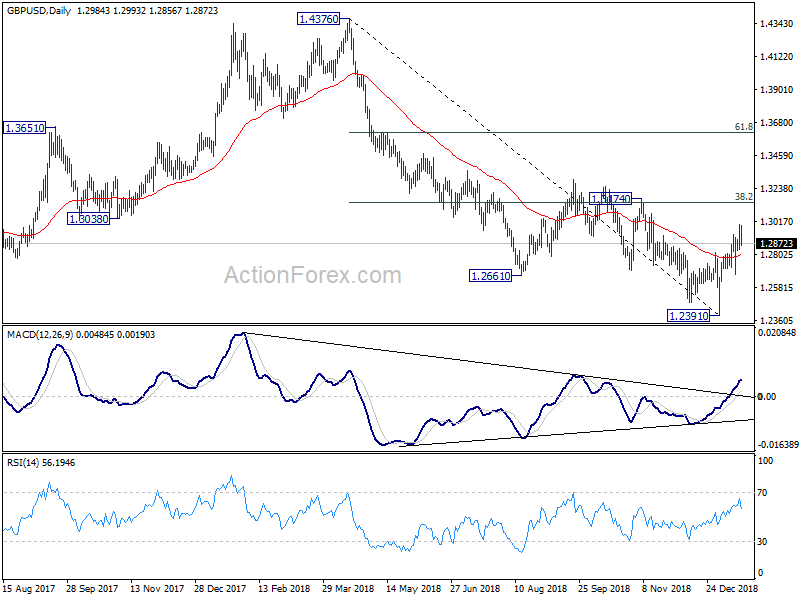
In the longer term picture, outlook in GBP/USD remains bearish. Rebound from 1.1946 was rejected solidly by falling 55 month EMA. The pair was limited well below 38.2% retracement of 2.1161 (2007 high) to 1.1946, as well as the decade long falling trend line. On break of 1.1946, next target will be 61.8% projection of 1.7190 to 1.1946 from 1.4376 at 1.1135.
Summary 1/21 – 1/25
Monday, Jan 21, 2019
[php_everywhere instance="1"]
Tuesday, Jan 22, 2019
[php_everywhere instance="2"]
Wednesday, Jan 23, 2019
[php_everywhere instance="3"]
Thursday, Jan 24, 2019
[php_everywhere instance="4"]
Friday, Jan 25, 2019
[php_everywhere instance="5"]
ECB Preview: We Assign 60% Chance of ECB Hike in December 2019
- Most interesting to us at next week's meeting will be the growth risk assessment and more hints on liquidity operations. We expect growth risk to be on the downside and no formal announcement of liquidity operations.
- We expect Mario Draghi to strike a precautionary tone in order not to move markets. Given the current market pricing, we do not expect the precautionary tone to lead to a significant dovish market reaction to the meeting.
Downside growth risk assessment expected…
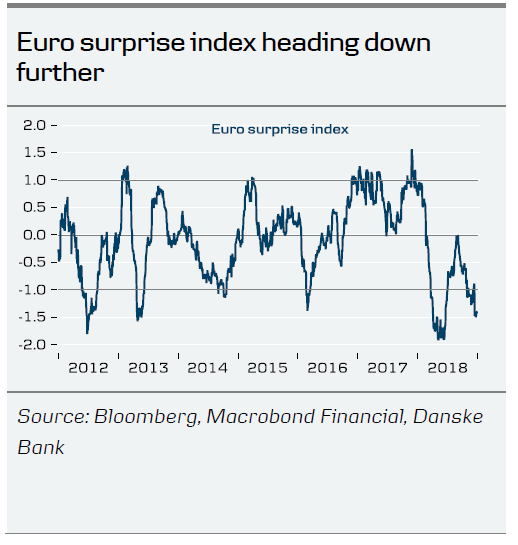
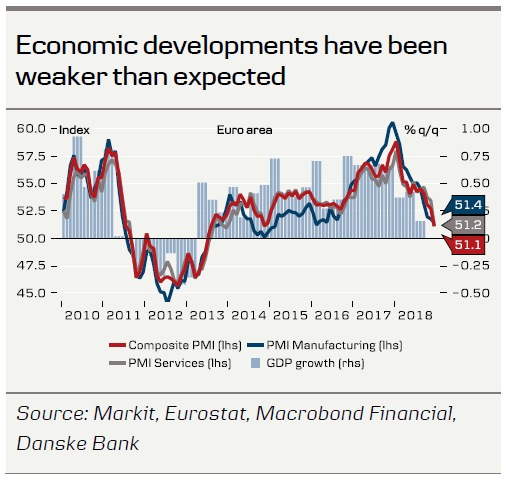
After the ECB decided to end net asset purchases in December 2018, new policy signals are not warranted at next week's meeting in our view. Instead, the hotly debated growth risk assessment is set to take centre stage. At the previous meeting, the ECB coined the growth risk assessment as broadly balanced but moving to the downside. Since then, we have seen a string of disappointing data, which is also visible in the surprise indicator close to the lows reached around the sovereign debt crisis (see Since the previous meeting below).
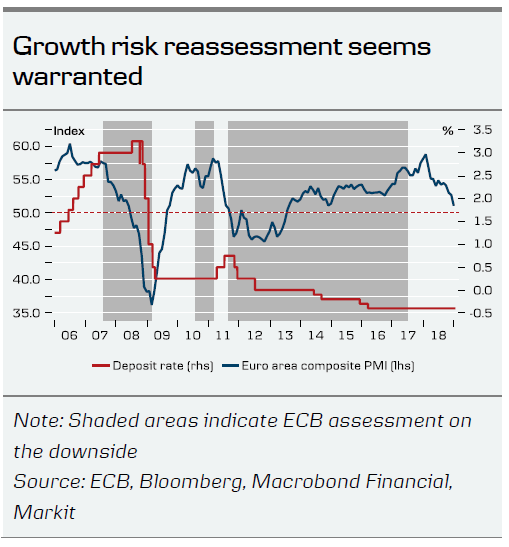
One could argue that the downside risk assessment has been long overdue looking at both soft and hard indicators. The shaded areas in the chart below indicate when the ECB has historically assessed the growth risks to be on the downside. Previously, when we have observed a similar correction in PMIs/the growth outlook as in recent months, the ECB has also changed its growth risk assessment, which could therefore have been warranted earlier. However, we believe that the broadly balanced risk assessment at the December meeting was needed for the ECB to end net purchases.
Furthermore, we note several governing council members have argued for a continuation of the narrative, while others point to the softer data warranting a change to the overall risk assessment. The previous time the ECB changed its risk assessment was in June 2017 (from downside to balanced).
…but we stick to our December 2019 rate hike
Even though we expect a downside risk assessment next week, we do not change our ECB rate hike call from December 2019. The softer data at the start of the year was already expected, also as activity in China remained weak. Our main argument for expecting a rate hike by the end of the year is due to our expectation that wage growth will translate into underlying inflation towards summer (see also Euro Area Research – Is the Phillips curve finally coming alive in 2019?, 18 December 2018.)
We acknowledge that our expectations for a December rate hike is not a balanced risk. We see a 10% chance of an earlier than December rate hike, a 60% chance of December 2019 hike and a 30% chance of a later-than-expected rate hike. Given the increased risk of the ECB hiking rates only after December 2019 on the back of a more severe slowdown than first expected, we reflected on the possible line of policy responses (assuming the ECB does not get to hike rates) in Guns (and not bazookas) dominate ECB's crisis arsenal, 9 January.
Liquidity operation – tasked committees for now
We do not expect a formal announcement of a new round of liquidity rounds at the meeting next week but only in March. At the December meeting Draghi said that 'At some point in time, our committees will start to work on that'. We expect the committees to be tasked formally to examine the liquidity situation next week. Previously, when the ECB made large changes to its monetary policy stance, it has used task committees.
The effectiveness of the operation will depend on the modalities and the devil will be in the detail. With the recent comments from ECB President Mario Draghi at the December press conference, we are leaning towards similar terms as with the 2011/12 VLTRO operations (see ECB Research – Guns (and not bazookas) dominate ECB's crisis arsenal, 9 January).
Since the previous meeting
Since the latest Governing Council meeting in December, data has again mostly surprised on the downside, both on the growth and inflation front, while the continued strong labour market situation remains one of the few rays of light for the ECB.
Economic activity
Activity data has been weak across the board and December PMIs still painted a lacklustre picture of the eurozone economy (the January PMI will be released only on the same day as the ECB meeting). In particular, service sector activity took a marked hit from the yellow vest protests in France, while the manufacturing weakness in Germany continues to persist as car sector bottlenecks abate only slowly. It is likely the growth momentum in Q4 remained unchanged from Q3 at 0.2% q/q, as many external headwinds (i.e. Brexit, China slowdown, etc.) remain in place and idiosyncratic factors (i.e. yellow vest protests) have been added to the list of downside risks.
In this environment, the ECB seems increasingly ready to acknowledge the many downside risks to the economic outlook as they have gained prominence. Note that this week President Draghi stressed that 'there is no room for complacency' after 'recent economic developments have been weaker than expected' [our emphasis] and 'uncertainties remain prominent'. In light of this, we believe a shift in the growth risk assessment from 'balanced' to 'downside' seems likely at the January meeting.
Inflation
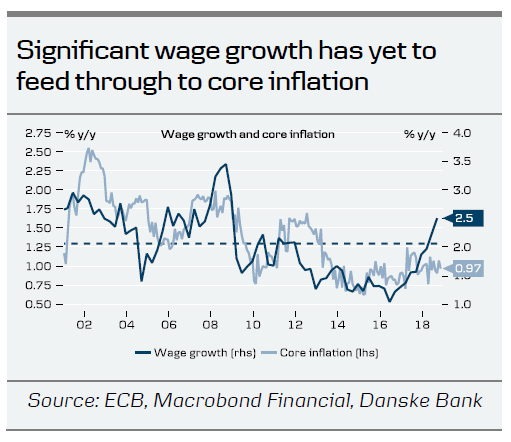
Underlying (core) inflation pressures yet again failed to show an upward trend: core inflation surprised on the downside in December and remained unchanged at 1.0%, in a sign that recent strong wage growth (2.5% y/y in Q3 – the strongest in 10 years) has yet to translate into higher service price inflation. Amid this, super core inflation picked up to 1.39% from 1.33% in December, while locally driven inflation fell back 0.02pp to 1.32%. We still expect core inflation to accelerate in 2019 and the Phillips curve slowly to come alive (see also Euro Area Research – Is the Phillips curve finally coming alive in 2019?, 9 January) but in light of fragile risk sentiment and an increasingly clouded economic outlook the translation from wages to core inflation might well take longer and be more muted than hoped for by the ECB.
FX: no new signals means EUR/USD is still at stage 1 of 3
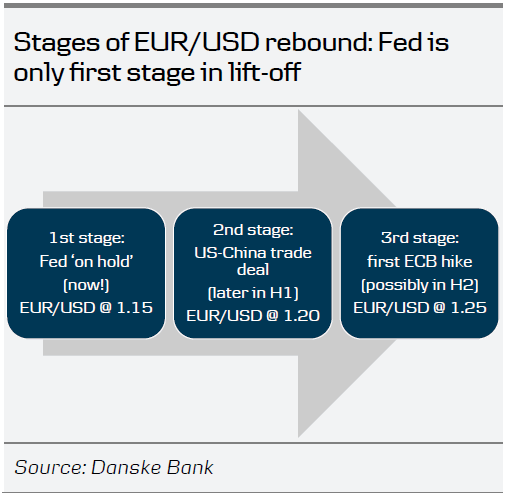
With no new policy signals expected next week, we stick to our three-stage rocket to orbit view for the EUR/USD. We have long been hinting that the next big move in EUR/USD will be higher on valuation grounds but stress that a rebound is a three-stage-rocket – and Fed 'on hold' is only the first stage to orbit (see more in FX Forecast Update – EUR/USD rocket – now on the launch pad, 14 January). With the break of October 2018 highs justified based on higher long real yield spread, EUR/USD ranges have moved higher with 1.15 now more likely to be the midpoint going forward. As Q1 progresses, we expect the second stage to be reached and 1.20 to be in sight.
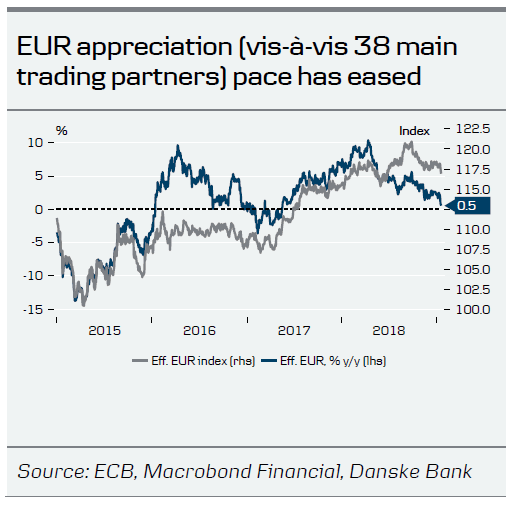
Furthermore, we note that even though the EUR/USD has range-traded recently, the effective EUR has shown signs of weakening on a broader scale. In the past few months, the year-on-year appreciation pace has fallen markedly and is now up by only 0.5% y/y (from 10% y/y in October 2018). In our view, a weaker euro is good for the ECB and its narrative.
Fixed income: more wait-and-see
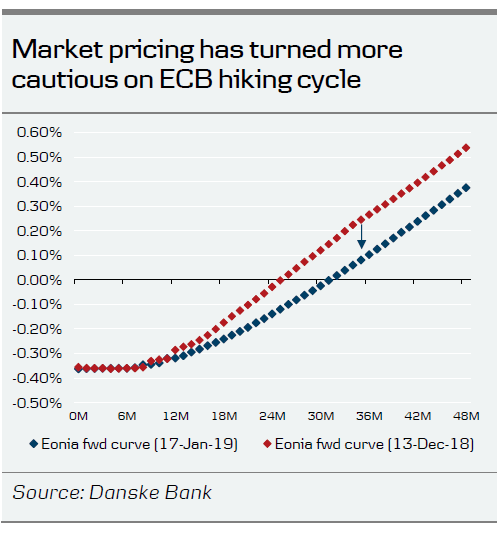
There is very little priced in the EUR market in terms of policy rate hike expectations, as the economic data has surprised on the downside. The 2Y Eonia rate has declined some 10bp since mid-November. We do not expect the ECB meeting next week to change much in terms of the pricing of monetary policy in the Euro area. We doubt that Draghi can send yields/rates much lower from the current levels, even by striking a precautionary tone. There are several risk factors, such as Brexit, the trade war and the US government shutdown.
Markets are pricing 5bp in for a rate hike by December this year. We find that too dovish given our expectation of underlying inflation picking up towards summer leading to a first rate hike of 20bp in December 2019.
The yield spread between the periphery and core-EU government bonds has tightened since Italy and the EU reached a budget agreement in mid-December. The end of QE did not turn out to have much impact on the EU government bond market as shown by the impressive syndicated deals in the first three weeks of January. Again, we do not expect the ECB meeting to change the spread but rather we expect to see more tightening.
China Weekly Letter – More Signs a Trade Deal is Coming
- Weak data confirms slowdown - but markets are calm
- US-China high-level trade negotiations confirmed for 30-31 January
- Wall Street Journal story adds to signs that a trade deal is coming
- China announced further opening up for inbound financial investments
More weak data but markets are calm
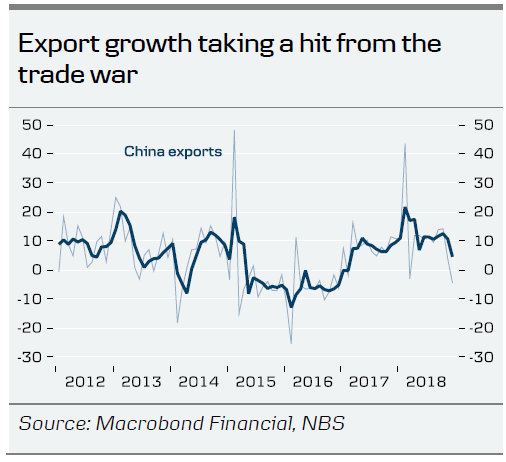
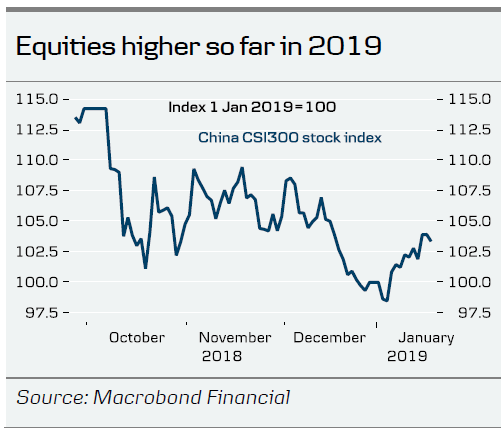
Chinese trade data for December grabbed the headlines this week. They revealed a big drop in both exports (see chart) as well as imports. A big drop in car sales of more than 10% y/y also attracted attention (bottom chart). Finally, data on money growth (a good leading indicator) was also soft but is stabilising at a low level. Equity markets reacted fairly calmly, however, and actually increased this week.
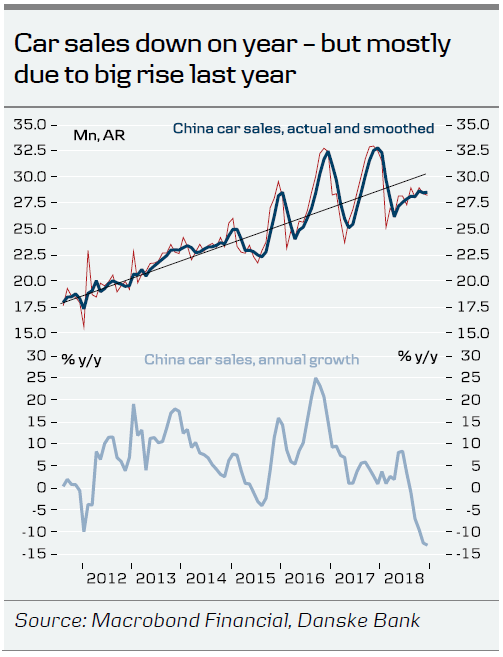
Comment . It is not a big surprise that the economy weakened further into year-end and a lot of bad news is already priced into equity markets. The weak car sales have to be taken with a grain of salt. The very negative annual growth rate is partly due to the comparison with a very high level at the end of 2017, because a tax break on small cars was removed at the turn of 2017/2018 . In coming months, the annual growth rate of car sales is very likely to shoot higher simply because of the big drop in sales in January and February last year. In addition, the Chinese leadership is said to prepare measures to lift auto sales.
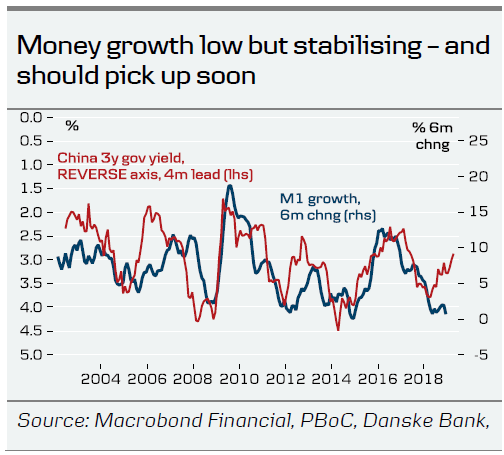
When it comes to money growth, we expect it to move gradually higher soon as monetary easing will start to feed through. The top chart on page 2 shows that lower yields typically translate into higher money growth (and thus activity) with a time lag of three-six months.
We continue to look for the Chinese economy to recover gradually from Q2 as stimulus kicks in with more force and a trade deal is reached by Q2 (75% probability).
High-level trade talks confirmed - Trump wants a deal
This week, China confirmed that top negotiator Liu He will head a delegation to Washington in late January . He will face US Trade Representative and China hawk Robert Lighthizer in the first round of high-level trade talks since the ceasefire started. Talks in Beijing last week was on a lower level and was focusing on Chinese purchases of US goods. The talks between Liu He and Robert Lighthizer are likely to address some of the more difficult issues surrounding China's industrial policies and technology transfer.
The Wall Street Journal (WSJ) reported on Thursday that in internal strategy meetings, Treasury Secretary Stephen Mnuchin had proposed that the US should ratchet back tariffs on China in a move to pry concessions out of it. The move has been opposed by Lighthizer, according to the article . Maybe as important, the article also states that 'in past China discussions, Mr. Trump has sided with Mr. Lighthizer on tariffs, rather than Mr. Mnuchin. But this time, the president has made it clear he wants a deal'.
—and is pressing Mr. Lighthizer to deliver one, according to people familiar with the discussions' (our underlining).
Comment. We believe the WSJ story is further confirmation that Trump is keen on getting a deal with China. He may end up making a deal that is too soft in the eyes of Lighthizer and other hawks. But a deal that involves China buying goods worth up to USD100bn of agricultural products and other goods should be easy to sell to voters as a victory. Not least to farmers in important swing states like Wisconsin, Iowa and Ohio. Trump will point to lower car tariffs, more opening up, increased protection of intellectual property rights and tough restrictions on Chinese investments into the US. Finally, an end to the trade war would be likely give a boost to equity markets, for which Trump could take credit.
More opening-up of FDI and financial flows
In a move of further financial opening, China announced a doubling of the so-called QFII quota to USD300bn for foreign financial investments into China, see SCMP, 14 January 2019. It is a continuation of China's gradual opening up of the capital account and seen as another olive branch in the trade talks with the US. On Sunday, China's commerce minister Zhong Shan repeated pledges that China would allow full foreign ownership in more areas and reduce the number of industries in which foreign investment was restricted or barred. See SCMP, 13 January.
Comment. China continues to take steps to open up more and to meet US demands in the trade war. In December, China drafted a new law, which tightens Intellectual Property Rights (IPR) by substantially raising fines for violations. See The Straits Times, 25 December 2018. From 1 January 2019, it was also made possible to take IPR cases to China's Supreme Court. Last year, China also lowered general tariff rates twice on a wide range of goods (except of course US goods due to the trade war). Both the US and China seem very committed to paving the way for a trade deal.
Other China news
While news on the trade front is mostly positive, US-China tensions are heating up on pretty much all other fronts – not least tech and security. Here are a few stories from the week:
- US lawmakers seek to ban chip sales to China's Huawei and ZTE for 'violating American sanctions', SCMP, 17 January.
- The US and UK navies have joined forces for the first time in the South China Sea, see Business Insider, 16 January.
- China is said to ask state firms to avoid travel to the US and its' allies, see Bloomberg, 15 January. At the beginning of January, the US warned Americans to 'exercise increased caution…due to arbitrary enforcement of local laws'.
- Pentagon warns of global power play behind Chinese projects such as Belt and Road Initiative, see SCMP 16 January.
The Canada-China dispute also escalated this week as a Chinese court changed a 15-year prison sentence for a Canadian citizen to a death sentence, see Bloomberg 15 January.
Huawei founder breaks silence to deny US spying claims, see Bloomberg, 15 January. 'I love my country, I support the Communist Party. But I will not do anything to harm the world… I don't see a close connection between my personal political beliefs and the businesses of Huawei'.
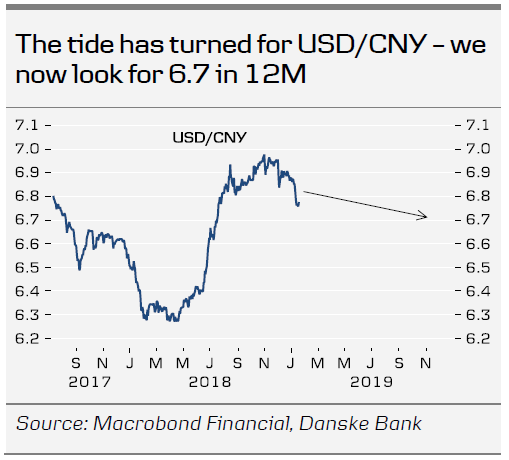
This week we lowered our USD/CNY forecast to 6.7 in 12 months (from 6.8), see page 15 in FX Forecast Update, 14 January.
Weekly Economic and Financial Commentary: Hanging in There
U.S. Review
Available Data Show U.S. Economy Is Hanging in There
- Industrial production rose 0.3% in December, driven by a 1.1% jump in manufacturing output. Details of the Empire and Philly Fed manufacturing surveys, however, suggest that the factory sector slowed in January.
- Conditions in the housing market look to be stabilizing, with the NAHB homebuilder survey recovering two points in January and mortgage purchase applications rising.
- The ongoing partial government shutdown delayed the December reports for housing starts and retail sales this week.
Hanging in There
The ongoing partial federal government shutdown meant a number of economic data reports were not released this week. Among them were what would have been two of the major focal points—housing starts and retail sales.
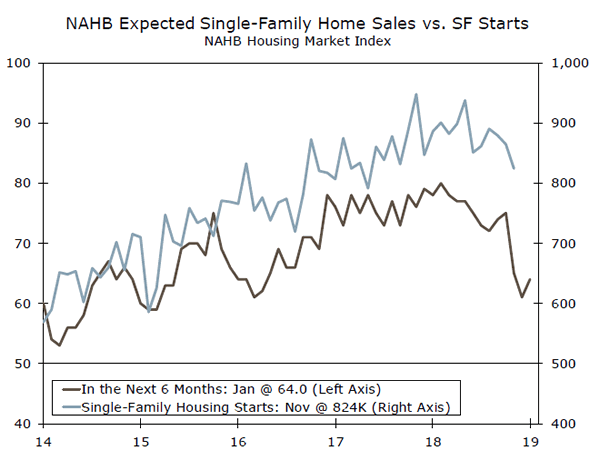
The housing market has been an area of concern in recent months, as buyers and builders have grappled with higher mortgage rates and costs that have led to a further deterioration in affordability. Homebuilder sentiment plummeted in December, sparking fears that the slowdown was set to intensify this year. While the NAHB index remains well-below its level this time last year, builders reported better conditions in January with the index edging up two points (top chart).
The retreat in mortgage rates over the past two months has also helped allay concerns about the housing market. Since mid- November, conventional rates have fallen about 50 bps. Buyers look to be stepping back into the market. Mortgage applications for purchases have jumped more than 10% in each of the past two weeks to reach a new cycle high.
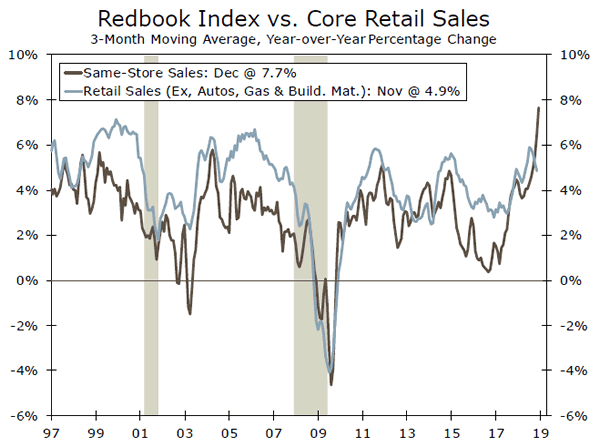
The postponed release of the December retail sales report— arguably the most important retail report of the year—comes as U.S. growth prospects look increasingly reliant on consumers. The good news is that private retails sales reports painted a strong picture of spending in December. Redbook same-store sales, which closely track core retail sales, at physical stores were up were more than 6% every week in December (middle chart).
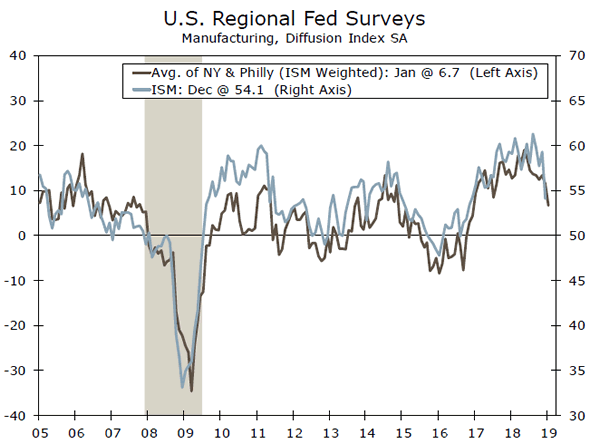
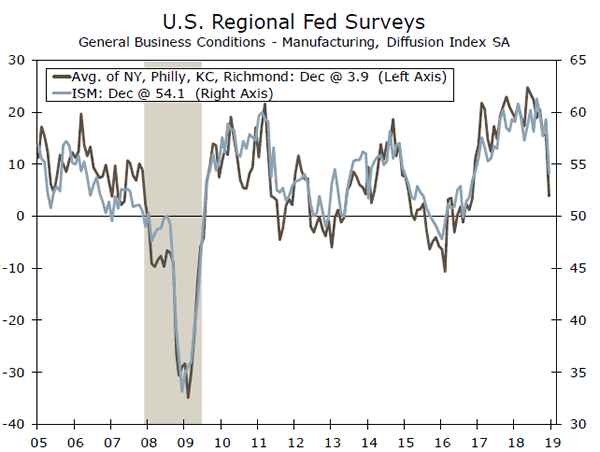
The bad news is that clouds continue to hang over the industrial side of the economy. The Empire and Philly Fed surveys for January were mixed on the headline, but details pointed to slower activity in the factory sector. The headline of both surveys are derived from independent questions on business activity; constructing each index like the ISM (equal weighting of production, new orders, employment, supplier deliveries and inventories) showed further slippage (bottom chart).
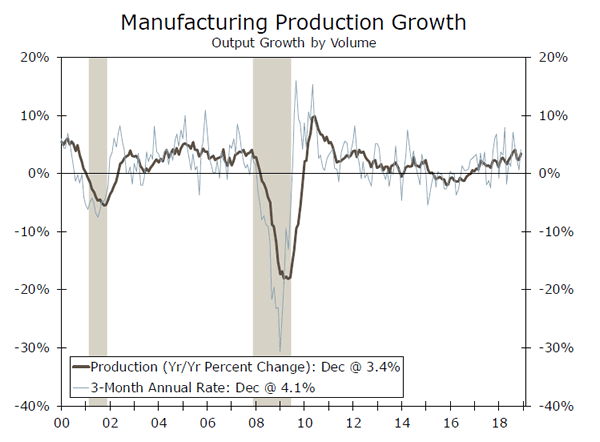
The ISM and regional PMIs remain in positive territory, however, and hard data suggest industrial output is hanging in there. Overall industrial production rose 0.3% in December, while manufacturing output rose 1.1% amid a nearly a 5% jump in autos production. With global growth easing and trade/general policy uncertainty elevated, we would not be surprised to see manufacturing production ease up over the next couple of months.
As the shutdown has dragged on, concerns are mounting about its ultimate impact to growth. The length of the shutdown points to growing spillovers in terms of consumer spending, not just as federal workers have now missed a paycheck, but for the swath of contractors reliant on government work.
For now, the impact in terms of employment looks to be contained. While the Labor Department reported 10,500 former federal employees filing initial jobless claims—5,000 more than the previous week—total initial claims fell for a second straight week. That suggests most contractors are still on their company payrolls, although it does not shed light on pay and spending.
U.S. Outlook
Existing Home Sales • Tuesday
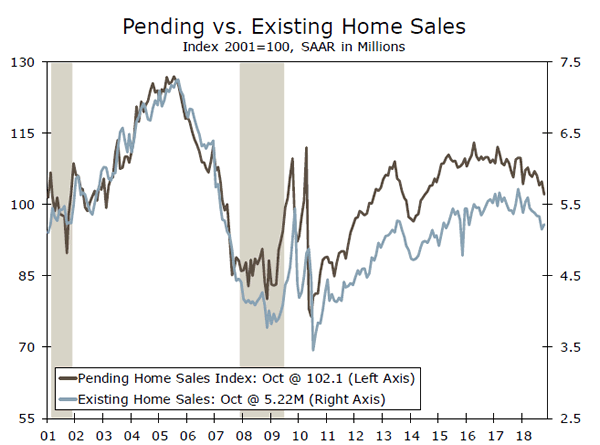
After rebounding 1.9% in November, we are expecting existing home sales to fall by an identical amount in December. Sales have been held back by higher mortgage rates in November and December and poor weather, which kept many potential home buyers indoors. Sales are also being hindered by a lack of affordable product, and overall inventories remain relatively low.
Home prices should moderate further, as sales have weakened significantly in parts of the country where home prices tend to be more expensive, including major markets along the West Coast and the more densely populated areas in the Northeast. Inventories of higher-priced homes have risen and sellers are cutting their asking prices. We are looking for this to continue this year, as overall economic growth struggles and homeowners in higher tax states come to grips with the new tax law.
Previous: 1.9% Wells Fargo: -1.9% Consensus: -0.9% (Month-over-Month)
Leading Indicators • Thursday
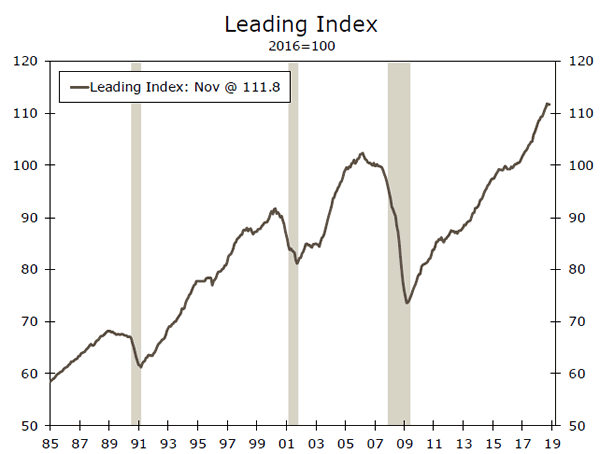
Forecasts for the index of leading indicators are clouded by the lack of economic news released this past month due to the government shutdown. The leading indicators are produced by the Conference Board and will published on Thursday. Our own forecast calls for a 0.1% percent drop, which is in line with the consensus.
Much of what goes into the leading indicators and coincident indicators has been reported. The BLS has continued to report data on jobless claims, the ISM data is available and all of the financial components are available. What is missing, however, is fairly vital – data on new orders for consumer goods, orders for nondefense capital goods, excluding aircraft; and building permits. This is the most cyclical part of the economy and is where much of the recent weakness has been. The missing data and how the Conference Board deals with it means that this data may be revised substantially once the government shutdown finally ends.
Previous: 0.2% Wells Fargo: -0.1% Consensus: -0.1% (Month-over-Month)
Other Indicators
The government shutdown will take a huge bite out of the economic releases this coming week. We will miss data on international trade, retail and wholesale inventories, new home sales, factory orders and housing starts. We will continue to receive data on weekly jobless claims on Thursday, which are already exceptionally low at just 213,000 and expected to fall slightly further for the week of January 19. We will also get reports on manufacturing conditions from the Richmond Fed and Kansas City Fed on Wednesday and Thursday, which we do not forecast. The regional Fed manufacturing surveys all turned lowed in December but have been mixed so far this month. The Empire Survey plunged 7.6 points to 3.9 in January, while the Philadelphia Fed survey rose 7.9 points to 17. We will probably see mixed results from the factory sector once again this week, with the Richmond Fed likely holding up better than the Kansas City Fed, which is seeing some pullback in energy-related investment.
Previous: Richmond Fed: -8, Kansas City Fed: 3
Global Review
Global Uncertainties Abound
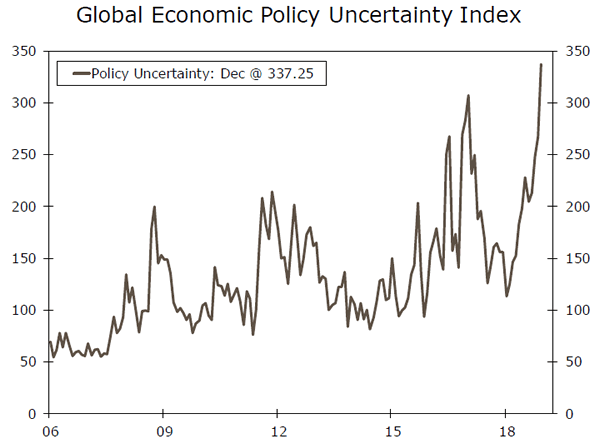
- The international events and data of the past week pointed to a still uncertain outlook, and suggest it might still take some time for global economies to stabilize and global central banks to resume tightening.
- In the U.K., PM May's Brexit deal was heavily defeated by the Parliament. Although the government subsequently survived a no-confidence vote the path forward remains uncertain, although we ultimately expect the Brexit deal to be struck.
- In the Eurozone, uncertainty relates primarily to the path of the economy, highlighted over the past week by subdued German GDP and a large fall in Eurozone industrial production.
Global Uncertainties Abound
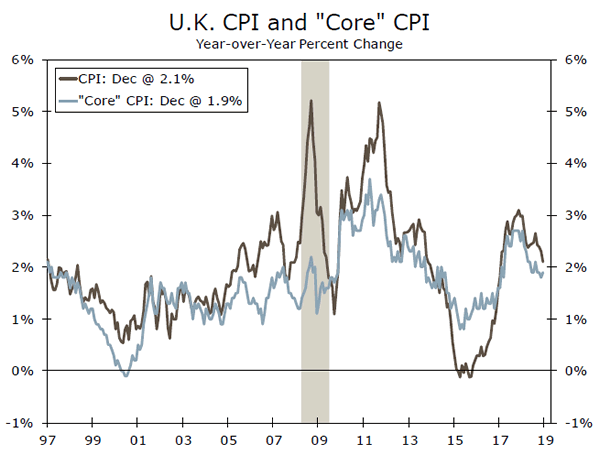
The focal point of the global economic picture this week was the United Kingdom, specifically a parliamentary vote on U.K. Prime Minister Theresa May's Brexit withdrawal deal. While a defeat was widely expected, the margin of defeat (432-202) was larger than expected. Still, May's government survived a vote of no confidence following the initial defeat on the withdrawal deal, and May is now expected to hold cross-party talks to devise a "plan B" on how to proceed. These discussions could involve a proposal for a second referendum, but we expect that proposal will be denied, and instead we expect U.K. parliament will ultimately devise an alternative deal that appeases the European Union and allows the United Kingdom to leave the E.U. with a deal on March 29. In the interim, until there is a clear path forward, we see downside risks for the U.K. economy and the pound as the uncertainty weighs on business, consumer and investor sentiment. Indeed, there was little in this week's U.K. data that was upbeat in tone. The December CPI was benign, slowing to 2.1% year over year, while core CPI firmed slightly to 1.9%. Meanwhile December retail sales fell 0.9% month over month, partly reversing their sizeable November gain.
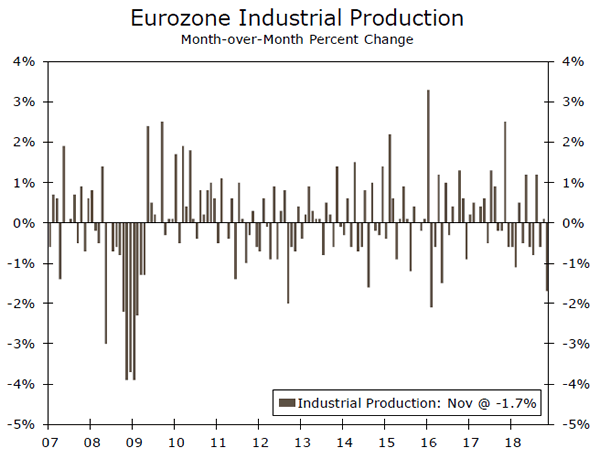
Another area of lingering uncertainty is the overall strength of the Eurozone economy. While the European consumer appears to be holding up OK, including a gain in November retail sales and drop in unemployment, the manufacturing sector remains under significant pressure. This week the Eurozone reported a 1.7% month-over-month decline in November industrial production, with weakness broad based across the major economies of Germany, France, Italy and Spain. On an annual basis Eurozone industrial production fell 3.3%, the largest decline since late 2012. Meanwhile Germany, the region's largest economy, reported full year 2018 GDP growth on 1.5%, down from 2.2% in 2017. In what was a relatively minor silver lining, the German statistics office said there were "signs of a slight recovery" in the fourth quarter compared to the third quarter.
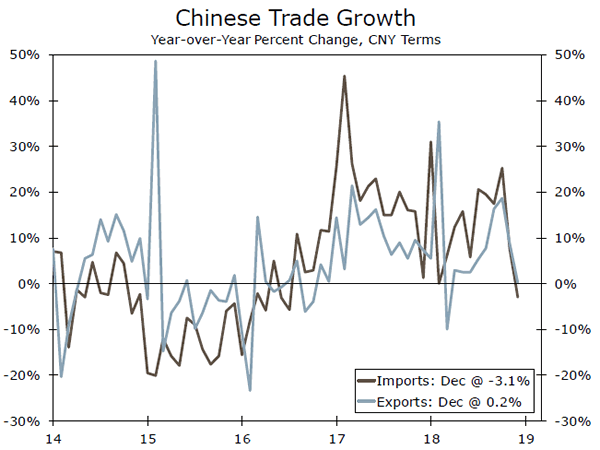
The outlook for China's economy also remains somewhat uncertain, despite some signs of progress on the U.S.-China trade front. China has resumed purchases of certain U.S. products, including soybeans, and also temporarily suspended additional tariffs on U.S. made vehicles. Meanwhile, U.S. President Trump has indicated he thinks a trade deal is likely. That said, the timing and scope of any trade deal, if reached, remains uncertain. And for now, U.S. tariffs on Chinese goods that were imposed earlier in 2018 appear to be having an increasing impact. After what appeared to be some front-loading of Chinese exports in recent months, perhaps aimed add lessening the pain from any additional U.S. trade actions in 2019, trade growth slowed noticeably in December. In local currency terms Chinese exports slowed to just 0.2% year over year, while imports actually fell 3.1%. Against that backdrop authorities continue to pledge further monetary and fiscal stimulus measures aimed at supporting the Chinese economy.
Global Outlook
China GDP • Monday
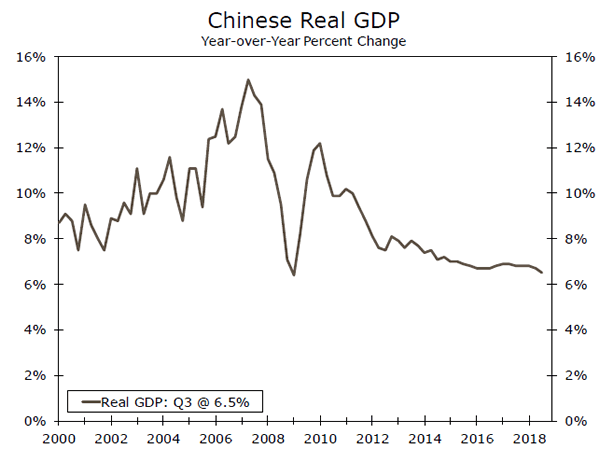
Next week offers an important scorecard on the performance of China's economy in 2018, in the form of Q4 GDP as well as December activity. China's economy displayed a steady easing in growth last quarter, a trend that we believe continued into the fourth quarter. We forecast Q4 GDP slowed to 6.4% year over year, which would match the slowest pace of Chinese growth seen during the global financial crisis. U.S.-China trade tensions, and an associated slowing in Chinese export growth, have been contributing factors to the slowdown, prompting authorities to respond with growth supportive monetary and fiscal policies.
Almost as interesting as the overall pace of economic growth will be insights into economic performance by sector. On that front, December retail sales are forecast to have remained steady at 8.1% year over year, but industrial production growth is expected to have eased further, to 5.3% year over year.
Previous: 6.5% Wells Fargo: 6.4% Consensus: 6.4% (Year-over-Year)
Canada Retail Sales • Wednesday
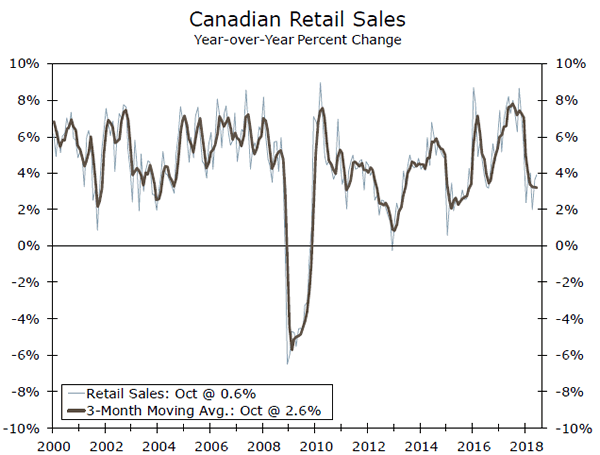
Canadian consumers spent a moderate pace through much of 2018, with household consumer spending growth averaging a 1.7% pace during the first nine months of the year, and contributing to subdued GDP growth overall. In its latest Monetary Policy Report the Bank of Canada projected a temporary slowing in growth as lower oil prices depress investment and output and, in that context, consumer spending and retail sales will be monitored in the months ahead as to whether they can offer a source of relative stability. Nominal retail sales rose 0.3% month over month in October and in fact have not declined on a monthly basis since June. That run is expected to have come to end in November, with the consensus forecast for retail sales to have fallen by 0.7%, although with lower gasoline prices likely a factor behind that expected decline. November manufacturing sales are also due—sales have been mixed recently, with declines in two of the past three months, and a further fall is expected in November.
Previous: 0.3% Consensus: -0.7% (Month-over-Month)
Eurozone PMIs • Thursday
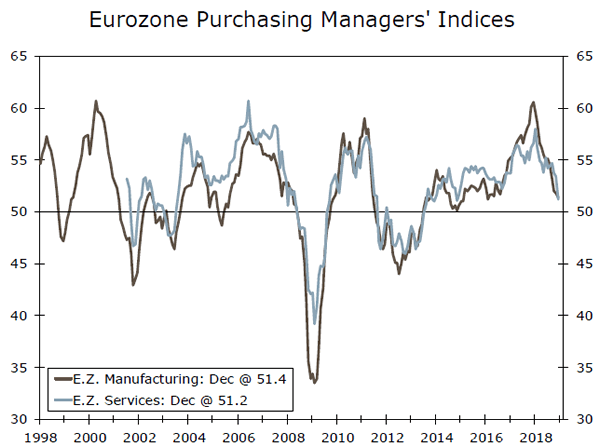
As concerns about an economic slowdown have intensified, the Eurozone PMI surveys have become increasingly closely followed measures of the economy's health over the past several months. Q3 GDP grew just 0.2% quarter over quarter (not annualized) and, reflective of that sluggish pace of growth, the manufacturing PMI has fallen for five straight months, and the services PMI for three straight months, through the latest data for December 2018. For the manufacturing sector that underwhelming trend is expected to have continued into January, with the consensus forecasting a slight fall to 51.3. In contrast the services PMI should show some improvement, with a forecast increase to 51.5.
The European Central Bank also announces its monetary policy decision next week. No change in policy is expected, and most interest will be in whether the central bank formally shifts its balance of risks around the growth outlook as being tilted to the downside.
Previous: 51.4 (Manufacturing), 51.2 (Services) Consensus: 51.3 (Manufacturing), 51.5 (Services)
Point of View
Interest Rate Watch
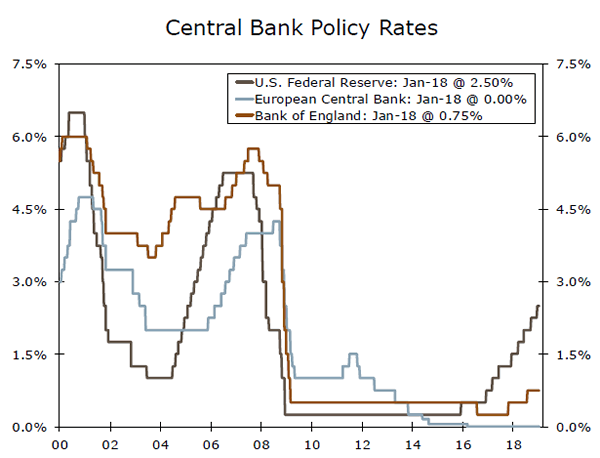
Fed Speakers Signal Pause
A number of Fed speakers were on the wires this week expounding their views on the outlook for monetary policy. Neel Kashkari, President of the Minneapolis Fed, said that "I'm not seeing evidence to support further hiking," which was not a huge surprise given that he is widely seen as one of the most dovish members of the Federal Open Market Committee (FOMC). Dallas Fed President Kaplan echoed Kashkari by stating that "the Fed would be wise to give time and be patient." The comments by Kashkari and Kaplan are interesting, but they are not overly relevant because neither bank president is a voting member of the FOMC this year.
Perhaps more telling were the comments by Esther George, President of the Kansas City Fed, and New York Fed President John Williams. Not only are George and Williams voting members of the FOMC this year, but both tend to have relatively hawkish views. George said that "it seems to me that we should proceed with caution and be patient." In his speech on Friday, Williams asked the rhetorical question of how the Fed should respond to "an outlook of slowing growth." He answered his own question in one word: "carefully." If relatively hawkish members of the FOMC are urging restraint, then it seems likely that the Fed will refrain from raising rates in the foreseeable future.
These comments by Fed policymakers reinforce our own view that the FOMC will remain on hold at the January 30, March 20 and May 1 policy meetings as the committee digests incoming economic data. The government shutdown has precluded the release of some economic data. But we think that once the data start to flow in earnest again they will show that the U.S. economy continues to grow at a pace that is strong enough to push the unemployment rate, which is already near a 50-year low, even lower. If, as we expect, many FOMC members then reason that the tightness in the labor market will lead to further wage acceleration that could potentially lead to higher inflation, then we would look for the FOMC to tap on the brakes again with another 25 bp rate hike this summer.
Topic of the Week
This Week, We Welcome Jen
This week we welcome Jen Licis as the newest analyst to join the Economics group. We wanted to take some time to introduce Jen as she begins work on our team. Jen hails from Ohio, where she recently completed her Masters of Science in Finance with a specialization in Investments at the University of Cincinnati (UC). Jen also completed her undergrad education at UC, and proudly holds a Bachelor's degree in Economics. Jen solidified her interest in Economics while in college, taking a variety of courses with the highlight being her participation in an Economics study abroad program in Australia. Jen hopes to explore various research topics throughout her time with the group, with a particular interest in foreign exchange and inflation.
Prior to joining Wells Fargo, Jen completed several internships, including at Dealer Tire, Fidelity Charitable and the Financial Industry Regulatory Authority (FINRA). Jen cites her most recent internship with FINRA as giving her a varied perspective on different aspects of the financial services industry, which she believes will help her excel in her current role. Jen's work in corporate strategy at Dealer Tire as well as her experience with the investment team at Fidelity Charitable have also given her valuable skills to contribute to our group. When not analyzing economic data, Jen pursues her passion for running and staying active, and plans to explore the variety of running trails and outdoor activities Charlotte has to offer.
Credit Market Insights
Majoring in Debt?
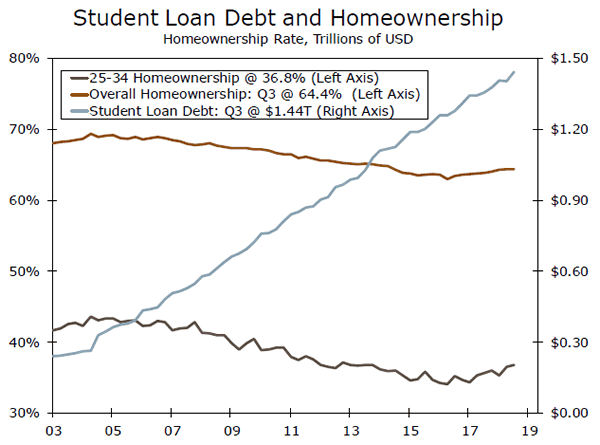
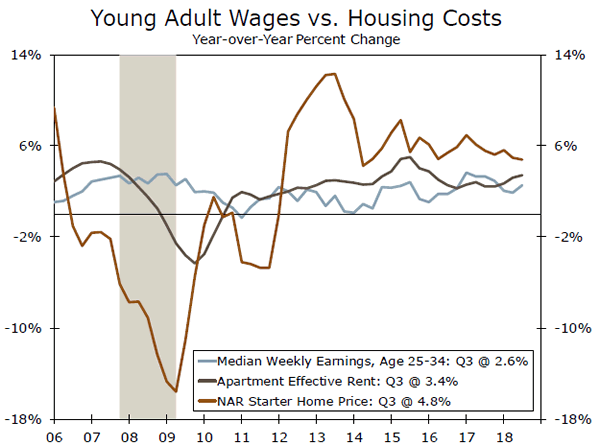
Is the housing market another thing that Millennials have "killed"? The homeownership rate fell five percentage points between 2005 and 2014, with an even more pronounced eight point decline among adults aged 25-34. Only 37% of young adults currently own homes, down from a peak of 44%. One explanation for this decline is the explosion in student loan debt. Rising enrollment and skyrocketing tuition costs have caused student loan debt to more than double over the past decade to almost $1.5 trillion—more than total credit card or auto loan debt. It is natural to wonder if this growing indebtedness is discouraging or inhibiting young graduates from doubling down, in a sense, and taking out a mortgage.
In fact, new research from the Federal Reserve estimates that around 20% of the decline in young adult homeownership between 2005 and 2014 can be attributed to higher student loan burdens. Clearly, paying off these loans leaves potential homebuyers with less disposable income to apply toward a monthly mortgage payment, or, perhaps more importantly, toward a down payment. Furthermore, falling behind on these payments can damage credit scores and impair access to affordable financing. The psychological burden of such a debt load— often tens of thousands of dollars, with delinquency rates over 10%—before even the first day of a first job likely also has an effect on the oft-analyzed Millennial psyche.
That said, student loan debt is by and large an investment in one's human capital with an overwhelmingly positive return. Higher education drives future earnings potential—median weekly earnings for those with a bachelor's degree are more than 60% higher than for those with only a high school diploma. College graduates then, in theory, should eventually be better able to afford homeownership, all else equal. All of this takes place, however, amidst a broader context of declining affordability. For years, home price appreciation and rent growth have outpaced wage growth, mortgage rates have climbed higher and there has been insufficient new supply in the markets in which Millennials want to live.
The Weekly Bottom Line: Dysfunctional Governments on Parade
U.S. Highlights
- The government shutdown extended to its 28th day, making it the longest on record with no clear end in sight.
- The White House upped its estimate of the impact of the government shutdown to a 0.5ppt drag on 19Q1 growth after four weeks. This is much higher than private sector estimates of between -0.1 to -0.2 ppts.
- As expected, the Brexit withdrawal agreement was soundly rejected by UK parliament. With the March 29th deadline fast approaching, it looks increasingly likely that the UK will have no choice but to seek an extension from the EU.
Canadian Highlights
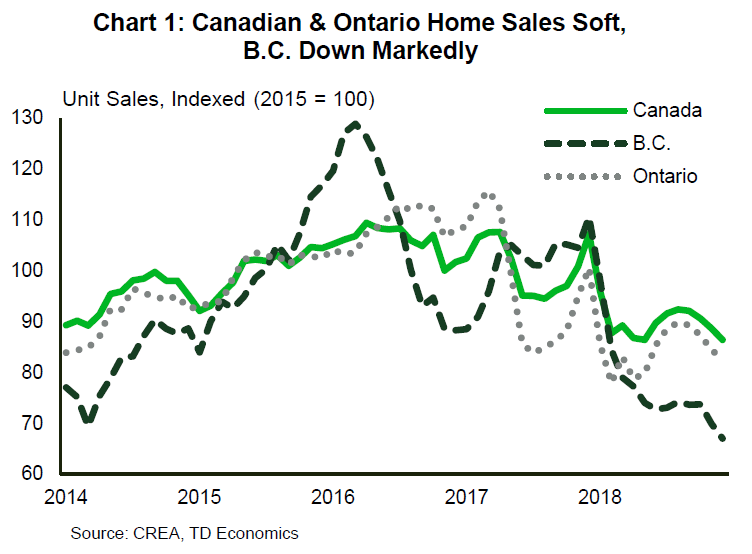
- Recent Canadian housing data painted a somber picture. Existing home sales were down 2.5% month-on-month in December, their fourth straight monthly decline. B.C. and Ontario were largely to blame.
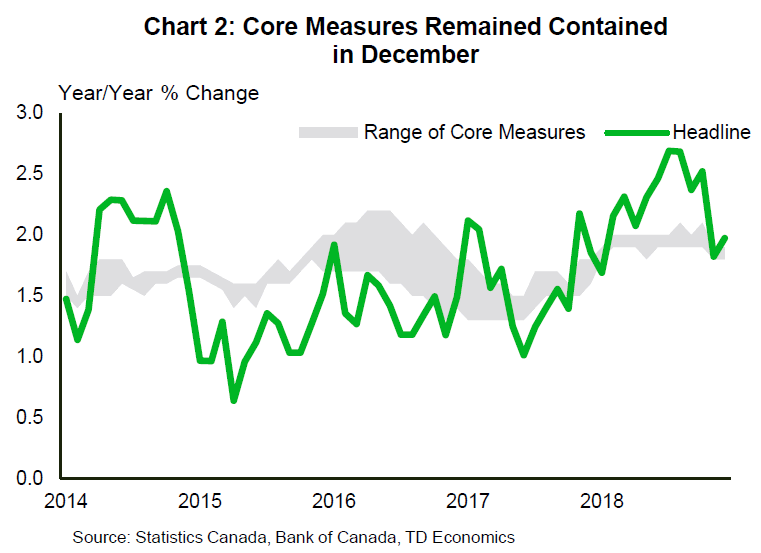
- Headline inflation came in ahead of market expectations at 2.0% year-on-year, due in large part to a seasonal surge in airfares. Beneath the surface there is little to get worked up about as core inflation was unchanged.
- The U.S. shutdown is making itself felt north of the border: Statistics Canada will delay the trade data until they receive figures from their American counterparts.
U.S. - Dysfunctional Governments on Parade
Now in its 28th day, the U.S. government shutdown has far exceeded the 21-day shutdown record set in 1995-96 with no clear end in sight. The longer the shutdown lingers, the higher the likelihood that some of the negative economic impacts from the shutdown gain permanency. As an example, this week the White House doubled its estimated economic impact of the shutdown. Previous estimates assumed a drag of about 0.1 percentage points off of first quarter growth for every two weeks of the shutdown. But, after incorporating the impact of contract workers not being paid, the estimate rises to about -0.13 percentage points off growth each week. This suggests that after four weeks the shutdown is estimated to have shaved half a point off of first quarter GDP growth. This estimate is well above other private sector estimates that expect a more modest impact on growth of about 0.1ppt drag for every three weeks or so that the shutdown lingers.
The shutdown is exacting a toll on those least responsible for it. Anecdotes continue to highlight the hardships that furloughed federal employees are experiencing. These include workers turning to payday loan companies and food banks, while also taking on side hustles, such as driving for Uber, in order to make ends meet. Although federal employees will eventually be paid for lost wages, the near-term pain is clearly taking a toll.
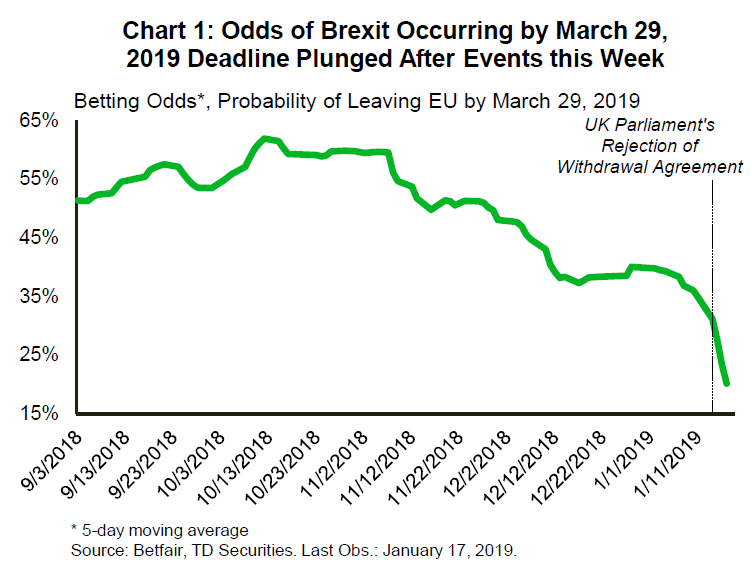
Across the pond, Brexit developments in the UK this week signaled that government dysfunction is not solely a U.S. pastime. After weeks of anticipation, the withdrawal agreement was put to a vote and was soundly rejected by parliament. The next day, Theresa May's government survived a confidence vote, concluding a tumultuous week. Next steps include consultations between the prime minister and other parties on proposed amendments to the withdrawal agreement set to be tabled on January 21st, but not voted upon until January 29th. With the March 29th deadline fast approaching, it looks increasingly likely that the UK will have no choice but to seek an extension from the EU (Chart 1).
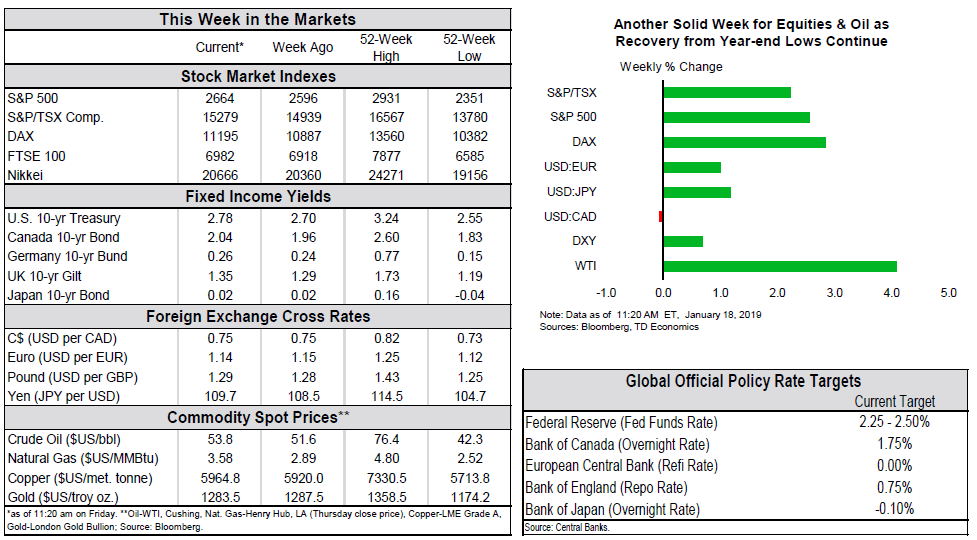
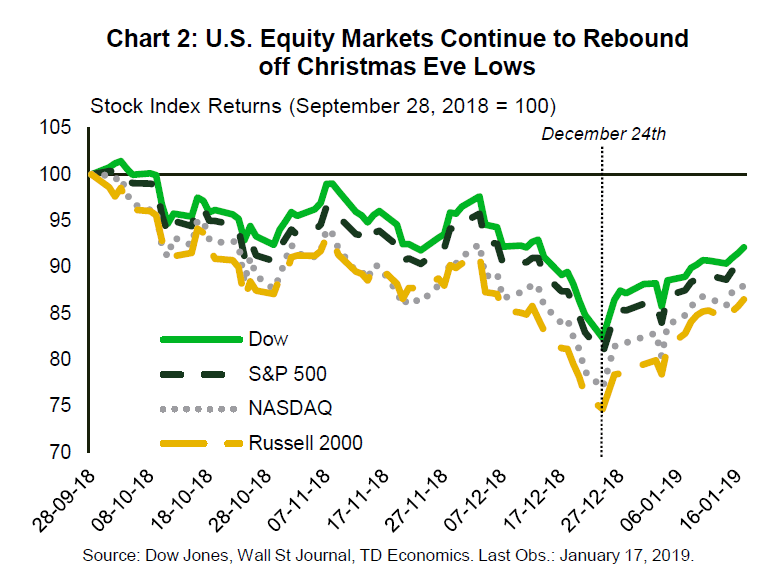
Despite the government dysfunction on display on both sides of the Atlantic, financial markets were largely unfazed. U.S. equity indexes have soared since the New Year, and are now back at levels seen in early December (Chart 2). There's good reason for optimism. Data still being reported, such as weekly initial jobless claims, continued to signal a healthy economy. Trade talks with China are ongoing, with the next round set to take place on January 30th in Washington. Although little progress has been announced so far, news that U.S. officials were discussing ratcheting back some of the tariffs on Chinese imports in order to encourage an agreement helped to stoke a global rally in risk assets. Perhaps more importantly, Federal Reserve Presidents were out delivering speeches that reinforced the Fed's willingness to be patient before the next rate hike. Indeed, patience is warranted given uncertainty about the economic impact of the government shutdown, and ongoing concerns about the health of the global economy.
Canada - Under (Little) Pressure
It looks to have been a solid week for Canadian markets, with the S&P/TSX composite index performing well. In fact, as of Thursday's close, the index was up 6.2% year-to-date, making it among the top performing global indices. A constructive energy price environment is likely helping. The headline WTI oil contract sat at around $53 per barrel at the time of writing, still soft, but off its December lows. Even more impressive has been the change in heavy oil pricing, now up to the $40 range, a quadrupling relative to the worst of December.
Away from markets, it was a somewhat more somber week on the data front. Existing home sales were down 2.5% month-on-month in December, marking a fourth straight monthly decline (Chart 1). B.C. and Ontario led the decline. In Ontario, the post B-20 summer 2018 sales bump has given way to softer conditions, with sales back to 2014 levels. Prices held up better, with the average sale price ending 2018 pretty much where it ended 2017.
B.C., in contrast, did not have a summer sales bump as provincial cooling measures have continued to weigh on activity. Much like Ontario, average prices seem to have levelled off somewhat, perhaps reflecting a relatively small amount of supply for sale to date. For both B.C. and Ontario, there is little reason to expect this to change. The number of units under construction in these provinces is elevated, but is a far cry from the levels seen before the early-1990s housing adjustment once current populations are taken into account. It remains our view that the most likely path forward is for sales growth to remain subdued, with constrained affordability playing off against fundamental demand to leave little in the way of upward price pressure. This may be a big change from recent years, but is not without precedent: almost the entirety of the 1990s looked this way. Adjust your expectations accordingly.
On the topic of prices, the December CPI figures were exciting on their face as a surge in airfares drove the headline figure to 2.0%, beating market expectations of a 1.7% print. Beneath the surface however, there was little in the way of fundamental pressures (Chart 2). The core measures were unchanged as much of the headline surprise was due to a (seasonal) surge in airfares – a grain of salt is needed here as a calculation change by Statistics Canada makes year-on-year comparisons difficult. Suffice it to say that fundamental price pressures remained tame at the close of 2018.
Finally, the U.S. government shutdown has begun to hit Canadians, as Statistics Canada announced this week that the December trade data would be delayed until their U.S. counterparts are able to provide import data. This doesn't mean too much in the near-term, and Statistics Canada plans to release GDP data as normal at the end of next month. But, should the shutdown persist, we, and more importantly the Bank of Canada, will have a challenging time assessing Canada's trade performance, an area given particular focus in the latest Monetary Policy Report, and yet another item for a "hold off on the next hike" checklist.
Canada: Upcoming Key Economic Releases
Canadian Manufacturing Sales - November
Release Date: January 22, 2019
Previous: -0.1%
TD Forecast: -0.4%
Consensus: N/A
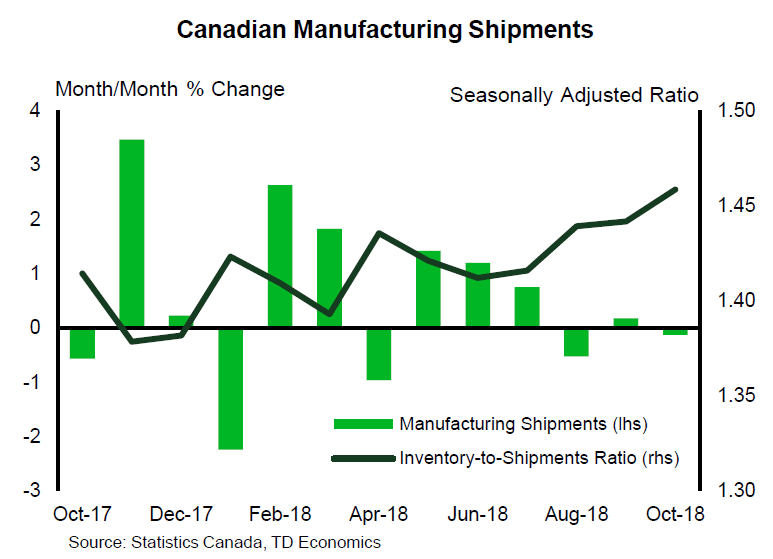
TD looks for manufacturing sales to decline by 0.4% in November on weaker petroleum sales, reflecting a sharp drop in gasoline prices. Auto production estimates were also lower throughout the month, which fits with a pullback in imported automotive parts to suggest weaker factory sales of motor vehicles. However, lower prices for petroleum products should be partially offset by a return to normal operations at the Irving Refinery in St. Johns; maintenance shutdowns caused New Brunswick's non-durable output to fall by 13% m/m in October, shaving 0.2pp from total manufacturing sales. Despite our forecast for a negative headline print, real manufacturing sales should post a modest increase in November owing to a 0.8% decline in factory prices (ex petrol: +0.2%) which suggests a slight tailwind to industry-level GDP from the manufacturing sector
Canadian Retail Sales - November
Release Date: January 23, 2019
Previous: 0.3%, ex-auto: 0.0%
TD Forecast: -0.6%, ex-auto: -0.4% m/m
Consensus: N/A
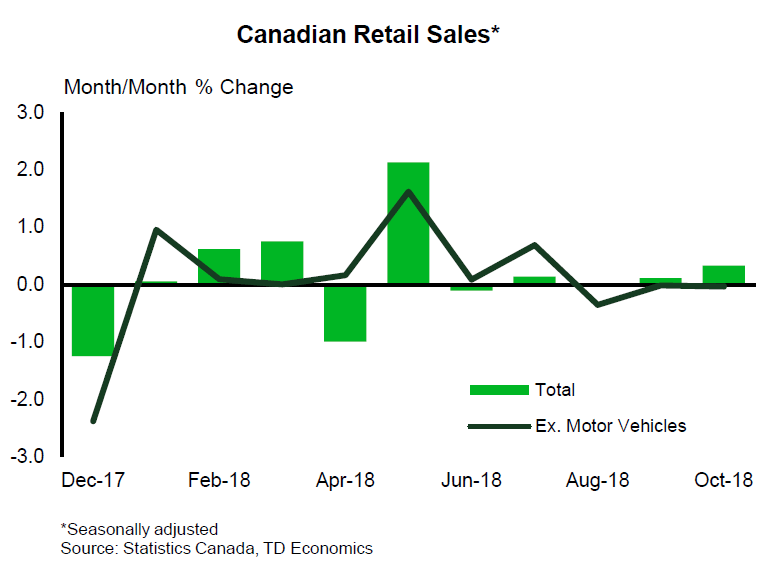
Lower gasoline prices will exert a heavy drag on retail activity for November, with nominal retail sales forecast to decline by 0.6% m/m. Much of this is attributable to the price at the pump, which fell by nearly 10% throughout the month - only slightly less than the largest one-month drop during the 2014/15 period. This should shave roughly 0.5pp from the headline print while a pullback in motor vehicle sales will also weigh on monthly sales activity, leaving ex-auto sales 0.4% lower. Offsetting weakness in motor vehicles and gasoline sales will be a rebound in core retail activity after posting a 0.4% decline in October, the largest in 2018. However, since much of the decline will be driven by lower prices the impact on growth should be more modest than the headline print implies, with real retail sales down roughly 0.2 m/m.
Strong US Data, Trade Solace, & Consistent Fed Speak Drive Strong Dollar and Risk Narrative
The US dollar rally continues to be supported by strong US data, accommodative comments from Fed officials, and a very strong US stock market. This week also saw big shifts in interest rate probabilities, the market shifted from seeing the next move go from a cut to now favoring a rate hike. Next week will provide many catalysts for the next major move with risk assets. China’s trade talks with the US remain the main risk event for the financial markets, but traders will closely watch the fourth quarter Chinese GDP reading which is expected to shrink from 6.5% to 6.4%. Brexit will also remain on the docket as Prime Minister May will need to wrap up cross-party talks and come up with a Plan B by Monday. May will likely have to extend Article 50, but if she is unsuccessful, things can get ugly very quickly for cable. Early on Wednesday, the Bank of Japan (BOJ) is expected to keep policy steady, but they could lower their inflation and growth projections.
- China GDP and trade talks in focus
- Will PM May’s plan B deliver an extension of Article 50
- The World Economic Forum hosts major leaders in Davos
US economy and Fed Speak
This week, US economic data came in mixed with fairly stronger results at the end. On Wednesday, Import and Export prices came in better than expected, the NAHB Housing Market Index also rose as mortgage prices fell, and the Beige Book painted a picture of a strong economy with escalating worries. Thursday, the data was solid as both Jobless claims data came in better than expected and the Philadelphia Fed Business Outlook rebounded and ended a string of weaker prints. Friday’s data saw manufacturing post a strong rebound. The Industrial Production data rose 0.3% in December from the prior month and Manufacturing Production, which is the majority of the nation’s total industrial output climbed 1.1% in December, the best rise in 11-months. We do continue to see several key economic releases be affected by the government shutdown. Some attribute the lack of weakening data points from the US as another reason of support for recent rally in risk appetite.
Fed speak this week was in-line with what Fed Chair Powell set out earlier in January. The key phrases that Fed officials repeated this week were: Economy performing well, Fed can be patient, and reassess balance sheet if conditions change. The Fed’s dovish stance is firmly in place and high-beta currencies may finally start to rally if the trade truce is extended and we see global concerns ease.
US equities have a strong start to earning season
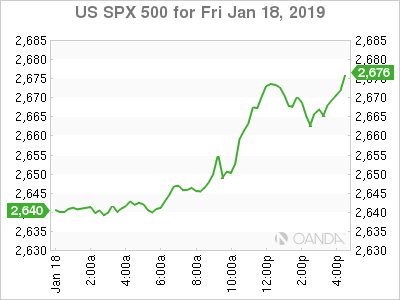
US stocks continue to roar ahead on trade optimism, ignoring the partial government shutdown that is showing no signs of ending. The S&P 500 index finished higher for a fourth consecutive week, also surging past some key technical levels. Friday’s rally followed the CNBC report that China reportedly offered a six-year increase in US imports worth $1 trillion to eliminate US trade imbalances by 2024. US negotiators were said to be skeptical of the offer and wanted the imbalance removed within two years. Talks will resume at the end of the month and optimism is growing that enough progress is being made for the US to hold off raising tariffs after the March 1st deadline. The major banks kicked off earning season this week and delivered mixed results. The general view we saw this week on the consumer and business climate was positive and that helped stocks remain bid for most of the week.
No end in sight for partial government shutdown
The government shutdown has reached its 28th day on Friday and we are not seeing any signs of compromise from both sides. We will most likely need to see a large event that forces government officials to agree on a deal. It may require TSA employees staying at home and disrupting air travel or if we wait till the end of the March when federal funding runs out for food stamps. The 800,000 furloughed workers financial pain continues to grow each pay period that passes, and the political price is growing on both sides.
Oil benefiting from US/China trade optimism
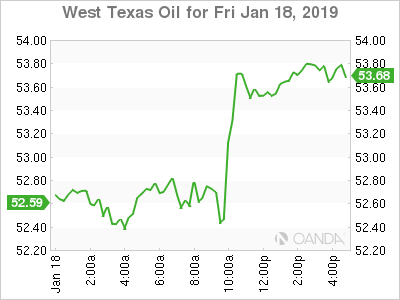
Oil’s rebound continued this week as OPEC’s cuts appear to be working. Friday’s surge stemmed from positive steps in trade talks between the US and China. A framework of a deal is nowhere close, but we are starting to see significant concessions offered by China. US crude is up 18% this year, the best start since 2001. The global supply glut concerns have eased but will likely return if we see prices retake the $60 a barrel level. If we do see a perfect storm of risk appetite, ending of shutdown, trade truce extended and solid earnings reporting, we could see a major leg higher for oil. OPEC however, will unlikely be keen to see prices extend back towards the $75 region, as that is where the majority of US shale players need WTI to reach in order to be profitable.
Monday, January 21
- CNY China GDP
- GBP PM May Plan B due
- 2:00am EUR German PPI
- US Holiday; Observance for MLK Day
Tuesday, January 22
- JPY BOJ Policy Rate
- 4:30am GBP UK Average Earnings & Claimant Count Rate
- 5:00am EUR German ZEW Survey Current Situation
- 10:00am USD Existing Home Sales
- 4:45pm NZD CPI reading
Wednesday, January 23
- World Economic Forum (4-day event)
- 8:30am CAD Retail Sales
- 10:00am EUR Euro Zone Consumer Confidence
- 10:00am USD Richmond Manufacturing Index
Thursday, January 24
- EUR Major European Manufacturing & Services PMI readings
- 7:45am EUR ECB Rate Decision
- 9:45am USD Flash Manufacturing & Services PMI Readings
- 11:00am Crude Oil Inventories
Friday, January 25
- 4:00am EUR German Ifo Business Climate