Sample Category Title
Fed Williams: Two rate hikes in 2019 would make sense in a really strong economy
Speaking on CNBC, New York Fed President John Williams warned that "there are risks to that outlook that maybe the economy will slow further". He also emphasized that Fed is "listening" and it's "ready to re-assess and reevaluate our views and...policy stance". And, Fed will "go into the new year with eyes wide open, willing to read the data and listen to what we are hearing, re-assess our economic outlook, and take the right policy decisions."
To be more specific, Williams said "Something like two rate increases would make sense in a really strong economy going forward. But we're data dependent, we're going to adjust our views dependent on how the outlook changes."
Canadian October Retail Sales Inch Higher
Highlights:
- Retail sales increased 0.3% in nominal terms in October, but in part boosted by the incorporation of Cannabis sales post October 17th legalization. Overall sale volumes were flat in the month.
- E-commerce sales (which likely contain significant Cannabis sales from Ontario, where Cannabis is initially only being sold legally online) 19.3% year-over-year, well above the pace of overall retail sales growth.
Our Take:
Nominal sales increased 0.3%, but only because of higher prices — excluding price-effects sales were unchanged in the month. The month-over-month increase in nominal sales was also in part, although minimally, impacted by the first reported sales of cannabis following legalization on October 17th. Statistics Canada estimated that the half-month of cannabis sales totaled ~$43 million, enough to boost the headline retail sales number by ~0.1 percentage points.
The monthly data is often volatile but broader trends at this point remain consistent with consumer spending continuing to grow, albeit at a slower pace. Sale volumes were flat in October but that followed a 0.3% increase in September, so the data is still tracking right in line with our call for a 1.8% increase in consumer spending in Q4. That’s significantly slower than the 3 1/2 % increase in spending last year as a whole, but still reasonably solid for this point in the economic cycle. Higher interest rates will continue to bite into household purchasing power but labour markets still look strong to-date. And, looking through transitory disruptions, broader economic data still looks okay — including the stronger-than-expected 0.3% increase in GDP in October also reported this morning. Despite recent financial market volatility, at this point we continue to expect that some further gradual rate hikes from the Bank of Canada will ultimately be warranted.
Canadian October GDP Rebounds
Highlights:
- Canadian October GDP rose a stronger-than-expected 0.3% which more than reversed the disappointing 0.1% decline in September.
- The increase was helped by solid gains in manufacturing (0.7%), wholesale trade (1.0%) and oil and gas extraction (3.6%).
- The Canada Post strike and weakening oil prices are expected to send growth in November lower.
Our Take:
GDP activity in October bounced back 0.3%. That more than reversed the disappointing 0.1% decline reported in September. Market expectations going into the report had been for a rebound in activity, albeit by a more moderate 0.2%, buoyed by earlier-released reports of solid increases in manufacturing and wholesale trade that reversed sizeable declines in September. The increase was also boosted by a robust 3.6% rebound in oil and gas production. Though the bounce in GDP growth is encouraging, it is not expected to be sustained. Activity in November is expected to be weighed down by the Canada Post strike and a weakening in oil prices. These factors, along with the disappointing momentum going into Q4, are projected to result in activity in the quarter only rising at an annualized rate of 1.1%. The outlook is not expected to improve in the first quarter of 2019 despite the return to work by the postal workers as the mandated oil production cuts by the Alberta government will keep annualized growth close to 1%. Beyond Q1, a lessening impact from the oil production cuts along with both Bank of Canada policy still remaining moderately accommodative and the U.S. economy continuing to grow are projected to result in the pace of quarterly activity bouncing back. This is expected to result in 2019 annual growth of 1.7%. With the Canadian economy at capacity, growth in 2019 close to the economy’s potential rate of 1.8% is likely what the policymakers are striving to achieve. To sustain this pace of growth our expectation remains that the Bank of Canada will continue to gradually raise the overnight rate currently at 1.75% closer to a so-called neutral rate within the range of 2.50% to 3.50%. However, the next hike is expected to wait until the central bank is assured that any near-term weakness proves temporary. Our forecast assumes this will delay the next hike in the overnight rate until the second quarter.
Week Ahead – Markets to Enter Christmas Lull; Risk of Volatility in Thin Trade
As the holiday period begins, markets will go into quiet mode for the next two weeks with little on the economic agenda to keep traders at their desks. However, with the market sentiment being stuck in risk-off mood, there is a threat that thin trading conditions could lead to some unexpected volatility, particularly from any headlines that would fuel concerns of a major global economic downturn in 2019.
Japanese data to dominate
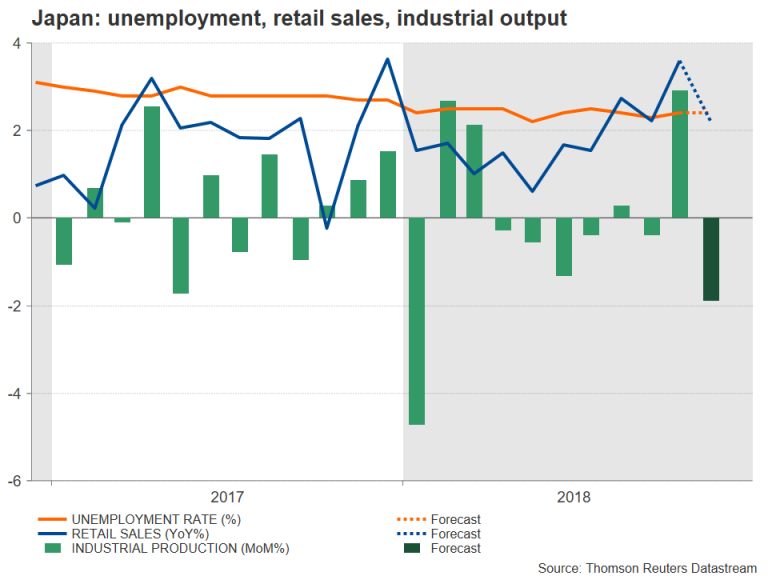
The Japanese market will be the busiest next week with a number of key indicators due for release on Friday. Tokyo inflation figures for December, which are seen as forward looking for the nationwide measure, will be published first, to be shortly followed by data on the labour market, industrial output and retail sales.
Industrial output posted a surprise 2.9% increase in October following the third quarter contraction in GDP. Expectations aren’t high, however, for November, with forecasters predicting a month-on-month drop of 1.9% in the preliminary print. Retail sales had also risen by more than expected in October, but they’re not anticipated to have held up in November either as the annual growth is forecast to slow from 3.5% to 2.2%. The unemployment rate, meanwhile, which had inched slightly higher to 2.4% in October, is expected to stay unchanged at that level, though this is still close to the recent lows last seen in the early 1990s.
A strong set of figures could magnify the yen’s appreciation should investors continue to fret about the deteriorating outlook for the world economy and maintain their expectations that the Fed won’t be able to match its predicted number of rate hikes in 2019.
Apart from the data, the Bank of Japan will be attracting some attention too as it releases the minutes of its October policy meeting (Wednesday) and the Summary of Opinions of the December meeting (Friday). Given that the BoJ stood pat in both meetings and Governor Kuroda’s frequent press briefings, there’s unlikely to be any new revelations in the published views of board members. However, traders will still be looking out for any emphasis on the rising negative risks to the economy.
Second-tier US data unlikely to be dollar’s saviour
A not-so-dovish Fed hasn’t really done the US dollar any favours following this week’s FOMC meeting, as markets continue to focus on the worst-case scenario that a deep economic slowdown in the US and the rest of the world in 2019 will tie the Fed’s hands in raising interest rates further. Dollar bulls will probably struggle to find many catalysts from next week’s releases despite a relatively busy calendar.
In fact, the risks to the greenback from the data are to the downside. The housing market will move to the fore again next week as the S&P CoreLogic Case-Shiller 20-city home price index is due on Wednesday, followed by new home sales on Thursday and pending home sales on Friday. America’s housing industry has been showing some signs of weakness lately as higher borrowing costs have started to dampen demand. The housing sector is usually the first to feel the bite from tighter monetary policy and so any further weakness from next week’s figures would only reinforce the view that Fed policy is too aggressive.
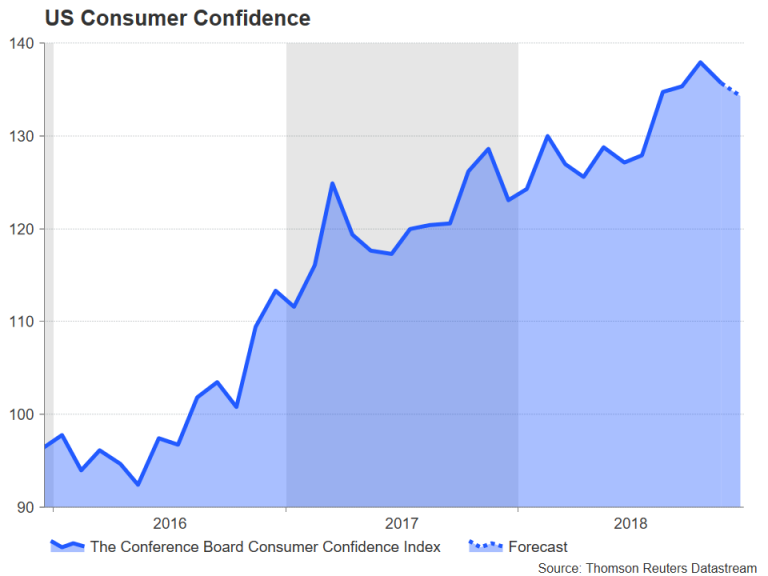
The other highlight next week will be the Conference Board’s consumer confidence index on Thursday. The closely-watched gauge is projected to fall to 134.3 in December from 135.7 in the prior month. Also of interest will be the Chicago PMI for December on Friday.
2018 to end with market tantrum?
With economic data not likely to excite nor support the market in the remaining days of the year, there is a real risk the gloomy sentiment could turn into a deeper market panic. With equity markets being in such a fragile state and amid an expected thin liquidity over the Christmas and New Year period, any negative headlines could trigger an even sharper sell-off in stocks. Investors had to contend with an array of worrying developments in recent months, namely, Brexit, the Italian budget row, trade tensions, a slowdown in China, and the absence of enough reassuring words from Fed Chair Jerome Powell, which have all led to markets throwing a tantrum.
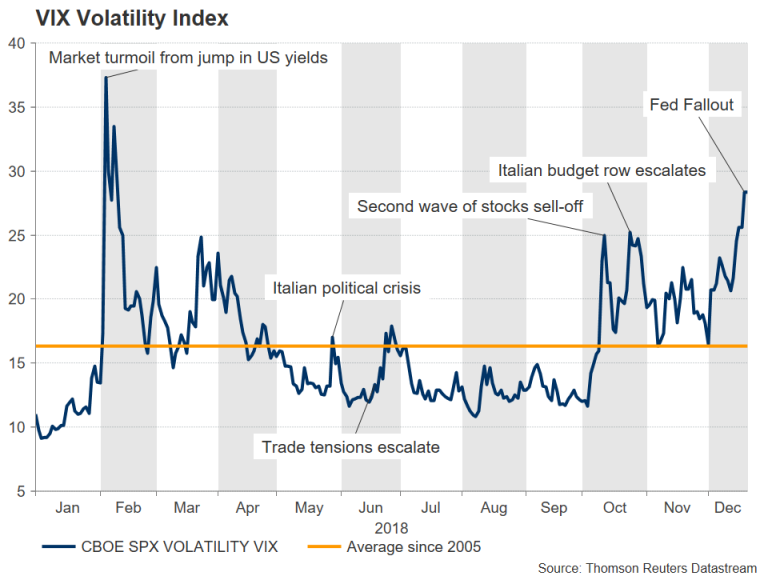
In the currency world, the greenback is likely to be the biggest victim from extended losses in stocks, as observed this week, while the safe-haven yen stands to gain the most from further turbulence along with gold.
FOMC and President Trump Exacerbate Volatility
The past week has again seen policy makers return to centre stage as 2018’s schedule of central bank meetings concluded, and the Australian government released its mid-year update.
Beginning with the domestic scene, the mid-year Federal budget update highlighted the benefit that the Government’s bottom line has received from a stronger-than-expected labour market and elevated commodity prices. Overall, a $31bn improvement in the budget position was announced for the four year forecast period from 2018/19. The much-improved starting position has set the scene for additional pre-election tax cuts/ spending of around $9bn – the detail of which will be forthcoming.
It could be argued that this support is timely as, despite continued strength in employment growth (2.3% over the year to November, and 2.9% on a six-month annualized basis), the consumer remains a significant source of uncertainty for the outlook. This was again highlighted in the December RBA meeting minutes, with slow income growth, high debt levels and falling house prices cited as a combination that poses downside risks for activity.
Note that this description preceded the weak Q3 GDP report. On the back of that update, we expect that, come February, the RBA will revise down its growth forecast for 2018 and 2019. As highlighted by Chief Economist Bill Evans, “at this stage, the Bank cannot be described as having moved to a ‘neutral’ bias. However, taking into account the attention given to the credit; housing; consumer; and external risks, these minutes should be interpreted more ‘dovishly’ than we have seen over the course of 2018”. For a full picture of economic conditions across Australia, see our just-released December Coast-to-Coast report.
Moving offshore, this week New Zealand GDP also disappointed in Q3, rising just 0.3% after Q2’s outsized 1.0% gain. Q3 was the smallest quarterly gain in five years, but this looks to, at least in part, be the result of transitory factors. Given upward revisions to 2017 and the detail of the Q3 accounts, our NZ team does not see cause to change their forecasts. Into 2019, growth is expected to pick up on the back of government spending and greater momentum in housing. Further out however, slower population growth and a peak for construction loom as headwinds.
Then to the US. Heading into the December FOMC decision, the focus of the market was on the tone of the decision statement and accompanying Committee forecasts rather than the rate hike to be delivered. The Committee effectively provided two views in their communications: the decision statement focused on the strength of economic growth and the labour market; while the forecasts and press conference emphasised the risks. On the latter, recent financial volatility; tightening financial conditions and softer global growth have clearly increased in prominence in the minds of Committee members now that the bottom of their forecasted neutral range has been reached (2.50%). Whereas the real economy data continues to justify two-to-three more hikes, these other “cross-currents” could see the FOMC’s gradual normalisation concluded early. The market is clearly nervy, pricing in less than one hike for 2019.
As we go to press, political brinkmanship in Washington is further heightening market uncertainty. President Trump is refusing to sign the short-term spending bill necessary to avoid a government shutdown from this Saturday because Congress has not included funding for his border wall. The Democrats have no interest in providing said funding, and the Republicans don’t have the numbers by themselves. Friday will be a tense day in Washington, and for financial markets, as a last-minute compromise is sought.
Finally, in their December post-meeting statement, the Bank of England highlighted the deterioration in conditions that the UK is facing in the absence of an agreement over Brexit. In particular, the Committee noted “Brexit uncertainties have intensified considerably since the Committee’s last meeting”. Further, “UK bank funding costs and non-financial high-yield corporate bond spreads have risen sharply and by more than in other advanced economies”. In addition to these specific UK concerns, in line with other central banks, the Bank of England also believe that “the near-term outlook for global growth has softened and downside risks to growth have increased”. It is difficult to see conditions being supportive of further rate hikes by the Bank of England. In our view, the risks for the UK are instead heavily skewed to the downside.
Sunset Market Commentary
Markets
Global core bonds are mixed today with US Treasuries outperforming German Bunds. Risk sentiment remained fragile, with investors still disappointed by the Fed’s decision on Wednesday and the ongoing political deadlock in the US. Trump is still threatening to shut down the government (partially) as he is putting his foot down on federal funding for a wall on the US/Mexican border. The risk-off modus supported US Treasuries, pushing them (modestly) higher. US economic data slightly disappointed but had little impact on US bonds. The US yield curve bull flattened with changes varying between -0.3 bps (2-yr) to -3.4 bps (30-yr). European equities opened lower this morning, but recovered partly throughout the day. The German Bund stays close to opening levels. The German yield curve steepens, with changes in the range of -0.3 bps (2-yr) to +2.2 bps (30-yr). Italian BTP’s dropped despite the 2019 budget taking its final form and as the coalition said to have enough votes in both houses to push it through parliament today. However, BTP’s were able to pair some of the losses throughout the day keeping the Italian/German 10-yr yield spread remaining close to its recent low.
Yesterday, the dollar reversed a post-Fed uptick as uncertainty on the Fed policy going forward, the risk of a government shutdown and persistent uncertainty on the US-China trade relations weighed on the US currency. Today, the dollar re-found its composure. An early EUR/USD upside test ran into resistance ahead of the 1.1486/1.15 resistance area. China indicating renewed policy stimulation was a USD supportive. Risk-off selling in EUR/JPY and USD/JPY probably also filtered through into the EUR/USD cross rate. During the US trading session, US data were mixed. US Q3 GDP was revised marginally lower to 3.4% QoQa. November durable goods orders were rather soft, but October data were upwardly revised. Market impact on USD trading was limited. Risk sentiment improved slightly, but Interest rate differentials between the US and German still narrowed slightly, tempering further USD gains. EUR/USD still trades in the red on a daily basis (1.1420 area). USD/JPY stabilized in the lower half of the 111 big figure.
Today, sterling rebounded after substantial losses earlier this week. UK Q3 growth was confirmed at 0.6% Q/Q and 3.5% Y/Y, but business investment contracted for the third consecutive quarter. The Q3 current account deficit was also bigger than expected at £26.5bn. November public sector borrowing was better than expected. Brexit rumours/headlines suggested that the UK government is pondering the options in case May’s Brexit deal gets rejected in January. These options might include a second referendum or new elections which, in the end, might reduce chances for a disorderly no deal Brexit. The EUR/USD correction also weighed on the EUR/GBP cross rate. The pair dropped back to the low 0.90 area (currently near 0.9025). Cable is trading little changed in the mid 1.26 area.
USDCAD Bullish Streak Continues after Mixed Data and BOC Survey
The Canadian dollar firmed up after October GDP came in at the fastest pace in 5 months as manufacturing bounces back and almost fully offsets declines in August and September. The month on month reading grew at 0.3%, higher than the 0.2% analysts’ eyed, and an improvement from the -0.1% reading from the prior month. The construction sector declined for the fifth consecutive month in October, edging down 0.1%.
Retail sales for Canada was also released simultaneously and missed across the board with downward revisions. Sales for October posted 0.3% growth, an improvement from the downward revision reading of 0.1%, but a miss of the 0.5% economists expected.
The loonie gave back its gains however after the November BOC Business Outlook Surveyed indicator decreased slightly but was still elevated, signaling that business sentiment overall continues to be positive. Overall, firms no longer anticipate capacity pressures to intensify, pointing to increases in investment and employment that expand productive capacity, and expectations that demand in the Prairies and around housing in some regions will moderate.
The mixed survey and data, the last before the Bank of Canada rate decision on January 9th is unlikely to change anything. We may not see the central bank consider a hike until the summer.
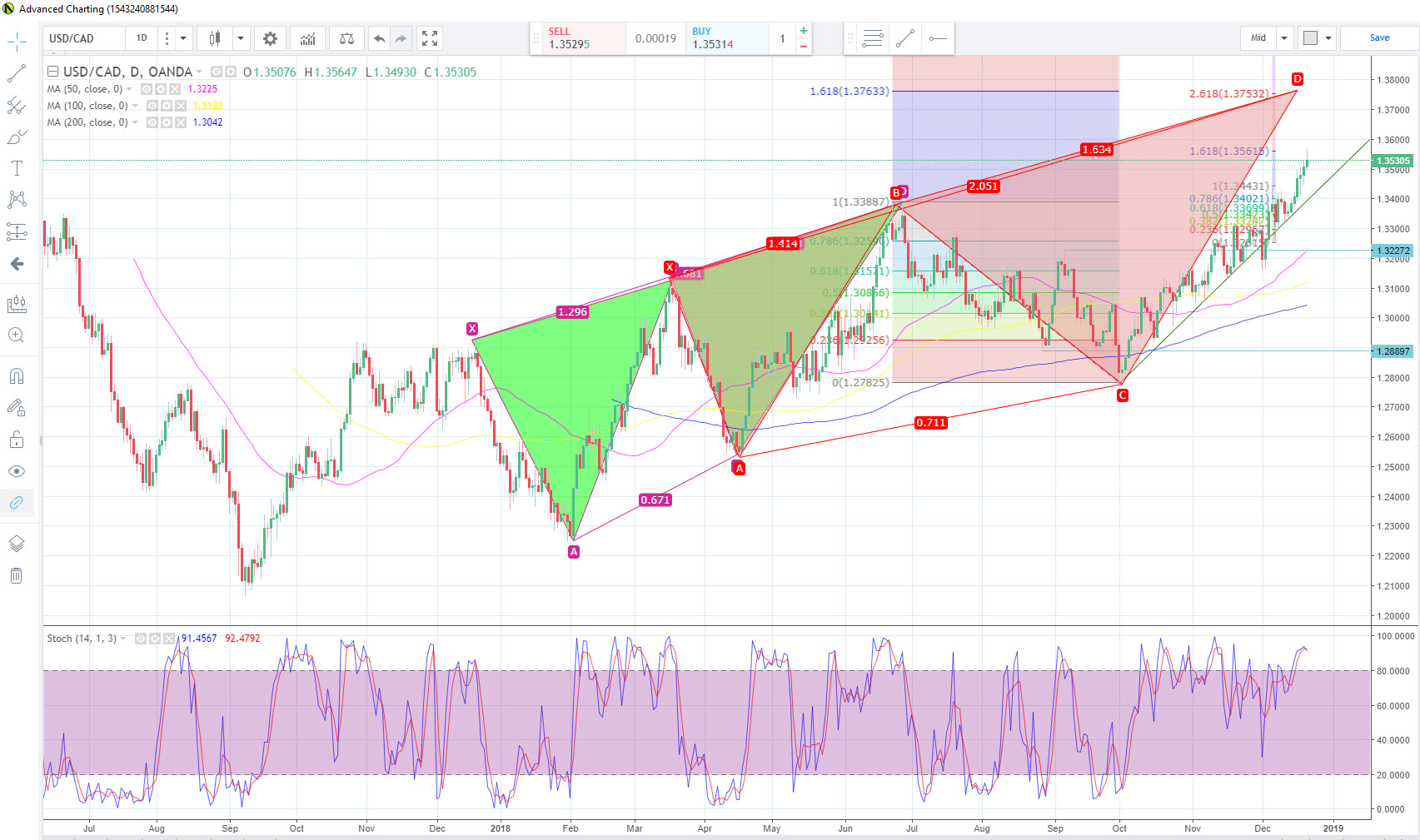
Price action on the USDCAD daily chart shows the strong bullish upswing is poised for the 7 consecutive day. If price closes above the 1.3550 level, bullish momentum could target the 1.3760. It is around that area price could form a bearish butterfly pattern.
EUR/USD Mid-Day Outlook
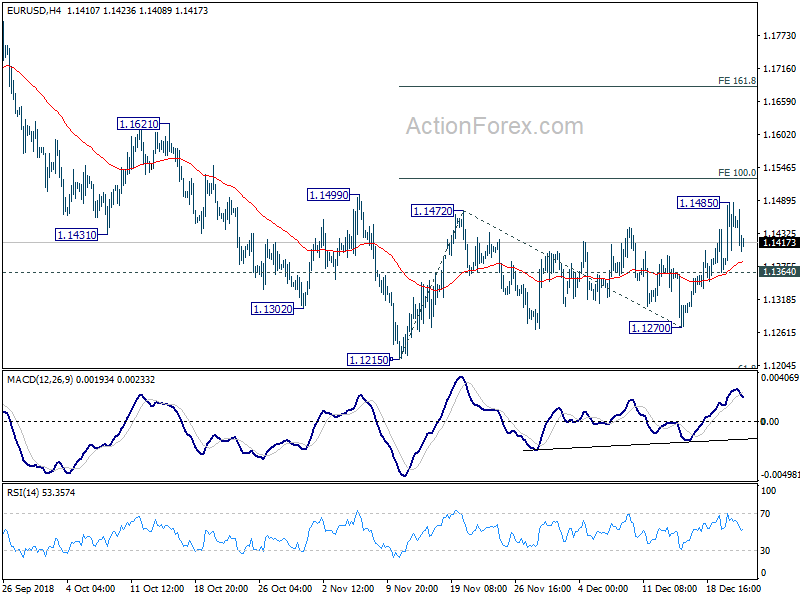
Daily Pivots: (S1) 1.1383; (P) 1.1434; (R1) 1.1498; More.....
With 4 hour MACD crossed below signal line, a temporary top is in place at 1.1485 and intraday bias is turned neutral first. Another rise is mildly in favor as long as 1.1364 minor support holds. Above 1.1485 will target 100% projection of 1.1215 to 1.1472 from 1.1270 at 1.1527 first. Break will target 161.8% projection at 1.1686 next. On the downside, however, break of 1.1364 minor support will suggest that the rebound is completed and turn bias back to the downside for 1.1215 low.
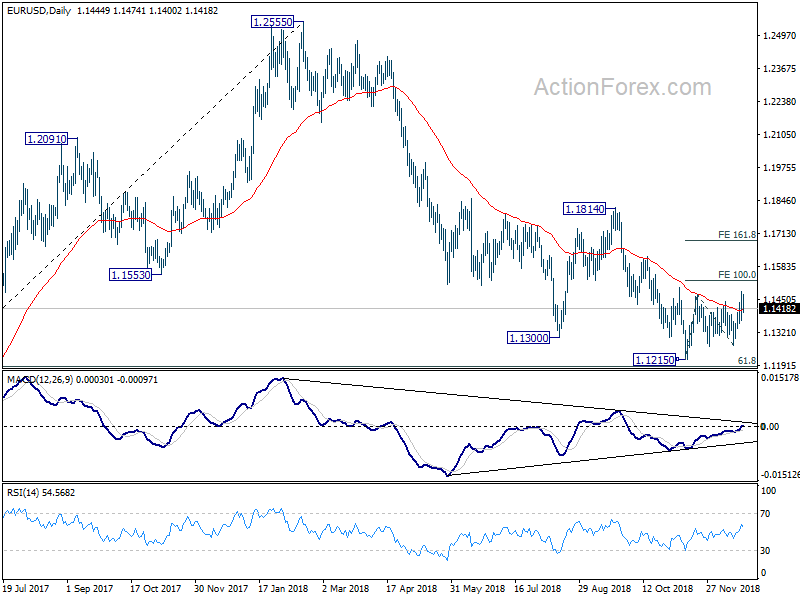
In the bigger picture, as long as 1.1814 resistance holds, down trend down trend from 1.2555 medium term top is still in progress and should target 61.8% retracement of 1.0339 (2017 low) to 1.2555 at 1.1186 next. Sustained break there will pave the way to retest 1.0339. However, break of 1.1814 will confirm completion of such down trend and turn medium term outlook bullish.
GBP/USD Mid-Day Outlook
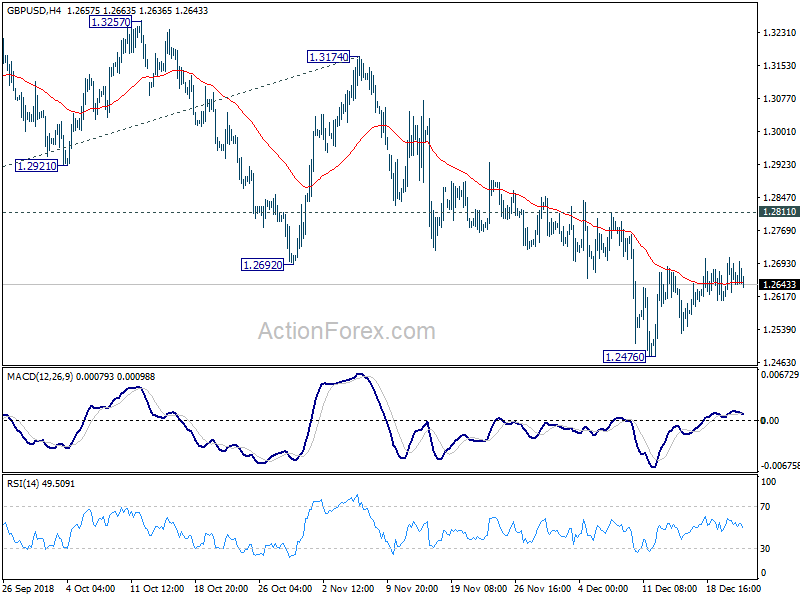
Daily Pivots: (S1) 1.2605; (P) 1.2656; (R1) 1.2710; More....
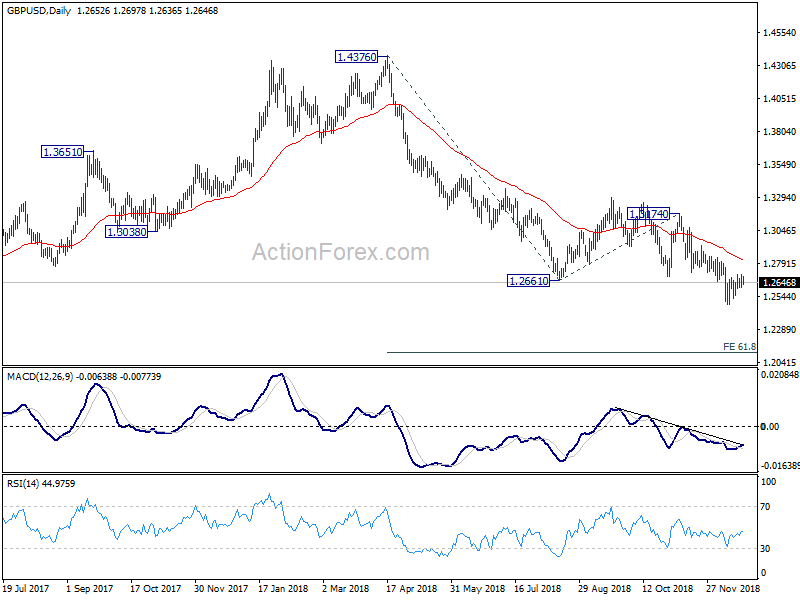
Intraday bias in GBP/USD remains neutral as consolidation from 1.2476 is in progress. Upside of recovery should be limited by 1.2811 resistance to bring fall resumption. On the downside, break of 1.2476 will extend larger down trend from 1.4376 to 61.8% projection of 1.4376 to 1.2661 from 1.3174 at 1.2114. However, firm break of 1.2811 will be an early signal of trend reversal and turn focus back to 1.3174 resistance.
In the bigger picture, whole medium term rebound from 1.1946 (2016 low) should have completed at 1.4376 already, after rejection from 55 month EMA. The structure and momentum of the fall from 1.4376 argues that it's resuming long term down trend from 2.1161 (2007 high). And this will now remain the preferred case as long as 1.3174 structural resistance holds. GBP/USD should now target a test on 1.1946 first. Decisive break there will confirm our bearish view.
USD/CHF Mid-Day Outlook
Daily Pivots: (S1) 0.9828; (P) 0.9892; (R1) 0.9944; More...
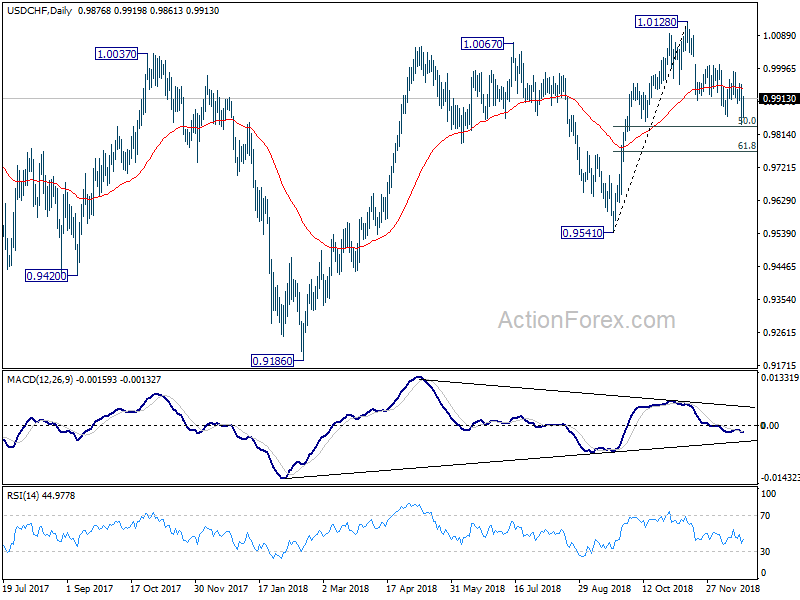
Intraday bias in USD/CHF is turned neutral with today's recovery. Outlook is unchanged that we'd still expect strong support from 0.9848 to complete the corrective fall from 1.0128 to bring rebound. On the upside, break of 0.9989 will turn bias back to the upside for retesting 1.0128 high. However, sustained break of 0.9848 will bring deeper fall to 61.8% retracement of 0.9541 to 1.0128 at 0.9765
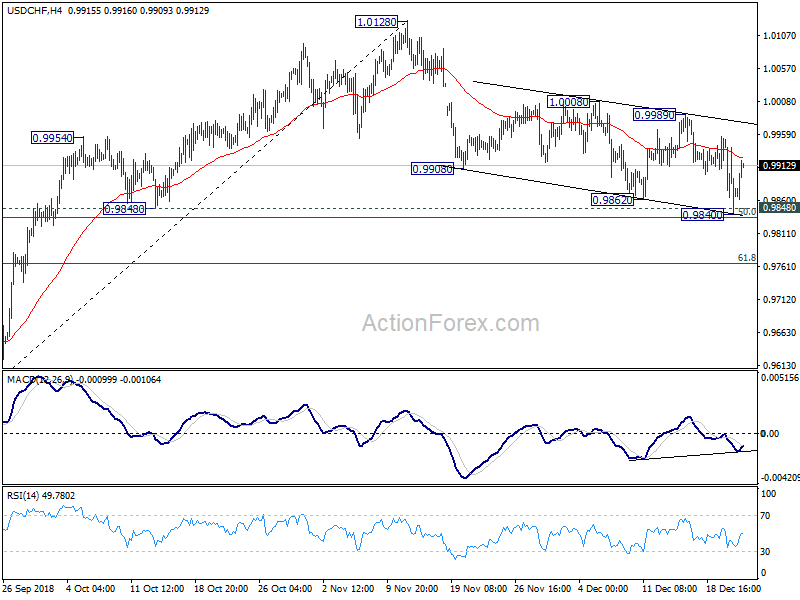
In the bigger picture, current development suggests that the medium term rally from 0.9186 hasn't completed yet. Break of 1.0128 will target 1.0342 key resistance next (2016 high). On the downside, firm break of 0.9848 support will dampen this bullish view and turn focus back to 0.9541 key support instead.