

Sample Category Title
AUD/USD Decline After Rate Hikes
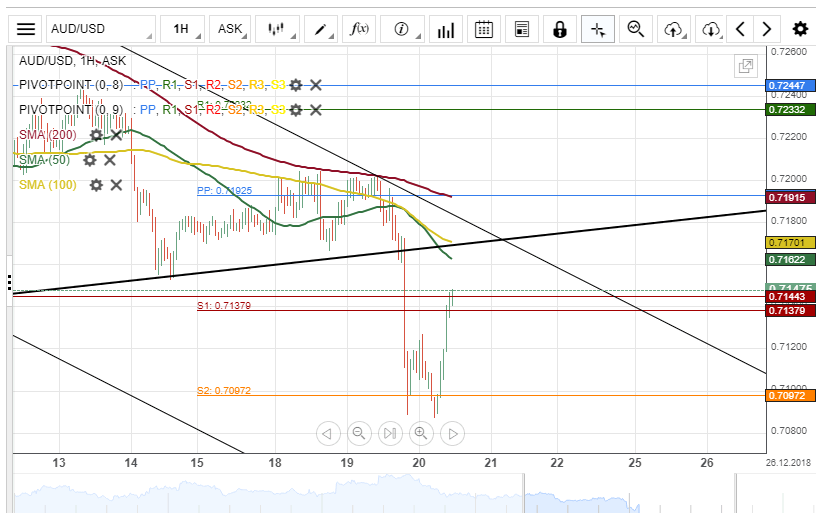
The Australian Dollar depreciated about 112 base points against the US Dollar on Wednesday. This decline started after the US Federal Reserve raised interest rates during yesterday's trading session.
Everything being equal, it is likely that the currency exchange rate regains some of its lost positions within this trading session. The potential upside target will be near a resistance cluster formed by the 50– and 100-hour SMAs at the 0.7171 area.
However, the combination of the weekly and the monthly PPs at 0.7137 could hinder the AUD/USD pair from hitting target today.
USD/CAD Strong Resistance At 1.3500
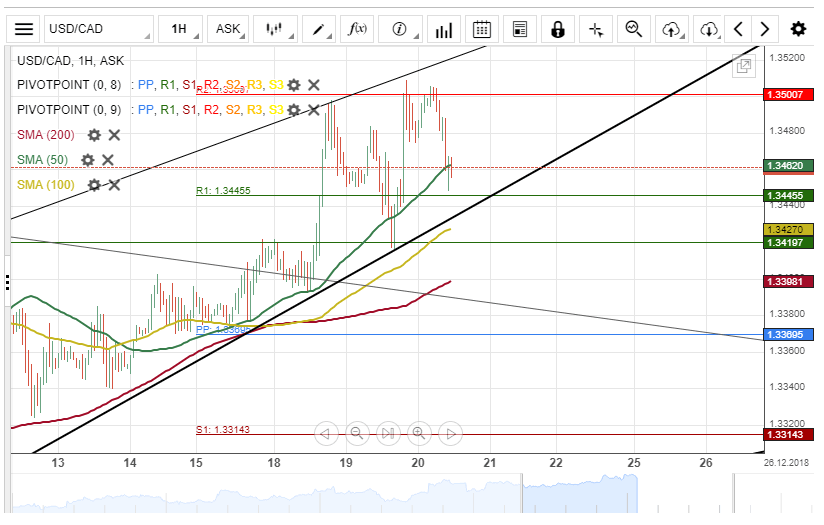
The US Dollar ended Wednesday's trading session with 92 points gains against the Canadian Dollar. The surge occurred after the US Federal Reserve hiked interest rates during the end of yesterday's session.
However, a resistance level formed by the weekly pivot point at 1.3500 has prevented the currency pair from gaining further points for the second consecutive trading session.
After hitting the resistance line during the second part of today's session the exchange rate began to decline.
Most likely, the currency exchange rate will aim at a support level set by the 100-hour SMA at 1.3425 within this session.
NZD/USD Mix Signals Today
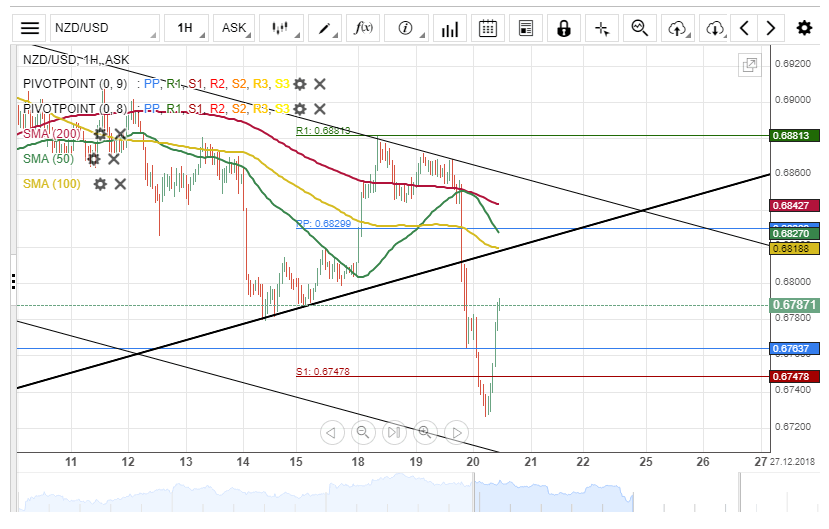
The New Zealand Dollar deprecated about 111 base points against the US Dollar on Wednesday. The decline was temporarily stopped by the weekly S1 at 0.6747 during the end Wednesday's session.
As for the near future, it is likely that the NZD/USD currency exchange rate makes a brief retracement towards a resistance cluster set by the 100-hour simple moving average and the weekly PP at 0.6829.
However, technical indicators suggest that the decline of the exchange rate will continue within this session
DAX Slides As Investors Give Fed Thumb-Down
It has been a volatile day for equity markets. The DAX index dropped sharply in Thursday’s Asian session, but has recovered somewhat in European trade. Currently, the DAX is at 10,664, down 0.94% on the day. In economic news, the eurozone current account surplus widened to EUR 23.0 billion, up from EUR 17.0 billion in the previous release. This beat the estimate of EUR 18.4 billion. In the U.S., the Philly Fed Manufacturing Index is expected to rise to 15.1, while jobless claims are forecast to increase to 216 thousand. On Friday, Germany and the eurozone release consumer confidence reports.
Equity markets have shown plenty of volatility in December, and the Federal Reserve rate statement has shaken up the markets on Thursday. Investors had expected a rate hike, which the Fed delivered. However, there was hope for a dovish rate statement, given that the markets have been in turmoil for weeks and the U.S. economy appears to be cooling down. Instead, policymakers maintained plans to continue raising rates. Most significantly, policymakers did not remove the critical phrase “further gradual increases” from their statement. At the same time, the dot plot forecast was lowered for 2019, from three rate rises to two.
Just a few months ago, the markets were predicting a “rate hike every quarter” for 2019, but the Fed has made a U-turn in monetary policy, as policymakers respond to economic data which is pointing to slower growth. The policy of gradual rate hikes bears much of the responsibility for the volatility in the markets, and the message from the Fed that more hikes are coming will likely mean that the volatility will continue in December and into the New Year.
EU policymakers have plenty of headaches to deal with, but there was some positive news on the domestic front on Wednesday, as Italy and the EU announced on Wednesday that an agreement had been reached whereby Italy would lower its deficit target to 2.04%, down from its original target of 2.4%. For weeks, Italy and the EU had appeared to be on a collision course over the budget, with the EU threatening unprecedented sanctions against the Italian government. The deal sent Italian stocks higher on Wednesday and has improved investor risk appetite.
EUR/USD – Euro Surges As Fed Less Dovish Than Expected
EUR/USD has continued its impressive rally, with sharp gains on Thursday. In the European session, the pair is trading at 1.1484, up 0.82% on the day. On the release front, the eurozone current account surplus widened to EUR 23.0 billion, up from EUR 17.0 billion in the previous release. This beat the estimate of EUR 18.4 billion. In the U.S., the Philly Fed Manufacturing Index is expected to rise to 15.1, while jobless claims are forecast to increase to 216 thousand. On Friday, Germany and the eurozone release consumer confidence reports. It will be a busy day in the U.S., with the release of Final GDP, durable goods orders and consumer confidence.
The euro has climbed 1.5 percent this week, as EUR/USD trades at its highest level since early November. The dollar continues to sag, even after the Federal Reserve released a rate statement that was less dovish than expected. Most significantly, policymakers did not remove the critical phrase “further gradual increases” from their statement. At the same time, the dot plot forecast was lowered for 2019, from three rate rises to two. Just a few months ago, the markets were predicting a “rate hike every quarter” for 2019, but the Fed has made a U-turn in monetary policy, as policymakers respond to economic data which is pointing to slower growth.
The euro has received a boost from good news on the domestic front, as Italy and the EU announced on Wednesday that an agreement had been reached whereby Italy would lower its deficit target to 2.04%, down from its original target of 2.4%. For weeks, Italy and the EU had appeared to be on a collision course over the budget, with the EU threatening unprecedented sanctions against the Italian government. The deal sent Italian stocks higher on Wednesday and has also improved sentiment towards the euro.
EURUSD Moving Towards Key Moving Average
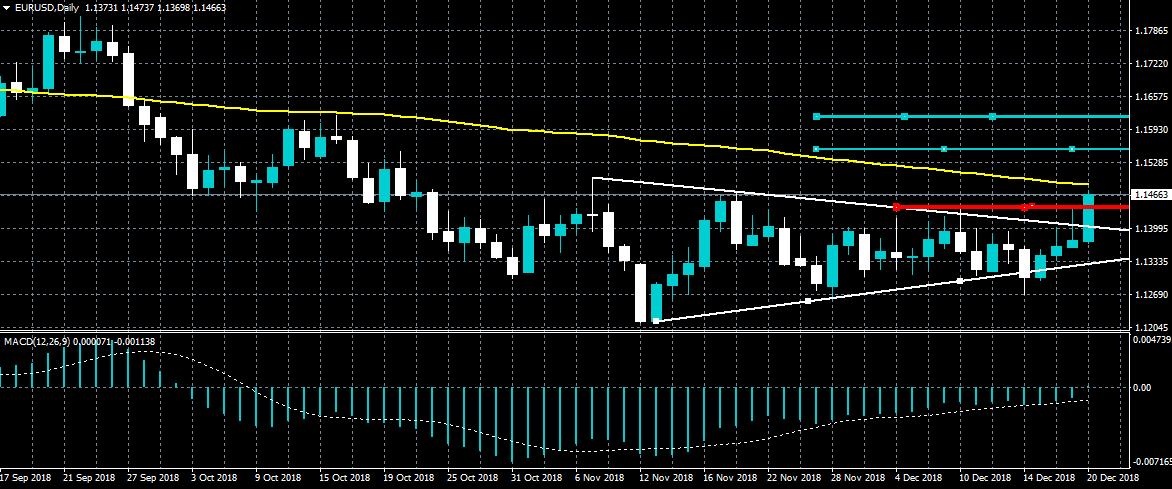
The euro has surged higher against the US dollar during the European trading session, as the greenback comes under pressure despite yesterday’s rate increase from the US Federal Reserve. The EURUSD is now probing the 1.1470 resistance level, with the pairs 100-day moving average the key technical area to watch above the 1.1470 level. A break above the 100-day moving average may accelerate buying towards the 1.1550 level.
The EURUSD pair is strongly bullish while trading above the 1.1430 level, key technical resistance is found at 1.1490 and 1.1550 levels.
If the EURUSD pair trades below the 1.1430 level, key technical support is found at the 1.1400 and 1.1360 levels.
USDJPY Technical Break Underway
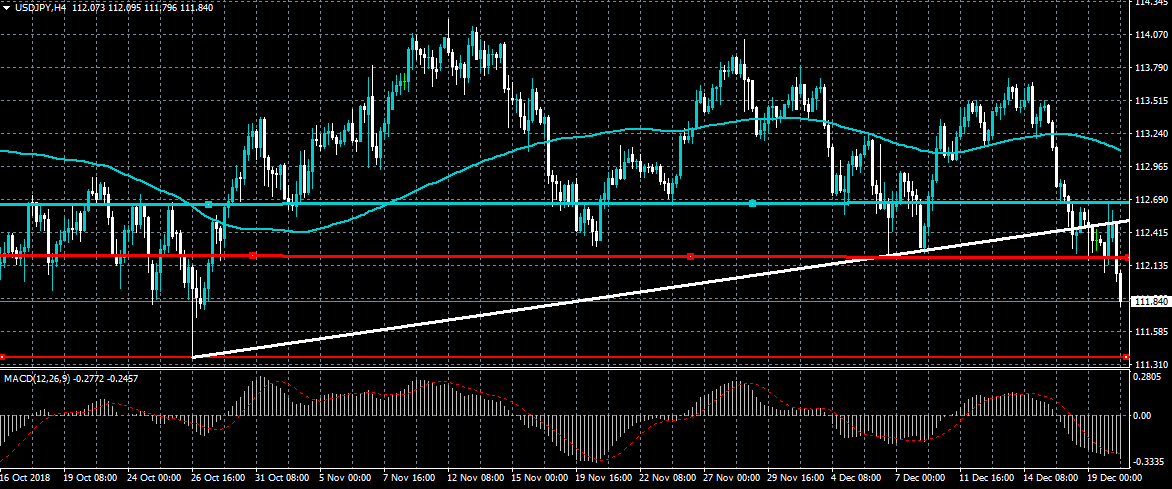
The US dollar has moved sharply lower against the Japanese yen during the European trading session, with price now trading below the 112.00 level. The 112.20 support level had been a major barrier for sellers, with this level now clearly broken the down move could easily extend towards the 111.30 level. The USDJPY pair is also likely to remain pressured if US equity prices continue to react negatively to the latest US rate increase.
The USDJPY pair is strongly bearish while trading below the 112.20 level, key technical support is found at the 111.30 and 110.90 levels.
If USDJPY pair trades above the 112.20 level, buyers may test the 112.50 and 112.68 levels.
Core PCE Inflation Last Major Insight Into US Economy Before The Year-End
The core Personal Consumption Expenditure (PCE) price index will be the highlight of the US economic calendar on Friday and the last important release out of the US before the year-end as investors gather evidence that could shape potential tweaks in the Fed’s rate hiking path in the near future. Consensus is for the gauge to have gained some steam in November, but stronger improvement might be needed to guarantee at least one more rate rise next year.
On Friday at 1330 GMT, November’s figure for the core PCE price index is expected to arrive slightly higher at 0.2% month-on-month compared to 0.1% seen in October, pushing the yearly measure up to 1.9% from 1.8% before. Last week, the core CPI figure for the month of November recorded a minor pickup in inflationary pressures as well, increasing optimism that the Fed’s favourite inflation tracker could behave in the same manner to approach the Bank’s 2.0% price target again.
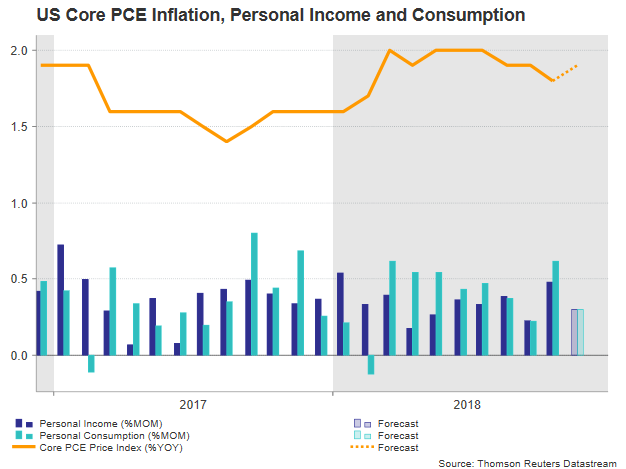
In theory, the tightening US labour market should reflect further growth in prices as firms continue to hire, keeping the unemployment rate at the lowest since 1969 and wage growth at the highest in almost a decade. The Fed’s latest Beige book also noted that businesses in most districts have started to offer better non-wage benefits to attract the best suitable candidates because of worker shortages. Yet estimates on personal consumption and personal income, which will accompany the PCE numbers on Friday are not so encouraging, suggesting instead a softer increase of 0.3% for both indicators versus 0.6% and 0.5% marked respectively in October.
On the other hand, stomach churning losses on Wall Street, the ongoing US-Sino trade turmoil and even the worrying movements between the shorter and longer-term Treasury yields throw cold water on whether the US economy can handle two more rate increases next year as December’s dot plot chart suggests. An economic slowdown in key partners such as China, Japan and Germany, which could weigh on demand for US exports sooner or later, is another reason why the Fed is likely to slow down the pace of rate hikes in 2019.
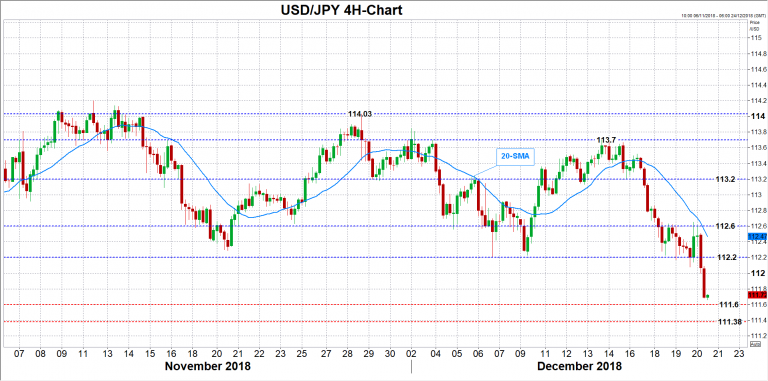
Turning to the impact in FX markets, a disappointing core PCE index could delay the timing of rate increases in 2019, adding more downside to the dollar on Friday. In this case dollar/yen could retest the 111.60-111.38 area which acted as support back in October. A violation of this region would then open the way towards the 110.83-110.37 area before eyes turn to the 109.76 bottom reached on August 21.
Alternatively, better-than-forecast inflation readings could improve chances for further monetary tightening in 2019, pushing dollar/yen probably up to 112.20. Higher, the bulls may stall somewhere between 112.60 and 113.20 before the door opens for the 113.70 resistance. Investors though would likely want to see inflation rising above the 2.0% target to be reassured that the Fed will stay on course.
It is also worth noting that core durable goods orders for the month of November and final GDP growth figures for the third quarter could also affect investors sentiment on Friday. The University of Michigan will be also revising its Consumer Sentiment index for the month of December in the same day.
NZDUSD Could See Some Gains After Sharp Sell-Off
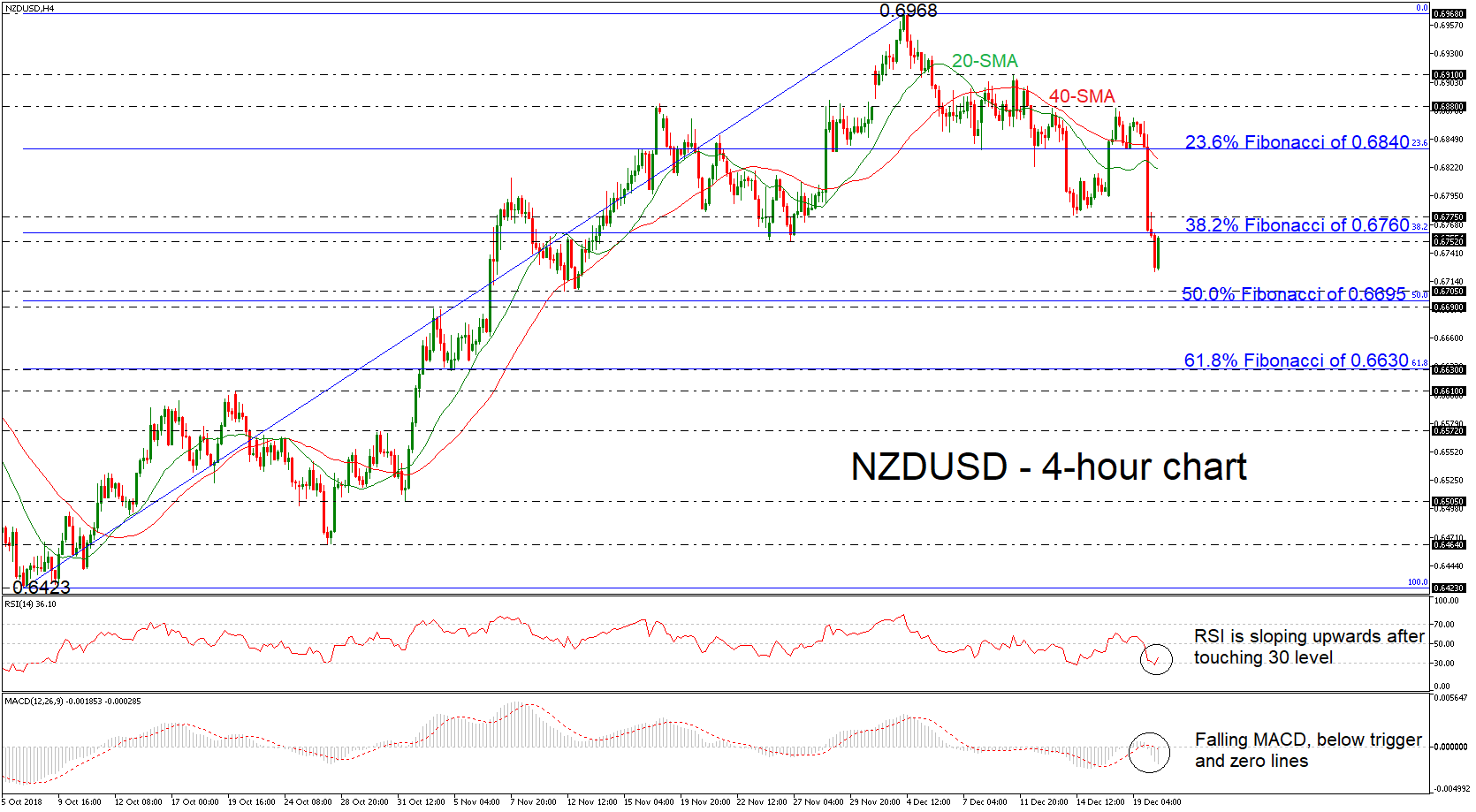
NZDUSD has rebounded somewhat after falling to five-week low of 0.6723 and momentum indicators now suggest that the market sentiment might get better as the RSI is reversing back to the upside after hitting the oversold zone. However, the MACD oscillator is still strengthening its bearish bias below the trigger and zero lines.
In case the pair continues the negative retracement, the bears will probably challenge the bottom of 0.6705 – 0.6690, which encapsulated the 50.0% Fibonacci retracement level of the upleg from 0.6423 to 0.6968. Additional declines may drive the price towards the 61.8% Fibonacci mark of 0.6630, shifting the short-term upside tendency to a more neutral one.
In case the pair changes its very short-term direction to the upside, the bulls will probably challenge the 0.6752 resistance and the 38.2% Fibonacci mark of 0.6760. A break higher, could last until the 0.6775 resistance level, taken from the inside swing bottom on December 14. Further up the area around the 23.6% Fibonacci of 0.6840 could be another potential obstacle to upward movements. It is noteworthy that the price needs to surpass the 20- and 40-simple moving averages (SMAs) before touching the 23.6% Fibonacci.
Summarizing, NZDUSD is edging higher after the sharp sell-off in the preceding sessions in the 4-hour chart, which had created a bearish correction.
Fed Sinks Dollar And Equities
Fed sinks dollar and equities
The US Federal Reserve Bank yesterday lifted interest rates for the fourth time this year, but Chairman Jerome Powell suggested the pace of increase could slow down significantly in 2019. “The Committee judges that risks to the economic outlook are roughly balanced but will continue to monitor global economic and financial developments and assess their implications for the economic outlook.” In other terms, it means that the Fed will embrace a wait-and-see approach next year. The Fed is now expecting two rate hikes next year, compared to three suggested in September.
Markets were expecting a more dovish response from the Fed. After rising 1.5% ahead of the meeting, the S&P 500 collapsed 78 points and ended up the day down 1.54% at 2,506 points. More importantly, the Blue Chip index broke a key support (2,532.69 from 9 February 2018) as it closed at its lowest since October 2017. In FX, the greenback extended losses during both the Asian and early European sessions. EUR/USD rose 0.90% to 1.1480, while the Dollar Index gave up 0.75%. This is not the end of the sell-off, as the Fed continues to withdraw liquidity from the market at a pace USD 50 billion a month. The US economy has no choice but to deleverage.
British interest rates stuck
The Bank of England has no choice today but to maintain its monetary policy rate, unchanged since August 2018. Following the vote of no confidence from last Tuesday and convincing talks with the EU relating to the Irish backstop, the BoE will not move. Inflation accelerated moderately in November, with annual and monthly CPIs given at 2.30% and 0.20% (prior: 2.40%, 0.10%). The scenario of a Brexit deal, with a little less than 100 days to go under current deadline term, does not provide the central bank enough room of manoeuvre, as cases of deal or no-deal would render totally different effects on the British economy. The British pound, which largely recovered from yesterday’s dovish rate hike from the Fed, is expected to weaken further, as monetary policy remains paralyzed under such circumstances. The cable is currently given at 1.2682 (year-to-date: -6.06%), gaining 0.36% from yesterday’s Fed hike. Short-term, GBP/USD is expected to drop following BoE announcement, heading along 1.2605.