

Sample Category Title
US jobless claims rose to 214k, Philly Fed business outlook dropped to 9.4
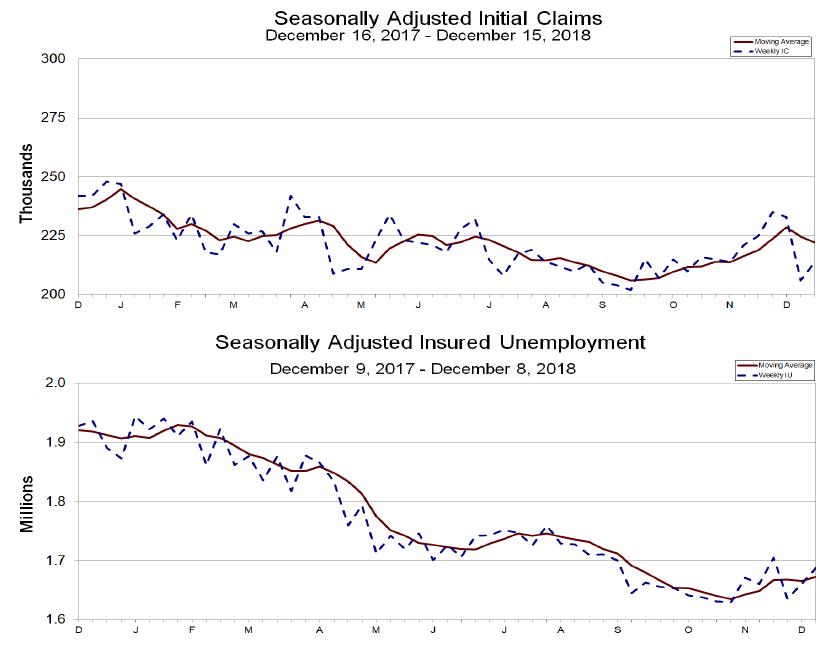
US initial jobless claims rose 8k to 214k in the week ended December 15, below expectation of 219k. Four-week moving average of initial claims dropped -2.75k to 222k.
Continuing claims rose 27k to 1.688M in the week ended December 8. Four-week moving average of continuing claims rose 6.75k to 1.6725M.
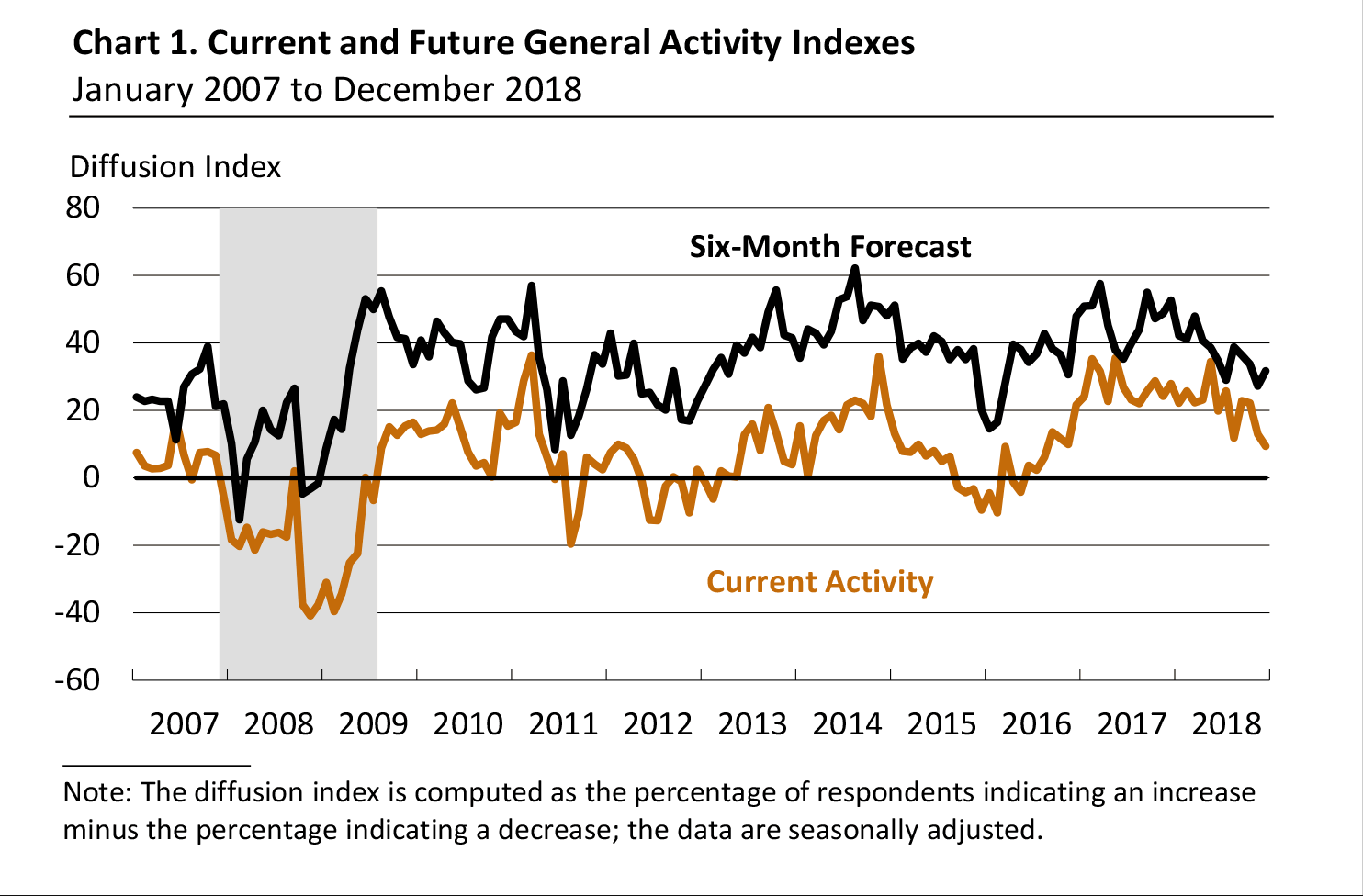
Also released Philly Fed business outlook dropped sharply to 9.4 in December, down from 12.9 and missed expectation of 15.6. That's also the lowest level since August 2016.
Canadian Dollar Higher, Investors Eye US Jobless Claims
USD/CAD is down slightly in the Thursday session. Currently, the pair is trading at 1.3470, down 0.07% on the day. On the release front, Canadian Wholesale Sales are expected to post a gain of 0.4% after two straight declines. Canada will also release ADP nonfarm payrolls, which declined by 23.0 thousand last week. In the U.S., the Philly Fed Manufacturing Index is expected to rise to 15.1, while jobless claims are forecast to increase to 216 thousand. On Friday, there are key events on both sides of the border. Canada releases GDP and retail sales, while the U.S. will publish Final GDP, durable goods orders and consumer confidence.
The Federal Reserve delivered the goods as far as a rate hike, marking the fourth rate hike of the year. The benchmark rate is currently in a range between 2.25 and 250 percent. However, the U.S dollar is broadly lower on Thursday, as the markets had expected a more dovish message in the rate statement. There was speculation that the Fed would “compensate” investors with a very dovish statement, given that the markets have been in turmoil for weeks and the U.S. economy appears to be cooling down. However, the Fed seems bent on continuing to raise rates in 2019 – most significantly, policymakers did not remove the critical phrase “further gradual increases” from their statement. At the same time, the dot plot forecast was lowered for 2019, from three rate rises to two. This marks a U-turn for the Fed, as back in October, Fed Chair Jerome Powell talked about continuing to raise rates until the “neutral rate” range was met. This range has been somewhat unclear, allowing Powell to say on Thursday that the “lower end” of the range has been achieved.
Just a few months ago, the markets were predicting a “rate hike every quarter” for 2019, but such heady talk has disappeared, as Fed policymakers have responded to economic data which is pointing to slower growth. The policy of gradual rate hikes bears much of the responsibility for the volatility in the equity markets, and the message from the Fed that more hikes are coming will likely mean that the volatility will continue in December and into the New Year. This will likely translate into volatility for the Canadian currency, which is sensitive to the level of risk appetite on the part of investors.
EURGBP Moves Slightly Higher, Remaining above SMAs
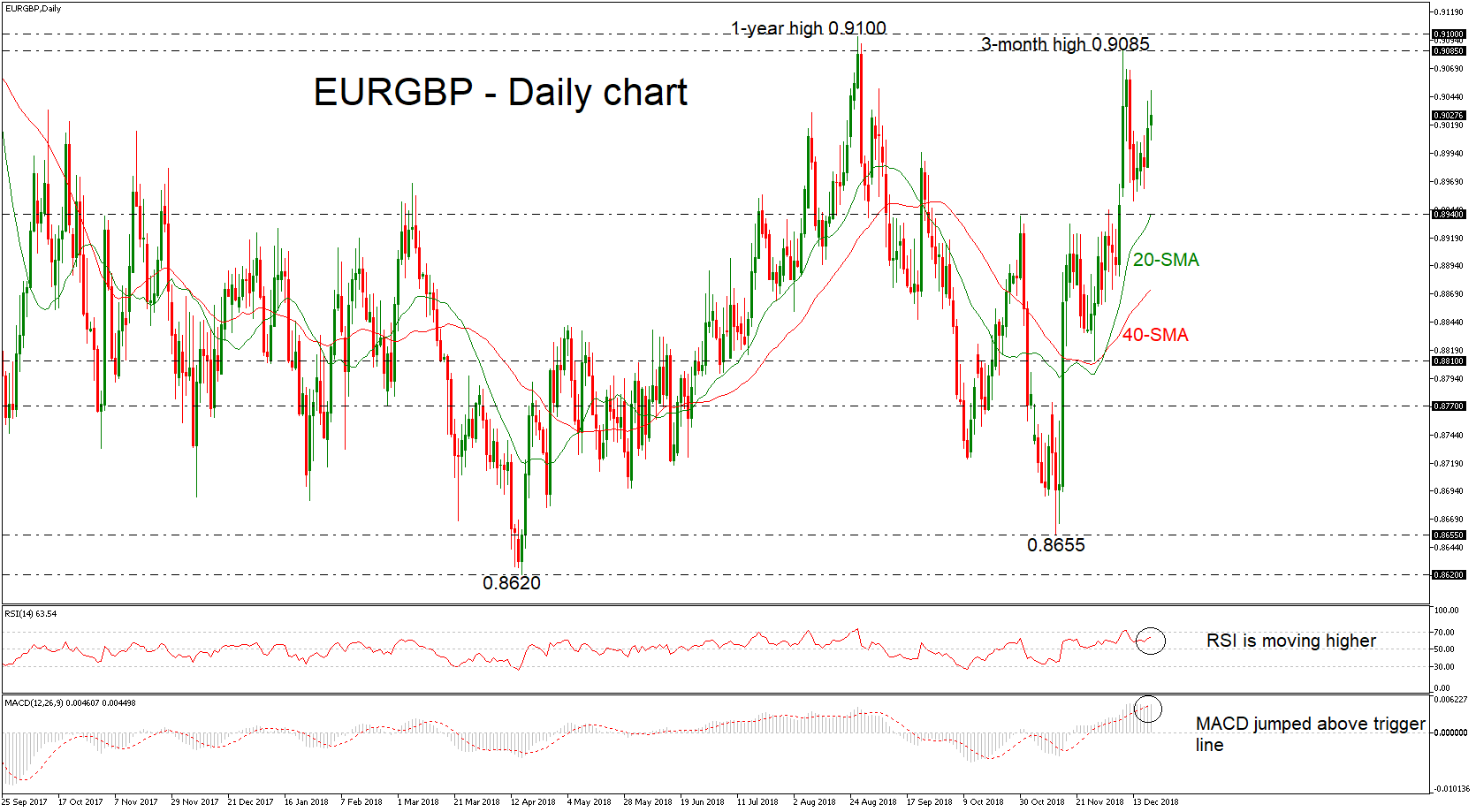
EURGBP has been edging higher since Wednesday’s session, remaining above the strong support level of 0.8940. The technical structure endorses the short-term bullish sentiment as the RSI is heading towards the overbought level and the MACD oscillator created a positive crossover with the trigger line above the zero line. Also, the moving averages are pointing upwards in the daily timeframe.
A further upside run in the price may retest the previous peak of the three-month high of 0.9085 before targeting the one-year high of 0.9100. Above that, investors would be interested to see whether bullish dynamics can overcome the previous peak and meet the 0.9300 psychological hurdle.
Alternatively, a decline in the price may retest the 0.8940 support barrier, which coincides with the 20-simple moving average (SMA), before challenging the 40-SMA around 0.8872 at the time of writing. More downside pressures could send prices until the 0.8810 hurdle, identified by the bottom on November 28.
To conclude, the short-term outlook is bullish, however, in the long-term picture the price lacks direction.
EURUSD Sees Bullish Offensive On Price Rally
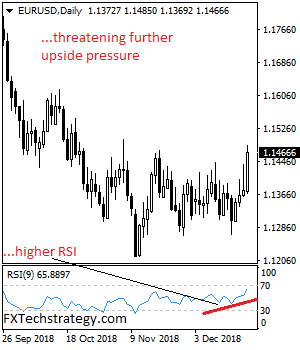
EURUSD sees bullish offensive on rally with more strength expected in the days ahead. Support lies at the 1.1400 where a violation will aim at the 1.1350 level. A break below here will aim at the 1.1300 level. Further down, support lies at the 1.1250. On the upside, resistance resides at 1.1500 level with a break through there opening the door for further upside towards the 1.1550 level. Further up, resistance comes in at the 1.1600 level where a violation will expose the 1.1650 level. Its daily RSI is bullish and pointing higher suggesting more strength. All in all, EURUSD continues to threaten further recovery on rally.
BoE keeps Bank Rate unchanged at 0.75%, Brexit uncertainties have intensified considerably, full statement
BoE left Bank Rate unchanged at 0.75% as widely expected. Asset purchase target is also held at GBP 435B. Both decisions are made with unanimous vote.
The overall tone of the statement is rather dovish. Firstly it noted that "near-term outlook for global growth has softened and downside risks to growth have increased" since last meeting. With significant decline in oil prices, UK CPI is "likely to fall below 2% in coming months. Though, loosening of fiscal policy in Budget 2018 will boost GDP by the end of the forecast period by 0.3%.
Secondly, BoE said "Brexit uncertainties have intensified considerably". And, the "further intensification of Brexit uncertainties, coupled with the slowing global economy, has also weighed on the near-term outlook for UK growth."
But BoE emphasized that Brexit uncertainties would lead to "greater-than-usual short-term volatility in UK data". The MPC would look through these short term developments, from "the dynamics of the economy once greater clarity emerges about the nature of EU withdrawal."
BoE also reiterated that he broader economic outlook will "depend significantly on the nature of EU withdrawal". And, "the monetary policy response to Brexit, whatever form it takes, will not be automatic and could be in either direction".
Full statement below.
Bank Rate maintained at 0.75%
Our Monetary Policy Committee has voted unanimously to maintain Bank Rate at 0.75%. The committee also voted unanimously to maintain the stock of corporate bond purchases and UK government bond purchases.
The Bank of England's Monetary Policy Committee (MPC) sets monetary policy to meet the 2% inflation target, and in a way that helps to sustain growth and employment. At its meeting ending on 19 December 2018, the MPC voted unanimously to maintain Bank Rate at 0.75%.
The Committee voted unanimously to maintain the stock of sterling non-financial investment-grade corporate bond purchases, financed by the issuance of central bank reserves, at £10 billion. The Committee also voted unanimously to maintain the stock of UK government bond purchases, financed by the issuance of central bank reserves, at £435 billion.
Since the MPC's previous meeting, the near-term outlook for global growth has softened and downside risks to growth have increased. Global financial conditions have tightened noticeably, particularly in corporate credit markets. Oil prices have fallen significantly, however, which should provide some support to demand in advanced economies. The decline in oil prices also means that UK CPI inflation is likely to fall below 2% in coming months. The Committee judges that the loosening of fiscal policy in Budget 2018, announced after the November Inflation Report projections were finalised, will boost UK GDP by the end of the MPC's forecast period by around 0.3%, all else equal.
Brexit uncertainties have intensified considerably since the Committee's last meeting. These uncertainties are weighing on UK financial markets. UK bank funding costs and non-financial high-yield corporate bond spreads have risen sharply and by more than in other advanced economies. UK-focused equity prices have fallen materially. Sterling has depreciated further, and its volatility has risen substantially. Market-based indicators of inflation expectations in the United Kingdom have risen, including at longer horizons.
The further intensification of Brexit uncertainties, coupled with the slowing global economy, has also weighed on the near-term outlook for UK growth. Business investment has fallen for each of the past three quarters and is likely to remain weak in the near term. The housing market has remained subdued. Indicators of household consumption have generally been more resilient, although retail spending may be slowing.
The MPC has previously noted that shifting expectations about Brexit among financial markets, businesses and households could lead to greater-than-usual short-term volatility in UK data. Judging the appropriate stance of monetary policy requires separating these shorter-term developments from other more persistent factors affecting inflation and from the dynamics of the economy once greater clarity emerges about the nature of EU withdrawal.
Domestic inflationary pressures have continued to build. The labour market remains tight, with employment growth picking up in the latest data and the unemployment rate likely to stay around 4% in the near term. Annual growth in regular pay has risen to 3¼%, stronger than anticipated in the November Report. In contrast, services CPI inflation has been subdued. The inflation expectations of households and professional forecasters have remained broadly unchanged.
The Committee judged in November that, were the economy to develop broadly in line with its Inflation Report projections, which were conditioned on a smooth adjustment to the average of a range of possible outcomes for the UK's eventual trading relationship with the European Union, a margin of excess demand was expected to emerge. In that context, an ongoing tightening of monetary policy over the forecast period, at a gradual pace and to a limited extent, would be appropriate to return inflation sustainably to the 2% target at a conventional horizon.
The broader economic outlook will continue to depend significantly on the nature of EU withdrawal, in particular: the form of new trading arrangements between the European Union and the United Kingdom; whether the transition to them is abrupt or smooth; and how households, businesses and financial markets respond. The appropriate path of monetary policy will depend on the balance of the effects on demand, supply and the exchange rate. The monetary policy response to Brexit, whatever form it takes, will not be automatic and could be in either direction. The MPC judges at this month's meeting that the current stance of monetary policy is appropriate. The Committee will always act to achieve the 2% inflation target.
(BOE) Bank Rate maintained at 0.75%
(BOE) Bank Rate maintained at 0.75%
Our Monetary Policy Committee has voted unanimously to maintain Bank Rate at 0.75%. The committee also voted unanimously to maintain the stock of corporate bond purchases and UK government bond purchases.
The Bank of England's Monetary Policy Committee (MPC) sets monetary policy to meet the 2% inflation target, and in a way that helps to sustain growth and employment. At its meeting ending on 19 December 2018, the MPC voted unanimously to maintain Bank Rate at 0.75%.
The Committee voted unanimously to maintain the stock of sterling non-financial investment-grade corporate bond purchases, financed by the issuance of central bank reserves, at £10 billion. The Committee also voted unanimously to maintain the stock of UK government bond purchases, financed by the issuance of central bank reserves, at £435 billion.
Since the MPC's previous meeting, the near-term outlook for global growth has softened and downside risks to growth have increased. Global financial conditions have tightened noticeably, particularly in corporate credit markets. Oil prices have fallen significantly, however, which should provide some support to demand in advanced economies. The decline in oil prices also means that UK CPI inflation is likely to fall below 2% in coming months. The Committee judges that the loosening of fiscal policy in Budget 2018, announced after the November Inflation Report projections were finalised, will boost UK GDP by the end of the MPC's forecast period by around 0.3%, all else equal.
Brexit uncertainties have intensified considerably since the Committee's last meeting. These uncertainties are weighing on UK financial markets. UK bank funding costs and non-financial high-yield corporate bond spreads have risen sharply and by more than in other advanced economies. UK-focused equity prices have fallen materially. Sterling has depreciated further, and its volatility has risen substantially. Market-based indicators of inflation expectations in the United Kingdom have risen, including at longer horizons.
The further intensification of Brexit uncertainties, coupled with the slowing global economy, has also weighed on the near-term outlook for UK growth. Business investment has fallen for each of the past three quarters and is likely to remain weak in the near term. The housing market has remained subdued. Indicators of household consumption have generally been more resilient, although retail spending may be slowing.
The MPC has previously noted that shifting expectations about Brexit among financial markets, businesses and households could lead to greater-than-usual short-term volatility in UK data. Judging the appropriate stance of monetary policy requires separating these shorter-term developments from other more persistent factors affecting inflation and from the dynamics of the economy once greater clarity emerges about the nature of EU withdrawal.
Domestic inflationary pressures have continued to build. The labour market remains tight, with employment growth picking up in the latest data and the unemployment rate likely to stay around 4% in the near term. Annual growth in regular pay has risen to 3¼%, stronger than anticipated in the November Report. In contrast, services CPI inflation has been subdued. The inflation expectations of households and professional forecasters have remained broadly unchanged.
The Committee judged in November that, were the economy to develop broadly in line with its Inflation Report projections, which were conditioned on a smooth adjustment to the average of a range of possible outcomes for the UK's eventual trading relationship with the European Union, a margin of excess demand was expected to emerge. In that context, an ongoing tightening of monetary policy over the forecast period, at a gradual pace and to a limited extent, would be appropriate to return inflation sustainably to the 2% target at a conventional horizon.
The broader economic outlook will continue to depend significantly on the nature of EU withdrawal, in particular: the form of new trading arrangements between the European Union and the United Kingdom; whether the transition to them is abrupt or smooth; and how households, businesses and financial markets respond. The appropriate path of monetary policy will depend on the balance of the effects on demand, supply and the exchange rate. The monetary policy response to Brexit, whatever form it takes, will not be automatic and could be in either direction. The MPC judges at this month's meeting that the current stance of monetary policy is appropriate. The Committee will always act to achieve the 2% inflation target.
The Analytical Overview Of The Main Currency Pairs
The EUR/USD currency pair
Technical indicators of the currency pair:
Prev Open: 1.13623
Open: 1.13731
% chg. over the last day: +0.23
Day's range: 1.14107 – 1.14342
52 wk range: 1.1214 – 1.2557
The EUR/USD had a variety of trends yesterday, before the Federal Reserve meeting. As expected, the regulator increased the key interest range by 25 basis points up to 2.50%. However, the investors were disappointed to hear the key interest rate will be increased only two times in 2019 instead of three times. You should open positions from the key support and resistance levels of 1.14000 and 1.4400.
The Economic News Feed for 20.12.2018:
PMI index by the Philadelphia Federal Reserve (US) – 15:30 (GMT+2:00).
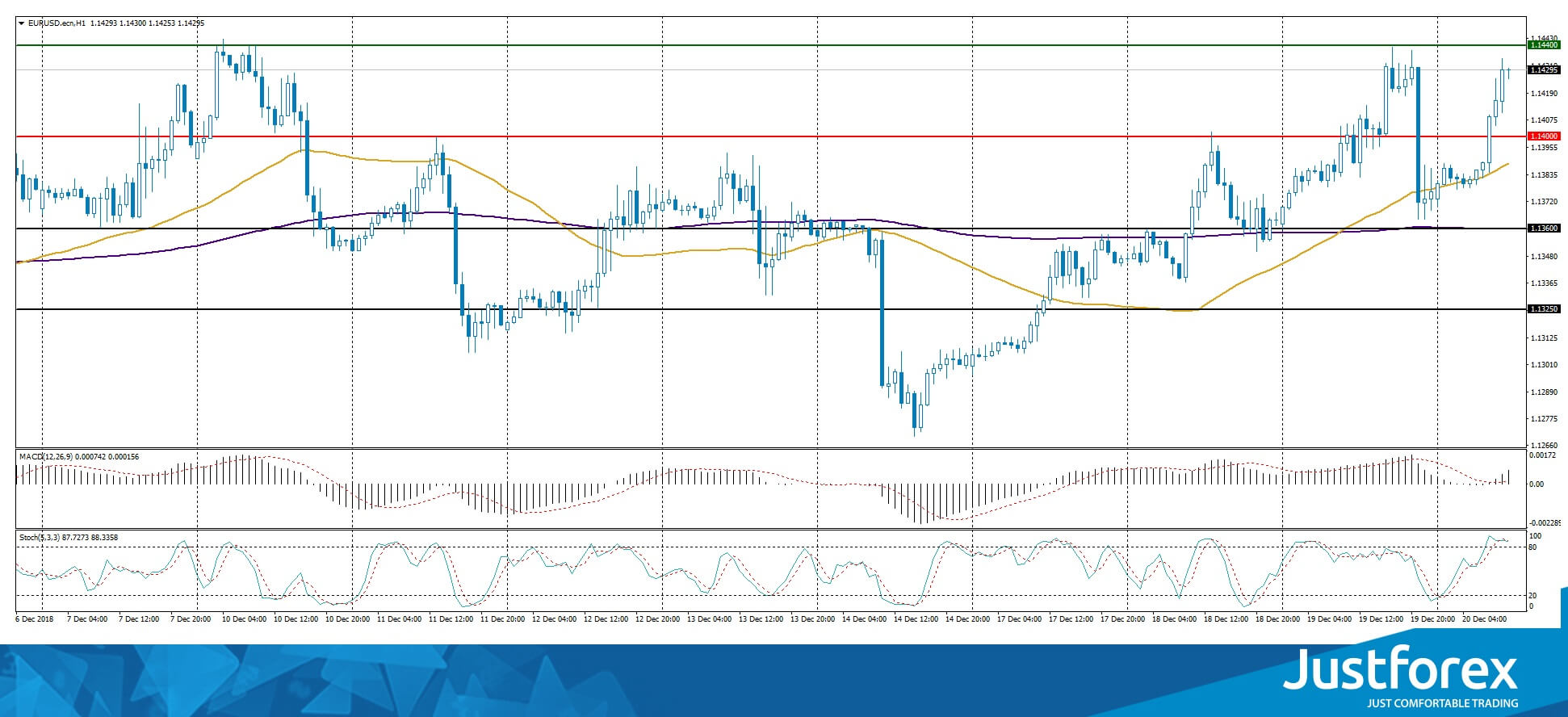
Indicators point toward the power of the buyers: the price fixed above 50 MA and 200 MA.
The MACD histogram is in the positive zone, the price fixed above 50 MA and 200 MA.
The Stochastic Oscillator is in the overbought zone, the %K line crosses the %D line. There are no signals at the moment.
Trading recommendations
Support levels: 1.14000, 1.13600, 1.13250
Resistance levels: 1.14400, 1.14750
If the price fixes above 1.14400, expec the EUR/USD to grow toward 1.14750-1.15000.
Alternatively the quotes can descend toward 1.13600-1.13250.
The GBP/USD currency pair
Technical indicators of the currency pair:
Prev Open: 1.26300
Open: 1.26079
% chg. over the last day: -0.17
Day's range: 1.26585 – 1.26657
52 wk range: 1.2477 – 1.4378
GBP/USD is showing a variety of trends. The investors are waiting for the Bank of England meeting, where the regulator is expected to keep the current interest rate at 0.75%. You should open positions from the key levels of 1.26300 and 1.26800.
The Economic News Feed for 20.12.2018:
Retail Sales Volume Report (UK) – 11:30 (GMT+2:00);
Bank of England Meeting on Key Interest Rate (UK) – 14:00 (GMT+2:00);
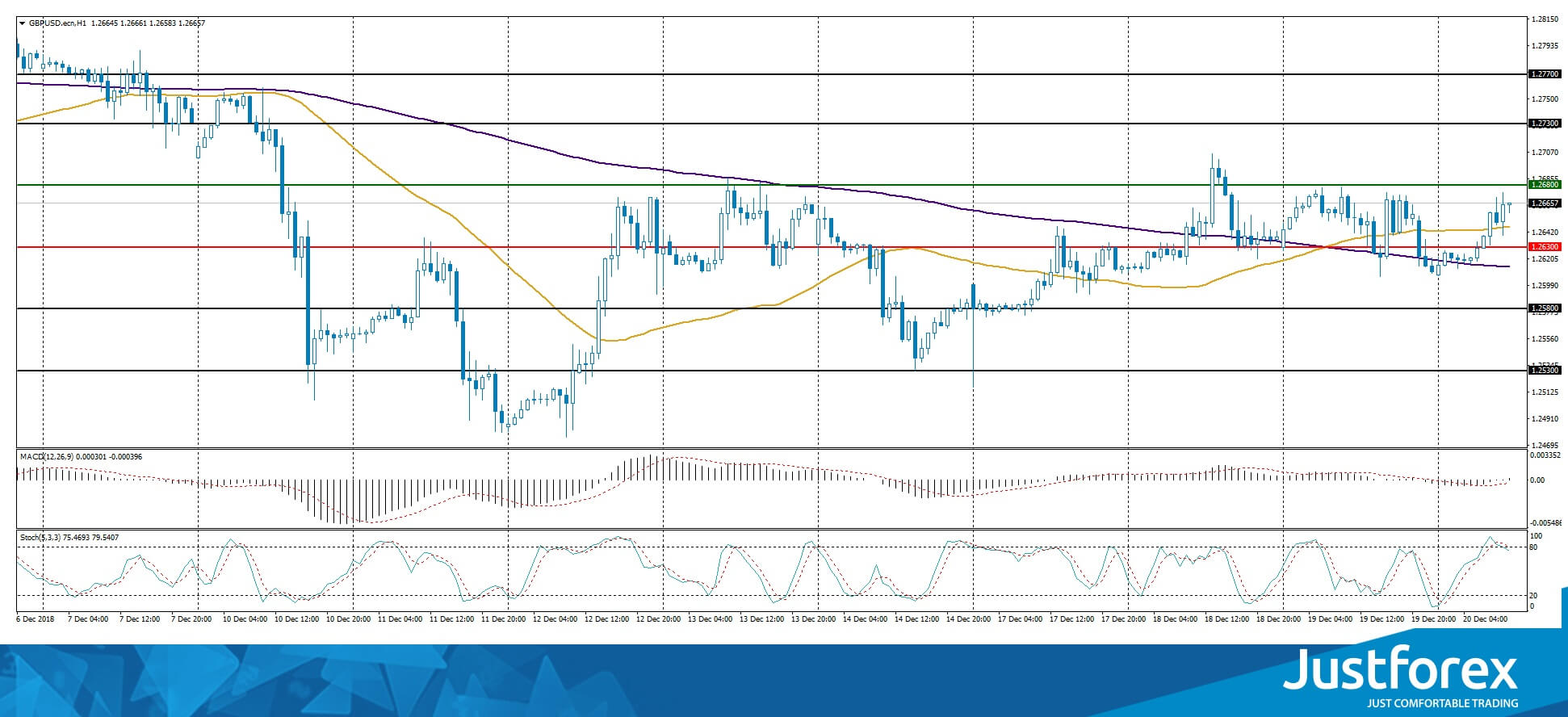
The indicators do not provide precise signals, the price is testing 50 MA.
The MACD histogram is close to 0, there are no signals at the moment.
The Stochastic Oscillator is in the overbought zone, the %K line crosses the %D line. There are no signals at the moment.
Trading recommendations
Support levels: 1.26300, 1.25800, 1.25300
Resistance levels: 1.26800, 1.27300, 1.27700
If the price fixes below 1.26800, consider buying GBP/USD. The movement will tend toward 1.27300-1.27700.
Alternatively the quotes can descend toward the round 1.26000.
The USD/CAD currency pair
Technical indicators of the currency pair:
Prev Open: 1.34624
Open: 1.34842
% chg. over the last day: +0.08
Day's range: 1.34662 – 1.35043
52 wk range: 1.2248 – 1.3506
The USD/CAD currency pair has a variety of trends. The trading instrument is testing the annual maximums. The financial market participants are waiting for the Federal Reserve meeting. You should open positions from the key support and resistance levels of 1.34600 and 1.35000. A technical correction after a long rally is highly possible.
You should keep an eye on the US economic reports.
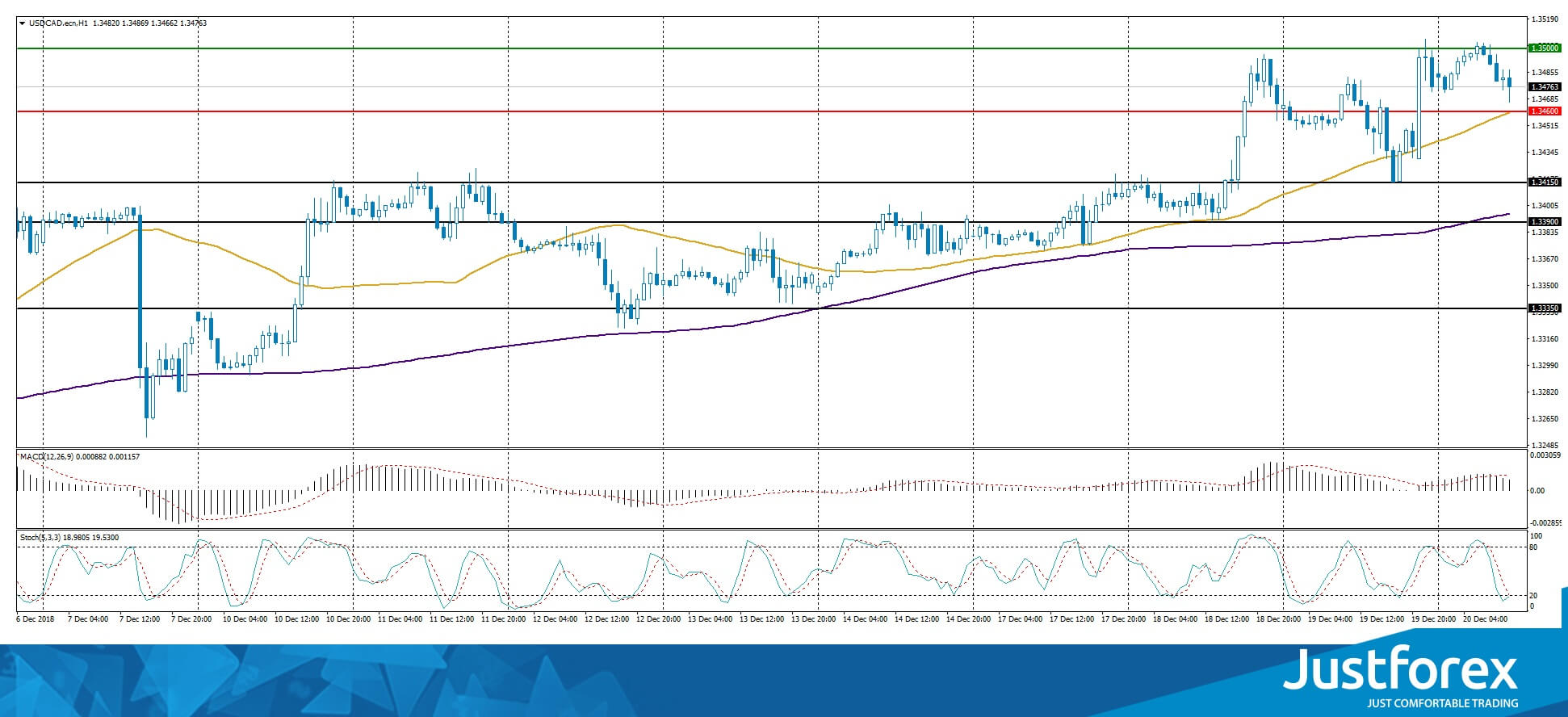
The price fixed above 50 MA and 200 MA which points toward the power of the buyers.
The MACD histogram is in the positive zone but below the signal line which gives a weak signal toward purchasing USD/CAD.
The Stochastic Oscillator reached the oversold zone, the %K line has crossed the %D line. There are no signals at the moment.
Trading recommendations
Support levels: 1.34600, 1.34150, 1.33900
Resistance levels: 1.35000, 1.35500
If the price fixes above the round 1.35000 expect further growth of the USD/CAD quotes. The movement will tend toward 1.35400-1.35600.
Alternatively the price can fix below 1.34600 and you should look for market entry points to open short positions. The movement will tend toward 1.34200-1.34000.
The USD/JPY currency pair
Technical indicators of the currency pair:
Prev Open: 112.497
Open: 112.406
% chg. over the last day: -0.11
Day's range: 111.742 – 112.604
52 wk range: 104.56 – 114.56
The USD/JPY currency pair keeps showing a negative trend. The JPY strengthened against the USD by more than 150 points. The USD/JPY quotes are testing the local support at 111.750 with 112.250 being a mirror support. The trading instrument can descend further.
The Bank of Japan, as was expected, kept the fundamental parameters of the monetary policy. The Central Bank also informs that the country`s economy is showing a stable growth.
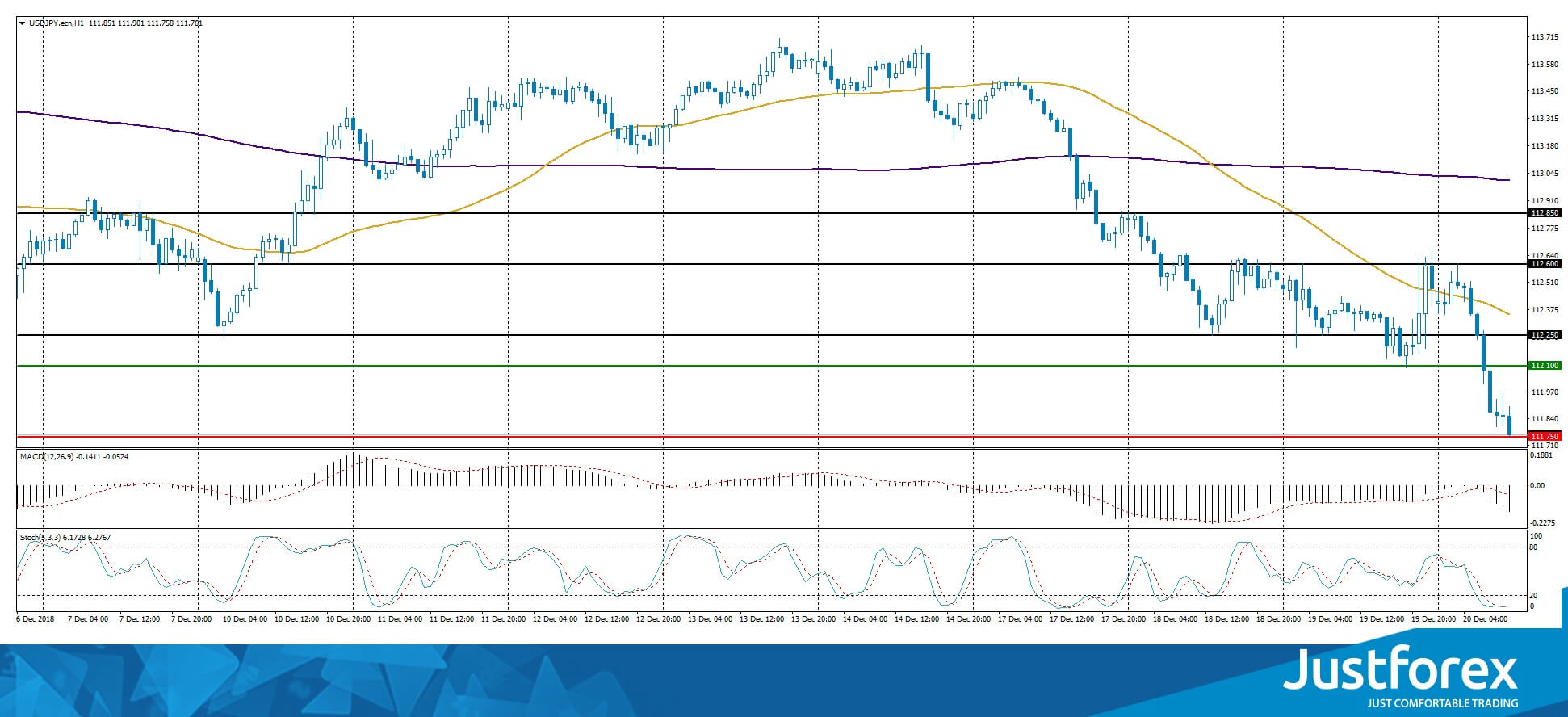
The indicators point toward the power of the sellers, the price fixed below 50 MA and 200 MA.
The MACD histogram is in the negative zone and below the signal line, which gives a strong signal toward selling USD/JPY.
The Stochastic Oscillator is in the oversold zone, the %K line crosses the %D line. There are no signals at the moment.
Trading recommendations
Support levels: 111.750, 111.400
Resistance levels: 112.100, 112.250, 112.600
If the price fixes below the 111.750 support level, expect further descend of the USD/JPY quotes. The movement will tend toward 111.400-11.200.
Alternatively the quotes can recover 112.250-112.400.
WTI Oil Outlook: Bears Regained Control After Short-Lived Consolidation
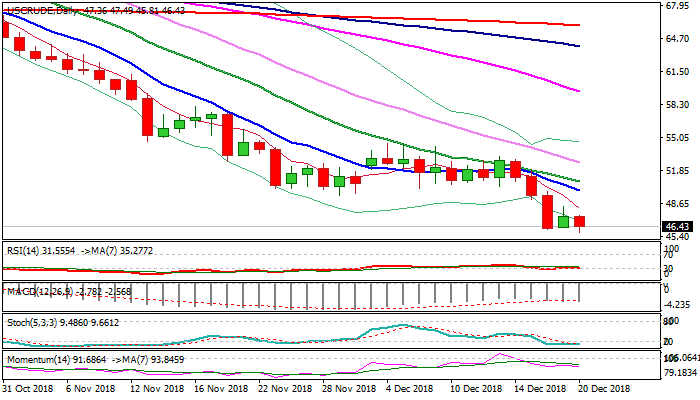
WTI oil returned to red on Thursday and hit new 2018 low at $45.81, also the lowest since late Aug 2017, after larger bears paused on Wednesday on short-lived consolidation after Fed surprise.
Bears quickly regained control on global fall in stock markets and persisting negative sentiment on fears of oversupply which could further hurt demand, keeping investors in defensive mode.
Oil generated strong bearish signal on break of psychological $50 support, with subsequent extension lower, approaching target and pivotal support at $45.46 (Fibo 61.8% of $26.04/$76.88), violation of which would open way towards $42 and psychological $40 in extension.
Meanwhile, bears may hold above $45.46 for some time as daily studies are oversold, with upticks to be limited under $49.40/$50.00 barriers before fresh push lower.
Res: 47.49, 48.34, 49.40, 50.00
Sup: 45.81, 45.46, 44.26, 42.04
EUR/JPY Strong Bullish Sentiment
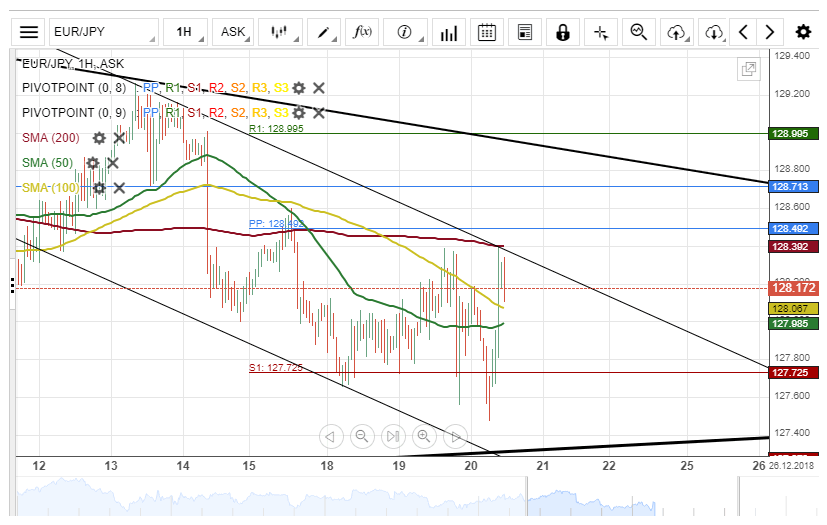
The common European currency depreciated about 81 base points against the Japanese Yen on Wednesday. The decline was stopped after the currency pair pierced the weekly S1 at 127.75.
However, today's session began with a strong bullish momentum, and by the middle of Thursday's trading session, the exchange rate had gained about 91 base points of its values.
By and large, it is likely that the currency exchange rate breaks a junior descending channel pattern today.
Nevertheless, a resistance level formed by the 200-hour SMA at 128.39 could prevent the situation from happening.
European update: Dollar suffers renewed selling, Euro strongest
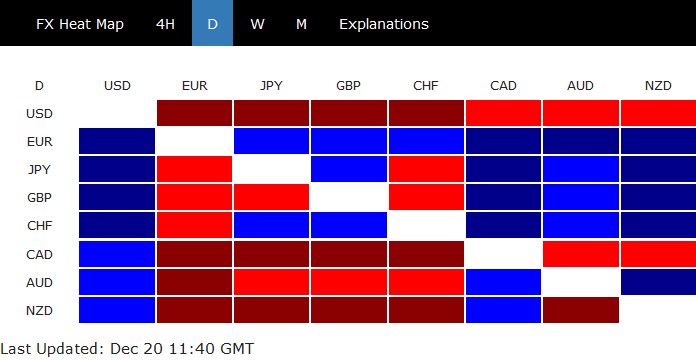
Dollar suffers deep selling in European session, in particular against European majors and Yen. This could be partly due to delayed reaction to Fed's dovish shift overnight. Also there are rumors that US Commerce Department's report regarding autos imports on US markets is delayed to mid January. German magazine WirtschaftsWoche said that the investigation report regarding imposition of 25% tariffs on auto was not approved during the consultation process between government departments.
Euro leads the way higher, with EUR/USD breaking 1.1443 and 1472 resistance levels. The development could have now set the stage for further rise back towards 1.1814 resistance. Sterling remains cautious ahead of BoE rate decision, despite stellar retail sales data. Even though Canadian, Australian and New Zealand Dollar recover against Dollar too, they remains the weakest ones for the week, with no sign of bottoming yet.
In other markets, at the time of writing:
- FTSE is down -0.30%
- DAX is down -0.90%
- CAC is down -1.33%
- German 10 year yield is down -0.0032 at 0.239
- Italian 10 year yield is down -0.022 at 2.749
- German-Italian spread stays at around 250. With budget approved by EU, spotlight will be off Italy, at least for a while.
Earlier in Asia:
- Nikkei dropped -2.84% to 20392.58, both losses were limited elsewhere
- Hong Kong HSI dropped -0.94%
- China Shanghai SS dropped -0.52%
- Singapore Strait Times dropped -0.26%
- Japan 10 year JGB yield dropped -0.0032 to 0.031