Sample Category Title
Theresa May Brussels Trip Meets Roadblocks
The euro was unchanged in overnight trading as traders continued to assess the monetary policy statement by the European Central Bank (ECB). Yesterday’s statement said that the bank would stop the €2.5 trillion quantitative easing program as scheduled. The bank also warned of potential risks as the EU economy cools and repeated plans to adjust interest rates ‘through summer’. Investors are worried that the bank’s tightening will come at a time when growth and inflation are projected to slow down.
The Japanese yen was little moved in the Asian session even as the country released mixed economic data. The Tankan large manufacturers index rose to 19, which was higher than the estimated 17. Similarly, the large non-manufacturing index rose to 24, which was better than the consensus estimate of 21. The manufacturing PMI for December increased to 52.4. On the negative side, the Tankan all small industry capex contracted by a bigger margin of minus 3.7%. Meanwhile, in China, industrial production rose by 5.4%, lower than the estimated 5.9%, while retail sales rose by an annualized rate of 8.1%. Traders were expecting a growth of 8.8%.
Sterling declined slightly as Theresa May’s trip to Brussels started in the red. This is after European leaders accused her of coming to the negotiating table without any viable proposals. While she received a warm welcome, she alienated many of the leaders during her hour-long presentation. The chief EU negotiator, Michael Barnier accused May of not seeking reassurances but reviving old ideas that were rejected during the negotiations. Jean-Claude Juncker said that the Prime Minister needed to say what she wanted instead of asking them what they wanted. All this puts May in a precarious position as negotiations continue to be plagued with doubt.
EUR/USD
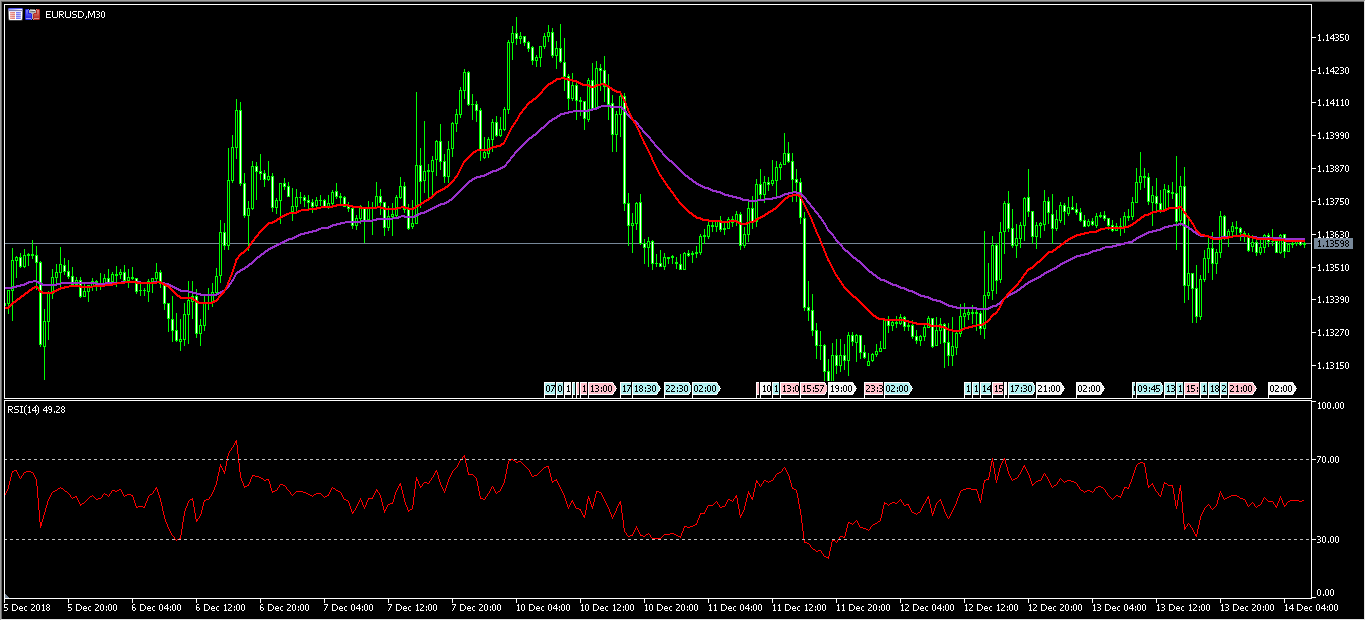
After yesterday’s extreme movements, the EUR/USD pair calmed down and remained unmoved at the 1.1360 level. The current price is along the 50-day and 25-day EMA levels as the RSI remain at the neutral levels on the 30-minute chart. Therefore, at these prices, there is a likelihood that the pair could breakout in either direction.
GBP/USD
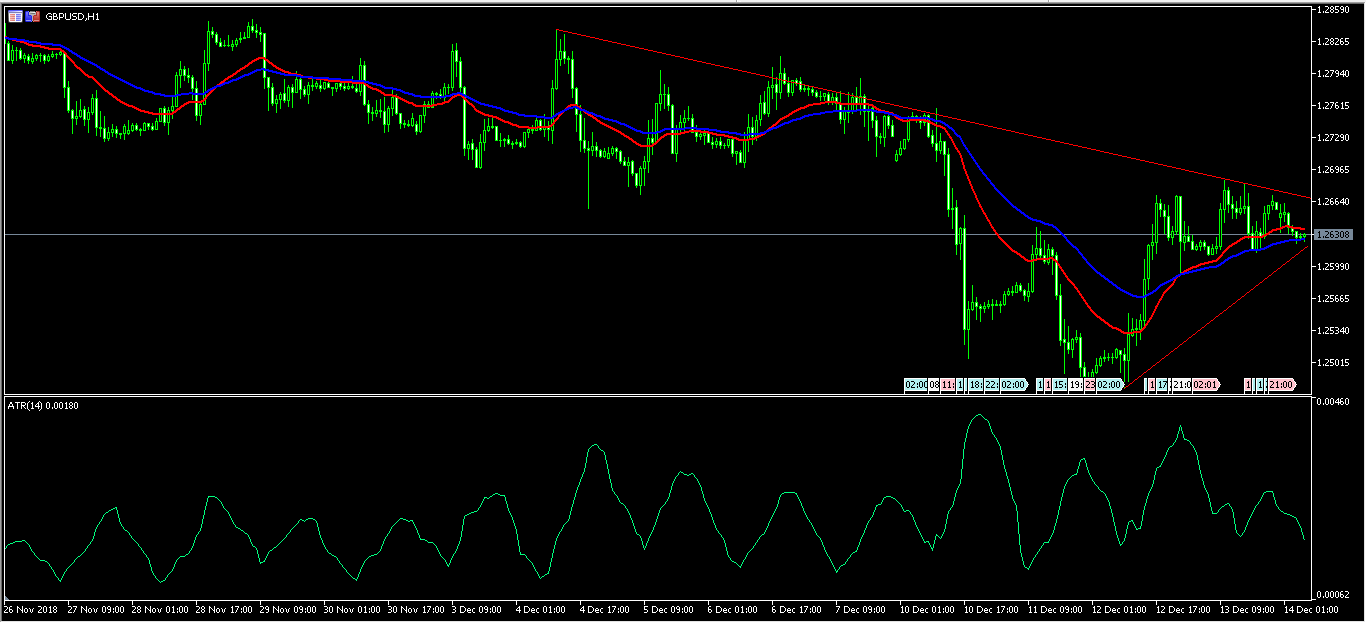
The GBP/USD pair ticked downwards as Theresa May found roadblocks in her Brussels trip. It reached a low of 1.2620. On the hourly chart, the price is along the 50-day EMA and slightly lower than the 25-day EMA. It has also formed a symmetrical triangular pattern, which is an indication that a breakout in either direction is likely. However, the movements will be most likely driven by the news coming from Brussels and London.
USD/JPY
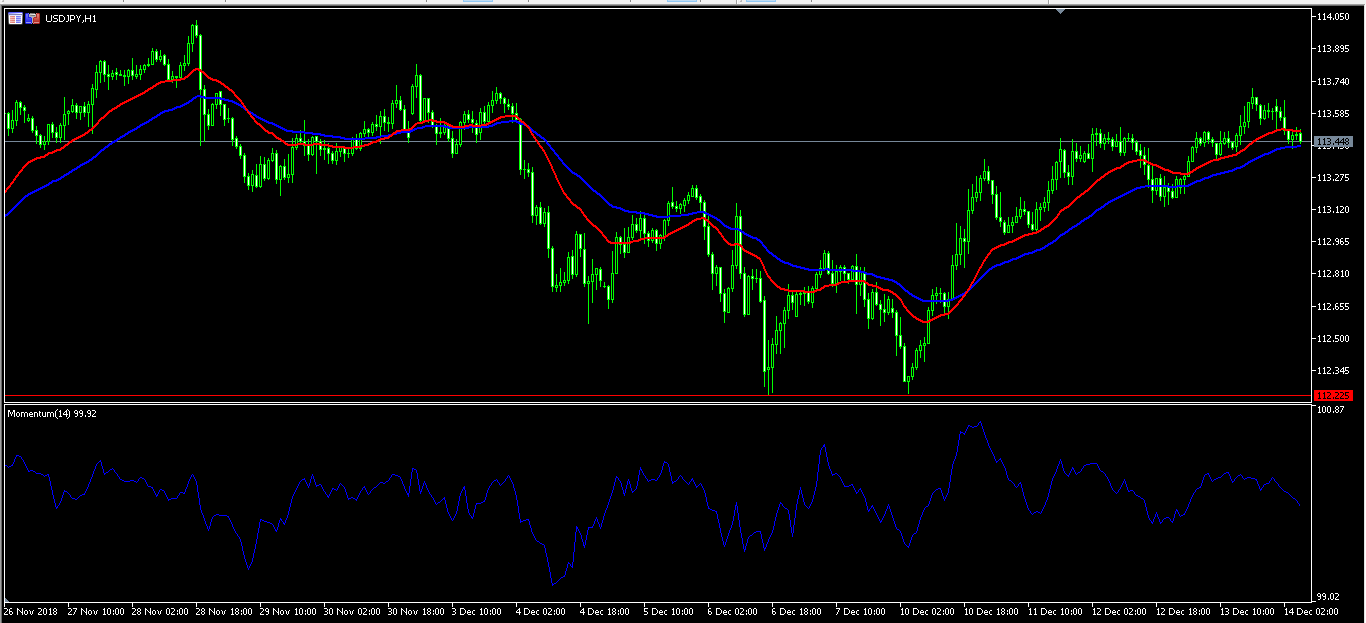
On Monday, the USD/JPY pair started moving up from a low of 112.22 and reached a high of 113.70 yesterday. Earlier today, the pair dropped after mixed data from Japan. It reached a low of 113.40. On the hourly chart below, the current price is along the 50-day and 25-day EMA while the momentum indicator is moving down. With no major economic data expected today, the pair will likely continue moving down.
Softening European PMIs In Focus
Market movers today
Today, we get flash December PMIs for the US and euro area . In particular, we will monitor the European ones, as euro area growth has disappointed this year and in November, the euro area PMI composite fell to a four-year low. We look for another small decline in the PMI manufacturing to 51.3 in line with the still negative order-inventory balance but we still see scope for a stabilisation in PMI services at 53.5.
In the US , retail sales in November are due out at 14:30 CET. We expect private consumption to remain the most important growth driver going forward.
EU27 new car registrations for November are due out at 08:00 CET. Usually this is not a market mover, but production bottlenecks in the car sector due to new emission test standards have led to a sharp contraction in German GDP growth in Q3. After a significant drop in September, registrations have recovered some ground, but it will be interesting to see whether this continued in November. A weak print could well point to lingering growth headwinds from the car sector in Q4.
We expect the Russian central bank to hike the policy rate 25bp to 7.75% today at 12.30 CET. Economists are divided on a hike with some 60% expecting an unchanged policy rate. While we expect a hike, it is a close call and we do not have any clear signals.
Selected market news
Equity markets in Asia fell and US equity futures were in the red due to sour sentiment arising in global markets as China 's weak retail sales and industrial production data signalled a continuing slowdown in the Chinese economy. Both the CNY and the AUD slid, while the JPY and US Treasuries climbed higher. While the Bank of Japan 's (BoJ) Tankan Large Manufacturing Index for Q4 18 stayed unchanged at 19, it fell to 15 for the next period. The BoJ trimmed the purchasing of bonds maturing in 5-10 years, which was the first cut in the range since June 2018.
Yesterday, the ECB formally announced an end to the asset purchase programme by the end of the year. The decision was widely expected, but we find great interest in the fact that the ECB now ties the reinvestment period up to the first rate hike, and that the notion of the next step is a hike from the ECB, which would be a hawkish signal. Draghi said that markets had understood the forward guidance on rates. That comment was somewhat surprising to us as markets currently only point to a 20bp hike in June 2020. Markets generally traded within a narrow band, and yesterday's meeting does not alter our expectation of the ECB hiking rates in December 2019.
Yesterday, there was a big fall in the US initial jobless claims from 233,000 to 206,000. The previous rise in initial jobless claims was a concern to some, so the recent print should calm down some of the near-term slowdown risks. Markets are also still trading on recession risks further out.
ECB Cuts 2019 Euro-Zone Growth & Inflation Outlook And Ends QE
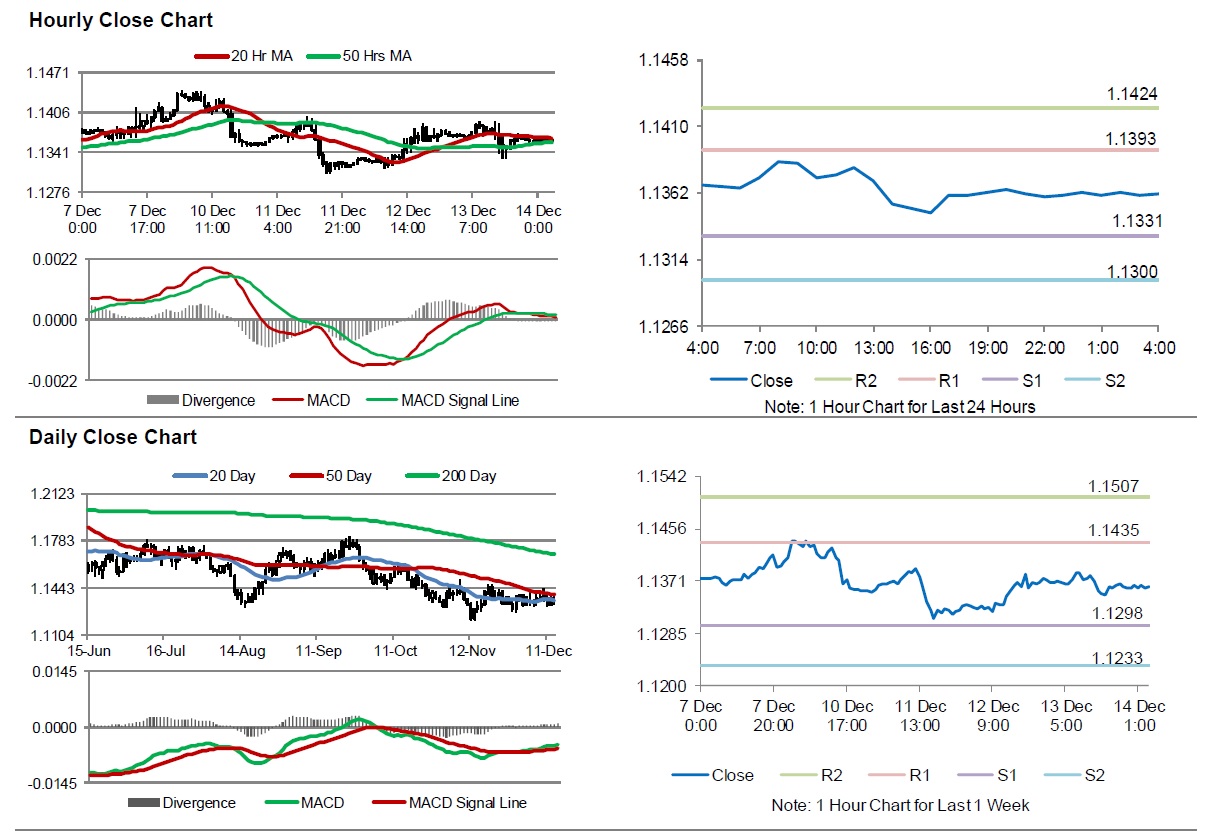
For the 24 hours to 23:00 GMT, the EUR declined 0.14% against the USD and closed at 1.1360, after the European Central Bank (ECB) slashed its growth forecasts for the euro area and confirmed that it would end its quantitative easing (QE) policy.
The ECB, in its latest monetary policy meeting, kept its benchmark interest rate unchanged at 0%. Officials expects the key interest rates to remain at their present levels at least through the summer of 2019. Further, the central bank confirmed that it will halt its four-year long massive stimulus programme in December. Meanwhile, the central bank cut its growth forecast for the euro area to 1.7% from 1.8% for 2018 and to 1.7% from 1.8% in 2019. Further, the inflation forecast for the next year was downgraded to 1.6% from 1.7% and for 2018 to 1.8% from 1.7%. In a post-meeting news conference, ECB President, Mario Draghi warned that Euro-zone’s growth outlook is likely to face downside risks due to ongoing geopolitical trade tensions.
On the macro front, Germany’s final consumer price index rose 2.3% on an annual basis in November, in line with market expectations and compared to a rise of 2.5% in the previous month. The preliminary figures had also indicated a rise of 2.30%.
In the US, the seasonally adjusted initial jobless claims dropped to 206.0K in the week ended 8 December, more than market expectations for a drop to a level of 226.0K. Initial jobless claims had registered a revised reading of 233.0K in the previous week. Meanwhile, budget deficit widened more-than-expected to $204.9 billion in November, compared to a deficit of $100.5 billion in the previous month.
In the Asian session, at GMT0400, the pair is trading at 1.1362, with the EUR trading marginally higher against the USD from yesterday’s close.
The pair is expected to find support at 1.1331, and a fall through could take it to the next support level of 1.1300. The pair is expected to find its first resistance at 1.1393, and a rise through could take it to the next resistance level of 1.1424.
Moving ahead, investors would closely monitor the manufacturing and services PMIs, set to release across the euro area in a few hours. Later in the day, the US industrial production, manufacturing production and retail sales data, all for November, would pique significant amount of market attention. Additionally, the US manufacturing and services PMI for December along with business inventories for October, will keep investors on their toes.
The currency pair is showing convergence with its 20 Hr and 50 Hr moving averages.
Pound Reverses Its Gains In The Morning Session
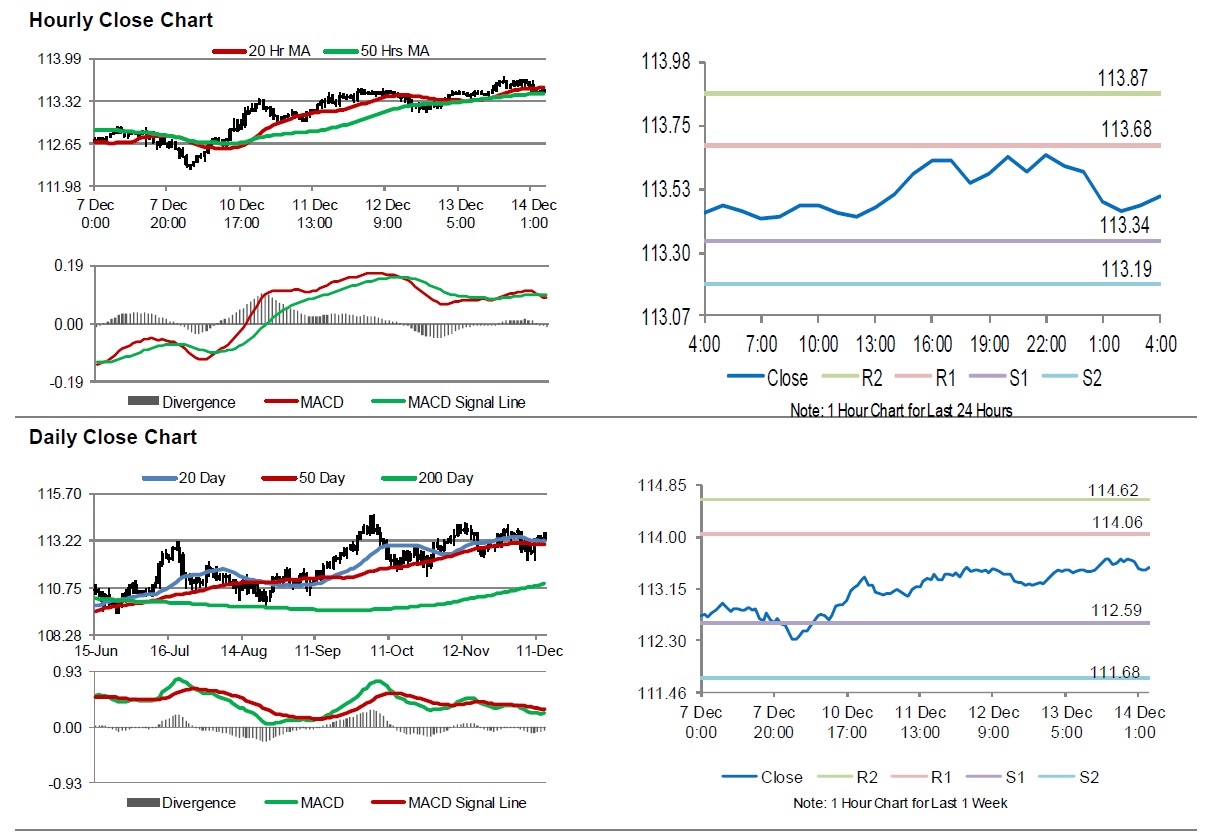
For the 24 hours to 23:00 GMT, the USD rose 0.33% against the JPY and closed at 113.61.
In the Asian session, at GMT0400, the pair is trading at 113.50, with the USD trading 0.10% lower against the JPY from yesterday’s close.
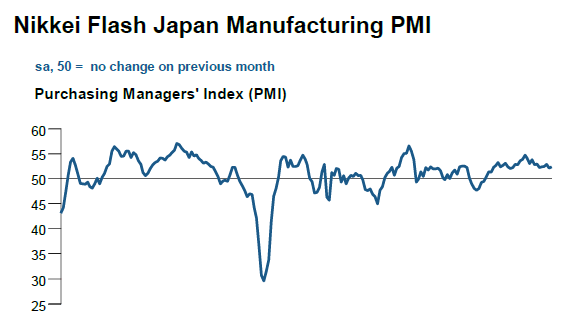
Earlier today, in Japan, the flash manufacturing PMI rose to 52.4 in December, compared to a level of 52.2 in the previous month. Moreover, industrial production rose 2.9% on a monthly basis in October, in line with the preliminary figures. In the previous month, industrial production had recorded a drop of 0.4%.
The pair is expected to find support at 113.34, and a fall through could take it to the next support level of 113.19. The pair is expected to find its first resistance at 113.68, and a rise through could take it to the next resistance level of 113.87.
The currency pair is showing convergence with its 20 Hr and 50 Hr moving averages.
Japanese Yen Trading Higher In The Asian Session
For the 24 hours to 23:00 GMT, the USD rose 0.33% against the JPY and closed at 113.61.
In the Asian session, at GMT0400, the pair is trading at 113.50, with the USD trading 0.10% lower against the JPY from yesterday’s close.
Earlier today, in Japan, the flash manufacturing PMI rose to 52.4 in December, compared to a level of 52.2 in the previous month. Moreover, industrial production rose 2.9% on a monthly basis in October, in line with the preliminary figures. In the previous month, industrial production had recorded a drop of 0.4%.
The pair is expected to find support at 113.34, and a fall through could take it to the next support level of 113.19. The pair is expected to find its first resistance at 113.68, and a rise through could take it to the next resistance level of 113.87.
The currency pair is showing convergence with its 20 Hr and 50 Hr moving averages.
Swiss National Bank Keeps Expansive Policy, Cuts Inflation View
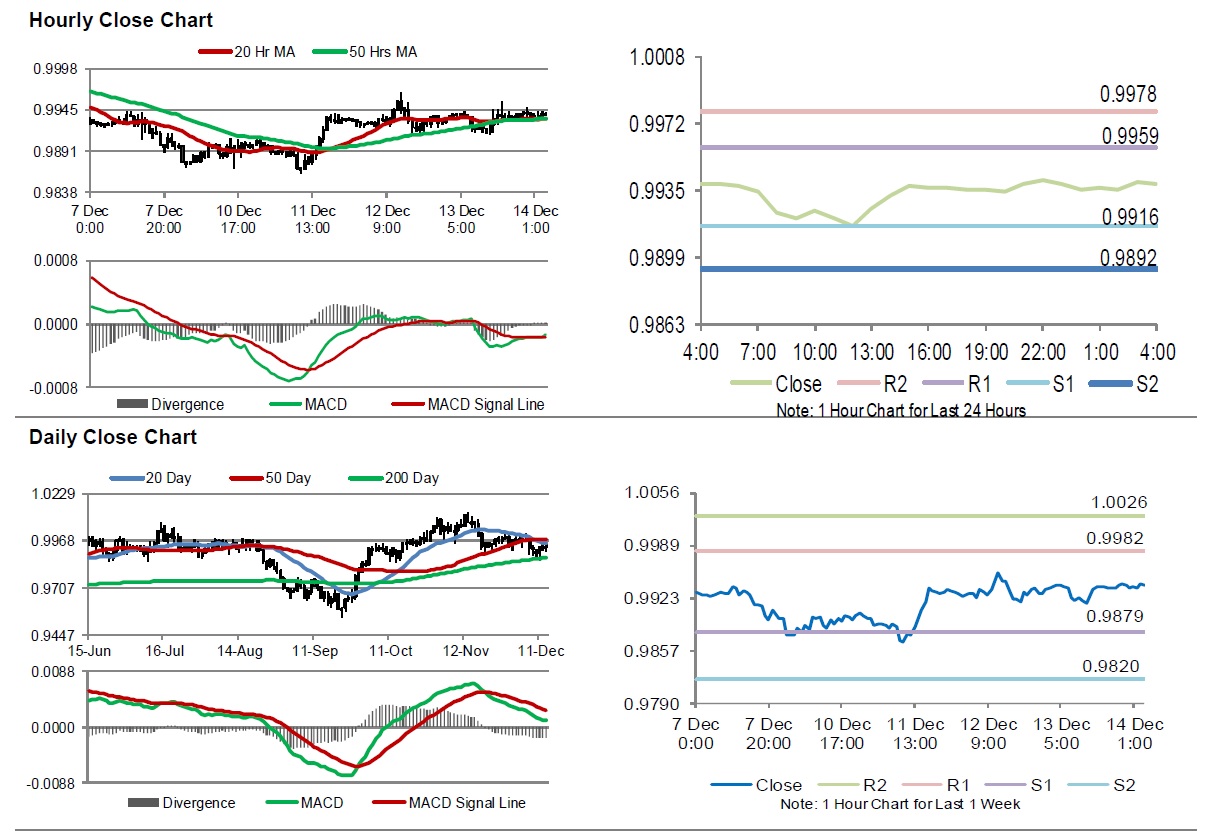
For the 24 hours to 23:00 GMT, the USD rose 0.10% against the CHF and closed at 0.9939.
On the data front, Switzerland’s producer and import prices fell 1.7% on a yearly basis in November, more than market expectations for a drop of 1.7%. In the previous month, producer and import prices had recorded a reading of 2.3%.
Meanwhile, the Swiss National Bank kept its key interest rate unchanged at -0.75%, as widely expected. Further, the central bank lowered its inflation forecast for 2019 to 0.5% from 0.8%, citing a stronger franc and downside risks to the economy. Additionally, the bank downgraded its outlook for 2020 to 1.2% from 1.0%. However, the central bank projected a GDP growth of around 2.5% for the current year and nearly 1.5% for the next year.
In the Asian session, at GMT0400, the pair is trading at 0.9939, with the USD trading flat against the CHF from yesterday’s close.
The pair is expected to find support at 0.9916, and a fall through could take it to the next support level of 0.9892. The pair is expected to find its first resistance at 0.9959, and a rise through could take it to the next resistance level of 0.9978.
The currency pair is trading above its 20 Hr and 50 Hr moving averages.
Loonie Trading On A Weaker Footing This Morning
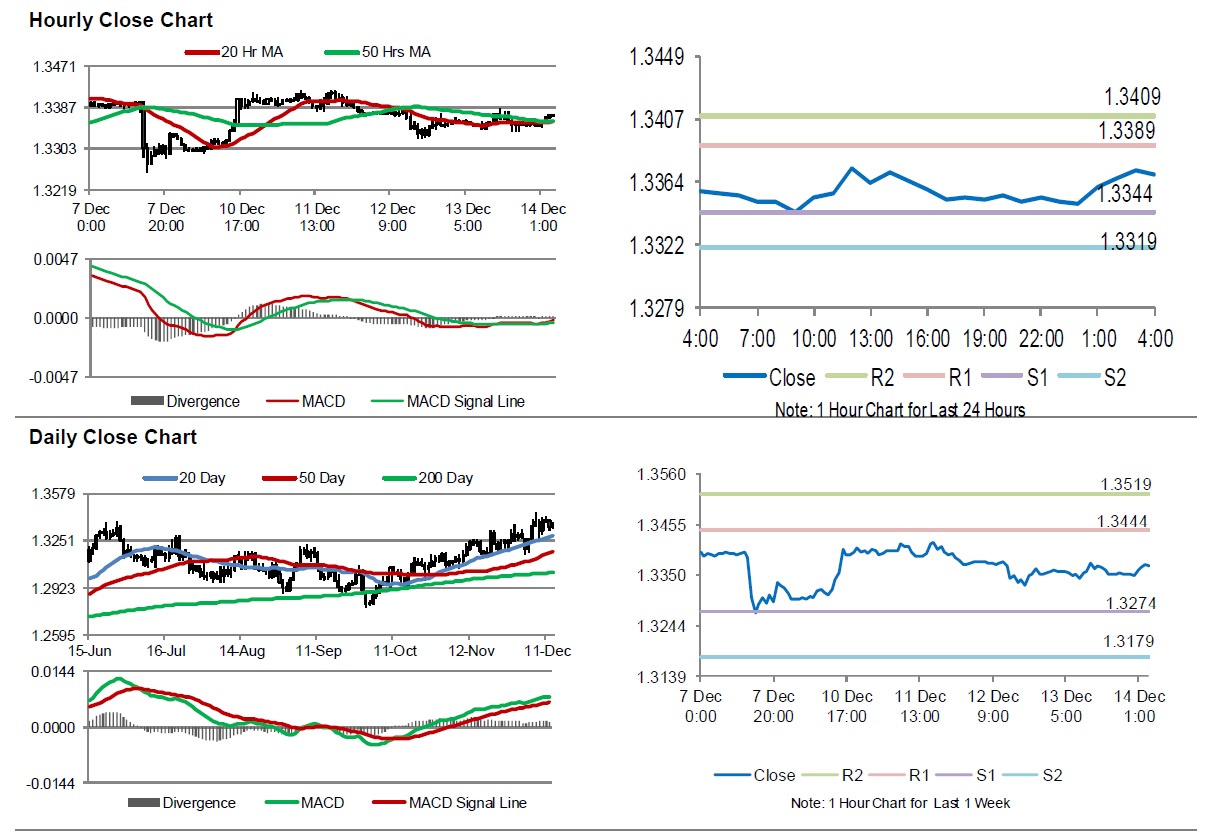
For the 24 hours to 23:00 GMT, the USD remained flat against the CAD and closed at 1.3351.
In economic news, Canada's new house price index rose 0.1% on an annual basis in October, in line with market expectations and compared to a rise of 0.2% in the previous month.
In the Asian session, at GMT0400, the pair is trading at 1.3369, with the USD trading 0.13% higher against the CAD from yesterday's close.
The pair is expected to find support at 1.3344, and a fall through could take it to the next support level of 1.3319. The pair is expected to find its first resistance at 1.3389, and a rise through could take it to the next resistance level of 1.3409.
Next week, investors would closely monitor Canada's gross domestic product, consumer price index, retail sales and existing homes sales data.
The currency pair is trading above its 20 Hr and 50 Hr moving averages.
Aussie Trading Lower In The Asian Session
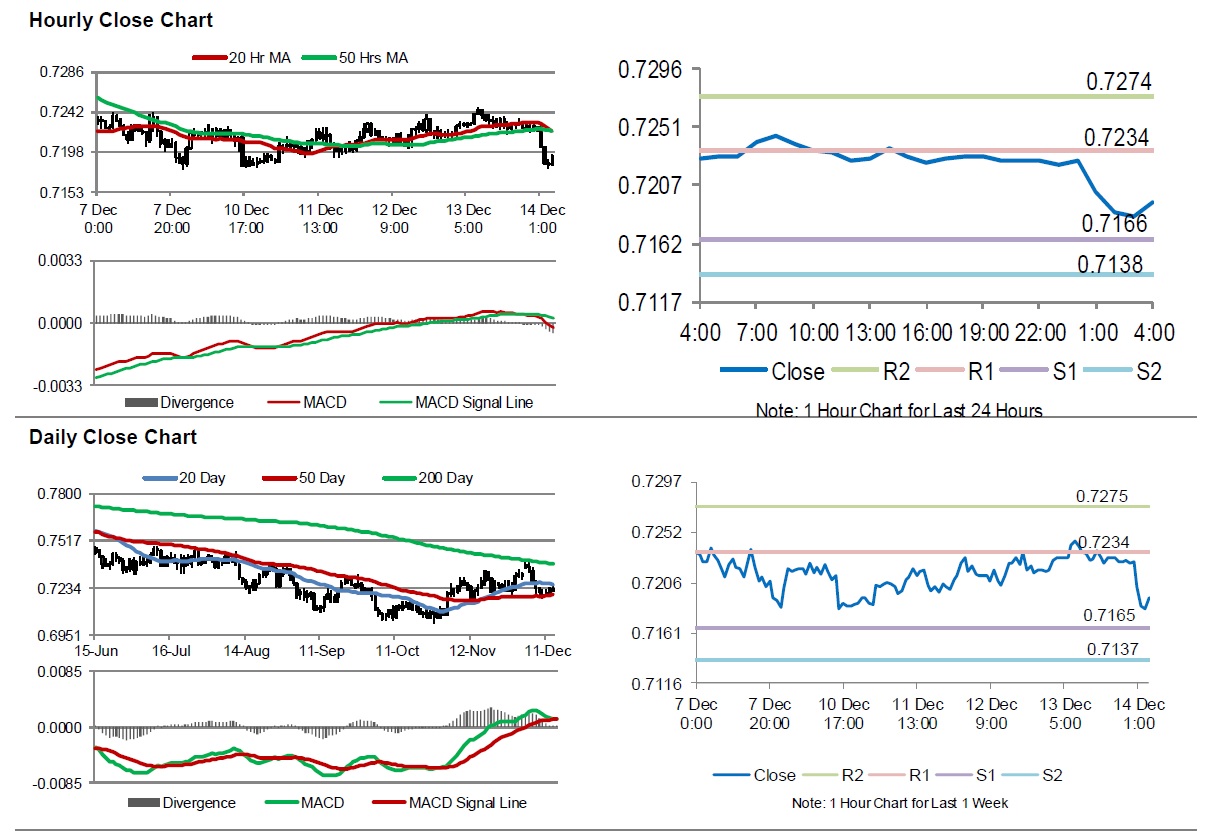
For the 24 hours to 23:00 GMT, the AUD rose 0.07% against the USD and closed at 0.7223.
LME Copper prices rose 0.7% or $45.0/MT to $6196.0/MT. Aluminium prices declined 0.2% or $4.0 /MT to $1924.0/MT.
In the Asian session, at GMT0400, the pair is trading at 0.7193, with the AUD trading 0.42% lower against the USD from yesterday’s close.
Overnight data showed that Australia’s CBA manufacturing PMI slid to a level of 53.7 in December, following a reading of 54.6 in the previous month. Additionally, the CBA services PMI declined to a reading of 52.2 in December, compared to a reading of 53.7 in the prior month.
Elsewhere, in China, Australia’s largest trading partner, industrial production registered a less-than-expected rise of 5.4% on a yearly basis in November. Industrial production had registered a rise of 5.9% in the prior month. Additionally, retail sales advanced 8.1% in November, undershooting market forecast for a rise of 8.8% and compared to an advance of 8.6% in the previous month.
The pair is expected to find support at 0.7166, and a fall through could take it to the next support level of 0.7138. The pair is expected to find its first resistance at 0.7234, and a rise through could take it to the next resistance level of 0.7274.
Moving ahead, Australia’s Westpac leading index, unemployment rate and the Reserve Bank of Australia’s meeting minutes, all slated to release next week, would keep investors on their toes.
The currency pair is trading below its 20 Hr and 50 Hr moving average.
Japan tankan capex surged, PMI manufacturing improved
Economic data released from Japan today are not bad. Based on the results of the Tankan survey, it's unlikely for BoJ to ease monetary further. Yet, it's not time for the central bank to start stimulus exit too.
- Large manufacturing index was unchanged at 19 versus expectation of a drop to 17.
- Large manufacturing outlook dropped notably by -4 to 15, missed expectation of 16.
- Large non-manufacturing index rose 2pts to 24, above expectation of 21.
- Large non-manufacturing outlook also rose 2pts to 24, above expectation of 20.
- Large all industry capex rose 14.3% in Q4, beat expectation of 12.7%.
PMI manufacturing improved to 52.4, up from 52.2 and beat expectation of 52.3. Markit noted that "new order growth accelerates despite exports declining to sharpest extent in over two years". However, "business confidence drops for seventh straight month to lowest since October 2016".
Joe Hayes, Economist at IHS Markit, said in the release that "Japan's manufacturing sector closed 2018 with a strong finish." But the data also "bring some cautious undertones to the fore,". In particular "Export orders declined at the fastest pace in over two years, while total demand picked up only modestly. Confidence also continued to fall, a seventh straight month in which this has now occurred." He added "the prospects heading into 2019 ahead of the sales tax hike still appear skewed to the downside."
Gold: Yellow Metal Trading A Tad Lower In The Morning Session
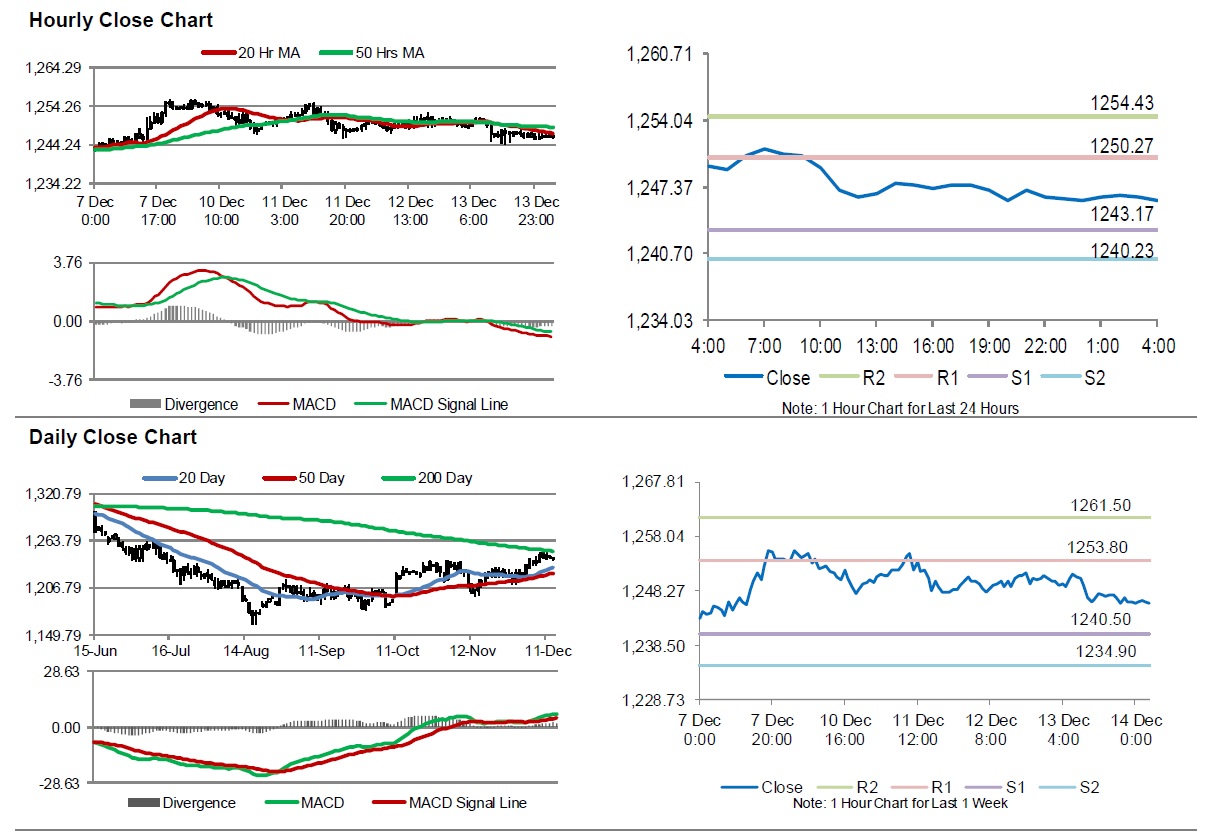
For the 24 hours to 23:00 GMT, Gold declined 0.38% against the USD and closed at USD1246.30 per ounce, as strength in the US dollar lowered demand for the safe haven asset.
In the Asian session, at GMT0400, the pair is trading at 1246.10, with gold trading slightly lower against the USD from yesterday’s close.
The pair is expected to find support at 1243.17, and a fall through could take it to the next support level of 1240.23. The pair is expected to find its first resistance at 1250.27, and a rise through could take it to the next resistance level of 1254.43.
The yellow metal is trading below its 20 Hr and 50 Hr moving averages.