

Sample Category Title
Xi-Trump’s ‘Dinner Date Of The Decade’ Ended With A ‘Handshakeplus.’
Xi-Trump's 'dinner date of the decade' ended with a 'handshakeplus.'
The markets were preparing for a day of binary market reaction upheaval as a trade war, geopolitical powder keg, and even oil markets hedges could have been forced to unravel
So, with the immense weight of the global supply chain dynamic network on their shoulder, a tariff detente has emerged after a highly anticipated dinner. Both Presidents' XI and Trump have agreed to put on hold the menacing tariff increases expected to get imposed January 1, marking a significant de-escalation in trade tensions between the world's two biggest economies. Thankfully, for risk sentiment, the 'dinner date of the decade' ended with a sense of harmony rather than trade war discord.
The Whitehouse has subsequently stated that within the context of a 90-day window from December 1 'China will agree to purchase a not yet agreed upon, but very substantial, amount of agricultural, energy, industrial, and other product from the United States. China has agreed to start purchasing agricultural products from our farmers immediately.' Alas, the truce is favourable but only in the short duration as the markets straw polls post G-20 are factoring in a 60% chance that trade war escalates and higher tariffs are potentially applied.
Statement from the Press Secretary Regarding the President's Working Dinner with China
And despite the favourable overtones, the 90-day moratorium is just that, a 90-day window that is likely to be dotted by many deadfalls given the Presidents propensity to run hot or cold on China trade policy.
Still, it will be interesting to see how the broader markets interpret these latest trade events after trudging through an extended period of arduous de-risking/ re-risking that was driving trading desks batty. But the question remains, was there enough meat in this the dinner bone to go full bore' risk on' into the holiday season?
What triggered the détente?
President Trump is increasingly sensitive to signs of economic/ financial stress as confirmed by his scathing attacks on the Fed where he suggested that that current Fed policy is a much bigger problem than China. Ok, a severe case of hyperbole but given that the President uses US stock indexes as his key rating barometer so when US stocks markets started to outpace those declines in China in October, the US administration was becoming as eager as China to set a resolution roadmap in place. In market parlance, the US offer was getting close to hitting the China bid, whose bid rose substantially in the days heading into the summit.
The deadfalls
It's going to be a long and winding road filled with number craters as both parties move to figure out the structural changes concerning technology transfer. Not to mention the daunting task of reversing the theft of intellectual property rights. I genuinely believe intellectual property rights is the next major trade battleground that could make the current tit for tat trade war escalation look like a board game of axis and allies. So indeed, there's still a technology midfield to navigate
Surprisingly, at least to me, there was no mention of currency policy, although the net outcome should see the USDCNH kneejerk lower below 6.90 despite the ceasefire predicated on a smaller China trade surplus. So, these markets assumption may put to rest some of the more hawkish US policy implication around the RMB complex. But also helping matters, Yuan sentiment dramatically improved as a substantial element of trade war risk premium has been absolved given the Pboc determination to keep the Yuan stable ahead of Xi/Trump dinner.
Asia market near-term impact
The conclusion of the Xi-Trump summit ended at the higher end of expectations. So Any easing of tensions on trade will reverse some USD haven hedges, and we should expect the dollar to soften more so against high beta currencies along with providing a fillip to riskier assets including Asian emerging-market currencies and stocks.
USDCNH
Besides the expected knee-jerk lower in USDCNH to just below 6.90 the time of writing( just nearing 5:00 AM in Singapore), there should be a decent follow through in equity markets which could help boost Yuan sentiment
Growth vs Carry
But ultimately the KRW markets should look attractive given it has the highest sensitivity to the S&P of all global indices. Also, growth FX (KRW, TWD, THB, SGD) should perform better than the carry FX (INR, IDR, PHP), due to concerns that we will see a sell-off on UST's on some haven unwinds. However, the ASEAN FX carry should still get some support from the Feds dovish pivot which could diminish some of the negativity from narrowing of UST curve differentials.
Malaysia
Malaysian capital markets should be supported by improved risk sentiment however local bond markets will have to deal with increased concerns about the US treasury sell-off. While the trade war detente should be good for commodity markets, in the absence of any formal or informal announcement about an OPEC+ supply cut, the Ringgit could be held hostage until the OPEC summit in Vienna which will ultimately decide the near-term fate for oil prices. However, the US-China trade war ceasefire will have positive fare reaching consequences for commodity markets beyond soybeans which could help bolster oil prices in general.
View
But the reality is, given the great ideological divide between the bastion of free markets capitalism and the champion of state-driven capitalism is still an immense work in progress but the weekend developments have increased three folds the scope for a broader de-escalation in trade matters. All in all, a much better outcome than expected in my view. Arguably not the optimum result a permanent truce but one which certainly ticks more boxes than just a middle of the road scenario. But overall this should not be a definitive enough signal for investors to chase a risk rally into year-end
Oil Markets
With all the noise in the markets, it's easy to get disoriented but for me, given that crude oil prices are a reliable barometer for the health of the global economy and since it's conceivable oil could trade in the '40s the precipitous decline could negatively impact investor expectations across a wide berth of asset classes. It's a huge week not only for oil markets but capital markets in general. Post G-20 sentiment is a bit more positive than expected but still very much work on progress, so perhaps the most crucial event in December next to the Brexit vote could very well be the OPEC summit.
Russia and Saudi Arabia agreed to extend into 2019 their agreement to manage the oil market, known as OPEC+, although Moscow and Riyadh have yet to decide on any fresh output cuts. While nothing concrete has emerged, this does clear one significant barrier on the road to a possible OPEC + production cut. However, the most significant obstacle of them all, President Trump lies in waiting.
Most traders suspect a cut in the neighbourhood of 1 million barrels per day which is arguably priced in. It will probably take a much deeper cut to jolt the market into a short covering rally. Otherwise, the market falls prey to the prevailing bearish sentiment that will continue to drive prices lower on the premise the reduction might not be sufficient enough to draw down surplus supplies
On Friday oil markets struggled for traction despite OPEC committee recommending a 1.3 million barrels per day production cut. But the market was probably a tad top heavy as long liquidation of the expiring Brent January contract offset OPEC deeper supply cut rumours
WTI, for the most part, continued to consolidate but traded with a heavy tone after the DOE reported a US monthly production record which brings my attention to a-bubblin' crude, Oil that is. Black gold. Texas tea*. (*Beverly hillbillies song for those that are old enough to remember)
US oil production has maintained its meteoric rise, underscoring nervousness about excess supply that has tanked oil markets. US oil producers pumped an eye-watering 11.475m barrels per day and were 1.98m b/d higher than in September 2017
While not a new story it does underscore what we know, but one thing that is certain, the booming shale industry will be of significant interest to OPEC and allied producer when they meet this week. Hence the rumours flying on Friday that OPEC and friends will agree on 1.3 million barrel per day cut from October levels.
But smiling eyes from the Permian basin will be pleased with the trade war cease-fire as US energy product exports are set to rise, even if it's a minor reprieve, as Beijing was a major importer of refined US products up until September when China reduced those imports to a drip.
Gold markets
Expect the usual duelling narrative to temper expectations. On the one hand, the USD is weaker, but equity markets are expected to bounce on a more favourable outcome from the G-20 Xi-Trump summit. But with the reweigh monetary policy risks in a more dovish light, Gold should be supported as ultimately a lower US interest rate glide path should be harmful to the USD over time as Gold, for the most part, remains very much a dollar-driven storyline these days.
G-10 currencies
Given the expected haven unwind coupled with G-10 markets correlated sensitivities to the RMB complex the USD fell moderately at the Wellington/Sydney open.
USD: Factoring out he expected haven unwind on a more tranquil than expected Xi-Trump meeting the question for the USD is where do we go from here?
The importance of just about every tier of US economic data has taken on a substantial influence thanks to the Fed's calculated dovish shift from calendar guidance to data dependency. So, without what was thought to be the new norm of quarterly rate hikes to tether itself too, the USD now becomes hypersensitive to both external and domestic economic data releases.
But it's external data that could come to the fore over recent signs that the global economic recovery is sputtering and could give cause for global central banks to adjust key monetary policy setting lower. Mainly if we get a nasty Brexit or even a sustained slowdown in China.
Ultimately, we could see the USD maintain its mantle as king of the hill
EUR: The Euro is trading a bit higher this morning but I suspect the markets will continue to struggle to get above 1.1400 where we were pre weaker EU PMI's with Italy/contagion, German politics and weak data all providing additional headwinds. But now Paris is burning as France fuel tax has triggered a wave of anti- Macron protester to take to the street causing absolute chaos as a Populist revolt ensnares the French capital suggesting yet another political hot spot to navigate for European risk markets.
JPY: Risk on and the anticipated sell-off in UST's ( higher US yields ) has seen USDJPY open higher this morning, but momentum is being held back by last weeks dovish Fed pivot
AUD: With the Australian Dollar high correlation to China risk the 90-day moratorium on new tariffs will play favourably into high beat correlated currencies like the A$ as some proxy China hedges unwind. But this is not so much of an Australia storyline as it is a reprieve in China risk, but none the less it removes one of the risk anvils off the Australian dollars back.
China and US policy put?
In China, there are increasing signs of policy easing across various aspects, and since there is always an outsized focus on China, so the fallout from any of the key economic data events this month could see an acceleration or at least guidance of further easing in coming weeks and months. (notably a corporate tax cut and possibly a VAT tax cut, alongside other measures). In the US, the Fed's calculated dovish shift from calendar-based guidance to data and dependency, and while they have opened the door to a pause, they are still non-committal. But overall this does not depart from my consistent view that we should see a December US rate hike followed up by March and June 2109, before the Feds give rise to' pause for cause' in September 2019. None the less I'm incredibly dubious of a lasting US-China détente and based on the view of that both US and China have the technology minefield to navigate, we probably have not seen the peak in overall trade tensions.
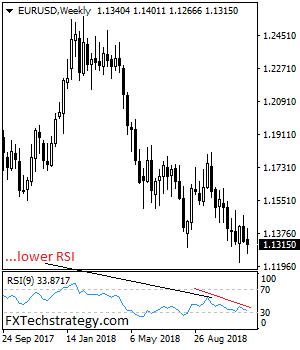
EURUSD Risk Remains Towards 1.1215 Zone
EURUSD risk remains towards 1.1215 zone as it looks to weaken further in the days ahead. Support lies at the 1.1300 where a violation will aim at the 1.1250 level. A break below here will aim at the 1.1200 level. Further down, support lies at the 1.1150. Its weekly RSI is bearish and pointing lower suggesting more weakness. On the upside, resistance resides at 1.1350 level with a break through there opening the door for further upside towards the 1.1400 level. Further up, resistance comes in at the 1.1450 level where a violation will expose the 1.1500 level. All in all, EURUSD continues to face downside pressure.
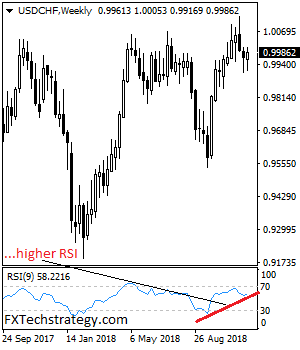
USDCHF Targets More Recovery On Price Halt
USDCHF targets more recovery on price halt. This development leaves the pair targeting resistance at the 1.0000 level. A break will clear the way for more gain towards the 1.0050 level. Above here, resistance comes in at the 1.0100 level and then the 1.0150 level. On the downside, support is seen at the 0.9950 level. A turn below there will set the stage for more decline towards the 0.9900 level. And then the 0.9850 level. All in all, USDCHF faces further price corrective recovery threats.
Eco Data 12/3/18
[php_everywhere instance="1"]
CFTC Commitments of Traders – Bets for Higher Euro Fell Sharply as Confidence Data Soured
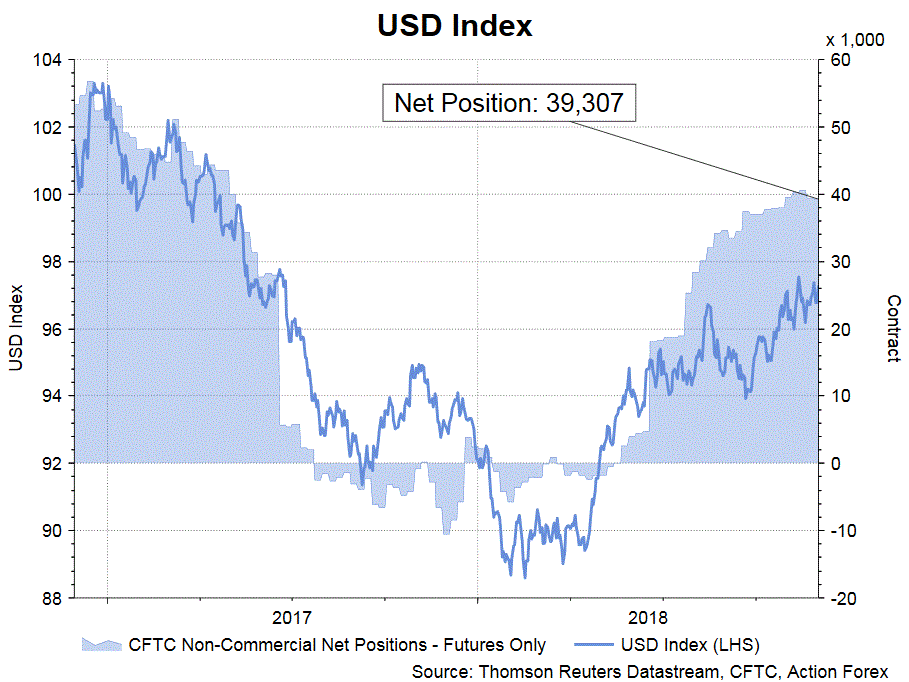
As suggested in the CFTC Commitments of Traders report in the week ended November 27, NET LENGTH in USD Index slipped slightly whilst bets increased on both sides. All other major currencies stayed in NET SHORT positions. During the week, the greenback strengthened against major currencies. Note that the report date was before Fed Chair Jerome Powell's comment that the policy rate is "just below" neutral. Speculative longs on USD index added +611 contracts while shorts gained +644, reducing the NET LENGTH, by -33 contracts, to 39 307 contracts.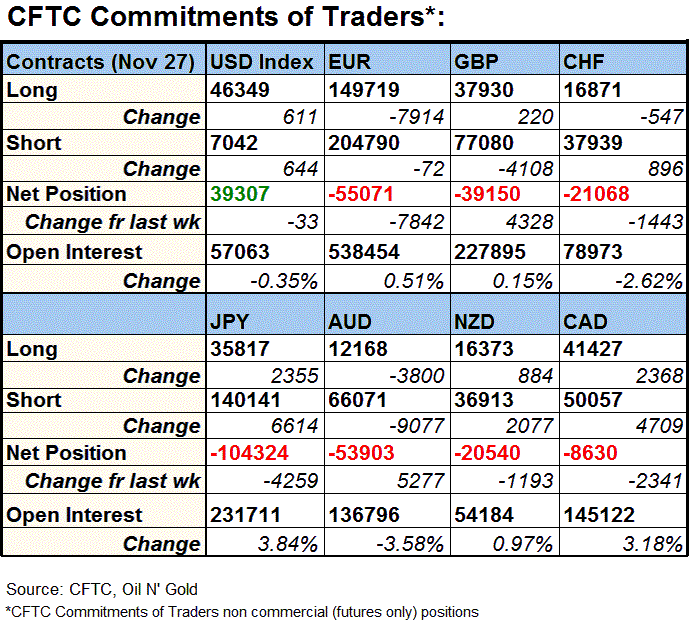
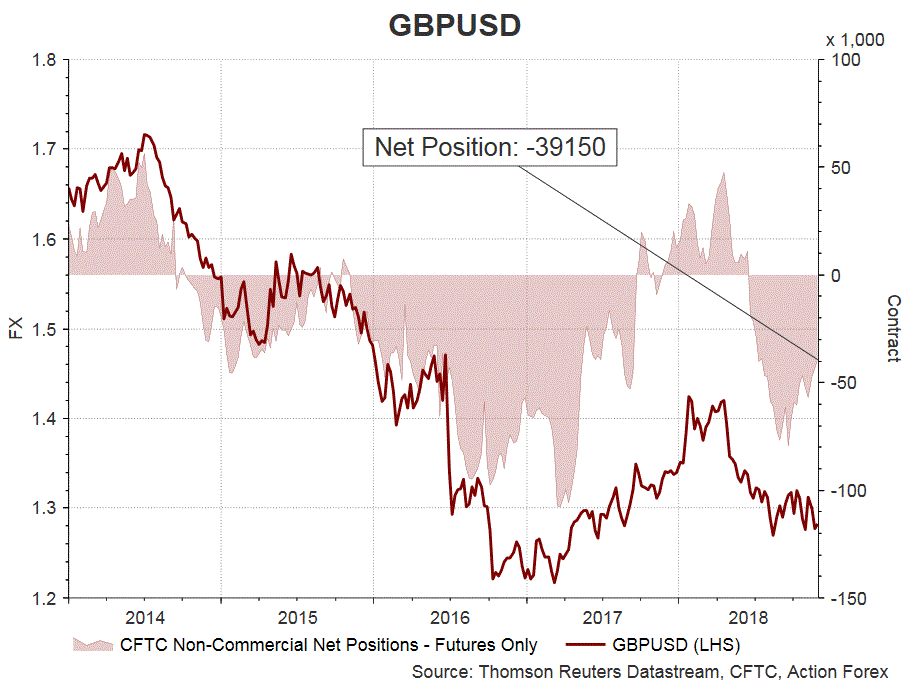
Concerning EUR and GBP futures, speculative long positions for the former dropped -7 914 contracts while shorts slipped -72 contracts, raising NET SHORT to 55 071 for the week. Markit's flash PMI showed downside surprise on both manufacturing and services activities. NET SHORT for GBP futures decreased -4 328 contracts to 39 150. Speculative longs added +220 contracts while speculative shorts plunged -4 108 contracts for the week.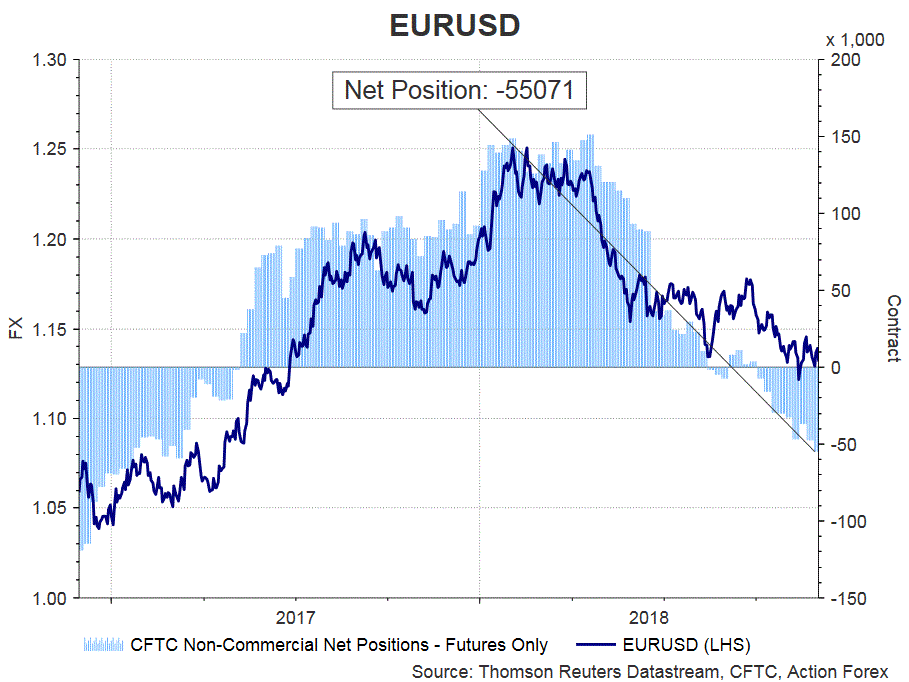
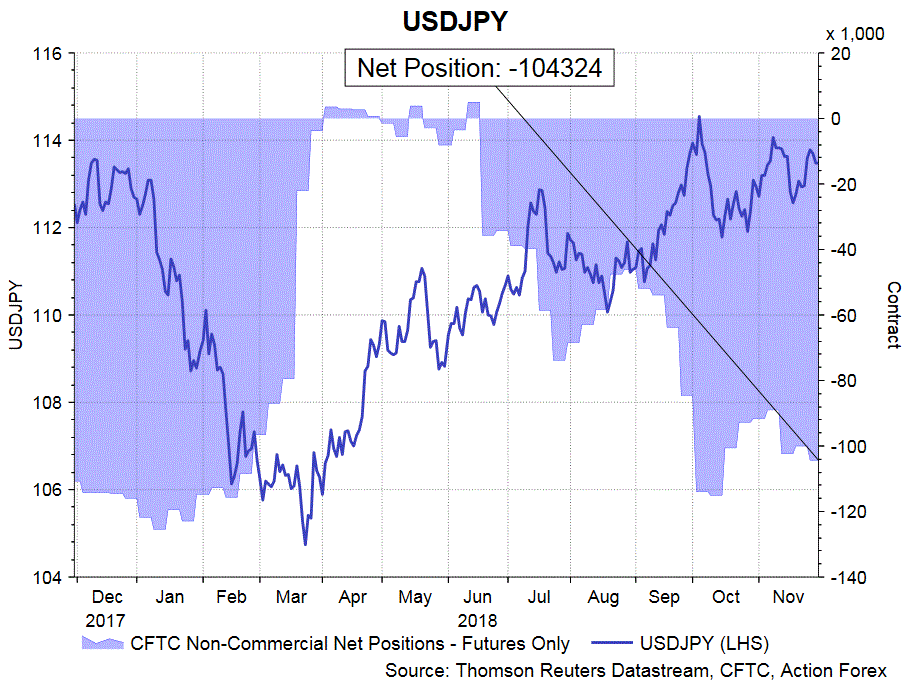
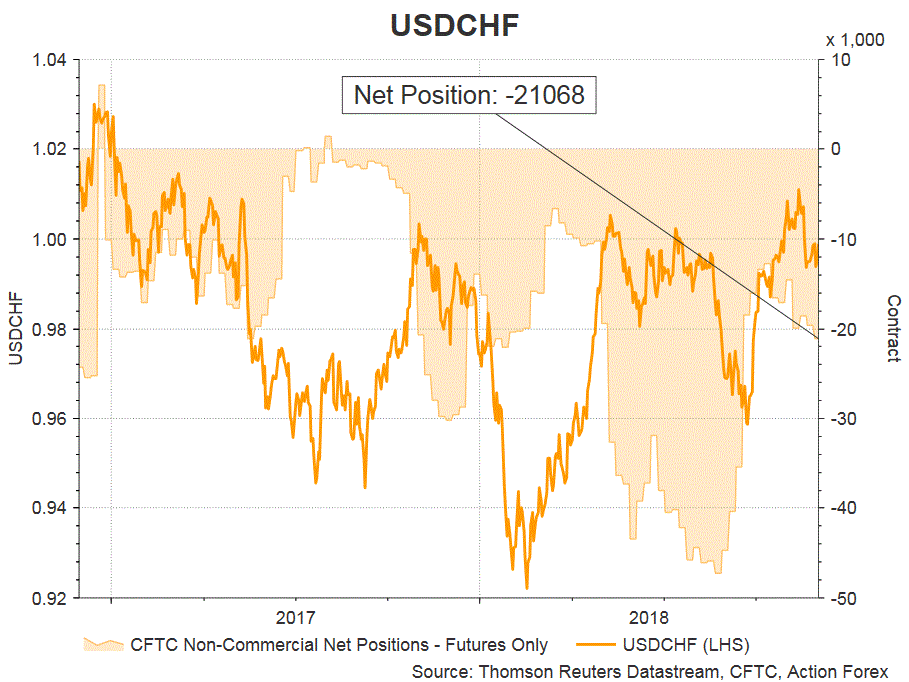
 On safe-haven currencies, Net SHORT for CHF futures gained +1 443 contracts to 21 068. Bets dropped on longs but gained on shorts. NET SHORT for JPY futures jumped +4 259 contracts to 104 324 during the week. Bets shrank on both sides.
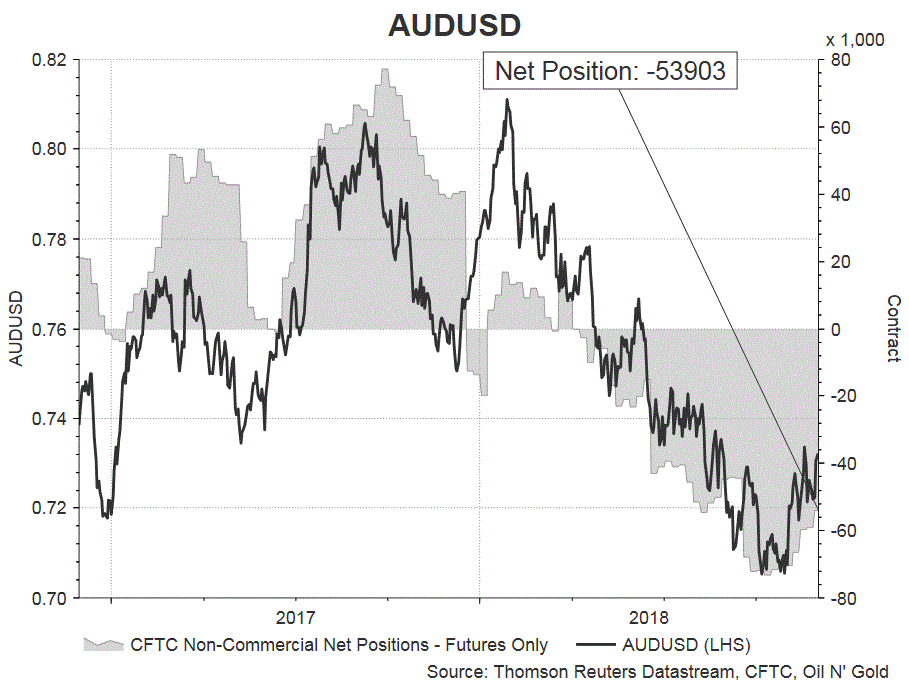
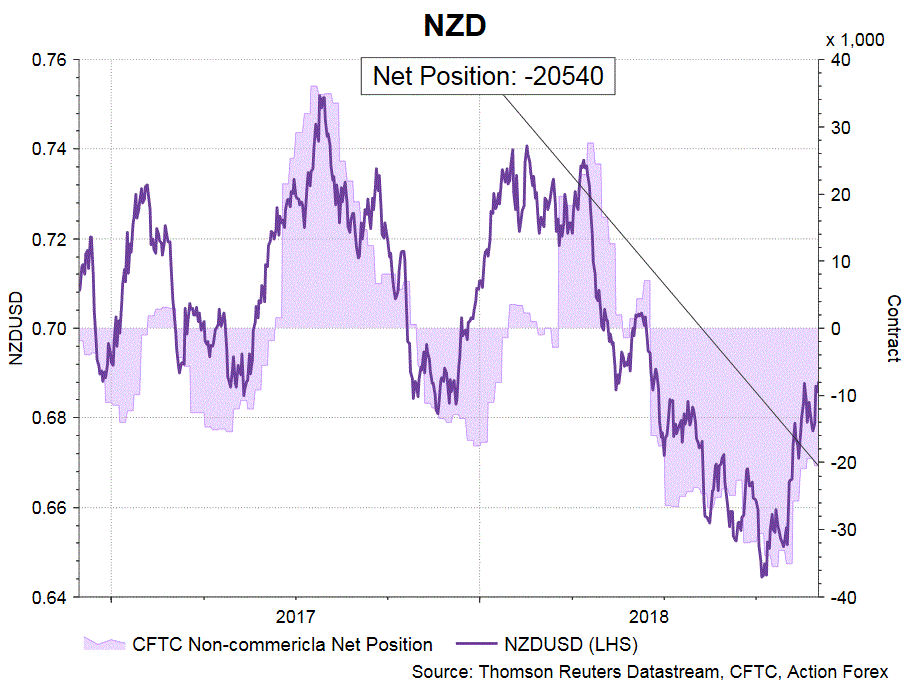
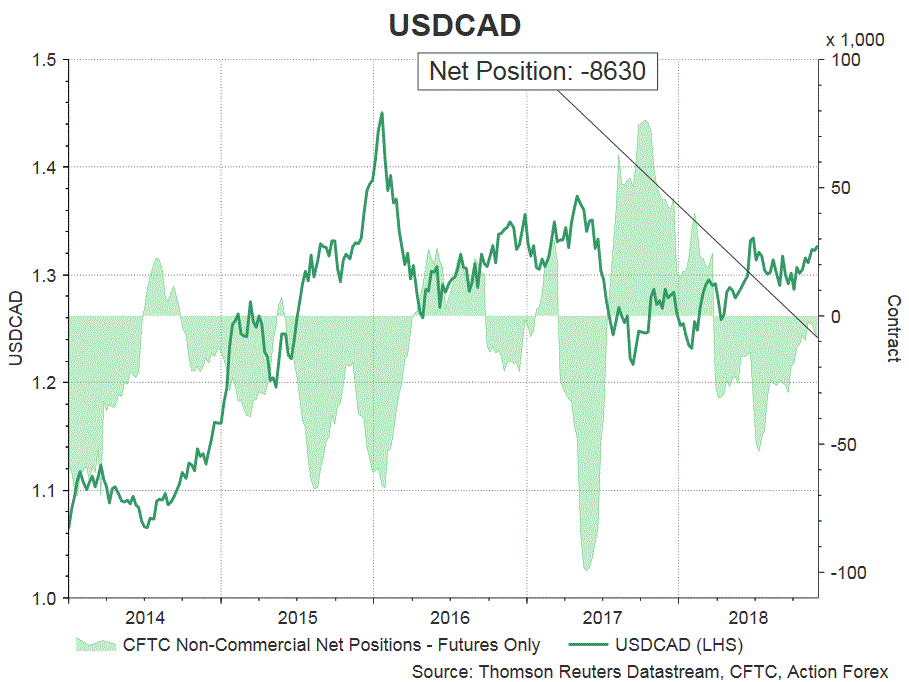
On commodity currencies . NET SHORT for AUD futures fell -5 277 contracts to 53 903. Speculative long positions declined -3 800 contract while shorts dived -9 077 contracts. NET SHORT for NZD futures increased -1 193 contracts to 20 540. On the contrary, NET SHORT for CAD futures rose +2 341 contracts to 8 630.
CFTC Commitments of Traders – Bets Trimmed on Oil and Petroleum, Traders Turned Cautious ahead of OPEC
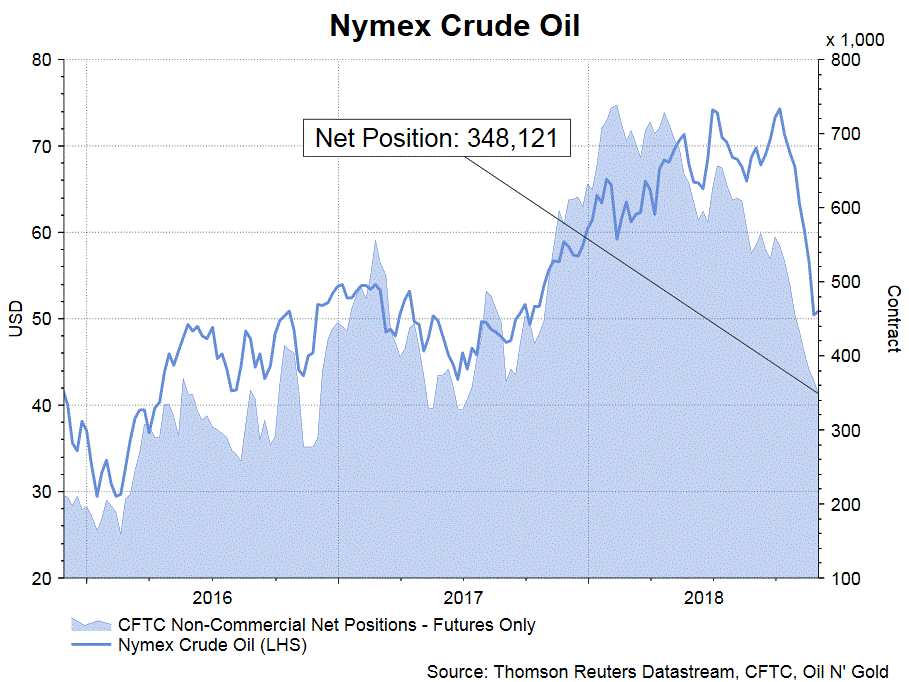
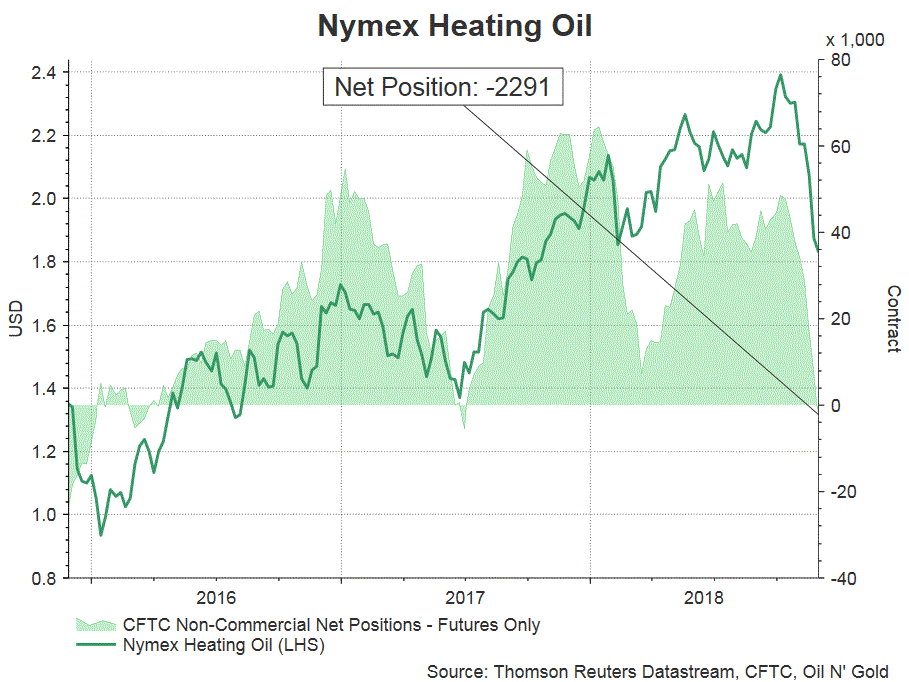
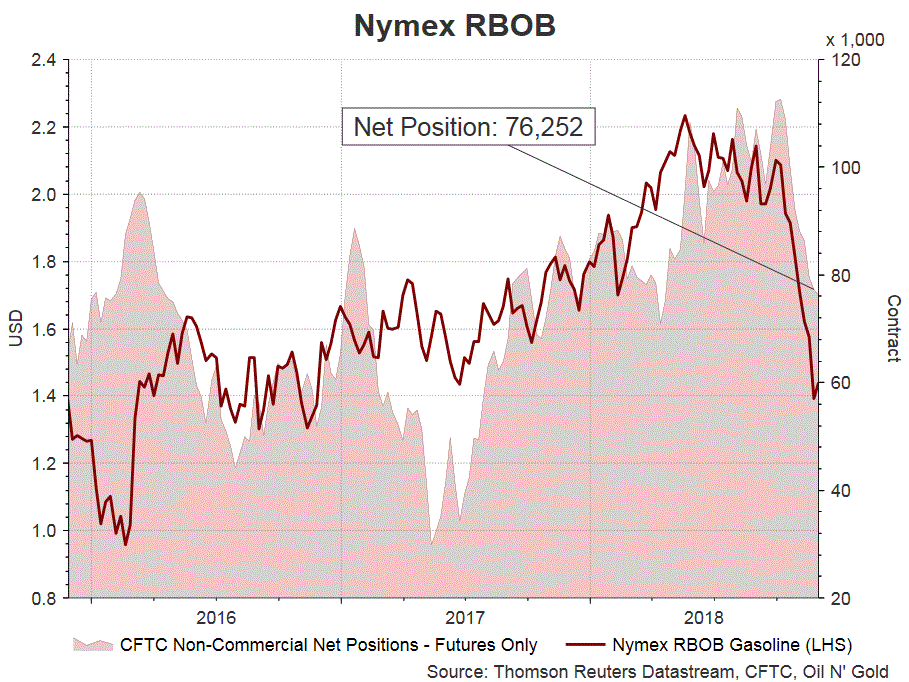
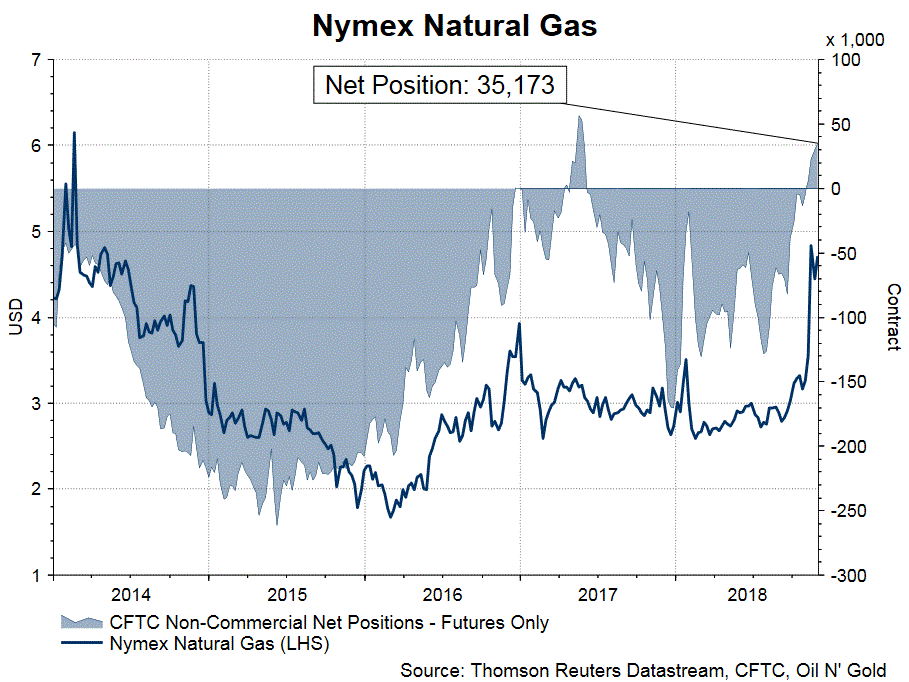
According to the CFTC Commitments of Traders report for the week ended November 27 NET LENGTH for crude oil and gasoline futures continued to fall. Speculative long positions of crude oil futures declined -17 170 contracts, while shorts gained +1 896 contracts, resulting in a fall in NET LENGTH, by -19 066 contracts, to 348 121 contracts. Both crude oil benchmarks plunged during the reporting week. The front-month WTI contract fell -3.5% while the Brent contract was down -3.71%. The market remained cautious ahead of the OPEC+ summit on December 6. For refined oil products, heating oil futures drifted to NET SHORT of -2 291, while NET LENGTH for gasoline fell -1 109 contracts to 76 252. The front-month Nymex contract for heating oil dived -5.24% while RBOB gasoline dropped -5.02%. NET LENGTH for natural gas futures gained +4 913 contracts, to 35 173 contracts for the week. Yet, bets for longs and shorts declined markedly. The Nymex contract plunged -5.77% for the week.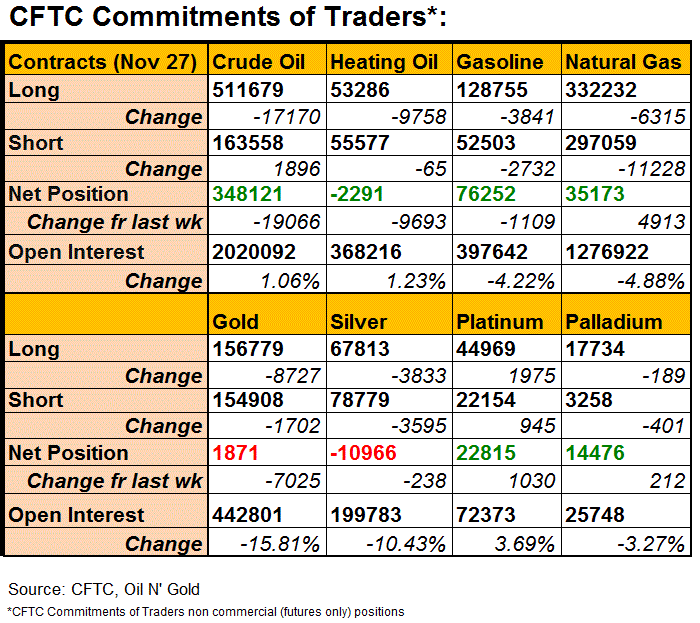
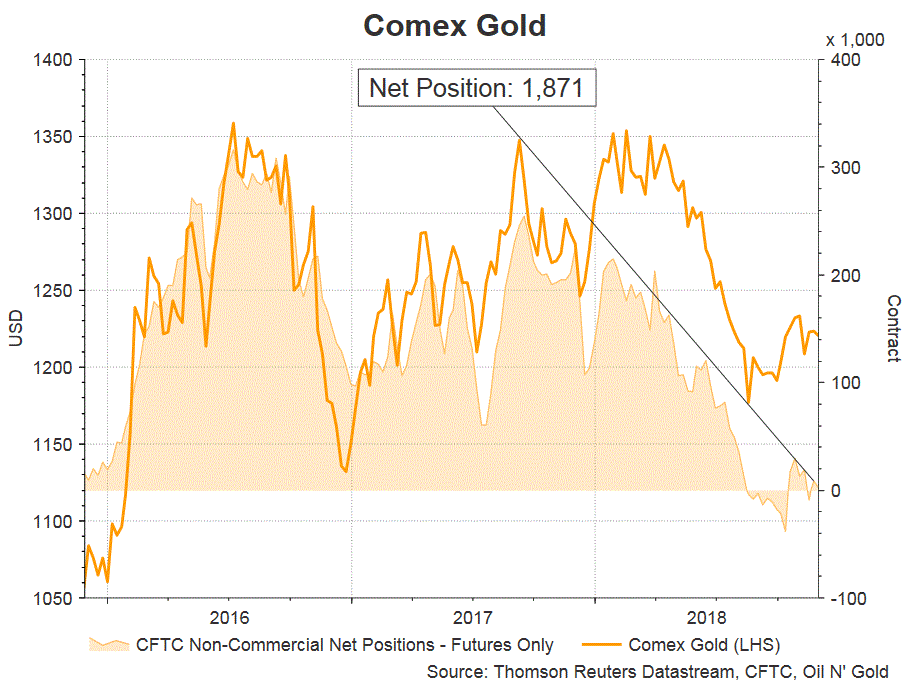
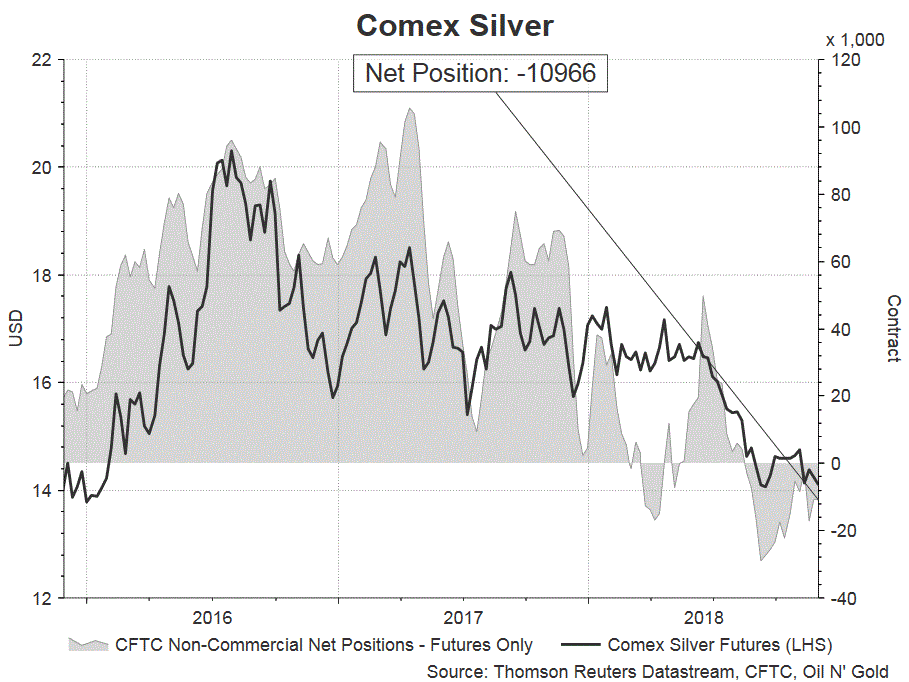
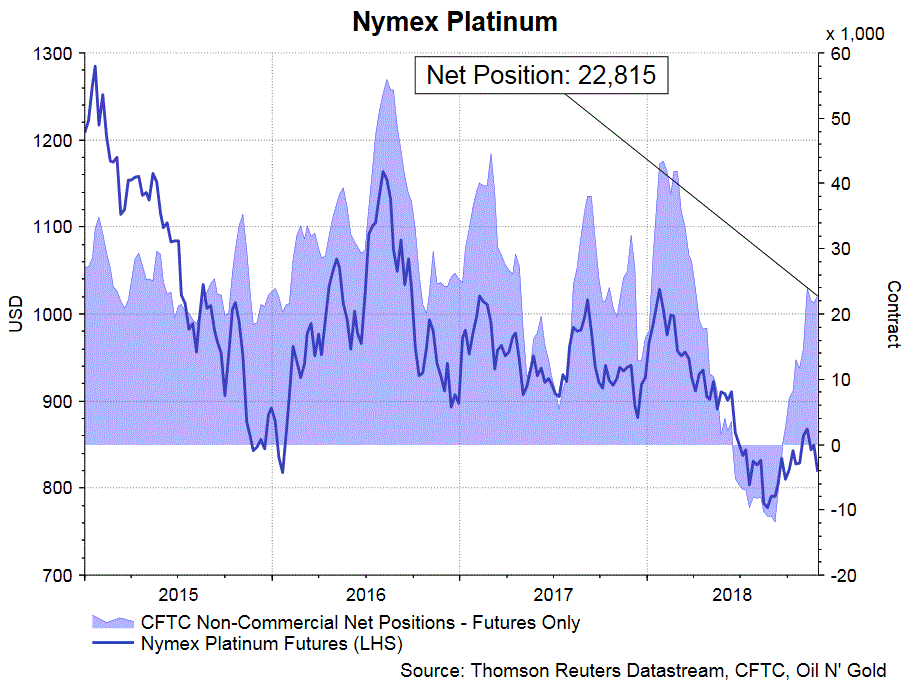
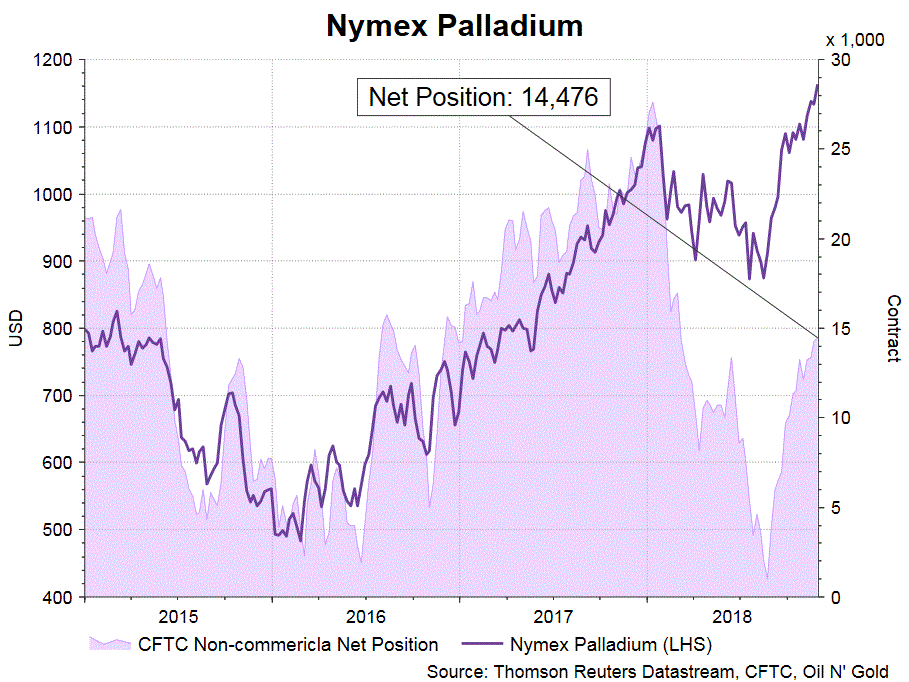
On the precious metal complex, bets for gold and silver futures were trimmed on the long and short sides. Speculative long positions for the former slipped -8 727 contracts, while shorts were down -1 702, trimming NET LENGTH, by 7 205 contracts, to 1 871 contracts. The benchmark Comex contract slipped -0.64% during the week in concern. For the latter, speculative long positions dropped -3 833 contracts while shorts plunged -3 595. These resulted in a drop in NET SHORT, by -238 contracts, to 10 966 contracts. For PGMs, NET LENGTH of Nymex platinum futures gained +1 030 contracts to 22 815 while that for palladium added +212 contracts to 14 476.
What’s Next for Italy’s Budget?
Executive Summary
Since our most recent special report on Italy, Italian policymakers have continued full steam ahead with their plans to ease fiscal policy next year through a combination of tax cuts and increased spending. Over the past eight weeks, there have been multiple back and forth exchanges between Italian and EU policymakers on the structure and budget impact of these policies. Italy has gradually made some modest concessions, but through each iteration Italy has stuck to its initial deficit target of 2.4% in 2019. Thus far, EU officials have remained unsatisfied. In a report issued on November 21, the European Commission took another step toward an excessive deficit procedure (EDP) against Italy. In short, the report showed that EU officials remain concerned about the fiscal outlook in Italy, and that they are exhibiting a willingness, at least for now, to use all of the tools at their disposal to enforce fiscal discipline.
So what happens next? It is possible that the European Commission could formally launch the EDP against Italy next week, though sometime in the second half of January/first half of February appears more likely. What would an EDP entail? After the process officially begins, Italy would have either three or six months to correct its fiscal excesses, with the three-month window reserved for particularly serious violations. Assuming Italy were to get the six-month window, this timeline implies the process could come to a head sometime in mid-2019. Were Italy to continue to defy Brussels after this time has elapsed, the country could be subject to a penalty of 0.2% of its GDP (about €3.5 billion), with growing penalties over time possible in the face of continued defiance by Rome. In this report, we update our readers on developments in Italy, lay out next steps and provide three potential scenarios for how things play out. In our view, the most likely outcome is that an eventual compromise will be reached before financial penalties are imposed on Italy, though it could take several months before a resolution is realized.
Italy's Budget Remains in Focus
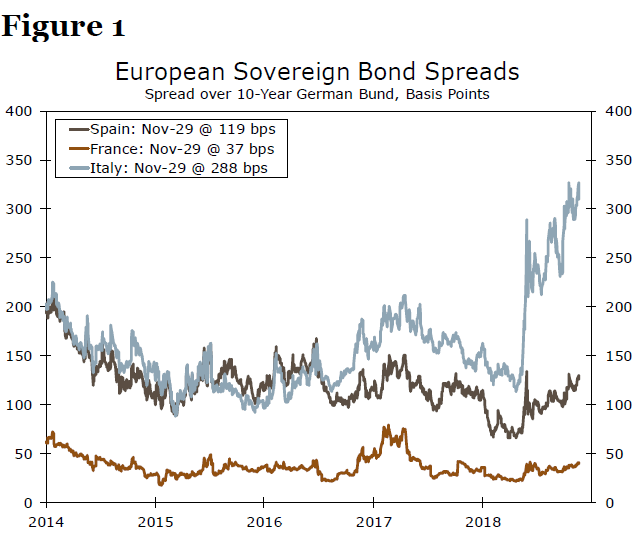
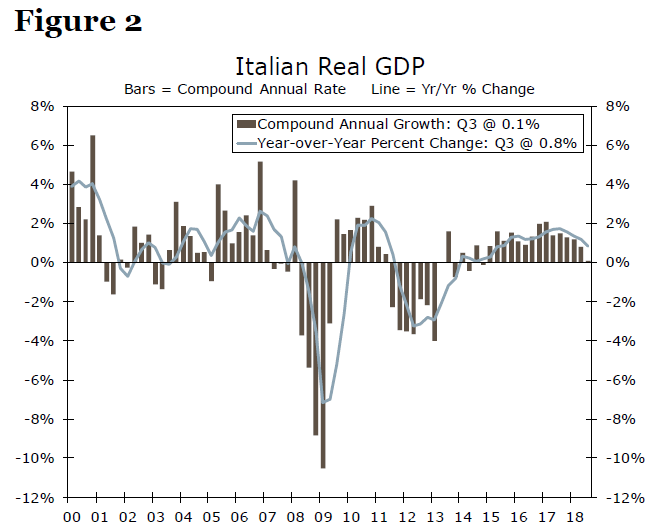
Since our most recent special report on Italy, Italian policymakers have continued full steam ahead with their plans to ease fiscal policy next year through a combination of tax cuts and increased spending. Over the past eight weeks, there have been multiple back and forth exchanges between Italian and EU policymakers on the structure and budget impact of these policies. Italian bond yield spreads have remained elevated over that period (Figure 1), while real GDP growth in Q3 was disappointingly slow (Figure 2). Italy has gradually made some modest concessions, such as a backup plan that involves a public asset sale should next year's target not be met. Through each iteration, however, Italy has stuck to its initial deficit target of 2.4% in 2019, well above the 0.8% target for 2019 proposed by the previous government back in April.
Thus far, EU officials have remained unsatisfied. In a report issued on November 21, the European Commission took another step toward an EDP against Italy. In short, the report showed that EU officials remain concerned about the fiscal outlook in Italy, and that they are exhibiting a willingness, at least for now, to use all the tools at their disposal to enforce fiscal discipline. Why this tough approach for Italy in particular? For example, a deficit of 2.4% of GDP next year in Italy would still be smaller than some other countries. France, for instance, is targeting a deficit of 2.8%.
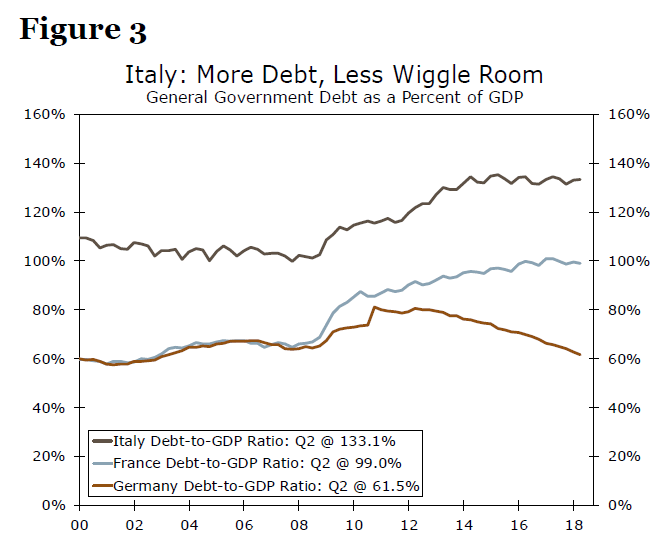
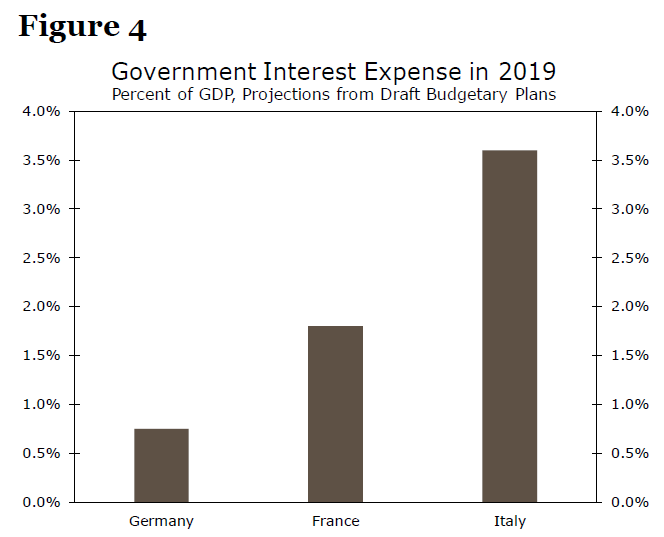
The reasons are multi-faceted and nuanced, but Italy faces three fundamental fiscal headwinds. First, Italy has the second-largest debt-to-GDP ratio in the EU, behind only Greece. At 133% of GDP, Italy's sovereign debt load is much larger than France's or Germany's (Figure 3). This previously accumulated debt gives Italy less leeway for additional deficit-financed stimulus if Italian authorities are to bring the debt-to-GDP ratio down over time. Second, Italy spends a much larger share on interest expense. At 3.6% of GDP, Italy's interest expense is double France's and quadruple Germany's (Figure 4). Finally, the projected directional trend in Italy's finances is set to move in the wrong direction under the proposed budget. In Italy's draft budgetary plan, the structural budget deficit is projected to go from 0.9% of potential GDP in 2018 to 1.7% of potential GDP in 2019. By contrast, France projects a structural budget deficit of 2.0% of GDP, but this number is on an improving trend compared to previous years. In short, the EU appears wary of allowing a major economy with a large debt level and interest expense to reverse direction on its deficit target, even if that target remains within the 3% rule.
So what happens next? Next, EU government representatives on the European Council have to sign off on the European Commission's report recommending an EDP, which appears likely very soon. From there, it is possible that the European Commission could formally launch the EDP against Italy as early as next week, though sometime in the second half of January/first half of February appears more likely. What would an EDP entail? After the process officially begins, Italy would have either three or six months to correct its fiscal excesses, with the three-month window reserved for particularly serious violations. Assuming Italy were to get the six-month window, this timeline implies the process could come to a head sometime in mid-2019. Were Italy to continue to defy Brussels after this time has elapsed, the country could be subject to a penalty of 0.2% of its GDP (about €3.5 billion), with growing penalties possible over time in the face of continued defiance by Rome. We lay out below three scenarios that portray how the ongoing Italian-EU budget relations could play out in the coming months.
Scenario One: Dragging Their Feet to an Eventual Compromise
In scenario one, the process continues to drag on as it has for the past few months. Officials in Brussels continue to slowly turn up the heat on Rome, while Italian policymakers remain defiant. Behind the scenes, however, the dialogue between the two sides continues. Eventually, perhaps even as late as after the EU Parliamentary elections in May 2019, the two sides reach an acceptable compromise. Both sides have incentives to avoid the worst-case-scenario. On Italy's side, financial markets can keep the pressure on Italian policymakers. An increase in sovereign bond yields would pressure the government's interest expense, while also raising benchmark borrowing rates throughout the Italian economy. Falling bond prices would pressure Italian banks and retail investors and likely dent the Italian stock market, unwelcome developments for the government coalition in power. From the EU side, one has to wonder just how far policymakers are willing to directly intervene in Italy's sovereign budget. Unlike Greece in years past, Italy is not in any need of direct support at this point in time, and perhaps more fundamentally, Italy is much larger. Italy is one of the world's ten largest economies with a sovereign debt market of about €2 trillion.
The EU report from Nov. 21 discussed earlier seemed to take particular issue with measures to lower the retirement age, as this could reduce the supply of labor and hamper potential economic growth. Proposals to increase public investment, in contrast, appeared to be given more leeway, at least in our reading of the report. Perhaps a potential compromise exists whereby some transfer payment stimulus is scrapped, but other investment-inducing policies (via the tax code and/or direct public investment) are allowed to remain more or less intact. Over the past week or so, Italian leaders have hinted they might adjust the 2.4% target for 2019, perhaps signaling some additional flexibility is in the offing. While the situation clearly remains very fluid and more back and forth is likely, this a tentative first sign that a compromise might be reached over time.
Under this scenario, Italian bond yields would likely wax and wane roughly within their recent range over German bond yields. Once a compromised is reached, spreads would likely compress, though probably not fully retracing back to the levels seen before the election. The euro would probably muddle through relatively close to current levels until a compromise was reached, at which point it would likely start to move higher versus the dollar.
Scenario Two: Unable to Meet Its Promises, Italy's Government Collapses
Although Italian policymakers have not done enough to appease the budget hawks in Brussels, it is becoming clearer that the soaring rhetoric and outsized fiscal promises made on the campaign trail in Italy are unlikely to become a reality in full. Even if Italy's draft budget plan were accepted as is, allocating the finite stimulus across so many competing priorities (tax cuts, increased public investment, a lower retirement age, a "citizens income," etc.) would be a challenging political task. This task will be doubly difficult given the somewhat unusual coalition government composed of the leftist Five Star Movement and the right-wing Lega. Since the coalition was formed in May, there have been at times signs of disagreement between the two major ruling parties over how to prioritize the cornucopia of fiscal easing measures.
If something were to happen that makes the deficit target even harder to reach (slower-than-expected growth, another jump in interest rates, an especially hard line from the European Commission, etc.), it is easy to imagine the coalition government collapsing under the strain of too many promises and not enough fiscal wiggle room. Collapsing governments are nothing new in Italy; the current government is the 66th the country has had since World War II. Were this to occur, a caretaker government would likely need to take charge, reducing the probability of legislation sponsoring significant fiscal stimulus in our view. Under this scenario, a relief rally would likely cause Italian bond yields to fall, all else equal, with spreads over German bunds moving closer to their pre-election levels. The euro would probably rise versus the dollar, although any euro gains could be limited by uncertainty around the next steps for Italy's government.
Scenario Three: No One Blinks, and Financial Penalties Eventually Occur
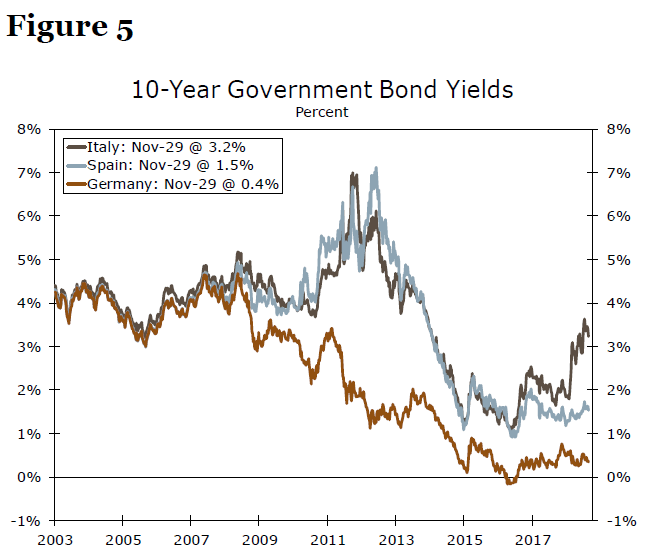
Under this third scenario, the process continues to drag on, but with little progress toward a compromise agreement. This scenario potentially unfolds as follows. Italian policymakers stand their ground, arguing that they were elected with a mandate to enact the policies they support. Though rising financing costs are a concern, for now interest rates have not risen so much that they surpass the levels of 5-10 years ago (Figure 5). The weighted average maturity of Italian sovereign debt outstanding is about seven years, with a weighted average coupon of roughly 3.1%. As a result, some of the debt maturing today is still being refinanced at lower rates. As a final point, Italian policymakers may be emboldened by the fact that the European Commission has never actually utilized the EDP to impose financial sanctions on a country. On the EU side, with government debt still elevated across Europe and memories of the sovereign debt crisis still fresh, policymakers in Brussels stand their ground, hoping to prevent other countries from following Italy's lead.
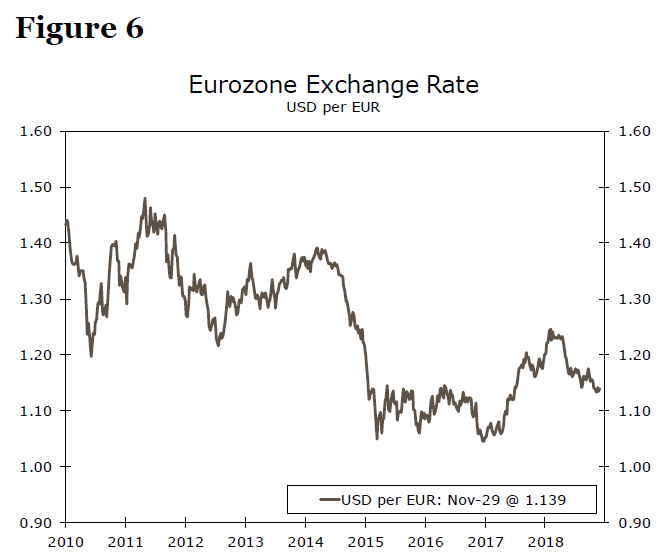
Were financial sanctions to appear imminent, the prospects of a potential Italian exit from the Eurozone would probably come more sharply into focus. This would be a significant economic and financial market development, and in our view Italian bond yields would likely surge, the euro would come under pressure and volatility would increase across financial markets throughout the world. The upshot, however, is that skyrocketing financing costs and a plummeting Italian stock market could potentially move Italian decision makers closer to either of the first two scenarios, namely a compromise or a government collapse. In either of those scenarios, we would expect the euro to stage a recovery versus the dollar following its initial depreciation.
Conclusion
In our view, the scenarios above are listed in the order of most likely to least likely. More specifically, we think an eventual compromise will occur before financial penalties are imposed on Italy, though it may take several months before that compromise is reached. It also strikes us as quite possible that the Italian government could collapse, given the history of instability in Italy and the strain of maintaining a coalition government with a finite degree of fiscal stimulus to parcel out. Financial penalties are a possibility; however, they would probably not take place for quite some time, and their imminent enactment could somewhat paradoxically bring about a resolution.
More thematically, we reiterate our longer-run view laid out in our previous report on the Italian budget. The challenges of stagnant living standards and high debt levels that have sparked the current political situation are unlikely to abate anytime soon. Even if Italian policymakers thread the needle on fulfilling their campaign promises while avoiding sanctions from Brussels, rising rates in Europe in the years ahead will likely put additional pressure on the sustainability of Italian debt, making future policy choices even more daunting. Furthermore, unless real GDP per capita rises in a meaningful and sustained way, the populist rumblings in the Italian political system are unlikely to completely fade away. Thus, we believe Italian budget drama is likely to periodically come into focus for financial markets for years to come.
Forex Forecast and Cryptocurrencies Forecast
First, a review of last week’s events:
EUR/USD. The first good news that pushed the euro up, as expected, was the extraordinary Summit of European leaders on Brexit. Its positive results allowed the European currency to rise to the level of 1.1383 on Monday, November 26, after which the power over the market was seized by the dollar once again.
By Wednesday, the pair began to approach the 2018 low and fell to the level of 1.1255, but then the head of the Federal Reserve Jerome Powell, speaking at the New York Economic Club, suddenly declared that the interest rates on the dollar were only slightly below the neutral level!
Back in October, the same person had said that the rate was far enough from this level, and a month later, it was almost at the “zero” level, at which the economy neither accelerates nor slows down. Such a speech alerted the market a little, as a result of which the Euro-bulls were able to push the pair up again: this time to the height of 1.1400. But then not so much positive statistics on the Eurozone economy were published, and the pair went down again. As a result, the total of the week can be characterized by the short word “zero”: the pair completed it almost in the same place where it started;
GBP/USD. The intra weekly trends of this pair are similar to those demonstrated by the EUR/USD pair. But the distrust in the pound, caused by the fears that the British Parliament may not approve the agreement on Brexit, played a role. As a result, the finish of the pair was slightly lower than the start level and, if at the beginning of the week the pound was at around 1.2810, it finished the week at the level of 1.2750;
USD/JPY. Regarding the future of this pair, the opinions of experts were almost equally divided. A small margin (55%) was on the side of the bears, but when summing up the week it becomes obvious that the bulls won a victory, albeit a very small one. The pair was able to rise by about 60 points during the week, having frozen at around 113.50;
Cryptocurrencies. The forecast for this market was negative, and it was 100% justified: over 80% of all coins, followed the bitcoin, having gone into a deep minus. The intrigue was only in how low the reference cryptocurrency would be able to fall together with other coins during that week.
Our forecast said that the BTC/USD pair was likely to break through the level of $4,000. And it indeed dropped to $3,660, returning to $4,000 on Friday. Ethereum (ETH/USD) was seen at the horizon $102.6. The litecoin (LTC/USD) fell to $24.2 at some exchanges, and the ripple (XRP/USD) below $0.33.
As for the forecast for the coming week, summarizing the opinions of a number of analysts, as well as forecasts made on the basis of a variety of methods of technical and graphical analysis, we can say the following:
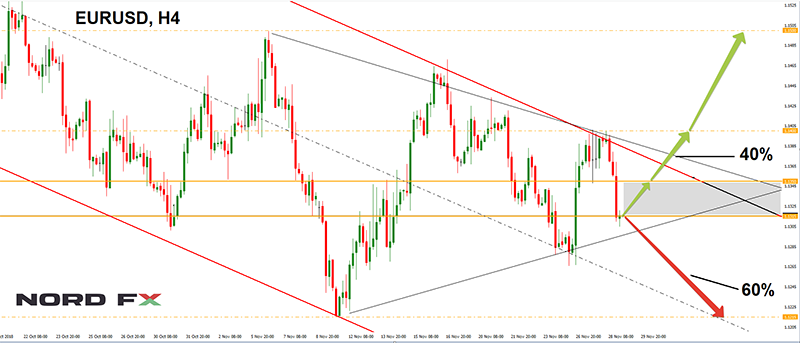
EUR/USD. If you look at the graph, it is clear that in November the pair drew a “pennant” striving to consolidate around 1.1315-1.1350. As for its further movement, most experts (60%) and more than 90% of the indicators on H4 on D1 expect further strengthening of the dollar and new testing of the 2018 low, 1.1215.
In addition to the results of the G20 summit, the next statements of the Federal Reserve Head J. Powell on Wednesday, December 05 and Friday, December 7, as well as the publication of regular data on the US labor market at the very end of the week may affect the formation of trends. According to forecasts, NFP may fall by 15-20% compared to the previous value, which may somewhat weaken the US currency. And here it should be noted that in the monthly forecast, 60% of analysts are already siding with the bulls, waiting for the pair to return to the zone 1.1400-1.1500;
GBP/USD. The pair is near the year lows zone at the moment, 1.2670-1.2695, and graphical analysis on H4, supported by more than 90% of trend indicators and oscillators, predicts their breakdown and a quick fall to the 1.2600-1.2620 zone.
But the experts' opinion is not at all as clear: it is only 55% who side with the bears. And 45% are confident that the pair will not be able to renew the lows, and it will go north towards the height of 1.2900;
USD/JPY. Although we would like to give a clear forecast, there are no pronounced preferences among experts for the Japanese currency either: exactly half of them have voted for the pair's growth, and exactly half are for its fall. Everyone is waiting for the results of the G20, and here the forecasts are also quite ambiguous.
The indicators also behave accordingly, although most of them are colored green. As for the graphical analysis, it envisages first the growth of the pair to the level of 114.20-114.40, and then its fall, first to the support of 113.00, and then to 111.75.
In a situation of such uncertainty, it is always useful to refer to a longer-term forecast. And here, 65% of analysts, following the graphical analysis, expect the yen to strengthen and the pair to fall to 112.00;
Cryptocurrencies. The situation with forecasts for cryptocurrencies is complicated by the fact that it is almost impossible to estimate their real value. They are so virtual that estimates can be differ tens, hundreds or even thousands of times. It is not particularly worth it to focus on the miners' costs either, as they do not do any useful work and do not produce any material values or benefits. They only spend their time, money and electricity.
Experts' forecasts look as follows at the moment: 60% expect the bitcoin to continue falling to $3,000, 30% hope that it will stay in the $4,000-4,500 range, and 10% of super optimists convince the rest that these are all the machinations of major players who, having bought cheap coins, will soon begin to push the market up.
However, optimism is quickly melting, if you listen to the words of the Nvidia founder and CEO Jensen Huan. The head of the largest manufacturer of processors for mining has admitted that they had misjudged the prospects of the crypto market, and now his company is betting on the GPU for computing using artificial intelligence and use in unmanned vehicles.
US-China trade war ceasefire for 90 days, China to work on reforms immediately
US President Donald Trump hailed that he had an "amazing and productive meeting" with Chinese President Xi Jinping, as sideline of G20 summit in Argentina. Both sides agreed to ceasefire on trade war for 90 days and work on structural changes in China. China also agreed to start buying US agriculture products immediately. Trump said there are "unlimited possibilities for both the United States and China."
In a White House statement:
- Trump agreed NOT to raise the tariffs on USD 200B of Chinese progress to 25% on January 1, but leave them at 10%.
- China will purchase a "very substantial" amount of agricultural, energy, industrial, and other product from the US, starting immediately with agriculture.
- Most importantly, negotiations will immediately begin on structural reforms regarding "forced technology transfer, intellectual property protection, non-tariff barriers, cyber intrusions and cyber theft, services and agriculture. "
- The negotiations will be completed within the next 90 days. If an agreement couldn't be made, the above mentioned tariffs will be raised from 10% to 25%.
Here is the full statement.
Statement from the Press Secretary Regarding the President's Working Dinner with China
The President of the United States, Donald J. Trump, and President Xi Jinping of China, have just concluded what both have said was a "highly successful meeting" between themselves and their most senior representatives in Buenos Aires, Argentina.
Very importantly, President Xi, in a wonderful humanitarian gesture, has agreed to designate Fentanyl as a Controlled Substance, meaning that people selling Fentanyl to the United States will be subject to China's maximum penalty under the law.
On Trade, President Trump has agreed that on January 1, 2019, he will leave the tariffs on $200 billion worth of product at the 10% rate, and not raise it to 25% at this time. China will agree to purchase a not yet agreed upon, but very substantial, amount of agricultural, energy, industrial, and other product from the United States to reduce the trade imbalance between our two countries. China has agreed to start purchasing agricultural product from our farmers immediately.
President Trump and President Xi have agreed to immediately begin negotiations on structural changes with respect to forced technology transfer, intellectual property protection, non-tariff barriers, cyber intrusions and cyber theft, services and agriculture. Both parties agree that they will endeavor to have this transaction completed within the next 90 days. If at the end of this period of time, the parties are unable to reach an agreement, the 10% tariffs will be raised to 25%.
It was also agreed that great progress has been made with respect to North Korea and that President Trump, together with President Xi, will strive, along with Chairman Kim Jong Un, to see a nuclear free Korean Peninsula. President Trump expressed his friendship and respect for Chairman Kim.
President Xi also stated that he is open to approving the previously unapproved Qualcomm-NXP deal should it again be presented to him.
President Trump stated: "This was an amazing and productive meeting with unlimited possibilities for both the United States and China. It is my great honor to be working with President Xi."
China Weekly Letter: Trade optimism amid further Chinese slowdown
- Trump sees 'good possibility that a deal can be made'.
- Weaker profit growth and PMI underline Chinese slowdown.
- Taiwan's pro-independence government suffered big defeat at 'mid-term' elections.
Trump sees 'good possibility that a deal can be made'
It's finally crunch time for Donald Trump and Xi Jinping as they face off at the dinner scheduled for Saturday evening after the G20 gathering. While signals from Trump have been mixed over the past week, the latest message before he left for Buenos Aires was one of cautious optimism. He said the two sides were 'very close' to a deal and added 'I'm open to making a deal, but frankly, I like the deal we have now' referring to the current situation with tariffs on China, see Bloomberg . Earlier this week, Trump's economic adviser, Larry Kudlow, said at a press conference that Trump saw a 'good possibility that a deal can be made'... and that he's 'open to it' if certain conditions are met, see CNBC .
On Friday, the Financial Times reported that officials have begun to plan for follow-up negotiations in case Xi and Trump agree on a truce. In this case, a delegation of 30 officials led by China's economic tsar Liu He could be going to Washington for 12-15 December.
Yesterday, it was reported that ultra-hawk on China, Peter Navarro, will also participate in the dinner meeting, contrary to rumours earlier this week.
Comment: We still see a 60% chance that Trump will opt for a ceasefire deal that includes a plan for further negotiations. Trump may condition abstaining to raise tariff rates from 10% to 25% on 1 January, on how big the concessions from China are at negotiations in mid-December. If Trump chooses further escalation over negotiations, it could backfire, as it would increasingly hurt the US markets and economy. For more details, see US-China trade - Five reasons why we still see 60% chance of ceasefire , 29 November 2018.
Weaker profit growth and PMI underline slowdown
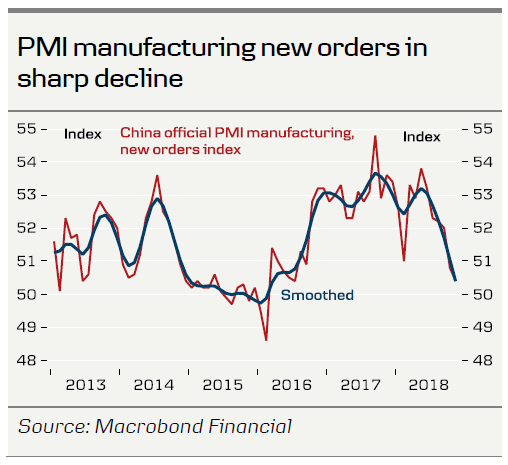
The official version of PMI manufacturing for November dropped further to 50.0 from 50.2 in October. It just escaped falling below the psychologically important 50-level, which would have signalled contraction. The details showed another drop in the new orders index to a two-year low (see top chart). Data on industrial profits painted a similar picture as they showed a decline to 3.6% y/y in October from 4.1% in September (see bottom chart).
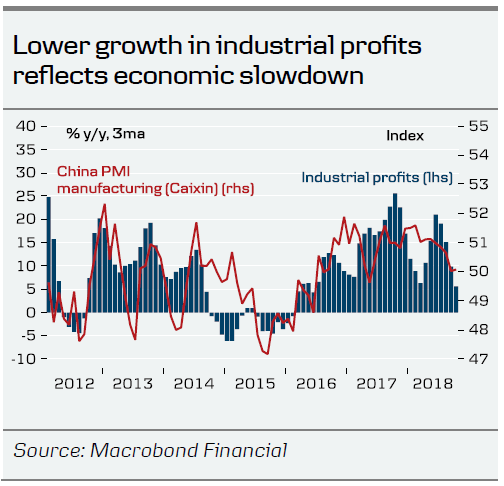
Comment: The slowdown is no big surprise and is in line with our expectations, see China Leading Indicators: It gets worse before it gets better, 21 November 2018. We look for stimulus to kick in more forcefully during the first half of 2019 and it might be increased further through tax cuts for households and companies, and possibly more reductions of the Reserve Requirement Ratio for banks. When a trade deal is finally struck, which we look for eventually, it should also lift uncertainty and underpin demand.
Taiwan's independence-leaning government suffered big defeat
The independence-leaning Democratic Progressive Party (DPP) suffered big losses in Taiwan's local elections on Saturday, which led to the resignation of their leader and Taiwanese President Tsai Ing-wen, see CNN and SCMP. DPP now only has the majority in six out of 22 cities and counties versus 13 before the elections. It points to a victory by the more Beijing-friendly Kuomintang (KMT) at the 2020 presidential election. Tsai Ing-wen grabbed the headlines when she called US President Donald Trump and congratulated him on winning the election in 2016. It was seen as a potential break with the One China Policy by the US, as the US has abstained from official diplomatic relations with Taiwan since 1979.
Comment: The result is a win for Beijing as it signals the Taiwanese population does not support Tsai Ing-wen's more independence-leaning policy and flirtations with the US, which has angered China. The Taiwanese economy has taken a hit from a sharp decline in Chinese tourists going to Taiwan and military tensions have increased. It is also a defeat for the US in its attempts to challenge China in the Asian region. We are likely to see either the DPP turn more Beijing-friendly to gain ground ahead of the 2020 election or see a new government run by KMT, which wants closer ties with China.
Other China news:
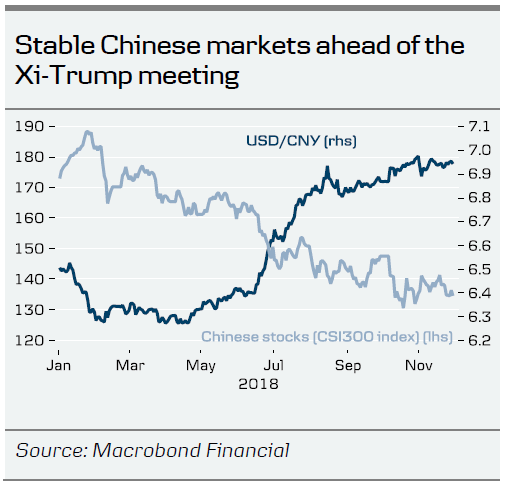
Chinese markets have been fairly calm this week again with both stocks and USD/CNY moving sideways (see chart).
The main story from The Economist this week is on the US-China tech rivalry. The conclusion is "America cannot afford to ignore China's semiconductor ambitions. It cannot simply tame them, either."
On a similar note, a Chinese chipmaker has been caught up in the increasing US assault on China's tech ambitions, see SCMP. Following a US export ban on the Chinese chipmaker Fujian Jinhua Integrated Circuit Co, the company has moved from being an important part of a plan to make China self-sufficient on key technology to a company in shatters. The company was supposed to become a competitive producer of memory chips used in smartphones, but the US Department of Commerce has banned exports of the manufacturing gear it needed to achieve that. It follows an accusation by the US Justice Department of stealing US technology.
More on tech rivalry: White House senators accuse Chinese tele equipment manufacturer ZTE of cheating on a US deal, which could risk new sanctions and possibly an export ban, see SCMP.
SCMP had a story on "how China's economic reformers are using US trade war to push demands for opening up". It highlights what has often been the case in China, that external pressure is helping the reform-friendly faction of the Communist Party to push through reforms and further opening up. The article says that "about a dozen intellectuals in government-backed think tanks have been calling for key reforms through lobbying Liu, the country's vice-premier, and other policymakers 'in oral or written forms'."
The Wall Street Journal (WSJ) had a long interview with Trump on trade this week, which is worth a read if you have some extra time, see full transcript (paywall). For those interested in some background and insights on the trade war, I also recommend the WSJ's inside storyreleased on Thursday. Among other things, it confirms that the trade hawk US Trade Representative is the one with most influence on Trump when it comes to trade.