

Sample Category Title
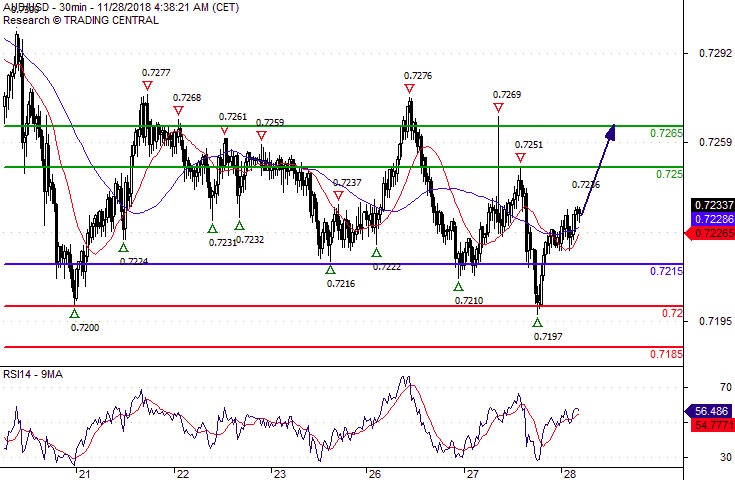
AUD/USD Watch 0.7265
Pivot (invalidation): 0.7215
Our preference Long positions above 0.7215 with targets at 0.7250 & 0.7265 in extension.
Alternative scenario Below 0.7215 look for further downside with 0.7200 & 0.7185 as targets.
Comment The RSI calls for a bounce.
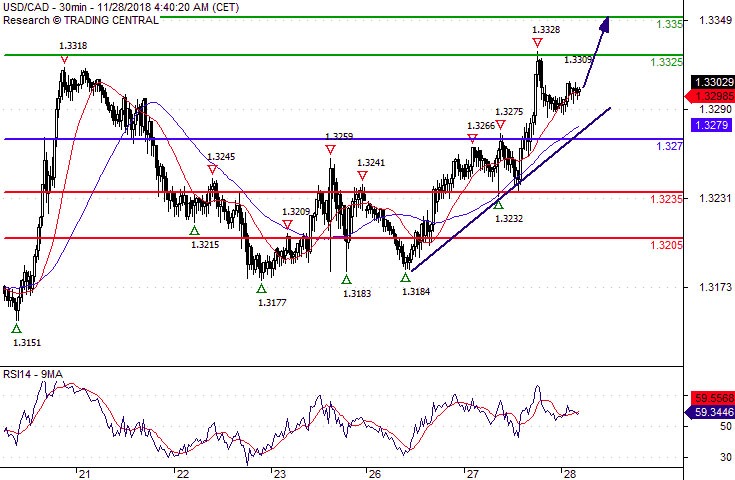
USD/CAD Further Advance
Pivot (invalidation): 1.3270
Our preference Long positions above 1.3270 with targets at 1.3325 & 1.3350 in extension.
Alternative scenario Below 1.3270 look for further downside with 1.3235 & 1.3205 as targets.
Comment The RSI is bullish and calls for further advance.
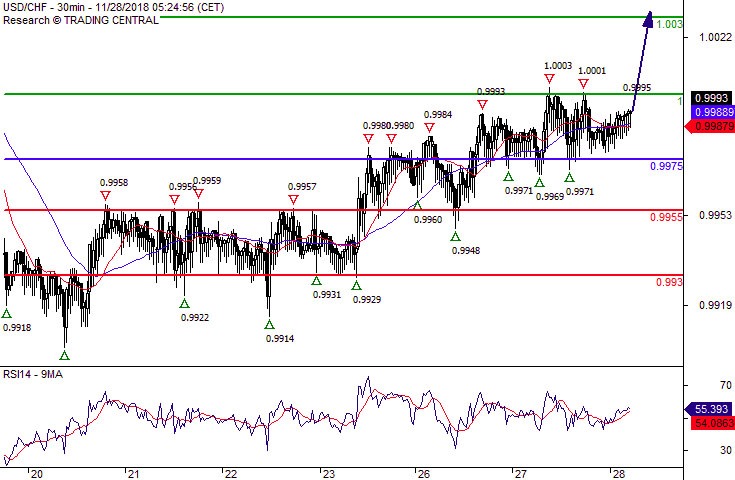
USD/CHF 1.0030 Expected
Pivot (invalidation): 0.9975
Our preference Long positions above 0.9975 with targets at 1.0000 & 1.0030 in extension
Alternative scenario Below 0.9975 look for further downside with 0.9955 & 0.9930 as targets.
Comment The RSI has just landed on its neutrality area at 50% and is turning up.
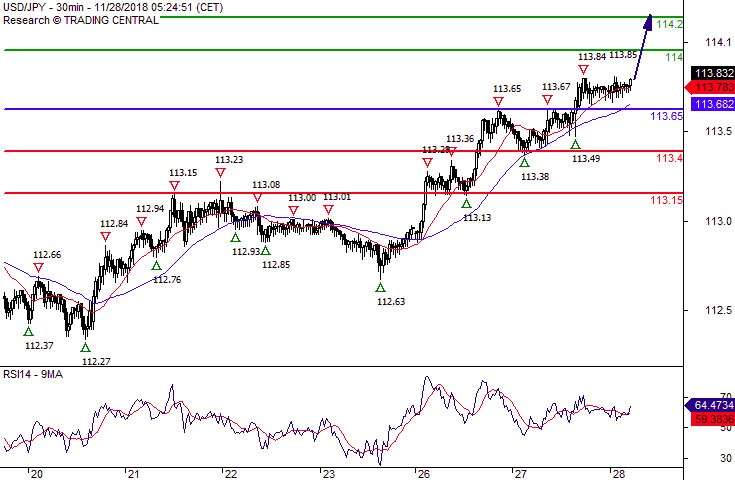
USD/JPY Further Advance
Pivot (invalidation): 113.65
Our preference Long positions above 113.65 with targets at 114.00 & 114.20 in extension.
Alternative scenario Below 113.65 look for further downside with 113.40 & 113.15 as targets.
Comment The RSI is bullish and calls for further advance.
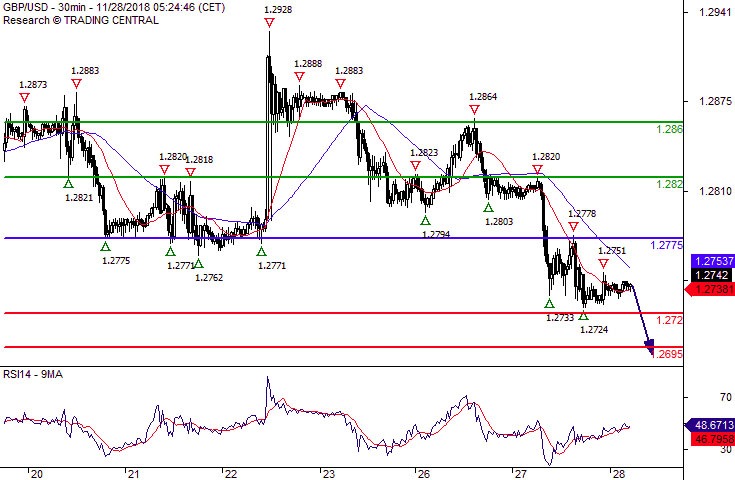
GBP/USD Watch 1.2695
Pivot (invalidation): 1.2775
Our preference Short positions below 1.2775 with targets at 1.2720 & 1.2695 in extension.
Alternative scenario Above 1.2775 look for further upside with 1.2820 & 1.2860 as targets.
Comment A break below 1.2720 would trigger a drop towards 1.2695.
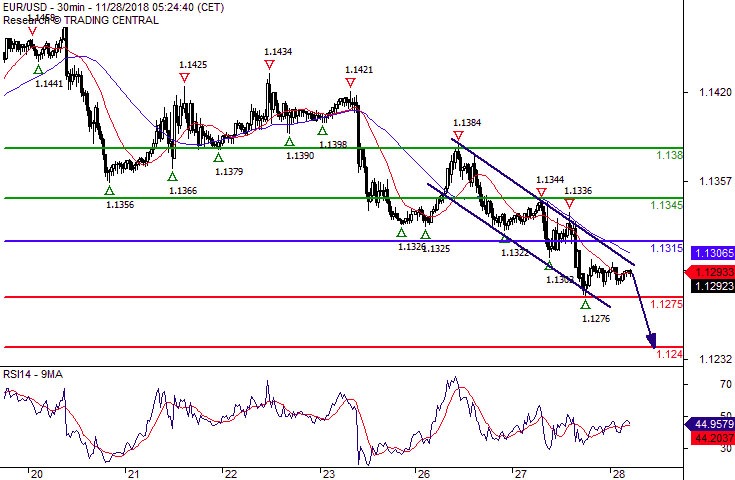
EUR/USD Target 1.1240
Pivot (invalidation): 1.1315
Our preference Short positions below 1.1315 with targets at 1.1275 & 1.1240 in extension.
Alternative scenario Above 1.1315 look for further upside with 1.1345 & 1.1380 as targets.
Comment A break below 1.1275 would trigger a drop towards 1.1240.
Currencies: Dollar Maintains Benefit Of The Doubt Ahead Of Powell Speech
- Rates: Downward intraday bias for core bonds
Improved risk sentiment might weigh on core bonds. Italian media suggest that the EC is willing to accept a 2% Italian deficit for next year. This seems negotiable after Italian political leaders opening move to allow some changes and might put the budget drama soon behind us. US Fed chair Powell is expected to paint a bright picture of the US economy. - Currencies: Dollar maintains benefit of the doubt ahead of Powell speech
Negative headlines on the US-China trade negotiations and constructive comments from Fed’s Clarida were enough to extend recent USD upleg yesterday. The focus is on a speech of Fed’s Powell today. An ongoing positive assessment might be a mildly USD supportive. However, a positive risk sentiment and progress in the EU-Italy budget talks might prevent big euro losses.
The Sunrise Headlines
- US equity markets closed yesterday’s session with modest gains, after pairing opening losses throughout the day. Asian stocks are currently trading in green with gains up to 1.0%.
- A UK official suggested that UK PM May will allow changes by the House of Commons to her Brexit accord. Parliament will be free to vote on a series of self-proposed changes, before voting on the agreement as a whole.
- US top economic adviser Kudlow struck a hopeful tone on a possible US-China trade deal later this week at a G20 summit in Argentina, but warned that talks so far were fruitless and a new round of tariffs is likely if no progress is made.
- Cindy Hyde-Smith has won the last US Senate race, in the state of Mississippi, beating her Democrat opponent Mike Espy. Hyde-Smith’s win secured a 53 to 47 Republican majority in the US Senate.
- Ahead of next week’s UN climate talks, the EU publishes a climate strategy road map today. It outlines a range of scenarios aimed at reducing carbon emissions and preventing damaging global warming to achieve the Paris climate accord.
- New Zealand’s central bank will ease mortgage lending restrictions now and in the next years. It wants to stimulate the cooling housing market as government initiatives such as restrictions on foreign buyers are weighing on demand.
- Today’s economic calendar is rather thin with only second tier data in the US and EMU. The BoE publishes a report with the financial impact of different Brexit scenarios. Fed Powell, ECB Praet and ECB Coeuré speak.
Currencies: Dollar Maintains Benefit Of The Doubt Ahead Of Powell Speech
Dollar holding strong ahead of Powell speech
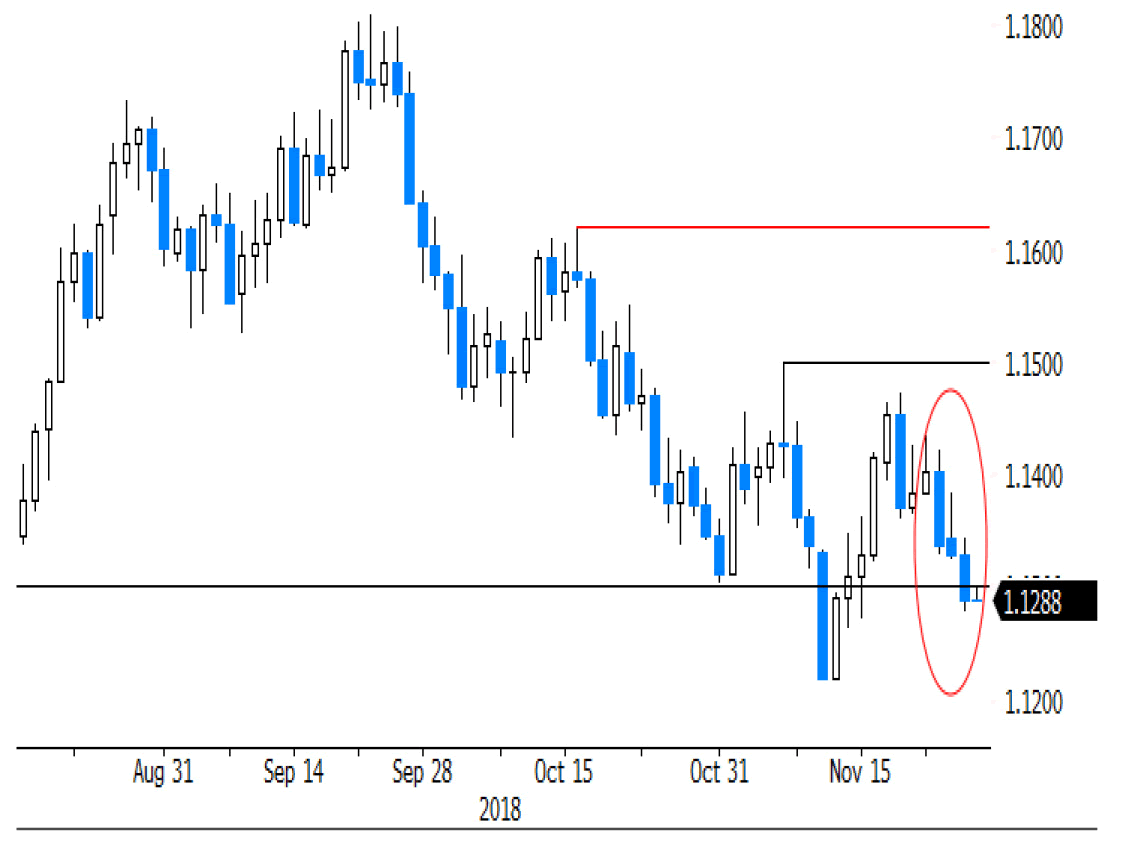
There was little high profile news to guide USD trading yesterday. Still, the dollar maintained the benefit of the doubt. US officials suggested that any formal progress on trade at the meeting between President Trump and Chinese president XI Jinping will be difficult. Uncertainty on trade is seen as negative for the euro rather than for the dollar. The US threatening to impose tariffs on all auto imports also weighed on the euro. Several Fed members also gave their view. Vice Chair Clarida kept a balanced tone and suggested Fed policy normalization can continue, providing the USD additional interest rate support. EUR/USD closed at 1.1289 (from 1.1328). USD/JPY also extended its uptrend and closed at 113.79. This morning, most Asian equity indices show decent gains even as the dollar remains well bid. So for now, the ‘usual links’ between markets don’t really work. EUR/USD struggles to regain the 1.13 handle. USD/JPY extends its gradual rise, nearing the 114 area. Later today, there are plenty of US data. However, we expect these data to be of second tier significance hours before a speech of Fed’s Powell. Markets are keen to hear concrete hints on the pace of further Fed normalisation in 2019. We expect the Fed chair to stay rather positive on the economy but he might downplay the significance of guidance as the Fed becomes more data dependent at current point in the eco cycle. This week, the dollar succeeded some further ‘by default’ gains. Longer term we remain cautious on a new sustained USD upleg. However, in a daily perspective, positive comments from Powell might extend the ST USD momentum. We had a neutral bias on EUR/USD, but have to admit that recent euro performance is a bit disappointing, given the tentative improvement in risk sentiment and more constructive headlines from Italy. We still assume the 1.1216/1.1621 trading range to hold. However, downside test of EUR/USD looks more likely than a swift return higher.
Sterling continued to trade with a negative bias yesterday. May’s tour in the country to sell her deal started in Northern Ireland. At first sight it didn’t yield any results with the DUP still rejecting the proposal. EUR/GBP closed modestly higher at 0.8859. This morning, there were rumours that the UK government is considering to allow amendments the Brexit text will be discussed in parliament. Question is whether this approach will make the process easier. EUR/GBP will probably remain in a some kind of erratic trading patter near current levels as long as uncertainty on the approval remains as high as it is right now.
EUR/USD: dollar maintains benefit of the doubt even as sentiment on risk shows signs of improvement
OPEC+: To Cut or Not to Cut?
Crude oil prices have steadied after the sharp correction over the past 7 weeks. Supporting the recovery are hopes of OPEC or OPEC+ production cut next month. OPEC and non-OPEC producer would meet in Vienna on December 6, discussing ways to defend oil prices. While the market generally expects that the producers would announce output cut, the uncertainty is high. The stakeholders have their own agendas with the needs to balance the economic and political interests. We expect OPEC+ would announce, after next week's meeting, to at least stick to the output quotas set in 2016 for the first half of next year.
OPEC members are divided among themselves with regards to production, as the member have different fiscal breakeven oil price- the oil price needed to balance the budget. For instance, IMF estimates that Saudi Arabia needs oil price to reach $78/bbl, while Qatar just needs US$45/bbl, to attain fiscal balance next year. According to IMF’s estimate as of May 2018, Iraq, Kuwait and Qatar should still be able to attain fiscal surplus under the current oil price level (using Brent crude oil price as reference) while the other members would need to run a deficit. The countries might probably choose not to cut output, preferring to increase revenue by pumping more oil. Estimated data suggest that most OPEC members are producing above their quotas. Saudi exceeded its quota the most in October while preliminary information shows that the Kingdom's output rose to 11.2M bpd, +1.14M bpd above its quota, in November. 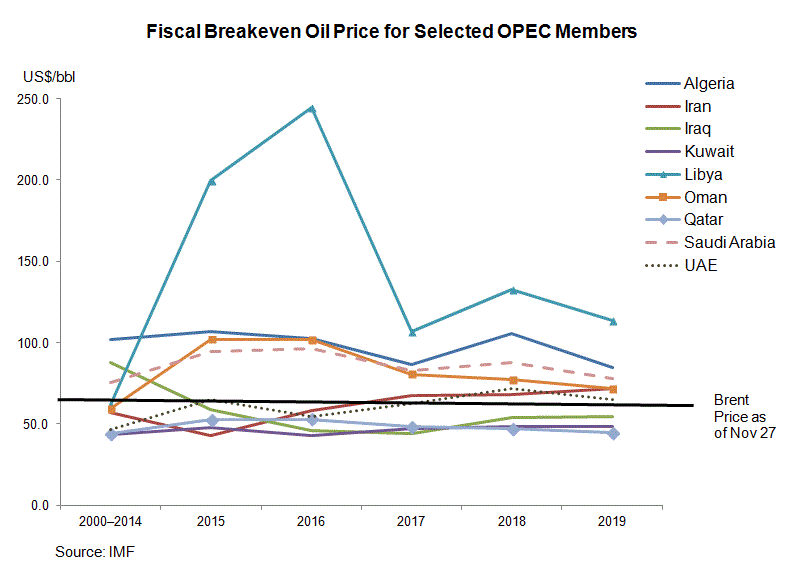
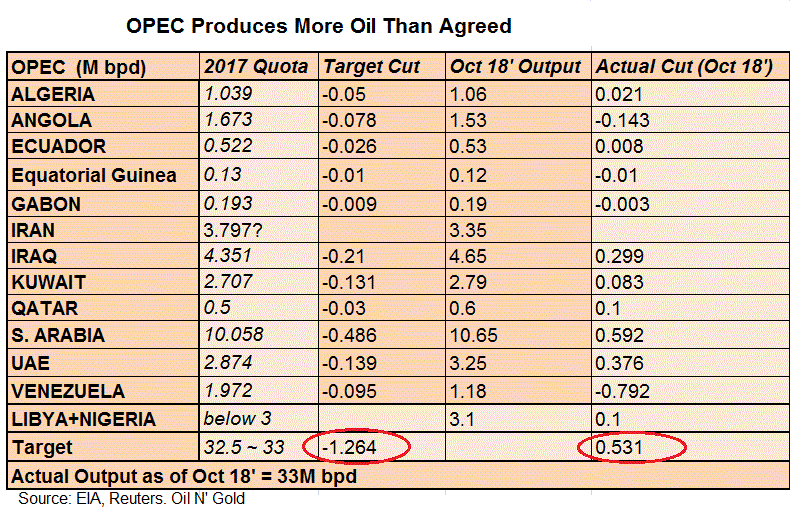
Saudi Arabia: Other members probably want to have a deal to reduce production so as to boost oil prices higher. As the big brother of OPEC and the world’s second largest oil producer (surpassed by the US in recent years), Saudi Arabia would lower its output so as to balance the market. The Kingdom has suggested the cartel should lower output by 1M bpd to balance the market. We doubt if it is willing to do this alone. The dilemma facing Saudi is more of political. Trump notoriously defends Saudi’s Crown Prince Mohammed bin Salman despite CIA’s conclusion that he personally ordered the killing of journalist Jamal Khashoggi. The Kingdom might find it obliged to entertain Trump’s request on a production increase to push oil prices lower.
The US has considered oil as an important national interest. Its obsession over oil has been developed since the oil crisis in 1970s. In the aftermath oil supply disruption during the 1973–1974 oil embargo, the US started the strategic petroleum reserve (SPR) and imposed exports ban, forbidding companies to exports oil with a license, in 1975. The ban was eventually lifted in December 2015 as the US has discovered a new way of oil production – shale oil. Shale oil production has facilitated the US to become world’s largest oil producers. It is also the real cause of the weakness in oil prices. The breakeven cost of shale oil production is much lower than that of traditional oil production. As such, US shale investment could ramp up rapidly as world oil price increases. Is such, the rise in oil prices would be capped due to higher supply. This explains the price spread between US WTI crude and Brent crude prices.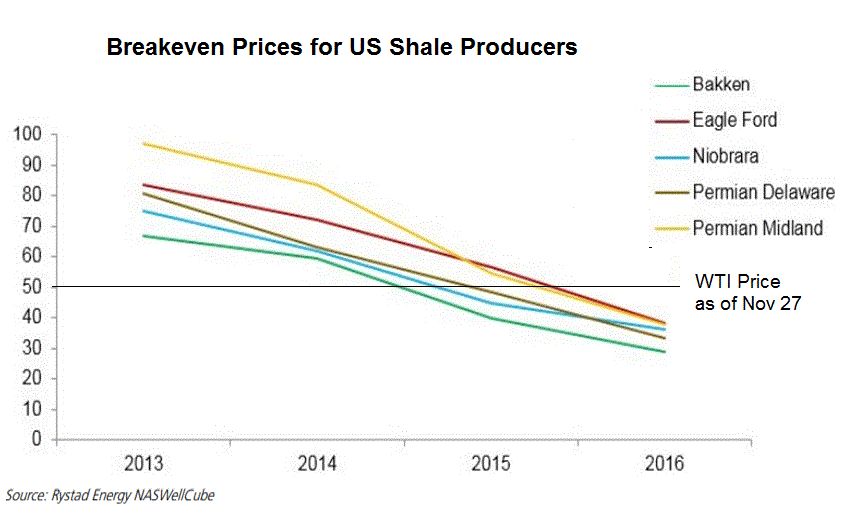
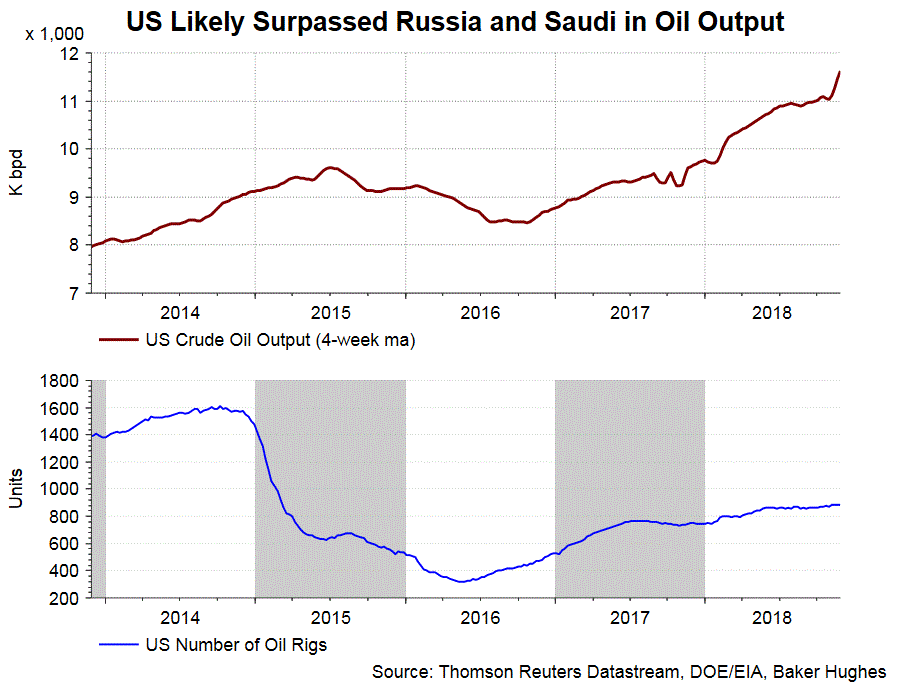
Russia has been ambivalent in the deal with OPEC. While signaling a lack of interest weeks ago in joining further output cut, the country’s oil minister has recently hinted that oil price of $70-80/bbl would be fine for the country. This has raised hopes that the leading producer in the non-OPEC arena would agree to lower production. However, we do not have much hope on Russia, due to its lack of compliance in previous deals. While Russia has agreed to produce by the quota of 11.25M bpd according to the OPEC+ agreement made in October 2016, IEA’s estimate suggests that its output has exceed this amount since September. We doubt Russia’s commitment even if anything is agreed upon in the upcoming meeting.
Our best expectation to the outcome of the December meeting is that OPEC+ would agree to produce according to the quotas predetermined in October 2016 for the half of 2019. Given the trend that most OPEC members are current producing more than the quota, there would be effective a production cut of about 1M bpd if the members adhere to quotas. Yet, in order to drive a more sustainable increase in oil prices, OPEC+ would need commit more, both in terms of magnitude and duration.
EUR/USD Declines To 1.2800
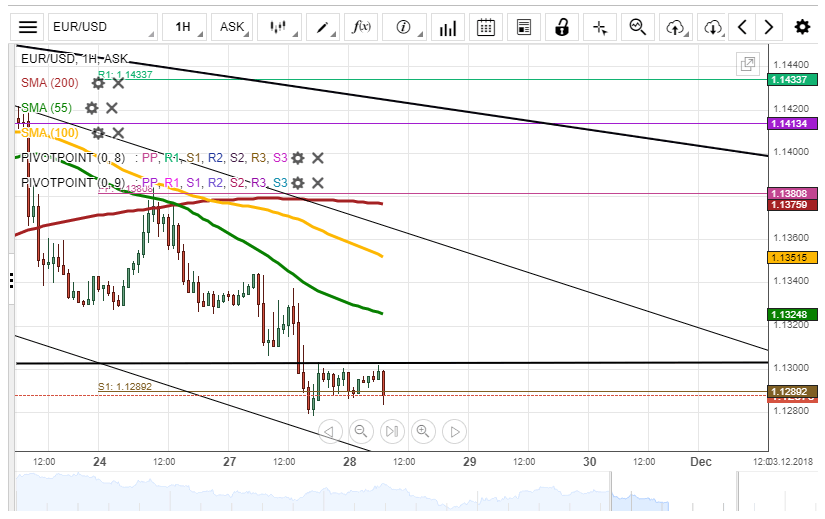
During Tuesday's trading session, the currency exchange pair passed through the support of the medium horizontal pattern line at 1.1301 to end the trading session at the 1.1285 mark. During Wednesday morning hours, the rate was trading between the weekly S1 and the medium horizontal pattern line at the 1.2978 mark.
In regards to the near-term future, most likely, the currency exchange rate will be resisted by the medium horizontal pattern line at 1.1301 mark to push the rate to trade below the weekly S1 near the 1.1240 level.
On the other side, today's US Prelim GDP and Crude Oil Inventories data releases may push the rate to break the medium horizontal pattern line to trade at 1.1340
UK Hammond: May’s Brexit deal delivers economic outcome very close to Bremain
The UK government is expected to publish its assessment of the impact of different Brexit outcomes today. BoE will also publish it's own assessments on interest rates implications.
According to a report by the Daily Telegraph, the government would show that with PM Theresa May's Brexit deal, the UK economy would be 1-2% smaller in 15 years time comparing to remaining in EU. In case of no-deal, the economy would be 7.6% smaller.
Separately, Chancellor of Exchequer Philip Hammond told BBC that "If the only consideration, the only consideration, was the economy, then the analysis shows clearly remaining in the European Union would be a better outcome for the economy, but not by much. But he also noted that "The prime minister's deal delivers an outcome that is very close to the economic benefits of remaining in."