

Sample Category Title
Canada’s Inflation Accelerated In October
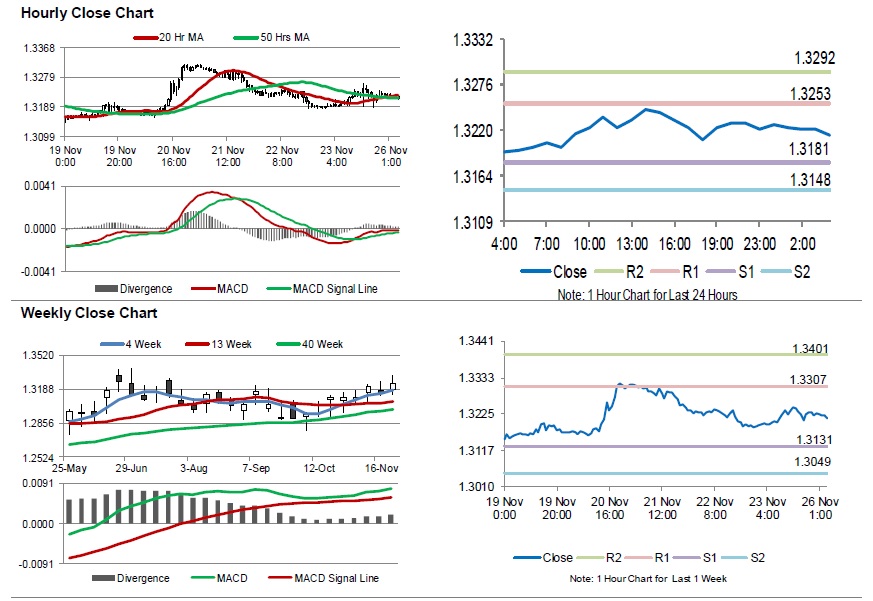
For the 24 hours to 23:00 GMT, the USD rose 0.32% against the CAD and closed at 1.3229 on Friday.
Macroeconomic data showed that Canada’s consumer price index (CPI) climbed to 2.4% on a yearly basis in October, higher than market expectations for an advance of 2.2%. In the previous month, the CPI had registered a rise to 2.2%. Furthermore, the nation’s retail sales unexpectedly advanced by 0.2% on a monthly basis in September, defying market expectations for a flat reading. In the preceding month, retail sales recorded a drop of 0.1%.
In the Asian session, at GMT0400, the pair is trading at 1.3214, with the USD trading 0.11% lower against the CAD from Friday’s close.
The pair is expected to find support at 1.3181, and a fall through could take it to the next support level of 1.3148. The pair is expected to find its first resistance at 1.3253, and a rise through could take it to the next resistance level of 1.3292.
Amid lack of economic releases in Canada today, traders would focus on global macroeconomic events for further direction.
The currency pair is showing convergence with its 20 Hr and 50 Hr moving averages.
Aussie Reverses Its Losses In The Asian Session
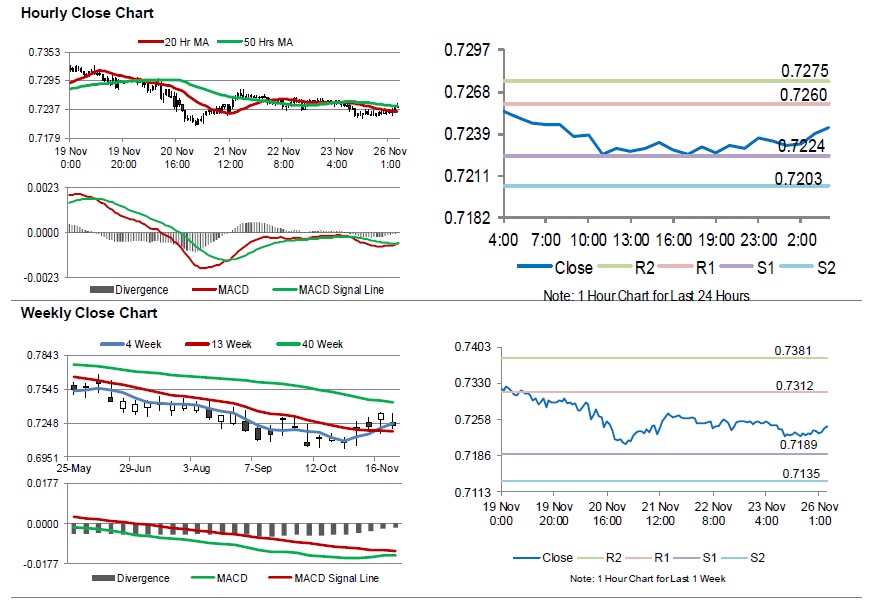
For the 24 hours to 23:00 GMT, the AUD declined 0.25% against the USD and closed at 0.7231 on Friday.
LME Copper prices declined 0.6% or $36.0/MT to $6210.0/MT. Aluminium prices declined 1.0% or $19.0/MT to $1922.0/MT.
In the Asian session, at GMT0400, the pair is trading at 0.7244, with the AUD trading 0.18% higher against the USD from Friday’s close.
The pair is expected to find support at 0.7224, and a fall through could take it to the next support level of 0.7203. The pair is expected to find its first resistance at 0.7260, and a rise through could take it to the next resistance level of 0.7275.
The currency pair is trading above its 20 Hr moving average and showing convergence with its 50 Hr moving average.
Gold: Yellow Metal Reverses Its Losses In The Morning Session
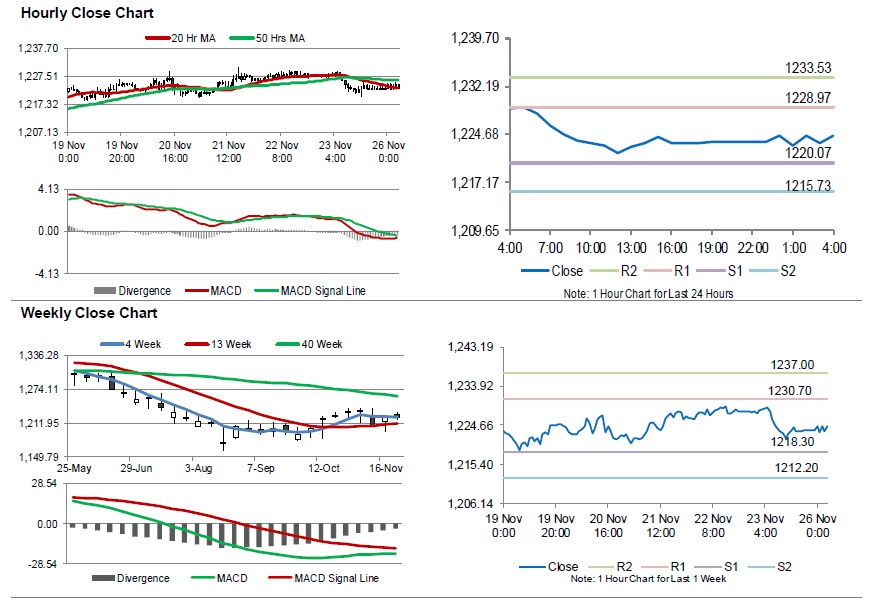
For the 24 hours to 23:00 GMT, Gold declined 0.35% against the USD and closed at USD1223.40 per ounce on Friday, amid strength in the US dollar.
In the Asian session, at GMT0400, the pair is trading at 1224.40, with gold trading 0.08% higher against the USD from Friday’s close.
The pair is expected to find support at 1220.07, and a fall through could take it to the next support level of 1215.73. The pair is expected to find its first resistance at 1228.97, and a rise through could take it to the next resistance level of 1233.53.
The yellow metal is showing convergence with its 20 Hr moving average and trading below its 50 Hr moving average.
Silver: White Metal Trading On A Stronger Footing This Morning
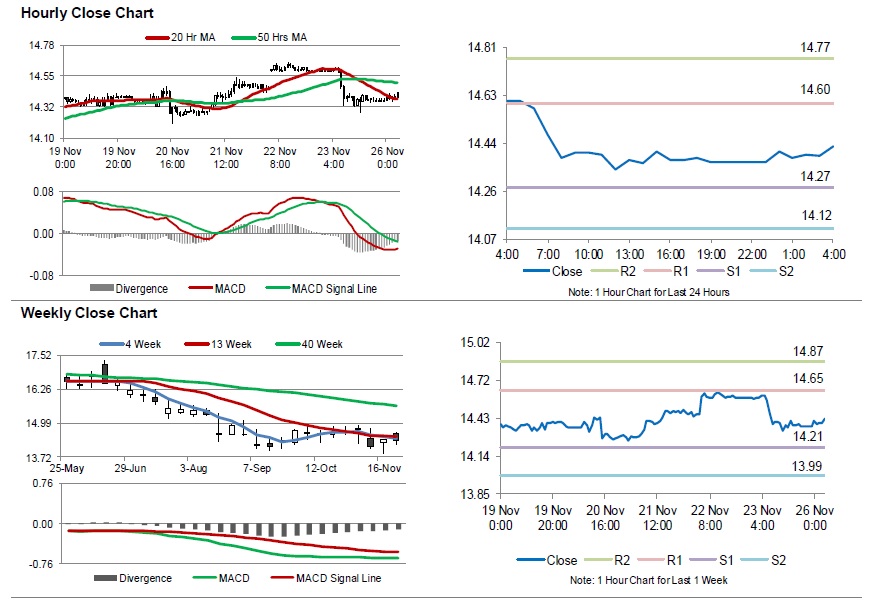
For the 24 hours to 23:00 GMT, Silver declined 1.51% against the USD and closed at USD14.37 per ounce on Friday, tracking losses in gold prices.
In the Asian session, at GMT0400, the pair is trading at 14.43, with silver trading 0.42% higher against the USD from Friday’s close.
The pair is expected to find support at 14.27, and a fall through could take it to the next support level of 14.12. The pair is expected to find its first resistance at 14.60, and a rise through could take it to the next resistance level of 14.77.
The white metal is showing convergence with its 20 Hr moving average and trading below its 50 Hr moving average.
Crude Oil: Oil Trading Higher In The Asian Session
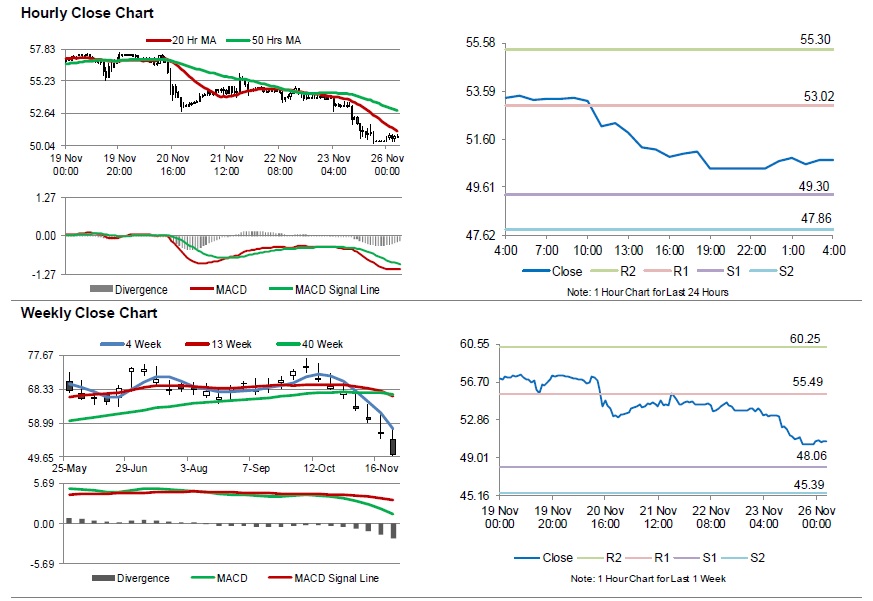
For the 24 hours to 23:00 GMT, Crude Oil declined 6.75% against the USD and closed at USD50.39 per barrel on Friday, amid ongoing worries about oversupply and global economic growth slowdown.
In the Asian session, at GMT0400, the pair is trading at 50.73, with oil trading 0.67% higher against the USD from Friday’s close.
The pair is expected to find support at 49.29, and a fall through could take it to the next support level of 47.86. The pair is expected to find its first resistance at 53.02, and a rise through could take it to the next resistance level of 55.30.
Crude oil is trading below its 20 Hr and 50 Hr moving averages.
USD/JPY Daily Outlook
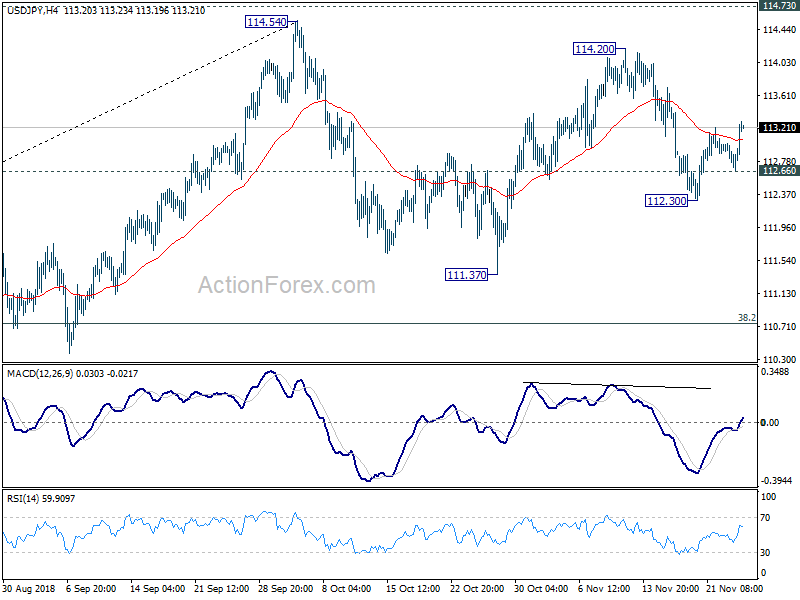
Daily Pivots: (S1) 112.75; (P) 112.88; (R1) 113.10; More..
USD/JPY's rebound and break of 113.21 minor resistance suggests that rise from 112.30 is resuming. Intraday bias is turned to he upside for 114.20/73 key resistance zone. Decisive break there will resume larger rally from 104.62. On the downside, break of 112.66 minor support will extend the fall from 114.20, likely towards 111.37 support. But after all, price actions from 114.54 are seen as a consolidation pattern. Hence, even in case of deep decline, should be contained by 38.2% retracement of 104.62 to 114.54 at 110.75 to bring rebound.
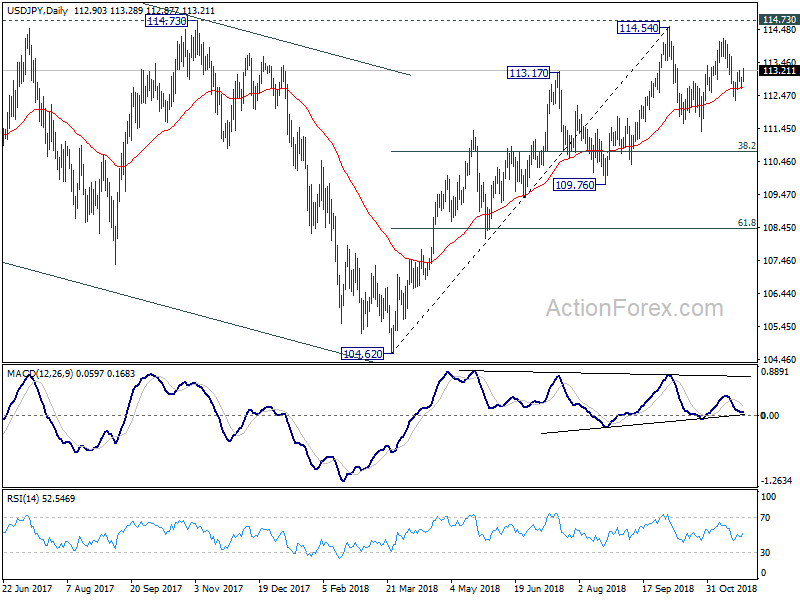
In the bigger picture, corrective fall from 118.65 (2016 high) should have completed with three waves down to 104.62. Decisive break of 114.73 resistance will likely resume whole rally from 98.97 (2016 low) to 100% projection of 98.97 to 118.65 from 104.62 at 124.30, which is reasonably close to 125.85 (2015 high). This will stay as the preferred case as long as 109.76 support holds. However, decisive break of 109.76 will dampen this bullish view and turns outlook mixed again.
Euro and Sterling Mixed after EU Approved Brexit Deal, Yen and Dollar Turn Softer
Australian Dollar leads commodity currencies mildly higher as week starts, following rebound in Asian markets. On the other hand, Yen, Dollar and Swiss Fran turn softer. Nevertheless, Chinese stock lack behind other hand Asian indices and struggle to gain. There's a risk of a turn in market sentiment later in the day. Sterling and Euro are mixed for the moment. EU's formal endorsement of the Brexit withdrawal agreement provides little support to both currencies.
In other markets, Japan Nikkei closed up 0.76% at 21812.00. Hong Kong HSI is up 1.56% at the time of writing. Singapore Strait Times is up 0.81%. But China Shanghai SSE is down -0.14%. WTI crude oil is back above 51 as it's trying to defend 50 psychological level. gold continues to consolidate around 1225.
Technically, USD/JPY's break of 113.21 minor resistance today suggests more upside for 114.20 resistance. EUR/USD recovers mildly, but fall from 1.1472 should still be in progress for 1.1215 support. However, Dollar's strength is not that apparent elsewhere. USD/CHF is held below 1.0006 resistance. GBP/USD is kept above 1.2764 minor support and AUD/USD above 0.7164 support. These are the levels to watch today. In addition, Euro will have to defend minor support at 0.8825 in EUR/GBP and 1.5643 in EUR/AUD too.
EU endorsed Brexit deal, Juncker urges UK Commons to ratify
On Sunday, EU27 leaders swiftly approve the Brexit deal after just taking less than an hour in the special EU summit in Brussels today. They endorsed both the Brexit withdrawal agreement, and the political declaration on future EU-UK relations. The European Council's full statement here
European Council President Donald Tusk said in the press conference that "Ahead of us is the difficult process of ratification as well as further negotiations. But regardless of how it will all end, one thing is certain: we will remain friends until the end of days, and one day longer."
European Commission President Jean-Claude Juncker said, "Sad day, no cause for celebrations. I salute unity of EU27 during the negotiations. We stood by Spain on Gibraltar, they have our solidarity. I'm proud of the work of our negotiating team. This is the only deal possible."
And, "This is the best deal possible. I invite those who have to ratify it in the U.K. House of Commons, to do so. This is the best deal for Britain. This is the best deal for Europe. It is the only deal possible."
UK PM May: Take the Brexit deal or go back to square one with more division and uncertainty
UK Prime Minister Theresa May is expected to warn lawmakers today that they either take her agreed Brexit deal with the EU, or crush out with no deal at all. According to the excerpts of her statement to the parliament today, May would say "this has been a long and complex negotiation. It has required give and take on both sides. That is the nature of a negotiation".
And she will add "I can say to the House with absolute certainty that there is not a better deal available". May would call the Commons to back the deal that allows UK to "move on". Or, "this House can choose to reject this deal and go back to square one ... It would open the door to more division and more uncertainty, with all the risks that will entail."
The last step is for the UK parliament to ratify the agreement. This remaining 1% is probably the most challenging task for the whole Brexit deal. The key date to remember now is January 21, 2019. There is a UK legal requirement that the government has to reach an agreement with the EU by then. If the parliament rejects the deal, the Government has until that day to put forward a new plan. The government is likely to use the brinkmanship strategy, threatening to leave the EU with no-deal on March 29, 2019, if the parliament rejects the current agreement.
More in Brexit Update – The Remaining 1%, The Most Challenging
Japan PMI manufacturing dropped to 51.8, underlying trend skewed to the downside
Japan PMI manufacturing dropped to 51.8 in November, down from 52.9 and missed expectation of 53.0. That's also a two-year low. Joe Hayes, Economist at IHS Markit, noted in the release that "October's six-month peak seems to have been just a transitory month-to-month rebound". And, "the underlying trend appears to be skewed to the downside.". "Indeed, the fall in new orders is a worrying development as easing global growth momentum coupled with a weak domestic backdrop could spell further demand woes for Q4."
Looking ahead - FOMC minutes a highlight of a busy week
Looking ahead, the calendar is relatively light at the beginning of the week. But it starts to be rather busy from Wednesday onwards. FOMC minutes will be a key to watch to gauge how worried Fed policy makers are on growth risks. PCE inflation is another key data to watch from the US. Other notable data include swiss GDP, Eurozone CPI, China PMIs, Canada GDP etc. Here are some highlights of the week:
- Monday: Japan PMI manufacturing; German Ifo business climate; UK BBA mortgage approvals
- Tuesday: New Zealand trade balance; Japan corporate services prices; UK CBI realized sales; US house price indices, consumer confidence
- Wednesday: Australia construction work done; Eurozone M3 money supply; German Gfk consumer climate; US GDP revision, trade balance, wholesale inventories, new home sales
- Thursday: Japan retail sales; New Zealand ANZ business confidence; Australia private capital expenditure; Swiss GDP; German CPI, unemployment; UK mortgage approvals, M4 money supply; Canada current account; US personal income and spending, jobless claims, pending home sales; FOMC minutes
- Friday: New Zealand building permits; Tokyo CPI core, Japan unemployment rate, industrial production, consumer confidence, housing starts; China PMIs; UK Gfk consumer confidence; German import prices, retail sales; Swiss KOF leading indicator; Eurozone CPI, unemployment rate; Canada GDP, RMPI, IPPI; US Chicago PMI
USD/JPY Daily Outlook
Daily Pivots: (S1) 112.75; (P) 112.88; (R1) 113.10; More..
USD/JPY's rebound and break of 113.21 minor resistance suggests that rise from 112.30 is resuming. Intraday bias is turned to he upside for 114.20/73 key resistance zone. Decisive break there will resume larger rally from 104.62. On the downside, break of 112.66 minor support will extend the fall from 114.20, likely towards 111.37 support. But after all, price actions from 114.54 are seen as a consolidation pattern. Hence, even in case of deep decline, should be contained by 38.2% retracement of 104.62 to 114.54 at 110.75 to bring rebound.
In the bigger picture, corrective fall from 118.65 (2016 high) should have completed with three waves down to 104.62. Decisive break of 114.73 resistance will likely resume whole rally from 98.97 (2016 low) to 100% projection of 98.97 to 118.65 from 104.62 at 124.30, which is reasonably close to 125.85 (2015 high). This will stay as the preferred case as long as 109.76 support holds. However, decisive break of 109.76 will dampen this bullish view and turns outlook mixed again.
Economic Indicators Update
| GMT | Ccy | Events | Actual | Forecast | Previous | Revised |
|---|---|---|---|---|---|---|
| 21:45 | NZD | Retail Sales Ex Inflation Q/Q Q3 | 0.00% | 1.00% | 1.10% | |
| 0:30 | JPY | PMI Manufacturing Nov P | 51.8 | 53 | 52.9 | |
| 9:00 | EUR | German IFO Business Climate Nov | 102.3 | 102.8 | ||
| 9:00 | EUR | German IFO Expectations Nov | 99.3 | 99.8 | ||
| 9:00 | EUR | German IFO Current Assessment Nov | 105.6 | 105.9 | ||
| 9:30 | GBP | BBA Mortgage Approvals Oct | 38.9K | 38.5K |
Brexit Update – The Remaining 1%, The Most Challenging
UK PM Theresa May demonstrates to us that her way to end dispute is compromise (to counterparty) and threat (to own people). After months of negotiation, the Withdrawal Agreement for Brexit was approval unanimously by EU member states on Sunday. The final draft has not addressed the concerns of Brexiteers at home. Instead, most of the terms are according to the wills of the EU.
After clearing so many hurdles, here comes the thorniest part – ratification by the UK Parliament. As we mentioned in previous reports, this remaining 1% is probably the most challenging task for the whole Brexit deal.
Two weeks ago, approval of the withdrawal agreement text by the UK cabinet triggered two resignations, including Brexit Secretary Dominic Raab, of key officials. This suggest that the much of the content of the deal is controversial within the UK. While hardcore Brexiteer MP Jacob Rees-Mogg failed to force a confidence vote in May, it does not imply that those who refuse to oust May would support the deal.
By now, May has not yet secured the majority of support for the deal. The time for the UK to formally leave the EU is running short. PM May would likely focus on highlighting the negatives of a no-deal Brexit, in order to get the Parliament approve the deal.
Final Draft of Withdrawal Agreement
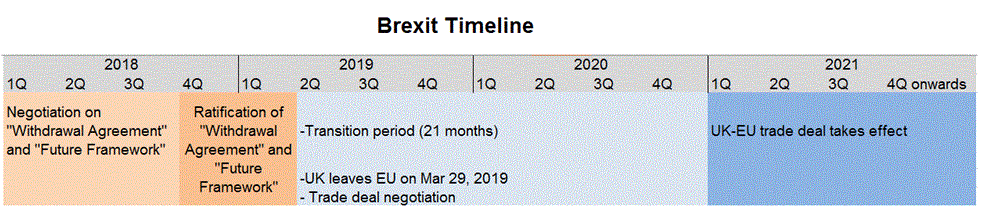
After releasing the 585-page draft Withdrawal Agreement on November 14, UK and EU have followed up with a 26-page declaration on future relations. The final draft contains little change from the initial draft, despite opposition by many UK PMs.
In short, the documents cover three parts – divorce bill, rights of citizens, and Irish border. It is estimated that the UK would have to pay an estimated 39B pound to the EU for the divorce. Rights of citizens are largely the same as the initial draft released in March. For instance, UK citizens in the EU, and EU citizens in the UK, will retain their residency and social security rights after Brexit. Citizens living in another EU member state (UK included) during the transition period will be allowed to stay in that country after the transition. Meanwhile, anyone that stays in the same EU member state country for 5 years will be allowed to apply for permanent residence.
On Irish border issue, the backstop solution means that a single customs territory between UK and EU would be triggered, if no long-term trade deal has been agreed by end-2020 that avoids a hard border between Northern Ireland and the Republic of Ireland, and if there is no extension to the transition period. As long as the backstop is in operation, the UK would enjoy "level playing field conditions", meaning it cannot gain a competitive advantage while remaining in the same customs territory. Moreover, the UK would not be allowed to leave the backstop unilaterally.
Spain’s Last-Minute Threat
Shortly before EU member states put the deal into vote, Spain threatened to veto the deal if there were no clarifications over Gibraltar’s situation. Again, the UK compromised on this issue, giving Spain a say over Gibraltar’s future on future trade and security issues. The UK agreed that Gibraltar would not necessarily be covered by a future trade deal with the EU. Spain has received much criticism due to this last-minutes threat. Yet, UK’s compromise on such “outrageous” behavior exemplified its loss of bargaining power over the negotiations.
UK Parliamentary Vote
The last step is for the UK parliament to ratify the agreement. As we mentioned in previous reports, this remaining 1% is probably the most challenging task for the whole Brexit deal. The key date to remember now is January 21, 2019. There is a UK legal requirement that the government has to reach an agreement with the EU by then. If the parliament rejects the deal, the Government has until that day to put forward a new plan. The government is likely to use the brinkmanship strategy, threatening to leave the EU with no-deal on March 29, 2019, if the parliament rejects the current agreement.
UK PM May: Take the Brexit deal or go back to square one with more division and uncertainty
UK Prime Minister Theresa May is expected to warn lawmakers today that they either take her agreed Brexit deal with the EU, or crush out with no deal at all. According to the excerpts of her statement to the parliament today, May would say "this has been a long and complex negotiation. It has required give and take on both sides. That is the nature of a negotiation".
And she will add "I can say to the House with absolute certainty that there is not a better deal available". May would call the Commons to back the deal that allows UK to "move on". Or, "this House can choose to reject this deal and go back to square one ... It would open the door to more division and more uncertainty, with all the risks that will entail."
Japan PMI manufacturing dropped to 51.8, underlying trend skewed to the downside
Japan PMI manufacturing dropped to 51.8 in November, down from 52.9 and missed expectation of 53.0. That's also a two-year low.
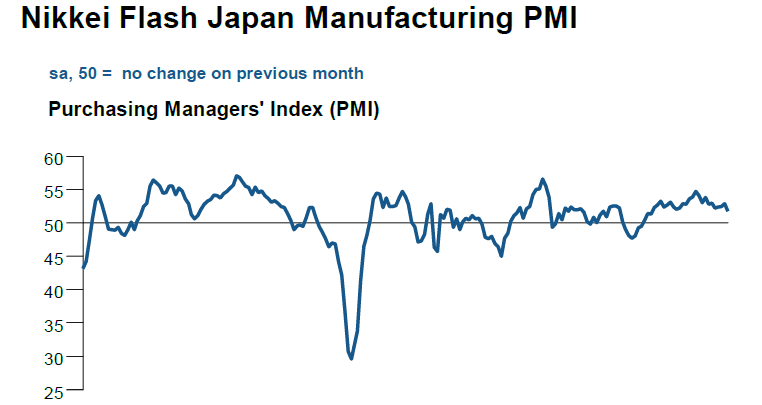
Commenting on the Japanese Manufacturing PMI survey data, Joe Hayes, Economist at IHS Markit, which compiles the survey, said:
"October's six-month peak seems to have been just a transitory month-to-month rebound following September's weather-hit dip. The November PMI dropped to a two-year low as the rate of output growth weakened and new orders for goods declined for the first time since September 2016.
"The underlying trend appears to be skewed to the downside. Indeed, the fall in new orders is a worrying development as easing global growth momentum coupled with a weak domestic backdrop could spell further demand woes for Q4. In fact, survey data suggests that manufacturers have already begun to pare back expectations, as confidence fell for a sixth consecutive month."