

Sample Category Title
Fed’s September Minutes Explained the Rationale of Removing Forward Guidance, Showed More Concerns about USD Strength
The FOMC minutes for the September meeting contained little news regarding the rationale of the 25 bps rate hike last month, as well as the future path of monetary policy normalization. Yet, there are some points worth nothing. First, the minutes explain why the “accommodative” guidance was removed. Second, the Fed appeared more concerned about USD’s strength than previously anticipated. The “new” information conveyed in the minutes does not change the path of Fed’s rate hike schedule, i.e. one more rate hike by December, followed by three more in 2019.
As noted in the minutes, the members discussed a number of points regarding removal of the reference that “the stance of monetary policy remains accommodative”. For instance, they believed that, while characterizing the policy stance as “accommodative” had provided “useful forward guidance in the early stages” of the policy normalization, this was “no longer providing meaningful information” as the level of the neutral policy rate is uncertain. They believed it is appropriate to remove the characterization of the policy stance before” the target range for the federal funds rate moved closer to the range of estimates of the neutral policy rate”.
Meanwhile, the members also judged that “waiting until the target range for the Fed funds rate had been increased further to remove the characterization of the policy stance as "accommodative" could convey a false sense of precision in light of the considerable uncertainty surrounding all estimates of the neutral Fed funds rate”.
Regarding recent strength of US dollar, the Fed noted the downside risks driven by the “the divergence between domestic and foreign economic growth prospects and monetary policies”. Moreover, “a number of participants noted that financial conditions remained accommodative: The rise in interest rates and appreciation of the dollar over the inter-meeting period had been offset by increases in equity prices, and broader measures continued to point to accommodative financial conditions.". There were other members citing “the waning of fiscal stimulus, less accommodative monetary policy, or anticipated appreciation of the dollar as factors contributing to their forecasts for a moderation of real GDP growth over the course of the projection period”.
Overall, the minutes affirmed that removing "accommodative" language in the forward guidance should not be interpreted as a signal of a change in expectations for future rates. the move is rather a sign that forward guidance is losing its function in setting expectations. The Fed reiterated that the monetary policy stance should remain gradual
USD/CNY hits highest since 2016, Shanghai SSE heading to 2500
Let's have a look at Yuan and Chinese stocks after US Treasury refrained from naming China a currency manipulator.
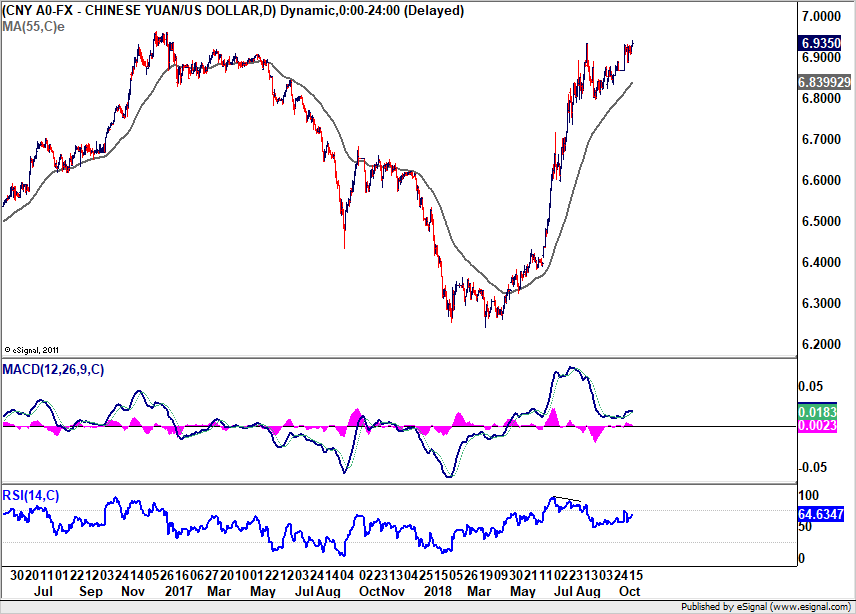
PBoC set the USD/CNY (onshore Yuan) rate at 6.9275 today, versus yesterday's 6.9103. USD/CNY then edged further higher to 6.9413 and hit the highest level since December 2016.
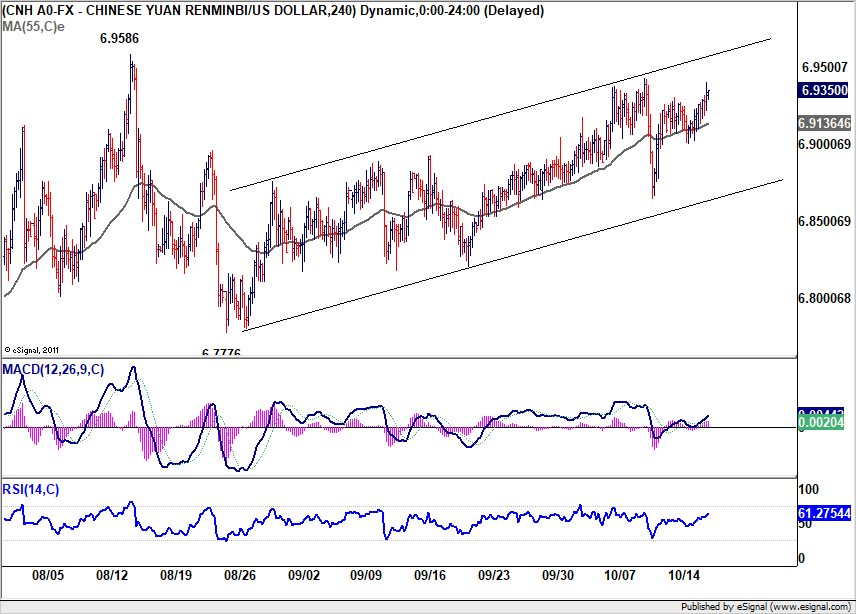
USD/CNH (offshore Yuan) also edged higher to 6.9403 today. But for now, it's limited below recent key resistance at 6.9586.
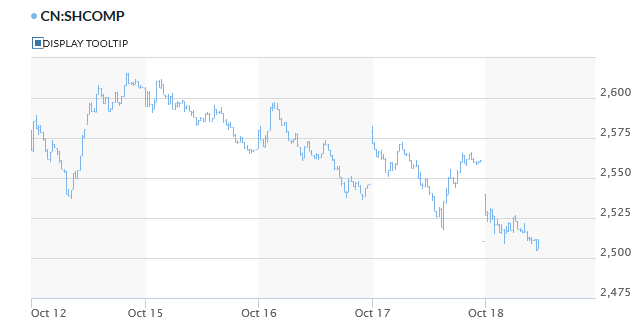
The Shanghai SSE suffers another day of selloff and reaches as low as 2504.63 so far. 2500 handle looks rather vulnerable.
Australia NAB business confidence dropped to 3, inflationary pressures meek
Australia NAB business confidence dropped to 3 in Q3, down from Q2's 7. Current business condition dropped to 13, down from 15. NAB noted that "though conditions remain well above average; confidence is now below average". Meanwhile, "surveyed price and wage variables suggest at present inflationary pressures remain weak."
On RBA monetary policy, NAB noted that markets are pricing in around 90% chance of a 25bps rate hike in the next 12-months. Pricing increased from 70% back in Q2. NAB's own view is that "RBA will likely begin a gradual series of rate rises in mid-to-late 2019 but that this is highly data dependent." NAB saw "inflationary pressures best described as meek at present."
On exchange rate, NAB revised down its own forecasts on AUD/USD to "closer to US$0.70" as "global trade ructions continue to weigh."
Australia unemployment dropped to 5%, lowest since 2012, as labor force contracted
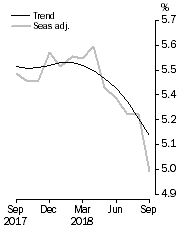
Australia unemployment dropped sharply to 5.0% in September, down from prior 5.3% and beat expectation of 5.3%. That's the lowest level since April 2012.
However, it should also be noted that participation rate also dropped -0.2% to 65.4%. So, the drop in unemployment rate was more a reflection of decline in the size of labor force.
Employment grew 5.6k versus expectation of 15.2k. Full-time jobs rose 20.3k to 8.65m. But part time jobs dropped -14.7k to 3.98m.
No decisive progress on Brexit negotiations for another EU summit in November
UK Prime Minister Theresa May spent 15 minutes before the EU summit dinner to persuade other leaders on her Brexit plan. But she ended without any progress to break the impasse. European Parliament Antonio Tajani noted the "tone was more relaxed than in Salzburg, undoubtedly", referring to the last summit. But he also added " I did not perceive anything substantially new in terms of content".
More importantly, EU leaders decided that there was no "decisive progress" for calling an unscheduled summit in November. Instead, they're now targeting to close the deal in December. Though, one EU official was quoted saying "everyone wants to keep the volume low" even though an November summit is very unlikely.
GBP/JPY Could Extend Slides Below 147.00
Key Highlights
- The British Pound failed to break the 148.40 resistance and declined against the Japanese Yen.
- There is a major bearish trend line in place with resistance at 148.30 on the 4-hours chart of GBP/JPY.
- Japan’s Merchandise Trade Balance in Sep 2018 posted a surplus of ¥139.6B, better than the ¥-50.0B forecast.
- Today, the UK Retail Sales figure for Sep 2018 will be released, which is forecasted to increase 3.3% (YoY).
GBPJPY Technical Analysis
The British Pound struggled a lot to hold gains above the 149.00 level against the Japanese Yen. As a result, the GBP/JPY pair declined recently and broke the 148.00 support area.
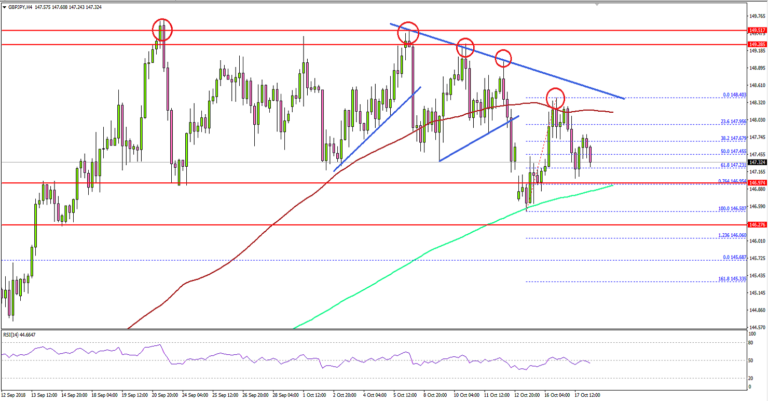
Looking at the 4-hours chart, the recent high was formed at 148.40 before the pair started a downside move. It seems like the pair struggled to clear the 100 simple moving average (red, 4-hours), which is currently at 148.30.
The pair declined below the 50% Fib retracement level of the last wave from the 146.50 low to 148.40 high. If sellers gain momentum below the 147.00 support area, there are chances of an extended slide towards the 146.50 low.
Below the 146.50 low, the pair could test the 1.236 Fib extension level of the last wave from the 146.50 low to 148.40 high at 146.06.
On the upside, the 100 simple moving average (red, 4-hours) at 148.30 is a strong resistance. Moreover, there is also a major bearish trend line in place with resistance at 148.30.
As long as the pair is trading below the 100 SMA and the trend line, it remains at a risk of a slide below the 146.50 low.
Looking at major pairs, EUR/USD retreated from the 1.1620 resistance area and GBP/USD failed to hold gains above the 1.3200 support, suggesting bearish signs in the short term.
Economic Releases to Watch Today
- UK Retail Sales for Sep 2018 (YoY) – Forecast +3.3%, versus +3.3% previous.
- UK Retail Sales for Sep 2018 (MoM) – Forecast -0.8%, versus +0.3% previous.
- UK Retail Sales ex-fuel for Sep 2018 (YoY) – Forecast +3.6% versus +3.5% previous.
- US Initial Jobless Claims – Forecast 206K, versus 214K previous.
Crude Oil Inventory Surprisingly Gained Despite Falling Production
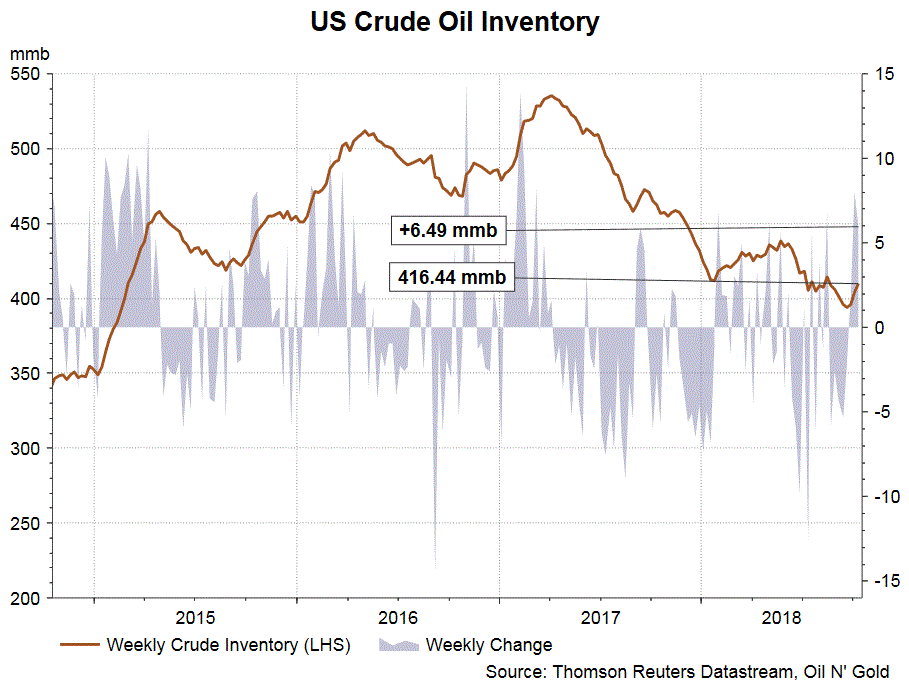
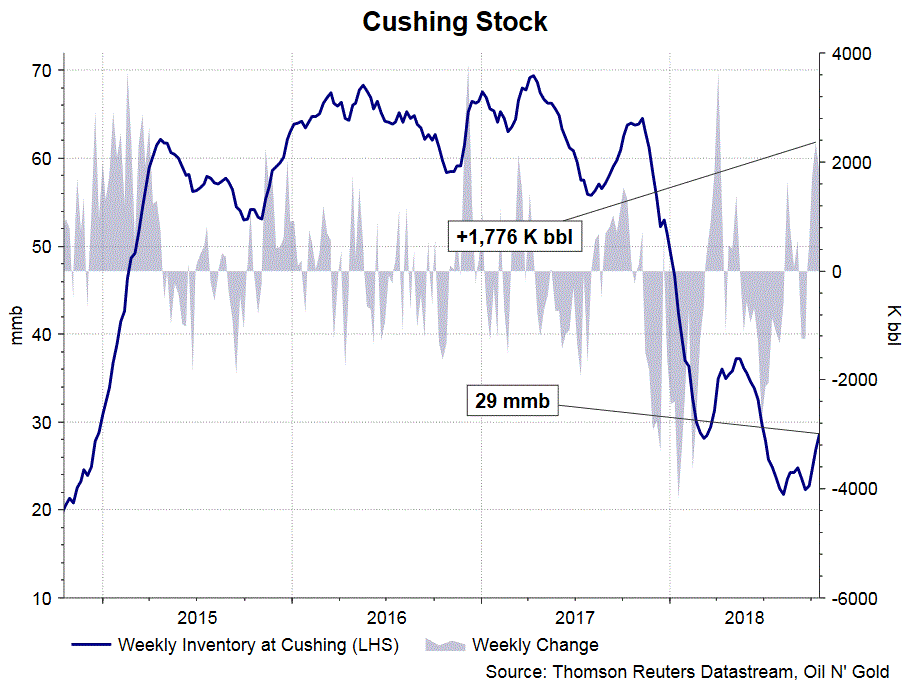
The report from the US Energy Information Administration (EIA) shows that total crude oil and petroleum products stocks gained +2.99 mmb to 1262.98 mmb in the week ended October 12. Crude oil inventory rallied +6.49 mmb (consensus: +2.17 mmb) to 416.44 mmb. Inventories increased in ALL of of 5 PADDs. Meanwhile, Cushing stock added +1.78 mmb to 28.63 mmb. Utilization rate steadied at 88.8% and crude production dropped -2.68M bpd to 10.9M bpd for the week.
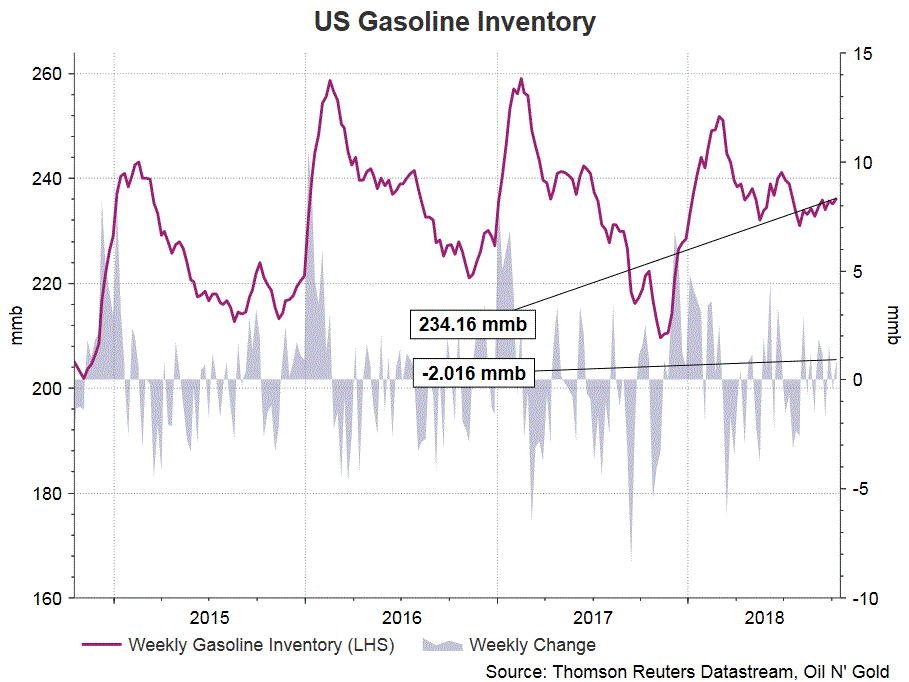
 Concerning refined oil product inventories, gasoline inventory dropped -0.85 mmb to 234.16 mmb as demand gained +1.15% to 9.18M bpd. The market had anticipated a -1.07 decrease in stockpile. Production jumped +7.4% to 10.43M bpd while imports declined -43.15% to 0.39M bpd during the week. Distillate inventory slipped-0.62 mmb to 132.64 mmb although demand sank -18.06% to 3.79M bpd. The market had anticipated a -1.28 mmb drop in inventory. Production fell -4.24% to 4.82M bpd while imports declined -11.77% to 0.17M bpd during the week.
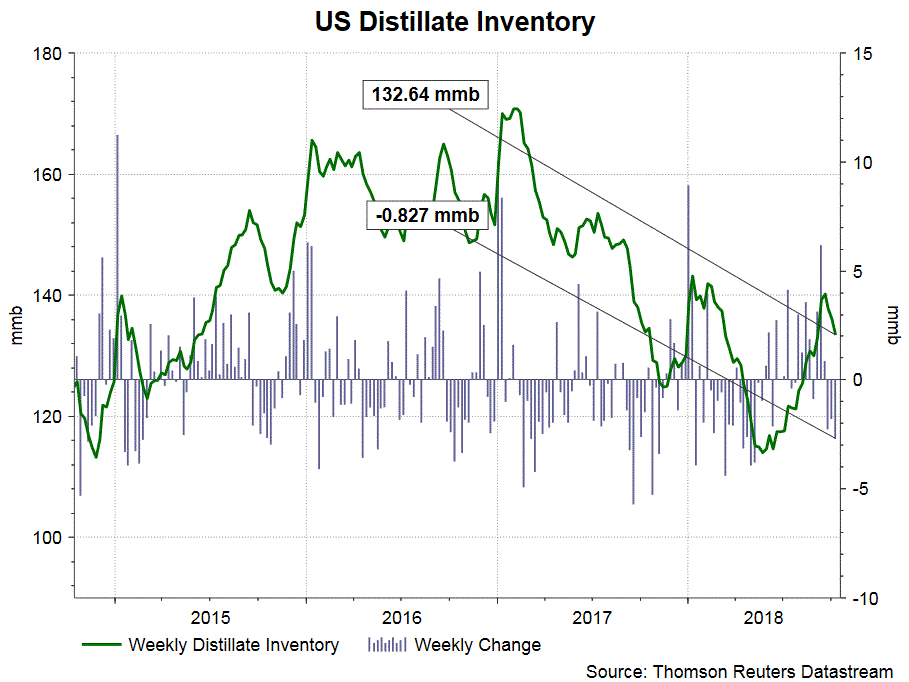
Released after market close on Wednesday, the industry- sponsored API estimated that crude oil inventory plunged -2.13 mmb during the week. For refined oil products, gasoline stockpile slumped -3.4 mmb while distillate was down -0.25 mmb.
BoJ Kuroda: consumer inflation moving around 1 percent
BoJ Governor Haruhiko Kuroda offered a slightly more upbeat view on inflation today, in a quarterly meeting with regional branch managers. He said that consumer inflation was "moving around 1 percent". That compared to the wordings of moving around 0.5 to 1 percent three months ago. On the economy, Kuroda maintained that it's "expected to continue expanding moderately".
On monetary policy, Kuroda reiterated that "the BOJ will make necessary policy adjustments to sustain the economy's momentum to achieve the price target ... while looking at risks that warrant attention."
US Treasury not naming China as currency manipulator despite lack of transparency
US Treasury refrained from naming China a currency manipulator in the latest "Macroeconomic and Foreign Exchange Policies of Major Trading Partners of the United States" report.
In a statement, Treasury Secretary Seven Mnuchin said the department is "working vigorously to ensure that our trading partners dismantle unfair barriers that stand in the way of free, fair, and reciprocal trade." And he singled out China as of "particular concern" due to the "lack of currency transparency and the recent weakness in its currency". Mnuchin added that they will continue to "monitor and review" China's currency practices.
The statement also noted that despite the lack of transparency, "Treasury estimates that direct intervention by the People's Bank of China this year has been limited." Though, it also warned that "recent depreciation of the renminbi will likely exacerbate China's large bilateral trade surplus with the United States". It placed " significant importance" on ensuring China doesn't engage in "competitive devaluation".
A total of six major trading partners are put in the monitoring list, including China, Germany, India, Japan, Korea, and Switzerland.
Asia Market Update: A Busy Session Is Unfolding
The Yuan
USD bullish sentiment post FOMC minutes outweighs Treasury to report the CNH playbook remains intact and should not provide any is a significant short-term relief for local EM currencies. High US bond yields and a rebounding US dollar continue to pose substantial headwinds.
The Yuan fix came in at 6.9275 vs 6.9235 but +30 higher than market estimates. Given the focus on all things Yuan, it has triggered a call to action for Yuan bears who have promptly paid the USDCNH market above 6.935 level during the opening salvo. The higher fix combined with no bounce in China risk sentiment post US Treasury FX Report does provide some ammunition for CNH traders to push the USDCNH envelope higher. Expect the near-term battle line to get drawn between the critical USDCNH 6.94-95 level.
Regional equities market
Taking their lead from an unsettled close in US equity markets, local markets are trading with a negative bias as risk aversion continues reverberating across ASEAN bourses. President gone postal, escalating US-China tensions and a stronger USD will pose considerable headwinds to local equity markets. Unlike yesterday rally where participation was relatively light, early volumes are looking robust suggesting investors continue to probe markets downside where more significant tail risk remains.
Australia jobs report
AUD jobs data far from a game changer +5K offset by fall in participation but UE rate still decent so confident on the margin. But given the volatile nature of this report, the data will carry a limited impact on RBA policy. With US-China tension staying on the boil AUDUSD markets remain better offered than bid.
Malaysian Ringgit and Oil prices
Oil prices are leaking lower; the Malaysian Ringgit should underperform at the margin today or at minimum trade with a defensive posture. We do not see any discernable bounce in local risk sentiment as the markets prepare for capital gains and consumption taxes.
Bank of Korea
The Bank of Korea leaves 7-day Repo rate unchanged at 1.50, but we wait in vain to see if this is indeed a hawkish hold. But USDKRW has moved back above the 1130 level as fast money speculators pile in after the BoK decision to hold rates. We wait to see if the central bank will provide an evident signal for a hike in the next 1-2 months. The press conference begins at 10:45 SG time.
Gold
Gold continues to find a bid in early trade as local traders are a much better seller or risk. But with the dollar breaking below the critical 1.1500 EURUSD level near-term bullish sentiment will be tempered but given equity weakness gold is looking increasingly attractive as a defensive hedge.