Sample Category Title
Into US session: Dollar weakest, Aussie strongest. Singapore STI flexes muscles
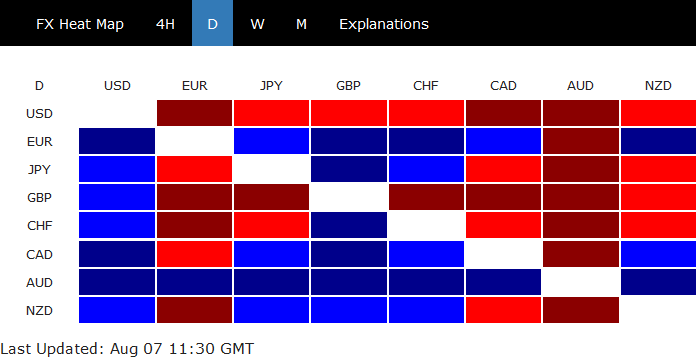
Entering into US session, Dollar is trading as the weakest one today, followed by Sterling and then Swiss Franc. On the other hand, despite the rather boring RBA rate decision and statement, Australian Dollar rides on easing risk aversion. It's trading as the strongest one for today. Euro shrugs off another batch of weak German data and follows as the second strongest.
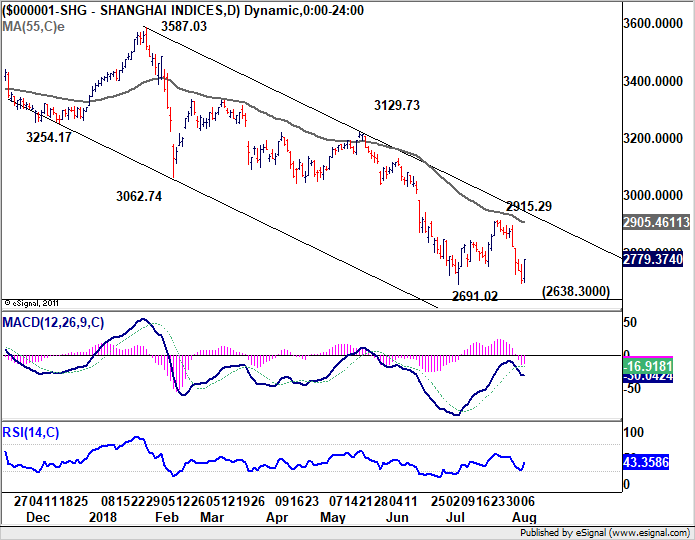
China Shanghai SSE composite ended up 2.74% at 2779.37. The close above yesterday's high suggests that a near term bottom could be in place at 2692.32, just ahead of July low at 2691.02. Some consolidations would be seen but overall outlook stays bearish. It's staying well falling 55 day EMA and inside medium term falling channel. An eventual break of 2016 low at 2638.30 is inevitable, just a matter of time. And selloff could accelerate quickly in that case if there is no government intervention.
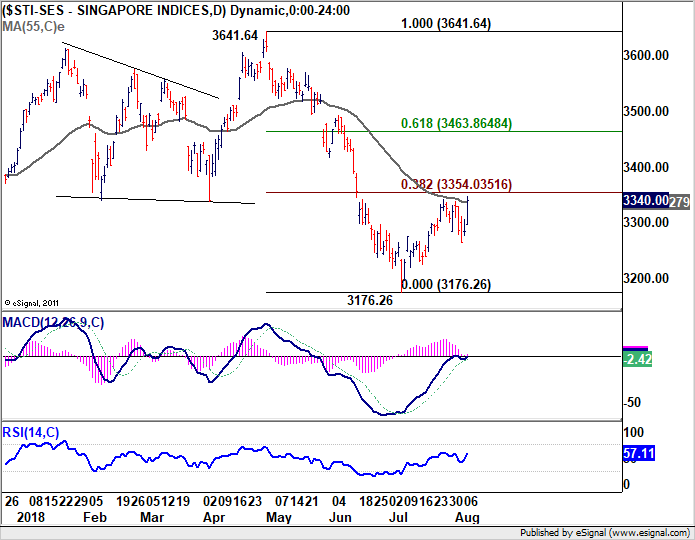
On the other hand, the resilience of the Singapore Strait Times STI is far more impressive. The breach of July high at 3341.41suggests that rebound from 3176.26 is resuming. We'd expect a break of 38.2% retracement of 3641.64 to 3176.26 at 3354.03 soon, should Asian market firms up. And STI could then have a go at 61.8% retracement at 3463.86.
Stocks Rebound On Solid U.S Earnings, Gold Gains Slightly
Global equity bulls were lingering in the vicinity during Tuesday's trading session as investors diverted some attention from trade war concerns to focus on strong U.S corporate earnings.
Asian stock markets have ventured higher following the robust earnings-led gains on Wall Street overnight. Although the positive domino effect from Asia is likely to support European equities and trickle back down to Wall Street later this afternoon, upside gains may be limited this week. With escalating U.S-China trade tensions eroding investor confidence and renewed U.S sanctions on Iran compounding to the uncertainty, market sentiment is likely to remain cautious moving forward.
Dollar bulls take a breather, but remain in control
The Dollar has slipped against a basket of currencies today as investors engaged in a bout of profit taking after prices kissed the 95.50 level during the previous trading session.
Dollar strength is likely to remain a dominant market theme as escalating U.S-China trade tensions prompt investors to seek protection in the Dollar, which is now seen as a safe-haven asset. Another major theme that continues to stimulate buying sentiment towards the Greenback is the heightened speculation over higher U.S interest rates this year.
Regarding the technical picture, the Dollar Index remains bullish on the daily charts. Bulls need to conquer the 95.50 resistance level to open a clear path towards 96.10 and 96.50, respectively. Although a breakdown below 95.00 could trigger a decline towards 94.80, bulls remain in firm control above the 94.18 higher low.
Sterling turns to Dollar for support
Investors should be under no illusion that the Pound's appreciation today has to do with a change of sentiment towards the currency.
With fears over the possibility of a hard Brexit leaving investors extremely wary of holding the Pound, the currency's outlook remains tilted to the downside. Although a vulnerable Dollar has offered Sterling bulls a false sense of security today, investors may simply exploit the rebound to drive prices lower.
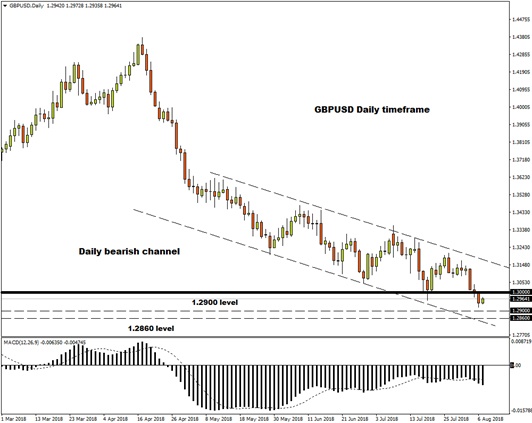
The technical picture illustrates that the GBPUSD remains firmly bearish on the daily charts. Bears remain in firm control below the 1.3000 psychological level with 1.2900 and 1.2860 acting as important checkpoints for bears if the downside momentum holds.
Commodity spotlight – Gold
Gold was offered support in the form of a weaker Dollar during Tuesday's trading session with prices trading around $1215 as of writing.
While the precious metal could struggle higher in the near term if the Dollar continues to weaken, the medium-to-longer term outlook for Gold remains bearish. It is becoming quite clear that the Dollar is starting to outshine Gold as a safe-haven asset while expectations of higher U.S interest rates have translated to further pain for the zero-yielding metal. With the bearish fundamentals behind the yellow metal's depreciation well-aligned with the technical, further downside is certainly on the cards.
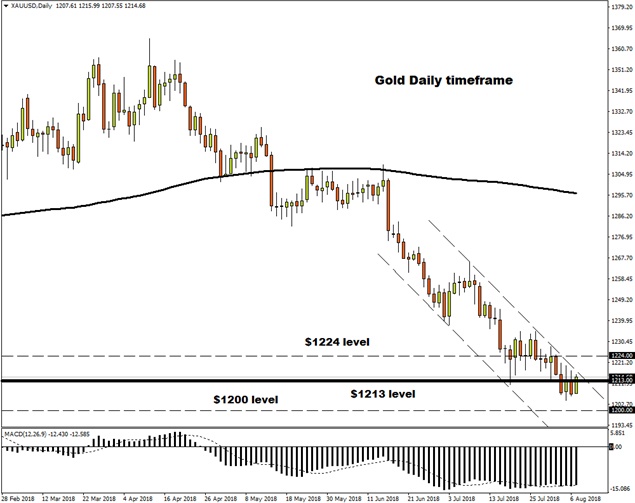
Focusing on the technical perspective, Gold continues to fulfil the prerequisites of a bearish trend on the daily charts as there have been consistently lower lows and lower highs. Sustained weakness below $1213 could invite a decline towards $1200. Alternatively, a solid breakout and daily close above $1213 may trigger a rebound towards the $1224 lower high.
West Texas Intermediate Futures Regain Some Ground Above SMAs
WTI crude oil futures for September delivery have finally reversed to the upside after the rebound on the long-term ascending trend line. The price also surpassed the 20- and 40-simple moving averages (SMAs) in the 4-hour chart, suggesting an extension of the bullish momentum.
From the technical point of view, the RSI indicator is pointing up in the positive territory, while the MACD oscillator jumped above its trigger line but remains near its zero line.
In case of a further upward attempt, the price would likely meet resistance at the 69.88 barrier before being able to challenge the 70.40 high again. A break above this zone would drive oil until the 71.10 resistance, taken from the bottom on July 9.
On the flip side, if the price slips below the moving averages it would re-test the uptrend line, currently near 67.50. A downward penetration of this line would increase downside pressures and the price could touch the 66.90 support level, where it bottomed on August 2.
To sum up, having a look at the long-term timeframe, crude oil has been developing within a rising movement during the last year.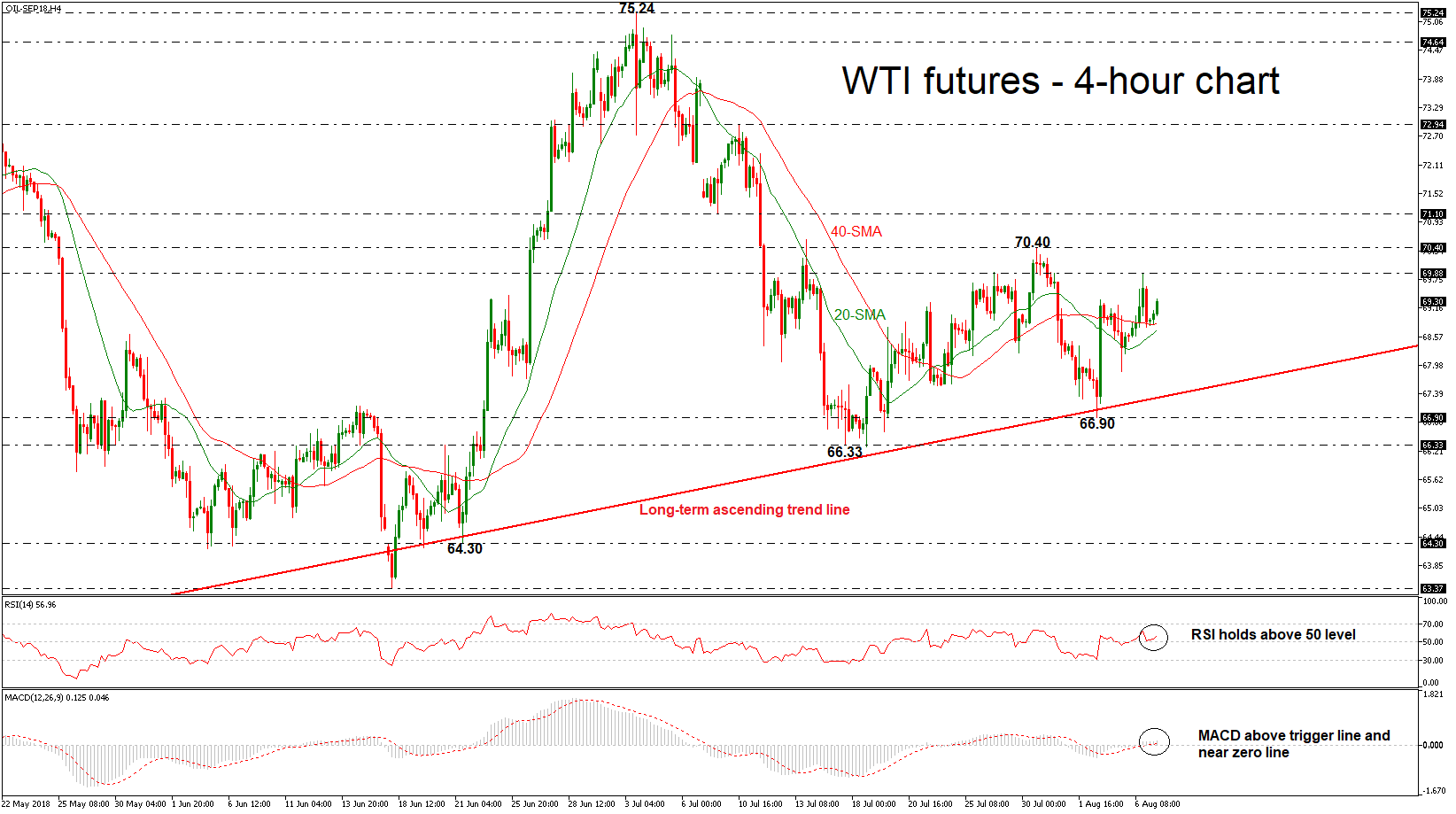
Dollar Rally Takes A Time Out
Tuesday August 7: Five things the markets are talking about
Most global equities found traction overnight as earnings season continues, helping support investor sentiment against a backdrop of trade worries and geopolitical concerns.
The trend for a rising U.S dollar is taking a pause, with the dollar edging lower against G10 currency pairs. A lack of major economic data releases and a stabilizing Chinese yuan suggest a reprieve for risk assets and EM currencies today.
This week brings relatively little economic data, but investors will tune in Friday when July’s U.S CPI is reported – a pickup in inflation could temper the dollar’s rally?
Overnight, the Reserve Bank of Australia (RBA) held rates steady for the 21st time, a move that had been unanimously expected. Tomorrow, the Reserve Bank of New Zealand (RBNZ) is expected to maintain its current interest rate of +1.75%.
Elsewhere, crude prices have climbed after Saudi Arabian production cuts added to market concern about tightening supplies. Gold has advanced with industrial metals.
In fixed income, euro bonds are mixed, while U.S 10’s remains range bound.
1. Stocks see the light
In Japan, the Nikkei share average gained overnight after index-heavyweight SoftBank jumped on the back of strong Q1 results, while a rebound in Chinese shares also helped market sentiment. The Nikkei ended up +0.7%, while the broader Topix rallied +0.8%.
Down-under, Aussie stocks were one of the worst performers overnight as the market was held back by a deep pullback in the materials sector. The S&P/ASX 200 fell -0.3% as BHP Billiton retreated -1.4%. In S. Korea, stocks overcame some opening-hour softness to rise solidly, capped by a rally into the close. The Kospi finished up +0.6% as index giant Samsung climbed +2%.
In Hong Kong, shares ended higher as property stocks gained. Both the Hang Seng index and China Enterprises index rallied +1.5%.
In China, stocks rebounded overnight following a heavy four-day selloff, with infrastructure names leading the charge. The Shanghai Composite index jumped +2.7%, while the blue-chip CSI300 index was up +2.92%, its biggest percentage jump in two-years.
In Europe, regional bourses trade higher across the board following on from strong Asian Indices and positive U.S futures.
U.S stocks are set to open higher (+0.3%).
Indices: Stoxx600 +0.6% at 391.0, FTSE +0.7% at 7719, DAX +1.0% at 12725, CAC-40 +0.9% at 5526, IBEX-35 +0.5% at 9797, FTSE MIB +1.0% at 21803, SMI +0.5% at 9193 S&P 500 Futures +0.3%
2. Oil rallies as renewed U.S sanctions on Iran seen tightening supply
Oil prices are better bid now that the U.S has re-introduced sanctions against oil exporter Iran that is expected to tighten global supply.
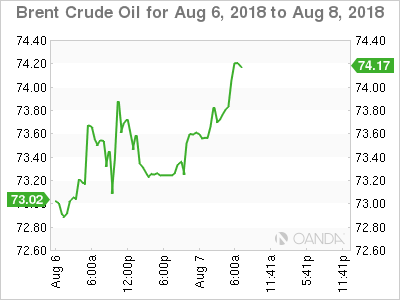
Spot Brent crude oil futures are at +$74.17 per barrel, up +42c, or +0.6%, from yesterday’s close. U.S West Texas Intermediate (WTI) crude futures are up +30c, or +0.4%, at +$69.31 barrel.
Note: U.S sanctions against Iran, which shipped out +3M bpd of crude in July, officially came into effect at 12:01 am EDT this morning.
The market is anticipating that supply losses could range from +600K to +1.5M bpd.
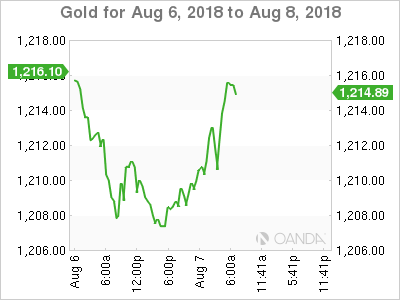
Ahead of the U.S open, gold prices are better bid, supported by a weaker U.S dollar. Spot gold is up +0.4% at +$1,210.99 an ounce, while U.S gold futures are flat at +$1,217.6 an ounce.
3. Sovereign yields remain range bound
Overnight, RBA left its cash rate target unchanged at +1.50% as expected. Aussie policy officials see CPI a bit lower this year, but higher in 2019-20 period.
Doing the rumour rounds – the Bank of Japan (BoJ) board is said to have considered raising rates before tweaking policy in July – BoJ said to have deliberated tightening in January, but did not do it amid market turbulence. The moves the BoJ took last week are said to be a compromise between board member Amamiya and Governor Kuroda.
Last week, the Fed turned up the rate-hike heat, upgrading both economic activity and household spending from the “solid” to the “strong” camp. Futures prices are setting up another rate hike at the September FOMC meet. However, beyond that, the Fed’s timing will ultimately be decided by incoming data – last week was perhaps less in the ‘strong’ and more in the ‘solid’ camp.
The yield on 10-year Treasuries have rallied less than +1 bps to +2.94%, while the yield on Germany’s 10-year Bund is stable after sliding below +0.40% yesterday. The current yield trades at +0.39%. In the U.K, the 10-year Gilt yield has rallied +1 bps to +1.304%.
4. Turkish lira reprieve
Trade tensions remain the predominate theme, but the USD is seeing some consolidation in its recent strength as Treasury bond yields ease a tad.
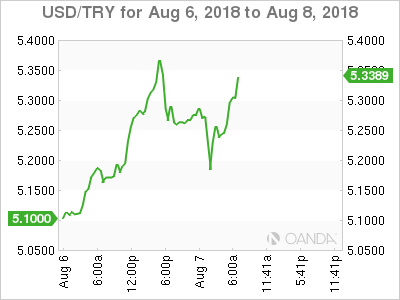
The Turkish lira ($5.2406) has recovered some lost ground after plummeting to new record lows yesterday ($5.42), helped by the Central Bank of the Republic of Turkey (CBRT) announcing a cut in the foreign exchange reserve requirement ratio (RRR) for commercial banks, a measure which should boost dollar liquidity. Turkish 10-year bond yields have backed up +25 bps to +20%.
Yesterday’s necessary course of action reaffirms the central banks reluctance to hike rates.
Note: The plunge in the currency over the past few weeks is now on a scale, which has, in the past, prompted the CBRT to hike interest rates aggressively. Will the CBRT hike the repo rate this week?
Sterling is trading atop of its one-year low outright yesterday, falling -0.5% to £1.2935, amid concerns the U.K. might fail to reach an agreement on Britain’s exit from the E.U. Pressure on the pound has come after U.K Trade Secretary Fox estimated there is a +60% chance that “no” Brexit deal would be reached.
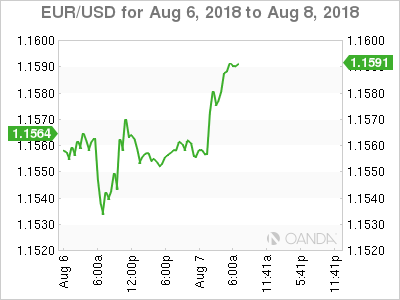
EUR/USD (€1.1558) has stayed above the psychological €1.15 handle for the time being and remains confined to its recent trading range.
5. Mounting trade tension starting to bite German data
Data this morning showed that German exports were flat in June compared with May, which may suggest that mounting trade tensions are starting to bite.
Imports, however, rose +1.2% on the month. As a consequence, Germany’s adjusted trade surplus narrowed to +€19.3B in June from +€20.4B in May.
Other data showed that German industrial output declined in June by -0.9% from a month earlier, slightly more than expected, but total production rose +2.5% when taking calendar effects into account.
The fear about a potential trade war will continue to bring uncertainty, and uncertainty will bring a delay in investment decisions.
EURUSD Edging Towards 1.1600 Resistance Level
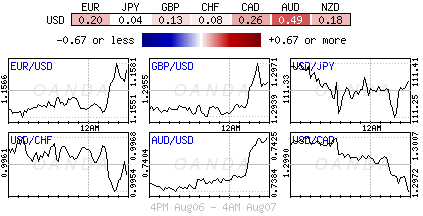
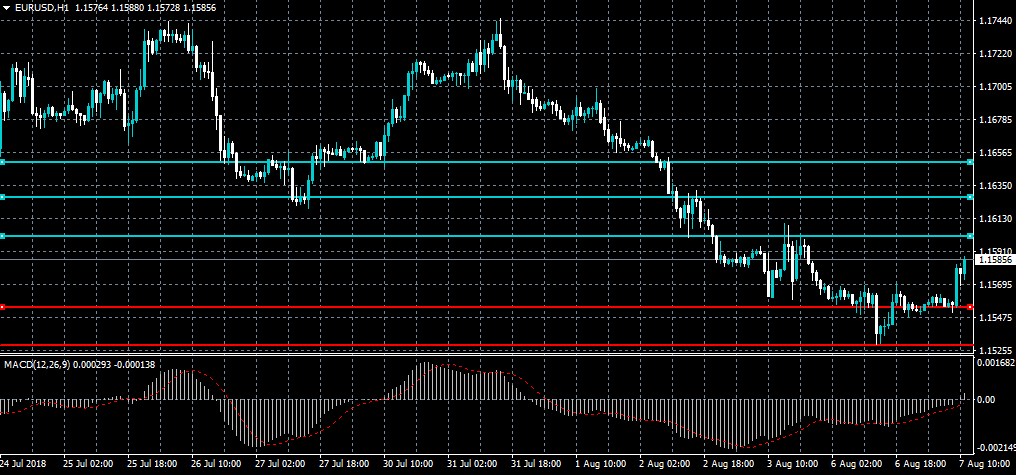
The euro continues to edge higher against the greenback on Tuesday, with price fast approaching the key 1.1600 resistance level. The EURUSD pair is moving higher largely due to a technical correction-lower in the value of the US dollar index. Buyers will aim to break above the 1.1600 resistance level, while sellers will look to contain price below the 1.1553 support level.
The EURUSD pair is only bearish while trading below the 1.1600 level, key support is now found at the 1.1553 and 1.1527 levels.
If the EURUSD pair does break above the 1.1600 level, buyers are increasingly likely to test toward the 1.1630 and 1.1650 resistance levels
USDJPY Still Bearish Below 111.37 Level
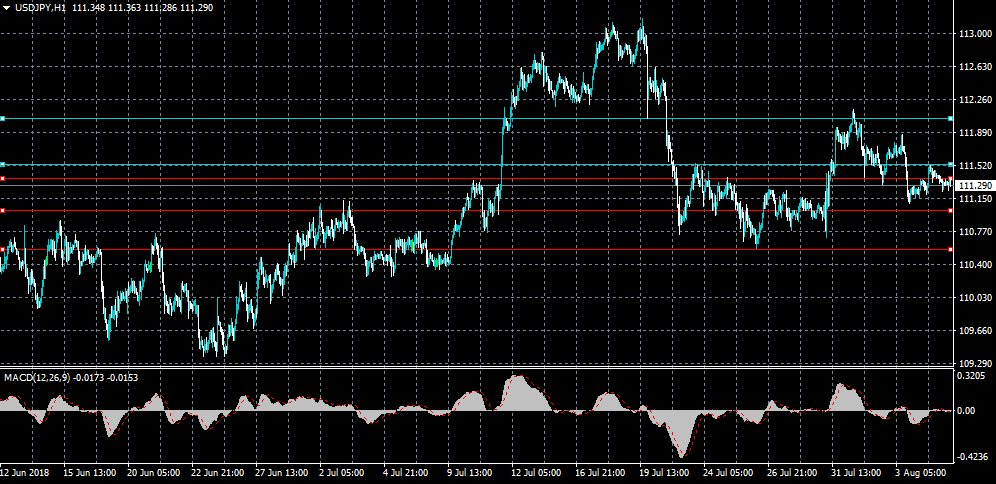
The greenback remains under downside pressure against the Japanese currency, as the US dollar index moves-away from a two-week trading-high. The USDJPY pair is likely to pick a directional-bias if price breaks from the 111.00 to 111.50 trading-range. USDJPY sellers will aim to target the 110.55 support level, while buyers will look to push price towards the 112.05 level.
The USDJPY pair is intraday bearish while trading below the 111.37 level, key support is found at the 111.00 and 110.55 levels.
If the USDJPY pair trades above the 111.37 level, buyers will likely test towards the 111.50 and 112.05 resistance levels.
AUD Edges Higher As RBA Holds Rates
AUD better bid following RBA rate decision
The Australian dollar rose more than 0.60% on Tuesday morning after the Reserve Bank of Australia left the Official Cash Rate unchanged at record low 1.50%. Overall, the tone of the stamen hasn’t change much since the July meeting. The central bank still expects the economy to expand by slightly more than 3% in 2018 and 2019; regarding the inflation outlook, the central forecast is for inflation to be higher than 2% in 2019 and 2020. However, due to temporary factors, inflation should eased somewhat in the third quarter of 2018.
Finally, the RBA welcomed the easing of the housing market as housing credit growth continued to decline, thanks to tighter lending standards. The outlook for the labour market continue to rejoice the RBA as the participation rate continue to increase, while the growth in employment remains positive.
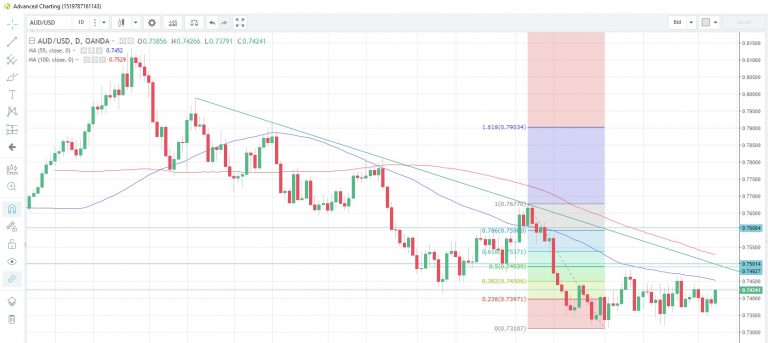
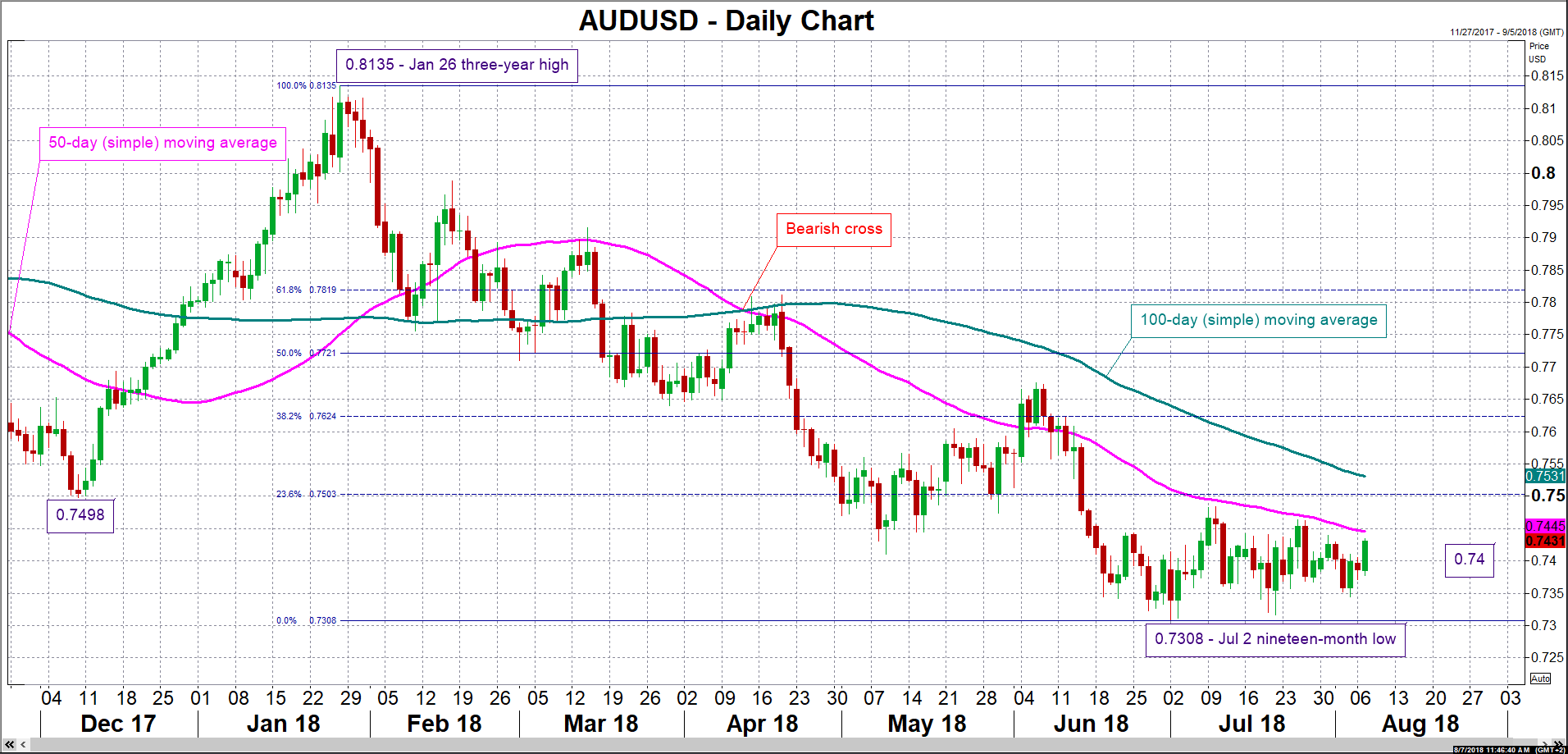
Looking at the FX market this morning, the Aussie’ appreciation is rather due to a broad US dollar weakness. Indeed, the greenback lost ground against all its G10 peers, with the Dollar Index falling 0.16% to 95.20. AUD/USD climbed to 0.7434 and is about to test the 0.7441 resistance (high from July 31st). Overall, the currency pair is stuck in range trading for the last two months – just like most of G10 currencies. It looks like investors are waiting to get further clarity on the trade war between the US and its main trading partners. Unfortunately, it could continue for several months.
German commercial balance improves, but industrial production disappoints
A truce seems to have been found between the EU and the US – at least for now. But this positive news has to be converted into facts, and this will certainly take time. For now, the German economy provides economic figures, which tell us that the economy was already slowing down in June. Though June trade balance is highest since March 2018 amid exports and imports estimated at EUR 115.5 billion and EUR 93.7 billion (highest monthly import value since first publication in 1950), the German economy is showing a slowdown in production figures.
Indeed, given at -0.90% (consensus: -0.50%), m/m June industrial production figure along with y/y numbers are lower, suggesting a global slowdown in manufacturing activities across the country, despite strong economic numbers in May.
Therefore, we expect Q2 GDP q/q numbers (published on 14. August 2018) to remain slightly above Q1, along 0.40% while it should slow down in the next periods. Strong economic confidence, private consumption and inflation at 2% remain supportive for the second quarter 2018.
EUR/USD is currently trading at 1.1586, expected to decline along 1.1555 in the short-term.
Aussie Moves Higher As RBA Holds Rates At Record Low
AUD/USD breaks above 0.7400
The RBA held rates steady for the 21st time, a move that had been unanimously expected, keeping them at record lows as it targets sustainable growth and achieving the inflation target over time. The Bank's growth forecast for the economy remains unchanged, seeing GDP growth averaging slightly more than 3% in 2018 and 2019 while inflation is expected to trend higher in 2019 and 2020. According to the statement, the only concern is the outlook for household consumption, suggesting that household income has only been growing slowly while debt levels are high. From a business perspective, conditions are positive and non-mining investment is increasing.
The immediate market reaction to the announcement was muted, as one might expect given that nothing new was projected, and AUD/USD attempted a quick burst higher but failed to get past the 0.74 level. In later trading the level gave way and the pair ran up to 0.7431, the highest level so far this month. The pair is currently trading at 0.7429 with the 55-day moving average at 0.7452 the next resistance point.
Oil prices firmer as Iran sanctions deadline looms
Crude oil prices have edged higher on the day as the Trump Administration confirmed that the first phase of new Iran sanctions will go into effect later today. Also lending support to crude prices, OPEC sources suggested that Saudi Arabia's supply had unexpectedly fallen in July even after it had committed to increase production to bridge the gap of other members' production shortfalls.
Prices continue to hold above the 100-day moving average on a closing basis, now at 68.36, which has held since June 19. The weekly EIA crude inventory data are due tomorrow and are expected to show a drawdown of 1.17 million barrels, according to the latest survey of analysts, compared with an increase of 3.8 million barrels last week. The equivalent API data is due later today.
Germany's trade surplus narrows
Germany's trade balance in June showed the surplus narrowing from EUR20.3 billion in May to EUR19.3 billion. That's the smallest surplus in four months and no doubt a step in the right direction as far as Mr. Trump is concerned, but still a long way to go. A rise in imports by 1.2% y/y was the culprit, though industrial production data for the month, which declined 0.9% m/m suggested they were not directly used in manufacturing. EUR/USD is up marginally on the day, now at 1.1570, after touching its lowest point since June 28 yesterday
The Americas calendar is relatively barren, with the Redbook index for July and the IBD/TIPP economic optimism index for August on tap. Canada's Ivey purchasing managers index for July is also scheduled as the nation returns from a long weekend.
Forex Technical Analysis: EUR/USD, USD/JPY, GBP/USD
EUR/USD
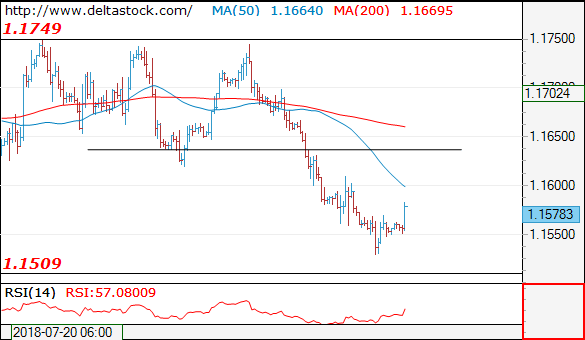
Current level - 1.1578
The reversal at 1.1530 signals a corrective rebound to 1.1640, which should be followed by a major break through 1.1509, en route to 1.1300 area.
| Resistance | Support | ||
| intraday | intraweek | intraday | intraweek |
| 1.1640 | 1.1750 | 1.1530 | 1.1510 |
| 1.1750 | 1.1830 | 1.1510 | 1.1300 |
USD/JPY
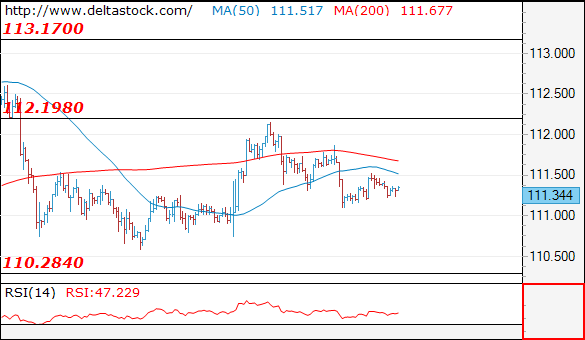
Current level - 111.34
The lack of trend dynamics here leaves the bias neutral. Trigger on the upside is 111.85.
| Resistance | Support | ||
| intraday | intraweek | intraday | intraweek |
| 111.85 | 114.50 | 110.25 | 110.25 |
| 113.20 | 114.50 | 110.25 | 109.30 |
GBP/USD
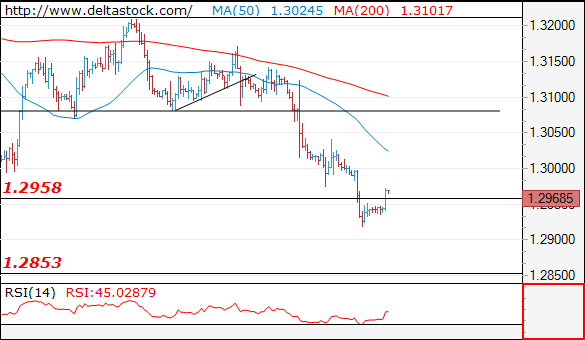
Current level - 1.2968
The slide through 1.2960 shows a renewal of the general downtrend, towards 1.2840 and 1.2770. Intraday allow a corrective rebound to 1.3060.
| Resistance | Support | ||
| intraday | intraweek | intraday | intraweek |
| 1.2980 | 1.3210 | 1.2920 | 1.2960 |
| 1.3060 | 1.3460 | 1.2840 | 1.2770 |
Chinese Exports In The Spotlight Amid Trade Tensions, Aussie And Other Key Data Eyed Too
Chinese data on trade will be hitting the markets on Wednesday, with the latest twist in the Sino-US trade row perhaps rendering the release all the more important. Also of significance out of the world's second largest economy, will be producer and consumer price inflation figures due on Thursday. Meanwhile, Australia's “China-dependency” is bringing the aussie to the forefront ahead of the releases, as well as in the event of any major developments on trade.
Analysts' are projecting China's exports to have risen by 10.0% y/y in July. This would constitute a deceleration compared to June's 11.2% increase, though it would still represent a robust pace of expansion. Imports are also anticipated to grow solidly on an annual basis, specifically by 16.2%, up from June's 14.1%. In the meantime, the nation's trade surplus (measured in USD) is forecast to narrow to $39.33 billion from June's $41.47bn; this would still leave it at its second-highest of the year. The prints lack a specific time of release.
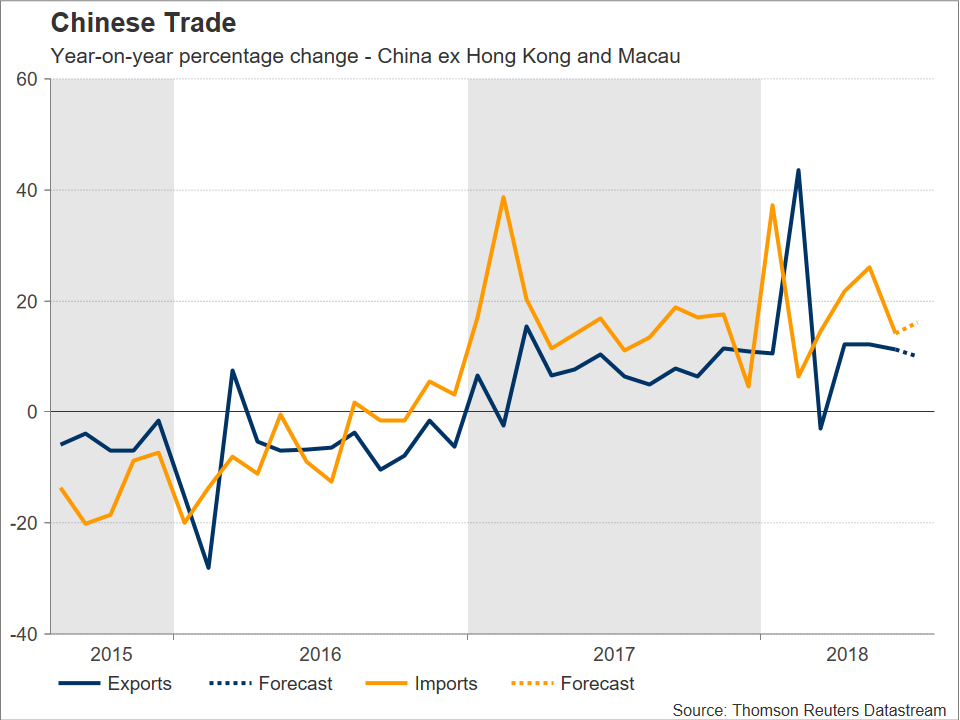
Despite export growth expected to hold up nicely even in light of tariffs on billions of dollars of shipments to the US, still it remains unequivocally the case that the outlook for exports is gradually deteriorating as China and the US continue firing shots at one another, adding fuel to the trade war narrative that has been roiling markets throughout the year. Moreover, although there appears no meaningful impact from the recently enacted – July 6 – US tariffs affecting $34 billion of Chinese goods imported to the US, it might be premature to conclude that this will continue being the case moving forward. This especially holds true if one factors in that the two parties keep ratcheting their confrontational stance and rhetoric. Additionally, some front-loading of orders ahead of tariffs going into effect might have taken place in July that biases Wednesday's numbers towards underestimating the negative effects stemming from US actions against China.
In terms of the latest chapter of the trade saga, it was written on Friday and involved China proposing retaliatory tariffs on $60bn worth of US goods, in response to threats by the Trump administration to levy a 25% tariff on $200bn worth of Chinese imports, instead of the previous 10%.
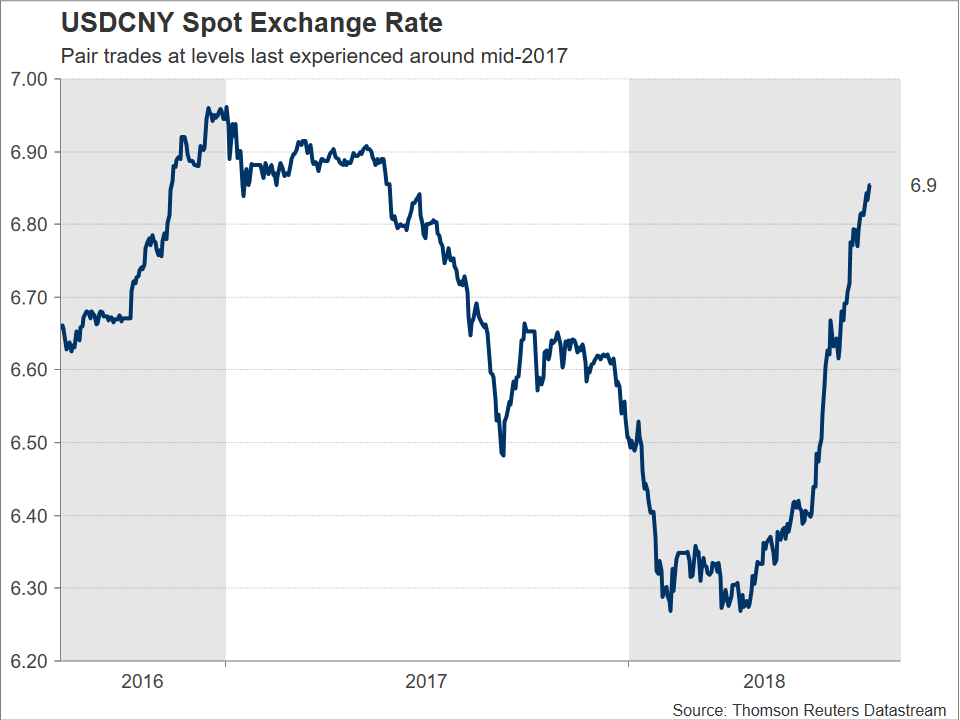
Using the reaction in the FX markets as a proxy for investor thinking, it appears market participants perceive China as standing to lose far more from entering into a trade dispute with the US, given that the trade imbalance between the two heavily favors the former. This is evident from the considerable decline in the yuan versus the greenback, which is especially evident over the last couple of months. In particular, both the offshore and onshore yuan – the latter is depicted below – are trading around their lowest since roughly mid-2017 against the USD.
However, it could perhaps be argued that markets are not discounitng that China has other ways of responding to US tariff actions beyond just retaliating with counter tariffs. For example, the country may abstain from exerting pressure on North Korea which might had otherwise proved instrumental in achieving strategic US goals pertaining to the Korean peninsula. Furthermore, China indicated that it will not participate in the US-pushed embargo on Iranian oil, while it could also deliver a blow to US interests by targeting American brands including Apple, Boeing and General Motors; these companies' outlook largely depends on their performance in Chinese markets.
Returning to the currency markets, the aussie will also be eyed as the Chinese numbers are made public, but also in the event of updates having to do with the US-China trade relationship. This is owed to Australia's heavy export dependency, but also due to its close economic ties with China. Thus, a rosier assessment on the Chinese economy, or more broadly on world trade and growth, is seen as aussie-positive and vice versa.
Upbeat Chinese trade data or an improving outlook on global trade may push AUDUSD higher. Immediate resistance to price advances could be occurring around the current level of the 50-day moving average line at 0.7445, with sharper gains turning the focus to the area around the 23.6% Fibonacci retracement level of the January 26 to July 2 downleg at 0.7503, including the 0.75 round figure. Conversely, disappointing readings or intensifying trade tensions might exert selling pressure on the pair. Given that price action violates the 0.74 handle, additional support may take place around the 19-month low of 0.7308 hit in early July, with the region around it also encapsulating the 0.73 mark. More bearish movement would increasingly bring into scope the 0.72 handle.
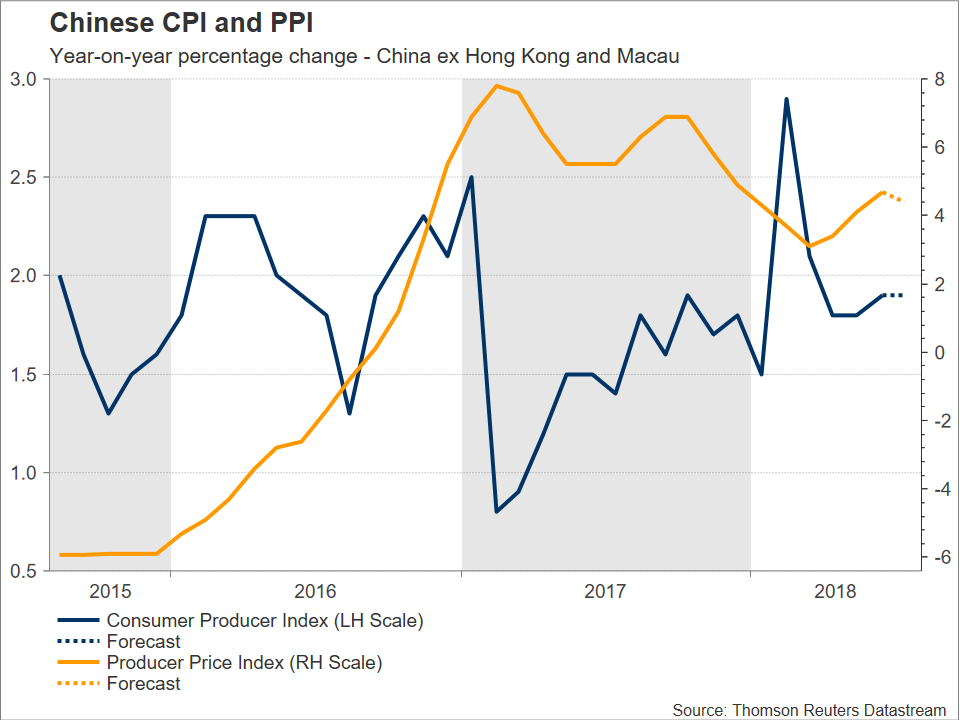
Lastly, China's producer price index (PPI) and consumer price index (CPI), both for July, are due out on Thursday at 0130 GMT. Factory prices, as gauged by the PPI, are projected to grow by 4.4% y/y, their second fastest rise of the year after June's 4.7%. CPI-wise, the measure is expected to expand at June's pace of 1.9% y/y.