Sample Category Title
NZDUSD Drops Below 23.6% Fibonacci, Holds In Trading Range In Short Term
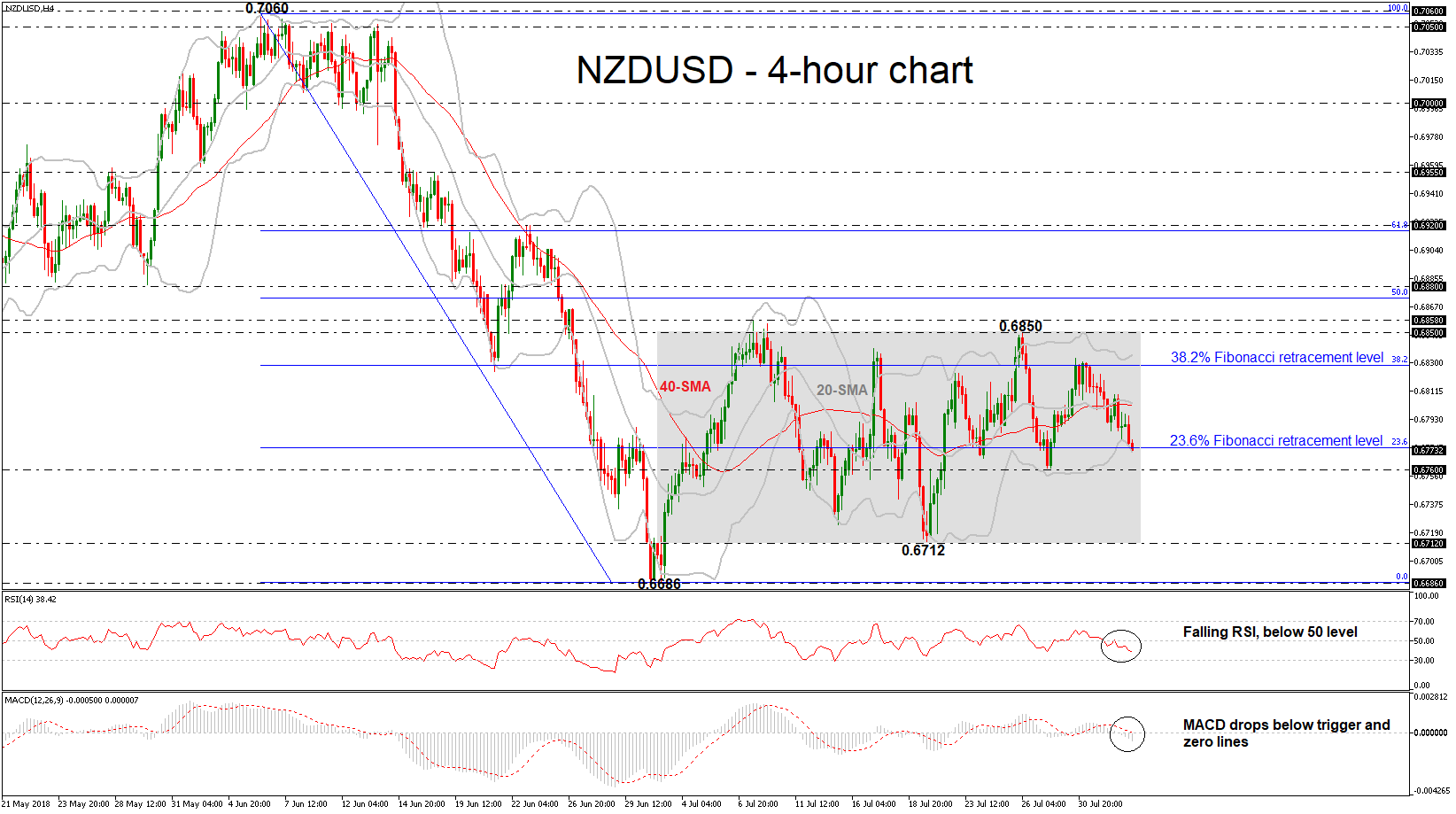
NZDUSD has come under renewed selling pressure over the last couple of days, falling back below the 23.6% Fibonacci retracement level of the downleg from 0.6686 to 0.7060, around 0.6775. Also, the pair is touching the lower Bollinger Band, however, it has not posted a fresh lower low, which makes one hesitant to trust further declines for now. It is worth mentioning that the price has been holding within a trading range since early July with upper boundary the 0.6850 resistance and lower boundary the 0.6712.
Looking at momentum oscillators in the 4-hour chart though, they suggest downside pressures may be on the cards in the short-term. The RSI is below its neutral 50 line, detecting negative momentum, and is also pointing downwards with strong momentum. The MACD oscillator is falling and is holding below its trigger line.
In case of downside movements, immediate support may be found at 0.6760, taken from the latest lows on July 27. A bearish break of that zone would open the way for the 0.6712 support level. If sellers manage to push below that hurdle too, that would drive the price until the 0.6686, identified by the bottom on July 3, suggesting further losses.
Alternatively, if the bulls retake control, price advances may stall initially near the latest high at the 38.2% Fibonacci mark of 0.6828. A potential upside violation of this area would send prices until the 0.6850 – 0.6858 resistance area.
Overall, NZDUSD is struggling in a sideways channel in the near term. A downside penetration of the channel would reinforce the negative medium-term outlook. However, an upside break would weaken the bearish picture.
BOJ Decision Also Affected European And US Bonds
Markets
Yesterday, core bonds remained under pressure. A further rise in 10-y Japan yields in the wake of this week's BOJ decision also affected European and US bonds. Losses in US bonds accelerated after the Treasury announced its quarterly refunding scheme for this quarter with yields reaching intraday peaks after the announcement. The Fed as expected left the target range for the Fed fund rate unchanged. Economic activity is strong while unemployment stays low. With inflation running near 2%, the Fed maintained its intention of gradual further rate increases. The reaction of interest rate markets to the Fed statement was close to non-existent. At the end of the day, the US yields curve bear steepened with yields rising 0.8 bp (2-y) to 5 bp (30-y) However, this move was mainly driven by global sentiment and the refunding announcement. The German yields curve showed a similar but less outspoken move. Today, there are only second tier eco data in Europe. In the US, the jobless claims and the factory orders will be published. The reports might only be of intraday significance. This morning, the Japanese 10-y yield rose temporary to 14bp as markets tested the BOJ's strategy after allowing more flexibility in bond market. The BOJ countered it with an offer to buy bonds (JPY 400 bln) to slow the rise in yields. For now, the price action in Japan caused no additional losses for US Treasuries. US bonds even receive some support as sentiment on risk turned negative in Asian on renewed trade war nervousness. This risk-off trade might slow the recent rise in US and core European yields going into tomorrow's US payrolls report. However, especially the picture in the Bund future contract still looks fragile.
Yesterday, trading in the major USD cross rates was confined to tight ranges. Mixed US and EMU eco data gave no clear direction for EUR/USD trading. A modest rise in the US/German interest rate differential and renewed investor caution on some aggressive US-Chinese trade language finally gave the dollar the benefit of the doubt. EUR/USD closed the session at 1.1660 (from 1.1691). USD/JPY underperformed slightly. The yen was supported by the prospect for potential higher Japanese bond yields and by investor caution on trade. The Fed decision was not a big issue for USD trading. Today, the data won't give much guidance for USD trading. Sentiment in Asia is turning risk off, supporting the USD (ex USD/JPY). In case of more risk-off today, EUR/USD might drift lower in the established range, but we don't expect the dollar to breach key levels ahead of tomorrow's payrolls. The EUR/USD 1.15/1.1850 range remains firmly in place with intermediate support at 1.1575. The USD/JPY rebound is running into resistance.
Yesterday, in technical trade, sterling basically trade sideways against the dollar and gained slightly ground against the euro. EUR/GBP closed the session again below 0.89. Today, the Bank of England is expected to raise the policy rate by 25 bp to 0.75%. However, BOE's Carney will have some clarification to give as inflation is easing, growth remains mediocre and as Brexit uncertainty remains high. In this context a next BoE rate hike still looks very far away. We don't expect a one-off BoE rate hike to give much of a lasting support for sterling.
News Headlines
The Bank of Japan has announced it will offer to buy 400 billion yen in Japanese Government Bonds in an attempt to keep it's 10-year government yields under control. Since the BOJ's announcement this Tuesday to allow debt markets to move more freely, the 10-year JGB yield had continue to increase to test the 0.140 % level.
The US and Mexico are making progress in key NAFTA talks, especially for the car making industry. Guillermo Malpica, head of the trade and NAFTA office for the Mexican government, said the US started showing more flexibility and a deal is getting closer.
Japan Yields Rise As BOJ Implements New Policy
General Trend:
- Asian equity markets trade generally lower
- Shanghai Property index extends decline amid speculation regarding higher mortgage rates
- Kobe Steel declines over 8% post earnings
- Nikkei weighted Fast Retailing may report monthly sales after the close
- Singapore bank DBS declines on weaker than expected profits
- China PBoC skipped its operation market operations (OMOs) for the 10th straight session
- Japan sold 10-yr JGBs at higher yield and lower bid to cover
- Japanese companies expected to report earnings today include Mitsubishi UFJ, Nippon Steel, DoCoMo, Suzuki, Yamada Denki, Asahi Group, Kakaku.com and Ibiden.
- Bank of England (BoE) rate decision due later today
Headlines/Economic Data
Japan
- Nikkei 225 opened -0.3%
- TOPIX Marine Transportation index -2%, Iron & Steel -1.8%, Information & Communication -1.6%, Real Estate -1%, Retail Trade -1%, Securities -0.9%
- Japanese automakers underperform
- (JP) For FY2018, the capital spending plans of companies in Japan hit 38-year high, according to survey by the Development Bank of Japan (DBJ) - Nikkei
- (JP) Japan Investors Net Buying of Foreign Bonds: +¥526.5B v -¥201.3B prior; Foreign Buying of Japan Stocks: -¥63.4B v +¥173.6B prior
- (JP) Japan July Monetary Base at end of period: ¥503.0T v ¥499.5Te; y/y: 7.0% v 7.4% prior
- (JP) Bank of Japan (BOJ) Deputy Gov Amamiya: Reiterates prices have continued to show relative weakness
- (JP) Japan Chief Cabinet Sec Suga: Japan is closely watching US/China trade tariff situation and impact
- (JP) Japan MoF sells ¥2.2T v ¥2.2T indicated in 0.1% (prior 0.1%) 10-yr JGB; avg yield 0.126% v 0.037% prior; bid to cover 4.17x v 4.37x prior
- Looking ahead: Tomorrow Toyota Motors reports Q1 results
Korea
- Kospi opened -0.1%
- (KR) South Korea Land Ministry: Closely watching housing market, will take steps if any overheating is seen
China/Hong Kong
- Hang Seng opened -0.6%, Shanghai Composite -0.3%
- Hang Seng Services index -4.1%, Industrial Goods -3.4%, Info Tech -3.3%, Financials -2%, Property/Construction -2%
- (CN) Follow Up: conference call was held on China trade without President Trump; call addressed extending comment period to Sept 5th (from Aug 30th); confirms considering implementing 25% tariffs on $200B of Chinese goods (prior 10%); no current talks with China, remain open to talks
- (CN) China mortgage rates expected to rise in H2 according to analysts - China Securities Journal
- (CN) China said to be planning to limit steel production in more cities over the winter - China News
- (CN) China PBOC: To continue to implement the prudent monetary policy in the latter half of 2018 to ensure economic and financial stability – Xinhua
- (CN) China PBoC Open Market Operation (OMO): Skips OMO for the 10th consecutive session; Net drains CNY30B v drains CNY20B prior
- (CN) China PBoC sets yuan reference rate at 6.7942 v 6.8293 prior
- (CN) China State Planner (NDRC): Consumption data does not fully reflect services spending
Australia/New Zealand
- ASX 200 opened -0.1%
- ASX 200 Resources index -1.8%, REIT -0.6% Telecom -0.5%, Energy -0.4%, Consumer Discretionary -0.4%, Financials -0.1%
- (AU) Australia ACCC issues gas inquiry interim report: Says the east coast of Australia needs additional gas supply in order to lower prices
- (AU) Australia sells A$500M v A$500M indicated in Oct 2018 notes, avg yield 1.9438%, bid to cover 4.8x
- (AU) AUSTRALIA JUN TRADE BALANCE (A$): 1.87B V 0.9BE; Exports m/m: +3% v +4% prior; Imports m/m: -1% v +3% prior
- NetComm Wireless, [+9%], NTC.AU Said to have attracted interest from overseas buyers – Australian
- (NZ) New Zealand sells NZ$100M in 2.5% Sept 2040 inflation indexed bonds; avg yield 1.9518%; bid to cover 2.45x
North America
- US equity markets ended mixed: Dow -0.3%, S&P500 -0.1%, Nasdaq +0.5%, Russell 2000 -0.1%
- S&P500 Energy -1.4%, Industrials -1.4%; Tech +0.9%
- TSLA Reports Q2 -$3.06 v -$2.76e, Rev $4.0B v $3.79Be; CEO: have no plans to raise equity; focused on paying off debts - earnings call comments (+9.2% after hours)
- IO Reports Q2 -$1.86 v -$0.88 y/y, Rev $24.7M v $46.0M y/y (-19% afterhours)
Europe
- (DE) German Lawmakers approve payment on last bailout installment of €15B for Greece
- (UK) UK Gove said to have discussed a backstop plan related to the Single Market - FT
Levels as of 01:30ET
- Hang Seng -2.7%; Shanghai Composite -3.1%; Kospi -1.6%; Nikkei225 -1.2%; ASX 200 -0.4%
- Equity Futures: S&P500 -0.1%; Nasdaq100 -0.2%, Dax -0.4%; FTSE100 -0.4%
- EUR 1.1646-1.1667; JPY 111.40-112.15; AUD 0.7379-0.7411;NZD 0.6774-0.6799
- Dec Gold -0.0% at $1,227/oz; Sept Crude Oil +0.1% at $67.72/brl; Sept Copper -0.7% at $2.72/lb
BTCUSD May Be Forming A Head And Shoulders
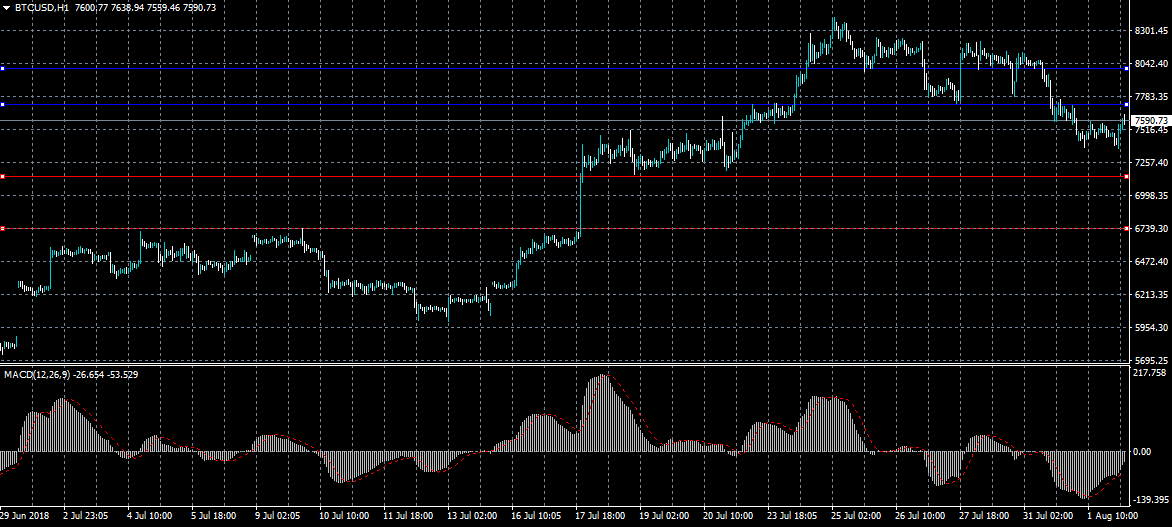
Bitcoin remains under downside pressure on Thursday, with the number one cryptocurrency briefly slipping below the $7,400 level. The BTCUSD pair may be in the process of forming a complex head and shoulders pattern, with the neckline located around the $7,150 level. Buyers need to recover price back above the $7,730 level, while sellers will look to break the $7,150 support level.
The BTCUSD pair is bearish while trading below the $7,730 level, key technical support is found at the $7,400 and $7,150 levels.
If the BTCUSD pair moves back above the $7,730 level, price may correct back towards the $7,850 and $8,000 resistance levels.
USDJPY Testing Breakout Support
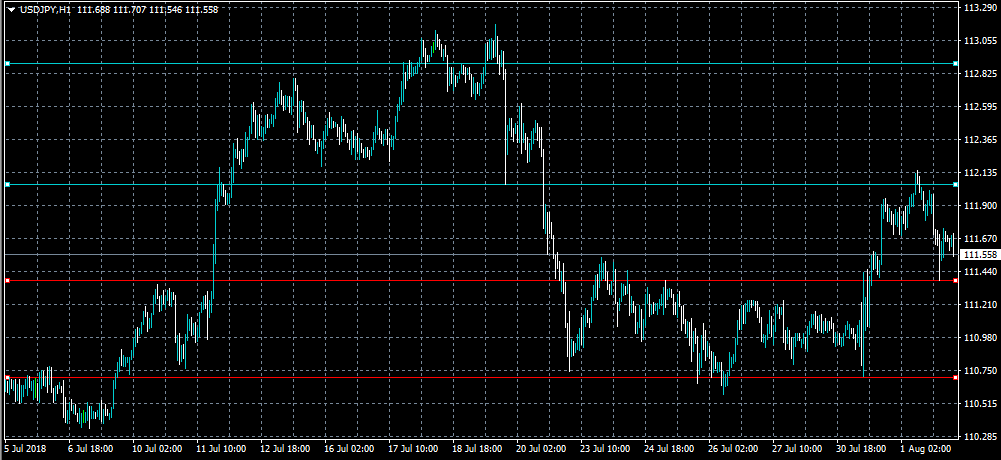
The US dollar has fallen towards critical support against the Japanese yen, as worsening trade tensions between the US and China help support buying in the yen currency. The USDJPY pair risks erasing its recent gains if price breaks below the key 111.37 level. Financial markets have largely looked past yesterday's FOMC meeting, as traders price-in two more rate increases from the US central bank this year.
The USDJPY pair is only bullish while trading above the 111.37 level, further upside towards the 112.05 and 112.90 still remains possible.
If the USDJPY pair trades below the 111.37 level, sellers will likely test towards the 111.00 and 110.70 support levels.
EURUSD Edges Closer To Triangle Break
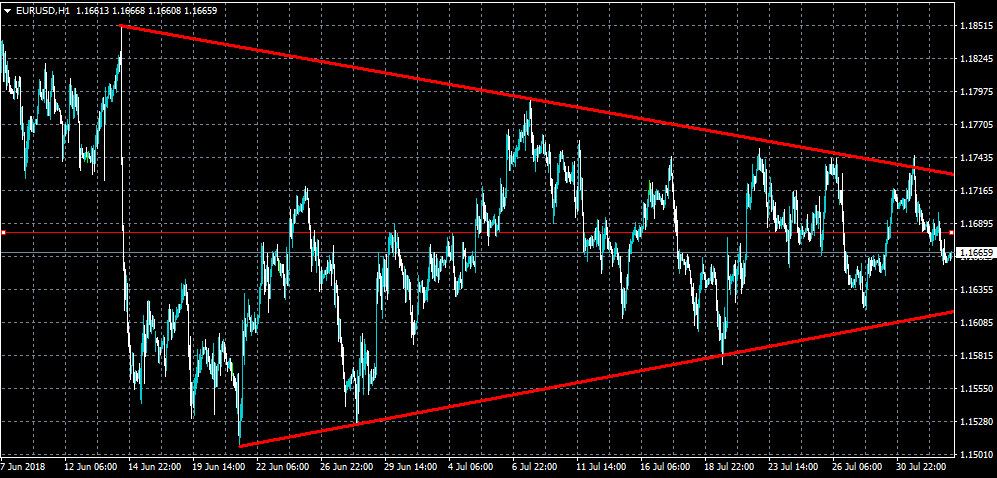
The euro continues to drift lower against the US dollar, with the greenback gaining ground against most major currencies after Wednesday FOMC meeting. The EURUSD pair is also slipping closer to lower-end of the large symmetrical triangle pattern that price is currently trapped within. Sellers will try to break below the 1.1610 support level, while buyers need to break the 1.1724 resistance level.
The EURUSD pair is only bearish while trading below the 1.1650 level, key support is found at the 1.1610 and 1.1550 levels.
If the EURUSD pair trades above the 1.1680 level, key technical resistance is found at the 1.1724 and 1.1790 levels.
BoE Takes Centrea Stage On Thursday
Thursday is expected to be a big day for currency traders, as the Bank of England (BOE) prepares to lift interest rates for only the second time since the financial crisis. Interestingly, the last time the BOE voted to hike rates was in November, more than a year after it slashed them to new record lows in response to Brexit.
The European session begins in earnest at 05:45 GMT with a report on Swiss consumer sentiment. Switzerland's State Secretariat for Economic Affairs (SECO) is expected to show no change in the consumer climate index over the previous three months.
Over the next several hours, reports on Spanish unemployment, Swiss retail sales, and British construction PMI will make their way through the financial markets.
At 09:00 GMT, the European Commission's statistical agency will release the latest figures on producer inflation. The Eurozone producer price index (PPI) is forecast to rise 0.3% in June, which translates into a year-over-year gain of 3.5%.
The BOE's monetary policy announcement is due for release at 11:00 GMT. The Bank rate is widely expected to rise to 0.75% from 0.5%. According to a median estimate of economists, seven out of nine policymakers will vote in favour of a hike. The asset purchase facility will likely hold at £435 billion.
Bank of England Governor Mark Carney is scheduled to deliver a speech about 30 minutes after the official policy statement is released.
Shifting gears to North America, the US Department of Labor will issue its weekly jobless claims report at 12:30 GMT. Initial jobless claims are forecast to rise by 3,000 to a seasonally adjusted 220,000 in the latest week.
Later in the session, the Department of Commerce will report on factory orders for the month of June. Factory orders likely rose 0.7% month-on-month.
EUR/USD
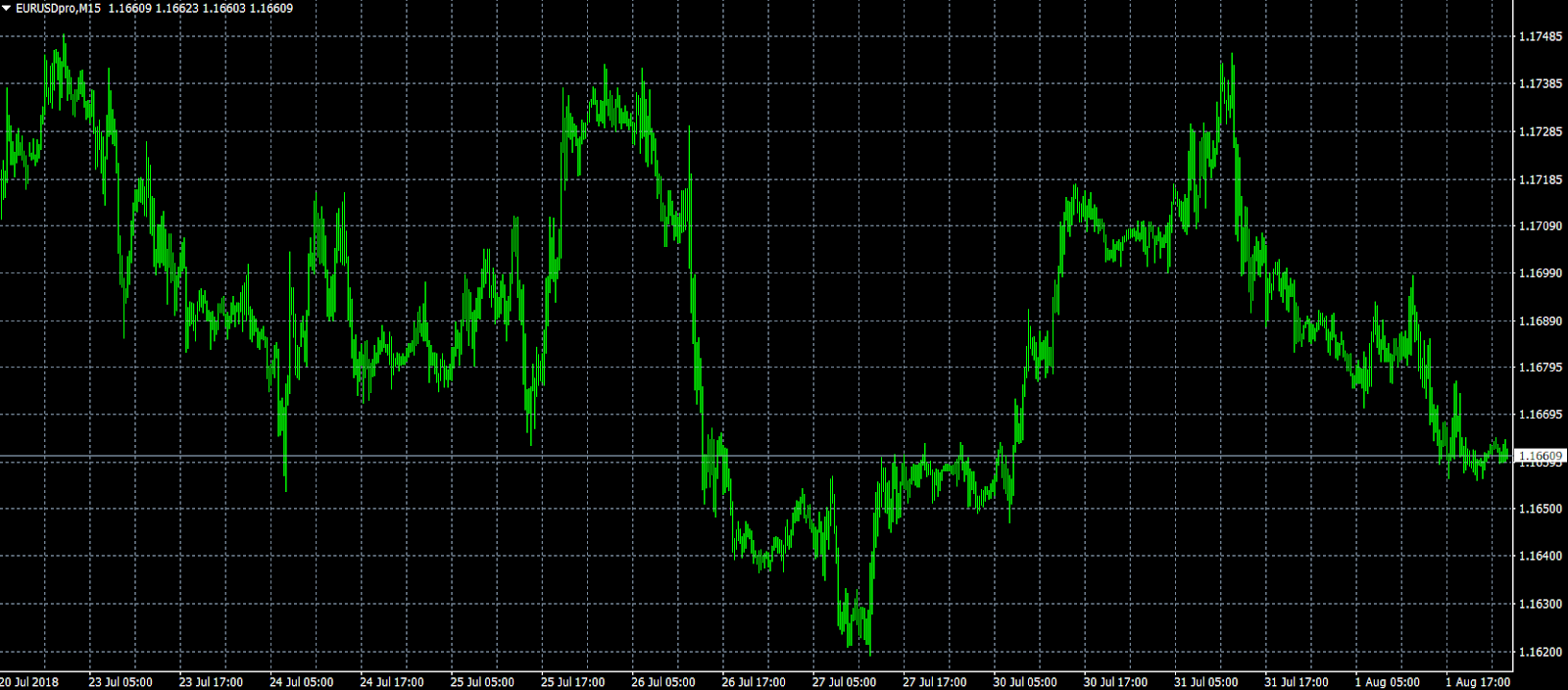
Europe's common currency slipped further below the 1.1700 US handle on Wednesday, as traders continued to favour the dollar. EUR/USD is clocking in at 1.1662 and is fast approaching last week's swing low of 1.1632. A break below this level could generate additional downward pressure on the pair.
GBP/USD
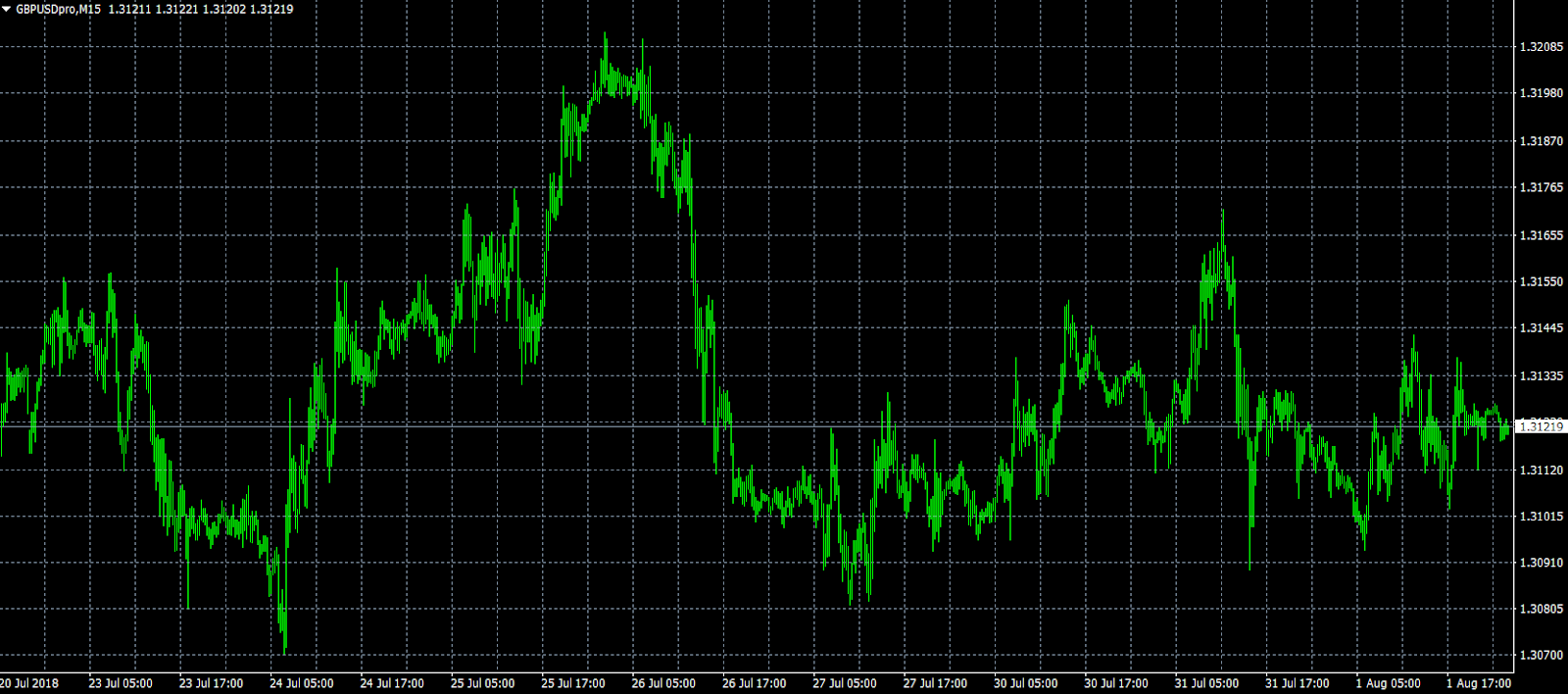
Cable has been trading sideways for the better part of a week in anticipation of the BOE rate announcement. At the time of writing, GBP/USD was trading at 1.3122, where it was little changed from the previous close. Immediate support is located at 1.3090. Resistance is likely found at 1.3150.
AUD/USD
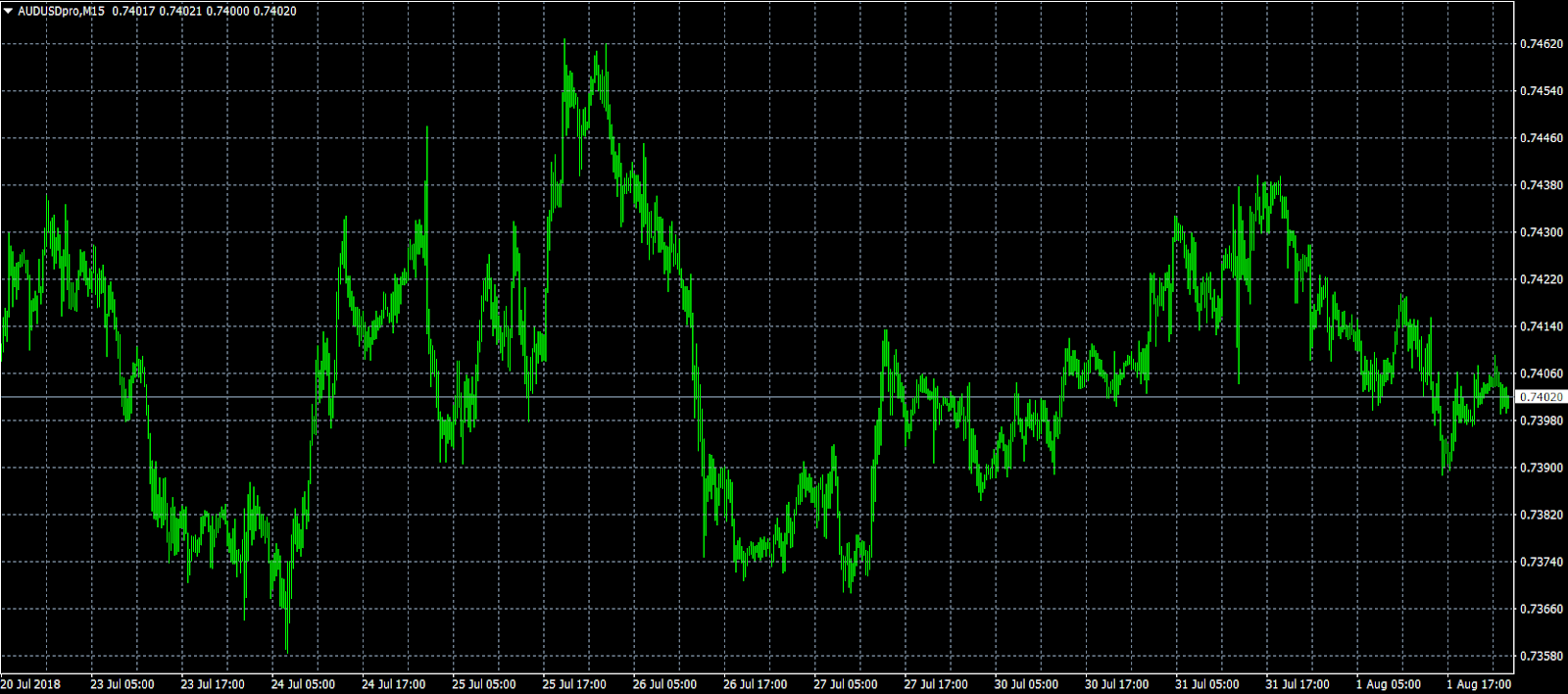
After a strong start to the week, the Australian dollar swung lower on Wednesday, with AUD/USD falling back toward the 0.7400 handle. The pair is currently trading just north of that pivotal area. From a technical point of view, the pair faces immediate resistance at 0.7440. A break above this level is needed to generate a sustained rally.
DIHK: US-China trade conflicts have huge impact on German companies
A survey by the German DHIK Chambers of Industry and Commerce warned that escalating US-China trade conflict is already hurting German companies.
41% of German companies doing business in China said they were affected by higher tariffs when exporting to the US. And 46% said highest cost importing from the US.
57% of German companies doing business in the US said there were negative effects exporting to China. 75% reported higher costs when importing from China.
DIHK trade chief Volker Treier said "the dangerous trade dispute between the U.S. and China is also hitting German companies doing business in the two countries." He added, "the impact is huge: nearly half of the imports from German companies are directly or indirectly affected by the new tariffs, for example because they source raw materials or components from the other country." He also warned that "a further escalation of the dispute would be a threat to world trade as a whole."
The BoE’s Rate Decision At 13:00 CEST
Market movers today
Today's highlight is the BoE's rate decision at 13:00 CEST. We expect the Bank of England to hike the Bank Rate from 0.50% to 0.75% (in line with consensus and market pricing), as activity indicators have rebounded and the unemployment rate is low. We expect no change in the APF nor the CBPP. It is one of the big meetings to keep an eye on. The Inflation Report is also due at 13:00 CEST. BoE Governor Carney's press conference starts at 13:30 CEST. Going forward, we expect the Bank of England to hike once a year. We look for EUR/GBP to remain range bound near term, with Brexit uncertainty expected to remain a key source of volatility.
In Denmark, FX reserves data for July are due out at 16:00 CEST. We expect them to show that Danmarks Nationalbank did not intervene in the DKK markets in July.
Overnight Thursday/Friday, the Chinese Caixin index will be released. It is likely to mirror the small disappointment that the official Chinese numbers showed earlier this week.
Selected market news
As expected, the FOMC meeting turned out to be a non-event. The Fed maintained the target range at 1.75-2.00% and did not feel it was necessary to send any new signals in the statement (there were no updated projections or a press conference at this meeting). The statement just stated the fact that growth has been strong and PCE core inflation is near the 2% target. We still expect the Fed to hike two additional times this year in September and December.
US Trade Representative Robert Lighthizer has now officially stated that the Trump administration is considering increasing the tariffs from 10% to 25% on UDS200bn worth of imported goods from China. The hearing period has been extended from 30 August to 5 September. For more details, see statement here. The hope is probably to force China back to the negotiation table but China has said that blackmail would not work and that the Chinese leadership is ready to retaliate against any protectionist measures taken against the country. We still think it is difficult to see the two countries reaching a deal this side of the US mid-term elections in November. Stocks are trading lower on the back of the escalating trade war.
US ISM manufacturing fell more than expected to 58.1 in July from 60.2 in June but despite the fall, it has been range-bound since last summer. We still believe ISM should come down eventually, but it has been more stubborn than expected and ISM manufacturing is still much higher than what we see in the hard data.
Yesterday, 10-year US Treasury yields moved above the 3% threshold for the time since May, as the US Treasury said it is going to sell USD78bn in long-term debt in Q3 up from USD73bn in Q2. At the moment, it is trading marginally below the 3% threshold again. 10-year JGB rose yesterday and is now trading at 0.133%.
The Turkish lira hit a new low against the dollar yesterday due to the political standoff against the US.
Euro-Zone’s Manufacturing Sector Expanded As Initially Estimated In July
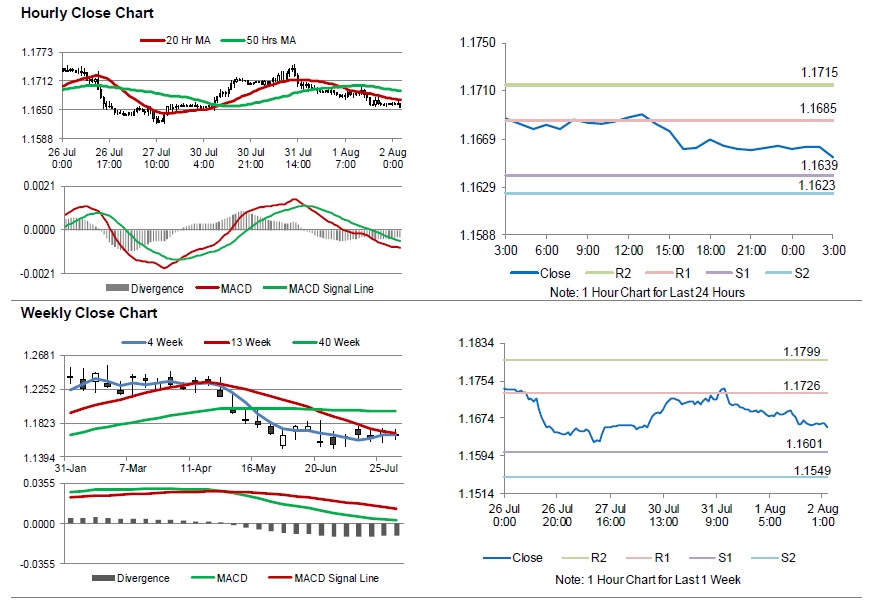
For the 24 hours to 23:00 GMT, the EUR declined 0.21% against the USD and closed at 1.1664.
On the data front, Euro-zone's the final manufacturing PMI advanced to a level of 55.1 in July, confirming the preliminary print and at par with market expectations. In the prior month, the index had recorded a reading of 54.9. Separately, in Germany, the final manufacturing PMI climbed to a level of 56.9 in July, undershooting market expectations for a rise to a level of 57.3. In the previous month, the PMI had recorded a reading of 55.9, while preliminary figures had indicated an advance to 57.3.
The greenback declined against a basket of currencies, following weak economic data.
Data showed that the US final Markit manufacturing PMI unexpectedly dropped to a 5-month low level of 55.3 in July, defying market expectations for a rise to a level of 55.5. The PMI had registered a reading of 55.4 in the previous month. Further, construction spending unexpectedly eased 1.1% on a monthly basis in June. In the prior month, construction spending had climbed by a revised 1.3%. The ISM manufacturing activity index recorded a drop to 58.10 in July, more than market expectations. In the previous month, the ISM manufacturing activity index had registered a reading of 60.20. Moreover, the MBA mortgage applications slid for the third consecutive week by 2.6%, on a weekly basis in the week ended 27 July 2018, following a decline of 0.2% in the prior week. On the contrary, the ADP private sector employment recorded a more-than-expected increase of 219.00K in the US. The private sector employment had recorded a gain of 177.00K in the previous month.
Separately, the Federal Reserve (Fed), at its latest monetary policy meeting, unanimously voted to maintain the target range for the federal funds rate at 1.75% and 2.00% and signalled for further rate hike in September followed by next hike likely in December. In a statement accompanying the decision, the central bank stated that the economy is growing at a “strong rate” and labour market is strengthening, with inflation near its 2.0% target. .
In the Asian session, at GMT0300, the pair is trading at 1.1654, with the EUR trading 0.09% lower against the USD from yesterday's close.
The pair is expected to find support at 1.1639, and a fall through could take it to the next support level of 1.1623. The pair is expected to find its first resistance at 1.1685, and a rise through could take it to the next resistance level of 1.1715.
Going forward, investors' will closely monitor the Euro-zone's producer price index for June, slated to release in a few hours. Later in the day, the US initial jobless claims followed by factory orders and durable goods orders, both for June, will keep traders on their toes.
The currency pair is trading below its 20 Hr and 50 Hr moving averages.