

Sample Category Title
USD/JPY Bouncing Back After Weakness
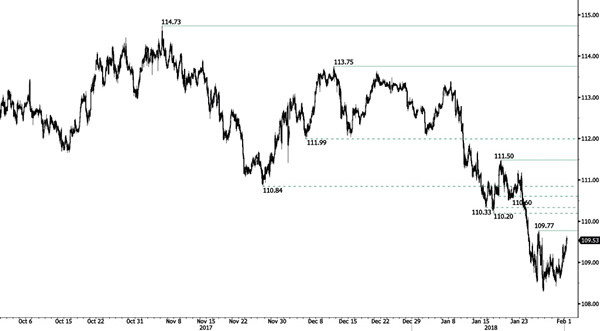
USD/JPY is rising following weakness and trades above 109.50. The current bullish momentum makes hourly resistance at 109.77 (26/01/2018 high) reachable. The technical structure suggests however further short-term downside moves.
We favor a long-term bearish bias. Support is now given at 107.32 (08/09/2017 low). A gradual rise towards the major resistance at 125.86 (05/06/2015 high) seems unlikely. Expected to decline further support at 101.20 (09/11/2016 low).
GBP/USD Heading Higher
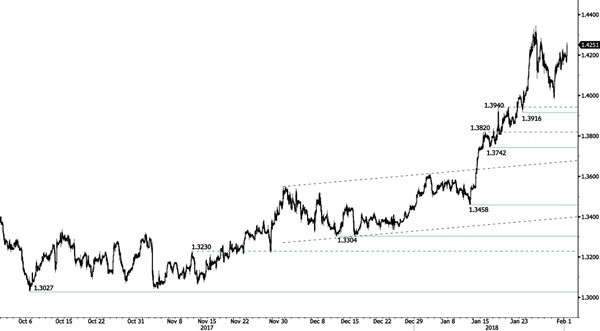
GBP/USD is trading up. The technical structure suggests further potential upside move. Hourly support is given at 1.3916 (23/01/2018 low).
The long-term technical pattern is reversing. The Brexit vote had paved the way for further decline but the pair is now moving up to 2016 highs. A long-term support given at 1.1841 (07/10/2017 low) and a strong resistance at 1.5018 (24/06/2016 high) are identified.
EUR/USD Pausing Before Another Leg Higher
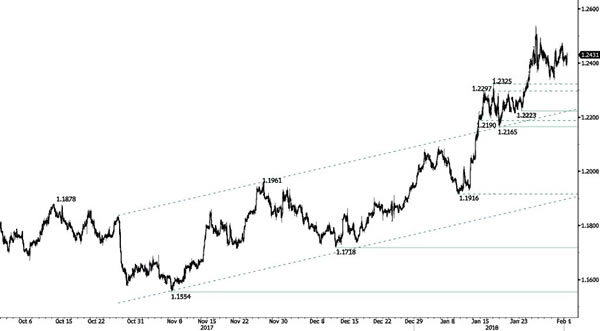
EUR/USD is progressing. The pair is now retracing and lies well above 1.2325 (17/01/2018 high). Hourly support is given at 1.2223 (23/01/2018 low). The technical structure suggests further short-term upside moves.
In the longer term, the momentum is turning largely positive. We favor a continued bullish bias. Key resistance is holding at 1.2856 (15/10/2014 high) while strong support lies at 1.1554 (08/11/2017 low).
EUR/USD Analysis: Bears Likely To Fail
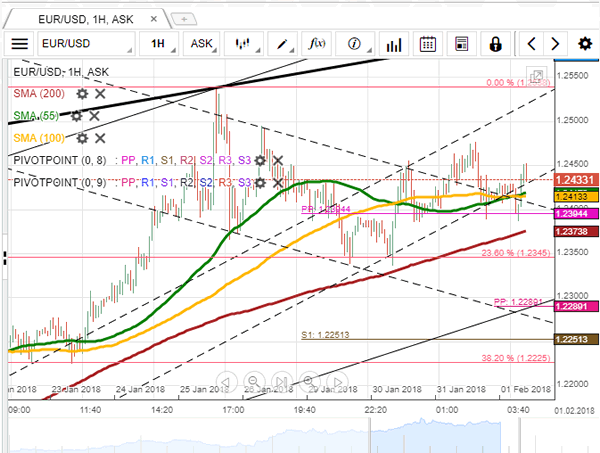
Minor upside risks dominated the market during the first part of Wednesday. The Euro was gradually appreciating against the US Dollar until the daily high was reached at 1.2466. The pair was afterwards pushed lower down to the combined support of the 55– and 100-hour SMAs near 1.2420 where it remained located early this morning.
This trading session is market by low volatility. Given that bulls have failed to push the rate higher for several hours, the Euro might want to resume its movement southwards within this session. However, traders should be aware that the aforementioned support area is unlikely to surrender easily.
Meanwhile, even if bulls take this opportunity to push the rate higher today, gains should not exceed the 2015/2017 high of 1.25.
GBP/USD Analysis: Flashes Mixed Signals
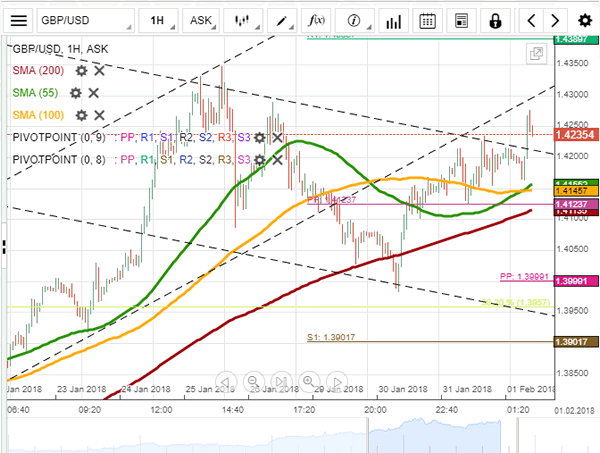
The Pound remained stable against the US Dollar during the previous session. The pair tried to edge lower; however, this movement south was disrupted by a support cluster formed by the 100– and 55-hour SMAs and the weekly PP circa 1.4130.
As apparent on the chart, the Pound has been moving in a down-trend during the previous week. In case this trend is to persist, the Sterling should try to push for the monthly PP located at 1.40. However, the current southern barrier is expected to introduce changes to this assumption, thus sending the Pound slightly higher towards the 1,5-yeah high of 1.43.
Meanwhile, the failure to appreciate in this session would result in a slight period of consolidation that could in fact be an early indication of a medium-term decline.
USD/JPY Analysis: Points To Change In Sentiment
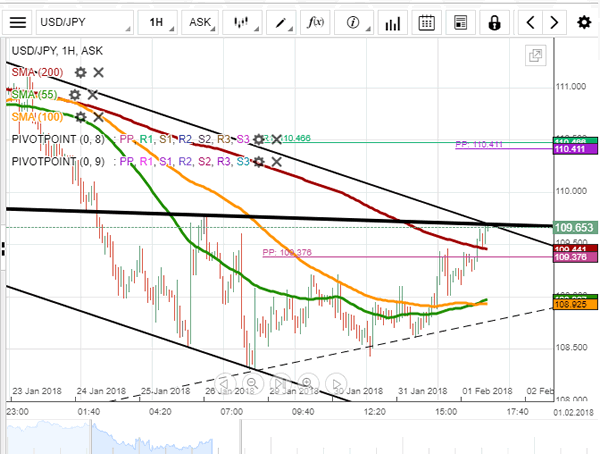
The USD/JPY was characterised by low volatility on Wednesday morning which was caused by the failure of bulls to overcome the 55– and 100-hour SMAs for several hours. This resistance cluster was eventually breached, but further advance was limited, as the weekly PP and the 200-hour SMA were likewise located nearby.
In general, the US Dollar is starting to recover against the Yen. However, the high positioning of technical indicators suggest that the most recent movement up might not be sustainable.
Apart from the 200-hour SMA which was already breached several hours ago, the nearest resistance is set by the boundaries of two channels near the 109.70 mark. Even if this area does not hold, the Greenback might reverse near 110.00.
XAUUSD Analysis: Forms Bullish Triangle
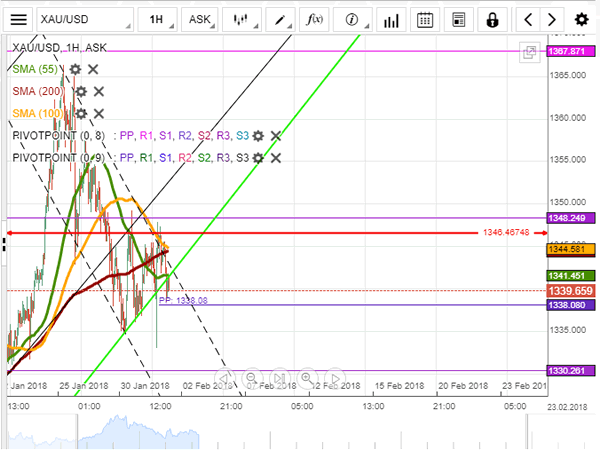
Following a three-day period of decline, Gold managed to recover some of its lost positions on Wednesday. During this time, the par remained fluctuating in between the bounds of the 55– and 100-hour SMAs.
The pair's movement during the past three sessions demonstrates the existence of a short-term ascending triangle. This pattern is generally a bullish formation that should guide the pair higher within the following days. This scenario is likewise reinforced by bullish technical indicators.
Thus, the yellow metal should strengthen against the US Dollar in this session. A confirmation of this scenario would be provided by a breakout of the weekly PP at 1,348.20. Conversely, possible losses should be limited by the 1,335.00.
USD/CAD: Canadian Gross Domestic Product
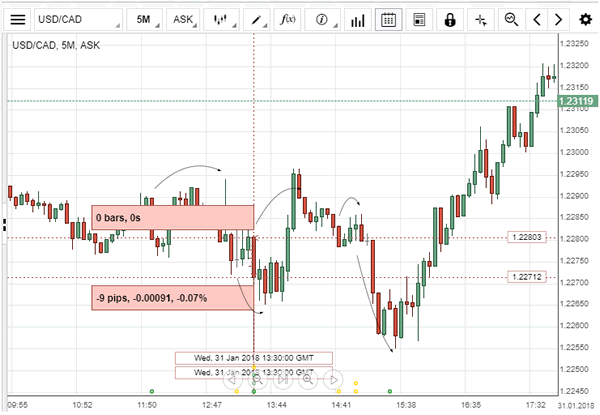
The Canadian GDP report caused stronger fluctuations in the USD/CAD exchange rate. The Loonie fell against the US Dollar 0.07% or 9 base points to the 1.2270 level.
Canada's economy expanded by the greatest extent in six months in November amid broad-based activity in manufacturing and other sectors, keeping the Central Bank on track to hike rates again. Statistics Canada stated that the country's gross domestic product increased 0.4% after being flat in October. Growth in the extraction of gas and oil, as well as real estate and retail sector contributed to the strong result. A solid economic expansion is likely to prompt the Bank of Canada to raise rates again, with the most of the odds for the hike by May.
EUR/USD: Federal Reserve Interest Rate Decision
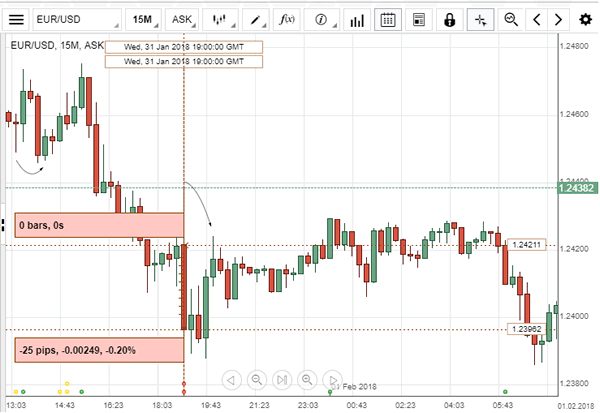
The EUR/USD exchange rate remained above the 1.2400 level, following the Fed's interest rate decision and monetary policy statement. The pair fell 23 pips or 0.18% to the 1.2395 mark, but recovered initially.
The US Federal Reserve announced the decision to keep interest rates at 1.50% on Wednsday, but stated that consumer inflation is likely to accelerate this year, fuelling expectations that borrowing costs would keep climbing under the new Central Bank's Chief Jerome Powell. Citing strong increases in household spending, capital investment and employment, the Fed anticipated the country's economy to expand at a modest pace and the job market to remain solid in 2018. The Bank is expected to hike rates three times more this year.
EUR/CHF Not Out Of The Wood Yet, China’s PMI Rises
EUR/CHF stabilizes at around 1.1540 as USD consolidates
EUR/CHF came under renewed selling pressure yesterday in the late afternoon as it slid from 1.1637 to 1.1554 before consolidating at around 1.1570. It has been a bad start into the year for the Swiss National Bank as, since mid-January, the Swiss franc has been strengthening against all G10 currency - with the exception of the pound sterling. The Franc rose 3% against the greenback, 2.25% against the Aussie, 2.20% against the yen and, most importantly, 1.55% against the single currency.
Against the backdrop of rising global interest rates, especially in the US and EU, this is somewhat surprising as Swiss rates have rose only moderately compared to them. The 5-year interest rate differential between Germany and Switzerland jumped to 46bps, while the 10-year spread returned to 25bps. However, as usual with the Swiss franc, fundamentals are not the main drivers, answers may lie somewhere else.
First, the current backslash against the greenback - the USD TWI (trade-weighted index) fell to its lowest level since December 2014 – has triggered renewed interest for safe-haven assets such as the CHF, JPY and obviously Gold. Secondly, there have rumours about the eventuality of the SNB tightening its monetary policy. In our opinion, the SNB won’t move an inch before the ECB starts tightening, Thomas Jordan has absolutely no upside to do such a move as it would trigger a CHF rally and ruined several years of efforts.
Globally, we expect the USD to make its comeback within the next few weeks, which should release the pressure on the Swiss franc. Indeed, much of the EUR/CHF turmoil was the result the US dollar sell-off, rather than a EUR appreciation. EUR/USD has remained stable over the last seven days, while USD/CHF lost some ground.
Chinese Manufacturing PMI progresses, though weaker than expected
Chinese economy has proven itself robust last month. Showing signs of continuous progression in manufacturing production following Chinese New Year, Chinese January PMI was at 51.3, slightly weaker than December (51.6), essentially caused by Peking’s government initiative to reduce polluting industries (e.g. heavy and manufacturing industries) and reducing shadow banking across the country.
Chinese December 2017 Y/Y Exports and Imports of 10.90% (9.10% consensus) and 4.50% (13% consensus) respectively also confirm our view that Chinese strong economic growth in 2017 will certainly be slower in 2018, though more vigorous than expected. With a Q4 GDP Y/Y of 6.80% (6.80% – 6.90% range maintained since April 2017), we remain confident that China will maintain this pace for 2018 (around 6.70% – 6.80%). Other economic data such as December CPI Y/Y at 1.80%, December Retail Sales Y/Y at 9.40% remain conclusive for a good year in China in 2018