Sample Category Title
Yen Posts Gains as Korea Tensions Climb
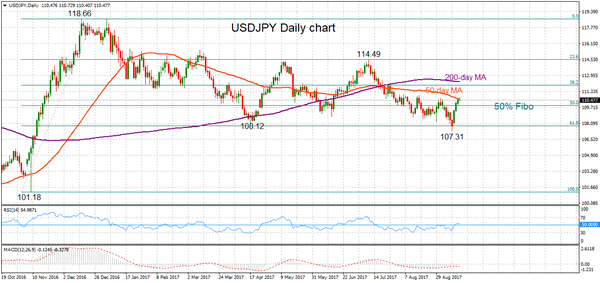
USD/JPY has posted gains for a third straight day on Tuesday. In North American trade, the pair is trading at 108.76, down 0.36% on the day. On the release front, Japanese Household Spending posted a strong gain of 0.8%, well above the forecast of -0.2%. The Japanese unemployment rate remained unchanged at 2.8%, matching the forecast. In the US, CB Consumer Confidence improved to 122.9, beating the estimate of 120.9 points. Later in the day, Japan releases Retail Sales, which is expected to slow to 1.1%. On Wednesday, there are two key events in the US – ADP Nonfarm Payrolls and Preliminary GDP.
North Korea is back in the news again, as the rogue country fired a missile over Japanese territory on Tuesday. Japan and the US have sharply condemned the missile launch, and with tensions once again climbing in the Korean peninsula, nervous investors have moved a way from stocks in favor of the safe-haven Japanese yen. If the crisis continues, the yen could make further gains against the greenback.
At the Jackson Hole meeting last week, Yellen did not discuss interest rate policy, choosing instead to emphasize that the financial regulations put in place since the financial crisis in 2008 should not be undermined. Her message appeared aim at Donald Trump, who has expressed his intention to relax banking and financial regulations which he has argued are hampering business. The markets remain skeptical about a third and final rate hike this year, as the odds of an increase in December have been falling – currently, the odds a December hike are at 35%, down from 42% a month ago.
Like other Western economies, Japan remains gripped with low inflation. This has resulted in the Bank of Japan keeping in place its ultra-accommodative monetary policy. Unlike the US and Europe, however, the BoJ has given no indications of tightening policy anytime soon, insisting that that inflation must first rise closer to its target of 2%. The economy is headed in right direction, as GDP has expanded for six consecutive quarters. In the second quarter, GDP impressed with a gain of 1.0%, well above the forecast of 0.6%. Still, with inflation nowhere near the BoJ's target, the bank's radical stimulus program is likely to remain in place for the foreseeable future.
Trade Idea Wrap-up: USD/CHF – Sell at 0.9530
USD/CHF - 0.9475
Most recent candlesticks pattern : N/A
Trend : Down
Tenkan-Sen level : 0.9466
Kijun-Sen level : 0.9499
Ichimoku cloud top : 0.9595
Ichimoku cloud bottom : 0.9570
Original strategy :
Sell at 0.9520, Target: 0.9420, Stop: 0.9555
Position : -
Target : -
Stop : -
New strategy :
Sell at 0.9530, Target: 0.9430, Stop: 0.9565
Position : -
Target : -
Stop : -
As the greenback has recovered after falling to 0.9428, suggesting minor consolidation above this level would be seen and test of the Kijun-Sen (now at 0.9499) and then 0.9515-20 (38.2% Fibonacci retracement of 0.9663-0.9428), however, previous support at 0.9537 should limit upside and bring another decline later, below said support at 0.9428 would extend recent decline to 0.9400, however, loss of momentum should prevent sharp fall below 0.9370-75 and reckon 0.9350 would hold.
In view of this, would not chase this fall at current level and we are looking to sell dollar on recovery as previous support at 0.9537 should turn into resistance and limit dollar’s upside, bring another decline. Only above resistance at 0.9578-83 would abort and signal low is formed, bring a stronger rebound towards 0.9620.

Trade Idea Wrap-up: GBP/USD – Buy at 1.2880
GBP/USD - 1.2940
Most recent candlesticks pattern : N/A
Trend : Near term up
Tenkan-Sen level : 1.2952
Kijun-Sen level : 1.2946
Ichimoku cloud top : 1.2888
Ichimoku cloud bottom : 1.2865
Original strategy :
Buy at 1.2900, Target: 1.3000, Stop: 1.2865
Position : -
Target : -
Stop : -
New strategy :
Buy at 1.2880, Target: 1.2980, Stop: 1.2845
Position : -
Target : -
Stop : -
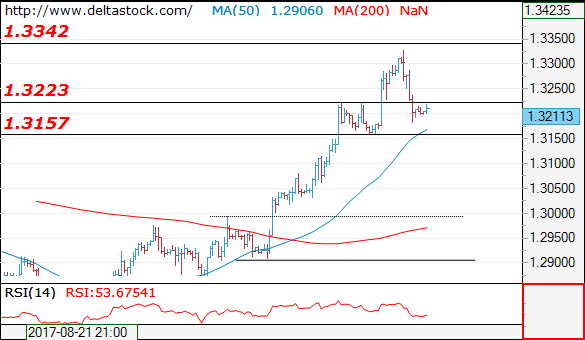
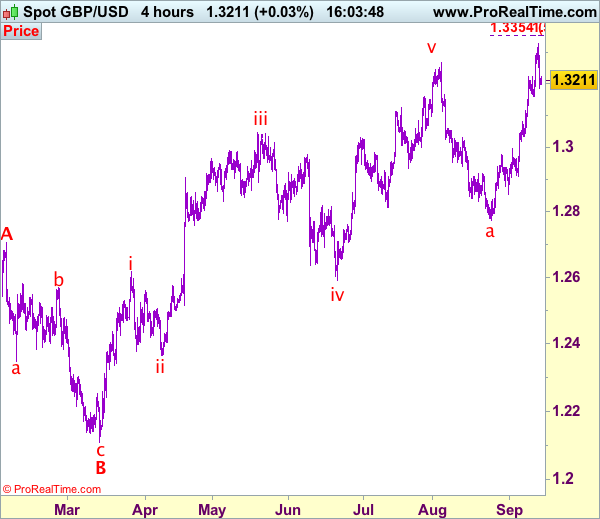
As cable has eased after intra-day rise to 1.2979, suggesting minor consolidation below this level would be seen and pullback to 1.2920 and then 1.2900 cannot be ruled out, however, still reckon support at 1.2873 would contain downside and bring another rise later, above said resistance would add credence to our view that a temporary low has been formed at 1.2774 last week and extend this rise for retracement of recent decline to 1.3000 and later towards previous resistance at 1.3032 which is likely to hold from here.
In view of this, we are looking to buy sterling on pullback as support at 1.2873 should limit downside. Below the lower Kumo (now at 1.2865) would defer and signal first leg of upmove from 1.2774 has ended, risk weakness to 1.2840-45 but support at 1.2813 should remain intact, bring another rebound later.

Trade Idea Wrap-up: EUR/USD – Buy at 1.1965
EUR/USD - 1.2025
Most recent candlesticks pattern : N/A
Trend : Up
Tenkan-Sen level : 1.2040
Kijun-Sen level : 1.2003
Ichimoku cloud top : 1.1901
Ichimoku cloud bottom : 1.1867
Original strategy :
Buy at 1.1965, Target: 1.2065, Stop: 1.1930
Position : -
Target : -
Stop : -
New strategy :
Buy at 1.1965, Target: 1.2065, Stop: 1.1930
Position : -
Target : -
Stop : -
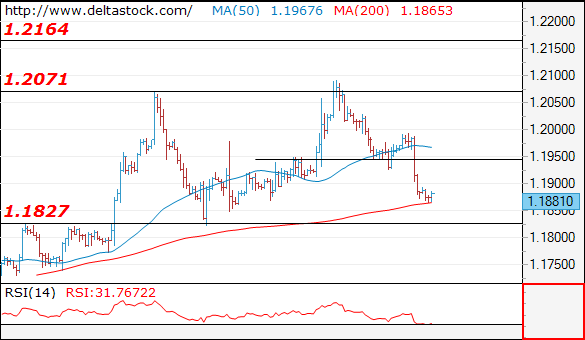
As euro’s upmove accelerated after last week’s anticipated rally above previous resistance at 1.1910 (now support), adding credence to our bullish view that recent upmove is still in progress and may extend headway to 1.2070 and then 1.2095-00, however, near term overbought condition should limit upside and reckon 1.2150-55 (61.8% projection of 1.1119-1.1910 measuring from 1.1662) would hold from here, bring retreat later.
In view of this, would not chase this rise here and would be prudent to reinstate long on pullback as 1.1955-65 should limit downside. Only below 1.1930 would defer and risk test of support area at 1.1910-13 which is likely to hold from here.

Trade Idea Wrap-up: USD/JPY – Stand aside
USD/JPY - 108.85
Most recent candlesticks pattern : N/A
Trend : Near term down
Tenkan-Sen level : 108.59
Kijun-Sen level : 108.82
Ichimoku cloud top : 109.44
Ichimoku cloud bottom : 109.33
Original strategy :
Sell at 109.15, Target: 108.15, Stop: 109.50
Position : -
Target : -
Stop : -
New strategy :
Stand aside
Position : -
Target : -
Stop : -
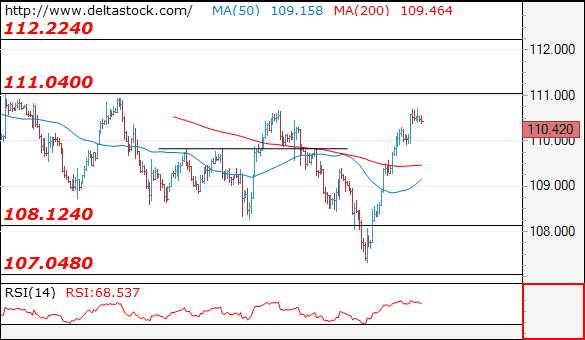
Although the greenback fell marginally to 108.27, as dollar has rebounded after holding above previous support at 108.13, suggesting consolidation above this level would be seen and another corrective bounce to 109.15-20 cannot be ruled out, however, reckon resistance at 109.41 would limit upside and bring another decline later, below said support at 108.27 would bring retest of 108.13 but only break of this 2017 low confirm early decline from 118.66 top has resumed and bring subsequent fall to 108.05-06 (50% projection of 114.50-108.73 measuring from 110.95) and later 117.70, having said that, 117.35-40 (61.8% projection) would hold.
In view of this, would not chase this fall here and would be prudent to stand aside for now. Only break of resistance at 109.41 (yesterday’s high) would signal low is formed, bring a stronger rebound to 109.60, then towards resistance at 109.85.

Trade Idea: EUR/GBP – Buy at 0.9200
EUR/GBP - 0.9285
Original strategy :
Buy at 0.9155, Target: 0.9295, Stop: 0.9115
Position : -
Target : -
Stop : -
New strategy :
Buy at 0.9200, Target: 0.9320, Stop: 0.9160
Position : -
Target : -
Stop : -
As the single currency has risen again after brief pullback, adding credence to our bullish view that the major rise from 0.8304 is still in progress and may extend further gain to 0.9310-20, then 0.9335-40 but weakening of near term upward momentum should prevent sharp move beyond 0.9365-70 and price should falter below 0.9395-00, risk from there has increased for a retreat to take place later.
In view of this, would not chase this rise here and would be prudent to buy euro on subsequent pullback as 0.9200 would limit downside. Below support at 0.9189 would defer and suggest a temporary top is possibly formed, risk test of 0.9150-60, however, break there is needed to add credence to this view, bring retracement of recent upmove towards 0.9100.
Our preferred count is that, after forming a major top at 0.9805 (wave V), (A)-(B)-(C) correction is unfolding with (A) leg ended at 0.8400 (A: 0.8637, B: 0.9491 and 5-waver C ended at 0.8400. Wave (B) has ended at 0.9413 and impulsive wave (C) has either ended at 0.8067 or may extend one more fall to 0.8000 before prospect of another rally. Current breach of indicated resistance at 0.9043 confirms our view that the (C) leg has ended and bring stronger rebound towards 0.9150/54, then towards 0.9240/50.

Trade Idea: USD/CAD – Sell at 1.2595
USD/CAD - 1.2500
Trend: Down
Original strategy :
Sell at 1.2550, Target: 1.2350, Stop: 1.2610
Position: -
Target: -
Stop: -
New strategy :
Sell at 1.2595, Target: 1.2395, Stop: 1.2655
Position: -
Target: -
Stop:-
As the greenback has recovered after holding above previous support at 1.2414, suggesting further consolidation above this level would be seen and another bounce to 1.2540-50 cannot be ruled out, however, reckon upside would be limited to 1.2600 and bring another decline later, below said support at 1.2414 (wave iii trough) would confirm recent decline has finally resumed and extend weakness to 1.2350, then towards 1.2300. We are keeping our count that wave v as well as wave (C) ended at 1.3794 and impulsive wave (i ii, i ii) is now unfolding with minor wave iii ended at 1.2414, followed by wave iv correction possibly ended at 1.2778, wave v should extend towards 1.2300.
In view of this, we are looking to sell again on recovery as 1.2600 should limit upside. Only above 1.2630-35 would defer and prolong consolidation, risk rebound to 1.2660 but resistance at 1.2691 should hold from here, bring further consolidation. Above 1.2691 resistance would risk a stronger rebound to 1.2740-50, however, said resistance at 1.2778 should hold. In the event the pair breaks said resistance at 1.2778, this would abort and signal the rebound from 1.2414 is still in progress for retracement of recent decline to 1.2825-30 but still reckon upside would be limited to 1.2880-85 (50% Fibonacci retracement of wave iii) and price should falter well below 1.2990-95 (61.8% Fibonacci retracement), bring retreat later.
To recap, wave B from 1.3066 is unfolding as an a-b-c and is sub-divided as a: 1.2192, b: 1.2716 and wave c is a 5-waver with i: 1.1983, ii: 1.2506, extended wave iii with minor iii at 1.0206, wave iv ended at 1.0781 and wave v as well as wave iii has ended at 0.9931, hence the subsequent choppy trading is the wave iv which is unfolding as (a)-(b)-(c) with (a) leg of iv ended at 1.0854, followed by (b) leg at 1.0108 and (c) leg as well as the wave iv ended at 1.0674. The wave v is sub-divided by minor wave (i): 0.9980, (ii): 1.0374, (iii): 0.9446, (iv): 0.9913 and (v) as well as v has possibly ended at 0.9407, therefore, consolidation with upside bias is seen for major correction, indicated target at 1.3700 and 1.4000 had been met and further gain to 1.4700 would be seen later.

Dollar Remains Under Pressure; Euro and Gold Extend Gains
The US dollar remained under pressure in European trading today, extending its Asian session losses, while the euro and gold added to their earlier gains. The risk aversion brought on from North Korea's latest missile tests, which violated Japanese airspace, showed little sign of dissipating, with major European indices falling deep into the red. Dollar weakness lifted other majors however, with sterling, and the Canadian, Australian and New Zealand dollars all rising on the back of the greenback's slide.
The absence of major data didn't help sentiment either with only the US consumer confidence indicator able to distract investors' attention away from geopolitical concerns. US President Donald Trump fuelled market anxiety by saying that "all options are on the table". The dollar got only a modest boost from better-than-expected consumer confidence data. The Conference Board's gauge of consumer confidence improved to 122.9 in August, beating forecasts of 120.3, although July's figure was revised down from 121.1 to 120.0. Reaction to the S&P CoreLogic Case-Shiller 20-City house price index was also muted. The index rose by 5.7% year-on-year in June, in line with expectations.
The dollar recovered from its four-month low of 108.25 yen to climb towards 108.80 yen after the data. The dollar index also came off its lows to rise to 91.92, having touched a 2½-year low earlier in the day. Against the Swiss franc, the dollar recovered marginally to 0.9463, though this was still 0.9% down on the day.
The euro continued to charge higher, achieving yet another 2½-year high as it hit $1.2069. The single currency also made new highs against the pound, climbing to a near 10-month high of 0.9306 pounds, and even managed to resist the yen's strong advance to stand flat on the day at 130.88 yen. The next big focus for the euro is Thursday's flash Eurozone inflation data.
Sterling was mixed on Tuesday as it fell against the euro and the yen but was firmer against the dollar. The pound rose to a two-week high of $1.2978 despite growing doubts about the UK's progress in the Brexit negotiations with the EU. As the third round of Brexit talks got underway between Britain and the EU, European Commission President Jean-Claude Juncker said the UK government's Brexit position papers were not satisfactory, insisting that the divorce bill must be settled first before trade discussions can begin. Meanwhile, there was irritation on the British side following the EU chief negotiator Michel Barnier's comments aimed at the UK to start "negotiating seriously".
The risk-sensitive Australian and New Zealand dollars both edged higher versus their US counterparts, even as investors fretted about the latest fallout over North Korea's actions. The aussie was up 0.1% at $0.7972 as traders awaited Australian building approvals and capital expenditure figures due on Wednesday and Thursday respectively. The kiwi was up a more solid 0.5% at $0.7290 in afternoon European trading hours.
The Canadian dollar was also firmer, though it gave up some of its earlier gains following the release of producer price data out of Canada. Producer prices fell from a downwardly revised 3.1% to 1.3% y/y rate in July. Dollar/loonie bounced off a one-month low of 1.2438 to rebound to around 1.2490 after the release.
In commodities, gold extended its gains, reaching a fresh 9½-month of $1325.94 an ounce before easing to around $1320. Oil prices remained weighed by concerns over the impact on demand of the refinery closures in the US as a result of the tropical storm Harvey hitting the state of Texas. WTI and Brent crude were both mostly flat in late European trading at $46.60 and $51.88 a barrel respectively.
Dollar Suffers as Global Risk Sentiment Plummets
- European equities lose more than 1% today with the German Dax underperforming (-1.95%) as risk aversion reigns over markets following tonight's North Korean missile launch. Gold prices reaches the highest level since November 2016. US stock markets open moderately lower too, with losses amounting to 0.5%.
- US President Trump has joined other world leaders in condemning North Korea for shooting a missile over Japan, saying that "all options are on the table" for a response.
- Trade tensions mounted after Trump rejected China's proposal to cut steel overcapacity and urged his officials to find a way to impose tariffs on Chinese imports, the FT reported, citing people familiar. The offer was endorsed by Commerce Secretary Wilbur Ross.
- German consumer confidence improved again in the most recent month, with another high since the start of the series in 2005. French consumer spending rebounded in July (+0.7% M/M, after a dip (0.6% M/M) in June, suggesting domestic demand remains on a healthy albeit not so spectacular growth path.
- EC President Juncker stressed that negotiations about a future EU-UK trading relationship after Britain leaves the EU could only start once divorce issues were resolved. Britain and the EC are holding a third round of talks.
- Poland should nudge interest rates up now to avoid spikes in inflation, central banker Zubelewicz said, taking a minority view. The central bank left rates unchanged last month at a record low of 1.5%, and Governor Glapinski said he expected them to stay there until the end of 2018, based on how inflation was expected to develop.
Rates
Risk aversion causes test of key US 10-yr yield support
Global core bonds profited from today's risk aversion with classic safe haven assets (JPY, CHF, gold) outperforming and riskier assets (peripheral bonds, stocks) underperforming. The strength of the single currency (see below) is exception to the rule. The German yield curve bull flattens with yields up to 5.3 bps (30-yr) lower. US yields shed 5 to 6 bps with the front end of the curve underperforming (-2.4 bps). The US 10-yr yield extensively tests 2.1% support. A sustained break suggests that the correction lower could extend towards levels from before Trump's election victory (1.8% area). We don't take such break for granted right now with a speech by US President Trump (on fiscal stimulus) and key US eco data ahead (which we expect to be strong). Longer term, new hurdles will line up (FOMC meeting, debt ceiling debate, President Trump's volatility). On intra-EMU bond markets, 10-yr yield spreads versus Germany widen 4-5 bps form Greece, Portugal and Italy.
North Korea's first missile launch over the northern part of Japan in 20 years triggered an escalation in the region's conflict. The huge economic impact of hurricane Harvey is also becoming ever more clear. German Bunds copied US Treasuries' strength in the European opening and extended their run until around European noon as stocks drifted south. The EMU eco calendar only contained second tier national data which didn't influence sentiment. Market tensions calmed going into US dealings even if US Treasuries continue receiving a decent bid.
The German Finanzagentur held a 2-yr Schatz auction (€5B 0% Sep2019). Total bids amounted only €4.67B, below the €5.44B average at the previous 4 Schatz auction and below the amount on offer. The Bundesbank set aside €0.97B for secondary market operations, resulting in an official bid-cover of 0.9. The prospect of policy normalization over the bond's lifetime kept some investors' at bay, despite today's risk off sentiment. The US Treasury concludes this week's supply operation today with a $28B 7-yr Note auction. The WI currently trades around 1.93%.
Currencies
Dollar suffers as global risk sentiment plummets
Today, geopolitical uncertainty on north Korea and the potential impact of hurricane Harvey caused an outright risk-off sentiment. Aside from the yen (and the CHF) it was the euro, not the dollar, which took up the safe haven function. EUR/USD easily cleared the 1.20 mark. USD/JPY came within reach of the 1.0813 key support, but a real test didn't occur.
Overnight, markets shifted into risk-off modus as North Korea fired a missile over Japan, provoking a sharp verbal reaction from South Korea, Japan and the US. Japanese premier Abe and US president Trump extensively discussed the issue and agreed to raise the pressure on North Korea. The yen played its role as safe haven with USD/JPY trading in the 108.75/80 area. However, the loss on Asian equity markets remained modest. It had little impact on EUR/USD. The pair traded in the 1.1975 area.
Late in the Asian session, it looked like (equity) markets would again largely ignore the geopolitical tensions, as was often the case of late. However, sentiment deteriorated sharply at the start of European trading. The dollar came under further pressure. European investors maybe grew more uncertain on the US economy due to the impact of hurricane Harvey. EUR/USD jumped above the psychological level of 1.20. This move triggered a negative vicious cycle of losses of both the dollar and of European equities. European equities at some point lost almost 2%. EUR/USD filled offers in the 1.2070 area. Understandably, core bond yields declined several basis points, but the change in interest rate differentials was very modest given the sharp moves in the FX market. USD/JPY dropped to the 108.30 area, but the key 108.13 support was left intact.
Equities traded slightly off the intraday lows as US investors joined the fray, but trading remained very nervous. The FX trading dynamics also change slightly. EUR/USD lost a few ticks, but USD/JPY remained in the defensive. EUR/JPY almost tested yesterday's top just below 131, but the test was rejected. The jury is still out, but the intra-day topping out in EUR/JPY may be eased the upward pressure on EUR/USD. For now, the uptrend of euro/downtrend of the dollar remains firmly in place. Even so, we keep a close eye on the EUR/JPY trading dynamics to monitor a potential change on the recent sharp moves.
EUR/GBP tests 0.93 as Brexit talks yield no progress
Today, trading in sterling was both affected by technical/global market considerations and by fundamental issues. Regarding the 'fundamentals', the third stage in the Brexit negotiations between the EU en the UK still looks like a dead end street. EU commission President Juncker simply earmarked the UK position papers as not satisfactory. USD weakness prevailed. Cable rose temporary to the 1.2975/80 area. At the same time, the Brexit noise clearly caused a substantial underperformance of cable versus EUR/USD. In this move, EUR/GBP jumped temporary north of 0.93. The pair trades currently slightly below this big figure. Overall negative risk sentiment is also a negative factor for sterling.
SPX Elliott Wave View: At Weekly Inflection Area
SPX S&P 500 Long Term Elliott Wave view suggests that the Index has reached the minimum target at 2234.35 to end a big cycle from an all time low. If we assume the Index starts from all-time low of 0, then the rally can be labelled as a zigzag Elliott Wave structure. The first leg wave A ended in March 2000 at 1553.11 during the dot com bubble. From 2000 peak, the Index corrected in 3 waves and reached 50% retracement at 766.67 in the year 2002. SPX then started a new leg higher which broke above 2000 peak in October 2007. Technically, with the break above 2000 peak, S&P formed a bullish sequence (a higher high) from all-time low and the natural path is to extend higher, especially considering that it has corrected 50% into 2002.
As SPX formed a new peak in the year 2007, the Market did an unexpected detour. Instead of the natural path of extending higher, the Index declined strongly in 5 waves into the year 2009 during the financial crisis due to subprime mortgage default and collapse of Lehman Brothers. This collapse is even captured in the movie titled "The Big Short" when several traders made money by correctly betting on the ensuing crash. In reality however, these traders got lucky as they were trading against a natural cycle, which happens only in a wave C of a FLAT structure.
The decline broke below 2002 low, sentiment was very negative at that time and no one was talking about buying the Index. What people don't realize is that the Market is a reflection of human progress and thus it should never go back to zero. Correction is natural and allows the market to reset. The Market ended a 3-3-5 Expanded Flat Elliott Wave structure in 2009 and then began the Big Long. Interestingly, nobody is filming or talking about the Big Long, and nowadays most people still talk about the impending big crash almost every single year even when the market keeps rallying. Almost nobody is talking about how great the move higher is as people don't understand the primary trend in the human nature is up.
Right now, S&P has reached an interesting weekly inflection area in which we can label the entire move from all time 0 as a zigzag Elliott Wave Structure. Wave A started from all-time 0 to 2000 high. The 3 waves correction from 2000 high to 2009 low is labelled as wave B and take the form of Expanded Flat. Then from 2009 low to present day, it is labelled as wave C. The minimum target wave C = A at 2234.35 has been reached, but that doesn't mean the Indices will crash from here. We acknowledge that the Index could indeed have a decent pullback from this area, but keep in mind that it's possible for the Index to extend higher within the blue box at 2234.35 (100% of A-B) – 3196.41 (161.8% of A-B). If the Index reaches 3196.41, then the whole move from all-time 0 can be labelled instead as 1-2-3. If reaching 3196.4, the third wave in this case is extended, which is the typical characteristic of wave 3 in an impulse. Thus the Big Long at this point in time can even become an extra Big Long, until it gets denied.
SPX S&P 500 Long Term Elliott Wave Chart