Sample Category Title
China’s 2023 economic growth at 5.2%, population shrinks for second year
China's GDP grew 5.2% yoy in Q4, an uptick from Q3's 4.9% yoy. For the full year of 2023, the economy also recorded a growth rate of 5.2%. On a quarter-by-quarter basis, GDP growth rate was 1.0% qoq, matched expectation, though this marked a slowdown from the previous quarter's revised 1.5% qoq gain.
In the industrial sector, production rose by 6.8% yoy in December, slightly higher than the previous month's 6.6%, meeting market forecasts. However, retail sales growth decelerated to 7.4% yoy, a drop from November's 10.1% yoy and below the expected 8.1% yoy.
Investment patterns showed a mixed trend. Overall fixed asset investment in 2023 grew by 3.0%, slightly exceeding the 2.9% expectation. Within this category, real estate investment saw a significant drop of -9.6%. Conversely, investment in infrastructure and manufacturing rose by 5.9% and 6.5%, respectively, signaling growth in these areas.
Amidst these economic developments, China faces a demographic challenge as its population fell for the second consecutive year in 2023. Total population decreased by -2.75m to 1.409B, a more rapid decline than in 2022.
ECB’s Simkus and Müller urge caution over aggressive rate cut expectations
ECB Governing Council Gediminas Simkus expressed a conditional optimism about rate reductions within the year, stating, "If we don't see any surprises that would change the data and the thinking, I'm positive about rate cuts this year."
However, Simkus tempered his outlook with a dose of realism regarding the timing of these cuts. He clarified, "I'm far less optimistic than markets about rate cuts in March or April."
Separately, another Governing Council member Madis Müller commented on the aggressiveness of market expectations for ECB rate cuts in 2024. He observed that these expectations do not align with the current data available to the central bank.
Müller further emphasized that wage growth in Eurozone remains out of sync with the ECB's current inflation targets. He noted that ECB cannot proceed with cutting rates until data reflects the desired price growth conditions.
Fed’s Waller anticipates rate cuts this year, stresses upcoming CPI revisions
Fed Governor Christopher Waller expressed growing confidence bring inflation down to target. He noted in a speech overnight that Fed is "within striking distance of achieving a sustainable level of 2 percent PCE inflation". However, he also emphasized the need for more data in the coming months to confirm or challenge the notion that inflation is moving sustainably toward Fed's goal.
Waller also mentioned that he perceives the risks to employment and inflation mandates as "more closely balanced" now. His focus is on watching for sustained progress on inflation and a modest cooling in the labor market.
Regarding interest rate cuts, Waller expressed that "as long as inflation doesn't rebound and stay elevated", he believes Fed will be able to lower the target range for the federal funds rate "this year". But he also clarified, "Clearly, the timing of cuts and the actual number of cuts in 2024 will depend on the incoming data."
Waller also highlighted the importance of the upcoming revisions to CPI inflation scheduled for next month. He recalled that last year's annual update to the seasonal factors reversed what initially appeared to be a decline in inflation. The January CPI report and revisions for 2023, due in mid-February, are anticipated to potentially alter the current understanding of inflation. Waller expressed hope that these revisions would confirm the progress observed so far but emphasized that good policy must be based on data rather than hope.
GBP: My Expectations From CPI
In November, average pay growth in the UK slowed to 6.5%, down from 7.2% in the previous month, according to the Office for National Statistics. This decline suggests that inflationary pressures have weakened more than anticipated. The decrease in pay growth came as the UK jobs market weakened due to high interest rates and stagnation across much of the economy. Job vacancies also fell at the fastest rate on record in December, indicating a further cooling of the UK labour market. The drop in wages growth, however, was accompanied by falls in inflation, meaning real wages grew for the fifth consecutive month, easing pressure on household incomes. Despite the decline in pay growth, the overall jobs market remained stable, with employment only marginally down and the unemployment rate unchanged at 4.2%.
GBPCAD - D1 Timeframe
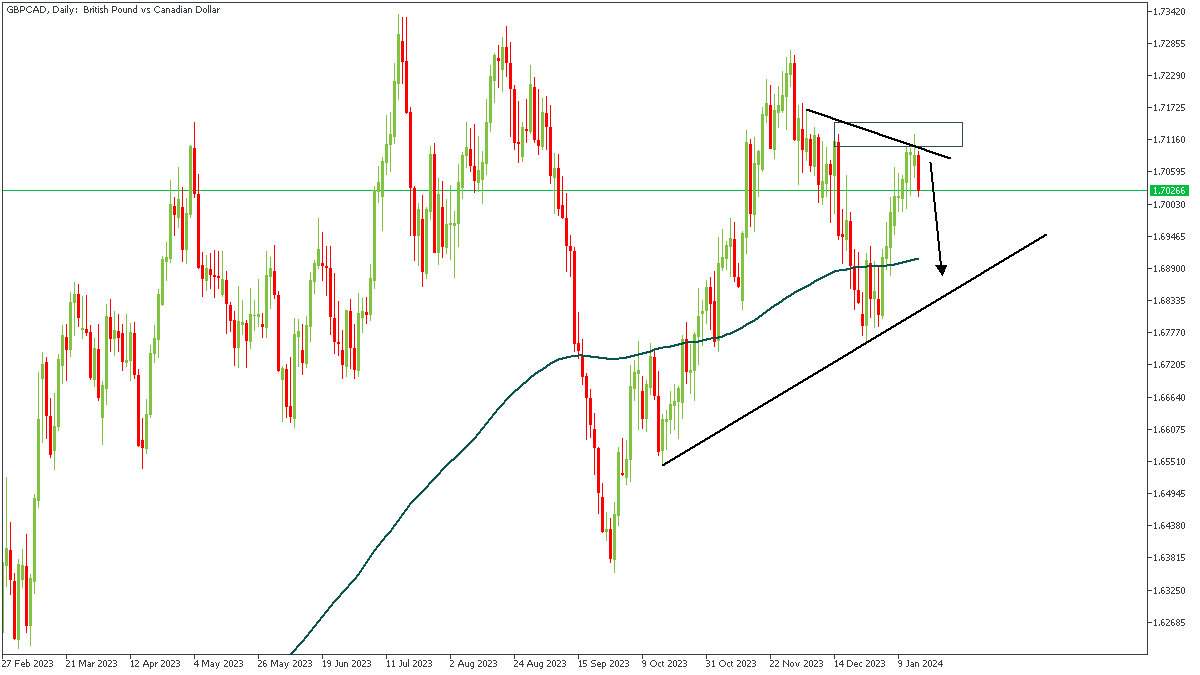
The Daily timeframe of GBPCAD shows price currently being rejected from the trendline resistance, and the supply zone. As a result, I expect to see the price action slide towards the moving average for support. In the meantime, I will be waiting for an entry from the lower timeframes before taking a shot at it.
Analyst’s Expectations:
- Direction: Bearish
- Target: 1.69092
- Invalidation: 1.70940
GBPNZD - H4 Timeframe
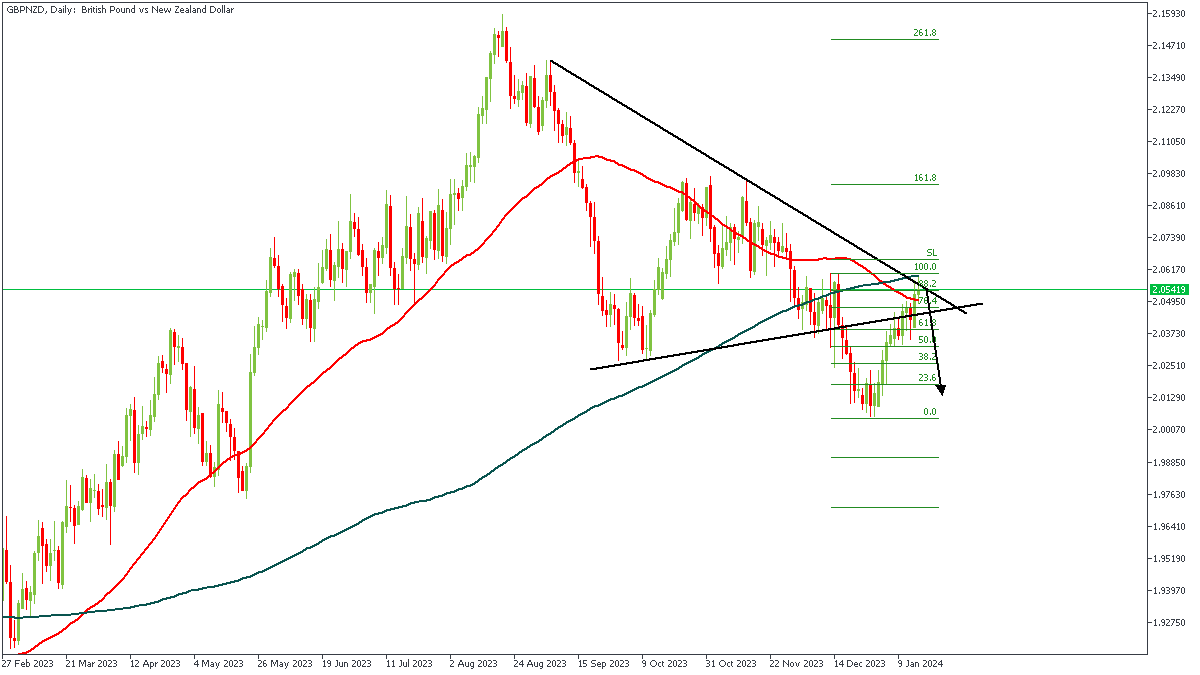
GBPNZD is currently trading between the 50 and 200 moving averages. The 200 moving average overlaps with the resistance trendline, and the moving averages are also arrayed in a descending order. Considering the confluence from the Fibonacci retracement levels, I will be positioning for a short entry with a target at the 23% of the Fibonacci retracement level.
Analyst’s Expectations:
- Direction: Bearish
- Target: 2.04375
- Invalidation: 2.05870
GBPJPY - D1 Timeframe
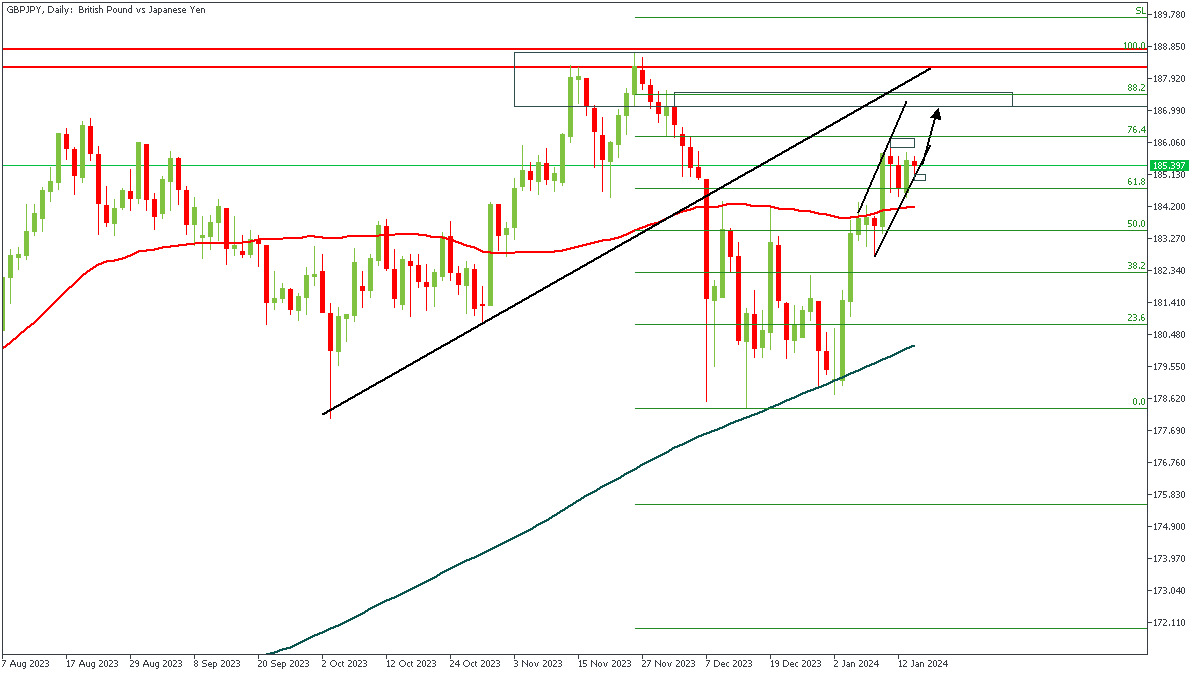
After breaking below the trendline support, the price action on GBPJPY seems to be retracing its steps in order to complete a retest of the supply zone and the QMR pattern. The supply zone on the Daily timeframe overlaps the 88% of the Fibonacci retracement zone, while the current consolidation within the channel is also a sign that the price action is seeking out a key zone from which it can react properly.
Analyst’s Expectations:
- Direction: Bullish
- Target: 187.054
- Invalidation: 184.763
CONCLUSION
The trading of CFDs comes at a risk. Thus, to succeed, you have to manage risks properly. To avoid costly mistakes while you look to trade these opportunities, be sure to do your due diligence and manage your risk appropriately.
GBP/USD At Risk of More Losses Below 1.2600
Key Highlights
- GBP/USD is struggling to stay above the key 1.2620 support zone.
- It broke a major bullish trend line with support at 1.2685 on the 4-hour chart.
- EUR/USD is showing a few bearish signs below 1.0900.
- Gold prices started a downside correction from the $2,060 resistance level.
GBP/USD Technical Analysis
The British Pound started a fresh decline from the 1.2785 level against the US Dollar. GBP/USD declined below the 1.2700 level to move into a bearish zone.
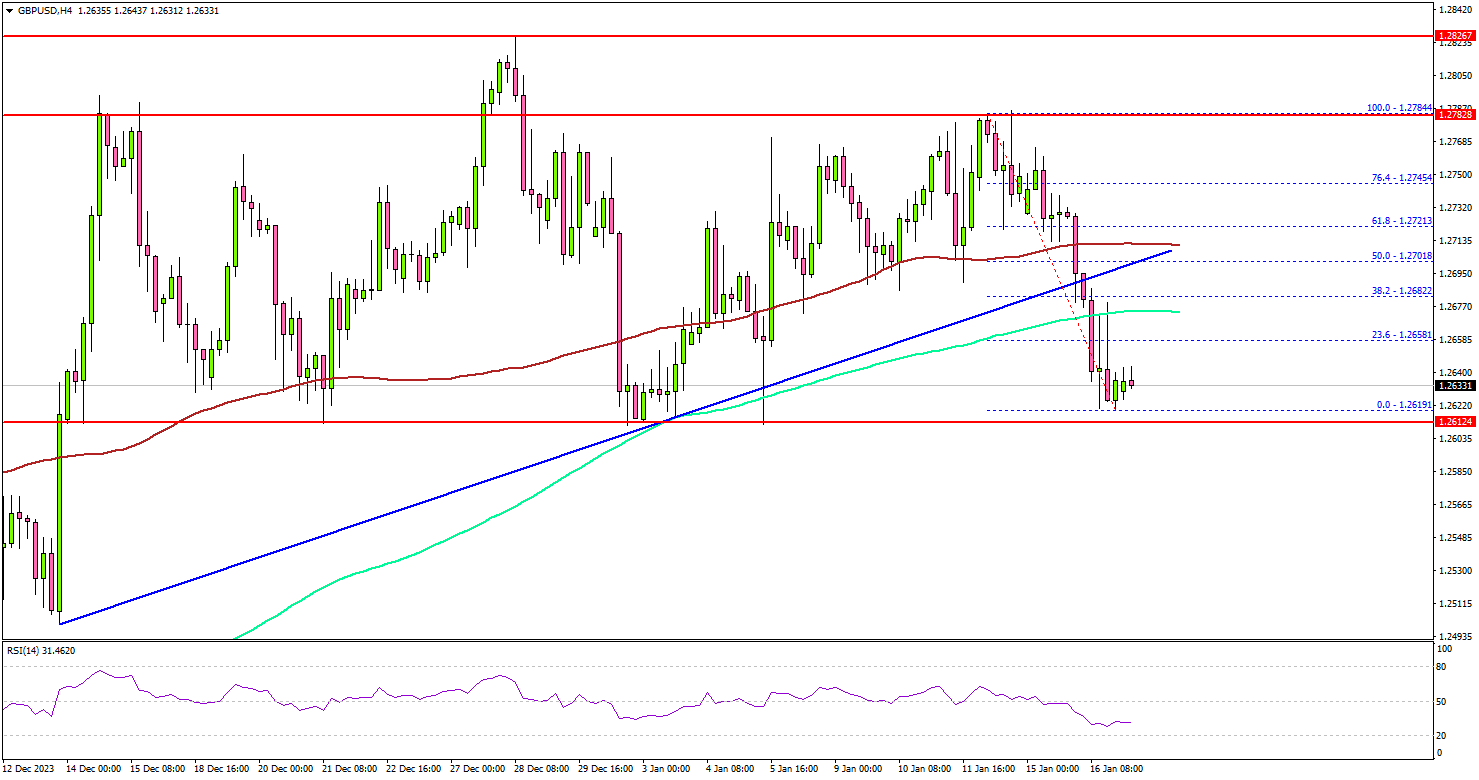
Looking at the 4-hour chart, the pair settled below the 1.2680 level, the 100 simple moving average (red, 4 hours), and the 200 simple moving average (green, 4 hours). There was a spike below the 1.2640 level.
The pair traded as low as 1.2619 and is currently consolidating losses. On the upside, immediate resistance is near the 1.2680 level and the 200 simple moving average (green, 4 hours). The next key resistance is near the 1.2700 zone.
The 100 simple moving average (red, 4 hours) is also near the 1.2700 zone to act as a barrier. A close above the 1.2700 zone could open the doors for more upsides. The next stop for the bulls might be 1.2785.
If there is a fresh decline, the pair could clear the 1.2600 support. The next major support sits at 1.2540. A downside break below the 1.2540 zone could spark a sustained decline. The next major support is 1.2420, below which the pair might decline and test 1.2350.
Looking at EUR/USD, the pair is struggling and it might slide below the 1.0850 support zone in the coming sessions.
Economic Releases
- UK Consumer Price Index for Dec 2023 (YoY) – Forecast +3.8%, versus +3.9% previous.
- UK Core Consumer Price Index for Dec 2023 (YoY) – Forecast +4.9%, versus +5.1% previous.
- US Retail Sales for Dec 2023 (MoM) – Forecast +0.4%, versus +0.3% previous.
GBPAUD Wave Analysis
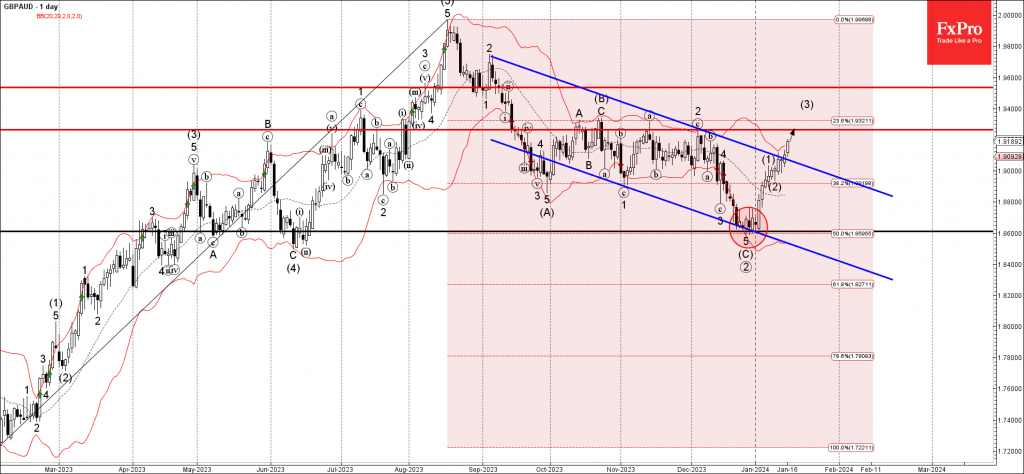
- GBPAUD broke weekly down channel
- Likely to rise to resistance level 1.9265
GBPAUD currency pair recently broke the resistance trendline of the weekly down channel from last September.
The breakout of this this down channel accelerated the active intermediate impulse wave (3).
Given the strong Swiss franc sales seen across the FX markets today, USDCHF can be expected to rise further to the next resistance level 1.9265 (which has been reversing the price from October).
USDCHF Wave Analysis
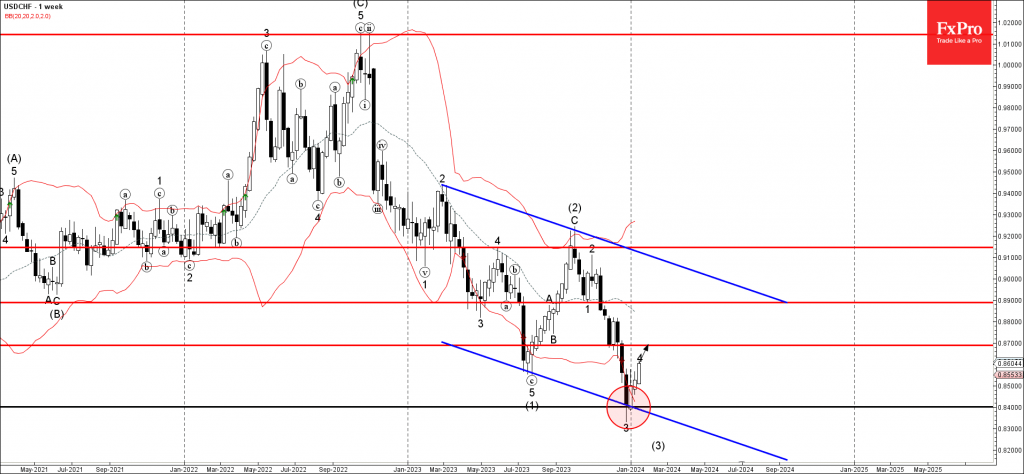
- USDCHF reversed from support level 0.8400
- Likely to rise to resistance level 0.8700
USDCHF currency pair recently reversed up with the weekly Piercing Line from the key support level 0.8400.
The support level 0.8400 was strengthened by the lower daily Bollinger Band and by the support trendline of the weekly down channel from the start of last year.
Given the strong Swiss franc sales, USDCHF can be expected to rise further to the next resistance level 0.8700 (former support from the end of last year).
Gold: Preparing for Breakout or Reversal? Dollar Will Decide
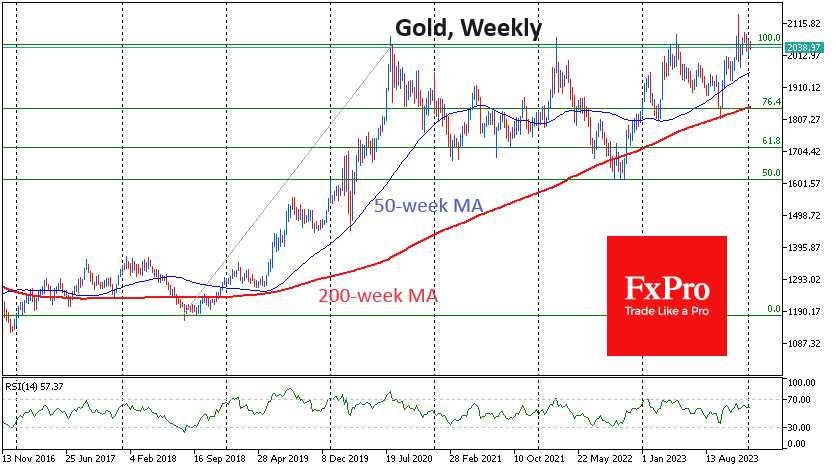
Gold lost 0.8% on Tuesday to $2037 due to the impact of a rising dollar after policymakers in Davos flagged overly optimistic expectations for an interest rate easing cycle.
Commentators are trying to find a link between hawkish comments from eurozone (not US) policymakers and the rise of the dollar. But we tend to see a technical pullback behind the USD strength after markets clearly jumped over their heads in their expectations, laying down rate cuts at every Fed meeting since the March meeting.
But in gold, another trend can also be highlighted. During the October-December price update of local highs, the RSI index on daily timeframes recorded a sequence of declining local peaks. This is a sign of bullish momentum exhaustion. We saw a similar one in March-May last year when a five-month downward trend followed the formal renewal of historical highs.
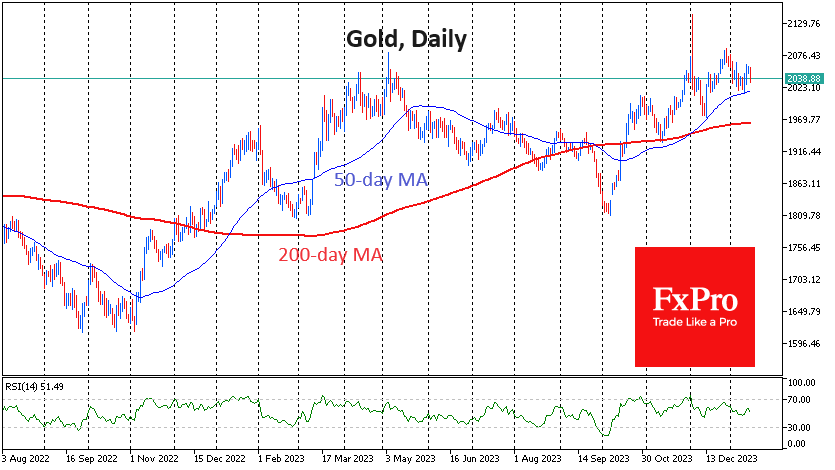
The price climbed a bit higher in October and experienced a powerful short squeeze at the start of last month. But since then, the market has been finding a balance of around $2040.
These are historically high levels, and the lull here may turn out to be both a period of consolidation before further growth impulse and the start of the bear market. The dynamics of the dollar, in this case, may turn out to be the final determining force.
Further strengthening of the dollar from current levels promises to significantly increase the pressure on gold, which is losing its attractiveness against the background of high yields on US bonds, supported by the growth of the US currency. A crucial intermediate stage in this case will be the level of $2020. The 50-day moving average, which has been a significant support level since November, is located there.
If the last impulse of the dollar is just short-term profit-taking, the gold bulls will have enough strength and liquidity to launch a new wave of price growth with the renewal of historical maximums and the final target above $2500.
Australian Employment Report in Focus as Aussie Dives
- Australia to add fewer jobs than before
- Unemployment rate to remain unchanged
- Aussie plummets ahead of the release on Thursday at 00:30 GMT
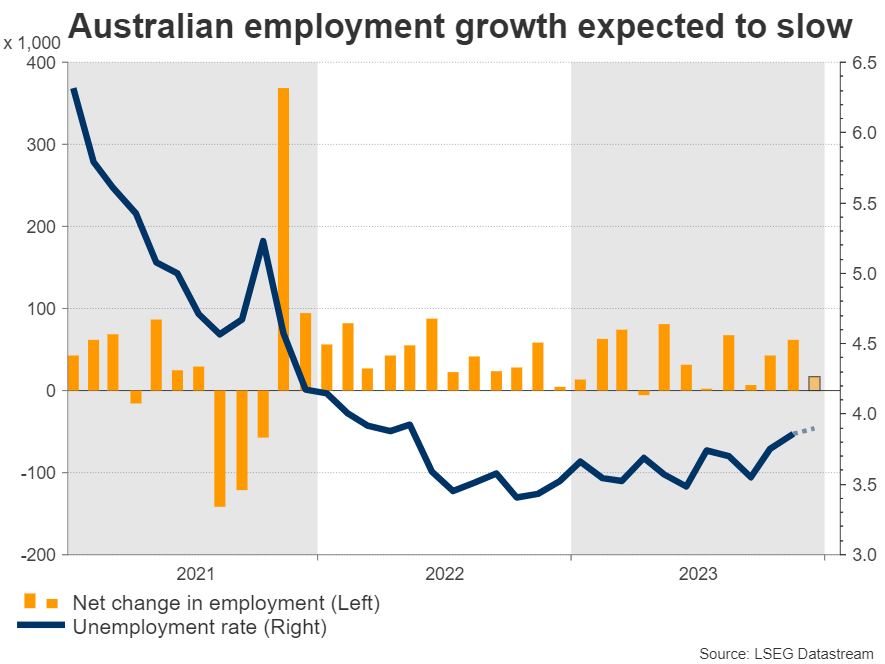
Data on employment continues to be relatively reliable. In most months, the increase in the labor force is bigger than the rise in unemployment. This is helping to keep the unemployment rate under control, which is currently relatively low at 3.9% but is nevertheless increasing. Even though retail sales have fallen by approximately 2% y/y, they appear to be rather stable and do not indicate any signs of recession or household concern. Despite the Reserve Bank of Australia's (RBA) tightening, housing the single largest source of household wealth appears to be in good shape.
RBA to cut rates in 2024
As most people expected, the Reserve Bank of Australia kept its cash rates at 4.35% at its last meeting of the year. Last month, Bullock warned that inflation was being caused more and more by high demand at home rather than supply changes from other countries. The board said it was aware that getting inflation back to the goal range of 2 to 3% was taking longer than expected. They also said that real inflation was higher than expected because the cost of services was going up faster than expected. Policymakers said again that more tightening will depend on the facts and how the risks are seen. The committee also said it would keep a close eye on the global economy, changes in local demand, and the future of inflation and the job market.
Concerns around the cost-of-living and interest rates continue to dominate consumers’ worries. The RBA’s decision to leave policy unchanged in the month provided little comfort, as household incomes remain under intense pressure from elevated inflation, sharply higher interest rates and a rising tax take.
As far as the market pricing is concerned, futures markets are pricing in a 50% likelihood of a reduction in May. By August, the first increase will be entirely priced in, and by December, a subsequent 25bps reduction is fully factored in by the market.
Employment report in the spotlight
The job market did better than expected in November, adding 61.5k jobs. It has now added 110k jobs over the last three months. This week's news on job openings backs up the idea that the need for workers will remain strong for a while. Even though companies are still able to handle a lot of the extra workers, there are signs that the job market is becoming less tight for those who already have jobs.
The market expects the number of jobs to go up by 18,000 in December and the jobless rate to stay the same at 3.9%. The rate of participation is also likely to stay the same at 67.2%.
AUDUSD in sell-off mode
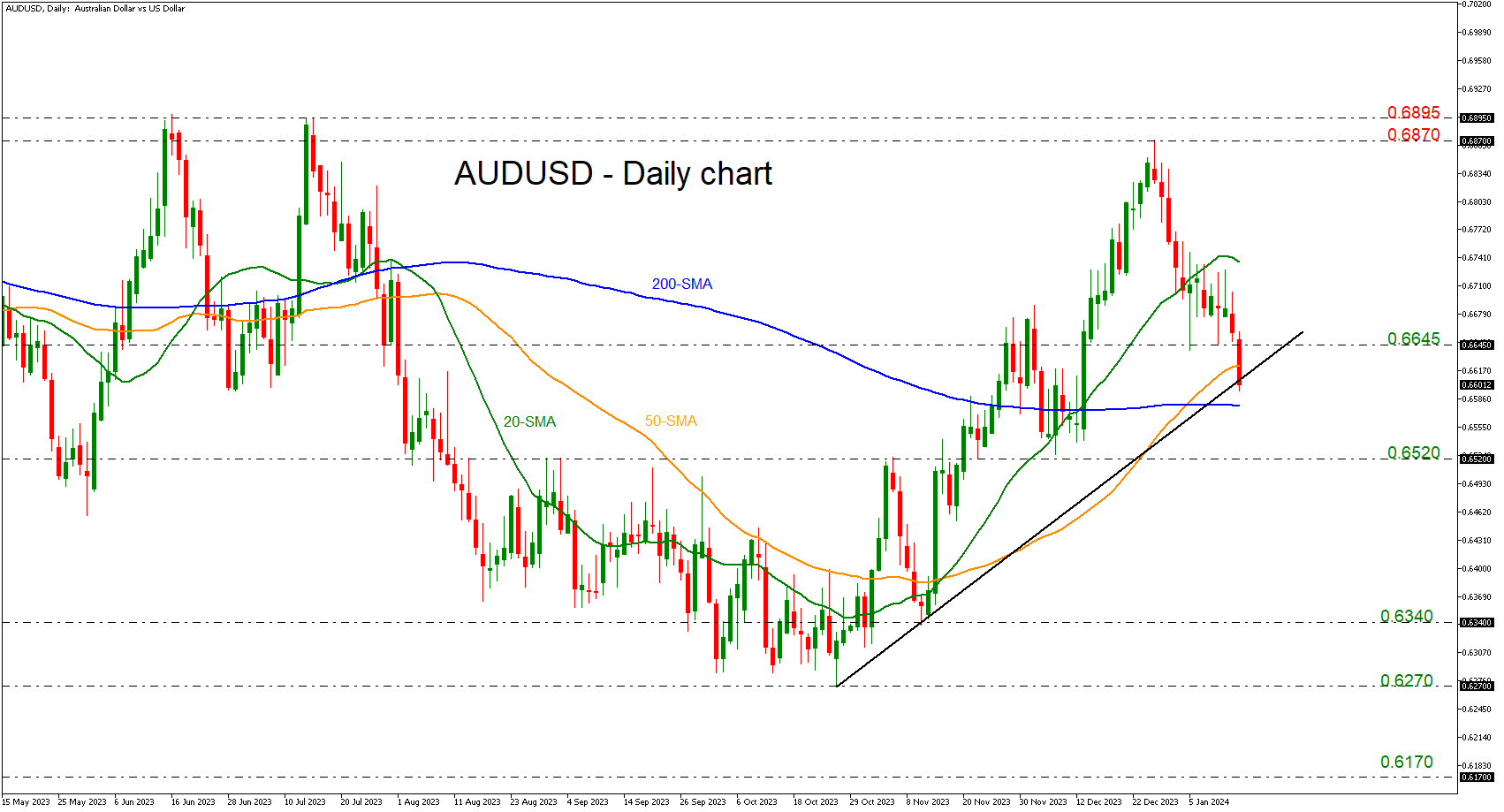
This week, the latest Australian labor force report, which is set to come out on Thursday, will also have an impact on how the AUDUSD moves. Currently, the market is plunging near the medium-term ascending trend line around the 0.6600 round number and any drops lower would open the way for a bear market until the 200-day simple moving average at 0.6580. Even lower, the market may challenge the 0.6520 support level.
On the other hand, a rise beyond the 0.6645 barrier could take the price until the 20-day SMA at 0.6740 ahead of the 0.6870-0.6895 restrictive region.