

Sample Category Title
Week Ahead – Avalanche of Data Releases to Keep Traders Busy
There are no major central bank decisions scheduled for next week, but that doesn’t mean markets will be quiet as there’s a ton of data releases that can fuel volatility. The highlight will be China’s economic growth, which will reveal exactly how powerful the reopening boost was. Meanwhile in Europe, the latest business surveys could decide whether the euro’s rally still has some miles left in the tank.
China set for growth rebound
The world’s second-largest economy has been battered and bruised over the last year, grappling with a double whammy of draconian lockdowns and the meltdown in the nation’s property sector. Luckily both problems have eased in recent months, as the anti-covid measures were lifted and the real estate market has started to heal.
Next week, the ball will get rolling with China’s GDP growth numbers on Tuesday. Business surveys painted a mixed picture during the first quarter, signaling that the services sector continues to enjoy a reopening boost but manufacturing has started to lose momentum.
Accordingly, forecasts from economists suggest economic activity picked up steam in Q1. Economic growth is expected to have risen by 1.2% from the previous quarter, after a flat reading in Q4. Hence, the situation seems to be improving, but it’s questionable whether this will last once the reopening boom fades.
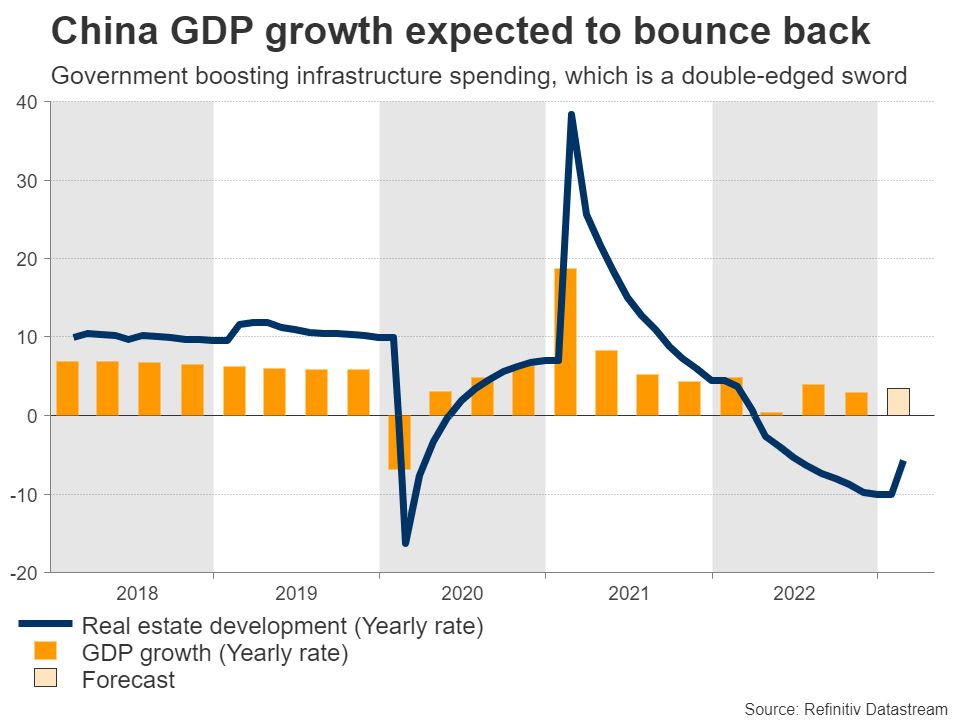
Overall, the outlook for China is still worrisome. The global economy is slowing and manufacturing demand has been hit particularly hard, spelling bad news for China’s manufacturing-heavy model. In addition, the real estate sector is recovering mostly because the government is boosting infrastructure spending again, which is a dangerous strategy as it can reinflate the property bubble.
In the FX market, the most sensitive currencies to Chinese data are the Australian and New Zealand dollars. While encouraging GDP numbers could provide a short-term lift to these currencies, it’s tough to be optimistic in the bigger picture, with storm clouds gathering over the global economy.
Eurozone braces for business surveys
Crossing into Europe, the main event will be the latest round of PMI surveys on Friday, which will showcase what’s next for economic activity now that the energy shock has receded.
This sharp decline in energy costs helped the Eurozone economy stage an impressive recovery in recent months, with the business surveys for March signaling that recession risks have diminished for now. Traders will be searching for clues around whether this encouraging phenomenon persisted in April.
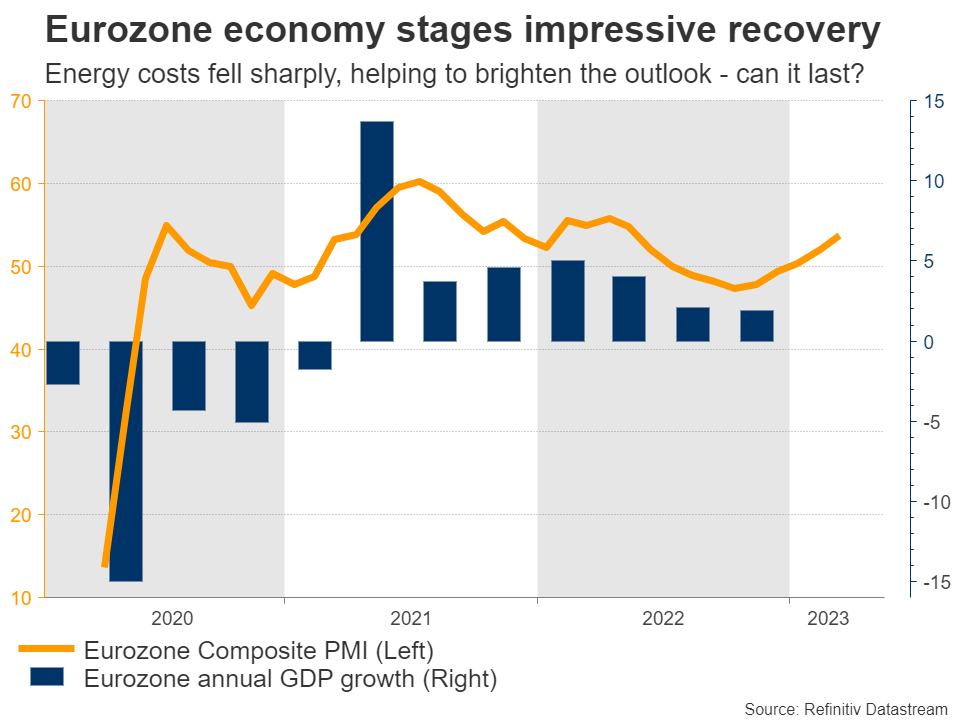
However, that’s doubtful considering the recent rally in oil prices after OPEC cut supply and the turbulence in the banking system. On top of the relentless increase in borrowing costs, business leaders might have turned less optimistic entering the second quarter.
As for the euro, it has gone on a rampage since the banking panic subsided. Behind this stunning rally was speculation that the Fed will be forced to slash rates later this year, which wounded the US dollar. In contrast, market pricing suggests the European Central Bank will keep raising rates throughout the year to deal with elevated inflation.
Therefore, the quality of the upcoming dataset will be critical in shaping these expectations and hence decide whether euro/dollar has enough juice to break above the $1.10 zone that rejected the pair back in January.
Barrage of UK data on tap
In the United Kingdom, there’s a storm of economic data coming up, starting with employment numbers on Tuesday. Then on Wednesday, inflation figures will enter the spotlight, before the week concludes with retail sales and the latest business surveys on Friday.
Similar to the Eurozone, the economic landscape in the UK has turned a little brighter lately, with business surveys rebounding and the labor market staying tight. The problem is that inflation continues to rage, having crossed back above 10% in February. Consumption is struggling too, with retail sales falling from last year as the cost of living crisis continues to haunt people.
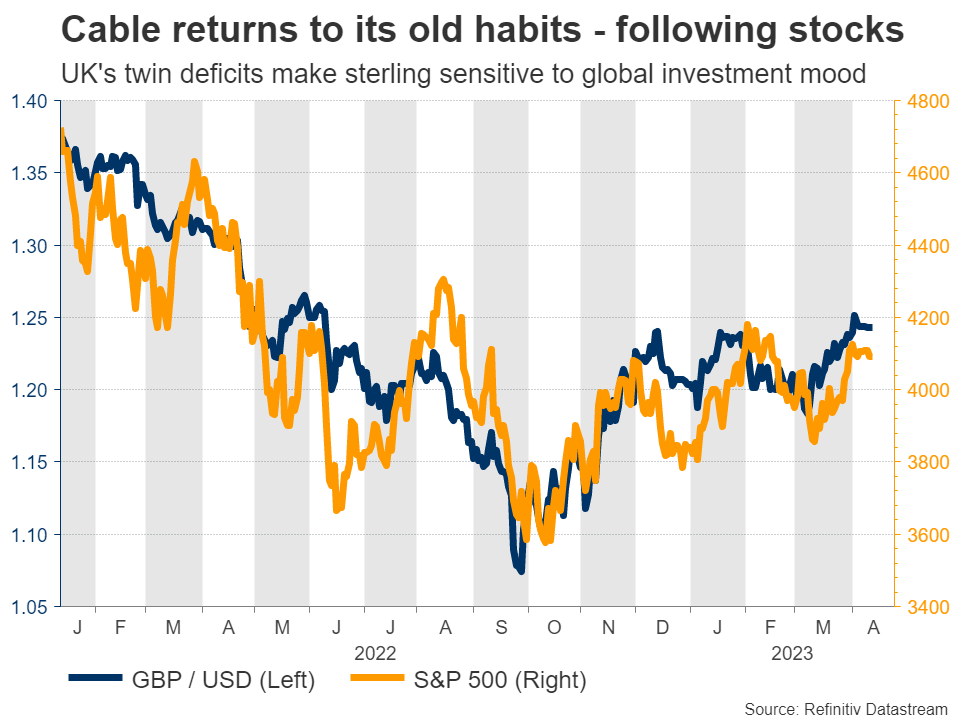
As for sterling, it has returned back to its old habits of tracking stock markets. The one-month correlation between Cable and the S&P 500 has risen to 84%, which suggests that the main driver of the pound is the global investment mood. This explains why sterling has performed so well this year, but it also implies that any turnaround in equities could be particularly damaging.
In this sense, the risk of a selloff in stock markets seems high, as earnings have started to decline while valuations are quite expensive. Earnings will be in focus next week with Tesla, Netflix, Johnson & Johnson, TSMC, and Lockheed Martin being among the biggest names to report results.
Japan, Canada and New Zealand await inflation updates
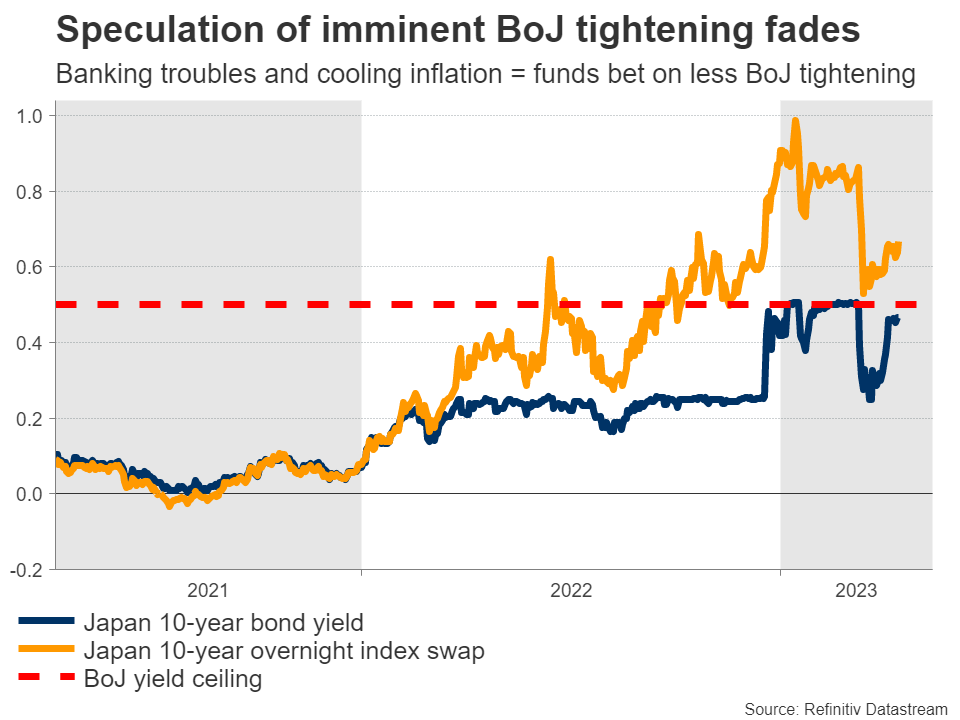
The yen came under fire lately as the Bank of Japan pushed back against speculation about further tightening. Governor Ueda essentially signaled he’s not in a rush to remove stimulus because inflation is likely to fall soon. In this sense, the latest batch of inflation stats on Friday could attract special attention.
Likewise, Canadian inflation numbers for March will be released Tuesday, ahead of retail sales for February due out on Friday. In New Zealand, the inflation report for Q1 will hit the markets Thursday.
Last but not least, it’s going to be a quiet week in the United States, although the S&P Global business surveys on Friday will provide crucial insights about the economy’s health.
Pound Traders Lock Their Gaze on the UK Inflation Data
With inflation in double digits, the BoE is among the few major central banks that are not expected to push the cut button during 2023. With that in mind, pound traders may pay close attention to the UK CPI figures for March, due out on Wednesday at 06:00 GMT. Will the March numbers add credence to expectations of more hikes by the BoE? And what will they mean for the pound?
Investors expect more hikes by the BoE and no cuts at all
Following the February CPI numbers, where headline inflation accelerated to 10.4% y/y, BoE policymakers did not hesitate to push the hike button one more time when they met on March 23. They raised interest rates by 25bps and noted that since the February meeting, inflation has surprised significantly on the upside and that the near-term path of GDP is likely to be stronger than previously expected. More importantly, they appeared willing to raise rates further if there was evidence of more persistent price pressures.
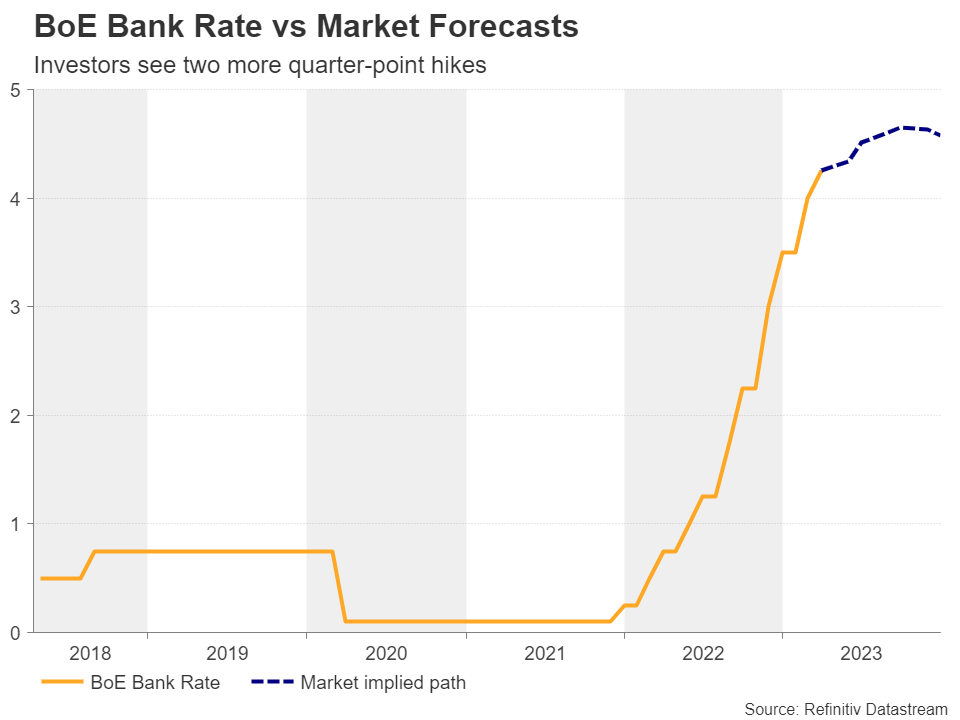
With all that in mind, investors are likely to lock their gaze on the CPI numbers for March next week, as they try to figure out how the BoE may proceed with monetary policy henceforth amidst expectations of rate reduction by other major central banks, like the Fed and the BoC. Currently, investors assign a 65% probability for another quarter-point hike in May, with the remaining 35% pointing to a pause. They are also seeing another increase of the same size beyond May before the Bank steps to the sidelines. That said, the interesting part is that market participants do not expect the BoE to proceed with any rate reductions before the end of this year.
Small slowdown unlikely to alter hike expectations
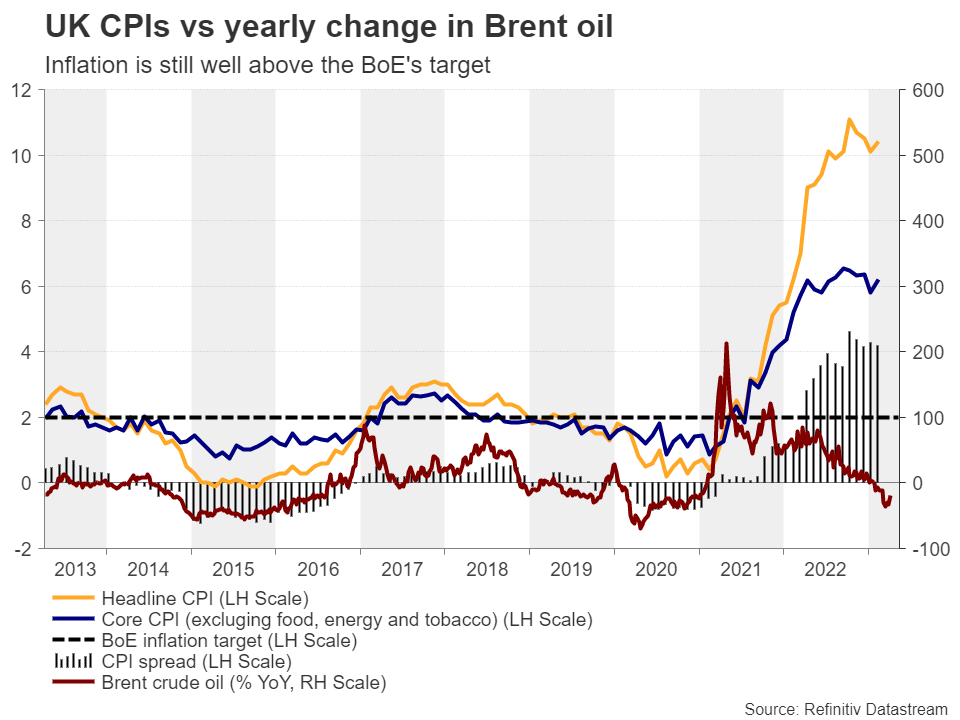
According to the S&P Composite PMI, prices charged by UK firms continued to ease as softer cost pressures have started to pass on to consumers. However, many businesses suggested that ongoing wage inflation and uncertainty about energy costs had limited their ability to discount prices. Thus, although this implies downside risks to Wednesday’s data, a small slowdown may not be enough to dramatically alter expectations around the BoE’s future course of action. What’s more, with the year-over-year change in oil prices hovering into negative territory, a bigger slide in the headline rate than in the core will not come as a surprise.
Pound may continue to outperform the dollar
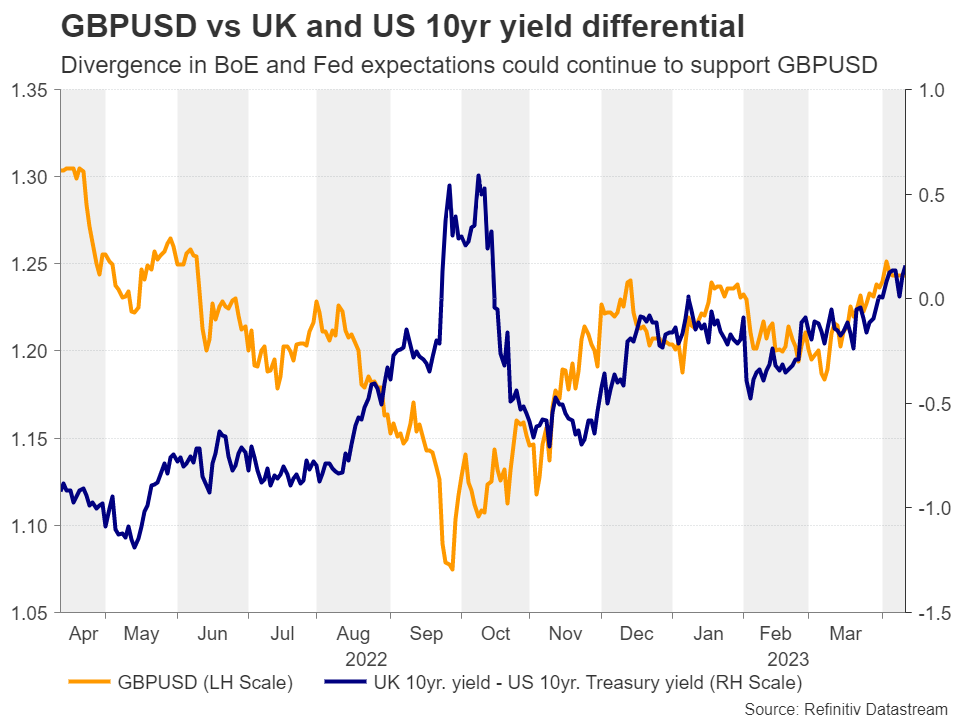
Combined with Governor Bailey’s recent remarks that he now expects the UK to avoid a recession this year, a headline CPI rate near double digits and a core one at around three times the BoE’s objective may allow market participants to continue pricing in more rate increases. The pound could stay supported, especially against currencies whose central banks are anticipated to start cutting interest rates later this year. With the Fed seen reducing US rates by around 50bps by year end, one of them may be the US dollar.
From a technical standpoint, pound/dollar remains in uptrend mode, currently hovering near the high of April 4 at 1.2525. A break above that zone would confirm a higher high and may encourage the bulls to climb towards the high of May 27, 2022, at around 1.2670. If there are no sellers to be found near that zone, a move higher may carry larger bullish implications, perhaps setting the stage for advances towards the 1.2975 area, which acted as key support between March 14 and April 20, 2022.
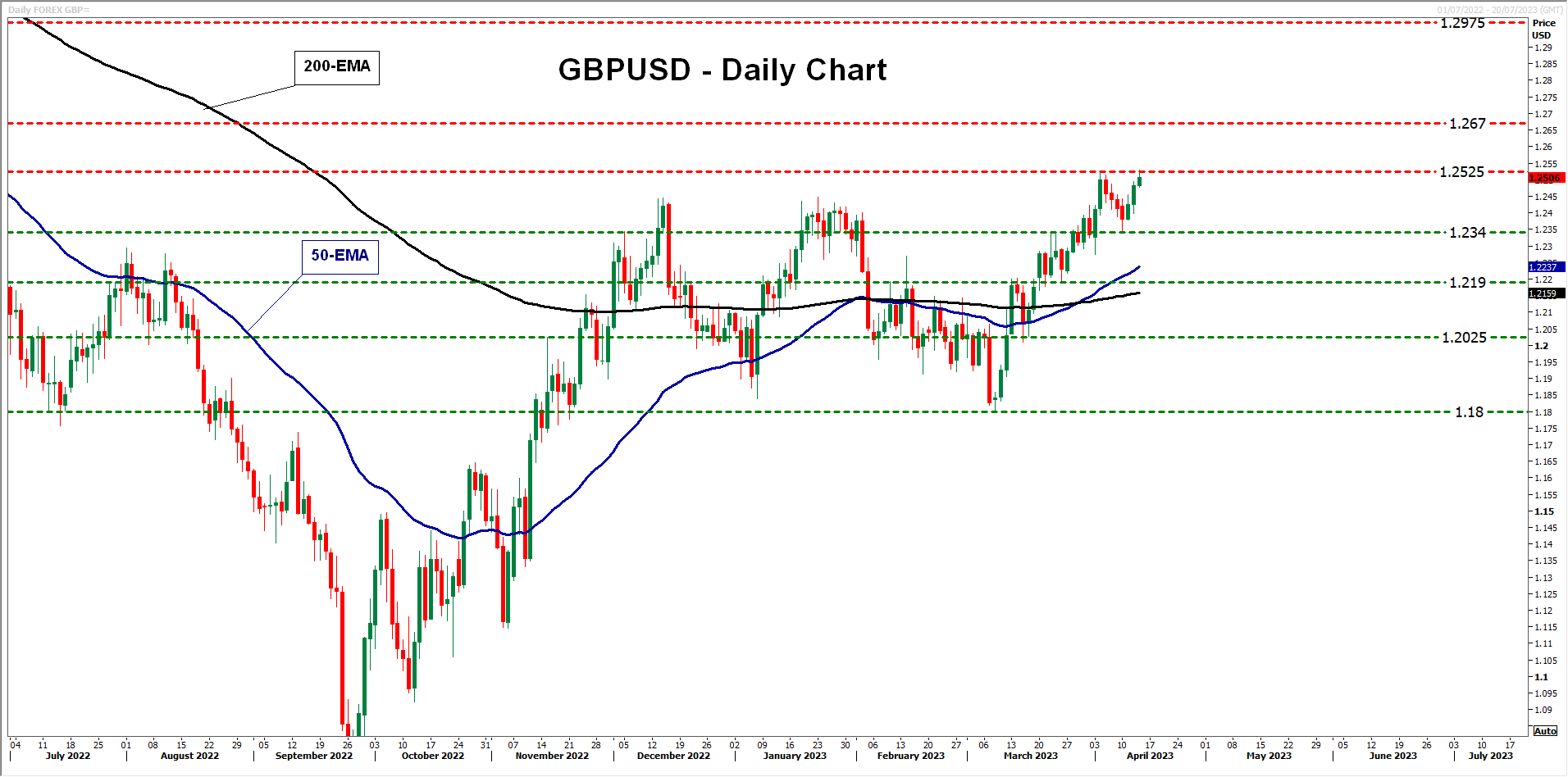
On the downside, the move signaling that the bears have woken up may be a dip below the low of April 10 at 1.2340. Such a move would confirm a lower low on the daily chart and could initially allow declines towards the low of March 24, at around 1.2190. If that hurdle also gets broken, the decline may then continue until the pair hits the 1.2025 area, which offered support on March 15 and 16.
Is the World Ready for Stronger Chinese GDP Data?
On Tuesday, the market will have the opportunity to see the true pace of the much-talked Chinese reopening as we get a plethora of key Chinese economic data. While a stronger set of data releases will be positive for the global growth outlook, are central banks ready for news that could potentially mean that the acute inflationary pressures might be resurfacing?
Is the world ready for a rapidly expanding China?
It has been an interesting period over the past two years as developed economies have been trying to recover from the Covid pandemic impact with China being hamstrung. The much-talked and eagerly expected Chinese reopening has been more gradual than most have anticipated, with its full impact yet to be seen. However, there is a troubling dichotomy regarding China’s growth outlook. A rebound in the Chinese economy is clearly beneficial for the entire world.
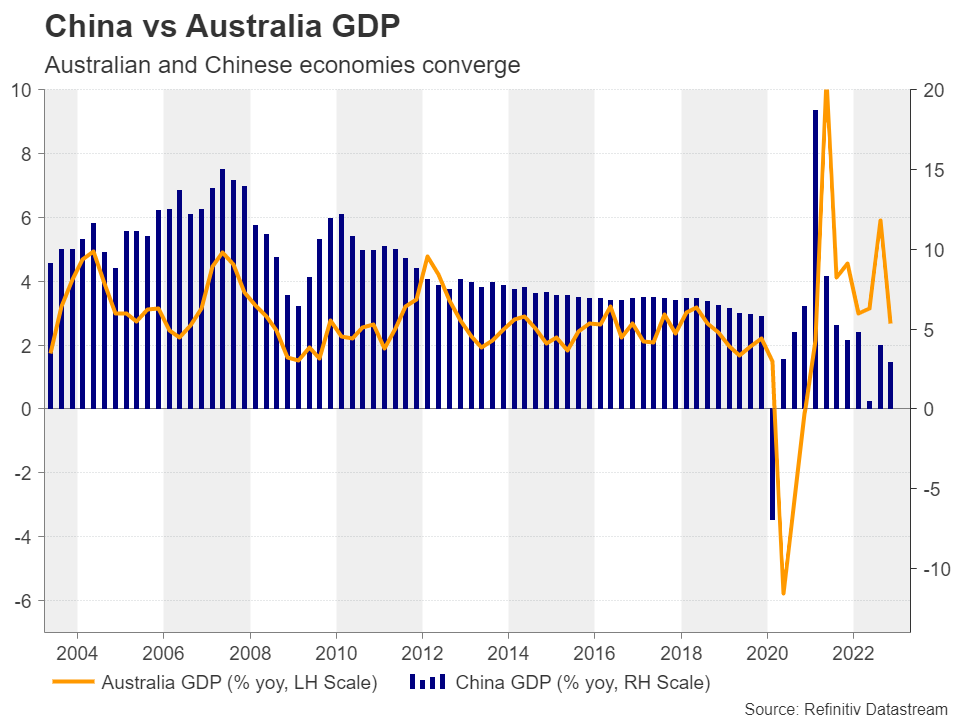
The recent IMF forecasts show global growth slowing considerably in 2023, with the situation likely to have been much worse if China was not expected to almost double its growth rate from 2022. Certain commodity-exporting nations like Australia would likely be the first ones to enjoy the increased demand for resources from China, boosting the slowing local economies. This will potentially give time to the local central banks to evaluate the impact of their aggressive recent rate hiking cycles and map out their rate cutting strategies.
Over the past two months we have noticed an interesting phenomenon. On the back of lower oil prices, headline inflation has been aggressively dropping in most major economies, with the latest example being Wednesday’s CPI release in the US. However, core inflation, which includes the less volatile components, has proved more stubborn and it is currently hovering at unsustainably high levels. This situation is complicating the monetary policy outlook.
Now, add to this mixture a rapidly growing China with its commodity-hungry economy. An increase in oil prices will probably lead to a jump in the headline CPI that will most likely drag core inflation even higher. And then central banks would be faced with a massive dilemma: whether to opt for even higher rates risking a proper recession as demand crashes under the higher price of money or allow their economies to be ravaged by another inflation wave that is bound to have second and third round effects on wages and the public perception of inflation.
Data galore on Tuesday
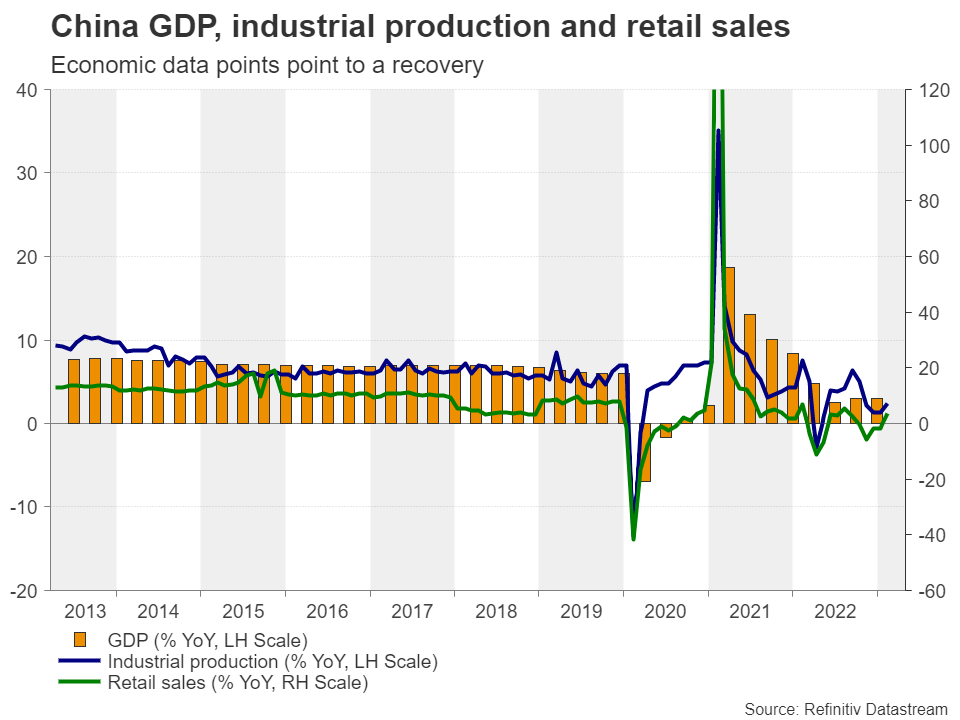
IMF economists have penciled in a 5.2% year-on-year GDP increase for 2023 in their latest projections. This is slightly higher than the 5% economic growth target set by the Chinese government in early March. This is one of its lowest targets in decades, thus leaving substantial room for an upside surprise this year. On Tuesday, we will get the growth figures for the first quarter of 2023. While the initial market forecasts point to a slower quarter, on the back of the recent disappointing manufacturing business surveys, most acknowledge that there is sizeable risk of a stronger-than-expected print considering the latest trade balance data.
If the forecasts for a weaker quarter are confirmed, the market would quickly assume that further interventions by the central government and the PBoC could be on the cards, in order to help the economy pick up pace. Another reserve requirement ratio cut could be an easy option as inflation remains very low compared to the West and the PPI YoY% change remains in negative territory for the past six months.
What also needs some boosting is the struggling retail sector. The great transformation of China to a consumer-driven economy appears to have stalled during the Covid years and hence renewed effort from government officials is required. Retail sales rebounded in February, but it has been a very weak 18-month period with the dataset showing unprecedented weakness. Another weak point on Tuesday is bound to increase the pressure on the PBoC to act more forcefully.
Euro/aussie at 20-month high
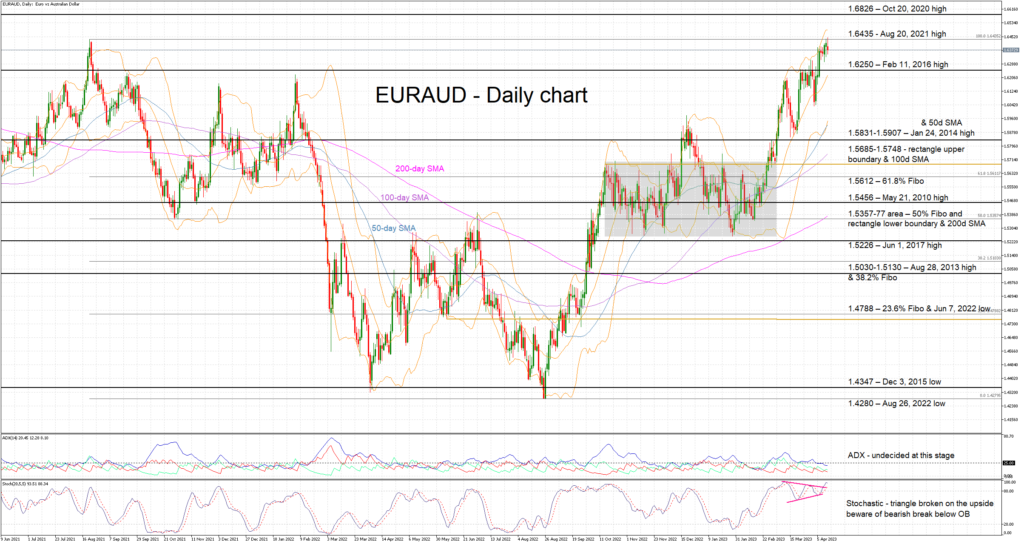
The euro/aussie pair has completed a 20-month round trip from the August 20, 2021 high of 1.6435 to the August 26, 2022 low of 1.4280 and back again to the highs. This movement is partly reflecting the divergent economic outlook over the past two years with the euro area economy shooting down the recession expectations and the Australian economic growth moving down a notch.
Euro bulls would enjoy another rally, but the overall picture appears to be toppy, particularly when examining the RSI and the stochastic oscillator indicators. On the other hand, aussie bulls would love a strong show from Tuesday’s Chinese data, despite the possible complications for the RBA down the line. A break below 1.6250 and a push towards the busy 1.5831 area would allow the aussie bulls to declare a short-term victory, but they must be fully aware that it will not be the end of the war.
Will JPY Recover in April?
Japan's new central bank governor, Kazuo Ueda, isn't planning drastic ultra-low interest rate policy changes. He's all about maintaining stability in prices and financial systems in the world's third-largest economy. And why not? According to Ueda, Japan's financial institutions aren't facing the same turmoil as their counterparts in the US and Europe. Plus, he's taking over from his predecessor, Haruhiko Kuroda, whose work he's determined to continue. On the charts, however, we have seen currencies like the Pounds and the Euro outperforming the Yen - can we expect any changes soon?
GBPJPY - Daily Timeframe
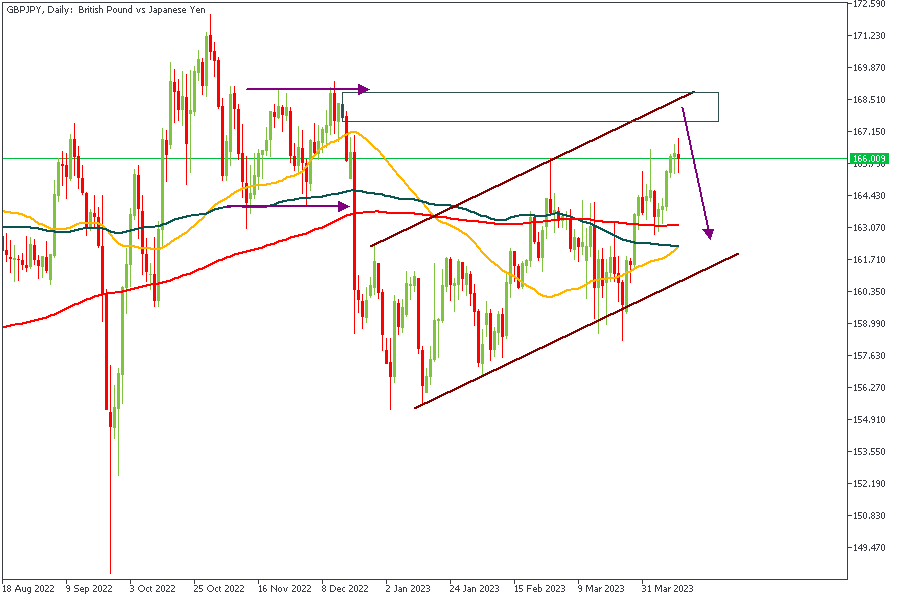
GBPJPY is trading within a rising channel while approaching a rally-base-drop supply zone. We also see the price action to the left presenting a strong case of an AMD (Accumulation-Manipulation-Distribution) pattern. I expect a bearish price reaction from the intersection of the trendline resistance and the supply zone.
Analysts’ Expectations:
- Direction: Bearish
- Target: 164.674
- Invalidation: 168.900
CADJPY - Weekly Timeframe
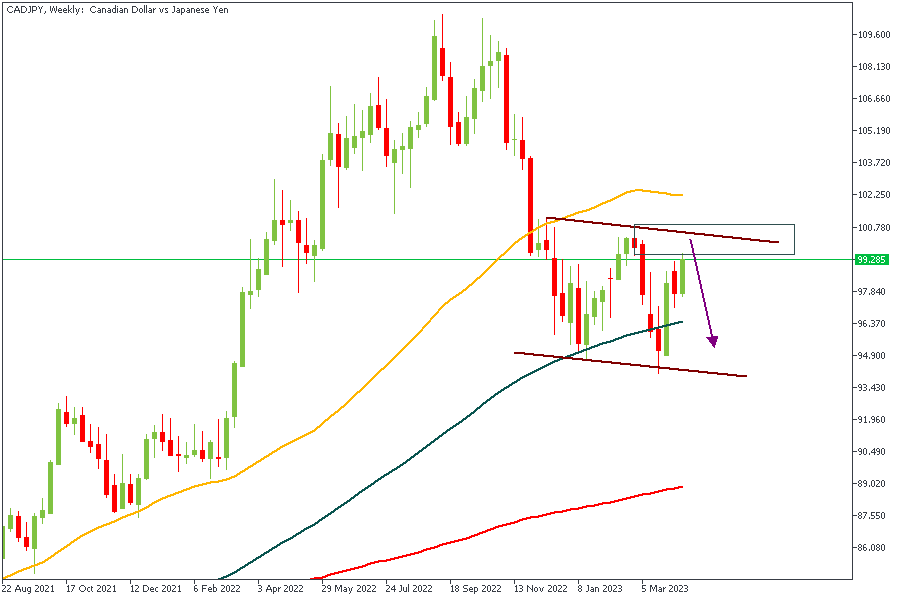
In the case of CADJPY, we see a consolidation inside the descending channel, and the price is currently approaching a rally-base-drop supply zone which aligns perfectly with the trendline resistance of the channel. When we consider the fact that the price has only recently created a lower low after surpassing the previous low at 94.739; I believe there should be some bearish reaction from the supply zone.
Analysts’ Expectations:
- Direction: Bearish
- Target: 96.070
- Invalidation: 100.948
EURJPY - Weekly Timeframe
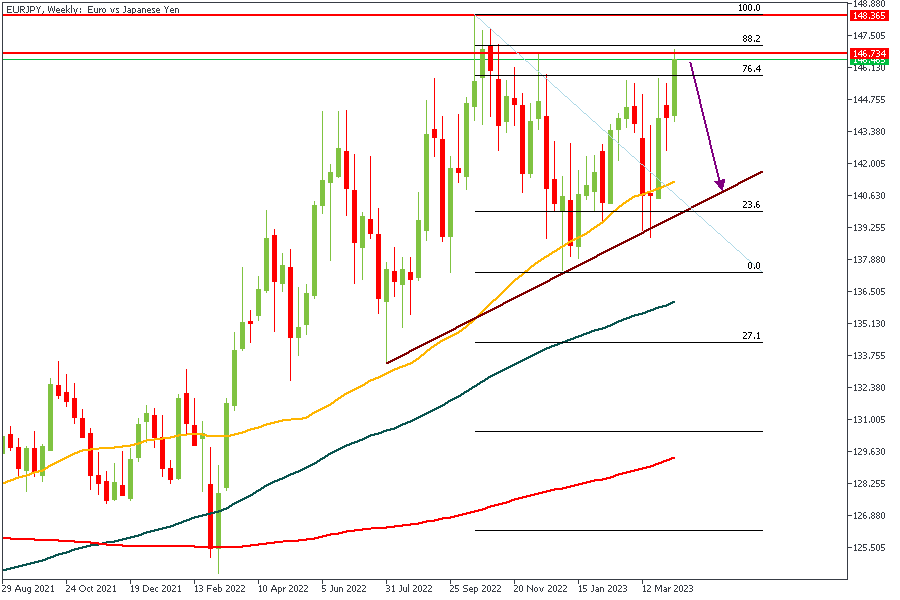
EURJPY was a bit troublesome to look at. Too many wicks made it difficult to figure out the exact area of the supply zone. However, I've had to make do with the pivot zone on the weekly timeframe, which I confirmed based on the Fibonacci retracement levels. Based on this scarcity of multiple confluences, I would scan for a clear break of structure, in whatever direction, on the lower timeframes (4 Hours and Daily).
Analysts’ Expectations:
- Direction: Bearish
- Target: 141.997
- Invalidation: 148.530
USDJPY - Daily Timeframe
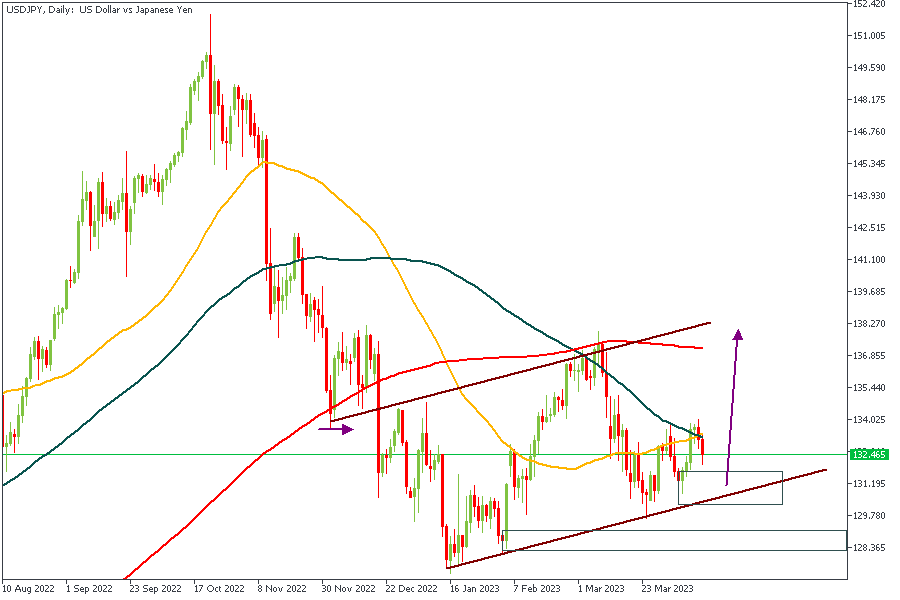
The market structure (lows and highs) on the USDJPY chart says one thing, whereas the momentum is visibly rebelling against that direction. I'm saying this because the price action following the most reaction from the trendline support failed to deliver impressive momentum. As a result, I have marked out the demand zone that intersects the trendline support, and I will be taking special interest in the reaction at or within that demand zone. This means a clear breakout in either a bullish or bearish direction would be my trade trigger.
Analysts’ Expectations:
- Direction: Bullish
- Target: 130.154
- Invalidation: 136.100
CONCLUSION
The trading of CFDs comes at a risk. Thus, to succeed, you have to manage risks properly. To avoid costly mistakes while you look to trade these opportunities, be sure to do your due diligence and manage your risk appropriately.
Swiss Price Pressure Almost Neutralised
The Swiss Producer and Import Price Index rose by 0.2% in March, slowing the annual growth rate to 2.1% from 2.7%. Producer price pressures are easing faster than expected (2.7% y/y expected). Easing inflation is a long-awaited signal for the SNB, which has raised its rate by 225 percentage points since the middle of last year to 1.5%, the highest since 2008.
Consumer inflation in Switzerland accelerated unexpectedly in January and February. Still, a continued slowdown in producer and import prices will likely keep a lid on consumer inflation in the coming months.
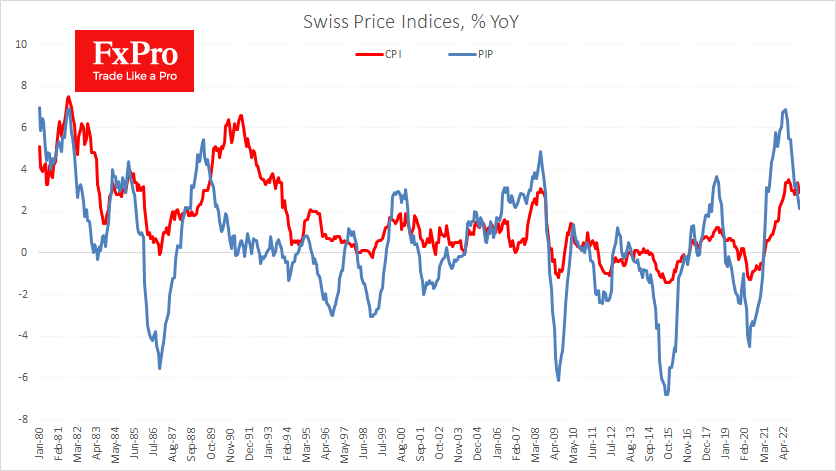
The Swiss franc exchange rate is also playing its role in easing inflation. From its peak in November to Thursday’s low, the USDCHF exchange rate has lost more than 12.5%, taking prices back to February 2021 levels. The current rate of 0.8880 is quite close to multi-year lows near 0.8800.
Switzerland is now entering a situation where inflation is on a steady downward path, and the franc is close to historically uncomfortable levels for the SNB.
The central bank may start to change its rhetoric to a more dovish one, satisfied with the policy tightening that has already taken place and fearful of tightening the screws too much on the economy. This is all the more true after the Credit Suisse story exposed banks’ vulnerability.
Sunset Market Commentary
Markets
What can’t go up, must come down! US Treasuries attempted two straight sessions to rally on disappointing US eco data. On Wednesday following a small downward headline CPI deviation and yesterday on a similar negative surprise coming from PPI figures. Wednesday’s rally still ended with gains, even if they closed off intraday highs. Yesterday’s leap higher was already weaker in magnitude with signs of fatigue immediately emerging and (longer term) Treasuries even closing with losses. Today’s downward surprise from import/export prices and retail sales (-1% m/m in March vs -0.5% m/m expected; control group better than feared though at -0.3% m/m) triggered negligible spike higher before investors decided to square some positions. The profit taking move pulled US Treasuries lower. US yields currently add 4 bps (30-yr) to 10.7 bps (2-yr). The latter tries to settle back above the psychologic 4% mark. Comments by Fed Waller give the move some additional momentum. He is giving some hawkish counterweight to both market positioning and more dovish comments from other Fed members. He wants to tighten monetary policy further because financial conditions have not significantly tightened, the labor market continues to be strong and quite tight and inflation is far above target. Waller would welcome signs of moderating demand, but until they appear and he sees inflation moving meaningfully and persistently down toward the Fed’s 2% target, he believes there is still work to do. He interprets this week’s inflation data as having not made much progress on the inflation goal. The US yield comeback stopped USD weakness. EUR/USD traded above 1.1050 going into today’s figures, to currently changes hands at 1.1025. The YTD low in the trade-weighted dollar (100.82) was tested, but stood its ground. US stock markets opened slightly positive with European indices outperforming (+0.5%). German yields add up to 6.3 bps at the front end of the curve. The likes of ECB Wunsch, Holzmann, Nagel, Vasle, Kazaks and Scicluna yesterday and overnight floated the idea of sticking with 50 bps rate hikes in May. ECB Lagarde confirmed that underlying inflationary pressures remain strong. Finally; Reuters reported that more and more ECB governors like the idea of stopping bond reinvestments all together after Q2. A hard stop this year would imply around €58bn worth of maturities compared to sticking to the current pace of €15bn/month. The “sources” article will get more traction as we approach May and June ECB policy meetings.
News Headlines
The International Energy Agency warned that the output cuts announced by OPEC+ last month risk exacerbating an oil supply deficit that in the second half of the year. OPEC+ described the unexpected move as a precautionary one. It triggered a sharp oil price increase of which the IEA says it could hurt consumers and the global economic recovery, potentially induce a recession. The agency estimates that global oil supply will fall by 400 000 barrels per day as the 1.4m OPEC+ output cut would be partially compensated by increased production outside the cartel. Oil prices today eke out a small gain of about 0.5%. Brent oil is currently trading at around $86.45/b. Before the OPEC production cut, one barrel was sold for less than $80.
Swedish inflation cooled slightly more than expected in March. Headline prices rose a monthly 0.6% (vs 0.9% expected) to be up 10.6% on an annual basis. That’s down from 12% in February and slightly lower than the 11% consensus estimate. The headline gauge using a fixed interest rate (CPIF) eased from 9.4% to 8% (vs 8.3%). Core CPIF (ex. energy) printed 0.6% m/m and 8.9% y/y. It’s the first time since January 2022 that the latter measure has eased. But although missing the a 0.8% m/m and 9.1% y/y analyst forecast, it is it well above the Riksbank’s own 7.5% projection made in February. This also goes for the headline CPIF, which the Riksbank forecasted at 7.8% for March. It keeps the central bank on track for the flagged spring rate hike (April 26). This may well be another 50 bps move, to 3.5% given today’s inflation numbers and the fact that the Swedish krone – which recently became a matter of concern for the Riksbank – barely left the recent lows. EUR/SEK today changes hands at around 11.34. This compares to the highs seen earlier this year just above 11.40. The only time the SEK traded weaker still which in the wake of the GFC, when EUR/SEK temporarily rose beyond 11.50. Swedish swap yields rise between 0.8 and 3.1 bps today.
USD/CHF Mid-Day Outlook
Daily Pivots: (S1) 0.8845; (P) 0.8910; (R1) 0.8960; More...
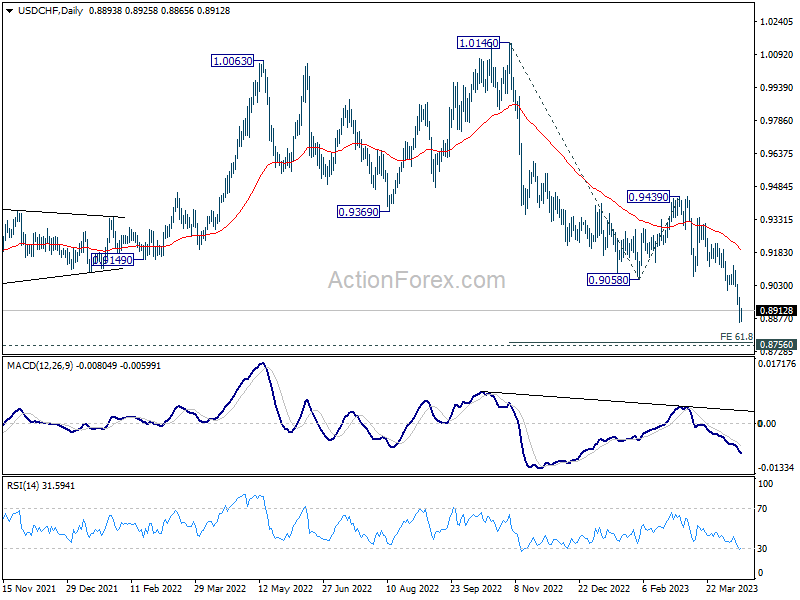
Intraday bias in USD/CHF is turned neutral with 4 hour MACD crossed above signal line. Deeper decline could still be seen to 61.8% projection of 1.0146 to 0.9058 from 0.9439 at 0.8767, which is close to 0.8756 long term support. Strong support is expected there to bring rebound, at least on first attempt. Break of 0.9070 support turned resistance will confirm short term bottoming and turn bias back to the upside.
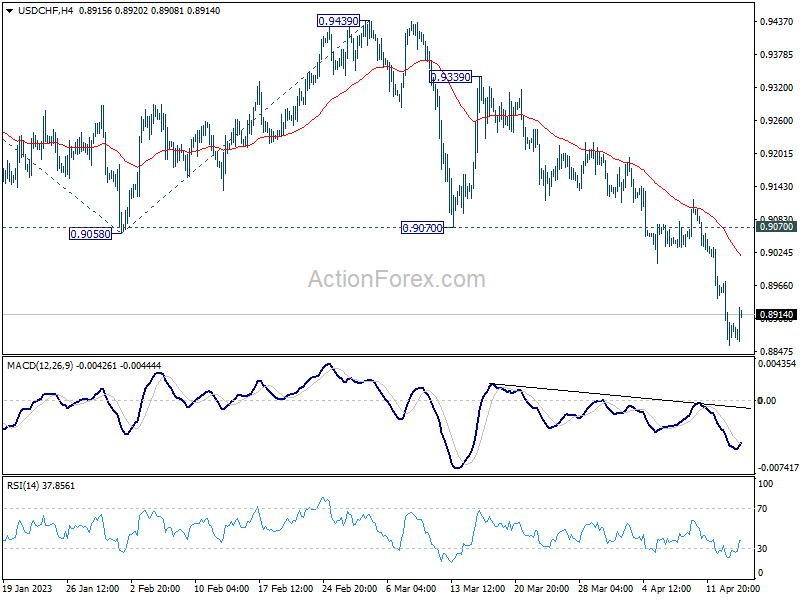
In the bigger picture, fall from 1.1046 (2022 high) is in progress for 0.8756 support (2021 low). But overall, this fall is still as a leg in the long term range pattern from 1.0342 (2016 high). So, downside should be contained by 0.8756 to bring reversal. Sustained break of 0.9058 support turned resistance will be the first sign of medium term bottoming. However, decisive break of 0.8756 will carry larger bearish implications.
USD/JPY Mid-Day Outlook
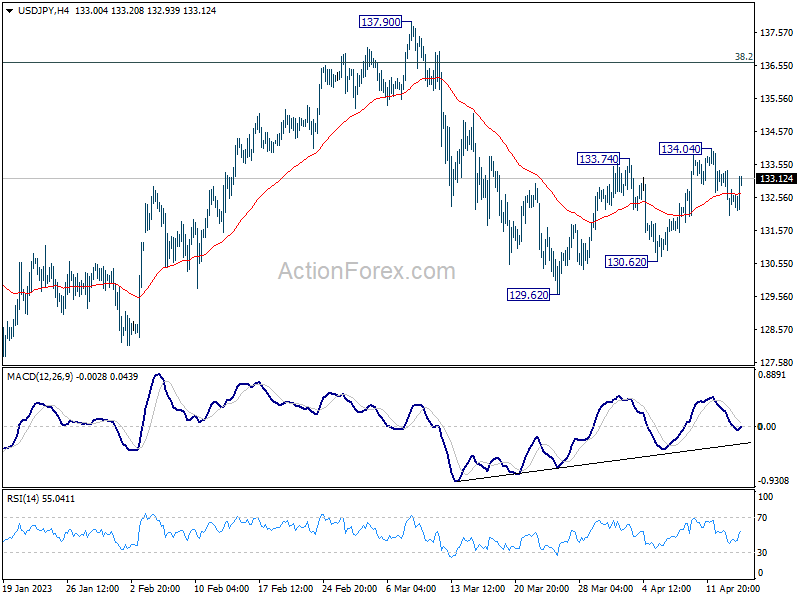
Daily Pivots: (S1) 131.94; (P) 132.66; (R1) 133.31; More...
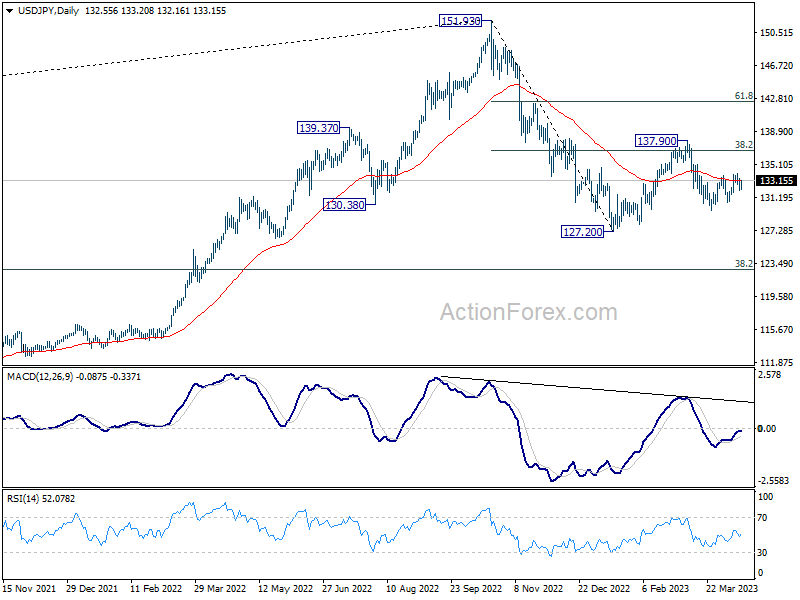
Intraday bias in USD/JPY remains neutral for the moment as sideway trading continues. On the upside, break of 134.04 will resume the rebound from 129.62 towards 137.90 resistance again. On the downside, break of 130.62 should resume the fall from 137.90 through 129.62 to retest 127.20 low.
In the bigger picture, corrective pattern from 127.20 might be extending. But after all, down trend from 151.93 is expected to resume at a later stage. Break of 127.20 will resume this down trend and target 61.8% projection of 151.93 to 127.20 from 137.90 at 122.61. This will now be the favored case as long as 137.90 resistance holds.
EUR/USD Mid-Day Outlook
Daily Pivots: (S1) 1.0993; (P) 1.1031; (R1) 1.1084; More...
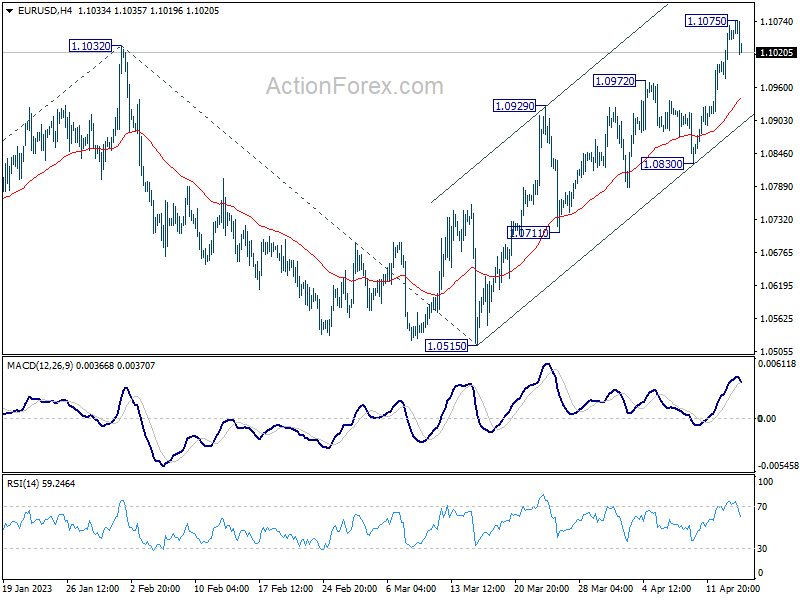
A temporary top is formed at 1.1075 in EUR/USD with current retreat and intraday bias is turned neutral first. Some consolidations could be seen but outlook will stay bullish as long as 1.0830 support holds. Above 1.1075 will resume larger up trend to 1.1273 fibonacci level. Break there will target 61.8% projection of 0.9534 to 1.1032 from 1.0515 at 1.1441.
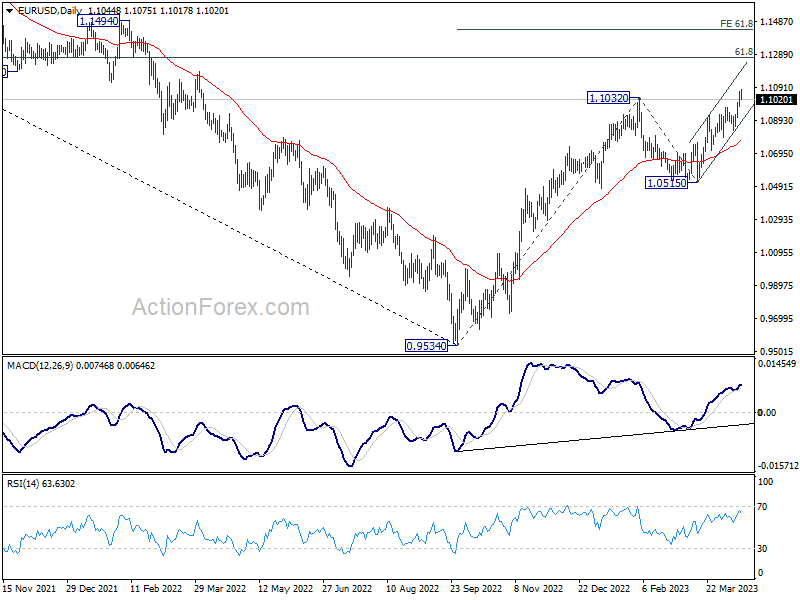
In the bigger picture, rise from 0.9534 (2022 low) is in progress for 61.8% retracement of 1.2348 (2021 high) to 0.9534 at 1.1273. Sustained break there will solidify the case of bullish trend reversal and target 1.2348 resistance next (2021 high). This will now remain the favored case as long as 1.0515 support holds, even in case of deeper pull back.
US: Retail Sales Fall Sharply in March, Recording a Second Consecutive Month of Declines
Retail sales fell 1.0% month-on-month (m/m) in March, much weaker than the consensus forecast calling for a more moderate pullback of 0.4% m/m. February's reading was revised up marginally to -0.2% (from -0.4%), making today's print just a tad less unfavorable.
Sales in the auto sector declined for the second consecutive month, largely driven by weak sales at motor vehicle sales (-1.5%) whose February's reading was revised up to -1.6% (from the previously reported -2.0% m/m). Sales at automotive parts & tire stores declined by 2.7% m/m. Excluding autos, retail sales were down by 0.8%.
Sales in other more volatile categories were also softer in March. The building materials and equipment category fell 2.1% m/m while sales at gasoline stations declined 5.5% m/m – in line with weaker gas prices.
Retail sales in the "control group", which excludes the above categories and is used to estimate personal consumption expenditures (PCE), fell by 0.3% m/m from an unrevised 0.5% m/m in February.
Most categories were in the red in March with the biggest declines coming from general merchandise stores (-3.0% m/m), clothing & accessory stores (-1.7% m/m) and furniture, electronics & appliance stores (-1.6% m/m).
Gains were reported at non-store retailers (+1.9% m/m), health & personal care stores (+0.3% m/m), sporting goods, hobby, book & music stores (+0.2% m/m), and miscellaneous store retailers (+0.2% m/m).
Food services & drinking places – the only services category in today's report – was up by 0.1% m/m in nominal terms, but after adjusting for inflation fell by 0.6% m/m.
Key Implications
As expected, spending continued to give back some of the gains from earlier in the quarter, after a solid start to the year. Accounting for revisions, nominal retail trade grew by 7% (annualized) in Q1 2023 and 3.1% when removing the effect of rising prices. Most of the gains came from sales at restaurants with the second biggest contribution coming from the auto sector where improvement in production helped fuel stronger sales. While auto sales will likely continue to tick higher given the build-up of pent-up demand, discretionary service spending is likely to soften over the coming months as the effect of higher interest rates starts to bare down on the economy. We expect consumer spending to slow from 4.2% in Q1 to a stall speed by Q2.
One factor that remains a wild card in our consumer spending outlook is credit tightening. Americans have already run down more than half of their cash reserves built up during the pandemic and started to finance more of their purchases with consumer credit, access to which tightened before the banking turmoil in March. Consumer lending at the most-exposed small- and medium-sized banks, which accounts for one quarter of consumer credit in the banking sector, stalled in March. The additional tightening of credit conditions may still weigh on consumer confidence, further affecting their spending behavior that's becoming increasingly more cautious.