Sample Category Title
Pound Set for a Busy Week ahead
It will be a packed week for the British pound. The Chancellor of the Exchequer Rishi Sunak will present his spring statement before the parliament on Wednesday. UK CPI inflation figures will be published on the same day at 07:00 GMT, while on Thursday and Friday, investors will pay attention to flash Markit/CIPS PMI data (09:30 GMT) and monthly retail sales (07:00 GMT) respectively to get more evidence on the economy. The war in Ukraine is clouding the outlook for the foreseeable future, though if the calendar events manage to restore some optimism, the pound could extend its recovery.
What will Sunak's spring budget include?
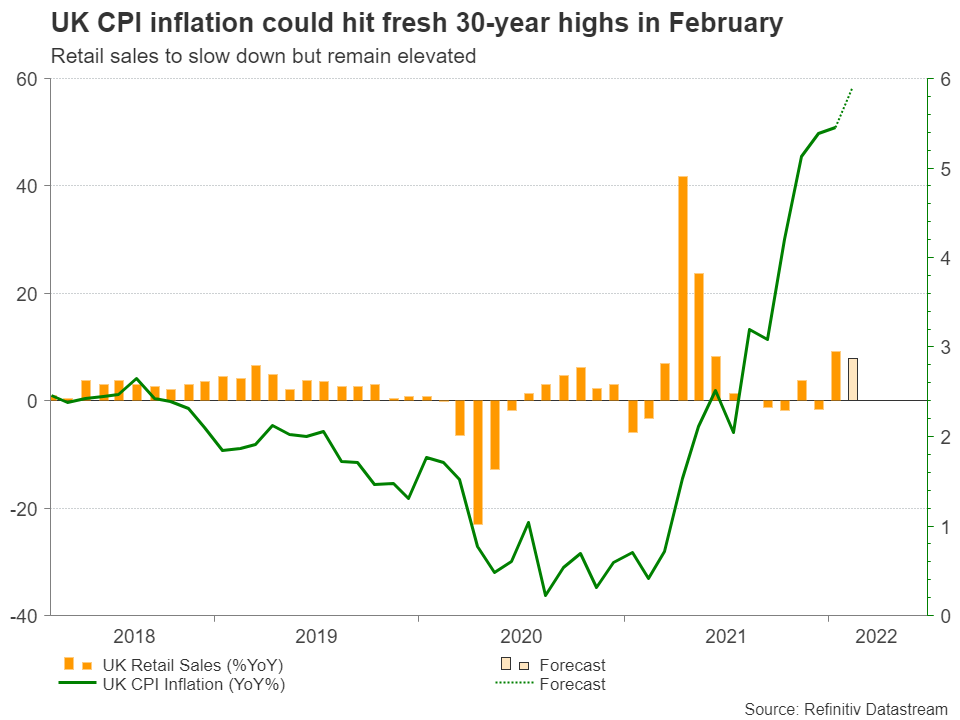
Rishi Sunak is expected to announce a package of supportive measures when he delivers his spring budget before parliament on Wednesday. Before the invasion in Ukraine, the event was intended to be just an economic update, involving new projections from the Office for Budget Responsibility. However, conditions have changed since then. The bombardments in Ukraine alongside the heavy global sanction war against Russia and its oligarchs could force the government to provide another helping hand this week as economists predict higher and more persistent inflation, and therefore a worsening living-cost-crisis in the coming months. The headline CPI inflation figure for February is expected to climb to a new 30-year high of 5.9% y/y and the next releases could be even hotter.
Of course, the government has already released some extra money in February in response to the pandemic-led rising energy and electricity costs, including a £150 tax rebate for some homes and a £200 credit on energy bills to be repaid over the next five years. However, with the Ukrainian nightmare threatening to bolster the already boiling inflation pressures, the Chancellor will probably have no other choice than assisting households and business finances once again.
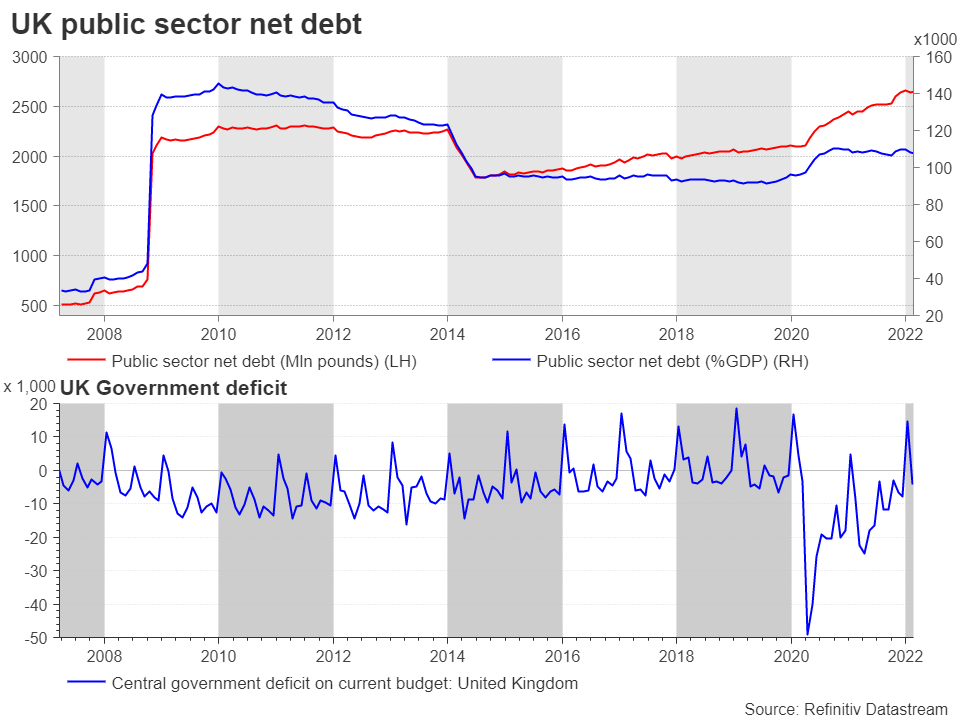
The real question that arises here is if the spring statement will bring any meaningful changes. The UK's national debt has jumped to around 100% of GDP, the highest since 2014, from around 80% at the end of 2019, while the penalties against Russian oligarchs are not cost-free and could weigh on the British financial system. Hence, besides some additional benefits for childcare, extra giveaways to help households to pay their energy bills and secure petrol tank refills, the government could face strong challenges in re-opening its liquidity taps. Particularly, there is a tough debate whether Sunak will temporarily reverse or delay the £12bln increase in National Insurance, which is set to go up by 1.25% to 13.25% in April, and is a key fund to the NHS.
Moreover, whether the VAT rate will return to 20% at the end of March after falling to 5.0% because of the pandemic, and then rising to 12.5% last October, could be another challenging decision. Overall, some analysts estimate public sector borrowing to rise from £83bn to £100bn in 2022-2023.
Flash business PMIs and retail sales could lose steam, but no worries
As regards the impact on the pound, investors have already priced a slowdown in growth projections and a pickup in inflation estimates. Potentially, they are also largely forecasting additional but careful financial support from the government. Hence, if that turns out to be the case, the spring statement and CPI inflation readings could create little volatility to the pound, with the spotlight shifting next to the flash PMI Markit/CIPS business PMI figures and monthly retail sales.
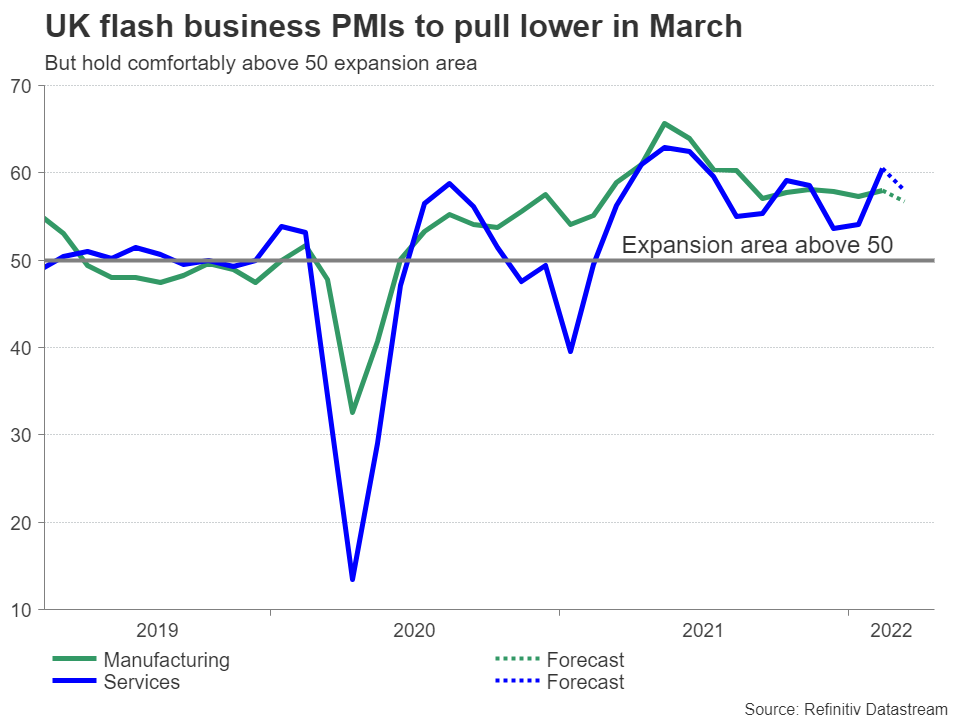
Preliminary PMI data may attract special attention since they regard the month of March and hence may reflect the impact of the geopolitical crisis on business sentiment to some extent. Analysts estimate a weaker print of 56.7 for the manufacturing sector compared to 58 previously. The more important services PMI is also expected to decelerate from 60 to 58, driving the composite PMI to 57.8 from 59.9 in the preceding month. Nevertheless, such an outcome would still keep the business sector comfortably in the expansion area, and unless the readings surprise strongly to the downside, justifying the Bank of England's cautious approach to faster rate increases, investors may not engage in heavy selling activities.
Monthly retail sales for February could create some discomfort on Friday if the data show a sharper deceleration than analysts predict. The annual growth is expected to weaken to 7.8% from 9.1% previously, while excluding fuel products, the core measure could post a softer increase of 5.6% y/y versus 7.2% in January. Those, however, would still be among the highest readings recorded since mid-2021.
GBP/USD
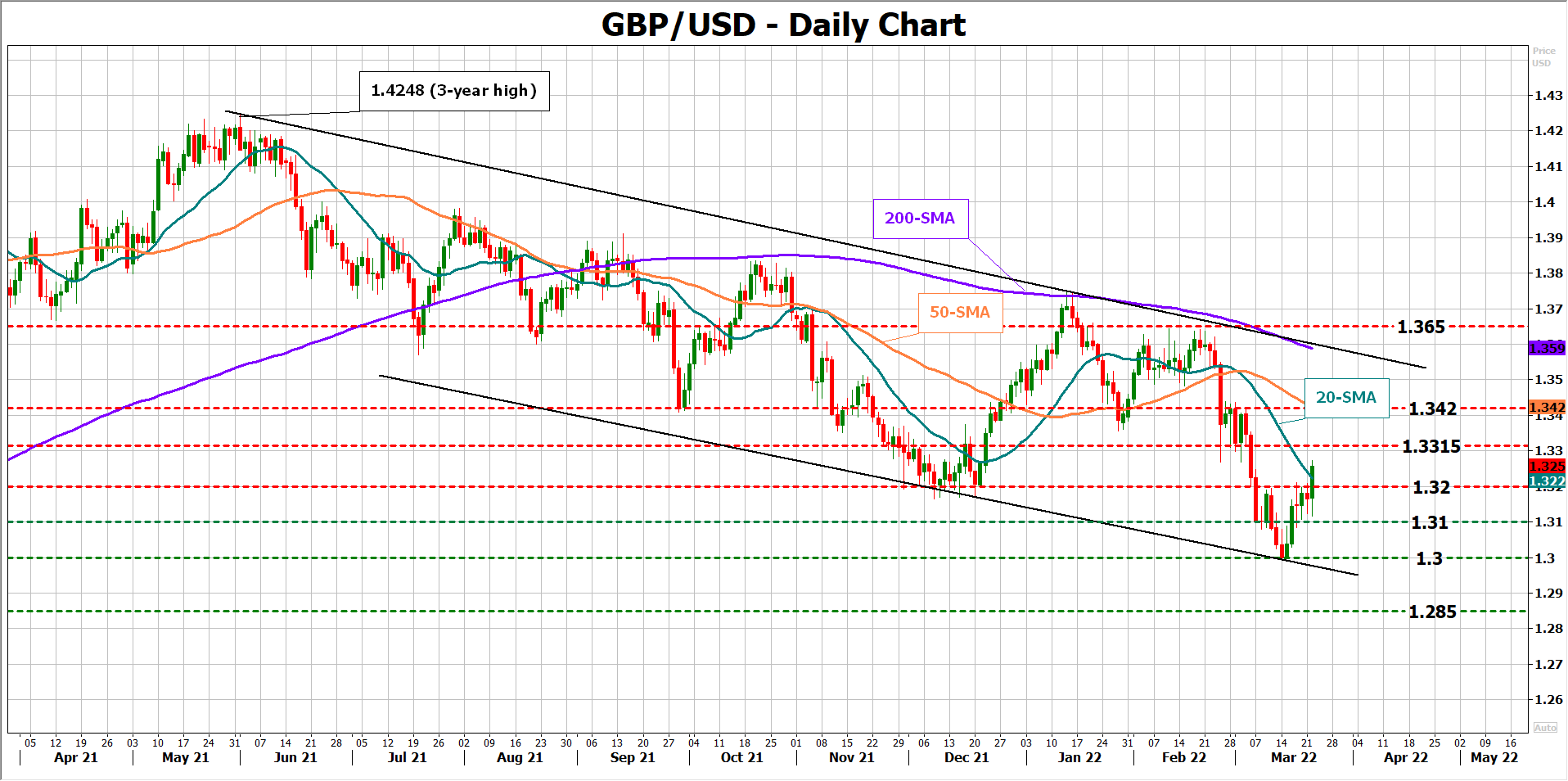
Turning to pound/dollar, the pair geared above the 1.3200 level on Tuesday after a feeble start to the day. The next resistance could pop up around 1.3315 and then probably near the 50-day simple moving average and the 1.3420 mark. A positive surprise in flash PMI readings, and overall a brighter outlook for the UK economy, could resurface thoughts of faster monetary tightening, helping the pound to reach those levels and even drift higher.
Alternatively, a cautious speech from the Chancellor and disappointing data releases could pressure the pair towards the 1.3200 – 1.3163 region. Yet, only a close below 1.3100 could reduce confidence in the latest bullish price reversal, bringing the lows around 1.3000 on the radar again.
AUD/USD Gains Pace, Why It Could Continue Higher
Key Highlights
- AUD/USD started a fresh increase above the 0.7320 resistance.
- It broke a key bearish trend line with resistance near 0.7300 on the 4-hours chart.
- EUR/USD is still struggling below 1.1120 while GBP/USD surpassed 1.3200.
- Oil price is rising again and could gain pace above $115.
AUD/USD Technical Analysis
The Aussie Dollar started a steady increase above the 0.7300 resistance against the US Dollar. AUD/USD cleared the 0.7350 resistance to move further into a positive zone.
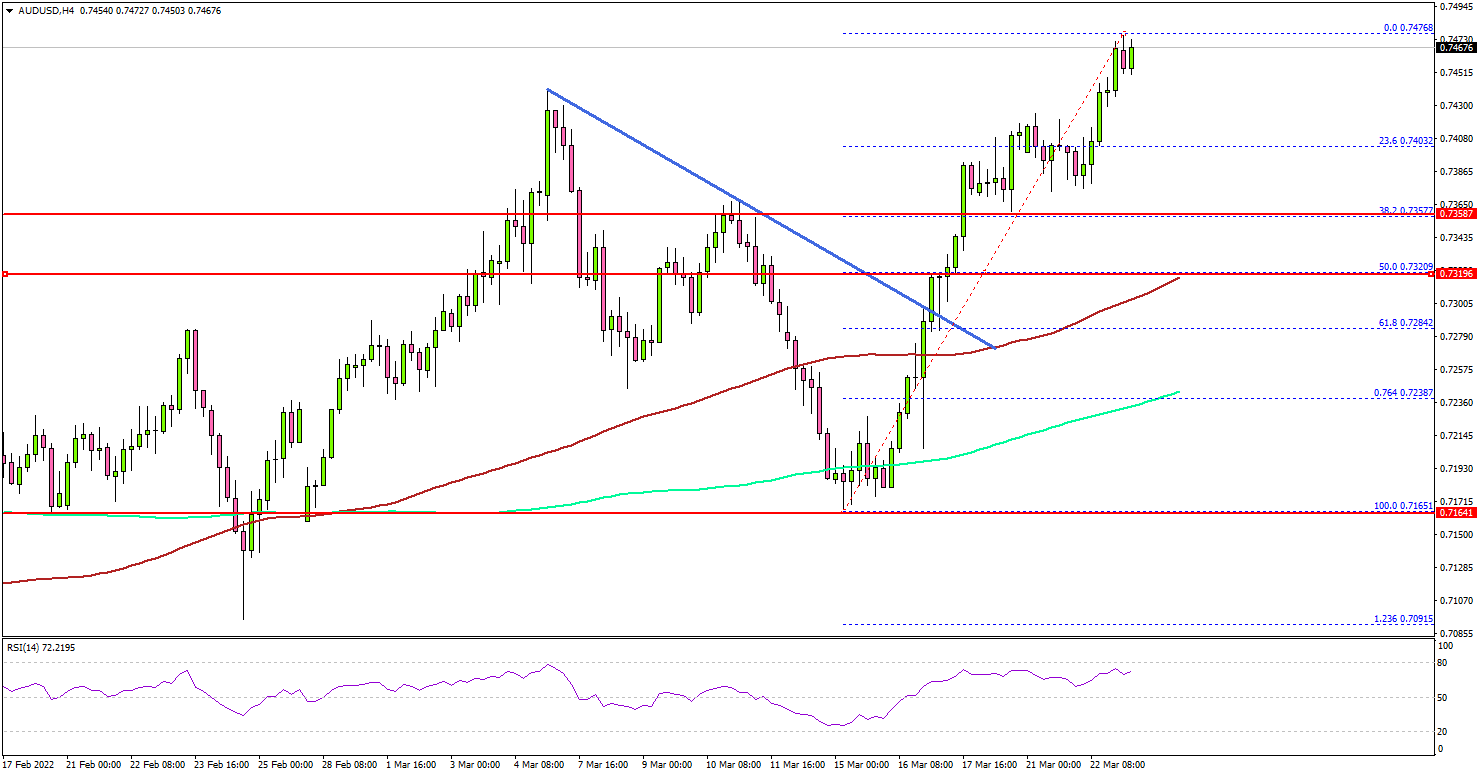
Looking at the 4-hours chart, the pair settled above the 0.7400 level, the 100 simple moving average (red, 4-hours), and the 200 simple moving average (green, 4-hours).
The pair is now trading near the 0.7475 level. An immediate resistance is near the 0.7480 level. The main resistance sits near the 0.7500 level. A clear move above the 0.7500 zone could set the pace for a larger increase.
In the stated case, the pair might rise towards the 0.7580 resistance zone. On the downside, the pair might find support near the 07420 level.
The next key support is near the 0.7400 level. A downside break below the 0.7400 support might start a steady decline. In this case, the pair could decline towards the 0.7320 support and the 100 simple moving average (red, 4-hours).
Looking at EUR/USD, the pair is still struggling to clear the 1.1100 and 1.1120 resistance levels. Conversely, GBP/USD was able to clear the 1.3200 and 1.3220 resistance levels.
Economic Releases
- UK Consumer Price Index for Feb 2022 (YoY) – Forecast +5.9%, versus +5.5% previous.
- UK Core Consumer Price Index for Feb 2022 (YoY) – Forecast +5.0%, versus +4.4% previous.
- Fed's Chair Powell speech.
Gold Report: Contradicting Forces Shape Price Action
Gold finished the previous week in red territory and corrected to significantly lower grounds as it performed its widest weekly loss in March. Yet the price action so far in the current week seems to point to stabilization and even advancement for the Gold market. In this report we will be calling out the most important matters that are related to the gold market at the moment. In addition, Gold’s technical analysis will be presented giving at the same time our personal view on the current trend and the levels associated.
At the moment, the Gold market is keeping its eyes firm on the Ukrainian war with the situation possibly worsening. Military strikes continue to take place while the two sides have not agreed for a ceasefire so far. A few media reports see the war extending in the following weeks or months. The news in our opinion may invite some bullish tendencies for Gold which tends to appreciate when Geopolitical tensions escalate.
As noted in our previous reports, US bond yields continue to be carefully monitored by traders during the uncertainty presented currently. The US 10-year treasury yields reached 2.3% in the most recent sessions, holding their upward trend so far in the current year. Rising bond yields tend to signal investors are selling bonds in the expectation that interest rates will increase. Yesterday, Fed Chairman Powell signaled that a steep rate hike path is to follow by the Fed in the coming months which may have intensified bond yields upward movement even further. The Fed Chairman reported that inflationary pressures continued to be elevated and the Fed will take ‘necessary steps’ to address the issue implying that further and possibly larger rate hikes are on the way. Yet the question here is, how does this relate to the Gold market? Rate hikes are considered by analysts and traders as a sign that an economy is expanding at rapid levels and barriers need to be implemented to reduce the growth and limit consumer spending and lending. This notion has led the Treasury yields returning to their pre-pandemic levels which could make Gold, a non-yielding instrument with further storage costs attached to it, not so attractive.
On a similar note, the FOMC meeting that took place on the 16th of March may have failed to produce the expected volatility for the Gold market. Upon announcement of the 25-basis points rate hike, Gold dropped approximately $15 in the next 20 minutes yet rebounded and surged to close the daily session positive in the next hours. The buying momentum was extended to the next day and Gold has basically moved in a sideways motion since that event. Even though as noted the outcome of the event may have been already priced in by the market, after the interest rate announcement Gold’s downward trend formed in the days prior was interrupted. The Fed’s projections for the following years seem rather encouraging considering the gloomy global outlook taking place globally. According to the economic projections for the current and following years, stable unemployment and dropping inflation pressures could be providing some positivity to the market. Yet Gold’s usage as a safe haven could also be reduced since Indicators of economic activity and employment have continued to strengthen.
Finally, in the following days several economic releases from the US can be used as trading opportunities for Gold traders. On the 23rd of March, we get the February New Home Sales-Units and Federal Reserve Chair Jerome Powell’s speech at the Bank for International Settlements Innovation Summit. On the 24th of March we get the weekly Initial Jobless Claims figure along with the very important Flash Markit Manufacturing and Services PMI figures for March. On the 25th of March we get the University of Michigan Economic Sentiment Final reading while on the 29th of March we get the key Consumer Confidence figure for March.
Technical Analysis
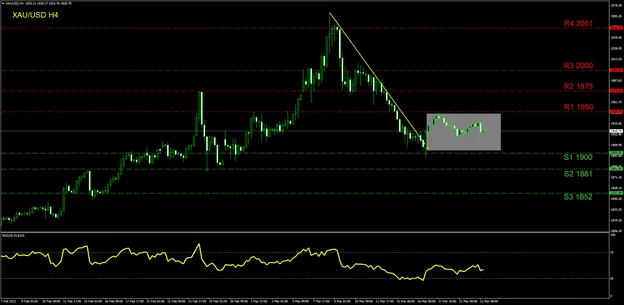
XAU/USD H4
Gold has moved outside the downwards trend that was used in the previous week and is now trading continuously within the (R1) 1950 resistance and the (S1) 1900 support range. In case a bullish trend is established, the (R1) 1950 resistance could be tested and possibly breached. If this trend is continued the (R2) 1975 level could be a test higher while a possible movement above could send the price action towards the (R3) 2000 line and may signal a change from the current sideways trend to a buying one. If the bulls are to completely dominate the scene during an extraordinary buying trend the (R4) 2051 which is the highest level reached so far 2022, can be revisited. The levels that we have noted in case a selloff is enacted are the (S1) 1900 support which is the lowest level tested so far in March. If the selling persists then we note the (S2) 1881 level which was last tested back in late February. At the end, the (S3) 1852 is our final support and was used in the first half of February. The RSI indicator below our chart remains below the 50 level but seems to mirror the sideways trend formed in the most recent sessions.
Global Reversal in USDJPY
What happened?
Historically investors treated the Japanese Yen as a safe haven in times of world crisis. However, three weeks since Russia invaded Ukraine, the JPY has plunged to a five-year low against the US dollar.
Why is the yen falling?
Falling interest rates and high commodities prices are the main characteristics that usually push the Yen up against other currencies in times of global market upheaval. Yen’s safety was caused by the Japanese current account surplus.
Unfortunately for the yen, these factors work in reverse as well. Nowadays, global interest rates are increasing, energy and commodities prices are skyrocketing, and Japan's current account surplus is melting.
Crude oil, which is trading around $115, meets most of Japan's primary energy needs. Japan is also one of the world's biggest importers of liquefied natural gas, which accounts for around a quarter of its energy balance. These factors mark a sharp deterioration in the country's terms of trade, and the yen-boosting current account surplus that Japan has run for decades may soon become a deficit.
If we consider that the Federal Reserve might increase the key rate by 50 basis points in May, plus another 25 points at each of the next five meetings in 2022, then we can conclude that USDJPY has more space to run higher. Moreover, energy prices may remain high for a long time, pressing the yen even more.
Technical analysis
USDJPY, monthly chart
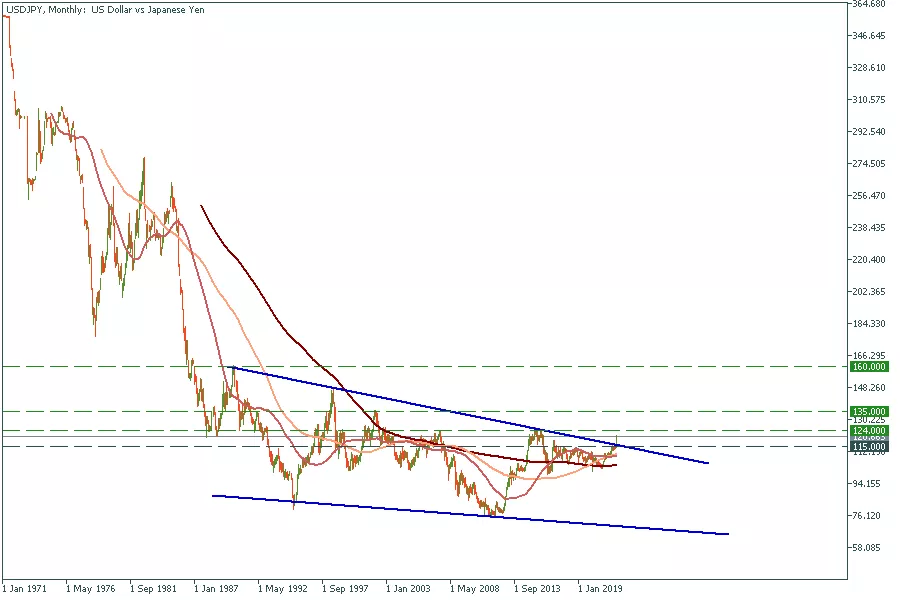
The monthly chart confirms our suggestions. As we can notice, the price has formed a global bullish wedge. Moreover, the breakout has already happened. That’s why there is no doubt USDJPY is now absolutely bullish in the long term.
USDJPY, Weekly chart
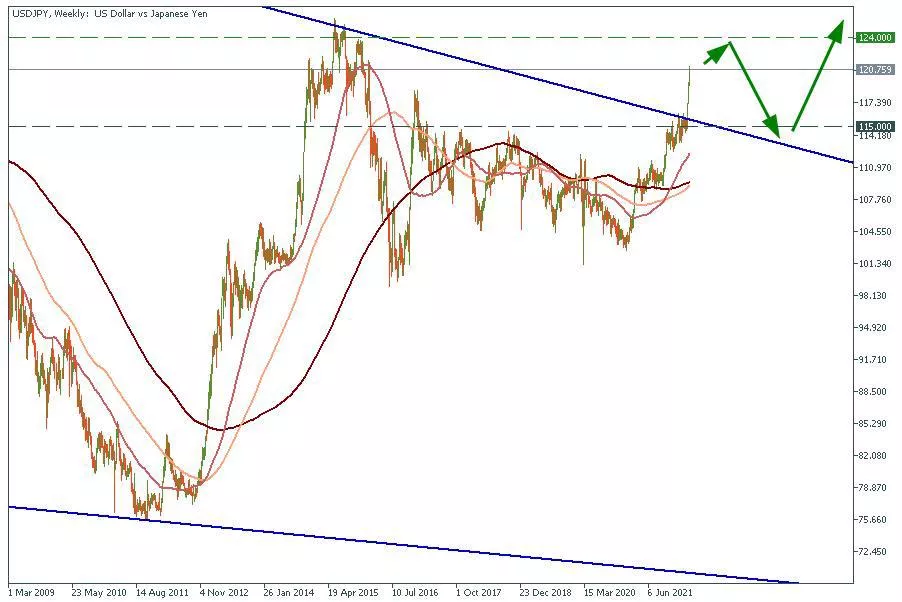
Looking at the lower timeframe, we can suggest that USDJPY might reverse at 124 and return to 115 for a global wedge’s retest.
As a result, there are three trading options:
- Follow the trend and buy with the target at 124.
- Sell the pair at 124.
- Open a buy trade at the wedge’s retest.
Eco Data 3/23/22
[php_everywhere instance="1"]
Euro on Recession Watch ahead of PMI Surveys
The latest PMI business surveys on Thursday will reveal how much damage the war has inflicted on the Eurozone economy. The show will get started with the French numbers at 08:15 GMT. Forecasts from economists suggest a very small economic impact, but that seems unrealistic considering all the uncertainty lately. Instead, the data might reflect the rising risk of a recession, which leaves the euro vulnerable to a negative ‘surprise’.
What’s the damage?
It has been clear from the beginning that the war in Ukraine is bad news for the European economy. Higher energy bills for consumers, rising food prices, and the exposure of European banks to depreciating Russian assets imply that economic growth will take a serious hit.
But estimating how big the fallout will be has been difficult. Will it be just a minor slowdown in growth or could it spark a recession? No economic data has been released since the war erupted, so market participants only had the moves in energy prices and other commodities to go on.
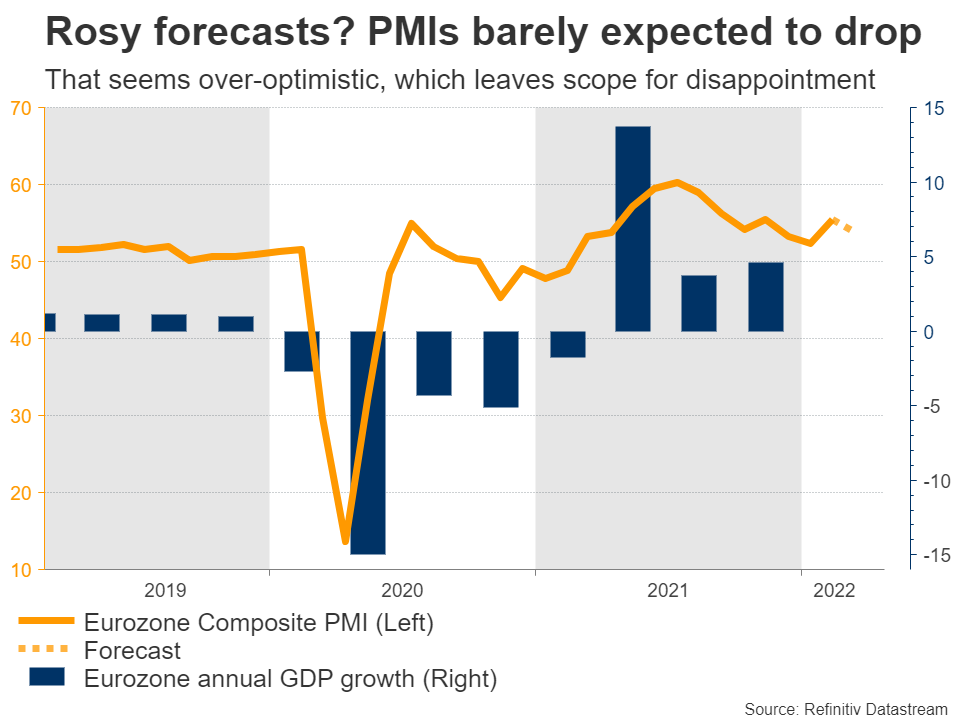
All that will change this week, when the preliminary PMI surveys for March are released. It is probably too early even for businesses to assess the true fallout of the war, but at least these surveys will capture the impact on economic sentiment.
Overoptimistic forecasts
At first glance, the forecasts from economists seem too optimistic. For the Eurozone as a whole, the composite PMI which combines the manufacturing and services sectors is expected to have fallen to 53.9 in March, from 55.5 previously.
This is a very small decline considering the magnitude of recent events. It would signal that the euro area economy is still growing at a solid pace, barely affected by the sanctions or the sharp spike in energy prices.
That seems too rosy. The war is likely to have disrupted supply chains further, not to mention that the higher costs of living will squeeze consumer budgets and could ultimately restrain demand. It would be reasonable to expect a bigger hit than what forecasts suggest from the uncertainty alone.
Therefore, the rosy forecasts leave plenty of room for disappointment. There is a clear risk that the composite index even falls below 50, signaling a contraction in economic activity.
Euro prisoner to geopolitics
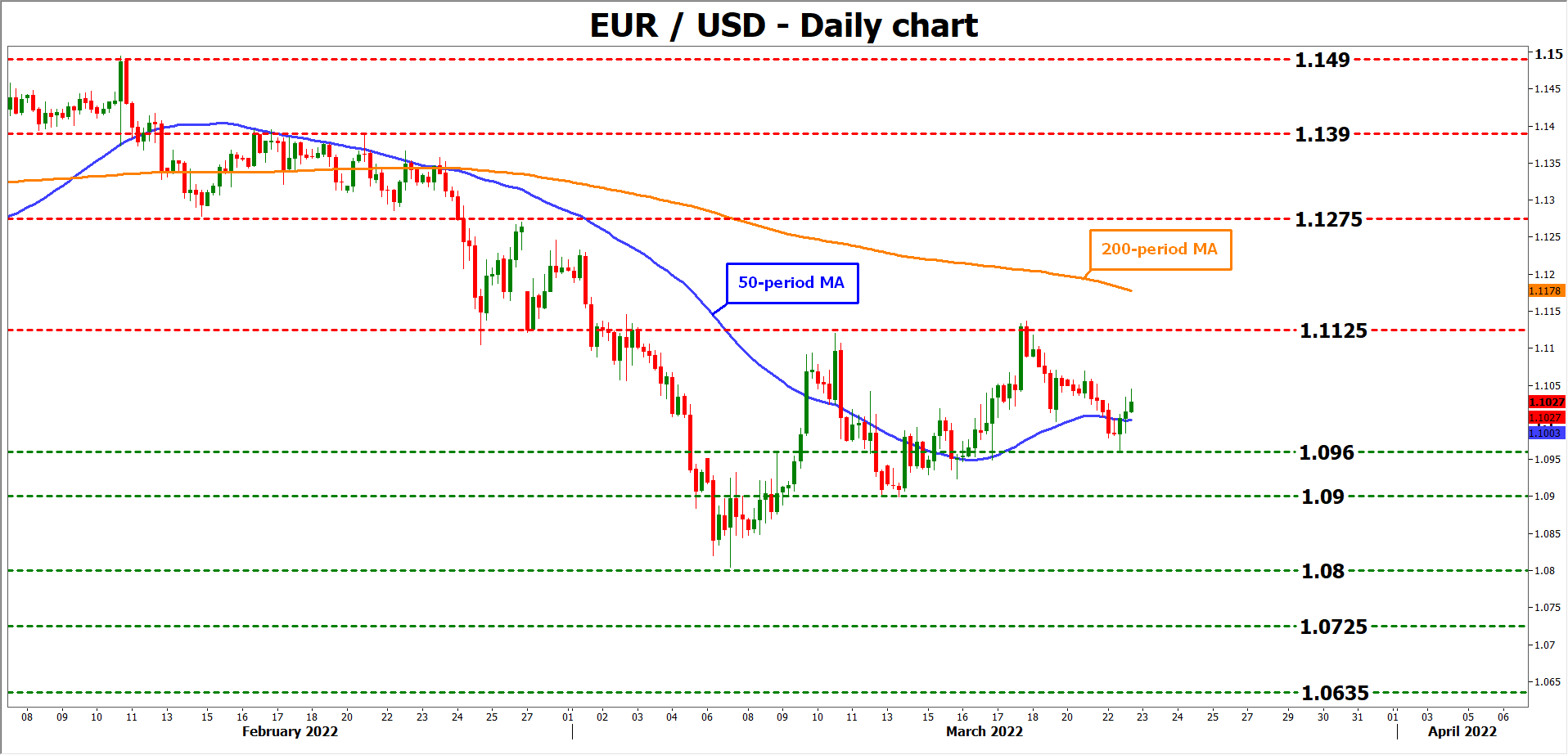
Turning to the markets, a negative ‘surprise’ in the PMI data could deal another blow to the battered euro. That said, a weak print wouldn’t be a shock for traders either, so any downside reaction is unlikely to be huge. Taking a technical look at euro/dollar, a potential drop could encounter immediate support around the 1.0960 zone.
Beyond that, everything revolves around whether there’s a ceasefire in Ukraine soon. If so, that would set the stage for a relief rally in the euro, both by calming nerves around further escalation and by cooling commodity prices. In euro/dollar, that could translate into a spike towards the 1.1125 region.
There’s also a two-day summit between European leaders this week that will begin on Thursday. Markets will be looking for any fiscal measures to help cushion the blow on consumers, for instance by temporarily cutting VAT taxes on energy.
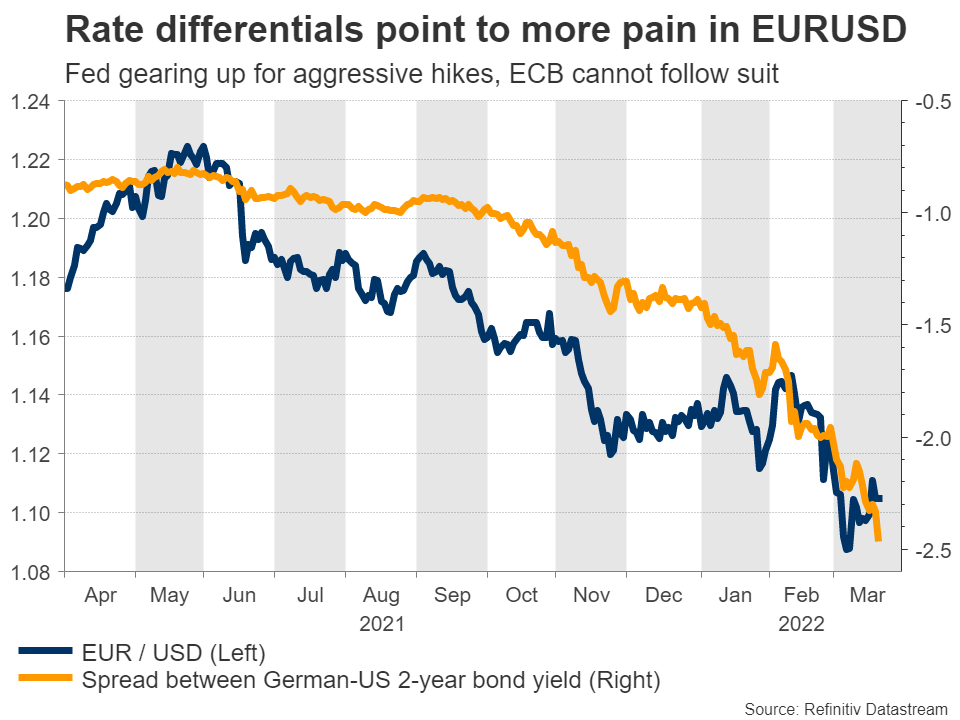
All told, it’s difficult to be bullish on the euro these days. Even if Europe dodges a recession, economic growth will likely slow dramatically. And with inflation raging, the ECB cannot really help this time - it needs to gradually raise interest rates.
Peace in Ukraine could enable a relief rally, but unless something drastic changes in the growth outlook, it will be difficult to sustain any bounce.
Risk Appetite Positive Despite Yields Rising
- US markets shrug off rising yields
- Ukraine ceasefire optimism
- Disparity in FX
US markets shrug off rising yields
US stocks extended their gains on Tuesday, following a positive session in Europe. Optimism over a ceasefire in Ukraine continues to outweigh concerns over rising bond yields. The US 10-year yield has closed in on 2.4%, after its latest gains. But crucially, the yield curve has flattened with the rise in shorter-dated maturing bond yields rising faster than those at the longer end. This suggests that investors are expecting rate hikes to be front-loaded, which will probably cause a slowdown in economic activity, which, in turn, will call for looser monetary policy in the longer-term outlook. This explains why US stocks, especially the tech sector, has been able to rise so sharply off late.
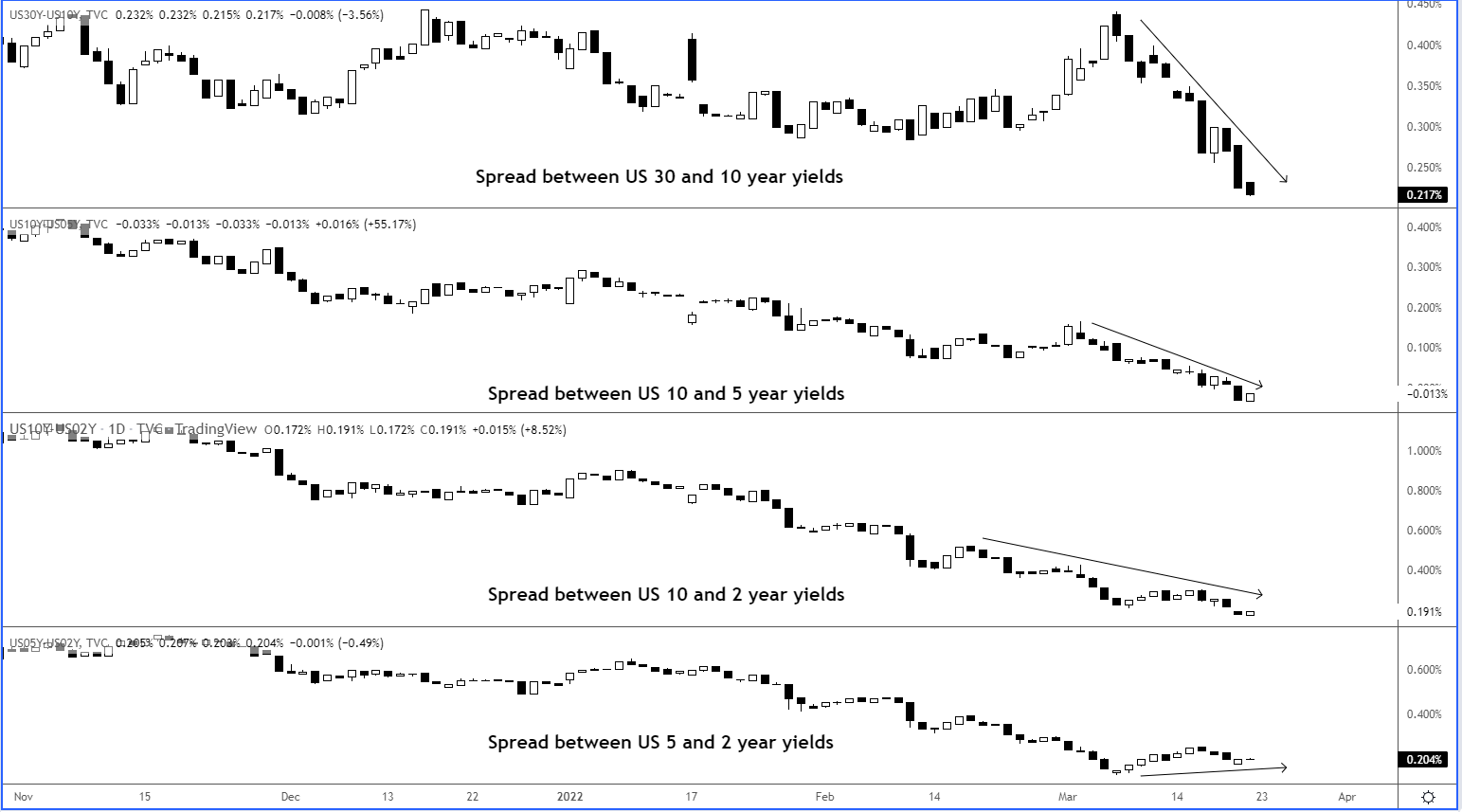
Source: ThinkMarkets and TradingView.com
Ukraine ceasefire optimism
The drop in oil and gold prices and gains for European stocks all point to optimism about a potential ceasefire and hopefully end of the conflict in Ukraine. It looks like the markets have responded to the latest comments from Zelensky, suggesting Ukraine is ready to discuss commitment not to join NATO and that it is ready to discuss the status of Crimea and Donbass after the ceasefire. However, he also indicated that the nation would hold a referendum on the terms of any potential peace agreement. So, it may be too soon to be very optimistic about the end of the war in Ukraine.
Disparity in FX
The growing disparity between monetary policies of the Federal Reserve and Bank of Japan is plain to see and explains why we have seen the USD/JPY skyrocket past 120.00 in recent days. BoJ Governor Kuroda again reiterated that it is too early to talk about the BoJ ending its easing, including ETF purchases. This contrasts sharply to the Fed, with Powell raising the prospects of 50 bp hikes at one or more upcoming FOMC meetings, as well as the prospect that QT could start as early as in May.
Meanwhile, the Bank of England was a little less hawkish as had been expected, but the GBP/USD has today surged past 1.3200 anyway. The pound, Aussie and other commodity dollars have been in fine form of late, owing to the positive risk sentiment emitting from the stock markets. Pound traders will face a busy week, with the release of UK CPI due out Wednesday morning and the Annual Budget due for later in the day. UK PMIs will be released on Thursday, followed on Frida by the release of UK retail sales.
Bitcoin’s 5% Jump is a Bullish Confidence Signal
BTC changed a little on Monday, ending the day around $41.3K. However, in early trading on Tuesday, we saw a jump of more than 5% to $43.3K; then the first cryptocurrency sunk to $42K. Over the past 24 hours, Ethereum has gained 4%, and other leading altcoins from the top ten are not far behind: Solana and Avalanche are up 2%, Cardano is up 6%. Terra is out of the general outline, decreasing by 0.5%.
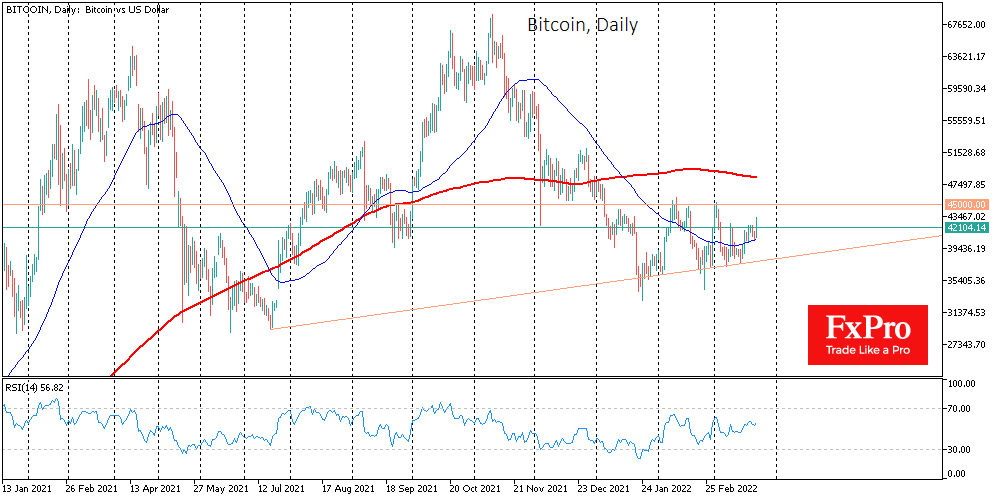
According to CoinMarketCap, the total capitalization of the crypto market increased by 3% over the day, to $1.92 trillion. The Bitcoin Dominance Index added 0.1 percentage points to 42% due to the BTC surge. The cryptocurrency fear and greed index fell by 4 points in a day, to 26, as its estimates do not include the latest bitcoin spurt.
This is not the first such jump in BTC since the beginning of March, in contrast to the neutral or even negative sentiment in the stock markets. All this indicates the readiness of the bulls for decisive action. However, until now, such impulses cannot be on a solid basis, because the fundamental demand for risks is under obvious pressure.
The most that the bulls were capable of in this case was the formation of support at the lows of July last year (ie below $30K). In January, the level moved to $35K and further to $37K at the end of February.
According to the FxPro analysts, institutional investors withdrew about $47 million from crypto funds over the past week. The outflow of funds has been observed for the second week in a row.
Meanwhile, the largest Australian financial conglomerate Commonwealth Bank of Australia stated a sharp increase in interest in crypto assets among clients. The bank intends to double the department responsible for the crypto industry.
Among the big news, it is worth noting the number of burned ETH tokens in the Ethereum network, which exceeded 2 million. The process of burning altcoins began on August 5 after the release of the London update, which changed the mechanism for calculating commissions for transactions.
Deputy Prime Minister of the Russian Federation Alexander Novak called for the legalization of cryptocurrency mining, recognizing it as a taxable business. A number of observers believe that this could be a way for Russia to capitalize on its energy potential in the face of reduced demand for Russian oil and gas.
Bank of Japan Will Not Keep Yen from Falling
The Japanese yen has fallen for the third week in a row, and the amplitude of this decline has become rather scary on Tuesday. It seems yen traders’ stop-lines have been blown as the markets have become increasingly aware of the monetary authorities’ reaction to inflation and the outlook for the balance of payments. In addition, over the past three weeks, we have seen a careful return of investors to risky assets, which is causing the yen to sell-off.
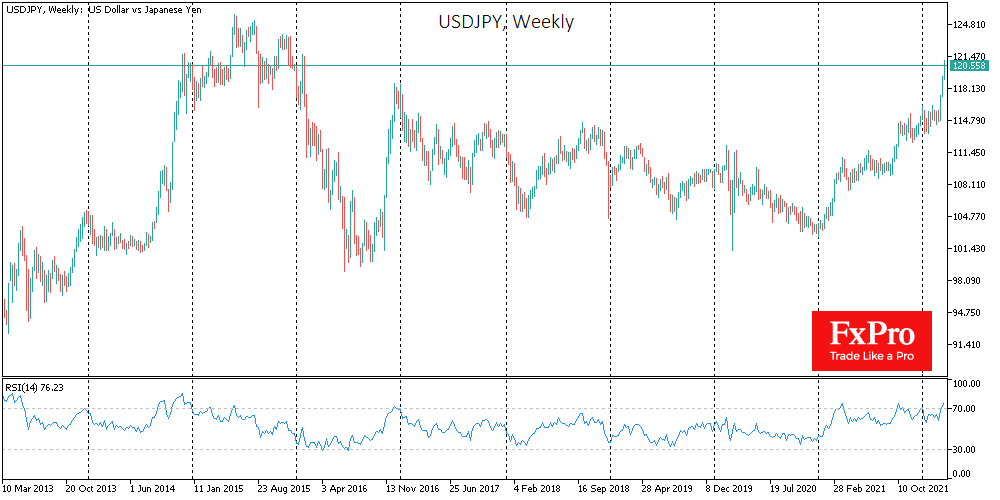
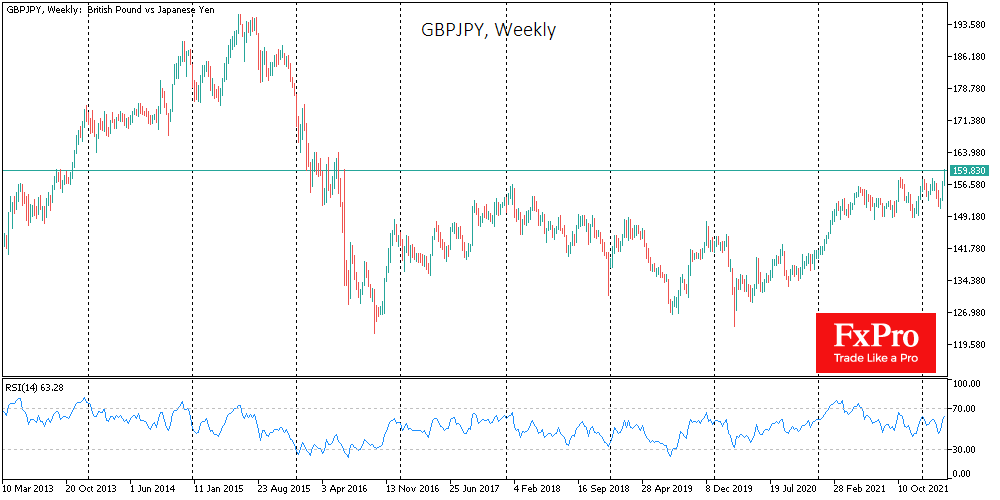
USDJPY is trading above 120.70, which was last seen six years ago, having gained more than 5% since March 7th, while GBPJPY has soared 6% and EURJPY is up 7%.
Against the yen are new comments from the Bank of Japan, which shows no sign of a change in its monetary policy, while central banks in other parts of the world issue increasingly hawkish statements.
The pressure on the yen is exacerbated by its dependence on oil and metal imports, which widens the trade deficit of the historically export-oriented country. The value of exports in February 2022 was 18% higher than in 2020, while imports soared by 49%. Booming prices for energy, metals, and agricultural products set Japan up for a further plunge into trade deficits.
In former years, sustained surpluses helped the yen maintain its strength or even strengthen during periods of market turbulence, ignoring anaemic economic growth and rising government debt to GDP levels.
The resulting crisis in commodity prices will force central banks to unambiguously choose their policy towards government bonds on the balance sheet and the general level of government debt. While the USA and Europe are tightening their rhetoric on interest rates, Japan is deliberately lagging. At the same time, the government maintains an apparent calm, pointing out that there are both disadvantages and advantages of a weak exchange rate. The yen problem is not bothering the authorities right now.
We should wait and see if investor confidence in the Japanese currency is undermined. Losing control of the exchange rate would risk an escalation of selling into Japanese government debt more than 250% of GDP. The only realistic soft solution is to deflate the national debt by accelerating inflation, but only if the central bank remains a big buyer to prevent an appreciation of the national debt. Such a policy would lead to sustained pressure on the yen.
US 10-yr yield eyes 2.4, but faces key long term channel resistance ahead
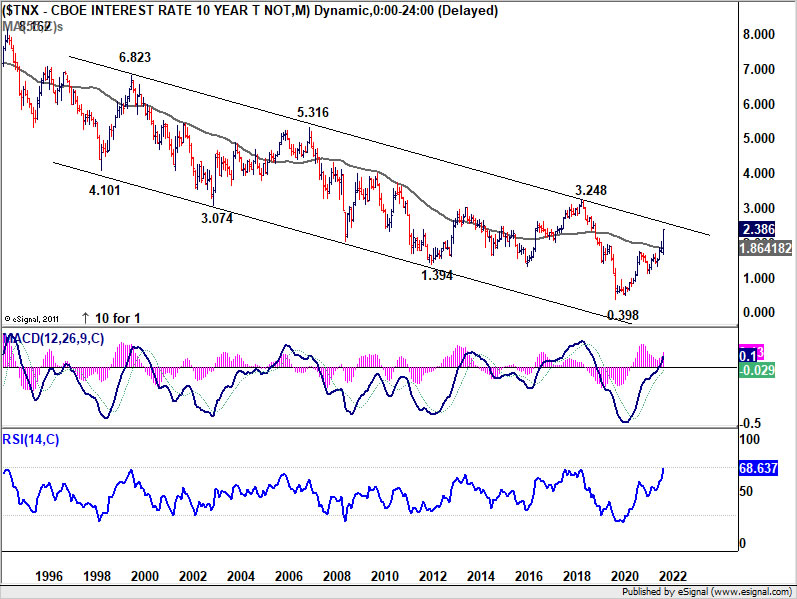
US 10-year yield gaps up today and it's trading up 0.068 at 2.383 at the time of writing. An immediate focus is 100% projection of 1.343 to 2.065 from 1.682 at 2.404. Sustained break there would be an important sign of upside acceleration. But in any case, break of 2.135 support is needed to signal short term topping, or outlook will stay bullish.
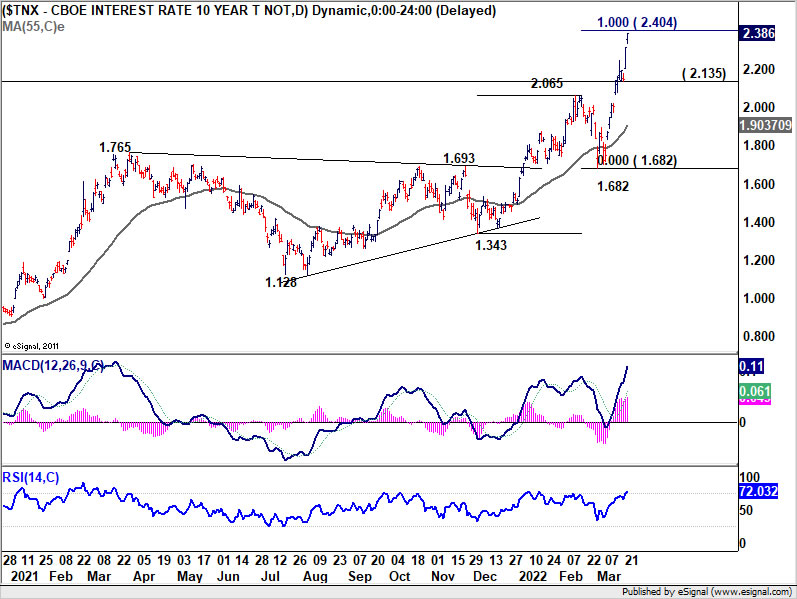
At the same time, we'd like to point out that TNX would be facing a key multi-decade channel resistance ahead. The channel resistance is at around 2.65. Sustained break there will carry rather significant long term bullish implication, which could be a signal of trend reversal.