Sample Category Title
Euro Calm, Warning from Bundesbank
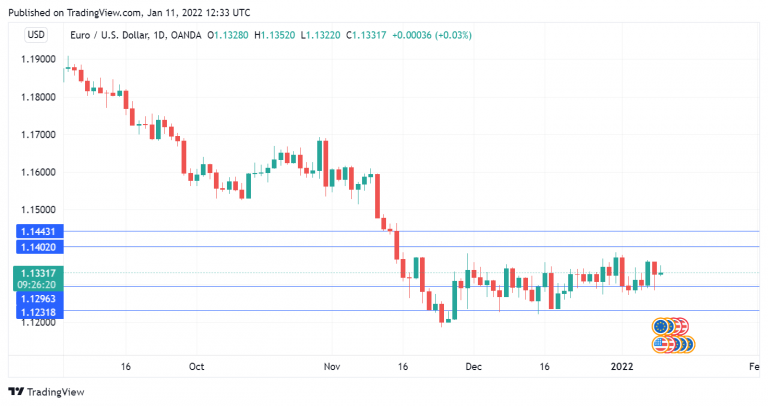
It continues to be quiet week for the euro, which is trading around 1.1340 in the European session. The currency markets are nervous and continue to be marked by range trading. For the euro, the risks are towards the downside, especially if German Bund yields run out of steam and stop moving higher. The dollar index has edged lower to 95.86, as it also range-trades between 95.50 and 96.50.
New Bundesbank head hawkish on inflation
Joachin Nagel was sworn in as head of Germany’s central bank on Tuesday, and he didn’t waste a minute challenging the ECB stance on inflation. Nagel said that the surge in eurozone inflation was not entirely temporary and warned that inflation could persist at high levels longer than expected.
Nagel’s stark message comes after eurozone inflation hit 5% in December. ECB President Christine Lagarde has downplayed high inflation, insisting that surging energy prices are the culprit and that inflation. The ECB has projected inflation at 3.2% in 2022 and says it will ease to the bank’s 2% target by year’s end. The Bundesbank has not supported the ECB’s ultra-accommodative policy and Nagel can be expected to be a thorn in Lagarde’s side, especially if inflation continues to climb.
In the US there are no doubts that inflation is red-hot and this has led to rate-hike fever in the markets. Although projections indicate that inflation will ease back to the 2% target, Wall Street is nervous that the Fed could press that rate trigger as early as March, when it winds up its asset purchase programme. Following the mixed US employment report on Friday, which included a soft NFP, there are expectations for three and even four rate hikes in 2022. The markets are clearly jittery about rate hikes, but market moves in January are often off base, so things should cool down once we move further into 2022.
EUR/USD Technical
- EUR/USD has support at 1.1296. Below, there is support at 1.1231
- There is resistance at 1.1402 and 1.1443
Fed Bostic: March hike a reasonable possibility
Atlanta Fed President Raphael Bostic said today, "there is a risk inflation is likely to be elevated for an extended period of time and we need to respond directly, clearly and aggressively." "If things continue the way they are March would be a reasonable possibility," he added.
Bostic also said there was no need to phase in balance sheet runoff. "I would hope we would move pretty quickly and get out of this emergency stance," he said. "The tool is pretty well understood and the motivation is pretty well understood. It should go faster for sure."
Bundesbank Nagel: Inflation could remain high for longer than expected
New Bundesbank President Joachim Nagel said in his swearing in ceremony, "it's true that high inflation rates can be attributed to special effects that expire automatically. But not entirely. I see a danger that inflation could remain high for longer than expected."
At the same occasion, ECB President Christine Lagarde said, "we understand that rising prices are a concern for many people, and we take that concern very seriously... The whole Governing Council is united in pursuit of this goal. At the same time, one of the key strengths of the Eurosystem is the way that it brings together different perspectives to form a consensus. Our rich quality of debate and diversity of views ensures that our decisions are robust."
Sentiment Up after Wall Street Stages Late Comeback
- Nasdaq out of correction territory following late-session rally
- Asia mixed amid China lockdowns, but European stocks and US futures up
- Powell testimony eyed as March rate hike speculation intensifies
Dip buyers return to save the day
Equities were on a steadier footing on Tuesday as the selloff on Wall Street appeared to be cooling off following a miserable start to the New Year for the tech behemoths. The tech-dominated Nasdaq Composite briefly flirted with correction territory on Monday, plunging by 2.7% at one point before making a powerful comeback to close up 0.05%. The Dow Jones and S&P 500 weren’t as lucky however, with the latter unable to completely erase its losses to close lower for the fifth straight day.
This is likely taking the shine off the rebound as Asian markets seem unimpressed and stocks in China and Japan ended today’s session in the red. However, European shares opened with solid gains, recouping a good chunk of yesterday’s losses.
Omicron keeping investors on their toes
The uptick in government bond yields that came about in mid-late December gathered additional steam at the start of 2022 as investors grew increasingly doubtful that inflationary pressures will abate quickly. The explosion of Covid cases globally due to the highly contagious Omicron variant is keeping supply chains strained even though many countries have opted against new restrictive measures as swathes of people are being forced to self-isolate, disrupting businesses in all sectors of the economy.
Furthermore, China is not letting up on its zero-Covid policy and continues to lock down big cities whenever clusters are discovered as it tries to eliminate the virus before the Winter Olympics kick off in a few weeks’ time.
With the supply constraints likely to keep inflationary pressures simmering for at least several more months, investors are nervous about how much higher yields will go. Stocks with bloated valuations become riskier investments when borrowing costs start to rise, particularly longer-term rates, hence why this rotation from growth and tech stocks into value stocks might only be taking a breather and there’s more pain to come for the Nasdaq.
Powell and US inflation in focus
On Wall Street, a Fed liftoff in March is looking more certain by the day so the bigger concern right now is what the terminal rate will be. Money markets have fully priced in three rate hikes for this year and the odds for a fourth are rising. This implies a growing number of traders see the Fed funds rate peaking at 2.0% instead of 1.75%.
Tomorrow’s CPI readings out of the US should give some clues as to whether Fed policymakers are about to get even more worried about soaring prices. In the meantime, markets will be looking to Fed Chair Jerome Powell for an update on his views on inflation during his confirmation hearing in Congress later today.
In prepared remarks for the hearing, Powell reinforced the central bank’s commitment to fighting inflation by pledging to prevent it from becoming entrenched.
Dollar and yen retreat, riskier currencies and commodities gain
In the currency markets, the US dollar was weaker against a basket of currencies as the 10-year Treasury yield pulled back slightly and as risk appetite improved on the back of the rebound in tech stocks. The risk-sensitive commodity dollars were all firmer against the greenback and the pound edged higher too, hitting a fresh two-month high of $1.3619.
The euro crept up to around $1.1340 but the yen slipped against all of its major rivals.
Oil prices also benefited from the positive mood, with WTI futures climbing to around $79.50 a barrel, while gold advanced above the $1,805/oz mark.
Oil Price Regains Traction on Tight Supply and Continuing Demand Recovery
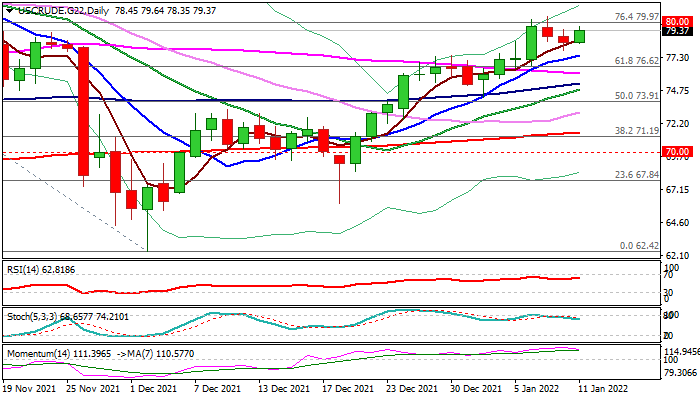
WTI oil rises on Tuesday, signaling that pullback after repeated failure at psychological $80 barrier was shallow and short-lived (contained by rising 5DMA).
The overall sentiment remains positive on tight global supply and expectations that rising number of new coronavirus cases will not have strong impact on global demand recovery.
Soaring number of new infections so far did not result in severe restrictive measures, while OPEC supply additions are still below their allowed increase due to a cartel’s agreement that supports oil prices.
Psychological $80 barrier (also Fibo 76.4% of $85.39/$62.42 fall) is under pressure again, with sustained break higher to confirm that larger corrective pullback ($85.39/$62.42) is over.
However, caution is still required as bulls may face strong headwinds at $80 zone again, as bullish momentum on daily chart is weakening and stochastic continues to diverge from the price action.
Crude inventories reports (API due late today and EIA on Wednesday) would provide fresh signals.
Res: 80.00; 80.44; 81.31; 81.77
Sup: 78.35; 77.82; 77.48; 76.62
XAU/USD Outlook: Fresh Bulls Establish above Key $1800 Level
Spot gold rises for the third straight day, driven by overall weaker dollar.
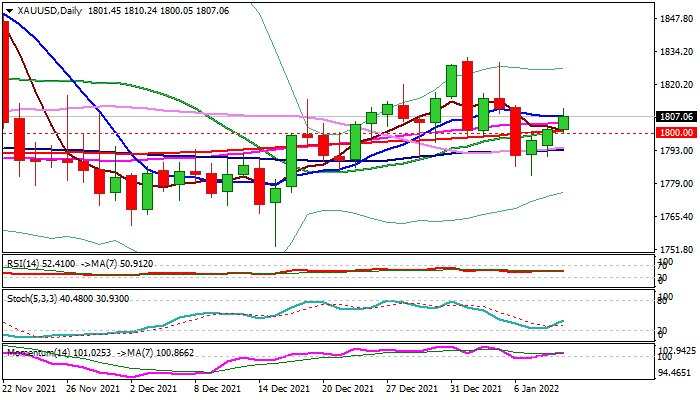
Recovery from $1782 (2022 low posted on Jan 7) rose above pivotal $1800 barrier (psychological/200DMA), retracing over 50% of $1831/$1782 bear-leg, with repeated daily lose above $1800 level to generate positive signal and improve near-term sentiment.
Daily studies in bullish setup support the action which pressures next important barriers at $1812/15 (Fibo 61.8%/weekly cloud base/200WMA), violation of which would further boost bulls.
Investors await US inflation data (due on Wednesday) as the metal is considered a hedge against high inflation and forecast shows that the price pressures in the US will likely increase further in December that would boost gold’s price, but general expectations for Fed’s four rate hikes this year would limit gains, as gold is highly sensitive to rising US interest rates.
Res: 1812; 1815; 1820; 1829.
Sup: 1800; 1794; 1790; 1786.
USD/JPY Outlook: Solid Supports at 115 Zone Hold for Now, Fed Powell’s Testimony in Focus
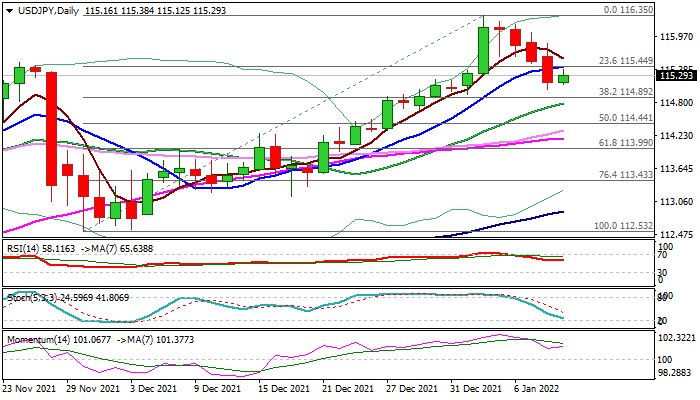
The dollar regained traction in early Tuesday after being in red four days, as pullback from 2022 high (116.35) faces strong headwinds at 115.00 support zone (psychological/Fibo 38.2% of 112.53/116.35/rising 20DMA).
The corrective dip should be ideally contained here to keep larger bulls intact for fresh push higher.
Daily studies keep positive momentum that supports the notion, however, rebound from correction low (115.04) needs an extension and close above daily Tenkan-sen (115.62) to generate positive signal.
Caution on break of 115 zones which could trigger stops and open way for deeper pullback towards Fibo supports at 114.44 and 113.99 (50% and 61.8% retracement of 112.53/116.35 respectively).
Traders focus on today’s key event, Fed Chair Powell’s testimony, which is expected to provide more clues on timing and pace of monetary policy normalization.
Res: 115.44; 115.62; 116.04; 116.35.
Sup: 115.00; 114.89; 114.79; 114.44.
GBP/CHF accelerates up to 1.26, heading to 1.30?
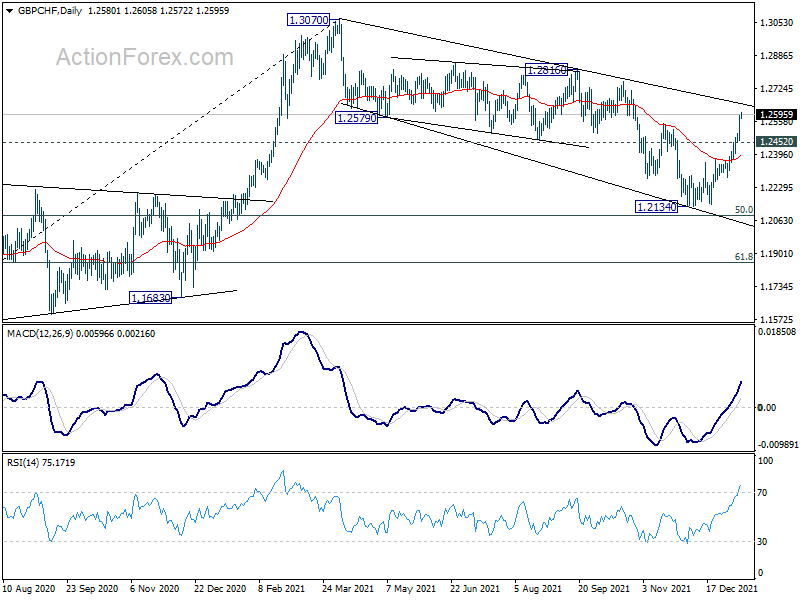
GBP/CHF rises strongly to as high as 1.2605 so far today week. Current development argues that correction from 1.3070 has completed with three waves down to 1.2134. That came just ahead of 50% retracement of 1.1107 to 1.3070 at 1.2089.
Further rise is now expected as long as 1.2452 support holds. Sustained break trend line resistance (now at 1.2642) will affirm this bullish case and target 1.2816 and then 1.3070 high.
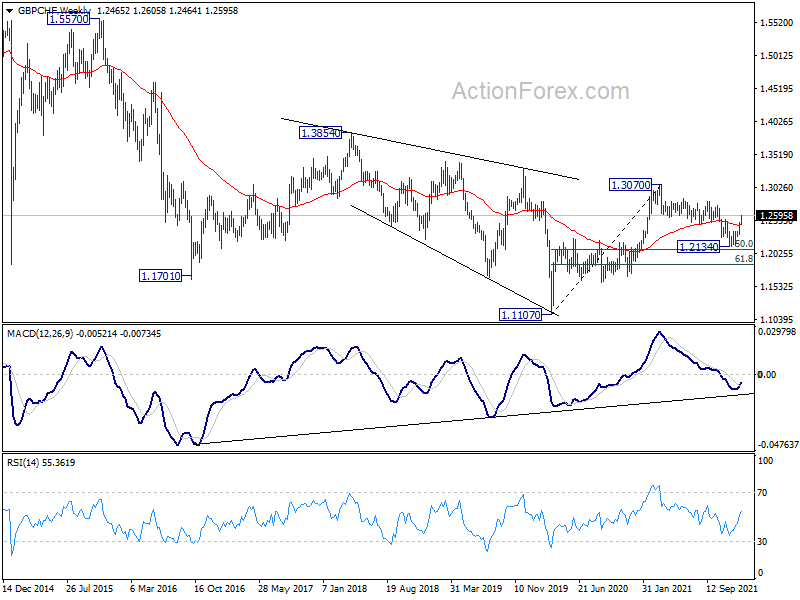
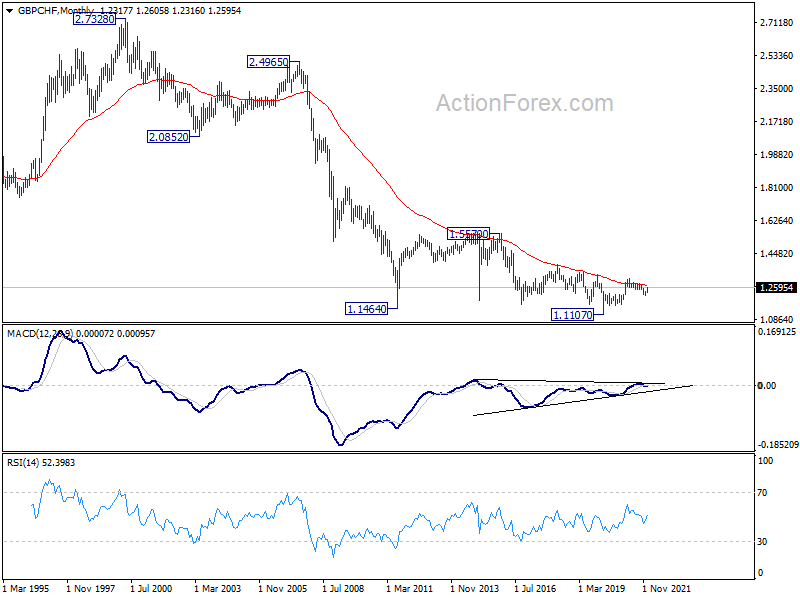
While it's a bit early, it should noted that sustained break of 1.3070 will likely be accompanied by sustained trading above 55 month EMA. That would be a long term bullish signal, which suggest that rise from 1.1107 is at least correcting the down trend from 2.7328 (2000 high).
Silver Aims for Recovery as Negative Forces Abate
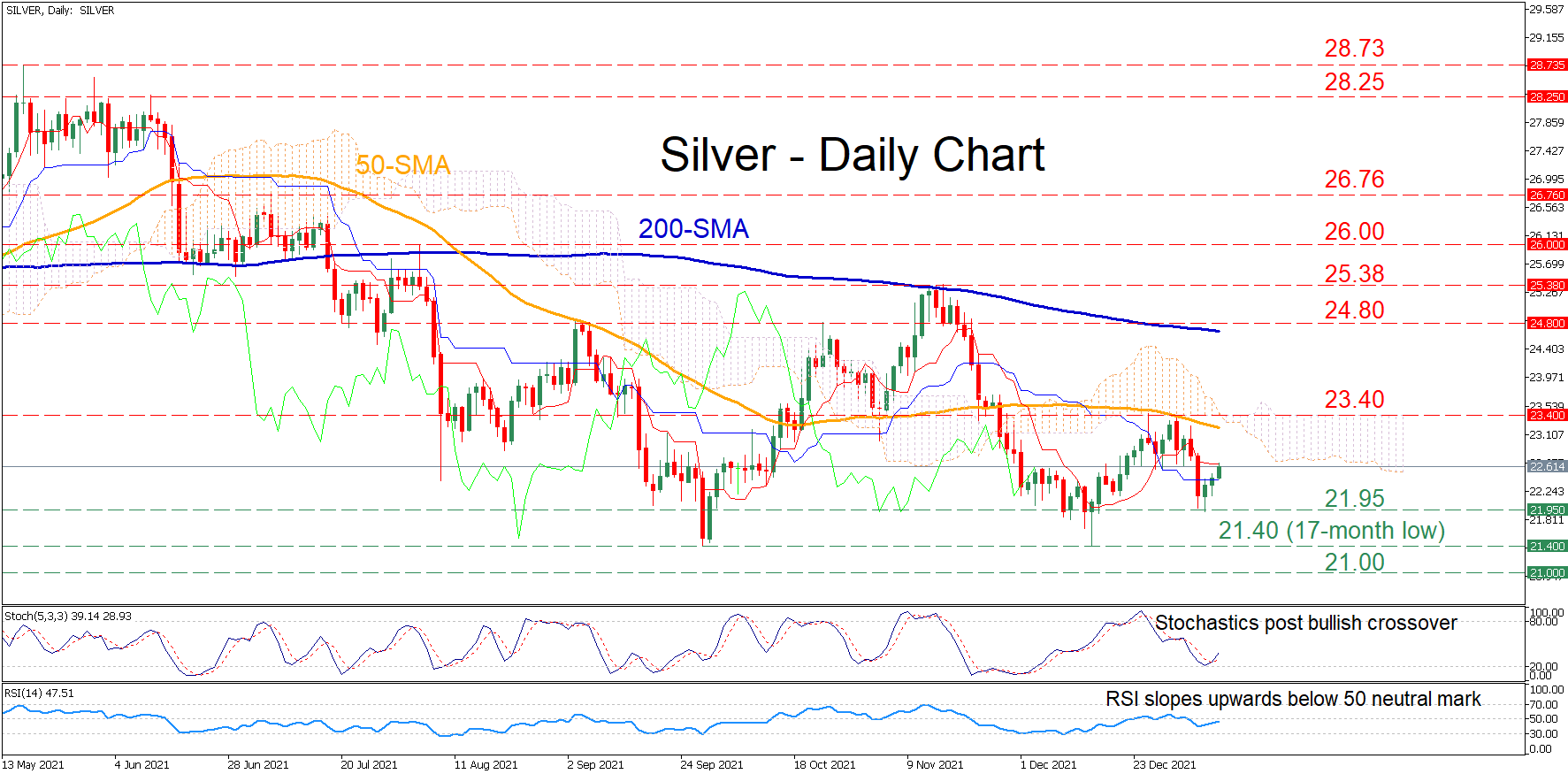
Silver has been plunging since early May, generating a clear structure of lower highs and lower lows. Nevertheless, in the last couple of sessions the metal has gained some traction as negative momentum seems to be fading.
The cautiously positive near-term picture is reflected by the momentum indicators. The stochastic oscillator is marching higher after posting a bullish crossover, while the RSI is sloping upwards slightly below its 50-neutral mark. However, in the last two months, the price has been trading below the Ichimoku cloud, endorsing the metal's long-term bearish outlook.
Should the positive momentum intensify further, the pair might encounter strong resistance at the recent high of 23.40. Conquering this obstacle, the price could ascend towards 24.80 or even higher to challenge the 25.38 region. Piercing through these resistance levels, the spotlight could turn to the 26.00 psychological mark.
On the flipside, if the bears manage to regain the upper hand, 21.95 could be the first support point for the price. Falling beneath this hurdle, the 17-month low of 21.40 may appear on the radar, which held strong twice in the last four months. A break below that level would signal the resumption of the long-term downtrend, sending the price to test the 21.00 psychological mark.
In brief, the long-term picture for silver remains negative even though bearish pressures appear to be waning. However, a profound cross above 25.38 could alter the medium-term outlook back to positive.
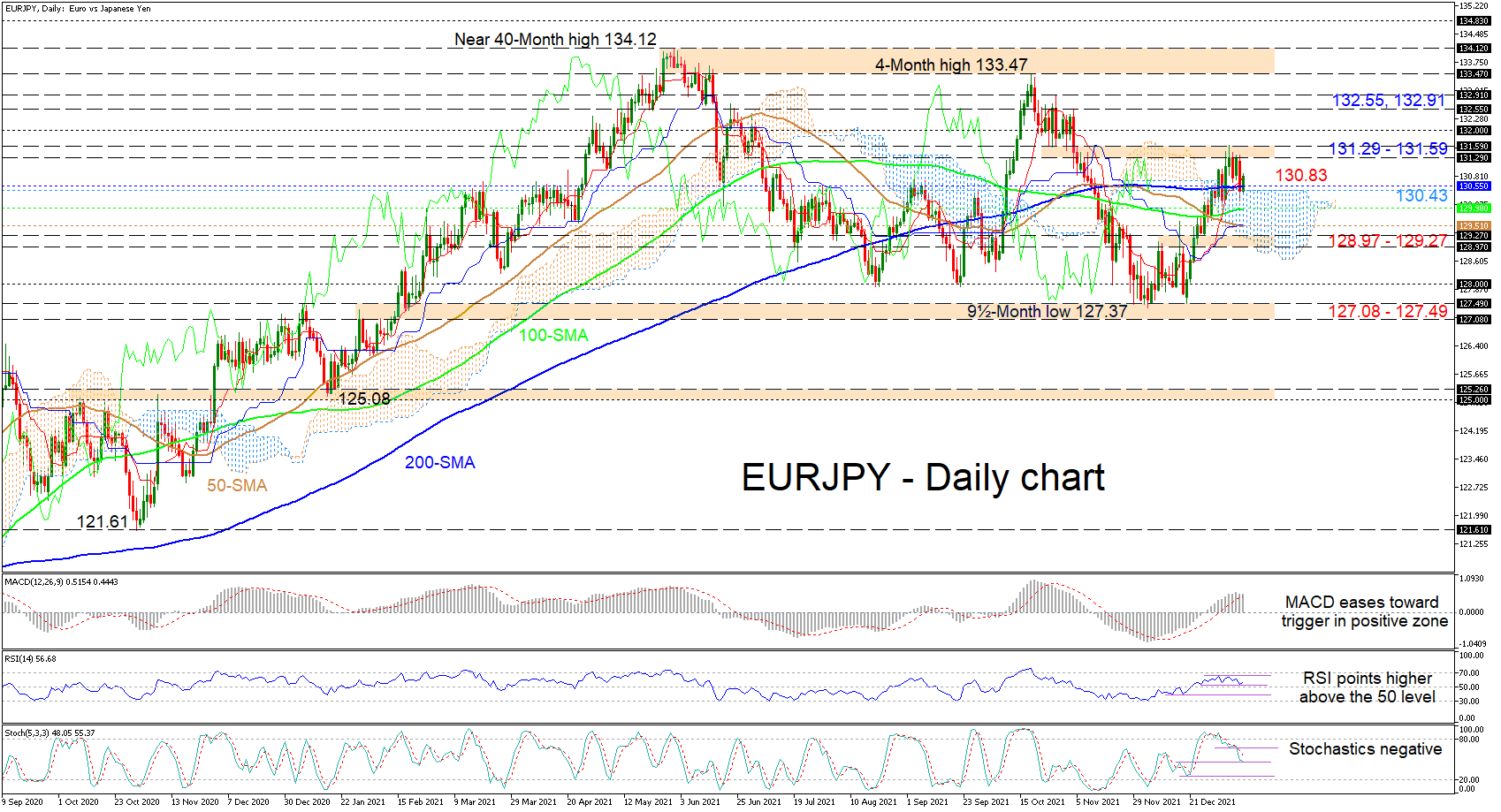
EURJPY Bulls Fight Pullback to 200-MA
EURJPY has managed to find footing just beneath the 200-day simple moving average (SMA) off the Ichimoku cloud’s upper band at 130.43, preserving the recent bullish tone. The SMAs are currently not endorsing a definitive trend in the pair.
The Ichimoku lines are indicating a minor pause in upside forces, while the short-term oscillators are transmitting conflicting messages in directional momentum. The MACD, in the positive region, is fading toward its red trigger line, while the RSI is improving in the bullish territory. The stochastic oscillator is showing signs of waning in its negative charge.
If buyers push past the red Tenkan-sen line at 130.83, the nearby 131.29-131.59 upside border could attempt to dismiss the climb from gaining pace. Otherwise, additional advances may then snag at the 132.00 hurdle before the bulls jump to tackle the November 4 and October 28 highs of 132.55 and 132.91 respectively.
To the downside, the horizontal 200-day SMA at 130.55 coupled with the cloud’s upper edge at 130.43 could provide initial support ahead of the 100-day SMA at 129.98. Sinking deeper into the cloud, the bears could then meet the 50-day SMA at 129.51 prior to confronting the 128.97-129.27 support barrier. Surrendering extra ground, the pair may target the 128.00 handle before challenging the critical 127.08-127.49 support section, which has held since February 2021.
Summarizing, EURJPY’s bullish mood remains active north of the cloud and the 130.00 trough. That said, a broader neutral bias appears to be reigning in the medium-term picture.