Sample Category Title
GBP/USD Pair Is Correcting Higher Above 1.3250
The British Pound faced sellers near the 1.3370 zone and declined against the US Dollar. The GBP/USD pair traded below the 1.3280 support zone.
It tested the 1.3200 support zone and settled below the 50 hourly simple moving average. The pair is now correcting higher and traded above 1.3250. It is now trading above the 1.3280 resistance zone.
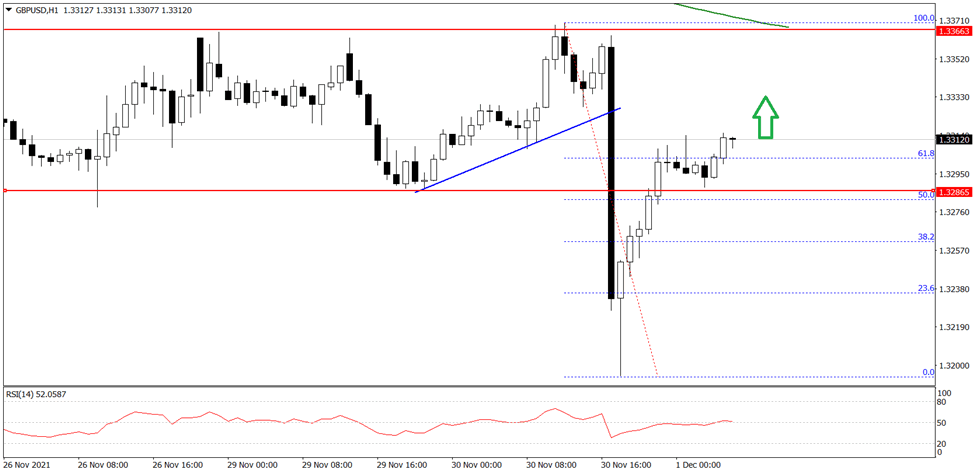
An initial resistance on the upside is near the 1.3330. The main resistance is now forming near the 1.3370 level. If there is a clear break above the 1.3370 and 1.3400 resistance levels, the pair could climb higher towards 1.3500 on FXOpen.
An initial support on the downside is near the 1.3280 level. The main support is forming near the 1.3250 level. A break below the 1.3250 support level could even push the pair below the 1.3200 support.
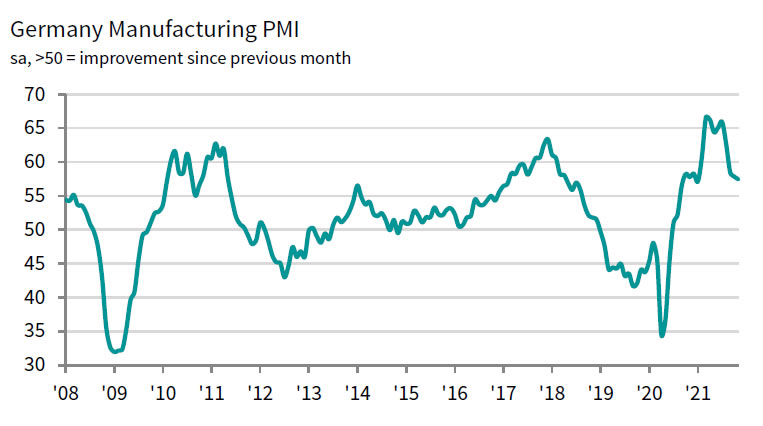
Germany PMI manufacturing finalized at 57.4 in Nov, Another month of constrained manufacturing production
Germany PMI Manufacturing was finalized at 57.4 in November, down from October's 57.8. Markit noted that input shortages held back output and, to a lesser extent, new orders. Rising energy costs helped drive new record increase in output prices. Business expectations improved for the first time in five months.
Phil Smith, Associate Economics Director at IHS Markit, said:
"November data signalled another month of constrained manufacturing production levels across Germany, as firms continued to have difficulty sourcing critical inputs and keeping up with demand. The survey's output index did at least steady in November after being in free fall in recent months, possibly helped by fewer supply delays and firms' recent efforts to accumulate greater safety stocks.
"However, the supply situation will likely need to improve a lot more before we see any real take-off in manufacturing production.
"While manufacturing output remains subdued, the opposite is true of factory gate prices which continue to sky-rocket, with November seeing the rate of charge inflation hitting to a new survey-high.
"Manufacturing expectations in November withstood the continued surge in prices, and even the fourth wave of COVID-19 infections, to move to a three-month high. The emergence of the Omicron variant poses more uncertainties, however, including a risk of fresh supply-chain disruption."
France PMI manufacturing finalized at 55.9 in Nov, tentative signs of stabilization
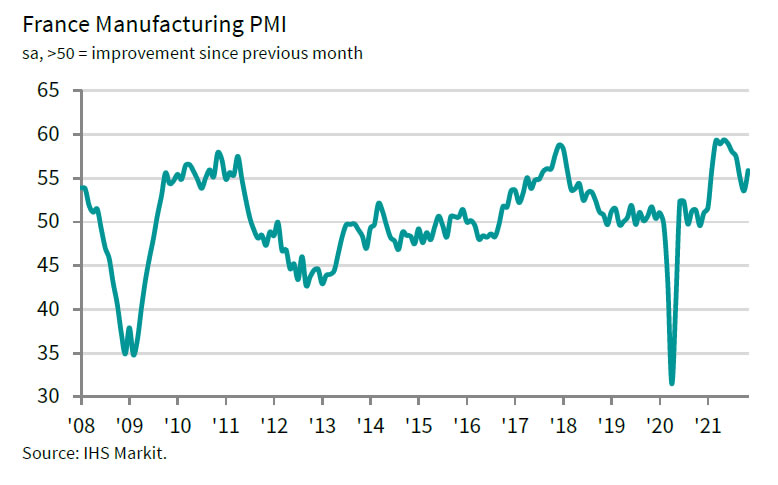
France PMI Manufacturing was finalized at 55.9 in November, up from October's 53.6. That's the first increase since May. Markit noted that output volumes were broadly unchanged during the month. Demand improved, but remained subdued amid supply-related constraints. Output price inflation reached new high.
Joe Hayes, Senior Economist at IHS Markit, said: "Tentative signs of stabilisation were seen in the French Manufacturing PMI during November, with the growth slowdown seen since post-pandemic growth peaked back in May finally coming to a halt. The headline PMI posted its first increase for six months as trends improved in output, new orders and employment.
"That said, beyond this positive direction change, the latest data continued to show intense supply-related constraints impeding manufacturing production, denting order book volumes and adding further pressure on margins. As a result, output prices were raised to the greatest extent since this data were first published back in 2002. While demand conditions have slowed, anecdotal evidence has thus far suggested this to be a symptom on component shortages, causing firms to postpone and cancel orders until supplies improve. We're not seeing much evidence that higher prices are a factor in causing demand to soften, which means elevated rates of inflation may not prove so transitory as many anticipate."
EURCHF Continues To Plummet As Bearish Forces Consolidate
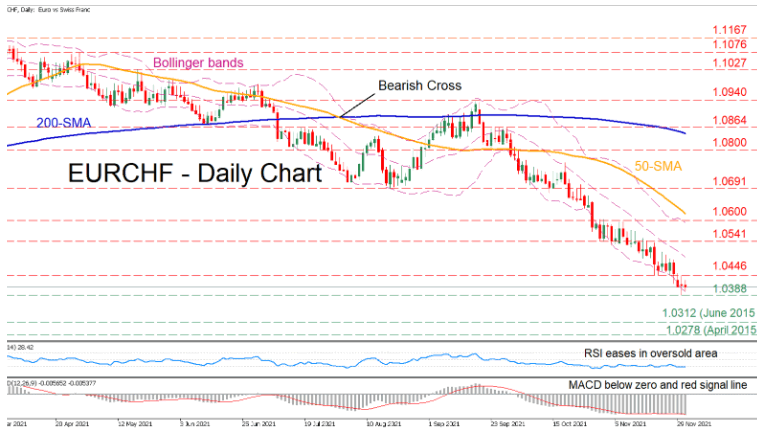
EURCHF has been trending downwards since March, falling to find significant support throughout this whole period. This downside move is likely to resume as both its 50- and 200-day simple moving averages (SMAs) are currently dipping downwards, indicating a negative momentum.
The short-term oscillators further reinforce the pair’s negative near-term bias. The RSI is flatlining in the oversold area, while the MACD histogram has crossed below its red signal line in the negative territory.
Should the selling pressure intensify further, the bears might target the recent low of 1.0388. Breaching this level, the price could move towards the June 2015 low of 1.0312. If the price pierces through this region, then it might seek to halt its decline at the April 2015 resistance point of 1.0278.
Alternatively, if the bulls retake control and push the price higher, initial resistance could be encountered at the 1.0446 level. Conquering this obstacle, buyers may then aim at 1.0541 or even higher at the 1.0600 psychological mark. Higher up, 1.0691 might prove a strong resistance barrier for the price.
Overall, EURCHF sustains a long-term bearish structure. A clear break above 1.0940 could turn its short-term picture back to positive, whereas a dive below 1.0388 would drive the price towards multi-year lows.
NZDUSD Ripe For A Bullish Start To December
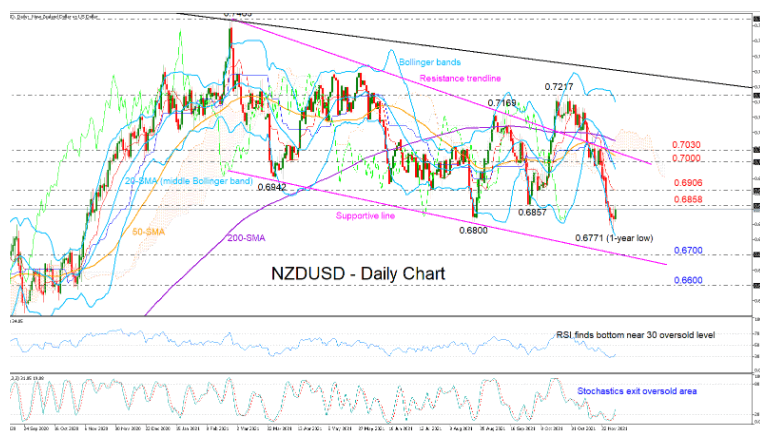
NZDUSD is setting the table for a bullish start to December after refusing to close below its August trough on Tuesday despite its flash drop to a new yearly low of 0.6771.
Oversold conditions seem to have been met as both the RSI and Stochastics have bottomed near their 30 and 20 levels respectively and are currently clearly changing course to the upside. Besides, with the price being attached to the lower Bollinger band for the past three weeks, an upside reversal is looking reasonable in the short term.
Whether the bulls will take control, however, may depend on the nearby 0.6858 resistance level. The price could not overcome that bar yesterday, therefore any close above it is expected to produce another extension up to the restrictive red Tenkan-sen line at 0.6906. Beyond that, the bulls may attempt to breach the 0.7000 psychological mark and stretch towards the 50-day simple moving average (SMA) and the descending line seen at 0.7030, which resumed its role as resistance in mid-November.
In the case the pair retreats below yesterday’s low of 0.6771, the spotlight will fall again on the tentative supportive line at 0.6700. Should sellers persist, the next pivot point could be settled around the 0.6600 handle, last active in the second half of 2020.
Summarizing, NZDUSD is expected to deliver a positive start to December as its monthly decline is looking overdone. A close above 0.6858 could boost the current bullish momentum in the price.
A Mixed Day For Asian Equities
Powell weighs on Wall Street, Asia markets mixed
The Moderna CEOs’ concerns about vaccine efficacy and omicron torpedoed late closing Asian equity markets overnight, as well as European and US markets. A hawkish Jerome Powell darkening an already dark day for Wall Street. However, US index futures are strongly rallying this morning on what I assume to be a follow-through from comments out of Israel that booster shots would offer omicron protection. That has also lifted some Asian markets.
Overnight, the S&P 500 sank by 1.90%, with the Nasdaq falling by 1.55%, while the Dow Jones slumped by 1.84%. In Asia, US futures have jumped higher, led by Nasdaq futures which have leapt 1.10%, followed by a gain of 0.75% by the S&P futures and a rise of 0.45% by Dow Jones futures.
In Asia, the picture is mixed, with late closing markets yesterday outperforming earlier closing ones that missed the Moderna headlines and are playing catchup. Thankfully, the rise in US index futures is taking the edge of regional losses. The Nikkei 225 is 0.70% higher with the Kospi leaping 1.60% higher, coat-tailing the Nasdaq futures. In China, the Shanghai Composite and CSI 300 are flat after a softer Caixin PMI and nagging property sector debt repayment concerns. The Hang Seng is showing no such worries, rocketing 1.45% higher.
Regional markets are mixed today. Taipei is unchanged as Singapore rallies sharply, rising higher by 1.40%, but Kuala Lumpur has fallen by 0.80% and Jakarta by 1.15%, hampered by the overnight slump in oil prices. Bangkok is 1.40% lower with Manila falling 0.55%. Australian markets are also in the red but only modestly. The All Ordinaries has fallen by 0.55%, with the ASX 200 down just 0.35%.
The price action this morning highlights that omicron headlines continue to dominate intra-day market direction despite some major developments from Jerome Powell overnight. European markets are likely to follow North Asia higher for exactly the same reasons and in an environment of schizophrenic tail-chasing, the only winner this week will be volatility.
Daily Technical Analysis
EUR/USD
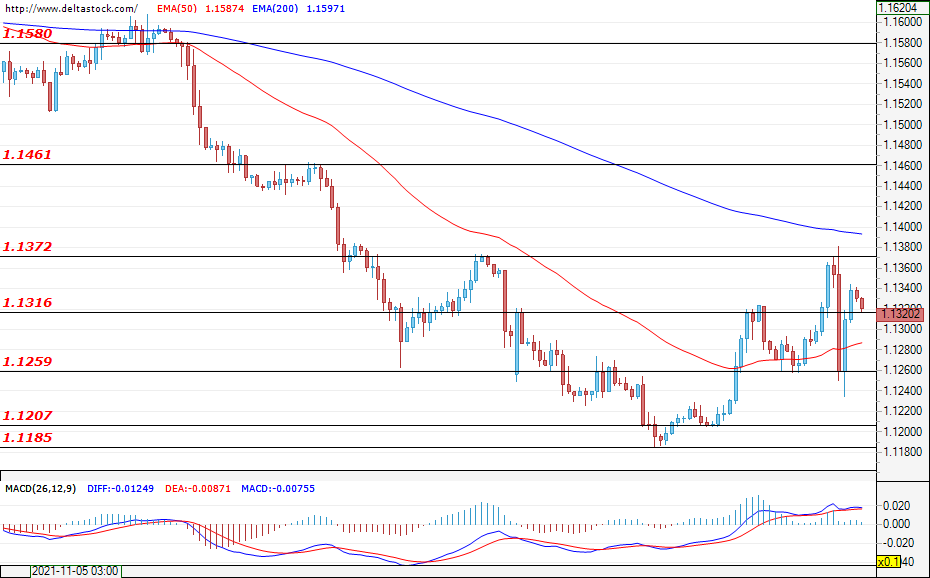
Current level - 1.1320
Yesterday, the bears could not gain enough momentum and the sell-off was limited to the support at 1.1259. The pair recovered some of its losses against the dollar and, during the early hours of today`s trading, the EUR/USD is holding just above the level at 1.1316. If the bears start selling more aggressively, a breach and a new test of the mentioned support at 1.1259 will be the most likely scenario, which would strengthen the negative expectations for the future path of the EUR/USD. If the bulls prevail, a successful breach of the resistance zone at 1.1372 would continue the recovery for the common european currency against the greenback towards the target at 1.1461.
| Resistance | Support | ||
| intraday | intraweek | intraday | intraweek |
| 1.1372 | 1.1460 | 1.1316 | 1.1207 |
| 1.1460 | 1.1580 | 1.1259 | 1.1180 |
USD/JPY
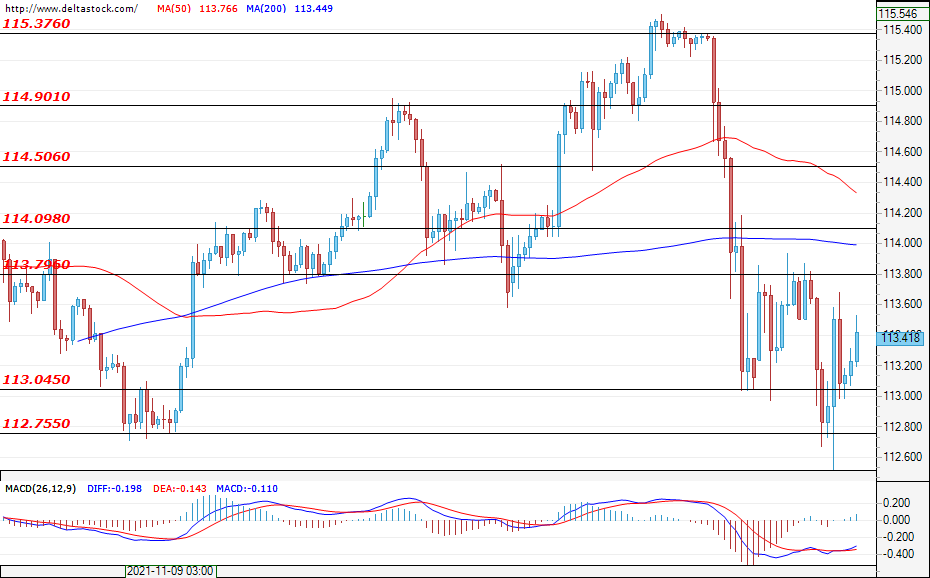
Current level - 113.41
The attempt to violate the support zone at 112.75 was not successful and the Ninja continued its trading back in the zone between 113.04 and 113.79. If the bulls prevail, the expectations are for a test of the upper border, where a breach would easily pave the way towards the next target at 114.09. The first support is the zone at 113.04, but only a breach aimed towards the last level at 112.75 could lead to new losses and а future depreciation of the dollar against the yen.
| Resistance | Support | ||
| intraday | intraweek | intraday | intraweek |
| 113.80 | 114.50 | 113.04 | 112.75 |
| 114.10 | 114.90 | 112.75 | 110.80 |
GBP/USD
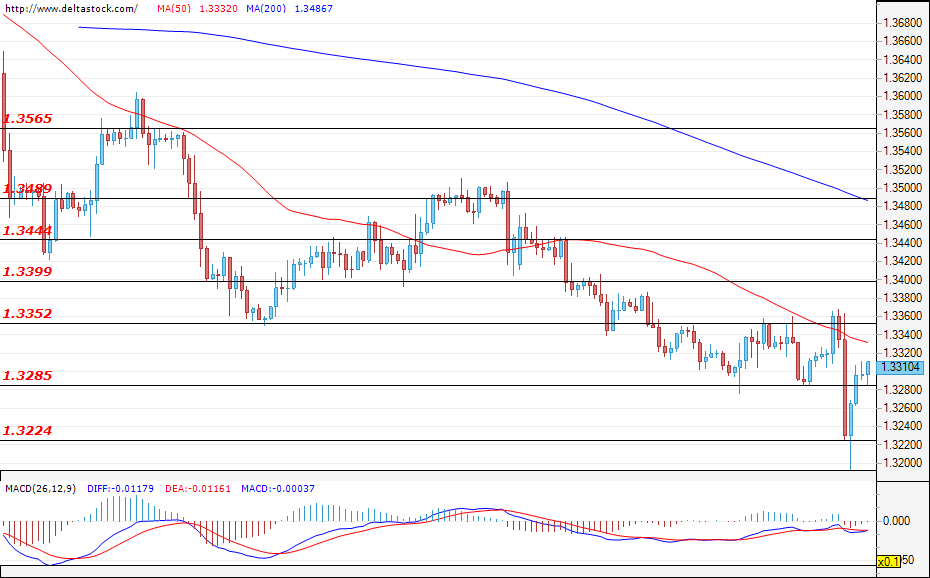
Current level - 1.3310
The support zone at 1.3224 successfully withheld the bearish attack and, at the time of writing, the pair is trading just above the level at 1.3285. If the bulls take control, they could test the resistance zone at 1.3352, but only a successful breach of the next target at 1.3399 could lead to a change in the current sentiment of the market participants. Worse-than-expected data in the UK for its manufacturing PMI (today; 09:00 GMT) could help the bears take control and violate the level at 1.3285. If this turns out to be the case and the support at 1.3224 is breached as well, the depreciation of the pound against the dollar would most likely continue towards the levels from November 2020 at around 1.3130.
| Resistance | Support | ||
| intraday | intraweek | intraday | intraweek |
| 1.3350 | 1.3440 | 1.3285 | 1.3200 |
| 1.3400 | 1.3490 | 1.3285 | 1.3060 |
Omicron Headline Tennis Continues
Markets endured another night of high drama overnight thanks to the latest omicron return of serve by the CEO of Moderna, and Jerome Powell shifting to what can only be interpreted as a hawkish stance in testimony on the Hill. The Moderna CEO raised questions about the efficacy of present vaccines and omicron late in Asia yesterday, which stopped the recovery rally in its tracks. Equities tumbled in late Asia, Europe and the US, while investors poured cash into Bunds and US Treasuries, flattening the US curve, and the haven yen and Swiss franc jumped. Oil prices, perhaps the most schizophrenic market out there at the moment, collapsed once again, and we haven’t even got to OPEC+ yet.
Powell ditches ‘transitory’ label for inflation
Jerome Powell, testifying on the Hill yesterday, added to the tumult, retiring the word “transitory” as his favourite pronoun for inflation, and suggesting that the Federal Reserve could unwind monetary stimulus faster than previously announced. The abrupt change of direction caught markets off guard and deepened the malaise in equity markets, while short-dated US yields rose as long-dated ones were falling on omicron-haven inflow, the yield curve flattening substantially overnight.
Treasury Secretary Yellen, also testifying, pleaded with Congress to extend the debt ceiling, saying a recession could follow and that the government would run out of money around the middle of the month. This story has been off the news front pages for a while now and had little impact once again overnight. Markets clearly believe some sort of bipartisan deal will still occur once the chest-puffing is over.
The Powell comments would have had a far greater impact, I believe, if the Moderna omicron story had not done some of the work for markets already. In the case of bond markets, haven buyers of long-dated US yields overwhelmed any inclination by investors to sell treasuries and steepen the yield curve once again. That was also evident in European markets, where Eurozone inflation exploded higher to 4.90% but Bund yields fell. It was left to currency markets to take the strain, with the US dollar falling across the board and the euro rallying along with the haven currencies. Perhaps the most confusing move was the US dollar falling versus the EM space. I am taking the EM FX rally overnight with a massive grain of salt, and I can only surmise that month-end flows played their part.
I warned yesterday that the only winner in December was likely to be volatility as the street sells everything on any negative omicron headline, and then buys everything back on any hint that the new variant isn’t as serious as we all thought. Despite the awful New York session, the fallout in Asia and Europe may not be so bad thanks to a story out of Israel released by Italy 24 News, no less. The story quotes the Israeli health minister as saying three doses of vaccine (in Israel it is Pfizer), protects from omicron and there is no need to panic. When a politician says, “no need to panic,” I always get nervous, but, financial markets now have their hope is eternal, straw of the day, to grasp at now. Tomorrow is another day though, and I have no doubt that another headline will have the mindless herd we call the financial markets, stampeding the other way.
If we can strip out the noise, I would grasp two themes from overnight. Firstly, European inflation has joined the inflation bonfire and markets are now starting to price that the world’s government debt monetiser-and-chief, the ECB, may have to respond, hence the rally in the euro overnight. I think that is a false hope. Secondly, Chairman Powell’s comments were a decidedly hawkish change of direction and the mid-month FOMC meeting will be live for a faster taper. Distortions from omicron pushed aside, the US yield curve should steepen, and the US dollar rally will return in Q1 2022.
Back in the real world, we have had quite a bit of data out of Asia today. Australian Ai Group Manufacturing Index for November jumped to 54.8 and Markit Manufacturing PMI to 59.2. Australian Q3 GDP QoQ contracted by just -1.90%, far better than the -2.70% forecast. The data suggests that the lucky country weathered the Q3 lockdowns better than expected and is recovering in Q4 at a vigorous pace. House prices even went up in Brisbane more than they did in Sydney.
Elsewhere, November PMIs across Asia were positive. Japan’s Jibun Bank Manufacturing PMI rose to 54.5, while South Korea’s Markit Manufacturing PMI climbed to 50.9 and its trade data showed a wider surplus and rising exports and imports. Regional Markit Manufacturing PMIs from ASEAN and Taiwan showed impressive improvements into expansionary territory, with Taiwan holding steady at 53.9. Only Indonesia retreated, falling to 53.9 from 57.2, but still expansionary.
Perhaps the only blot on the copybook today has been China’s Caixin Manufacturing PMI which retreated from 50.6 in October to 49.9 in November. The fallout should be minimal as the official PMI climbed to 50.1 yesterday. It still suggests that China faces challenges regarding input costs, and energy, although the squeeze in the latter has eased somewhat. The trade surplus remains very healthy though, and the overall picture from Asia is that its post-delta recovery continues to gain momentum despite supply chain challenges. Obviously, omicron could change that picture, but it is far too soon to draw conclusions.
A number of heavyweight Markit Manufacturing PMIs, including Germany and France, are also released today, as well as the ISM Manufacturing PMI. They should hold steady in expansionary territory whilst revealing supply chain and material cost challenges under the bonnet. With omicron dominating market direction, their impact will be minimal. US ADP Employment could print above 500,000 jobs added tonight, giving weight to a stronger Non-Farm release on Friday and perhaps increasing the Fed tapering noise.
The Balance Of Risks Clearly Shifted In Powell’s View
Markets
Fed Chair Powell went off-script in yesterday's testimony before the Senate Committee. Monday's pre-released official statement kept close to the official policy line, but his interaction with lawmakers delivered some fireworks. First and foremost, Powell thinks it's probably a good time to retire the word “transitory” when it comes to higher inflation. Even though prices are still expected to significantly fall back, it's the case that pricing increases have spread much more broadly in recent months. In a mea culpa, he said that the Fed missed the highly unusual, very difficult, very non-linear supply-side problems in forecasting inflation developments throughout the Covid-pandemic. Second, the balance of risks clearly shifted in Powell's view. The risk of higher inflation has increased with fallout effects on the labour market. “To get back to the kind of great labour market we had before the pandemic, we're going to need… price stability”. At the previous policy meeting, the Fed defended its gradual normalization approach in order for the maximum employment goal to be reached. The timing of this new risk assessment is especially significant as it coincides with the outbreak of the potentially dangerous Covid-mutant Omicron. Finally, Powell translated his new inflation view and associated risks into backing a faster taper process, echoing the hawkish views of some of his colleagues. “The economy is very strong and inflationary pressures are high, and it is therefore appropriate to consider wrapping up the taper of our asset purchases perhaps a few months sooner.” We argued before that the Fed could double its monthly taper efforts from January onwards ($30bn instead of $15bn), implying a potential first rate hike as early as March instead of June.
Powell's comments marked the start of an intraday turnaround in a session dominated by risk aversion after Moderna CEO Bancel warned for a drop in vaccines' effectiveness against the Omicron-variant. The front end of the US yield curve obviously underperformed. The curve flattened in a daily perspective with yield changes ranging between +8.2 bps (2-yr) and -6.3 bps (30-yr). The German yield curve flattened as well with yields ending 1.3 bps higher at the 2-yr and 7.8 bps lower at the 30-yr. Consensus-beating record high EMU (core) CPI prints didn't prompt a significant market reaction during the risk-off sentiment. Powell's U-turn on inflation nevertheless adds ever more pressure on the ECB to prepare/present exit plans at the Dec 16 meeting. Markets over the past months stopped anticipating on any such move. The dollar erased losses, but the greenback's performance, in the end, remained disappointing. EUR/USD spiked lower from 1.1380 to 1.1240 to eventually close around 1.1340. US stock markets received a double whammy (Omicron & hawkish Powell) and lost 1.5% to 2%. Today's eco calendar contains US manufacturing ISM and ADP employment, but it seems that the die has been cast for the Dec 15 Fed meeting.
News headlines
Australian GDP fell less than expected in Q3 (-1.9% Q/Q; +3.9% Y/Y). Lockdowns weighed on activity. The setback was mainly due to a 4.8% drop in private consumption, with services spending taking the biggest hit (-5.8%). Government spending and net expect contributed positively. Inventories were a drag. The inability to spend raised the household savings rate to 19.8% in Q3, up from 11.2%. This provides a good starting point for a Q4 rebound as lockdowns are lifted. Corelogic's index of capital city home prices rose a further 1.1% M/M to 21.3% Y/Y. Yields for 2-y and 3-y Australian government bonds rose 4 and 6 bps respectively. Markets see a first-rate hike by the Summer of next year even as the RBA continues to signal no rate hike at least until 2023. AUD/USD rebounds to 0.716.
Polish inflation remained stubbornly high in November at 1.1% M/M and a 20-yr high 7.7% Y/Y (from 6.8% Y/Y), drifting further away from the NBP's 2.5% (+- 1%) inflation target. The data add pressure on the NBP to accelerate policy normalization. Policy maker Gatnar suggested that a 50 bps rate hike at each of the next two meetings might be needed. He sees risks of inflation printing above 8% in December and considers the weak zloty to be no longer in line with economic fundamentals. The zloty extended a gradual comeback, closing near EUR/PLN 4.66.
US Equities Crash On Hawkish Fed Statement
US stocks declined sharply after a hawkish statement by Jerome Powell. The Dow Jones crashed by more than 650 points while the tech-heavy Nasdaq 100 index declined by more than 300 points. The CBOE VIX index rose by more than 20%. This happened after Jerome Powell hinted that the Federal Reserve would move to unwind the quantitative easing program. He warned that the variant could lead to higher inflation as supply logjams continued. This happened after the Chief Executive at Moderna warned that the company’s vaccine could be ineffective against the variant.
Some of the worst-performing equities in the United States were those in the hospitality, aviation, and office real estate sectors. For example, Southwest shares declined by more than 2.7% while United Airlines crashed by more than 4%. Boston Properties and SL Green also declined as investors became worried that demand for office space will decline. Similarly, hospitality companies like Airbnb, Marriott, and Hilton declined by more than 5%
The economic calendar will have some key events today since it is the first day of the month. Earlier on, Australia published the latest GDP numbers. The data revealed that the country’s economy struggled in the third quarter because of the lockdowns in New South Wales. There are signs that the country’s economy is recovering as evidenced by positive manufacturing PMI data. The market will receive the latest Swiss inflation and manufacturing PMI numbers. In the United States, Jerome Powell will continue his testimony while ADP will publish its estimate of jobs numbers.
EURUSD
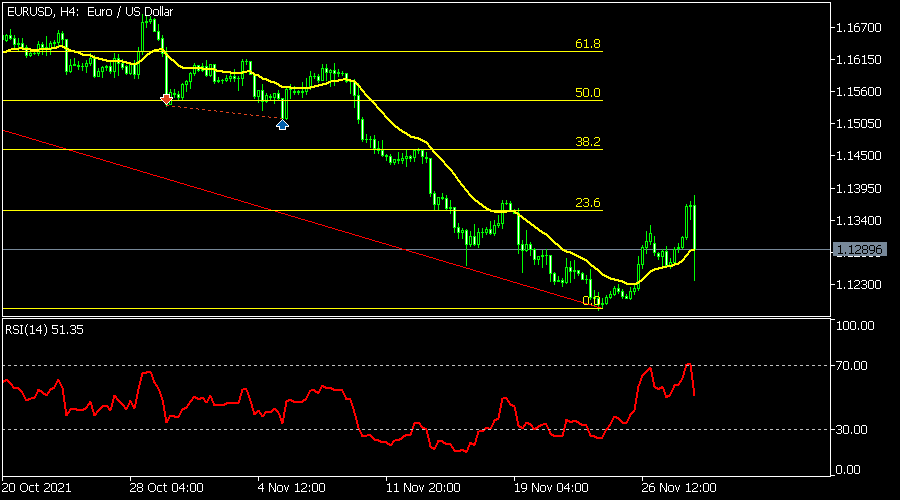
The EURUSD pair declined sharply after a hawkish statement by Jerome Powell. It fell to a low of 1.2645 as it erased most of the gains it made earlier this week. On the four-hour chart, the pair moved to the 25-day moving average and is below the 23.6% retracement level. The Relative Strength Index (RSI) has also moved slightly below the overbought level. Therefore, the pair will attempt to pare back some of the losses as worries about the hawkish Fed fade.
US30
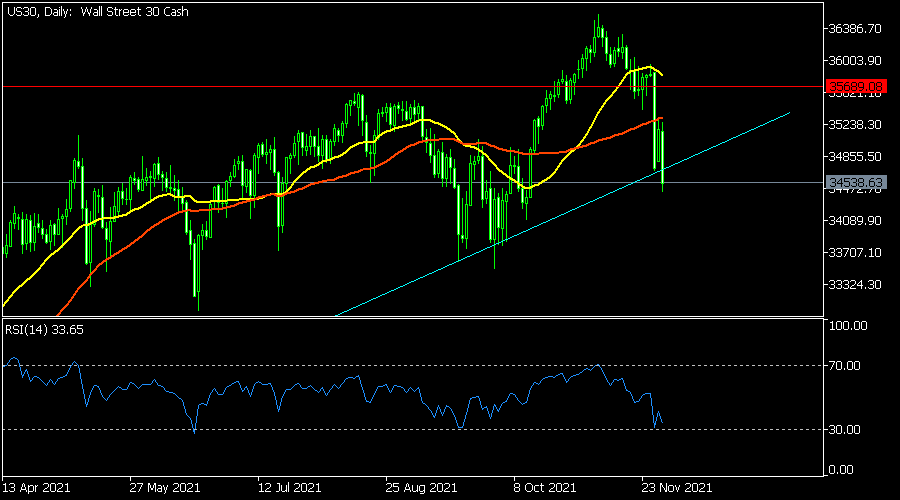
The Dow Jones index declined sharply in the overnight session. It fell to a low of $34,535, which was the lowest level since October 15. On the daily chart, the pair moved below the ascending trendline. It also moved below the 25-day moving average and the parabolic SAR dots. The index seems to be forming a head and shoulders pattern. Therefore, there is a likelihood that it will drop to about $34,000 in the near term.
SPX500
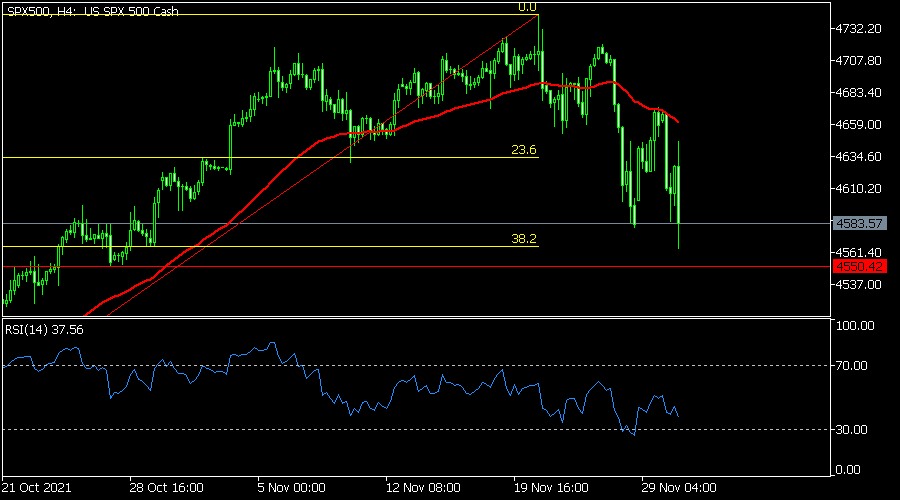
The S&P 500 index declined sharply on Tuesday. It fell to a low of $4,570, which was the lowest level since November 1st. It has been struggling after it rose to a high of 4,752 recently. The index also declined to the 38.2% Fibonacci retracement level. It also moved below the 25-day moving average. Therefore, the index will likely keep falling in the near term.