Sample Category Title
When A Plan Doesn’t Come Together
Well, the US Non-Farm Payrolls finally pulled itself out of a rut on Friday, printing well above forecasts at 531,000 jobs added while adding an upward 235,000 revision to the back months. The high-frequency NFIB survey showed a high proportion of small businesses intend to raise worker compensation. Workforce participation held steady at 61.60%, once again suggesting that the post-pandemic workforce in the US is now quite a bit smaller than it was pre-pandemic. Finally, the US House of Representatives passed the US infrastructure bill unlocking USD 1.2 trillion of new spending.
Stock markets head higher
So, there are plenty of reasons to be a little nervous about the Fed's transitory inflation narrative. Maybe lighten up on some equities, sell a few bonds and buy some US dollars. Wrong! With the employment gains broadly based across sectors, equities rose as economic recovery sentiment won out. Another day, another record close for Wall Street. US yields edged lower, and the US dollar gave back a few of its recent gains. US capital markets only want to hear one story at the moment as that's what suits its buy-everything narrative. That's an economic recovery reinforced by total belief in Jerome Powell's promises that post-the-Fed-taper interest rates hikes will not be on the horizon.
Another reason to be upbeat, and I should have been paying more attention to sooner, is logistics and freight costs, one of the main gremlins in the inflation story. The Baltic Exchange Dry Index has plunged 5,650 and 2,710 in the past six weeks, and it is not alone. China has also raised domestic coal production to multi-year highs, taking the heat (sic) of the energy crunch for now. Iron ore and copper have taken a beating since mid-October. Eventually, both may feed into easier inflation, although with international air travel ramping up, so will jet fuel demand. Over the weekend, Saudi Arabia hiked December crude prices to Asian customers, sending oil higher this morning.
Whichever way you cut the cake, my outlook for markets was completely wrong. I underestimated the myopic momentum to keep the asset price inflation party going. Although I'm confident the inflation piper will play, I've long ago learnt not to fight market sentiment. My favourite quote, known to long-time readers, is “markets can remain irrational longer than you can stay solvent.” I could probably add, “especially when central banks are idiotically QE'ing into an inflationary environment in their quest to make the world as economically unequal as possible to give the world even greater problems, but after they have retired on their final salary pension.” Sometimes a plan doesn't come together, and that's ok; the FOMO buy-everything gnomes will have another week in the sun this week.
Over the weekend, China's October Trade Balance surged to an all-time high of USD 84.54 billion, as exports surged by 27.10% as it rushed to fill the western world's Christmas orders, while Imports rose by only 20.60%, well below the 25.0% forecast. Logistical constraints appear to have hampered the import side of the equation, and with Covid-19 popping up more widely on the mainland, there are risks here, especially if it hits ports and factories in crucial areas. China's energy crunch and subsequent limits on raw material processing may have impacted imports and demand reduction. The pre-holiday season peak may also mark the trade balance peak.
Reuter's reports that some offshore bondholders have not received payments from Scenery Journey, a unit of Evergrande, due to make payments over the weekend. Evergrande has some grace period deadlines this week, and as a whole, China developers have over USD 1.0 billion of offshore payments due this week. Watch this space. The rise in oil prices this morning, China property-sector nerves, the four-day Communist Party Central Committee, which is likely to rubber-stamp President Xi's president for life title, and any further shared prosperity policy initiatives from it, seem to be adding a cautious note to Asian markets today. Asia has a much higher sensitivity to US monetary policy than other parts of the world.
The regional calendar is dead today, with no data of note. The Bank of Japan Summary of Opinions was a cut/paste of the last 30 years. Rock bottom rates to support growth and until inflation appears. Europe is also a bare shelf. Post FOMC, we can expect plenty of Fed speakers this week, although their hawkish tone will likely ring hollow with markets, given actions have definitely not been louder than words of late. On Wednesday, China and US inflation data look to be the week's highlights, and Thursday's Australian Employment print is usually good for some intra-day vol. With a US holiday on Thursday, the back end of the week is likely to be quiet globally unless China springs some surprises from the Central Committee meeting. That probably means a noisy, but ultimately, range-trading week.
US 30 Rises As Risk Appetite Grow
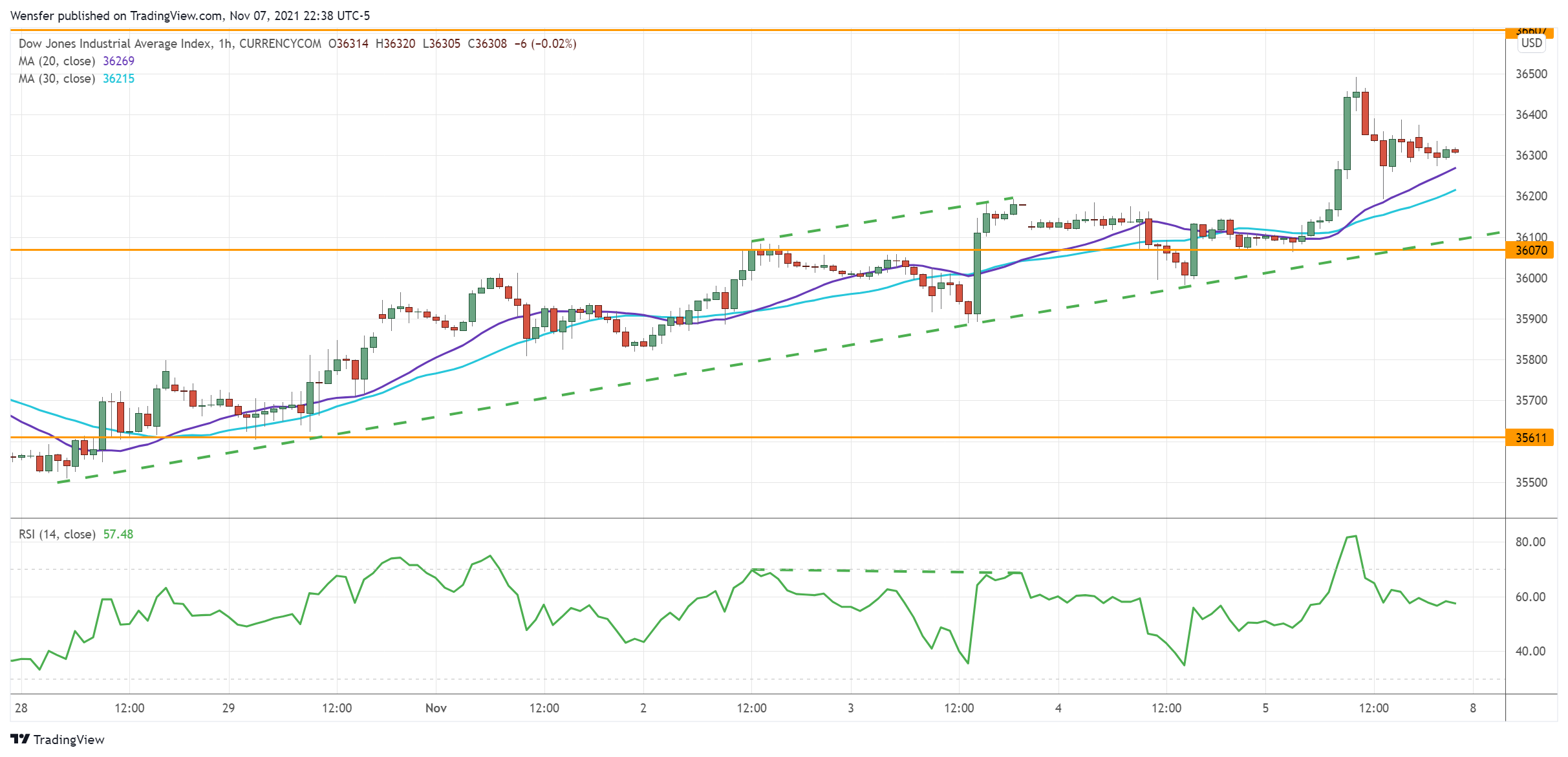
The Dow Jones 30 finds support from the passage of the $1 trillion US infrastructure bill. The index saw an acceleration to the upside after it rallied above the previous peak at 35600.
Sentiment remains bullish with short-term price action grinding up along a rising trendline. 36600 would be the next target.
The RSI’s overbought situation has led to a temporary retracement which could be an opportunity for trend followers to stake in. 36070 on the trendline is the first level where we can expect a rebound.
USD/CAD Tests Supply Area
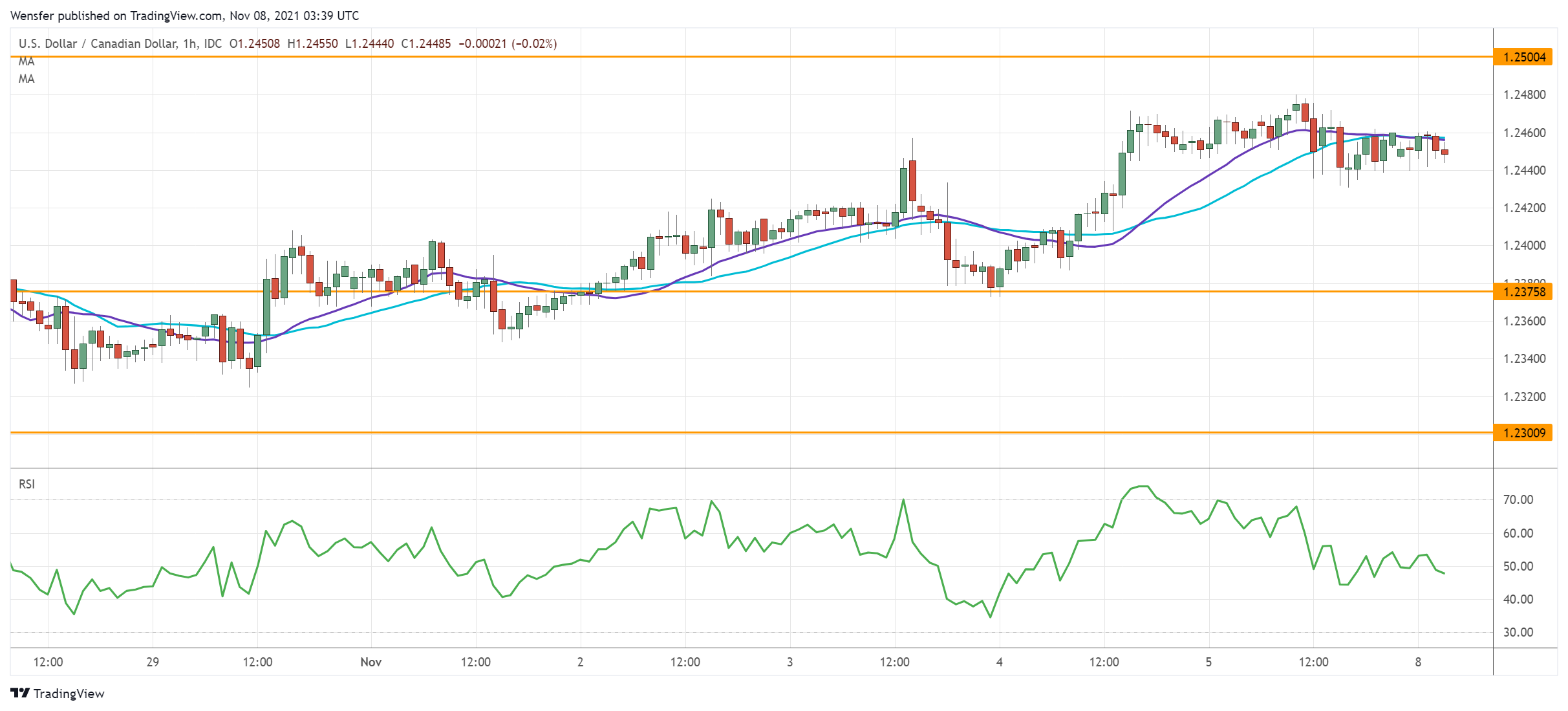
The Canadian dollar claws back some losses after Canada’s unemployment rate shrank to 6.7% in October. The US dollar’s break above 1.2430 has put the bears under pressure.
An overbought RSI has put a limit on the upside as intraday buyers take profit. The bulls are making an attempt at 1.2500. This level was key support on the daily chart and has now turned into a resistance.
A bullish breakout may pave the way for a bullish reversal. A fall below 1.2375 would put the demand zone over 1.2300 at the test once again.
USD/CHF Struggles For Bids
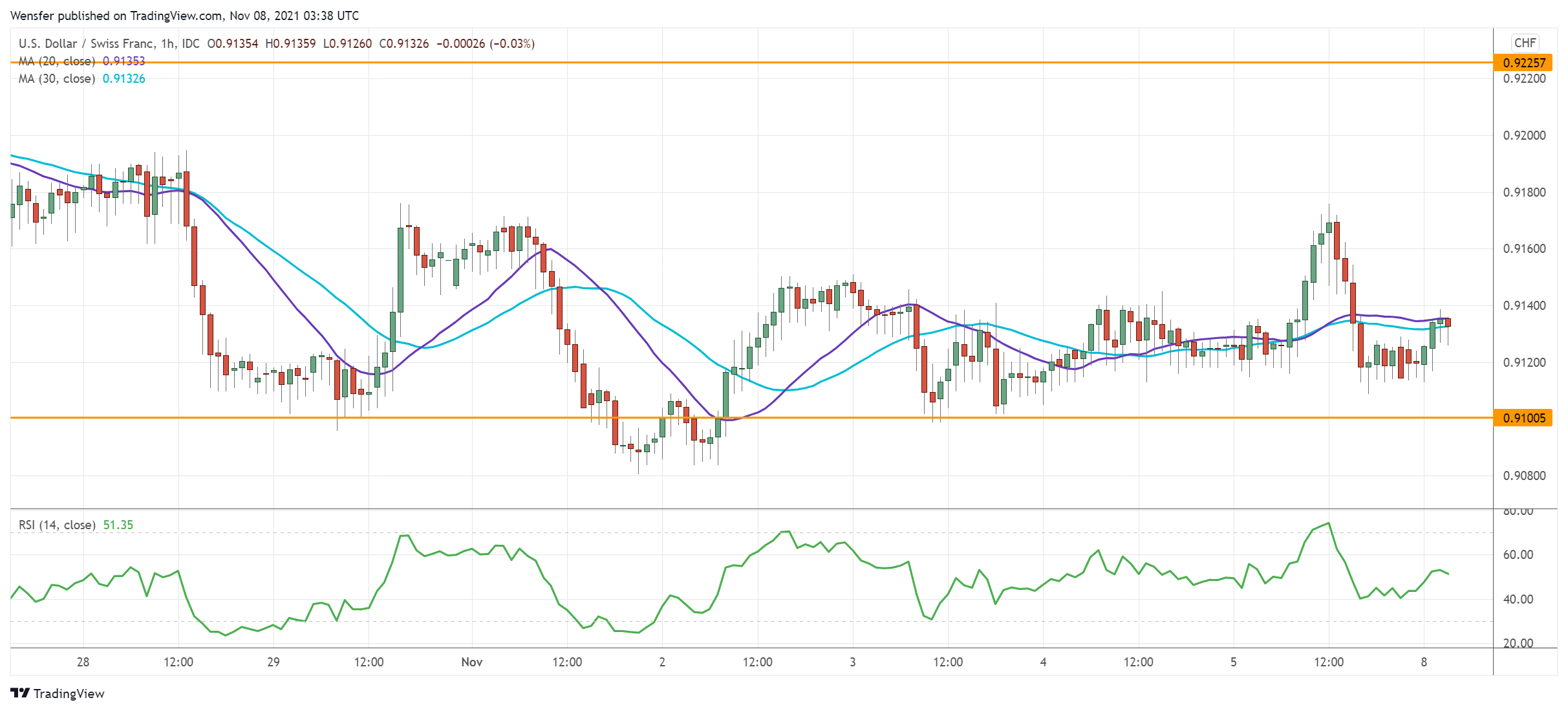
The US dollar bounced higher on solid jobs performance in October. A bullish RSI divergence indicates a deceleration in the sell-off.
Sellers have started to cover after a close above the immediate support at 0.9170. However, the initial momentum was held back after the RSI shot into the overbought territory.
The bulls will need to lift offers around 0.9225, which sits on the 30-day moving average to attract more followers. On the downside, a break below 0.9100 may trigger a fall towards 0.9020.
Daily Technical Analysis
EUR/USD
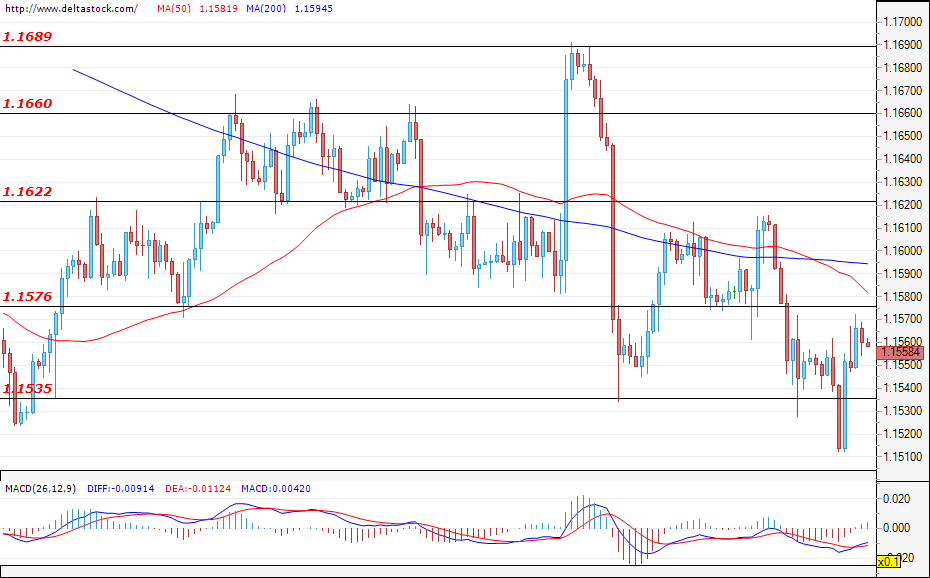
Current level - 1.1558
The bears did not manage to gain enough momentum to successfully violate the zone at 1.1535 and the common European currency regained some of its losses against the greenback. At the time of writing the analysis, the pair is hovering around the level of 1.1559, but a new attack on the mentioned zone at 1.1535 is the most probable scenario. A breach of this zone would strengthen the negative expectations for the future path of the EUR/USD and could easily lead to a move towards the levels from July 2020 at around 1.1415. If the bulls prevail, their first target can be found at the zone of 1.1576, followed by the zone of 1.1622. This week, investors will focus on the consumer price index and the initial jobless claims data for the U.S. (Wednesday; 13:30 GMT).
| Resistance | Support | ||
| intraday | intraweek | intraday | intraweek |
| 1.1576 | 1.1660 | 1.1535 | 1.1410 |
| 1.1622 | 1.1689 | 1.1410 | 1.1350 |
USD/JPY
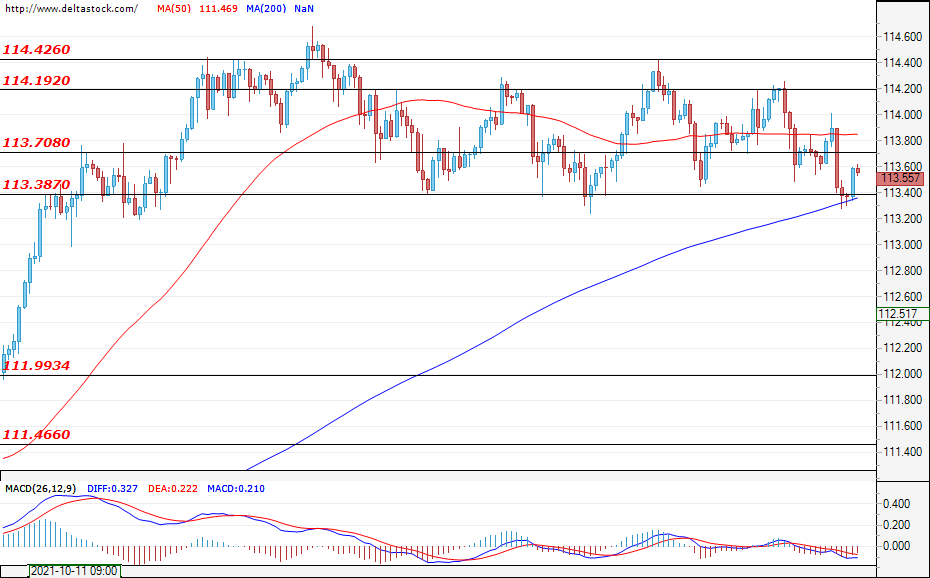
Current level - 113.55
The attack on the important support of 113.38 was not successful and the currency pair continued to trade above the mentioned zone. However, a breach of this zone could mark the start of a sell-off and pave the way towards the support of 111.99. In the opposite direction, a successful test of the resistance of 113.70, followed by a violation of the higher target of 114.42, could lead to a change in the current market sentiment and result in more gains for the dollar against the yen.
| Resistance | Support | ||
| intraday | intraweek | intraday | intraweek |
| 113.70 | 114.90 | 113.38 | 111.99 |
| 114.20 | 116.20 | 111.99 | 111.49 |
GBP/USD
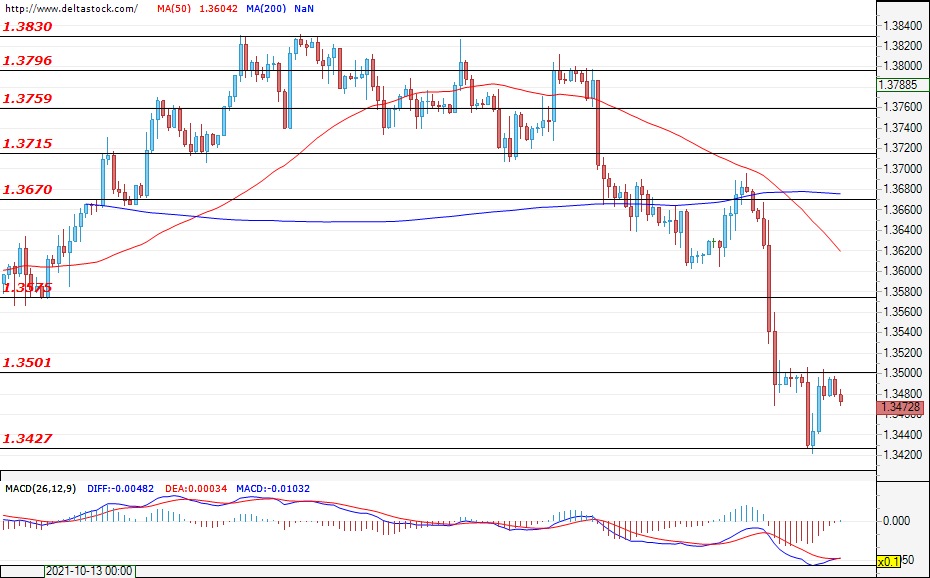
Current level - 1.3472
Last week's sell-off was limited to the level of 1.3427, but the Cable is now struggling to move above the level of 1.3500. If the bulls manage to breach the mentioned resistance, the corrective phase should continue towards the next target of 1.3575. If the bears stop the bulls’ attempt to dominate the market in its tracks, а breach of the support of 1.3427 would be the most likely scenario. A breach of the aforementioned level would strengthen the negative expectations for the future path of the Cable, leading to new losses for the pound against the dollar and a move towards 1.3407.
| Resistance | Support | ||
| intraday | intraweek | intraday | intraweek |
| 1.3501 | 1.3670 | 1.3427 | 1.3400 |
| 1.3575 | 1.3715 | 1.3400 | 1.3300 |
ECB Lane: There’s still a lot of momentum in the system
In an interview with El País, ECB chief economic Philip Lane said "we don't think the recovery process is over", and "growth will be pretty strong in 2022". Tourist season will be "better next year" and bottlenecks "ultimately will be resolved." Also, other factors include savings accumulated during the pandemic, the Next Generation EU fund, and the high vaccination rates.
The headaches about bottlenecks and higher energy prices are "not going to wipe out the underlying momentum of the recovery". He added, "it is not only about getting back to where we were before the pandemic – it's also about catching up to the growth that we should have had in 2020 and 2021. So there is still a lot of momentum in the system."
"Inflation is unexpectedly high at the moment, but we do think it is going to fall next year," he said. "we did talk about 'inflation, inflation, inflation', but this period of inflation is very unusual and temporary, and not a sign of a chronic situation. The situation we are in now is very different from the 1970s and 1980s."
US Futures Hold Steady As Investors Cheer Infrastructure Deal
US futures were relatively unchanged in early trading as investors reacted to the $1 trillion infrastructure package in the United States. The bill passed the Senate in August this year but had stagnated in the House of Representatives. The main reason is that progressive Democrats had blockaded the deal in a bid to get votes on the $3.5 trillion social package. Therefore, the package will lead to more infrastructure spending in the country, which will have a modest impact on the economy. Some of the companies that will benefit directly are Caterpillar and Dow.
The Australian dollar was relatively unchanged in early trading as the market reflected on strong China trade numbers. On Sunday, data from China showed that the country’s exports rose by about 27% in October. In the same period, imports rose from 17.6% to more than 20%. These numbers are positive for Australia because of the amount of trade that the two countries do. Still, the biggest challenge for China is that the number of Covid-19 infections in the country is increasing. This could lead to more risks for the economy.
The US dollar remained under pressure in early trading even after the US published strong economic data on Friday. The numbers showed that the American economy added more than 500k jobs last month. This was a better performance than the median estimate of about 400k. It was also the best performance since August this year. The numbers came a few days after the relatively hawkish Federal Reserve decision. It also came a few days ahead of the upcoming US inflation data.
EURUSD
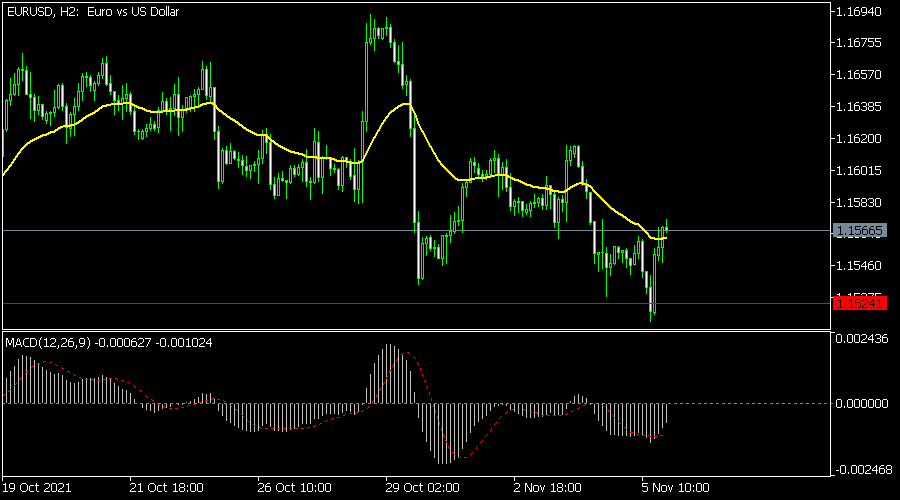
The EURUSD pair held steady in early trading. The pair is trading at 1.1566, which was higher than last week’s low of 1.1515. On the hourly chart, the pair has moved slightly above the key resistance at 1.1525, where it struggled to move below in the past two months. The pair is slightly below the 25-day moving average while the MACD has moved below the neutral level. Therefore, the pair may still breakout lower later this week.
GBPUSD
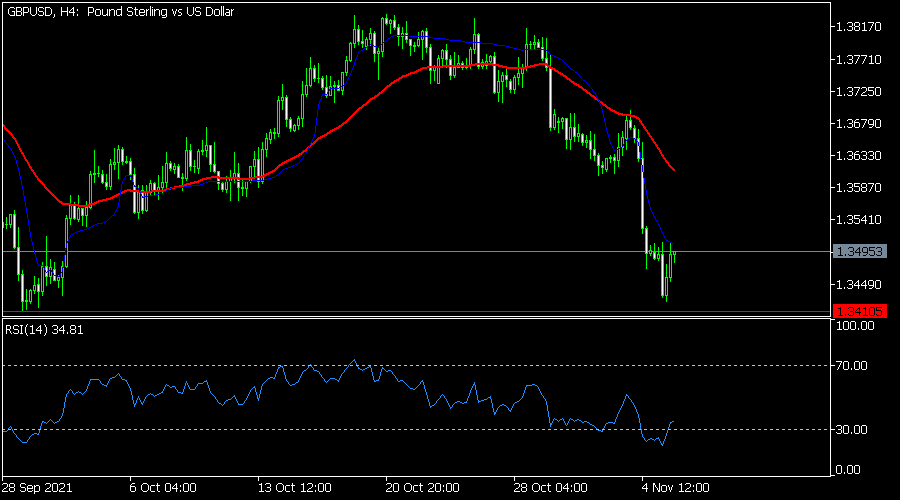
The GBPUSD pair tilted higher as investors attempted to buy last week’s dips. The pair is trading at 1.3495, which is above last week’s low of 1.3425. This price is substantially lower than last week’s high of 1.3800. These losses started after the surprising BOE decision. The pair remains below the 25-day and 50-day moving averages and the Ichimoku cloud. Therefore, the pair will likely extend the bullish rally today.
XAUUSD
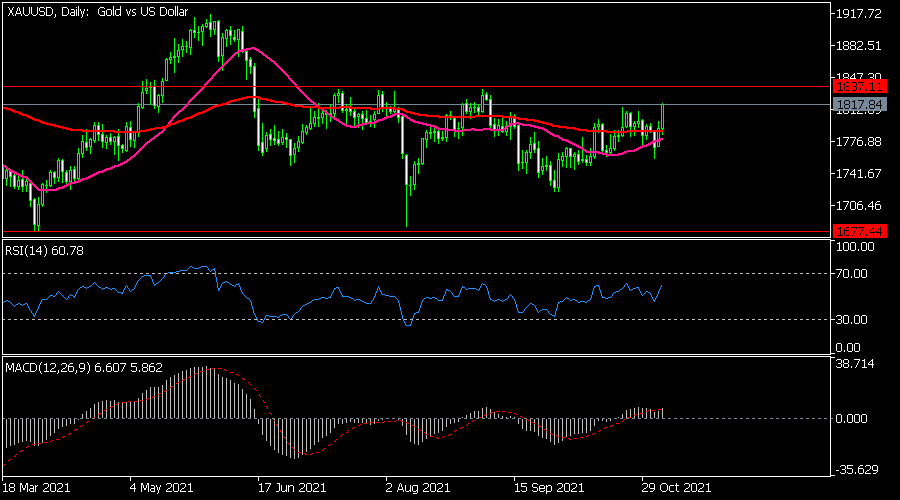
The XAUUSD pair tilted higher after the latest US jobs numbers. The pair is trading at 1,817, which was above October’s low of 1,716. On the daily chart, the pair is slightly below the key resistance level at 1,837. It has also moved above the short and longer-term moving averages. The pair will likely keep rising as investors target the key resistance at 1,900.
Powell’s Attempt To Focus On The Labour Market As ‘Temporary’ Inflation Pressures
Markets
Last week’s heavy correction/short covering on core bond markets continued into the closing bell. The Bank of England’s deception put off most hasty (G4) policy normalization bets while Fed Chair Powell (and BoE governor Bailey for that matter) tried to guide the focus from stubbornly high inflation to room for progress on the labour market. Decent to strong October payrolls failed to pick up that role of lightening rod. A spike lower in US Treasuries soon met with fresh core bond buying. US Treasuries in a daily perspective did underperform vs German Bunds and UK Gilts. The US yield curve bull flattened with yields dropping 2.3 bps (2-yr) to 7.6 bps (30-yr). The US 10-yr yield fell below the neckline (1.51%) of an head-and-shoulders formation with targets at 1.41%, 1.39% and 1.32%. The German yield curve moved in similar fashion with yields declining by 1.9 bps (2-yr) to 9.2 bps (30-yr). The German 10-yr yield already on Thursday dropped through the neckline of a triple top formation with final target at -0.32%. UK Gilt yields lost 7.9 bps (2-yr) to 12.7 bps (30-yr). The sharp repositioning at the front end is striking as investors discounted a BoE rate hike. We assume that the pace of the core bond gains will at least slow this week. Attention in first instance shifts to the US Treasury’s mid-month refinancing operation. Tonight’s 3-yr Note sale will be followed by 10-yr Note and 30-yr Bond sales tomorrow and on Wednesday. The outcome will be telling for investor appetite at current market levels and given current inflation dynamics. Additionally, US Congress on Friday finally approved the Biden’s infrastructure bill (see below) which includes $550bn in new funding. It suggests that last week’s falling projected sales in the quarterly refunding announcement will be a one-off and potentially even reversed. This week’s second highlight is Wednesday’s October US CPI release. Consensus expects an increase from 5.4% Y/Y to 5.9% Y/Y, which would be the highest level since 1990. The market reaction will test Powell’s attempt to focus on the labour market as “temporary” inflation pressures should subside in spring next year. Speeches by a whole bunch of ECB and Fed governors serve as a wildcard in the holiday-thinned/reduced trading week. US markets are partially closed on Thursday in observance of Veteran’s Day.
USD attempted to eke out gains following the payrolls report, but the trade weighted greenback (DXY) failed to take out resistance near 94.47/74, prompting some return action lower. EUR/USD set a minor new YTD low at 1.1514 with key support (1.1495/93) still luring. USD/JPY first support at 113.26 held despite JPY-positive yield moves. Sterling is still in the ropes following the BoE-debacle with focus now shifting to the EU-UK row on the Northern Ireland protocol. Irish ministers over the weekend stepped up trade rhetoric after the UK snubbed their proposals to break the deadlock. Both parties meet again on Friday. EUR/GBP could settle north of 0.86 in the run-up.
News headlines
The US House of Representatives approved the $1tn infrastructure bill. The bill was already approved in the Senate in August. The approval in the House got the support of 215 Democrats and 13 Republicans. The bill will now be sent for formal signing to President Biden to become law. The approval was possible after progressive democrats agreed to decouple the approval of the infrastructure bill from the vote on the larger social spending plan ($1.75tn Build Back Better social safety net). Moderate Democrats in the House issued a statement to their progressive colleagues that they would vote in favour of the ‘Build Back Better’ plan no later than November 15.
China posted a record monthly trade surplus of $84.54 bn in October. The record surplus was the result of higher than expected exports (+27.1% Y/Y) at $300.2bn. Imports rose a more modest 20.6 %. The strong external performance of the Chinese economy might to some extent counter a slowdown in domestic economic activity due to, amongst others, the real estate sector, electricity shortages and a less buoyant consumer demand linked to new corona outbreaks. The strong export performance also supported a further rise in China’s FX reserves ($3.22tn in October). The yuan this morning trades basically stable against the US dollar holding near USD/CNY 6.3974.
EUR/USD Daily Outlook
Daily Pivots: (S1) 1.1530; (P) 1.1551; (R1) 1.1589; More...
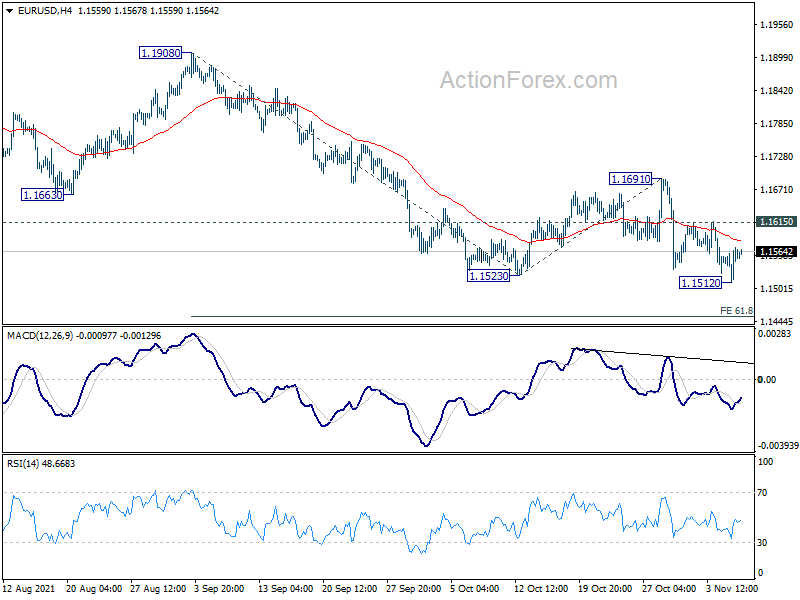
Intraday bias in EUR/USD remains neutral first. Further is in favor as long as 1.1615 minor resistance holds. Break of 1.1512 will extend the pattern from 1.2348 to 61.8% projection of 1.1908 to 1.1523 from 1.1691 at 1.1453. Break will pave the way to 100% projection at 1.1306. On the upside, though, above 1.1615 minor resistance will dampen the bearish case and turn bias back to the upside for 1.1691 resistance.
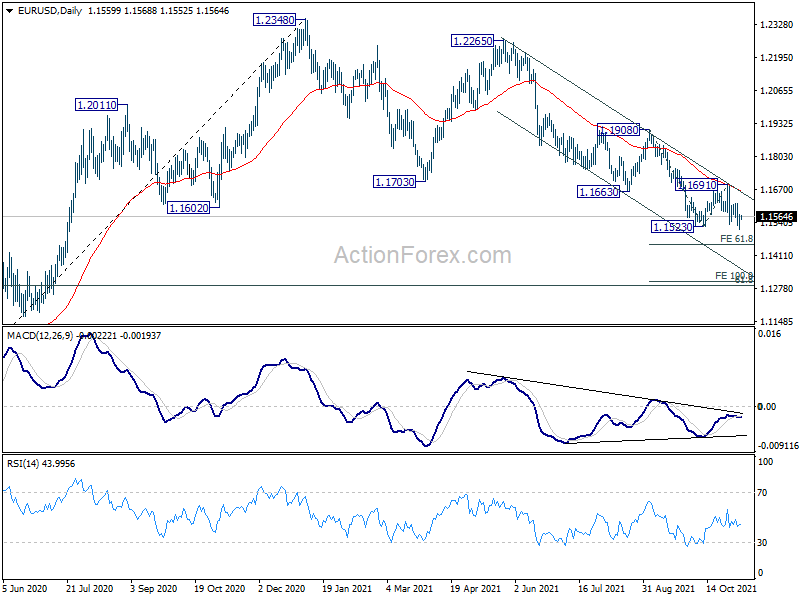
In the bigger picture, price actions from 1.2348 should at least be a correction to rise from 1.0635 (2020 low). As long as 1.1908 resistance holds, deeper fall would be seen to 61.8% retracement of 1.0635 to 1.2348 at 1.1289. Nevertheless break of 1.1908 resistance will revive medium term bullishness and turn focus back to 1.2348 high.
GBP/USD Daily Outlook
Daily Pivots: (S1) 1.3444; (P) 1.3477; (R1) 1.3528; More...
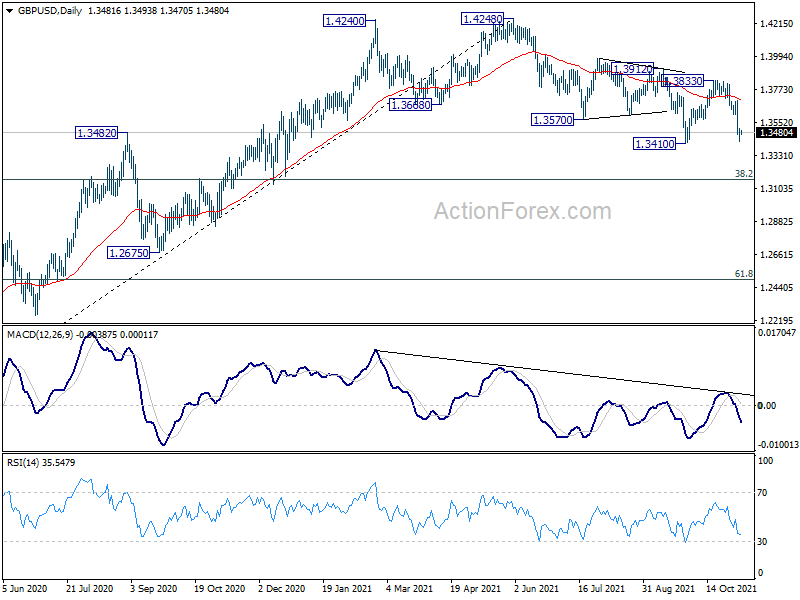
Intraday bias in GBP/USD remains mildly on the downside for 1.3410 low. Firm break there will confirm resumption of larger decline from 1.4248 and target 1.3164 fibonacci level next. On the upside, above 1.3604 minor resistance will mix up the near term outlook and turn intraday bias neutral first.
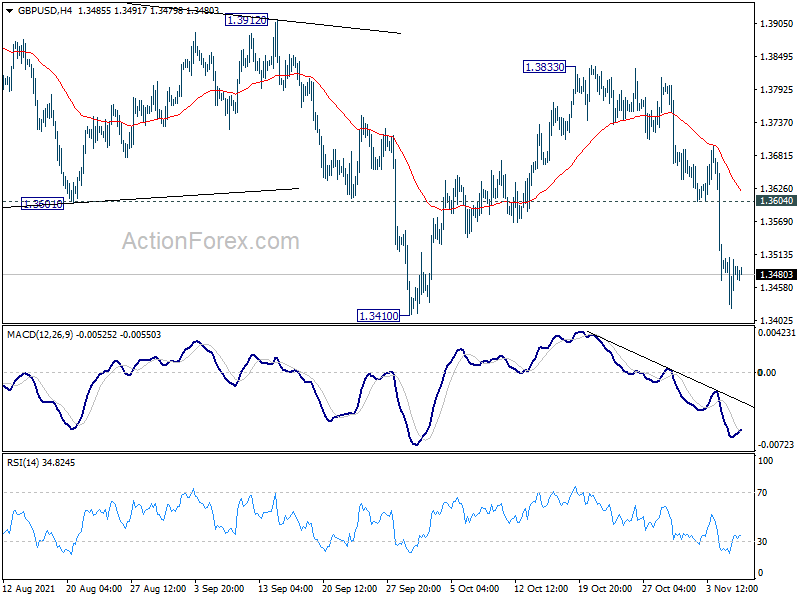
In the bigger picture, the structure of the fall from 1.4248 suggests that it's a correction to the up trend from 1.1409 (2020 low) only. While deeper fall cannot be ruled out yet, downside should be contained by 38.2% retracement of 1.1409 to 1.4248 at 1.3164, at least on first attempt, to bring rebound. On the upside, firm break of 1.4376 key resistance (2018 high) will add to the case of long term bullish reversal. However, sustained trading below 1.3164 will revive some medium term bearishness and target 61.8% retracement at 1.2493.