Sample Category Title
Wall Street’s Rally Pushes Asia Upwards
Asian equities power higher as China returns
Wall Street's rally continued into a third day overnight after the US Senate agreed to a temporary extension of the US debt ceiling until early December. The S&P 500 rose by 0.83% while the Nasdaq powered 1.03% higher, and the Dow Jones rallied 1.0% higher. Futures on all three, in keeping with the past few days, have continued their rally in Asia. Futures on all three are up by around 0.20%.
That has set Asia up for a positive start to the day with the return on mainland China markets having no particular event risk. Combined with the announcement of a post-election supplementary budget, the Nikkei 225 has leapt higher by 2.05%, although the Kospi has risen just 0.35% despite impressive Samsung earnings.
Mainland China markets have also rallied strongly on their return, with the Evergrande situation temporarily off the front pages. The Shanghai Composite has jumped 2.0% higher while the CSI 300 is up an equally impressive 1.35% in what appears to be a case of no news is good news. Property nerves are weighing on Hong Kong though after Fantasia, which defaulted this week, had trading in its bonds suspended. The Hang Seng is down 0.20% today.
In regional markets, Singapore has edged 0.25% higher while Taipei, perhaps with one eye on President Xi's speech on Taiwan this weekend, has fallen slightly, down 0.15%. Kuala Lumpur is 0.25% higher, but Jakarta has jumped by 1.0% Bangkok is 0.65% higher with Manila soaring by 1.65%. In Australia, the All Ordinaries and ASX 200 have climbed by 0.75%.
With the overnight rally continuing into Asia, European markets are set for another positive opening this afternoon, having ignored weak German data yesterday. We are likely to see some position squaring ahead of the US Non-Farm Payrolls data, however, and that will probably limit gains. The US non-farm payroll report is the pivotal moment of the week for markets and will give a very binary outcome if the data diverges from market forecasts of 500,000 jobs added.
Congressional Band-Aids Plaster Over China’s Return
The US Senate has slapped a fiscal band-aid over the US debt ceiling saga this morning, voting to raise the USD 0.50 trillion and temporarily extend its cut-off to early December. The can-kicking exercise by the Hill was enough to provide temporary relief for US equities and looks likely to overshadow the return on mainland China market from the Golden Week holiday.
Interestingly, US bonds refused to get caught up in the hype in what has been, despite the deafening noise volumes, a sideways week for many asset classes. US Initial Jobless Claims dropped unexpectedly to 328,000 overnight and bonds remained firmly on taper watch into this evening's pivotal US Non-Farm Payrolls data. That is sensible in my opinion as come early December, the Democrats will be forced to use reconciliation to pass a more meaningful debt ceiling legislation, while at the same time likely using the same process to pass their multi-trillion spending packages through the US Senate. Ignore the short-term noise from the FOMO-gnomes of the equity market, this story still has a lot more to give.
Japan has formally pencilled in October 31st for a snap lower house election. Newly installed Japan Prime Minister Kishida has also announced instructions to his cabinet to compile economic stimulus measures for an extra budget to be submitted after the election. Following a positive debt sticking plaster session from Wall Street equities, news that the hoped-for fiscal goodie bag has been confirmed has seen the Nikkei 225 soar by over 2.0% this morning. I do note though, that the Nikkei is now as subject to the fast-money whims as US markets these days, and a very high Non-Farm print tonight could evaporate today's rally on Monday.
China markets have returned from a week-long holiday and inevitably Evergrande, and what to do with it, will resurface once again. Another medium-sized China property company defaulted on an offshore bond this week, and there is no sign of Evergrande or its subsidiaries, US dollars for offshore holders of debt so far either. That said, the whole mess is likely to be overshadowed today by the Caixin Services PMI, which rebounded sharply in September to 53.4, as Covid restrictions were eased. The Composite PMI rising to 51.4 as a result. With markets this week having an investment horizon as far as their big toes, the short-term positives from the PMIs are lifting mainland equities higher to start the day.
The other main event to watch today will be the Reserve Bank of India policy decision. The RBI is likely to leave its policy rate and repo rate unchanged at 4.0% and 3.35% respectively. Inflation has been stagflation for a long time now in India and it will be interesting to see if the RBI decides now is the time to start unwinding monetary stimulus. As a giant energy importer, the rise in energy rises internationally will worsen that outlook and increase the pressure on the Indian rupee which has looked very wobbly of late. Easing their foot off the pedal should support the currency in the short term and the timing is probably riper now than previously, as the country emerges from the slump of the last pandemic wave. Expect plenty of volatility after the release at 1230 SGT today.
Germany's Balance of Trade will attract greater attention this afternoon as well, after August Industrial Production slumped by -4.0% MoM (-0.40% exp), as supply chain bottleneck bit. That weighed heavily on the euro overnight, falling against the sterling and remaining unchanged versus the greenback, even as the US dollar fell against other G-10 currencies. A sub-EUR 15 billion print is likely to increase the downward pressure on the euro, which looks highly vulnerable to further US dollar strength anyway.
NFP report could shake up the US dollar
All roads lead to tonight's US Non-Farm Payrolls data which will decide, in the market's minds, whether the start of the Fed taper is a done deal for December. The volatile ranges seen this week across asset classes suggest that is so except for energy. I do not believe that markets have priced in the Fed taper and its implications to any large degree yet. Even a weak number tonight probably only delays the inevitable for another month. Still, there is very much a binary outcome to tonight's data. A number well below 500k equals buy everything sell US dollars. A number 500k and above equals sell everything, but US dollars.
Strong US Jobs Data Will Push USD Higher And Pressure Stocks
Optimism, bordering on jubilation, prevailed in stock markets yesterday, although traders in FX and gold, for the most part, stood aloof from the move.
A sigh of relief washed over in US stocks, causing sharp buying on news that the US government debt ceiling had been raised by 480bn until December, removing the threat of a default by the world's largest economy. However, by the end of the day, the effect of this news reversed the initial jump. The markets are likely to spend most of today in very tight ranges and low volumes, waiting for US labour market figures for September.
The Chinese bourses, which opened after a week-long holiday, are enjoying an influx of buyers on reduced fears of a domino effect from the Evergrande default.
In addition, Chinese business activity data were also bullish, marking a return to expansion in services and manufacturing last month after a dip in August. Chinese indexes are gaining about 1% today despite the liquidity squeeze from the PBC - a sign that the market is already seeing an indiscriminate sell-off in Chinese assets as it has been witnessing in previous weeks.
The cautious sentiment in US equity markets, where selling prevailed towards the end of the day, could reflect that the funds prefer the sell-the-growth tactic. The pressure on the S&P500 intensified on the return of the index to its 50-day average. But interestingly, earlier, the European indices (DAX40, FTSE100, and several others) and the Dow Jones found strong buying when they touched the 200-day average. The tug-of-war between bulls and bears is concentrated between these technical levels. Going beyond them could trigger the surrender of one of the sides, causing the start of a powerful trend.
Today's labour market data has the potential to create such momentum. The US economy is expected to create 490K new jobs in September. If the actual data comes out significantly better than this expectation, it will sharply increase the chances of a QE rollback from the Fed as early as next month.
Positive news from the labour market has the potential to give a boost to the dollar, pushing it to renew its one-year highs on the DXY. Despite the notable oversold conditions in EURUSD, in the case of strong NFP, the pressure on the pair could gain new momentum, making a decline to 1.1400 possible as early as next week.
Separately, increasing the government debt ceiling would allow the US Treasury to sharply increase bond auctions, sucking liquidity from the market to normalise its cash reserves, which is positive for the dollar. But together with a reduction in balance sheet purchases from the Fed, this could create a wave of pressure in equity markets.
Thus, strong employment data promises to support dollar buying. The pressure in equities is supported by the failure to rise above the 50-day average in the S&P500.
A weak NFP, on the other hand, could bring pressure on the dollar and support buying shares. In this case, the dollar could quickly reverse to a decline, recapturing the local overbought conditions created by sustained buying since the beginning of September.
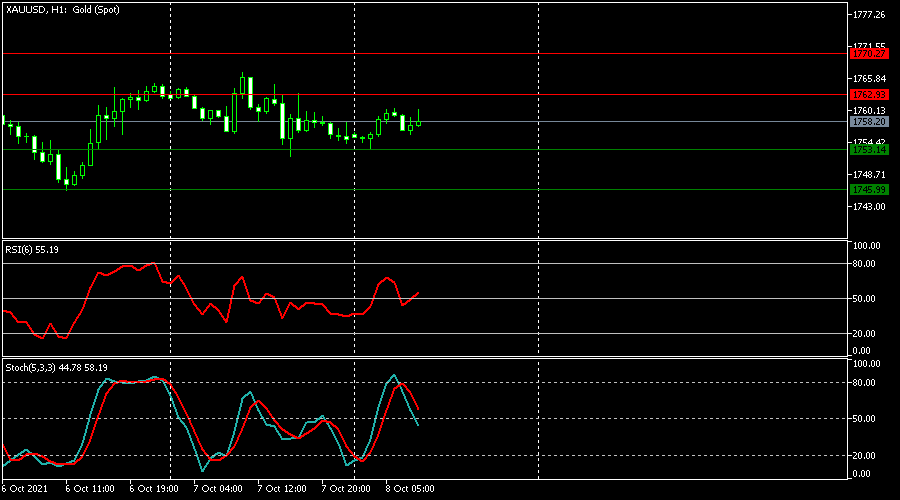
XAUUSD Is Possibly Bearish
Technical analysis
The RSI is above level 50
The Stochastics left the overbought zone and headed downwards to level 50.
Most likely scenario - SELL
Target prices: 1,753.14 1,745.99
Alternative scenario - BUY
Target prices: 1,762.93 1,770.27
Key levels
Support 1,753.14 1,745.99
Resistance 1,762.93 1,770.27
The Case For and Against a Stronger AUD in 2022
Forecasters currently hold widely differing views about the Australian dollar in 2022. Westpac stands on the positive side of the fence. But there are unusually significant risks, in addition to ongoing uncertainties around COVID, including commodity prices; energy shocks; stagflation; China’s policies around property and energy; central banks; and vaccination success rates; before we start to think about the unknown unknowns.
In the latest survey of Market Economists in the Australian Financial Review (October 4) we saw an unusually wide distribution of forecasts for the AUD by June next year.
The median forecast was USD 0.74 whereas the range (excluding some extreme numbers) went between USD0.68 and USD 0.83.
Westpac's forecast is significantly above the median at USD0.77. The survey does not extend beyond June next year so we are unable to test the "popularity" of our view that AUD will extend its gains into 2023 , reaching USD0.80.
The explanation for such a wide range is that there are strong cases to be made on both sides.
Commodity prices are already at levels (despite the more than halving of iron ore prices from the recent peak) which point to a significantly undervalued AUD.
Fair value models which are mainly driven by commodity prices put the AUD in the "high 80's" or even "the 90's".
High valuations have held up as the collapse in the iron ore price has been offset by the surge in energy prices – LNG and thermal coal.
And it is starting to dawn on markets that these elevated energy prices may be with us for a lot longer than previously expected.
A mismatch between a surge in demand as the world bounced out of lock downs and limited energy supplies , partly as the world has been pivoting away from fossil fuels to the less flexible renewables, has seen surging coal and LNG prices.
Investors are reluctant to commit long term funds to fossil fuels to boost supply, as is usually the case when prices of any commodity surge, pointing to these prices holding for longer than was first expected.
The whole energy story should therefore be a solid positive for the AUD.
But there are risks that energy prices could go too far setting a basis for global stagflation. Fears of a repeat of the "lost decade" in the 70's weigh very heavily on " risk on"currencies like the AUD and support the safe haven currencies, principally the USD.
Stagflation occurs when high inflation is accompanied by a stagnation in the economy.
It can result when the economy faces a supply shock such as the rapid increase in the price of oil that we saw in the 1970's (when inflation hit double digits and the unemployment rate got to 10%).
Prices rise at the same time as economic growth slows because production is more costly and less profitable.
As discussed, energy prices have surged – crude prices have doubled over the last 12 months in the US; high coal and gas prices are causing energy disruptions to factories in China as energy suppliers struggle with high costs and centralised controlled pricing to users.
Markets are talking more openly about stagflation in 2022 (especially in the UK with its current energy shortages).
But there are a number of factors that will avert such a disaster (The arguments centre on Australia, but are relevant for the other developed economies.)
Firstly, demand is set to surge rather than stagnate as economies emerge from lockdown. And that demand will be centred on the service sectors that are not energy intensive.
Rising growth will boost the demand for labour which will lower the unemployment rate and support wages growth.
The surge in demand will be driven by the household sector which has accumulated high savings that are now available for spending while higher wages growth will support income growth.
A lift in productivity would be helpful by lifting income growth without pressuring prices although that effect is likely to be limited.
The other necessary condition, along with stagnating demand, which is associated with stagflation is high inflationary expectations.
In such an environment, workers feel that they can make excessive claims on employers and employers feel they can agree to those claims because they have significant pricing power. But that psychology which dominated in the 70's is highly unlikely to re-emerge given the ongoing attitude of employers towards containing costs and the survey evidence that inflationary expectations amongst workers and households are low (after 30 years of low inflation).
The other potential shock to inflation is disrupted supply chains. COVID and China's energy crisis are exacerbating supply concerns at a time when demand is lifting.
But, once again, the major source of rising demand is likely to be in services where supply chain disruptions are less important. To be sure, Westpac expects that inflation will return to the RBA's target of 2.5% by the end of 2022 about two years before the RBA expects it to occur which partly reflects some supply disruptions and higher wages (including some restrictions to labour supply) but not an uncontrollable surge in inflation.
So the key will be strong demand from households which will also be supported by accommodative fiscal policy as the Federal government moves into election mode accompanied by increasing price pressures but not explosive increases.
In short we do not see stagflation as a significant risk, either domestically or globally.
Another development that would derail the AUD would be a sustained downturn in China. The plight of property developers Evergrande and Fantasia (with more firms seen at risk) is raising the familiar concern about the overexposure of the Chinese economy to the property market.
Markets are focusing on the risk of contagion to more property developers but the government seems most likely to use its extraordinary resources to ring fence Evergrande; engineer an orderly distribution of its assets; restructure its liabilities and avert a damaging contagion. Agreed, the risk is probably not on the supply side which the government can manage but on the demand side as buyers reassess the attractiveness and risks of property investment. That caution may mean a reset in the market, particularly with respect to speculators.
The sheer importance of the property market in China makes it likely that, in time, the government's support on the supply side will eventually revive demand. As we have seen in previous cycles, severe disruption to the overall economy has been avoided.
Our overriding theme is that while the Chinese government will embrace reform in both the property and energy markets its principal objective will continue to be stability and harmony and will be very careful to avoid "unintended consequences" of its reform agenda.
Having made that point it is still true that failure of the Chinese government to maintain stability would be a significant red flag for the AUD.
After considering two of the factors that might be encouraging the AUD pessimists it is probably time to raise a few positives.
Latest data on vaccinations point to NSW (71.1%) and Victoria (66.2%) already ahead of the US (63.9%) in terms of at least a single vaccination as a percentage of the total population. Indeed at 65.7% Australia, overall, is ahead of the US.
While momentum in Australia is sustained, it is reasonable to expect that the nation could reach 90% double vaccination (adults over 16) by near the end of 2021. Australia's world leading management of COVID in 2020 was one factor behind the surge in AUD to near USD0.80 by early 2021.
As Australia lagged behind in the vaccination stakes through 2021 we saw the AUD reach a low of USD 0.71 in August. But since then ,the vaccination rate has surged and the AUD has at least stabilised despite the emergence of China's property issues; energy related risks to global growth; the halving of the iron ore price and the severe contraction in the economy in the September quarter.
Now Australia is poised to emerge from the lock down of its two major cities while vaccination rates continue to point to be near world leading coverage – and well ahead of the US where a hard core 20% of the population appears to be implacably opposed to vaccination. It is not unreasonable to anticipate that Australia with its very low proportion ( less than 10%) of the adult population opposed to vaccination coupled with its growing access to vaccines will be a world leader in the "vaccine stakes" in 2022.
And then we have the central banks.
The FOMC appears to be ready to begin tapering its $120 billion monthly asset purchases with the aim to end the program by mid 2022. But that process will be calibrated by the success in achieving the FOMC's inflation/full employment targets. We expect these targets to be met by December next year. There is also scope to see the country achieve an 80% full adult vaccination objective over that period boosting growth prospects.
On the other hand we do not see the RBA being too far behind the FOMC. The RBA's QE program is likely to be completed by August at the latest with the inflation and employment targets forecast to be met nearly two years before the RBA's current guidance – effectively neutralising any advantage that the FOMC might accord the USD.
But most importantly our solid expected performance of the AUD will rely on global growth and a settling of global risk concerns. A tapering of the FOMC will reflect growth success rather than weighing on growth and remember that tapering is not tightening – that only comes when the balance sheet is scaled back which is unlikely until well into the tightening cycle.
We expect that the world's energy constraint will have eased although the supply response will be much more sluggish than in previous cycles.
And don't underestimate the boost to global confidence as the world steadily increases its vaccine coverage.
As is always the case the list we have covered-commodity prices; energy; stagflation; China property; vaccinations; central banks - will not be exhaustive either in terms of current knowns or future "unknowns" and it is easy to see why we forecasters have such a range of possible outcomes.
For now, Westpac's "list" still favours a stronger AUD while recognising those downside risks- both known and unknown.
US Payrolls Are Due A Little Later
Markets
Yesterday was one of those days where everything fell into place. Gas prices eased 10% on expectations (or hopes) that Russia will come to the rescue with record-flows of natural gas. The debt ceiling issue was also about to be resolved temporarily after Minority Leader McConnell agreed to cut off the debate and advance legislation to the floor. The US Senate in the meantime (overnight) voted 50-48 to increase the debt ceiling with a “mere” $480bn. A near-term default later this month is avoided but the issue will return to the table as soon as December 3. Markets didn’t care though. Risky assets surged: European equities added more than 2%, Wall Street finished about 1% higher. Even oil rebounded intraday from sub $80 to $81.85 (Brent) despite the slump in gas. USTs tanked, seeing the curve bear steepen with yields changing 1.3 bps (2y) to 5.2 bps (10y). German Bunds outperformed amid comments from ECB’s Lane and Schnabel that the current inflation and energy spike is transitory and overreacting to it would be harmful for the economic recovery. German yields finished the day unchanged. It may also explain the lackluster euro performance. The common currency ended flat against an overall weak dollar (1.1552) and gave up the 0.85 barrier vs sterling. EUR/GBP 0.847 support came within close proximity.
China opens with gains up to 1% after a week-long holiday, also supported by better-than-expected Caixin PMIs (services 53.4 vs 49.2). The PBOC slowed the pace of its daily liquidity injection to 10bn yuan vs 100bn yuan prior to Golden Week, effectively draining 330bn yuan – the most in a year. The yuan held stable around USD/CNY 6.45 but had a nice run yesterday. Other Asian equity markets trade mostly in the green with Japan outperforming on a declining yen. The dollar and the euro both strengthen marginally. The kiwi dollar outperforms.
ECB chair Lagarde and US Treasury Secretary Yellen are scheduled to speak at the second day of the B20 event later today. US payrolls are due a little later. Markets expect a strong 500k job growth in September after the huge disappointment last month. We don’t expect the outcome, even if it doesn’t hit the consensus bar, to derail market expectations of Fed tapering in November. In the current market environment, hourly earnings (seen at 0.4% m/m) might increasingly grab the attention. Average readings in 2021 are markedly higher compared to recent years. Such consistent above-average earnings may start shaping policy rate hike expectations in coming months. For today we’re focused especially on long core bond yields. With the technical picture on their side, we project a further moderate increase with USTs possibly underperforming. 1.62% serves as next reference for the US 10y and -0.146% for the German variant. On FX markets we wouldn’t row against the current strong dollar/weak euro tide. EUR/USD 1.1493/95 remains crucial support.
News headlines
The Reserve Bank of India (RBI) this morning kept its repo policy rate as expected unchanged at 4%. The RBI also maintains an accommodative policy bias. At the same time, the RBA said that no further government bond purchases are needed under GSAP program due to current liquidity position. The RBI expect inflation at 5.3% for the FY 2022 and growth at 9.5%. Fiscal year 2023 baseline growth is seen at 7.8%. FY 2023 inflation at 4.5%. The yield on the 10-y Indian government touched 6.3% in a first reaction after the policy announcement but eased back to 6.27% currently, little changed. The rupee is reversing initial weakness. USD/INR is drifting back below the 75.00 handle.
Ireland on Thursday said that is prepared to join the global agreement for a minimum tax on companies. The move comes ahead of a key meeting of the Organization for Economic Cooperation and Development. The Irish government now agrees to join the effort to bring the minimum corporate tax rate to 15%, giving up its own 12.5% tax rate. Ireland agreed to the move after the text was amended from a tax rate of ‘at least 15%’ to 15%. The move of Ireland is seen as an important step to reach an agreement, but several other topics on exemptions also with other countries still have to be solved.
XAG/USD Bounce Should Extend
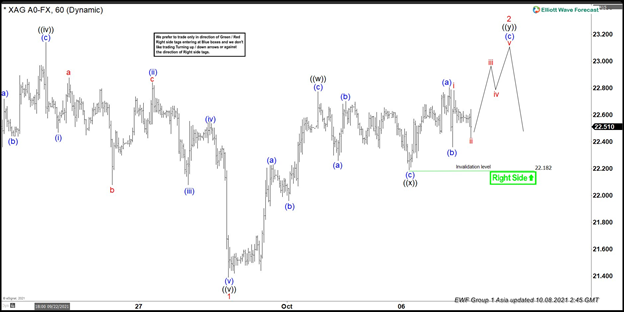
Short-term Elliott wave view in XAGUSD suggests that the bounce from September 03, 2021, high is unfolding as an impulse sequence & can take extension lower. While the initial decline to $21.39 low ended wave 1 in a lesser degree 5 wave structure. Up from there, the Silver is showing a motive 5 swings structure favoring 1 more push higher to complete the 7 swings structure before downside resume again or does a 3 wave pullback minimum.
Above from $21.39 low, the XAGUSD is doing a bounce in wave 2 to correct the cycle from 9/03/2021 high. The internals of that bounce is unfolding as Elliott wave double three structure with the sub-division of 3-3-3 swing structure. While the initial bounce to $22.23 high ended wave (a), wave (b) ended at $21.96 low. Wave (c) ended at $22.77 high & thus completed wave ((w)). Down from there, a pullback to $22.18 low completed the wave ((x)) pullback with a lesser degree 3 waves structure. And made a new short-term high above $22.77 high confirming the ((y)) leg higher. Near-term, as far as it remains above $22.18 low then Silver is expected to extend higher 1 more push towards $23.02- $23.54 area next before decision time in XAGUSD comes either looking for next leg lower or for a 3 wave pullback at least.
XAG/USD 1 hour Elliott Wave chart
Cliff Notes: RBA and RBNZ on Divergent Paths
Key insights from the week that was.
A quiet week for data kept the focus on monetary policy here and in New Zealand.
The RBA’s October meeting came and went with little fanfare. Their plan to February 2022 had already been announced, so the statement was simply an opportunity to update the market on any changes to the Bank’s views.
With domestic developments in the past month largely as anticipated, there were no significant new observations on the economy. In short, GDP is expected to have “declined materially” in the September quarter, but this set back is believed “temporary”, with the economy “expected to be back around its pre-Delta path in the second half of next year”. Despite this recovery, the RBA remains cautious on the outlook for wages and hence committed to “not increase[ing] the cash rate until actual inflation is sustainably within the 2-3 per cent target range”.
With the latest RBA Financial Stability Review due today at 11:30am and given the strength of the housing market in 2021, Tuesday’s October decision statement included additional commentary on prudential policy. Specifically, Governor Lowe noted “it is important that lending standards are maintained“ and “that loan serviceability buffers are appropriate”. These comments were followed by APRA undertaking the first macroprudential policy tightening of this cycle in the form of a 50bp increase in the serviceability buffer, the benchmark spread used to assess potential borrowers’ capacity to repay their loan if interest rates increase. From APRA’s perspective, the decision was made as “increases in the share of heavily indebted borrowers, and leverage in the household sector more broadly, mean that medium-term risks to financial stability are building”.
Chief Economist Bill Evans discussed this decision and the implications for housing during an extended period of rates at the lower bound in this week’s video update.
Before moving offshore, it is worth commenting on Australia’s two data releases of note.
In August, the trade surplus printed its third consecutive record high as export revenue rose 4.1% and import expenses fell 1.5%. On the export side, both prices and volumes were stronger than anticipated. For imports, global supply chain issues and lockdowns in Australia were likely, at least in part, to blame for the downside surprise.
The ABS’ payrolls release for the fortnight ending 11 September highlighted again the significant shock to Australia’s labour market from ongoing lockdowns, with national payroll jobs down 0.7% in the fortnight to 11 September after a 1.5% fall in the previous period. Victoria was responsible for 72% of payroll loss given their share of total employment and the progression of restrictions. Pleasingly, NSW payroll jobs fell by only 0.3% in the latest fortnight compared to -1.6% in the two weeks prior.
This report provides no reason to revise our -200k forecast for September employment as per the ABS labour force survey. The state result for NSW meanwhile points to a promising path out of lockdown, supporting our view for a quick reversal of recent job loss into year end and come early-2022.
Over in New Zealand this week, the RBNZ went ahead with their first rate hike for this cycle, increasing the cash rate 25bps to 0.50%. They also signalled the stance of policy will be tightened further. As detailed by our New Zealand economics team, the RBNZ’s medium-term views have not been affected by the interruptions to near-term activity caused by the current outbreak and associated restrictions. Our team continue to see additional rate hikes coming at the November, February and May policy reviews, and a consequent move to a cash rate of 2.0% by end-2023.
China, the prime focus for markets of late, was quiet this week as National Day was marked by a week of public holidays. We expect attention will again quickly turn to the plight of Evergrande and the effect of recent power outages – topics discussed at length in our October Market Outlook, due for release today on Westpac IQ – as China returns to work from today.
In the US too, the intensity of the news flow will ramp up quickly, with tonight’s September payrolls report likely to determine if the FOMC will formally announce their taper program at the November meeting or delay another month till December. We also expect many more headlines regarding fiscal policy.
Reports imply a short-term debt ceiling extension will be granted today until December, when the recent spending authority extension also lapses. However, debate over policy is unlikely to abate, with a few critical Democrats holding opposing views on key components of President Biden’s infrastructure agenda, threatening its passage.
The Republicans are unlikely to be helpful in resolving this conflict, and so it seems the US economy is not only at risk of a sentiment shock because of rolling uncertainty over the debt ceiling and the Government’s authority to spend, but also the significant long-term spending promised by the administration which market participants have already priced into their baseline expectations.
GBP/JPY Daily Outlook
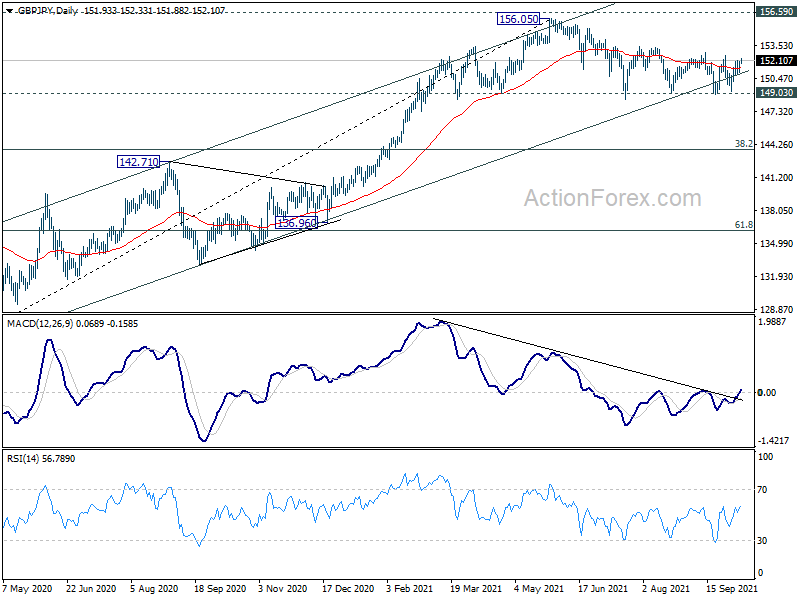
Daily Pivots: (S1) 151.33; (P) 151.71; (R1) 152.38; More...
Intraday bias in GBP/JPY stays neutral first. On the upside, firm break of 152.54 will suggest that whole correction from 156.05 has completed, and turn near term outlook bullish for retesting this high. On the downside, however, sustained break of 149.03 key support will carry larger bearish implication and target 143.78 fibonacci level.
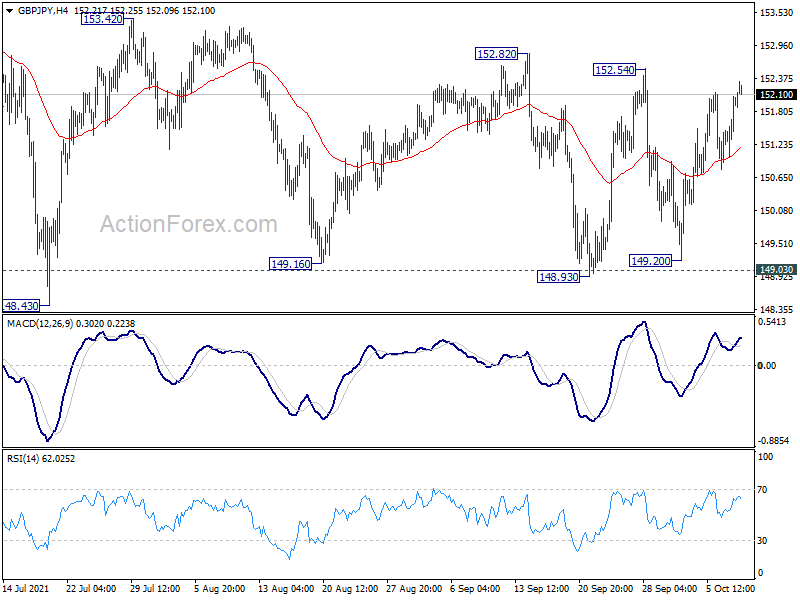
In the bigger picture, rise from 123.94 is seen as the third leg of the pattern from 122.75 (2016 low). As long as 149.03 support holds, such rise would still resume at a later stage. However, sustained break of 149.03 support will indicate rejection by 156.59 (2018 high). Fall from 156.05 would at least be correcting the whole rise from 123.94 (2020 low). Deeper fall would be seen back 38.2% retracement of 123.94 to 156.05 at 143.78 first.
GBPUSD Darts Higher As BoE Rate Hike Bets Rise
US stocks rallied on Thursday and in the futures market as investors cheered the deal made between Republicans and Democrats. The two parties agreed to have a stop-gap deal that will see the country avoid a debt crisis in the near term. Republicans expect that Democrats will spend the next three months coming up with a reconciliation bill. Mitch McConnel has insisted Democrats should raise the debt ceiling themselves. Besides, they are the ones implementing a $3.5 trillion anti-poverty bill. Economists believe that a default of the US government would have a major impact on the American economy. The Dow Jones rose by 465 points while the S&P 500 and Nasdaq 100 rose by more than 1.5%.
The British pound rose in the overnight session after the Bank of England (BOE) chief economist hinted that the bank would start hiking interest rates sooner than expected. The bank, which is set to meet in November, is considering tightening because of the rising cost of living. In its decision in September, the bank said that it expects the inflation rate will rise to 4% in the near term. However, the rising energy costs have made many analysts believe that inflation will rise to as high as 6%. Data published on Thursday showed that home prices continued to rise.
The key catalysts for the financial market today will be the latest American and Canadian jobs data. Economists expect the data to show that the American economy added more than 500k jobs in September as the labour market continued to tighten. They also see wages rising by 4.6% and the unemployment rate falling to 5.1%. Meanwhile, Canada, added more than 65k jobs in September as the unemployment rate fell to 6.9%. The other key events will be the Reserve Bank of India (RBI) interest rate decision and German trade data.
EURUSD
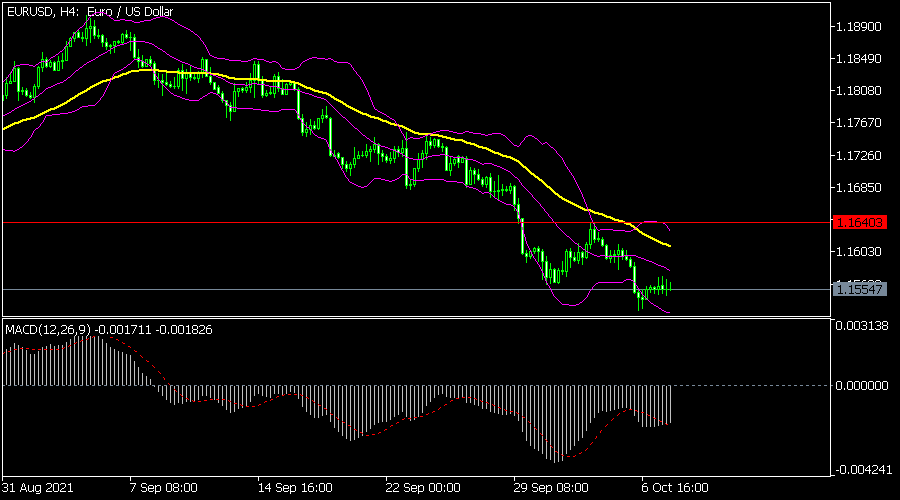
The EURUSD pair was little changed ahead of the latest American jobs data. The pair is trading at 1.1555, which is a few points below this week’s low. The pair is also along the middle line of the Bollinger Bands. It has formed a bearish flag pattern and is below the Ichimoku cloud. Therefore, the pair will likely break out lower after the NFP data.
USDCAD
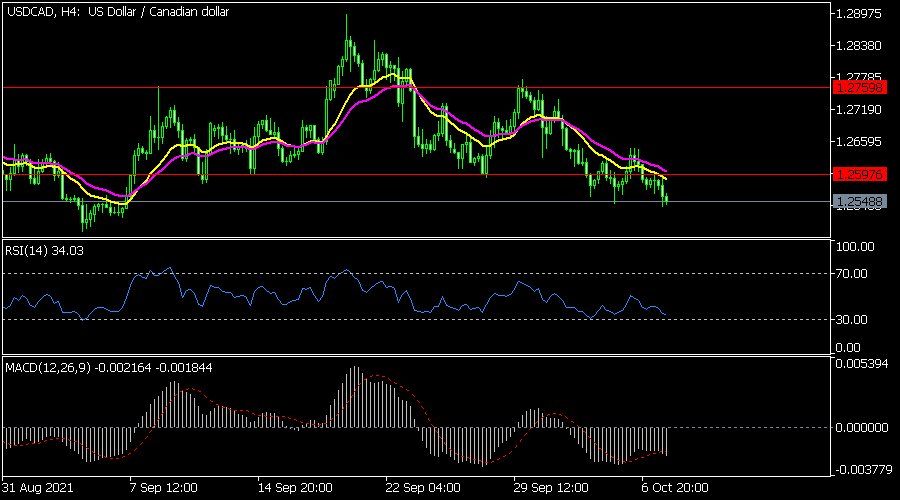
The USDCAD price declined to a low of 1.2550 as crude oil prices rose and as the market waited for the latest jobs data. The pair also managed to move below the key support level at 1.2560. The pair’s bearish trend is being supported by the 25-day and 50-day moving averages and oscillators like MACD and RSI. Therefore, the pair will likely keep falling with the next key support level being at 1.2500.
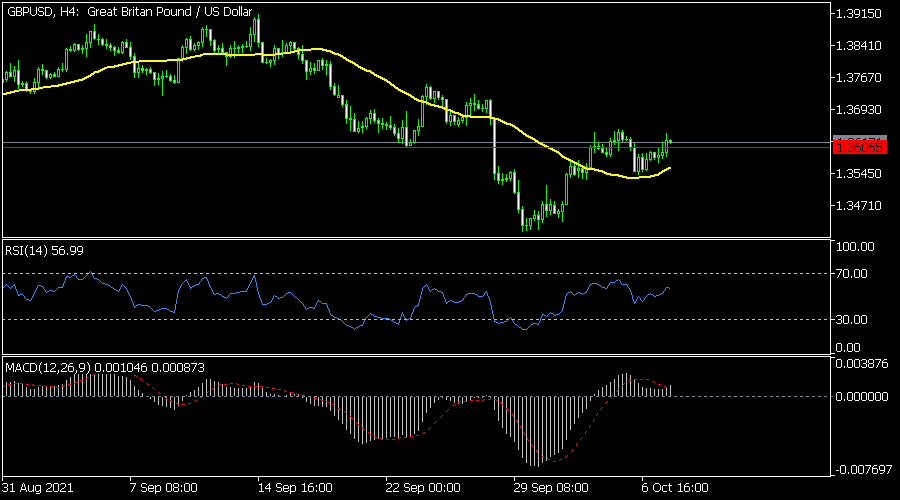
GBPUSD
The GBPUSD pair rose as investors priced in tightening by the Bank of England. It rose to a high of 1.3642, which was the highest level since September 27. It has also formed an inverted head and shoulders pattern and moved above the 25-day and 50-day moving averages. Therefore, the pair will likely keep rising as bulls target the next key resistance at 1.3700.