Sample Category Title
The Analytical Overview Of The Main Currency Pairs
The EUR/USD currency pair
Technical indicators of the currency pair:
Prev Open: 1.1555
Prev Close: 1.1553
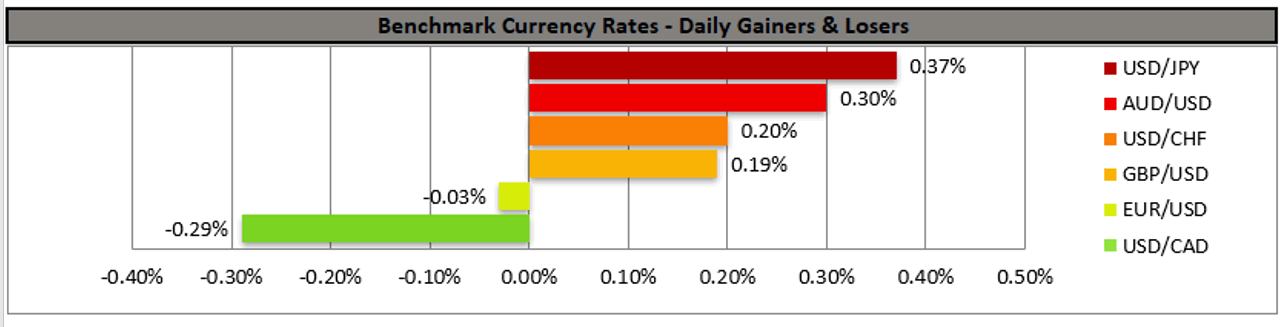
% chg. over the last day: -0.02%
The European Central Bank has left monetary policy unchanged. The ECB will consider policy alternatives in December. Germany's industrial production experienced its highest drop in August since last April due to supply chain problems, which constrained the growth of Europe's largest economy and hit the automotive sector.
Trading recommendations
Support levels: 1.1502, 1.1453
Resistance levels: 1.1583, 1.1671, 1.1717, 1.1772, 1.1802, 1.1835
From the technical point of view, the EUR/USD trend is bearish. But the MACD indicator shows divergence on the higher timeframes. Under such market conditions, traders should consider sell deals from the resistance levels near the moving average, as the price has deviated from the middle line. Buy trades should be considered only from the support levels with additional confirmation in the form of a buyers' initiative.
Alternative scenario: if the price breaks out through the 1.1717 resistance level and fixes above, the mid-term uptrend will likely resume.

News feed for 2021.10.08:
- US Nonfarm Payrolls (m/m) at 15:30 (GMT+3);
- US Unemployment Rate (m/m) at 15:30 (GMT+3).
The GBP/USD currency pair
Technical indicators of the currency pair:
Prev Open: 1.3582
Prev Close: 1.3612
% chg. over the last day: +0.22%
Despite the decline in natural gas prices, gas prices in the UK are still seven times higher than usual. It costs the industry huge bills and pushes domestic consumers to the brink of ruin. The National Grid is warning of electricity supply restrictions this winter.
Trading recommendations
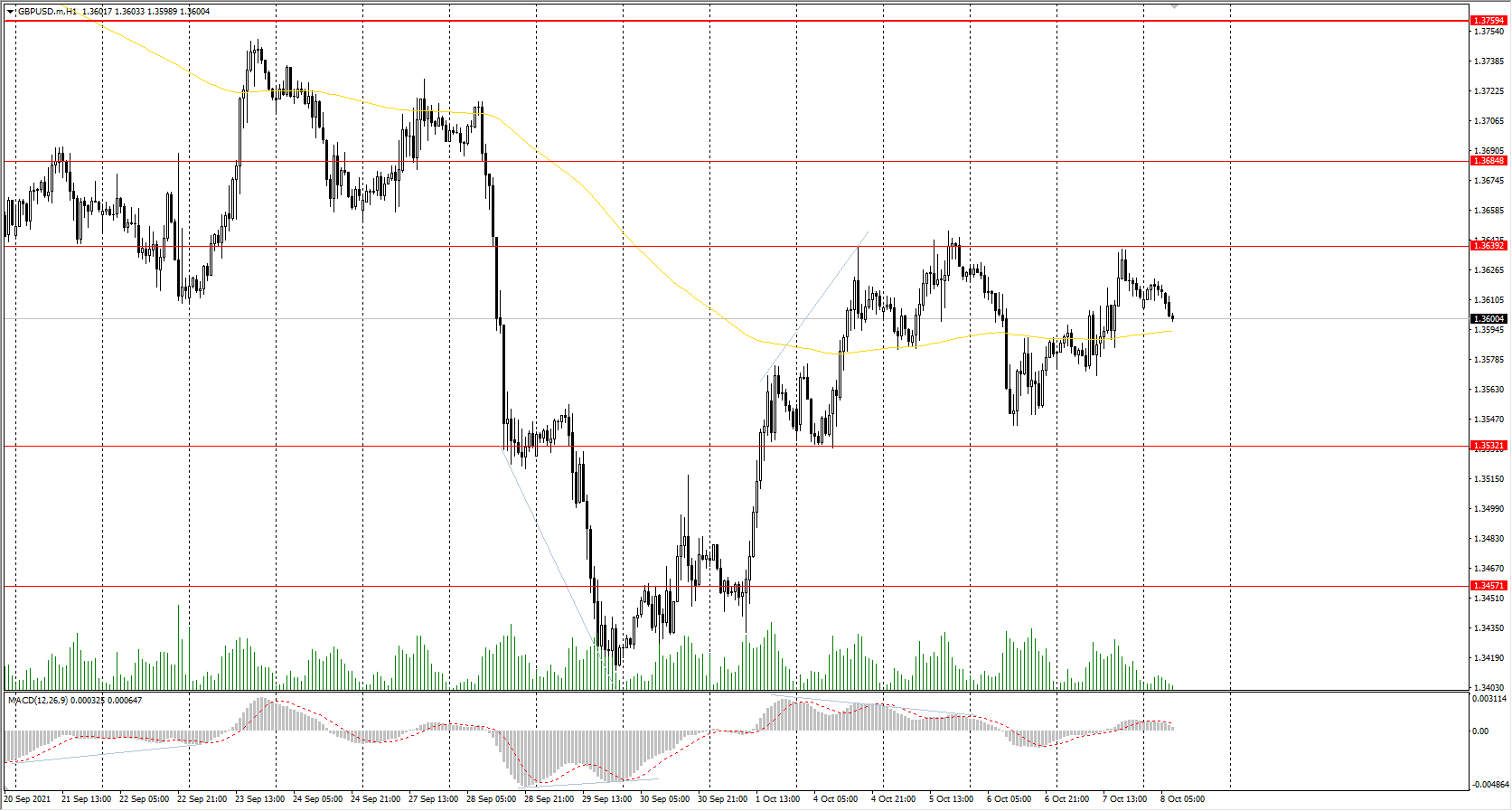
Support levels: 1.3532, 1.3457, 1.3360, 1.3282
Resistance levels: 1.3639, 1.3685, 1.3759, 1.3812, 1.3886
On the hourly time frame, the GBP/USD trend is bearish. The British currency looks more confident than the euro due to a direct correlation with oil prices. The MACD indicator has become inactive. Buy trades should be considered only throughout the day and only with short targets from the support levels after the buyer’s initiative. Sell trades can be found at the resistance levels near the moving average line.
Alternative scenario: if the price breaks out through the 1.3759 resistance level and consolidates above, the bullish scenario will likely resume.
News feed for 2021.10.08:
- US Nonfarm Payrolls (m/m) at 15:30 (GMT+3).
The USD/JPY currency pair
Technical indicators of the currency pair:
Prev Open: 111.38
Prev Close: 111.61
% chg. over the last day: +0.21%
Japan's new Prime Minister, Fumio Kishida, will outline his political program today. According to preliminary data, the main points of the program will be the increase of the capital gains tax from 20% to 25%, as well as the need to inject more than 30 trillion yen ($269 billion) of budget expenses to combat the consequences of the coronavirus pandemic.
Trading recommendations
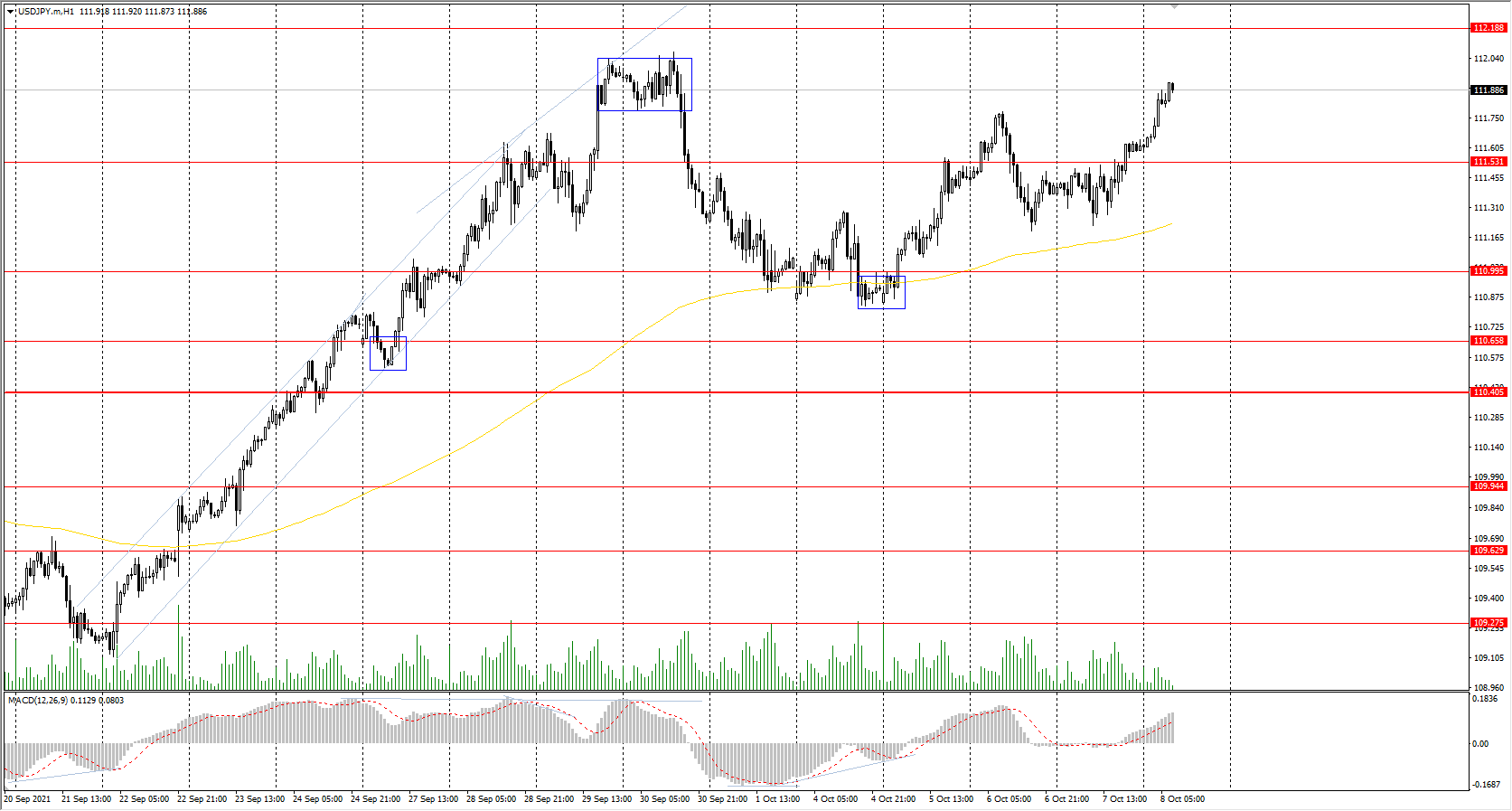
Support levels: 111.53, 110.99, 110.65, 110.40, 109.95, 109.63, 109.27
Resistance levels: 112.19
The main trend of the USD/JPY currency pair is bullish. The MACD indicator has become positive again, but there are the first signs of divergence. Under such market conditions, it’s better to look for buy positions from the support levels near the moving average. Sell positions should be considered only throughout the day from the resistance levels, given there is sellers' initiative.
Alternative scenario: if the price falls below 110.45, the uptrend is likely to be broken.
News feed for 2021.10.08:
- US Nonfarm Payrolls (m/m) at 15:30 (GMT+3).
- The USD/CAD currency pair
Technical indicators of the currency pair:
Prev Open: 1.2588
Prev Close: 1.2551
% chg. over the last day: -0.29%
The Canadian dollar is a commodity currency, so USD/CAD is highly dependent on the dynamics of the dollar index and oil prices. The dollar index hardly changed yesterday, while oil prices increased. As a result, the USD/CAD quotes continued to decline. Bank of Canada Governor Tiff Macklem says that Canada's high inflation rate is largely due to the circumstances of the Covid-19 pandemic, and Canada's annual inflation rate is likely to remain above the central bank's target range of 1% to 3% for the rest of this year.
Trading recommendations
Support levels: 1.2518, 1.2425
Resistance levels: 1.2565, 1.2611, 1.2729, 1.2774, 1.2891
From the technical point of view, the trend of the USD/CAD currency pair is bearish. But the MACD indicator is showing the divergence on several timeframes. There is also a liquidity narrowing, which is a common signal of the start of a sharp impulse. The report on the labor market in the US and Canada might be a trigger for the beginning of this impulsive move. Under such market conditions, it is better to look for sell deals from the resistance levels near the moving average. Buy deals should be considered if the price returns above the 1.2565 level, given there is a buyers' initiative.
Alternative scenario: if the price breaks out through the 1.2774 resistance level and fixes above, the uptrend will likely resume.

News feed for 2021.10.08:
- US Nonfarm Payrolls (m/m) at 15:30 (GMT+3);
- Canada Unemployment Rate (m/m) at 15:30 (GMT+3).
Sustainable Inflation Could Trigger New Recesions In Most Economies
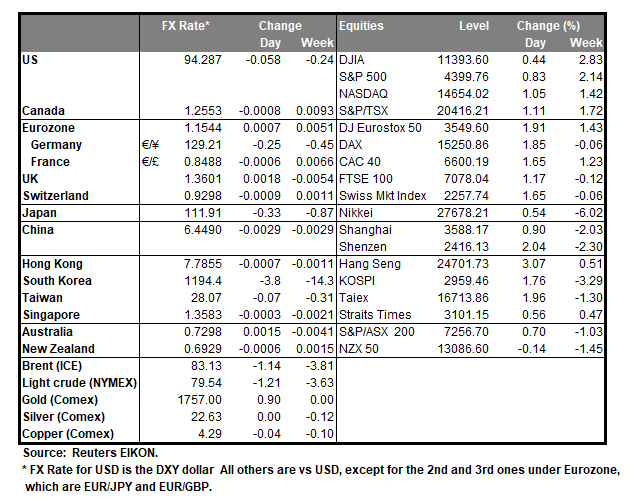
The US stock market closed in the green for the third trading session in a row. At the close of the trading session, the Dow Jones increased by 0.98%, the S&P 500 index increased by 0.83%, and the NASDAQ index added 1.05%. Representatives of the Republican and Democratic parties in the Senate reached an agreement to increase the national debt ceiling by $480 billion. It will allow the Treasury Department to continue funding the government spending through early December. The initial jobless claims in the US declined last week. The number of new applications for the week was 326,000 (forecast 348,000). It is the lowest quarterly figure since 1997. Last week it was at 350,000. The labor market is improving, which leaves no doubt that the Fed will start cutting the QE program in early November. Investors' attention is now focused on today's Nonfarm payrolls.
European stock indices also showed strong gains yesterday. The British FTSE 100 increased by 1.17%, German DAX added 1.85%, French CAC 40 added 1.65%, Spanish IBEX 35 and Italian FTSE MIB jumped by 2.14% and 1.51%, respectively. The Bank of England's chief economist says there are growing concerns about inflation in the United Kingdom, which will last longer. Since concerns about inflation persist, Barclays expects a period of higher volatility and lower yields for European stock markets. However, an ECB spokesman said yesterday that the short-term rise in inflation is mainly due to temporary causes that will disappear in the long term and will not require policy tightening.
Following Denmark and Sweden, Finland is suspending the use of the Moderna vaccine against COVID-19 for young people.
The Bank of Israel will complete an 85 billion shekel ($26.3 billion) bond-buying program in the coming months. The interest rate remained unchanged at 0.1%.
Oil increased to its highest level since 2014 this week due to the energy crisis in Europe. Asia raised the prospect of higher demand for crude and refined products ahead of winter. At the same time, OPEC+ said it would restore only a relatively modest amount of supply to the market in November. Goldman Sachs says the likely release of crude from the US Strategic Petroleum Reserve (SPR), which could be as much as 60 million barrels, poses a downside risk of just $3 per barrel compared to the year-end Brent crude price forecast of $90 per barrel.
Russia proposed to soften the crisis with natural gas. After this statement by Russian President Vladimir Putin, natural gas prices began to decline steadily.
Chinese markets have returned to a more positive mood after a long holiday due to improved activity in the service sector. On the other hand, the total electricity consumption in China may decline 10-15% in November and December, potentially leading to a 30% slowdown in activity in sectors such as metals, chemicals, and cement production. Biden and Chinese President Xi Jinping are likely to hold working talks in a virtual format before the end of this year.
Taiwan's president says that Taiwan is not seeking a military conflict with China but will defend itself if necessary.
India's central bank left the interest rate unchanged and promised enough liquidity to support economic recovery.
Main market quotes:
- S&P 500 (F) 4,399.76 +36.21 (+0.83%)
- Dow Jones 34,754.94 +337.95 (+0.98%)
- DAX 15,250.86 +277.53 (+1.85%)
- FTSE 100 7,078.04 +82.17 (+1.17%)
- USD Index 94.20 -0.06 (-0.07%)
Important events for today:
- Australia RBA Financial Stability Review at 04:30 (GMT+3);
- ECB President Cristine Lagarde’s Speech at 15:05 (GMT+3);
- Treasury Sec Janet Yellen’s Speech at 15:05 (GMT+3);
- US Nonfarm Payrolls (m/m) at 15:30 (GMT+3);
- US Unemployment Rate (m/m) at 15:30 (GMT+3);
- Canada Unemployment Rate (m/m) at 15:30 (GMT+3).
Awaiting The US Jobs Report For Fed Policy Clues
Notes/Observations
- Temporary debt ceiling extension agreement aid risk appetite.
- Jobs data eyed for Fed policy clues.
Asia
- Japan Aug Household Spending Y/Y: -3.0% v -1.2%e.
- Japan Aug Current Account Balance: ¥1.665T v ¥1.474Te; Trade Balance (BoP Basis): -¥372,4B v -¥385.3Be v +¥622.3B prior.
- China Sept Caixin PMI Services: 53.4 v 49.2e.
- India Central Bank (RBI) left the Repurchase Rate unchanged at 4.00% (as expected) and announced complete QE tapering.
- China PBOC Open Market Operation (OMO) saw a net drain of CNY330B via the 7-day operation (**Note: 1st net liquidity drain in 11 sessions).
- China to increase coal supply amid power shortage; Large Chinese coal-producing provinces have pledged to increase long-term coal supply to power plants by a combined 145Mts during Q4.
- RBA Financial Stability Report noted the risk of excessive borrowing due to low interest rate environment; vulnerabilities in China financial system remained elevated.
- Japan Fin Min Suzuki confirmed that PM Kishida had Instructed cabinet to compile economic stimulus (as expected); would submit extra budget after election.
Europe
- ECB’s Lane (Ireland, chief economist) stated that there were solid reasons to believe that there was a significant transitory component to the rise in inflation. Reiterated Council stance that still have inflation in medium term well below inflation target.
- Ireland govt said to be planning to sign on to the OECD global corporate tax agreement of 15.0%.
Americas
- Senate Debt Limit Ceiling bill procedural vote received enough votes to pass (vote total 61 yea, 38 nay).
- Senate Majority Leader Schumer stated that Senate to pass the 2 month extension to the debt, long term solution was needed for the debt ceiling drama.
- Senate voted 50-48 to increase debt ceiling by $480B until early Dec 2021 (**Note: vote was along party lines). House to convene on Oct 12th (Tues) to pass the stopgap debt measure.
- Treasury Sec Yellen stated that the debt limit uncertainty was damaging to confidence; there was more work to do to get well past Dec 3rd on debt limit.
- Fed's Mester (non-voter, hawk): Very important public understood the Fed's goal. Inflation had already cleared hurdle for rate hike, but employment criteria not met yet.
Speakers/Fixed income/FX/Commodities/Erratum
Equities
- Indices [Stoxx600 +0.08% at 7,083.90, FTSE % at #, DAX -0.26% at 15,210.95, CAC-40 -0.42% at 6,573.22, IBEX-35 -0.05% at 8,958.50, FTSE MIB -0.04% at 25,981.00 , SMI -0.46% at 11,709.32, S&P 500 Futures -0.15%].
- Market Focal Points/Key Themes: European indices open mixed but took on a negative bias as the session wore on; better performing sectors include insustrials and energy; while underperforming sectors include technology and consumer discretionary; Vonovia takes derivative position in Adler; Netcompany to acquire Intrasoft; Royal Mail to acquire Mid-Nite Sun; NN to sell €3.3B asset portfolio; zooplus receives competing offer from Hellman & Friedmanfocus on NFP figures later in the day; no major earnings scheduled for the US session.
Equities
- Consumer discretionary: International Consolidated Airlines [IAG.UK] +2.5% (UK cuts its travel red list), UNITE Group [UTG.UK] -3% (trading update).
- Industrials: Weir Group [WEIR.UK] -3% (trading update; cyber incident).
- Technology: Electrocomponents [ECM.UK] -1% (trading update).
- Real Estate: Adler Group [ADJ.DE] +9% (stake option).
Speakers
- Austria WIFO Think Tank updated its Quarterly Economic Forecasts which raised the 2021 GDP growth forecast from 3.4% to 4.4% while cutting the 2022 GDP growth outlook from 5.0% to 4.8%.
- Turkey President Erdogan said to be losing confidence in current Turkey Central Bank Gov Kavcioglu due to late rate cut.
- Poland Central Bank Gatnar stated that MPC made a good decision to hike rates; move seen as the beginning of normalizing policy.
- China Foreign Ministry spokesman Zhao Lijian: US should withdraw troops from Taiwan. US and China needed to cooperate not decouple on the trade front.
Currencies/Fixed income
- USD held onto its recent gains but traded within a narrow range ahead of the Sept payroll report. Price action was muted as participants adopted a wait-and-see stance ahead of the US labor market report.
- TRY currency (Lira) approaching the 9 handle (record lows) after reports circulated that President Erdogan said to be losing confidence in current Turkey Central Bank Gov Kavcioglu.
- Dealers noted that UK government bond yields climbed to levels last seen before the Brexit referendum in 2016 relative to German peer.
Economic data
- (SE) Sweden Aug Maklarstatistik Housing Prices Y/Y: 14% v 16% prior; Apartment Prices Y/Y:8% v 10% prior.
- (NL) Netherlands Aug Manufacturing Production M/M: -1.9% v +1.1% prior; Y/Y: 9.8% v 13.7% prior; Industrial Sales Y/Y: 16.0% v 16.4% prior.
- (FI) Finland Aug Industrial Production M/M: 1.4% v 0.3% prior; Y/Y: 4.4% v 3.5% prior.
- (DE) Germany Aug Current Account Balance: €11.8B v €17.6Be; Trade Balance: €10.7B v €15.0Be; Exports M/M: -1.2% v +0.5%e; Imports M/M: 3.5% v 1.8%e.
- (FI) Finland Aug Preliminary Trade Balance: -€0.6B v -€0.4B prior.
- (NO) Norway Aug Overall GDP M/M: 2.0% v 0.8% prior; GDP Mainland M/M: 1.1% v 0.9%e.
- (ES) Spain Aug House transactions Y/Y: 57.9% v 53.5% prior.
- (AT) Austria Aug Industrial Production M/M: -0.6% v -1.2% prior; Y/Y: 8.6% v 8.8% prior.
- (CZ) Czech Aug Retail Sales Y/Y: 3.7% v 5.3%e; Retail Sales (ex-auto) Y/Y: 5.1% v 7.5%e.
- (HU) Hungary Aug Preliminary Trade Balance: -€0.5B v -€0.2B prior.
- (HU) Hungary Sept CPI M/M: 0.2% v 0.2%e; Y/Y: 5.5% v 5.5%e (6th month above target range).
- (TH) Thailand end-Sept Foreign Reserves: $245.3B v $250.8B prior.
- (CN) Weekly Shanghai copper inventories (SHFE): 50.1K v 43.5K tons prior.
- (RU) Russia Narrow Money Supply w/e Oct 1st(RUB): 14.34T v 14.41T prior.
- (TW) Taiwan Sept Trade Balance: $6.5B v $4.9Be; Exports Y/Y: 29.2% v 25.0%e; Imports Y/Y: 40.4% v 42.6%e.
- (GR) Greece Sept CPI Y/Y: 2.2% v 1.9% prior; CPI EU Harmonized Y/Y: 1.9% v 1.2% prior.
- (GR) Greece Aug Industrial Production Y/Y: 10.1% v 7.8% prior.
- (HU) Hungary Sept YTD Budget Balance (HUF): T v 1.9001T prior.
Fixed income Issuance
- None seen.
Looking ahead
- 05:25 (EU) Daily ECB Liquidity Stats.
- 05:30 (IN) India to sell combined INR240B in 2023, 2026, 2035 and 2050 in bonds.
- 05:30 (ZA) South Africa to sell combined ZAR1.2B in I/L 2029, 2038 and 2050 Bonds.
- 06:00 (IE) Ireland Sept Live Register Monthly Change: No est v -1.6K prior; Live Register Level: No est v 168.4K prior.
- 06:00 (UK) DMO to sell £2.0B in 1-month, 3-month and 6-month bills (£0.5B, £0.5B and £1.0B respectively).
- 06:00 (BE) Belgium Debt Agency (BDA) to sell 2026 and 2034 OLO Bonds via ORI Auction.
- 06:45 (US) Daily Libor Fixing.
- 07:00 (IN) India announces upcoming bill issuance (held on Wed).
- 07:00 (CL) Chile Sept CPI M/M: 0.8%e v 0.4% prior; Y/Y: 5.0%e v 4.8% prior.
- 07:00 (IT) ECB’s Panetta (Italy).
- 07:30 (IN) India Weekly Forex Reserve w/e Oct 1st: No est v $638.6B prior.
- 07:30 (IS) Iceland to sell 1.5% Feb 2026 RIKB inflation-linked Bonds.
- 07:45 (US) Sept CBIZ Small Business Employment Index.
- 08:00 (UR) Ukraine Sept CPI M/M: +0.8%e v -0.2% prior; Y/Y: 10.7%e v 10.2% prior.
- 08:00 (IS) Iceland Sept Unemployment Rate: No est v 5.5% prior.
- 08:00 (BR) Brazil Sept IBGE Inflation IPCA M/M: 1.3%e v 0.9% prior; Y/Y: 10.3%e v 9.7% prior.
- 08:00 (UK) Daily Baltic Dry Bulk Index.
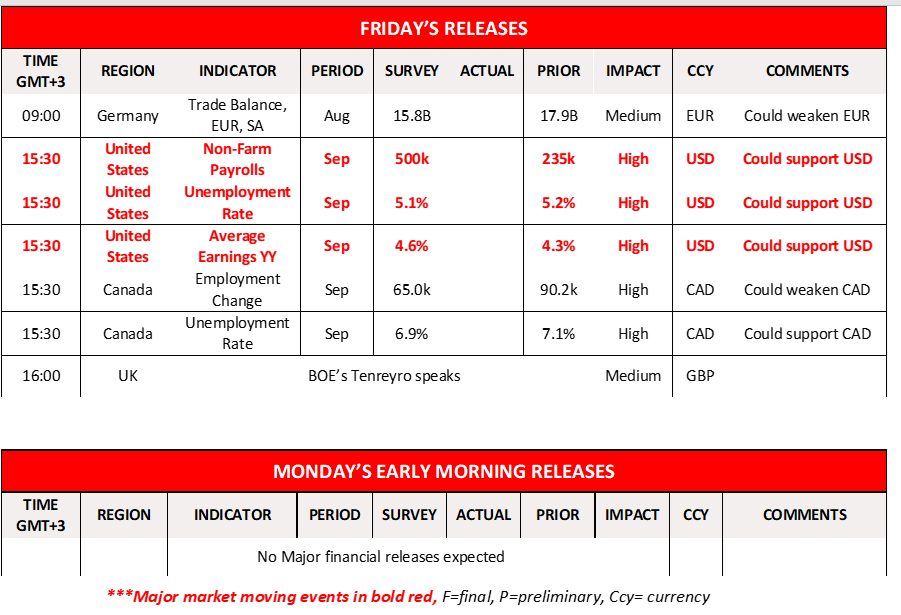
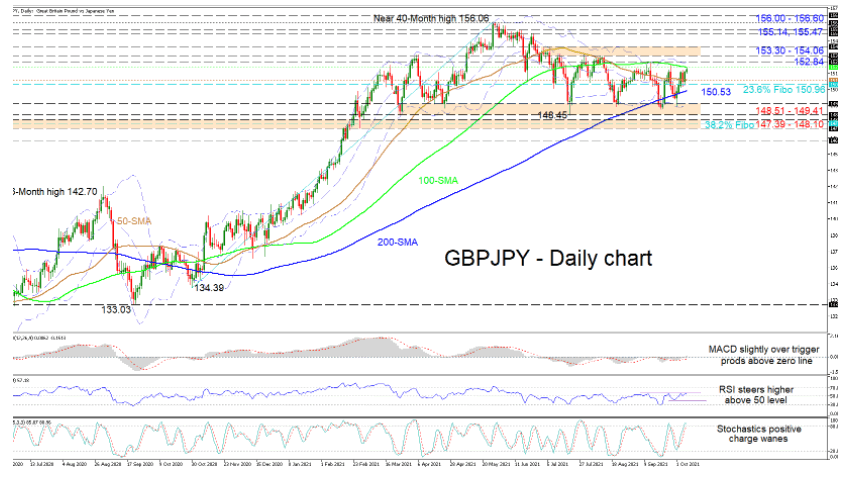
- 08:30 (US) Sept Change in Nonfarm Payrolls: +500Ke v +235K prior; Change in Private Payrolls: +450Ke v +243K prior; Change in Manufacturing Payrolls: +25Ke v +37K prior.
- 08:30 (US) Sept Unemployment Rate: 5.1%e v 5.2% prior; Underemployment Rate: No est v 8.8% prior; Labor Force Participation Rate: 61.7%e v 61.7% prior.
- 08:30 (US) Sept Average Hourly Earnings M/M: 0.4%e v 0.6% prior; Y/Y: 4.6%e v 4.3% prior; Average Weekly Hours: 34.7e v 34.7 prior.
- 08:30 (CA) Canada Sept Net Change in Employment: +60.0Ke v +90.2K prior; Unemployment Rate: 6.9%e v 7.1% prior; Full Time Employment Change : No est v +68.5K prior; Part Time Employment Change: No est v +21.7K prior; Participation Rate: 65.2%e v 65.1% prior; Hourly Wage Rate Y/Y: 1.8%e v 1.2% prior.
- 10:00 (US) Aug Final Wholesale Inventories M/M: 1.2%e v 1.2% prelim; Wholesale Trade Sales M/M: 0.8%e v 2.0% prior.
- 11:00 (EU) Potential sovereign ratings after European close.
- 13:00 (US) Weekly Baker Hughes Rig Count.
Markets Perk Up Ahead Of NFP But Dollar Holds Ground
- Equities advance as inflation and energy fears ease further and US debt default averted
- But dollar edges up too as US yields climb to fresh highs
- Focus on US jobs report; will likely clear the path for Fed tapering
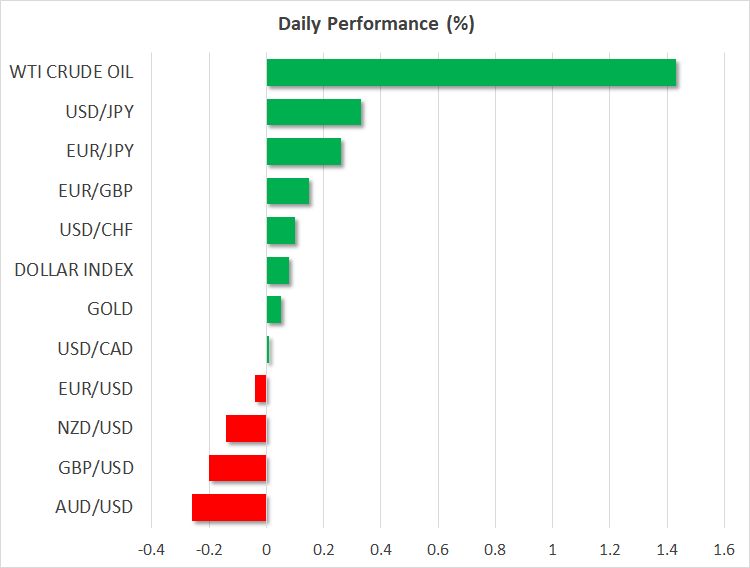
Risk-on returns as energy panic subsides
Another rebound on Wall Street on Thursday set the tone for global equities on Friday as risk appetite recovered further after a tumultuous few days. Stock markets were roiled earlier in the week as energy prices skyrocketed, threatening to exacerbate the power crisis and push fragile economies still reeling from the pandemic into a fresh recession. But a halt in the rally – at least for now – in the price of key energy commodities such as natural gas and oil appears to have calmed some nerves.
However, it’s doubtful that this was a one-off wobble in the face of a worsening global energy crisis as reassurances from Russia about more supply should probably be taken with a pinch of salt while the true scale of the shortages in Europe and elsewhere is unlikely to be felt before the winter months set in.
Higher energy bills not only risk fuelling the surge in inflation and cornering central banks into a faster withdrawal of monetary stimulus, but they could have a devastating impact on business and consumer spending just as the fiscal taps are drying up in many countries.
US debt fog lifted; stocks rise but rebound easing before NFP
This is where the United States stands out as being somewhat more immune to a major energy shortage as it has more than enough domestic production to meet demand. Furthermore, Congress is not yet done with fiscal packages aimed at reviving the economy. This favourable position is underscoring the US dollar’s safe-haven status.
In the immediate term, however, relief about the passing of a bill in the US Senate on Thursday to temporarily raise the debt ceiling until December as well as some encouraging economic data are likely contributing to the improvement in the market mood.
Now that the threat of the US government defaulting on its debt is no longer hanging over the markets and there’s a strong chance the Democrats will be able to raise the debt ceiling through the end of 2022 using the reconciliation process, investors are hoping that the other major hurdle of reaching a deal on a massive spending bill to be accompanied by an infrastructure package will also be overcome.
In the meantime, yesterday’s stronger-than-expected jobless claims numbers and a solid print in China’s September services PMI this morning are easing worries about a sharp economic slowdown, further boosting stocks.
The S&P 500 closed up 0.8% on Thursday, while the Nasdaq Composite finished the session 1.1% higher. Asian equities were mostly in positive territory today, lifted by Chinese stocks that headed up as trading resumed after a weeklong holiday despite ongoing troubles in the property sector. European shares and US stock futures were mixed, however, as traders awaited the US nonfarm payrolls report.
Dollar holds firm, aussie loses steam but loonie propped up by oil
The US economy is expected to have added 500k jobs in September, which will likely be more than sufficient for the Fed to get the green light to announce tapering in November. US Treasury yields rose in anticipation of this, with the 10-year yield hitting a four-month high of 1.6010% today.
This supported the dollar even as other safe havens like the yen fell against their peers. The greenback was eyeing the 112 level against the yen, while the euro wallowed near 14½-month lows around $1.1550.
The pound slipped back below $1.36 and even the Australian dollar appeared to be faltering. The aussie has been somewhat more resilient during the latest market jitters as it was shored up by higher commodity prices, which are boosting Australian exports, as well as by the gradual easing of the country’s lockdown curbs.
However, it was the Canadian dollar that got the lead among the commodity currencies on Friday as oil prices seem to be gaining traction again, climbing towards the peaks scaled earlier this week.
GBPJPY Reaches 100 MA After Bounce At Base Of Trading Range
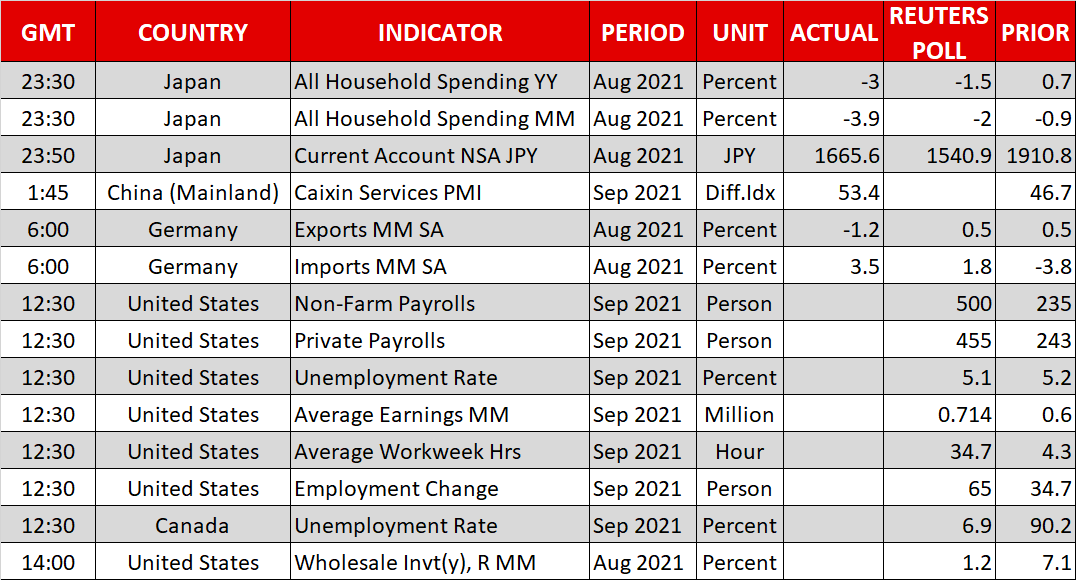
GBPJPY’s current upward drive is questionable around the 100-day simple moving average (SMA) at 152.43 after the 2½-month floor of the sideways market, halted once again negative tendencies from gaining downward momentum. The converging SMAs and especially the 50- and 100-day averages are endorsing the horizontal trajectory in the pair.
The short-term oscillators are indicating a scenario of weak positive momentum. The MACD has marginally pushed higher into the bullish region, while the rising RSI is trying to improve further in positive territory. The stochastic %K line is hinting buying forces are somewhat struggling but has yet to confirm sellers having taken command over the pair.
If buyers stay in control, an immediate zone of resistance between the 100-day SMA at 152.43 and the nearby high of 152.84 may emerge. Pushing above the upper Bollinger band, the next section of upside friction could transpire from the neighbouring region of 153.30-154.06. Conquering this border may propel the pair towards the June 15 and 23 respective highs of 155.14 and 155.47. Floating further past these barriers could then encourage buyers to challenge the 156.00-156.60 resistance boundary.
To the downside, preliminary support could arise in the area between the 50-day SMA at 151.31 and the 150.96 level, which is the 23.6% Fibonacci retracement of the up leg from 134.39-156.06. Beneath the mid-Bollinger band, the 200-day SMA at 150.53 could provide the next support to the price before the bears retest the bottom of the consolidation of 148.51-149.41. Should this base fail to negate sellers’ efforts, another reinforced support obstacle of 147.39-148.10 could prove to be a challenge to overcome.
Summarizing, GBPJPY is currently exhibiting a vulnerable neutral-to-bullish tone. For a clearer picture to evolve in the short-term, the price would need to steer either below 148.51 or above 154.06.
Aussie Eases On RBA Housing Warning
The Australian dollar has reversed directions in Friday trading. Currently, AUD/USD is trading at 0.7290, down 0.30% on the day. The currency has spent most of the week close to the 73 line, but we could see some stronger movement in the North American session, with the release of US nonfarm payrolls for September.
The RBA was back in the news on Friday, as the central bank released its semi-annual Financial Stability Review. These reports are generally not all that interesting for investors, as the country’s financial system is on very solid ground. However, the report did single out the risks due to the surge in housing prices and the rise in borrowing. This has been made possible by ultra-low interest rates, and the RBA warned that lending standards must be maintained in order to risks to financial stability. This warning comes on the heels of a move by Australia’s banking regulator (APRA), which raised the lenders’ loan serviceability buffer from 2.5% to 3.0%, a move intended to reduce credit growth cool down the booming housing market.
A quick method to curb the housing market would be to raise interest rates, but RBA Governor Philip Lowe reiterated in this week’s rate statement that the Bank does not intend to raise rates prior to 2024. Without this weapon, the Bank has had to resort to urging regulators to adopt tighter lending rules in order to avoid a housing bubble which could choke off the recovery. Lowe has faced criticism for opting to leave rates on hold while the housing market is red-hot, but Lowe says he first wants to see stronger inflation and wage growth before pulling the rate trigger.
Later in the day, the US releases nonfarm payrolls. This release has additional significance ahead of a Fed tapering. The consensus for September is around 500 thousand new jobs. If the release meets or beats expectations, that should cement a Fed taper in November or December and send the US dollar higher. If NFP misses the consensus, there will be concern over the strength of the US recovery and the Fed may push off a taper until early 2022. This uncertainty could send the greenback lower. Given this binary outcome, traders should be prepared for some volatility from AUD/USD in Friday’s North American session.
AUD/USD Technical
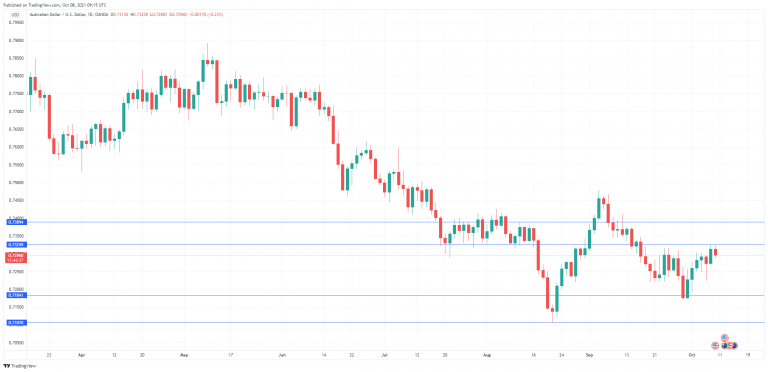
- AUD/USD continues to put pressure on resistance at 0.7325. Next, there is resistance at 0.7389
- The pair has support at 0.7184. Below, there is support at 0.7107, protecting the 0.71 line
NFP Preview: 8 October 2021
It is that time of the month again!
The closely-watched nonfarm payrolls report will be published today. With Jerome Powell and several other Fed officials more or less confirming that tapering QE could start before the end of the year amid surging inflationary pressures, investors are speculating that the US central bank may announce the timeline of the process at the FOMC’s November meeting. As that meeting will take place on November 3, it will come 2 days before the next jobs report is published. Therefore, today’s jobs report is the last one for Fed officials to consider before publishing their tapering plans. As such, it will be scrutinised very closely by markets participants, and we may very well see some big moves in reaction to the data – especially if the numbers deviate significantly from expectations.
If we see a set of numbers that come in around or well above forecasts, then it will more or less cement those tapering expectations. Even if the data disappoints slightly, I can’t imagine the Fed walking back on its plans to taper QE. However, if the jobs data come in significantly weaker than expectations – perhaps less than 100K – that could see the Fed wait until December.
But analyst expectations are quite high at 490K for the headline jobs growth while the average hourly earnings figure is expected to rise 0.4% month-on-month.
The market has had enough time to digest the Fed’s slow build up to the eventual reduction of QE. This means that tapering QE is no longer going to surprise the market, at least not in a meaningful way anyway. The Fed has also been very clear that interest rates will not necessarily rise immediately after tapering is completed, around the middle of next year. However, with surging inflationary pressures surprising even the Fed, the market has been pushing yields and expectations about policy tightening higher.
What the markets will want to know next is not necessarily when tapering QE would commence but how fast it will be. This will be influenced directly by incoming macro data from the world’s largest economy, as well as inflation metrics from around the world. The ongoing energy crisis is certainly a major problem facing many governments and central banks. Fed’s Mester said she sees inflation risks as tilted to the upside – a sentiment echoed by a growing number of central bank officials around the world.
NFP leading indicators
The leading indicators that we track for NFP have been mostly stronger, suggesting the risks that we will get a disproportionally weaker jobs report are slim:
- ADP 568K vs. 425K expected and 340K last
- ISM manufacturing PMI Employment: 50.2 vs. 49.0 last (+1.2)
- ISM services PMI Employment: 53.2 vs. 53.7 last (-0.7)
- Jobless claims: the 4-week average of initial claims dropped to 344K from 355K previously
Overall, the above indicators point to strength in employment, and so we could see a positive response in the dollar this time around.
NFP trade ideas
So, if NFP and wages data come in around expectations or higher, then don’t expect too much volatility in the markets.
If that’s the case, we will continue to expect the dollar will perform better against currencies where the central bank is relaxed about the prospects of inflation overshooting – such as the Japanese yen and Swiss franc.
However, if the data comes in well below expectations, then yields could drop as investors push out their rate hike expectations. In this potential event, gold on the long side might be the trade to concentrate on.
AUD/USD Outlook: Bulls Lose Traction Ahead Of US NFP Data
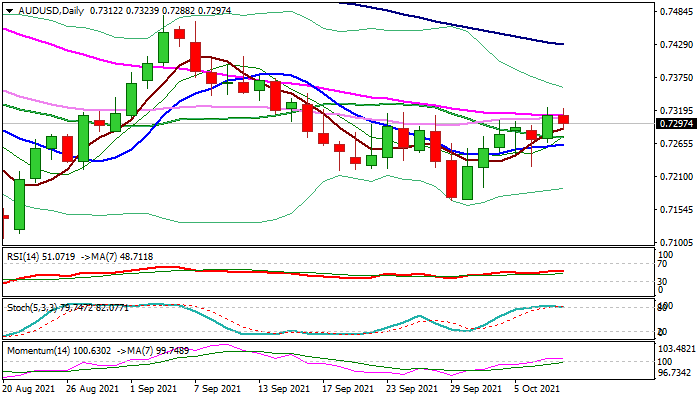
The Australian dollar dipped below 0.73 mark in Europe on Friday after the action was repeatedly capped by daily Kijun-sen (0.7324), pressured by higher dollar ahead of US jobs report.
Daily technical studies generate initial negative signal as stochastic is about to reverse from overbought territory and bullish momentum started to fade, but near-term direction is likely going to be defined by US NFP report.
Forecasts for strong figures in September keep the US dollar underpinned, with release around/ above consensus to lift the greenback.
Aussie faces pivotal supports at 0.7174/63 (converging 20/10DMA’s) close below which would weaken the structure, with return and close below 200WMA (0.7211) to strengthen bearish grip and open way for test of 0.7170 trough (Sep 29/30 lows), which guards 2021 low at 0.7106 (Aug 20).
Conversely, close above daily Kijun-sen (also 50% retracement of 0.7478/0.7170) would sideline downside risk, while extension through 0.7360 (daily cloud top / Fibo 61.8%) would confirm reversal and shift focus to the upside.
Res: 0.7324, 0.7360, 0.7376, 0.7405.
Sup: 0.7287, 0.7262, 0.7248, 0.7193.
Daily Technical Analysis
EUR/USD
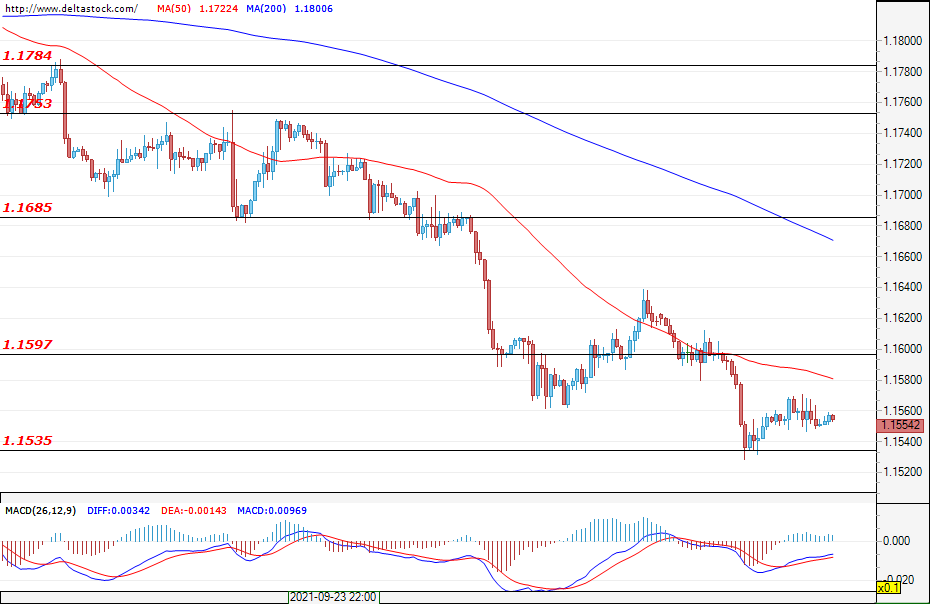
Current level - 1.1554
The downtrend of the currency pair continues and the euro is about to mark the fifth consecutive week of losses against the U.S. dollar. The declines may continue, while the first daily support is the level of 1.1535. If this area is violated, it is possible that the losses will deepen towards 1.1400. At the moment, expectations remain unchanged – for the continuation of the downtrend. Should the pair form a range around the current levels, a more significant correction towards the area between 1.1600 and 1.1640 would be possible. Today, investors will expect the monthly non-farm payrolls report for the United States, as well as the unemployment rate (12:30 GMT). Volatility is expected to increase and, if the data does not support the greenback, prices may remain above 1.1600, which could form the potential bottom of the downtrend.
| Resistance | Support | ||
| intraday | intraweek | intraday | intraweek |
| 1.1597 | 1.1750 | 1.1535 | 1.1410 |
| 1.1685 | 1.1780 | 1.1500 | 1.1280 |
USD/JPY
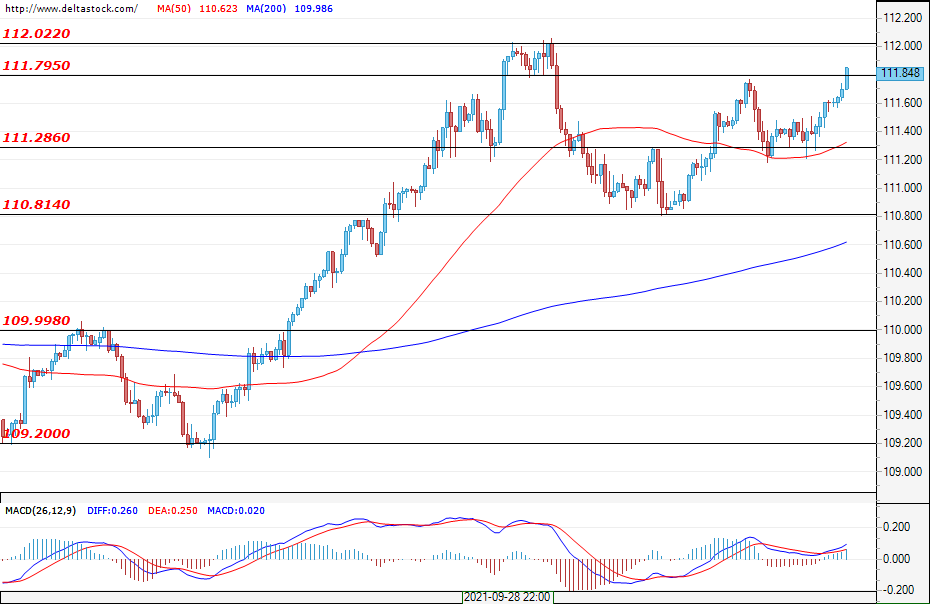
Current level - 111.84
The corrective move bottomed out at 110.81 and, throughout yesterday's session, the pair formed a local support at around 111.30. In the early hours of today, the bulls tried to go for a second attack on the peak at 112.02. The resistance zone between 111.80 and 112.00 comes from the higher time frames and buyers are unlikely to succeed in this attempt. It is possible that the market will need more time to break through and it is also likely that the pair will enter a range between the support at 110.80 and the resistance at 112.00.
| Resistance | Support | ||
| intraday | intraweek | intraday | intraweek |
| 111.80 | 112.00 | 111.28 | 110.81 |
| 112.00 | 113.50 | 110.81 | 110.00 |
GBP/USD
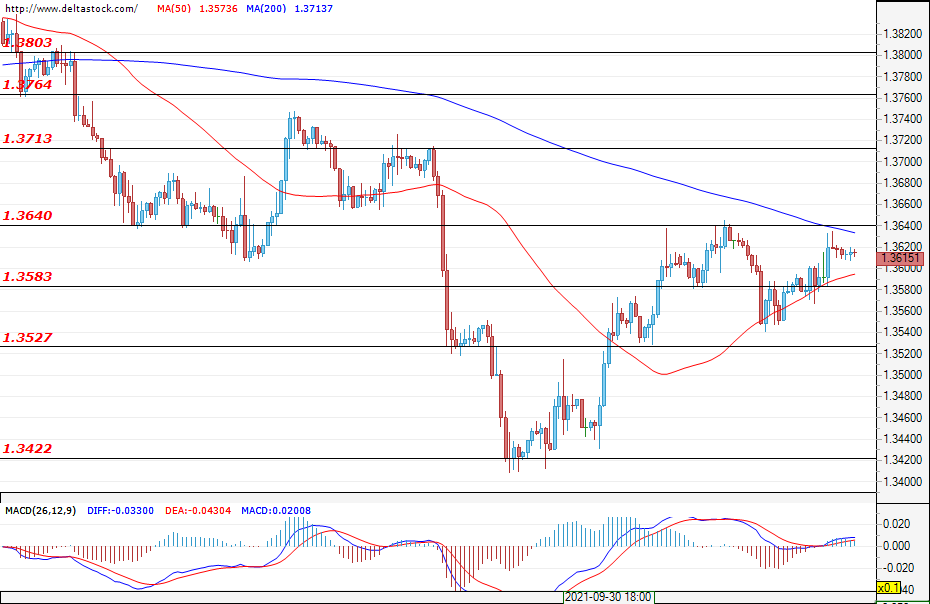
Current level - 1.3615
The Cable is experiencing an increased volatility and the market has corrected a significant part of its losses since the end of September. The possibility for new declines is still in sight and the first significant resistance zones for the bulls are 1.3640 and 1.3710. Another failed attempt at breaching the resistance of 1.3640 may encourage the bears to plunge prices back towards 1.3420. The supports at 1.3530 and 1.3580 have not yet been tested and may prove unreliable should the bearish pressure renew.
| Resistance | Support | ||
| intraday | intraweek | intraday | intraweek |
| 1.3640 | 1.3760 | 1.3580 | 1.3420 |
| 1.3710 | 1.3800 | 1.3530 | 1.3420 |
All Eyes On The US Employment Report
The USD remained rather stable against its counterparts yesterday, yet started with some gains during today’s Asian session as the market’s focus is fixed on the release of the US employment report for September. The forecasts in general are for all main indicators in the report to align, pointing towards a tightening of the US employment market. Should the actual rates and figures meet their respective forecasts, they could boost the Fed’s confidence and enhance the possibility of announcing the tapering of the bank’s QE program in its November meeting. On USD fundamentals related to the debt ceiling of the US may have found a solution as US lawmakers seem to agree to raise the federal borrowing limit until December, creating substantial support for the US stockmarkets. On the monetary front it should be noted that Cleveland Fed President Mester yesterday was reported stating that inflation has surpassed the level required for a rate hike yet worries for the employment market persist.
Dow Jones rose yesterday breaking the 34700 (S1) resistance line, now turned to support. Despite the index’s rise we are hesitant to call the bulls as the index seems to have stabilised at later hours. It should be noted that the RSI indicator, below our 4-hour chart is above the reading of 50, which could imply an advantage for the bulls. Should the bulls actually take charge of the index’s direction we may see it breaking the 35075 (R1) resistance line and thus pave the way for the 35500 (R2) record high level. Should the bears take over, we may see the index breaking the 34700 (S1) support line and aim for the 34400 (S2) support level.
Canada’s employment data could send mixed signals
CAD seems to be strengthening against the USD. Yet CAD traders, could be focusing on the release of the Canadian employment data but mixed signals about the Canadian employment market could be sent. On the one hand, the unemployment rate is expected to drop further which could be bullish for the CAD. On the other hand, the employment change figure is expected to retreat which could weaken CAD as it could imply some slack in the recovery of the Canadian employment market. It should be noted that BoC governor Macklem yesterday in his statements highlighted that the inflationary pressures may be more persistent while the recovery of the Canadian economy may not be as smooth as expected. Also, WTI’s price was on the rise again yesterday and tended to provide support for the Loonie as also did the positive market sentiment which was created in the markets.
USD/CAD dropped yesterday breaking the 1.2580 (R1) support line, now turned to resistance, which prevented the bears for the past few days. We maintain a bearish outlook as long as the pair remains below the downward trendline incepted since the 29th of September. Please note though that the pair is expected to be heavily influenced by the simultaneous release of the US and the Canadian employment data for September during today’s American session. The RSI indicator below our 4-hour chart is currently below the reading of 50, which may imply a continuation of the bears’ dominance. Should the selling interest continue to be on display by the markets, we may see the pair breaking the 1.2500 (S1) support line and take aim for the 1.2425 (S2) support level. Should the USD come under more demand than CAD and buyers take charge of the pair’s direction we may see the pair breaking the 1.2580 (R1) resistance line and aim for the 1.2650 (R2) resistance level.
Today’s events and expectations
Today in the European session, we get Germany’s trade data for August. In the American session we highlight the simultaneous release of the US and the Canadian employment data for September. On the monetary front we note the speech of BoE’s Tenreyro.
US 30 Cash H4 Chart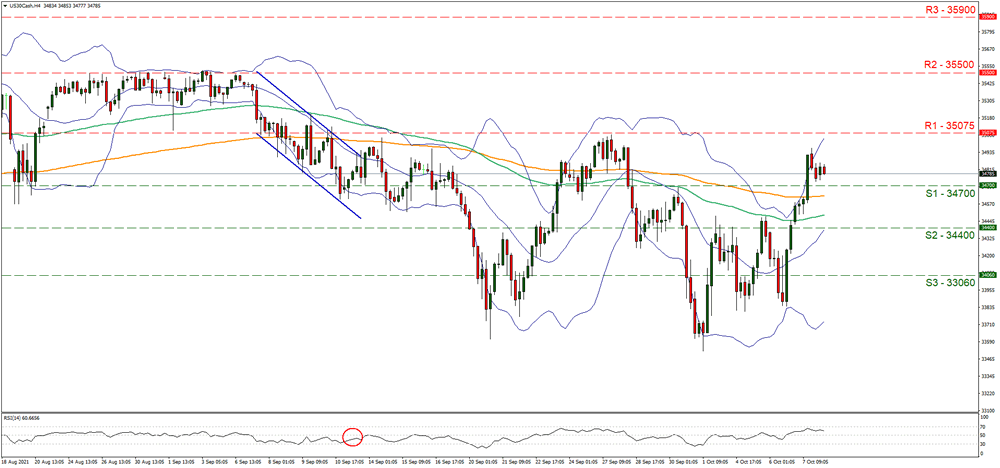
Support: 34700 (S1), 34400 (S2), 33060 (S3)
Resistance: 35075 (R1), 35500 (R2), 35900 (R3)
USD/CAD H4 Chart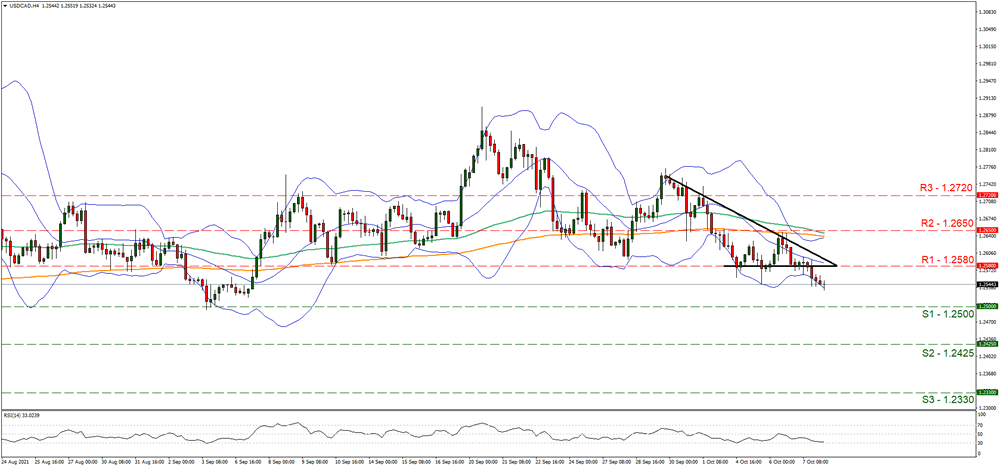
Support: 1.2500 (S1), 1.2425 (S2), 1.2330 (S3)
Resistance: 1.2580 (R1), 1.2650 (R2), 1.2720 (R3)