

Sample Category Title
NASDAQ 100 Rebounds Even As Inflation And Default Risks Remain
US stocks rebounded on Tuesday after dropping substantially on Monday. The Dow Jones and Nasdaq 100 indices rose by more than 400 points while the S&P 500 rose by more than 62 points. The rally happened as some investors moved to buy the dips after strong US services PMI numbers by the Institute of Supply Management (ISM). Still, there are several reasons to be fearful about the market. For one, inflation is expected to rise substantially as the price of key commodities like crude oil, natural gas, and cotton surged. There has been no solution to the debt ceiling issue in the United States.
The euro was little changed against key assets as the market reflected on strong composite and services PMI numbers. The data revealed that the services PMI in the Eurozone declined to 56.4 in September. This was better than the median estimate of 56.3. Eurostat also published relatively weak producer price index (PPI) data. The bloc’s PPI declined from 2.5% in July to 1.1% in August. On a year-on-year basis, the PPI rose from 12.4% to 13.4%. Later today, the euro will react to the latest Eurozone retail sales numbers.
The economic calendar will be muted today. The key numbers to watch will be the ADP private non-farm payroll numbers. Analysts expect the data to show that the economy added more than 428k jobs in September. The next key data to watch will be the Energy Information Administration (EIA) oil inventories numbers. Still, investors will be eying the Chinese property market. Evergrande has continued to halt its stock while strains showed among other companies. Fantasia Holdings failed to pay a debt instalment while the Sinic credit rating was downgraded.
EURUSD
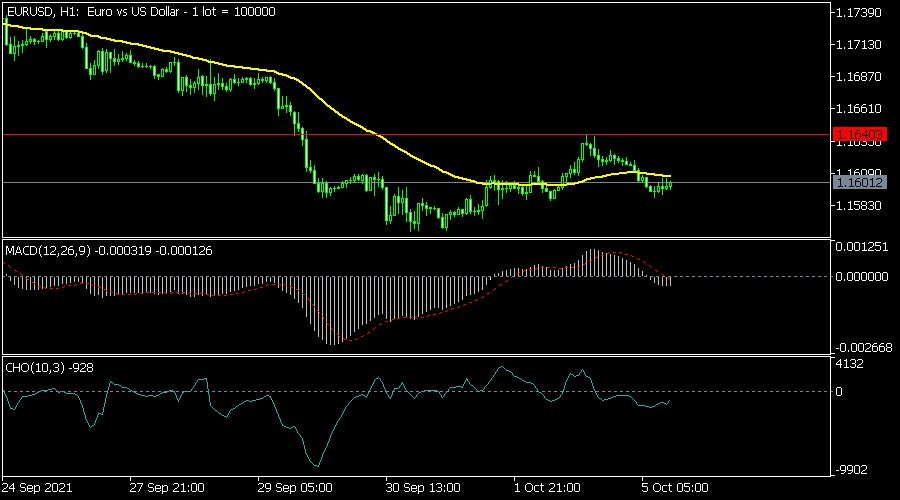
The EURUSD pair was little changed in the overnight session as traders waited for the Eurozone retail sales numbers. The pair is trading at 1.1606, where it has been in the past few sessions. As a result, the pair is trading along with the 25-day moving average while most oscillators are at the neutral level. Therefore, the pair will likely remain in the current range in the near term.
XTIUSD
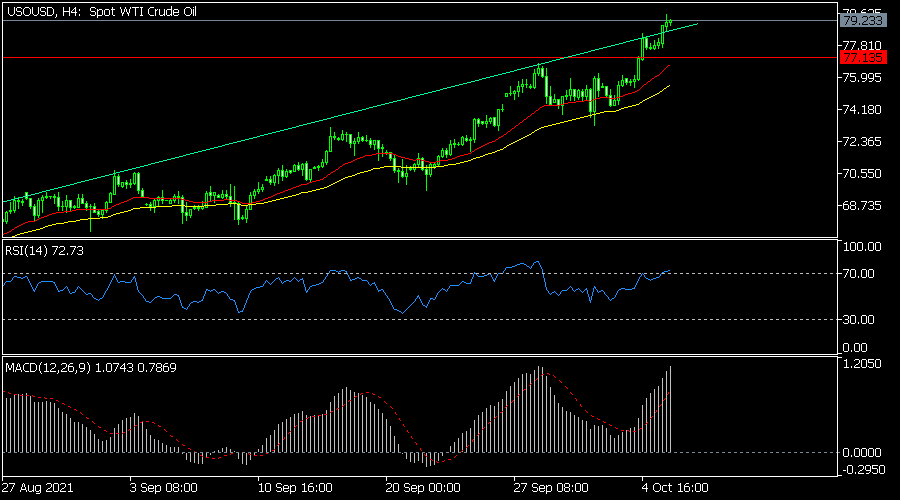
The XTIUSD pair has been in a major bullish trend as demand for crude oil rises at a faster pace than supplies. On the four-hour chart, the price is above the 25-day and 50-day moving averages. It also moved above the key resistance level at 77.13 while the Relative Strength Index (RSI) has moved to the overbought level of 72. The price rose above the upper trendline shown in green. Therefore, the pair will likely keep rising as bulls target the key resistance at 80.
AUDUSD
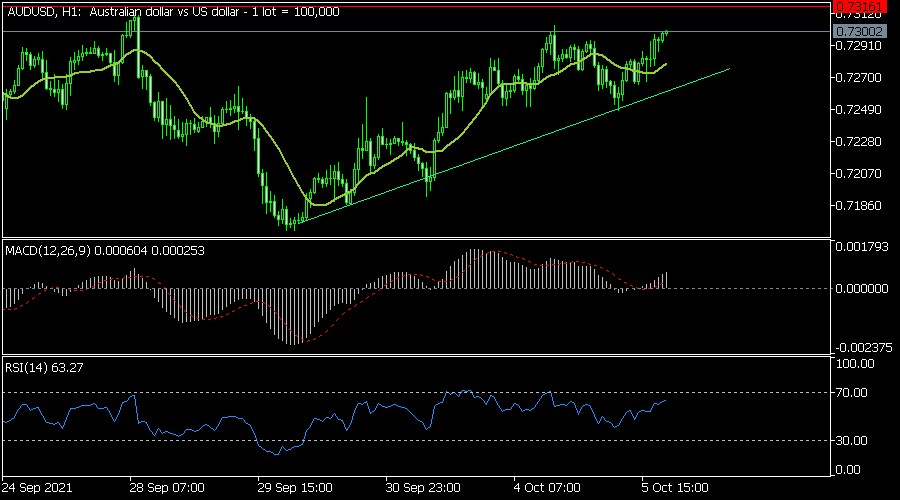
The AUDUSD pair rose to a high of 0.7300 as demand for commodities rose. On the four-hour chart, the pair is approaching the key resistance at 0.7315, which was the highest level in September. The pair is being supported by short and long term moving averages while the RSI has been in a strong bullish trend. Therefore, the pair will likely keep rising as bulls target the important resistance at 0.7315.
Most Asian Stocks Fail To Hold Opening Gains
Markets
Core bond yields surged yesterday with USTs hugely underperforming German Bunds. Along with an improved equity sentiment (European stocks up to 1.7% higher and up to 1.25% in the US), strong US data and ever-increasing gas/oil prices were the main drivers. US ISM services confidence unexpectedly improved to 61.9 mainly as business activity picked up (62.3 from 60.1). Supplier deliveries remain at an elevated 68.8 (from 69.6). Gas prices went completely berserk, adding about 20% and pulling oil and the likes also higher to $82.56/b (Brent). The US yield curve bear steepened with the move accelerating in the first US trading hour. Changes varied from 0.7 bps (2y) to 5.2 bps (30y) exclusively on the back of inflation expectations. Regarding the latter, we reached an important milestone in the EMU where a gauge for long-term expectations hit the 2% mark for the first time since 2013. Real yields continue to decline however, reaching a new all-time low in Germany at -2.11%. The curve steepened up to 2.6 bps (10y). Despite a weakish dollar, EUR/USD struggled and finished back below 1.16. It only gained against the JPY (129.28) and the CHF (1.075) in the G10 landscape. Sterling enjoyed both from the risk climate and skyrocketing yields (>7 bps). EUR/GBP neared the 0.85 barrier.
Most Asian stocks fail to hold opening gains. South Korea underperforms (-2.3%). Core bonds extend their steep fall amid rising inflation concerns. US yields push another 4.6 bps higher at the long end of the curve. The 10y and 30y yield are both trading at the highest level since June. The euro is in good shape but the dollar is simply better: EUR/USD extends yesterday’s decline to 1.1587 currently. The kiwi dollar is no match even as the RBNZ hiked rates and is likely to do so another time in November (see headline below).
The “unofficial” US job report from ADP is due today. Markets expect a 430k job creation in September. Whatever its outcome, however, it’ll have to be extremely bad or even negative to alter expectations for the Fed to formally announce/start the tapering process in November. We see no compelling reasons for the move in core bonds to reverse soon with the energy crisis intensifying as the winter approaches. The technicals suggest the same with the US10y taking out 1.52% resistance and the German 10y -0.20%. US gas inventories are later published today and might add to investor worries should they shrink beyond expectations. We stay cautious on the euro. EUR/USD’s downside looks vulnerable with first support at 1.1495 still lurking.
News headlines
The Reserve Bank of New Zealand pulled the trigger on a first rate hike after a sudden outbreak of the Delta-variant prevented them to do so back in August. The MPC raised the policy rate from 0.25% to 0.50% and believes that it is appropriate to continue reducing the amount of monetary stimulus over time so as to maintain low inflation and support maximum sustainable employment. Markets discount another 25 bps hike at the November 24 meeting. The New Zealand economy in aggregate has been performing strongly despite the Auckland-lockdown. Headline CPI inflation is expected to increase above 4% in the near term before returning towards the 2%-midpoint over the medium term. The near-term rise in inflation is accentuated by higher oil prices, rising transport costs and the impact of supply shortfalls. These immediate relative price shocks risk leading to more generalized price rises. The kiwi dollar slightly loses out against broad-based dollar strength this morning. NZD/USD declines from 0.696 to 0.692.
The Australian Prudential Regulation Authority (APRA) increased the minimum interest rate buffer it expects banks to use when assessing the serviceability of home loan applications from 2.5% percentage points above the loan product rate to 3%. APRA took the action supported by the RBA (eg in yesterday’s monetary policy statement), the Treasury and the Australian Securities and Investments Commission. While the banking system is well capitalised and lending standards overall have held up, increases in the share of heavily indebted borrowers, and leverage in the household sector more broadly, mean that medium-term risks to financial stability are building. AUD/USD also follow the broader dollar move, dipping from AUD/USD 0.729 to 0.726.
Daily Technical Analysis
EUR/USD
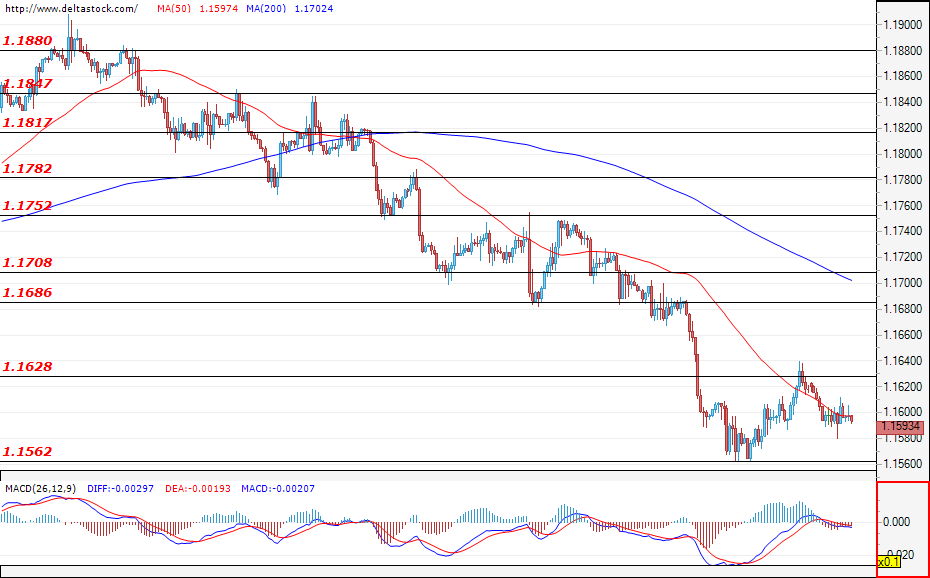
Current level - 1.1593
The currency pair continues to consolidate between 1.1562 - 1.1628 as volatility seems to be dwindling down.. However, only a successful breach of the local support at 1.1562 would strengthen the negative expectations and lead to a move towards the significant support at 1.1500. In case the bulls prevail and the resistance at 1.1628 is breached, then the pair will most likely make its way towards the resistance at 1.1686. In the early hours of today's trading session, the pair would most probably continue to trade in the mentioned area as investors await the announcement of the data regarding the U.S. ADP non-farm employment change, which is scheduled for 12:15 GMT.
| Resistance | Support | ||
| intraday | intraweek | intraday | intraweek |
| 1.1628 | 1.1708 | 1.1562 | 1.1550 |
| 1.1686 | 1.1752 | 1.1550 | 1.1490 |
USD/JPY
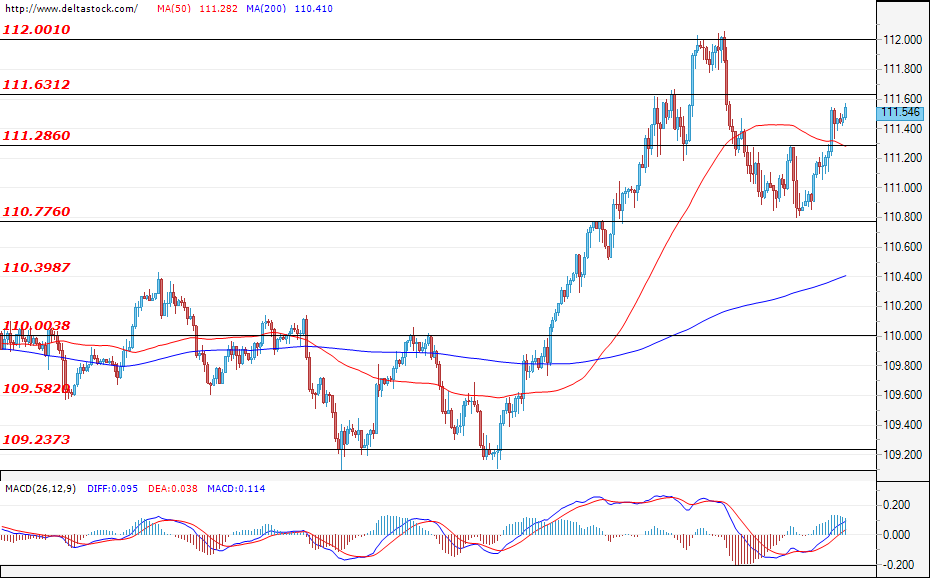
Current level - 111.54
The U.S. dollar continues to appreciate against the Japanese yen after the successful breach of the resistance of 111.28 during the previous trading session. The expectations for today's trading are for the currency pair to make a corrective movement towards 111.28 and to afterwards attack the resistance of 111.63. A successful breach of the mentioned resistance would pave the way for the pair towards the next resistance of 112.00. In the opposite direction, the first important support level is located at 110.76. The economic news, mentioned in the EUR/USD analysis, may spark some volatility.
| Resistance | Support | ||
| intraday | intraweek | intraday | intraweek |
| 111.63 | 112.00 | 111.28 | 110.77 |
| 112.00 | 113.50 | 110.77 | 110.39 |
GBP/USD
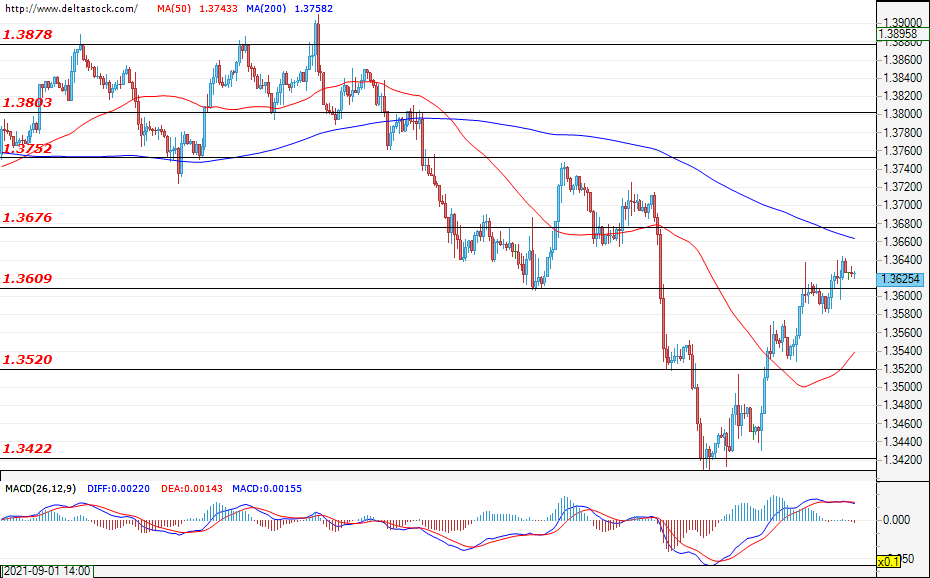
Current level - 1.3625
At the time of writing this analysis, the bulls seem to be losing momentum just above the resistance of 1.3609, which is currently acting as a support. The expectations for today's trading session are for the bears to limit the purchases and for the pair to head towards the support at 1.3520 as market sentiment is rather negative. However, if the bulls manage to retain their control over the market and successfully breach the resistance at 1.3676, an attack of the next level of 1.3752 will be the most probable scenario. A rise in volatility can be expected after the announcement of the construction PMI for the UK at 08:00 GMT.
| Resistance | Support | ||
| intraday | intraweek | intraday | intraweek |
| 1.3676 | 1.3803 | 1.3609 | 1.3520 |
| 1.3752 | 1.3878 | 1.3520 | 1.3422 |
USD/CAD Fails To Break 1.2560 Level
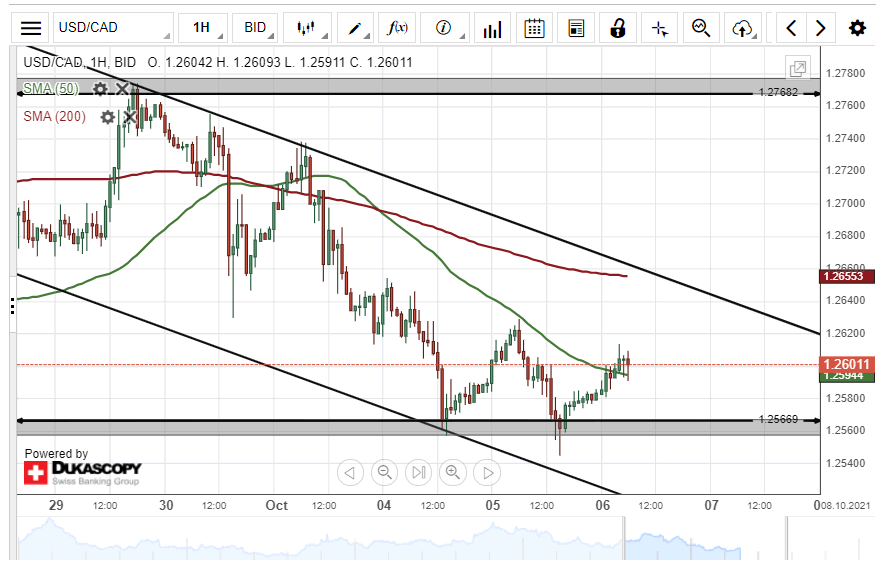
On Tuesday, the US Dollar edged lower by 65 pips or 0.51% against the Canadian Dollar. The decline was stopped by the support level at 1.2560 during Tuesday's trading session.
Given that the exchange rate fails to break the support line at 1.2560, bullish traders might drive the USD/CAD currency pair higher within the following trading session.
However, the 50– hour simple moving average at 1.2598 could provide resistance for the currency exchange rate within this session.
GBP/JPY Could Maintain Channel
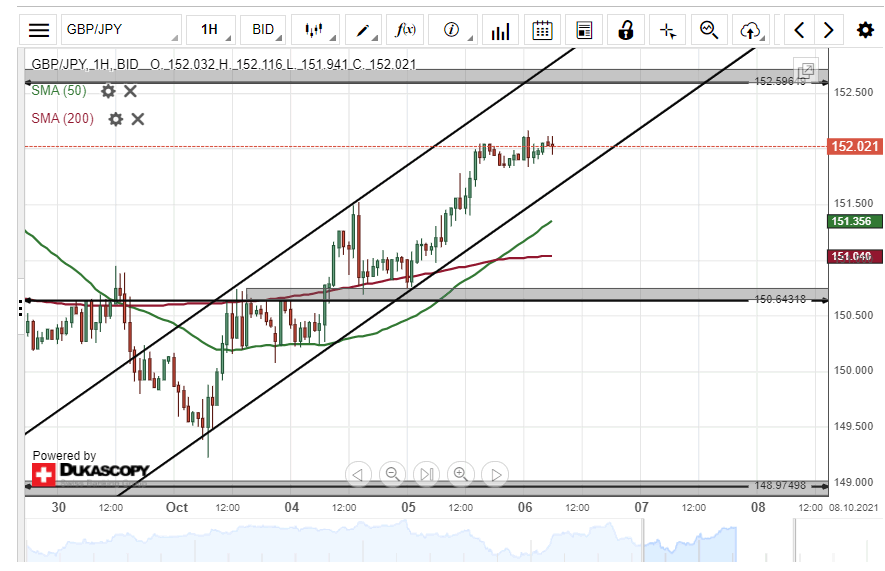
Upside risks dominated the GBP/JPY currency pair on Tuesday. As a result, the British Pound edged higher by 126 pips or 0.83% against the Japanese Yen during yesterday's trading session.
As for the near future, the exchange rate could continue to edge higher in a narrow ascending channel pattern. The potential target for buyers will be near the 153.00 area.
However, the currency exchange rate could encounter resistance at 152.59 within this session.
AUD/USD Tests 200- Hour SMA
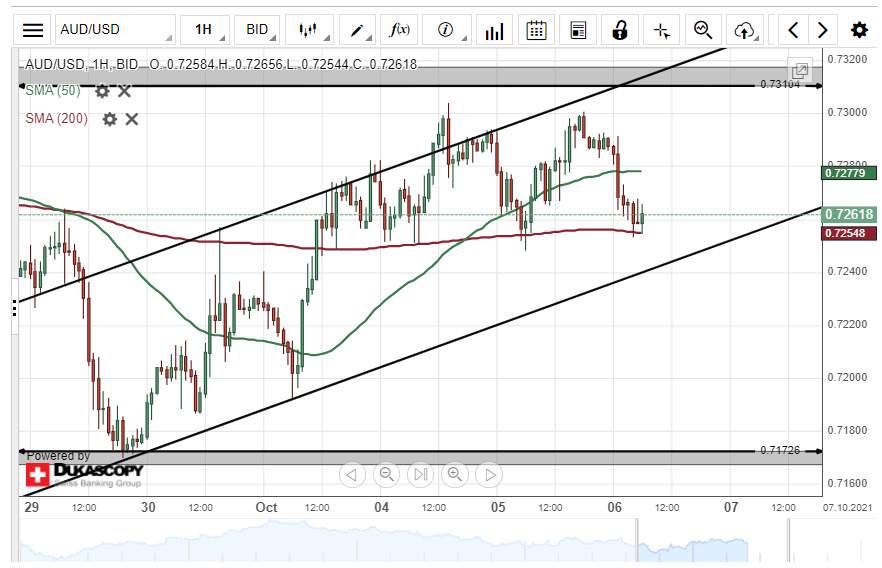
On Tuesday, the Australian Dollar surged by 44 pips or 0.61% against the US Dollar. The currency pair breached the 50– hour simple moving average during Tuesday's trading session.
Currently, the exchange rate is trading near a support level formed by the 200– hour SMA at 0.7255.
If the support level holds, a surge towards the 0.7320 area could be expected within this session.
However, if the currency exchange rate breaks the 200– hour SMA, the next target for sellers will be near the 0.7240 area.
EUR/JPY Breakout Occurs
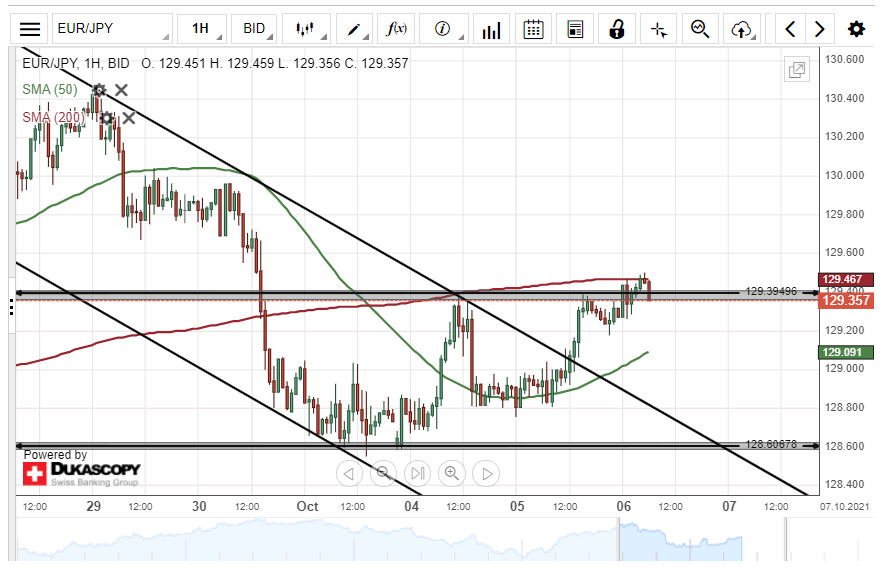
On Tuesday, the common European currency edged higher by 56 pips or 0.43% against the Japanese Yen. A breakout occurred through the upper boundary of a descending channel pattern during Tuesday's trading session.
Given that a breakout has occurred, bullish traders could continue to pressure the exchange rate higher during the following trading session. The potential target for buyers will be near the 130.00 level.
However, the 200– hour simple moving average at 129.46 could provide resistance for the EUR/JPY currency exchange rate within this session.
Eyes On The Future – RBNZ Monetary Policy Review
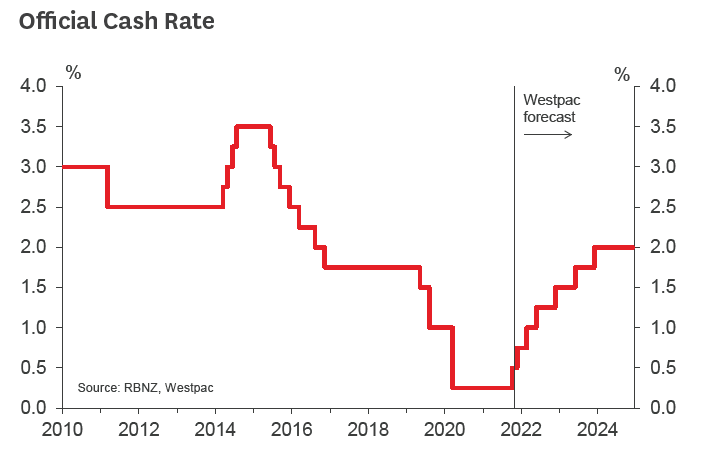
- The Reserve Bank increased the OCR by 25 basis points to 0.50% as expected, and signalled further reductions in stimulus over time.
- The current Covid-19 outbreak and restrictions have dampened activity in the near term.
- But this has not materially affected the central bank's medium-term focus.
- Strong demand and a tight labour market increase the risk that near-term price pressures turn into something more persistent.
- We expect further OCR hikes at the November, February and May reviews.
Today's increase in the Official Cash Rate was widely expected. Despite the uncertainty created by the latest Covid-19 outbreak, the Reserve Bank has remained clear about its intentions to start removing monetary stimulus from the economy. (Indeed, it had arguably started the process already by ending the Large-Scale Asset Purchase programme in July.) Our view remains that we'll see further rate hikes at the upcoming policy reviews.
The RBNZ did show that it's sensitive to the fact that many businesses are hurting as a result of the current restrictions, most obviously in Auckland but also elsewhere. It noted that strong balance sheets coming into the lockdown, and renewed fiscal policy support, have helped to soften the blow, and that the evidence to date suggests that activity has again rebounded quickly where restrictions have been lifted.
Despite the near-term pain, the RBNZ's eyes remain on its medium-term inflation and employment goals. On that front, it noted that conditions have not materially changed since the August Monetary Policy Statement, when the RBNZ would most likely have hiked the OCR if not for the timing of the current lockdown
Indeed, there's an important point to be made here about the economic outlook over the medium term. The endgame of our Covid strategy was always going to be to get high levels of vaccination, to move away from restrictions on activity, and accept that there will be ongoing cases in the community (but with few of them being severe, because of the vaccine). We're still heading to that destination – perhaps by early next year – it's just that the journey there is going to be rockier than we would have liked.
As we move forward, the pressures that the RBNZ was facing before this outbreak will come to the fore again. Inflation has already lifted sharply this year, and is set to go higher, due to a range of factors such as global supply chain disruptions, soaring shipping costs, rising energy prices, and intense competition for workers due to skills shortages.
Price pressures are not the only issue here. There was substantial evidence that demand in the economy was running hot before this lockdown, and that is likely to return as restrictions are lifted. Strong demand increases the risk that seemingly temporary price shocks can translate through into broader, more persistent inflation pressures – and that's where a monetary policy response is appropriate.
The RBNZ noted that “employment is expected to remain at around its maximum sustainable level”. But there's a growing risk of moving beyond that point. Yesterday's Quarterly Survey of Business Opinion was quite telling: even in the face of the current lockdown, demand for workers has surged, and expectations of labour turnover (i.e. poaching) have gone ballistic. While it's easy to view this as a capacity constraint – the closure of the border has largely cut off access to migrant workers – the fact that businesses are willing to pay up to attract people from the existing workforce reveals that this is really a story of strong demand
Looking ahead, we continue to expect further rate hikes of 25 basis points at the November, February and May Monetary Policy Statements. That would be a total increase of 100 basis points, after which we expect the RBNZ to pause to assess their impact. That won't be the end of it – we expect a further gradual tightening over the following years – but the RBNZ is likely to move more cautiously as it gets closer to what it considers to be a ‘neutral' level for the OCR.
Financial markets were largely priced for a 25 basis point hike today, though not entirely in light of the most recent Covid developments. As such, there was a brief lift in the New Zealand dollar after the announcement, but it was very short-lived.
NZD Drops After Widely Expected RBNZ Rate Hike
General trend
- US equity FUTS decline in Asia.
- Nikkei has declined by over 1.5% after the higher open [Heavyweights continue to weigh on the index (Fast Retailing and Softbank Group)]; Topix Marine Transportation index drops again, Banks rise.
- Hang Seng has also reversed the opening gain, has currently pared loss [TECH and Property indices drop, but pare declines during morning trading].
- S&P ASX 200 has been weighed down by Financials.
- Copper FUTs extend decline.
- Companies expected to report during the NY morning include Madison Square Garden, RPM International, Constellation Brands.
- Shanghai markets are closed for holiday from Oct 1-7 (Fri-Thurs).
Headlines/Economic Data
Australia/New Zealand
- ASX 200 opened +0.1%.
- (NZ) NEW ZEALAND CENTRAL BANK (RBNZ) RAISES OFFICIAL CASH RATE (OCR) 25BPS TO 0.50%; AS EXPECTED (1st rate hike since July 2014).
- MFG.AU Reports Sept FUM (A$) 113.3B v 118.0B prior; Outflows A$1.53B.
- (AU) Australia sells A$1.0B v A$1.0B indicated in 1.75% Nov 2032 bonds, avg yield %1.6137, bid to cover: 5.88x.
- (NZ) Reserve Bank of New Zealand (RBNZ) Appoints Assitant Gov Hawkesby as Deputy Gov, replacing Bascand who is leaving in January.
- (CN) China said to have released coal from Australia that has been "trapped in storage" - FT.
Japan
- Nikkei 225 opened +0.8%.
- 4502.JP Safety signal emerged in its phase 2 study of investigational oral orexin agonist TAK-994; suspended dosing of patients as a precautionary measure.
- (JP) Japan PM Kishida approval rating at 59% (3rd lowest for inaugural ratings among 9 prime ministers going back to 2002.
- (JP) Japan Chief Cabinet Sec Matsuno: Stopping decline in Japan R&D Capability is important; CPI not as weak as headline numbers indicate.
- (JP) Bank of Japan (BOJ) Gov Kuroda: Economy has picked up led by exports and manufacturing, high US GDP Growth has supported global economic growth).
- (JP) Japan Fin Min Suzuki: PM has instructed me to be flexible on policy; will seek a new type of capitalism and peruse fiscal health and growth at the same time (yesterday after the close).
- (JP) Japan Econ Min Yamagiwa: Govt will take all necessary measures to support the economy "in a flexible manner without hesitation" (yesterday after the close).
- (JP) Japan Industry Min Hagiuda: Nuclear power is indispensable to decarbonizing Japan (yesterday after the close).
Korea
- Kospi opened %.
- (KR) SOUTH KOREA SEPT CPI M/M: 0.5% V 0.4%E; Y/Y: 2.5% V 2.4%E (6th straight month above target); CPI Core Y/Y: 1.9% v 1.8%e (fastest increase since 2017).
- (KR) Japan spotted North Korea ship carrying missiles in June off the coast of Ishikawa prefecture - Japan press.
China/Hong Kong
- Hang Seng opened +0.6%; Shanghai Composite closed for holiday.
- (HK) Hong Kong Aug PMI (Whole Economy): 51.7 v 53.3 prior (8th consecutive expansion).
- 880.HK Said to shut down 1 Macau casino ops due to a coronavirus patient visiting – Press.
- 2393.HK Updates on debt restructuring: Proposed new offshore debt restructuring and Agreement for $200M 6.9% notes due 2021; to issue new notes under the agreement.
- (HK) Hong Kong Chief Exec Lam: Hong Kong to continue with Article 23 National Security Legislation, confirms housing project in the North - Annual Policy Address.
Other
- (TW) US President Biden: Spoke with China President Xi on Taiwan; Agreed to abide by Taiwan agreement.
- (TW) Taiwan Ministry of National Defense (MND): China is unsure if an attack on Taiwan would succeed, could be ready for full scale invasion of Taiwan by 2025 - Taiwanese Press.
North America
- (CN) USTR seeking public comment on tariff exclusions for 549 China import categories - press.
Europe
- (UK) PM Johnson reportedly plans to announce a 'significant' boost to minimum wage within next few weeks - UK's Times.
- (IE) Ireland Central Bank raises 2021 GDP outlook to 15.3% (prior 8.3%) due to a stronger than expected surge in consumption that will add to inflationary pressure; also raises modified domestic demand outlook.
Levels as of 01:00ET
- Hang Seng -0.9%; Shanghai Composite closed for holiday; Kospi -1.5%; Nikkei225 -1.3%; ASX 200 -0.7%.
- Equity Futures: S&P500 -0.6%; Nasdaq100 -0.6%, Dax -0.7%; FTSE100 -0.7%.
- EUR 1.1604-1.1583; JPY 111.76-111.43 ;AUD 0.7297-0.7254; NZD 0.6980-0.6919.
- Commodity Futures: Gold -0.4% at $1,753/oz; Crude Oil +0.1% at $78.97/brl; Copper -1.0% at $4.14/lb.
Equities Rebound, But Risks Remain Tilted To The Downside
US equities rebounded on Tuesday amid heated discussions about the impact of Facebook on public health and the worst oil spill in California.
Major US indices traded in the green, as Nasdaq led gains. Both Nasdaq and the S&P500 rebounded back to their 100-DMA levels, but the US 10-year yield advanced to 1.57%, warning that the selling pressure on equities may not be over just yet.
Still, growth stocks had a good day yesterday. Facebook rebounded more than 2%, along with other FAANG stocks. Netflix jumped more than 5% and Alibaba recovered 2.5%. But again, that doesn’t mean that the danger is over.
A small parenthesis: discussions on Facebook may not hurt its share price in the longer run. As bad as it sounds, investors weren’t too unhappy hearing that Facebook put profit before data security and social health. Therefore, I wouldn’t expect to see a long-term impact on its share price, unless we have a concrete action taken against the company.
US ADP report: Soft data could dampen the mood
Due today, the US ADP report will give the first hint on how well the US labour market did in September. The US economy is expected to have added near 430’000 private jobs in September. We are now talking about numbers far below the 800’000 or a million job additions of the post pandemic recovery.
Any weakness in the jobs figure could dampen the market mood again, as soft economic data could no longer revive the central bank doves, as the spike in energy prices continue fueling expectations of higher inflation for longer. Therefore, central banks will be forced to cool down the overheating in inflation rather than trying to boost recovery. As a result, any softness in data could send the US equities back below their 100-dma levels.
Speaking of rising energy prices
The barrel of US crude flirted with the $80 per barrel on Tuesday, backed by news of the worst oil spill in California in almost three decades. But the upside remained limited approaching the $80pb level, as the latest API data showed that the US oil inventories increased by a million barrels last week, versus 300’000 decline penciled in by analysts. The more official EIA data, due today, will clarify the latest move in US crude inventories. The expectation is a 800’000-barrel increase, if met, could temporarily temper the bulls. But the trend is clearly to the upside, as OPEC plays for higher energy prices, and the natural gas futures continue posting an exponential rise as we start feeling the cold weather knocking at the door. We knew that fighting against the climate change would have a cost, and that cost starts materializing. In this respect, oil bulls will likely continue their journey north, but higher oil prices, combined with the global supply shortages and the bottlenecks can only dampen the earnings expectations for many companies, and weigh on the stock prices into the next earnings season.
If cryptocurrencies are the future, Bitcoin may not be the future of cryptocurrencies
Last, but not least, Bitcoin advanced past $50K yesterday as the SEC said the US won’t ban digital coins, and the Bank of America decided to cover the cryptocurrencies as a part of their research, saying the crypto assets are now ‘too large to ignore’.
But looking at the global energy crunch and the fight for climate, the huge energy consumption of Bitcoin could, at some point, become a burden for Bitcoin and get investors looking for greener versions of Bitcoin. As such, the real opportunity is in new digital tokens that will address the climate issues. In this respect, energy-light cryptocurrencies will be the future.