

Sample Category Title
Team Australia to the Rescue
The Reserve Bank Board next meets on September 7.
The Board surprised at its August meeting by deciding to retain its policy of tapering its bond purchases under the QE program from $5 billion per week to $4 billion when the current program expires in the week ending September 3.
Westpac had been recommending that due to the sudden deterioration in the near term economic outlook the Board should actually lift weekly purchases from $5 billion to $6 billion.
Our forecast, at that time, was that the Australian economy was likely to contract by 2.2% in the September quarter mainly due to the extended lock down in Sydney and a renewed lock down in Melbourne.
The August Statement on Monetary Policy, which was released three days after the Board meeting, noted that the RBA staff estimate of the contraction in the September quarter was "at least 1 %" – significantly milder than our estimate.
We did agree that the economy was likely to bounce back in the December quarter by 3% as Sydney reopened from the end of September. That "end September" timing for Sydney was also the assumption being used by the RBA.
Since the August Board meeting we have pushed back the likely timing of the reopening of Sydney to end October as case numbers have surprised to the upside in recent weeks. We have also had to add the lock down of the remainder of the state to our calculations and a slightly more cautious assessment of the disruption to building sites in NSW.
Our revised forecasts have maintained faith with the Victorian government's current guidance that Melbourne can expect to reopen in early September. With cases now running at higher levels than expected there is a significant risk that Melbourne will remain locked down beyond our current estimate of early September.
Taking all this into account we recently revised our growth forecast for the September quarter to minus 2.6% and lowered our December quarter recovery pace to 2.6% from 3%. For the 2021 year, annual growth was downgraded to 2.4% from 3.2%.
In recognition of the delay in the timing of the recovery we have lifted our 2022 growth forecast from 4.2% to 5.0%.
Health Risks to Recovery
These are our central case forecasts but we do recognise that there are material risks around the pace and timing of the recovery largely related to ongoing health issues.
For example, our assessment of the likely timing of the reopening of NSW is based on our forecasts of the timing of the state reaching 80% full vaccination of the 16 and over population by mid October. That timing is somewhat faster than official estimates that seem to be based on extrapolating current vaccination rates whereas we expect that demand will lift as citizens become more aggravated by lock down and supply is set to be sharply boosted through the government's Pfizer and Moderna purchase programs.
The reopening of NSW is not based on the achievement of very low new cases. Consequently, the recovery pace of the economy may be disrupted by ongoing state border closures as other states continue to pursue a zero case strategy despite eventually also reaching the 80% target level. (We expect that nationally the 80% target will be reached by end October).
There are other health related sources of uncertainty around the timing and sustainability of the recovery. These include the unknown potency of delta; the risk of further new even more resilient strains; and evidence from other countries, including the US and Israel, of the waning efficacy of vaccines leading to a requirement for boosters.
Fiscal Support Packages
The key support packages which are being offered by the Federal and State governments are quite different to 2020.
In dollar terms support to individuals and households appears to be comparable with the JobKeeper arrangement,although more directly targeted. Individuals who lose more than 20 hours work but remain attached to their employers receive $1500 per fortnight through Centre Link or $900 if between 8 and 20 hours are lost. Reports are that this process, while slow in the early stages, has been working smoothly.
However, direct support for business has been significantly reduced. The JobSaver payments, which are offered jointly by the Federal and state governments, fall well short of the support to business during 2020 through JobKeeper and other direct payments.
For example, the JobSaver payment, which is offered through the NSW government, is equivalent to 40% of the weekly payroll cost for work performed in NSW up to a maximum of $100,000 per week.
As a rough rule of thumb, based on, say an average cost of $75,000 per worker that maximum payment would put a ceiling of around 175 on the maximum number of employees.
While such a policy provides appropriate targeting of small business and avoids the undeserved excessive payments to large businesses of JobKeeper there is no doubt that a much streamlined business support package may distort the pace of recovery relative to the evidence of 2020. And, of course, in 2020 the payments were made to businesses in states, including NSW, that had come out of lock down.
The Reserve Bank has also curtailed the Term Funding Facility whereby banks could borrow three year funds at 0.1%. The funds that have been drawn down are still available to banks but there is no additional funding.
Fortunately, other conditions that supported the pace of recovery in the second half of 2020 such as record low interest rates; a cashed up household sector and a resilient housing market are still prevalent.
What Should be the Reserve Bank's Response to these Developments?
The reasons (August Board Minutes) given by the Board for not adjusting its policy in response to the sudden deterioration in the outlook were:
"Members judged that any additional bond purchases would have their maximum effect during the recovery phase with only a marginal effect at present."
- "Fiscal policy is a more appropriate instrument than monetary policy for providing support in response to a temporary, localised reduction in incomes."
We certainly accept that fiscal policy must play the dominant role and agree that the current level of support to business could be lifted.
The argument around the timing of the impact of QE is not clear. The Reserve Bank has attributed the benefit of QE as working through the AUD; interest rates; and asset prices.
Currency markets adjust very quickly to unexpected policy changes with the competitive advantages from a lower currency flowing directly through to the economy.
The Board did provide itself with some flexibility to review the decisions.
In those August Minutes the Board also noted that "The Board would be prepared to act in response to further bad news on the health front should that lead to a more significant set back in the economic recovery."
It is reasonable to conclude that given we have seen adverse developments in both NSW and Melbourne the conditions for a policy review have been reached.
But there was also the case for change in the July Minutes: "Given the high degree of uncertainty about the economic outlook members agreed that there should be flexibility to increase or reduce weekly bond purchases in the future, as warranted by the state of the economy at the time."
It was that quote that prompted us to assess that the best policy response in August was to lift purchases, given clear prospects for an economic contraction – i.e. the state of the economy AT THE TIME.
One important difference between the July and August observations is the emphasis on health outcomes in August. That emphasis raises the enhances the prospect of a policy change in September.
Certainly, earlier this week, I noted that it would be quite bizarre for policy to be tightened with an immediate taper just when it had become clear that the Australian economy was contracting.
The Board had been given the advice of a contraction (albeit much milder than our assessment) in August but still decided to push ahead with the taper.
The difference now is that the economic contraction will be materially deeper than expected in August and the health situation raises genuine risks around the timing and shape of the recovery.
That increased uncertainty around the recovery can still justify a policy change even if the Board continues to look beyond the near term.
But surely a better approach would be to actually ease policy rather than just defer a tightening!
That is why I would like to see the Board decide to take positive action and lift purchases from $5 billion per week to $6 billion.
A review of the policy should be timed for the November Board meeting when it would have the opportunity to assess the state of the health risks; the nature of the reopening in NSW and developments in Victoria.
Markets have probably adjusted to the prospect of a deferral of the taper so to generate a response in the AUD and rates it would be necessary to actually lift purchases and surprise markets.
After a disappointing lurch away from the Team Australia theme that was so successful in 2020 the time is right for the RBA to demonstrate its support for further stimulus in light of these recent adverse developments.
Summary 8/23 – 8/27
Monday, Aug 23, 2021
[php_everywhere instance="1"]
Tuesday, Aug 24, 2021
[php_everywhere instance="2"]
Wednesday, Aug 25, 2021
[php_everywhere instance="3"]
Thursday, Aug 26, 2021
[php_everywhere instance="4"]
Friday, Aug 27, 2021
[php_everywhere instance="5"]
The Weekly Bottom Line: Getting Back to Normal Isn’t Easy
U.S. Highlights
- As the economy continues to recover the Federal Open Market Committee’s meeting minutes signaled a tapering of its asset purchase program later this year.
- The retail sales report showed a larger decline in spending than had been anticipated, but this move also reflects the ongoing reorientation of spending away from goods and towards services.
- A rapid return to normalcy isn’t guaranteed as the spread of the Delta variant and declining consumer sentiment raise downside risks to the outlook.
Canadian Highlights
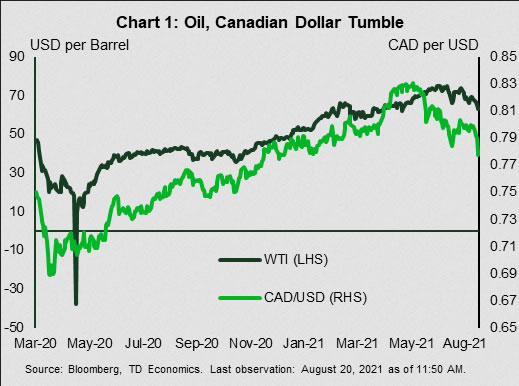
- Risk-off sentiment hit commodity markets, with the WTI price falling more than 7% on the week. The Canadian dollar followed, dropping to 78 cents and erasing all of its gains this year.
- Retail and manufacturing sales data point to strength in June’s GDP and provide a decent handoff to the third quarter. Housing markets continued to moderate from their torrid pace earlier in the year.
- Inflation is running hot. July’s CPI inflation (+3.7% y/y) surprised on the upside, with broad-based increases across most spending categories.
U.S. - Getting Back to Normal Isn't Easy
In this week’s release of its meeting minutes, the Federal Open Market Committee (FOMC) reasserted the view that the recovery is well under way and the groundwork for tapering its asset purchase program is being set. Equities sold off on the news, with the S&P 500 closing the day down 1.1% while the DXY dollar index popped 0.3%. Beyond the market reaction, the minutes suggest that the committee is looking past hiccups in growth and at an economy slowly but surely returning to normal.
Take, for instance the second quarter of 2021. GDP growth disappointed, registering +6.5% (annualized). Yet, a large part of the miss was due to inventory drawdowns for which dwindling automobile stockpiles were the main culprit. The effect of limited product availability lingered into July as vehicle sales weighed down the overall retail sales picture for the month. Supply chains continue to disrupt vehicle production so this issue will likely persist in the coming months. However, as production is normalized in the latter part of the year, the pent-up demand being generated by the foregone sales should provide a lift to spending into 2022.
Another key theme is the rotation from goods expenditures to services. After the initial lockdowns were lifted, retail sales skyrocketed and continue to far exceed their pre-crisis trend. This week’s report showed a steeper contraction than expected, but it serves to highlight just how far from normal the spending situation is.
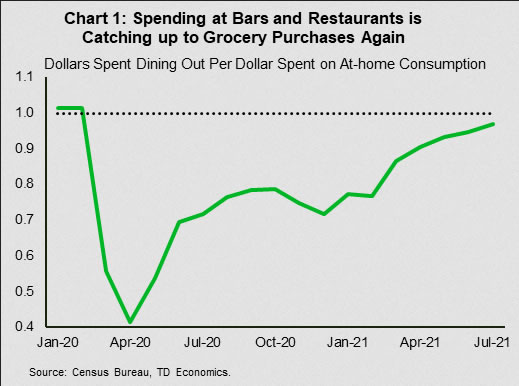
Getting back to normal means spending on services will continue to grow as behaviors shift back to pre-crisis norms. A quick barometer for the change is to compare how much money is being spent on eating in versus dining out. Before the lockdowns, consumers spent roughly one dollar at food service establishments for every dollar spent on food and beverages at home. After a drastic shift towards eating at home at the beginning of the crisis, households are now back to spending 97 cents on food service for every dollar at home (Chart 1). The return to a pre-crisis normal isn’t complete, but it’s getting there.
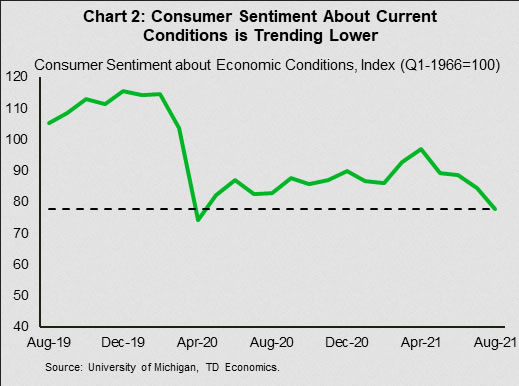
This chart shows the University of Michigan index of consumer sentiment about current economic conditions. The chart shows that sentiment dropped rapidly at the start of the pandemic to a reading of 74.3 but recovered afterwards. However, since April 2021 it has been declining and has now dropped to 77.9, marginally above where it was at the start of the pandemic.
As spending behavior normalizes so should employment. The services sector has been hit hard. Leisure and hospitality is responsible for over a fifth of private sector positions still missing, despite making up about 12% of jobs. Here too the picture is improving, as employment in the sector has grown 15.7% since January, compared to 3.0% for the private sector overall.
Things are looking up, but the spread of the Delta variant continues to cast a pall over the outlook. The University of Michigan survey of consumer sentiment dipped in August to its lowest level since the start of the pandemic (Chart 2). The survey isn’t the be all and end all of economic indicators, but a deterioration in economic confidence at a time that officials expect consumers to resume spending and spur employment in the services sector presents a material downside risk to economy. The FOMC recognizes that extraordinary measures may not be needed much longer, but that doesn’t mean we’re out of the woods just yet.
Canada - Don't Fret Peak Growth
News of an upcoming Federal election caught the headlines this week, but financial markets and data releases still offered a lot of excitement. A risk-off tone prevailed. The Delta variant, negative economic surprises in China and the U.S., and the Federal Reserve's potential upcoming exit from its quantitative easing programs were the key culprits.
In Canada, the S&P/TSX Composite followed its global peers lower, falling 1.5% on the week (as of 10 AM). But the more notable victims of souring sentiment were commodity and exchange rate markets (Chart 1). The WTI price fell a notable 7.5% on the week. The Canadian dollar followed, dropping to 78 cents and erasing all of its gains this year. Though price action may continue to exhibit volatility in the near term, current WTI and CAD levels are not far below our projected Q4 and 2022 profiles. We had previously forecasted a moderation in commodity prices in the second half of the year (and more specifically in Q4 for oil prices). This was predicated on the assumption that the recovery would tilt from goods to services spending, and that supply-side constraints/quotas would start dissipating. Rising delta variant concerns only sped up the process. But current levels are not necessarily a cause for concern. A lower Canadian dollar bodes well for exporters, and WTI prices in the US$60s are still supportive for producers (while easing price pressures on consumers).
The overall tone may have been gloomy this week, but the macro backdrop in Canada remains solid. June data for retail (+4.2%) and manufacturing sales (+2.1%) point to strength in June's GDP, providing a solid handoff to the third quarter. Still, the softening momentum narrative seen elsewhere is starting to show up in some sectors. Housing markets are a case in point – where existing home sales and starts both fell modestly in July. Even then, activity remains above where it was prior to the pandemic. A reopening-led spurt in employment, hours worked, and the services sector will also be a key tailwind for a Q3 growth. Indeed, a look at more high frequency indicators in August suggests that economic activity remains healthy - with no discernable pull back as yet. OpenTable restaurant reservation data and mobility data from Google point to decent consumer engagement.
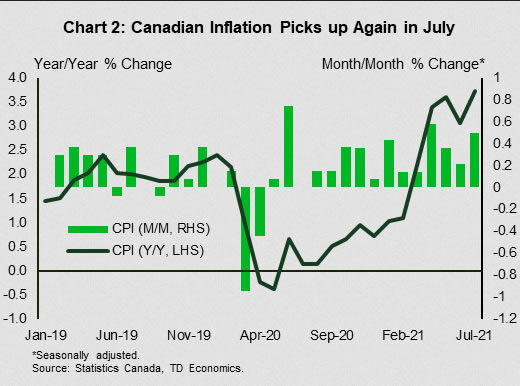
Chart 2 shows year/year and month/month (seasonally adjusted) headline CPI inflation growth. Both picked up in July (+3.7% y/y, +0.5% m/m) from their June pace (+3.1% y/y, +0.2% m/m).
Turning to this week's key release, CPI inflation (Chart 2) increased 3.7% (y/y) in July, above consensus estimates (3.4%). What stood out in the report was the broad-based nature of the pick-up, with six of the eight categories showing stronger year/year growth. The monthly pace of price growth (+0.5%) also picked up. This suggests that strong demand is now also playing a role, in tandem with supply chain disruptions. The Bank of Canada is closely watching, and has already started tapering, while signaling a potential rate hike late next year.
Notwithstanding the still-decent economic backdrop, downside risks have risen as a result of the Delta variant. Experience suggests that the economy is becoming more resilient to each subsequent wave. While uncertainty remains elevated, the hope is that Canada's high vaccination rate will leave it in a strong position to overcome these challenges.
Week Ahead – Will We Have Action in Jackson?
Country
US
The upcoming week is all about the Federal Reserve’s symposium in Jackson Hole, Wyoming. A couple months ago, this gathering was eyed as a potential time for the Fed to formally announce its plan on tapering asset purchases, but now it will determine if Fed Chair Powell is ready to join the tapering crowd at the Fed or slow them down. Growth concerns and delta variant jitters now have this symposium as a stop gap until the September FOMC policy meeting. At best, investors expect Fed Chair Powell to give clues on how close the economy is to delivering substantial progress with the labor market recovery and if he can signal a formal taper announcement is coming at the next policy meeting. Powell may choose to wait to see more data before firmly signaling the Fed is ready to begin tapering the $120 billion-a-month government bond buying program.
On Monday, many traders will pay close attention to the flash PMI readings that should show both the manufacturing and service industries are easing slightly. Shortly after the NY open, the release of existing home sales should confirm the housing market is cooling. Thursday contains the second reading of second quarter GDP and Core PCE, along with weekly initial jobless claims. Friday’s release of US personal income and spending data will provide valuable insight over how strong the consumer is and if their buying habits are shifting towards services. The Fed’s preferred inflation gauge may also show price gains continued in July.
EU
The ECB minutes next week will be more interesting than normal, coming after the central bank tweaked its mandate to target 2% inflation while allowing for a temporary overshoot. Divisions in the central bank are clear and possibly more fierce than ever. But the overwhelming majority support the ECBs new stance which should ensure the tapering discussion remains some way off.
Euro area PMIs along with German GDP, and Gfk and Ifo surveys, are among the notable releases next week. We’ve already seen confidence wane as a result of the delta variant and that may be evident in the data to come.
UK
The data coming from the UK has been pretty good recently, while inflation dipped last month as favorable base effects came into play. It will rise again in the coming months, likely well beyond the BoE target, but policy makers remain convinced it’s transitory and does not warrant any immediate tightening.
PMIs on Monday are the only notable releases next week. Recent surveys from various countries are highlighting concern among businesses and consumers around the near-term outlook due to the delta surge.
Emerging Markets
Russia
The economy grew 10.3% in the last quarter, taking it above its pre-pandemic level. Growth is expected to slow considerably from Q2 levels, which compared favourably as a result of the April and May lockdowns last year, which hasn’t been repeated despite high fatality rates and low vaccine rates.
The central bank recently raised rates to 6.5% and warned that more may follow. Industrial output on Wednesday is the only notable release.
South Africa
Inflation fell to 4.6% in July, very close to the 4.5% midpoint of the SARBs target range which will allow the central bank to be patient with rate hikes. The next move will still be up and likely before the end of the year but expectations are being pared back thanks to the lower growth expectations.
Unemployment and PPI inflation data due next week which may further take the pressure off the central bank.
Turkey
Governor Şahap Kavcıoğlu remains stuck between a rock and a hard place. Does he risk higher inflation or the sack, the fate suffered by numerous predecessors that didn’t share the unconventional view on the link between interest rates and inflation of President Erdogan. The Governor has not been forced to raise interest rates yet and test Erdogan’s trigger happy nature but with inflation marginally below the 19% interest rate, there isn’t much wiggle room. Thankfully, inflation is expected to fall between now and year-end so the pressure to hike will be replaced by the pressure to cut. How he balances those will determine whether he’s still in a job come the turn of the year and how the lira will fare in the interim.
Tier two and three economic data this week with attention on the inflation data in two weeks and the next CBRT meeting a month from now.
Asia Pacific
China
Government regulatory risk continues to dominate China equity markets, this time with President Xi pushing an agenda of wealth redistribution from rich to poor. China equities remain under pressure as a result, complicated by market nerves on the tapering of stimulus by the FOMC with China and Asian stocks hammered after the FOMC minutes suggesting a year end start.China equities will remain under pressure going forward as markets rebalance pricing to find the equilibrium between attractive multiples and government risk. We’re not done yet. Hong Kong, home to the listings of China tech heavyweights, remains most exposed..
Covid’s delta-variant cases have reduced, but if they suddenly rise again, China equity markets will suffer.although cases remain low. Ningbo port remains partially shut and escalating cases would have knock-on effects on global risk sentiment. Readers should monitor this situation closely.
China has only one major data point next week, Industrial Profits on Friday 27th. Given the nerves over weaker than expected data recently, a poor number will send China equities sharply lower.
India
The Indian Rupee is befitting from strong international inflows as overseas investors switch funds from China to opportunities in India’s equity markets. USD/INR remains steady as a result around 74.310. The fall in oil prices could see USD/INR fall in contrast to other USD/Asia pairs as oil importers will have to buy less US Dollars. We see no immediate impact on India equity or bond markets over the Afghanistan situation, although its neighbours bond markets have been heavily sold.
India’s data calendar is quiet this week with no significant data releases.
Australia & New Zealand
The Australian and New Zealand Dollars have been sold heavily as global risk proxies and as each country now deals with its own Covid-19 delta-variant outbreaks. Australian equities are finally starting to feel the domestic heat from the virus as NSW cases spiral and rise alarmingly in Victoria also. It is clear that there will be no exit from restrictions anytime soon, and with the NSW and Victoria remaining so, domestic consumption will surely now take a hit.
New Zealand now has 20+ cases in Auckland, a number surely set to risk and with the entire country in a hard lockdown. The RBNZ postponed its rate hike because of this.The trajectory of the case numbers will dictate NZD’s direction to some extent but both AUD and NZD could fall another 200/300 points this week if the global delta/growth/Fed taper sentiment persists.
Perversely, NZ equities are outperforming as the fall in the Kiwi lifts exporter earnings.
Australia and New Zealand Retail Sales will provide short-term volatility, but really it is all about domestic virus situations and global risk sentiment.
Japan
Japan releases Jibun Bank Flash PMIs for August at the start of the week, the only significant data for the week. With market sentiment such that a weaker number could prompt heavy intraday selling of local equities. Meanwhile Japan’s virus cases continue to spiral.The Nikkei 225 has finally rolled over in the face of the Covid-19 wave, fears of Fed tapering and a sharp deterioration in global risk sentiment due to the delta variant. Ominously, the Nikkei 225 is closing at 8 month lows near 27,000.00.A longer-term technical pattern highlighted a bearish triangle breakout from 29,700 in early June. It has a target of 25,700.00 and a close unde 27,000.00 puts this back in play.
USD/JPY has been buffeted between over the past week. The prospect of a Fed tapering is strongly supportive of USD/JPY. Meanwhile, haven inflows into the Yen, and heavy AUD/JPY selling has capped USD/JPY gains. USD/JPY has the potential to move 200+ points plus in either direction in the week ahead, depending on which theme ends up winning the battle.
Markets
Oil
Global macro weakness has wreaked havoc over the short-term crude demand outlook. Oil prices have been in freefall as Wall Street turns cautious over delta variant jitters and as Fed taper expectations boost the dollar. Now that crude prices have hit the lowest levels since May, OPEC+ is getting nervous over their strategy to ramp up output. Oil producers want to boost supply but want to make sure they avoid taking this market away from its deficit.
The Biden administration pushed for OPEC+ to boost supply, but the cartel of oil producers may not want to continue raising output at the September 1st meeting. If the theme across Asia is for further restrictive measures, oil prices could remain heavy.
Despite the recent oil price weakness and near collapse to bear market territory, a strong reversal may not be too far away. Crude fundamentals still support robust demand once most of the world is beyond this latest wave of the delta variant. COVID cases could be peaking in the US and as vaccination efforts continue to improve globally, reopening momentum should resume after September.
Gold
Gold volatility should remain elevated heading into the Jackson Hole symposium. If Fed Chair Powell tap the brakes on the Fed’s plans over tapering, that could be the catalyst to take prices above the $1800 level. Gold has been one of the best performing commodities despite a rising dollar, but if Wall Street sees a massive selloff, panic selling may strike bullion down.
As long as Treasury yields remain grounded the gold trade should be alive and well. If gold is able to have a daily close above the $1800 level, bullish momentum could target the $1830 level. If Powell signals he is ready to head for the exit, gold could slump back towards the $1700 region.
Bitcoin
The global crypto market cap value is now back above $2 trillion as Bitcoin continues to see steady inflows. Bitcoin dominance is waning however as much of the interest in cryptocurrencies is spreading to Ethereum, Cardano, XRP, and Dogecoin.
Bitcoin is having another run at $48,000 at the end of the week. Given the overall risk-off tone on Wall Street, Bitcoin could still face resistance if the broader market is downbeat.
The price of Bitcoin could break above the $50,000 level next week if Fed Chair Powell decides he wants to slow up the Fed’s plans on tapering. The longer-term outlook for Bitcoin is looking perfectly healthy regardless of whether we see a breakout or a pullback here.
Key Economic Events
Sunday, Aug. 22
- German Chancellor Merkel meets Ukrainian President Zelenskiy in Kyiv
- US Vice President Kamala Harris visits Singapore and Vietnam.
Monday, Aug. 23
- Ukraine tries to put spotlight on Russia’s annexation of Crimea, in a conference with Poland, Lithuania, Latvia, Sweden and others.
Economic Data/Events:
- US Aug Prelim manufacturing PMI: 63.0e v 63.4 prior; Services PMI: 59.2e v 59.9 prior, Existing Home Sales: 5.84Me v 5.86M prior
- European flash PMIs (France, Eurozone, Germany)
- Eurozone consumer confidence
- UK preliminary PMIs
- Mexico retail sales
- Singapore CPI
Tuesday, Aug. 24
Economic Data/Events:
- US new home sales
- Germany GDP
- Mexico bi-weekly CPI
- South Africa unemployment
- Hungary central bank rate decision: Expected to raise interest rates 30bps to 1.50%
Wednesday, Aug. 25
Economic Data/Events:
- US July prelim durable goods: -0.4%e v +0.9% prior
- Germany Aug IFO business climate: 100.2e v 100.8 prior; Expectations: 100.7e v 101.2 prior
- Mexico GDP
- New Zealand trade
- Russia industrial production, CPI
- EIA Crude Oil Inventory Report
Thursday, Aug. 26
- The Federal Reserve Bank of Kansas City hosts its annual Jackson Hole Economic Policy Symposium. Speakers include Fed Chair Jerome Powell and Kansas City Fed President Esther George.
Economic Data/Events:
- US Q2 GDP(Second reading), initial jobless claims
- Mexico central bank monetary policy minutes, unemployment rate
- Eurozone M3 money supply
- Singapore industrial production
Friday, Aug. 27
- Jackson Hole Speakers: Fed Presidents Raphael Bostic (Atlanta), Patrick Harker (Philadelphia), Robert Kaplan (Dallas), James Bullard (St. Louis) and Loretta Mester (Cleveland)
Economic Data/Events:
- US July personal income: 0.2%e v 0.1% prior/spending: 0.4%e v 1.0% prior, wholesale inventories, University of Michigan consumer sentiment
- Sweden Q2 GDP Q/Q: 0.8%e v 0.8% prior, retail sales, Trade balance
- Mexico Trade Data
- Australia retail sales
- China industrial profits
- Japan Tokyo CPI
Sovereign Rating Updates:
- Poland (Fitch)
- Denmark (S&P)
- EFSF(Moody’s)
- ESM (Moody’s)
- France (Moody’s)
- Portugal (DBRS)
- Sweden (DBRS)
New Zealand Dollar Steadies
The New Zealand dollar has stabilized on Friday but is in negative territory for a fifth straight day. NZD/USD is currently trading at 0.6824, down 0.04% on the day.
What’s next for RBNZ?
It was quite the week for the RBNZ, which can take much of the responsibility for the New Zealand dollar tanking over 3% this week against the greenback. The RBNZ was widely expected to raise interest rates from 0.25% to 0.50% at its policy meeting, but an outbreak of Covid in New Zealand triggered a lockdown across the country. The central bank decided that this was not the time to hike rates, which would have made it the first major central bank to raise rates since the Covid pandemic hit in early 2020. The abrupt backtrack sent the New Zealand dollar sharply lower, and the currency has plunged 3.05% this week.
The RBNZ statement noted that the Bank was set on raising rates before the end of the year, with rates expected to rise above 2% in 2022. However, this message was not enough to help the kiwi withstand the US dollar torrent, which has flung the major currencies on their backside this week.
The US dollar received a double-edged boost this week, as risk appetite eroded and the FOMC minutes were hawkish.
Risk sentiment has slipped due to surging infections rates of the delta variant of Covid. The global recovery now seems less certain, and nervous investors have flocked to the safe-haven US dollar, which has recorded strong gains this week. The US dollar has done particularly well against minor currencies such as the New Zealand, Australian and Canadian dollars, gaining more than 3% against each one this week.
The dollar was also boosted by the FOMC minutes, as the markets judged the Fed minutes to be hawkish, despite the lack of a timeframe for a tapering. With most members on board for a taper on either side of December, it’s clear that a taper is now a question of if, not when. The minutes stressed that there was no mechanical link between tapering and rate hikes, but I would expect the dollar to receive a boost once a taper is announced. Even without a clear answer as to when the Fed will raise rates, the outlook for the US dollar is positive.
NZD/USD Technical
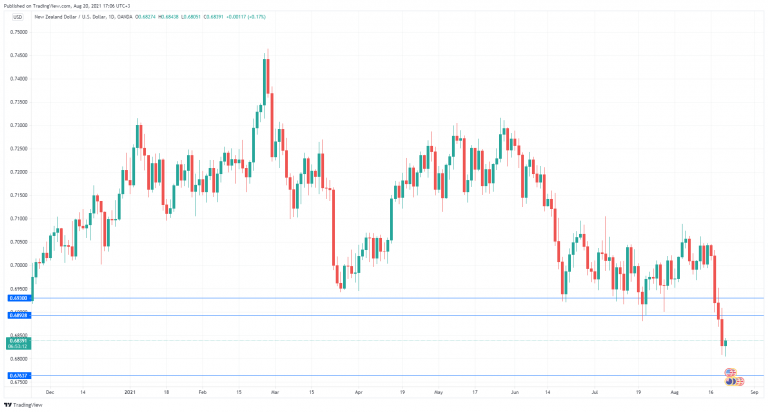
- There is resistance at 0.6985. This is followed closely by resistance at 0.6930
- On the downside, there are support lines at 0.6763 and 0.6646. Both are monthly support lines.
Week Ahead – Fed Taper: Will They or Won’t They? Splits Loom Over Jackson Hole
The upcoming week will kick off with a bang as the flash PMI readings for August will flood the markets on Monday. However, it might go all quiet after that before Fed officials gather at Jackson Hole later in the week for this year’s economic symposium, which is set to be dominated by discussions on how and when to unwind the Fed’s emergency stimulus. Will policymakers finally lay out their tapering plans, potentially lifting the US dollar to fresh yearly highs, or will divisions overshadow the event?
Euro breaches $1.17; can flash PMIs lend support?
Intensifying worries that the global economic recovery has hit another major bump on the road as the Delta spread shows no sign of abating has sent markets into a spin in the past week. Everything from stocks, commodities and risky currencies got hammered from the latest panic selling, with investors fleeing to safe havens. As has been the case during this pandemic whenever nerves are heightened, the US dollar has been the main beneficiary of this flight to safety.
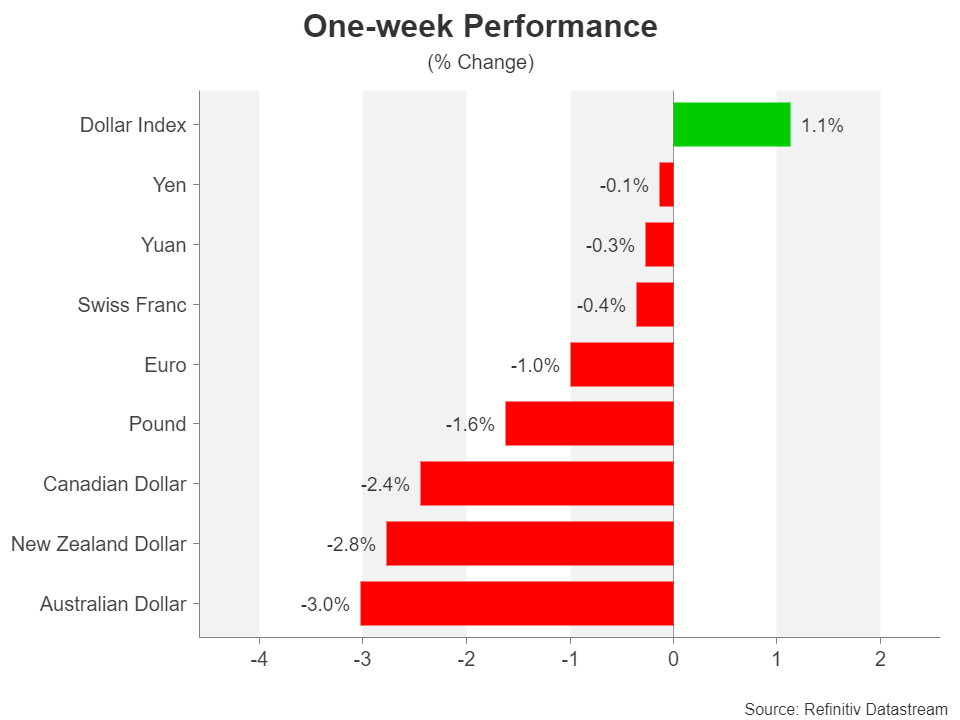
The greenback has crushed everything in its way, including the euro, even though not much has changed as far as the policy outlook for the Eurozone is concerned. The ECB’s dovish tilts in June and July had already put the single currency on a downward slope but the policy shift is mostly priced in now and it was down to the dollar’s relentless charge that the $1.17 support ruptured for the first time since early November.
However, this is mainly of symbolic significance and the euro’s losses will likely continue to stay contained relative to its peers’. That’s because the Eurozone economy is so far weathering the Delta outbreak better than most, helped not only by a high vaccination rate but also by not abandoning all Covid curbs altogether like Britain, which is keeping the latest virus escalation manageable.
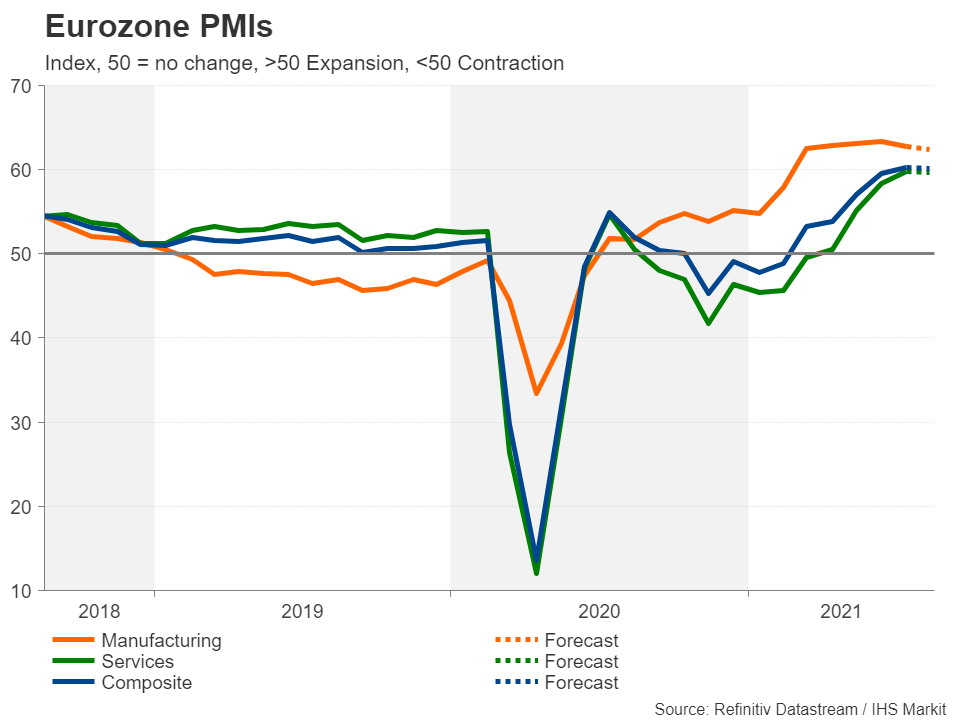
Hence, the flash PMI prints by IHS Markit are expected to moderate only marginally in August, and this would be coming off the 15-year highs for the composite and services PMIs in July. There’s no sign yet that the Delta wave poses a serious threat to the Eurozone recovery so unless the PMIs unexpectedly plunge in August, dollar strength will remain the euro’s biggest downside risk.
The minutes of the ECB’s July policy meeting due on Thursday are not anticipated to generate a huge amount of interest.
Pound caught in Delta storm; PMIs might not offer much relief
Like the euro area, the British economy has also been enjoying strong growth momentum during the summer. Whilst there are some concerns that the UK government is being too lax with virus restrictions and relying on vaccines alone to prevent a surge in hospitalizations, there’s nothing too alarming in the medical data yet to prompt a rethink of this approach. The economy has made a strong comeback since the easing of the Winter lockdown and the Bank of England is preparing to end its bond buying programme at the end of this year.
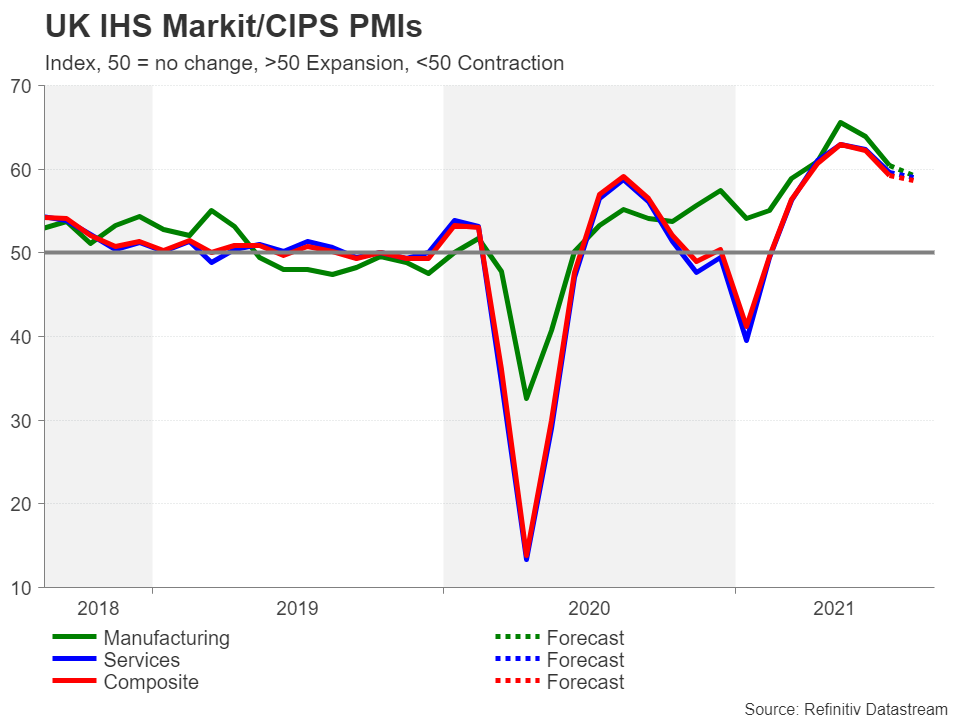
The UK labour market in particular is running hot, with job vacancies at a record high and wage growth reaching close to 9% y/y in June. It’s therefore going to require quite a substantial deterioration in economic conditions to derail the BoE’s taper plan and that probably won’t happen in August because Monday’s flash PMIs will likely point to an ongoing recovery.
So why has the pound taken such a hit from the latest risk-off episode? Although investors are not as worried about the UK outlook as they are about more virus-exposed countries such as Australia and New Zealand, sterling is nevertheless a risky currency to hold during times of turmoil due to Britain’s large current account deficit. Should markets remain jittery in the coming week, cable is likely to extend its slide.
Will Jackson Hole live up to the hype?
Investors have been touting Jackson Hole as the ideal occasion for the Federal Reserve to signal its tapering intentions for some time now. After all, the annual economic symposium organized by the Kansas City Fed has been used many times in the past to flag major policy changes.
However, as the August 26-28 event approaches and even though Fed speakers have been dropping tapering hints left, right and centre lately, there’s a growing sense that markets won’t get all the answers they’re seeking next week. The minutes of the July FOMC minutes indicated that whilst policymakers agreed that tapering should start soon, they were at odds on the exact timing and pace of reducing asset purchases.
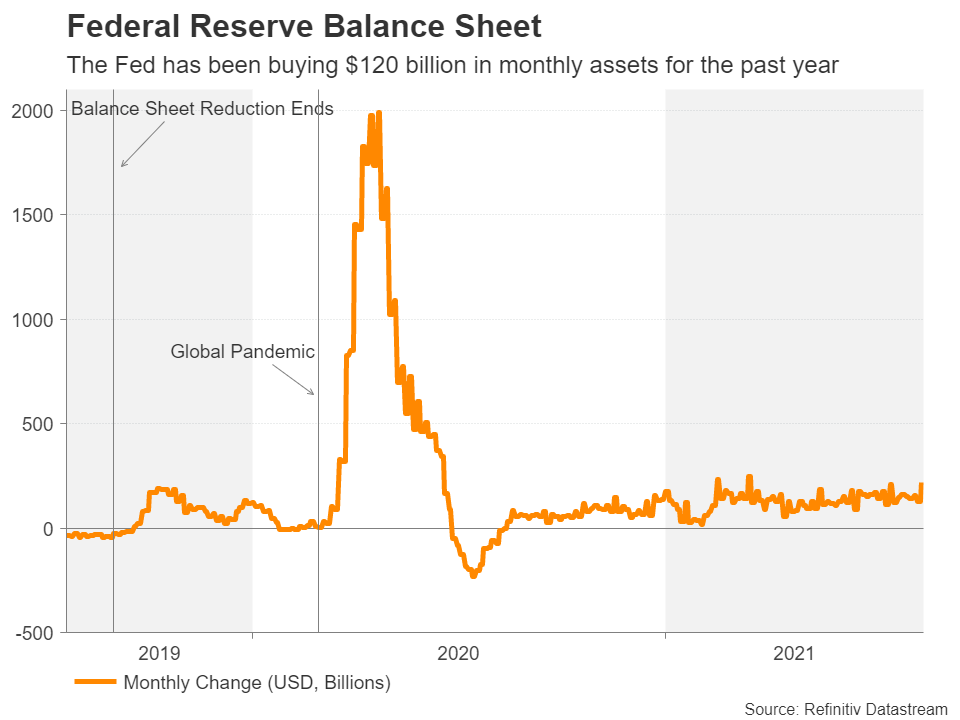
In the grand scheme of things, the timing won’t make a great deal of a difference to the markets. Whether tapering starts next month at the earliest or the beginning of 2022 at the latest, either way, tapering is coming. However, the divisions on how much progress has been made not only towards the Fed’s employment goal but also towards inflation may matter in determining how fast stimulus is withdrawn.
The worsening virus situation around the world makes a quick exit less likely, although delaying a decision for too long could also risk a cliff edge end to stimulus. But in the more immediate term, it is the uncertainty of what the Fed’s taper will look like that could unsettle markets the most. Unless Chair Powell provides some clarity in his keynote address at Jackson Hole, speculation of a growing split will only mount.
Can dollar bulls count on the Fed for a taper boost?
When it comes to the dollar, though, it’s hard to say what the reaction would be if Powell’s remarks leave traders none the wiser. The dollar index has just climbed to a new 2021 peak and there could be further gains in store for the currency if sentiment continues to sour. Markets being left in the dark about the Fed’s QE exit strategy could add to the risk aversion, but would this necessarily bolster the greenback?
The other danger is that Powell does send a strong taper signal but does not accompany this with enough reassurances that the move will be very gradual. Against a backdrop of fresh virus woes, this could spark even more panic.
But there could be some good news from US data that could help ease concerns about an economic slowdown. Personal income and spending numbers out on Friday are expected to show incomes rising by 0.2% and consumption by 0.5% month-on-month in July. The core PCE price index for the same month will be released alongside those data. Forecasts are for the Fed’s favourite inflation metric to edge up to 3.6% year-on-year from 3.5% in the prior month, in potentially another sign that price pressures may be ebbing.
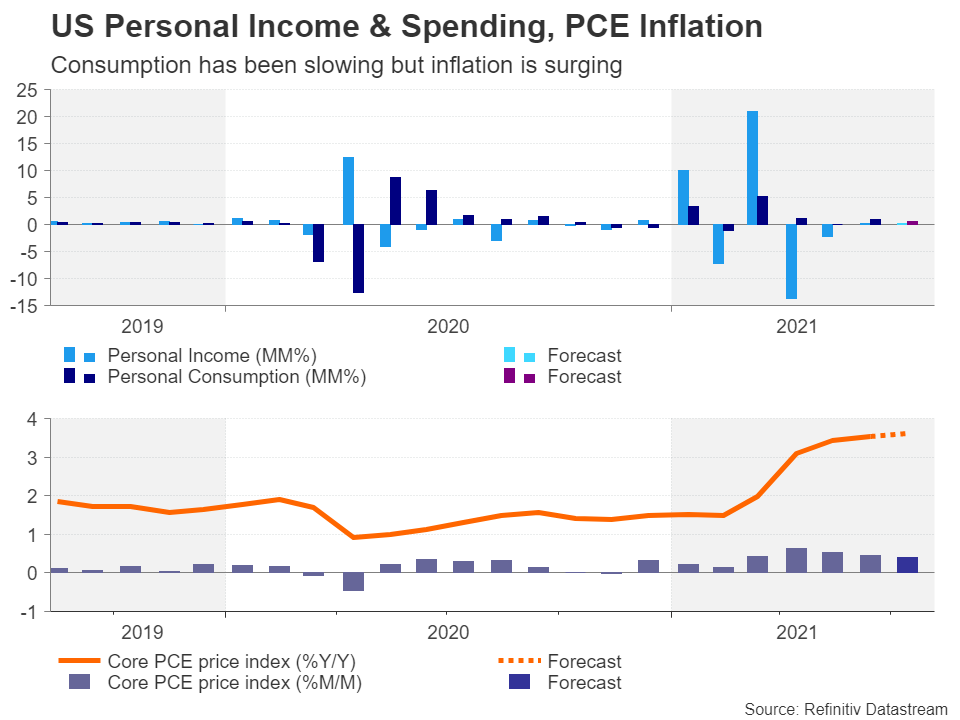
Other numbers to watch are the flash August PMIs and existing home sales on Monday. New home sales will follow on Tuesday, durable goods orders on Wednesday and the second estimate of Q2 GDP growth on Thursday. However, the one that might attract the most attention is the final estimate of the University of Michigan’s consumer sentiment gauge on Friday. A strong upward revision to the index following the shock slump in the preliminary reading could go some way in allaying growth concerns in the United States.
Finally, the heavily battered antipodean currencies will be hoping for some data boost next week. The aussie will be eying flash PMIs on Monday and capital expenditure figures for the second quarter on Thursday. The kiwi, meanwhile, will come under the spotlight on Tuesday from quarterly retail sales numbers.
Forward Guidance: Canadian Business Optimism Clouded by Escalating Input Costs
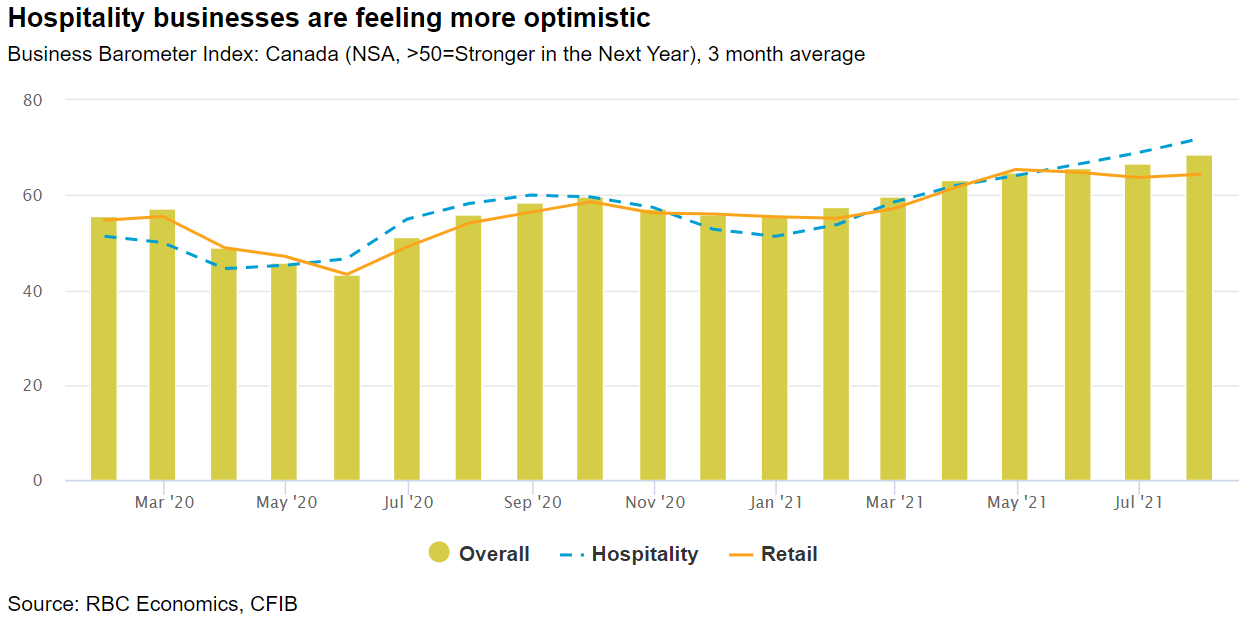
A quieter flow of economic data next week will highlight the ongoing recovery in hard-hit service sectors. Our own tracking of credit card transactions is pointing to an increase in food services sales that exceeds the 4.2% rebound in retail sales in June. And stronger gains likely took place in July as the economy emerged from spring lockdowns. The latest installment of the Canadian Survey on Business Conditions (based on responses collected from July 2 to August 6) should provide more optimism, including for badly-bruised travel and hospitality sectors. Still, even as business revenues pick up, firms will continue to raise concerns about rising input prices, supply chain disruptions, and persistent labour shortages. The Bank of Canada’s Q2 Business Outlook Survey showed that nearly half of firms expect labour shortfalls to intensify in the coming months. If this materializes, many companies may reach their capacity limits a lot sooner.
Notwithstanding recent improvements, many businesses likely remained heavily dependent on government support programs over the summer. Rising case counts have once again prompted some regions to pause reopening plans, but high levels of vaccination are expected to temper the negative health outcomes and prevent a return to widespread lockdowns. The virus remains the biggest current economic threat, but we expect the broader economic recovery to continue.
Week ahead data watch:
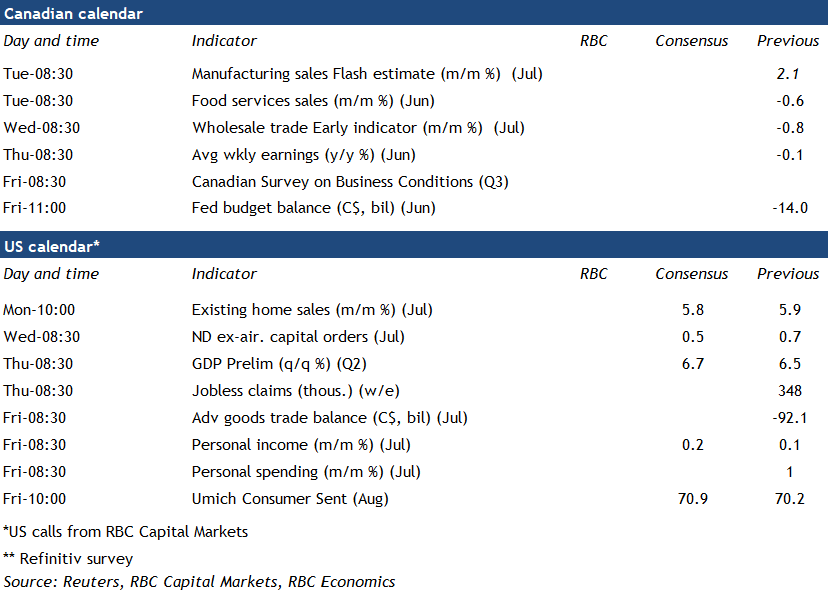
- The flash July Canadian manufacturing sales report is expected to build on the 2.1% rise in June despite ongoing supply chain disruptions. Hours worked in the manufacturing sector rose 3.1% in July.
- Backward-looking SEPH employment data for June will show a strong recovery driven by job growth in the hospitality and retail sectors.
- Weekly average COVID-19 case counts have doubled in the last two weeks and currently sit above 2000/day—up from an average of ~ 500/day in July.
Weekly Focus – Growth Fears Hit Markets
This week growth fears hit financial markets with stock market volatility picking up, bond yields and commodity prices falling and the USD strengthening. This is broadly in line with the playbook for financial markets when the business cycle peaks, that we outlined in Strategy: Peak performance in assets and the end of reflation, 2 July 2021. For financial markets momentum in activity and inflation is what matters the most rather than the level. And momentum is coming down for both economic activity as well as inflation.
On the economic front worsening Chinese data and a sharp drop in US consumer confidence for August have fuelled concerns that global growth will disappoint, and the spread of the Covid delta variant will create new headwinds for the global economy going into the autumn and winter, when temperatures drop. Chinese industrial production and retail sales both disappointed again in July adding to the downside risks for the world's second largest economy, see China Macro Monitor - Intensifying slowdown puts drag on global cycle, 18 August 2021. In the US some areas are already seeing severe pressure on hospitals from the latest Covid-19 wave. US retail sales this week also dropped 1% m/m although the level is still very high.
When it comes to inflation a decline in commodity prices lately is set to push down headline inflation in US and the euro area soon. This week copper prices dropped close to 10% and oil prices declined to the lowest level since in three months. However, freight rates have shot higher again lately after a the third-largest port in the world, the Ningbo-Zhoushan port in China, was partially closed after a person tested positive for Covid-19. For more on inflation trends see Global Inflation Watch - Commodity pressure eases further but freight rates leap again, 19 August 2021.
The minutes from the July FOMC meeting showed that most participants "judged that it could be appropriate to start reducing the pace of asset purchases this year". This is in line with our expectations that the Fed will announce a plan for tapering in September and begin gradual tapering in December. The Fed has met its' inflation goal and expects to have achieved "substantial progress" towards its' employment goal soon. A tapering announcement could challenge risk sentiment further if global economic indicators soften more than expected during the fall. This is a risk that needs monitoring in coming months.
Over the coming week we get more information on the state of the global economy with US and euro flash PMI's as well as the German ifo business survey. We look for a small decline in all the surveys. The Fed Jackson Hole conference will also be watched closely for any signals regarding tapering of asset purchases. The US also releases durable goods orders, the best investment indicator for the country. Orders have been on a steep rising path for over a year now but with tentative signs of losing momentum lately. US personal spending will add more information on goods vs service consumption. The question is if service consumption is dampened by the recent rise in infections as have been indicated in some high-frequency data. Goods consumption will likely decline in line with what we saw in the retail sales number this week. US core PCE inflation will also be in focus to see if the monthly momentum comes down as was the case in the CPI release.
Sunset Market Commentary
Markets
It’s modestly better today, but this week in general hasn’t been particularly favorable for riskier assets, to say the least. The Fed (minutes) gave the clearest sign yet the tapering process could start later this year, just as the spread of the coronavirus (Delta) and disappointing Chinese data add to mounting growth worries. Let’s take stock. The EuroStoxx50 swapped a 10-day winning streak for 5 days of consecutive losses, shedding 2% over the week. US stocks performed a bit better thanks to a strong start of the week with new record highs for some indices. They are nevertheless on track to finish 1.5% lower compared to last Friday’s close. Turning to commodities, oil looks at a weekly loss of 7.5%+ with Brent set to close below $66/b for the first time since May. Nickel and copper drop some 6%-ish, for iron we’re talking a stunning 20%. Corporate bond yields/spreads have bottomed back in July already but the move higher accelerated this week, especially in the HY part of the market. Peripheral spreads on the sovereign bond market are more or less stable today after having risen earlier. At the other side of the spectrum, core bonds have enjoyed safe haven flows that brought the German 10y yield, -0.49% today (unch.), briefly to the -0.50% support level. US bond yields attached more weight to the risk-off than the Fed meeting minutes suggesting the taper process could start later this year. For the 10y yield (unch. At 1.23%), 1.20% was (and still is) the technical reference to keep an eye at. For the dollar, it didn’t matter: either markets focused on the upcoming tapering or they traded the risk sentiment theme. EUR/USD breached the 1.17 support yesterday. Follow-through price action today remains limited however, giving the pair a bit of a break going into the weekend. Technically, it doesn’t look too good for EUR/USD, especially with the trade-weighted dollar (DXY) having capped the 93.44 resistance and extending gains to 93.68 today. Next week’s eurozone PMIs probably have to be surprisingly strong to bring EUR/USD some relief. The upside in our view remains fairly limited in the run-up to Jackson Hole next weekend though. The euro does make a fist against the British currency. UK data this week didn’t convince and this morning’s miserable retail sales served as an anticlimax. It raises questions about the Bank of England’s hawkish turn earlier this month. EUR/GBP advances further north to 0.8574.
News Headlines
Belgian consumer confidence dipped from 8 to 5 in August after camping two months at the highest level since January 2001. Details showed that prospects for the economic situation in Belgium (for the next 12 months) deteriorated sharply from 19 to 5. Fear of a rise in unemployment over that same time horizon are still receding (11 to 8). From a personal point of view, households appear to be more pessimistic about their future financial situation (2 to 0). They have also revised downwards their savings intentions from the previous month (23 to 21). The NBB notes that the household confidence indicator has deteriorated to roughly the same extent in both Flanders and Wallonia, despite the severe flooding that hit parts of Wallonia. Confidence held more or less steady in Brussels.
Mainland Norwegian GDP increased by 1.4% Q/Q in Q2, slightly shy of 1.6% consensus. In each of the quarter's months there was growth, and in June 2021, GDP for mainland Norway was back at about the same level as February 2020, before the pandemic fully reached Norway. Higher vaccination uptake, lower spread of infection and loosening of infection control measures all supported the growth momentum with especially the services industry catching up (1.7% Q/Q). A demand-side break-up shows that the Norwegian consumer was in the driver’s seat with consumption increasing by 3.2% Q/Q. Investments (3.3% Q/Q) and government expenses (1.9% Q/Q) contributed positively as well. Net exports (excl. oil) pulled GDP lower with imports rising faster than exports. The Norwegian krone didn’t respond to the data, but remains in the defensive as oil prices dive deeper (Brent $65/b). EUR/NOK surges past 10.60 and closes in on the YTD high of 10.70.
CAD Falls Despite Solid Retail Sales
The Canadian dollar is in negative territory for a fifth straight day. Currently, USD/CAD is trading at 1.2902, up 0.57% on the day.
Canada Retail Sales within expectations
June Retail Sales rebounded nicely, with gains of 4.2% for Headline Retail Sales (4.4% exp.) and 4.7% for Core Retail Sales (4.6% exp.). In May, the headline read was -2.1% and core retail sales at -2.0%. The strong gains are attributable to the easing of Covid restrictions.
The US dollar has been on a tear this week, and the Canadian dollar has been in freefall. USD/CAD has jumped 3.1%, its best weekly performance since March. The Canadian dollar has been pummelled by a double whammy of weaker risk appetite and the hawkish FOMC minutes.
Investors have been snapping up the safe-haven US dollar, as risk appetite has eroded due to surging infections rates of the delta variant of Covid. This has led to renewed lockdowns and these measures will crimp economic growth and hamper the global recovery. This has led to investors snapping up the safe-haven US dollar, which has enjoyed broad gains this week. The US dollar has done particularly well against minor currencies such as the Canadian, Australian and New Zealand dollars, gaining more than 3% against each one this week.
The dollar breezed past the FOMC minutes, as the markets judged the Fed minutes to be hawkish, despite the lack of a timeframe for a tapering. With most members on board for a taper on either side of December, it’s clear that a taper is now a question of timing. The minutes stressed that there was no mechanical link between tapering and rate hikes. This message did not faze the markets, as the Fed has said in the past that it does not plan to raise rates before tapering is completed. Despite the Fed’s stance, a taper is likely to fuel speculation about a rate hike, so the outlook for the US dollar remains bright.
USD/CAD Technical
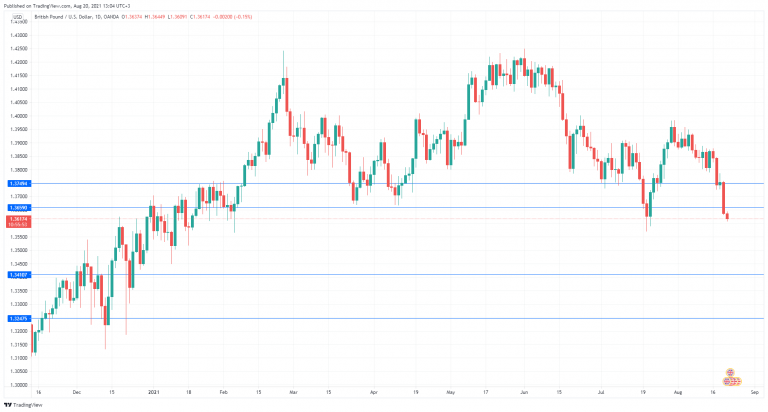
- USD/CAD continues to rise and break above resistance lines. The pair faces resistance at 1.3030, followed by 1.3252. Both are monthly resistance levels
- The next support levels are at 1.2747 and 1.2630