





Eurozone PPI came in at 0.3% mom, -2.4% yoy in September, matched expectations. For the month, Industrial producer prices increased by 0.8% mom in the energy sector and by 0.1% mom for intermediate goods, while prices remained stable for capital goods, durable consumer goods and non-durable consumer goods. Prices in total industry excluding energy remained stable.
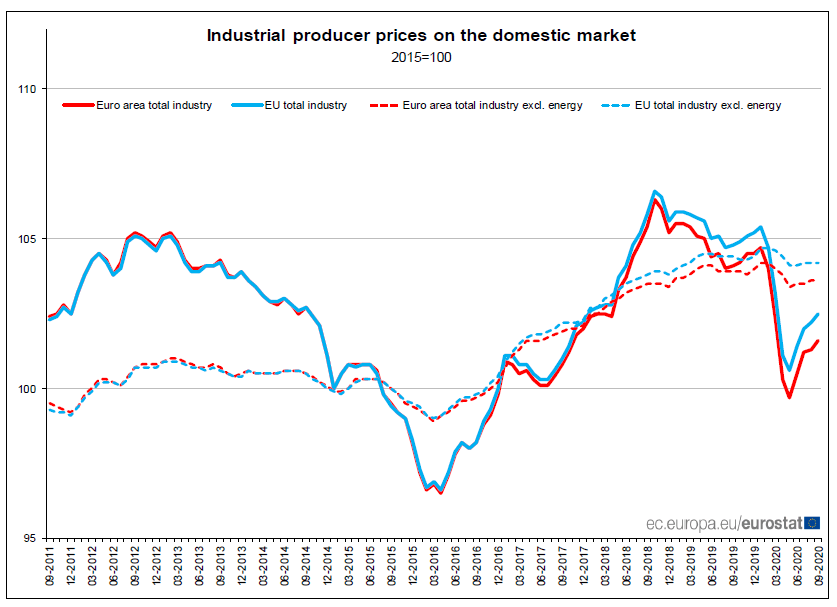
EU PPI was at 0.3% mom, -2.2% yoy. The highest increases in industrial producer prices were recorded in Ireland (+4.3% mom), Hungary (+1.2% mom) and the Netherlands (+0.9% mom), while the largest decreases were observed in Cyprus (-1.3% mom), Estonia and Finland (both -0.8% mom), Greece and Lithuania (both -0.3% mom).

US ADP employment grew only 365k, well below expectation
US ADP private employment grew only 365k in September, well below expectation of 690K. By company size, small businesses added 114k jobs, medium businesses added 135k, large businesses added 116k. By sector, goods-producing industries added 17k, service-providing industries added 348k.
“The labor market continues to add jobs, yet at a slower pace,” said Ahu Yildirmaz, vice president and co-head of the ADP Research Institute. “Although the pace is slower, we’ve seen employment gains across all industries and sizes.”
Full release here.