


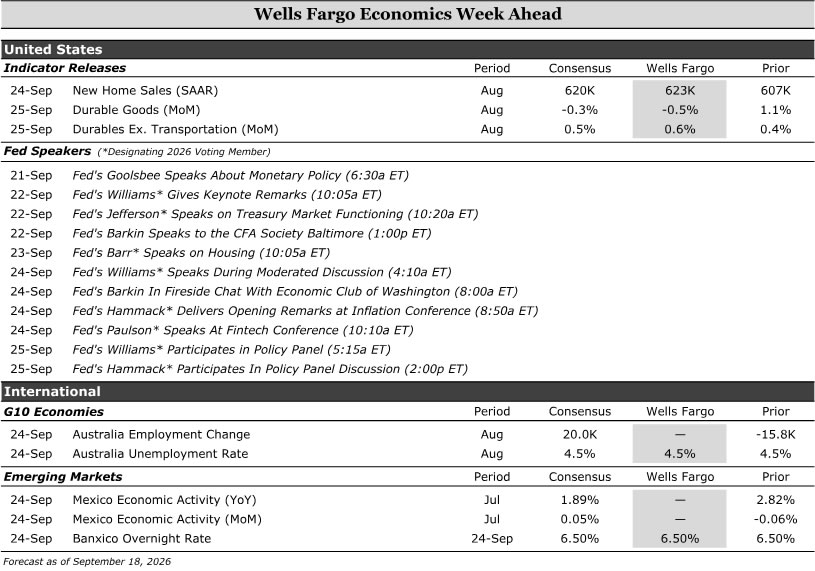
Next week is light on the domestic data front, with focus on Thursday’s new home sales report. We expect sales to partially recover in August, rising 2.6% to a 623K pace after a sharp decline in July. Higher mortgage rates continue to weigh on affordability and demand, though builder incentives remained in place and conditions did not worsen materially during the month.
Abroad, consensus expects Australia’s August employment report to show a rebound in hiring after July’s decline, which would reinforce our call for the RBA to raise the Cash Rate by 25 bps in September. In Mexico, we expect Banxico to leave the policy rate unchanged at 6.50% for a third straight meeting this year. Our focus will be on the accompanying statement and whether policymakers signal a shift in tone following the Fed’s recent rate hike.
United States:
- New Home Sales (Thursday)
Advanced Economies:
- Australia Employment (Thursday)
Emerging Markets:
- Banxico Overnight Rate (Thursday)
Source: Bloomberg Finance L.P. and Wells Fargo Economics
U.S. Week Ahead
New Home Sales • Thursday
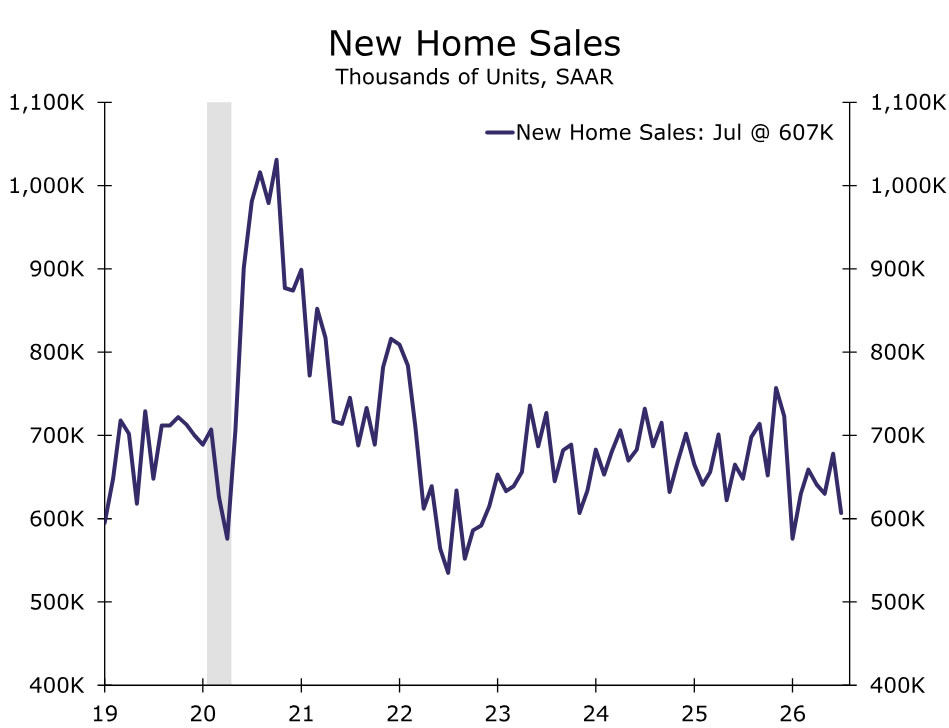
New home sales have maintained a stronger trend than resales on account of builder incentives like price cuts and mortgage rate buy-downs. The outlook improved even further late last year when sales rose 6.4% year-over-year in Q4. But the backdrop was falling mortgage rates. Rates have since moved sharply higher, diminishing the effectiveness of builder incentives and weighing on buyer demand.
New home sales tumbled 10.5% in July coinciding with a 20 bps rise in mortgage rates. Although affordability conditions did not improve in August, they did not materially worsen either. The 30-year average rate leveled off at around 6.7%. According to the NAHB, buyer traffic was steady and the share of builders using incentives was unchanged at 63%. Taken together, this data points to a partial rebound in August, and we forecast a 2.6% uptick to 623K.
Source: U.S. Department of Commerce and Wells Fargo Economics
Advanced Economies Week Ahead
Australia Employment • Thursday
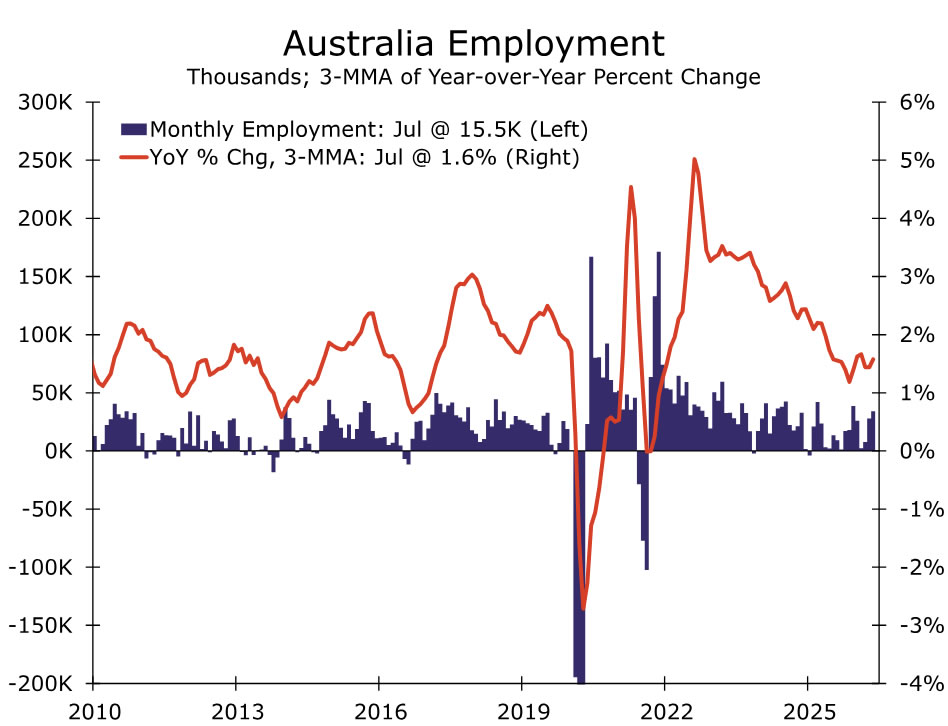
Australia’s August labor report will be the last major data release before the RBA’s September meeting. Consensus expects employment to rebound by 20K after a 15.8K decline in July, while the unemployment rate is expected to hold at 4.5%. The July decline followed solid job gains in May and June and mainly reflected a drop in part-time employment, which more than offset continued gains in full-time positions. Monthly employment data remain volatile, though August PMIs and the NAB business survey point to continued hiring.
A stronger-than-expected report would support our call for another hike, while a second weak print could keep the Reserve Bank of Australia (RBA) cautious. Overall, the labor market appears to be rebalancing rather than overheating, which supports our view that only one more hike is needed. With inflation elevated and growth steady, we expect the RBA to raise the Cash Rate by 25 bps to a terminal rate of 4.60% in September.
Source: Bloomberg Finance L.P. and Wells Fargo Economics
EM Week Ahead
Banxico Monetary Policy Meeting • Thursday
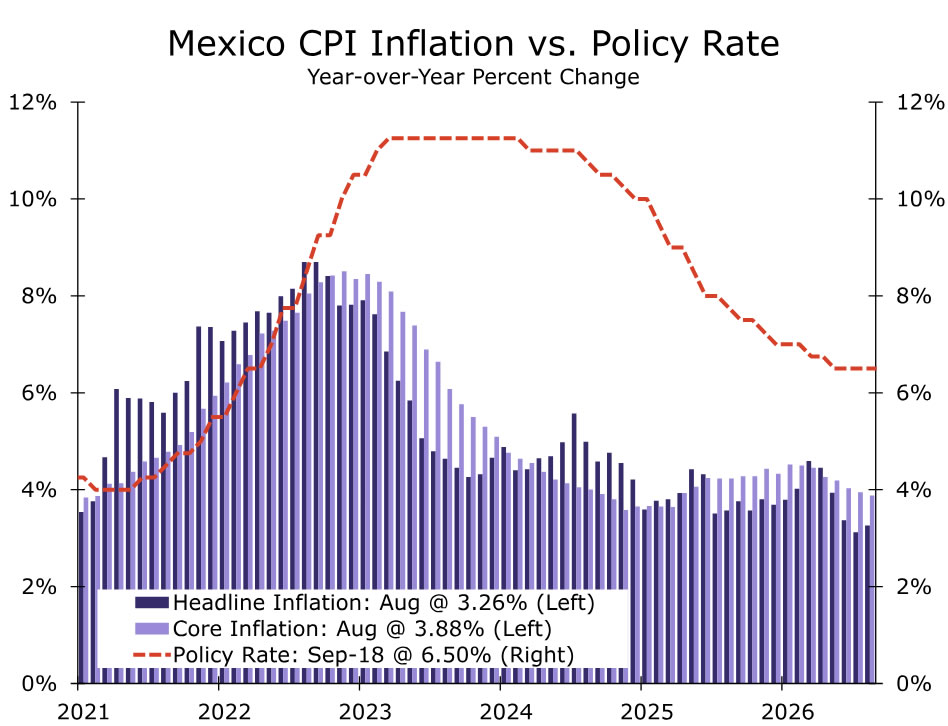
We expect Banxico to leave the policy rate unchanged at 6.50% next week. After unanimously holding rates steady at the previous meeting and reiterating that the current policy stance remains appropriate, policymakers are unlikely to surprise on the decision itself. Instead, the focus will be on the statement and whether officials strike a more hawkish tone following the Fed’s recent rate hike.
Inflation remains consistent with a cautious stance. Headline CPI stood at 3.26% year-over-year in August, while core inflation eased to 3.88%. Still, services inflation remained elevated at 4.33%, and longer-term inflation expectations remain above target. Banxico also pushed back the expected return of headline inflation to its 3% target from Q2-2027 to Q4-2027, which reinforces the view that underlying price pressures will take longer to fully dissipate. Activity has also been somewhat more resilient. The economy rebounded strongly in Q2, while industrial production rose further in July, supported by construction and manufacturing. ANTAD same-store sales posted a second consecutive nominal increase in August, though the modest gain provides limited evidence of stronger real consumption. Overall, the recent data point to some improvement at the start of Q3, but downside risks to the growth outlook remain.
Persistent underlying inflation, somewhat more resilient activity and a narrower U.S.-Mexico interest rate differential following the Fed’s latest hike should keep policymakers cautious. We remain comfortable with our call for Banxico to hold rates through 2026 and 2027, though its communication could turn somewhat more hawkish.
Source: Bloomberg Finance L.P. and Wells Fargo Economics





