Sample Category Title
Summary 12/23 – 12/27
Monday, Dec 23, 2024
| GMT | Ccy | Events | Consensus | Previous |
|---|---|---|---|---|
| 07:00 | EUR | Germany Import Price M/M Nov | 0.30% | 0.60% |
| 07:00 | GBP | GDP Q/Q Q3 | 0.10% | 0.10% |
| 07:00 | GBP | Current Account (GBP) Q3 | -24.1B | -28.4B |
| 13:30 | CAD | GDP M/M Oct | 0.20% | 0.10% |
| 13:30 | CAD | Industrial Product Price M/M Nov | 0.30% | 1.20% |
| 13:30 | CAD | Raw Material Price Index Nov | 0.60% | 3.80% |
| 15:00 | USD | Consumer Confidence Dec | 113.2 | 111.7 |
| 18:30 | CAD | BoC Summary of Deliberations | ||
| 23:50 | JPY | BoJ Minutes |
| GMT | Ccy | Events | |
|---|---|---|---|
| 07:00 | EUR | Germany Import Price M/M Nov | |
| Forecast: 0.30% | Previous: 0.60% | ||
| 07:00 | GBP | GDP Q/Q Q3 | |
| Forecast: 0.10% | Previous: 0.10% | ||
| 07:00 | GBP | Current Account (GBP) Q3 | |
| Forecast: -24.1B | Previous: -28.4B | ||
| 13:30 | CAD | GDP M/M Oct | |
| Forecast: 0.20% | Previous: 0.10% | ||
| 13:30 | CAD | Industrial Product Price M/M Nov | |
| Forecast: 0.30% | Previous: 1.20% | ||
| 13:30 | CAD | Raw Material Price Index Nov | |
| Forecast: 0.60% | Previous: 3.80% | ||
| 15:00 | USD | Consumer Confidence Dec | |
| Forecast: 113.2 | Previous: 111.7 | ||
| 18:30 | CAD | BoC Summary of Deliberations | |
| Forecast: | Previous: | ||
| 23:50 | JPY | BoJ Minutes | |
| Forecast: | Previous: | ||
Tuesday, Dec 24, 2024
| GMT | Ccy | Events | Consensus | Previous |
|---|---|---|---|---|
| 00:30 | AUD | RBA Minutes | ||
| 13:30 | USD | Durable Goods Orders Nov | -0.30% | 0.30% |
| 13:30 | USD | Durable Goods Orders ex Transport Nov | 0.30% | 0.20% |
| 15:00 | USD | New Home Sales M/M Nov | 666K | 610K |
| 23:50 | JPY | Corporate Service Price Index Y/Y Nov | -0.20% | -2.90% |
| GMT | Ccy | Events | |
|---|---|---|---|
| 00:30 | AUD | RBA Minutes | |
| Forecast: | Previous: | ||
| 13:30 | USD | Durable Goods Orders Nov | |
| Forecast: -0.30% | Previous: 0.30% | ||
| 13:30 | USD | Durable Goods Orders ex Transport Nov | |
| Forecast: 0.30% | Previous: 0.20% | ||
| 15:00 | USD | New Home Sales M/M Nov | |
| Forecast: 666K | Previous: 610K | ||
| 23:50 | JPY | Corporate Service Price Index Y/Y Nov | |
| Forecast: -0.20% | Previous: -2.90% | ||
Wednesday, Dec 25 2024
| GMT | Ccy | Events | Consensus | Previous |
|---|---|---|---|---|
| Christmas Day |
| GMT | Ccy | Events | |
|---|---|---|---|
| Christmas Day | |||
| Forecast: | Previous: | ||
Thursday, Dec 26, 2024
| GMT | Ccy | Events | Consensus | Previous |
|---|---|---|---|---|
| 05:00 | JPY | Housing Starts Y/Y Nov | -0.20% | -2.90% |
| 13:30 | USD | Initial Jobless Claims (Dec 20) | 218K | 220K |
| 16:00 | USD | Crude Oil Inventories | -1.6M | -0.9M |
| 23:30 | JPY | Tokyo CPI Y/Y Dec | 2.60% | |
| 23:30 | JPY | Tokyo CPI Core Y/Y Dec | 2.50% | 2.20% |
| 23:30 | JPY | Tokyo CPI Core-Core Y/Y Dec | 2.20% | |
| 23:30 | JPY | Unemployment Rate Nov | 2.50% | 2.50% |
| 23:50 | JPY | BoJ Summary of Opinions | ||
| 23:50 | JPY | Industrial Production M/M Nov P | -3.40% | 2.80% |
| 23:50 | JPY | Retail Trade Y/Y Nov | 1.50% | 1.60% |
| GMT | Ccy | Events | |
|---|---|---|---|
| 05:00 | JPY | Housing Starts Y/Y Nov | |
| Forecast: -0.20% | Previous: -2.90% | ||
| 13:30 | USD | Initial Jobless Claims (Dec 20) | |
| Forecast: 218K | Previous: 220K | ||
| 16:00 | USD | Crude Oil Inventories | |
| Forecast: -1.6M | Previous: -0.9M | ||
| 23:30 | JPY | Tokyo CPI Y/Y Dec | |
| Forecast: | Previous: 2.60% | ||
| 23:30 | JPY | Tokyo CPI Core Y/Y Dec | |
| Forecast: 2.50% | Previous: 2.20% | ||
| 23:30 | JPY | Tokyo CPI Core-Core Y/Y Dec | |
| Forecast: | Previous: 2.20% | ||
| 23:30 | JPY | Unemployment Rate Nov | |
| Forecast: 2.50% | Previous: 2.50% | ||
| 23:50 | JPY | BoJ Summary of Opinions | |
| Forecast: | Previous: | ||
| 23:50 | JPY | Industrial Production M/M Nov P | |
| Forecast: -3.40% | Previous: 2.80% | ||
| 23:50 | JPY | Retail Trade Y/Y Nov | |
| Forecast: 1.50% | Previous: 1.60% | ||
Friday, Dec 27, 2024
| GMT | Ccy | Events | Consensus | Previous |
|---|---|---|---|---|
| 13:30 | USD | Goods Trade Balance Nov P | -100.9B | -98.3B |
| 13:30 | USD | Wholesale Inventories (USD) Nov P | 0.30% | 0.20% |
| 15:30 | USD | Natural Gas Storage | -125B |
| GMT | Ccy | Events | |
|---|---|---|---|
| 13:30 | USD | Goods Trade Balance Nov P | |
| Forecast: -100.9B | Previous: -98.3B | ||
| 13:30 | USD | Wholesale Inventories (USD) Nov P | |
| Forecast: 0.30% | Previous: 0.20% | ||
| 15:30 | USD | Natural Gas Storage | |
| Forecast: | Previous: -125B | ||
Markets Weekly Outlook – S&P 500 in Focus as Markets Brace for Holiday Lull
- The Federal Reserve’s policy change and economic projections have significantly impacted markets, leading to a rise in US yields.
- The US PCE data released on Friday rose less than expected, alleviating some selling pressure on US equities.
- The Bank of Japan held rates steady, defying expectations of a rate cut, while the risk of a U.S. government shutdown increased.
- The upcoming week is expected to have thin liquidity and range-bound trade due to the Christmas holiday and a bank holiday in the UK and other countries.
Week in Review: Hawkish Fed Sends Markets into a Frenzy
A week that finally confirmed the long anticipated ‘pivot’ by the Federal Reserve from a policy perspective. I do not like using the word pivot until the Fed actually confirms that rate cuts are over, however, this week’s announcement and update to the economic projections have had such an impact.
Market participants are now pricing in around 40 bps of cuts through December 2025 as a rise in US Yields has also been mooted.
Source: LSEG (click to enlarge)
The impact was widespread across markets with US equities experiencing their worst day since August. The VIX (volatility index) experienced its second largest daily jump in history as markets attempted to digest the Fed outlook.
The losses extended to global equities on Thursday and early Friday before the US PCE data provided some respite. Although the PCE (US personal consumption expenditure) remains strong it did rise less than expected which helped alleviate some selling pressure on US equities.
Similar moves were experienced on the FX front with the US Dollar strengthening across the board as the US Dollar Index breached a crucial resistance area. EUR/USD was back in the 1.0300 area while Gold prices plummeted, surrendering the $2600/oz handle before bouncing back above on Friday as well.
Oil prices continue to feel the weight of growing demand concerns. Given the change in rate cut expectations for 2025, markets are even more concerned about the impact this will have on demand moving forward.
In Asia, the Bank of Japan (BoJ) held rates steady and defied growing expectations of a rate cut. Improving data in Japan did not do enough to convince the BoJ yet, but a rate hike in early 2025 looks probable.
As the Japanese Yen continues to weaken this might also play a role in when the BoJ may decide to hike rates. The Central Bank has said that the decision will not be based on exchange rate, but if anything has become clear, it is that what the BoJ says and does are usually not the same.
The risk of a U.S. government shutdown went up this week after President-elect Donald Trump told Republican lawmakers not to back a temporary funding bill that was expected to pass in Congress. With no backup plan in place, the government is once again at risk of shutting down. While it might not hurt the economy as much as the 2018 shutdown, it’s still a tough situation for public workers, especially during the holiday season.
We are heading into a relatively quiet week for markets with Christmas on Wednesday. There is some high impact data next week but I expect thin liquidity and a lot of rangebound trade.
The Week Ahead: Thin Liquidity Expected with Japanese Inflation and UK GDP Data
Asia Pacific Markets
The week ahead in the Asia Pacific region still brings some high impact data from Japan.
Tokyo inflation data is due out on December 26th and this will come just one day after a speech by BoJ Governor Ueda. Markets might look toward the Ueda speech for more clues on when the BoJ might finally make its policy move.
An uptick in inflation could also be seen as a positive for a potential rate hike early in 2025.
Europe + UK + US
In developed markets, it is a quiet week as well with the biggest data release being UK GDP Q3 data due out on Monday. The UK has a bank holiday on December 26 along with a host of other countries which makes the week a short one as well.
The Turkish Central Bank will have its rate cut meeting next week. The Central Bank of Turkey hinted that it might start cutting interest rates soon, with a possible move in December. The bank explained that any rate cuts will depend on both current and expected inflation levels. This means they will carefully consider inflation data before and after making any changes.
As things stand, a rate cut does appear likely with my best estimate in the range between 200-250 bps of cuts.
Chart of the Week
This week’s focus is on US Equities and the S&P 500 in particular following its worst day since August.
Despite the selloff this week, there remains significant optimism for the US Equity market and thus the S&P 500. The S&P has just enjoyed back to back years of tremendous growth and yet the historical data supports further gains.
The S&P 500 has gained an average of 12.3% following the eight instances of back-to-back 20% annual gains since 1950, according to Ryan Detrick, chief market strategist at Carson Group, compared to a 9.3% overall average increase over that time. The index increased six of the eight times.
The biggest concern is that weighting of the index is providing a skewed view of actual performance given the Magnificent 7 accounts for more than 30% of the index. Until Friday, the S&P had 13 straight days with a greater number of S&P 500 components closing lower than those closing higher, the longest streak since 1978. This is a concern in my humble opinion.
Source: LSEG (click to enlarge)
The S&P 500 looked in danger of a deeper correction early on Friday having breached the weekly low. The index touched a daily low of 5789 and came within a whisker of the 100-day MA.
The rally late on Friday has changed the outlook given the size of the rally with the index up around 1.5% at the time of writing.
The PCE print may have had a hand in the rise while there are also options worth $6.6 TRILLION in notional value expiring today which could be having an impact as well.
Looking ahead and a daily hammer candle close as things stand will alter the outlook and likely embolden bulls once more. On the daily timeframe this could be seen as a pullback following the break of bullish structure on Wednesday.
However, if you drop down to a four-hour timeframe (H4), structure has changed to bullish once more with the previous lower high being broken by the current H4 candlestick.
However, caution may still be the smart play if the index approaches the 6000 and 6030 handles respectively. A clean break and H4 candle close above the 6060 handle could bring the 6170 handle back into focus.
S&P 500 Daily Chart – December 13, 2024
Source: TradingView.Com (click to enlarge)
Key Levels to Consider:
Support
- 5910
- 5871
- 5828
Resistance
- 6000
- 6030
- 6093
The Weekly Bottom Line: Fed Signals a More Cautionary Stance on Rate Cuts Next Year
Canadian Highlights
- The Fall Economic Statement (FES) was delivered amid a chaotic week for the federal government. Larger deficits and modest stimulus were features, although the FES is unlikely to change the Bank of Canada’s thinking on policy.
- Data on the real economy was mixed, with gains in home sales and starts in November, but flat retail volumes in October and (potentially) November.
- Core inflation was sticky in November, strengthening the case for a patient approach to rate cuts next year.
U.S. Highlights
- The Federal Reserve cut its policy rate by 25 basis points to 4.25-4.5%, as expected. But, updated forecasts showed that FOMC members now expect inflation to be a bit hotter next year, and as a result expect to make only 50 basis points in cuts next year, down from 100 bps in September.
- Economic growth was revised upwards in the third quarter. Real GDP rose 3.1%, up from 2.8% previously.
- There was also good news on the Fed’s preferred inflation gauge. The Core PCE Deflator held steady at 2.8% in year-on-year terms in November, but cooled noticeably on a month-to-month basis.
Canada – Capping the Year Off with a Bang
What a year this week was! The show stealer was Minister Freeland’s surprise resignation the day she was set to deliver the Fall Economic Statement (FES). What’s more, the Canadian dollar fell below the psychological 70 U.S. cents mark (as of writing), weighed down by the prospect of a slower pace of U.S. rate cuts.
Amid the federal government chaos, the FES was tabled (see here). As expected, the Liberals blew through one of their self-imposed fiscal guideposts (FY 2023/24 deficit was $60 billion, a 50% miss relative to the guidepost), but could still hit the other two (declining net debt-to-GDP and a deficit-to-GDP ratio below 1%). Even with one of these guideposts missed, the reality is that Canada’s fiscal position is strong relative to its international peers and the federal government maintains its a AAA rating on its debt.
About $20 billion in net new measures were announced in the update, including $18.4 billion to extend the accelerated investment incentive and immediate expensing measures (under the capital cost allowance rules) that were due to be phased out. These measures have lowered the marginal effective tax rate on investments by 3.1%, on average. The government will also spend $1.3 billion on border security to ease President-elect Trump’s concerns. The GST holiday is slated to cost $1.6 billion, and we envision it offering a marginal lift to economic growth in early 2025, but not enough to significantly move the dial. For the Bank of Canada, there was probably not much in the FES to significantly alter their thinking on monetary policy. However, Canada’s fiscal situation is worse off than what was expected in the spring (Chart 1), offering less space to offset negative economic developments.
On the data front, home sales posted a firm gain in November, and benchmark home prices jumped 0.6% on the month. That’s likely to catch the Bank of Canada’s attention given the upside potential for shelter cost inflation. Homebuilding was also solid last month, with starts climbing 8%. However, they continue to retrench in Ontario, which is the market that can least afford a slowdown given affordability challenges. On the softer side, retail sales volumes were flat in October (and could be again in November), although this followed hefty monthly gains in the prior three months.
November’s inflation report was the marquee release of the week. Overall inflation dipped to 1.9% in November. However, the Bank of Canada’s core inflation measures stalled at 2.7%. Also concerning was a back-up in shorter-term metrics. The 3-month annualized change in core inflation pushed above 3%, and the less volatile 6-month trend points to further upward pressure in 12-month core inflation ahead (Chart 2). These trends are certain to unsettle policymakers and support the Bank of Canada’s position that it will be more patient on future interest rate cuts. We think the Bank will proceed more slowly in 2025, with one 25 bps cut per quarter (see our updated Quarterly Economic Forecast). However, the U.S. tariff threat makes the outlook for the economy, and monetary policy, highly uncertain.
U.S. – Fed Signals a More Cautionary Stance on Rate Cuts Next Year
The Federal Reserve delivered some sour candy to cap off 2024, cutting its policy rate by 25 basis points, but signaling a more moderate pace of cuts next year. This hawkish tilt sent Treasury yields higher, with the 10-year rising from just under 4.4% to briefly over 4.6%. Equity markets took the news hard, with the S&P 500 down roughly 3.5% from pre-meeting levels at time of writing. Part of the weak equity market performance may also have to do with a looming government shutdown. Washington has only a few hours to pass a funding bill into law. Failure to do so will lead to a partial government shutdown. Essential services would continue, but most federal workers wouldn’t receive a paycheck. In addition, some workers would be furloughed until Congress passes new funding. The Bipartisan Policy Center estimates that some 875 thousand federal workers would be furloughed.
The Fed’s quarter point interest rate cut was as expected, but the accompanying Summary of Economic Projections (SEP) raised a few eyebrows. While the median forecasts for economic growth and the unemployment rate were little changed, the outlook for inflation and the policy rate were raised noticeably (Chart 1). Focusing on the year ahead, the median projection now has the Fed Funds Rate ending next year 50 basis points higher than expected in September. This is in tune with a firmer outlook for core inflation. Asked about the more cautious stance on rate cuts, Fed Chair Powell listed several reasons. These included the economy growing at a better pace and inflation coming in a bit hotter than expected recently. Powell also highlighted an elevated uncertainty around the inflation projections – a theme that was visible in the SEP document, with uncertainty and upside risks to core PCE inflation both up noticeably since September. Pressed on how much of the difference could be explained by the evolving data versus potential policy changes from the new Trump administration, the Fed Chair acknowledged that some policymakers did take preliminary steps to incorporate “highly conditional estimates of economic effects of policies into their forecast at this meeting”.
This week’s economic data buttressed several of Powell’s comments. The third estimate of Q3 GDP indicated that the economy grew at an improved pace of 3.1% annualized, up from 2.8% previously. At the same time, the November personal income and spending report indicated that consumer spending should end the year on solid footing. Consumer spending is on track for a solid 3% pace in the fourth quarter of 2024. That is only a small downshift from 3.5% pace in the third quarter. The November report also carried some better news on inflation, with the Fed’s preferred inflation gauge – core PCE – cooling noticeably in November, up a modest 0.1% month-over-month. While the annual pace remained at 2.8%, this latest cooldown helped reverse near-term trends lower (Chart 2).
Overall, with the economy remaining on decent footing and inflation seemingly having resumed its downward path, there is room for further policy normalization next year. But, the potential for major policy changes from the new U.S. administration remains a wildcard.
Weekly Economic & Financial Commentary: That’s a Wrap
Summary
United States: That's a Wrap
- The outlook for 2025 is riddled with uncertainty, yet data released this week demonstrate a U.S. economy that retains momentum. Ascertaining what level of policy restraint achieves the careful balance of keeping inflation in check and easing stress on interest-rate sensitive sectors will dominate the monetary policy discussion come 2025.
- Next week: ISM Manufacturing & Services (Jan 3, 7), Employment (Jan 10)
International: Brazilian Real Responds to a Lack of Fiscal Credibility
- The Brazilian real sold off sharply late last week on fiscal deficit worries, and the selloff continued into this week as markets lost more confidence in Brazil's ability to achieve its budget targets. These spending concerns drove Brazil's currency to a new low against the U.S. dollar this week.
- Next week: Brazilian Policymakers (Mon-Fri), Mexico Inflation (Mon), Turkish Central Bank (Thu)
Interest Rate Watch: FOMC Cuts Rates, but Pace of Easing Ahead Likely Will Slow
- As widely expected, the Federal Open Market Committee (FOMC) cut the target range for the federal funds rate by 25 bps at its meeting this week. The FOMC has now cut its target range by 100 bps from its peak of 5.25%-5.50% through moves of 50 bps in September, 25 bps in November and 25 bps on Wednesday.
Credit Market Insights: Household Net Worth Climbs in Q3 on Strong Equity Markets
- Household net worth climbed $4.77 trillion in the third quarter according to data released last week from the Federal Reserve. Net worth has now risen in four consecutive quarters and in seven of the last eight, with strong performance in corporate equities and mutual fund shares doing a lot of the heavy lifting.
Topic of the Week: Will Federal Government Spending Be Slashed in 2025?
- The outlays of the federal government totaled roughly $6.8 trillion in the fiscal year that ended on September 30. With a new president and Congress taking control of Washington D.C. in January, focus has turned to whether significant spending cuts are on the horizon.
October GDP to Look Marginally Stronger After Slew of Weak Data
The final major data point from Statistics Canada in 2024 will be Monday’s gross domestic product release for October, which will be the last GDP print before the Bank of Canada’s Jan. 29 meeting. We look for a 0.2% increase that would be the strongest monthly gain since April, and firmer than the 0.1% advance estimate a month ago.
Activity in both the goods and services sectors will likely show an uptick in October. Early data is showing a rise in oil production in Alberta. The manufacturing sector posted a stronger month with sales (excluding price changes) up 1.4%. Retail sale volumes held steady in October but wholesale sales edged up and residential real estate posted a notable jump.
Still, softer momentum in earlier months means the tick higher in October output would leave GDP growth in Q4 as a whole tracking below the BoC’s 2% forecast—something the central bank already acknowledged when it made another 50 basis point cut to the overnight rate in December.
We expect the early estimate for November GDP will show limited growth, even with a likely boost in the entertainment sector from a fortnight of unusually well-attended concerts in Toronto. A 0.2% pull-back in November hours worked was partially related to labour disputes at ports and the Canada Post strike. Our tracking of consumer spending also looked softer in November with early holiday shopping potentially delayed ahead of a GST holiday that started mid-December.
The BoC signaled firmly in December that policymakers are planning a more gradual pace to interest rate cuts going forward, but we continue to expect the overnight rate will ultimately need to fall to net stimulative levels (below the BoC’s current 2.25% to 3.25% estimate of the neutral range) to allow the economy to strengthen and prevent inflation from running significantly below the 2% target.
Week ahead data watch
Weekly Focus – Hawkish Christmas Present from US Federal Reserve
The tradition of central banks hosting meetings just before Christmas continued this year with policy decisions in the US, Japan, UK, Norway, and Sweden. The largest present came from the US Federal Reserve in the shape of a significant hawkish surprise. Fed cut the policy rate target by 25bp to 4.25-4.50% as expected, but Powell delivered a clearly hawkish message, highlighting that the easing cycle has entered a "new phase" in which the Fed is looking to slow down the pace of rate cuts. The updated "dots" now project only two 25bp cuts next year compared to four in the September projections. The main reason for the hawkish turn was an upward revision of the inflation forecast to 2.5% y/y in 2025 (from 2.1%) and the fact that most members even saw upside risks to the new inflation projections. The decision pushed the entire UST curve up by some 13-15bp, and the market is now pricing only 40bp worth of cuts from the Fed next year. Due to the change in guidance, we have removed our expectations for a cut in January but continue to expect four cuts next year from March.
Both the Bank of Japan and Bank of England left their policy rates unchanged at 0.25% and 4.75%, respectively, as broadly expected. As the economic recovery looks on track, we expect the BoJ to hike the policy rate in January. The BoE delivered a dovish vote split but continue to signal a gradual cutting approach. We expect the next cut in February and a quarter pace thereafter. For Sweden and Norway, see page 4.
On the data front, the December PMI surveys gave some relief for the growth outlook as services PMIs rose more than expected in both the US, euro area, and UK. Services PMIs bounced back above 50 in the euro area following the large decline in November in a sign that activity is holding up while the US services PMI rose even further to 58.5 from 56.1. In contrast to the services sector, activity in the manufacturing sector weakened with US manufacturing PMI declining to 48.3, the UK to 47.3, and the euro area remained unchanged at 45.2.
On the political front, the risk of a government shutdown in the US increased this week as president-elect Donald Trump told republican congressmen to not support a stopgap funding bill that was otherwise set to pass Congress. With no other plan ready, the government is again facing a risk of a shutdown, less serious for the economy than in 2018, but still an unpleasant Christmas present for public workers.
In the coming weeks focus will be on the US jobs market report and ISM survey, euro area inflation, and Chinese PMIs and PBoC rate decision. We expect US nonfarm payrolls growth to slow down to +170k (from +227k), a steady unemployment rate at 4.2%, and average hourly earnings growth at +0.3% m/m SA. We expect euro area HICP inflation to rise to 2.4% y/y in December from 2.2% in November. The increase is mainly due to base effects on energy and food inflation while we expect core inflation to decline from 2.7% y/y in November to 2.6% y/y. In China, we expect the PMIs to be unchanged in December following increases in the past two months. Manufacturing activity is currently underpinned by some front loading of exports to the US in anticipation of tariffs next year. The PBOC will also announce its policy rate, which is expected to be left unchanged.
US Dollar Ends the Year on a Strong Note
The U.S. dollar ends the year on a strong note, hitting two-year highs at 108.45. The Fed expects a 50-point rate cut for the full year 2025 versus 4 cuts one quarter earlier, citing higher inflation forecasts and a stubbornly strong labour market. This fundamental change has given a new impetus to the dollar’s rise that began in late September.
The fundamental reason is the change in the tone of the Fed’s monetary policy. Two consecutive 25-point cuts followed a 50-point cut in the key rate in September. Recent comments suggest a pause in January. The difference between current expectations for the end of next year and what was priced six months ago exceeds 100 points. Meanwhile, the euro, pound, and yen have much more modest six-month changes in expectations. Until September, this difference was against the dollar, but now it is becoming the driving force behind it.
The dollar’s strength is also the result of market speculation, expectations of intensified tariff wars, and fiscal stimulus expected from the Republican Party’s dominance of US politics since November. There has been no actual change yet, but there are signs that the Fed is beginning to incorporate these expectations into its policy.
The dollar index’s technical picture on the long-term charts is on the side of the bulls. Dollar buyers came in on the downturn under the 200-week moving average, turning the market up. In 2022 and 2014, the DXY rallied more than 20% after pushing off that line before consolidating. In 2019-2020, the opposite was the case, with a steady return to the mean culminating in a failure in the second half of 2020.
On the daily timeframes, DXY broke out to new highs after a corrective pullback of a couple of per cent, correcting to 78.6% of the upside from the October lows. A strong reversal to the upside proved the strength of the buyers, and exceeding the last peak confirmed the bullish bias. The next upside target looks to be the 112 area, which will be the exit to the 2022 highs.
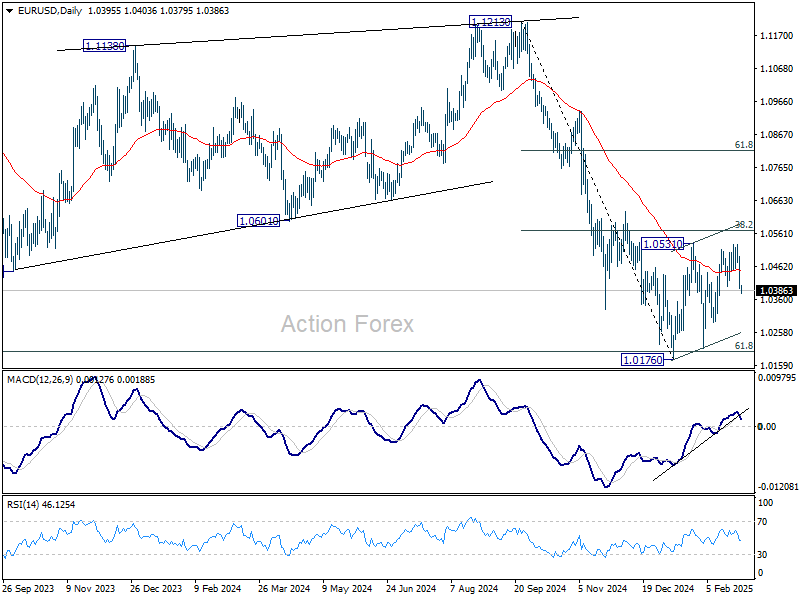
In the context of EURUSD, the strengthening of the dollar brings it to the parity area. History suggests that the 1.0 level is unlikely to be a turning point. Either we see attempts to prevent a prolonged decline under 1.05, or buyers will emerge much later.
How Deep Will Crypto Dive?
Market Picture
The crypto market continues to retreat, having lost 4.4% to $3.36 trillion in the last 24 hours and already over 11% from the all-time peak of $3.79 trillion set on Tuesday. While the sell-off in stock markets has slowed, cryptocurrencies are maintaining or even picking up the pace of the decline. This return to early December levels is reminiscent of the rally locking in from November or all the growth of 2024. In the former case, the sell-off could pause in the $3.2 trillion area (-5% from current levels), while in the latter case, the sell-off could pause in the territory below $3 trillion with potential above 12.5%. Despite the threat of a deeper correction, we remain positive on the outlook for the year ahead.
Bitcoin is back below $100K, getting support at $96K on Friday morning. A failure below $94.5K would signal a break of the uptrend of the last six weeks, while a fall below $92K on Friday or below $93K by the end of the week would bring the price under the 50-day moving average. In this case, time is playing on the side of the bears.
News Background
The sharp rise in the ‘network profit’ of new bitcoin investors, coupled with the active distribution of coins by hodlers, suggests a transition into the late stage of the bull market. This is the conclusion reached by Glassnode.
Mining company MARA Holdings purchased 15,574 BTC at an average price of ~$98,529 per coin. The company has grown its bitcoin reserves to 44,394 BTC. Hut 8, another miner, acquired 990 BTC at an average price of $101,710 per coin to total reserves of 10,096 BTC.
The IMF and El Salvador reached an agreement in which the country pledged to mitigate the risks associated with bitcoin in exchange for a $1.4 billion funding package. The IMF has repeatedly criticised El Salvador for its adoption of bitcoin, suggesting that its status as legal tender should be revoked and its reserves should be liquidated.
Total commissions received by Solana applications through November topped $365 million, including $106 million from ‘meme-token factory’ Pump.fun.
BTCUSD on Track for First Weekly Loss in Two Months
BTCUSD – steep pullback from new record high extends into third straight day and accelerated after loss of psychological 100K support.
Completion of Evening Doji Star reversal pattern on daily chart added to downside prospects, prompting stronger profit-taking that pushed the price to 94K zone in European session trading on Friday.
Bitcoin is on track for the first weekly loss in two months, with long upper shadow on large bearish weekly candle, signaling growing offers after larger bulls were strongly rejected on approach to next significant barrier at 110K.
Another potential negative signal will be on failure to register the second consecutive weekly close above 100K and validate signal of sustained break, that may open way for further easing.
Developments on weekly chart, where 14-w momentum is in steep decline from the recent multi-month peaks and RSI is emerging from oversold territory, support the notion.
Extended dips should find firm ground at 90K zone (round-figure / 55DMA) to keep larger bulls in play for fresh push higher, as overall picture is bullish, and supportive fundamentals continue to boost bullish sentiment.
Only firm break below 90K trigger would sideline larger bulls and signal deeper correction.
Res: 95500; 98560; 100000; 101240
Sup: 93000; 92150; 90000; 88685
EUR/USD Mid-Day Outlook
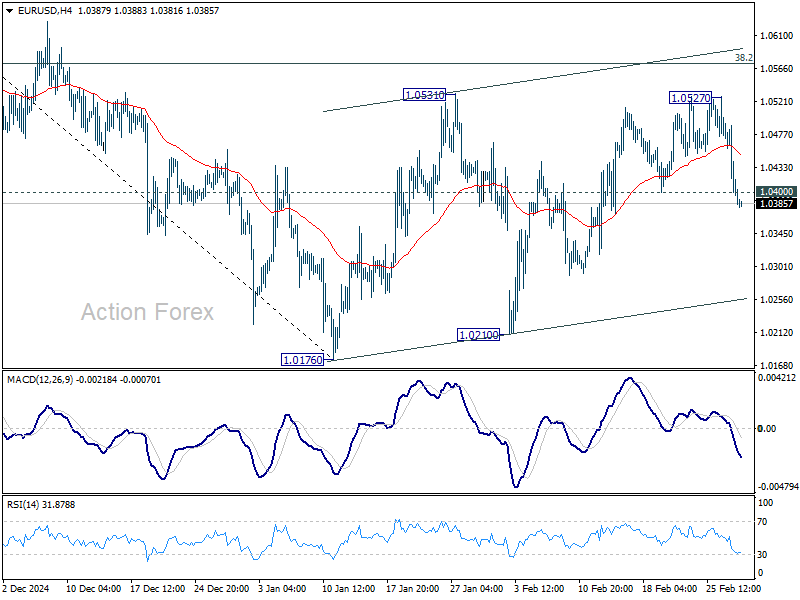
Daily Pivots: (S1) 1.0333; (P) 1.0378; (R1) 1.0407; More....
Intraday bias in EUR/USD remains on the downside for the moment. Firm break of 1.0330 support will resume the fall from 1.1213 and target 61.8% projection of 1.0936 to 10330 from 1.0629 at 1.0254, and then 100% projection at 1.0023. On the upside, above 1.0452 will turn intraday bias neutral again first.
In the bigger picture, focus stays on 50% retracement of 0.9534 (2022 low) to 1.1274 at 1.0404. Strong rebound from this level will keep price actions from 1.1273 (2023 high) as a medium term consolidation pattern only. However, sustained break of 1.0404 will raise the chance that whole up trend from 0.9534 has reversed. That would pave the way to 61.8% retracement at 1.0199 first. Firm break there will target 0.9534 low again.