

Sample Category Title
CPTPP: An Antidote to NAFTA Flux?
The signing of the Comprehensive and Progressive Agreement for Trans-Pacific Partnership comes at a pivotal time for Canada, when the U.S. is asserting a more protectionist trade policy. President Donald Trump's recent tariff move on steel and aluminum only drives the point home. Will the CPTPP provide any offsetting benefits? Our view: not an immediate, across-the-board economic boost, but some wins. They include a limited hedge at a time of NAFTA uncertainty, the elimination of behind-the-border hurdles that are especially difficult for smaller firms to overcome, and a voice at the table as new global trade relationships develop.
Casting a wider net for Canadian goods and services
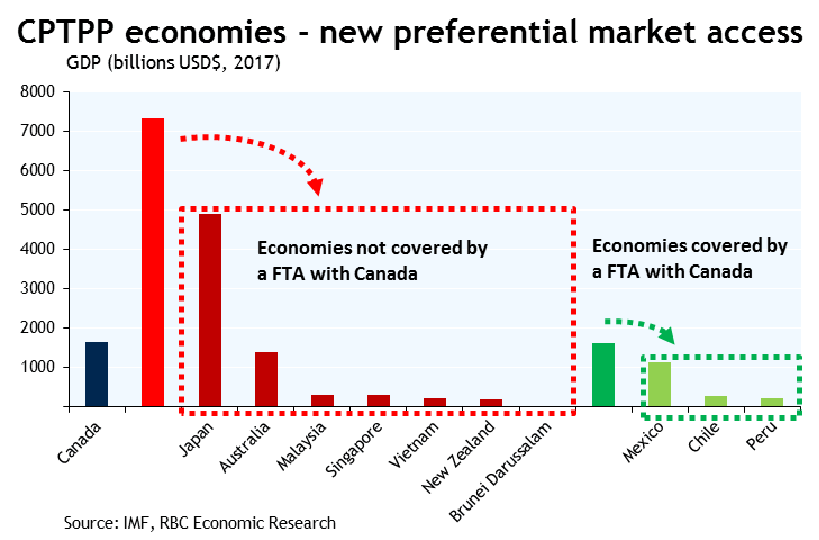
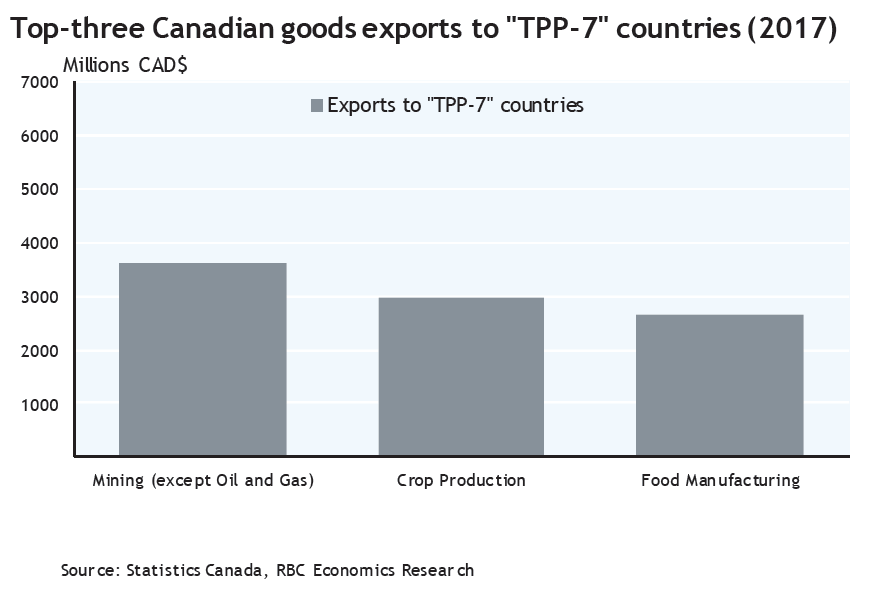
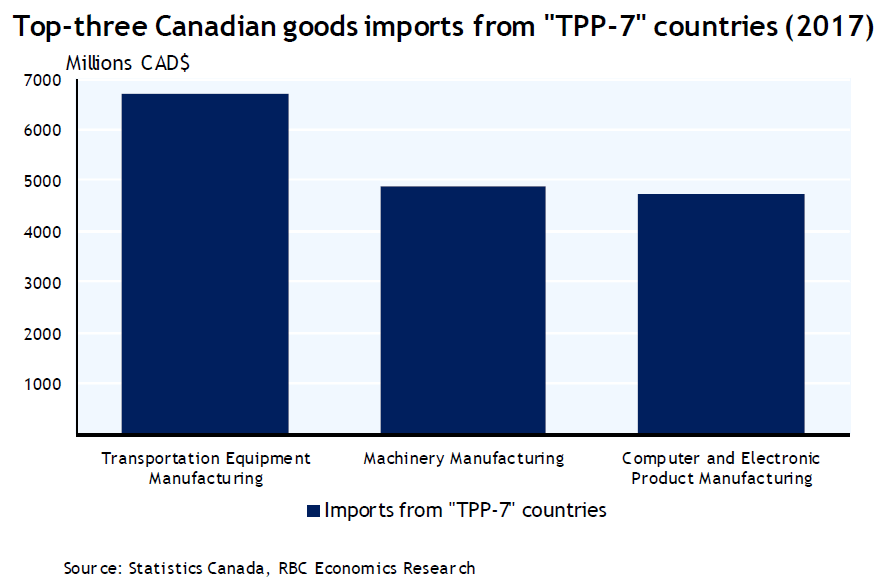
The CPTPP comprises a $13.4 trillion (US$10.5 trillion) economy of 500 million consumers—representing 13% of global GDP in 2017, or more than the Eurozone's five largest economies combined. Yet Canada's new CPTPP trade partners currently absorb a mere 5% of our goods exports. Also, 80% of this market—the pact's seven Asian economies—do not have free trade agreements with Canada. Notwithstanding some competition in sectors such as food, chemicals and transportation manufacturing, Canada's trade with those countries is fairly complementary. Its top-three goods exports and imports to and from the group do not overlap. More such trade should be welcome.
In addition to casting a wider net for Canadian exports, what does the CPTPP offer? We have identified four benefits.
1. A limited hedge at a time of U.S. trade uncertainty
The CPTPP forms the basis for more Canadian export growth in the direction of Japan and other markets. It doesn't lessen our export dependence on our southern neighbour, but it does offer growth at the margins. Ottawa estimates that Canadian exports to CPTPP partners could increase by 4.2% or $2.7 billion, and provide a very minor boost to Canada's GDP of $4.2 billion by 2040.
Together with the Comprehensive Economic and Trade Agreement (CETA) with the European Union, the CPTPP provides a limited hedge for some export sectors at a time of rising protectionism in the U.S.
Such a hedge may appeal to sectors that would face higher Most Favoured Nation duties at the U.S. border relative to the NAFTA schedule, such as vegetables, oils and fats. It may also appeal to sectors that already export across the Pacific and have been stung by U.S. trade action in the past. Those include beef and pork production and more recently, steel and aluminum. However, some of these sectors would also face significant competition from CPTPP members (e.g. Australian beef and mineral fuels). CPTPP markets would also need to demonstrate their viability as export alternatives for Canada when factoring in transportation costs relative to expected market share gains.
Whatever hedge value the CPTPP provides shouldn't be exaggerated.
Major export sectors such as automotive and machinery remain somewhat locked into existing North American trade patterns due to decades of capital-intensive supply chain integration. If anything, they may see more competition, given CPTPP rules of origin could benefit Japanese automotive exporters to Canada by allowing them more liberal access to components sourced from Chinese and other East Asian suppliers.
The short-term benefit to small and medium-sized firms could also be limited. Some 88% and 96% of small and medium exporters, respectively, sell to the U.S., whereas only 15% and 24% do so to Asia ex-China. Given the time and resources involved in exploring new and unfamiliar markets, the CPTPP hedge may only be of longer-term value to such firms.
2. Tackling those thorny "21st century" trade barriers
The CPTPP tackles many so-called 21st century trade issues that limit effective market access to exporters through nontariff barriers and other deterrents. These issues include digital commerce, liberalization of trade in services and investment, customs and trade facilitation, technical barriers to trade, and more. Addressing these issues should be of particular benefit to smaller and medium-sized exporters, for which maneuvering such trade issues can pose a formidable hurdle to expanding their markets.
North American exporters often cite Japan in particular as a challenging market, not on account of its duties on nonagricultural goods (its simple average applied Most Favoured Nation rate is 4%), but because of its widespread use of country-specific criteria that diverge from international practice. Its non-tariff barriers include labelling requirements, direct and indirect subsidies for domestic grain production, safety requirements for construction materials, differing regulatory standards for domestic and foreign financial institutions, and much more.
3. Keeping up with the Joneses—or getting ahead of them
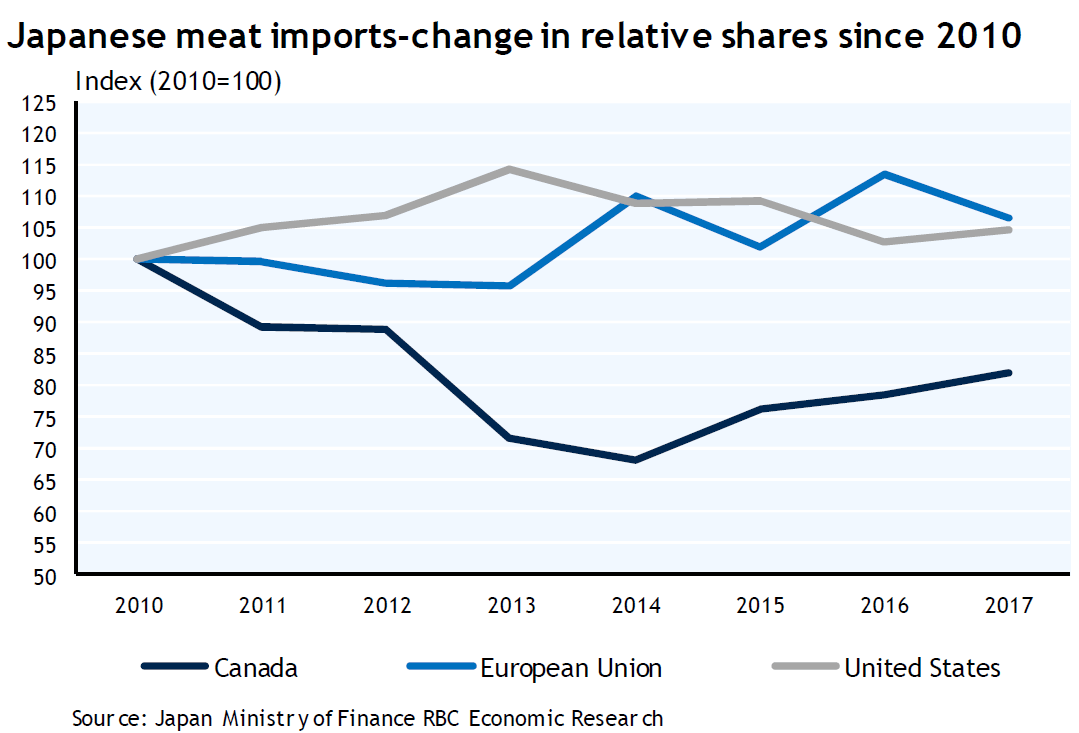
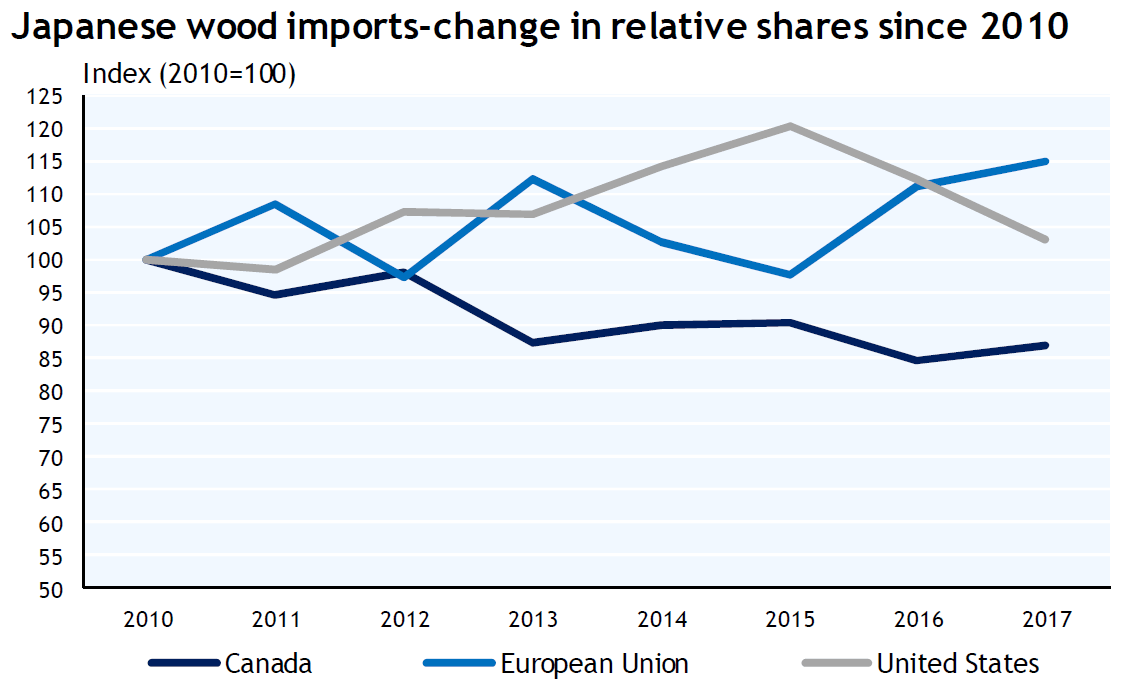
The CPTPP is partly a defensive play for Canada. The "Joneses" to keep up with are economies which compete with key Canadian exports in CPTPP markets and that recently concluded their own free trade deals with CPTPP countries. Take the EU, which concluded a trade deal with Japan in 2017, and looms large as a competitor to Canada across a range of exports, including beef, pork and other processed food, wood products, and financial services. Without the CPTPP, Canadian exporters of such goods and services risked seeing their competitiveness further erode in favour of EU exporters. For example, Canada's relative share of Japanese meat imports has decreased since 2010, whereas the EU's has grown.
On offense, Canada may gain some advantage over the U.S. by being in the CPTPP. Canadian beef, pork and wood products producers, but also financial services, could gain market share in economies such as Japan's at the expense of U.S. competitors. Again, while the U.S. share of Japanese meat imports has grown relative to Canada's since 2010, the CPTPP may confer Canadian meat producers and processors an advantage.
4. The long game: a voice at the table
The U.S. and China remain the elephants in the room. The CPTPP was concluded so as to allow Washington to eventually join the rebranded trade pact under a future administration. President Trump even apocryphally suggested in Davos that his country may do so under his own administration, provided it was "in the interests of all." Hence the retention of virtually the entire TPP text originally negotiated with the U.S., and the "suspension" of some of the more controversial clauses on IP and dispute settlement that the Obama administration had secured, but which could resume if the U.S. reentered the agreement.
Ultimately, the CPTPP remains as much about long-term geopolitics as about trade benefits. The Obama administration envisioned the TPP as the economic prong of its Asia pivot strategy, to ensure the U.S. and its closest partners in the Asia-Pacific region would take the lead in defining regional trade rules for the current century. Some observers even suggested the TPP would eventually mutate into global trade norms for the new century. Beijing's own regional trade push, including the One Belt One Road initiative championed by President Xi Jinping, is ostensibly an alternative model.
Being a member of the CPTPP will secure a Canadian voice in influencing regional trade rules. It also could give Canada some leverage in exacting concessions from potential new entrants, and allow it to pool its negotiating weight with like-minded partners on some issues. Indonesia, the Philippines, South Korea, and even China have at one point expressed interest in eventually joining the TPP. As a trading nation, it's in Canada's interest to help set the rules for trade and investment within the Asia-Pacific region.
Competing frameworks for regional trade and investment 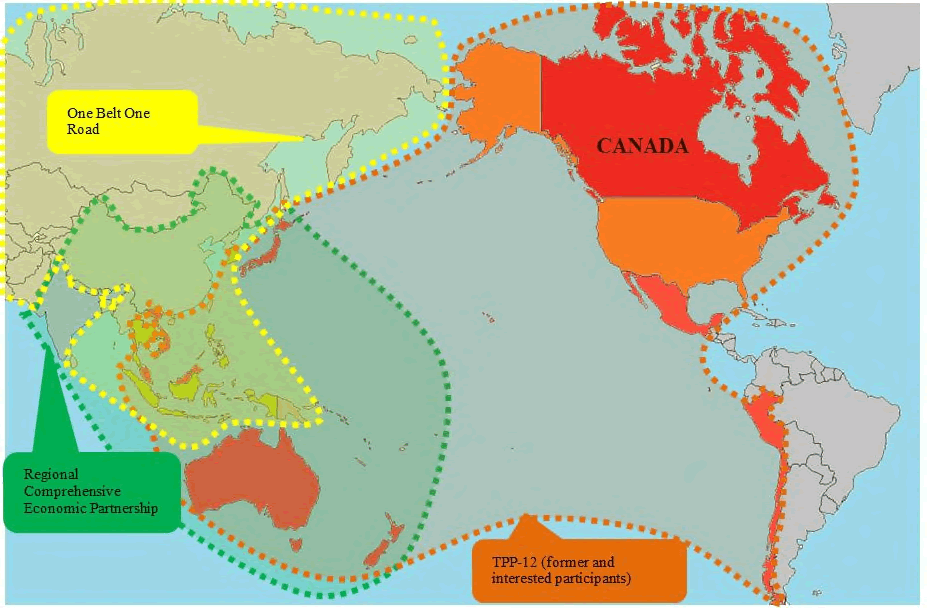

BOC Left Rates On Hold, More Concerned About US Trade Policy
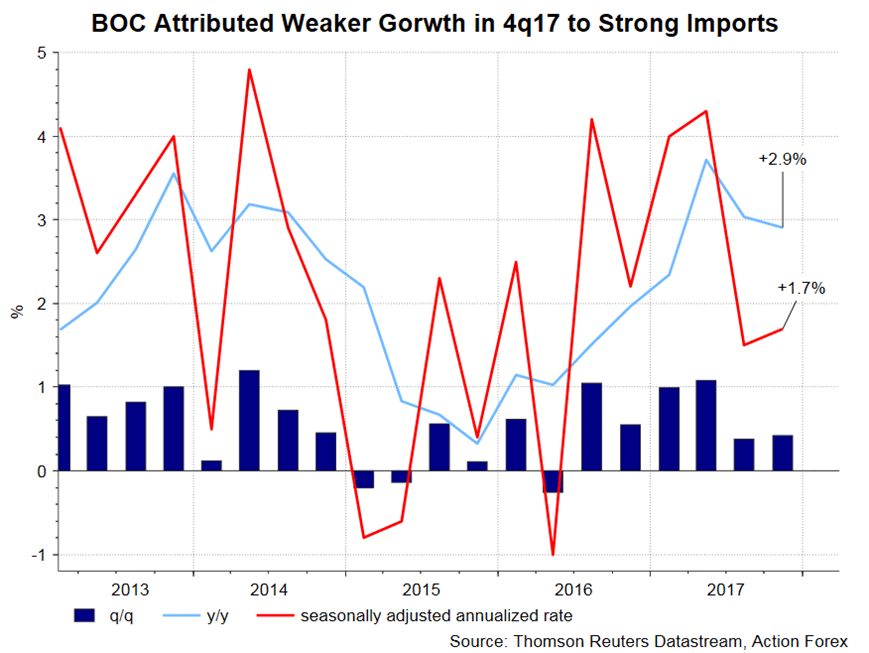
As widely anticipated, BOC left the policy rate unchanged at 1.25% in March. The accompanying statement was more cautious than the previous one, over the trade outlook. Policymakers suggested that 'trade policy developments are an important and growing source of uncertainty for the global and Canadian outlooks', in addition to reiteration of the need for remaining 'cautious in considering future policy adjustments'. Expectations of another rate hike in April diminished after the announcement.
On economic developments, the central bank acknowledged slower than expected GDP growth in 4Q17, attributing it to 'higher imports, while exports made only a partial recovery from their third-quarter decline'. It noted that 'the gain in imports mainly reflected stronger business investment, which adds to the economy's capacity. It, however, downplayed the fact that consumption growth weakened during the period. BOC also suggested that housing data in late-2017 signaled 'some pulling forward of demand' and pledged to continue monitoring the 'economy's sensitivity to higher interest rates'.
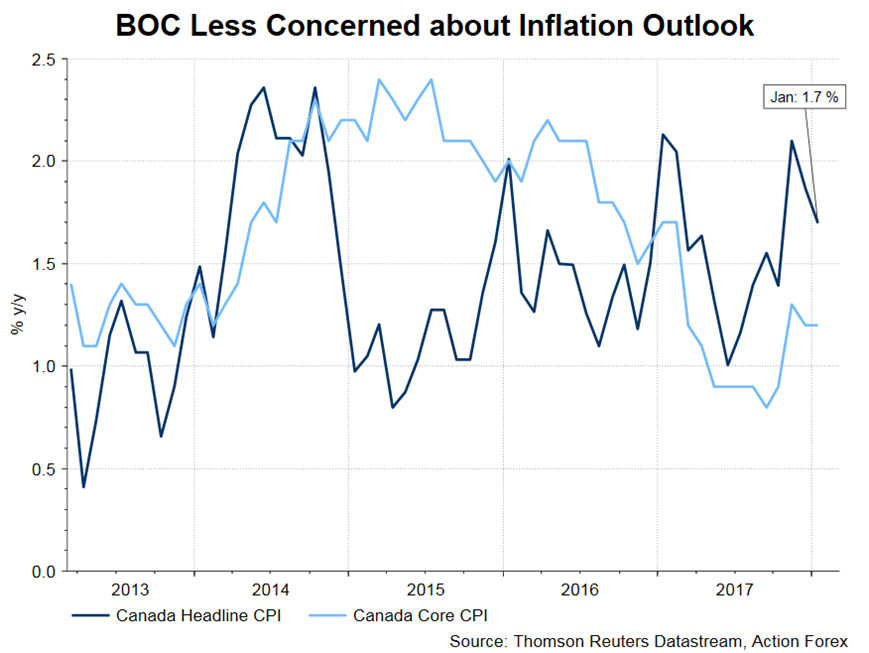
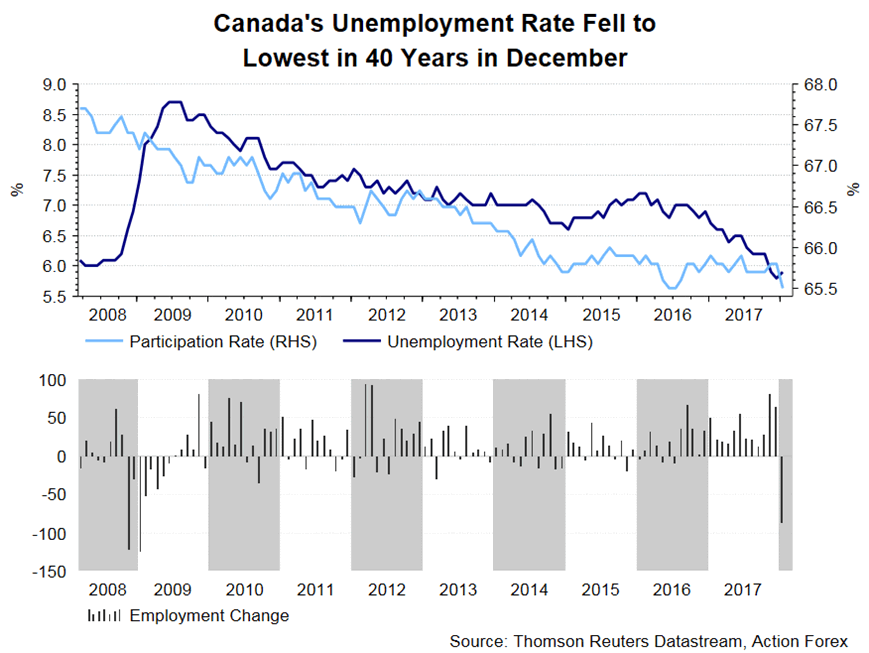
On the job market, BOC noted that 'wage growth has firmed, but remains lower than would be typical in an economy with no labour market slack'. In Janaury, the central bank acknowledged that wages have 'picked up but are rising by less than would be typical in the absence of labour market slack'. The apparent more upbeat wage growth outlook was accompanied with a modest upgrade on the inflation assessment on which the central bank indicated that the increase in both the headline and core readings have been 'consistent with an economy operating near capacity'. In January, it noted that inflation was moving 'consistent with diminishing slack in the economy'. This implied that most of the slack in the economy has been absorbed and the effect would gradually reflect on growth of wage and price levels.
However, BOC was obviously more cautious over the foreign trade outlook. As noted in the statement, 'trade policy developments are an important and growing source of uncertainty for the global and Canadian outlooks'. The concern has been increased, compared with the prior reference that that 'uncertainty surrounding the future of the North American Free Trade Agreement is clouding the economic outlook'.
In the concluding paragraph, the central bank repeated its monetary stance, suggesting that it 'will remain cautious in considering future policy adjustments, guided by incoming data in assessing the economy's sensitivity to interest rates, the evolution of economic capacity, and the dynamics of both wage growth and inflation'. Indeed, whether a rate hike would be adopted in April depends on incoming data, NAFTA negotiations as well as the likelihood of and US-induced trade war.
Steel Your Nerves: Effects of Tariffs on U.S. Inflation
Executive Summary
President Trump has announced that he intends to levy tariffs of 25 percent and 10 percent, respectively, on imports of steel and aluminum, but there is considerable uncertainty regarding the effects of these proposed tariffs on the U.S. economy. For starters, all of the details are not yet finalized. If the tariffs are ultimately implemented as envisioned, the industries that use a significant amount of steel and aluminum would clearly be most affected and prices of their products could rise markedly. However, we suspect that the effect on overall consumer price inflation in the United States would be modest at best. However, foreign countries could retaliate by leveling their own restrictions on American goods and services, which could prompt a follow-up response by the United States. The effects on U.S. CPI inflation could become more pronounced if a tit-for-tat cycle of retaliation were to commence.
Limited Pass-Through of Tariffs to Consumer Prices
President Trump announced on March 1 that he would levy a 25 percent tariff on imports of steel products and a 10 percent tariff on aluminum imports. There are a number of effects that the tariffs could have on the U.S. economy, including their implications for employment, prices and output in affected industries. Furthermore, all details of the plan have not yet been finalized. For the purposes of this report, we assume that the proposal initially outlined by the president (i.e., tariffs of 25 percent and 10 percent, respectively, on steel and aluminum imports with no exceptions to country of origin) is adopted. We also focus exclusively on the effects of the tariffs on broad measures of prices in the United States.
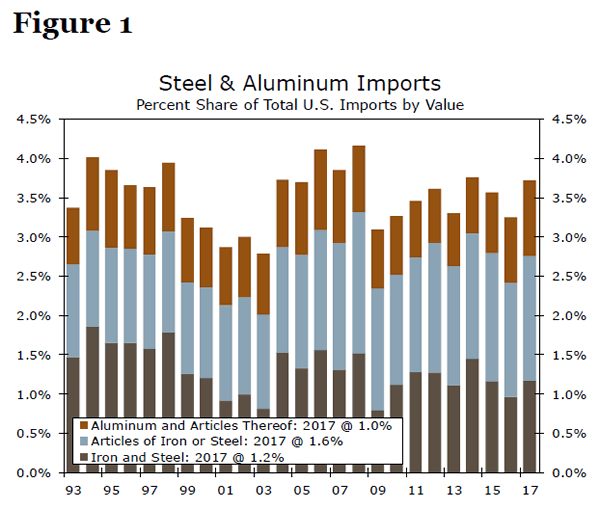
Let's start by looking at the simple raw numbers. The United States imported $64.5 billion worth of iron, steel and articles thereof in 2017, which represents nearly 3 percent of all the merchandise goods that the country imported that year. In terms of aluminum and articles thereof, there was $22.7 billion worth of imports (1 percent of total merchandise imports) in 2017. The combined share of steel and aluminum therefore hovers below 4 percent of imports (Figure 1), which limits the degree to which price changes in these commodities affect overall U.S. import prices and inflation.
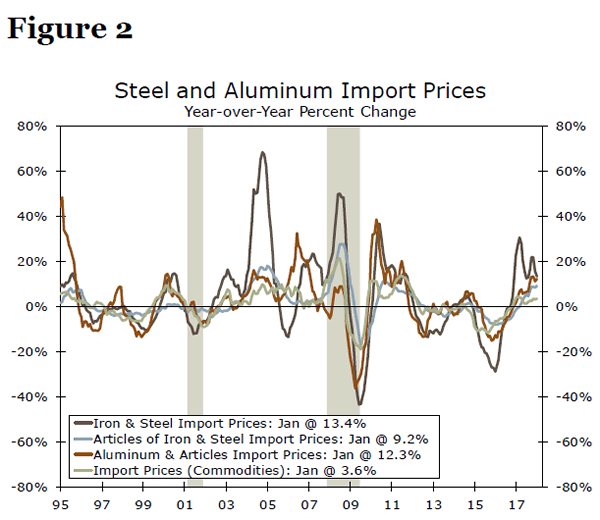
As shown in Figure 2, there is a fair degree of correlation between the price of imported steel and aluminum and overall import price inflation.1 Although steel and aluminum bear a relatively small weight in the import price index (2.8 percent and 0.9 percent, respectively), the contributions of these commodities to import price inflation can still change markedly as a result of large swings in prices. For instance, iron and steel contributed about 80 basis points more to year-over-year import price inflation in 2004 versus 2003, as annual price growth skyrocketed. The most substantial moves in the price of steel imports have, in recent history, been linked more to changes in demand rather than tariffs. Bush-era tariffs lifted prices by much less than China-driven demand growth in 2004. However, if steel and aluminum prices increased by the full amount of the recently-proposed tariffs (25 percent and 10 percent, respectively), this could add about 79 basis points to year-overyear import price inflation.
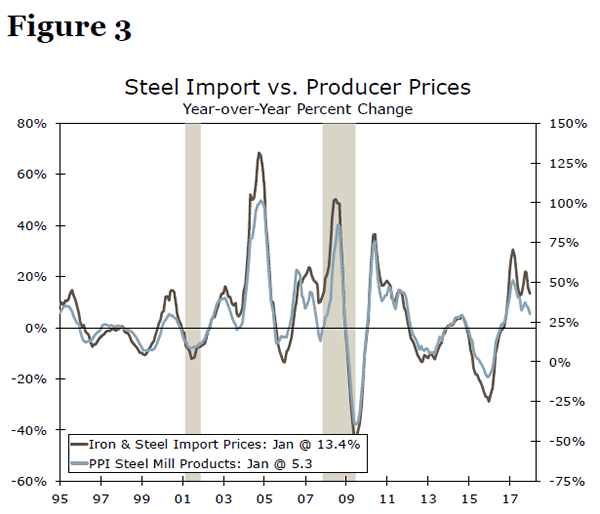
The effect of tariffs would not be limited to the prices of imported steel and aluminum. By design, tariffs are aimed at supporting domestic producers. Higher prices for imported products eases competitive price pressure on U.S. producers. As a result, the prices of domestically produced steel and aluminum (as measured by the producer price index) are closely correlated with import costs (Figure 3).2 In early 2003, a year after the Bush administration's steel tariffs went into effect, prices for both imported and domestically produced steel were rising at the fastest pace in a number of years.
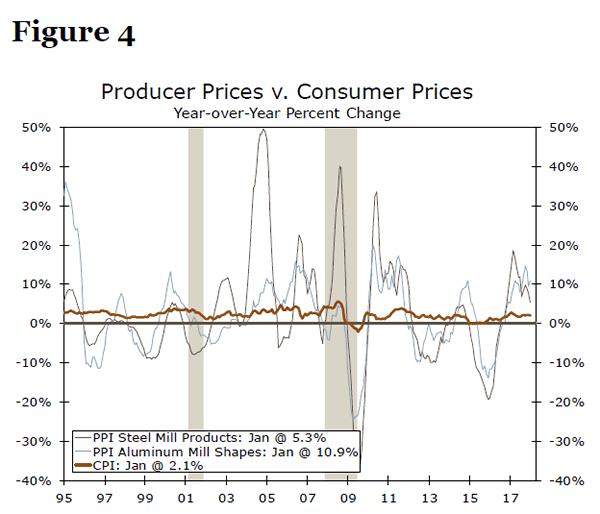
The ultimate pass-through to consumer price inflation, however, tends to be small after steel and aluminum get incorporated into finished products. Although there are positive correlations between producer prices for steel and aluminum and the CPI, the relationship is weaker than it is between import and producer prices (Figure 4). This is not surprising given that nearly two-thirds of CPI consists of services. For most services, the largest input cost is labor. Adding the cost of steel and aluminum according to the producer price index to our preferred model of consumer price inflation shows only a small effect. A 1 percent rise in steel inputs would raise the year-over-year rate of CPI by about 0.01 percentage point, while the impact from aluminum is not statistically significant.
Manufacturers to Bear the Brunt
That is not to say some industries won't see significantly higher costs. A look at the detailed inputoutput tables for the United States reveals which industries bear the greatest exposure to higher steel and aluminum costs (Figure 5). Manufacturers that transform metals into intermediate or end products, or use steel and aluminum would see their production costs rise if the proposed tariffs go into effect.
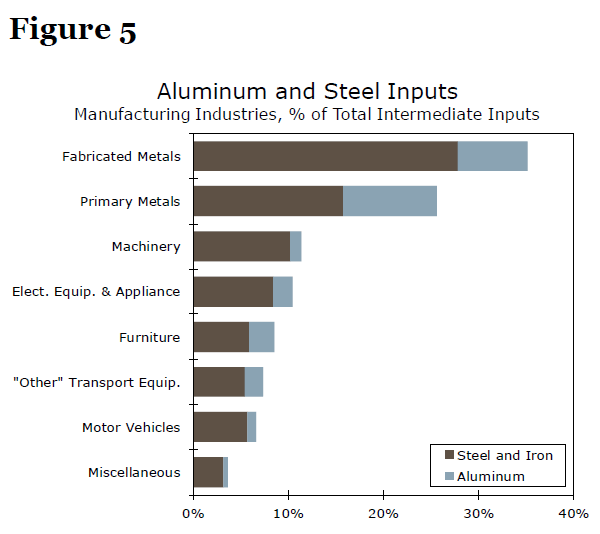
Still, the pass-through to consumers, even if looking solely at goods prices should be fairly small. Even in the industries that use steel and aluminum most intensively, those metals account for less than 40 percent of costs. In other words, a sizable share of production costs come from other sources. In addition, firms are unlikely to change their selling prices with every move in input costs, as adjusting list prices can be time consuming and costly in its own right. Rather than adjusting prices fully, firms may absorb some of the costs via tighter margins.
Is This Time Different?
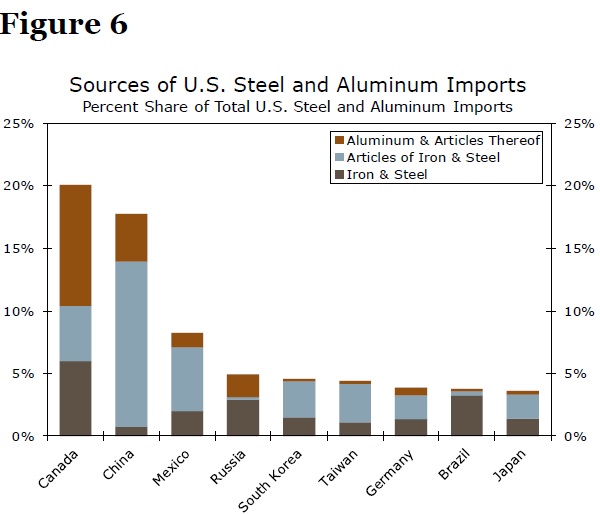
To some extent, we have been here previously. Steel tariffs ranging from 8 percent to 30 percent were put in place by the Bush administration from March 2002 to December 2003. Although the currently proposed 25 percent rate on steel is lower, it applies to a broader range of imports and countries. Steel imports from Canada and Mexico were exempt from the Bush-era tariffs due to NAFTA. As of this writing President Trump has indicated no such exemptions, which could lead to a more pronounced effect on prices given that Canada is the largest source of steel and aluminum imports and Mexico is the third-largest exporter to the U.S. for both products (Figure 6).
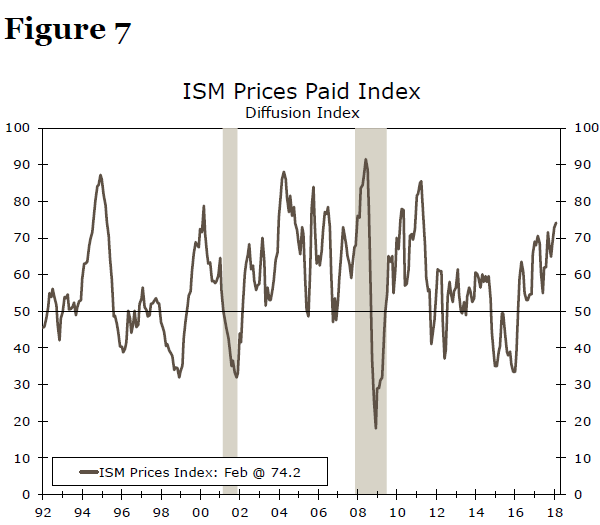
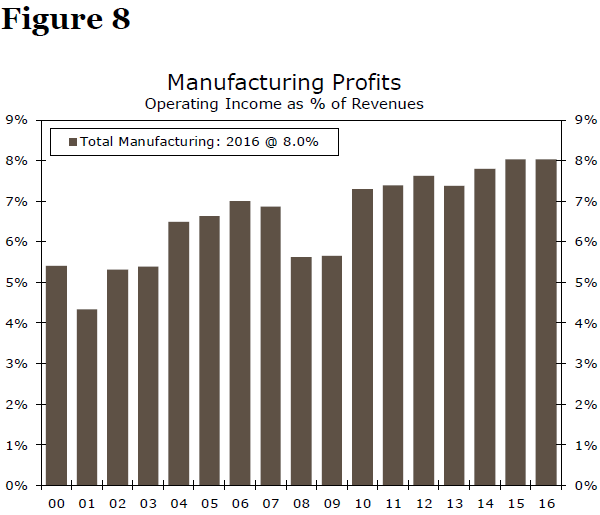
Industries that use steel and aluminum most intensively could also be more inclined to pass along the higher input costs in today's environment where there is little if any slack left in the U.S. economy. Prior to the Trump administration's announcement, input prices for manufacturers were already rising at the fastest pace in nearly seven years, according to the ISM index (Figure 7). On the other hand, the recent reduction in corporate tax rates, which should boost after-tax profits, may make businesses less compelled to raise prices to maintain margins. Manufacturers' margins currently sit at a 17-year high, suggesting some scope to absorb higher input costs (Figure 8). In short, there is considerable uncertainty regarding the responses of businesses to the proposed tariff increases.
Fed Implications: Tariff Tiff or War to Come?
Should President Trump's tariffs get implemented as proposed, we would expect to see a small rise in consumer prices. If the average price of steel inputs were to rise exactly 25 percent, then the headline CPI inflation could rise by roughly 0.2-0.3 percentage points. However, we do not expect to see a one-for-one rise between the increase in tariffs and the domestic price of steel and aluminum, and therefore suspect consumer price inflation would rise by a bit less than 0.2 percentage points.
With headline CPI currently expected to run only a touch above 2 percent, we do not foresee the steel and aluminum tariffs as something that will present a significant threat to the Fed's inflation mandate. That could change, however, if tariff or other trade barriers (such as quotas) become more widespread. While the Fed may be willing to tolerate inflation a little above its 2 percent target for a time so inflation can "catch up" after a prolonged shortfall, an all-out trade war could spark more threatening inflation. That would put the Fed in a difficult position as inflation would be rising above the Fed's comfort zone while real GDP growth would likely be slowing.
Conclusion
In the event that the White House applies 25 percent tariffs on steel and 10 percent tariffs on aluminum, without an ensuing trade war, we expect minimal increases to consumer price inflation. Steel and aluminum represent only about 4 percent of U.S. imports, which limits the effect on overall inflation even if producers pass on higher input costs to consumers. We suspect that CPI inflation would rise by a bit less than 0.2 percentage points as a result of the currently-proposed tariffs. This would likely not be enough to change the Fed's path of rate hikes. However, there remains considerable uncertainty. We will be monitoring changes to the proposed legislation and international responses to see if U.S. tariffs lead to a tit-for-tat cycle of retaliation. Stay tuned.
Uncertainty Lingers
Uncertainty Lingers
Asset markets continue to wobble to and fro as uncertainty lingers over Trump’s tariff, while investors are left absorbing the aftershocks from Cohn’s resignation.
Also, New York is dealing with the deadly snowstorm that is tearing through the North Eastern United States which is likely weighing on market participation.
A worse-than-expected US trade deficit report didn’t help the free trade camp as the deficit moved to a nine-year high, further stoking the protectionist fires. The sharp widening of the trade shortfall with China is a significant point of contention, and ultimately eclipsed a firm ADP print which beat estimates at 234k (185k forecasted).
The trade numbers could not have come at a worse time for the market as the President took to Twitter, his favourite medium to express policy views, suggesting he’s setting sights on China demanding a one billion dollar reduction in $375.2 billion imbalance. Peanuts really, but more significantly in his follow up tweet he implied the U.S. is acting swiftly on Intellectual Property theft which is by far the most significant risk to the market. Following through on 301 of the US trade act could result in a swift and potential market destabilising response from China. Certainly, one road the market doesn’t want to go down.
Trump is reported to be planning a tariff announcement on Thursday at 12:00 EST. And while Trump continues his sabre rattle, investors are hoping for a more efficient tariff approach directed at more obvious trade infringements. Where there is hope, there is is still life in the markets.
Fedspeak remained on a hawkish bias nudging the US yields a touch higher but with the market singularly focused on tariff talks, subtly shifting market narratives seem to matter little to traders.
Oil Markets
Investors angst over a possible trade war escalation is sucking most asset classes into an ever-expanding tariff sinkhole. The negative economic implications are weighing on global growth sentiment and in turn denting oil market sentiment. Not helping matters, the Department of Energy showed weekly US crude production hit a record high last week of almost 10.4 million barrels per day. Probably not the most bullish of oil price signals.
Gold Markets
A strong ADP jobs report and the hawkish Fed bias have temporarily dented gold sentiment. And with the USD going through it usual pre ECB and NFP position adjustment and other such machinations we should expect Gold prices to be at the mercy of USD position adjustments over the next 24 hours. Although we could be in for a chop feast it’s unlikely we will threaten the edges of near-term ranges ahead of critical macro risk events.
Currency Markets
The Euro
EURUSD position adjustment take paramount to extending risk ahead of the ECB decision so markets should remain in confined ranges ahead of the ECB
The Japanese Yen
The USDJPY is hanging firm after running into solid support at 10.5.50 level after yesterday Cohn wobble. The currency markets are trying to find a balance between the hawkish fed narrative and the tariff fall out. But with the all-important NFP and specifically the wages component due later in the week, traders don’t want to be caught too short USDJPY in fear of an uptick in wages inflation.
Japan Q4 GDP has come at 0.4% versus 0.2% expected. The annualised SA QoQ is now at 1.6% versus 1% expected. But currency traders are waiting to take their cues from the open of cash equity markets in Japanese as the Yen remains an extremely risk-sensitive trade over the short term to medium term.
The Malaysian Ringgit
MPC stayed on hold at 3.25% as widely expected; global growth outlook remained positive and struck all the right decisive domestic external chords to keep investors happy. While their inflation assessment was even more dovish than January all but suggesting, it will take an inflationary surprise to move the rate hike dial on more time in 2018. But they certainly left the door open further policy normalisation by signalling they will continue to assess the balance of growth and inflation.
BNM appetite for a stronger MYR is seen mitigating the inflationary impact from higher prices at the pump and providing them with more wiggle room on monetary policy.
While the MPC was a bit more dovish than expected their rosy assessment of domestic and international economic conditions should ultimately remain supportive of the Ringitt
Gold Volatility Continues Over Trump Tariff Threat
Gold has posted sharp losses in the Wednesday session, erasing much of the gains seen on Tuesday. In North American trade, the spot price for an ounce of gold is $1324.71, down 0.75% on the day. In economic news, there was positive news on the labor front, as ADP Nonfarm Payrolls report ticked higher to 235 thousand, easily beating the estimate of 199 thousand. On Thursday, the US releases unemployment claims.
Gold prices continue to show strong fluctuation, as the markets remain focused on President Trump's threat to impose heavy tariffs on imported steel. The announcement has infuriated US trading partners, as well as sharp criticism from senior Republican lawmakers. There was further drama on Tuesday, as Gary Cohen, Trump's economic adviser, resigned. Cohen was a strong advocate of free trade, so his resignation could weaken opposition in the White House to the tariffs. Gold posted strong gains on Tuesday, but has given up much of these gains on Wednesday. Will Trump make good on his threat or back off? Until the situation is resolved, traders should be prepared for continuing volatility from gold.
Good news on the employment front translated into losses for gold on Wednesday. The ADP nonfarm payrolls report, which precedes the official nonfarm payrolls report on Friday, ticked upwards to 235 thousand, up from 234 thousand a month earlier. This easily beat expectations, boosting investor risk appetite. The nonfarm payrolls report is also expected to remain steady, and if the indicator can again beat expectations, gold prices would likely head lower.
ECB To Prepare Markets For End Of QE
Traders Look For Subtle Clues Ahead of September Expiry
Thursday's European Central Bank meeting may not go down as the most exciting on record but it could contain some very subtle hints that the end of quantitative easing is close.
- ECB Bond Buying Expected to End This Year
- Gradual, Calm Exit Sought By Policy Makers
- Markets May Be Sensitive to Small Changes in Message
The ECB has been gradually and carefully bringing its QE program to an end ever since it announced its first reduction – which is claimed was not a taper out of fear of a repeat of the taper tantrum the Federal Reserve experienced in 2013 – back in December 2016.
Since then, purchases have fallen from €80 billion a month to €60 billion – in April last year – and then to €30 billion from January this year. With the current purchases expiring in September, there has been speculation about whether the ECB will end it at expiry or briefly extend to the end of the year at a slightly reduced pace. The reality is that it doesn't really matter and we're not likely to find out until June, but that doesn't mean we shouldn't pay attention to the meetings until then.
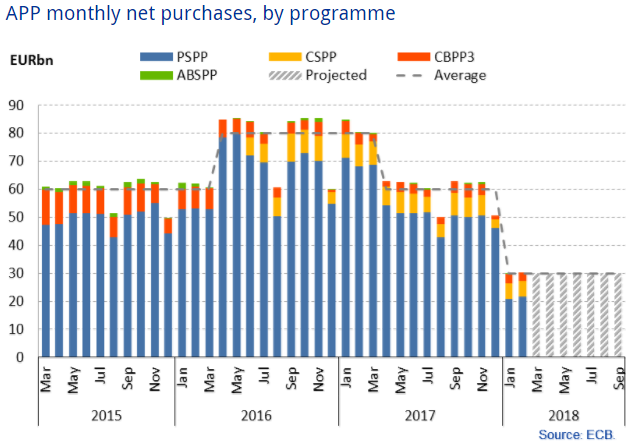
For one, a number of things could change between now and the June meeting that could force the ECB to increase the pace of tightening or further delay the end of QE and clues about such a move will come from the meetings and/or the speeches they give in between them.
The ECB has also made it clear that any policy changes will be communicated very gradually so I would imagine we will see small differences at almost every meeting for the rest of the year so as to well prepare us for the end of QE. That may not be particularly exciting but it could well move markets.
The language that is speculated to be targeted on Thursday is the reference to the central banks readiness to increase the asset purchase program in size or duration if the outlook becomes less favourable. While this was always a pointless line, the ECB has stuck by it and the removal of it is a small acknowledgement that less dovish language in warranted.
The question is how much this tiny gesture is priced in, what impact it will have on the euro and whether they will go any further given the tense environment – trade wars, fragile market sentiment. We may well see some movement in the euro around the release but ultimately, Mario Draghi – the ECB President – will likely determine what markets will do.
I expect he may keep his cards very close to his chest and let the press conference pass without any major talking points. Either way, traders will be sitting and waiting to pounce on any unexpected hawkish or dovish message Draghi decides to divulge.
Pound Unchanged, Tusk Takes PM May To Task
The British pound is unchanged in the Wednesday session. In North American trade, GBP/USD is trading at 1.3886, down 0.01% on the day. In economic news, there are no major indicators in the UK. In the US, ADP Nonfarm Payrolls report ticked higher to 235 thousand, easily beating the estimate of 199 thousand. On Thursday, the US releases unemployment claims.
The game of hardball between Britain and the European Union continues. On Wednesday, Donald Tusk, president of the European Council, advised Prime Minister May to “pink’ her red lines on Brexit, if Britain wants to maintain a close economic relationship with the bloc. May has insisted that there will be no customs union, and the European Court of Justice will have no jurisdiction over the UK. Last week, the EU published draft negotiating guidelines for Brexit, and the guidelines warned of “negative economic consequences” if Britain does not soften its position. Tusk added that he does not want to build a wall with Britain, and the EU could offer Britain a free trade agreement, with zero tariffs. At the same time, Tusk warned that Brexit will make trade between the two sides “complicated and costly” and the EU would not allow Britain to cherry pick in any future trade arrangement. EU members are expected to sign off on the negotiating guidelines at a summit in late March, which is likely to heat up the tense relationship between London and Brussels.
In the US, tensions over proposed tariffs on steel imports continue to hurt the US dollar. President Trump appears set on applying stiff tariffs of 25% on steel, much to the consternation of the European Union and other US trading partners. However, there is plenty of domestic opposition to Trump’s plan, as Republican lawmakers, including House Speaker Paul Ryan, have come out strongly against the move. If Trump doesn’t back down, the Republicans could even resort to legislation to limit Trump’s authority on tariffs. The announcement of the tariffs last week sent the dollar broadly lower, and if the tariffs are introduced, negative investor sentiment could continue to weigh on the dollar.
Fed: Beige Book Indicates that Strong Economic Momentum Has Extended into 2018
Today's Beige Book indicated that economic activity across all twelve Federal Reserve Districts expanded at a modest to moderate pace in January and February. Led by strong consumption fundamentals, sentiment remains positive and has further upside potential, owing to tax cuts.
Consumption was reported to be mixed, with non-auto retail sales posting solid activity, in contrast to auto purchases which floundered across districts. This confirms that previous strength related to hurricane vehicle replacement has likely dried up, with an increase in borrowing costs likely to weigh on auto purchases over the remainder of the year. On the other hand, retailers are confident that non-auto purchases will continue to be supported by consumer confidence and tightening labor markets.
Prices increased at a moderate pace, with inputs to construction, including lumber and steel, increasing notably. Transportation costs also ticked up on higher fuel costs that increased freight rates. Some steel producers reported raising selling prices on account of the resolution of pending trade cases and these cost increases were absorbed by manufacturers further down the supply chain. However, their ability to pass these increases on to final consumers was largely unchanged from the previous report. At the same time, retailers cited competition as a reason for holding selling prices steady or decreasing them in some cases.
Extending last year's trend, residential real estate inventories remained thin, leading to steady growth in home prices. Continued labor scarcity and a lack of land proved to limit construction of homes. In turn, this restrained home purchases, due to the lack of options on the market. At the same time, a scarcity of labor also limited construction activity, with contacts reporting little relief in the near future. This is in contrast to the commercial real estate segment, with reports of robust activity in three Districts representing an improvement from the prior report. Favorable business conditions have supported this trend recently and will likely continue to as the effects of the Tax Cuts and Jobs Act (TCJA) continue materializing over the remainder of the year.
Employment grew moderately, with Districts universally reporting labor market tightness and heightened demand for qualified workers. Increasingly, employers are outsourcing hiring to staffing placement services as the search for workers becomes cumbersome. Again, manufacturing and construction workers were in short supply, with information technology workers being added to the list. This led employers to increase wages and expand benefit packages, with a select few Districts reporting compensation increases owing to the TCJA.
Key Implications
This Beige Book confirms that the economy continued to expand at a solid clip at the start of 2018. Employer sentiment remained elevated amid strong household spending, while inflation pressures continued to build, with steady increases in labor and non-labor input costs suggesting that selling prices will rise over the year. Several employers reported increasing compensation as a result of the TCJA, with others raising wages in order to remain competitive and retain workers. Building material prices and transportation costs continued to exhibit some of the most pronounced price pressures amid heightened demand. This could be amplified in the near future with the implementation of tariffs that producers would pass on to consumers. Speculation surrounding the implementation of tariffs adds to pre-existing uncertainty in the manufacturing industry regarding NAFTA negotiations. Moreover, the increase in input costs could further strain housing construction that is already being limited by quickly rising land and building material costs.
Despite supply-side uncertainty, household spending continues to be upheld by labor market tightness, and that has propped up demand in housing markets amid quickly escalating prices. However, some metro housing markets are becoming increasingly unaffordable as housing inventories dwindle. Tax code changes will amplify this in high-priced and high-tax markets, with robust wage gains only partially mitigating these effects. Specifically, the lower cap on the mortgage interest deduction (down from $1M to $750k), combined with the implementation of the $10,000 cap on state and local tax deductions (which includes property taxes), will raise the cost of homeownership notably in high-priced and high-tax markets including those in New York and the District of Columbia, which will slow home price growth. Additionally, these unfavorable tax measures may hinder the ability of these regions to attract workers in the future, exacerbating labor shortage issues.
This report suggested that businesses remain optimistic and are increasingly passing on increases in input prices. As such, these should show up in headline inflation figures in the near future. That will enable the Fed to proceed with three hikes this year, with the first of these likely to take place later this month. Further upside potential comes from the budget deal that should foster additional growth and inflationary pressures.
Bank of Canada Holds Rates Steady Amid Growing Trade Uncertainty
Highlights:
- The overnight rate was held steady at 1.25% today after the bank raised rates in January.
- The statement noted “trade policy developments are an important and growing source of uncertainty,” a clear nod to the Trump administration’s proposed tariffs on steel and aluminum.
- Inflation developments have been consistent with the economy running at full capacity, but wage growth was once again seen as indicating a bit of labour market slack.
- The bank is keeping an eye on how regulatory changes impact the housing market, and how credit growth is responding to higher interest rates.
- Deputy Governor Lane will present an economic progress report tomorrow that should elaborate on the BoC’s latest thinking. The speech will be a regular feature following non-MPR meetings going forward.
Our Take:
Today’s statement suggests the Bank of Canada has added ‘trade policy dependent’ to their ‘data dependent’ mantra. A rate increase at today’s meeting was already a long shot, coming just seven weeks after the central bank’s last move. But any odds of a hike, or even a slightly hawkish tilt, went out the window last week with the Trump administration’s proposal to slap tariffs on steel and aluminum imports. That threat was certainly on the minds of the Governing Council when, front and center in today’s statement, they noted trade policy is “an important and growing source of uncertainty.” The BoC has been worried about the impact of Nafta uncertainty for some time and the latest rhetoric from our largest trading partner has clearly increased the odds of a negative outcome. Metals tariffs on their own won’t drastically change the central bank’s thinking. But if tit-for-tat measures escalate into a full-blown trade war—and to be clear, we aren’t nearly there yet—the BoC would have to rethink their tightening bias. The rapidly-evolving trade backdrop will be a major factor in whether the central bank raises rates in April. How businesses are responding to growing uncertainty—the bank’s next Business Outlook Survey will be released April 9—will also hold sway.
As for their data dependence, developments since January’s meeting provided little reason for the bank to deviate from their current course. We’ve seen further signs that wages and inflation are picking up. And while Q4/17 GDP fell short of their forecast, domestic demand was strong and growth remained slightly above-trend—hardly disappointing when the economy is already at capacity. Financial conditions have been mixed, with bond yields rising and equities falling since mid-January, though a weaker Canadian dollar has provided some offset. On balance, the bank’s tightening bias remains appropriate but so is a healthy dose of caution given tough talk on trade from south of the border