Sample Category Title
Fed Delivers December Hike, With More Tightening in Store Next Year
Highlights:
- As expected, the target range for the fed funds rate was raised by 25 basis points to 1.25-1.50%.
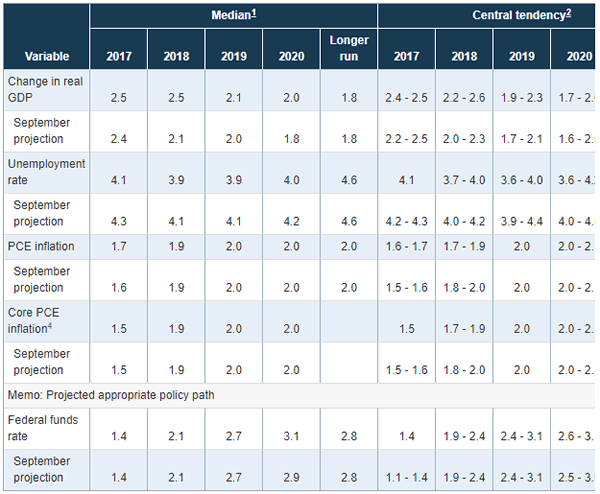
- The committee's median GDP growth forecast for 2018 was raised to 2.5% from 2.1%. Growth projections for 2019 and 2020 were also revised higher but inflation forecasts were little changed.
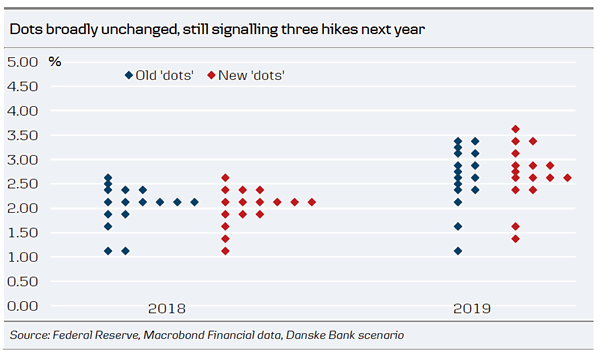
- The 'dot plot' continued to show a range of views on how much tightening will be appropriate next year. The median call for three rate increases was unchanged from September.
- Two dissenters favoured leaving rates unchanged. Only one dissented against June's hike.
Our Take:
Today's rate hike was fully expected so it was the outlook for monetary policy next year that drew our attention. In that respect the Fed gave us something to talk about, boosting their 2018 growth forecast quite substantially and predicting sub-4% unemployment over the next two years. Chair Yellen confirmed that expected changes in tax policy were responsible for some of the upward revision to growth forecasts. But even with stronger activity likely pushing the economy beyond its longer run capacity limits, the median forecast for three rate hikes next year was unchanged and a handful of committee members think even less tightening will be appropriate. Lack of inflationary pressure, seen again in this morning's CPI report, is keeping policymakers somewhat cautious. It is telling that most don't expect inflation will rise much above 2% in the coming years, even with economic conditions expected to be very tight.
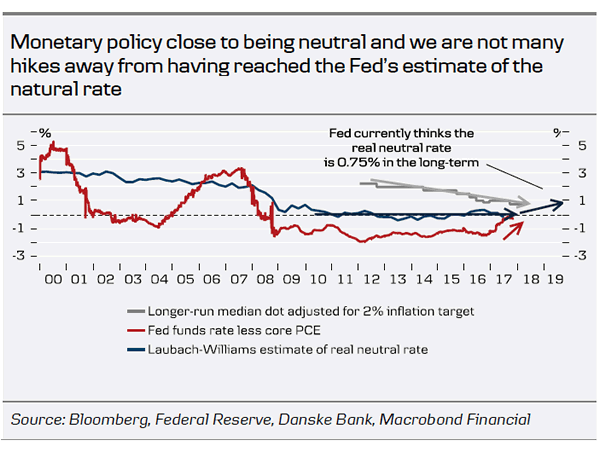
We are slightly above the 'dot plot' median in calling for four rate increases next year. For the Fed to move at that pace, we'll need to see wages and inflation responding more to tight economic conditions than was evident this year.
FOMC Review: Broadly Unchanged Fed Signal
- As expected, the Fed hiked the target range to 1.25%-1.50% and kept the dot signal broadly unchanged. Evans and Kashkari dissented but they are losing their voting rights next year.
- We think the Fed meeting was to the soft side. While most FOMC participants have incorporated some fiscal stimuli from tax reform into their forecasts, the dots plot was broadly unchanged, as inflation continues to disappoint the Fed.
- We still see risks in EUR/USD chiefly on the upside for 2018 but near-term EUR/USD is likely capped due to tightening in USD liquidity ahead of year-end.
Fed still signals three hikes next year
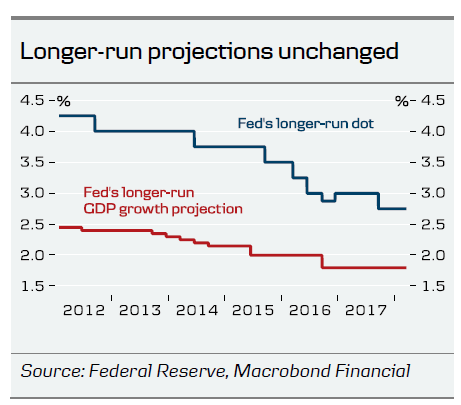
As expected by everyone, the Fed hiked the target range by 25bp to 1.25%-1.50%. In line with our expectations, the median dots still signal three hikes in 2018 and slightly more than two in 2019. The longer-run dot was unchanged at 2.75%. Kashkari and Evans, two well-known doves, voted against the hike, but both are losing their voting rights next year.
Looking at the statement, there were no major changes. The Fed still says that it is monitoring inflation 'closely'. The Fed said it will stop commenting on the balance sheet reduction at every meeting and it will just run in the background, unless something happens.
Overall, we think the Fed meeting was to the soft side. Yellen said that 'most' FOMC participants have already incorporated some fiscal stimuli from tax reform into their forecasts, which likely explains why the projection for GDP growth for next year was lifted (and projection for the unemployment rate was lowered). Still the dots plot were broadly unchanged, as the Fed cannot raise rates too much, as long as inflation remains below 2%. Net effect of higher growth and lower inflation was an unchanged dot plot (see below).
Interestingly, estimates of potential GDP growth and NAIRU unemployment rate were also unchanged (see chart on page 2).
Powell is going to continue the gradual hiking cycle
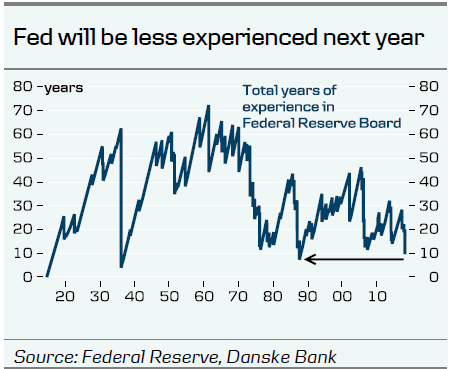
While Fed Chair Yellen is still heading the next meeting on 31 January, she has de facto stepped down. We believe Fed Chair nominee Powell (his final approval should be plain sailing) will stick to Yellen's monetary policy strategy by continuing the gradual hiking cycle and quantitative tightening, as most Fed members are putting more weight on labour market data than inflation data. The bigger question is what will happen if the US economy is hit by a shock in either direction, as Powell is less qualified than Yellen and the FOMC in 2018 is less experienced than the one in 2017. While Trump has nominated Marvin Goodfriend as Fed governor, there are still three vacant seats for Trump to fill, even if he is approved. For more, see FX Edge – inexperienced Fed to be a drag on USD, 30 November.
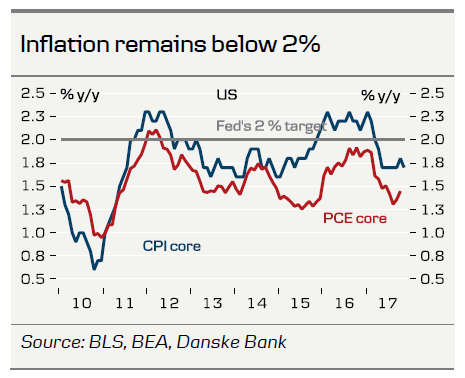
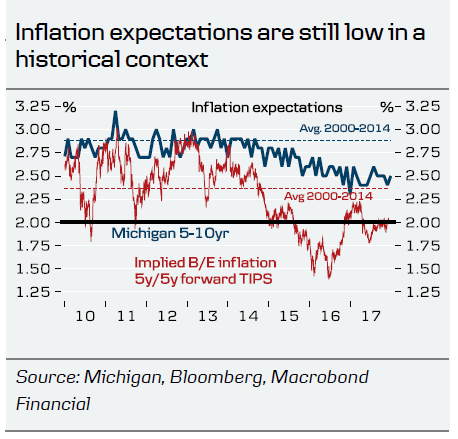
Yellen repeated that the Fed thinks low inflation is 'transitory', but we think there is a risk that inflation will remain below the 2% target in coming years. The reason is that tightness of the labour market is not the only factor determining wage growth, as second-round effects after many years with low inflation have hit wage growth (i.e. inflation expectations have moved lower). When employees expect inflation to remain low, they can live with low wage growth, as real wage growth may still be solid, making it less likely inflation will reach the target (see also Strategy: Central banks consider leaving the party, 30 June).
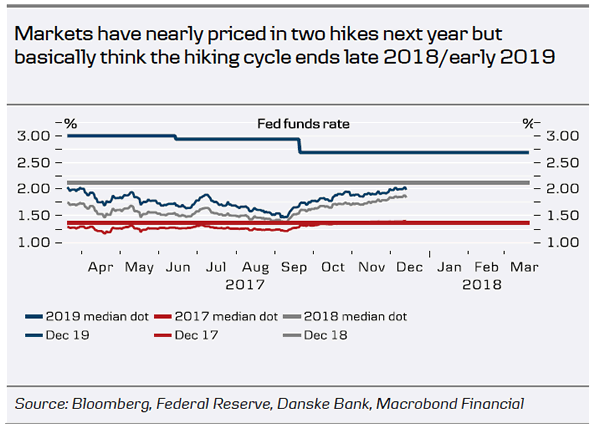
We expect two to three hikes next year with two hikes being our base case (June and December). Consensus among economists is three hikes, in line with the Fed's dot plot. Markets have priced in nearly two hikes next year.
Risks in EUR/USD chiefly on the upside for 2018
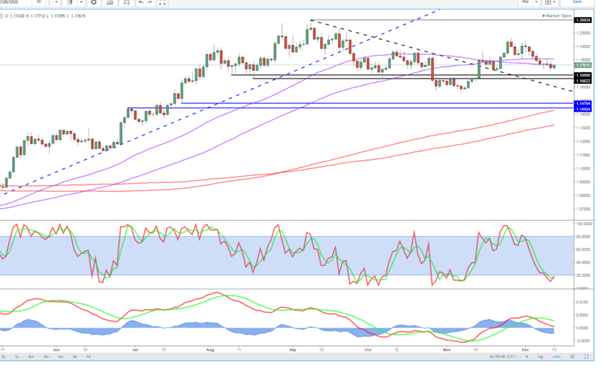
EUR/USD moved back above the 1.18 mark again and the US fixed income market reacted positively on the back of the FOMC's dovish hike. The somewhat 'soft goodbye' from Yellen weighed on the USD as FX markets focused on the two dissenters to the rate-hike decision and on the fact that even with tax-reform effects partially factored in the longerterm outlook was little changed, meaning there is no upside to the rate path if Trump manages to get his tax reform through. While the market still has a bit of catching-up to do when it comes to pricing Fed hikes, the FX market will in our view stay focused on the risk of fewer hikes. Further, we stress that any downside to EUR/USD from relative rates in 2018 will likely be dominated by the pricing in the FX market of the ECB taking the next step towards 'normalisation' of policy. That leaves risks in EUR/USD chiefly on the upside for 2018. Near term, in light of the risk of continued tightening in USD liquidity ahead of year end, we stress that upside in EUR/USD should be capped and continue to see the cross staying within the 1.16-1.20 range in coming weeks.
The Song Remains The Same
The Song Remains the Same
No surprise the Fed is holding onto transitory inflation narrative, but given the recent tepid wage growth, it's getting more difficult for the market to digest even more so after a softer core CPI print today. Which in itself is cause enough to sell dollars from my chair?
Also, and perhaps more significant for near-term dollar direction, the Fed believes the tax package will have little impact on growth or productivity which has sent the nascent tax reform dollar bulls packing. The bond market has been cautious of this all along, and it struck a chord again with bond desks as 10Y UST's fall to 2.35 % sending the USD spiralling down
Adding to the greenback woes, the Bama shocker will exponentially increase the risk for fiscal policy bottlenecks in the Senate which could substantiate the growing list of evidence arguing for a weaker USD in 2018. But this could present some near-term headwinds to US equity markets which could weight negatively on USDJPY.
As has been the case so often in 2017, the perceived lack of progress on the Trump administration key policy, and a more dovish-than-expected Federal Reserve stoked demand for both JPY and EUR, needless to say, so far today the song remains the same.
It's hard to view the Alabama result in any other light than dollar negative as it lessens the likelihood of crucial legislation passing through an already shaky Republican margin of control in the Senate.
The market may be slow playing this hand assuming that tax cut will have passed before Doug Jones is sworn in, so it's of no immediate concern. However, as far as introducing other dollar affirmative policies in 2018, the narrowing of partisan battle lines, notwithstanding the fiscal hawks in the Republican Senate, will make it difficult for Republican lawmakers to introduce new legislation and add a higher degree of political uncertainty to the already deafening bluster coming out of Washington.
Federal Reserve Hikes Rates in December
For the third time this year, the Federal Open Market Committee (FOMC) raised its federal funds target rate range to 1-1/4 to 1-1/2 percent. It also reaffirmed the schedule of its previously announced balance sheet normalization.
The statement acknowledged the improvement in the labor market over the last few months. Participants also boosted their forecasts for real GDP to 2.5% in both 2017 and 2018 (from 2.4% and 2.1%). The labor market outlook has also improved in the eyes of most members, but according to the Survey of Economic Projections, Core PCE inflation is still expected to remain below the 2% target until 2019.
The median expectation for the policy rate is 2.1% in 2018 (unchanged), 2.7% in 2019 (unchanged), 3.1% in 2020 (up from 2.9%), and 2.8% in the longer run (unchanged).
Key Implications
There was a lot to digest in this statement. The upgrade to GDP and unemployment paints a macroeconomic landscape that is erasing economic slack at a healthy clip. Our internal estimates of output and employment gaps show the American economy is operating at full capacity and will likely slip into excess demand territory over the next year. Empirical analysis would tell you that this is the time when inflation should start to pick up.
Yes, yes, we know that economists have been calling for inflation to return to 2% for a long time now. In spite of diminishing unemployment and well-anchored inflation expectations, actual inflation has continued to disappoint. This has not gone unnoticed by FOMC members. As noted in recent FOMC minutes, several FOMC participants fall into the "I'll believe it when I see it" camp when it comes to inflation. This includes the two dissenting voices at this meeting - Charles Evans and Neel Kashkari.
Over the coming months, it will be important to watch the communication of incoming Fed Chair Powell for where he falls on the inflation debate and whether he is more inclined to wait for actual inflation to emerge or whether he will maintain faith in forward-looking economic models that tell him higher inflation is just around the corner.
Even as rate hikes remain gradual, the impact of this hike and likely two more in 2018 means that the Fed will be raising rates at a faster pace than its central bank peers. Interest rate differentials favor U.S. dollar assets, which provides support for the greenback.
Dollar Drops after Expected Fed Hike, Evans and Kashkari Dissented
Dollar drops broadly today even though Fed raise federal funds rate by 25bps to 1.25% to 1.50% as widely expected. Two known doves, Minneapolis Fed President Neel Kashkari and Chicago Fed President Charles Evans dissented.
In the updated projections, GDP forecast for 2018 is raised to 2.5%, up from 2.1%. For 2019, GDP forecast is raised to 2.1%, up from 2.0%.
Unemployment rate projections fro 2018 and 2019 are lowered to 3.9%, down from 4.1%
Inflation forecasts are kept unchanged. That is, PCE is projected to be at 1.9% at 2018 and 2.0 at 2019. Core PCE is projected to be at 1.9% in 2018 and 2.0% at 2019.
Federal funds rate projections were also kept unchanged. That is, to be at 2.1% at 2018 and 2.7% at 2019. Indeed, for 2020, rate is now projected to be at 3.1%, revised up from September's forecast of 2.9%.
Dollar's selloff seems to be more related to the voting, and the lack of hawkish surprises.
Updated Fed projections
(FED) FOMC Statement December 13, 2017
Information received since the Federal Open Market Committee met in November indicates that the labor market has continued to strengthen and that economic activity has been rising at a solid rate. Averaging through hurricane-related fluctuations, job gains have been solid, and the unemployment rate declined further. Household spending has been expanding at a moderate rate, and growth in business fixed investment has picked up in recent quarters. On a 12-month basis, both overall inflation and inflation for items other than food and energy have declined this year and are running below 2 percent. Market-based measures of inflation compensation remain low; survey-based measures of longer-term inflation expectations are little changed, on balance.
Consistent with its statutory mandate, the Committee seeks to foster maximum employment and price stability. Hurricane-related disruptions and rebuilding have affected economic activity, employment, and inflation in recent months but have not materially altered the outlook for the national economy. Consequently, the Committee continues to expect that, with gradual adjustments in the stance of monetary policy, economic activity will expand at a moderate pace and labor market conditions will remain strong. Inflation on a 12‑month basis is expected to remain somewhat below 2 percent in the near term but to stabilize around the Committee's 2 percent objective over the medium term. Near-term risks to the economic outlook appear roughly balanced, but the Committee is monitoring inflation developments closely.
In view of realized and expected labor market conditions and inflation, the Committee decided to raise the target range for the federal funds rate to 1-1/4 to 1‑1/2 percent. The stance of monetary policy remains accommodative, thereby supporting strong labor market conditions and a sustained return to 2 percent inflation.
In determining the timing and size of future adjustments to the target range for the federal funds rate, the Committee will assess realized and expected economic conditions relative to its objectives of maximum employment and 2 percent inflation. This assessment will take into account a wide range of information, including measures of labor market conditions, indicators of inflation pressures and inflation expectations, and readings on financial and international developments. The Committee will carefully monitor actual and expected inflation developments relative to its symmetric inflation goal. The Committee expects that economic conditions will evolve in a manner that will warrant gradual increases in the federal funds rate; the federal funds rate is likely to remain, for some time, below levels that are expected to prevail in the longer run. However, the actual path of the federal funds rate will depend on the economic outlook as informed by incoming data.
Voting for the FOMC monetary policy action were Janet L. Yellen, Chair; William C. Dudley, Vice Chairman; Lael Brainard; Patrick Harker; Robert S. Kaplan; Jerome H. Powell; and Randal K. Quarles. Voting against the action were Charles L. Evans and Neel Kashkari, who preferred at this meeting to maintain the existing target range for the federal funds rate.
Gold Ticks Higher, Federal Reserve Decision Looms
Gold has ticked higher in the Wednesday session. In North American trade, the spot price for an ounce of gold is $1246.42, up 0.16% on the day. On the release front, inflation numbers were a mix. CPI improved to 0.4%, matching the forecast. However, Core CPI, which excludes volatile items such as food and energy prices, edged lower to 0.1%, missing the estimate of 0.2%. Later in the day, the Federal Reserve is expected to raise rates to a range between 1.25% to 1.50%. On Thursday, the US releases retail sales reports and unemployment claims.
The Federal Reserve is in the spotlight, as policymakers meet for a monthly policy meeting later on Wednesday. Traders should be prepared for a possible drop in gold prices if rates move higher, as gold moves inversely to interest rate movements. The Fed is pleased with the strength of the US economy, but remains puzzled why strong growth and a red-hot labor market has not led to higher inflation. The labor market continues to operate at full capacity and various sectors in the economy are reporting a lack of workers. Still, this has not translated into stronger wage growth, despite predictions from Janet Yellen and other Fed policymakers that a lack of workers is bound to push up wages. On Friday, Average Hourly Earnings, which measures wage growth, came in at 0.2%, shy of the estimate of 0.3%. Whether inflation moves higher or remains depressed could have a significant effect on monetary policy – if wage growth and inflation shows improvement in 2018, the Fed could raise interest rates up to three times in 2018. After Wednesday's rate announcement, the markets will be looking ahead to the January policy meeting, with the odds of a quarter-point hike standing at 86 percent.
Pound Gains Ground on Stronger Wage Growth
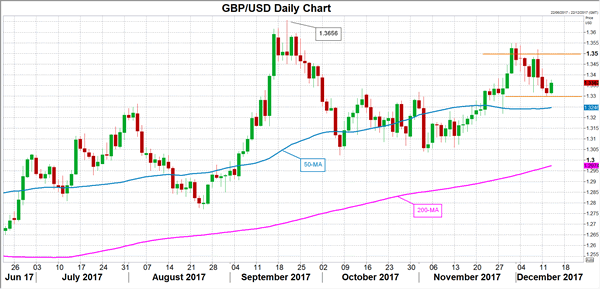
The British pound has posted gains in the Wednesday session. In North American trade, GBP/USD is trading at 1.3359, up 0.30% on the day. On the release front, British Average Earnings Index improved to 2.5%, matching the forecast. However, Claimant Count Change increased by 5.9 thousand, compared to a forecast of 0.4 thousand. In the US, inflation numbers were a mix. CPI improved to 0.4%, matching the forecast. However, Core CPI, which excludes volatile items such as food and energy prices, edged lower to 0.1%, missing the estimate of 0.2%. Later in the day, the Federal Reserve is expected to raise rates to a range between 1.25% to 1.50%. On Thursday, the US releases retail sales reports and unemployment claims.
Inflation levels continue to concern policymakers in the UK, as CPI climbed to 3.1% in November, edging above the forecast of 3.0%. Inflation is now running at its highest level since March 2012. BoE Governor Mark Carney will be on the hot seat, as inflation continues to outstrip wage growth, leaving consumers with less purchasing power. The BoE raised rates in November for the first time in a decade, but the move has failed to blunt inflation from continuing to rise. The BoE is expected to maintain rates on Thursday, but the Bank may have to hike rates early in the year if inflation does not retreat below the 3.0% level.
The Federal Reserve is in the spotlight, as policymakers meet for a monthly policy meeting later on Wednesday. The CME Group has priced in a quarter-point rate hike at 87%, so it would be a huge surprise if the Fed doesn't raise the benchmark rate. Even though this move has been priced in, rate hikes tend to trigger a surge of confidence among investors, and a rate hike could boost global stock markets. Today's move could be the start of a series of incremental hikes, as the odds of a January increase stand at 86%. The Fed has hinted that it could raise rates up to three times in 2018, but the pace of increases will depend to a great extent on the strength of the economy and inflation levels. The US labor market remains at full capacity and various sectors in the economy are reporting a lack of workers. Still, this has not translated into stronger wage growth, despite predictions from Janet Yellen and other Fed policymakers that a lack of workers is bound to push up wages.
Can the ECB and BoE Deliver a Holiday Treat?
Investors Seeking Further Tightening Clues
It may be a decade since the start of the global financial crisis but only this year have central banks around the world began dialling back their emergency stimulus measures, a sign that the global economy is finally starting to stand on its own two feet.
Two central banks that have joined the party this year are the ECB and the Bank of England, with the former paring back its quantitative easing program and the latter reversing its post-referendum rate cut. While this may not sound like much and leaves both a long way behind their American colleagues, it's an important first step towards the normalisation of interest rates.
With both central banks pursuing tighter monetary policy and the global economy gathering momentum, what can we expect from the ECB and BoE on Thursday?
Will Draghi Come Baring Gifts or Lumps of Coal?
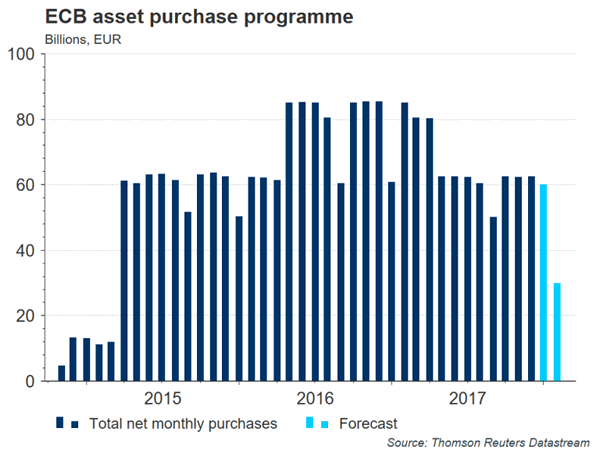
The ECB revealed plans to extend its QE program by a further nine months in October, reducing purchases from €60 billion to €30 billion in the process and laying the groundwork for it to expire at the end of September.
While Draghi at the time would not commit to this and instead preferred to leave it open ended and data dependent, traders will be hoping that the data since then may encourage him to expand further. I'm not personally holding my breath.
Draghi likes to keep his cards close to his chest and detests the idea of backing himself into a corner. Particularly when the end result is a stronger euro and higher yields on eurozone debt, neither of which will be especially appealing.
What he may do though, if asked, is go into more detail on what the ECB will do after the end of QE. The Fed ended its QE program in October 2014 and then raised interest rates for the first time just over 12 months later. It was only three months ago that the Fed started reducing the size of its balance sheet. Will the ECB follow a similar path given how smooth the process has been for the Fed?
Will the BoE Take a Page Out of the BoC's Book?
The Bank of Canada also started raising interest rates again this year and followed its first hike in July with a second at the next meeting in September, to the surprise of many. With the BoE having raised rates for the first time since the financial crisis last month, can we expect something similar on Thursday?
I very much doubt it. And so does the market with no hike priced at more than 99%.
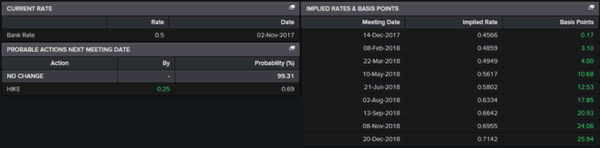
Source – Thomson Reuters Eikon
In fact, I think we may have to wait at least another 12 months for a rate hike from the BoE, as we did the Fed after its first hike in 2015. Unlike the BoC, the BoE raised interest rates from a position of weakness, with inflation having being driven primarily from the post-referendum decline in sterling. Had the BoE not also cut interest rates in the aftermath of the vote, I doubt they'd have opted to hike rates last month.
With the economy far from firing on all cylinders and the outlook very uncertain, I strongly doubt that the central bank will consider more hikes in the foreseeable future. Especially as the bank rate is now back at the level the BoE deemed the lower bound for more than seven years after the GFC.
With no press conference scheduled following the decision, we'll have to rely and the minutes and voting to gage the mood within the Monetary Policy Committee. Expectations are for this to be less of an event than it has in previous months.
Euro and Pound at Risk from Aurprises as ECB and BoE Meetings Seen as Non-Events
Monetary policy meetings by the European Central Bank and the Bank of England this week have had their limelight stolen by the US Federal Reserve, which is expected to move on rates while no action is anticipated from the ECB and the BoE.
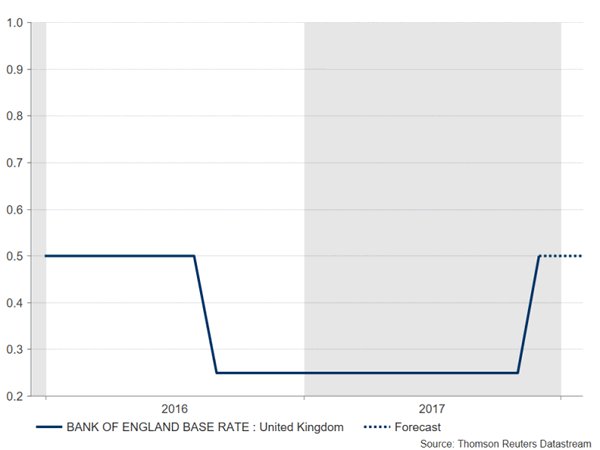
Both central banks took historic decisions at their last respective meetings, with the ECB halving its monthly asset purchases from January 2018 and the BoE raising its benchmark rate by 25 basis points to 0.50% - the first increase in more than a decade. Neither central bank is therefore likely to change its tune so soon after their previous meetings.
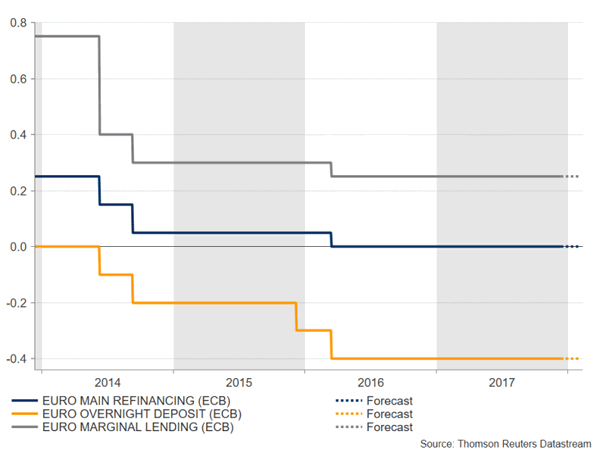
The main focus for the ECB meeting will be the updated staff macroeconomic projections, which will include for the first time the forecasts for 2020, and this may give some clues as to how soon interest rates will start to go up. The ECB is expected to once again revise up its growth forecasts, but more important will be the outlook on inflation. In the September projections, headline CPI was expected to average 1.5% in 2017, to dip to 1.2% in 2018 and to rise back to 1.5% in 2019. CPI excluding food and energy was also expected to pick up to 1.5% in 2019. If the projections for 2020 show underlying inflation further edging up nearer to 2%, this could indicate that interest rates may start to rise in late 2018.
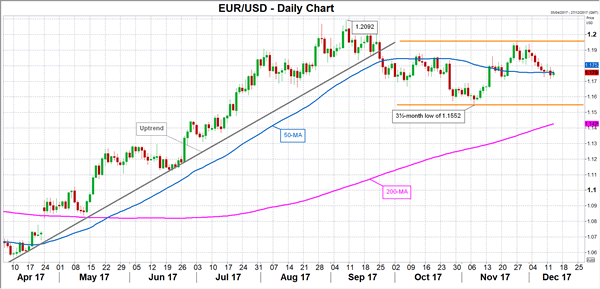
Such projections could become a catalyst for traders to buy the euro. The single currency has been consolidating since touching a 2½-year high of $1.2092 in September. ECB policymakers' attempt to play down their tapering decision by keeping the stimulus program open-ended hasn't done the euro any favours, which has been stuck in a range of $1.1550-1.1960 during the past two months.
ECB head, Mario Draghi, is unlikely to steer away from recent language and would not want to give any new signals on future policy at his press conference on Thursday. However, more optimistic-than-expected forecasts could provide the euro enough of a lift to challenge its November top of $1.1960.
The Bank of England is also not expected to diverge from its last statement, having updated its quarterly projections only in November. Traders who are hoping for fresh insight into the timing of the next BoE rate hike will likely be disappointed as the outlook on the British economy hasn't changed since November to warrant a shift in the expected rate path.
Inflation data released this week showed UK inflation crossed above the BoE's upper limit of 3%, reaching 3.1% in November to its highest in almost six years. However, this would have come as no surprise to the Bank, and MPC members will want to wait and see how inflation pans out over the coming months as well as how the Brexit talks progress before setting the ground for another rate hike.
The pound didn't see much of a reaction to Tuesday's stronger-than-expected inflation data as Brexit uncertainty is once again the main concern for investors. Having lost some of its shine after the boost it received from the Brexit divorce deal, sterling is sensitive to a hawkish tilt in the BoE's statement on Thursday, which could help the currency head back towards its early December highs above $1.35.
Another risk though for the pound is negative developments at the EU summit on Thursday-Friday. EU leaders are expected to formally approve for the Brexit negotiations to move to the second phase, which will involve the post-Brexit trade arrangements and an agreement on a transition period. The UK Brexit Secretary, David Davies, angered EU officials this week when he suggested that the deal struck on the divorce terms was not legally binding. This could prompt the EU to take a tougher stance at the summit. Any setback in the talks could push the pound below the recent support area of $1.33.