Sample Category Title
EUR/CHF: French’s Political Fiasco May Trigger a Major Bearish Breakdown
- A no-confidence vote to remove French PM Barnier pushed out by the far-right National Rally party may topple the French government this week.
- A current political fiasco in France has triggered an increase in the credit risk premium on longer-term French sovereign bonds.
- A further uptick in French sovereign bonds’ credit risk premium may lead to a major bearish breakdown on the more risk-sensitive EUR/CHF cross pair.
Since our last publication, the higher risk-sensitive EUR/CHF cross pair has wobbled as it grappled with the Eurozone’s economic weakness and a looming unfavorable external trade environment due to further global supply chain disruptions due to incoming US President-elect Trump’s 10% to 20% tariffs threat on other countries’ exports to the US, inclusive of the Eurozone.
The EUR/CHF inched lower in the week of 18 November (ex-post US Presidential election outcome on 6 November) and retested a key intermediate support of 0.9255, a key swing low made almost a year ago on 29 December 2023.
An increase in France’s sovereign bond credit risk premium
Fig 1: 10-year yield spread of French sovereign bond over German Bund as of 3 Dec 2024 (Source: TradingView, click to enlarge chart)
The credit risk premium of longer-term sovereign debt in France can be defined by the 10-year yield spread between France’s and Germany’s sovereign bonds (Bunds)
When the yield spread between 10-year France’s sovereign bonds over Germany’s Bund increases, it suggests a potential increase in the credit risk premium of holding French sovereign bonds.
Since the outcome of the second round of the recent summer French snap-National Assembly election on 7 July, the 10-year yield spread of France’s sovereign bonds over Germany’s Bund has continued to inch higher after its prior major bullish breakout that occurred earlier in the week of 10 June 2024 as the election results have led to a hung-parliament in France.
At the start of this week, the far-right National Rally leader Le Pen intensified her party stance to support a call for a no-confidence vote in the National Assembly to remove the incumbent French Prime Minister Barnier over his refusal to tweet his 2025 budget to suit the viewpoints of the National Rally party.
A no-confidence vote may happen as soon as this Wednesday, 4 December, and the French government may topple this week if things go in favour of Le Pen’s National Rally party.
A further increase in the 10-year yield spread of France’s sovereign bonds over Germany’s Bund towards the 0.98% medium-term resistance level may trigger further downside pressure in the EUR/USD and EUR/CHF (see Fig 1).
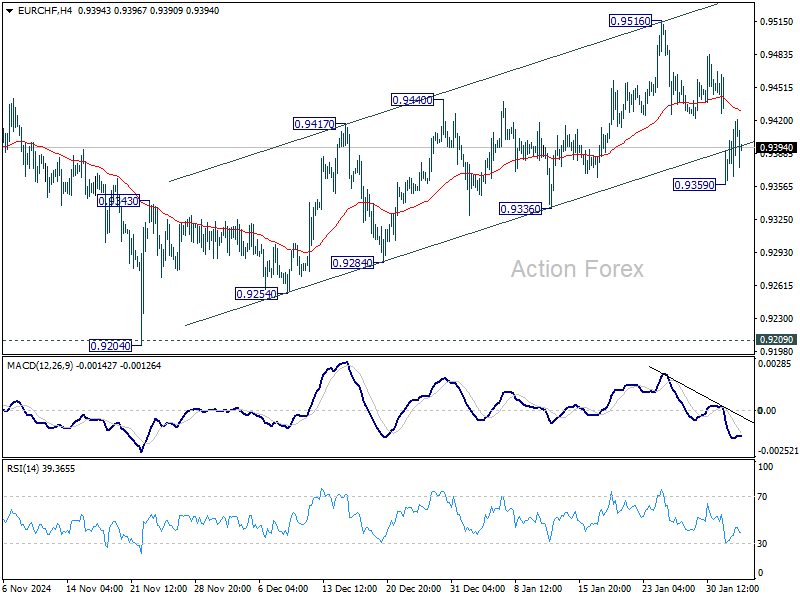
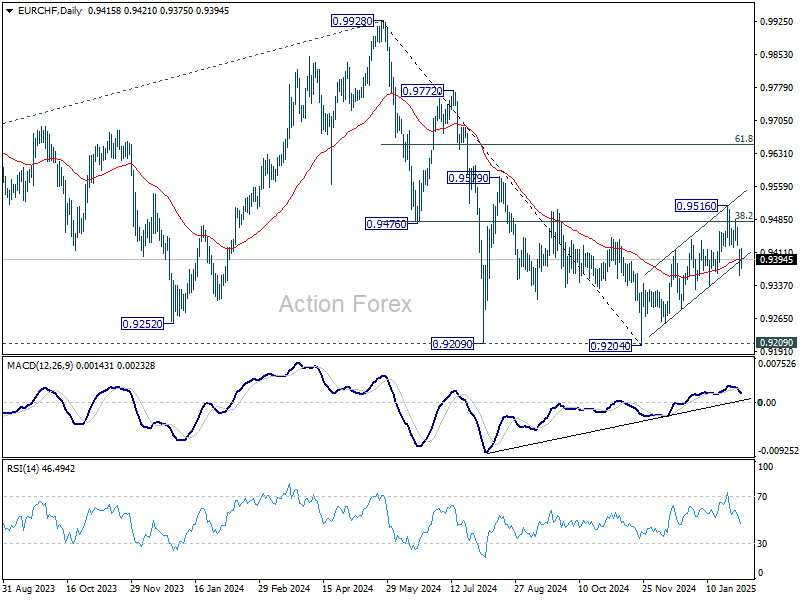
EUR/CHF’s last line of defence stands at 0.9255
Fig 2: EUR/CHF medium-term & major trends as of 3 Dec 2024 (Source: TradingView, click to enlarge chart)
The current price level of the EUR/CHF is being traded at 0.9320 at this time of the writing, just a whisker above the 0.9255 key intermediate support in place since its 29 December 2023 swing low.
The weekly MACD trend indicator has continued to inch downwards below its zero centreline which suggests a persistent major downtrend that increases the odds of a major bearish breakdown on the EUR/CHF (see Fig 2).
Watch the modified 0.9565 key medium-term pivotal resistance (also the 200-day moving average) and a break below 0.9255 with a weekly close below it may see fresh multi-year lows on the EUR/CHF to expose the next supports at 0.9085 and 0.8890 in the first step.
On the other hand, a clearance above 0.9565 negates the bearish tone for a squeeze up to revisit the 1.0040/1.1000 long-term pivotal resistance zone (also the upper boundary of the long-term secular descending channel in place since the April 2018 swing high).
EURJPY Rebounds Off More-than 2-Month Low
- EURJPY finds support near ascending line
- Stochastic and RSI look oversold; bullish move is expected
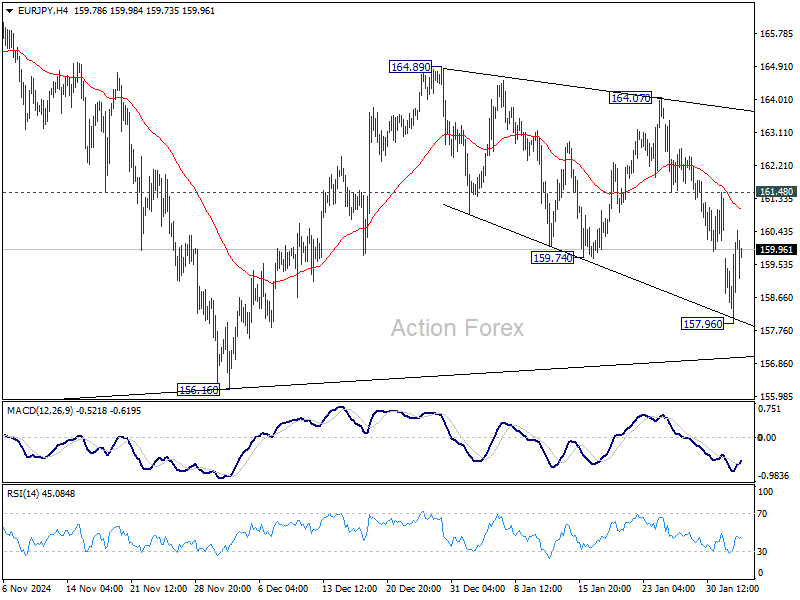
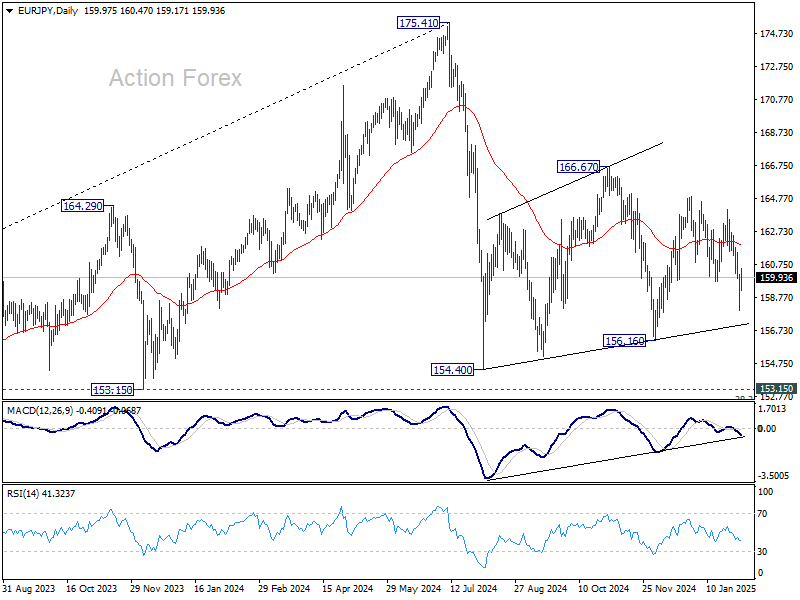
EURJPY has declined considerably after the pullback from the three-month high of 166.68, losing more than 6% in just one month. The pair recorded a fresh, more than two-month low of 156.36, with the simple moving averages (SMAs) confirming the bearish view in the short term.
However, the technical oscillators indicate the end of the dive. The stochastic oscillator posted a bullish crossover between its %K and %D lines in the oversold territory, while the RSI is pointing slightly up below the 30 level.
If prices continue to head lower, support could come from the 155.15 barrier ahead of the more-than-seven-month low of 154.40. A break below this area would reinforce the short-term bearish view and open the way toward the 153.20 barricade, registered in December 2023.
On the flip side, if the bulls retake control, price advances may stall initially near the 158.10 barrier and the 23.6% Fibonacci retracement level of the down leg from 175.37 to 154.40 at 159.30. A potential upside violation of the latest area would send traders toward the 38.2% Fibonacci of 162.30, which overlaps with the 20-day SMA.
In summary, the EURJPY remains above the medium-term uptrend line, showing indications of a potential bullish wave once more.
Swiss CPI stabilizes in Nov, but remains subdued at 0.7% yoy
Switzerland’s inflation data for November showed CPI falling -0.1% mom, matching expectations and mirroring October’s pace. Core CPI, which excludes volatile items like fresh and seasonal products, energy, and fuel, was flat on a monthly basis. Price movements showed domestic products falling -0.1% mom, while imported product prices dropped -0.4% mom.
On an annual basis, CPI edged up slightly from 0.6% yoy to 0.7% yoy, stabilizing after a downward trend since May, but falling short of market expectations of 0.8% yoy. Core CPI also rose modestly from 0.8% yoy to 0.9% yoy. Domestic product prices saw a slight decline from 1.8% yoy to 1.7% yoy, while imported product prices recovered somewhat, rising from -3.1% yoy to -2.3% yoy.
EUR/USD Daily Outlook
Daily Pivots: (S1) 1.0448; (P) 1.0511; (R1) 1.0560; More...
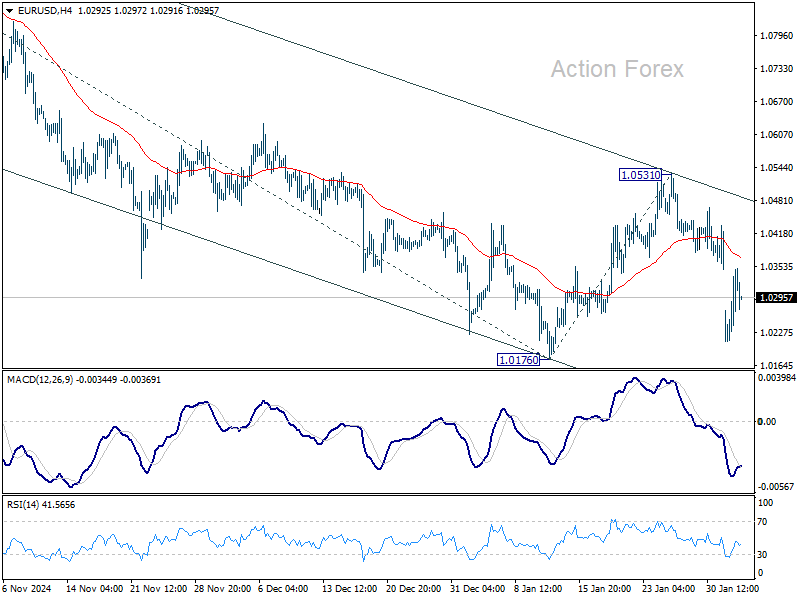
Intraday bias in EUR/USD remains neutral for the moment, and outlook stays bearish with 1.0609 resistance intact. On the downside, break of 1.0330 will resume the fall from 1.1213. Also, sustained trading below 1.0404 key fibonacci level will carry larger bearish implication. Nevertheless, firm break of 1.0609 will confirm short term bottoming, and turn bias back to the upside for 1.0760 support turned resistance first.
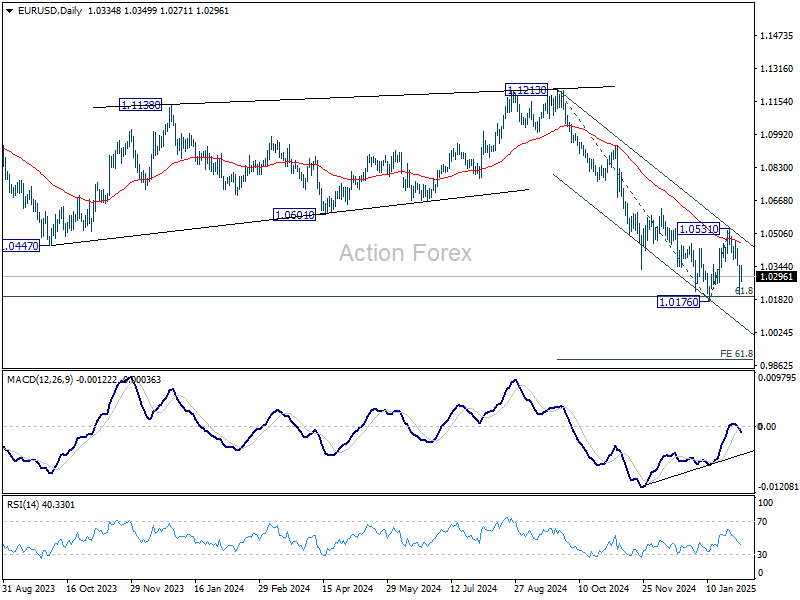
In the bigger picture, immediate focus is now on 50% retracement of 0.9534 (2022 low) to 1.1274 at 1.0404. Strong rebound from this level will keep price actions from 1.1273 (2023 high) as a medium term consolidation pattern only. However, sustained break of 1.0404 will raise the chance that whole up trend from 0.9534 has reversed. That would pave the way to 61.8% retracement at 1.0199 first. Firm break there will target 0.9534 low again.
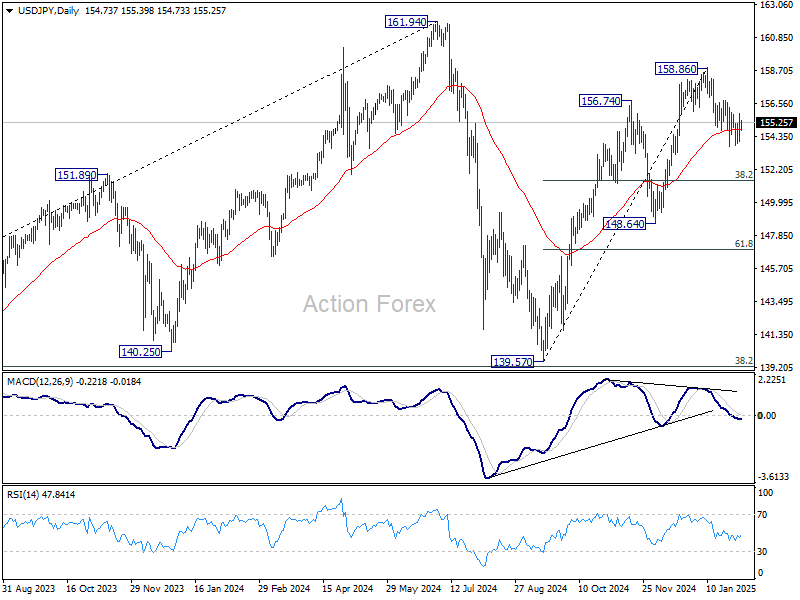
USD/JPY Daily Outlook
Daily Pivots: (S1) 148.86; (P) 149.81; (R1) 150.53; More...
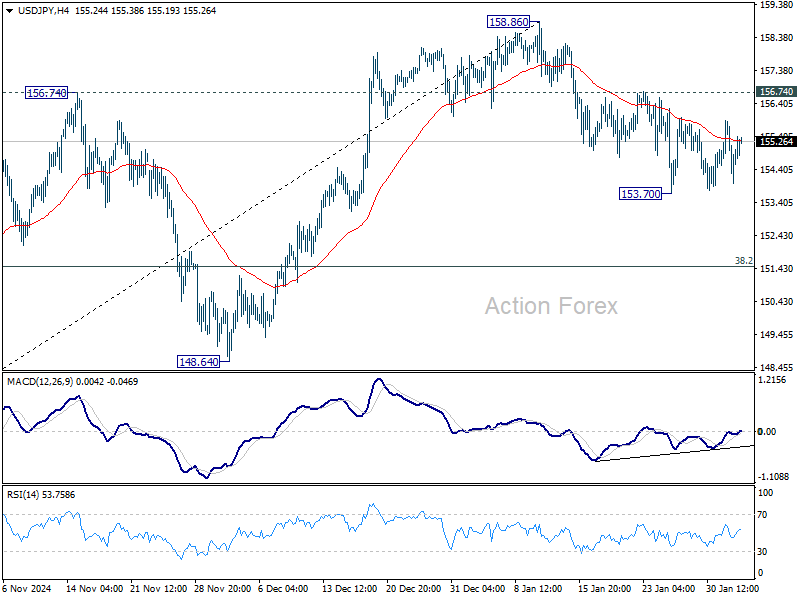
With 151.94 minor resistance intact, further decline is expected in USD/JPY. Sustained trading below 38.2% retracement of 139.57 to 156.74 at 150.18 will argue that whole rise from 139.57 could have completed. Deeper fall should then be seen to 61.8% retracement at 146.12 next. On the upside, break of 151.94 will turn bias back to the upside for stronger rebound instead.
In the bigger picture, price actions from 161.94 are seen as a corrective pattern to rise from 102.58 (2021 low). The range of medium term consolidation should be set between 38.2% retracement of 102.58 to 161.94 at 139.26 and 161.94. Nevertheless, sustained break of 139.26 would open up deeper medium term decline to 61.8% retracement at 125.25.
GBP/USD Daily Outlook
Daily Pivots: (S1) 1.2599; (P) 1.2671; (R1) 1.2724; More...
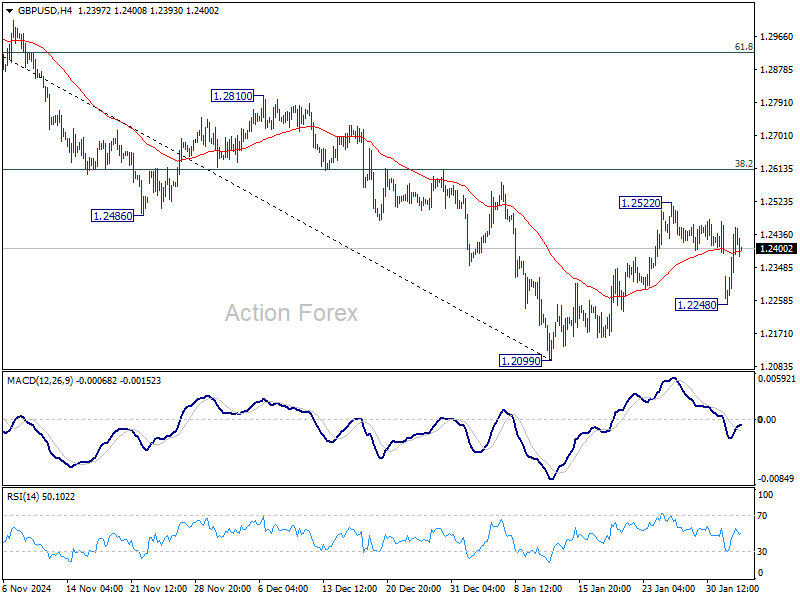
Outlook in GBP/USD is unchanged and intraday bias remains neutral for the moment. While another rise cannot be ruled out, outlook will stay bearish as long as 55 D EMA (now at 1.2858) holds. Below 1.2615 minor support will turn intraday bias back to the downside for retesting 1.2486. Break there will resume whole fall from 1.3433.
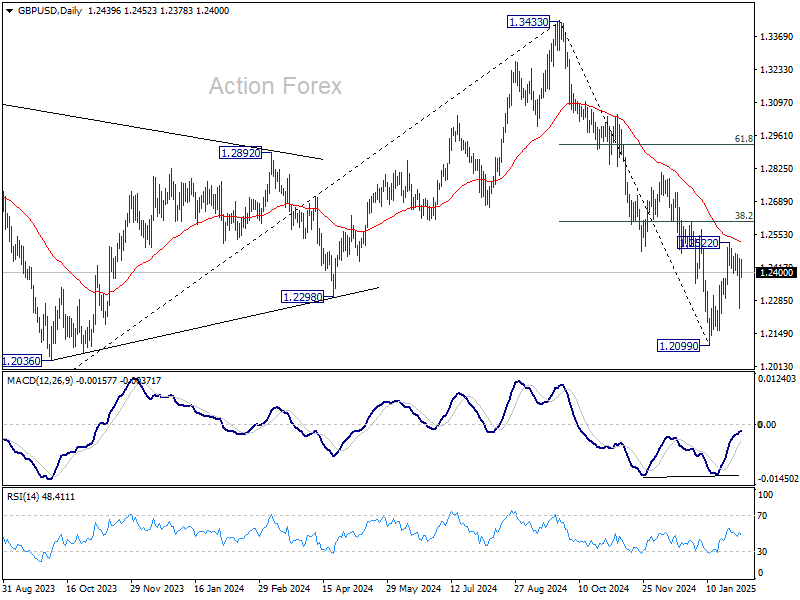
In the bigger picture, a medium term top should be in place at 1.3433, and price actions from there are correcting whole up trend from 1.0351 (2022 low). Deeper decline is now expected as long as 55 D EMA (now at 1.2867) holds, to 38.2% retracement of 1.0351 to 1.3433 at 1.2256, which is close to 1.2298 structural support. Strong support should be seen there to bring rebound.
USD/CHF Daily Outlook
Daily Pivots: (S1) 0.8814; (P) 0.8852; (R1) 0.8903; More…
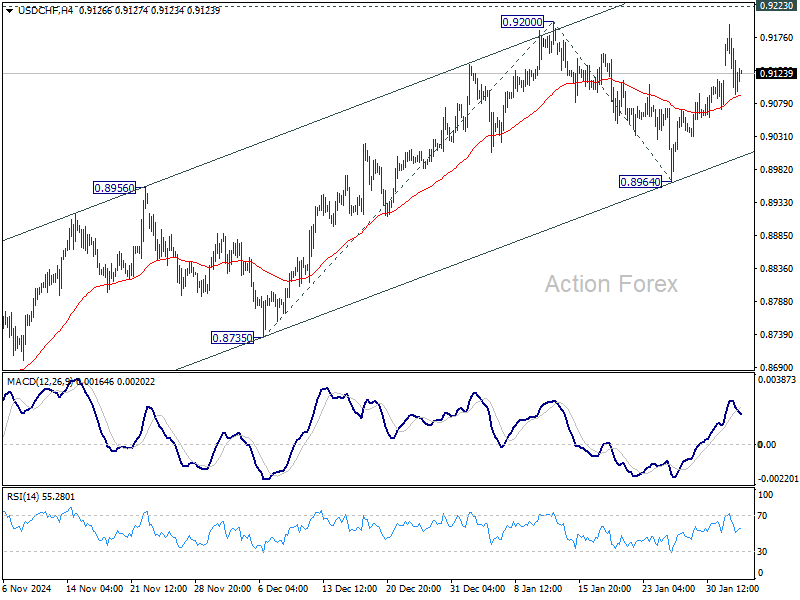
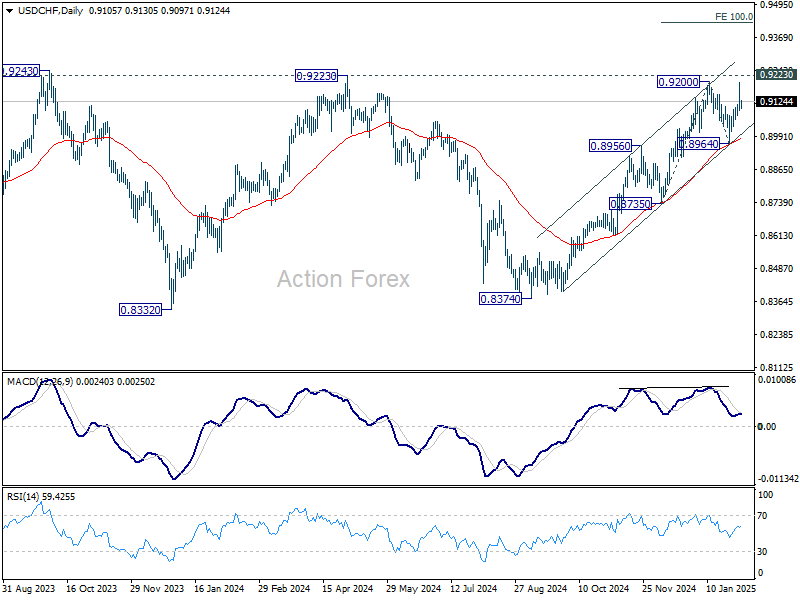
Intraday bias in USD/CHF stays neutral as range trading continues below 0.8956. With 0.8800 support intact, further rally remains in favor. On the upside, break of 0.8956 will resume the rally from 0.8374, and target 0.9223 key resistance next. However, firm break of 0.8800 will confirm short term topping and turn bias back to the downside for 55 D EMA (now at 0.8731).
In the bigger picture, price actions from 0.8332 (2023 low) are currently seen as a medium term corrective pattern. Rise from 0.8374 is seen as the third leg. Overall outlook will continue to stay bearish as long as 0.9223 resistance holds. Break of 0.8332 low is in favor at a later stage when the consolidation completes.
USD/CAD Daily Outlook
Daily Pivots: (S1) 1.3993; (P) 1.4042; (R1) 1.4094; More...
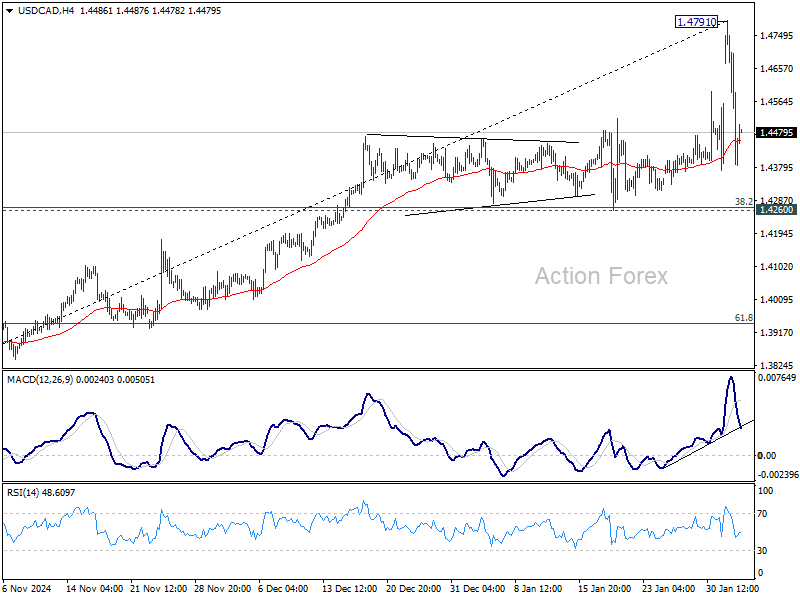
Range trading continues in USD/CAD below 1.4177 and intraday bias remains neutral for the moment. Further rally is expected with 1.3930 support intact. On the upside, firm break of 1.4177 will resume larger up trend towards 1.4391 projection level. However, break of 1.3926 will turn bias to the downside for deeper pullback to 55 D EMA (now at 1.3864).
In the bigger picture, up trend from 1.2005 (2021) is resuming with break of 1.3976 key resistance (2022 high). Next target is 61.8% projection of 1.2401 to 1.3976 from 1.3418 at 1.4391. Now, medium term outlook will remain bullish as long as 1.3418 support holds, even in case of deep pullback.
French Politics Beat the Common Currency Down
Markets
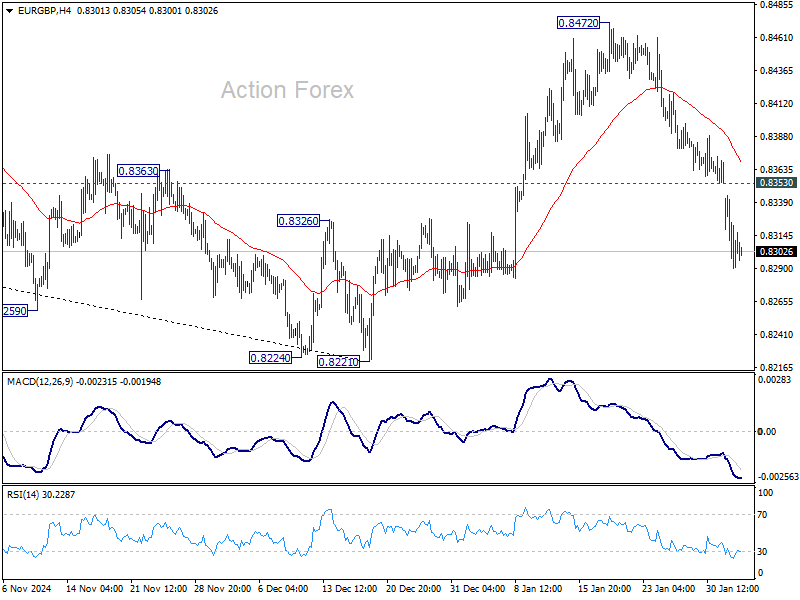
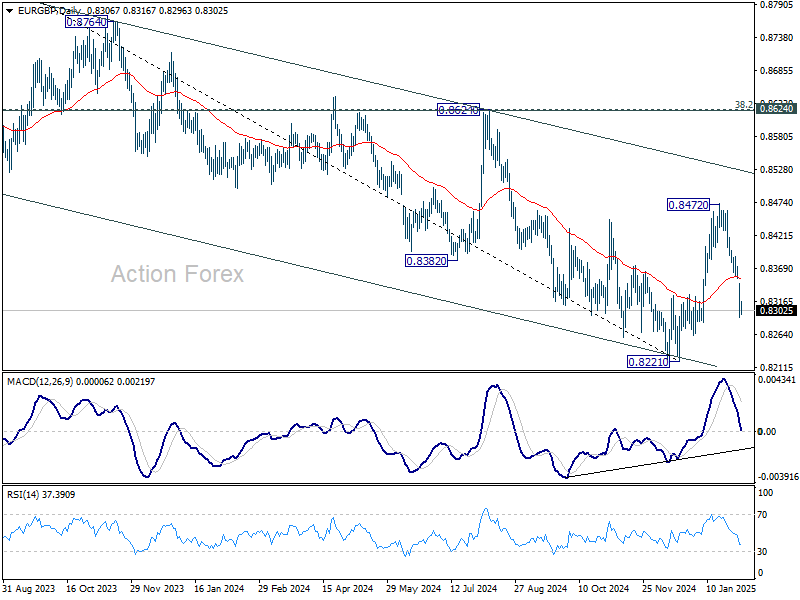
EUR/USD was among the worst cross rate performers yesterday. The currency pair dropped as low as 1.046, down from 1.058 at the open. French politics beat the common currency down after PM Barnier forced through part 1 of the budget using article 49.3 through which he circumvented parliament. Both the left and the right bloc in the opposition were against. Shortly after Barnier’s risky move, the far-left party La France Insoumise tabled a motion of no confidence. The far-right (Rassemblement National) said they would support it this time around in frustration of Barnier not incorporating enough of its demands in the bill. A vote and therefore the fall of the government could come as soon as Wednesday. Apart from the euro, French assets suffered. Equities (CAC40) clearly underperformed. OAT spreads vs Bund and swap rose to new 12-year highs. The dollar kept a strong bid overall. A slightly better-than-expected November US manufacturing ISM ahead of more important data later this week triggered little volatility. Influential Fed Waller saying he’s leaning towards a rate cut in December did cause some late-night USD weakness but barely enough for EUR/USD to close the day at 1.05 instead of below. Waller’s comments also capped the Treasury yield rebound to 0.1-3.8 bps. The front-end underperformed even as such a 25 bps rate is still not fully discounted. Rates in Europe dropped around 5-6 bps across the curve, both in Germany and in swap. Euro weakness filtered through in EUR/GBP too, dropping to an intraday low of 0.827 but closing around 0.83. JPY eked out small gains against the dollar (< USD/JPY 150) while showing a stronger performance against the rest of G10 peers. It’s backtracking a bit on those gains this morning. The Chinese yuan continues to trade in the defensive. USD/CNY jumped to the highest level since November last year, just below 7.3. Usual suspects for CNY weakness include ongoing economic worries, sliding Chinese yields & the US tariff threat. Next week’s annual Central Economic Work Conference is the next high-profile meeting to watch for clues on next year’s growth target and stimulus plans. Today is an in-between in terms of economic data. On the FX side we remain cautious on the euro in a daily and short-term perspective. Geopolitics, national politics, the economy or monetary policy, neither is looking good for the common currency for now. EUR/USD 1.0335 (November low) is the key reference. European yields have dropped sharply but we wouldn’t row against the tide. Germany’s 10-yr is closing in on 2%. We do look out for US yields at the long end of the curve to show signs of bottoming out after the recent correction on the Trump-trade.
News & Views
Inflation in South Korea printed lower than expected. Both the headline and core inflation stayed below the 2.0% target of the Bank of Korea. Headline inflation declined -0.3% M/M, but unfavorable base effects caused the Y/Y figure to rise from 1.3% to 1.5%. Markets expected a 1.7% Y/Y rise. Core inflation (ex. food and energy prices) rose marginally from 1.8% to 1.9%. The Bank of Korea last week unexpectedly cut its policy rate by 25 bps for the second consecutive meeting, bringing the policy rate to 3.0%. The BoK further prioritized growth in its policy assessment as inflation shows further signs for easing. Uncertainty on the impact of trade protectionism for the economy probably was a factor behind the unexpected rate cut alongside risks to domestic demand from consumers being hampered by a high debt load. Today’s lower than expected inflation keeps the door open of addition easing in Q1 next year. The won recently also suffered from a strong dollar and at USD/KRW 1403 is holding the YTD low within reach.
October UK retail sales showed a disappointing performance in November according the BRC sales monitor for November. Sales declined 3.3% compared to the same month last year (same store sales -3.4% Y/Y). Total sales were up 0.6%Y/Y in October. The November reading was the weakest since April of this year. Food sales were up 2.4% Y/Y but non-food sales declined 2.1% Y/Y in the three months to November. Interpretation of the data is complicated as Back Friday sales this year were not included in the November figure but will be part of the December publication. Still the data suggest a poor sales dynamics. Higher energy prices due to lifting the cap in energy bills and low consumer confidence are as mentioned as potential explanation for the poor performance of non-food sales.
C’est La Crise
France has stepped into the crisis mode after a series of events - that included budget concessions to make Le Pen happy - ended with Le Pen not being happy. Consequently, Barnier used a constitutional tool to push his unpopular budget bill without a parliamentary vote and Le Pen said that she would take his government down by joining the leftists in a no-confidence motion. In summary, the things will probably get messier in France before they get better.
Interestingly, the market’s reaction to the latest drama was lighter-than-I-would-expect for a country that risks losing its hardly-funded government in the next days, and risks a potential government shutdown in the coming weeks. The French 10-year yield fell to the lowest in two months and the CAC 40 closed the session near flat. But wait, the spread between the 10-year French and German yields jumped to 87bp – the highest since the euro debt crisis of a decade ago, and could well spike above the 100bp mark if the French political crisis is not contained. The widening French-German yield spread hammered the single currency on Monday. The EURUSD sharply dropped to 1.0460 and will certainly remain under the pressure of the French drama – among other problems on the continent. Stellantis CEO quit yesterday on tumbling sales and profit causing the shares to drop more than 6%, and around 66’000 VW workers abandoned their posts on failure to agree how to slash costs to avoid factory closures. Selloff in VW shares remained curiously limited.
PS: Crisis equals opportunities that will allow some investors to buy French, and broader European assets at discounted prices. So next weeks will be about watching and chasing a dip for many investors. The widening valuation gap between the US and European equities looks interesting for those who believe that the two continents can not diverge forever.
What happens in Europe stays in Europe
The S&P500 printed this year’s 54th record high on Monday, as record Black Friday sales came as another proof that Americans continue to spend. Nasdaq 100 jumped more than 1% to near an ATH. Intel gained and erased gains on news that its CEO was forced to retire on failure to turn the company’s fortunes around, and watch the competition eat into its market share. All eyes are on what the new CEO will do with the foundry business. Intel could spin it off to better compete with the Nvidia – which only designs its chips and lets the others build. But the company’s foundry business could be a good source of revenue and give Intel a competitive advantage within the ‘America First’ narrative
In the FX, the USD index rose as the euro sold off sharply and Trump warned BRICS against replacing the US dollar by a common currency. The USDJPY tested the 100-DMA support, near 149, to the downside but rebounded back above the 150 level. The bets that the Bank of Japan (BoJ) could announce another rate hike before the year-end keeps the yen bulls alert, but levels below 150 may be too enthusiastic provided the BoJ’s potential to deliver a dovish hike that would limit the yen’s appreciation.
In the bonds space, the 10-year JGB yield is pushing higher and the euro 10-year yield is pushing lower on expectation that the European Central Bank (ECB) must cut more-than-otherwise to contain the French crisis and to give support to the struggling European economies amid slow growth and a growing tariff threat from the US. The latter should continue to support a further downside in the EURJPY. In the US, the 2-year yield consolidates near the 4.20% mark, and the probability of a 25bp cut from the Federal Reserve (Fed) in the December meeting is up to almost 75% after the Fed’s Waller said that he would back a 25bp cut in the December meeting. For those who are still interested – and think that the data is worth something in Fed’s decision making – the US announced a set of better-than-expected PMI numbers yesterday and is expected to print higher job openings for October and better optimism for December. Strong data should – in theory - tame a part of the dovish Fed expectations, but the market wants to see another 25bp cut from the Fed in December and the Fed is happy to align. Whether it will limit the USD’s upside potential remains uncertain, but with strong data, it seems unlikely.
In energy, US crude gave back the early week gains yesterday, as the failure to clear the $70pb offers brought in the top sellers near this level. The downside potential should be limited and price rebounds could be expected on hope that OPEC would delay – or even scrap – its plans to restore production in early 2025. But OPEC alone could hardly turn around the market. Therefore, price rallies will continue to offer interesting levels to strengthen medium-term bearish positions.