

Sample Category Title
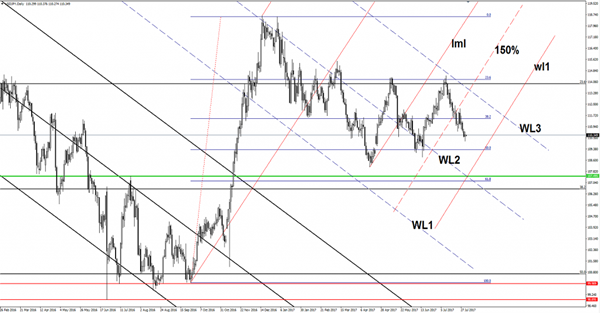
USD/JPY Losing Momentum
Continues to move in the range between the 23.6% and the 50% retracement levels. Personally, I still believe that will reach and retest the 50% retracement level and the warning line (wl1) of the ascending pitchfork. We’ll have a clear direction only after a valid breakout from this extended sideways movement.
Gold Expected To Stabilize In The Green Zone
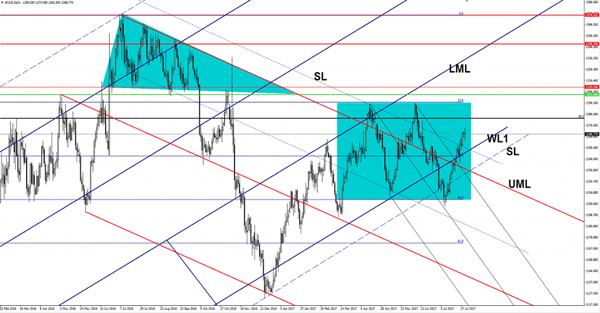
We had some volatility on Gold on Tuesday, but now looks undecided even if the perspective is bullish on the short term. Could shine further if the dollar index will hit new lows, it is expected to approach and reach the 38.2% retracement level and the 23.6% retracement level. A retest of the warning line (WL1) will bring us a good buying opportunity.
NZD/USD Turned To The Downside
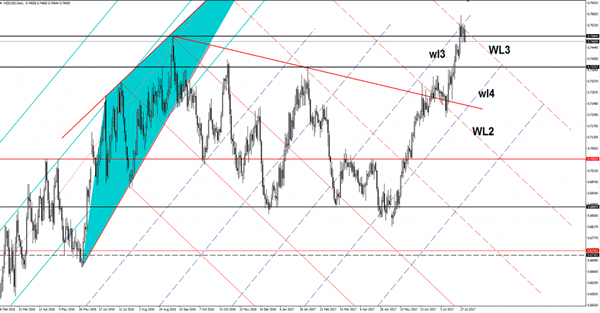
Price dropped aggressively on Tuesday, erasing the Monday's gains, we may have a selling opportunity if will come back to retest the resistance levels. Technically should drop on the short term after a false breakout above a major confluence area. The USD has managed to drag the price down only because the dollar index has managed to increase a little and to jump above the 93.00 psychological level again.
Unfortunately, the USDX is still pressured on the Daily chart, could still approach and reach the 92.49 static support despite the yesterday's rebound.
You should know that the price will be driven by the fundamental factors later as the New Zealand is to release high impact data, the Employment Change could increase by 0.7% in Q2, while the Unemployment Rate could drop to 4.8%, from 4.9% in the second quarter. The Labor Cost Index may increase by 0.5%, more compared to the 0.4% growth in the former reading period. The US is to release the ADP Non-Farm Employment Change today, this event could bring a high volatility.
Price plunged in the last session and invalidated the breakout above the third warning line (WL3) of the major descending pitchfork. Now is trading under the 0.7484 static resistance, a retest of this level and the WL3 will bring us a perfect selling opportunity with first target at the 0.7375, the next one will be at the fourth warning line (wl4) of the former ascending pitchfork. I've said in the previous analysis that the perspective remains bullish as long as is trading above the wl4, a major drop will come only if it will take out the mentioned support. However a further increase will be confirmed only after a valid breakout above the WL3.
1MDB Rears Its Ugly Head
The 1MDB scandal rears its ugly head again and could dent sentiment in local Bond markets over the short term after 1MDB failed to make good on debt payments to Abu Dhabi sovereign wealth fund as part of a debt settlement dispute.
And while the regional geopolitical knock on from North Korea appears well contained further escalation will likely create unwanted local volatility and could spur capital outflows
But the USD MYR despite Political and Geopolitical spillovers could continue to push lower amidst broad USD weakness and stability of renminbi over the medium term. But over the short term, 1MDB headline consternation and the lack of overt USD selling suggest the USDMYR trades with a bid tone today, however, the pair is unlikely to press the 4.29 level. So far there has been little panic in the markets since Tuesday’s headline (1MDB) as there are still active buyers of Malay bonds
None the less, the local market is a bit jittery now but with global equity market trading at records highs and US treasury yields softening overnight, investor anxiety could be short lived.
However I think the MYR and other regional currency appeal is very much a USD storyline and provided the USD remains weak on a dovish Fed outlook, the MYR should stay in favour. However, a return of US fiscal policy to the headlines or a more aggressive Fed balance sheet initiative will present some serious headwinds to this view.
A Respite For The Greenback
A respite for the Greenback
Despite a break from the incessant waves of US dollar selling, there remains a skittish overtone in the currency markets as the fear of the unknown set’s in with US political uncertainty accentuating the current market unease. Treasuries traded down after a consensus PCE, but market sentiment quickly shifted driving prices up and yields down, as the market again emphasises the US political morass.
The US political crater and lack of fiscal stimulus from Washington will continue to be the primary catalyst for dollar declines. While the market is cautious about a possible USD risk reversal, searching for the key triggers are like looking for a black cat in a coal cellar.
US economic data had little impact on the December rate hike probabilities. But the fact remains investors believe the current political tumult in Washington will lessen the chances of another Federal Reserve rate hike in 2017
The perpetual Oil price roller coaster is adding to market jitters as WTI dropped 2.0% today on a Reuters report that OPEC production rose in July. Adding more fuel to the fire was the increase in US crude inventories reported by the American Petroleum Association at the end the NY session
Equities, on the other hand, continue to flourish as earning reports drive stocks to new highs. The Dow reached a new-all time high for a fifth consecutive session, nibbling at the key 22k mark
EURO
The Euro has traded marginally lower overnight but for the most part, has been trading sideways. The position overhang from month end activity with US payrolls around the corner has dealers adopting a more cautious tact as they look for more clues amidst the foggy US economic and political landscape.
Australian Dollar
While there was nothing particularly dovish in the RBA statement, there was also nothing that screamed AUD higher other than USD weakness. The Aussie has plunged lower overnight as the market is inferring that provided the currency remains elevated the RBA stays in the low-interest rate for the longer mode.
Japanese Yen
Very choppy session overnight as the Greenback traded with mixed sentiment. There was little news behind the overnight currency moves other than to speculate its a bout of nervous position nellies in summer thinned trading condition.
USD/CAD Canadian Dollar Lower Ahead Of US Private Jobs Report
The Canadian dollar gave back gains from the previous day as the turmoil surrounding the Trump Administration were given lower priority as the US employment releases this week will start with the release of the ADP on Wednesday.
The Canadian dollar has been appreciating against the USD since the Bank of Canada (BoC) changed the tone from neutral to hawkish in June. The central bank followed through with a 25 basis points rate hike in July. The loonie has taken advantage of USD softness as political uncertainty in Washington have impaired the greenback.
Canadian employment data will be released on Friday at the same time as the biggest indicator in the market, the U.S. non farm payrolls (NFP) at 8:30 am EDT. Canadian jobs have far exceeded expectations in the last two reports by quadrupling the forecast. Canada is forecasted to gain 11,000 jobs on Friday, but investors will be focused on American wages for signs of a pick up in inflation that would keep the Fed on the current path of rate hikes.
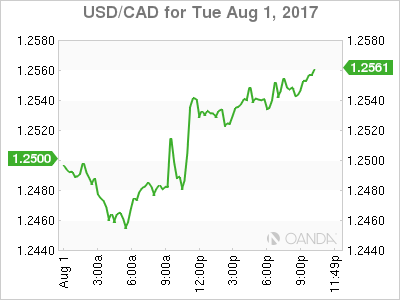
The USD/CAD gained 0.574 percent on Tuesday. The currency pair is trading at 1.2543 after the USD has recovered ahead of US jobs reports. Canadian data has boosted the loonie this year and the manufacturing purchasing managers’ index (PMI) rose to 55.5 earlier today. A strong first quarter could be followed by another solid gain that could keep pushing the currency higher.
The Bank of Canada (BoC) cut rates twice in 2015 to soften the blow to the economy from a drop in oil prices, but as crude has stabilized thanks to the efforts of the Organization of the Petroleum Exporting Countries (OPEC) the central bank had a quick turnaround in June and is now expected follow the July interest rate hike with another in October. The timing of the decision makes sense if the Canadian central bank wants to see if the Fed decides to start reducing stimulus in September and a Canadian rate rise could preempt a rate hike by the Fed in December
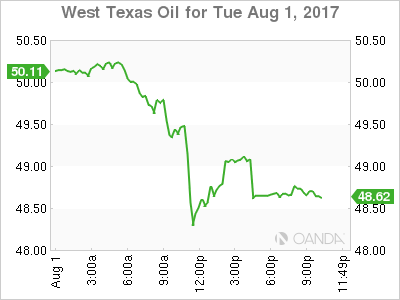
Oil prices lost 2.078 percent in the last 24 hours. West Texas Intermediate is trading at $49.06 as details of a rise in OPEC production as published by Reuters. The deal between major producers has kept prices in the current range, but there are cracks starting to appear on the sustainability of the agreement.
Saudi Arabia has capped production more than any member to cover the gap left by nations that could not cut as quickly or a deep. Disruption issues in Nigeria and Libya exempted the producers from participating but as they get close to recovery their production pressures prices.
Weekly oil reports have dictated the direction of energy prices as lower inventories have given way to a surge in oil prices, but demand remains stagnant limiting how high prices could really go.
Market events to watch this week:
Wednesday, August 2
4:30 am GBP Construction PMI
8:15 am USD ADP Non-Farm Employment Change
10:30 am USD Crude Oil Inventories
9:30pm AUD Trade Balance
Thursday, August 3
4:30 am GBP Services PMI
7:00 am GBP BOE Inflation Report
7:00 am GBP MPC Official Bank Rate Votes
7:00 am GBP Monetary Policy Summary
7:00 am GBP Official Bank Rate
7:30 am GBP BOE Gov Carney Speaks
8:30 am USD Unemployment Claims
10:00 am USD ISM Non-Manufacturing PMI
9:30 pm AUD RBA Monetary Policy Statement
9:30 pm AUD Retail Sales m/m
Friday, August 4
8:30 am CAD Employment Change
8:30 am CAD Trade Balance
8:30 am USD Average Hourly Earnings m/m
8:30 am USD Non-Farm Employment Change
Dollar Recovers Awaiting US Private Payrolls
Employment data to guide USD this week
The Dollar is higher across the board versus the majors ahead of the start of American jobs reports this week. The ADP private payrolls will be the first of three employment data points with the weekly unemployment claims and the U.S. non farm payrolls (NFP) having a lot of say in where the USD is headed. The headline number of jobs gained is important but the market will be even more focused on evidence of higher inflation. The U.S. Federal Reserve has already hiked interest rates two times in 2017, but could reduce the pace of monetary policy tightening if there is no proof of higher wages as part of this week's reports.
The ADP Non-Farm Employment Change survey will be published on Wednesday, August 2 at 8:15 am EDT. US corporations are expected to have created 187,000 jobs and the release will create a baseline for the NFP report to be published on Friday. Economic indicators in the US have been mixed, political uncertainty in Washington and some hints of a more cautious U.S. Federal Reserve have put the dollar under pressure.
The Energy Information Administration (EIA) will publish the weekly US crude inventories at 10:30 am EDT. Oil stocks are forecasted to drop for the fifth straight week. The slowdown in US production added to the efforts of the Organization of the Petroleum Exporting Countries (OPEC) and other major producers to limit output. The oil rally faced a tough test on Tuesday as prices fell close to 2 percent as OPEC production could rise despite the agreement in place.
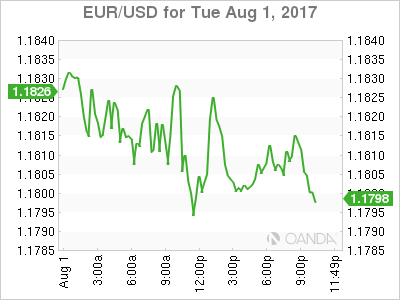
The EUR/USD fell 0.242 percent on Tuesday. The single currency depreciated versus the USD after the price had hit a 15 month high. Profit taking ahead of the US employment data releases weakened the EUR. The USD has been on the back foot for the past five months losing as much as 9 percent as political drama in Washington has stolen the spotlight away from fundamentals and monetary policy. Low inflation remains a concern but with steady growth and rising spending the Fed could raise the US benchmark rate once again in 2017.
The CME FedWatch tool is showing a 98.6 percent probability of the Fed funds rate staying at 100–125 in September but the December Federal Open Market Committee (FOMC) meeting is now 50/50 to end with rates going to 125–150 basis points. The Fed moved away from the patient mode it had displayed in the previous two years and has already hiked twice in 2017 and has signalled it will start to reduce the balance sheet it accumulated starting this fall.
The USD has been supported by the central bank, but the Trump administration has lost credibility after squandering important political capital by failing to push through health care reform. The market was pricing in tax reform and infrastructure spending in what was called the Trump trade, but as those policies kept being pushed back the USD depreciated. Tax reform is back on the agenda, but there are serious questions on how optimistic the Administration is when it talks about a obstacle free path for the policy.
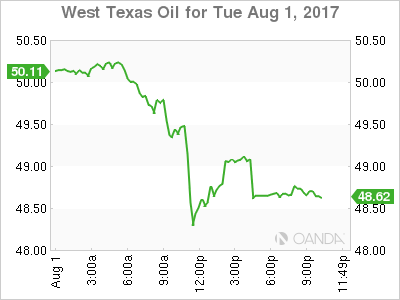
Oil prices lost 2.078 percent in the last 24 hours. West Texas Intermediate is trading at $49.06 as details of a rise in OPEC production as published by Reuters. The deal between major producers has kept prices in the current range, but there are cracks starting to appear on the sustainability of the agreement.
Saudi Arabia has capped production more than any member to cover the gap left by nations that could not cut as quickly or a deep. Disruption issues in Nigeria and Libya exempted the producers from participating but as they get close to recovery their production pressures prices.
Weekly oil reports have dictated the direction of energy prices as lower inventories have given way to a surge in oil prices, but demand remains stagnant limiting how high prices could really go.
Market events to watch this week:
Wednesday, August 2
4:30 am GBP Construction PMI
8:15 am USD ADP Non-Farm Employment Change
10:30 am USD Crude Oil Inventories
9:30pm AUD Trade Balance
Thursday, August 3
4:30 am GBP Services PMI
7:00 am GBP BOE Inflation Report
7:00 am GBP MPC Official Bank Rate Votes
7:00 am GBP Monetary Policy Summary
7:00 am GBP Official Bank Rate
7:30 am GBP BOE Gov Carney Speaks
8:30 am USD Unemployment Claims
10:00 am USD ISM Non-Manufacturing PMI
9:30 pm AUD RBA Monetary Policy Statement
9:30 pm AUD Retail Sales m/m
Friday, August 4
8:30 am CAD Employment Change
8:30 am CAD Trade Balance
8:30 am USD Average Hourly Earnings m/m
8:30 am USD Non-Farm Employment Change
None Wants A Strong Currency
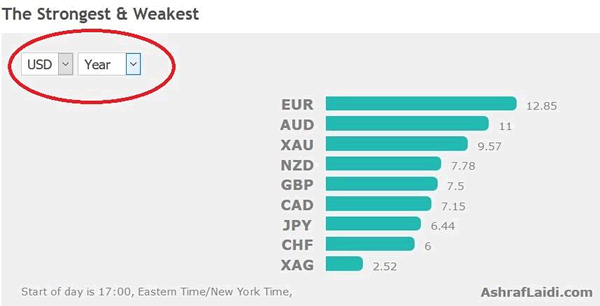
The RBA statement on Tuesday highlighted the conundrum at central banks – they're feeling better about growth and inflation but don't want a higher currency. Lowe did his best to salt in some jawboning and AUD/USD fell in the aftermath of the decision but the decline may have been less about his anti-AUD comments than the RBA's forecasts. NZD is falling fast in early Wednesday Asia after NZ Q2 employment contracted 0.2% q/q vs expectations of +0.8%.The chart belows shows all currencies are up vs the USD so far this year, with the euro the strongest, franc the weakest and silver the weakest metal, well underperforming gold.
US data were neutral to negative. June core PCE price index held at 1.5%. July manufacturing ISM slipped to 56.3 from 57.8, with prices paid up to 62 from 55.0 and employment off to 55.2 from 57.2. June construction fell 1.3% vs expectations for a rise with net downward revisions, which means a negative contribution to the Q2 GDP revision.
The RBA statement said a stronger Australian dollar would restrain growth and inflation. It's not as strong as previous comments that explicitly warned of the perils of a high currency but it still helped to set a cap on the Aussie. It means that if AUD/USD rises further, rate hikes will be pushed out further, thus suggests the RBA's reaction function.
The other standout in the RBA statement is downcast commentary on wage inflation. Lowe made several references to low wage growth and said it will continue for a while yet.
A widening gulf between central banks may be growing -- Some have grown tepid on wage growth, despite all the traditional signs of a tighter job market. That's a reflection of a change in global dynamics, offshoring and automation. Other central banks believe it's only a matter of time until wages pick up, as the traditional rules kick in.
Since the same factors are in play everywhere, both sides can't be right. What strikes us is that forecasting low wage growth may be more effective in restraining FX than jawboning. The risk is that if you're wrong about wages, you might have an inflation problem. That's a risk worth taking or at the very least, it may mean more central banks take a wait-and-see approach.
Such a collective shift to the sidelines could have the greatest impact on FX, weighing particularly on currencies with the most tightening priced in. That said, we don't see signs of strong or shifting rhetoric on the wage inflation debate just yet.
Five Common Trading Mistakes and How to Overcome Them – Part II
In the previous article, we covered the two main reasons why traders often end up losing money. The first being the chase to catch tops and bottoms, which can be lucrative but also comes with big risks. The second mistake being, making use of improper money management techniques or entering a trade too late into the trend.
Despite coming up with a good analysis, when traders put aside their trading plan and focus instead on chasing the trade, it can lead to serious mistakes.
In this second part of the series, we look at some of the other commonly made mistakes in trading, continuing from part I.
3. Cutting winners too early
Cutting winners too early and leaving losing trades running too late are often associated with emotions of fear and greed. The best way to overcome this is to ensure that you follow a trading plan.
A trading plan should ideally tell you which levels to take a position in the markets, which levels would invalidate your trading bias and of course, the money management aspect so that you do not expose all your trading equity in just one trade.
The above mistakes can also be made when your trading strategy is either new or that you do not have enough confidence in your trading set ups. Try to get familiar with your trading strategy and learn to be more objective with your analysis.
When your trade reaches a level of invalidation, cut your losses and move on. When your trade is working in your favor, always make it a point to make use of trailing stops or breaking down the positions so that you book profits are regular intervals.
A trading plan will not only tell you how to navigate the uncertainty from a trade but also helps to bring about some level of objectivity into your analysis. Even if the trade goes against you and you are stopped out, you would know the reason why, rather than let emotions rule the outcome.
4. Peer Pressure
Peer pressure goes by many other terms. Being influenced by what's being said in the financial media. Most of these gurus often sound confident in their analysis and trade calls that they make and at times when your trading confidence is at an all time low you can end up basing your trades simply by what the pundits are saying.
The best way to overcome this is to build familiarity with your trading system, which is nothing but practice and more practice. Another factor to bear in mind is that when a trading guru speaks about a trade set up, the finer elements are missing.
A hedge fund with $100k in trading capital can well manage a 100 - 500 pip drawdown in their trade, but not so much a retail trader who trades with just $5000 or lesser. Always learn to take any trading advice with a pinch of salt.
5. Being married to your bias
As a trader flexibility is what you need but within balance. Staying committed to your trading bias can be disastrous leading you to continue adding to a losing position which could eventually affect your bottom line equity.
On the same note, trying to be too flexible by switching between positions whenever the markets make strong turn can also be disastrous. When it comes to trading, traders need to find a balance between staying committed to a bias but only so long as the markets prove you wrong which is when you need to accept the fact and cut your losses.
It is only but obvious that as humans, mistakes do happen. That said, as a trader it is your imperative that you identify these mistakes, especially if you find yourself repeating them frequently. Even the best of traders make mistakes, but the difference between a successful trader and the rest is that mistakes are weeded out early and corrected.
Five Common Trading Mistakes and How to Overcome Them – Part I
Trading can be quite a challenge for most, regardless of whether you are a novice or an experienced trader. Emotions, analysis, trading strategy all play a role when it comes to executing the picture perfect set up.
But more often than not, traders tend to end up making mistakes which often can be decisive between increasing your bottom line trading equity and erasing your gains completely. No matter how good a trader you are, here are five most commonly made trading mistakes along with some suggestions on how one can avoid or deal with them more objectively.
1. Tops and Bottoms
Let's start with the obvious.
The temptation to catch a top or a bottom is quite tempting, not just for beginners but even experienced traders as well. There is a certain appeal in taking a contrarian approach to the markets, but unless you really have a strong reason and backed up by adequate money management, it can be a disaster if you try to chase the tops and bottoms in the market.
The reason why traders often tend to chase tops and bottoms in the market is because of the psychology behind it. Traders believe that the markets, especially after a strong trend will turn around and the temptation to get in early in the new trend often leads to traders taking a wrong position in the markets.
The truth is that trends are validated only after the price has moved a considerable period, and even the best analysts or traders find it hard to call a top or a bottom in the markets.
Take for example the Gold chart below which shows the strong trend. Prices briefly topped out before falling back but soon enough rallied back to take out the previous high. Traders who would have entered at the first high that was formed near 1263.44 would have been sorely disappointed as Gold yet again rallied back to post a new higher high at 1283.65.
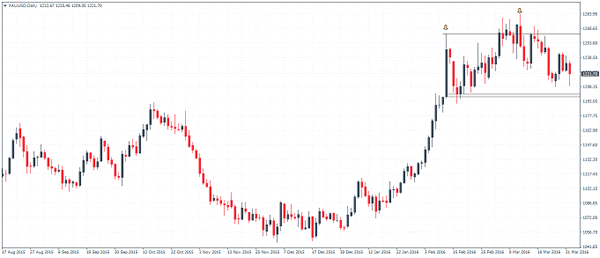
To deal with Tops and Bottoms, traders need to set aside their emotions and impulse and rather look at it from a more objective point of view.
Picking tops and bottoms is something that is common with traders, due to the fact that it can be very rewarding. But the risks are also equally big. Traders can look at using other strategies such a divergence, high/low methods or Bollinger bands which can be useful in predicting exhaustion to the momentum.
2. Improper Risk Management
An interesting bit is that in most cases, traders are quite right in their analysis. What they often get wrong is the money management aspect of it. Opening a big position right away because your analysis tells you that prices are likely to turn the corner would leave you at the risk that prices could continue to move higher.
By having too much exposure in the first position itself, it becomes difficult to manage the trade if prices continue to push higher for a short period of time, often leading to margin calls or being stopped out due to price spikes.
For example, the chart below of USDCAD shows how one would typically trade. Say your trading strategy was based on divergence setups. Here you can see that the new high in price saw the Stochastics making a lower high and indicating price will turn lower.
Now you sell after the short term support was broken at 1.4507. But soon enough prices started to push back higher. Looking at the chart below you can see that after a brief push higher, price moved lower just as you expected.
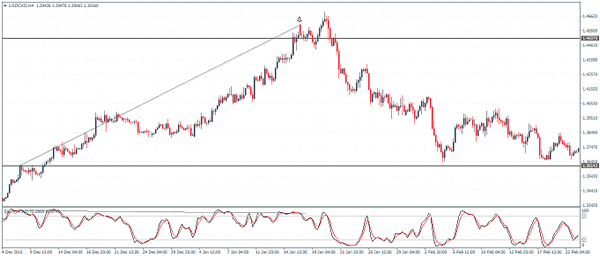
Adding too much of a short position near 1.4507 could have resulted in the spike higher taking out your position by hitting the stops or a margin call. On the other hand, if you had used a 1% money management rule, your trade would have had a decent breathing space instead.
In this first part, we have learned how chasing the tops and bottoms and using improper money management methods, and trade levels can impact the outcome from a trade. In the next part of this series, we look at another three sets of issues that are common to traders and how these mistakes can be avoided.