Sample Category Title
Yen Hits 4-Month High, Japanese Inflation Improves
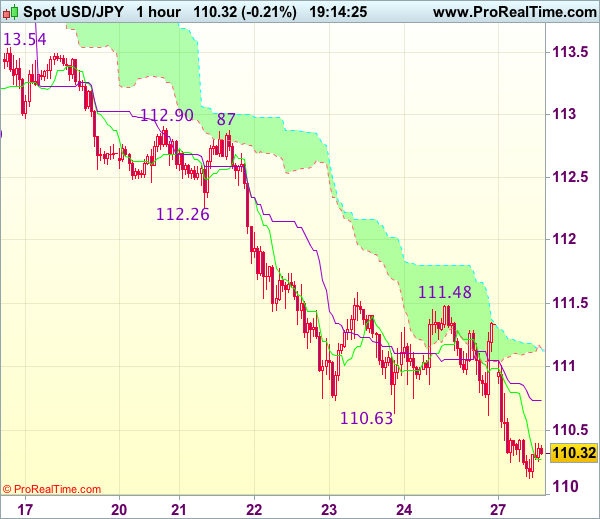
The Japanese yen has edged lower in Monday trading. In the North American session, USD/JPY is trading at 110.30. On the release front, Japanese SPPI improved to 0.8%, above the estimate of 0.5%. In the US, there are no economic indicators, but we'll hear from two FOMC members – Charles Evans and Robert Kaplan. On Tuesday, the US releases CB Consumer Confidence.
The Japanese manufacturing sector has been hard hit by weak global demand, but the picture has brightened in recent months. Flash Manufacturing PMI, an important gauge of the sector, has indicated slight expansion for six straight months, and this positive trend is expected to continue in the March release. Global demand has been increasing, and a relatively weak Japanese currency has made Japanese goods more competitive on world markets. Bank of Japan Deputy Governor Kikuo Iwata spoke before a monetary policy committee last week, and addressed the issue of a weak Japanese currency. Iwata noted that there were also negative aspects to a weak currency, and stated that the BoJ was aiming to bolster inflation through a rise in wages and productivity, rather than relying on a weak yen.
The US dollar enjoyed an impressive run after Donald Trump's election last November. However, the euphoria over President Trump's upset election win is long past. The inquiry into the Trump administration's links with Russia continues to make headlines, and is another cause for concern for nervous investors. Trump has been in office for over two months, but he has yet to provide any details over even an outline of economic policy. Last week, Trump's proposed bill to change Obamacare was not even voted on, as the White House could not garner enough support to pass the bill. This debacle will only increase market uneasiness over Trump, and the safe-haven yen could make inroads against the greenback if investors lose their appetite for risk.
Trade Idea Update: USD/JPY – Sell at 111.00
USD/JPY - 110.35
Original strategy :
Sell at 111.00, Target: 110.00, Stop: 111.35
Position : -
Target : -
Stop : -
New strategy :
Sell at 111.00, Target: 110.00, Stop: 111.35
Position : -
Target : -
Stop : -
The greenback opened lower earlier today and has dropped again, adding credence to our bearish view that recent selloff is still in progress and may extend weakness to 110.00, however, loss of downward momentum should prevent sharp fall below 109.70-75 and reckon 109.50 would hold from here, risk from there has increased for a rebound to take place later.
In view of this, would not chase this fall here and would be prudent to sell dollar on recovery as 111.00 should limit upside. Above 111.30-35 would risk test of resistance at 111.48 but break there is needed to signal low is formed instead, bring retracement of recent decline to 111.75-80 first.
EUR/USD Breaks Beyond 1.0874 Resistance
Headlines
US stocks markets open around -0.75% lower as markets put in doubt the reflation trade following Friday evening's political defeat. Losses on European stock markets are even slightly bigger, to the tune of 1%.
Confidence among German businesses (Ifo) beat forecasts to hit its highest level since 2011 in March. Ifo's overall business climate index rose to 112.3 from last month's 111.6. The gain was supported by improvements in the subindices for both current trading assessments and future expectations, which rose to 119.3 and 105.7 respectively.
Lending to euro zone households grew at its fastest pace since late 2010 last month (2.3%), but corporate lending unexpectedly slowed to 2% its lowest rate since June. The annual growth rate of EMU M3 money supply, which has in the past often predicted economic activity, rose 4.7% last month, from 4.8% and below 4.9% consensus.
South African President Jacob Zuma has instructed Finance Minister Pravin Gordhan to return immediately from an investor roadshow to Britain and the United States, the presidency said on Monday, without giving a reason for the decision. USD/ZAR rose from 12.3 to 12.65.
"To ensure price stability over the medium term, we must look through changes in headline inflation to the extent that they are transient," ECB Praet said in Madrid.
The UK's largest banks face a review of consumer credit and their toughest ever test of resilience after the BoE unveiled an extra assessment of their ability to weather certain economic scenarios. The BoE will put the seven largest lenders through an additional examination alongside its regular annual stress test.
Rates
Reflation trade put in doubt
Global core bonds gained ground today. Failure to push the Republican healthcare bill through US Congress caused risk aversion this morning despite Friday evening's tepid WS market reaction. Investors fear that Trump's political defeat could signal problems ahead for his economic agenda. As a consequence, they put in doubt the reflation trade, sending stocks, yields, the dollar and commodities lower. At the time of writing, the German yield curve flattens with yield changes varying between +0.2 bps (2-yr) and -3.5 bps (30-yr). US yields decline between -2.9 bps (2-yr) and -6.1 bps (10-yr). The US 10-yr yield (2.35%) comes closer to key support (see graph; 2.3% lower bound sideways channel). On intra-EMU bond markets, 10-yr yield spread changes versus Germany are nearly unchanged with Portugal (-4 bps) and Greece (-9 bps) underperforming.
Intraday, the Bund opened higher, matching the overnight gains of US Treasuries after US House speaker Ryan pulled the health care vote because of a lack of support on Friday evening. Brent crude and stocks initially lost additional ground, sending the Bund and the US note future to an intraday high. European data included strong Ifo business confidence and mixed ECB lending data. However, as often, they failed to influence bond markets. ECB chief economist Praet reiterated that the ECB must look though the recent spike in (headline) inflation and hold on to the very substantial degree of monetary accommodation for underlying inflation pressures to build up. After the initial risk-off move, markets stabilised going into the US opening. As US investors entered dealings, sentiment soured again, underpinning core bonds. The US eco calendar is empty apart from a speech by Chicago Fed governor Evans who votes on policy this year. Last week he said that the Fed is on pace for two more rate hikes in 2017, in line with the median FOMC projection.
The US Treasury starts its end-of-month refinancing operation tonight with a $26B 2-yr Note auction. Currently, the WI trades around 1.25%. Tomorrow; the Treasury continues with a $34B 5-yr Note auction. On Wednesday, they conclude with a $13B 2-yr FRN auction and a $28B 7-yr Note auction.

Currencies
EUR/USD breaks beyond 1.0874 resistance
The correction on the reflation trade continued today. Especially US investors are disappointed on Friday's failure to approve a new healthcare bill in in the House. They are selling equities and the dollar. EUR/USD cleared the 1.0829/74 resistance. The decline of USD/JPY was more modest compared to USD/EUR. Still USD/JPY nears the 110 big figure.
Overnight, US Treasury yields and the dollar declined. Regional equities ex Japan traded with, albeit modest, losses. The weaker dollar was a mixed factor for regional equities. USD/JPY took the lead in the USD decline. After a first initial downmove, the pair settled in tight range in the 110.25/50 area. So, the 111.60/39 range bottom was 'really' broken. The loss of the dollar against the euro was still more moderate at this stage. The pair traded in the mid 1.08 area. Even so, the test of the EUR/USD 1.0829/74 area had started.
Major European equity indices opened with losses of up to 0.75%/1%. Core bond yields extended the decline from the end of last week. Interest rate differentials narrowed again slightly in the disadvantage of the dollar. Initially, there were no further USD losses. EUR/USD stabilized in a tight range near 1.0874 resistance. USD/JPY hovered in the lower half of the 110 big figure, but also didn't break below the late Asian lows. In line with the EMU PMI's on Friday, German IFO business confidence was materially stronger than expected, both for the headline and the expectations measure. The report was ignored as markets looked out whether there was any additional fall-out from Friday's debacle on the health care bill.
Contrary to the first reaction late on Friday in the US, the Trump reflation trade came under further pressure as US traders joined the fray. USD/JPY dropped to the low 110 area. EUR/USD pierced 1.0874, the December correction top. The pair is currently testing the 1.09 area. For now, this is in the first place a further scaling down of USD long rather than euro strength. Also, interesting, USD selling accelerated in the US trading session. Of late, European markets were mostly more sensitive to doubts on the reflation trade compared their US counterparts.

Short-squeeze propels cable north of 1.26
There were no important UK eco data today. The BoE published a framework for the 2017 banking stress test that includes a test against a big economic setback and a sharp depreciation of sterling. This scenario isn't formally linked to the risks of Brexit, but the case is straight forward. The upcoming new phase in the Brexit saga (triggering article 50 on Wednesday) didn't negatively impact sterling. USD weakness is the most important driver for sterling trading. Cable 'enjoys' quite a powerful short squeeze and cleared the 1.26 barrier. Cable even outperforms EUR/USD, pushing EUJR/GBP back to the mid 0.86 area.

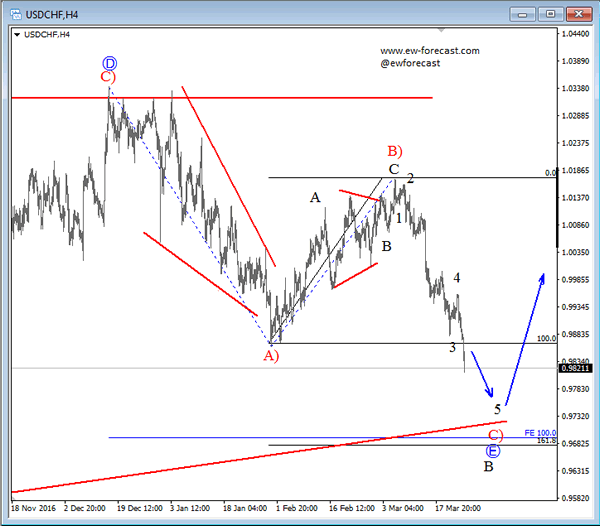
Elliott Wave Analysis: USDCHF Trading Lower; 0.9682 Region Is In View
USDCHF is trading in a correction of a higher degree, a big EW triangle pattern, with price now specifically trading in final stages of this triangle correction in wave C) of E. That said more weakness is expected to follow from current levels, ideally down towards the 161.8 Fibonacci projection zone.
USDCHF, 4H
Could the “Trump trade” Now Become the “Trump Disappointment”?
Is the Trump honeymoon over? That is the question being asked today after the breaking news late last week and what has dominated attention over the weekend with this being that President Trump was defeated in his quest at replacing Obamacare. The result of the Trump healthcare bill was not in line with market expectations, but more importantly it has made the markets begin to get nervous about what other possible hurdles Trump could potentially face when it comes to implementing other aspects of his campaign agenda.
Truth be told Obamacare was ripped apart from its infancy around the same time it was introduced seven years ago, yet it seems to still be more popular than whatever President Trump and his team proposed to replace it with. If Trump is going to face such opposition with the House of Representatives as he has with healthcare when other proposals are presented, it does make you wonder what could happen when he attempts to push through his proposals on tax reforms and other promises he made during his political campaign.
Investors have certainly priced in huge premiums into the financial markets following the night Trump was declared victorious in the US election based on his campaign promises, but actions speak louder than words and this could be a turning point and investors will need to monitor how the markets react as trading continues to get underway for the new week.
Where does this leave President Trump? Under the spotlight to provide the necessary clarity on his tax reforms plans. Trump has already signalled that he is set to move onto the next phase of his Presidential plan, which is cutting taxes and this is the key contributor to the heavy rally throughout the financial markets. Tax reforms and fiscal stimulus promises also represents a key reason why heavy gains were priced into the markets as investors thought Trump could be good for the US economy, but few people would have thought replacing the unpopular Obamacare would become this complicated and it's unlikely passing tax reforms and other aspects of fiscal stimulus that will increase national debt will be plain sailing.
Dollar slides down the charts
The Dollar has opened the new trading week slipping lower against the overwhelming majority of its trading partners following the doubts settling in that President Trump could face further obstacles when it comes to implementing other aspects of his campaign promises. Risk aversion is somewhat the name of the game taking place, with Gold climbing back towards a three-month high last seen in late February above $1250 and the Japanese Yen once again acting as a trader's best friend in times of market uncertainty. Emerging market currencies are also gaining from the weakness in the US Dollar, and these will be contenders to regain the most ground if the USD does enter a slump with it being well-known that these markets were seen as the most vulnerable to Trump's presidential agenda.
Currencies like the Malaysian Ringgit, Korean Won, Indian Rupee and Chinese Yuan are just some of the many that could benefit from USD buyers taking a spell on the sidelines. The USD Index has closed below the psychological 100 level that was previously viewed as a critical benchmark, meaning this could make technical traders think twice before purchasing the USD on the pullback like they have done in recent months.
Gold gains but Oil resumes its slump
Gold is as you would expect one of the main beneficiaries from the USD weakness, and traders will now be monitoring whether any additional moves towards risk-off from investors and further losses in the equity markets provide the platform for the value of the precious metal to continue its recovery that it has experienced over the first quarter of 2017.
While Gold is one of the commodities that is enjoying consistent buying momentum, Oil is most certainly not and has resumed its weakness into the new trading week despite reports circulating over the weekend that major Oil producing nations will consider extending their recent cuts in production.
GBPUSD and EURUSD benefit from short squeeze
Both the GBPUSD and EURUSD have climbed significantly higher as the markets welcome the new trading week, with the Pound up 1% and the Euro around 0.85 % at the time of writing.
This week represents the week where UK Prime Minister Theresa May is widely expected to invoke the long-awaited Article 50, which in simple terms essentially means delivering a letter to her counterparts in Europe saying I want a divorce. While short options on the Pound are around record levels with the ongoing uncertainty expected with Brexit negotiations, traders need to be careful how they position themselves because further short squeezes on the USD can all of a sudden lead to additional bounces higher on the Pound.
Where does the Eurodollar go from here? It's already climbed to a 2017 high this morning above 1.0895 and above a four-month high, but if it wasn't for the impending political risks in Europe I would personally say that the Euro is the most oversold currency in the developed markets. Ambitious investors who believe the Dollar is set to weaken further could possibly be targeting 1.10.
USD Hits Lowest Level Since November on Trump’s Healthcare Failure
The dollar index slumped to a 4-and-a-half-month low of 98.85 this morning during the European session, US equities also fell, as markets have lost confidence in Trump's administration to fulfil his promises.
Trump's first bill proposal since taking office, to repeal Obamacare and replace it with the American Health Care Act, failed on Friday March 24. This is his second failure following the refugee and immigration travel ban. Not surprisingly President Trump blamed the Democrats for the failure.
On one hand, none of Democrats were willing to support the new healthcare bill. On the other hand, the defections within the Republican party were more than the limit of 22. Even Trump had tried to convince his peers on Friday, clearly his warnings and efforts were not effective.
The failure has put an issue on the spot: compared to the Democratic Party's unity, there seems to be lots of disagreements within the Republican party, and the leadership of Trump and the House Speaker Paul Ryan face severe challenges. The hurdles that Trump's administration will likely face seem to be more than expected.
President Trump now focuses on his next bill proposal: tax reform, which is a more controversial issue. He promised to cut the corporate tax to 15% during the election. His plan is to make up the reduction of government's tax income by the decrease of healthcare spending – not an easy task following last week's failure of the healthcare bill. It is likely the administration will face the same hurdle (Democratic disfavour and Republican disagreements) on the tax reform proposal. Thus, it will be difficult for Trump to keep his promise to reform taxes.
If the tax bill fails to pass the Republican voters' disappointment might be greatly lifted and the party will likely lose some seats in the 2018 election. USD and US equities still face downward pressure on Trump's tax plan uncertainty.
UK Prime Minister, Theresa May, will trigger Article 50 of the Lisbon treaty on Wednesday March 29, starting the 2-year Brexit negotiation process with the EU.
Theresa May will formally notify the EU Council President, Donald Tusk. Tusk is expected to present draft Brexit guidelines to the European Union's 27 member states within 48 hours of the UK triggering Article 50. The member states are expected to hold a Brexit summit within 4-6 weeks. Theresa May's letter, and Donald Tusk's response, will likely give markets more clues about the potential difficulties of the upcoming Brexit procedure.
GBP/USD reached 1.2579 the highest the pair has attained since February 9 mainly because of the weakening of USD. The Scottish parliament will vote on whether to hold a second Scottish independence referendum on Tuesday March 28, which is only one day ahead the triggering of the Brexit process. If the result is to hold a referendum, the proposal will be delivered to the UK parliament for voting. In this situation, it will pose more political uncertainties on the UK's economic prospects and GBP.
UK Q4 GDP final reading will be released this Friday with better-than-expected readings likely providing some support to GBP.
GBP/USD Bulls Test 1.2600 Ahead of Brexit Triggering
This morning GBP/USD reached 1.2597, the highest the pair has attained since February 2, helped by the slump of USD caused by Trump's healthcare bill failure.
GBP/USD has been trading above the downside uptrend line support since mid-March. The significant psychological resistance level at 1.2500 was broken today during early Asian session.
The bulls are currently testing the next significant psychological resistance level at 1.2600.
At present, the price still trades along the upper band of the Bollinger Band indicator, suggesting the trend remains bullish.
The resistance level is at 1.2600, followed by 1.2630 and 1.2650.
The support line is at 1.2550, followed by 1.2530 and 1.2500.
There are two upcoming risk events this week, which will likely have some impact on GBP.
UK Prime Minister, Theresa May, will trigger Article 50 of the Lisbon treaty on Wednesday March 29, starting the 2-year Brexit negotiation process with the EU. Theresa May will formally notify the EU Council President, Donald Tusk. Tusk is expected to present draft Brexit guidelines to the European Union's 27 member states within 48 hours of the UK triggering Article 50.
Theresa May's letter, and Donald Tusk's response, will likely give markets more clues about the potential difficulties of the upcoming Brexit procedure.
The Scottish parliament will vote on whether to hold a second Scottish independence referendum on Tuesday March 28, which is only one day ahead the triggering of the Brexit process. If the result is to hold a referendum, the proposal will be delivered to the UK parliament for voting. In this situation, it will pose more political uncertainties on the UK's economic prospects and GBP.
UK Q4 GDP final reading will be released this Friday with better-than-expected readings likely providing some support to GBP.


EUR/AUD Mid-Day Outlook
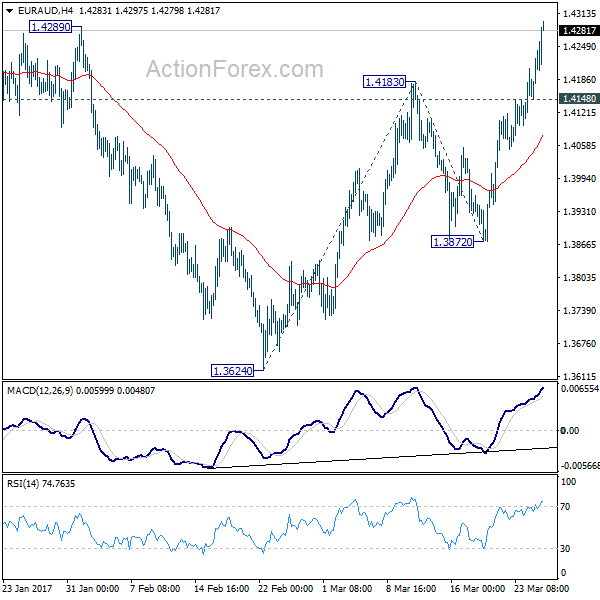
Daily Pivots: (S1) 1.4101; (P) 1.4154; (R1) 1.4211; More...
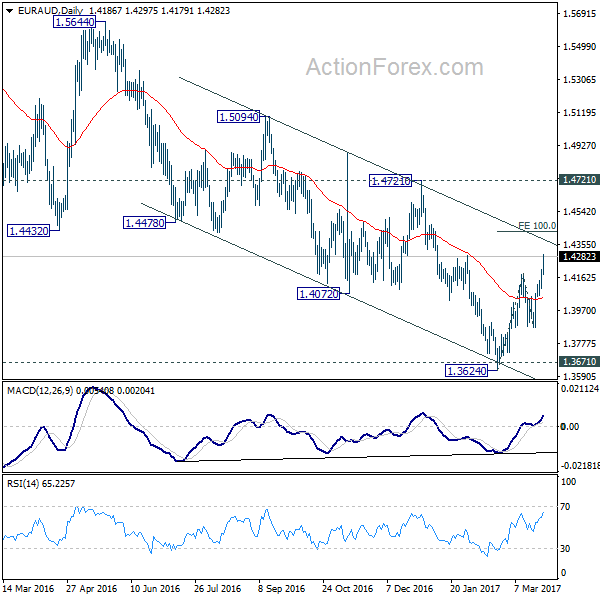
EUR/AUD rises to as high as 1.4297 so far today. Intraday bias remains on the upside. Current rise should target 100% projection of 1.3624 to 1.4183 from 1.3872 at 1.4431 next. Decisive break there will indicate upside acceleration and target 1.4721 key resistance. On the downside, below 1.4148 minor support will turn bias neutral and bring consolidations first before staging another rally.
In the bigger picture, price actions from 1.6587 medium term top are viewed as a corrective pattern. Such correction could be completed after testing 1.3671 support. Break of 1.4721 cluster resistance (38.2% retracement of 1.6587 to 1.3624 at 1.4756) should confirm this case and target 61.8% retracement at 1.5455 and above. Overall, we'd expect the up trend from 1.1602 to resume later. However, sustained break of 1.3671 will invalidate our bullish view and would turn focus back to 1.1602 long term bottom.
USD/JPY Mid-Day Outlook
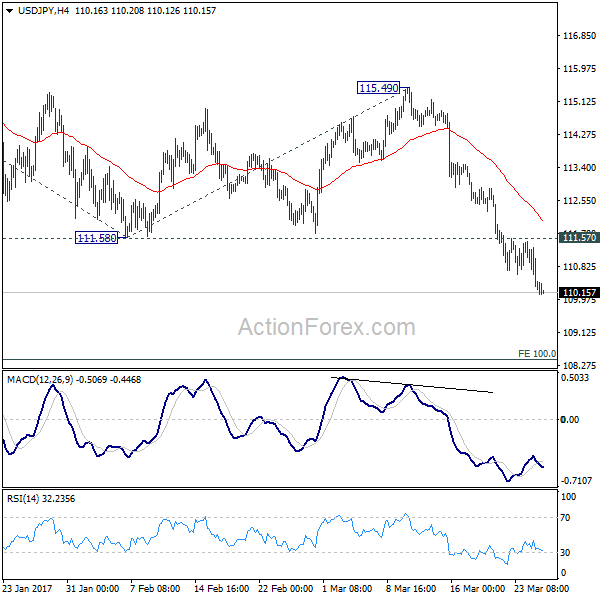
Daily Pivots: (S1) 110.79; (P) 111.14; (R1) 111.65; More...
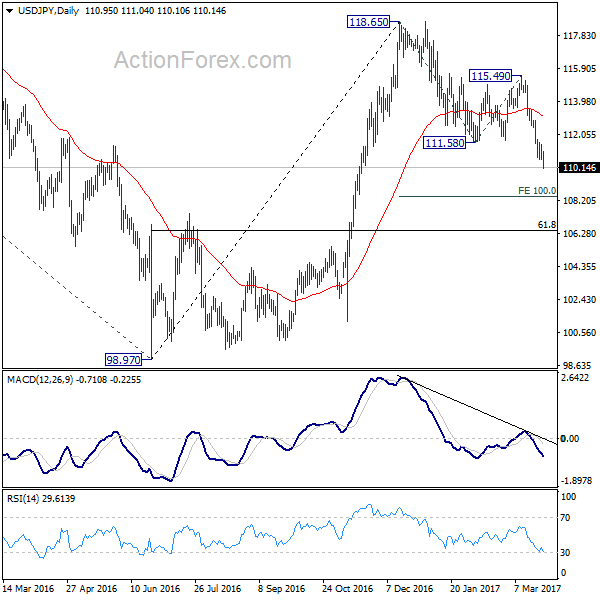
USD/JPY's fall continues today and reaches as low as 110.10 so far. Intraday bias remains on the downside and the fall from 118.65 would target 100% projection of 118.65 to 111.58 from 115.49 at 108.42 and possibly below. On the upside, break of 111.57 resistance is needed to indicate short term bottoming. Otherwise, near term outlook stays mildly bearish in case of recovery.
In the bigger picture, price actions from 125.85 high are seen as a corrective pattern. sustained trading below 55 week EMA (now at 111.11) will indicates that such consolidation is not completed. And another fall would be seen back to 98.97 as the third leg. In that case, downside would be contained by 61.8% retracement of 75.56 to 125.95 at 94.77 to complete the correction. On the upside, above 115.49 will extend the rise from 98.97 to retest 125.85 first. Overall, up trend from 75.56 is expected to resume after the consolidation from 125.85 completes.
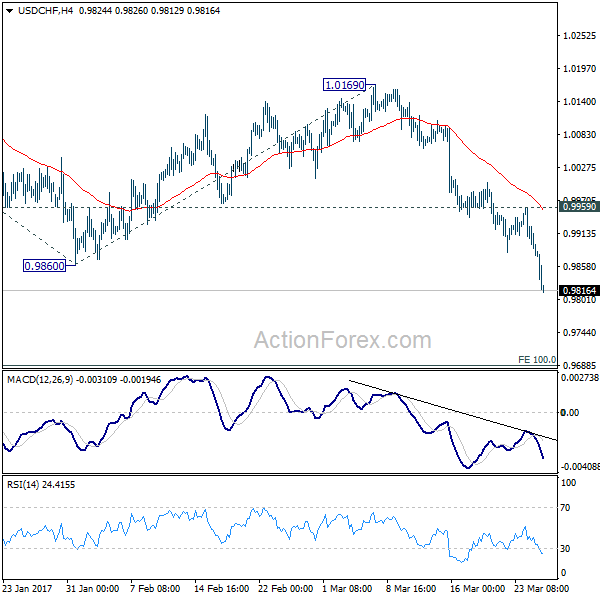
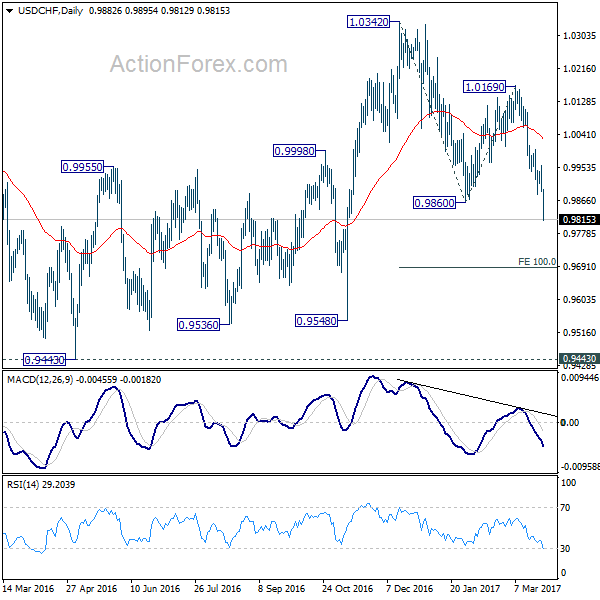
USD/CHF Mid-Day Outlook
Daily Pivots: (S1) 0.9881; (P) 0.9920; (R1) 0.9952; More.....
USD/CHF's decline accelerates to as low as 0.9812 so far. Intraday bias remains on the downside. Whole decline from 1.0342 would target 100% projection of 1.0342 to 0.9860 from 1.0169 at 0.9687 and possibly below. On the upside, break of 0.9959 resistance is needed to indicate short term bottoming. Otherwise, outlook will stay bearish in case of recovery.
In the bigger picture, USD/CHF is staying in medium term sideway pattern between 0.9443/1.0342. In any case, decisive break of 1.0342 resistance is needed to confirm underlying strength. Otherwise, we'll stay neutral in the pair first. In case of deeper fall, we'd expect strong support from 0.9443/9548 support zone.