Sun, Apr 12, 2026 21:33 GMT
More

    Sample Category Title

    USD/CAD Weekly Outlook

    ActionForex

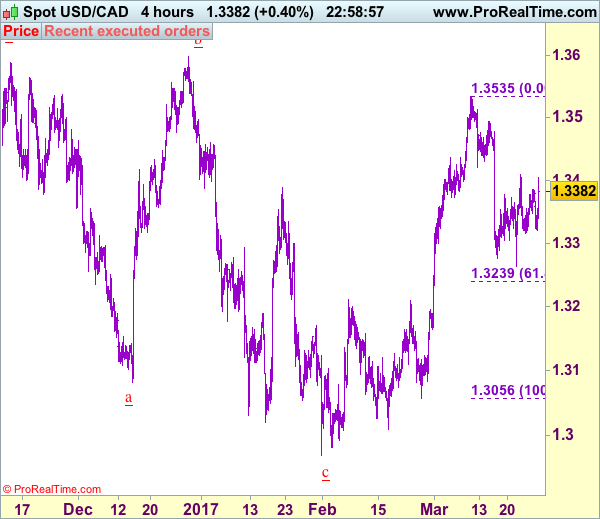
    USD/CAD jumped to as high as 1.3446 last week and the development indicates completion of corrective fall from 1.3598 at 1.2968. As a temporary top is in place at 1.3436 with 4 hour MACD crossed below signal line, initial bias is neutral for some consolidations first. But downside of retreat should be contained above 1.3209 support and bring another rise. Above 1.3236 will target a test on 1.3598 high. Break there will extend the medium term rise from 1.2460 to next fibonacci level at 1.3838.

    In the bigger picture, price actions from 1.4689 medium term top are seen as a correction pattern. The first leg has completed at 1.2460. The second leg is likely still in progress and could target 61.8% retracement of 1.4689 to 1.2460 at 1.3838. We'd look for reversal signal there to start the third leg. Break of 1.2968 wold at least bring at retest of 1.2460 low. However, sustained trading above 1.3838 would pave the way to retest 1.4689 high.

    In the longer term picture, rise from 0.9056 (2007 low) is viewed as a long term up trend. It's taking a breath after hitting 1.4689. But such rise expected to resume later to test 1.6196 down the road.

    USD/CAD 4 Hours Chart

    USD/CAD Daily Chart

    USD/CAD Weekly Chart

    USD/CAD Monthly Chart

    GBP/JPY Weekly Outlook

    GBP/JPY continued to gyrate in rang of 138.53/142.79 last week and outlook is unchanged. Initial bias stays neutral this week first. Price actions from 148.42 are seen as a corrective pattern. Below 138.53 will bring deeper fall, possibly through 136.44 support. But strong support could be seen at 50% retracement of 122.36 to 148.42 at 135.39 to bring rebound. Above 142.79 will turn bias back to the upside for 144.77 and above.

    In the bigger picture, price actions from 122.36 medium term bottom are still seen as a corrective pattern. Main focus is on 38.2% retracement of 195.86 to 122.36 at 150.42. Rejection from there will turn the cross into medium term sideway pattern with a test on 122.36 low next. Though, sustained break of 150.42 will extend the rebound towards 61.8% retracement at 167.78.

    In the longer term picture, while price actions from 122.36 would develop into a medium term correction, fall from 195.86 is still seen as resuming the down trend from 251.09 (2007 high). Hence, after the correction from 122.36 completes we'd expect another fall through 116.83 low.

    GBP/JPY 4 Hours Chart

    GBP/JPY Daily Chart

    GBP/JPY Weekly Chart

    GBP/JPY Monthly Chart

    EUR/JPY Weekly Outlook

    EUR/JPY's strong rebound last week argues that corrective fall from 124.08 has completed at 118.23 already, after defending 118.45 cluster support (38.2% retracement of 109.20 to 124.08 at 118.39). Initial bias remains on the upside this week for 121.32 resistance first. Decisive break there will confirm and target 124.08 high next. On the downside, though, below 120.01 minor support will dampen this bullish case and turn focus back to 118.23 low.

    In the bigger picture, price actions from 109.20 medium term bottom are seen as part of a medium term corrective pattern from 149.76. Strong rebound from 118.45 resistance turned support suggests that it's still in progress. Break of 124.08 will target 126.09 key resistance level. We'd be cautious on strong resistance there to limit upside. However, sustained break there will be a strong sign of medium term momentum and could target 141.04 resistance next.

    In the long term picture, medium term decline from 149.76 is seen as part of a long term sideway pattern from 88.96. Decisive break of 126.09 will indicate that such decline is completed and EUR/JPY has started another medium term rally already. Before that, deeper fall is mildly in favor towards 94.11 low.

    EUR/JPY 4 Hours Chart

    EUR/JPY Daily Chart

    EUR/JPY Weekly Chart

    EUR/JPY Monthly Chart

    EUR/GBP Weekly Outlook

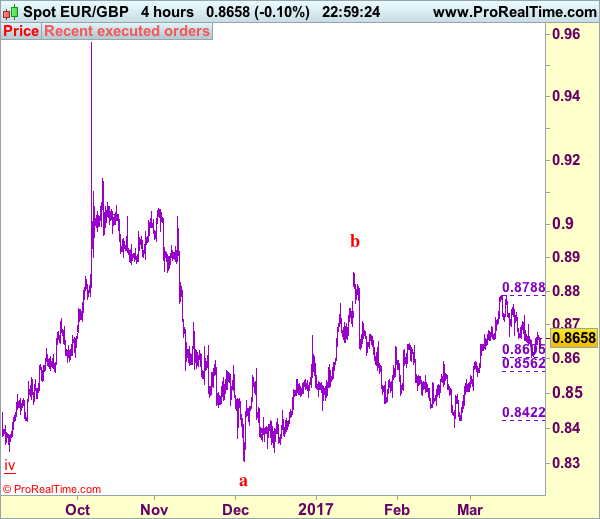
    EUR/GBP's strong rebound last week and break of 0.8590 minor resistance argues that choppy decline from 0.8851 has completed at 0.8402 already. The development indicates that corrective price actions from 0.8303 is not completed yet. Initial bias is turned back to the upside for 0.8851 and possibly above. Nonetheless, price actions from 0.8303 are viewed as the second leg of the correction from 0.9304. Hence, we'd expect strong resistance from 100% projection of 0.8303 to 0.8851 from 0.8402 at 0.8950 to limit upside. ON the downside, below 0.8546 minor support will turn bias back to the downside for 0.8402 support.

    In the bigger picture, price actions from 0.9304 are viewed as a medium term corrective pattern. Deeper fall cannot be ruled out yet. But we'd expect strong support from 0.8116 cluster support (50% retracement of 0.6935 to 0.9304 at 0.8120) to contain downside. Overall, the corrective pattern would take some time to complete before long term up trend resumes at a later stage. Break of 0.9304 will pave the way to 0.9799 (2008 high).

    In the long term picture, firstly, price action from 0.9799 is seen as a long term corrective pattern and should have completed at 0.6935. Secondly, rise from 0.6935 is likely resuming up trend from 0.5680 (2000 low). Thirdly, this is supported by the impulsive structure of the rise from 0.6935 to 0.9304. Hence, after the consolidation from 0.9304 completes, we'd expect another medium term up trend to target 0.9799 high and above.

    EUR/GBP 4 Hours Chart

    EUR/GBP Daily Chart

    EUR/GBP Weekly Chart

    EUR/GBP Monthly Chart

    EUR/AUD Weekly Outlook

    EUR/AUD's strong rebound last week and break of 1.3900 resistance indicate short term bottoming at 1.3624, on bullish convergence condition in 4 hour MACD. Also, it's an early sign on trend reversal as the cross defended 1.3671 key support level. Initial bias stays on the upside this week for 1.4289 resistance first. Break will confirm this affirm this case and target 1.4721 resistance for confirmation. On the downside, below 1.3835 minor support will dampen this bullish view and turn bias back to the downside for 1.3624 low.

    In the bigger picture, price actions from 1.6587 medium term top are viewed as a corrective pattern. We'd expect strong support from 1.3671 key level to contain downside and bring rebound. Up trend from 1.1602 should not be finished and will resume later. Break of 1.4721 resistance will indicate completion of such correction and turn outlook bullish for retesting 1.6587 high. However, sustained break of 1.3671 will invalidate our bullish view and would turn focus back to 1.1602 long term bottom.

    In the longer term picture, the rise from 1.1602 long term bottom isn't over yet. We'll keep monitoring the development but there is prospect of extending the rise to 61.8% retracement of 2.1127 to 1.1602 at 1.7488 and above. However, break of 1.3671 should confirm trend reversal and target 1.1602 long term bottom again.

    EUR/CHF Weekly Outlook

    EUR/CHF rebounded strongly last week and hit as high as 1.0713 before closing at 1.0692. The breach of 1.0706 minor resistance indicates short term bottoming on bullish convergence condition in 4 hour MACD. This is also taken as an early sign of trend reversal after defending 1.0620 key support level. Initial bias is back on the upside this week for 1.0749 resistance first. Break will affirm this bullish case and target 1.0897 resistance next.

    In the bigger picture, the decline from 1.1198 is seen as a corrective move. There is no confirmation of completion yet. Sustained trading below 38.2% retracement of 0.9771 to 1.1198 at 1.0653 will target 50% retracement at 1.0485. However, strong rebound from 1.0620 and break of 1.0897 resistance will indicate trend reversal and turn outlook bullish.

    EUR/CHF 4 Hours Chart

    EUR/CHF Daily Chart

    EUR/CHF Weekly Chart

    EUR/CHF Monthly Chart

    Weekly Economic and Financial Commentary


    U.S. Review

    Confidence is Key

    • The week was packed with key economic data releases and speeches by Federal Reserve officials. Survey-based economic data continued to point to improved economic conditions and expectations, though hard data have yet to deviate from trend.
    • Throughout the week, several reliably-dovish Fed speakers indicated openness to increasing rates as early as the March 15 meeting. All eyes turned to a Friday afternoon speech by Yellen for hints. Markets now expect a 96 percent probability for a hike in March.

    Will They Stay or Will They Go?

    The economic calendar was packed with data releases this week, and speeches by Federal Reserve officials continued to prep the markets for an increase in interest rates "relatively soon." Market expectations have responded, with the Fed fund futures pricing in a 96 percent probability that the Fed will raise rates at the March 15 meeting. The tone shift among dovish Fed officials this week was notable, which we cover in detail in the Interest Rate Watch section of this report. Strong survey-based data readings were also notable this week, but the hard economic data were less so.

    The factory sector continues to put the rough patch from 2015 through mid-2016 behind it. The ISM manufacturing composite rose to 57.7 in February, which is the highest since 2014. All of the sub-indices either rose further into expansionary territory or, in the case of order backlog, turned positive after months in the red. The survey's measure of prices also continued to signal inflation pressures on a broad range of inputs beyond just oil prices. The new orders component of the survey surged to a three-year high, pointing to a much improved outlook for the sector than this time last year. Advance estimates of durable goods orders in January were softer, as core goods orders fell 0.4 percent to start the year, though December's reading was revised upward. January's stall in goods orders may be just temporary and, given the broad strength in the survey data, we expect continued firming in 2017.

    The second release of Q4 GDP reiterated that the economy is driven by the consumer. The headline 1.9 percent growth was unchanged, but personal consumption contributed more than first reported while government and private investment added less. The post-election bump in consumer confidence held up in February, according to the Conference Board. Consumers were more confident about both the present situation and conditions going forward. Consumers' assessment of the present situation now stands at its cycle high, as fewer people reported that current conditions were "bad" or that jobs were "hard to get." The share reporting "good" conditions or "plentiful" job opportunities also edged down slightly. The share that expected better business conditions and more jobs six months from now did rise, however.

    Consumers' confidence was not as obvious in the January income and spending data, however, although inflation certainly was. Disposable income rose 0.3 percent in January and spending was up 0.2 percent, although the story reversed when adjusted for inflation. Real disposable income and consumption expenditures declined in January. While January's soft print may have been an aberration, it bears watching, particularly if economic growth is to accelerate as expected in the current consumer-led GDP growth environment. Meanwhile, inflation continues to accelerate. The PCE deflator, the Fed's preferred measure of price growth, is honing in on the 2 percent target, with headline PCE up 1.9 percent over the year and core PCE up 1.7 percent in January. The case for a March rate hike can indeed be made, though it may be prudent wait for data to confirm that optimism translated into real economic growth in the first quarter of 2017.

    U.S. Outlook

    Factory Orders • Monday

    Signals from the factory sector have been encouraging in recent months, with continued improvement in the ISM manufacturing index and regional Federal Reserve Bank surveys. The advance estimate of January durable goods orders suggested the sector began 2017 on a bit of soft note relative to the prior month, but the general trend continued to edge higher. Shipments of non-defense capital goods ex-aircraft, a proxy for current business spending, fell 0.6 percent in the advanced estimate for January. Orders of core goods, a gauge of future capex plans, also fell but an upward revision to December's reading puts the three-month annualized rate at 8.9 percent, suggesting improvement is in the offing.

    We expect continued firming in the U.S. factory sector in the months ahead. We look for factory orders to post a gain of 1.1 percent in January.

    Previous: 1.3% Wells Fargo: 1.1% Consensus: 1.0% (Month-over-Month)

    Trade Balance • Wednesday

    The trade deficit narrowed in December. Imports rose by $3.5 billion, but exports grew even faster, rising just over $5 billion. The net result was a larger-than-expected narrowing in the trade deficit for the final month of 2016. The industries that contributed most to the surge in exports in December were capital goods and industrial supplies. Drilling into the sub-categories, we find that aircraft was a big factor in December. Civilian aircraft exports increased more than $1 billion and engines for those planes added another $978 million.

    The advance goods trade balance data for January showed a surprisingly large $4.8 billion widening in the trade gap to -$69.2 billion. The trade deficit for Dec. was revised slightly lower to -$64.4 billion. Nominal goods exports fell 0.3 percent while nominal goods imports rose 2.3 percent. We expect the services surplus to widen slightly, to yield an overall deficit of -$48.7 billion.

    Previous: -$44.3B Wells Fargo: -$48.7B Consensus: -$47.0B

    Employment • Friday

    Nonfarm payrolls rose a solid 227,000 in January, boosting the three month average to 183,000. Gains were strong across the private sector, with payrolls rising 237,000 versus a pullback of 10,000 jobs in the public sector. The jobless rate ticked up to 4.8 percent. The U-6 rate, the broadest measure of unemployment, also rose as more workers reported working part-time for economic reasons. On the wage front, average hourly earnings rose at a slower-than-expected pace, likely due to the composition of hiring, as job growth was concentrated in lower-paying industries.

    Most employment measures remain solidly positive. Jobless claims continue to trend near multi-decade lows and the employment components of both ISM surveys signal another solid print for payrolls. We expect to see that U.S. employers added 210,000 jobs in February and expect the jobless rate edged down to 4.7 percent.

    Previous: 237,000 Wells Fargo: 210,000 Consensus: 185,000

    Global Review

    Winter in Canada, Summer in Australia, Both Are Hot

    • After a run of better-than-expected economic data, the Bank of Canada this week weighed in on faster inflation and correctly forecasted that GDP, which printed later in the week, would beat expectations.
    • The Australian economy posted a faster-than-expected pace of expansion in the fourth quarter, handily bouncing back from a decline in growth in the prior period.
    • It may not sound like much, but a 0.1 percent rate of core CPI inflation in Japan is incremental progress for the Bank of Japan and its efforts to stoke growth in consumer prices.

    Australian GDP: Don't Call It a Comeback, Mate

    After declining in the third quarter of 2016, Australian GDP growth bounced back in the fourth quarter, expanding at an annualized pace of 4.4 percent, which was ahead of the consensus expectation. Both consumer and business spending contributed to the increase with a smaller boost coming from net exports. The strength in private sector demand and trade factors offset modest drags from a retrenching in government spending and a slight decline in inventories.

    Various measures of business conditions in Australia like the NAB business confidence and business conditions surveys are both at multi-year highs, which suggests capital outlays should continue to underpin growth in 2017. The same cannot be said about Aussie consumer confidence, and although the jobless rate remains low at 5.7 percent, hourly wage growth has slowed. On that basis, we have a more measured outlook for consumer spending in the year ahead.

    Amid Canadian Winter, Things Are Heating Up

    The Canadian economy has been on a bit of a hot streak with a number of indicators (particularly job-related measures) beating consensus expectations. In fact, in February, the Citi economic surprise index for Canada hit its highest level since 2015.

    The Bank of Canada (BoC) met this week, and after announcing a decision to keep rates on hold at 0.50 percent, the accompanying note addressed some of the recent firming in inflation and the Canadian economy. To the extent that market watchers were anticipating a sooner-than-expected rate hike out of the BoC, the statement threw cold water on any of those expectations. It said the inflation surge was likely transitory and that growth would remain under pressure and would remain on hold.

    To its credit, the BoC correctly anticipated that fourth-quarter GDP figure releases later in the week would exceed expectations. Canadian real GDP grew at an annualized rate of 2.6 percent with big contributions to growth coming from trade and yet another increase in consumer spending. Business investment fell for the ninth straight quarter as Canada continues to absorb a lower price environment for oil and other commodities.

    After so many consecutive declines, we expect Canadian business investment to pick up now that prices have stabilized somewhat, but we remain concerned about elevated consumer debt levels and what that debt implies about the sustainability of consumer spending in Canada.

    Japanese CPI

    The Bank of Japan (BoJ) has been exploring new frontiers in monetary policy accommodation in its bid to achieve the elusive goal of a 2.0 percent inflation target, which it has pledged to overshoot. A core inflation rate of 0.1 percent may not sound like much, but in Japan it represents the fastest rate of core CPI inflation since 2015 and an indication of progress for the BoJ. The headline inflation rate climbed to 0.5 percent. The BoJ cannot afford to let up, but things are moving in the right direction.

    Global Outlook

    Brazilian GDP • Tuesday

    The Brazilian economy remained mired in a deep recession in Q3-2016, falling 0.8 percent quarter over quarter. This bested market expectations of a 0.9 percent decline—marking the seventh consecutive quarterly decline in economic activity. Year over year, the economy has contracted at a 2.9 percent pace. Some of the deterioration was expected due to the effects of the Olympic Games during that quarter. On the output side of GDP, transportation was the weakest sector, plunging 7.4 percent year over year, and the allimportant manufacturing sectors fell

    3.5 percent. On the demand side of the economy, the external sector was again the only sector with a positive contribution to real GDP growth.

    By the end of 2016, we expect the Brazilian economy to have contracted for an eighth straight quarter and to have declined at a 2.2 percent year-over-year pace.

    Previous: -2.9% Wells Fargo: -2.2% Consensus: -2.6% (Year-over-Year)

    U.K. Industrial Production • Friday

    Industrial production (IP) in the United Kingdom rose 1.1 percent in December compared to activity in November and grew 4.3 percent year over year. During the month, manufacturing was the only contributor to overall IP growth, increasing 2.1 percent, due to an increase in pharmaceuticals, metals and transportation equipment production. Moreover, manufacturing output grew 4.0 percent year over year—the fastest pace since April 2014. For January, markets are expecting a slowdown in year-over-year growth as surveyed manufacturing purchasing managers have indicated fewer new orders and a decline in backlogs.

    Additional data on the docket next week include the U.K.'s January's trade balance reading, which narrowed in December due to an increase in exports of goods to non-EU countries.

    Previous: 4.3% Consensus: 3.0% (Year-over-Year)

    Canadian Employment • Friday

    Employment growth in Canada has been strong in recent months, with non-farm payrolls rising by 48,300 in January. The month's gains came on the tails of a strong December reading of 54,000 jobs. That said, Canadian monthly employment figures are notorious for being volatile, but it is quite clear that the trend is heading higher. In January's employment report nearly all of the growth was in part-time jobs, increasing by 32,400, while full-time positions had a smaller gain of 15,800. The unemployment rate ticked back down to 6.8 percent, despite the labor force participation rate increasing to 65.9 percent. Depressed wage growth, which increased 1.0 percent—its slowest pace since April 2003—remains a concern for the Bank of Canada.

    Other data slated to be released next week include January's housing starts figures, which has seen double-digit annual gains for the past two months.

    Previous: 48,300

    Point of View

    Interest Rate Watch

    Markets Get Their Marching Orders

    A slew of Fed-speak this week led markets to drastically reprice the possibility of the FOMC raising interest rates at its next meeting on March 15. At the start of the week, futures probabilities according to Bloomberg implied a 40 percent chance of rate hike at the Fed's next meeting, but that has since risen to 96 percent.

    What explains the jump? The logical place to start would be the data. From the perspective of the Fed's mandates, the most important report of the week was the PCE deflator. Headline inflation, at 1.9 percent, rose by the most since 2012, but core inflation was unchanged at 1.7 percent. Other "hard" data on core capex orders, Q4 GDP revisions and real consumer spending disappointed.

    Despite the hard data showing little change in the trend for growth, Fed officials look increasingly content with the economy's outlook. What has changed has been the "soft" data. Consumer confidence, the ISM indices and small business optimism have reached multi-year highs and suggest that Fed members feel "animal spirits" will boost growth until details on fiscal policy emerge.

    Notable this week were comments from Bill Dudley, who said the case for "tightening has become a lot more compelling." Lael Brainard, arguably the most dovish member on the Committee, also stated removing more accommodation would be "appropriate soon." Capping things off was a speech by Chair Yellen. Speaking about the March meeting, she said that as long as employment and inflation continue to evolve in line with expectations, "further adjustment of the federal funds rate would likely be appropriate."

    Even though the hard data hasn't changed much in recent weeks and details on fiscal policy remain scant, the reaction to comments this week may have boxed the committee into raising rates in March. With markets giving the Fed the green light to raise rates—whether measured by the implied rate futures or the fresh highs in equities—passing on March could jeopardize the Fed's still-fragile credibility with markets.

    Credit Market Insights

    Homeowners Withdraw Less Equity

    U.S. home prices have risen roughly 45 percent since reaching a bottom in 2011 according to data from CoreLogic. Homeowner equity has risen in kind, increasing nearly $7 trillion over the same period.

    Despite the steady run-up in home prices, very few homeowners have been tapping into their housing equity relative to the numbers observed during the 2006 housing boom. According to research from the Federal Reserve Bank of New York, from 2000 to 2006, homeowner equity and extraction of equity both rose rapidly. In fact, from 2003 to 2007, homeowners were withdrawing more than $350 billion per year for a variety of uses from spending on home improvement to consumption. In comparison, as home prices recovered from 2012 to 2016 homeowner equity withdrawal rates averaged well below $50 billion per year.

    The decline in equity extraction is due to a range of factors, including tighter credit standards following the housing crisis and older and more creditworthy borrowers' decreasing propensity for equity withdrawal. This shift in the way consumers leverage their housing wealth has been a primary factor in household deleveraging. Mortgage and home equity debt have fallen meaningfully since 2008 and both account for a smaller share of overall household debt. The more cautious approach to leveraging is a positive sign for consumers' financial stability.

    Topic of the Week

    Border Adjustment Tax: Affected Countries

    The prospect of a border adjustment tax (BAT) has been introduced as part of the White House administration's potential business tax reform. The specific BAT being discussed would apply a 20 percent tax on all imports into the U.S. On the flip side, U.S. exports of goods and services would not be taxed. We are not taking a position on whether the BAT is desirable/undesirable; rather we are looking at what countries would be most affected by such a policy. To measure a country's economic dependence on the U.S. as an export market, we have calculated the ratio of a country's exports to the U.S. to that same country's GDP.

    Unsurprisingly, the U.S.'s NAFTA partners, Mexico and Canada, top the list, with exports to the U.S. representing 27.0 percent and 20.2 percent of their respective GDPs (top graph). However, apart from the convenience that a shared border provides for trade, geographic location does not seem to play a significant role in determining a country's dependence on the U.S. as an export market. For instance, of the top 10 exportdependent countries, two are in North America, three are from Central and South America, three are from Asia, one is from Africa and one is from Europe. Moreover, it appears that the top 10 countries that would potentially be most affected by the BAT do not fit a specific profile with regard to development. In the aggregate, developed nations' exports to the U.S. represent 3.9 percent of their total GDP, while developing countries' exports comprise 3.7 percent of their collective GDP (bottom graph).

    While a border-adjustment tax of the nature being discussed would certainly affect our neighbors to the immediate north and south disproportionately, such a policy would have almost universal trade implications. Many countries that are generally not considered essential trading partners from the U.S. perspective, such as Chad, are themselves heavily dependent on the U.S. as an export market. Examining such a trade policy from the other side, that is from the perspective of foreign nation exporting goods and services to the U.S. allows us to better anticipate the potential trade disruptions should such a policy be enacted.

    The Weekly Bottom Line

    HIGHLIGHTS OF THE WEEK

    United States

    • It was an exciting week in markets this week, with plenty of domestic and international first-tier data, central bank communication, and the inaugural presidential address to Congress.
    • International data has continued to paint a relatively bright picture of the world economy with inflation picking up in the Eurozone, Japan, and the U.K. The positive sentiment was further buoyed by strong PMI data across the globe, suggestive of a strong start to 2017.
    • U.S. data was even more encouraging. Apart from some weakness in real spending and construction in January, which came on the back of a strong fourth-quarter, data on from purchasing managers pointed to building strength, with solid momentum in early-2017 also exhibited by regional business surveys, price metrics, and labor market indicators.
    • In light of the strong data flow and increasingly hawkish rhetoric out of the Fed, we believe the FOMC will likely raise rates at its next meeting in mid-March, barring any downside surprises, with markets increasingly turning their focus from "when" to "how quickly" any potential hikes may come.

    Canada

    • Canadian real GDP beat most forecasters expectations, rising 2.6% annualized in the fourth quarter of 2016 and has considerable momentum heading into 2017.
    • To no one's surprise, The Bank of Canada remained on hold yet again. While the economy is likely to beat the expectations laid out in the January MPR, the central bank has plenty of reasons to hold on to their dovish tone.

    UNITED STATES - FED PRIME MARKETS FOR MARCH HIKE, AIMING FOR HAT-TRICK IN 2017

    It was an exciting week in markets this week. Alongside a much awaited tech IPO, there were plenty of first-tier data (both domestic and international), central bank speeches, and the inaugural presidential address to Congress. International data came in broadly constructive, while U.S. data came in even more robust. Alongside indications of rapid deregulation by the executive branch, and relatively hawkish remarks from FOMC members across the spectrum, this placed upward pressure on yields and pushed the odds of the March hike from just 1/3rd last week to near-certainty as of the time of writing. Markets now expect between 50 and 75 basis points of tightening this year. The more aggressive take on Fed policy has seen the U.S. dollar rally by nearly 1% across the common-traded basket. The higher dollar was not helpful to oil prices, which were already under pressure from building U.S. inventories. Still, sentiment was running high since mid-week, with U.S. equity indices setting new records and the Dow surging north of 21,000.

    International data has continued to paint a relatively bright picture of the world economy. Inflation picked-up to a four-year high in Japan and has been accelerating in Europe and the U.K. (see Chart 1). While much of the headline print is related to rising oil prices, it nonetheless has pushed deflationary fears from investors' minds. The price data was not alone in boosting sentiment, with the purchasing manager indices across the main global economies showing signs of health. Eurozone PMIs held near just north of the mid-50s mark, suggesting GDP growth of around 2% in the common-currency area, with the U.K. PMI holding near that mark also. Chinese PMIs, while lower, were healthier than expected, with the manufacturing ones nearing 52 while services measures were healthier still.

    U.S. data was arguably even more constructive. While real consumption and construction disappointed in January, the monthly print at the start of the year, when seasonal factors are the highest, is notoriously volatile and has been misleading in previous years. Moreover, it comes atop of a strongly revised PCE print in the fourth quarter of 2016- when consumers increased spending by a healthy 3% according to the second estimate of GDP. Other indicators, including ISM indices from both the manufacturing and nonmanufacturing sectors suggest the economy is progressing at a very healthy pace. Such sentiment is corroborated by regional business surveys, durable goods orders data, and price metrics - with core PCE inflation rising by a decadehigh 0.3% on the month.

    While core PCE inflation - the Fed's favored measure of price pressures - remains shy of the FOMC's target at just 1.7% on a year-on-year basis, there is little question that the movement up has been swift. Given the wage pressures that have manifested in recent months, and are likely to continue to rise given the ever tightening labor market (initial claims fell to a 44-year low) and the lagged spillover from oil prices, it is likely that the measure will approach the 2% target as the year progresses. With this in mind, a more favorable international backdrop, and markets that are effectively giving the Fed a clear opportunity to hike in March, we believe the FOMC will take the opportunity - particularly given its proclivity to move earlier, but more gradually.

    CANADA - LOOKING UP

    This week was a busy one, with a Bank of Canada rate announcement and the release of the Canadian national accounts data. The main message from the week's events was that Canada's near-term economic outlook is surpassing the Bank of Canada's expectations laid out in its January Monetary Policy Report, but it will still be a while until we start talking about interest rate hikes.

    This week's national accounts data surprised most Canadian economic forecasters, with a hearty 2.6% annualized gain in real GDP in the fourth quarter of the year, building off of an upwardly revised 3.8% in the prior three months and well ahead of the Bank of Canada's forecast for a 1.5% increase. Consumer spending (+2.6%) and housing investment (+4.8%) remained the bright spots in the fourth quarter report, but exports (1.4%) also showed some resilience following an outsized gain in the prior quarter. The monthly GDP data was also strong in December, leading us to revise our expectations for real GDP growth in the first quarter of this year to above 2% on the strong hand off. Business investment remained a key weak spot in the economy, posting an eighth contraction in nine quarters.

    The housing market is likely to be another source of upside surprise in the first quarter of this year, with strong home demand and price gains continuing to support consumer spending and residential investment. While the regional data out this week showed that Vancouver's home sales and price softness extended into early 2017, it was more than offset by record activity in Toronto, where the average sales price topped $870,000 in February.

    Certainly the case for rate hikes in Canada is starting to build, but the potential for monetary tightening is still over a year away in our view. For one, in its communique the Bank of Canada noted that the fundamentals in Canada are still different than in the U.S. where the Federal Reserve has embarked on a hiking cycle. These differences include competitive challenges faced by Canadian exporters, weak wage growth in Canada (real wages have fallen for nine consecutive months) and soft underlying inflation. Second, this week's data provided some evidence that businesses in Canada are still cautious about the outlook as well. The capital expenditure survey released this week indicated that businesses are unlikely to beef up investment in 2017, following two years of contractions. In fact, businesses in 7 of the 20 industries (including the export heavy manufacturing sector) surveyed planned to cut back on investment modestly this year. Low interest rates are still needed to help stoke business spending. Thirdly, one of Canada's main economic driver right now is housing, and there is a large question around how sustainable that will be through the next year. Outside of Toronto, many markets across Canada have cooled along with tighter mortgage regulations since October, with the potential to temper consumer spending and building activity. The decline in home prices in Vancouver seemed to have already been timed with an outsized drop in luxury related retail spending in December.

    So, while economic activity is looking up, the Canadian economy is still not quite ready for a higher policy rate.

    Week Ahead Jobs and Fedspeak to Guide Dollar

    Fed Awaits NFP Report to Decide on March Hike

    Comments from members of the U.S. Federal Reserve have put a rate hike in March back on the table. Lack of details on the Trump administration pro-growth policies had reduced the probability of the central bank raising interest rates but the words from Chair Yellen and other influential members now have the market pricing in an 80 percent probability of a rate increase on March 15.

    Chair Yellen has mentioned before that there are risks in waiting too long before raising rates and on Friday she said: "We currently judge that it will be appropriate to gradually increase the federal funds rate if the economic data continue to come in about as we expect". The biggest data release between then and now if the Jobs report on Friday.

    The U.S. non farm payrolls (NFP) will be published on Friday, March 10 at 8:30 am EST (1:30 pm GMT). The forecast calls for a gain of 180,000 jobs and a 0.3 percent with in hourly wages. Job gains above 150,000 have been consistent since November of 2015, but wage growth has been disappointing and at this point will probably be more heavily scrutinized that the headline number. The Trump administration pro-growth policies appear to be delayed, but as Treasury Secretary Mnuchin reassured markets they are coming, giving the Fed another reason to move forward with their tightening plans.

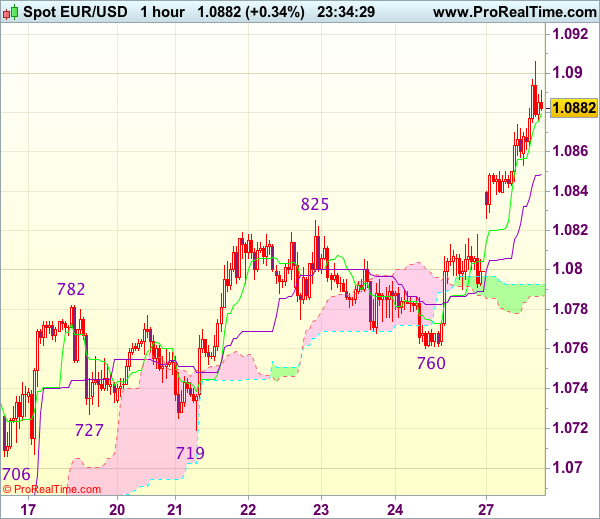
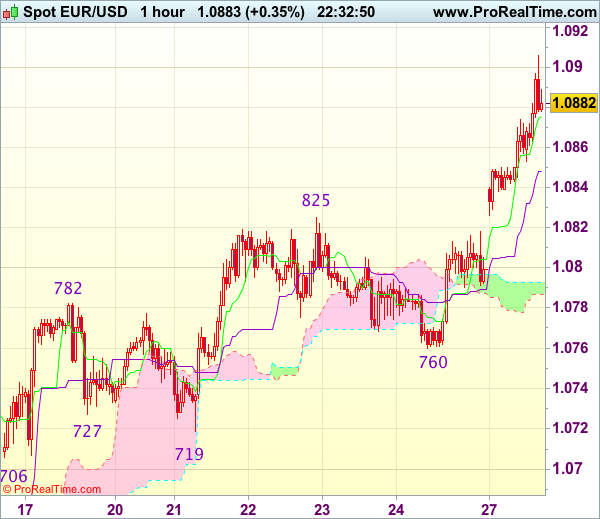
    The EUR/USD lost 0.112 percent in the last five days. The single pair is trading at 1.0562 after comments from Fed members have shifted the market perception on the U.S. Federal Reserve's next move. At the end of February the market had priced in less than 30 percent of a rate hike during the March 15 monetary policy meeting. FOMC Members such as Richmond Fed President Jeffrey Lacker pointed out that the market was underestimating the pace of Fed rate hikes. Fed Chair Janet Yellen also supported that line of thinking when she said it was unwise to wait too long before raising interest rates.

    The market has now adjusted to the Fed hints as the CME FedWatch tool is showing a 81.9 percent probability of a rate hike in the next FOMC. Analysts are divided even as Chair Yellen has said that a rate hike would be appropriate in March.

    Economic indicators were mixed in the U.S. with core durable goods underperforming at –0.2 percent. The second release of GDP data for the fourth quarter also disappointed with a 1.9 percent reading below the forecasted 2.1 percent. Consumer confidence, Manufacturing and non-manufacturing PMIs have exceeded expectations. Given Chair Yellen's statement next week's employment data will weigh heavily on the FOMC's statement due on March 15.

    The USD/CAD gained 2.416 percent in the last week. The currency is trading at 1.34 following the decision by the Bank of Canada (BoC) to keep the benchmark interest rate unchanged at 0.50 percent on Wednesday. Investors had expected the BoC would stand pat even as inflation metrics went up in January. The uncertainty surrounding the next move from the U.S. Federal Reserve and the global political scene.

    Canadian growth surprised on March 2, as the fourth quarter GDP came in at 2.6 percent on a forecast of 2.0 percent and the U.S growth in the same period at 1.9 percent. The positive indicator did not stop the USD on gaining versus the CAD. The words from Fed members pointing to a March rate hike had more weight in the end and the loonie traded above 1.34 before settling slight under that level ahead of the weekend.

    The USD/MXN lost 1.721 percent in the last five days. The currency pair is trading at 19.52 as the peso surged after the comments from newly appointed U.S. Commerce Secretary Wilbur Ross on a positive outcome for the Mexican currency if the country reaches a sensible agreement on a NAFTA renegotiation. The peso rallied after the news and a strong hint of a softening stance from the Trump administration on trade with its southern neighbour. Ross cited the fear of the negative effects of NAFTA as the main reason for the peso depreciation, but said that "if Mexicans make a very sensible trade agreement the peso will recover quite a lot".

    The Mexican currency was one of the biggest winners in February thanks to a proactive central bank program, a commitment by the Banxico governor to remain beyond his original resignation date (before joining the BIS) but a big factor has been the more diplomatic statements from the Trump cabinet.

    Downside risks remains for the MXN, but for now some of the worst impacts of the anti-trade and immigration policies of the first days of the Trump administration have subsided.

    Market events to watch this week:

    Monday, March 6

    • 10:30 pm AUD Cash Rate
    • 10:30 pmAUD RBA Rate Statement

    Tuesday, March 7

    • 8:30am CAD Trade Balance
    • Tentative CNY Trade Balance

    Wednesday, March 8

    • 7:30am GBP Annual Budget Release
    • 8:15am USD ADP Non-Farm Employment Change
    • 10:30am USD Crude Oil Inventories
    • 8:30pm CNY CPI y/y

    Thursday, March 9

    • 7:45am EUR Minimum Bid Rate
    • 8:30am EUR ECB Press Conference
    • 8:30am USD Unemployment Claims

    Friday, March 10

    • 4:30am GBP Manufacturing Production m/m
    • 8:30am CAD Employment Change
    • 8:30am USD Non-Farm Employment Change

    *All times EST

    U.S. Services Sector Activity Surprises on the Upside, Improves in February

    The Institute for Supply Management's (ISM) non-manufacturing index topped market expectations which called for a flat reading and rose 1.1 points to 57.6 in February – the highest level since October 2015.

    The vast majority of sub-indicators recorded an improvement on the month. Business activity rose 3.3 points to 63.6 – the highest level since 2011. New orders improved 2.6 points to 61.2, along with new export orders which rose 9 points to 57 – reversing the losses in the prior two months.

    The employment index also staged a decent showing, rising 0.5 points to 55.2. Meanwhile, the prices paid index retreated 1.3 points to 57.7 but remained near a two-year high.

    Inventories, backlog of orders and inventory sentiment all improved on the month, while the supplier deliveries index ticked down – pointing to fewer delivery hurdles ahead.

    Comments from survey respondents, while still exhibiting some uncertainty, were largely positive. All but two of the 18 non-manufacturing industries reported growth in February, with real estate & leasing and information the only exceptions.

    Key Implications

    This is a very healthy report. The nonmanufacturing index surprised on the upside and is now at the highest level since late-2015, with the headline print accompanied by comments which continue to point to a positive outlook on business conditions, hiring, and the economy overall. Along with its manufacturing cousin which rose for the sixth straight month in February, both ISM surveys continue to paint a solid picture for U.S. economic momentum.

    The details of the report provide additional comfort. Particularly encouraging is the business activity sub-index which is at the top of the range exhibited in the post-recession period. This was followed by improvements in inventories and orders. In addition, the employment sub-index also remained above the post-recession average. The latter is reflective of continued improvement in the labor market while the uptick, alongside very healthy initial claims reports, bodes well the next Friday's employment report. Lastly, the prices paid sub-index which remains near a two-year high, corroborates the notion of rising inflationary pressures across nonmanufacturing sectors.

    Taken together with recent data releases, the report points to improving economic growth and rising inflationary pressures in the U.S. economy, and barring any downside surprises in the near-future, is likely to motivate to Fed to raise rates at its next policy decision meeting in mid-March. Fed officials have made this notion quite clear in recent speeches, with hawkish rhetoric as of late from even the more dovish members of the Committee. The Chair and Vice Chair are slated to speak later this afternoon, and we expect them to corroborate the view that March is very much live, and arguably, likely. At this point, the relevant question is less so "when the next hike will take place" but rather how many the Fed will manage to implement this year, with markets paying close attention to the speeches for any clues.